वोकैबुलरीज

इंग्लिश वोकैबुलरी डिस्कवर, लर्न और मास्टर करें

noun C2
/ˈhen.ə/
海娜 (haina)

a reddish-brown dye made from the powdered leaves of a tropical shrub, used to color hair and decorate skin

"The bride's hands were beautifully decorated with intricate henna patterns for her wedding ceremony."

"新娘的手被精美的指甲花纹装饰,用于她的婚礼仪式。" (Xinliang de shou bei jingmei de zhi jia huawen zhuangshi, yong yu ta de hunli yishi.)
verb C2
/ˈhɛnˌpɛk/

To continually criticize, nag, or dominate (especially a husband).

"He felt henpecked by his overly controlling wife."

noun C2
/ˈhɛptəˌɡɒn/
七边形 (qī biān xíng)

A polygon with seven sides and seven angles.

"The math teacher drew a heptagon on the board."

"数学老师在黑板上画了一个七边形。" (Shùxué lǎoshī zài hēibǎn shàng huàle yīgè qī biān xíng.)
noun C2
/ˈhɛptɑːrki/
七国联邦 (qī guó lián bāng)

A group of seven rulers or governments, especially the seven Anglo-Saxon kingdoms in early England.

"The history book described the heptarchy of Anglo-Saxon England."

"历史书描述了盎格鲁撒克逊英格兰的七国联合。" (Lì shǐ shū miáo shù le àng gé lǔ sà kè xùn yīng gé lán de qī guó lián bāng.)
adjective C2
/hɜːrˈbeɪʃəs/
草本 (cǎo běn)

Relating to or resembling herbs; plants with soft, non-woody stems.

"The garden was filled with herbaceous plants that thrived in the summer."

"花园里充满了草本植物,它们在夏季茁壮成长。" (Huāyuán lǐ chōngmǎnle cǎoběn zhíwù, tāmen zài xiàjì zhuózhuàng chéngzhǎng.)
noun C2
/hɜːrˈbɛəriəm/
植物标本馆 (zhíwù biāoběn guǎn)

A collection of preserved plant specimens and associated data used for scientific study.

"The university maintains a large herbarium for research and education."

"大学为研究和教育保持着一个大型植物标本馆。" (Dàxué wèi yánjiū hé jiàoyù bǎochí zhe yīgè dàxíng zhíwù biāoběn guǎn.)
adjective C2
/ˌhɜːrkjʊˈliːən/
极其困难 (jíqí kùnnán)

Requiring great strength or effort; very difficult to perform.

"It was a herculean task to rebuild the city after the disaster."

"灾难后重建城市是一项极其困难的任务。" (Zāinàn hòu chóngjiàn chéngshì shì yī xiàng jíqí kùnnán de rènwù.)
adjective C2
/həˈrɛtɪkəl/
异端 (yìduān)

Relating to or characterized by departure from accepted beliefs or standards, especially in religion.

"The priest condemned the book as heretical."

"牧师将这本书谴责为异端。" (Mùshī jiāng zhè běn shū qiǎnzé wéi yìduān.)
hermetic definition card — visual illustration of the meaning
adjective C2
/hərˈmɛtɪk/
密封的 (mìfēng de)

Completely sealed, especially so that no air can enter or escape.

"The medicine was kept in a hermetic container."

"药物被保存在一个密封的容器中。" (Yàowù bèi bǎocún zài yīgè mìfēng de róngqì zhōng.)
adverb C2
/hərˈmɛtɪkli/
密封地 (mifeng di)

In a way that is completely airtight or sealed off.

"The jars were hermetically sealed to preserve freshness."

"罐子被密封起来以保持新鲜。" (Guanzi bei mifeng qilai yi baochi xinxian.)
noun C2
/ˈhɜːrmɪtɪdʒ/
隐居地 (yinju di)

A secluded residence or retreat, often for a hermit or religious recluse.

"The monk spent years in a hermitage deep in the forest."

"那位和尚在森林深处的隐居地里度过了多年。" (Na wei he shang zai sen lin shen chu de yinju di li du guo le duo nian.)
noun C2
/ˌhɜːrpəˈtɒlədʒɪst/
爬虫学家 (páchóng xuéjiā)

A scientist who studies reptiles and amphibians.

"The herpetologist discovered a new species of frog in the rainforest."

"爬虫学家在雨林中发现了一种新青蛙物种。" (Páchóng xuéjiā zài yǔlín zhōng fāxiànle yī zhǒng xīn qīngwā wùzhǒng.)
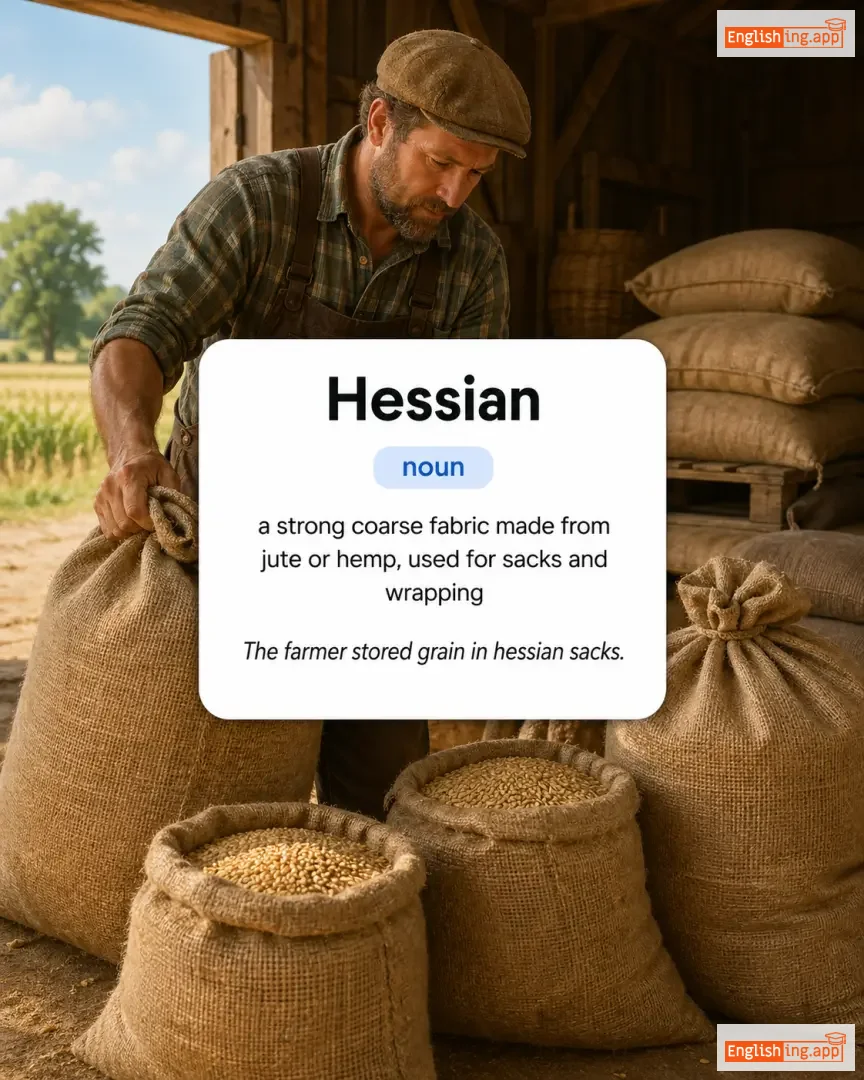
Hessian definition card — visual illustration of the meaning
noun C2
/ˈhɛʃ.ən/
黄麻布 (huangma bu)

a strong coarse fabric made from jute or hemp, used for sacks and wrapping

"The farmer stored grain in hessian sacks."

"农民将谷物存储在黄麻布袋中。" (Nongmin jiang guwu cunchu zai huangma bu dai zhong.)
heterodox definition card — visual illustration of the meaning
adjective C2
/ˈhɛtərəˌdɒks/
异端 (yì duān)

not conforming with accepted or orthodox standards or beliefs

"The professor was known for his heterodox views on religion."

"教授以其在宗教问题上的异端观点而闻名。" (Jiàoshòu yǐ qí zài zōngjiào wèntí shàng de yìduān guāndiǎn ér wénmíng.)
noun C2
/ˌhɛtərəʤəˈniːɪti/
异质性 (yizhi xing)

the quality or state of being diverse in character or content

"The cultural heterogeneity of the city makes it vibrant and unique."

"这座城市的文化异质性使其充满活力且独特。" (Zhe zuo chengshi de wenhua yizhi xing shi qi chongman huoli qie dute.)
adjective C2
/ˌhɛtərəʊˈmɔːrfɪk/
异形的 (yìxíng de)

Having different forms or shapes, especially in the same species or organism.

"Butterflies are heteromorphic during their life cycle, changing forms from larva to adult."

"蝴蝶在它们的生命周期中是异形的,从幼虫到成虫改变形态。" (Húdié zài tāmen de shēngmìng zhōuqī zhōng shì yìxíng de, cóng yòuchóng dào chéngchóng gǎibiàn xíngtài.)
heuristic definition card — visual illustration of the meaning
adjective C2
hjʊəˈrɪs.tɪk
启发式 (qǐfā shì)

Enabling a person to discover or learn something for themselves; using practical experience rather than theory.

"The scientist used a heuristic approach to solve the problem."

"科学家使用启发式方法来解决这个问题。" (Kēxuéjiā shǐyòng qǐfā shì fāngfǎ lái jiějué zhège wèntí.)
verb C2
/hjuː/
(kan)

To chop or cut something, especially wood or stone, with a tool.

"The workers hewed logs to build the cabin."

"工人们砍伐木材建造小屋。" (Gongrenmen kanfa mucai jianzao xiaowu.)
adjective C2
/hɛkˈsæŋɡjələr/
六角形的 (liùjiǎoxíng de)

Having six angles or corners.

"The artist designed a hexangular frame for the mirror."

"艺术家为镜子设计了一个六角形的框架。" (Yìshùjiā wèi jìngzi shèjì le yīgè liùjiǎoxíng de kuàngjià.)
noun C2
/ˈhɛksəˌpɒd/
六足动物 (liù zú dòng wù)

An insect or other organism with six legs.

"The scientist observed a hexapod crawling on the leaf."

"科学家观察到一个六足动物在叶子上爬行。" (Kēxuéjiā guānchá dào yīgè liù zú dòng wù zài yèzi shàng páxíng.)
noun C2
/ˈheɪ.deɪ/
黄金时期; 最辉煌的时刻; 顶峰时期 (huángjīn shíqī; zuì huīhuáng de shíkè; dǐngfēng shíqī)

the period of a person's or thing's greatest success, popularity, or vigor; prime time

"During her heyday as a singer, she performed in sold-out concerts around the world."

"在她作为歌手的黄金时期,她在全球的售罄音乐会上表演。" (Zài tā zuòwéi gēshǒu de huángjīn shíqī, tā zài quánqiú de shòu qìng yīnyuè huì shàng biǎoyǎn.)
❄️

hibernal

adjective C2
/haɪˈbɜːrnəl/

Relating to or occurring in winter.

"The hibernal season is often harsh in the mountains."

adjective/noun C2
/haɪˈbɜːrniən/
爱尔兰的 (aierland de)

Relating to Ireland or the Irish.

"He enjoyed reading about Hibernian culture and history."

"他喜欢阅读关于爱尔兰文化和历史的书籍。" (Ta xihuan yuedu guanyu Aierland wenhua he lishi de shujing.)
adjective C2
/hɪk/
乡巴佬; 农民 (xiangba lao; nongmin)

unsophisticated person from a rural area; country bumpkin

"He had a hick accent from growing up in a small town."

"他有着乡巴佬的口音,因为他在一个小镇长大。" (Ta youzhe xiangba lao de kouxin, yinwei ta zai yige xiaozhen zhǎngdà.)
adjective C2
/ˈhaɪd.baʊnd/

unwilling or unable to change because of tradition or convention

"He is too hidebound to accept new ideas."

verb C2
/haɪ/
赶快去 (gankuai qu)

to go quickly; hasten

"He hied to the station to catch the train."

"他赶快去车站赶火车。" (Ta gankuai qu chezhan gan huoche.)
noun C2
/ˈhaɪərəˌɡlɪf/
象形文字 (xiangxing wenzi)

A picture or symbol used in ancient writing systems, especially Egyptian writing.

"The walls of the temple were covered in hieroglyphs."

"寺庙的墙壁上覆盖着象形文字。" (Simiào de qiángbì shàng fùgài zhe xiàngxíng wénzì.)
adjective/noun C2
/ˌhaɪərəˈɡlɪfɪk/
象形文字的 (xiangxing wenzi de)

Relating to or written in hieroglyphs; symbols or writing that is difficult to understand.

"The archaeologists studied the hieroglyphic inscriptions carefully."

"考古学家仔细研究了象形文字铭文。" (Kaoguxuejia zixi yanjiu le xiangxing wenzi mingwen.)
adjective C2
/ˌhaɪ ˈfloʊn/
夸张的 (kuāzhāng de)

Using fancy or pretentious language; lofty in style but often overblown.

"The politician gave a high-flown speech full of promises."

"那位政治家发表了一篇充满承诺的夸张演讲。" (Nà wèi zhèngzhìjiā fābiǎo le yī piān chōngmǎn chéngnuò de kuāzhāng yǎnjiǎng.)
adjective C2
/ˈhaɪˌbraʊ/
知识分子 (zhīshi fēnzǐ)

intellectually superior or cultured; often describing art, literature, or activities appealing to intellectual tastes

"The museum is known for its highbrow exhibitions."

"该博物馆以其知识分子展览而闻名。" (Gāi bówùguǎn yǐ qí zhīshi fēnzǐ zhǎnlǎn ér wénmíng.)
noun C2
/hɪˈlærɪti/
爆笑 (baoxiao)

Extreme amusement, especially when expressed by laughter.

"The movie caused great hilarity among the audience."

"这部电影在观众中引起了极大的爆笑。" (Zhè bù diànyǐng zài guānzhòng zhōng yǐnqǐle jí dà de bàoxiào.)
noun C2
/ˈhɪlək/
小丘 (xiao qiu)

A small hill or mound.

"The children climbed up the grassy hillock to watch the sunset."

"孩子们爬上了草地上的小丘去看日落。" (Haizimen pa shang le caodi shang de xiao qiu qu kan riluo.)
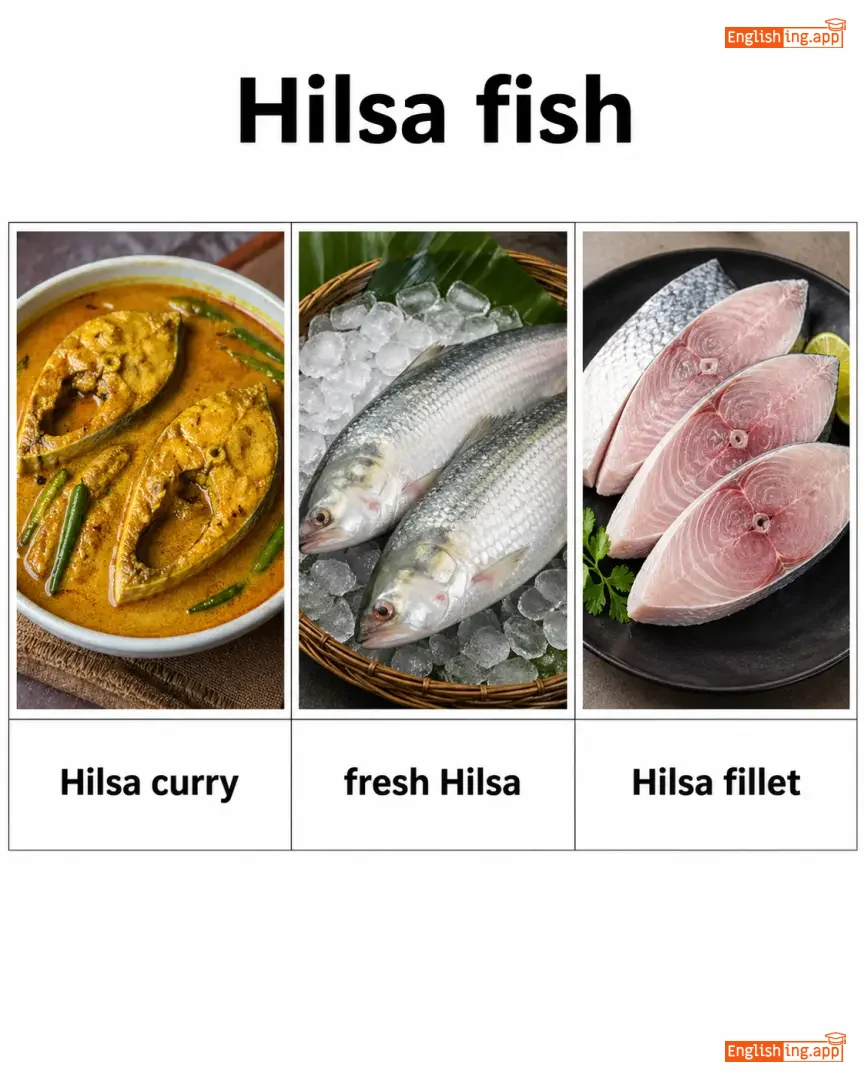
Hilsa fish definition card — visual illustration of the meaning
noun C2
/ˈhɪl.sə fɪʃ/
Hilsa鱼 (Hilsa yú)

a popular fish species found in South Asian rivers, especially prized in Bengali cuisine

"Hilsa fish is considered a delicacy in Bengali culture."

"Hilsa鱼在孟加拉文化中被视为美味佳肴。" (Hilsa yú zài mèngjiālā wénhuà zhōng bèi shì wéi měiwèi jiāyáo.)
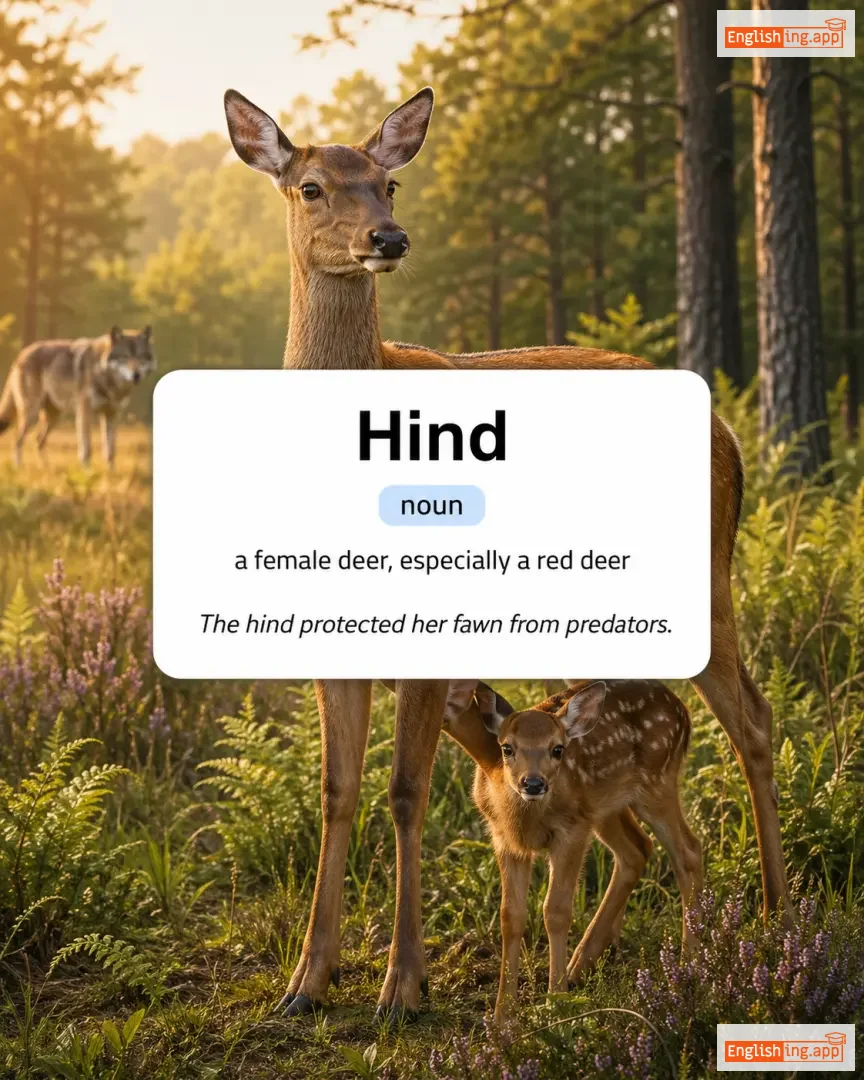
Hind definition card — visual illustration of the meaning
🦌♀️

Hind (haind)

noun C2
/haɪnd/
母鹿 (mu lu)

a female deer, especially a red deer

"The hind protected her fawn from predators."

"母鹿保护了她的小鹿免受捕食者的伤害。" (Mu lu baohu le ta de xiao lu mian shou bushizhe de shanghai.)
adjective C2
/ˈhaɪndmoʊst/
最远的 (zuì yuǎn de)

Farthest back; last in position.

"The hindmost car in the convoy broke down first."

"车队中最远的车先坏了。" (Chēduì zhōng zuì yuǎn de chē xiān huài le.)
noun C2
/ˈhaɪərlɪŋ/
雇佣者 (gù yōng zhě)

A person who works for payment only, often with little loyalty or principle.

"The mercenary was dismissed as just a hireling with no real loyalty."

"雇佣兵被解雇,只是一个没有真正忠诚的雇佣者。" (Gù yōng bīng bèi jiěgù, zhǐshì yīgè méiyǒu zhēnzhèng zhōngchéng de gù yōng zhě.)
hirsute definition card — visual illustration of the meaning
adjective C2
/ˈhɜːrsuːt/

Having a lot of hair, especially in an unusual place.

"The hirsute man stood out in the crowd with his long beard."

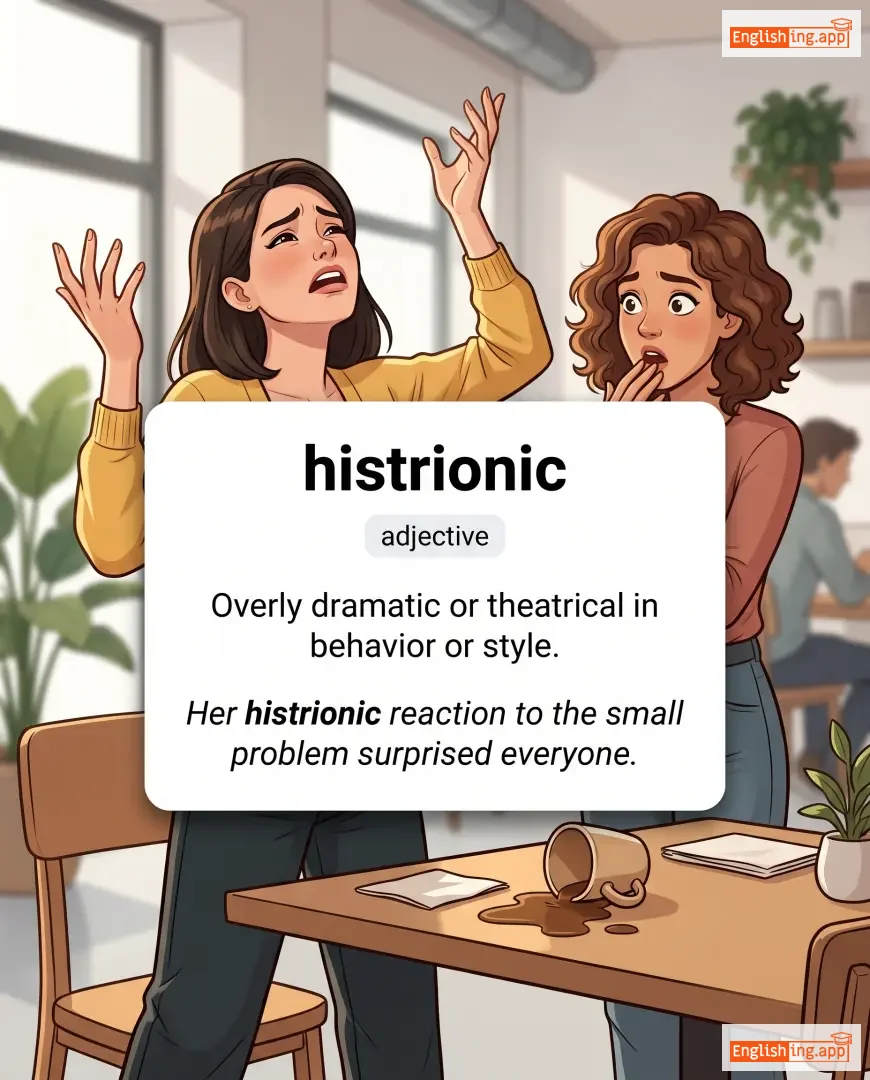
histrionic definition card — visual illustration of the meaning
adjective C2
/ˌhɪstriˈɒnɪk/

Overly dramatic or theatrical in behavior or style.

"Her histrionic reaction to the small problem surprised everyone."

adjective C2
/ˈhɔːri/
灰色的, 古老的 (huī sè de, gǔ lǎo de)

gray or white with age; very old and respected

"The hoary oak tree stood as a witness to centuries of history."

"那棵古老的橡树作为世纪历史的见证者伫立。" (Nà kē gǔlǎo de xiàng shù zuòwéi shìjì lìshǐ de jiànzhèng zhě zhù lì.)
verb C2
/ˈhɑːbəl/
蹒跚 (pán shān)

to walk awkwardly with difficulty, usually due to injury

"He hobbled across the room after twisting his ankle."

"他在扭伤脚踝后,蹒跚地走过房间。" (Tā zài niǔ shāng jiǎohuái hòu, pán shān de zǒu guò fángjiān.)
noun C2
/ˈhɒdʒ.pɒdʒ/
混杂物 (hùn zá wù)

A confusing mixture of different things; a jumble.

"The essay was a hodgepodge of unrelated ideas."

"这篇文章是一些不相关的想法的混杂物。" (Zhè piān wénzhāng shì yīxiē bù xiāngguān de xiǎngfǎ de hùn zá wù.)
noun C2
/hoʊ/
锄头 (chutou)

a gardening tool with a thin metal blade used for breaking up soil and removing weeds

"The farmer used a hoe to remove weeds from his vegetable garden."

"农夫使用锄头从他的蔬菜园中移除杂草。" (Nongfu shiyong chutou cong tade shucai yuan zhong yichu zakao.)
noun C2
/hɔːɡ plʌm/
豺果 (chái guǒ)

tropical fruit with yellow skin and sour taste

"Hog plums are often used to make pickles and chutneys."

"豺果常用于制作腌制食品和酸辣酱。" (Chái guǒ cháng yòng yú zhìzuò yānzhì shípǐn hé suānlàjiàng.)
noun C2
/ˈhɒɡz.hɛd/
大桶 (da tong)

A large cask or barrel, traditionally used for storing liquids like wine or beer.

"The cellar was filled with hogsheads of ale."

"地下室里堆满了啤酒的大桶。" (Dixia shi li dui man le pijiu de da tong.)
noun C2
/ˈhoʊl.stər/
枪套 (qiāng tào)

A holder or case for carrying a gun, typically worn on a belt or shoulder.

"The sheriff kept his revolver in a leather holster."

"警长将他的左轮手枪放在皮革枪套里。" (Jǐngzhǎng jiāng tā de zuǒlún shǒuqiāng fàng zài pígé qiāng tào lǐ.)
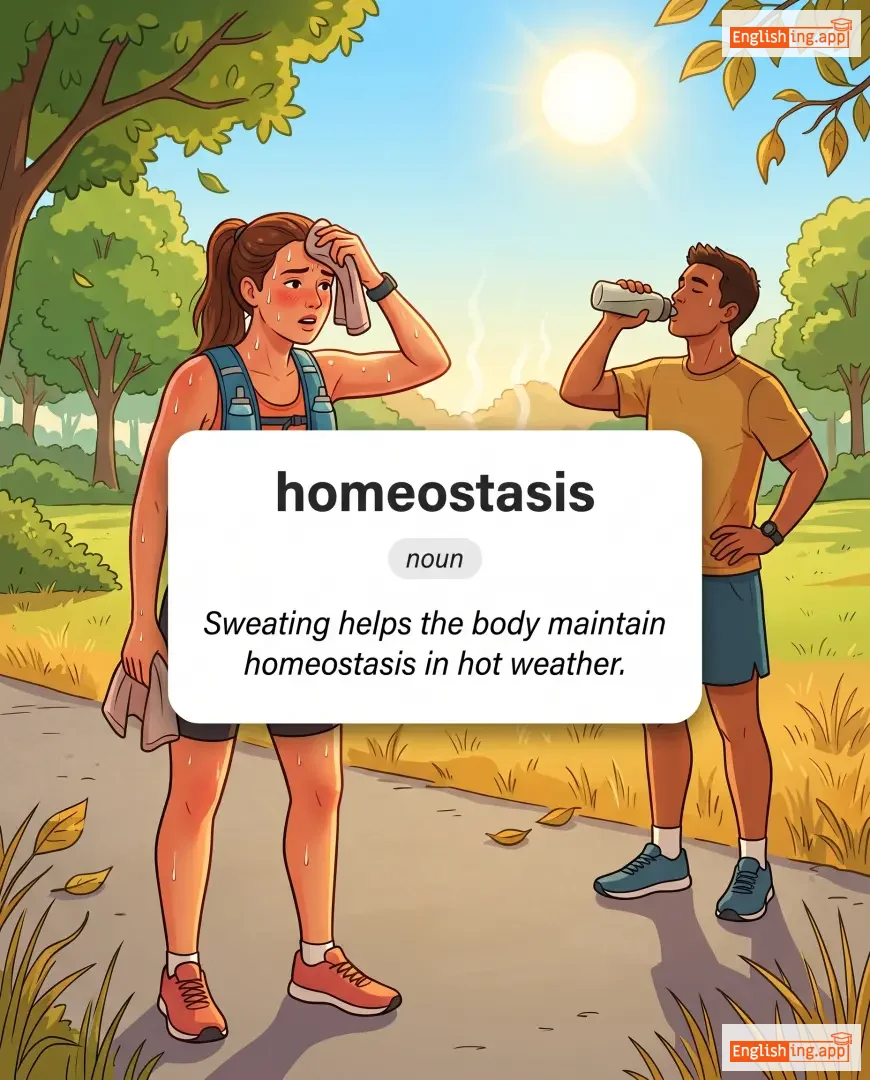
homeostasis definition card — visual illustration of the meaning
noun C2
/ˌhoʊmi.oʊˈsteɪsɪs/
体内平衡 (tǐ nèi píng héng)

The ability of a living system or organism to maintain internal stability despite changes in external conditions.

"Sweating helps the body maintain homeostasis in hot weather."

"出汗有助于身体在炎热天气中保持体内平衡。" (Chū hàn yǒuzhù yú shēntǐ zài yánrè tiānqì zhōng bǎochí tǐ nèi píng héng.)
adjective C2
/ˈhoʊm.spʌn/
家制 (jiazhi)

Simple and unsophisticated; made at home rather than in a factory.

"She wore a homespun dress to the village festival."

"她穿着家制的衣服去参加村里的节日庆典。" (Tā chuānzhuó jiāzhì de yīfú qù cānjiā cūn lǐ de jiérì qìngdiǎn.)
Homily definition card — visual illustration of the meaning
noun C2
/ˈhɑː.mə.li/
讲道 (jiangdao)

A religious or moral lecture; a sermon.

"The priest delivered a touching homily on kindness."

"牧师讲了一个感人的讲道,讲的是仁慈。" (Mùshī jiǎngle yīgè gǎn rén de jiǎngdào, jiǎng de shì réncí.)
noun C2
/ˌhoʊmə.dʒəˈniːəti/

The quality or state of being all the same or all of the same kind.

"The cultural homogeneity of the village made it feel unified."

verb C2
/həˈmɑː.dʒə.naɪz/
同质化 (tóngzhì huà)

To make uniform or similar by blending or mixing different elements.

"The company tried to homogenize its products across global markets."

"公司尝试在全球市场上使其产品同质化。" (Gōngsī chángshì zài quánqiú shìchǎng shàng shǐ qí chǎnpǐn tóngzhì huà.)