Vocabulaires

Découvrez, apprenez et maîtrisez le vocabulaire anglais

adjective, noun C2
/ˈɡreɪtɪŋ/
耳障りな音 / 金属の格子 (mimizawari na oto / kinzoku no kōshi)

Harsh and unpleasant to the senses, especially sound; a framework of bars covering an opening.

"The teacher's grating voice made it hard to concentrate."

"先生の耳障りな声で集中するのが難しかった。" (Sensei no mimizawari na koe de shūchū suru no ga muzukashikatta.)
adverb, adjective C2
/ˈɡrætɪs/ or /ˈɡreɪtɪs/
無料 (muryou)

Without charge; free of cost.

"The drinks at the event were provided gratis."

"イベントで提供された飲み物は無料でした。" (Ibento de teikyō sareta nomimono wa muryō deshita.)
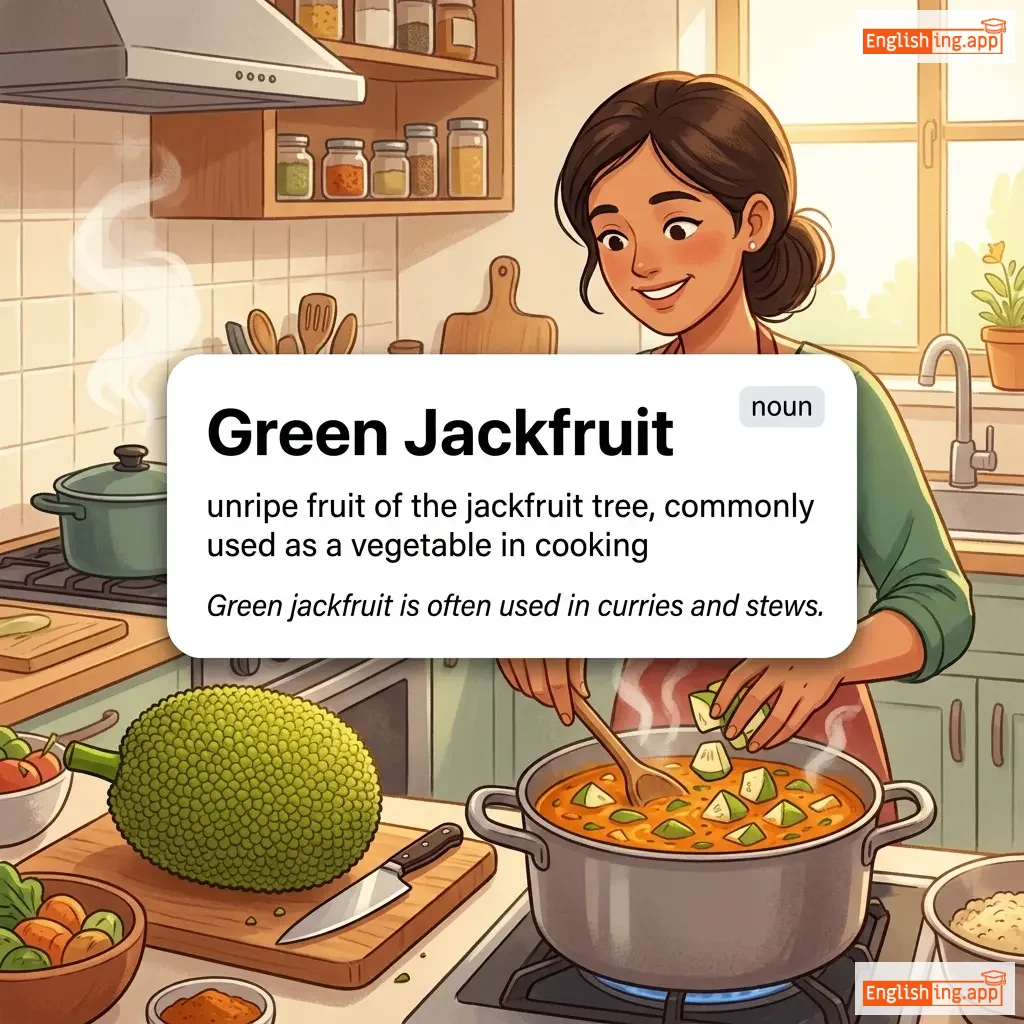
Green Jackfruit definition card — visual illustration of the meaning
noun C2
/ɡriːn ˈdʒækfruːt/
グリーンジャックフルーツ (guriin jakkufurūtsu)

unripe fruit of the jackfruit tree, commonly used as a vegetable in cooking

"Green jackfruit is often used in curries and stews."

"グリーンジャックフルーツはカレーやシチューに使われることがよくあります。" (Guriin jakkufurūtsu wa karē ya shichū ni tsukawareru koto ga yoku arimasu)
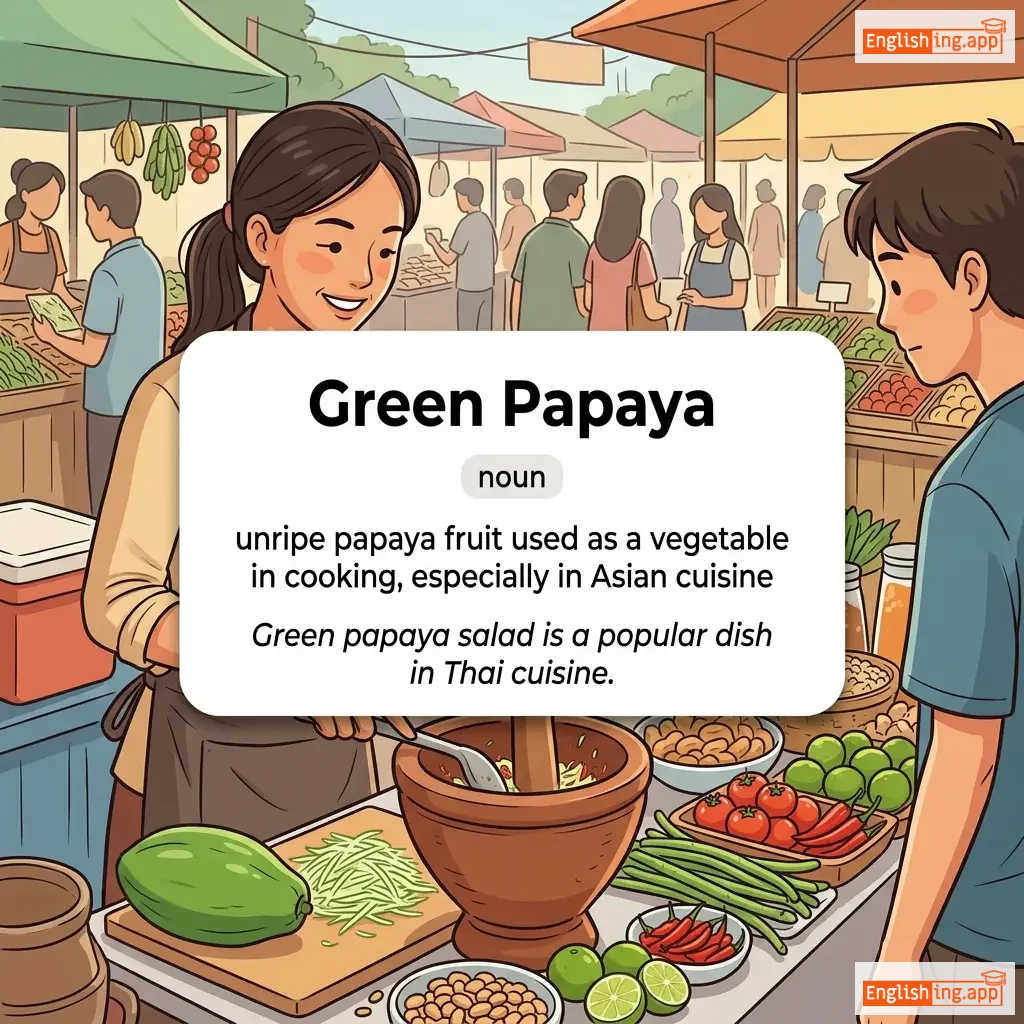
Green Papaya definition card — visual illustration of the meaning
noun C2
/ɡriːn pəˈpaɪə/
青いパパイヤ (aoi papaiya)

unripe papaya fruit used as a vegetable in cooking, especially in Asian cuisine

"Green papaya salad is a popular dish in Thai cuisine."

"青いパパイヤのサラダはタイ料理で人気のある料理です。" (Aoi papaiya no sarada wa Tai ryōri de ninki no aru ryōri desu.)
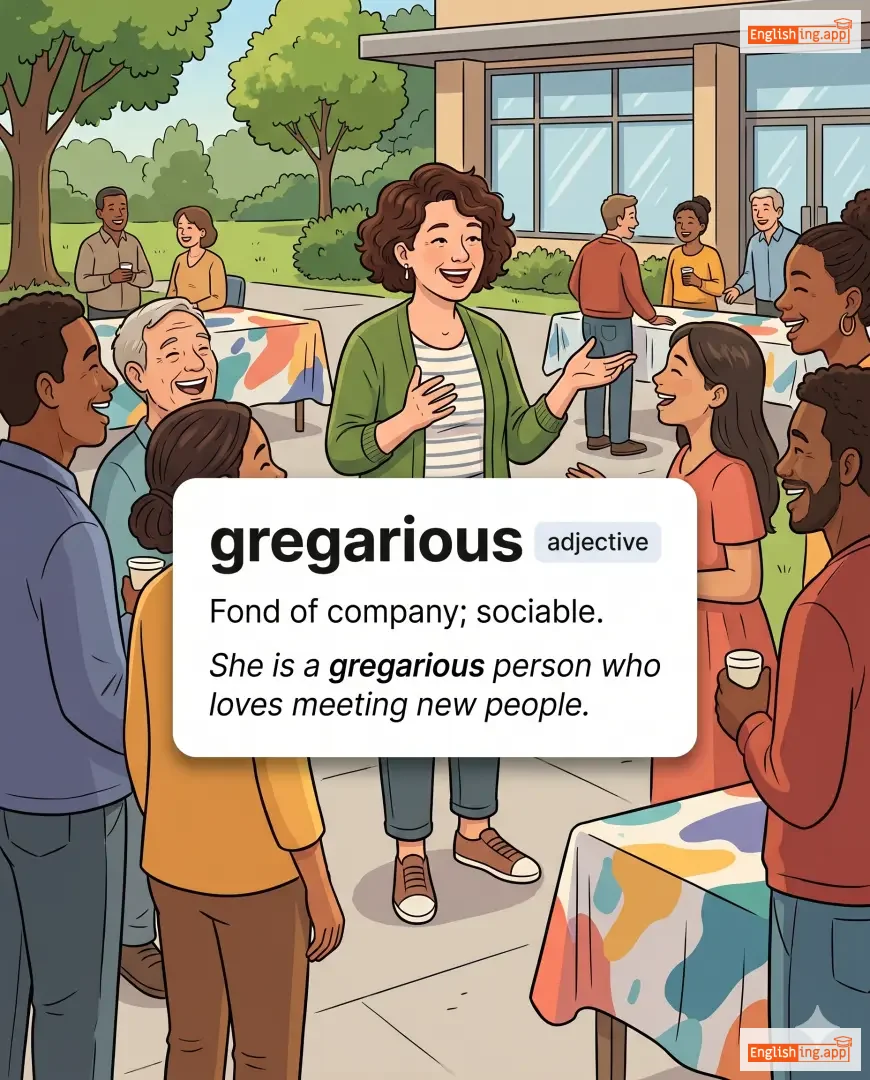
gregarious definition card — visual illustration of the meaning
adjective C2
/ɡrɪˈɡɛəriəs/
社交的 (shakouteki)

Fond of company; sociable.

"She is a gregarious person who loves meeting new people."

"彼女は新しい人々と会うのが好きな社交的な人です。" (Kanojo wa atarashii hitobito to au no ga suki na shakouteki na hito desu.)
noun C2
/ˌɡrɛnəˈdɪə/
グレネディア (gurenedia)

A soldier who specialized in throwing grenades; later used to describe an elite infantryman.

"The grenadier stood proudly at the front of the regiment."

"そのグレネディアは部隊の前で誇らしげに立っていた。" (Sono gurenedia wa butai no mae de hokorashige ni tatte ita.)
noun C2
/ˈɡraɪndstoʊn/
砥石 (toishi)

a thick disc of stone used for grinding, sharpening, or polishing tools

"The blacksmith sharpened his blade on the grindstone."

"鍛冶屋はグラインドストーンで刃を研いだ。" (Tatsuya wa guraindosutōn de ha o toida.)
noun C2
/ˈɡrɑːtoʊ/
洞窟 (dōkutsu)

a small picturesque cave, often artificial

"Tourists visited the grotto hidden behind the waterfall."

"観光客は滝の後ろに隠れた洞窟を訪れました。" (Kankōkyaku wa taki no ushiro ni kakureta dōkutsu o otozuremashita.)
noun/verb C2
/ɡraʊtʃ/
不機嫌な人 (fukigen na hito)

a person who complains a lot or to complain in a grumpy way

"He is such a grouch in the morning before coffee."

"彼は朝、コーヒーの前にいつもグラウチだ。" (Kare wa asa, kōhī no mae ni itsumo gurauchi da.)
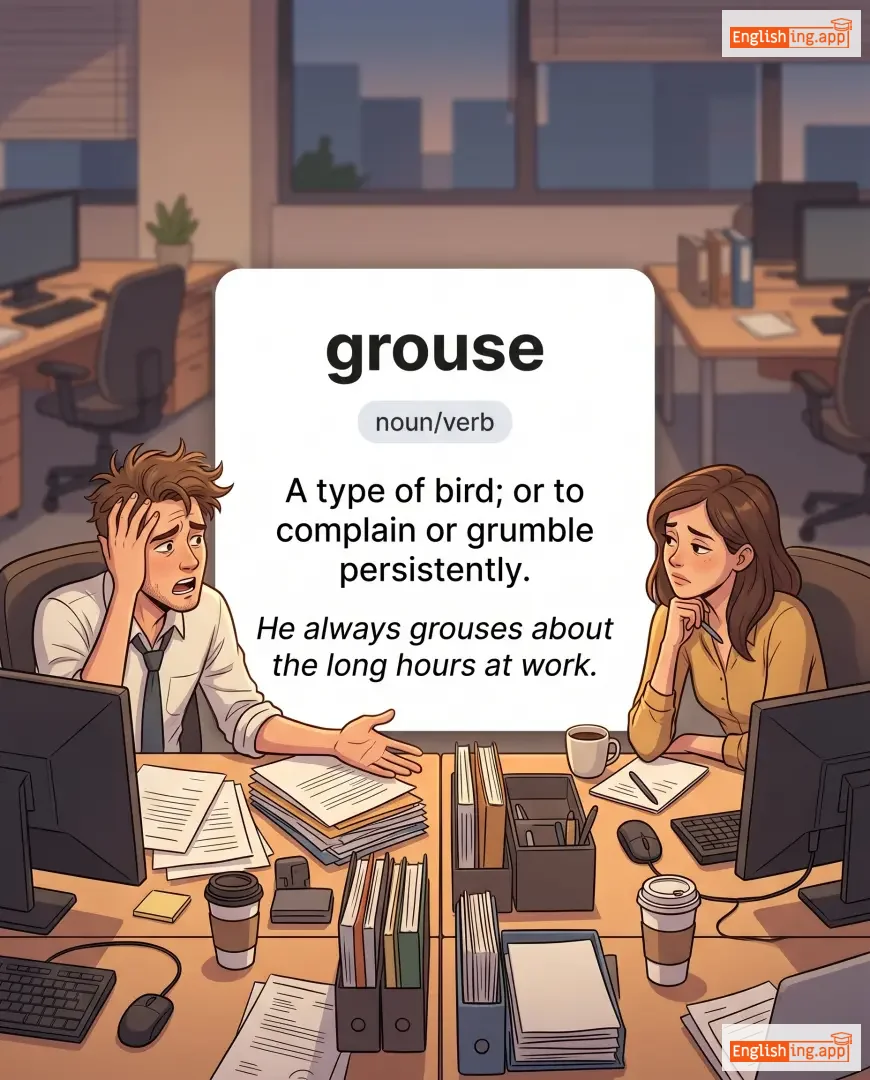
grouse definition card — visual illustration of the meaning
noun/verb C2
/ɡraʊs/
不平を言う / 鳥の一種 (fuhē o iu / tori no isshu)

A type of bird; or to complain or grumble persistently.

"He always grouses about the long hours at work."

"彼はいつも長時間働くことに不平を言います。" (Kare wa itsumo chōjikan hataraku koto ni fuhē o iimasu.)
verb C2
/ˈɡrʌvəl/

To act in an excessively humble or submissive way to gain favor.

"He groveled before his boss to avoid punishment."

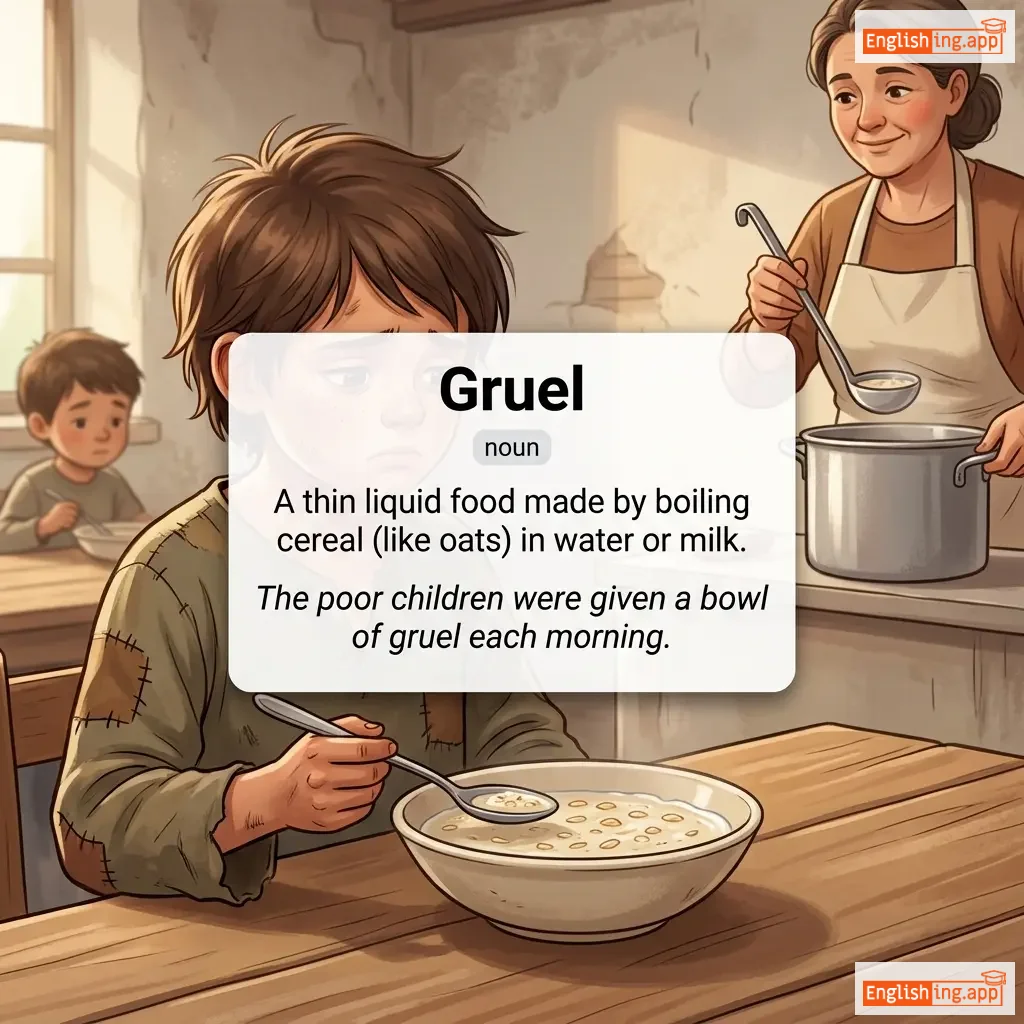
Gruel definition card — visual illustration of the meaning
noun C2
/ˈɡruːəl/
水またはミルクで穀物を煮て作った薄い液体の食べ物 (mizu matawa miruku de kokumotsu o nite tsukutta usui ekitai no tabemono)

A thin liquid food made by boiling cereal (like oats) in water or milk.

"The poor children were given a bowl of gruel each morning."

"貧しい子供たちは毎朝、一杯のグルエルをもらいました。" (Mazushī kodomotachi wa mai asa, ippai no gurueru o moraimashita.)
adjective C2
/ɡrʌf/
粗野な (arogana)

Rough or stern in manner, speech, or voice.

"Despite his gruff manner, he was very kind-hearted."

"彼の粗野な態度にもかかわらず、彼はとても優しい心を持っていた。" (Kare no arōna taido ni mo kakawarazu, kare wa totemo yasashī kokoro o motte ita.)
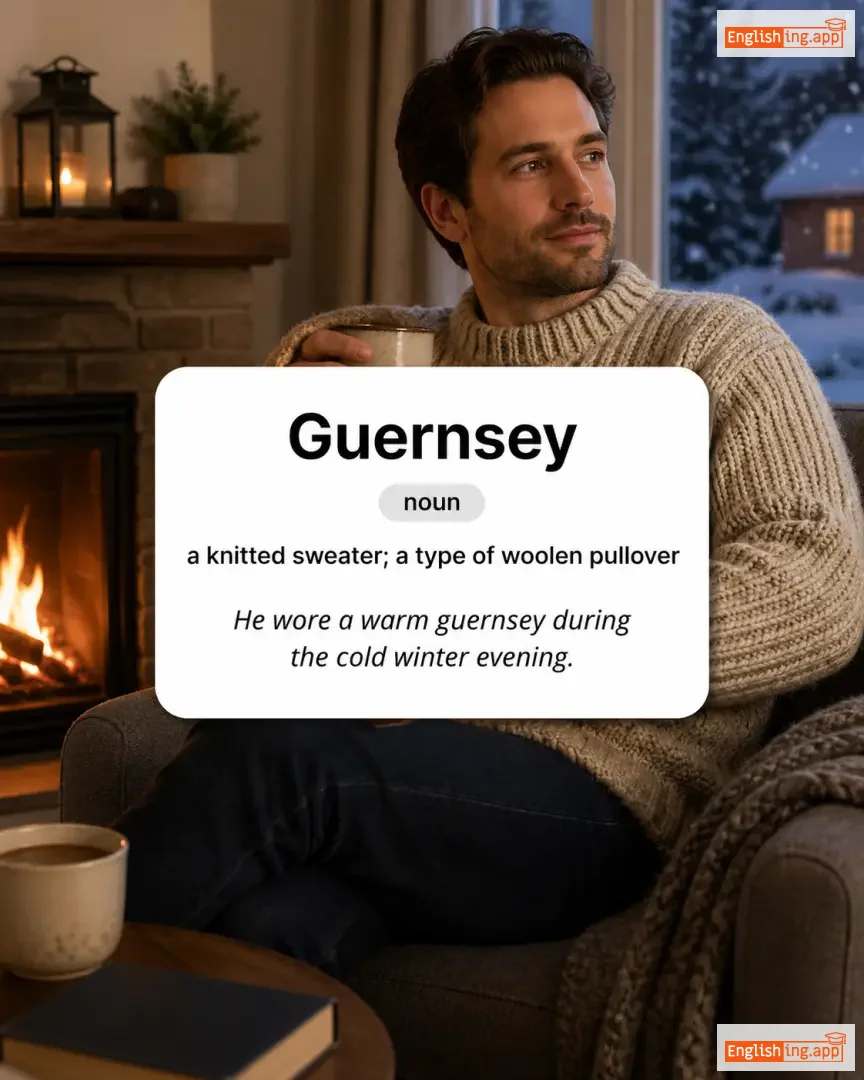
Guernsey definition card — visual illustration of the meaning
noun C2
/ˈɡɜːrn.zi/
セーター (seetā)

a knitted sweater; a type of woolen pullover

"He wore a warm guernsey during the cold winter evening."

"彼は寒い冬の夕方に温かいセーターを着ていた。" (Kare wa samui fuyu no yūgata ni atatakai seetā o kite ita.)
noun/verb C2
/ɡəˈfɔː/
大笑い (ōwarai)

a loud and boisterous laugh

"The audience guffawed at the comedian’s joke."

"観客はコメディアンのジョークに大笑いしました。" (Kankyaku wa komedian no jōku ni ōwarai shimashita.)
noun C2
/ɡaɪl/
策略 (sakuryaku)

Cleverness or cunning used to achieve a goal, often in a deceptive way

"He used guile to win the negotiation."

"彼は交渉で勝つために策略を使った。" (Kare wa kōshō de katsu tame ni sakuryaku o tsukatta.)
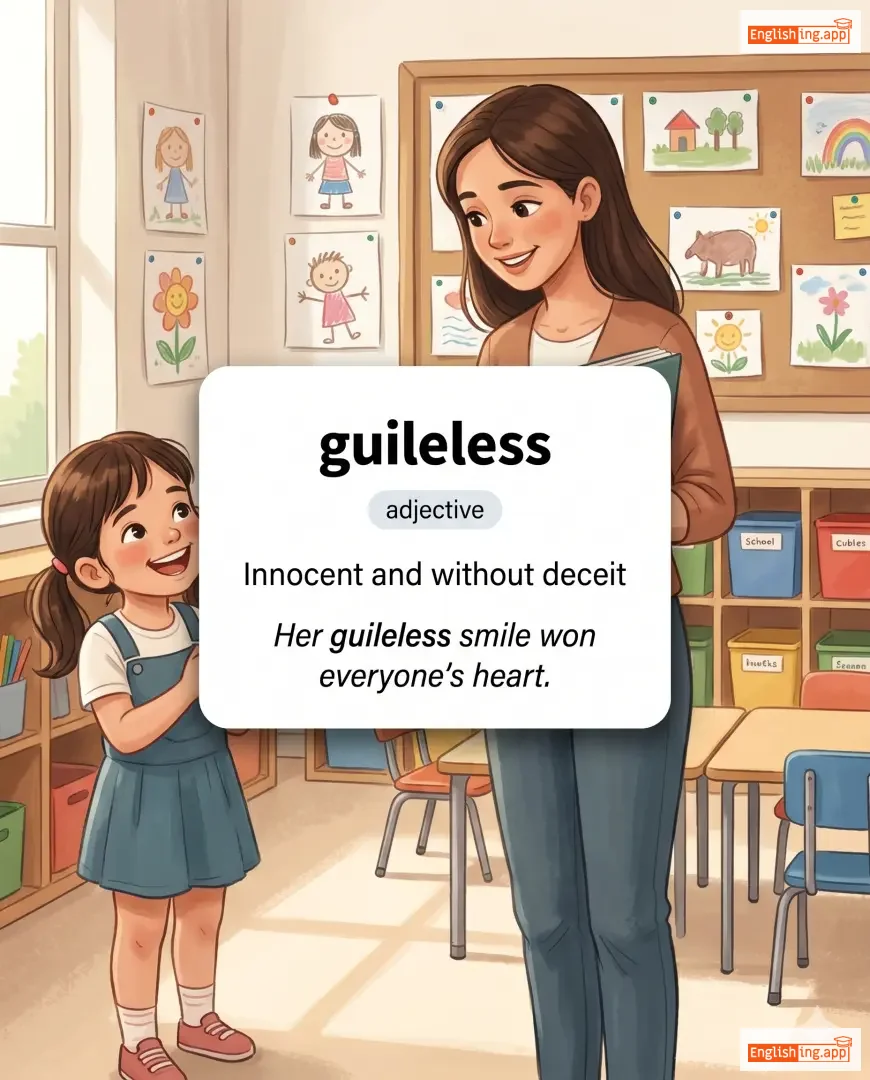
guileless definition card — visual illustration of the meaning
adjective C2
/ˈɡaɪlləs/
無邪気 (musyaki)

Innocent and without deceit

"Her guileless smile won everyone’s heart."

"彼女の無邪気な笑顔は皆の心をつかみました。" (Kanojo no musyaki na egao wa mina no kokoro o tsukamimashita.)
noun C2
/ˈɡɪni/
ギニー (古いイギリスの金貨) (gini)

A former British gold coin; also refers to Guinea, a country in West Africa

"The antique coin was worth one guinea."

"アンティークコインは1ギニーの価値がありました。" (Antīku koin wa 1 gini no kachi ga arimashita.)
noun C2
/ˈɡʌl.i/
渓谷、小川 (keikoku, ogawa)

A narrow channel or ravine worn away by water.

"After the storm, the road was cut by a deep gully."

"嵐の後、道路は深い谷によって切り開かれました。" (Arashi no ato, dōro wa fukai tani ni yotte kirihirakaremashita.)
noun C2
/ˈɡʌmp.ʃən/
勇気, 発起 (yūki, hakki)

Courage, resourcefulness, or initiative.

"It takes real gumption to start your own business."

"自分のビジネスを始めるためには、真の勇気が必要です。" (Jibun no bijinesu o hajimeru tame ni wa, shin no yūki ga hitsuyō desu.)
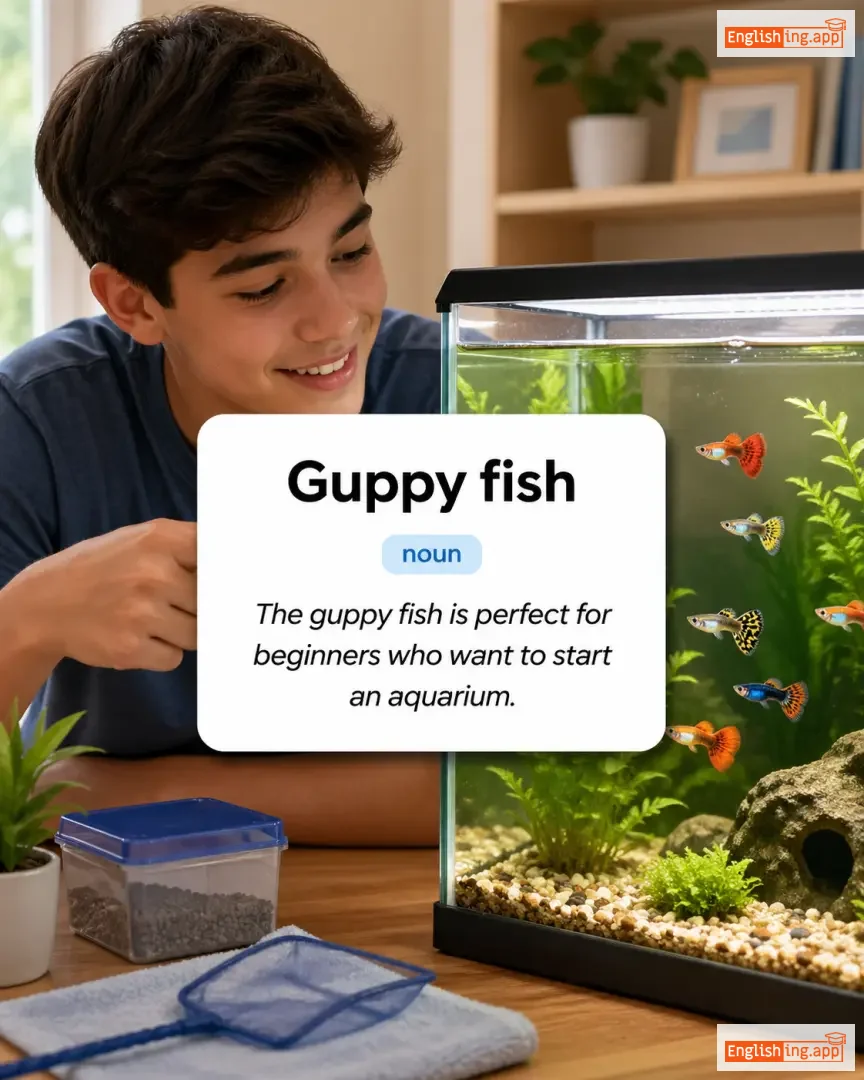
Guppy fish definition card — visual illustration of the meaning
noun C2
/ˈɡʌp.i fɪʃ/
グッピー (guppi)

a small colorful freshwater fish popular in aquariums, known for its vibrant colors and easy breeding

"The guppy fish is perfect for beginners who want to start an aquarium."

"グッピーは、水槽を始めたい初心者にぴったりです。" (guppi wa suisou o hajimetai shoshinsha ni pittari desu)
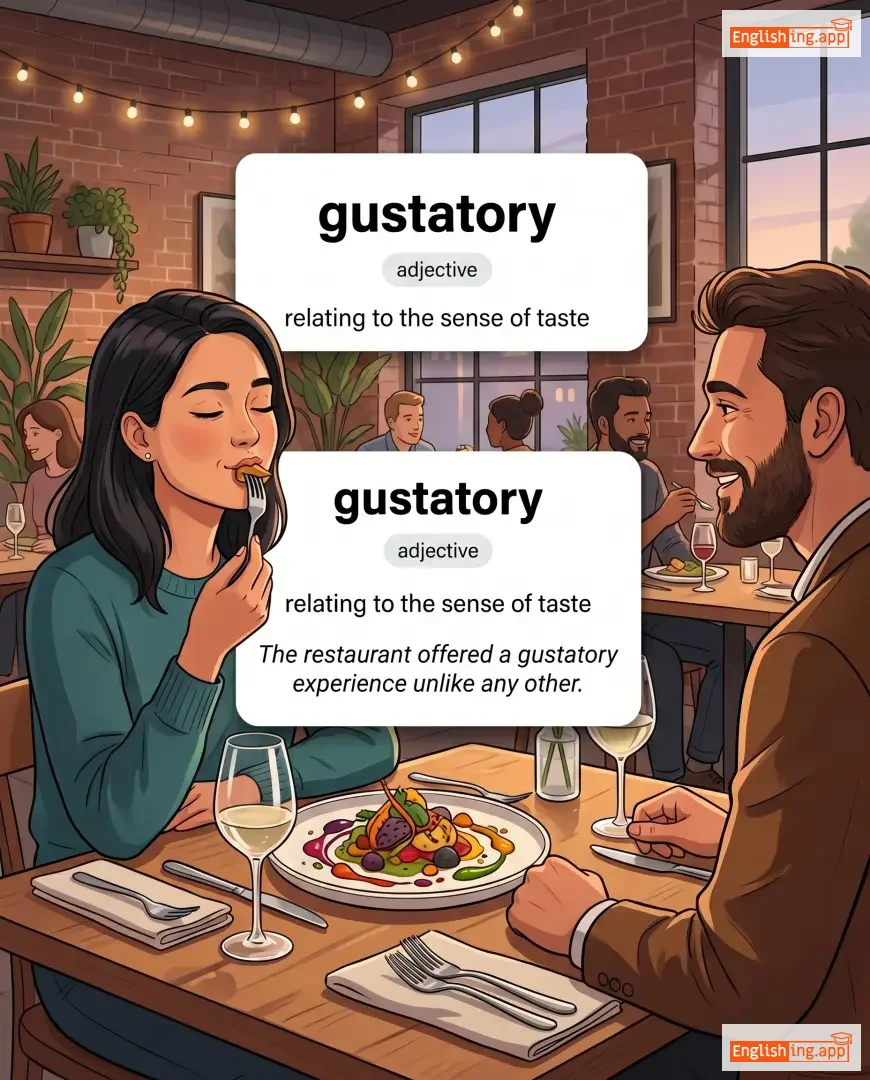
gustatory definition card — visual illustration of the meaning
adjective C2
/ˈɡʌstəˌtɔːri/
味覚の (mikaku no)

relating to the sense of taste

"The restaurant offered a gustatory experience unlike any other."

"レストランは他に類を見ない味覚体験を提供しました。" (Resutoran wa hoka ni rui o minai mikaku taiken o teikyō shimashita.)
verb C2
/ˈɡʌzəl/
がぶ飲みする (gabu nomi suru)

to drink greedily or excessively

"He guzzled three cans of soda in a few minutes."

"彼は数分で3缶のソーダを飲み干した。" (Kare wa suufun de san kan no sōda o nomihoshita.)
noun C2
/ˌɡaɪnəˈkɒkrəsi/
女性支配 (josei shihai)

a society or government ruled by women

"The ancient tribe was known for its gynecocracy, where women held all positions of power."

"その古代の部族は、女性がすべての権力を握るギネコクラシーで知られていました。" (Sono kodai no buzoku wa, josei ga subete no kenryoku o nigiru ginekokurashī de shirarete imashita.)
verb C2
/ˈdʒaɪreɪt/
速く回転する (hayaku kaiten suru)

to move or spin quickly in circles

"The dancer gyrated wildly to the rhythm of the drums."

"ダンサーはドラムのリズムに合わせて激しく回転しました。" (Dansā wa doramu no rizumu ni awasete hageshiku kaiten shimashita.)
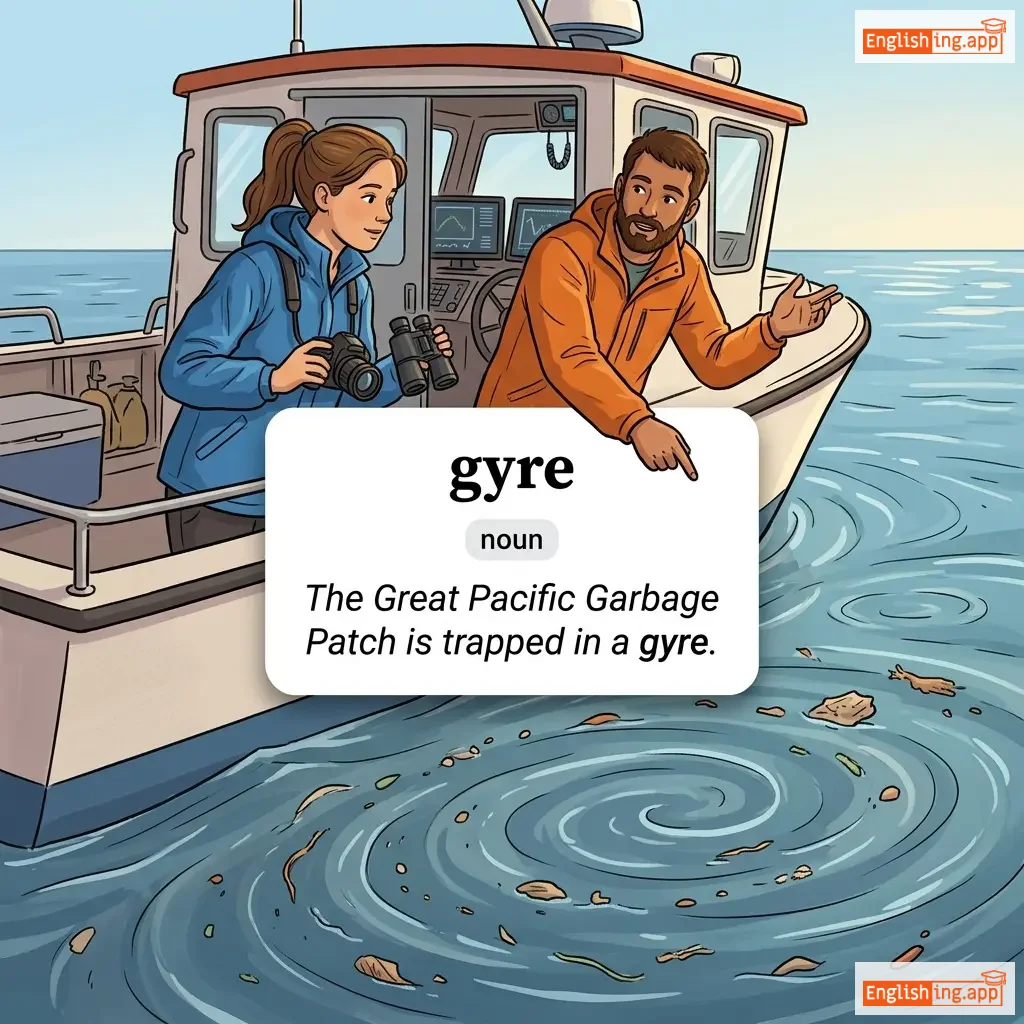
gyre definition card — visual illustration of the meaning
noun C2
/ˈdʒaɪər/
渦, 円形海洋流 (uza, enkei kaiyo-ryu)

A circular or spiral motion or form, especially a giant circular oceanic surface current.

"The Great Pacific Garbage Patch is trapped in a gyre."

"太平洋のゴミの大きな塊は渦に閉じ込められています。" (Taiheiyo no gomi no okina katamari wa uza ni tojikomerareteimasu.)
noun C2
/ˈdʒaɪrəˌskoʊp/

A device consisting of a wheel or disk mounted so it can spin rapidly and maintain orientation, used for navigation and balance.

"The airplane's navigation system relies on a gyroscope for stability."

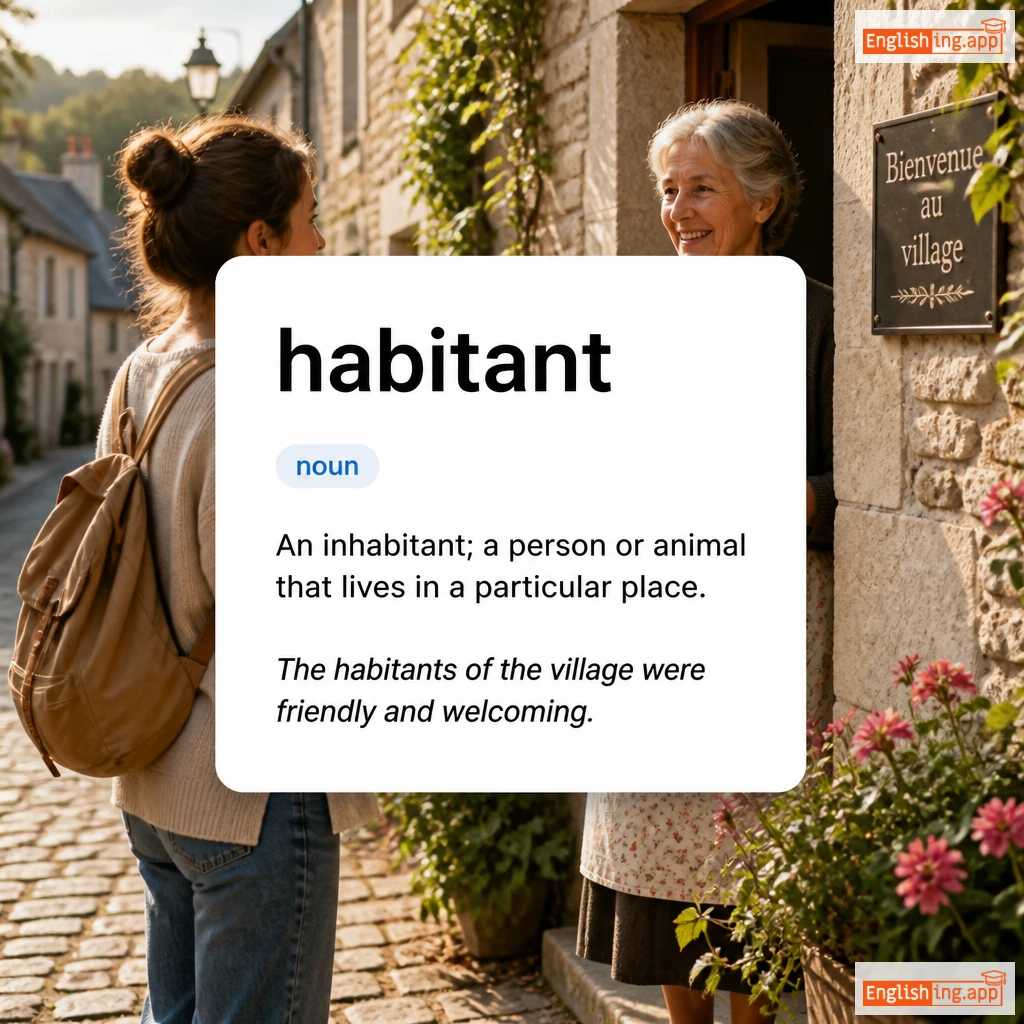
habitant definition card — visual illustration of the meaning
👨‍👩‍👧‍👦

habitant (ハビタント)

noun C2
/ˈhæbɪtənt/
住民 (jūmin)

An inhabitant; a person or animal that lives in a particular place.

"The habitants of the village were friendly and welcoming."

"村の住民は親切で歓迎してくれました。" (Mura no jūmin wa shinsetsu de kangei shite kuremashita.)
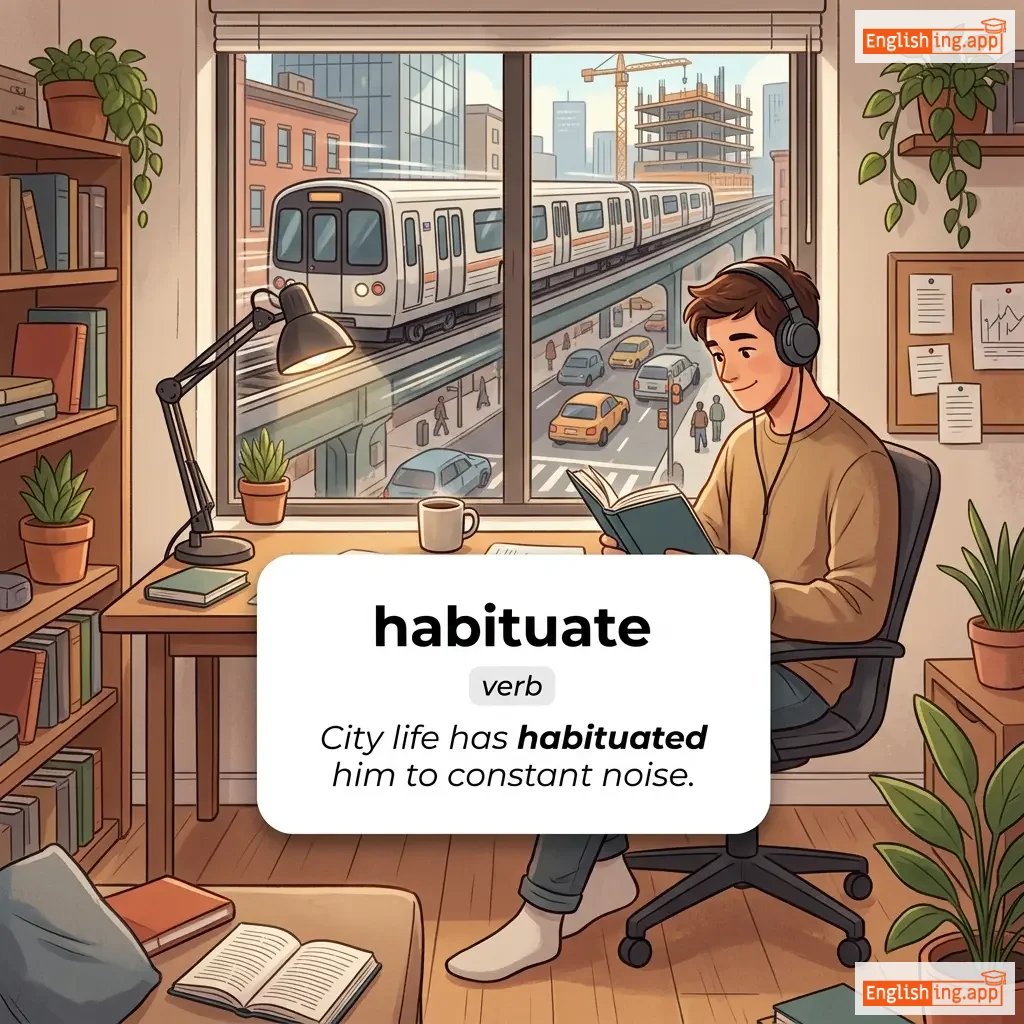
habituate definition card — visual illustration of the meaning
verb C2
/həˈbɪtʃueɪt/
慣れる (nareru)

to accustom someone or oneself to something through frequent exposure or experience

"City life has habituated him to constant noise."

"都市生活は彼を常に騒音に慣れさせた。" (Toshi seikatsu wa kare o jōnī sawon ni naresaseta.)
noun C2
/ˈhæbɪtjuːd/
習慣、慣習 (shūkan, kanshū)

a customary condition or mode of life; habitual practice

"He lived in a quiet habitude, avoiding the noise of the city."

"彼は静かな習慣の中で暮らしていた、都市の騒音を避けながら。" (Kare wa shizukana shūkan no naka de kurashite ita, toshi no sōon o sake-nagara.)
noun C2
/ˈhækəlz/

the hairs on the back of an animal’s neck that rise when it is angry or alarmed; figuratively, feelings of anger or resentment

"His rude comment raised my hackles."

noun C2
/ˈhæknɪ/
貸し馬, 陳腐な (kashi uma, chinpuna)

a horse kept for ordinary riding or hire; also used for something overused or trite

"The old hackney was still pulling the carriage."

"その古い貸し馬は今でも馬車を引いていた。" (Sono furui kashi uma wa imademo basha wo hiiteita.)
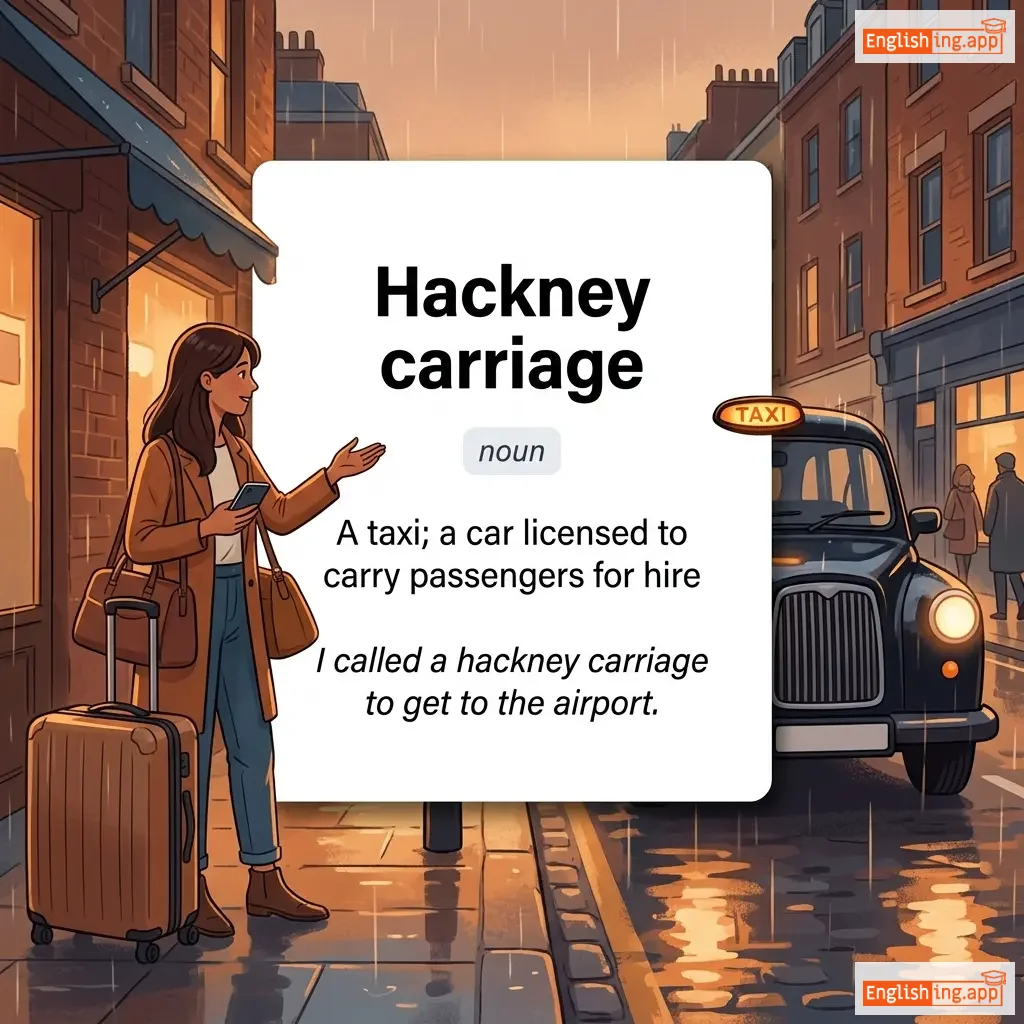
Hackney carriage definition card — visual illustration of the meaning
noun C2
/ˈhæk.ni ˈkær.ɪdʒ/
ハックニーキャリッジ (hakkunī kyarijji)

A taxi; a car licensed to carry passengers for hire

"I called a hackney carriage to get to the airport."

"空港に行くためにハックニーキャリッジを呼びました。" (Kūkō ni iku tame ni hakkunī kyarijji o yobimashita.)
🧙‍♀️

Hag (ハグ)

noun C2
/hæɡ/
魔女 (majo)

an ugly old woman, especially a vicious or malicious one; a witch

"In the fairy tale, the wicked hag lived alone in a cottage deep in the forest."

"おとぎ話では、邪悪な魔女が森の奥深くの小屋に一人で住んでいた。" (Otogibanashi de wa, jaaku na majo ga mori no oku fukaku no koya ni hitori de sunde ita.)
adjective C2
/ˌhæɡ.i.əˈɡræf.ɪk/
過度に賛美的な (kadoni sanbitekina)

Excessively flattering or idealized, often in a biography or portrayal of someone.

"The documentary was criticized for its hagiographic portrayal of the leader."

"そのドキュメンタリーはリーダーの過度に賛美的な描写で批判されました。" (Sono dokyumentarī wa rīdā no kadoni sanbitekina byōsha de hihan saremashita.)
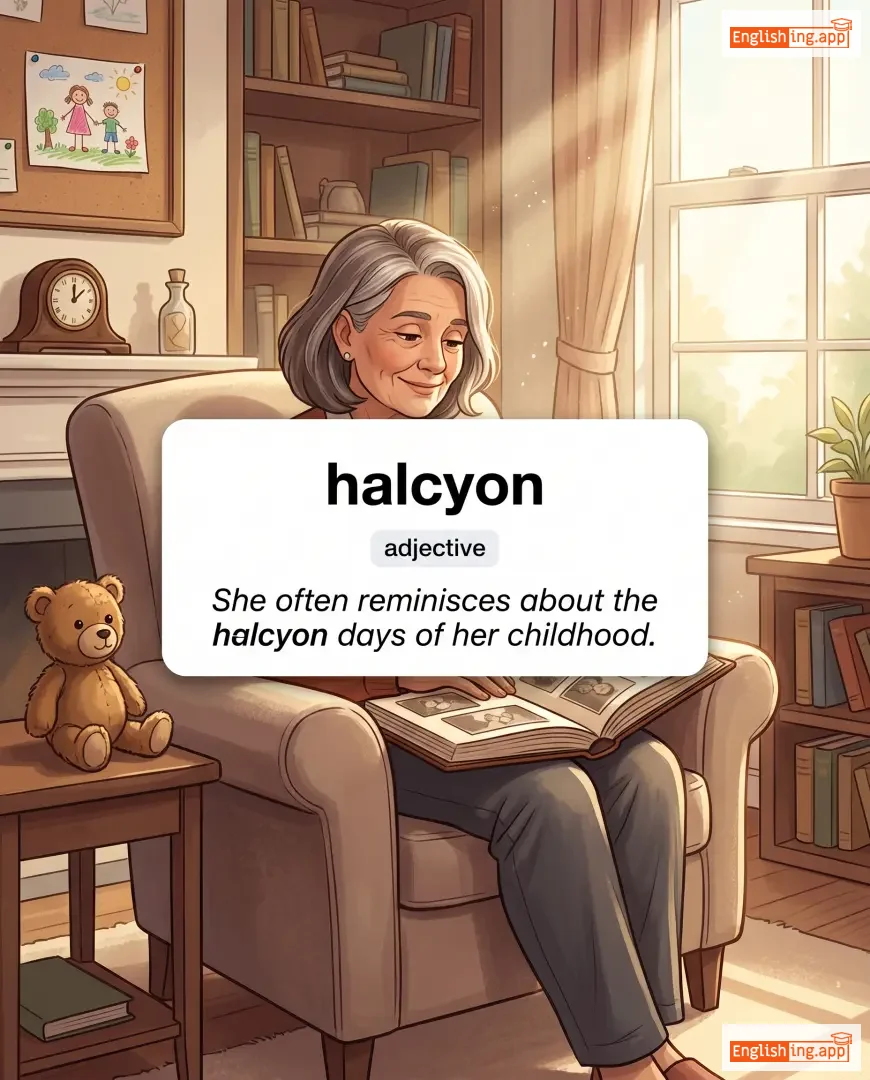
halcyon definition card — visual illustration of the meaning
adjective C2
/ˈhæl.si.ən/
静かな (shizukana)

calm, peaceful, and happy; denoting a period of time in the past that was idyllically happy and peaceful

"She often reminisces about the halcyon days of her childhood."

"彼女はよく子供時代の静かな日々を思い出します。" (Kanojo wa yoku kodomojidai no shizukana hibi o omoidashimasu.)
adjective C2
/heɪl/
健康 (kenkō)

strong and healthy, especially of an elderly person

"Despite his age, the man remained hale and active."

"年齢にもかかわらず、その男性は元気で活動的でした。" (Nenrei ni mo kakawarazu, sono dansei wa genki de katsudōteki deshita.)
adjective C2
/ˌhæfˈbeɪkt/
中途半端 (chuto hanpa)

poorly thought out or badly planned

"The manager quickly rejected his half-baked proposal."

"マネージャーは彼の中途半端な提案をすぐに却下しました。" (Manejā wa kare no chūto hanpa na teian o sugu ni kyakka shimashita.)
adjective C2
/ˌhæfˈhɑːr.tɪd/
やる気がない (yaruki ga nai)

lacking enthusiasm or determination; unenthusiastic

"His halfhearted attempt to study did not bring good results."

"彼のやる気がない勉強の試みは良い結果を生まなかった。" (Kare no yaruki ga nai benkyou no kokoromi wa yoi kekka o umanakatta.)
verb C2
/ˈhæloʊ/
聖別する (seibetsu suru)

to honor as holy; to make sacred or greatly respected

"The ancient temple was hallowed by centuries of worship."

"古代の寺院は何世紀にもわたる崇拝によって聖別されました。" (Kodai no jiin wa nanseiki ni mo wataru suuhai ni yotte seibetsu saremashita.)
adjective C2
/ˈhæm ˌhændɪd/
不器用 (bukiyou)

clumsy or inept in handling things or situations

"His ham-handed attempt to fix the computer made it worse."

"彼の手際の悪い試みでコンピュータがさらに悪化しました。" (Kare no tegiwa no warui kokoromi de konpyu-ta ga sara ni akka shimashita.)
noun, verb C2
/ˈhæmstrɪŋ/
太ももの後ろの腱; 動詞として、誰かまたは何かの効果を制限または著しく制限する (futomomo no ushiro no ken; dōshi toshite, dareka matawa nanika no kōka o seigen matawa ichijirushiku seigen suru)

a tendon at the back of the thigh; as a verb, to cripple or severely restrict the effectiveness of someone or something.

"Budget cuts hamstrung the organization’s plans."

"予算削減により、組織の計画が弱体化しました。" (Yosan sakugen ni yori, soshiki no keikaku ga jakutaika shimashita.)
verb (past tense, past participle), adjective C2
/ˈhæmstrʌŋ/
無力または制限された (muryoku mata wa seigen sareta)

crippled or severely restricted in movement or progress.

"The team was hamstrung by lack of resources."

"チームはリソース不足で制約を受けていた。" (Chīmu wa risōsu fusoku de seiyaku o ukete ita.)
noun C2
/ˈhænd ˌrɪŋɪŋ/
過剰な心配 (kajou na shinpai)

excessive worry or concern expressed in a visible or dramatic way.

"There was much hand-wringing over the political crisis."

"政治危機について多くの心配がありました。" (Seiji kiki ni tsuite ōku no shinpai ga arimashita.)
adjective C2
/ˈhæŋ.dɔːɡ/
恥ずかしい (hazukashii)

looking or feeling ashamed, guilty, or defeated.

"He gave me a hangdog look after being caught lying."

"彼は嘘をついて捕まった後、恥ずかしそうな顔をした。" (Kare wa uso o tsuite tsukamatta ato, hazukashisō na kao o shita.)
noun C2
/ˌhæŋ.ər ˈɒn/
おこぼれ (okobore)

a person who spends time with a powerful or famous person to gain benefits.

"The celebrity was always surrounded by hangers-on."

"その有名人はいつもおこぼれの人々に囲まれていた。" (sono yūmeijin wa itsumo okobore no hitobito ni kakomarete ita.)
noun C2
/ˈhæŋ.kər/
渇望, 欲求 (katsubou, yokkyuu)

a feeling of yearning or craving; a strong desire for something

"After years abroad, she developed a deep hanker for her homeland's traditional cuisine."

"海外で何年も過ごした後、彼女は故郷の伝統的な料理への深い渇望を抱きました。" (Kaigai de nannen mo sugoshita ato, kanojo wa kokyou no dentouteki na ryouri e no fukai katsubou wo idakimashita.)
noun C2
/ˈhæŋ.kər.ɪŋ/
切望 (setsubou)

a strong desire or craving for something.

"She had a hankering for chocolate late at night."

"彼女は夜遅くにチョコレートへの切望を感じていた。" (Kanojo wa yoru osoku ni chokorēto e no setsubou o kanjite ita.)
noun C2
/ˌhæŋ.ki ˈpæŋ.ki/
詐欺; 疑わしい活動; 不道徳な行動; ごまかし (sagi; ugokashii katsudou; fudoutokuna koudou; gomakashi)

dishonest or suspicious activity; unethical behavior; trickery or deception

"The audit revealed some hanky-panky in the company's financial records."

"監査により、会社の財務記録に詐欺が発覚しました。" (kansa ni yori, kaisha no zaimu kiroku ni sagi ga hakken shimashita.)
noun C2
/hæp/
運, 幸運, 偶然 (un, kouun, guuzen)

luck, fortune, or chance occurrence

"By sheer hap, he discovered the old letter hidden in the drawer."

"偶然にも、彼は引き出しの中に隠された古い手紙を発見しました。" (Guuzen ni mo, kare wa hikidashi no naka ni kakusareta furui tegami wo hakken shimashita.)