Vocabulaires

Découvrez, apprenez et maîtrisez le vocabulaire anglais

adjective C2
/ˈwæɡ.ɪʃ/
দুষ্টুমি পূর্ণ রসিক (dushtumi purno rosik)

playfully humorous or mischievous

"His waggish remarks made everyone laugh."

"তার দুষ্টুমি পূর্ণ রসিক মন্তব্যে সবাই হাসলো।" (tar dushtumi purno rosik montobe shobai haslo.)
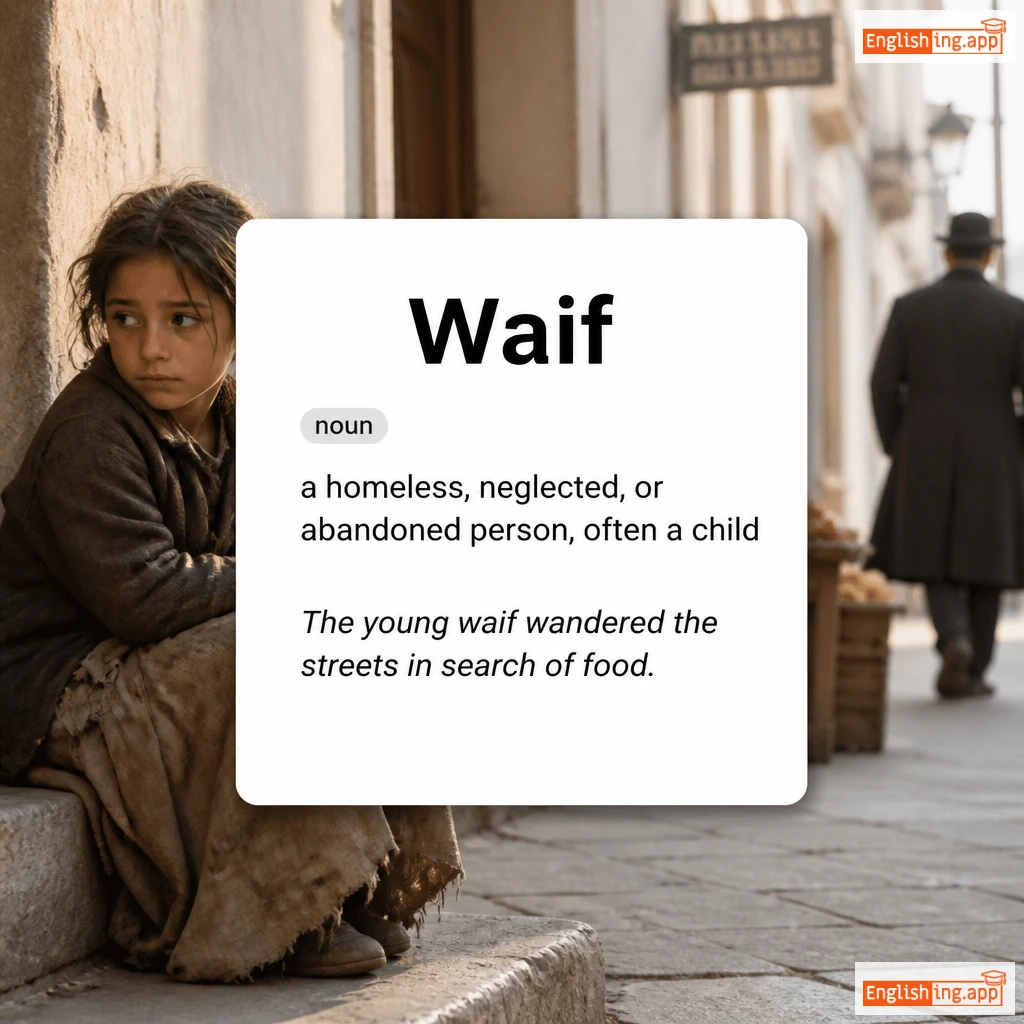
Waif definition card — visual illustration of the meaning
noun C2
/weɪf/
ভবঘুরে শিশু (vobghure shishu)

a homeless, neglected, or abandoned person, often a child

"The young waif wandered the streets in search of food."

"ছোট ভবঘুরে শিশুটি খাবারের সন্ধানে রাস্তায় ঘুরছিল।" (choto vobghure shishuti khabarer sondhane rastay ghurchhilo.)
noun C2
/ˈwɑːmpəm/
শঙ্খের মালা (shonker mala)

beads made by Native Americans from shells, used as money or decoration

"The tribe traded furs for wampum."

"গোত্রটি পশমের বিনিময়ে শঙ্খের মালা বেচাকেনা করেছিল।" (Gotroti poshmer binimoye shonker mala bechakena korechilo.)
verb C2
/ˈwaŋɡl/
চাতুর্যের মাধ্যমে অর্জন করা (chaturjer maddhome orjon kora)

To achieve something by clever or sometimes dishonest persuasion or trickery.

"He wangled a free ticket to the concert."

"সে কৌশলে একটি বিনামূল্যের কনসার্ট টিকিট জোগাড় করল।" (se kaushole ekti binamulloyer concert ticket jogad korlo.)
noun C2
/ˈwɒntənnəs/
অকারণ নিষ্ঠুরতা (okaron nishthurata)

The quality of being reckless, cruel, or deliberately malicious.

"His wantonness shocked everyone at the gathering."

"তার অকারণ নিষ্ঠুরতা সভায় সবাইকে হতবাক করেছিল।" (Tar okaron nishthurata sobhay sobaike hotbak korechilo.)
verb C2
/ˈwɔːbəl/
মিষ্টি সুরে গান গাওয়া (mishti sure gan gaoa)

To sing or whistle with a quavering voice or with trills.

"The bird warbled a sweet tune in the morning."

"পাখিটি সকালে মিষ্টি সুরে গান গাইছিল।" (Pakhiti sokale mishti sure gan gaichhilo.)
noun C2
/ˈwɔːrˌmʌŋɡər/
যুদ্ধপ্রচারক (juddhoprochharok)

A person who advocates or promotes war or conflict.

"The leader was criticized as a warmonger by his opponents."

"নেতাকে তার বিরোধীরা যুদ্ধপ্রচারক হিসেবে সমালোচনা করেছিল।" (Netake tar birodhira juddhoprochharok hisebe somalochona korechilo.)
noun C2
/ˈwɒrən/
খরগোশের গর্তের জাল, জটিল গলি (waren)

A network of interconnected rabbit burrows; also used metaphorically for a densely populated building or district.

"The old part of the city is a warren of narrow streets."

"শহরের পুরোনো অংশটি সরু রাস্তায় ভরা একটি জটিল গলি।" (Shohorer purono angsho ti soru rastay bhora ekti jatil goli.)
noun C2
/ˈweɪstrəl/
অলস, অপচয়কারী (wastrel)

A person who wastes time, money, or resources; an idler or spendthrift.

"The young man was dismissed as a wastrel by his family."

"তরুণটিকে তার পরিবার একজন অপচয়কারী হিসেবে গণ্য করেছিল।" (Torontike tar poribar ekjon opochoykari hisebe gonno korechilo.)
noun C2
/ˈweɪvlət/
ছোট ঢেউ (choto dhoeu)

a small wave or ripple on the surface of water or another medium

"The pond was disturbed only by the tiny wavelets caused by the breeze."

"পুকুরটি কেবল বাতাসে সৃষ্ট ছোট ঢেউ দ্বারা বিচলিত হয়েছিল।" (Pukurtir kebol batashe srishto choto dhoeu dvara bicholit hoyechhilo.)
verb C2
/ˌweɪˈleɪ/
অপ্রত্যাশিতভাবে থামানো / আক্রমণ করা (oprotyashitvabe thamano / akramon kora)

to stop or interrupt someone unexpectedly, often to attack or detain them

"He was waylaid by reporters as he left the courthouse."

"কোর্টহাউস থেকে বের হলে সাংবাদিকরা তাকে আটকে দেয়।" (Korthouse theke ber hole sangbadikra take atke dey.)
adjective C2
/ˈwiːk niːd/
ভীরু (bhiru)

Lacking determination or courage; easily frightened or yielding.

"The leader was criticized for being weak-kneed in the face of opposition."

"বিরোধিতার মুখে ভীরু হওয়ার জন্য নেতাকে সমালোচনা করা হয়েছিল।" (Birodhitar mukhe bhiru howar jonno netake somalochona kora hoyechilo.)
noun C2
/wiːl/
কল্যাণ (kollyan)

A raised mark on the skin left after a blow; or general well-being and prosperity.

"The charity worked for the common weal of the community."

"চ্যারিটি সংগঠন সম্প্রদায়ের সাধারণ কল্যাণের জন্য কাজ করেছিল।" (Charity songothon somprodayer samanno kollyaner jonno kaj korechhilo.)
noun C2
/ˈwɛlkɪn/
আকাশ (akash)

The sky, the heavens, or the upper air.

"The eagle soared high into the welkin."

"ঈগল আকাশে উঁচুতে উড়ে গেল।" (Eagle akashe unchute ure gelo.)
noun C2
/wɛlt/
ফোলা দাগ (phola dag)

A raised mark on the skin, usually from a blow or allergic reaction.

"He had a red welt on his arm after the bee sting."

"মৌমাছির কামড়ের পরে তার হাতে লাল ফোলা দাগ হয়েছিল।" (Moumashir kamrer pore tar hate lal phola dag hoyechilo.)
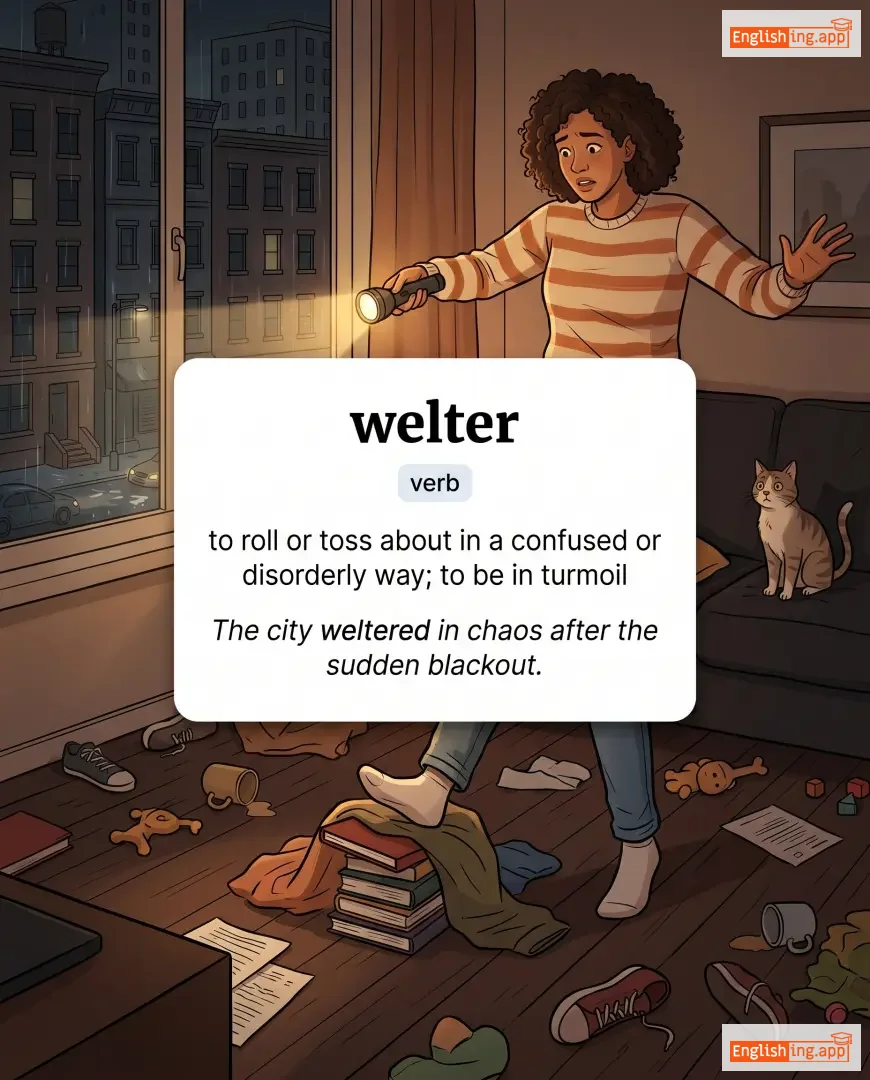
welter definition card — visual illustration of the meaning
verb C2
/ˈwɛltər/
অস্থিরভাবে গড়াগড়ি খাওয়া (osthirvabe goragori khawa)

to roll or toss about in a confused or disorderly way; to be in turmoil

"The city weltered in chaos after the sudden blackout."

"হঠাৎ ব্ল্যাকআউটের পর শহরটি বিশৃঙ্খলায় ভরে উঠেছিল।" (Hotat blackout-er por shohorti bishrinkholay bhore uthchhilo.)
verb C2
/ˈwiːdəl/
চাটুকারিতার মাধ্যমে রাজি করানো (chatukaritar maddhome raji korano)

to persuade or coax someone by using flattery or smooth talk

"She managed to wheedle extra pocket money from her father."

"সে তার বাবার কাছ থেকে অতিরিক্ত খরচের টাকা আদায় করতে পেরেছিল।" (Se tar babar kach theke otirikto khorcher taka aday korte perechhilo.)
noun C2
/wɛlp/
শাবক (shabok)

a young offspring of a dog or other carnivorous mammal; sometimes used to mean an impudent young person

"The farmer found a wolf whelp hiding near the barn."

"কৃষক খামারের কাছে একটি নেকড়ে শাবক খুঁজে পেয়েছিল।" (Krishok khamarer kache ekti nekre shabok khuje peyechhilo.)
adverb, noun C2
/ˈwɛə.wɪð/
উপায়/সম্পদ (upay/sompod)

With which; the means or resources needed for something.

"He lacked the money wherewith to buy a new house."

"তার নতুন বাড়ি কেনার মতো অর্থ ছিল না।" (Tar notun bari kenar moto ortho chilo na.)
verb C2
/ˈwɪni/
ঘোড়ার ডাক (ghorar dak)

to make the high-pitched sound a horse makes

"The horse whinnied when it saw its rider."

"ঘোড়াটি তার আরোহীকে দেখে ডাকল।" (Ghorati tar arohike dekhe daklo.)
noun C2
/wɪt/
অতি সামান্য (oti samanno)

a very small part or amount

"He doesn't care a whit about the outcome."

"সে ফলাফল নিয়ে একেবারেই চিন্তা করে না।" (Se folafol nie ekebarei chinta kore na.)
noun C2
/wɜːrl/
ঘূর্ণি (ghurni)

A pattern of spirals or concentric circles, often found in fingerprints, shells, or flowers.

"The fingerprint displayed a clear whorl pattern."

"আঙুলের ছাপে একটি স্পষ্ট ঘূর্ণি নকশা দেখা গিয়েছিল।" (Anguler chhape ekti sposto ghurni noksha dekha giyechilo.)
noun C2
/waɪl/
কৌশল, ছলনা (kaushol, cholona)

A trick or clever scheme meant to deceive or outwit someone.

"He used every wile to win her trust."

"সে তার বিশ্বাস জিততে প্রতিটি ছলনা ব্যবহার করেছিল।" (Se tar bishash jitte protiti cholona byabohar korechilo.)
adjective C2
/ˈwɪloʊi/
সুদীর্ঘ ও নমনীয় (sudirgho o nomoniyo)

Gracefully tall, slender, and flexible, like a willow tree.

"She moved with a willowy elegance across the stage."

"সে মঞ্চে সুদীর্ঘ নমনীয় ভঙ্গিতে চলাফেরা করছিল।" (se monche sudirgho nomoniyo vongite cholafora korchhilo.)
noun C2
/ˈwɪndbæɡ/
বাচাল ব্যক্তি (bachal byakti)

a person who talks too much, especially in a boring or boastful way

"Everyone avoided the windbag at the party because he never let anyone else speak."

"পার্টিতে সবাই ওই বাচাল লোকটিকে এড়িয়ে চলেছিল, কারণ তিনি অন্য কাউকে কথা বলতে দিতেন না।" (partite sobai oi bachal loktike eriye cholechilo, karon tini onyo kauke kotha bolte diten na.)
verb C2
/ˈwɪn.oʊ/
ছেঁটে ফেলা; খড় থেকে শস্য আলাদা করা (chhete fela; khor theke shashya alada kora)

to remove the less desirable parts from a group; originally, to separate grain from chaff by blowing air

"The committee will winnow the list of applicants to ten finalists."

"কমিটি আবেদনকারীদের তালিকা ছেঁটে দশজন চূড়ান্ত প্রার্থী রাখবে।" (committee abedonkari der talika chhete doshjon churanto prarthi rakhbe.)
adjective C2
/ˈwɪnsəm/
নির্মলভাবে আকর্ষণীয় (nirmolbhabe akorshoniyo)

pleasant and attractive in a fresh, innocent, or charming way

"Her winsome smile instantly put the nervous guests at ease."

"তার নির্মল হাসি সঙ্গে সঙ্গে উৎকণ্ঠিত অতিথিদের স্বস্তি দিয়েছিল।" (tar nirmol hasi songe songe utkantito otithider swosti diyechhilo.)
adjective C2
/ˈwɪspi/
পাতলা ও সূক্ষ্ম (patla o sukshmo)

Thin, delicate, and weak in appearance or form.

"Her wispy hair blew gently in the breeze."

"তার পাতলা চুল বাতাসে আস্তে আস্তে উড়ছিল।" (tar patla chul batashe aste aste urchhilo.)
adjective C2
/ˈwɪtləs/
অবুদ্ধিমান / নির্বোধ (obuddhiman / nirbodh)

lacking intelligence or good sense

"It was a witless decision to leave the door unlocked."

"দরজা খোলা রেখে যাওয়া ছিল এক নির্বোধ সিদ্ধান্ত।" (Dorja khola rekhe jaoa chhilo ek nirbodh siddhanto.)
noun C2
/ˈwɪtlɪŋ/
বোকা / ভণ্ড বুদ্ধিমান (boka / bhondo buddhiman)

a person who has little wit or pretends to be witty

"He acted like a witling among scholars."

"সে পণ্ডিতদের মধ্যে এক বোকা সাজার চেষ্টা করেছিল।" (Se ponditder modhye ek boka sajar cheshta korechhilo.)
noun C2
/ˈwɪtɪˌsɪzəm/
চতুর উক্তি / হাস্যরসাত্মক মন্তব্য (chotur ukkhi / hasyarosatmak montobbo)

a clever or funny remark

"Her witticism made everyone laugh during the meeting."

"তার বুদ্ধিদীপ্ত মন্তব্য সবাইকে হাসিয়েছিল মিটিং চলাকালীন।" (Tar buddhidipto montobbo sobaike hasiyachhilo meeting cholakaline.)
adverb C2
/ˈwɪtɪŋli/
ইচ্ছাকৃতভাবে (ichchhakritobhabe)

Consciously and intentionally; on purpose.

"He wittingly withheld information from the police."

"সে ইচ্ছাকৃতভাবে পুলিশের কাছ থেকে তথ্য গোপন করেছিল।" (Se ichchhakritobhabe polisher kach theke tothyo gopon korechilo.)
verb C2
/ˈwɪzn/
শুকিয়ে যাওয়া (shukie jaoya)

To become dry, shrunken, and wrinkled.

"The flowers began to wizen after days without water."

"পানি ছাড়া কয়েকদিন পর ফুলগুলো শুকিয়ে যেতে শুরু করল।" (Pani chhara koyekdin por phulgulo shukie jete shuru korlo.)
adjective C2
/ˈwɪzn feɪst/
কুঁচকানো মুখবিশিষ্ট (kuchkano mukhbishishto)

Having a dry, wrinkled, and withered face.

"A wizen-faced old man sat quietly in the corner."

"একজন কুঁচকানো মুখের বৃদ্ধ চুপচাপ কোণে বসে ছিল।" (Ekjôn kuchkano mukher bridho chupchap kone boshe chhilo.)
adjective C2
/ˈwɪznd/
কুঁচকানো (kuchkano)

Shriveled, wrinkled, or withered, often due to age.

"The wizened tree stood in the field for centuries."

"শতাব্দীর পর শতাব্দী ধরে সেই কুঁচকানো গাছটি মাঠে দাঁড়িয়ে ছিল।" (Shotabdir por shotabdi dhore sei kuchkano gachh-ti mathe darie chhilo.)
adjective C2
/woʊnt/ or /wɔːnt/
অভ্যস্ত (obhbosto)

accustomed or used to doing something

"She rose early, as she was wont to do."

"সে যেমন অভ্যস্ত, তেমনি ভোরে উঠেছিল।" (Se jemon obhbosto, temni bhore uthhechhilo.)
adjective C2
/ˈwɜːkmənˌlaɪk/
কারিগরি দক্ষতাপূর্ণ (karigori dokkhotpurno)

Showing efficient, competent, and practical skill, but without flair or creativity.

"The carpenter delivered a workmanlike performance on the project."

"কার্পেন্টার প্রকল্পে একটি কারিগরি দক্ষতাপূর্ণ কাজ সরবরাহ করেছিলেন।" (Carpenter prokolpe ekti karigori dokkhotpurno kaj sorborah korechilen.)
noun C2
/reɪθ/
ভূত (bhut)

A ghost or ghostlike image of someone, especially seen shortly before or after their death.

"A wraith appeared in the fog near the old castle."

"পুরানো দুর্গের কাছে কুয়াশায় একটি ভূত দেখা গেল।" (Purano durger kache kuyashay ekti bhut dekha gelo.)
noun C2
/ˈræŋɡlər/
গবাদি পশুর রাখাল (gbadi poshur rakhal)

a person who argues noisily; or someone who takes care of livestock on a ranch

"The cowboy worked as a wrangler on the ranch."

"কাউবয় র‍্যাঞ্চে একজন র‍্যাংলার হিসেবে কাজ করত।" (Cowboy ranche ekjon wrangler hisebe kaj korto.)
verb C2
/rɛst/
বলপ্রয়োগে ছিনিয়ে নেওয়া (bolproyoje chineye newa)

to forcibly pull something from a person's grasp; to seize with effort or struggle

"The police had to wrest the weapon from the suspect's hand."

"পুলিশকে সন্দেহভাজনের হাত থেকে অস্ত্র ছিনিয়ে নিতে হয়েছিল।" (Polishke shondehobajoner hat theke ostro chineye nite hoyechilo.)
noun C2
/rɛtʃ/
অভাগা ব্যক্তি (obhaga bekti)

an unfortunate or miserable person; a despicable or contemptible person

"The poor wretch was left out in the cold with no shelter."

"অভাগা লোকটি ঠান্ডায় আশ্রয় ছাড়াই বাইরে ফেলে রাখা হয়েছিল।" (Obhaga lokti thanday asroy charai baire phele rakha hoyechilo.)
adjective C2
/ˌrɒŋˈhɛd.ɪd/
ভুল ধারণাপ্রসূত (bhul dharanaprosuto)

Having or showing bad judgment or stubbornly holding to wrong ideas.

"The policy was considered wrongheaded and harmful."

"নীতিটিকে ভুল ধারণাপ্রসূত ও ক্ষতিকর হিসেবে বিবেচনা করা হয়েছিল।" (Nititike bhul dharanaprosuto o khotikor hisebe bichar kora hoyechhilo.)