Vocabulaires

Découvrez, apprenez et maîtrisez le vocabulaire anglais

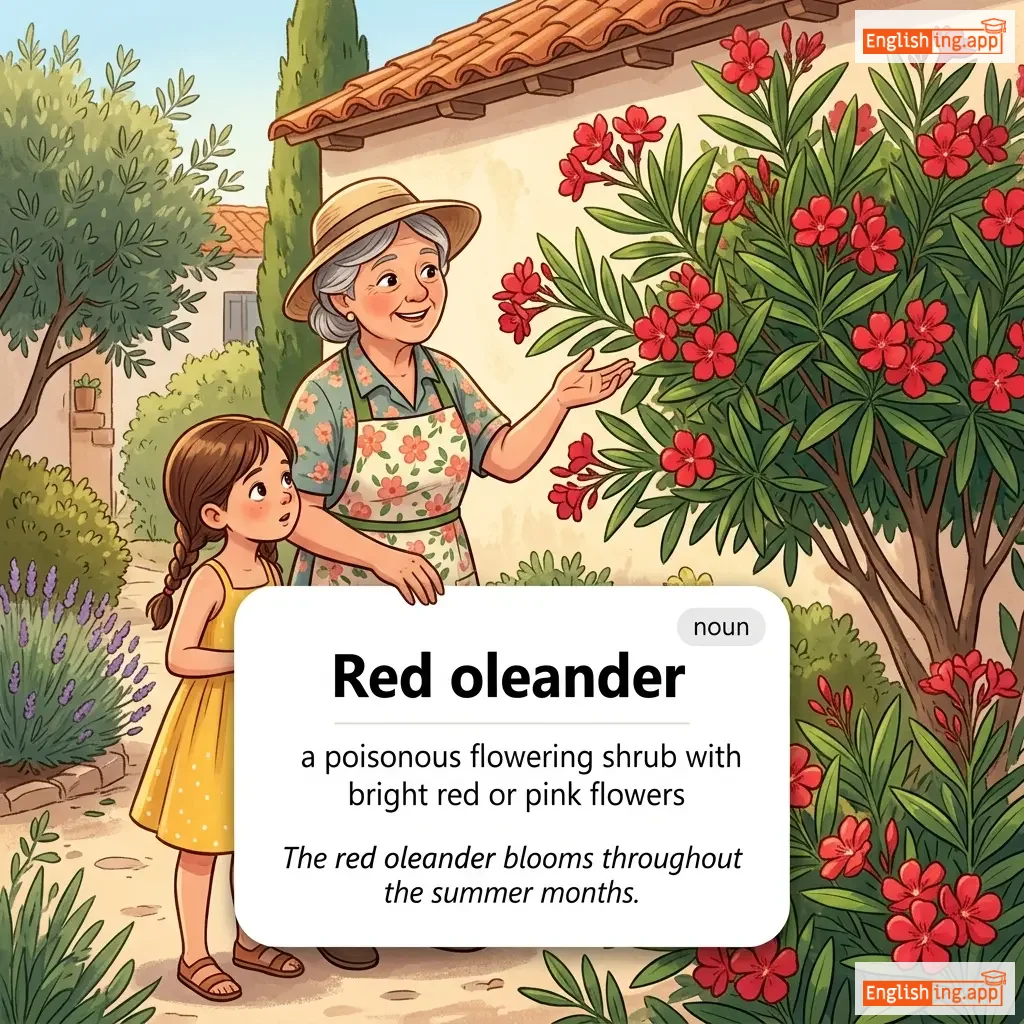
Red oleander definition card — visual illustration of the meaning
noun C2
/red ˌəʊ.liˈæn.dər/
красный олеандр (krasnyy oleandr)

a poisonous flowering shrub with bright red or pink flowers

"The red oleander blooms throughout the summer months."

"Красный олеандр цветет все лето." (Krasnyy oleandr tsvetet vse leto.)
noun C2
/ˈrɛd.ə.ləns/
аромат (aromat)

a pleasant smell or the quality of suggesting something strongly

"The redolence of jasmine filled the evening air."

"Аромат жасмина наполнил вечерний воздух." (Aromat zhasmina napolnil vecherniy vozdukh.)
adjective C2
/ˈrɛd.ələnt/

having a strong pleasant smell; strongly reminiscent or suggestive of something

"The kitchen was redolent of spices and fresh herbs."

adjective C2
/rɪˈdaʊ.tə.bəl/
ужасный/внушающий уважение (uzhasnyj/vnushayushchij uvazhenie)

formidable, especially as an opponent; inspiring fear or respect

"She was a redoubtable leader who commanded respect from all."

"Она была ужасным лидером, который пользовался уважением всех." (Ona byla uzhasnym liderom, kotoryj pol'zovalsya uvaženiem vsekh.)
verb C2
/rɪˈdaʊnd/
способствовать (sposobstvovat')

to contribute greatly to a result or consequence, usually beneficial

"His hard work will redound to the success of the company."

"Его усердная работа принесет успех компании." (Yego usyerdnaya rabota prinesyot uspekhi kompaniyi.)
adjective C2
/rɪˈdjuːsəbl̩/

capable of being simplified, lessened, or made smaller

"The problem is complex but reducible to a few basic principles."

noun C2
/rɪˈfɛkʃən/
прием пищи / еда (priem pishchi / yeda)

a meal or the act of taking food and drink

"The monks gathered for their evening refection."

"Монахи собрались для вечернего приема пищи." (Monakhi sobralis dlya vechernyego priema pishchi.)
noun C2
/rɪˈfɛktəri/
столовая (stolovaya)

a dining hall, especially in a monastery, convent, or school

"Students had lunch in the refectory."

"Студенты обедали в столовой." (Studenty obedali v stolovoy.)
adjective C2
/rɪˈfɛrəbəl/
реферируемый (referiruemyj)

able to be related or directed to something

"The issue is referable to the new policy changes."

"Этот вопрос можно отнести к изменениям в новой политике." (Eto vopros mozhno otnesti k izmeneniyam v novoj politike.)
adjective C2
/rɪˈflɛktɪbəl/
отражаемый (otrazhaemyy)

capable of being reflected, as light or an image

"The surface of the lake is highly reflectible in the morning sun."

"Поверхность озера сильно отражается на утреннем солнце." (Poverkhnost' ozera sil'no otrezhayetsya na utrehnem solntse.)
adjective C2
/rɪˈflɛksəbl/
рефлексируемый (refleksiruemyy)

Capable of being reflected or bent back.

"The surface was highly reflexible, bouncing light in different directions."

"Поверхность была сильно рефлексируемой, отражая свет в разных направлениях." (Poverkhnost' byla sil'no refleksiruemoy, otrazhayaya svet v raznykh napravleniyakh.)
verb C2
/rɪˈfrækt/
рефрактировать (refraktirovat)

To bend light, sound, or heat as it passes through a medium.

"The water refracts light, making the straw look bent."

"Вода преломляет свет, заставляя соломинку выглядеть согнутой." (Voda prelomlyaet svet, zastavlyaya solominku viglyadet' sognutoy.)
noun C2
/rɪˈfrækʃən/
рефракция (refraksia)

The bending of light, sound, or other waves when they pass from one medium to another of different density.

"The refraction of light in water makes objects appear bent."

"Рефракция света в воде заставляет объекты выглядеть искривленными." (Refrakciya sveta v vode zastavlyaet ob'ekty vyglyadet' iskivlennymi.)
refractor definition card — visual illustration of the meaning
noun C2
/rɪˈfræk.tər/
рефрактор (refraktor)

A type of telescope that uses lenses to focus light.

"Refractor telescopes use lenses to focus light."

"Рефракторные телескопы используют линзы для фокусировки света." (Refraktornye teleskopy ispol'zuyut linzy dlya fokusirovki sveta.)
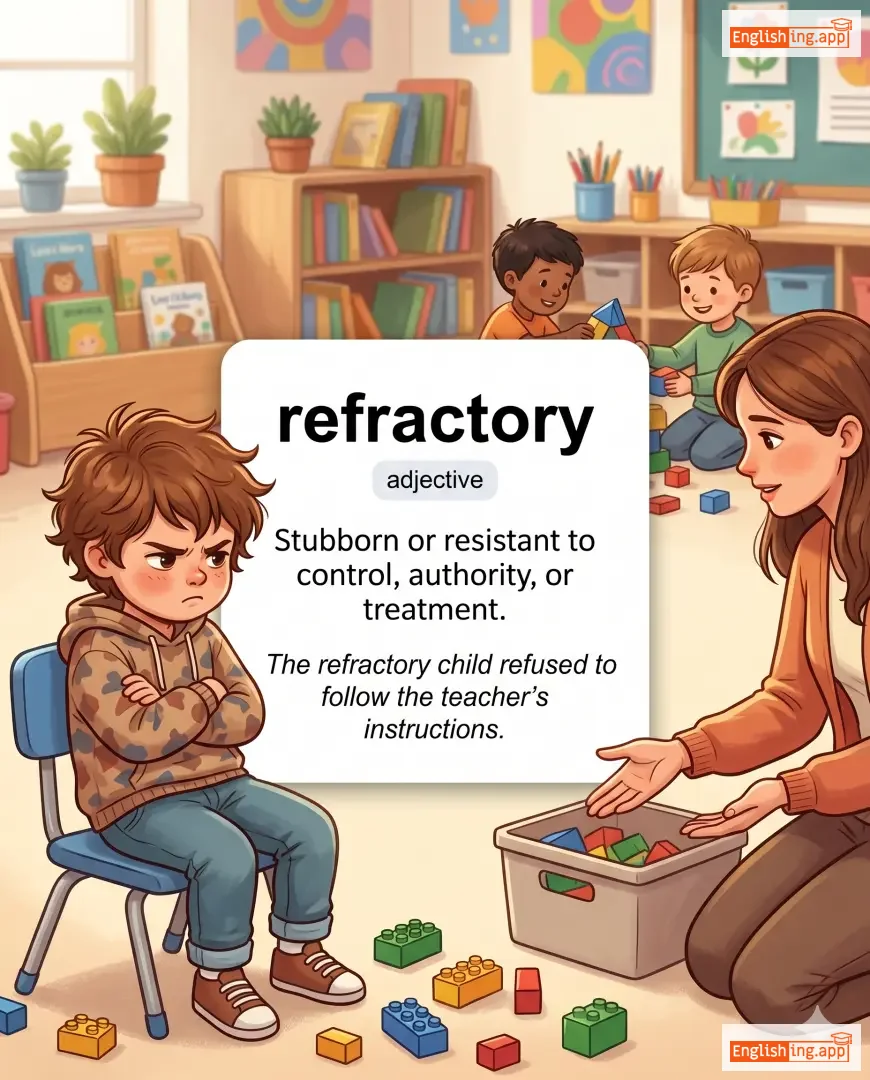
refractory definition card — visual illustration of the meaning
adjective C2
/rɪˈfræktəri/
непослушный (neposlushny)

Stubborn or resistant to control, authority, or treatment.

"The refractory child refused to follow the teacher's instructions."

"Непослушный ребенок отказался следовать указаниям учителя." (Neposlushnyj rebenok otkazalsya sledovat' ukazaniyam uchitelya.)
adjective C2
/rɪˈfræɡəbəl/
опровержимый (opverzhimyy)

Capable of being refuted or disproved.

"His argument was weak and easily refragable."

"Его аргумент был слабым и легко опровергнутым." (Ego argument byl slabym i legko opovrezhdenym.)
noun C2
/rɪˈfrɪndʒənsi/
рефрингенция (refringentsiya)

The ability of a substance to bend light; refractive power.

"Glass has a higher refringency than water."

"Стекло имеет более высокую рефрингенцию, чем вода." (Steklo imeyet boleye vysokuyu refringentsiyu, chem voda.)
adjective C2
/rɪˈfrɪndʒənt/
преломляющий (prelomlyayushchiy)

Capable of refracting light or other waves.

"The refringent properties of the crystal bent the light into a spectrum."

"Преломляющие свойства кристалла изгибали свет в спектр." (Prelomlyayushchie svoystva kristalla izgibali svet v spektr.)
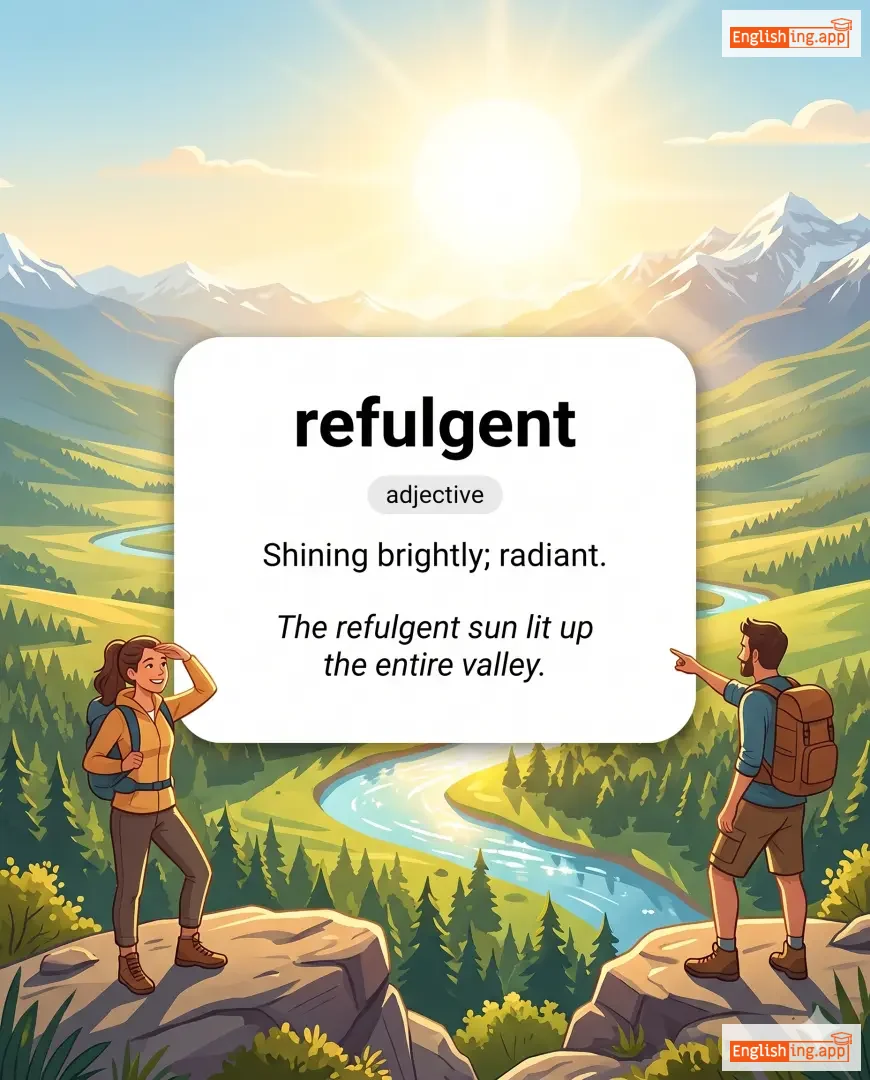
refulgent definition card — visual illustration of the meaning
adjective C2
/rɪˈfʌldʒənt/
сияющий (siyayushchiy)

Shining brightly; radiant.

"The refulgent sun lit up the entire valley."

"Яркое солнце освещало всю долину." (Yarkoye solntse osveshchalo vsyu dolinu.)
adjective C2
/rɪˈfjuː.tə.bəl/
опровержимый (oprovyezhimyy)

capable of being proven wrong or false; able to be disproved

"His theory was refutable because it could be tested experimentally."

"Его теория была опровержима, потому что ее можно было протестировать экспериментально." (Ego teoriya byla oprovyerzhima, potomu chto yeyo mozhno bylo protestirovat' eksperimental'no.)
regale definition card — visual illustration of the meaning
verb C2
/rɪˈɡeɪl/
развлекать (razvlekat)

To entertain or amuse someone with stories, food, or drink.

"He regaled us with stories of his travels around the world."

"Он развлек нас историями о своих путешествиях по всему миру." (On razvlekal nas istoriyami o svoikh puteshestviyakh po vsemu miru.)
noun C2
/rɪˈɡætə/
регата (regata)

A sporting event consisting of a series of boat or yacht races.

"The annual regatta attracted competitors from around the world."

"Ежегодная регата привлекла участников со всего мира." (ezhegodnaya regata privlekla uchastnikov so vsego mira)
noun C2
/ˈriːdʒənt/
регент (regent)

a person who rules in place of a monarch when the monarch is absent or too young

"The prince acted as regent until the king came of age."

"Принц исполнял обязанности регента, пока король не стал совершеннолетним." (Princ ispolnyal obyazannosti regenta, poka korol' ne stal sovershennoletnim.)
noun C2
/ˈrɛdʒɪsaɪd/
регицид (regitsid)

the act of killing a king

"The conspirators were executed for committing regicide."

"Заговорщики были казнены за совершение регицида." (Zagovorshchiki byli kazneny za sovershenie regitsida.)
adjective C2
/ˈrɛɡnənt/
правящий (pravyashchiy)

Reigning; currently holding power, authority, or dominance.

"The regnant queen introduced several reforms during her reign."

"Правящая королева внесла несколько реформ в течение своего правления." (Pravyashchaya koroleva vnesla neskol'ko reform v techeniye svoego pravyeniya.)
noun C2
/rɪˈdʒɔɪndər/
ответ (otvet)

a quick or witty reply; a response to a remark or argument

"His sharp rejoinder silenced the crowd."

"Его резкий ответ заставил толпу замолчать." (Ego rezkiy otvet zastavil tolpu zamoletchay.)
noun C2
/rɪˌdʒuːvəˈnɛsəns/
омоложение (omolozhenie)

the action or process of becoming young or fresh again

"The forest showed signs of rejuvenescence after the rains."

"Лес показал признаки омоложения после дождей." (Les pokazal priznakim omolozheniya posle dozhdey.)
noun C2
/ˈrɛlɪkwɛri/
реликварий (reliquariy)

a container for holy relics

"The ancient reliquary was decorated with gold and precious stones."

"Древний реликварий был украшен золотом и драгоценными камнями." (Drevniy reliquariy byl ukrashen zolotom i dragotsennymi kamnyami.)
adjective C2
/rɪˈmiːdiəbl/
исправимый (ispravimy)

capable of being corrected or cured

"The mistake was serious but still remediable."

"Ошибка была серьезной, но все еще исправимой." (Oshibka byla seryoznoy, no vse eshchyo ispravimoy.)
adjective C2
/rɪˈmɪs/
небрежный (nebrezhnyy)

Negligent in performing a duty or responsibility.

"The manager was remiss in not checking the financial reports carefully."

"Менеджер был небрежен, не проверив финансовые отчеты тщательно." (Menedzher byl nebrezhen, ne proveryv finansovye otchety tchatel'no.)
noun C2
/rɪˈmɒnstrəns/
протест (protest)

A forceful protest or objection.

"The workers’ remonstrance against unfair treatment was ignored."

"Протест рабочих против несправедливого обращения был проигнорирован." (Protest rabochikh protiv nespravedlivogo obshcheniya byl proigнорirovan.)
noun/adjective C2
/rɪˈmɒnstrənt/
протестующий (protestuyushchiy)

A person who makes a forceful protest (noun); protesting or objecting (adjective).

"He was a remonstrant voice in the assembly."

"Он был протестующей голосом на собрании." (On byl protestuyushchey golosom na sobranie.)
remonstrate definition card — visual illustration of the meaning
verb C2
/rɪˈmɒnstreɪt/
протестовать (protestovat)

To make a forceful protest or objection.

"Citizens remonstrated against the new tax policy."

"Граждане протестовали против новой налоговой политики." (Grazhdane protestovali protiv novoy nalogovoy politiki.)
adjective C2
/rɪˈmjuːnərətɪv/
прибыльный (pribyl'nyy)

Financially rewarding or profitable.

"He chose a remunerative career in medicine."

"Он выбрал прибыльную карьеру в медицине." (On vybral pribyl'nuyu kar'yeru v meditsine.)
verb C2
/rɛnd/
разрывать (razryvat)

to tear something apart violently or forcefully

"The explosion rent the air with a deafening noise."

"Взрыв разорвал воздух оглушающим шумом." (Vzryv razorval vozdukh oglushayushchim shumom.)
noun C2
/rɪˌnʌnsiˈeɪʃən/
отречение (otrecheniye)

the formal rejection or giving up of something, usually a belief, claim, or way of life

"His renunciation of worldly pleasures impressed the monks."

"Его отречение от мирских удовольствий впечатлило монахов." (Yego otrecheniye ot mirskikh udovol'stviy vpechatlilo monakhov.)
adjective C2
/ˈrɛpərəbəl/
ремонтопригодный (remontoprigojnyj)

able to be repaired or fixed

"The damage to the car was serious but still reparable."

"Повреждения автомобиля были серьезными, но все еще ремонтопригодными." (Povrezhdeniya avtomobily byli seryoznymi, no vse eshche remontoprigojnymi.)
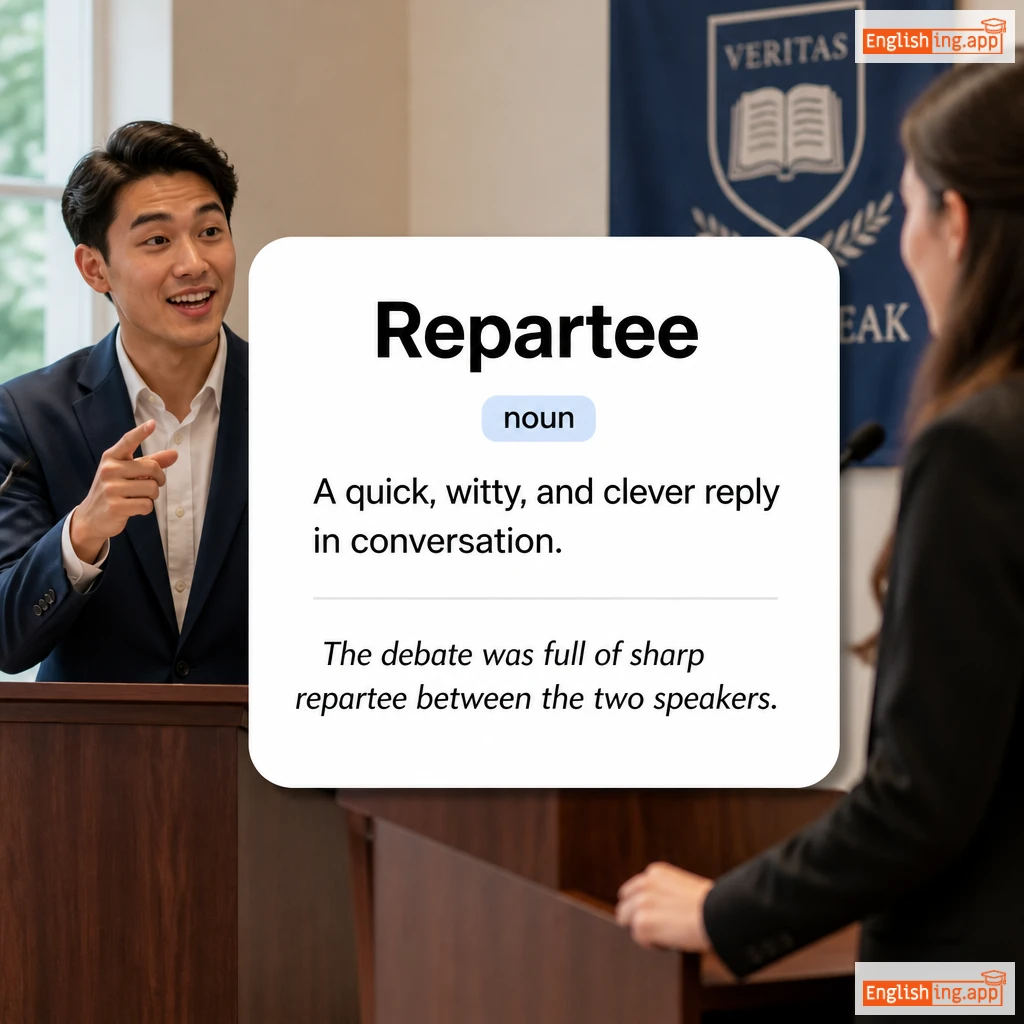
Repartee definition card — visual illustration of the meaning
noun C2
/ˌrɛpɑːrˈtiː/
остроумный ответ (ostroumnyy otvet)

A quick, witty, and clever reply in conversation.

"The debate was full of sharp repartee between the two speakers."

"Дебаты были полны остроумных ответов между двумя ораторами." (Debaty byli polny ostroumnykh otvetov mezhdu dvumya oratorami.)
noun C2
/rɪˈpæst/
трапеза (trapeza)

A meal or the food eaten during a meal.

"They enjoyed a delicious repast by the riverside."

"Они насладились вкусной трапезой у реки." (Oni naslazhdalis' vkusnoy trapezoy u reki.)
adjective C2
/ˌrɛpərˈtɔːriəl/
репортерский (reporterskiy)

Relating to or characteristic of a repertoire, especially in journalism or performance contexts.

"The journalist's repertorial style captured every detail of the unfolding story."

"Репортерский стиль журналиста запечатлел каждую деталь разворачивающейся истории." (Reporterkiy stil' zhurnalista zapechatlel kazhduyu detal' razvorachivayushcheysya istorii.)
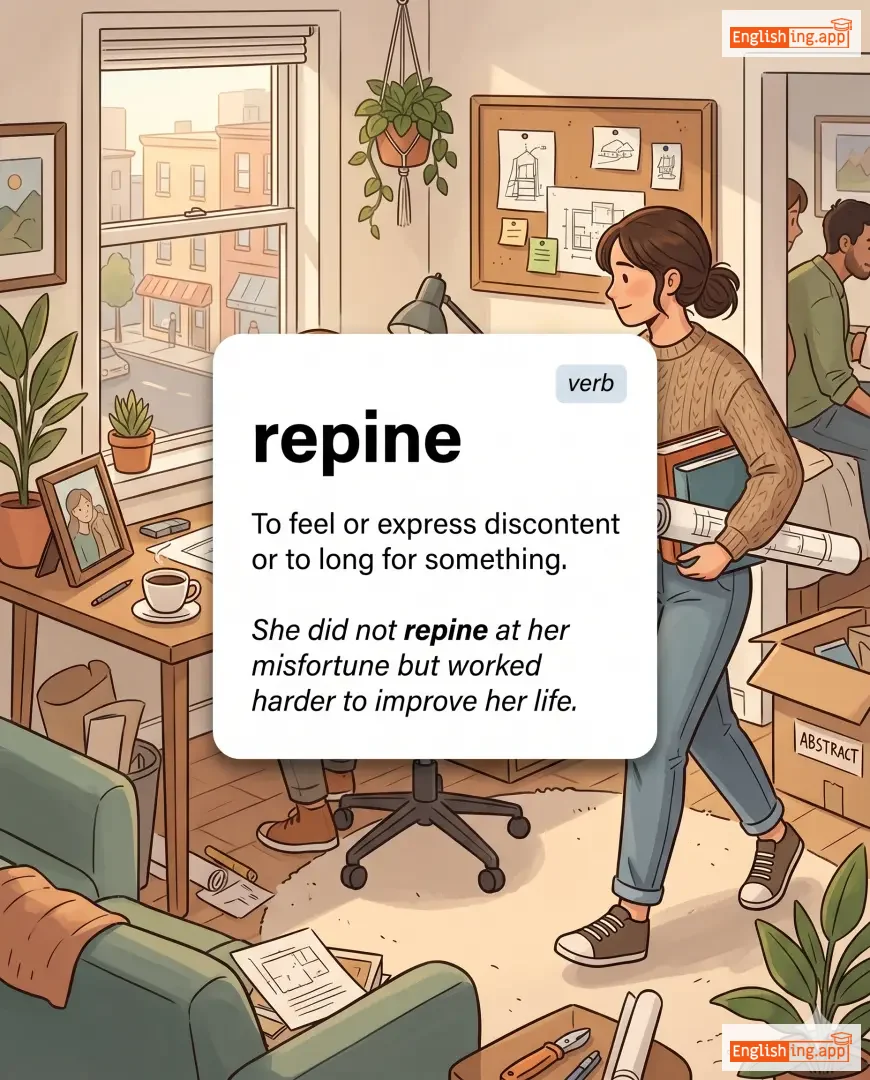
repine definition card — visual illustration of the meaning
verb C2
/rɪˈpaɪn/
горевать (gorevat)

To feel or express discontent or to long for something.

"She did not repine at her misfortune but worked harder to improve her life."

"Она не горевала по поводу своей беды, а работала усерднее, чтобы улучшить свою жизнь." (Ona ne gorevala po povodu svoey bedy, a rabotala usyerdnee, chtoby uluchshit' svoyu zhizn'.)
verb C2
/ˌrɛprɪˈhɛnd/
осуждать (osuzhdat)

to express disapproval or criticism of someone or something

"The teacher reprehended the student for being dishonest."

"Учитель осудил ученика за нечестность." (Uchitel' osudil uchenika za nechesnost'.)
noun C2
/ˌrɛprɪˈhɛnʃən/
упрек (uprek)

The act of rebuking or criticizing severely.

"The teacher’s reprehension of the student’s behavior was justified."

"Упрек учителя в поведении студента был оправдан." (Uprek uchitelya v povedenii studenta byl opravdan.)
adjective C2
/rɪˈprɛsəbl̩/
сдерживаемый (sderzhivayemyy)

Capable of being restrained or suppressed.

"The movement proved to be hardly repressible."

"Движение оказалось едва сдерживаемым." (Dvizhenie okazalos' edva sderzhivayemym.)
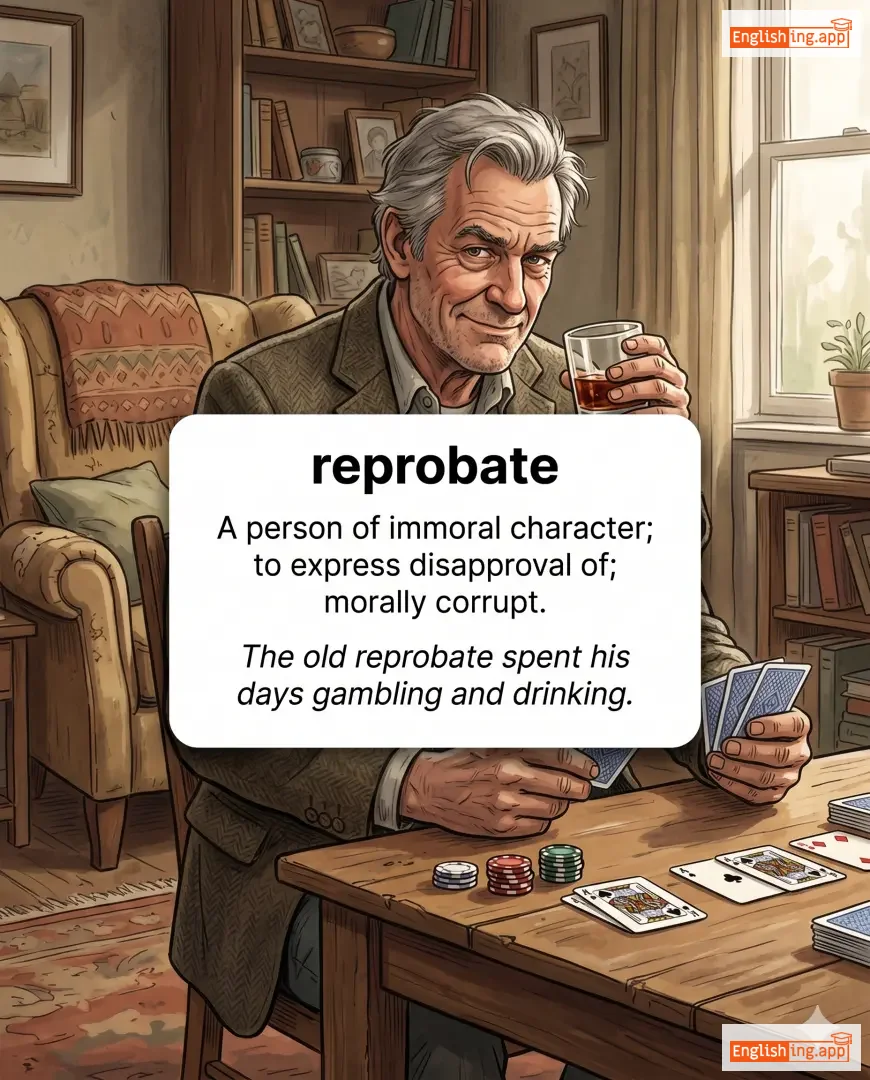
reprobate definition card — visual illustration of the meaning
noun, adjective, verb C2
/ˈrɛprəˌbeɪt/

A person of immoral character; to express disapproval of; morally corrupt.

"The old reprobate spent his days gambling and drinking."

noun C2
/ˌrɛprəˈbeɪʃən/
осуждение (reprobeishn)

Strong disapproval or condemnation; rejection by God as beyond salvation.

"The teacher’s face showed clear reprobation at the student’s rude remark."

"Лицо учителя ясно выражало осуждение по поводу грубой реплики ученика." (Litso uchitelya yasno vyrazhalo osuzhdenie po povodu gruboy repliki uchenika.)
noun C2
/rɪˈpruːf/
критика, осуждение (kritika, osuzhdenie)

An expression of blame or disapproval.

"His careless words drew a sharp reproof from his mother."

"Его небрежные слова вызвали резкую критику со стороны его матери." (Ego nebrezhnie slova vyzvali rezkuyu kritiku so storony ego materi.)
verb C2
/rɪˈpruːv/
поругать (porugat)

to criticize or correct someone gently or disapprove of their actions

"The teacher reproved the student for being late."

"Учитель отругал ученика за опоздание." (Uchitel' otrugal uchenika za opozdanie.)
noun C2
/rɪˈpʌɡ.nəns/
отвращение (otvrashchenie)

intense disgust or strong aversion towards something

"She felt deep repugnance at the cruelty of the act."

"Она почувствовала глубокое отвращение к жестокости этого акта." (Ona pochuvstvovala glubokoe otvrashchenie k zhestokosti etogo akta.)
noun C2
/ˈrɛkwiəm/
месса за упокой (messa za upokoy)

A mass, music, or ceremony for the repose of the souls of the dead.

"The choir performed a requiem in memory of the late leader."

"Хор исполнил реквием в память о покойном лидере." (Khor ispolnil rekviem v pamyat' o pokoynom lidere.)