Vocabulaires

Découvrez, apprenez et maîtrisez le vocabulaire anglais

noun C2
/ˈhen.ə/
henna (henna)

a reddish-brown dye made from the powdered leaves of a tropical shrub, used to color hair and decorate skin

"The bride's hands were beautifully decorated with intricate henna patterns for her wedding ceremony."

"Las manos de la novia estaban bellamente decoradas con intrincados patrones de henna para su ceremonia de boda." (Las manos de la novia estaban bellamente decoradas con intrincados patrones de henna para su ceremonia de boda.)
verb C2
/ˈhɛnˌpɛk/
ser constantemente criticado o dominado por la esposa (ser constantemente criticado o dominado por la esposa)

To continually criticize, nag, or dominate (especially a husband).

"He felt henpecked by his overly controlling wife."

"Él se sintió controlado por su esposa excesivamente dominante." (El se sintió controlado por su esposa excesivamente dominante.)
noun C2
/ˈhɛptəˌɡɒn/
heptágono (heptagono)

A polygon with seven sides and seven angles.

"The math teacher drew a heptagon on the board."

"El maestro de matemáticas dibujó un heptágono en la pizarra." (El maestro de matemáticas dibujó un heptágono en la pizarra.)
noun C2
/ˈhɛptɑːrki/
heptarquía (heptarquia)

A group of seven rulers or governments, especially the seven Anglo-Saxon kingdoms in early England.

"The history book described the heptarchy of Anglo-Saxon England."

"El libro de historia describió la heptarquía de la Inglaterra anglosajona." (El libro de historia describió la heptarquía de la Inglaterra anglosajona.)
adjective C2
/hɜːrˈbeɪʃəs/
herbáceo (herbaceo)

Relating to or resembling herbs; plants with soft, non-woody stems.

"The garden was filled with herbaceous plants that thrived in the summer."

"El jardín estaba lleno de plantas herbáceas que prosperaron en el verano." (El jardín estaba lleno de plantas herbáceas que prosperaron en el verano.)
noun C2
/hɜːrˈbɛəriəm/
herbario (herbario)

A collection of preserved plant specimens and associated data used for scientific study.

"The university maintains a large herbarium for research and education."

"La universidad mantiene un gran herbario para la investigación y la educación." (La universidad mantiene un gran herbario para la investigación y la educación.)
adjective C2
/ˌhɜːrkjʊˈliːən/
sumamente difícil (sumamente dificil)

Requiring great strength or effort; very difficult to perform.

"It was a herculean task to rebuild the city after the disaster."

"Fue una tarea sumamente difícil reconstruir la ciudad después del desastre." (Fue una tarea sumamente dificil reconstruir la ciudad despues del desastre.)
adjective C2
/həˈrɛtɪkəl/
herético (heretico)

Relating to or characterized by departure from accepted beliefs or standards, especially in religion.

"The priest condemned the book as heretical."

"El sacerdote condenó el libro como herético." (El sacerdote condenó el libro como herético.)
hermetic definition card — visual illustration of the meaning
adjective C2
/hərˈmɛtɪk/
hermético (hermetico)

Completely sealed, especially so that no air can enter or escape.

"The medicine was kept in a hermetic container."

"El medicamento se guardó en un contenedor hermético." (El medicamento se guardó en un contenedor hermético.)
adverb C2
/hərˈmɛtɪkli/
de manera hermética (de manera hermetica)

In a way that is completely airtight or sealed off.

"The jars were hermetically sealed to preserve freshness."

"Los tarros fueron sellados herméticamente para preservar la frescura." (Los tarros fueron sellados hermetica mente para preservar la frescura.)
noun C2
/ˈhɜːrmɪtɪdʒ/
ermita (ermita)

A secluded residence or retreat, often for a hermit or religious recluse.

"The monk spent years in a hermitage deep in the forest."

"El monje pasó años en una ermita en lo profundo del bosque." (El monje pasó años en una ermita en lo profundo del bosque.)
noun C2
/ˌhɜːrpəˈtɒlədʒɪst/
herpetólogo (herpetologo)

A scientist who studies reptiles and amphibians.

"The herpetologist discovered a new species of frog in the rainforest."

"El herpetólogo descubrió una nueva especie de rana en la selva tropical." (El herpetologo descubrio una nueva especie de rana en la selva tropical.)
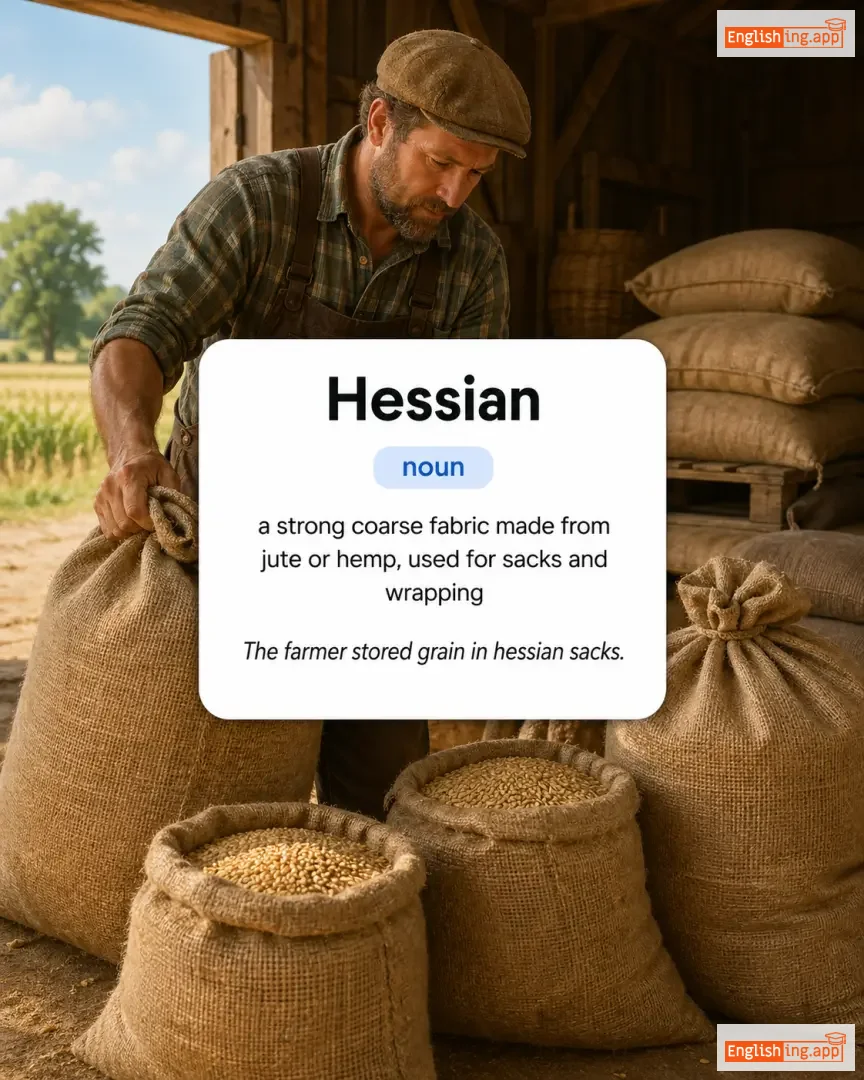
Hessian definition card — visual illustration of the meaning
noun C2
/ˈhɛʃ.ən/
tela de yute (tela de yute)

a strong coarse fabric made from jute or hemp, used for sacks and wrapping

"The farmer stored grain in hessian sacks."

"El agricultor guardó grano en sacos de hessian." (El agricultor guardó grano en sacos de hessian.)
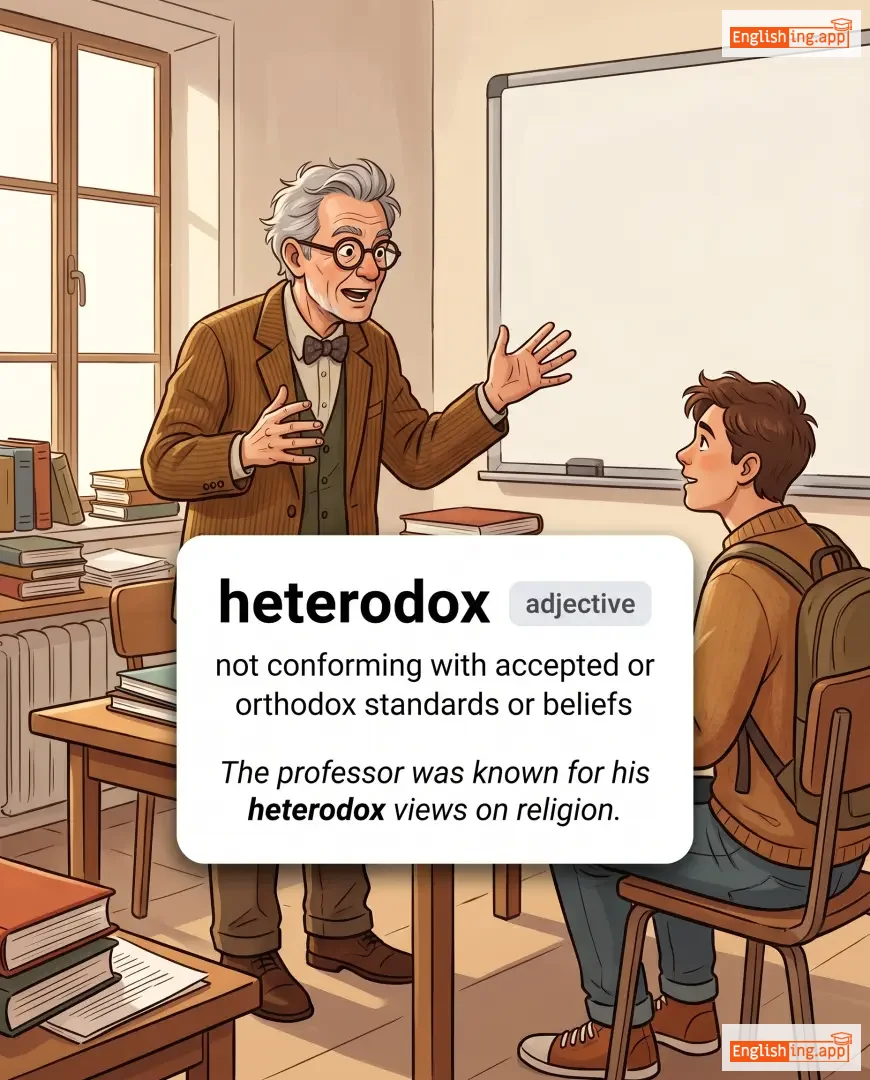
heterodox definition card — visual illustration of the meaning
adjective C2
/ˈhɛtərəˌdɒks/
heterodoxo (heterodoxo)

not conforming with accepted or orthodox standards or beliefs

"The professor was known for his heterodox views on religion."

"El profesor era conocido por sus puntos de vista heterodoxos sobre la religión." (El profesor era conocido por sus puntos de vista heterodoxos sobre la religion.)
noun C2
/ˌhɛtərəʤəˈniːɪti/
heterogeneidad (heterogeneidad)

the quality or state of being diverse in character or content

"The cultural heterogeneity of the city makes it vibrant and unique."

"La heterogeneidad cultural de la ciudad la hace vibrante y única." (La heterogeneidad cultural de la ciudad la hace vibrante y unica.)
adjective C2
/ˌhɛtərəʊˈmɔːrfɪk/
heteromórfico (heteromorfiko)

Having different forms or shapes, especially in the same species or organism.

"Butterflies are heteromorphic during their life cycle, changing forms from larva to adult."

"Las mariposas son heteromórficas durante su ciclo de vida, cambiando de forma de larva a adulta." (Las mariposas son heteromórficas durante su ciclo de vida, cambiando de forma de larva a adulta.)
heuristic definition card — visual illustration of the meaning
adjective C2
hjʊəˈrɪs.tɪk
heurístico (heuristico)

Enabling a person to discover or learn something for themselves; using practical experience rather than theory.

"The scientist used a heuristic approach to solve the problem."

"El científico utilizó un enfoque heurístico para resolver el problema." (El cientifico utilizo un enfoque heuristico para resolver el problema.)
verb C2
/hjuː/
cortar (cortar)

To chop or cut something, especially wood or stone, with a tool.

"The workers hewed logs to build the cabin."

"Los trabajadores cortaron troncos para construir la cabaña." (Los trabajadores cortaron troncos para construir la cabaña.)
adjective C2
/hɛkˈsæŋɡjələr/
hexagonal (hexagonal)

Having six angles or corners.

"The artist designed a hexangular frame for the mirror."

"El artista diseñó un marco hexagonal para el espejo." (El artista disenó un marco hexagonal para el espejo.)
noun C2
/ˈhɛksəˌpɒd/
hexápodo (hexapodo)

An insect or other organism with six legs.

"The scientist observed a hexapod crawling on the leaf."

"El científico observó un hexápodo arrastrándose sobre la hoja." (El científico observó un hexápodo arrastrándose sobre la hoja.)
noun C2
/ˈheɪ.deɪ/
el apogeo; la época dorada; el mejor momento (el apogeo; la epoca dorada; el mejor momento)

the period of a person's or thing's greatest success, popularity, or vigor; prime time

"During her heyday as a singer, she performed in sold-out concerts around the world."

"Durante su apogeo como cantante, ella actuaba en conciertos agotados alrededor del mundo." (Durante su apogeo como cantante, ella actuaba en conciertos agotados alrededor del mundo.)
adjective C2
/haɪˈbɜːrnəl/
invernal (eebernal)

Relating to or occurring in winter.

"The hibernal season is often harsh in the mountains."

"La temporada hibernal suele ser dura en las montañas." (La temporada hibernal suele ser dura en las montanas.)
adjective/noun C2
/haɪˈbɜːrniən/
hiberniano (hiberniano)

Relating to Ireland or the Irish.

"He enjoyed reading about Hibernian culture and history."

"Disfrutó leer sobre la cultura y la historia hiberniana." (Disfruto leer sobre la cultura y la historia hiberniana.)
adjective C2
/hɪk/
campesino; paleto (campesino; paleto)

unsophisticated person from a rural area; country bumpkin

"He had a hick accent from growing up in a small town."

"Él tenía un acento de campesino por haber crecido en un pueblo pequeño." (Él tenía un acento de campesino por haber crecido en un pueblo pequeño.)
adjective C2
/ˈhaɪd.baʊnd/
retrógrado (retrogrado)

unwilling or unable to change because of tradition or convention

"He is too hidebound to accept new ideas."

"Es demasiado retrógrado para aceptar ideas nuevas." (Es demasiado retrogrado para aceptar ideas nuevas)
verb C2
/haɪ/
apresurarse (apresurarse)

to go quickly; hasten

"He hied to the station to catch the train."

"Él se apresuró a la estación para tomar el tren." (El se apresuro a la estacion para tomar el tren.)
noun C2
/ˈhaɪərəˌɡlɪf/
jeroglífico (jeroglifico)

A picture or symbol used in ancient writing systems, especially Egyptian writing.

"The walls of the temple were covered in hieroglyphs."

"Las paredes del templo estaban cubiertas con jeroglíficos." (Las paredes del templo estaban cubiertas con jeroglificos.)
adjective/noun C2
/ˌhaɪərəˈɡlɪfɪk/
jeroglífico (jeroglifico)

Relating to or written in hieroglyphs; symbols or writing that is difficult to understand.

"The archaeologists studied the hieroglyphic inscriptions carefully."

"Los arqueólogos estudiaron las inscripciones jeroglíficas cuidadosamente." (Los arqueologos estudiaron las inscripciones jeroglificas cuidadosamente.)
adjective C2
/ˌhaɪ ˈfloʊn/
pomposo (pomposo)

Using fancy or pretentious language; lofty in style but often overblown.

"The politician gave a high-flown speech full of promises."

"El político dio un discurso pomposo lleno de promesas." (El politico dio un discurso pomposo lleno de promesas.)
adjective C2
/ˈhaɪˌbraʊ/
intelectualmente superior (intelectualmente superior)

intellectually superior or cultured; often describing art, literature, or activities appealing to intellectual tastes

"The museum is known for its highbrow exhibitions."

"El museo es conocido por sus exposiciones de alto nivel." (El museo es conocido por sus exposiciones de alto nivel.)
noun C2
/hɪˈlærɪti/
hilaridad (hilaridad)

Extreme amusement, especially when expressed by laughter.

"The movie caused great hilarity among the audience."

"La película causó una gran hilaridad entre el público." (La pelicula causo una gran hilaridad entre el publico.)
noun C2
/ˈhɪlək/
colina (colina)

A small hill or mound.

"The children climbed up the grassy hillock to watch the sunset."

"Los niños subieron a la colina cubierta de hierba para ver la puesta de sol." (Los ninos subieron a la colina cubierta de hierba para ver la puesta de sol.)
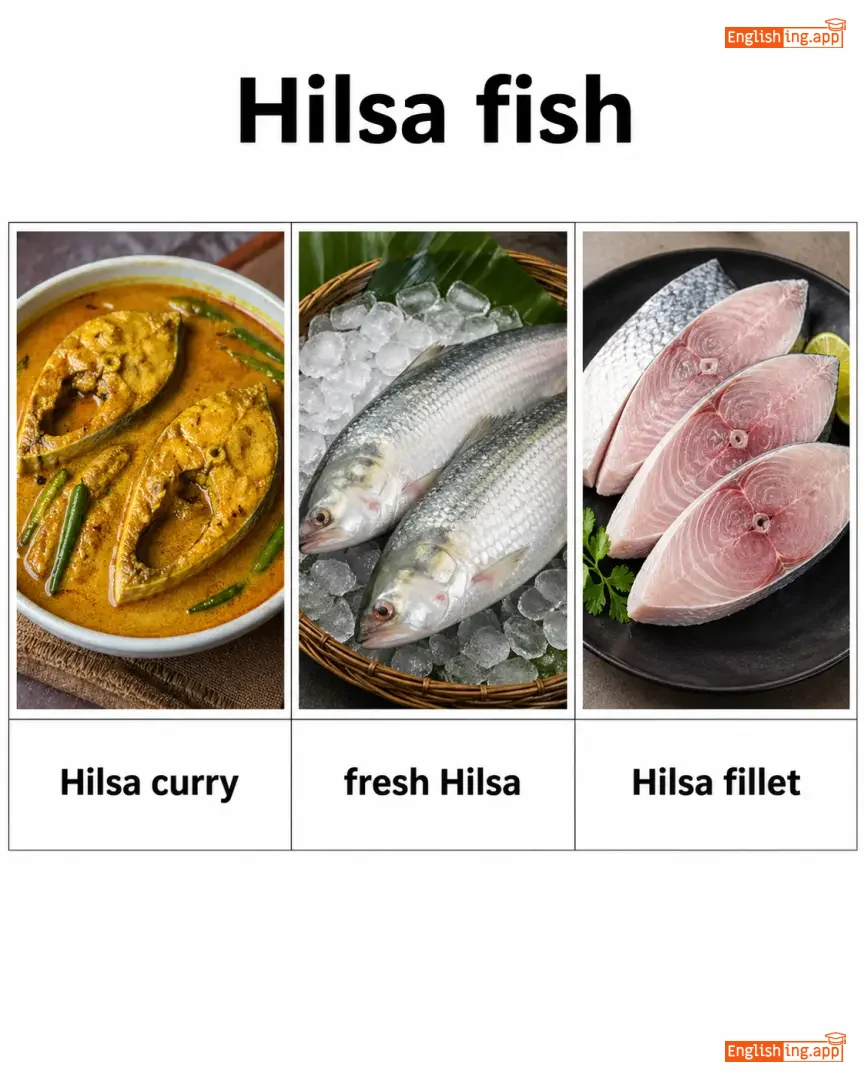
Hilsa fish definition card — visual illustration of the meaning
noun C2
/ˈhɪl.sə fɪʃ/
pez hilsa (pez hilsa)

a popular fish species found in South Asian rivers, especially prized in Bengali cuisine

"Hilsa fish is considered a delicacy in Bengali culture."

"El pez hilsa se considera una delicadeza en la cultura bengalí." (El pez hilsa se considera una delicadeza en la cultura bengalí.)
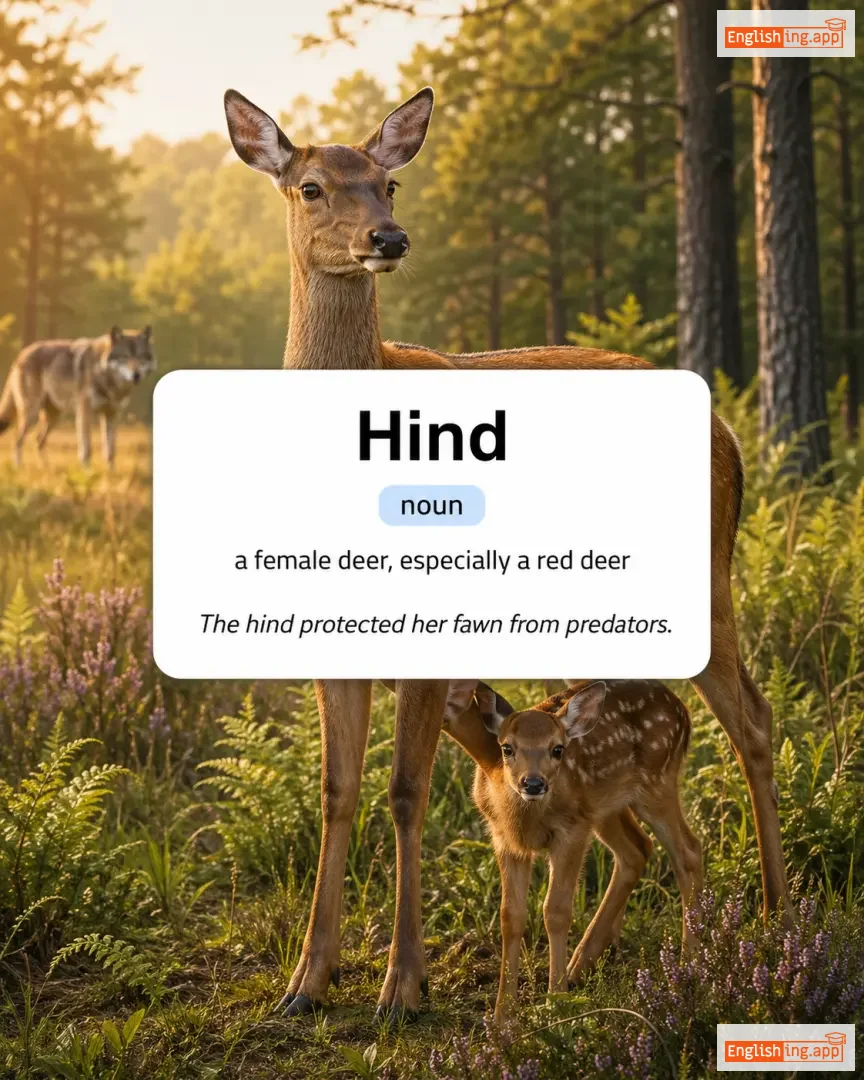
Hind definition card — visual illustration of the meaning
🦌♀️

Hind (haind)

noun C2
/haɪnd/
cierva (cierva)

a female deer, especially a red deer

"The hind protected her fawn from predators."

"La cierva protegió a su cría de los depredadores." (La cierva protegió a su cría de los depredadores.)
adjective C2
/ˈhaɪndmoʊst/
más trasero (mas trasero)

Farthest back; last in position.

"The hindmost car in the convoy broke down first."

"El coche más trasero en el convoy se rompió primero." (El coche mas trasero en el convoy se rompió primero.)
noun C2
/ˈhaɪərlɪŋ/
mercenario (mercenario)

A person who works for payment only, often with little loyalty or principle.

"The mercenary was dismissed as just a hireling with no real loyalty."

"El mercenario fue despedido como un simple hireling sin lealtad real." (El mercenario fue despedido como un simple hireling sin lealtad real.)
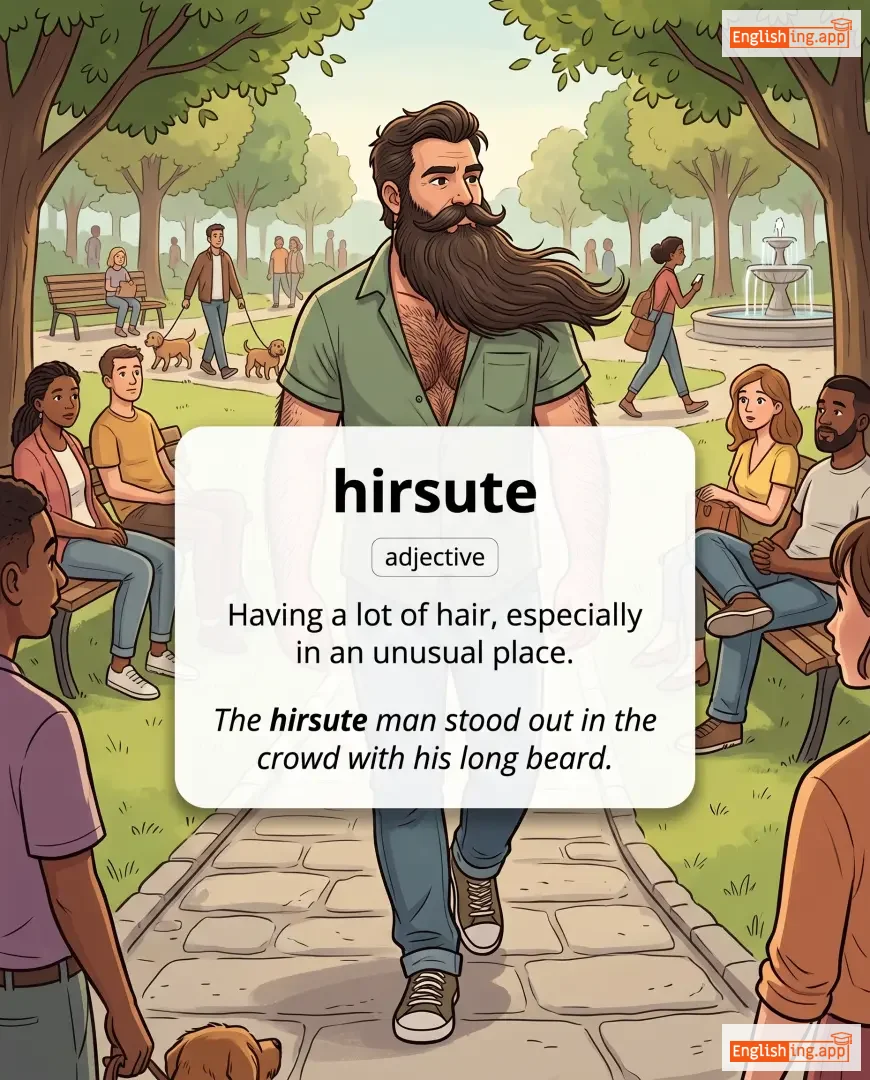
hirsute definition card — visual illustration of the meaning
adjective C2
/ˈhɜːrsuːt/
hirsuto (eersuto)

Having a lot of hair, especially in an unusual place.

"The hirsute man stood out in the crowd with his long beard."

"El hombre hirsuto destacó entre la multitud con su larga barba." (El hombre hirsuto destaco entre la multitud con su larga barba)
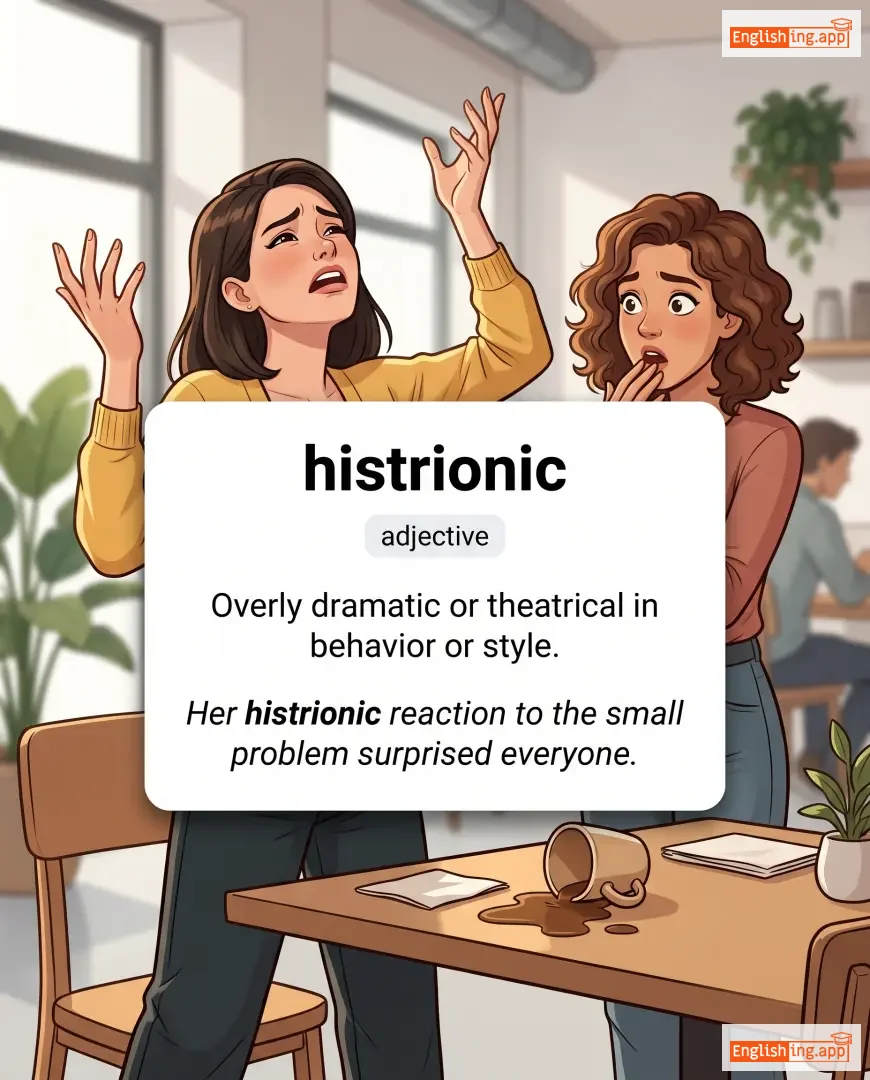
histrionic definition card — visual illustration of the meaning
adjective C2
/ˌhɪstriˈɒnɪk/
excesivamente dramático (excesivamente dramatiko)

Overly dramatic or theatrical in behavior or style.

"Her histrionic reaction to the small problem surprised everyone."

"Su reacción histriónica ante el pequeño problema sorprendió a todos." (su reaccion histrionika ante el pequeno problema sorprendio a todos.)
adjective C2
/ˈhɔːri/
gris, antiguo (gris, antiguo)

gray or white with age; very old and respected

"The hoary oak tree stood as a witness to centuries of history."

"El viejo roble se erguía como un testigo de siglos de historia." (El viejo roble se erguía como un testigo de siglos de historia.)
verb C2
/ˈhɑːbəl/
caminar torcido (caminar torcido)

to walk awkwardly with difficulty, usually due to injury

"He hobbled across the room after twisting his ankle."

"Él caminó torcido por la habitación después de torcerse el tobillo." (El caminó torcido por la habitacion despues de torcerse el tobillo.)
noun C2
/ˈhɒdʒ.pɒdʒ/
mezcla confusa (mezcla confusa)

A confusing mixture of different things; a jumble.

"The essay was a hodgepodge of unrelated ideas."

"El ensayo era una mezcla confusa de ideas no relacionadas." (El ensayo era una mezcla confusa de ideas no relacionadas.)
noun C2
/hoʊ/
azadón (azadon)

a gardening tool with a thin metal blade used for breaking up soil and removing weeds

"The farmer used a hoe to remove weeds from his vegetable garden."

"El agricultor usó un azadón para quitar las malas hierbas de su jardín de verduras." (El agricultor uso un azadon para quitar las malas hierbas de su jardin de verduras.)
noun C2
/hɔːɡ plʌm/
ciruela de higo (ciruela de higo)

tropical fruit with yellow skin and sour taste

"Hog plums are often used to make pickles and chutneys."

"Las ciruelas de higo se usan a menudo para hacer encurtidos y salsas." (Las ciruelas de higo se usan a menudo para hacer encurtidos y salsas.)
noun C2
/ˈhɒɡz.hɛd/
barril grande (barril grande)

A large cask or barrel, traditionally used for storing liquids like wine or beer.

"The cellar was filled with hogsheads of ale."

"El sótano estaba lleno de barriles grandes de cerveza." (El sótano estaba lleno de barriles grandes de cerveza.)
noun C2
/ˈhoʊl.stər/
fundamento (fundamento)

A holder or case for carrying a gun, typically worn on a belt or shoulder.

"The sheriff kept his revolver in a leather holster."

"El sheriff mantenía su revólver en una funda de cuero." (El sheriff mantenía su revólver en una funda de cuero.)
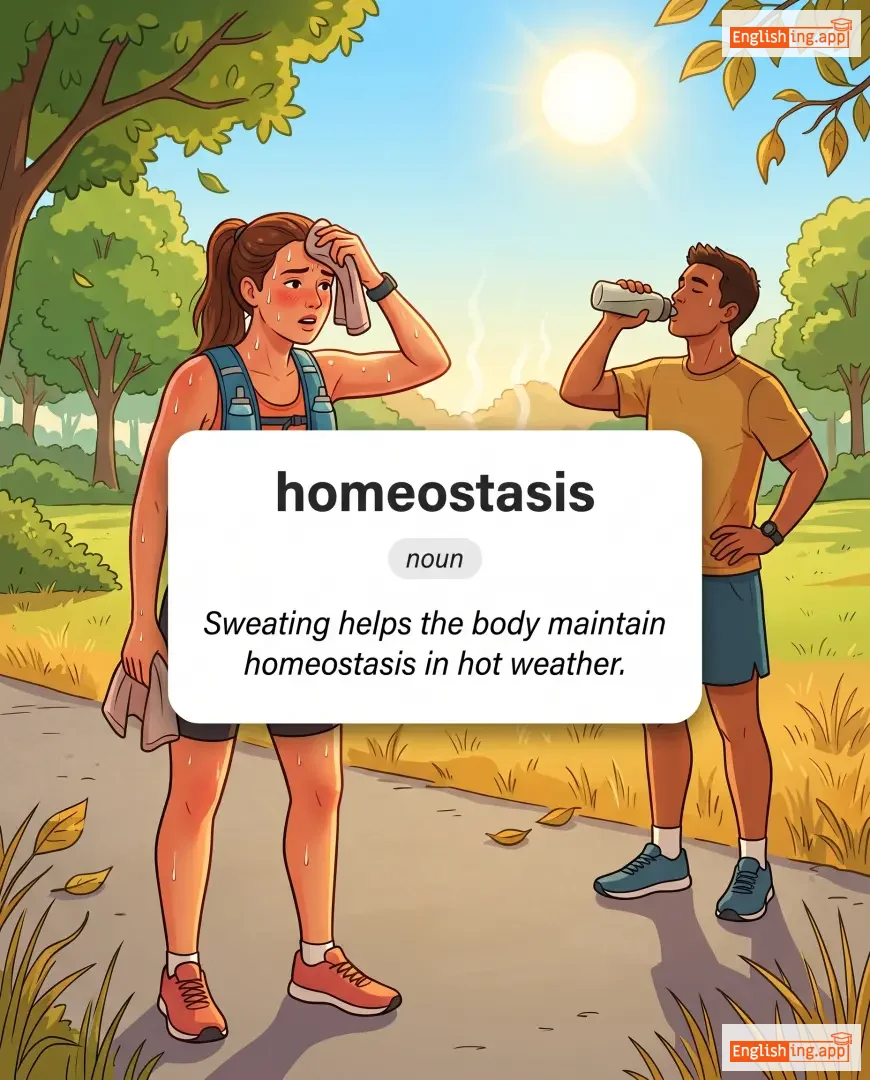
homeostasis definition card — visual illustration of the meaning
noun C2
/ˌhoʊmi.oʊˈsteɪsɪs/
homeostasis (homeostasis)

The ability of a living system or organism to maintain internal stability despite changes in external conditions.

"Sweating helps the body maintain homeostasis in hot weather."

"Sudar ayuda al cuerpo a mantener la homeostasis en el clima cálido." (Sudar ayuda al cuerpo a mantener la homeostasis en el clima calido.)
adjective C2
/ˈhoʊm.spʌn/
hecho en casa (hecho en casa)

Simple and unsophisticated; made at home rather than in a factory.

"She wore a homespun dress to the village festival."

"Ella llevaba un vestido hecho en casa al festival del pueblo." (Ella llevaba un vestido hecho en casa al festival del pueblo.)
Homily definition card — visual illustration of the meaning
noun C2
/ˈhɑː.mə.li/
homilía (homilia)

A religious or moral lecture; a sermon.

"The priest delivered a touching homily on kindness."

"El sacerdote dio una emotiva homilía sobre la amabilidad." (El sacerdote dio una emotiva homilía sobre la amabilidad.)
noun C2
/ˌhoʊmə.dʒəˈniːəti/
homogeneidad (homogeneidad)

The quality or state of being all the same or all of the same kind.

"The cultural homogeneity of the village made it feel unified."

"La homogeneidad cultural del pueblo hizo que se sintiera unido." (LaHomogeneidadCulturalDelPuebloHizoQueSeSintieraUnido)
verb C2
/həˈmɑː.dʒə.naɪz/
homogeneizar (homogeneizar)

To make uniform or similar by blending or mixing different elements.

"The company tried to homogenize its products across global markets."

"La empresa intentó homogenizar sus productos en los mercados globales." (La empresa intentó homogenizar sus productos en los mercados globales.)