Vocabulaires

Découvrez, apprenez et maîtrisez le vocabulaire anglais

adjective C1
/prəˈfɛtɪk/
予言的 (yogen-teki)

accurately predicting or describing what will happen in the future

"His prophetic words came true after many years."

"彼の予言的な言葉は何年も後に現実となった。" (Kare no yogen-teki na kotoba wa nannen mo ato ni genjitsu to natta.)
noun C1
/prəˈpoʊnənt/
支持者, 提案者 (shijisha, teiansha)

a person who advocates for or supports a particular idea, cause, or plan

"She is a strong proponent of renewable energy."

"彼女は再生可能エネルギーの強い支持者です。" (Kanojo wa saisei kanō enerugī no tsuyoi shijisha desu.)
adjective C1
/prəˈpɔːrʃənət/
比例的な (hireiteki na)

Corresponding in size, degree, or intensity; balanced in relation.

"The punishment should be proportionate to the crime."

"罰は犯罪に比例するべきです。" (Batsu wa hanzai ni hirei suru beki desu.)
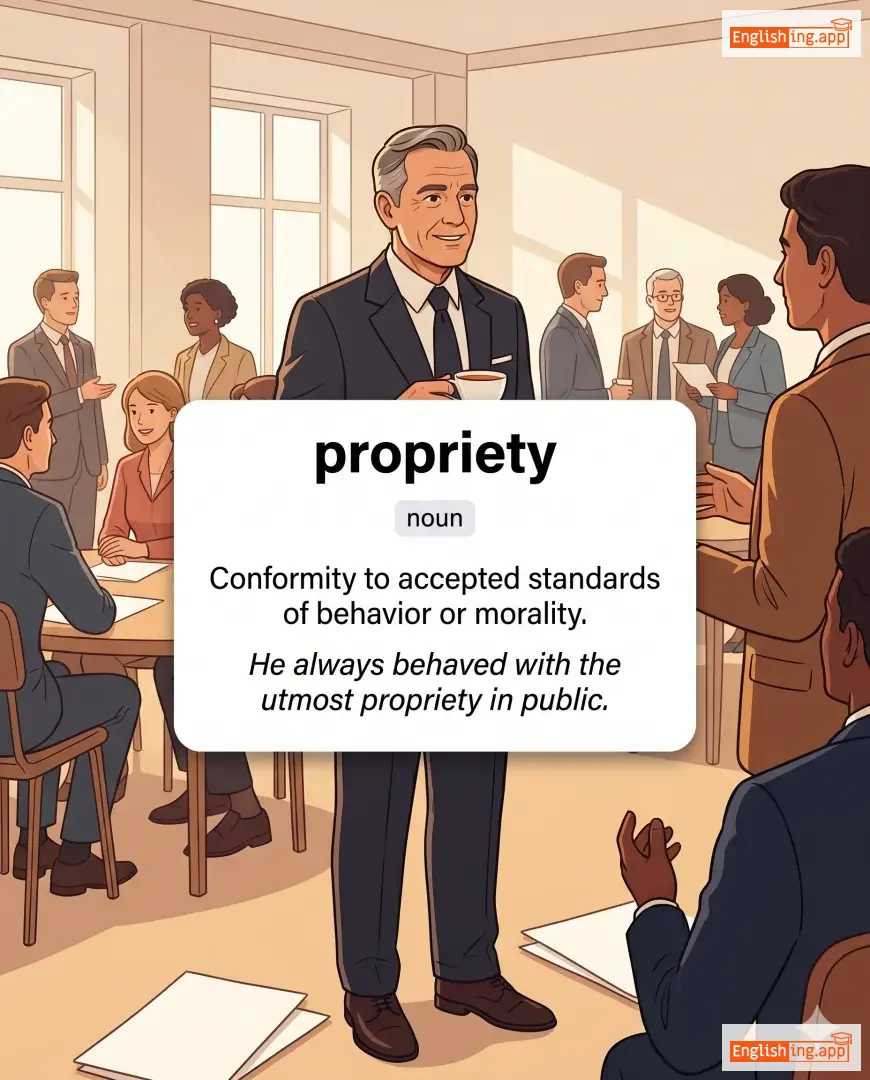
propriety definition card — visual illustration of the meaning
noun C1
/prəˈpraɪəti/
適切 (tekisetsu)

Conformity to accepted standards of behavior or morality.

"He always behaved with the utmost propriety in public."

"彼は公共の場で常に最大限の適切さを持って振る舞いました。" (Kare wa koukyou no ba de tsune ni saidaigen no tekisetsu-sa wo motte furumaimashita.)
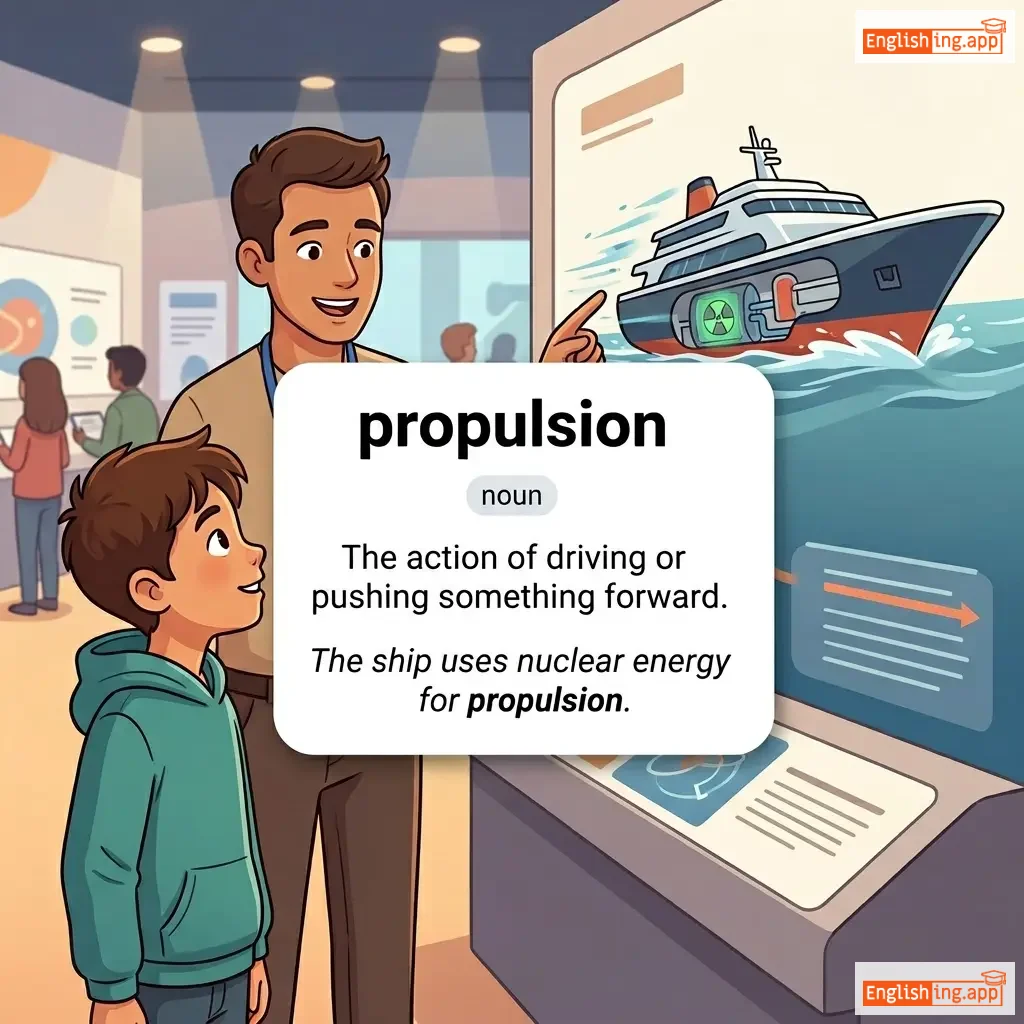
propulsion definition card — visual illustration of the meaning
noun C1
/prəˈpʌlʃən/
推進力 (suishinryoku)

The action of driving or pushing something forward.

"The ship uses nuclear energy for propulsion."

"その船は推進のために原子力を使用しています。" (Sono fune wa suishin no tame ni genshiryoku o shiyō shiteimasu.)
adjective C1
/proʊˈzeɪ.ɪk/
平凡な (heibon na)

ordinary, dull, or lacking imagination

"The teacher’s explanation was accurate but rather prosaic."

"先生の説明は正確でしたが、かなり平凡でした。" (Sensei no setsumei wa seikaku deshita ga, kanari heibon deshita.)
noun C1
/ˈprɒspɛktər/
鉱物探鉱者 (kōbutsu tankō-sha)

a person who searches for mineral deposits, especially gold

"The prospector spent years in the mountains searching for gold."

"プロスペクターは金を探し続けるために山中で何年も過ごしました。" (Prospecter wa kin o sagashitsuzukeru tame ni sanchū de nannen mo sugoshimashita.)
noun C1
/prəˈspɛktəs/
募集要項 (boshu yokou)

a printed document that advertises or describes a school, business, or investment offering

"The university sent out a prospectus to attract new students."

"大学は新しい学生を引き付けるために募集要項を送った。" (Daigaku wa atarashii gakusei wo hikitsukeru tame ni boshu yokou wo okutta.)
adjective/verb C1
/ˈprɒstreɪt/
倒れる (taoreru)

lying stretched out on the ground with one's face downward, often as a sign of submission or exhaustion

"He lay prostrate on the ground after the long battle."

"長い戦いの後、彼は地面に倒れて横たわった。" (Nagai tatakai no ato, kare wa jimen ni taorete yokotawatta.)
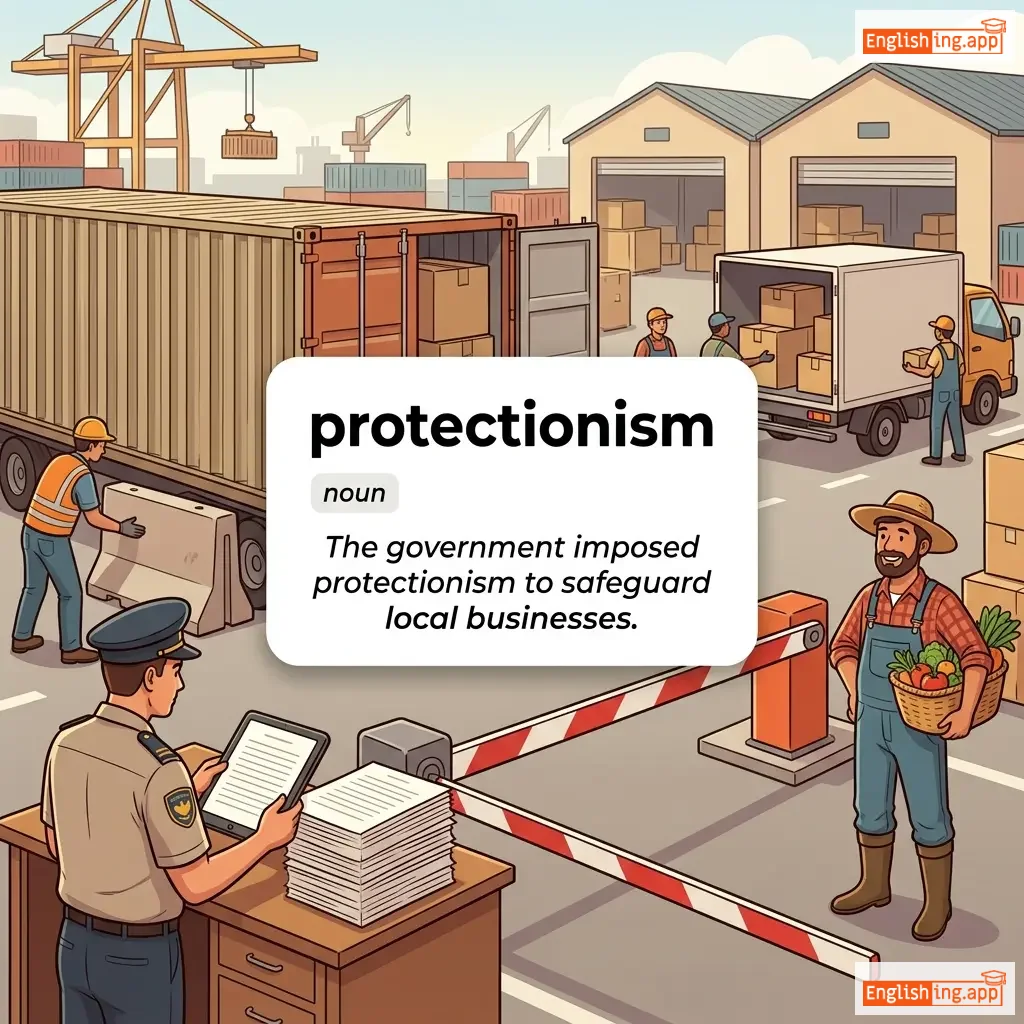
protectionism definition card — visual illustration of the meaning
noun C1
/prəˈtɛk.ʃəˌnɪz.əm/
保護主義 (hogoshugi)

A trade policy that restricts imports to safeguard domestic industries through trade restriction, economic nationalism, or isolationism.

"The government imposed protectionism to safeguard local businesses."

"政府は地元の企業を保護するために保護主義を導入した。" (Seifu wa jimoto no kigyou o hogo suru tame ni hogoshugi o dounyushita)
noun C1
/ˈproʊtəˌʒeɪ/
弟子 (deshi)

a person who is guided and supported by an older and more experienced person

"The young artist was the protege of a famous painter."

"その若い芸術家は有名な画家の弟子でした。" (Sono wakai geijutsuka wa yūmei na gaka no deshi deshita.)
noun C1
/ˈprɑːtɪstənt/
プロテスタント (purotesutanto)

a member of the Christian church that separated from the Roman Catholic Church during the Reformation

"Martin Luther was a key figure in the Protestant Reformation."

"マルティン・ルターはプロテスタント改革の鍵となる人物でした。" (Marutin Rūtā wa purotesutanto kaikaku no kagi to naru jinbutsu deshita.)
verb C1
/proʊˈtrækt/
延長する (enchou suru)

To prolong or extend in time or duration.

"Negotiations were protracted for several months."

"交渉は数ヶ月間延長されました。" (Koushou wa suukagetsu kan enchou saremashita.)
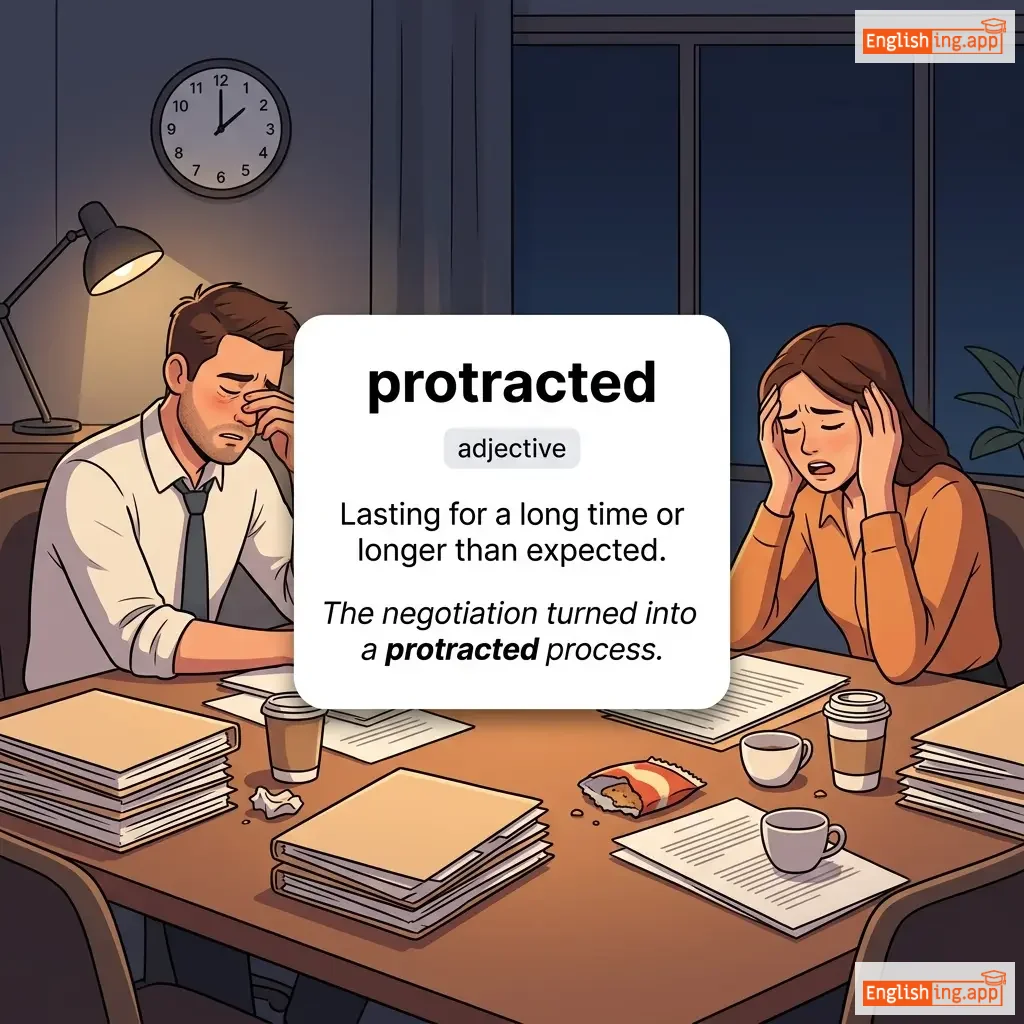
protracted definition card — visual illustration of the meaning
adjective C1
/prəˈtræktɪd/
長引いた (nagabiita)

Lasting for a long time or longer than expected.

"The negotiation turned into a protracted process."

"交渉は長引いたプロセスに変わった。" (Kōshō wa nagabiita purosesu ni kawatta.)
verb C1
/proʊˈtruːd/
突き出る (tsukideru)

To stick out or extend beyond a surface.

"A nail was protruding from the wooden board."

"釘が木の板から突き出していた。" (Kugi ga ki no ita kara tsukidashiteita.)
noun C1
/prəˈtruːʒən/
突起 (tokki)

Something that sticks out or projects from a surface.

"The protrusion on the wall made it difficult to move the furniture."

"壁の突起により、家具を動かすのが難しくなった。" (Kabe no tokki ni yori, kagu o ugokasu no ga muzukashiku natta.)
noun C1
/ˈprɒvənəns/
出所 (shusshou)

The origin or source of something.

"The museum verified the provenance of the ancient manuscript."

"博物館は古代の写本の出所を確認しました。" (Hakubutsukan wa kodai no shahon no shusshou wo kakunin shimashita.)
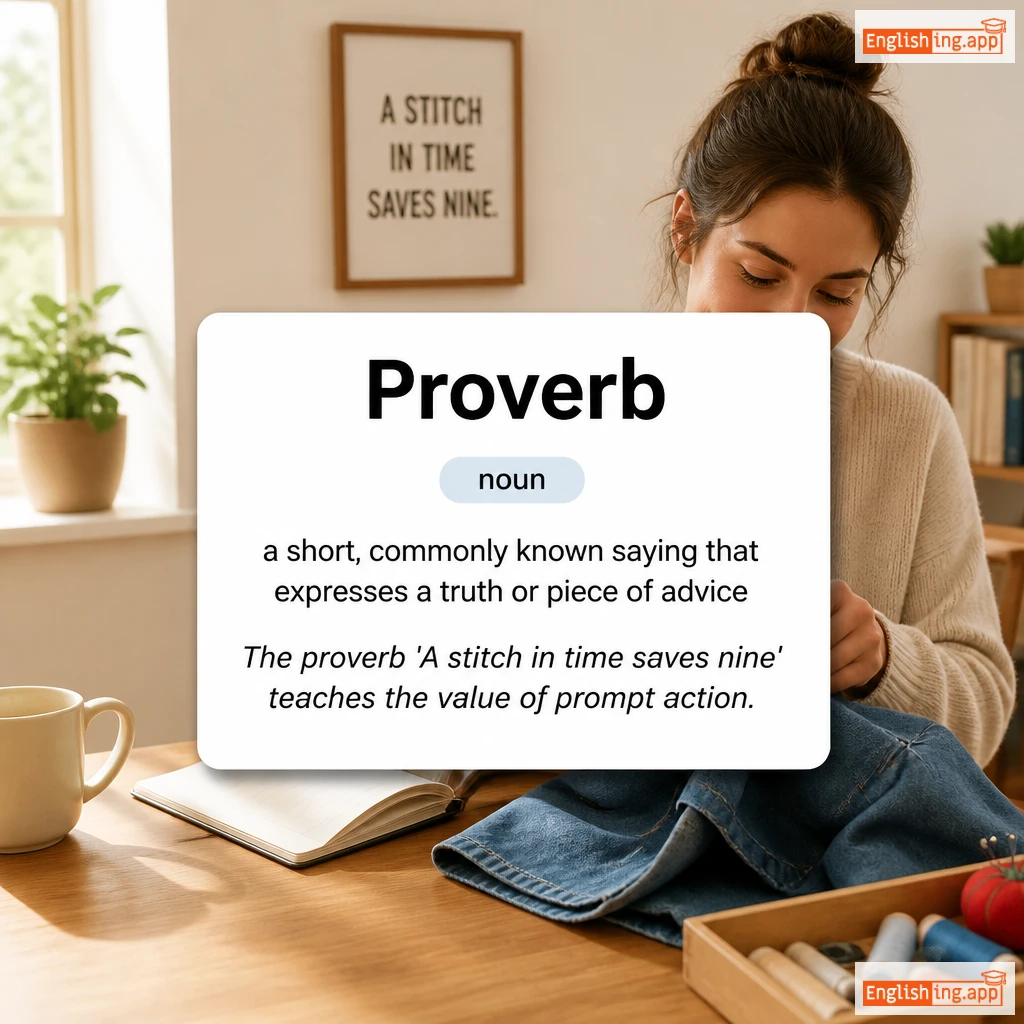
Proverb definition card — visual illustration of the meaning
noun C1
/ˈprɒvərb/
ことわざ (kotowaza)

a short, commonly known saying that expresses a truth or piece of advice

"The proverb 'A stitch in time saves nine' teaches the value of prompt action."

"ことわざ「時間を守るは九つの命を救う」は迅速な行動の重要性を教えています。" (Kotowaza 'jikan o mamoru wa kokonotsu no inochi o sukū' wa jinsoku na kōdō no jūyō-sei o oshieteimasu.)
noun C1
/ˈprɒvɪdəns/
神の摂理 (kami no setsuri)

the protective care of God or nature as a spiritual power; foresight or prudence

"They believed their survival was due to divine providence."

"彼らは自分たちの生存が神の摂理によるものであると信じていました。" (Karera wa jibuntachi no seizon ga kami no setsuri ni yoru mono de aru to shinjite imashita.)
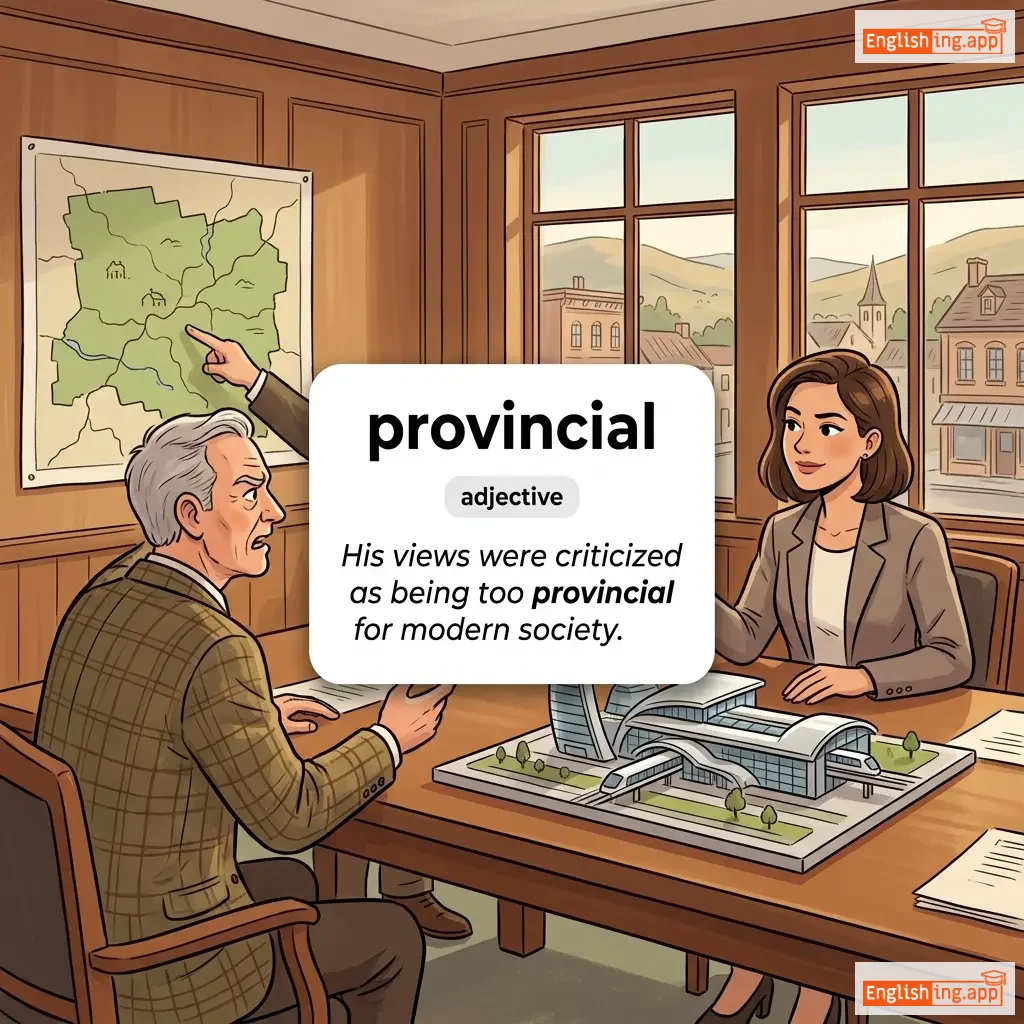
provincial definition card — visual illustration of the meaning
adjective C1
/prəˈvɪnʃəl/
地方的 (chihō-teki)

relating to a province or the regions outside the capital city; often suggesting narrow-mindedness

"His views were criticized as being too provincial for modern society."

"彼の意見は現代社会にはあまりにもプロヴィンシャルだと批判されました。" (kare no iken wa gendai shakai ni wa amari ni mo purovinsharu da to hihan saremashita.)
noun C1
/prəˈvaɪzoʊ/
条件 (jouken)

a condition or stipulation attached to an agreement

"He accepted the job offer with the proviso that he could work remotely twice a week."

"彼は、週に2回リモートで働けるという条件で仕事のオファーを受け入れました。" (Kare wa, shuu ni 2-kai rimōto de hatarakeru to iu jouken de shigoto no ofā o ukeiremashita.)
noun C1
/ˌprɒvəˈkeɪʃən/
挑発 (chouhatsu)

An action or statement that is intended to make someone angry or to cause a reaction.

"His rude comment was a clear provocation."

"彼の無礼なコメントは明らかな挑発でした。" (Kare no burei na komento wa akirakana chouhatsu deshita.)
adjective C1
/prəˈvɒkətɪv/
挑発的 (chouhatsuteki)

Intended to make people angry, excited, or interested.

"She wore a provocative dress to the party."

"彼女はパーティーに挑発的なドレスを着ていた。" (Kanojo wa pātii ni chōhatsuteki na doresu o kite ita.)
adjective C1
/prəˈvoʊkɪŋ/
挑発的 (chouhatsuteki)

causing anger or strong reaction; irritating; stimulating

"His provoking comments made everyone angry."

"彼の挑発的なコメントは皆を怒らせた。" (Kare no chouhatsuteki na komento wa mina o okorase ta.)
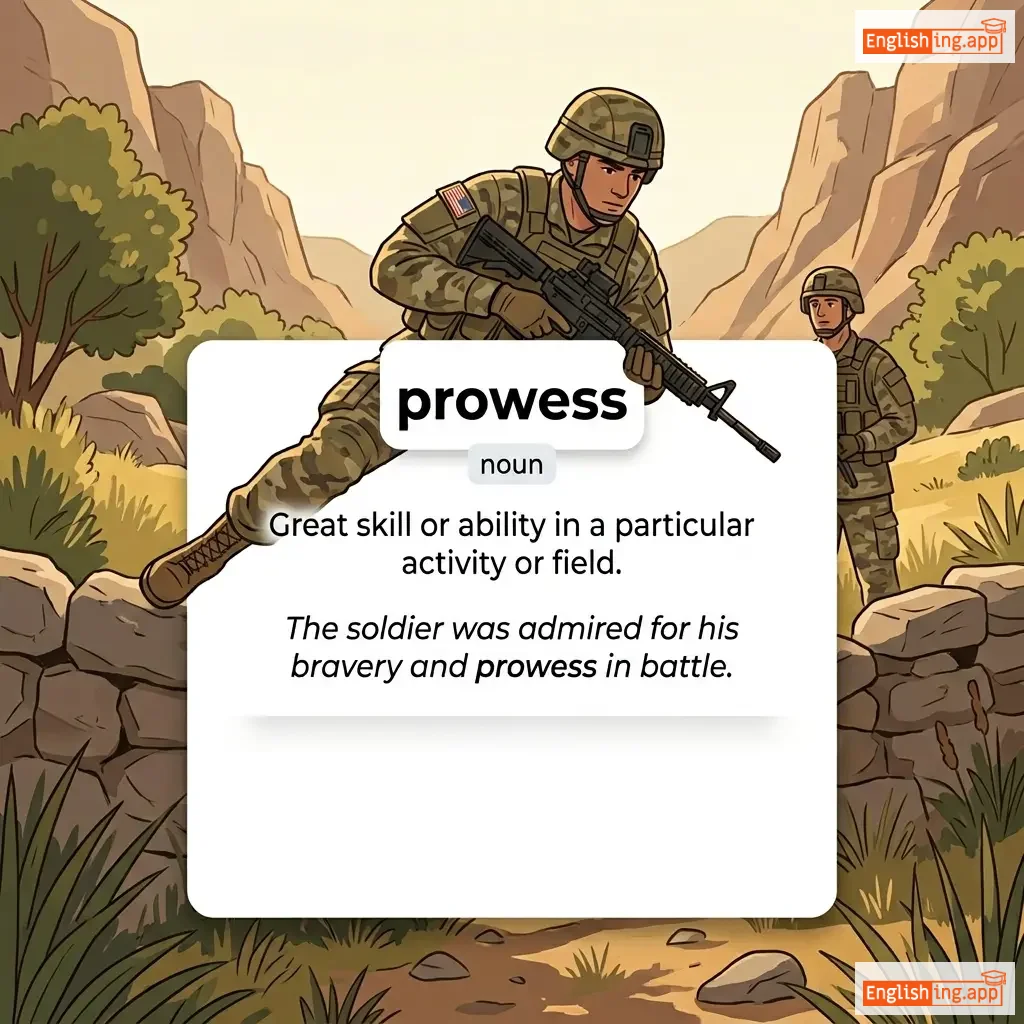
prowess definition card — visual illustration of the meaning
noun C1
/ˈpraʊəs/
腕前 (udemae)

Great skill or ability in a particular activity or field.

"The soldier was admired for his bravery and prowess in battle."

"その兵士は戦いでの勇気と腕前で賞賛されました。" (Sono heishi wa tatakai de no yūki to udemae de shōsan saremashita.)
verb C1
/praʊl/
こっそり歩く(狩りや探索のため) (kossori aruku (kari ya tansaku no tame))

To move around quietly and secretly, especially while hunting or searching.

"The cat prowled around the garden at night."

"猫は夜、庭の周りを静かに歩いていた。" (Neko wa yoru, niwa no mawari wo shizukani aruiteita.)
noun C1
/ˈprɒksi/
代理人 (dairinin)

A person authorized to act on behalf of another; a substitute.

"She voted by proxy at the meeting."

"彼女は会議で代理投票を行った。" (Kanojo wa kaigi de dairitohyō o okonatta.)
noun C1
/ˈpruːdəns/
慎重 (shinchou)

The quality of being cautious, wise, and exercising good judgment.

"She invested her money with great prudence."

"彼女は非常に慎重にお金を投資した。" (Kanojo wa hijou ni shinchou ni okane o toushi shita.)
adjective C1
/ˈpruːdənt/

acting with or showing care and thought for the future

"It is always prudent to save some money for emergencies."

verb C1
/praɪ/
覗く / 口出しする (nozoku / kuchidashi suru)

to look closely into something; to try to find out private information

"She tried to pry into her neighbor’s private life."

"彼女は隣人のプライベートな生活を覗こうとした。" (Kanojo wa rinjin no puraibēto na seikatsu o nozokō to shita.)
noun C1
/ˈsuːdənɪm/
筆名 (hitsumei)

a fictitious name used by an author instead of their real name

"Mark Twain was the pseudonym of Samuel Clemens."

"マーク・トウェインはサミュエル・クレメンスの筆名でした。" (Maaku Towein wa Samyueru Kuremensu no hitsumei deshita.)
noun C1
/ˈsaɪkiː/
魂 / 心 (tamashii / kokoro)

the human soul, mind, or spirit

"The novel explores the depths of the human psyche."

"その小説は人間の精神の深層を探求します。" (Sono shousetsu wa ningen no seishin no shinsou o tankyuu shimasu.)
adjective C1
/ˌsaɪkəˈpæθɪk/
サイコパス的 (saikopasuteki)

Relating to or affected by psychopathy; showing chronic mental disorder with abnormal or violent behavior.

"The film portrayed a psychopathic killer with no sense of empathy."

"その映画は共感を持たないサイコパス的な殺人者を描いていました。" (Sono eiga wa kyoukan wo motanai saikopasuteki na satsujinsha wo egaiteimashita.)
noun C1
/saɪˈkoʊsɪs/
精神病 (seishinbyou)

A severe mental disorder in which thought and emotions are impaired, leading to a loss of contact with reality.

"The patient was diagnosed with psychosis after experiencing hallucinations."

"患者は幻覚を経験した後、精神病と診断されました。" (Kanja wa genkaku o keiken shita ato, seishinbyou to shindan saremashita.)
adjective C1
/ˌsaɪkoʊsəˈmætɪk/
心理的身体的 (shinriteki shintai teki)

Relating to a physical illness or condition caused or aggravated by mental factors such as stress.

"Her stomach pain was diagnosed as psychosomatic, linked to stress."

"彼女の腹痛は心理的身体的なものとして診断され、ストレスに関連していました。" (Kanojo no fukutsū wa shinriteki shintaiteki na mono to shite shindan sare, sutoresu ni kanren shite imashita.)
noun C1
/ˌsaɪkoʊˈθɛrəpi/
心理療法 (shinri ryōhō)

The treatment of mental disorder by psychological rather than medical means.

"She attended weekly psychotherapy sessions to cope with her anxiety."

"彼女は不安に対処するために、毎週心理療法のセッションに参加しました。" (Kanojo wa fuan ni taisho suru tame ni, maishū shinri ryōhō no sesshon ni sanka shimashita.)
noun C1
/ˌtɛrəˈdæktɪl/
絶滅した飛行爬虫類 (zetsumetsu shita hikou hachuurui)

An extinct flying reptile of the Jurassic period, with a long slender head and wings formed by a membrane stretching along the body.

"The museum displayed a fossil of a giant pterodactyl."

"博物館には巨大なプテロダクティルの化石が展示されていた。" (Hakubutsukan ni wa kyodaina pterodactyl no kaseki ga tenji sarete ita.)
adjective C1
/ˈpʌlməˌneri/

relating to the lungs

"The patient suffered from a serious pulmonary infection."

noun C1
/ˈpʊlpɪt/
説教台 (sekkyōdai)

a raised platform in a church from which the preacher delivers a sermon

"The pastor stood at the pulpit to address the congregation."

"牧師は説教台の前に立って、会衆に向かって話した。" (Bokushi wa sekkyōdai no mae ni tatte, kaishū ni mukatte hanashita.)
verb C1
/ˈpʌlseɪt/
脈動する (myakudo suru)

to expand and contract rhythmically; to throb or beat

"The neon lights pulsated with a steady rhythm."

"ネオンのライトは一定のリズムで脈打っていた。" (Neon no raito wa ittei no rizumu de myakutte ita.)
verb C1
/ˈpʌməl/
殴りつける (naguritsukeru)

To strike repeatedly with the fists; to beat or hit forcefully.

"The boxer pummeled his opponent in the final round."

"ボクサーは最終ラウンドで相手を激しく殴りつけた。" (bokusa wa saishu raundo de aite o hageshiku naguritsuketa.)
noun C1
/pʌn/
言葉遊び (kotoba asobi)

A humorous use of words that suggests different meanings or words that sound alike.

"He made a clever pun about the bakery's bread rising."

"彼はベーカリーでパンが膨らんでいることについて巧妙な言葉遊びをしました。" (Kare wa bēkārī de pan ga fukurande iru koto ni tsuite kōmyō na kotoba asobi o shimashita.)
noun C1
/ˈpʌntʃ laɪn/
パンチライン (panchirain)

The final part of a joke or story that makes it funny.

"Everyone laughed loudly at the punch line of his joke."

"みんな彼のジョークのパンチラインで大笑いした。" (Minna kare no jōku no panchirain de ōwarai shita.)
noun C1
/ˈpʌndɪt/
専門家 (senmonka)

An expert in a particular subject or field who is frequently called upon to give opinions to the public.

"Political pundits debated the election results on television."

"政治の専門家たちはテレビで選挙結果について議論しました。" (Seiji no senmonkatachi wa terebi de senkyo kekka ni tsuite giron shimashita.)
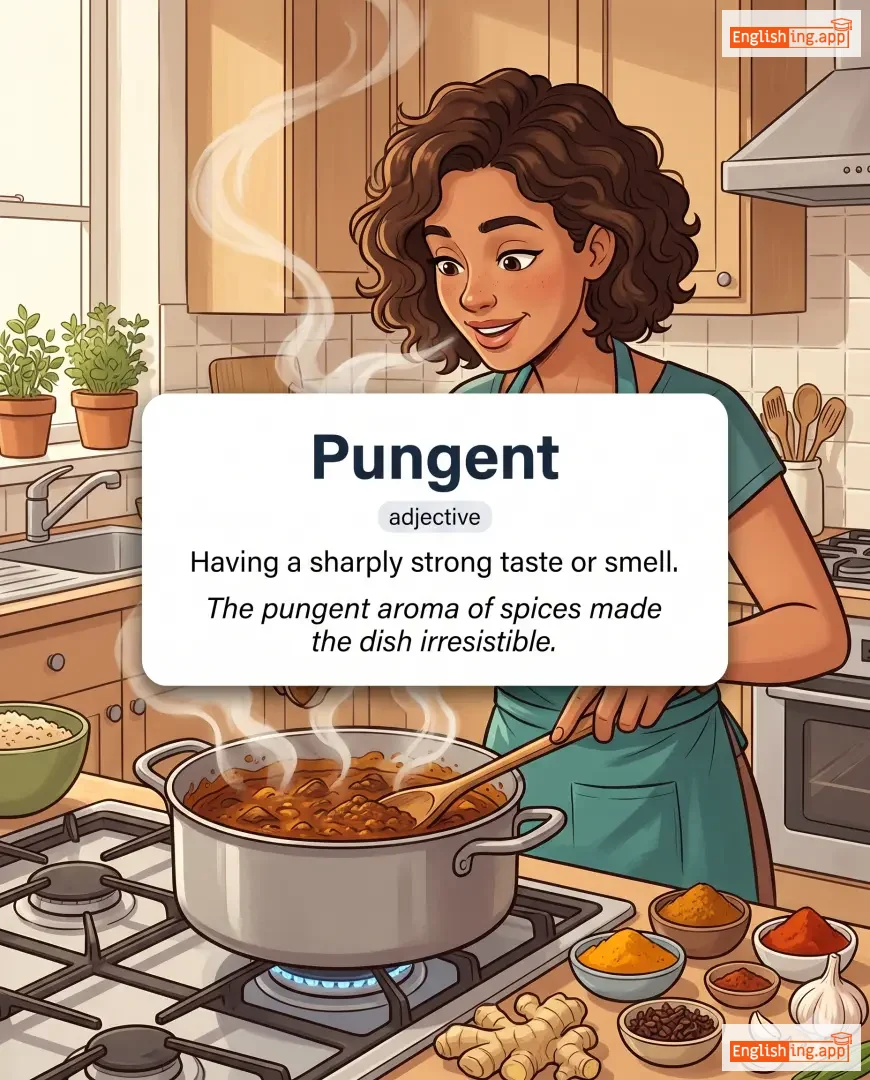
Pungent definition card — visual illustration of the meaning
adjective C1
/ˈpʌndʒənt/
強い匂いや味 (tsuyoi nioi ya aji)

Having a sharply strong taste or smell.

"The pungent aroma of spices made the dish irresistible."

"スパイスの強い香りがその料理を抗しがたくした。" (supaisu no tsuyoi kaori ga sono ryouri wo kōshigataku shita.)
adjective C1
/ˈpjuː.nɪ.tɪv/
懲罰的 (chōbatsuteki)

Inflicting or intended as punishment.

"The company faced punitive measures for violating the law."

"その会社は法を違反したため、懲罰的措置に直面しました。" (Sono kaisha wa hō o ihan shita tame, chōbatsuteki sochi ni chokumen shimashita.)
noun C1
/pʌnˈdʒɑː.bi/
パンジャビ (panjabi)

a traditional long shirt worn in South Asia, typically loose-fitting

"He wore a white punjabi for the festival celebration."

"彼は祭りのために白いパンジャビを着ていました。" (Kare wa matsuri no tame ni shiroi panjabi o kite imashita.)
adjective C1
/ˈpjuː.ni/
弱い (yowai)

Small, weak, or insignificant.

"He felt puny compared to his stronger classmates."

"彼は自分の強いクラスメートと比較して、自分が弱いと感じていました。" (Kare wa jibun no tsuyoi kurasumeto to hikaku shite, jibun ga yowai to kanjite imashita.)
noun C1
/ˈpɜːrɡəˌtɔːri/

A place or state of suffering inhabited by the souls of sinners who are expiating their sins before going to heaven; a temporary condition of torment or suffering.

"After the accident, the long recovery felt like a kind of purgatory."

verb C1
/pɜːrdʒ/
浄化する (jōka suru)

To remove unwanted feelings, people, or things; to cleanse or purify.

"The new leader promised to purge corruption from the government."

"新しいリーダーは政府から腐敗を一掃することを約束しました。" (Atarashī rīdā wa seifu kara fuhai o issō suru koto o yakusoku shimashita.)