Vocabulaires

Découvrez, apprenez et maîtrisez le vocabulaire anglais

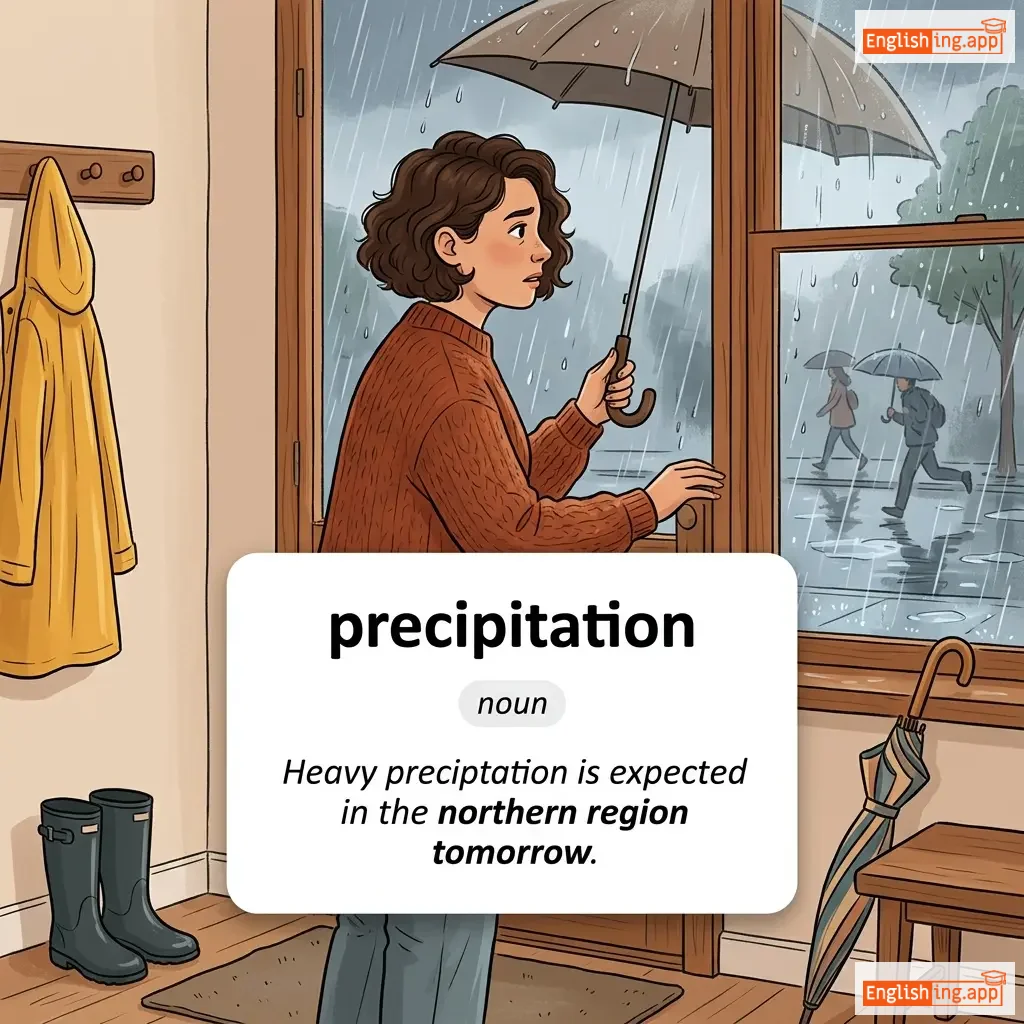
precipitation definition card — visual illustration of the meaning
noun C1
/prɪˌsɪpɪˈteɪʃən/
降水 (jiangshui)

Moisture that falls from the atmosphere as rain, snow, sleet, or hail; or the process of being precipitated.

"Heavy precipitation is expected in the northern region tomorrow."

"预计明天北部地区将有强降水。" (Yujing mingtian beibu diqu jiang you qiang jiangshui.)
adjective C1
/prɪˈsɪpɪtəs/
陡峭或突然而至 (dǒu qiào huò tū rán ér zhì)

Extremely steep or sudden; done quickly without careful consideration.

"The hikers struggled to climb the precipitous slope."

"远足者在攀登陡峭的坡道时遇到了困难。" (Yuǎnzú zhě zài pāndēng dǒu qiào de pōdào shí yù dàole kùnnán.)
noun C1
/ˈpreɪsiː/
摘要 (zhāiyào)

a short summary of a text or speech

"She wrote a précis of the lecture for her classmates."

"她为她的同学写了一篇讲座摘要。" (Tā wèi tā de tóngxué xiěle yī piān jiǎngzuò zhāiyào.)
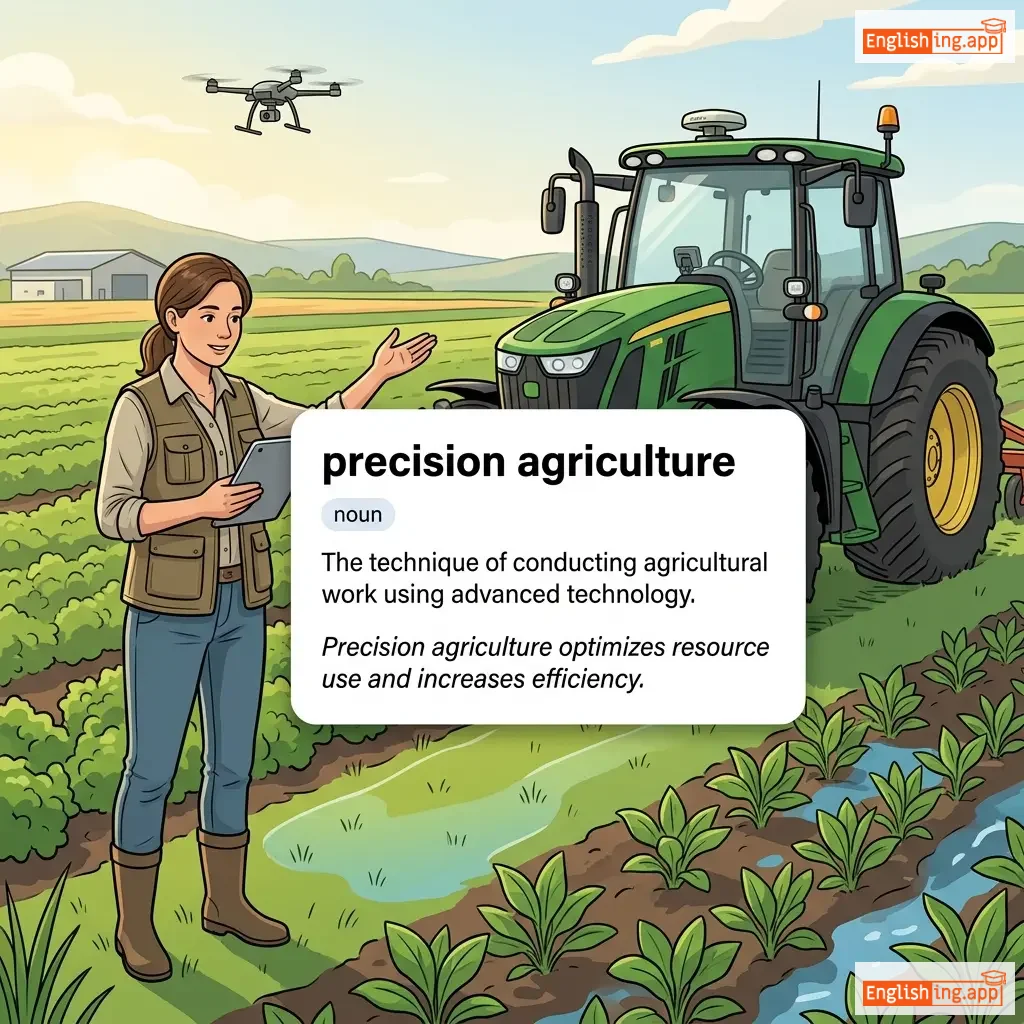
precision agriculture definition card — visual illustration of the meaning
noun C1
prɪˈsɪʒ.ən ˈæɡ.rɪ.kʌl.tʃər
精准农业 (jingmi nongye)

The technique of conducting agricultural work using advanced technology.

"Precision agriculture optimizes resource use and increases efficiency."

"精准农业优化资源使用并提高效率。" (Jingzhun nongye youhua ziyuan shiyong bing tigao xiaolv.)
verb C1
/prɪˈkluːd/
阻止 (zǔ zhǐ)

To prevent something from happening; to make impossible.

"Heavy rain precluded the possibility of a picnic."

"大雨阻止了野餐的可能性。" (Dà yǔ zǔzhǐ le yě cān de kě néng xìng.)
adjective C1
/prɪˈkoʊʃəs/
早熟 (zaoshou)

Showing advanced development or maturity at an unusually early age.

"The precocious child was reading novels at the age of five."

"那个早熟的孩子五岁时就能阅读小说。" (Nàgè zǎoshú de háizi wǔ suì shí jiù néng yuèdú xiǎoshuō.)
precursor definition card — visual illustration of the meaning
noun C1
/ˈpriːˌkɜrsər/
前身 (qianshen)

Something or someone that comes before another and indicates the approach of something else.

"The steam engine was a precursor to modern trains."

"蒸汽机是现代火车的前身。" (Zhengqiji shi xiandai huoche de qianshen.)
adjective C1
/ˈprɛdəˌtɔri/
掠食者/剥削者 (lüè shí zhě/bāo xuè zhě)

Relating to animals that prey on others; exploiting or victimizing others for personal gain.

"The predatory bird swooped down on its prey."

"掠食性鸟类扑向它的猎物。" (Lüè shí xìng niǎo lèi pū xiàng tā de liè wù.)
verb C1
/ˌpriːdɪˈtɜːrmɪn/
预定 (yùdìng)

to establish or decide something in advance

"The outcome of the match seemed predetermined."

"比赛结果似乎是预定的。" (Bǐsài jiéguǒ shìhū shì yùdìng de.)
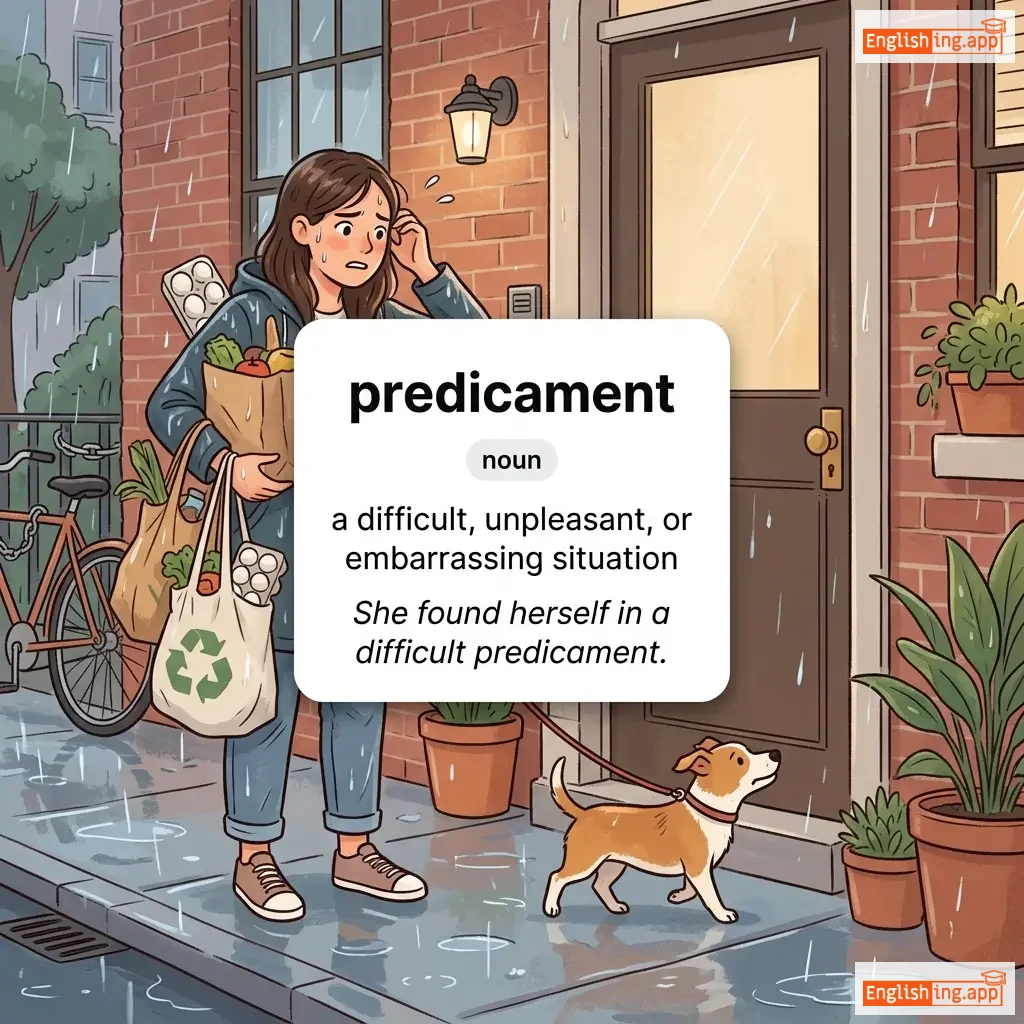
predicament definition card — visual illustration of the meaning
noun C1
/prɪˈdɪkəmənt/
困境 (kunjing)

a difficult, unpleasant, or embarrassing situation

"She found herself in a difficult predicament."

"她发现自己处于一个困难的困境。" (Ta faxian ziji chuyu yi ge kunnan de kunjing.)
noun/verb C1
/ˈprɛdɪkət/ (noun), /ˈprɛdɪkeɪt/ (verb)
谓语 / 以...为基础 (wei yu / yi...wei ji chu)

noun: the part of a sentence that tells something about the subject; verb: to base or establish something on a particular idea

"His theory is predicated on sound research."

"他的理论是基于可靠的研究。" (Ta de lilun shi jiyu keliang de yanjiu.)
verb C1
/ˌpriːdɪˈspoʊz/
使...易患 (shǐ...yì huàn)

To make someone more likely to behave in a certain way or be affected by something.

"His genetics may predispose him to diabetes."

"他的基因可能使他容易得糖尿病。" (Tā de jīyīn kěnéng shǐ tā róngyì dé tángniàobìng.)
adjective C1
/ˌpriːdɪˈspoʊzd/
倾向 (qingxiang)

Likely or inclined to be affected by something in advance.

"She is predisposed to trust people easily."

"她容易轻易相信别人。" (Ta rongyi qingyi xiangxin bieren.)
predisposition definition card — visual illustration of the meaning
noun C1
/ˌpriːdɪspəˈzɪʃən/
倾向性 (qingxiangxing)

a tendency or inclination to behave in a particular way

"She has a predisposition to anxiety."

"她有焦虑的倾向。" (Ta you jiaolv de qingxiang.)
noun C1
/prɪˈdɒmɪnəns/
主导地位 (zhudao diwei)

The state of being greater in number, strength, or importance.

"The predominance of online shopping has changed retail forever."

"在线购物的主导地位永久地改变了零售业。" (Zaixian gouwu de zhudao diwei yongjiu di gaibian le lingshouye.)
verb C1
/prɪˈdɒmɪneɪt/
占主导地位 (zhàn zhǔdǎo dìwèi)

To be the strongest, most common, or most influential element.

"Traditional values still predominate in the community."

"传统价值观在社区中仍然占主导地位。" (Chuántǒng jiàzhíguān zài shèqū zhōng réngrán zhàn zhǔdǎo dìwèi.)
adjective C1
/priːˈɛmɪnənt/
杰出 (jiéchū)

Surpassing all others; very distinguished in some way.

"She is a preeminent scientist in the field of genetics."

"她是遗传学领域的杰出科学家。" (Tā shì yíchuánxué lǐngyù de jiéchū kēxuéjiā.)
verb C1
/priːˈɛmpt/
预防 (yùfáng)

To take action in order to prevent something from happening; to take the place of something.

"The government acted quickly to preempt a financial crisis."

"政府迅速采取行动,预防金融危机。" (Zhèngfǔ xùnsù cǎiqǔ xíngdòng, yùfáng jīnróng wéijī.)
adjective C1
/priˈɛmptɪv/
预防性 (yùfángxìng)

Serving or intended to prevent something by taking action first.

"The government took preemptive measures to control inflation."

"政府采取了预防措施来控制通货膨胀。" (Zhèngfǔ cǎiqǔle yùfáng cuòshī lái kòngzhì tōnghuò péngzhàng.)
verb C1
/priːn/
修整 (xiūzhěng)

To groom or dress oneself with care; to show pride in one's appearance.

"She preened in front of the mirror before leaving for the party."

"她在镜子前修整自己,然后去派对。" (Tā zài jìngzi qián xiūzhěng zìjǐ, ránhòu qù pàiduì.)
adjective C1
/ˌprɛfəˈrɛnʃəl/
优先的 (yōuxiān de)

showing or giving advantage to one over others

"Members receive preferential treatment at the club."

"会员在俱乐部享有优先待遇。" (Huìyuán zài jùlèbù xiǎngyǒu yōuxiān dàiyù.)
noun C1
/ˈprɛljuːd/
前奏 (qian zou)

An action, event, or statement that serves as an introduction to something more important.

"The small fight was only a prelude to a bigger conflict."

"小争执只是更大冲突的前奏。" (xiao zhengzhi zhishi geng da chongtu de qian zou.)
verb C1
/ˌpriːˈmɛdɪteɪt/
预谋 (yùmóu)

to think about and plan something (especially a crime) beforehand

"The suspect was accused of premeditating the crime."

"嫌疑人被指控事先计划犯罪。" (Xiányí rén bèi zhǐkòng shìxiān jìhuà fànzuì.)
adjective C1
/ˌpriːˈmɛdɪˌteɪtɪd/
预谋 (yù móu)

planned in advance; done deliberately

"The crime was clearly premeditated."

"这个犯罪显然是预谋的。" (Zhège fànzuì xiǎnrán shì yùmóu de.)
noun C1
/ˌpriːməˈnɪʃən/ or /ˌprɛm-/
预感 (yugan)

a strong feeling that something is about to happen, often something negative

"She had a premonition of danger before the trip."

"她在旅行前有一种危险的预感。" (Ta zai lvxing qian you yizhong weixian de yugan.)
preoccupation definition card — visual illustration of the meaning
noun C1
/priːˌɒkjuˈpeɪʃən/
忧虑, 专注 (youlü, zhuanzhu)

The state of being engrossed or absorbed in thought about something.

"Her preoccupation with work left her little time for family."

"她对工作的忧虑让她几乎没有时间陪家人。" (Ta dui gongzuo de youlü rang ta jihu mei you shijian pei jiaren.)
verb C1
/priːˈɒkjʊpaɪ/
使专心 (shi zhuanxin)

To dominate or engross the mind of someone to the exclusion of other thoughts.

"Worries about the future preoccupy him constantly."

"担忧未来的问题让他始终处于忙碌状态。" (Dānyōu wèilái de wèntí ràng tā shǐzhōng chǔyú mánglù zhuàngtài.)
adjective C1
/prɪˈpɒstərəs/
荒谬的, 可笑的 (huangmiu de, kexiao de)

completely ridiculous or absurd; contrary to reason or common sense

"The idea that pigs could fly is preposterous."

"认为猪能飞的想法是荒谬的。" (Renwei zhu neng fei de xiangfa shi huangmiu de.)
noun C1
/prɪˈrɒɡətɪv/
特权 (tequan)

a special right or privilege exclusive to a particular person or group

"It is the manager’s prerogative to make the final decision."

"这是经理做出最终决定的特权。" (Zhe shi jingli zuo chu zui zhong jueding de tequan.)
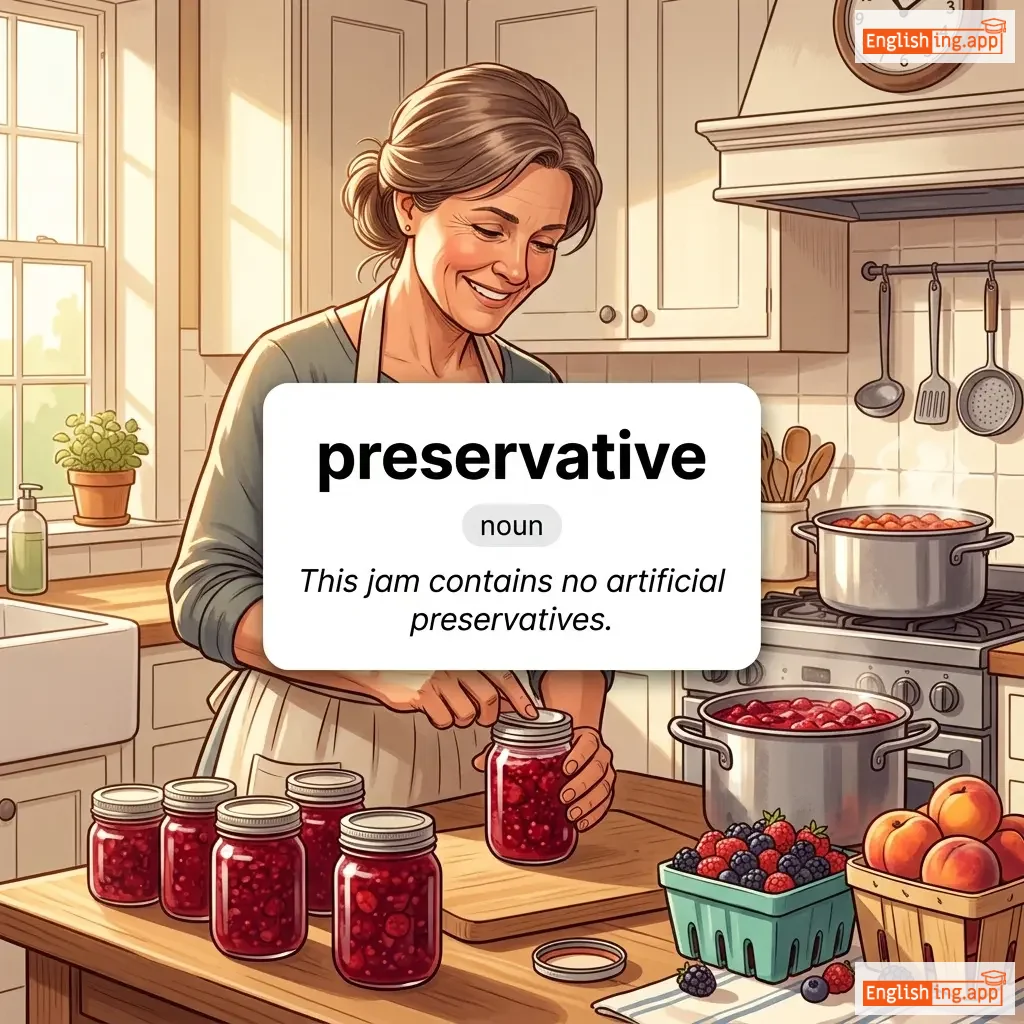
preservative definition card — visual illustration of the meaning
noun C1
/prɪˈzɜːrvətɪv/
防腐剂 (fángfǔjì)

A substance used to prevent decay, spoilage, or deterioration in food or other materials.

"This jam contains no artificial preservatives."

"这款果酱不含人工防腐剂。" (Zhè kuǎn guǒjiàng bù hán réngōng fángfǔjì.)
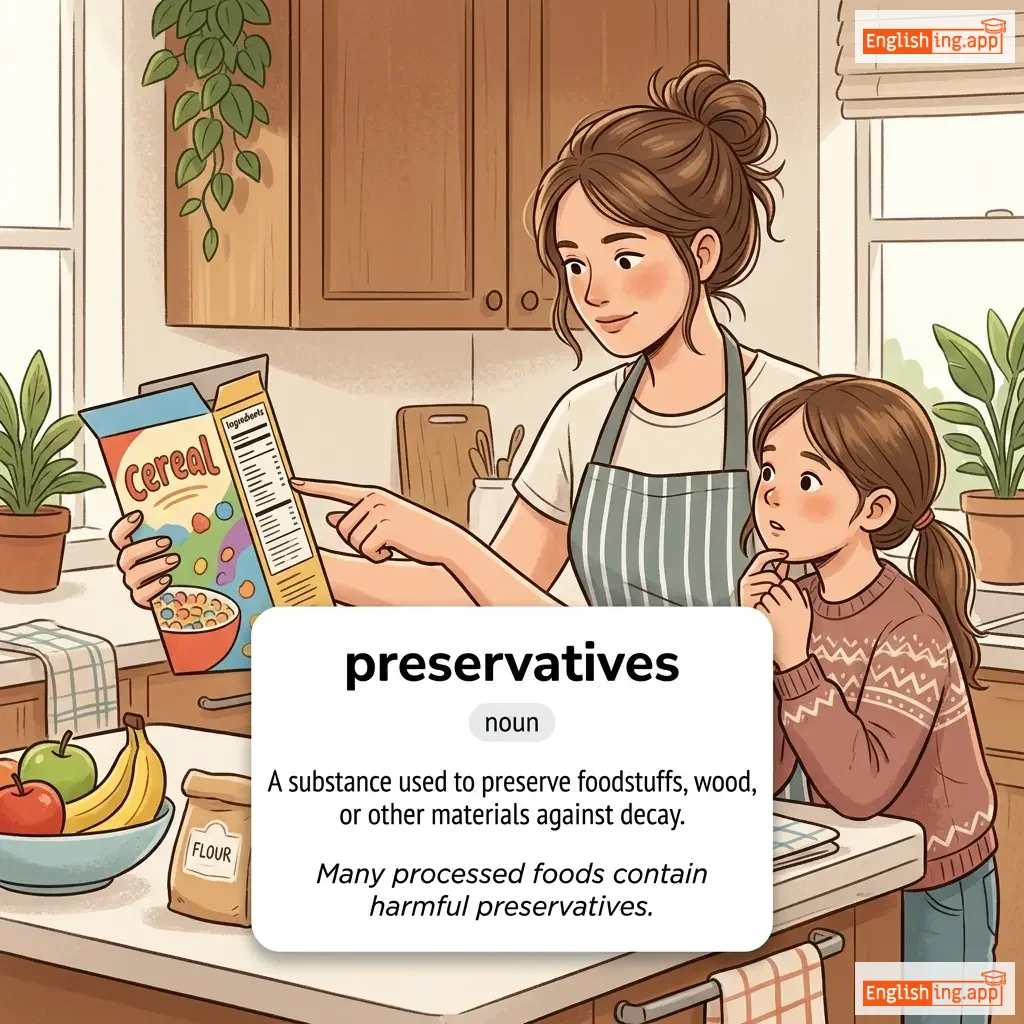
preservatives definition card — visual illustration of the meaning
noun C1
prɪˈzɜː.və.tɪvz
防腐剂 (fang fu ji)

A substance used to preserve foodstuffs, wood, or other materials against decay.

"Many processed foods contain harmful preservatives."

"许多加工食品含有有害的防腐剂。" (Xǔduō jiāgōng shípǐn hán yǒu yǒuhài de fángfǔjì.)
preside definition card — visual illustration of the meaning
verb C1
/prɪˈzaɪd/
主持 (zhǔchí)

to be in charge of a meeting, event, or organization

"She will preside over the meeting tomorrow."

"她明天将主持会议。" (Tā míngtiān jiāng zhǔchí huìyì.)
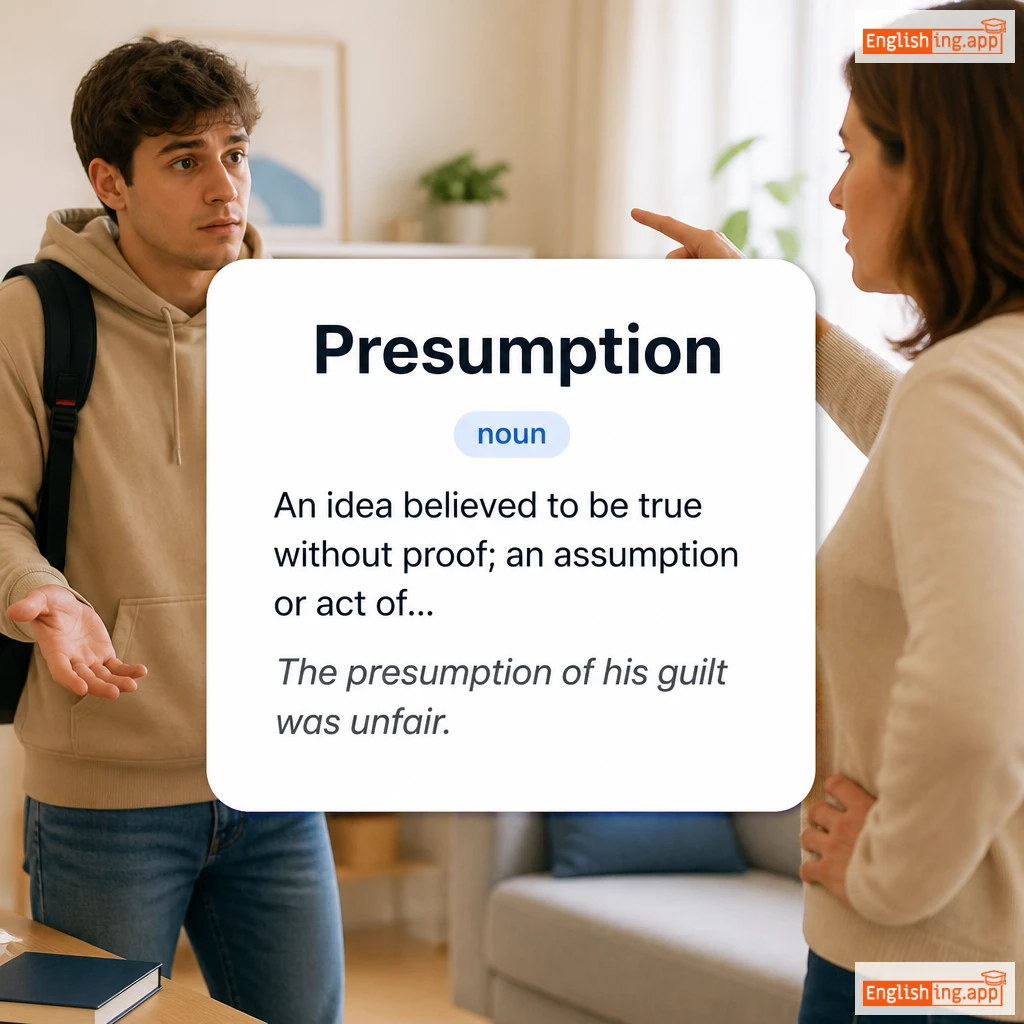
Presumption definition card — visual illustration of the meaning
noun C1
/prɪˈzʌmpʃən/
假设 (jiǎshè)

An idea believed to be true without proof; an assumption or act of overconfidence.

"The presumption of his guilt was unfair."

"他有罪的假设是不公平的。" (Tā yǒu zuì de jiǎshè shì bù gōngpíng de.)
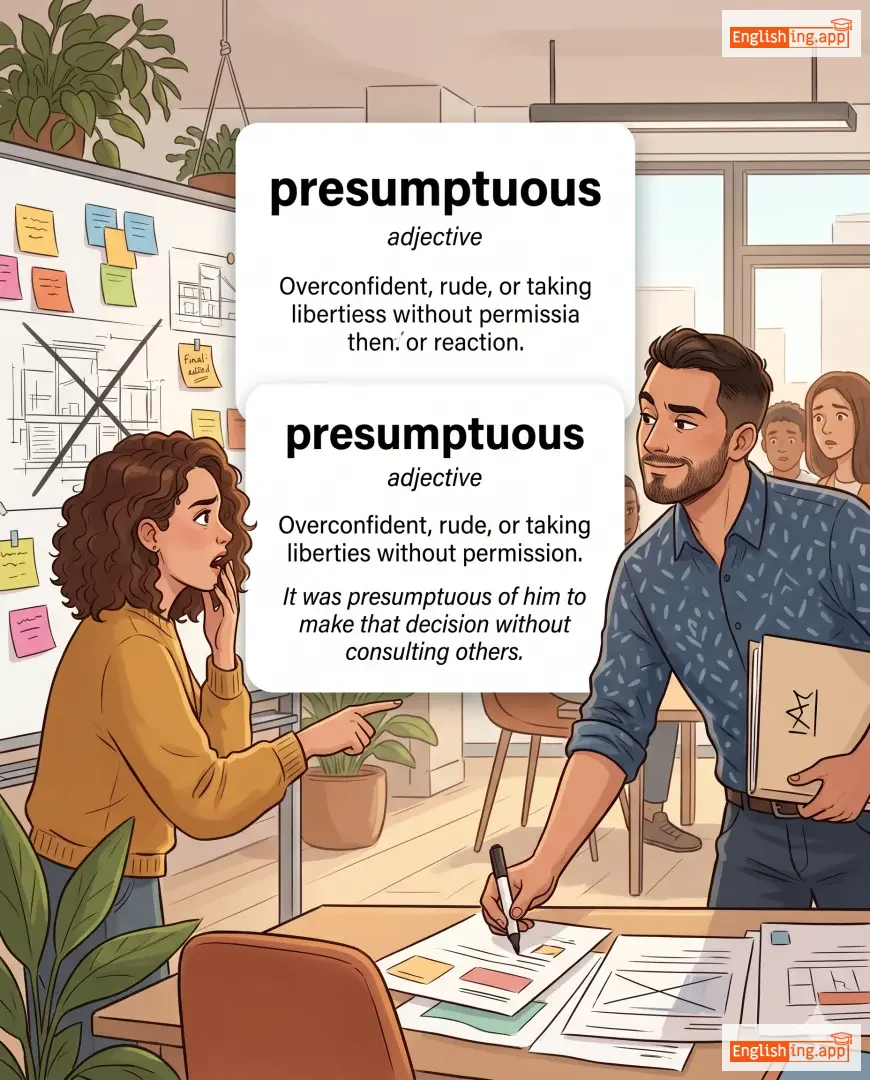
presumptuous definition card — visual illustration of the meaning
adjective C1
/prɪˈzʌmp.tʃu.əs/
自负的 (zì fù de)

Overconfident, rude, or taking liberties without permission.

"It was presumptuous of him to make that decision without consulting others."

"他在没有征求他人意见的情况下做出决定,显得非常自负。" (Tā zài méiyǒu zhēngqiú tārén yìjiàn de qíngkuàng xià zuòchū juédìng, xiǎn dé fēicháng zìfù.)
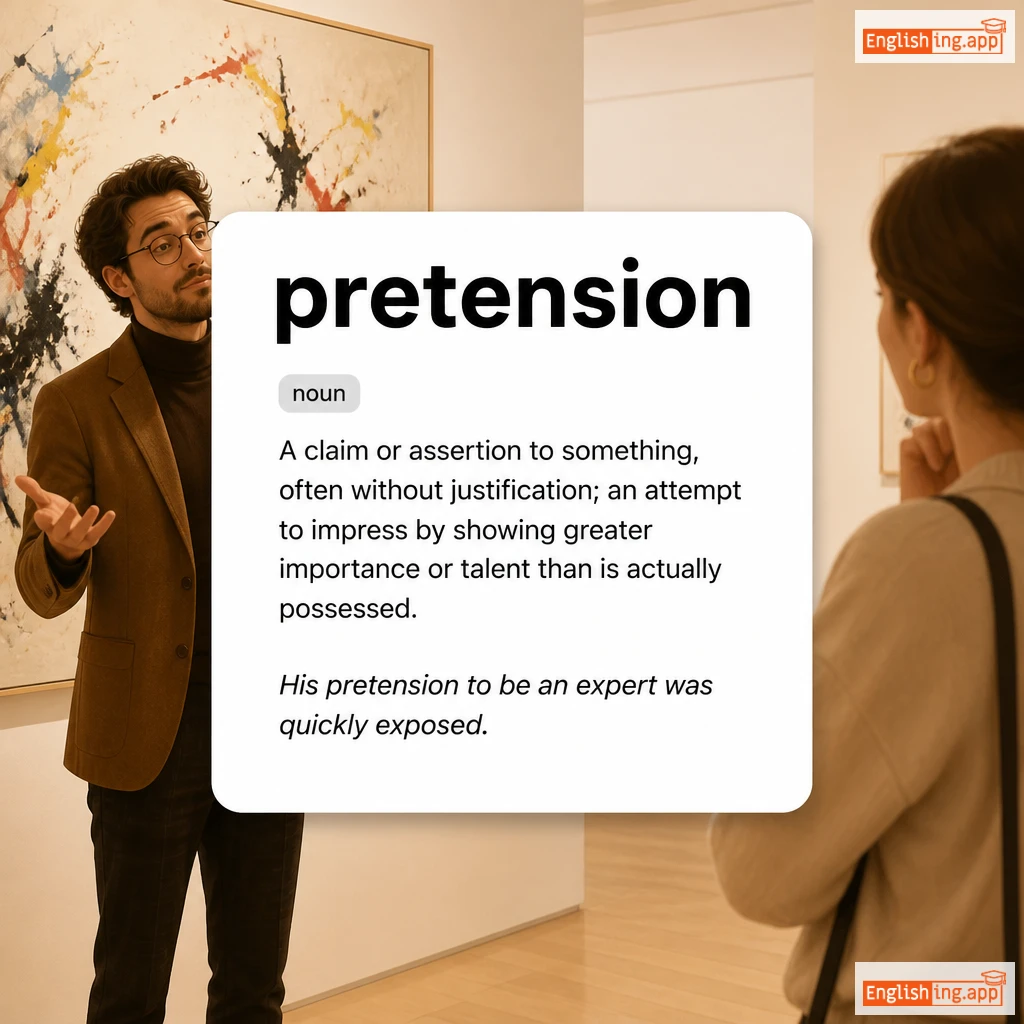
pretension definition card — visual illustration of the meaning
noun C1
/prɪˈtɛnʃən/
虚伪,假装 (xūwěi, jiǎzhuāng)

A claim or assertion to something, often without justification; an attempt to impress by showing greater importance or talent than is actually possessed.

"His pretension to be an expert was quickly exposed."

"他的假装是专家的伪装很快被揭穿了。" (tā de jiǎzhuāng shì zhuānjiā de wěizhuāng hěn kuài bèi jiēchuānle.)
adjective C1
/prɪˈtɛnʃəs/
做作的 (zuòzuò de)

Attempting to impress by affecting greater importance, talent, culture, etc., than is actually possessed.

"The restaurant was stylish but far too pretentious for my taste."

"餐厅很时尚,但对我的口味来说太做作了。" (Cāntīng hěn shíshàng, dàn duì wǒ de kǒuwèi lái shuō tài zuòzuòle.)
Pretext definition card — visual illustration of the meaning
noun C1
/ˈpriːtɛkst/
借口, 假理由 (jièkǒu, jiǎ lǐyóu)

A false reason given to hide the real purpose or motive.

"He went out on the pretext of buying groceries."

"他以买杂货为借口出去。" (Tā yǐ mǎi záhuò wèi jièkǒu chūqù.)
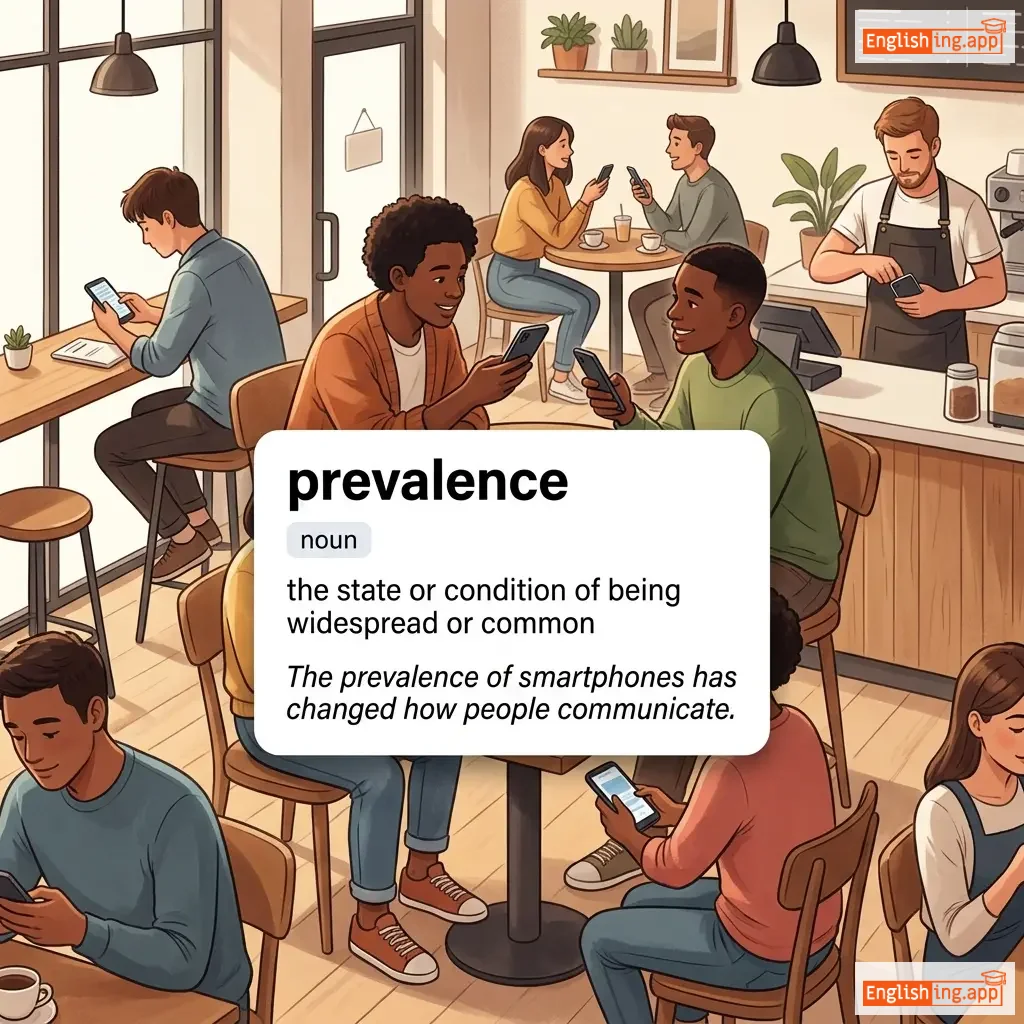
prevalence definition card — visual illustration of the meaning
noun C1
/ˈprɛvələns/
普遍性 (pǔbiànxìng)

the state or condition of being widespread or common

"The prevalence of smartphones has changed how people communicate."

"智能手机的普及改变了人们的交流方式。" (Zhìnéng shǒujī de pǔjí gǎibiànle rénmen de jiāoliú fāngshì.)
adjective C1
/ˈprɛvələnt/
普遍 (pǔbiàn)

widespread or commonly occurring

"Flu is prevalent during the winter season."

"流感在冬季季节很常见。" (Liúgǎn zài dōngjì jìjié hěn chángjiàn.)
verb C1
/ˈprɪkəl/

to cause a slight stinging or tingling sensation on the skin

"Her skin began to prickle in the cold wind."

adjective C1
/prɪm/
过于正式或合适 (guo yu zheng shi huo he shi)

stiffly formal and proper in appearance or behavior

"She looked prim in her neatly pressed dress."

"她穿着精心熨烫的裙子看起来非常端庄。" (Ta chuanzhuo jingxin yuntao de qunzi kan qilai feichang duanzhuang.)
adjective C1
/ˈpriːmə/
主要的, 卓越的 (zhǔyào de, zhuóyuè de)

first or most important; excellent

"She was treated as the prima ballerina of the troupe."

"她被视为舞蹈团的首席舞者。" (Tā bèi shì wéi wǔdǎo tuán de shǒuxí wǔzhě.)
noun C1
/ˈpraɪməsi/
优先权 (yōuxiānquán)

the state of being first in importance or authority

"The primacy of education cannot be denied."

"教育的优先权不可否认。" (Jiàoyù de yōuxiānquán bù kě fǒrèn.)
adjective C1
/ˈpraɪ.məl/
原始的, 基本的 (yuánshǐ de, jīběn de)

Relating to the earliest stage of development; essential or fundamental.

"Fear is one of the most primal emotions humans experience."

"恐惧是人类体验的最原始的情感之一。" (Kǒngjù shì rénlèi tǐyàn de zuì yuánshǐ de qínggǎn zhī yī.)
noun C1
/ˈpraɪ.meɪt/
灵长类动物, 类人猿 (língzhǎnglèi dòngwù, lèirényuán)

A member of the group of animals including humans, apes, and monkeys.

"Humans are classified as primates."

"人类被归类为灵长类动物。" (Rénlèi bèi guīlèi wéi língzhǎnglèi dòngwù.)
noun C1
/ˈpraɪ.mər/ (US), /ˈprɪm.ər/ (UK)
入门书籍,底漆 (rùmén shūjí, dǐqī)

A basic introductory book or a substance used to prepare a surface for painting.

"He read a primer on programming before starting his course."

"他在开始他的课程之前,阅读了一本编程入门书籍。" (Tā zài kāishǐ tā de kèchéng zhīqián, yuèdúle yī běn biānchéng rùmén shūjí.)
adjective C1
/praɪˈmiːvəl/
原始 (yuánshǐ)

Relating to the earliest ages in history; ancient and primitive.

"The explorers ventured into the primeval forest untouched by humans."

"探险者进入了未曾被人类触及的原始森林。" (Tànxiǎn zhě jìnrùle wèi céng bèi rénlèi chùjí de yuánshǐ sēnlín.)
adjective C1
/praɪˈmɔːrdiəl/
原始的 (yuánshǐ de)

Existing at or from the beginning of time; fundamental and original.

"Scientists study the primordial soup from which life emerged."

"科学家研究了原始汤,生命由此诞生。" (Kēxuéjiā yánjiūle yuánshǐ tāng, shēngmìng yóu cǐ dànshēng.)
adjective C1
/ˈprɪnsəpəld/
有原则的 (yǒu yuánzé de)

acting in accordance with moral or ethical standards

"He is a principled leader who always puts honesty first."

"他是一个有原则的领导,总是把诚实放在第一位。" (Tā shì yīgè yǒu yuánzé de lǐngdǎo, zǒng shì bǎ chéngshí fàng zài dì yī wèi.)
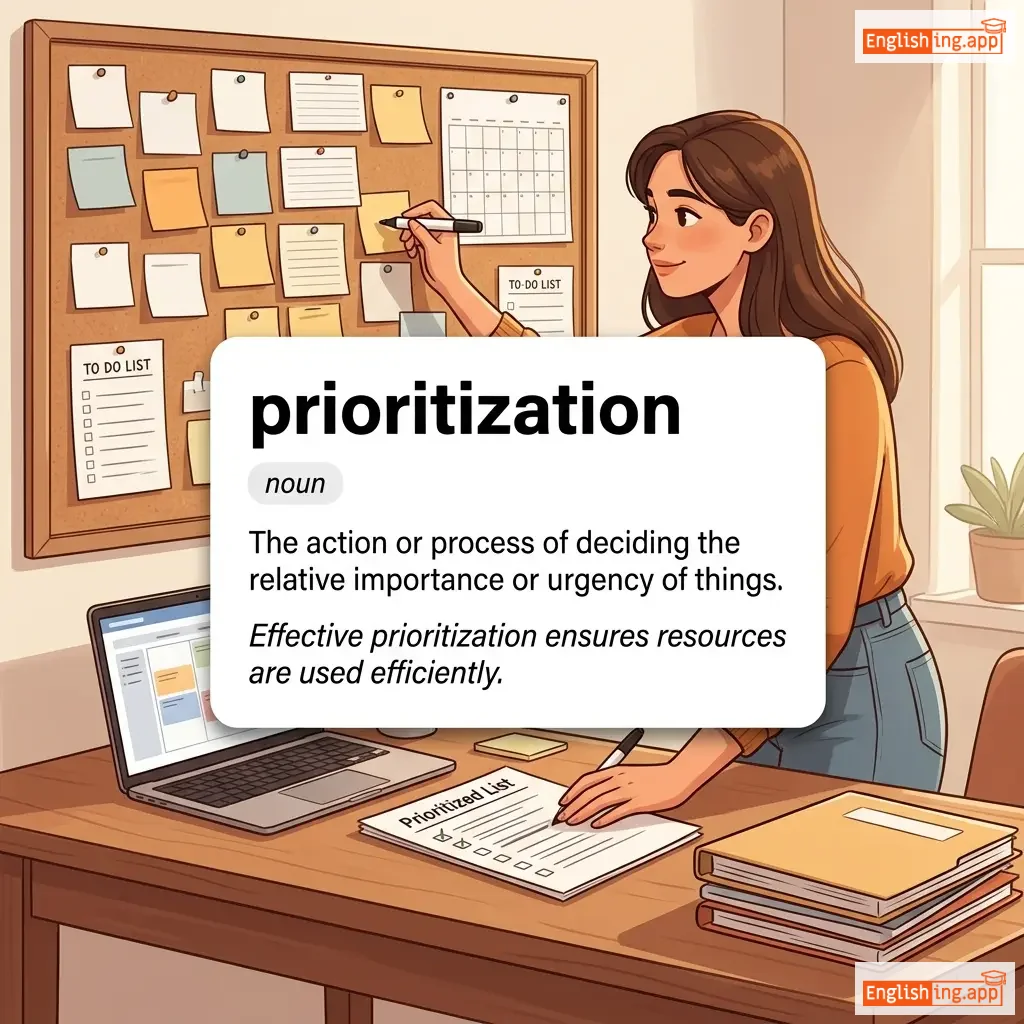
prioritization definition card — visual illustration of the meaning
noun C1
ˌpraɪɔːrɪtaɪˈzeɪʃən
优先排序 (youxian paixu)

The action or process of deciding the relative importance or urgency of things.

"Effective prioritization ensures resources are used efficiently."

"有效的优先排序确保资源得到有效利用。" (Yǒuxiào de yōuxiān pàixù quèbǎo zīyuán dédào yǒuxiào lìyòng.)