Vocabulaires

Découvrez, apprenez et maîtrisez le vocabulaire anglais

adjective C1
/ˈhæbɪtəbl/
habitable (habitable)

Suitable to live in; capable of sustaining life.

"Scientists are searching for habitable planets beyond our solar system."

"Los científicos están buscando planetas habitables más allá de nuestro sistema solar." (Los científicos están buscando planetas habitables más allá de nuestro sistema solar.)
adjective C1
/həˈbɪtʃuəl/
habitual (habitual)

Done or doing constantly or as a habit; customary.

"He was a habitual latecomer to class."

"Él era un habitual retrasado en clase." (Él era un habitual retrasado en clase.)
adjective C1
/ˈhæk.nid/
cliché (clishe)

Used too often and therefore lacking originality or freshness.

"The speech was filled with hackneyed phrases that failed to inspire the audience."

"El discurso estaba lleno de frases cliché que no lograron inspirar al público." (El discurso estaba lleno de frases cliché que no lograron inspirar al público.)
adjective C1
/ˈhæɡ.ərd/
agotado (agotado)

Looking exhausted, unwell, or worn out, especially from fatigue or suffering.

"After working all night, she looked pale and haggard."

"Después de trabajar toda la noche, ella parecía pálida y agotada." (Despues de trabajar toda la noche, ella parecia palida y agotada.)
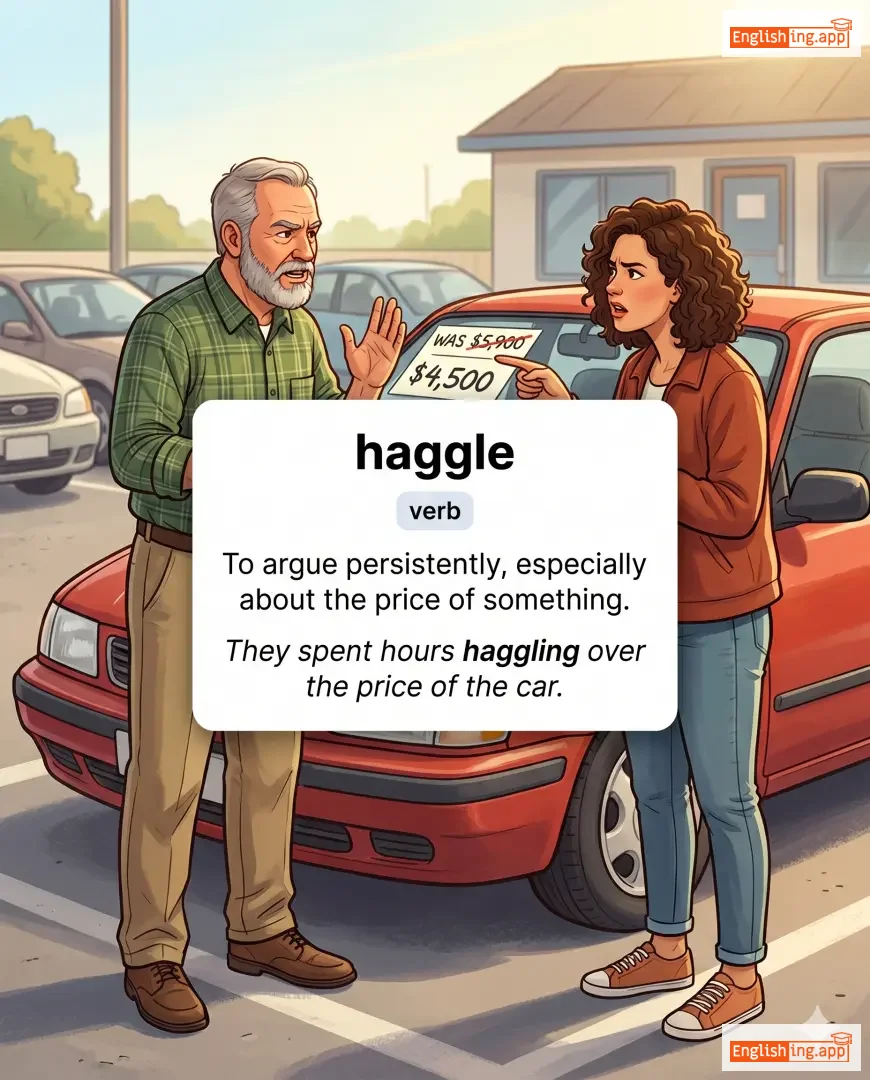
haggle definition card — visual illustration of the meaning
verb C1
/ˈhæɡ.l̩/
regatear (regatear)

To argue persistently, especially about the price of something.

"They spent hours haggling over the price of the car."

"Pasaron horas regateando sobre el precio del coche." (Pasaron horas regateando sobre el precio del coche.)
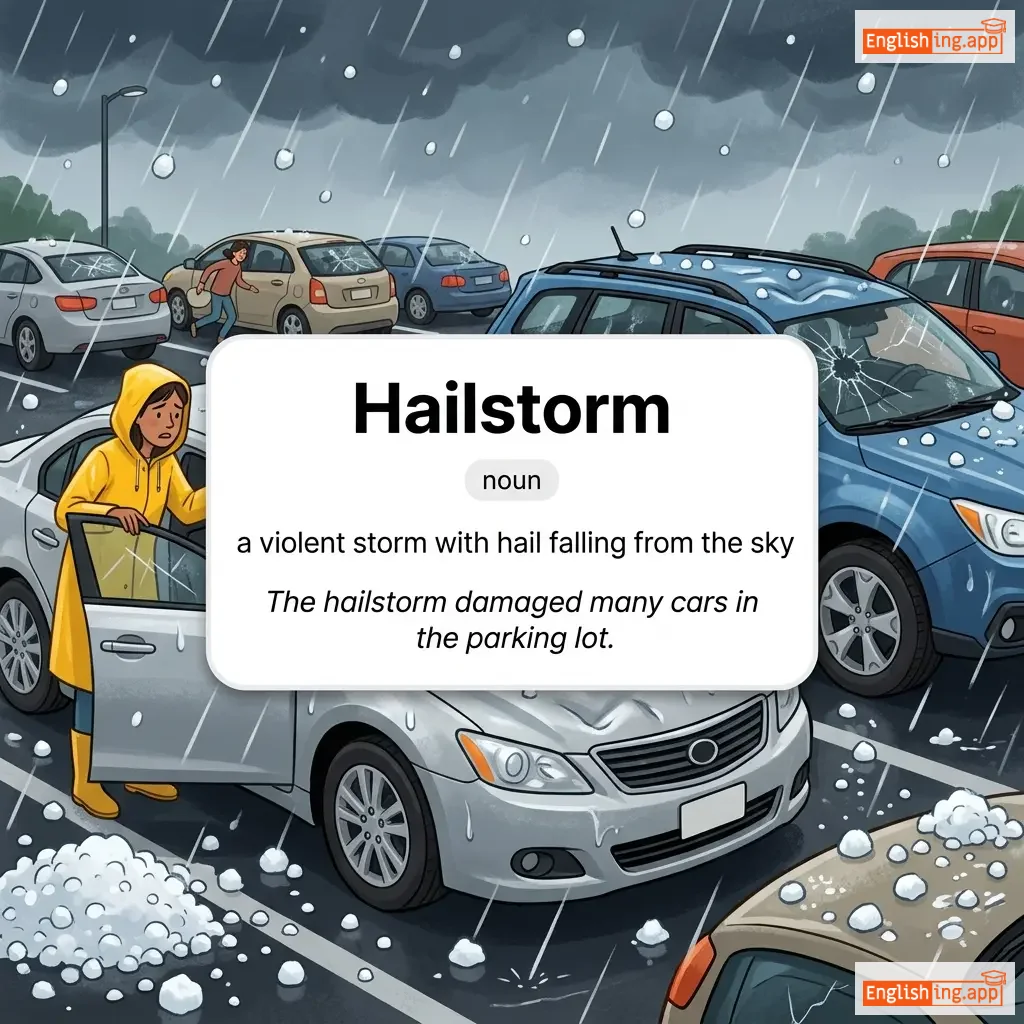
Hailstorm definition card — visual illustration of the meaning
noun C1
/ˈheɪl.stɔːrm/
tormenta de granizo (tormenta de granizo)

a violent storm with hail falling from the sky

"The hailstorm damaged many cars in the parking lot."

"La tormenta de granizo dañó muchos autos en el estacionamiento." (La tormenta de granizo dañó muchos autos en el estacionamiento.)
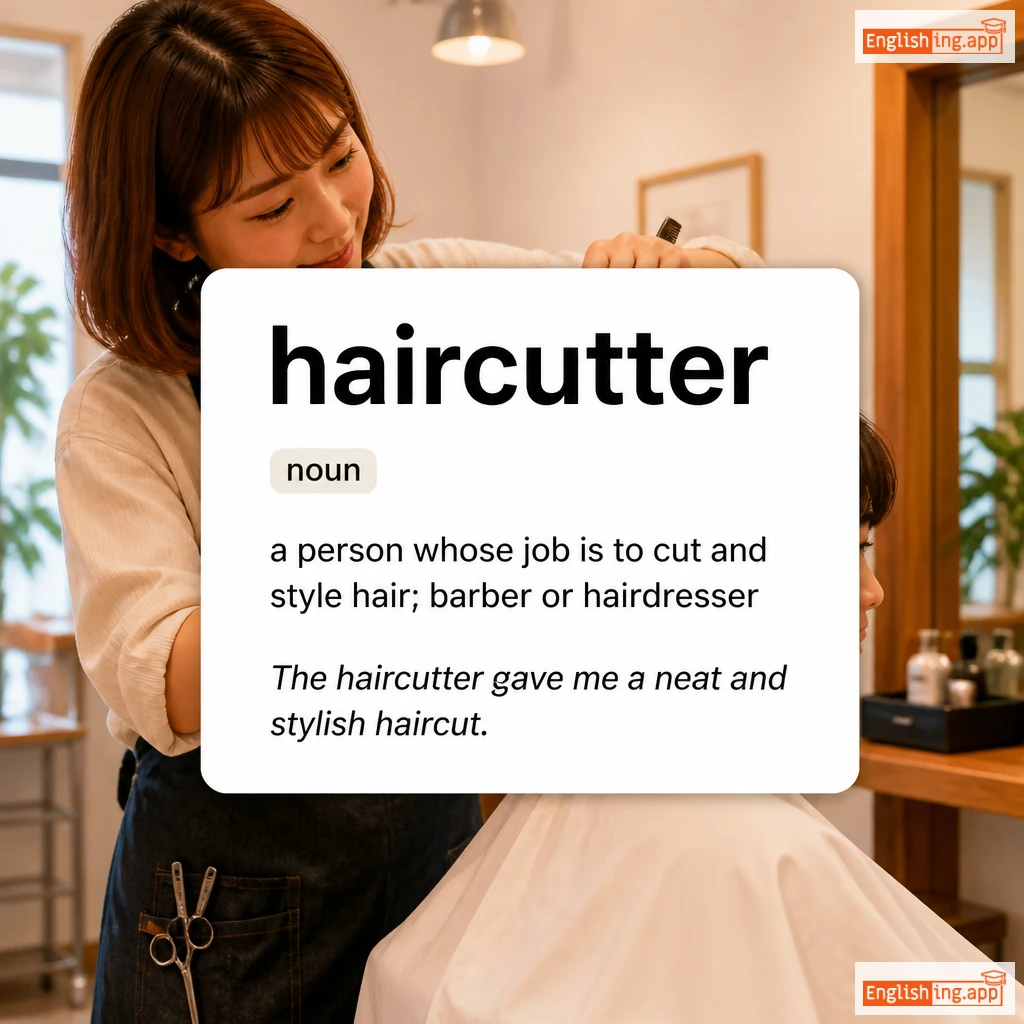
haircutter definition card — visual illustration of the meaning
noun C1
/ˈheəˌkʌtər/
peluquero (peluquero)

a person whose job is to cut and style hair; barber or hairdresser

"The haircutter gave me a neat and stylish haircut."

"El peluquero me hizo un buen corte de pelo." (el peluquero me hizo un buen corte de pelo)
noun C1
/ˈhɔːl.mɑːrk/
marca distintiva (marca distintiva)

a typical characteristic or feature of someone or something

"Honesty is the hallmark of a good leader."

"La honestidad es la marca distintiva de un buen líder." (La honestidad es la marca distintiva de un buen lider.)
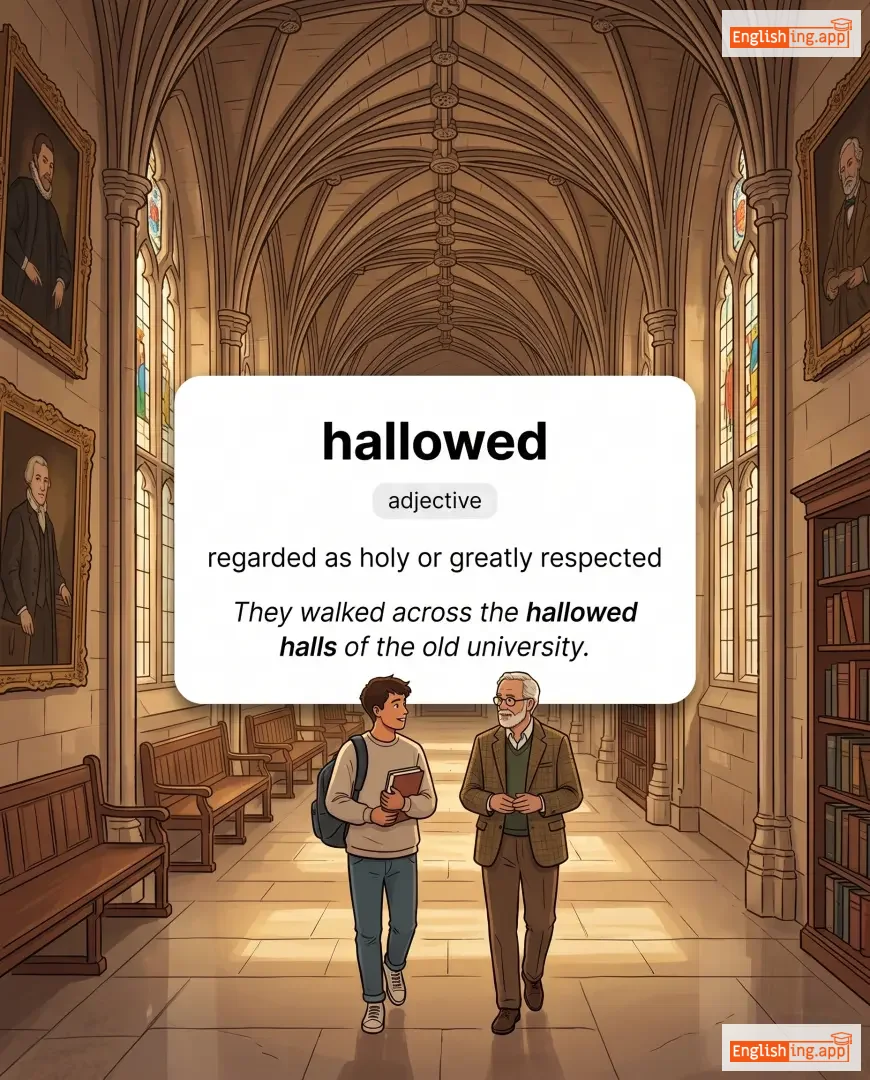
hallowed definition card — visual illustration of the meaning
adjective C1
/ˈhæloʊd/
sagrado (sagrado)

regarded as holy or greatly respected

"They walked across the hallowed halls of the old university."

"Cruzaron los sagrados pasillos de la vieja universidad." (Cruzaron los sagrados pasillos de la vieja universidad.)
verb C1
/həˈluːsɪneɪt/
alucinar (alucinar)

to see, hear, or sense things that are not actually present, often due to illness or drugs

"After taking the medicine, he began to hallucinate strange shapes."

"Después de tomar la medicina, comenzó a alucinar formas extrañas." (Despuès de tomar la medicina, comenzo a alucinar formas extrañas.)
noun C1
/həˌluːsɪˈneɪʃən/
alucinación (alucinacion)

a false perception of objects or events, usually caused by mental illness or drugs

"After the medication, he began to experience vivid hallucinations."

"Después de la medicación, comenzó a experimentar alucinaciones vívidas." (despues de la medicacion, comenzo a experimentar alucinaciones vividas.)
adjective C1
/ˈhɔːltɪŋ/
vacilante (vacilante)

slow and hesitant, especially due to lack of confidence

"She gave a halting reply during the interview."

"Ella dio una respuesta vacilante durante la entrevista." (Ella dio una respuesta vacilante durante la entrevista.)
noun C1
/ˈhæm.lət/
pequeña aldea (pequena aldea)

a small rural settlement, smaller than a village; a small community

"The tiny hamlet nestled in the valley had only a dozen houses and one small church."

"La pequeña aldea enclavada en el valle tenía solo una docena de casas y una pequeña iglesia." (La pequena aldea enclavada en el valle tenia solo una docena de casas y una pequena iglesia.)
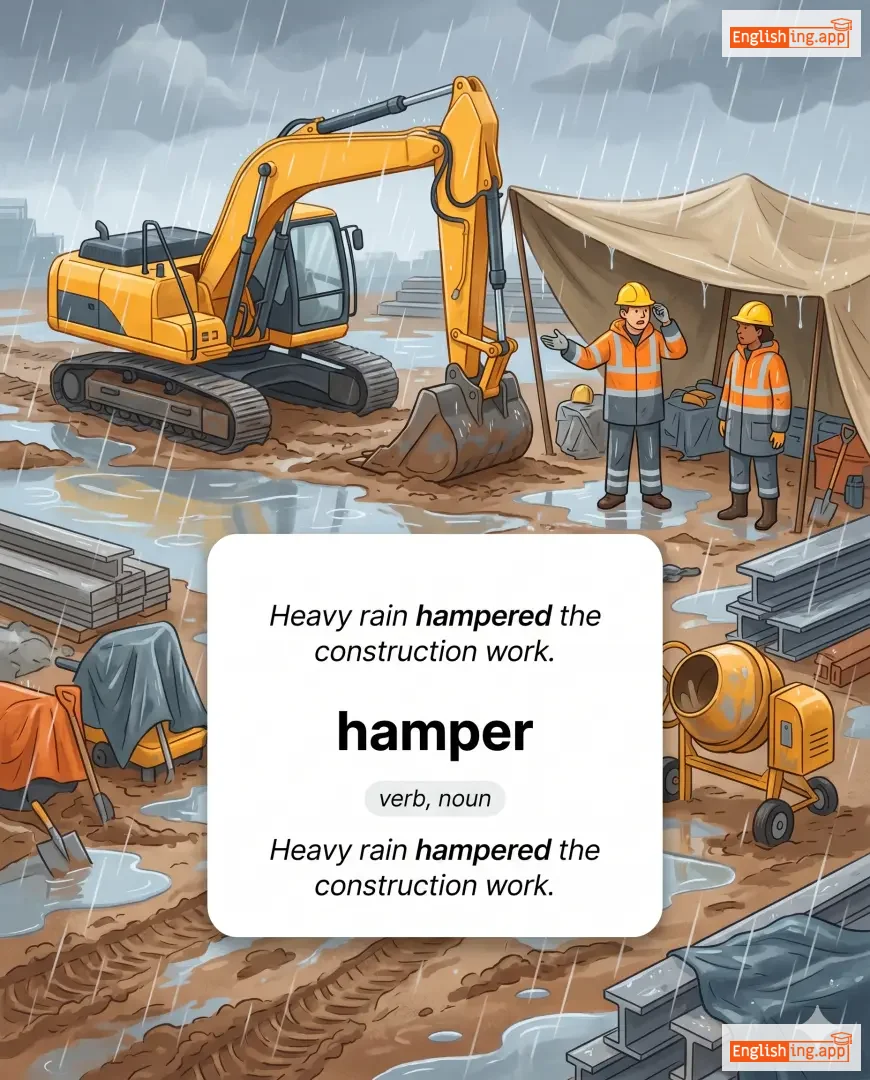
hamper definition card — visual illustration of the meaning
verb, noun C1
/ˈhæmpər/
obstruir, canasta para ropa (obstruir, canasta para ropa)

to prevent or slow down the progress of something; also, a basket with a lid, typically for laundry.

"Heavy rain hampered the construction work."

"La lluvia fuerte dificultó el trabajo de construcción." (La lluvia fuerte dificultó el trabajo de construcción.)
noun C1
/ˈhæŋ.ər/
hangar (hangar)

a large building with extensive floor area, typically for housing aircraft; an aircraft shelter

"The airplane was stored safely in the hangar during the severe thunderstorm."

"El avión fue guardado de forma segura en el hangar durante la tormenta severa." (El avion fue guardado de forma segura en el hangar durante la tormenta severa.)
Hanger definition card — visual illustration of the meaning
noun C1
/ˈhæŋ.ər/
percha (percha)

a shaped piece of wood, plastic, or metal with a hook at the top, used to hang up clothes

"She hung her dress on a wooden hanger to prevent it from getting wrinkled."

"Colgó su vestido en una percha de madera para evitar que se arrugara." (Colgo su vestido en una percha de madera para evitar que se arrugara.)
adjective C1
/hæpˈhæzərd/
desordenado, aleatorio (desordenado, aleatorio)

lacking any obvious order or organization; random

"The books were stacked in a haphazard way on the table."

"Los libros estaban apilados de manera desordenada sobre la mesa." (Los libros estaban apilados de manera desordenada sobre la mesa.)
adjective C1
/ˈhæpləs/
desdichado, desafortunado (desdichado, desafortunado)

unfortunate, unlucky, deserving pity

"The hapless traveler lost his passport on the very first day."

"El desdichado viajero perdió su pasaporte en el primer día." (El desdichado viajero perdió su pasaporte en el primer día.)
adjective C1
/ˌhæpi ɡoʊ ˈlʌki/
alegre, despreocupado, sin preocupaciones (alegre, despreocupado, sin preocupaciones)

cheerfully unconcerned about the future; carefree

"She has a happy-go-lucky attitude and never worries about tomorrow."

"Ella tiene una actitud feliz y despreocupada y nunca se preocupa por mañana." (Ella tiene una actitud feliz y despreocupada y nunca se preocupa por mañana.)
adjective C1
/ˌhɑːrdˈhɑːrtɪd/
despiadado (despiadado)

showing no kindness or sympathy; cruel

"The landlord was hard-hearted and refused to help the poor family."

"El arrendador era muy duro de corazón y se negó a ayudar a la pobre familia." (El arrendador era muy duro de corazón y se negó a ayudar a la pobre familia.)
adjective C1
/ˈhɑːrdi/
resistente, robusto (resistente, robusto)

Strong, robust, and capable of enduring difficult conditions.

"Hardy plants can survive the harsh winter."

"Las plantas resistentes pueden sobrevivir al invierno severo." (Las plantas resistentes pueden sobrevivir al invierno severo.)
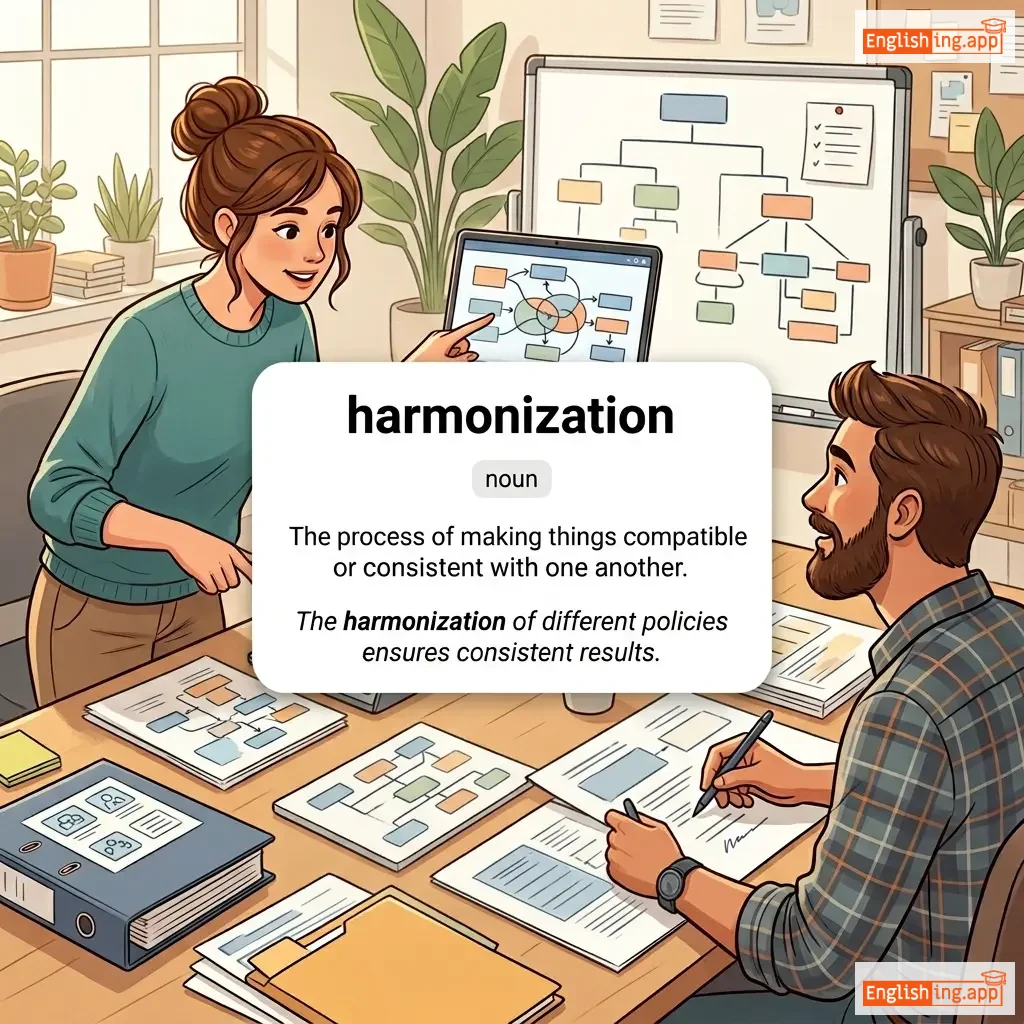
harmonization definition card — visual illustration of the meaning
noun C1
/ˌhɑːmənaɪˈzeɪʃən/
armonización, conciliación (armonizacion, conciliacion)

The process of making things compatible or consistent with one another.

"The harmonization of different policies ensures consistent results."

"La armonización de diferentes políticas garantiza resultados consistentes." (La armonizacion de diferentes politicas garantiza resultados consistentes.)
Harp definition card — visual illustration of the meaning
verb C1
/hɑːrp/
quejarse repetidamente, insistir (quejarse repetidamente, insistir)

To dwell on or complain about something persistently.

"He kept harping on the same mistake over and over."

"Él seguía quejándose del mismo error una y otra vez." (Él seguía quejándose del mismo error una y otra vez.)
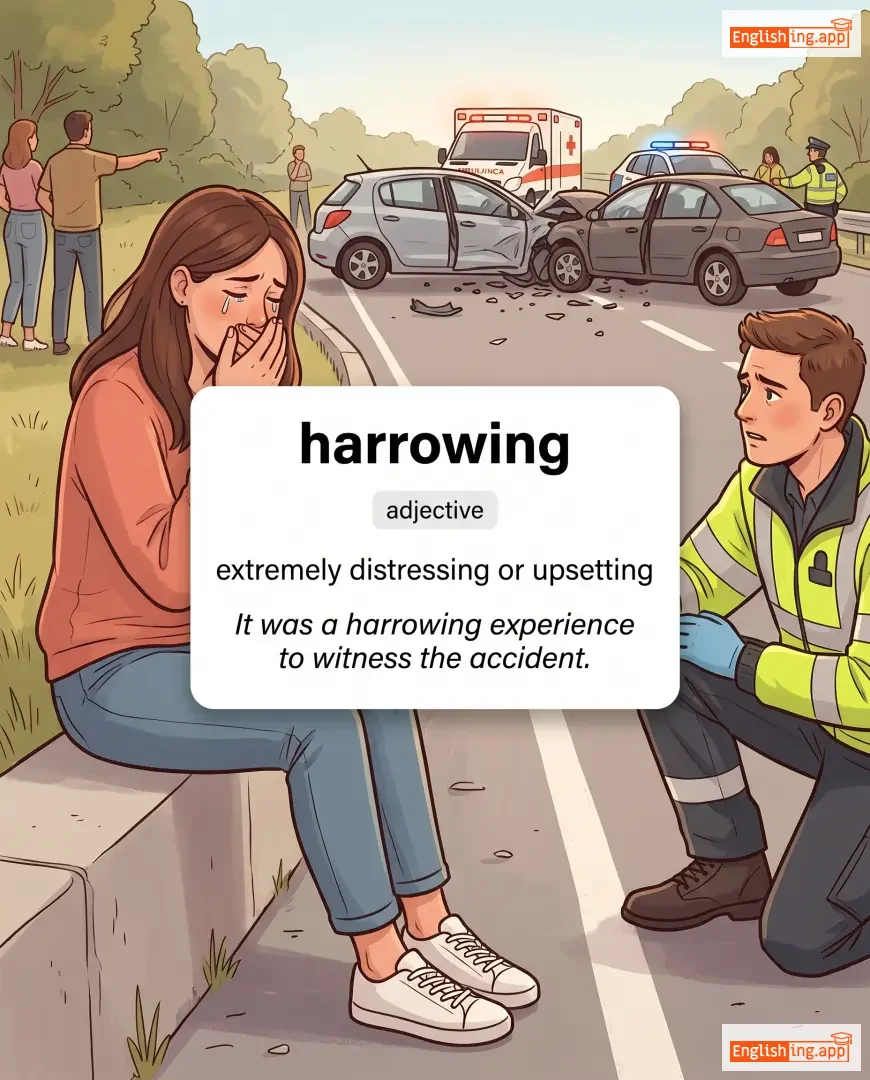
harrowing definition card — visual illustration of the meaning
adjective C1
/ˈhær.oʊ.ɪŋ/
aterrador y angustioso (aterrador y angustioso)

extremely distressing or upsetting

"It was a harrowing experience to witness the accident."

"Fue una experiencia aterradora ser testigo del accidente." (Fue una experiencia aterradora ser testigo del accidente.)
verb C1
/ˈheɪsən/
apresurar (apresurar)

To move or act quickly; to cause something to happen sooner.

"He hastened to finish his work before the deadline."

"Se apresuró a terminar su trabajo antes de la fecha límite." (Se apresuró a terminar su trabajo antes de la fecha límite.)
adverb C1
/ˈheɪs.tɪ.li/
apresuradamente (apresuradamente)

in a hurried or rushed manner; quickly and carelessly

"She hastily packed her bags before leaving for the airport."

"Ella empacó apresuradamente sus maletas antes de irse al aeropuerto." (Ella empacó apresuradamente sus maletas antes de irse al aeropuerto.)
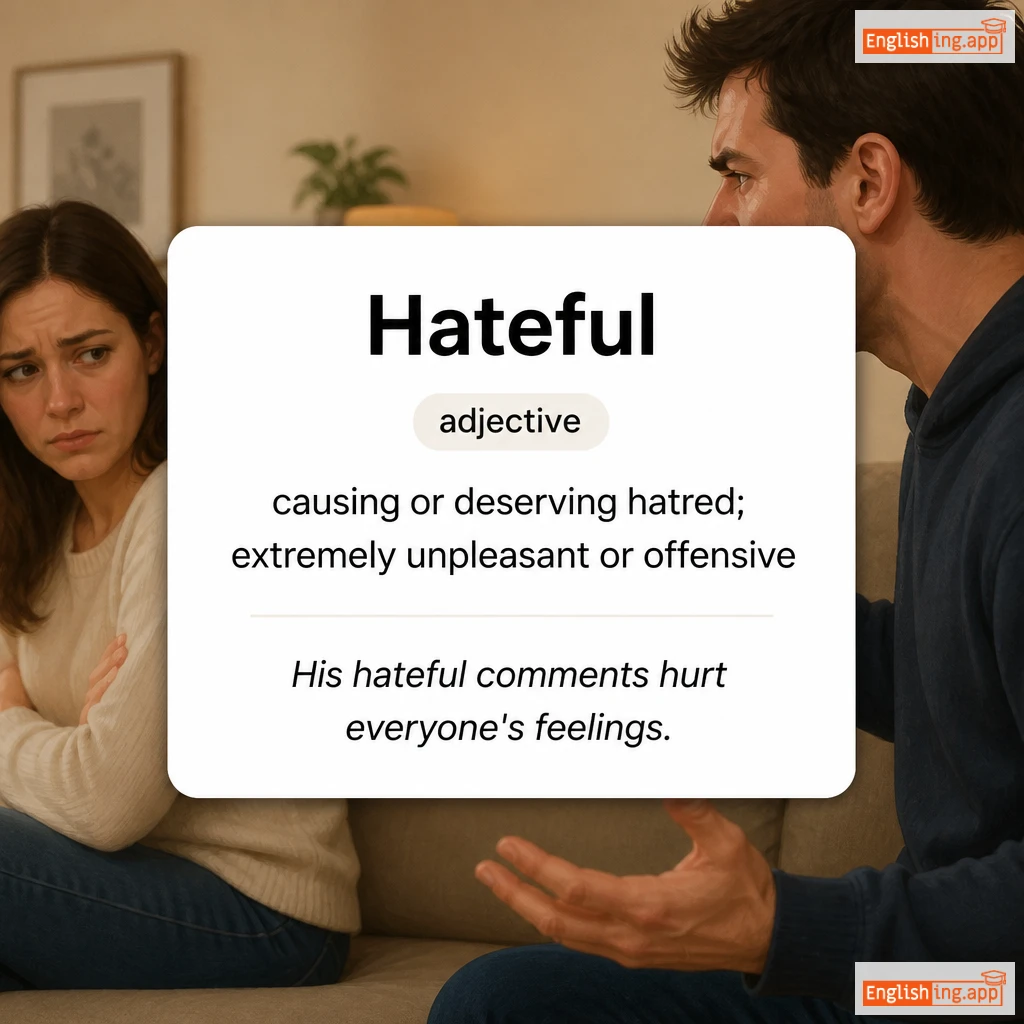
Hateful definition card — visual illustration of the meaning
adjective C1
/ˈheɪt.fəl/
Odioso (odioso)

causing or deserving hatred; extremely unpleasant or offensive

"His hateful comments hurt everyone's feelings."

"Sus comentarios odiosos lastimaron los sentimientos de todos." (Sus comentarios odiosos lastimaron los sentimientos de todos.)
adjective C1
/ˈhɔːti/
arrogante (arrogante)

arrogantly superior and disdainful

"She gave him a haughty look and walked away."

"Ella le dio una mirada arrogante y se alejó." (Ella le dio una mirada arrogante y se alejó.)
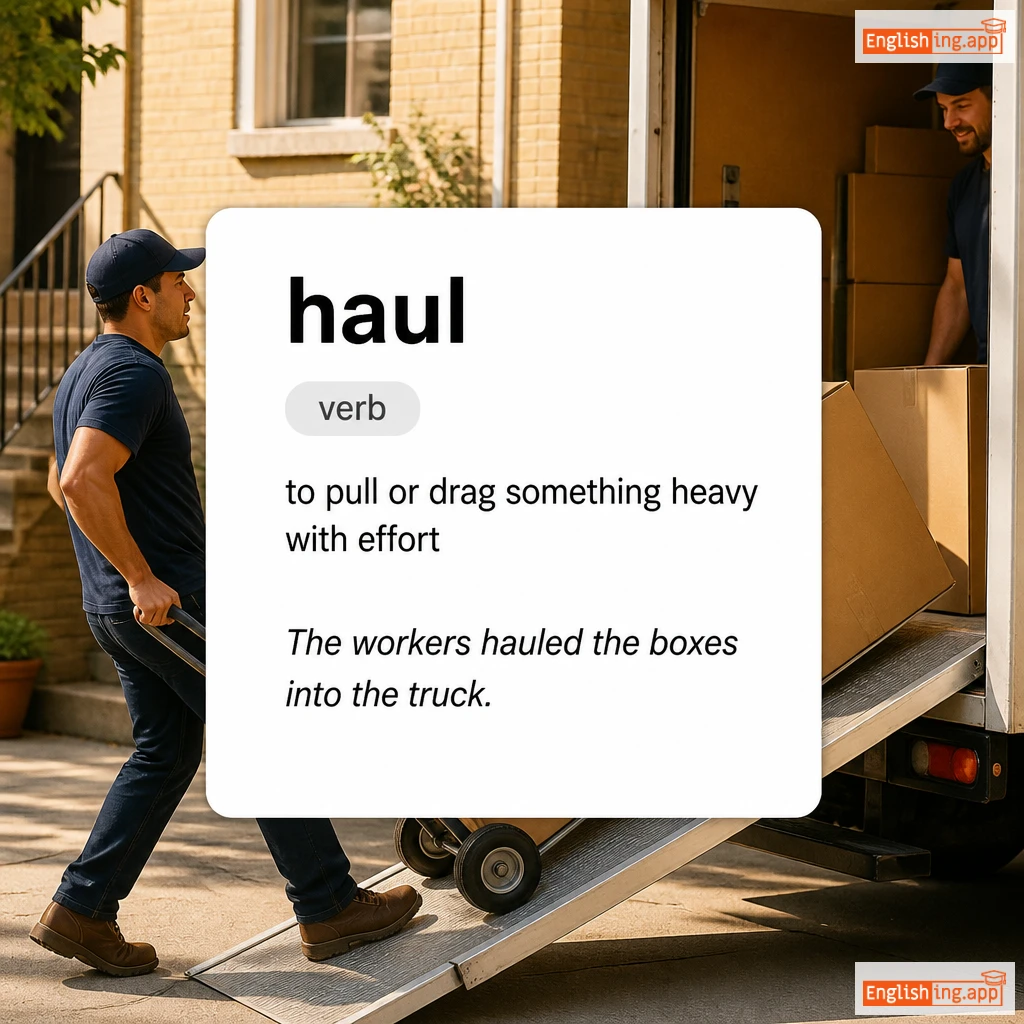
haul definition card — visual illustration of the meaning
verb C1
/hɔːl/
arrastrar (arrastrar)

to pull or drag something heavy with effort

"The workers hauled the boxes into the truck."

"Los trabajadores arrastraron las cajas al camión." (Los trabajadores arrastraron las cajas al camión.)
noun C1
/ˈheɪvən/
refugio (refugio)

a safe place or shelter

"The library became a haven for students during exams."

"La biblioteca se convirtió en un refugio para los estudiantes durante los exámenes." (La biblioteca se convirtió en un refugio para los estudiantes durante los exámenes.)
noun C1
/ˈhævək/
destrucción (destruccion)

widespread destruction or disorder

"The storm caused havoc in the coastal villages."

"La tormenta causó destrucción en los pueblos costeros." (La tormenta causo destruccion en los pueblos costeros.)
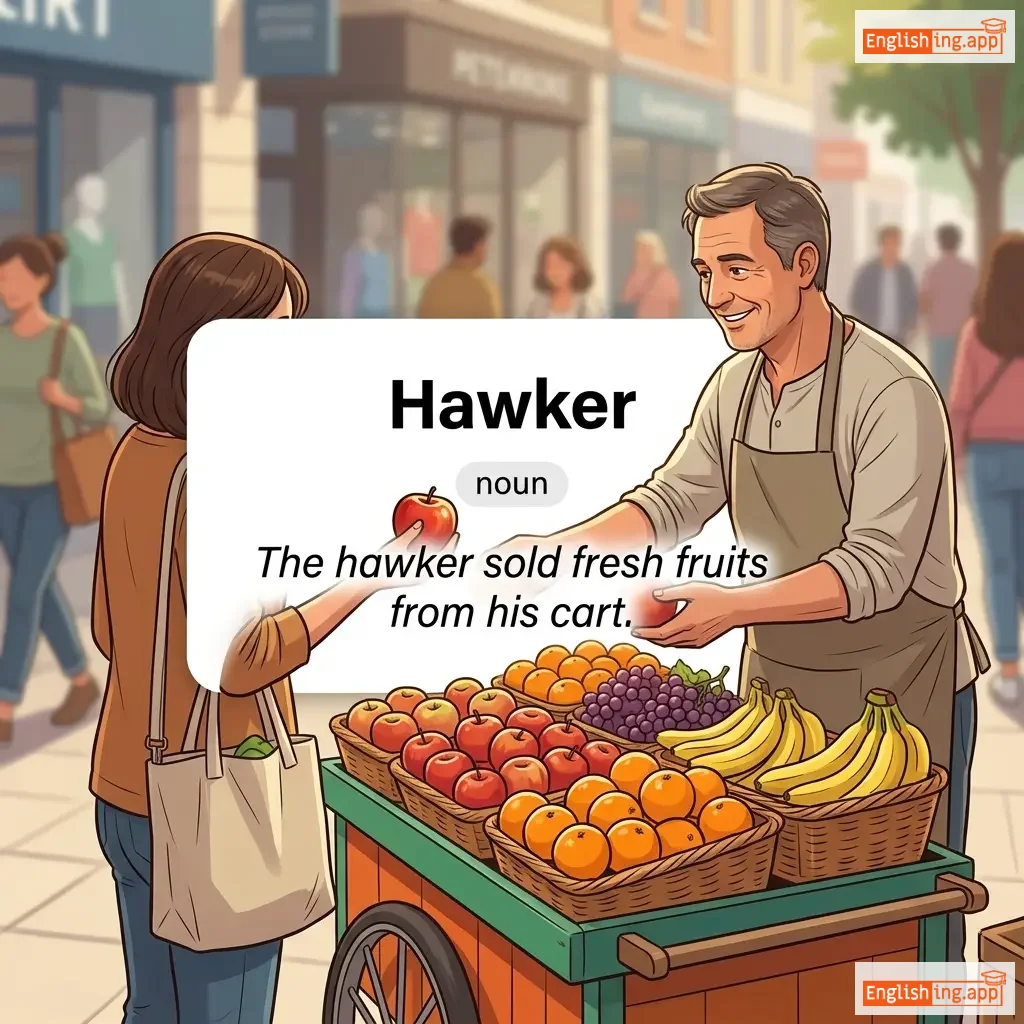
Hawker definition card — visual illustration of the meaning
noun C1
/ˈhɔː.kər/
vendedor ambulante (vendedor ambulante)

a person who travels about selling goods, typically from door to door or on the street

"The hawker sold fresh fruits from his cart."

"El vendedor ambulante vendió frutas frescas desde su carrito." (El vendedor ambulante vendió frutas frescas desde su carrito.)
🌫️

Haze (hej)

noun C1
/heɪz/
neblina (neblina)

a slight obscuration of the lower atmosphere, typically caused by fine suspended particles; confusion

"The morning haze lifted gradually as the sun rose higher in the sky."

"La neblina matutina se levantó gradualmente a medida que el sol se elevaba más alto en el cielo." (La neblina matutina se levanto gradualmente a medida que el sol se elevaba más alto en el cielo.)
adjective C1
/ˈheɪzi/
brumoso (brumoso)

Unclear, misty, or not easy to see; also vague or uncertain.

"The mountains looked hazy in the morning light."

"Las montañas se veían brumosas con la luz de la mañana." (Las montañas se veían brumosas con la luz de la mañana.)
🚗🔄🚗

Head-on (hed-ón)

adverb C1
/ˈhed ɑn/
de frente (de frente)

directly facing; in direct confrontation or collision

"The two cars collided head-on at the intersection."

"Los dos autos colisionaron de frente en la intersección." (Los dos autos colisionaron de frente en la intersección.)
adverb C1
/ˌhɛdˈfɜrst/
cabeza adelante (cabeza adelante)

With the head leading; in a reckless or hasty manner.

"He dived headfirst into the pool."

"Se zambulló cabeza primero en la piscina." (Se zambulló cabeza primero en la piscina.)
adverb C1
/ˈhɛdˌlɔŋ/
a la carrera (a la carrera)

With the head leading; in a rush or without thinking.

"She rushed headlong into the new project."

"Ella se lanzó a la carrera al nuevo proyecto." (Ella se lanzó a la carrera al nuevo proyecto.)
adjective C1
/ˈhɛdˌstrɔŋ/
terco (terko)

Determined to do what one wants, even if it is not sensible.

"The headstrong child refused to listen to anyone."

"El niño terco se negó a escuchar a nadie." (El niño terco se negó a escuchar a nadie.)
noun C1
/ˈhed.weɪ/
progreso; avance; adelanto (progreso, avance, adelanto)

forward movement or progress, especially when this is slow or difficult

"Despite the challenges, the research team made significant headway in developing the new vaccine."

"A pesar de los desafíos, el equipo de investigación logró un progreso significativo en el desarrollo de la nueva vacuna." (A pesar de los desafios, el equipo de investigacion logro un progreso significativo en el desarrollo de la nueva vacuna.)
adjective C1
/ˈhɛlθfəl/
saludable (saludable)

Promoting good health; beneficial to health.

"A healthful diet includes fresh fruits and vegetables."

"Una dieta saludable incluye frutas y verduras frescas." (Una dieta saludable incluye frutas y verduras frescas.)
noun C1
/ˈhɪərseɪ/
rumor (rumor)

Information received from other people that cannot be substantiated; rumor.

"The decision was based on hearsay, not evidence."

"La decisión se basó en rumores, no en evidencia." (La decision se baso en rumores, no en evidencia.)
adverb C1
/ˈhɑr.tɪ.li/
cordialmente; de todo corazón (cordialmen-te; de to-do co-ra-zón)

in a sincere and enthusiastic manner; wholeheartedly

"She heartily welcomed her guests to the party."

"Ella dio una cordial bienvenida a sus invitados a la fiesta." (E-ya dio u-na cor-dial bien-ve-ni-da a sus in-vi-ta-dos a la fies-ta.)
adjective C1
/ˈhɑːrtˌrɛndɪŋ/
desgarrador (desgarrador)

Causing great sadness or distress; very moving emotionally.

"The documentary showed heartrending scenes of war victims."

"El documental mostró escenas desgarradoras de las víctimas de la guerra." (El documental mostró escenas desgarradoras de las víctimas de la guerra.)
noun C1
/ˈhiːdəˌnɪzəm/
hedonismo (hedonismo)

The pursuit of pleasure and self-indulgence as the highest goal.

"The lifestyle of the rich is often criticized as pure hedonism."

"El estilo de vida de los ricos a menudo se critica como puro hedonismo." (El estilo de vida de los ricos a menudo se critica como puro hedonismo.)
noun C1
/ˈhiːdənɪst/
hedonista (hedonista)

A person who believes that the pursuit of pleasure is the most important thing in life.

"She was called a hedonist because she always prioritized enjoyment over duty."

"La llamaron hedonista porque siempre priorizaba el disfrute sobre el deber." (La llamaron hedonista porque siempre priorizaba el disfrute sobre el deber.)
verb C1
/hiːd/
prestar atención (prestar atencion)

to pay attention to; to take notice of

"You should heed the teacher's advice."

"Debes hacer caso al consejo del maestro." (Debes hacer caso al consejo del maestro.)
adjective C1
/ˈhiːdləs/
despreocupado (despreocupado)

showing a reckless lack of care or attention

"He drove with heedless disregard for the rules."

"Condujo con desprecio por las reglas." (Condujo con desprecio por las reglas.)
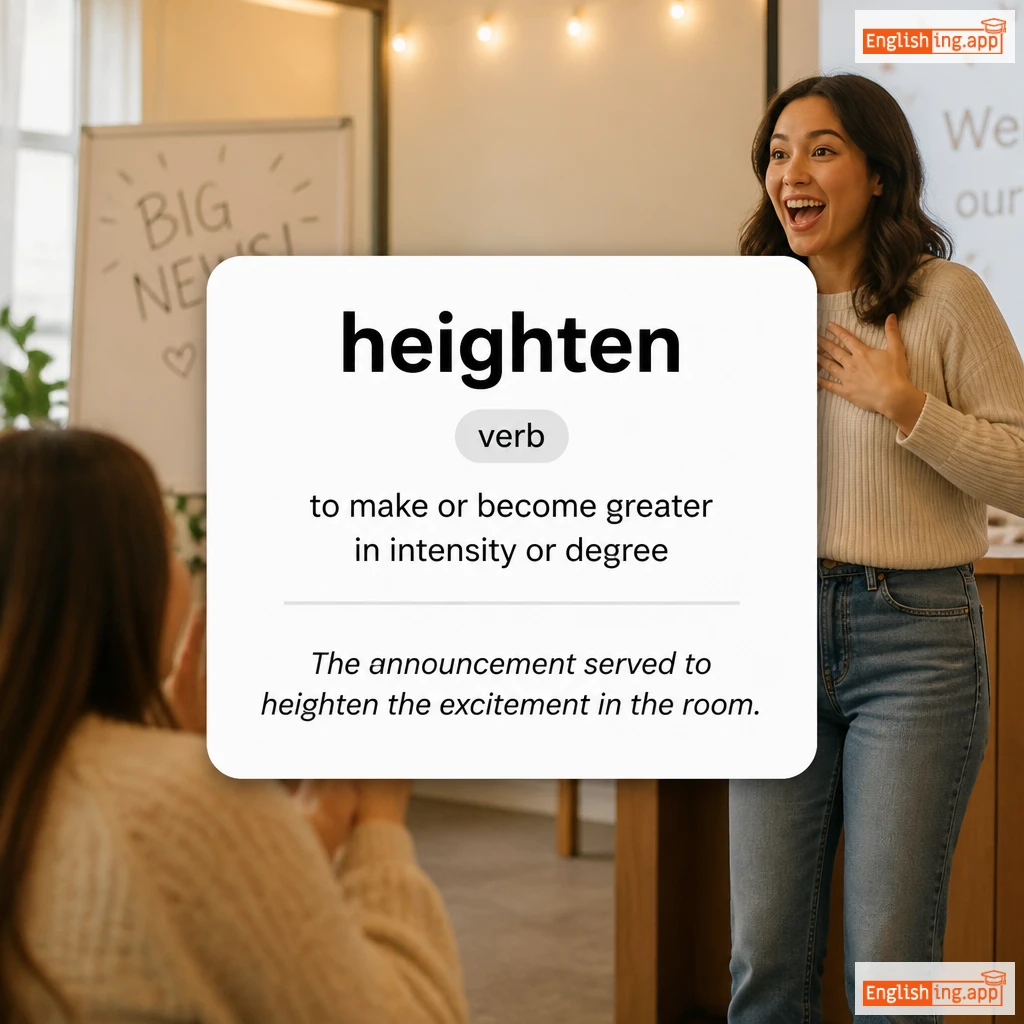
heighten definition card — visual illustration of the meaning
verb C1
/ˈhaɪtən/
aumentar (aumentar)

to make or become greater in intensity or degree

"The announcement served to heighten the excitement in the room."

"El anuncio sirvió para aumentar la emoción en la habitación." (El anuncio sirvió para aumentar la emoción en la habitación.)
adjective C1
/ˈheɪ.nəs/
horrible (horrible)

extremely wicked, deeply offensive, or shockingly evil

"The dictator was condemned for his heinous crimes against humanity."

"El dictador fue condenado por sus horribles crímenes contra la humanidad." (El dictador fue condenado por sus horribles crímenes contra la humanidad.)
noun C1
/ˈɛər.luːm/
herencia (herencia)

a valuable object that has belonged to a family for several generations

"The ring is a family heirloom passed down from her grandmother."

"El anillo es una herencia familiar que ha sido transmitida por su abuela." (El anillo es una herencia familiar que ha sido transmitida por su abuela.)