Vocabulaires

Découvrez, apprenez et maîtrisez le vocabulaire anglais

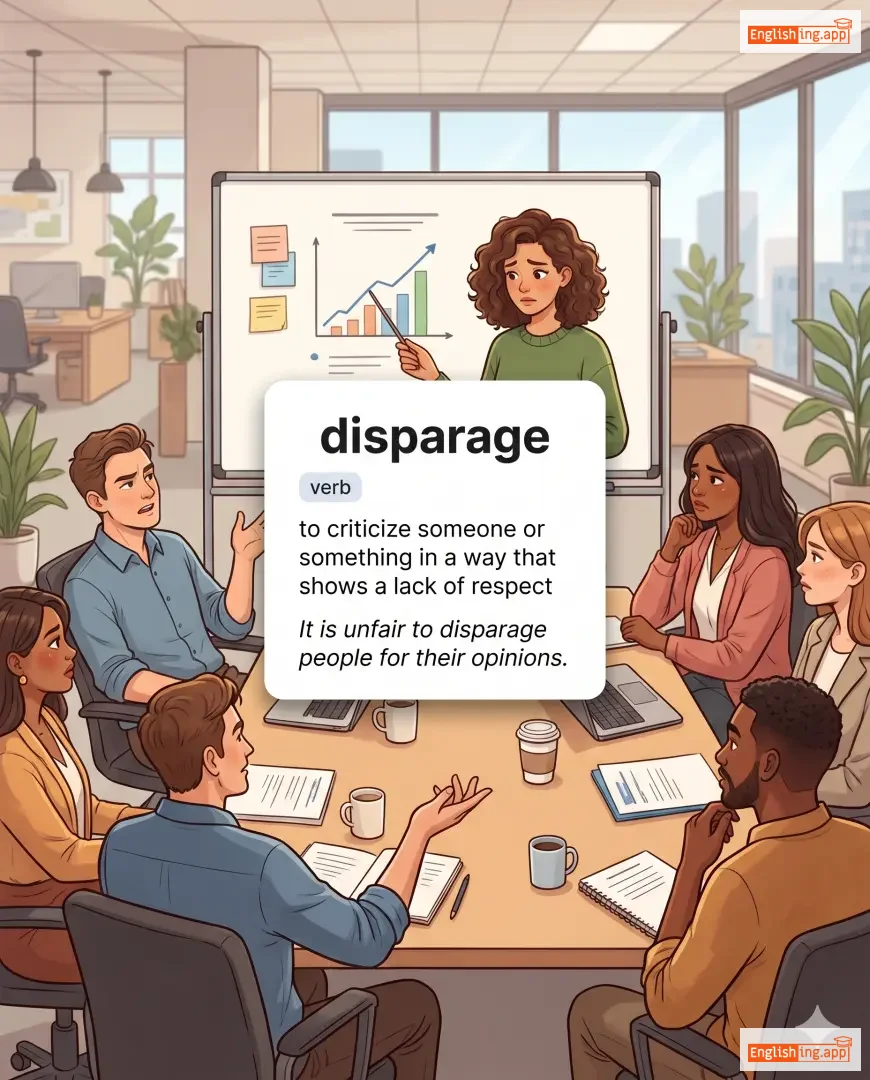
disparage definition card — visual illustration of the meaning
verb C1
/dɪsˈpærɪdʒ/
dénigrer (denigrer)

to criticize someone or something in a way that shows a lack of respect

"It is unfair to disparage people for their opinions."

"Il est injuste de dénigrer les gens pour leurs opinions." (Il est injuste de dénigrer les gens pour leurs opinions.)
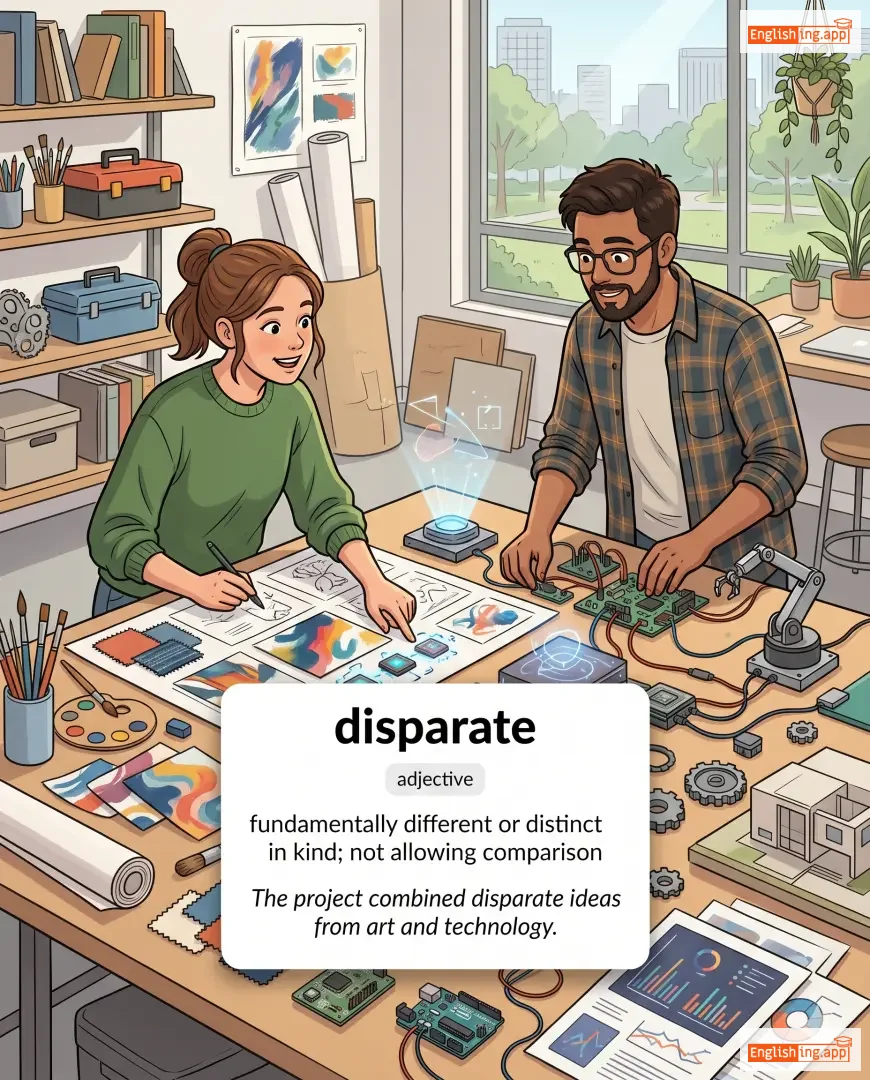
disparate definition card — visual illustration of the meaning
adjective C1
/ˈdɪspərət/
disparate (disparate)

fundamentally different or distinct in kind; not allowing comparison

"The project combined disparate ideas from art and technology."

"Le projet a combiné des idées disparates de l'art et de la technologie." (Le projet a combine des idees disparates de l'art et de la technologie.)
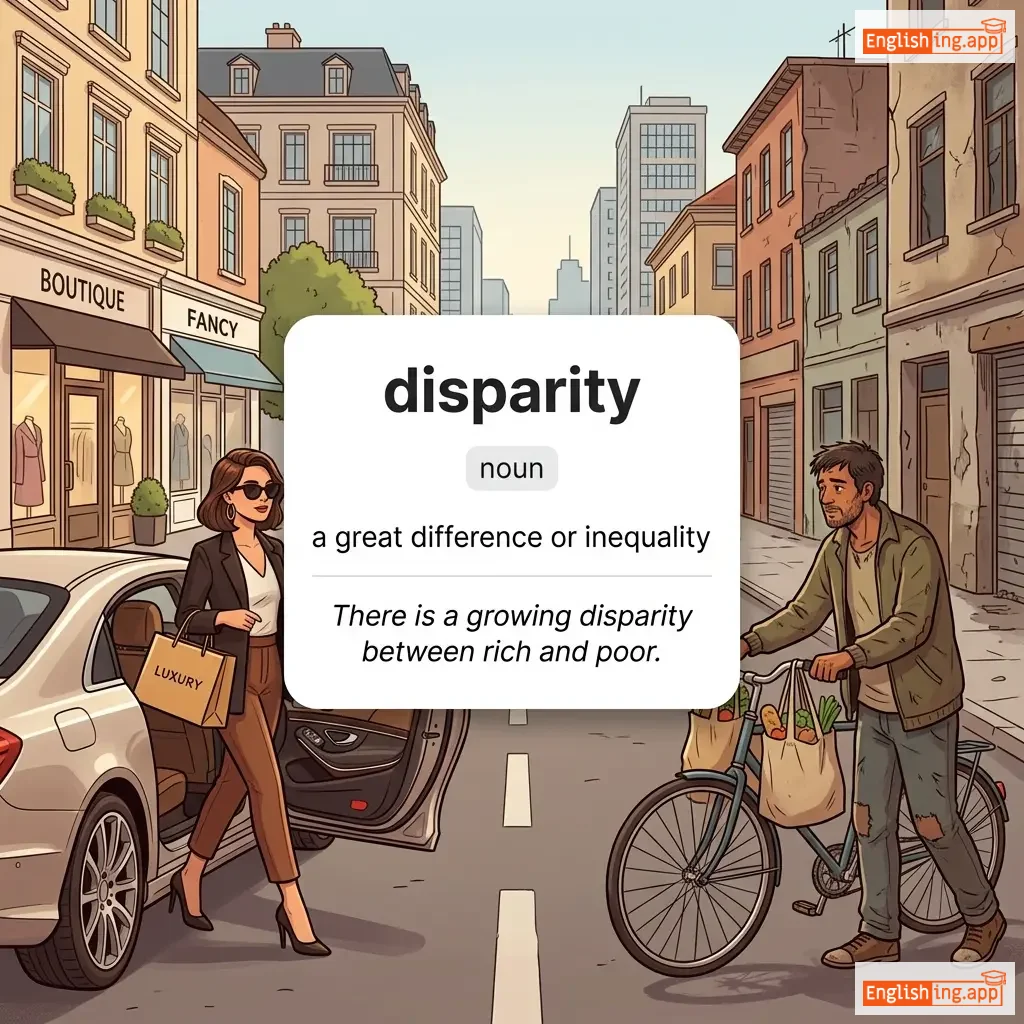
disparity definition card — visual illustration of the meaning
noun C1
/dɪˈspærəti/
disparité (disparite)

a great difference or inequality

"There is a growing disparity between rich and poor."

"Il existe une disparité croissante entre les riches et les pauvres." (Il existe une disparite croissante entre les riches et les pauvres.)
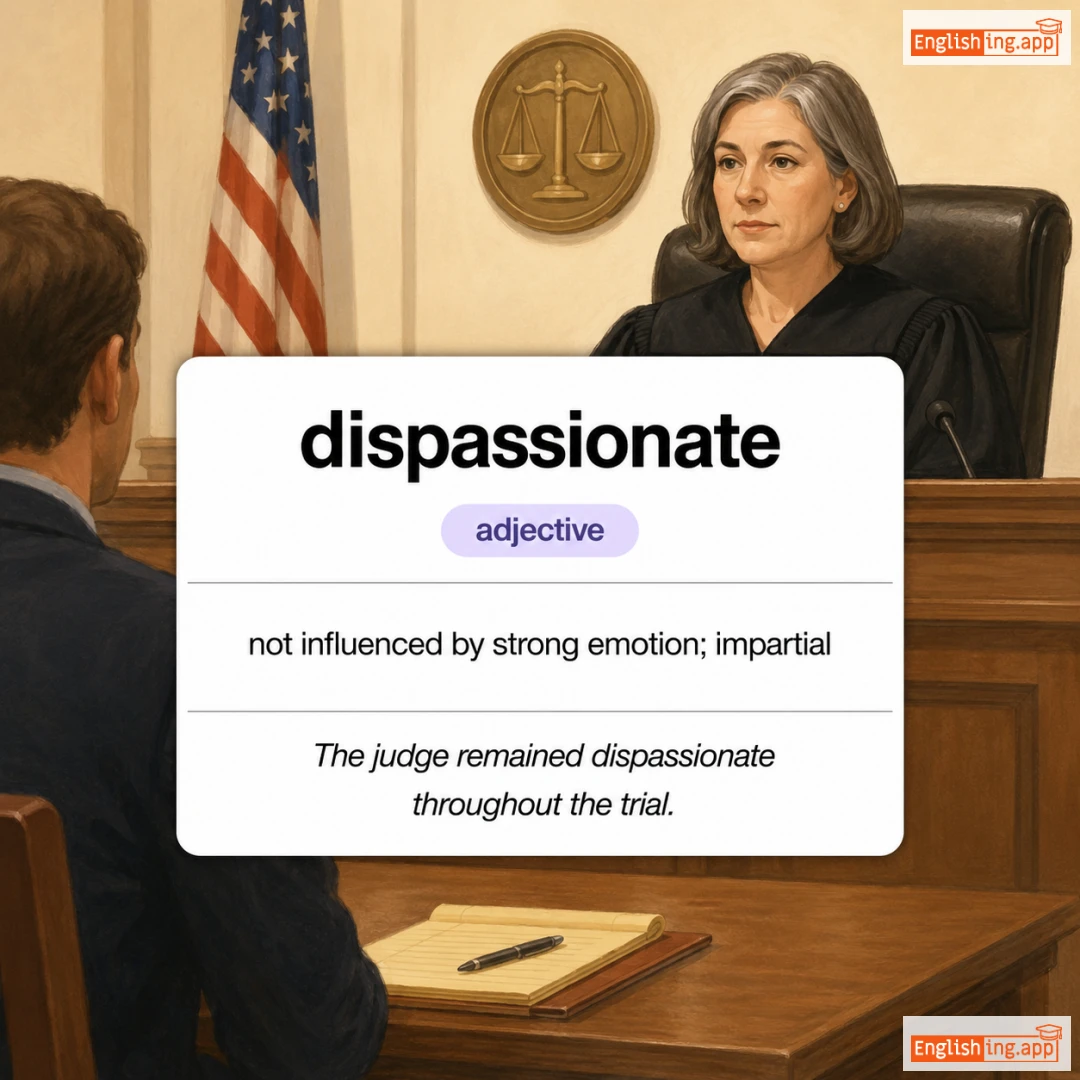
dispassionate definition card — visual illustration of the meaning
adjective C1
/dɪsˈpæʃənət/
impartial (impartial)

not influenced by strong emotion; impartial

"The judge remained dispassionate throughout the trial."

"Le juge est resté impartial pendant tout le procès." (Le juge est resté impartial pendant tout le procès.)
verb C1
/dɪˈspɛl/
dissiper (dissiper)

to make a doubt, feeling, or belief disappear

"The teacher's explanation dispelled the students' confusion."

"L'explication de l'enseignant a dissipé la confusion des élèves." (L'explication de l'enseignant a dissipe la confusion des eleves.)
noun C1
/ˌdɪspɛnˈseɪʃən/
dispense (dispense)

An exemption from a rule or usual requirement; a system of order, government, or control.

"The school granted him a special dispensation to skip the exam due to illness."

"L'école lui a accordé une dispense spéciale pour ne pas passer l'examen en raison de sa maladie." (Lecole lui a accordee une dispense speciale pour ne pas passer lexamen en raison de sa maladie)
verb C1
/dɪˈspɛns/
distribuer (distribuer)

To distribute or provide something, especially in portions.

"The machine dispenses clean drinking water."

"La machine distribue de l'eau potable propre." (La machine distribue de l'eau potable propre.)
verb C1
/dɪˈspɜːrs/
disperser (disperser)

To scatter or spread widely in different directions.

"The police used tear gas to disperse the crowd."

"La police a utilisé du gaz lacrymogène pour disperser la foule." (La police a utilisé du gaz lacrymogène pour disperser la foule.)
adjective C1
/dɪˈspɜːrst/
dispersé (disperse)

Scattered or spread across a wide area.

"The dispersed population made it difficult to provide public services."

"La population dispersée a rendu difficile la fourniture de services publics." (La population dispersee a rendu difficile la fourniture de services publics.)
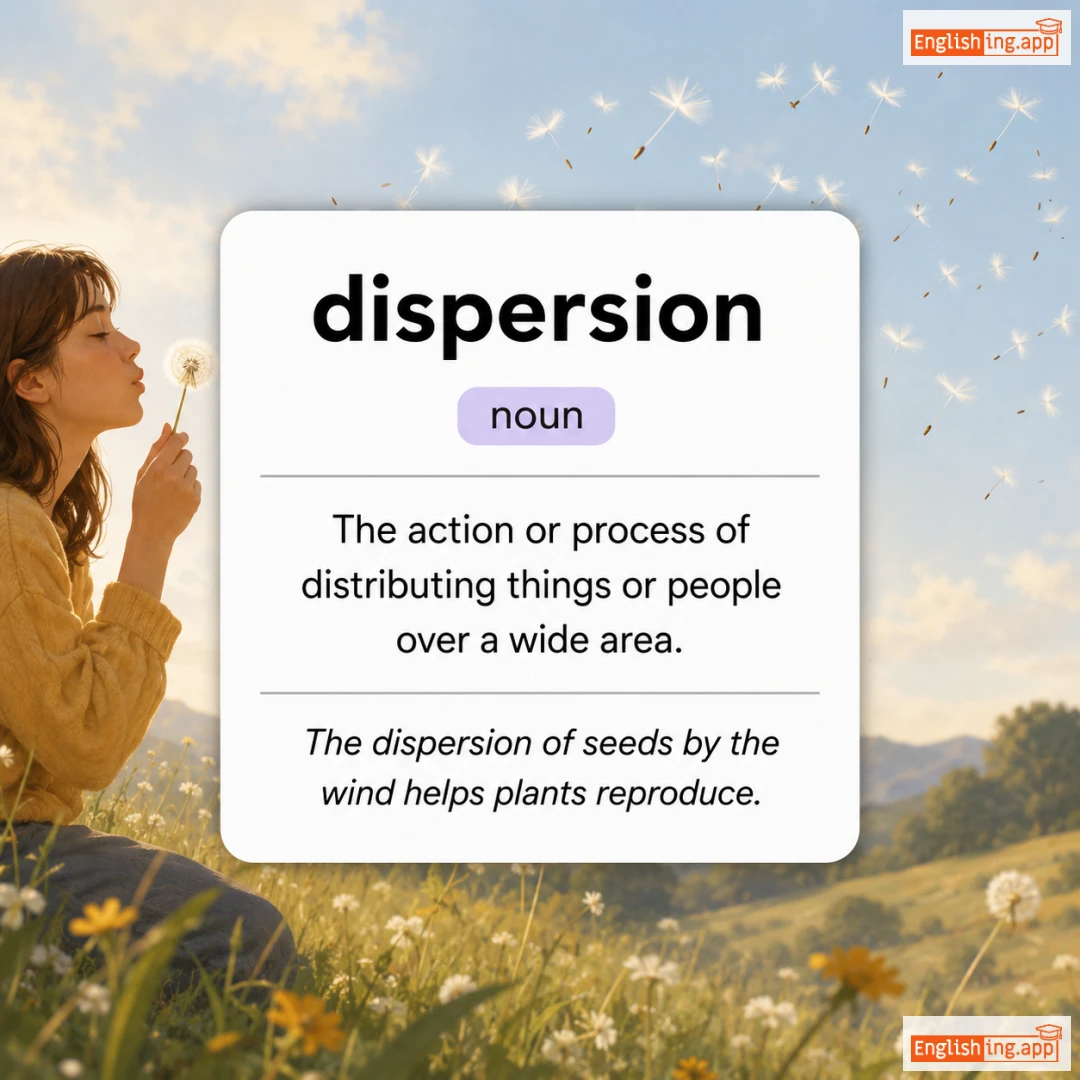
dispersion definition card — visual illustration of the meaning
noun C1
/dɪˈspɜːrʒən/
dispersion (dispersion)

The action or process of distributing things or people over a wide area.

"The dispersion of seeds by the wind helps plants reproduce."

"La dispersion des graines par le vent aide les plantes à se reproduire." (La dispersion des graines par le vent aide les plantes à se reproduire.)
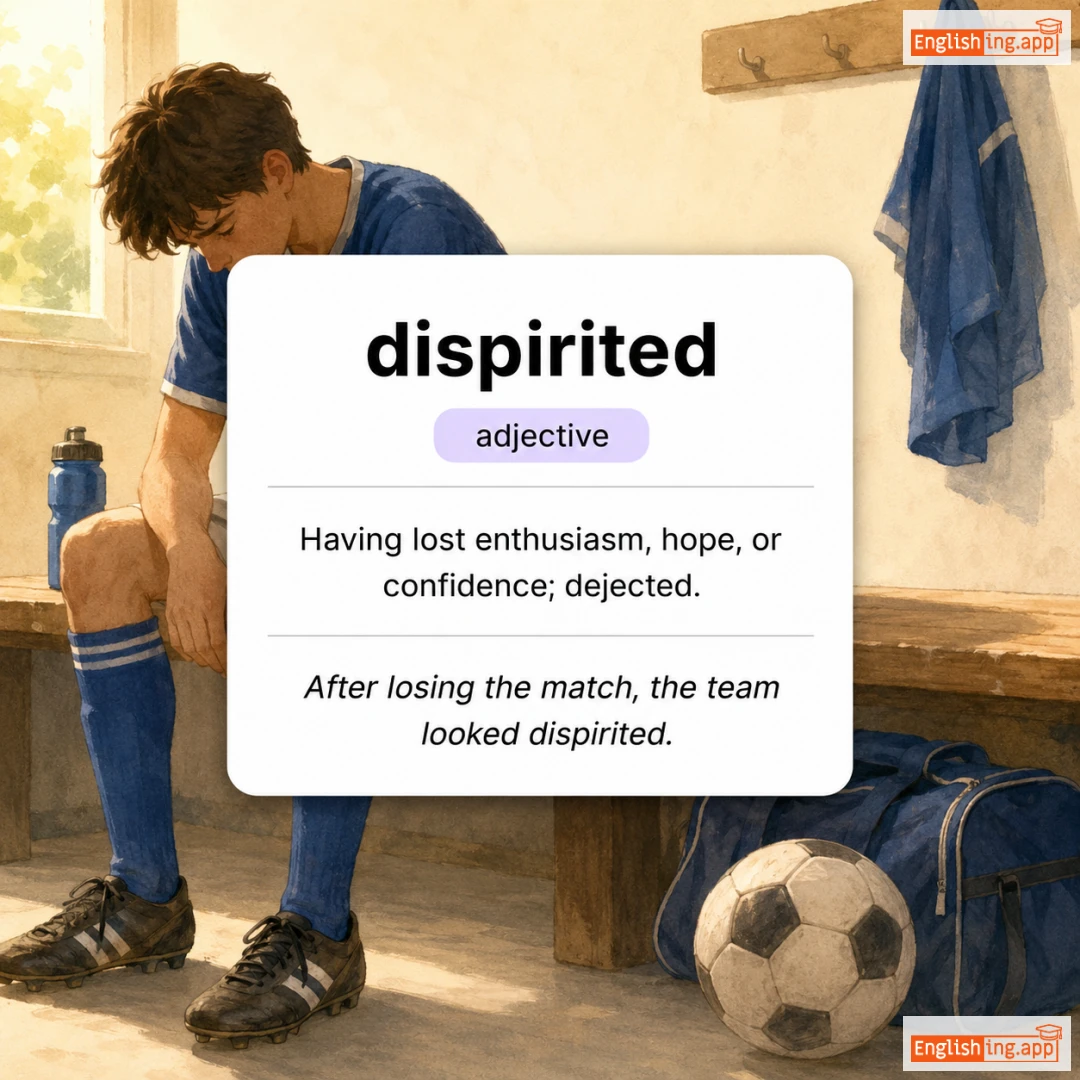
dispirited definition card — visual illustration of the meaning
adjective C1
/dɪˈspɪrɪtɪd/
abattu (abattu)

Having lost enthusiasm, hope, or confidence; dejected.

"After losing the match, the team looked dispirited."

"Après avoir perdu le match, l'équipe semblait abattue." (Apres avoir perdu le match, l'equipe semblait abattue.)
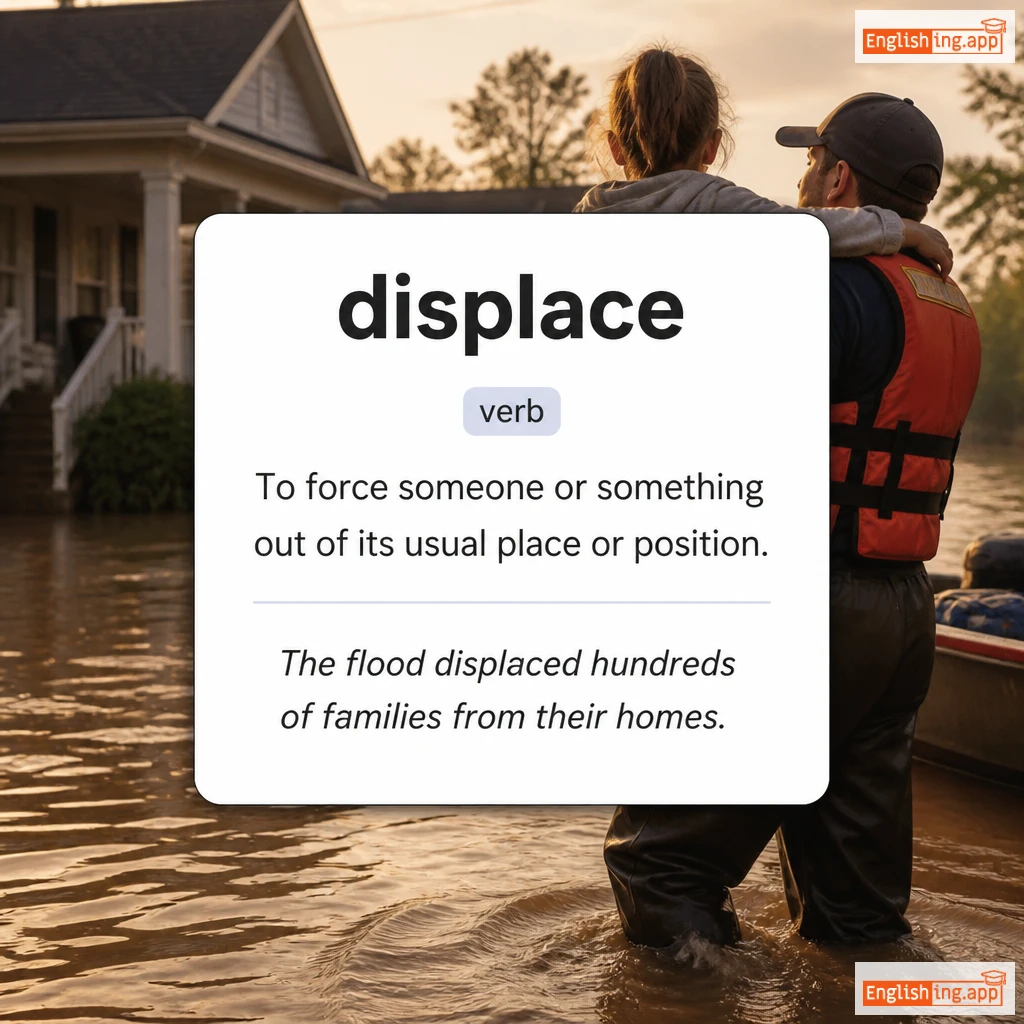
displace definition card — visual illustration of the meaning
verb C1
/dɪsˈpleɪs/
déplacer (deplacer)

To force someone or something out of its usual place or position.

"The flood displaced hundreds of families from their homes."

"L'inondation a déplacé des centaines de familles de leurs maisons." (L'inondation a déplacé des centaines de familles de leurs maisons.)
noun C1
/ˌdɪspəˈzɪʃən/
disposition (disposition)

A person's usual attitude or temperament; arrangement or tendency.

"She has a cheerful disposition despite the difficulties."

"Elle a une disposition joyeuse malgré les difficultés." (Elle a une disposition joyeuse malgré les difficultés.)
verb C1
/dɪsˈpruːv/
démontre que quelque chose est faux (démontre que quelque chose est faux)

to show that something is false or wrong

"The scientist worked hard to disprove the old theory."

"Le scientifique a travaillé dur pour prouver que la vieille théorie était fausse." (Le scientifique a travaillé dur pour prouver que la vieille théorie était fausse.)
verb C1
/dɪsˈkwɑːlɪfaɪ/
disqualifier (disqualifier)

to officially prevent someone from participating or being eligible

"The referee decided to disqualify the player for cheating."

"L'arbitre a décidé de disqualifier le joueur pour tricher." (L'arbitre a décidé de disqualifier le joueur pour tricher.)
noun/verb C1
/dɪsˈkwaɪət/
inquiétude (inquietude)

A feeling of worry or unease; to make someone feel anxious or uneasy.

"The strange silence filled the room with disquiet."

"Le silence étrange a rempli la pièce d'inquiétude." (Le silence etrange a rempli la piece d'inquietude.)
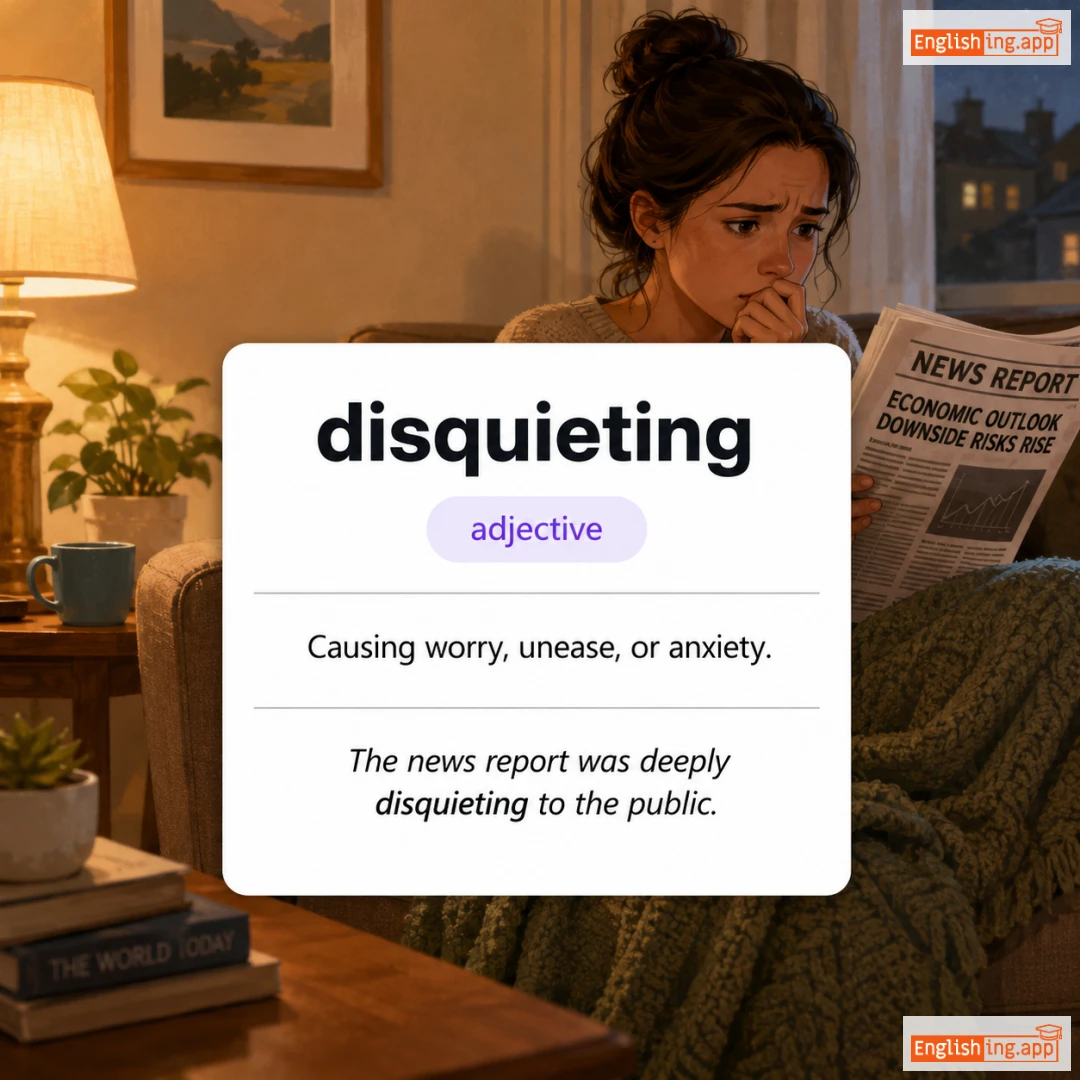
disquieting definition card — visual illustration of the meaning
adjective C1
/dɪsˈkwaɪətɪŋ/
inquiétant (inquietant)

Causing worry, unease, or anxiety.

"The news report was deeply disquieting to the public."

"Le rapport de nouvelles était profondément inquiétant pour le public." (Le rapport de nouvelles était profondément inquietant pour le public.)
adjective C1
/dɪsˈrɛpjətəbl̩/
discrédité (discredite)

having a bad reputation; not considered respectable or trustworthy

"The journalist avoided staying in the disreputable part of town."

"Le journaliste a évité de séjourner dans le quartier discrédité de la ville." (Le journaliste a evite de sejourner dans le quartier discredite de la ville.)
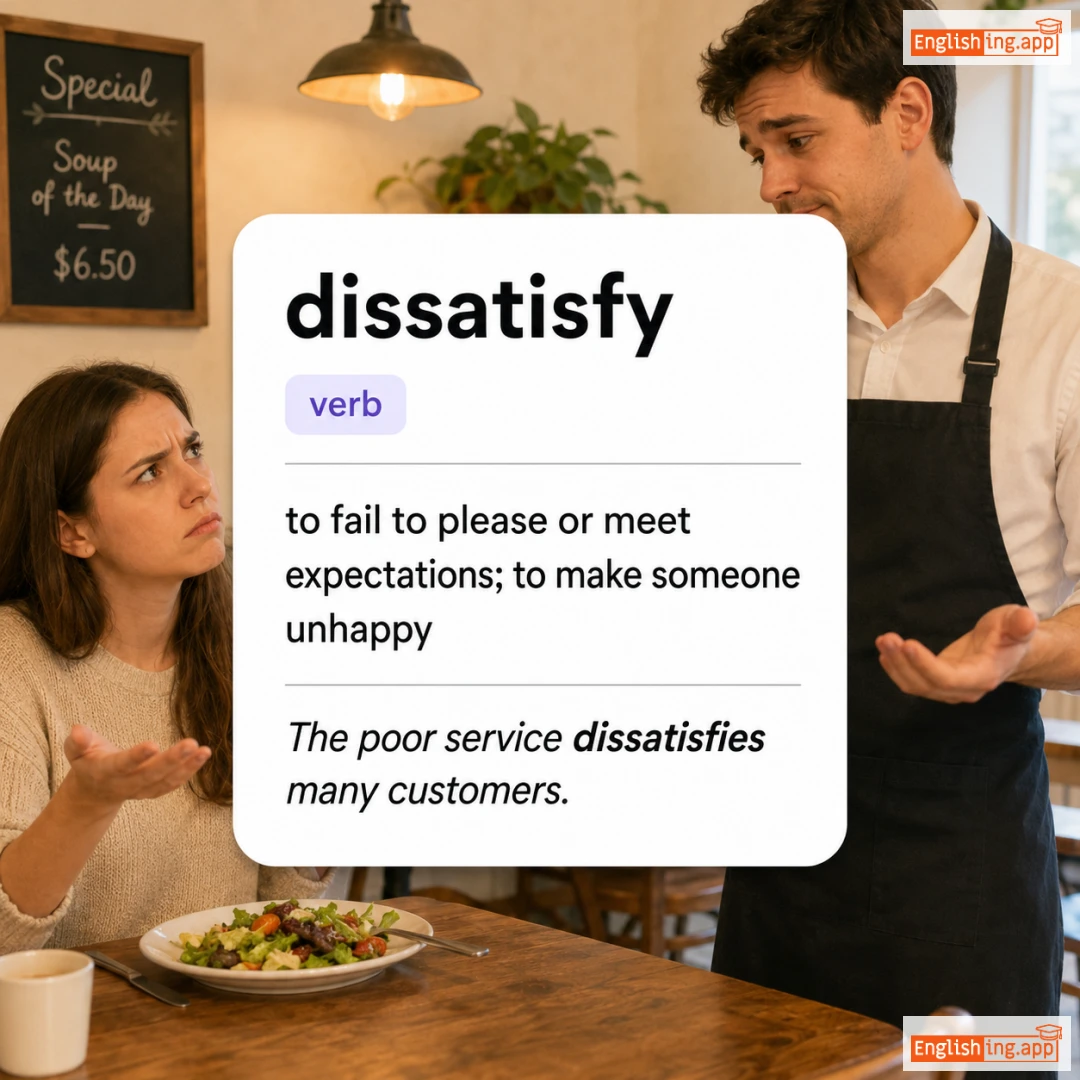
dissatisfy definition card — visual illustration of the meaning
verb C1
/dɪsˈsætɪsfaɪ/
décevoir (decevoir)

to fail to please or meet expectations; to make someone unhappy

"The poor service dissatisfies many customers."

"Le mauvais service déçoit de nombreux clients." (Le mauvais service déçoit de nombreux clients.)
verb C1
/dɪˈsɛkt/
disséquer (diseké)

to cut apart an animal, plant, or other organism to study its internal parts; to analyze something in detail

"In biology class, students had to dissect a frog to learn about its anatomy."

"En cours de biologie, les étudiants ont dû disséquer une grenouille pour apprendre son anatomie." (En cours de biologie, les étudiants ont dû disséquer une grenouille pour apprendre son anatomie.)
noun C1
/daɪˈsɛkʃən/
dissection (disekshon)

the act of cutting apart or analyzing something in detail, especially a body or structure

"The dissection of the specimen revealed important details about its structure."

"La dissection de l'échantillon a révélé des détails importants sur sa structure." (La dissection de l'échantillon a révélé des détails importants sur sa structure.)
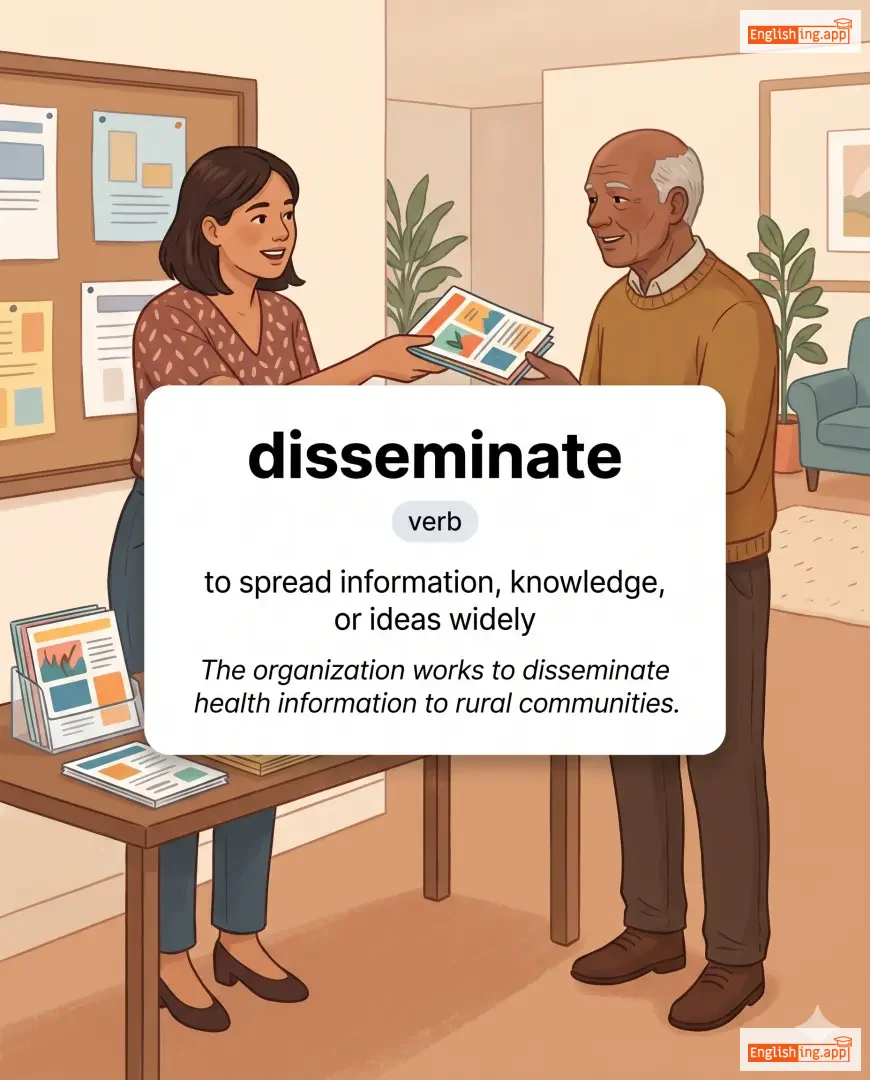
disseminate definition card — visual illustration of the meaning
verb C1
/dɪˈsɛmɪˌneɪt/
diffuser (diffuser)

to spread information, knowledge, or ideas widely

"The organization works to disseminate health information to rural communities."

"L'organisation travaille à diffuser des informations sanitaires dans les communautés rurales." (L'organisation travaille à diffuser des informations sanitaires dans les communautés rurales.)
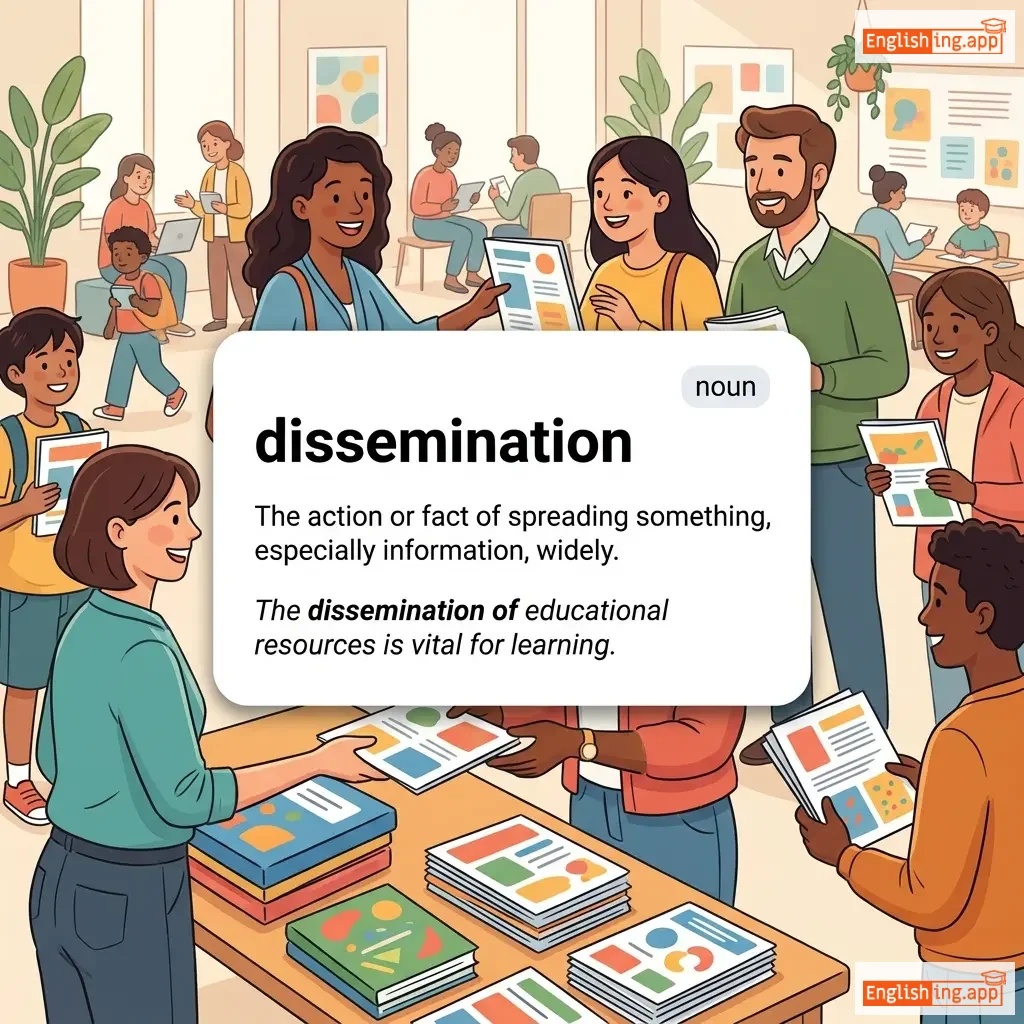
dissemination definition card — visual illustration of the meaning
noun C1
dɪˌsɛm.ɪˈneɪ.ʃən
diffusion (diffusion)

The action or fact of spreading something, especially information, widely.

"The dissemination of educational resources is vital for learning."

"La diffusion des ressources éducatives est essentielle pour l'apprentissage." (La diffusion des ressources éducatives est essentielle pour l'apprentissage.)
verb C1
/dɪˈsɛnt/
désapprouver (désapprouver)

To hold or express opinions that are different from those officially accepted.

"Several members dissented from the majority decision."

"Plusieurs membres ont exprimé un désaccord avec la décision majoritaire." (Plusieurs membres ont exprimé un désaccord avec la décision majoritaire.)
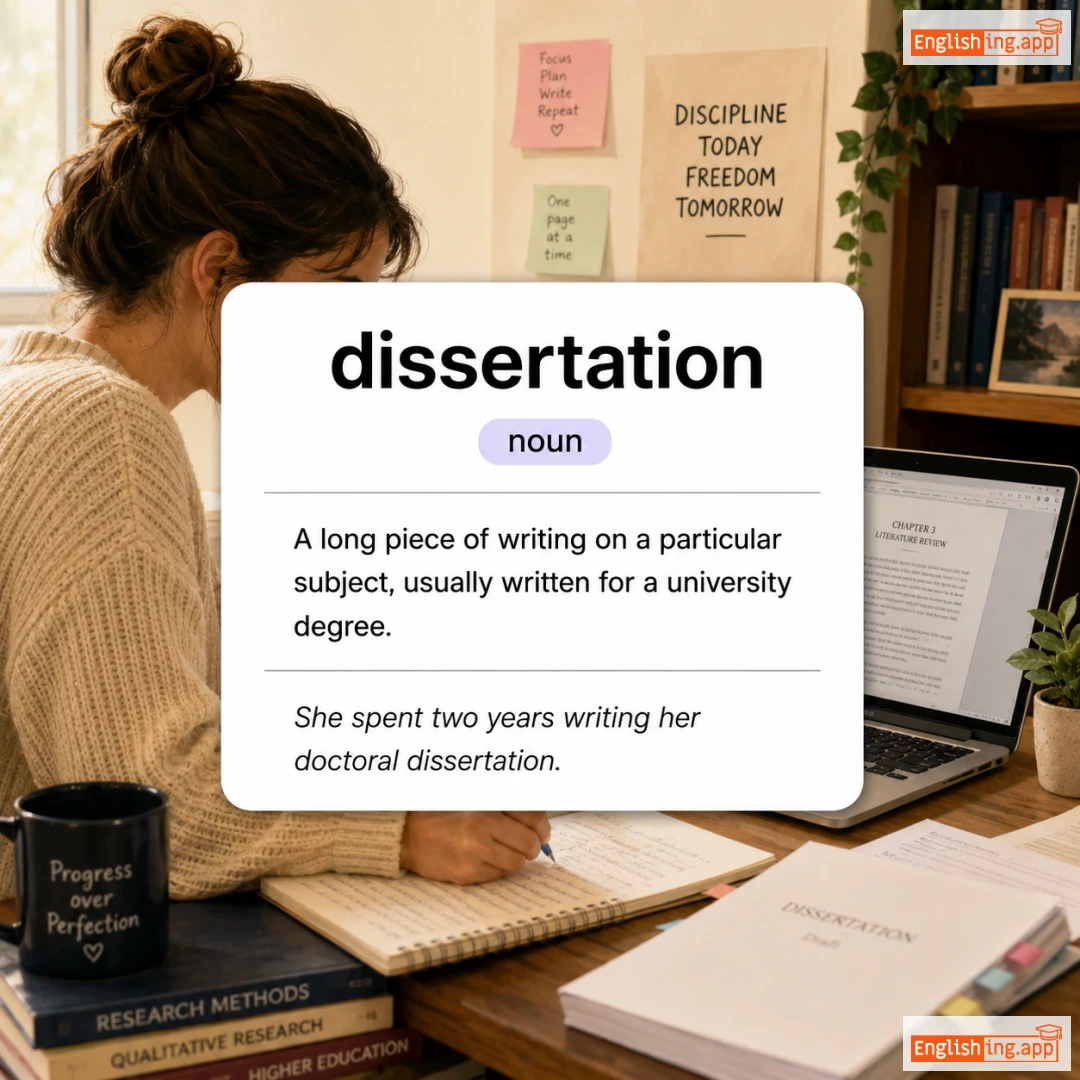
dissertation definition card — visual illustration of the meaning
noun C1
/ˌdɪsərˈteɪʃən/
thèse (thèse)

A long piece of writing on a particular subject, usually written for a university degree.

"She spent two years writing her doctoral dissertation."

"Elle a passé deux ans à rédiger sa thèse doctorale." (Elle a passé deux ans à rédiger sa thèse doctorale.)
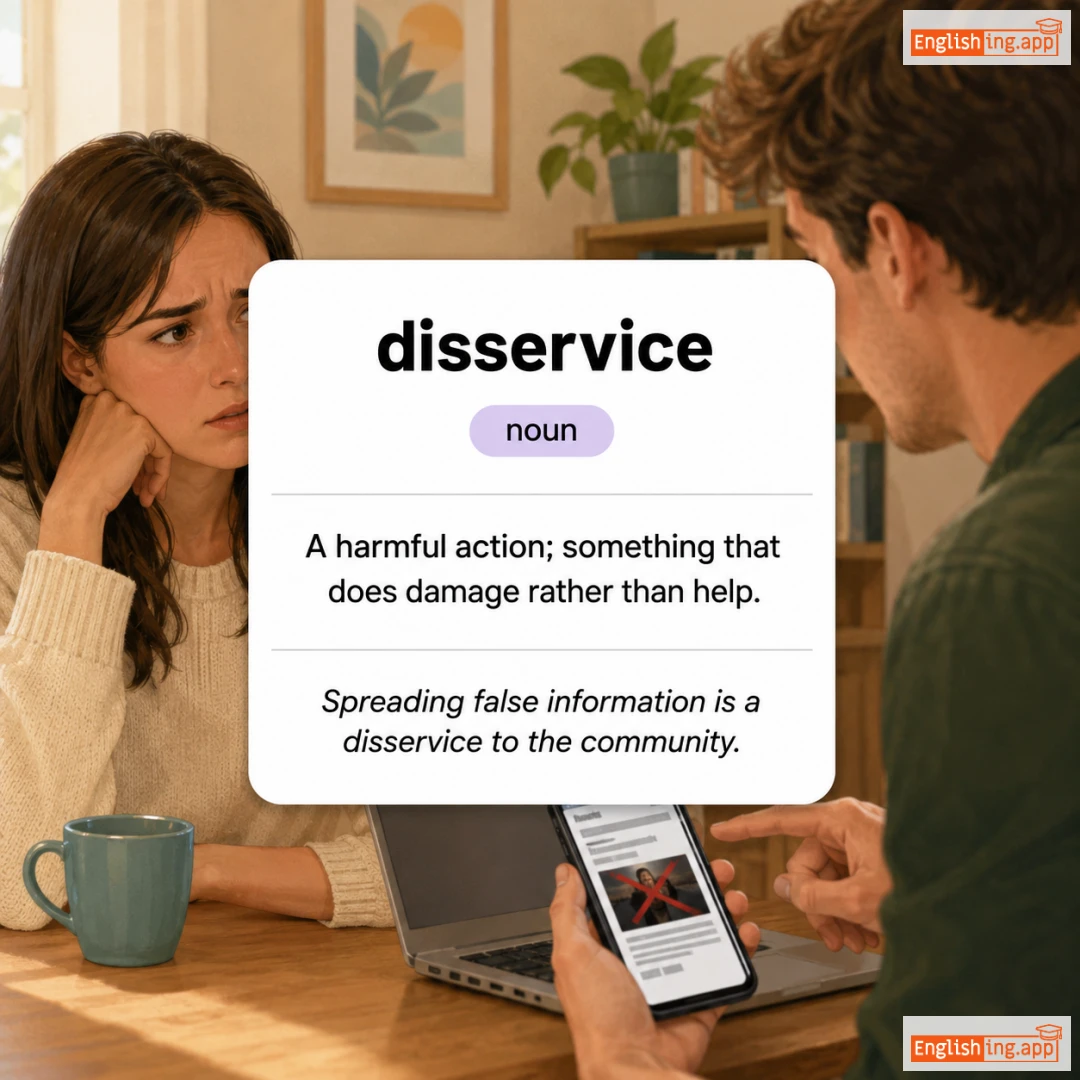
disservice definition card — visual illustration of the meaning
noun C1
/dɪsˈsɜːrvɪs/
dommage (domaj)

A harmful action; something that does damage rather than help.

"Spreading false information is a disservice to the community."

"Diffuser de fausses informations est un dommage pour la communauté." (Diffuser de fausses informations est un dommage pour la communaute.)
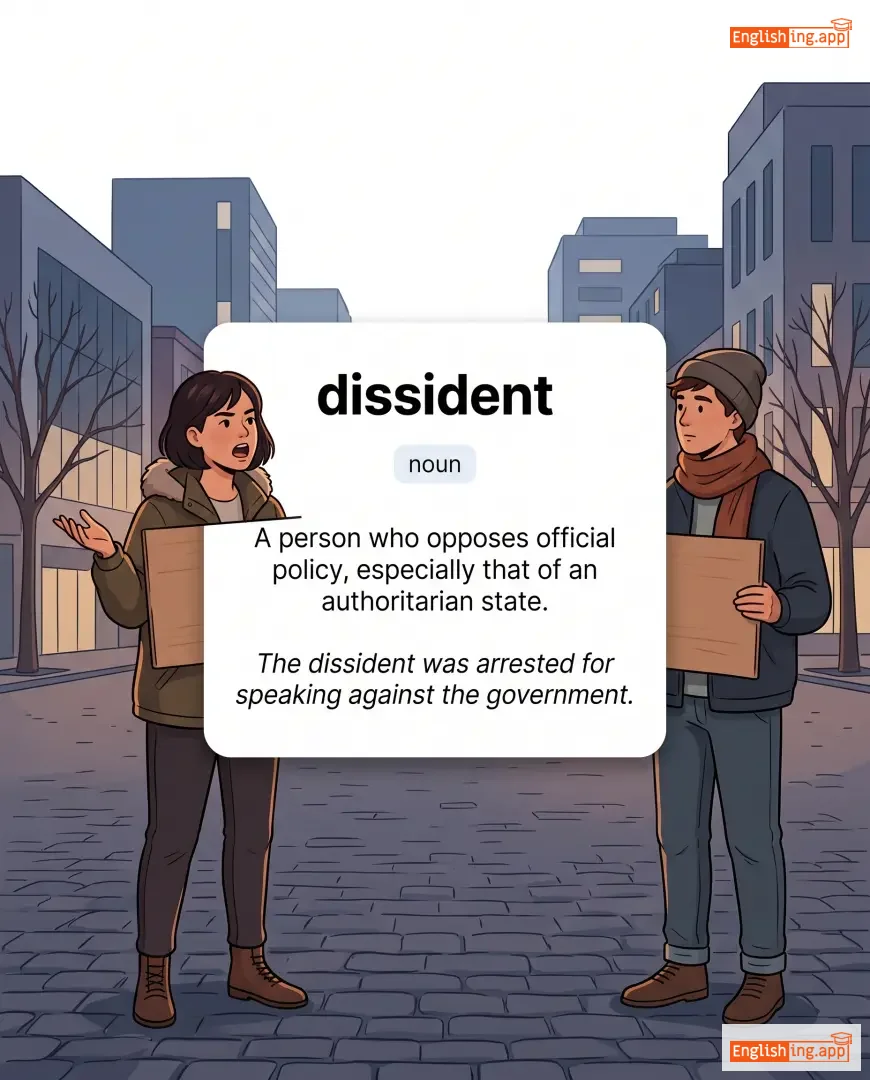
dissident definition card — visual illustration of the meaning
noun C1
/ˈdɪsɪdənt/
dissident (dissident)

A person who opposes official policy, especially that of an authoritarian state.

"The dissident was arrested for speaking against the government."

"Le dissident a été arrêté pour avoir parlé contre le gouvernement." (Le dissident a ete arrete pour avoir parle contre le gouvernement.)
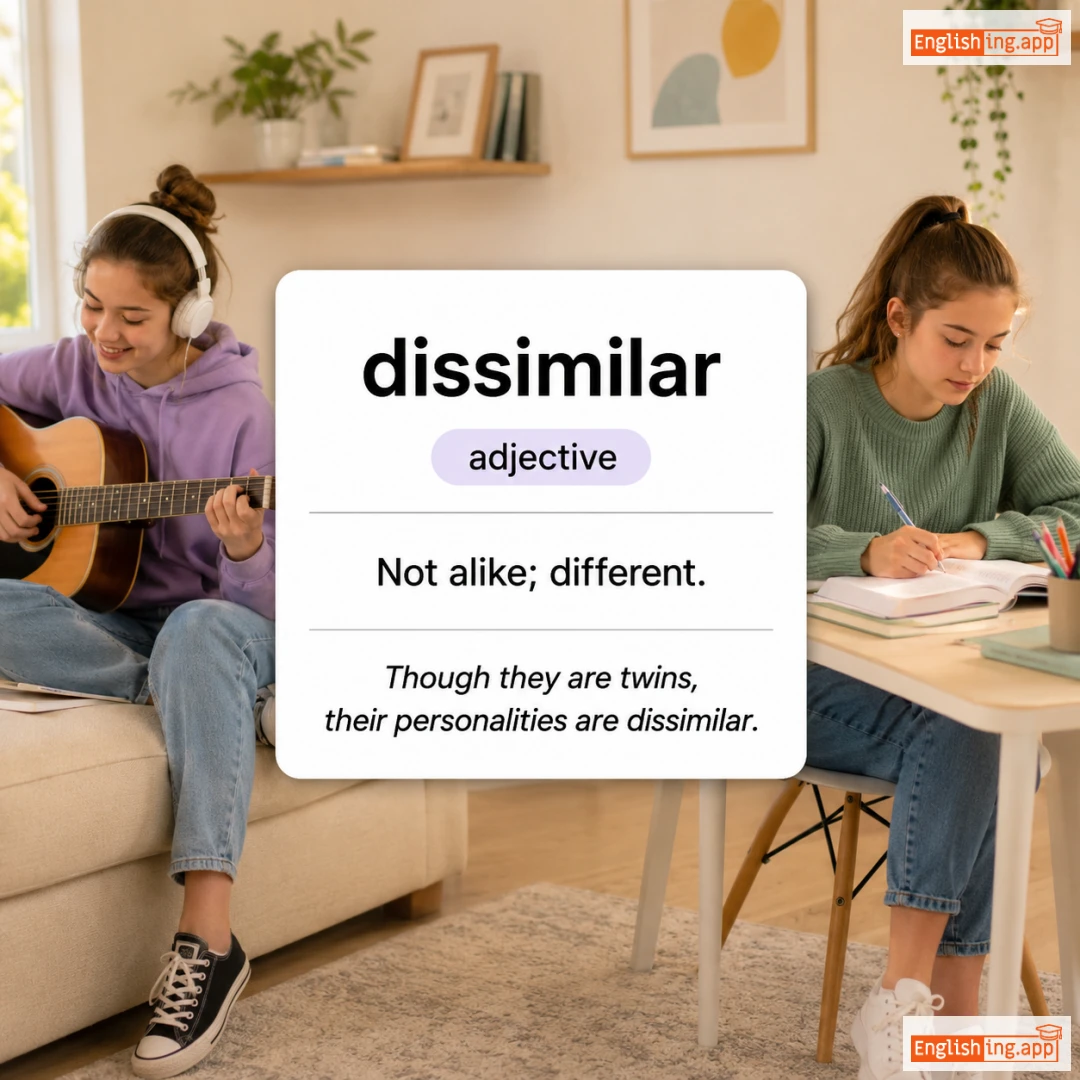
dissimilar definition card — visual illustration of the meaning
adjective C1
/dɪsˈsɪmɪlər/
différent (different)

Not alike; different.

"Though they are twins, their personalities are dissimilar."

"Bien qu'ils soient jumeaux, leurs personnalités sont différentes." (Byan kil swat jumo, leur personnalite son different.)
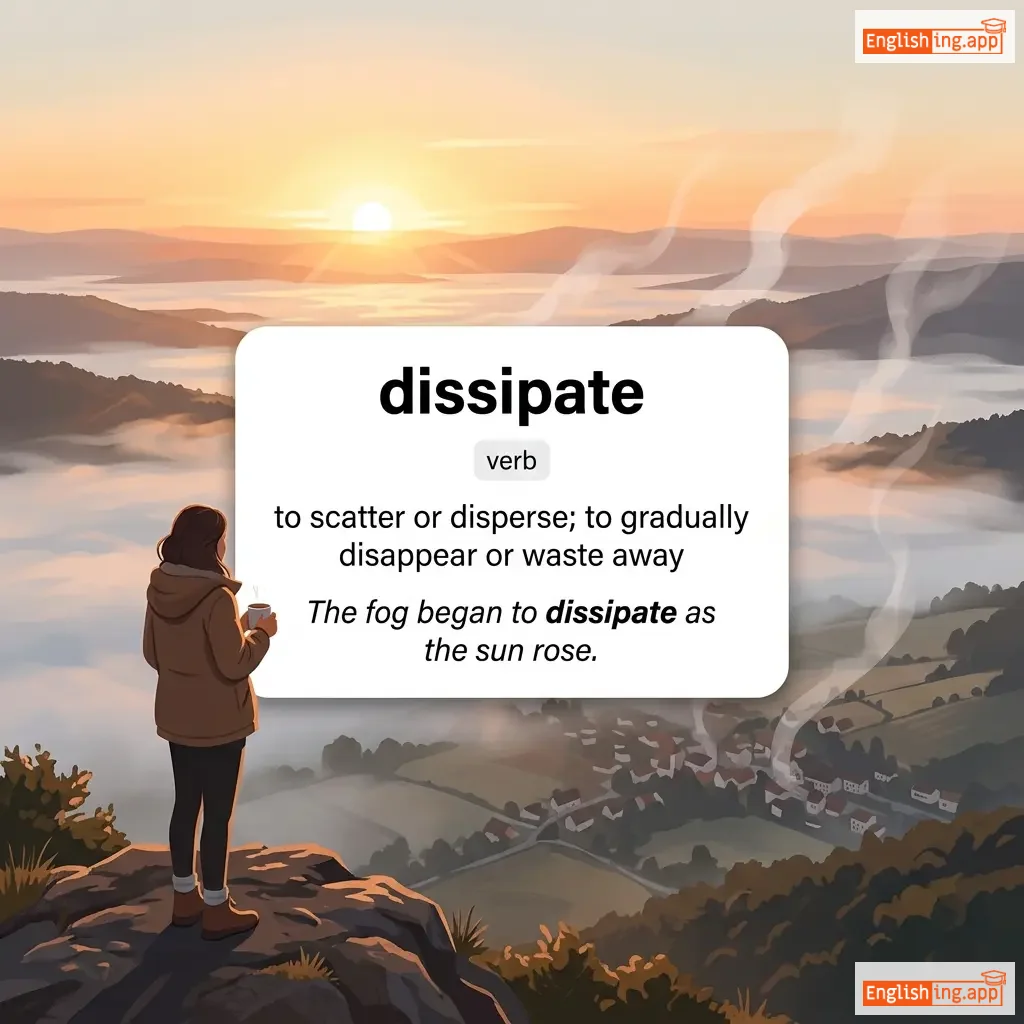
dissipate definition card — visual illustration of the meaning
verb C1
/ˈdɪsɪpeɪt/
disparaître (disparaître)

to scatter or disperse; to gradually disappear or waste away

"The fog began to dissipate as the sun rose."

"Le brouillard a commencé à disparaître lorsque le soleil est apparu." (Le brouillard a commencé à disparaître lorsque le soleil est apparu.)
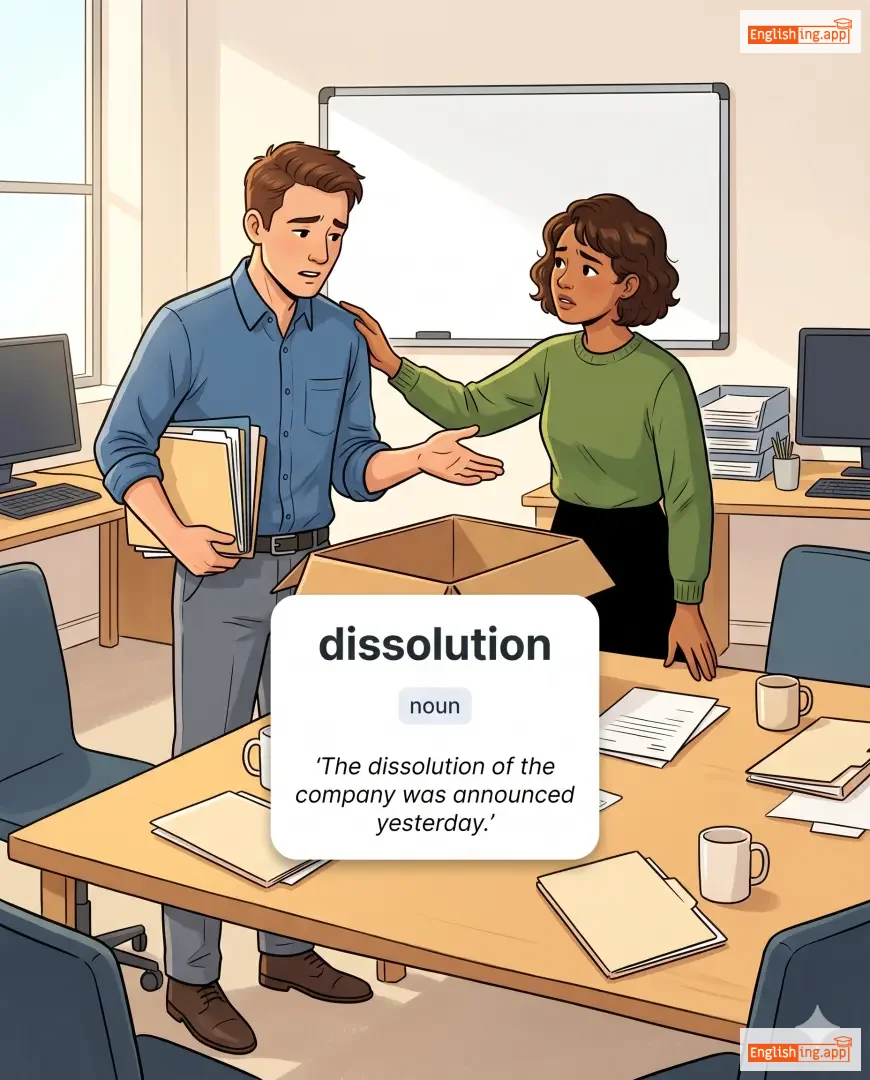
dissolution definition card — visual illustration of the meaning
noun C1
/ˌdɪsəˈluːʃən/
dissolution (dissolution)

the act of formally ending or breaking apart something, such as an organization or marriage

"The dissolution of the company was announced yesterday."

"La dissolution de l'entreprise a été annoncée hier." (La dissolution de l'entreprise a ete annoncee hier.)
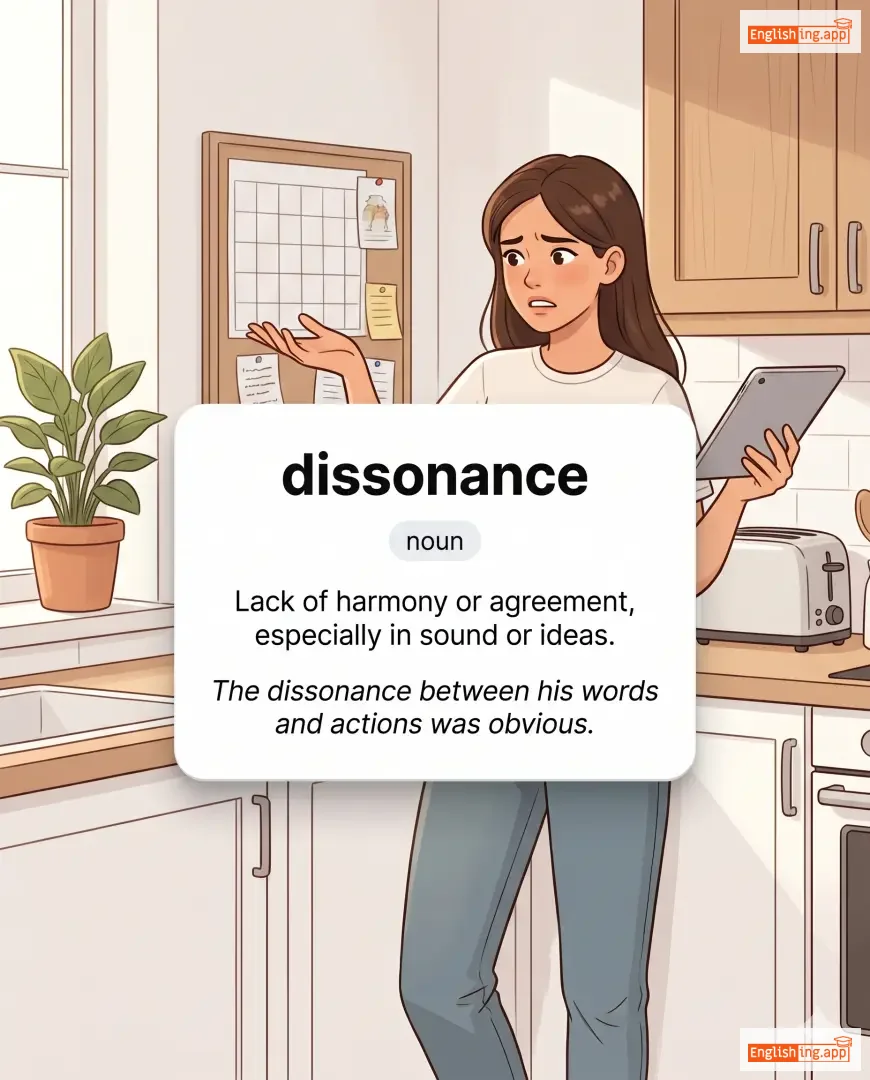
dissonance definition card — visual illustration of the meaning
noun C1
/ˈdɪsənəns/
dissonance (dissonance)

Lack of harmony or agreement, especially in sound or ideas.

"The dissonance between his words and actions was obvious."

"La dissonance entre ses paroles et ses actions était évidente." (La dissonance entre ses paroles et ses actions était évidente.)
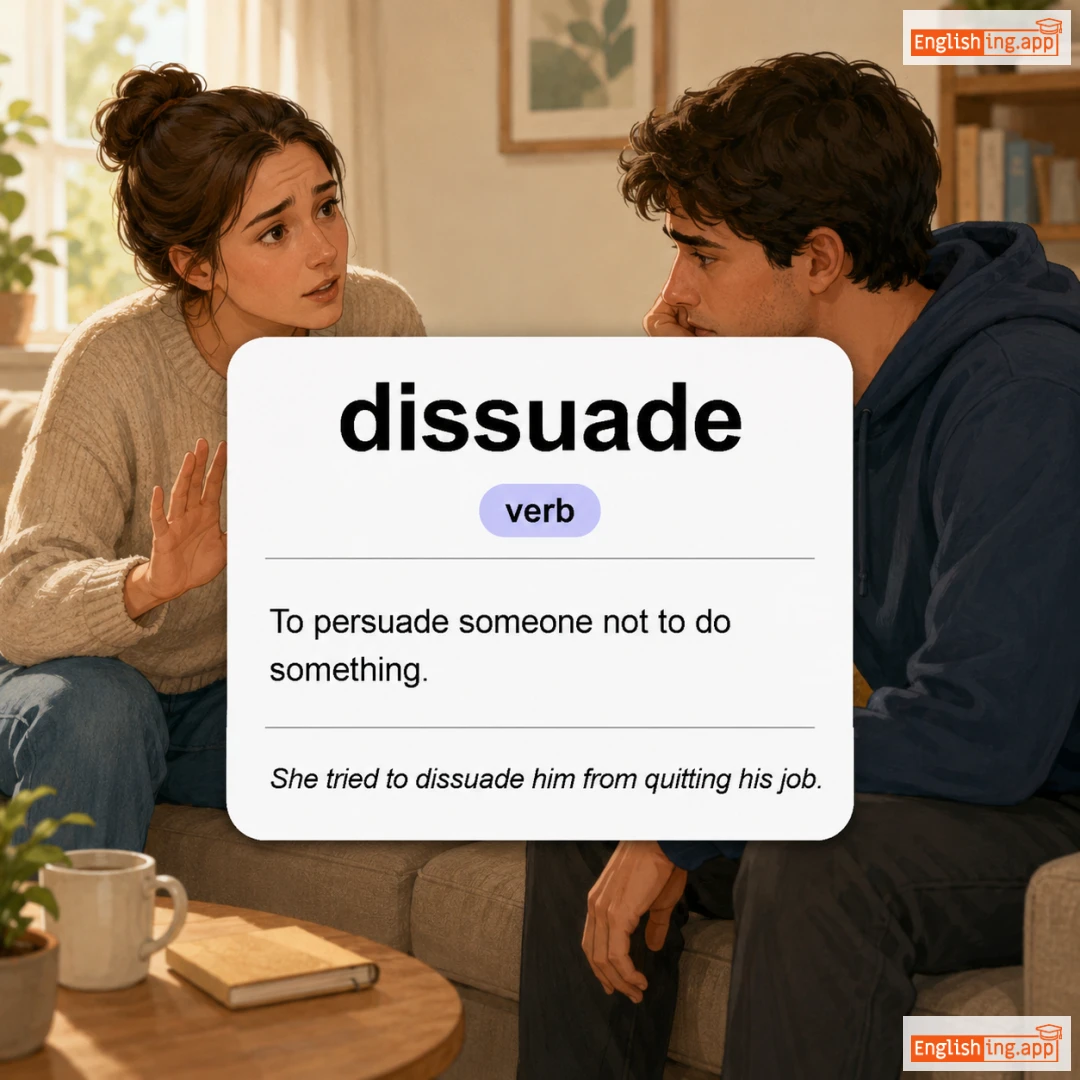
dissuade definition card — visual illustration of the meaning
verb C1
/dɪˈsweɪd/
dissuader (dissuader)

To persuade someone not to do something.

"She tried to dissuade him from quitting his job."

"Elle a essayé de le dissuader de quitter son travail." (Elle a essayé de le dissuader de quitter son travail.)
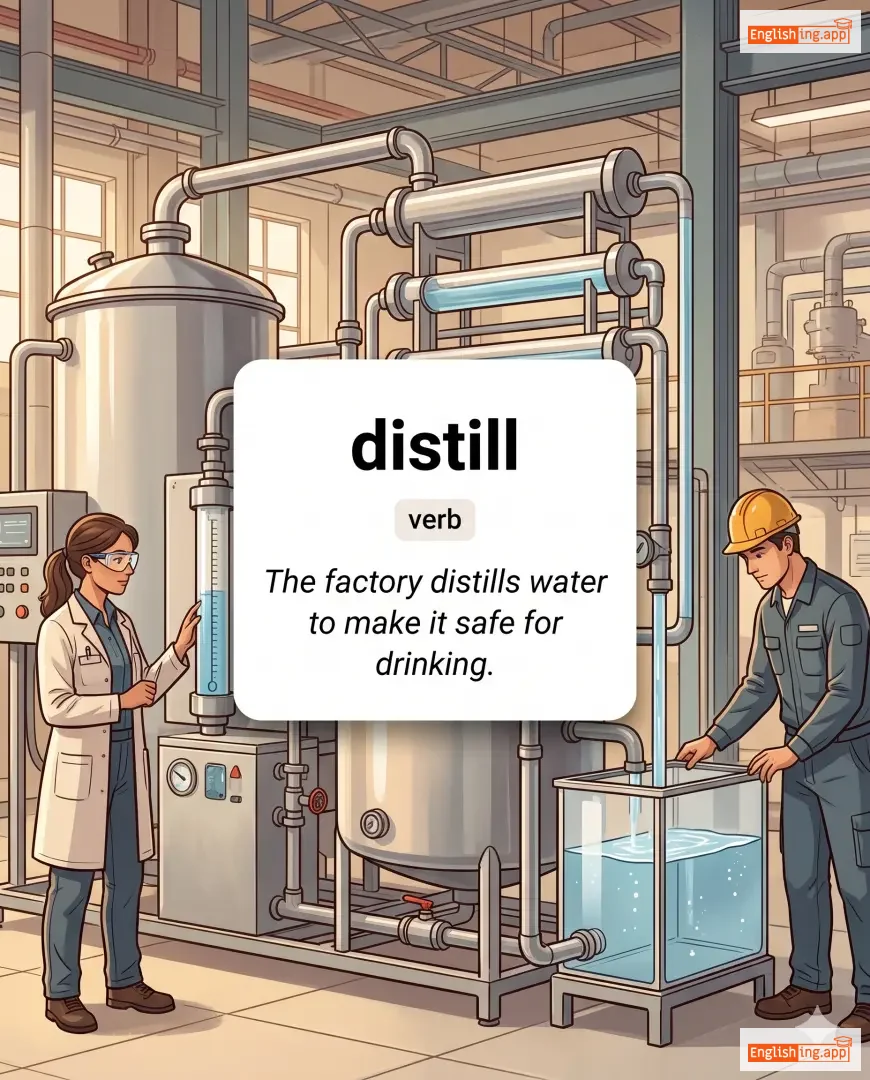
distill definition card — visual illustration of the meaning
verb C1
/dɪˈstɪl/
distiller (distiller)

To purify a liquid by heating and cooling; to extract the essential meaning or most important aspects.

"The factory distills water to make it safe for drinking."

"L'usine distille de l'eau pour la rendre sûre à boire." (L'usine distille de l'eau pour la rendre sûre à boire.)
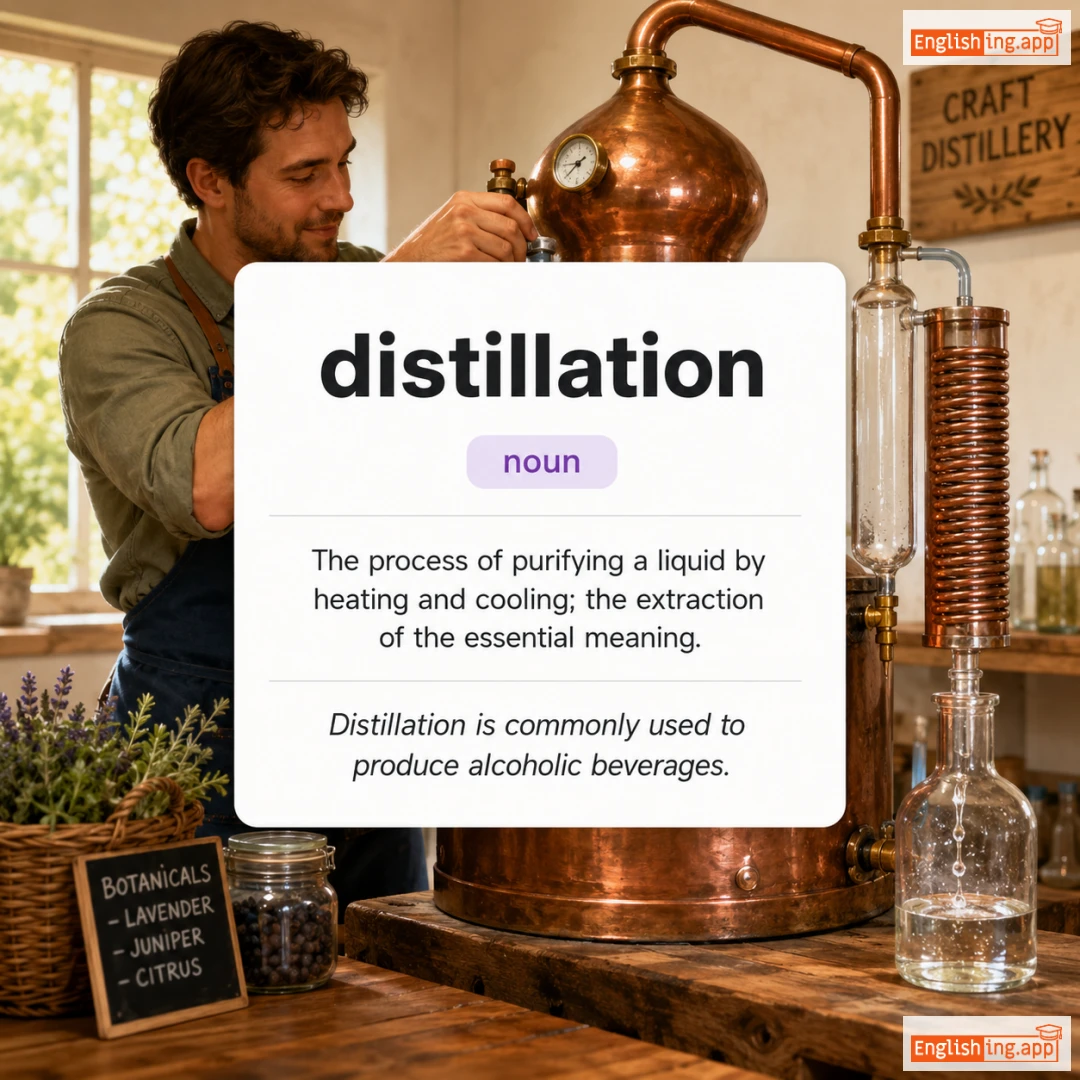
distillation definition card — visual illustration of the meaning
noun C1
/ˌdɪstɪˈleɪʃən/
distillation (distillation)

The process of purifying a liquid by heating and cooling; the extraction of the essential meaning.

"Distillation is commonly used to produce alcoholic beverages."

"La distillation est couramment utilisée pour produire des boissons alcoolisées." (La distillation est couramment utilisee pour produire des boissons alcoolisees.)
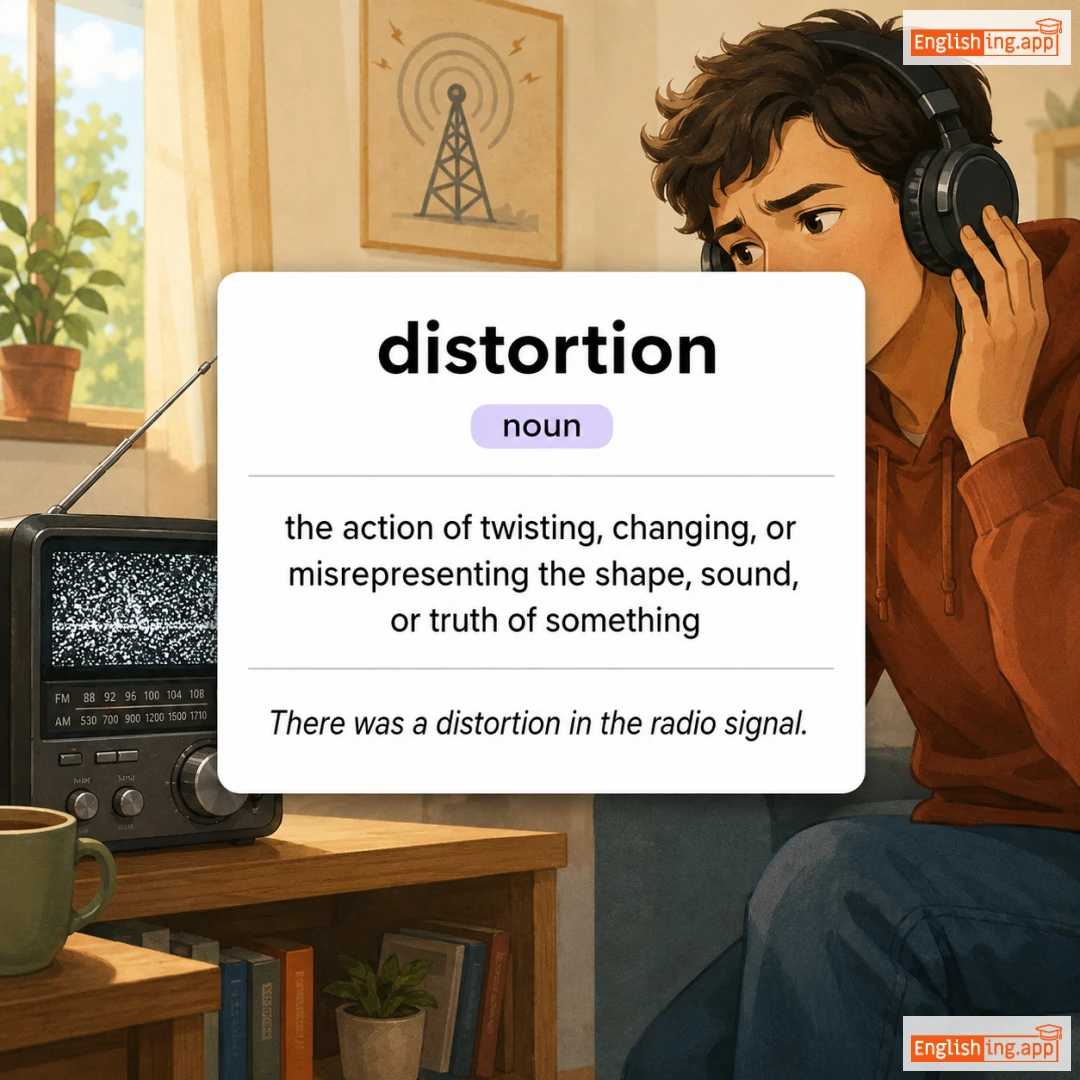
distortion definition card — visual illustration of the meaning
noun C1
/dɪˈstɔːrʃən/
distorsion, déformation (distorsion, deformation)

the action of twisting, changing, or misrepresenting the shape, sound, or truth of something

"There was a distortion in the radio signal."

"Il y avait une distorsion dans le signal radio." (Il y avait une distorsion dans le signal radio.)
adjective C1
/dɪˈstrɔːt/
déstabilisé (destabilise)

extremely upset and anxious, often to the point of being unable to think clearly

"She was distraught after losing her pet."

"Elle était déstabilisée après avoir perdu son animal de compagnie." (Elle était déstabilisée après avoir perdu son animal de compagnie.)
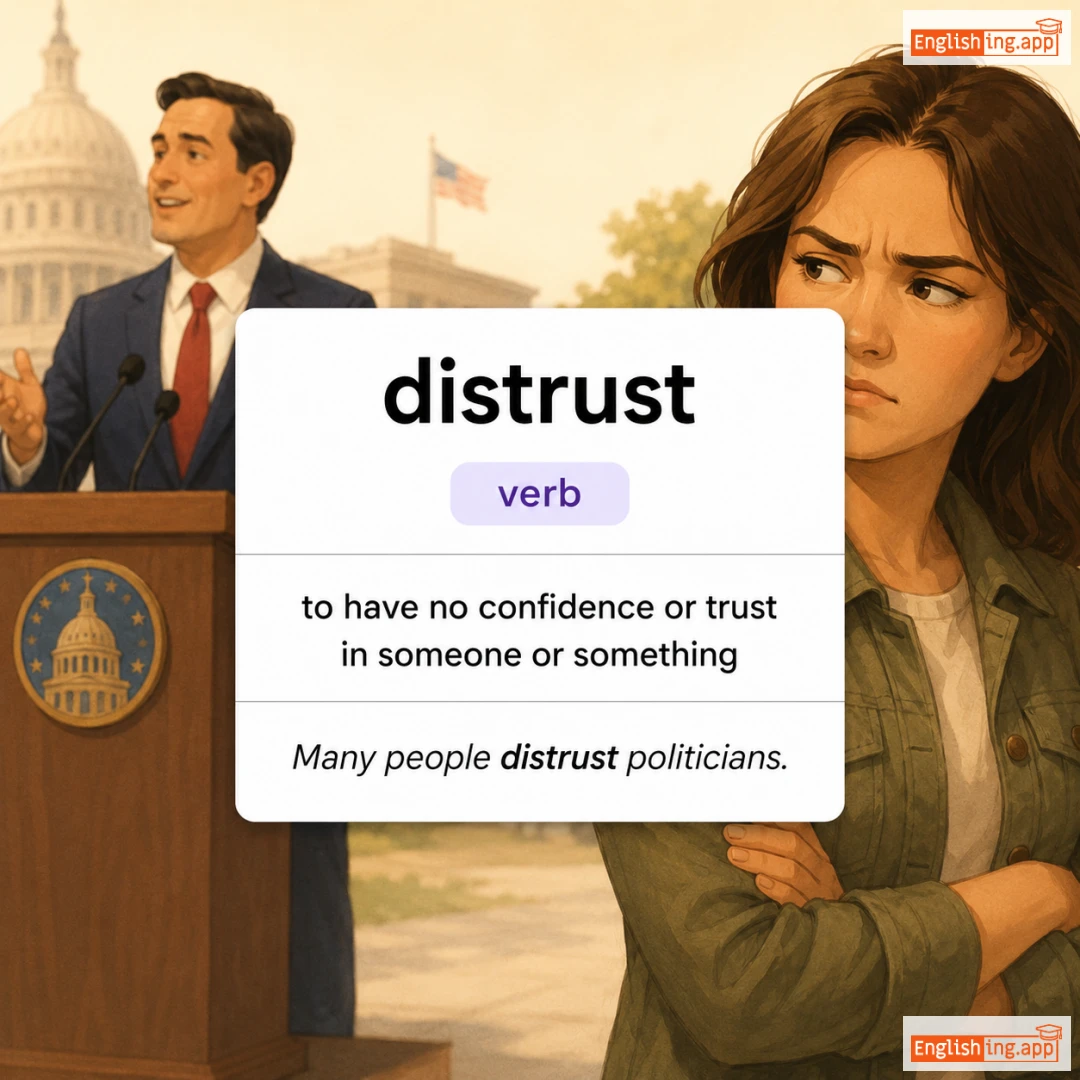
distrust definition card — visual illustration of the meaning
verb C1
/dɪsˈtrʌst/
se méfier (se mefier)

to have no confidence or trust in someone or something

"Many people distrust politicians."

"Beaucoup de gens se méfient des politiciens." (Beaucoup de gens se méfient des politiciens.)
noun C1
/ˈdiːvə/
chanteuse célèbre (chanteuse celebre)

a famous female singer; a woman who is admired or behaves like a star

"The pop diva performed her latest hit to a cheering crowd."

"La diva de la pop a interprété son dernier tube devant une foule en délire." (La diva de la pop a interprété son dernier tube devant une foule en délire.)
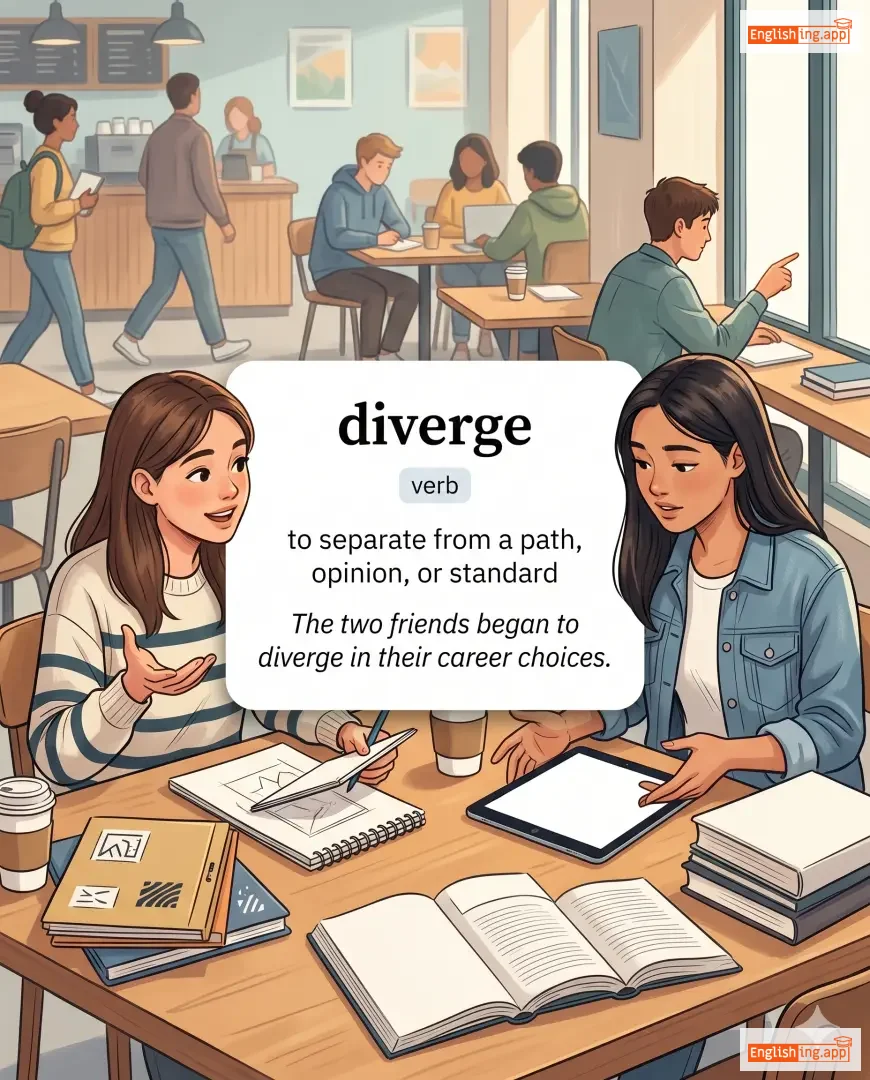
diverge definition card — visual illustration of the meaning
verb C1
/daɪˈvɜːrdʒ/
diverger (diverger)

to separate from a path, opinion, or standard

"The two friends began to diverge in their career choices."

"Les deux amis ont commencé à diverger dans leurs choix de carrière." (Les deux amis ont commencé à diverger dans leurs choix de carrière.)
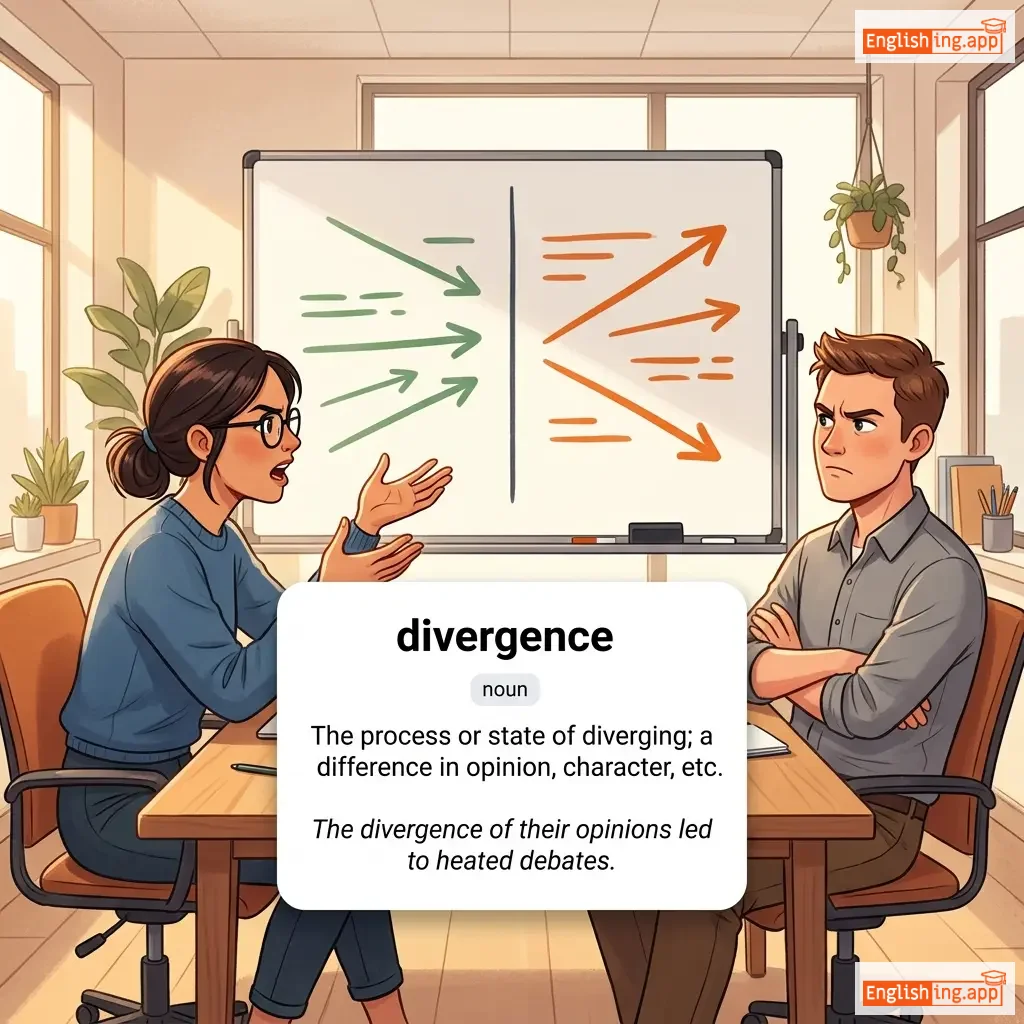
divergence definition card — visual illustration of the meaning
noun C1
daɪˈvɜː.dʒəns
divergence (divergence)

The process or state of diverging; a difference in opinion, character, etc.

"The divergence of their opinions led to heated debates."

"La divergence de leurs opinions a conduit à des débats animés." (La divergence de leurs opinions a conduit à des débats animés.)
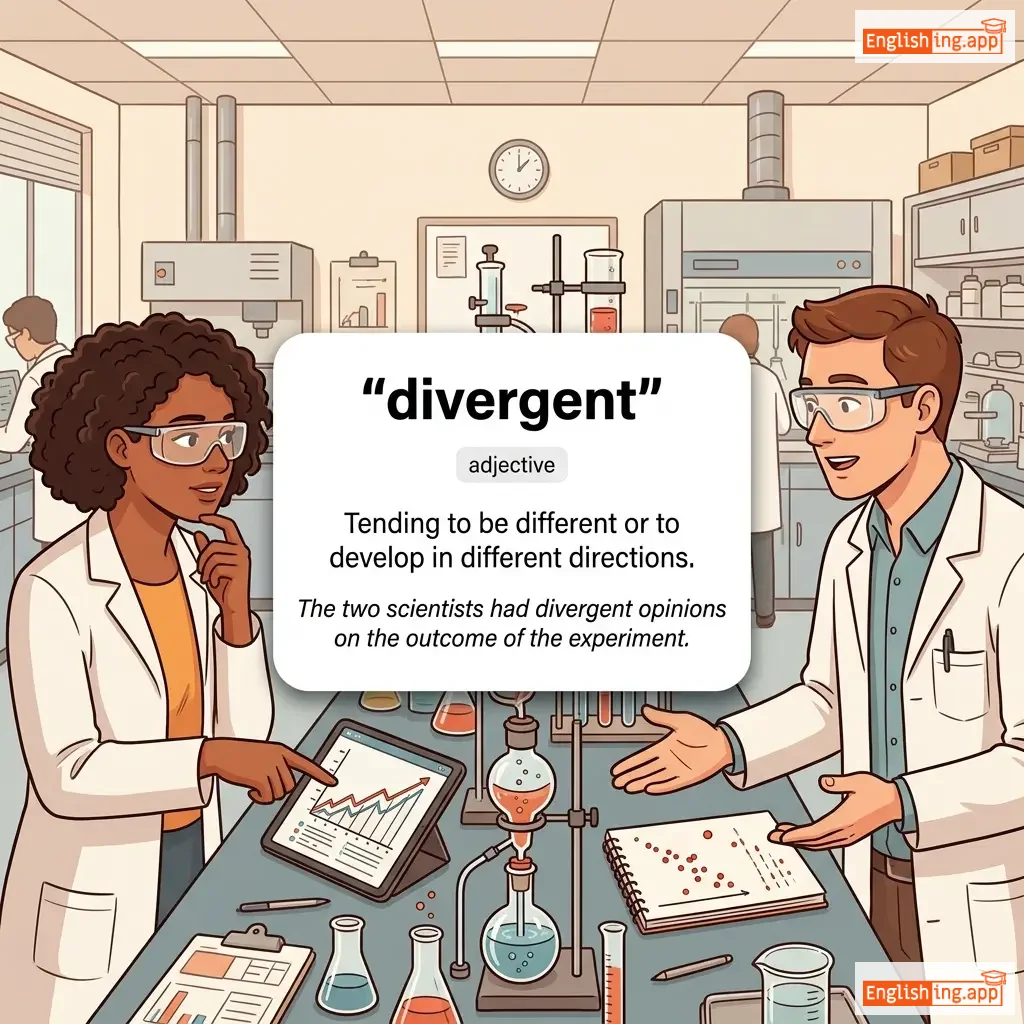
divergent definition card — visual illustration of the meaning
adjective C1
/daɪˈvɜːrdʒənt/
divergent (divergent)

Tending to be different or to develop in different directions.

"The two scientists had divergent opinions on the outcome of the experiment."

"Les deux scientifiques avaient des opinions divergentes sur l'issue de l'expérience." (Les deux scientifiques avaient des opinions divergentes sur l'issue de l'expérience.)
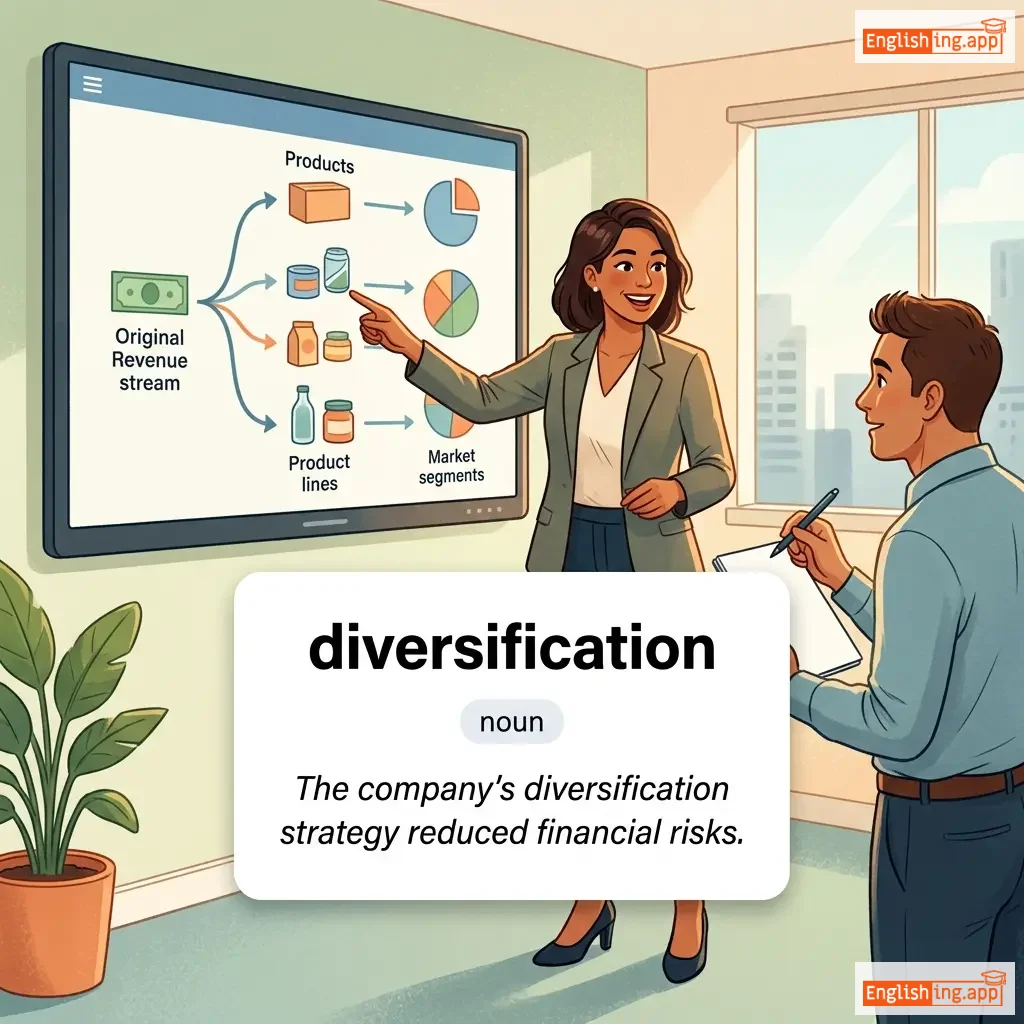
diversification definition card — visual illustration of the meaning
noun C1
/daɪˌvɜː.sɪ.fɪˈkeɪ.ʃən/
diversification (diversification)

The process of a business expanding into different product lines or markets to spread risk and reduce dependence on a single source of income.

"The company's diversification strategy reduced financial risks."

"La stratégie de diversification de l'entreprise a réduit les risques financiers." (La stratégie de diversification de l'entreprise a réduit les risques financiers.)
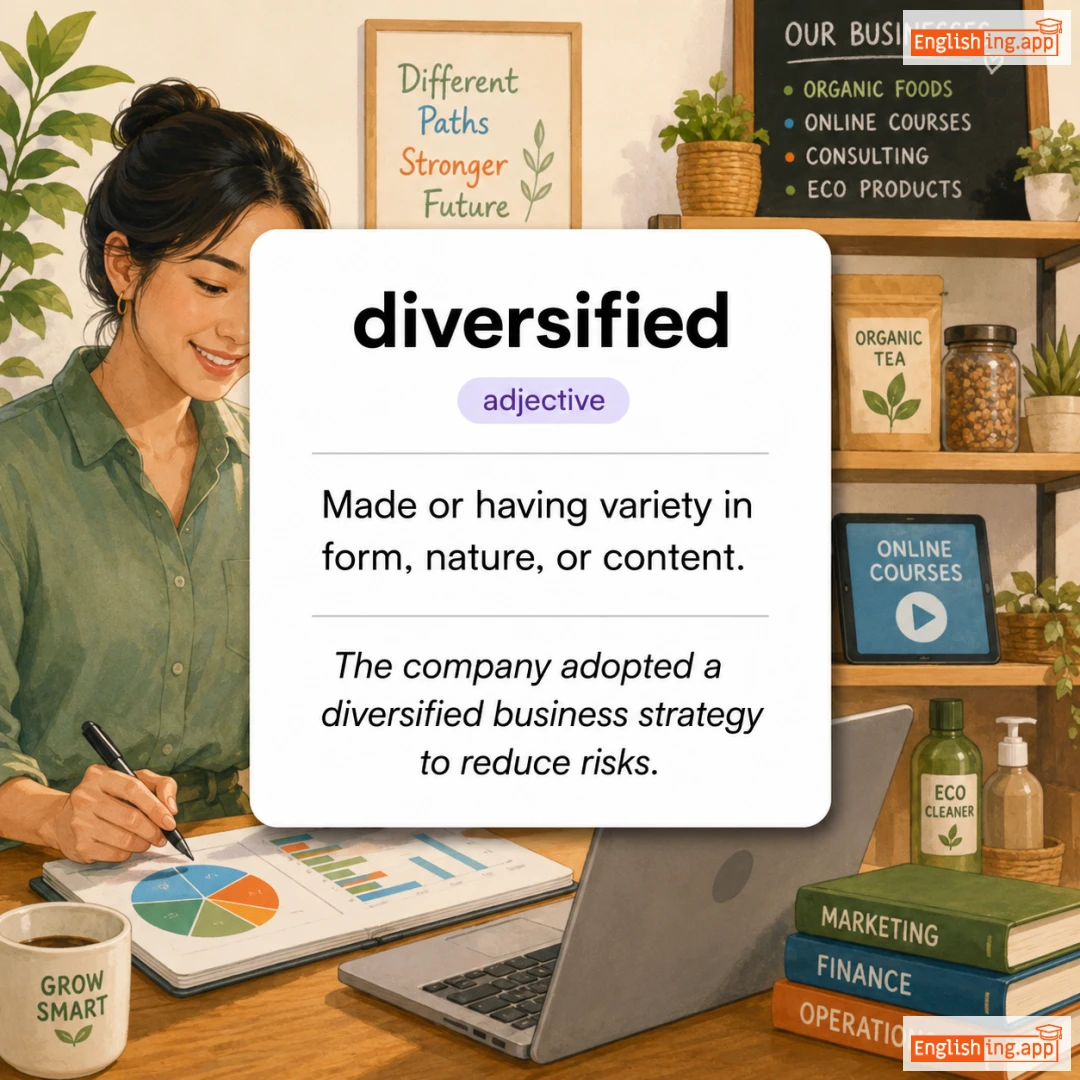
diversified definition card — visual illustration of the meaning
adjective C1
/daɪˈvɜːrsɪfaɪd/
diversifié (diversifie)

Made or having variety in form, nature, or content.

"The company adopted a diversified business strategy to reduce risks."

"L'entreprise a adopté une stratégie commerciale diversifiée pour réduire les risques." (L'entreprise a adopté une stratégie commerciale diversifiée pour réduire les risques.)
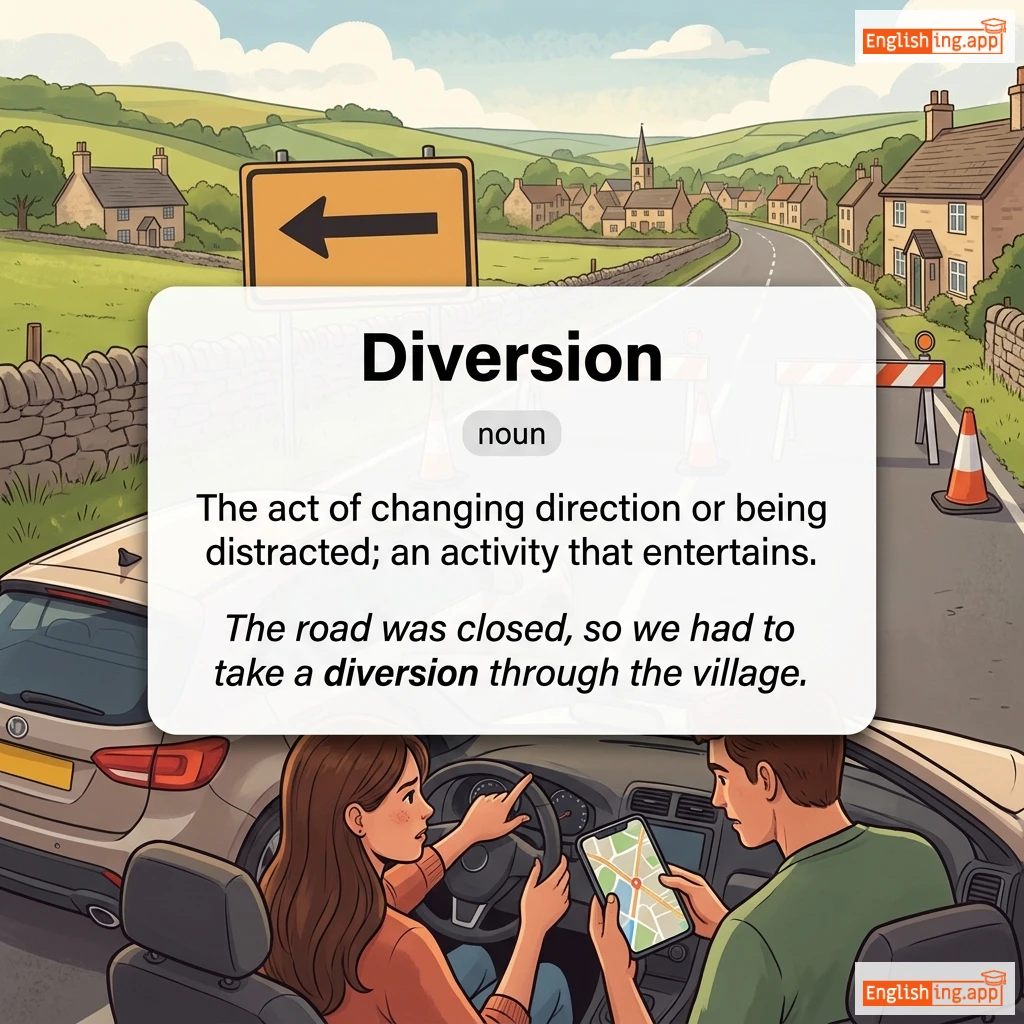
Diversion definition card — visual illustration of the meaning
noun C1
/daɪˈvɜːrʒən/
divertissement (divertissement)

The act of changing direction or being distracted; an activity that entertains.

"The road was closed, so we had to take a diversion through the village."

"La route était fermée, nous avons donc dû prendre une déviation par le village." (La route etait fermee nous avons donc du prendre une deviation par le village)
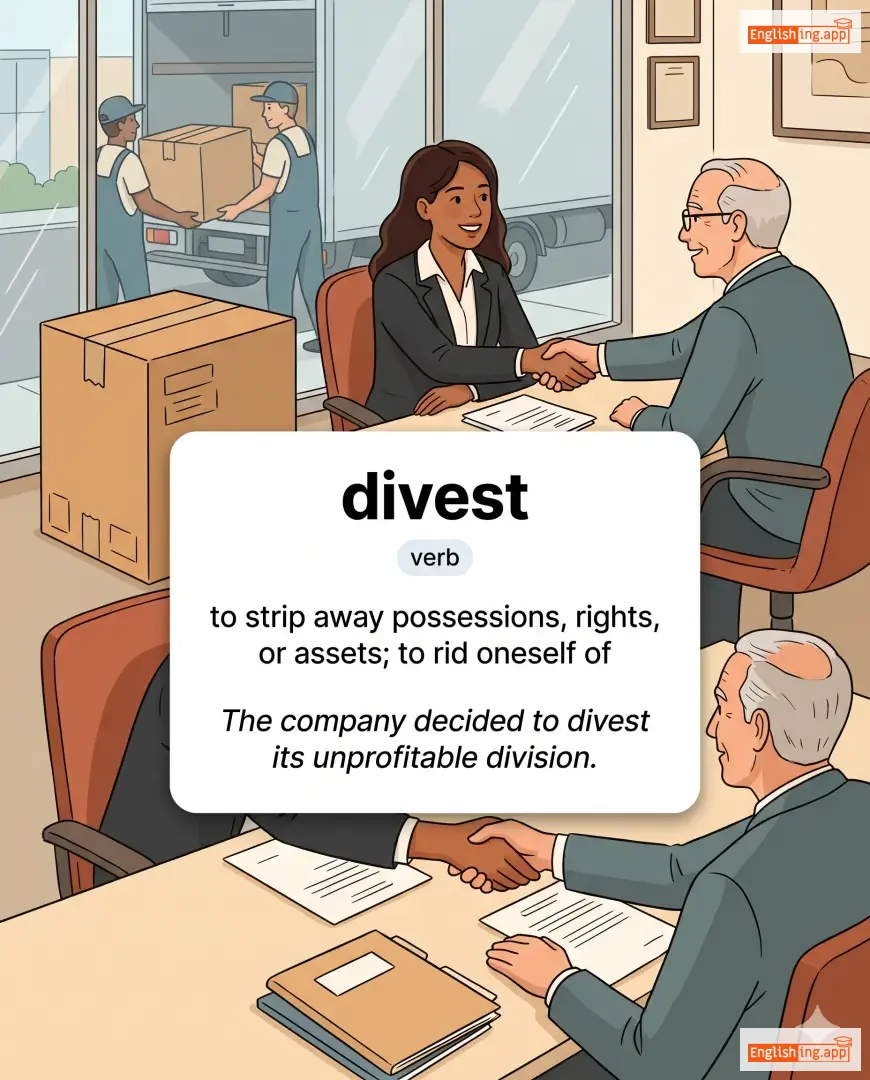
divest definition card — visual illustration of the meaning
verb C1
/daɪˈvɛst/
désinvestir (désinvestir)

to strip away possessions, rights, or assets; to rid oneself of

"The company decided to divest its unprofitable division."

"L'entreprise a décidé de se désinvestir de sa division non rentable." (L'entreprise a décidé de se désinvestir de sa division non rentable.)
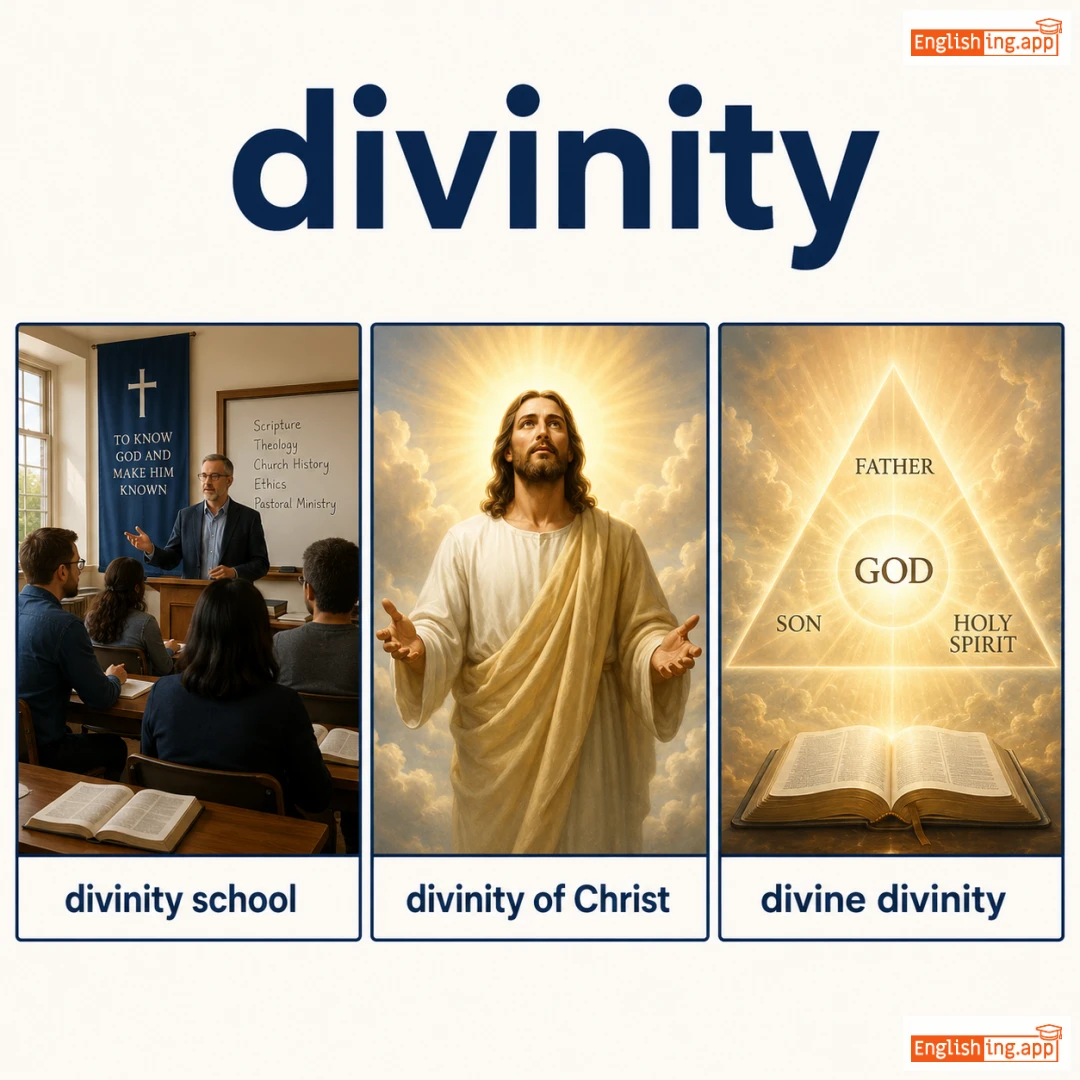
divinity definition card — visual illustration of the meaning
noun C1
/dɪˈvɪnɪti/
divinité (divinite)

The quality or state of being divine; a deity.

"The priest spoke about the divinity of the soul."

"Le prêtre a parlé de la divinité de l'âme." (Le pretre a parle de la divinite de l'ame.)
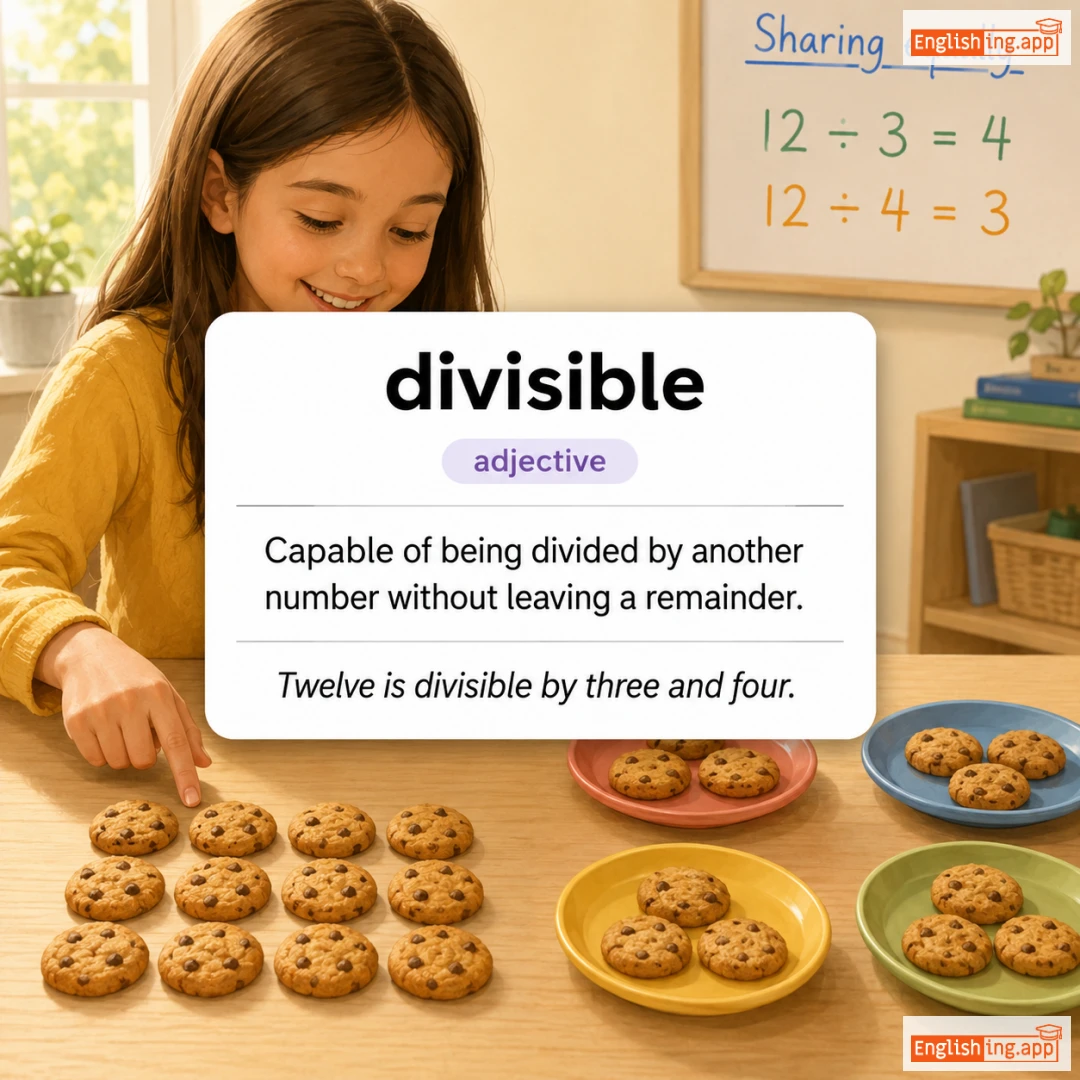
divisible definition card — visual illustration of the meaning
adjective C1
/dɪˈvɪzəbl/
divisible (divisible)

Capable of being divided by another number without leaving a remainder.

"Twelve is divisible by three and four."

"Douze est divisible par trois et quatre." (Douze est divisible par trois et quatre.)
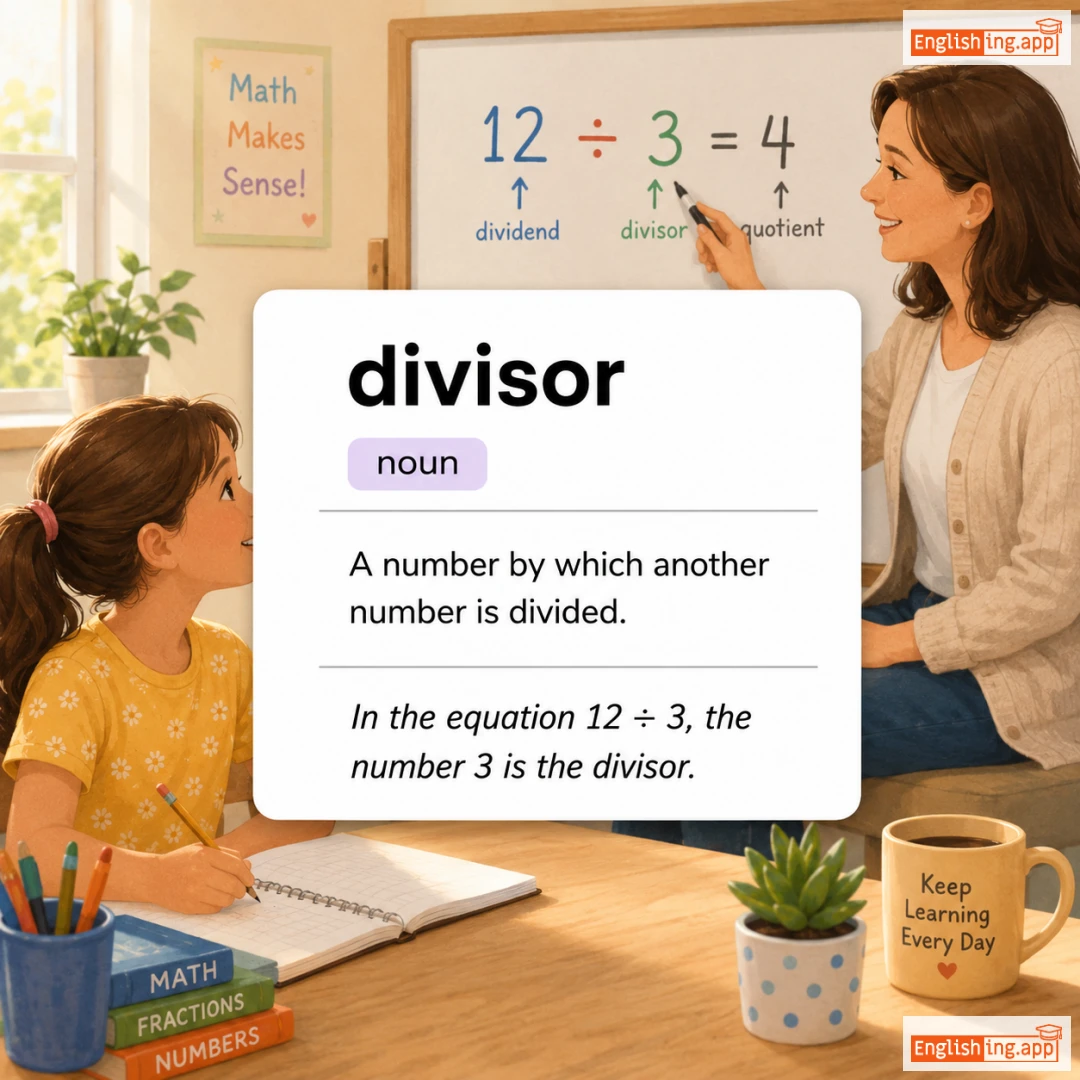
divisor definition card — visual illustration of the meaning
noun C1
/dɪˈvaɪzər/
diviseur (diviseur)

A number by which another number is divided.

"In the equation 12 ÷ 3, the number 3 is the divisor."

"Dans l'équation 12 ÷ 3, le nombre 3 est le diviseur." (Dans l'equation 12 ÷ 3, le nombre 3 est le diviseur.)
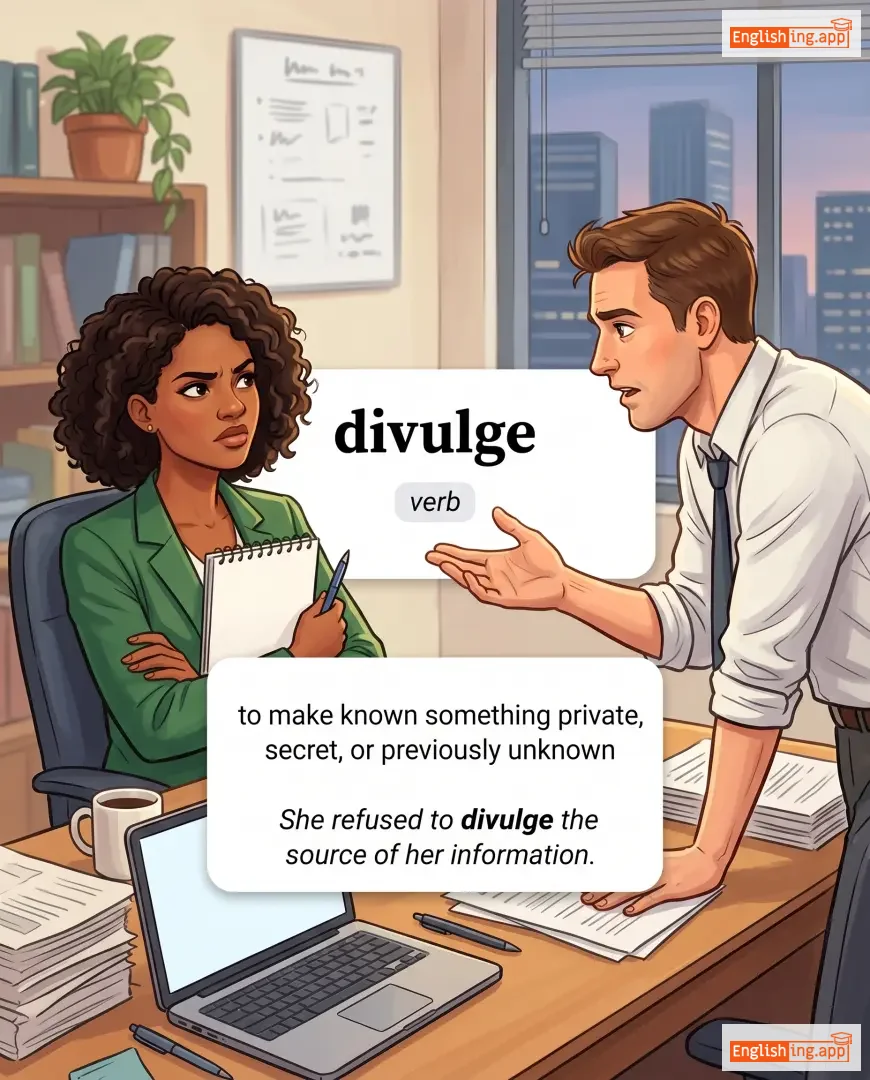
divulge definition card — visual illustration of the meaning
verb C1
/daɪˈvʌldʒ/
divulguer (divulgue)

to make known something private, secret, or previously unknown

"She refused to divulge the source of her information."

"Elle a refusé de divulguer la source de ses informations." (Elle a refuse de divulguer la source de ses informations.)
adjective C1
/ˈdɑːsəl/ or /ˈdəʊsaɪl/
docile (docile)

easily managed, taught, or controlled; submissive

"The docile puppy quickly learned new tricks."

"Le chiot docile a rapidement appris de nouveaux tours." (Le chiot docile a rapidement appris de nouveaux tours.)