🎶dissonance (dɪsəˈnæns)

noun
/ˈdɪsənəns/
dissonance (dissonance)

Signification

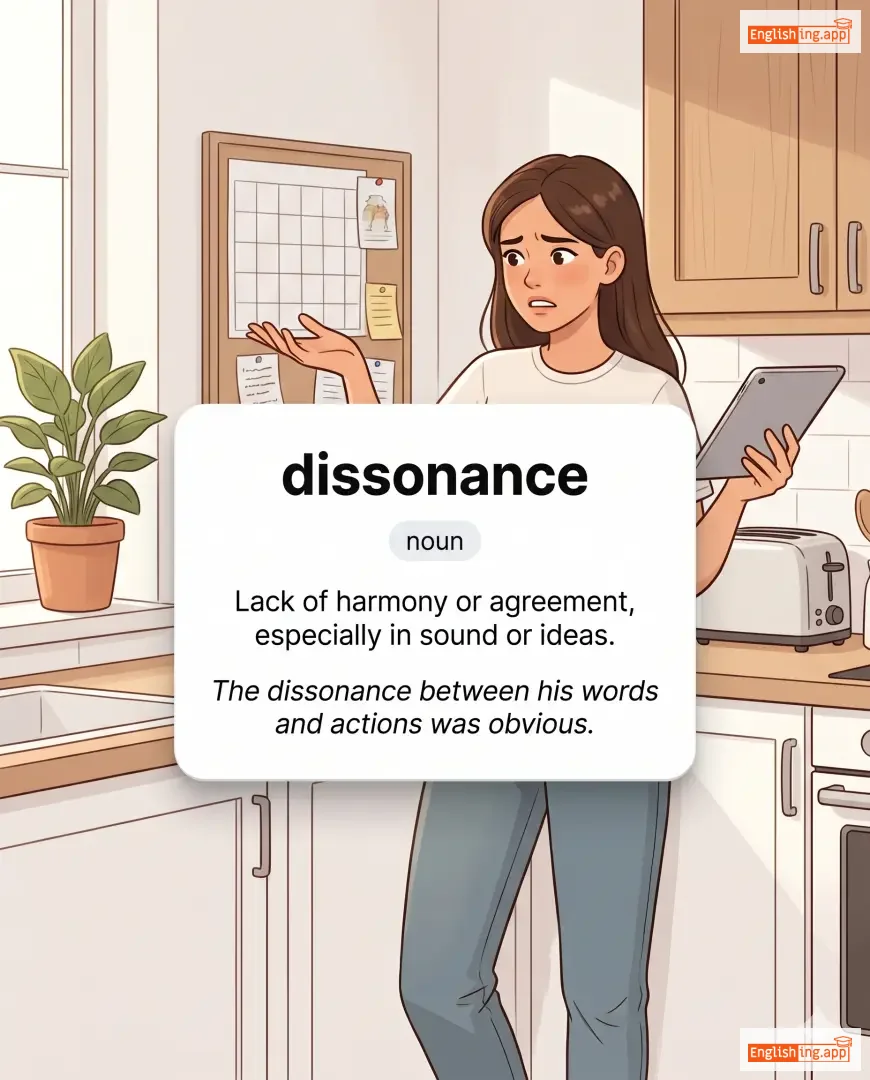
Lack of harmony or agreement, especially in sound or ideas.
Disagreement, lack of harmony, conflict between ideas or beliefs.
Lack of harmony among musical notes or a tension or clash resulting from the combination of two disharmonious elements.
Traduction de la signification
Manque d'harmonie ou d'accord, notamment en son ou en idées.

Phrases d'exemple

The dissonance between his words and actions was obvious.

La dissonance entre ses paroles et ses actions était évidente.

The cultural dissonance created misunderstandings.

La dissonance culturelle a créé des malentendus.

There was a noticeable dissonance between their opinions.

Il y avait une dissonance évidente entre leurs opinions.

Expressions d'exemple

cognitive dissonance
dissonance cognitive

Synonymes

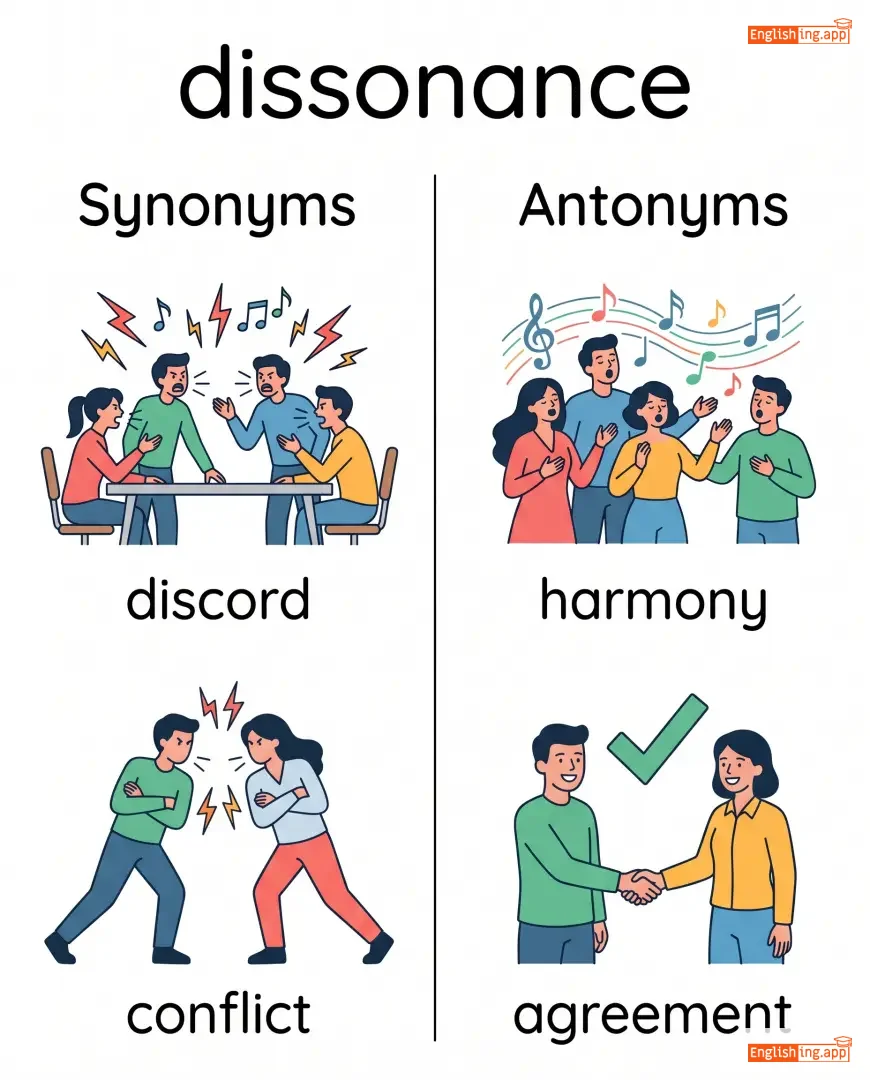
discord, conflict, discrepancy, disagreement, incongruity
Entrée 1
discord, conflict, discrepancy, disagreement, incongruity
Entrée 2
discord, conflict, disagreement
Entrée 3
discord, conflict, incongruity

Antonymes

harmony, agreement, concord, unity, accord
Entrée 1
harmony, agreement, concord
Entrée 2
harmony, agreement, unity
Entrée 3
harmony, agreement, accord

Collocations

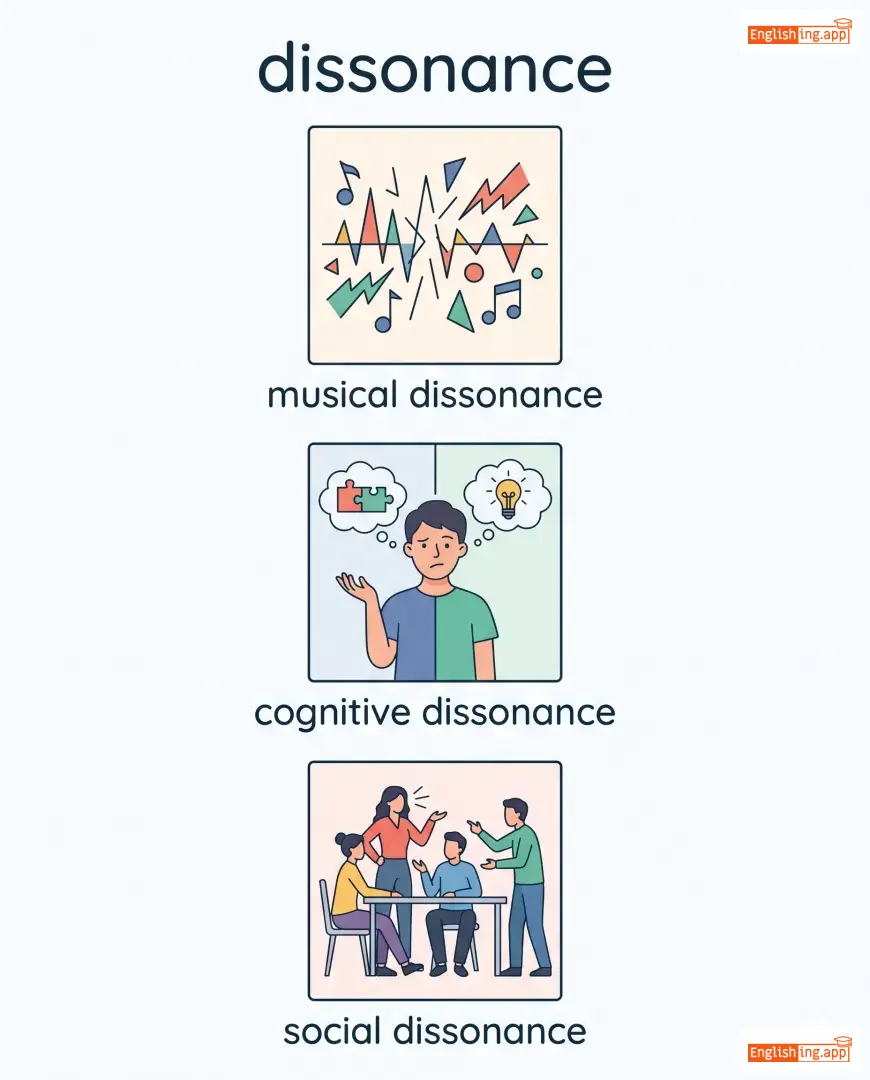
musical dissonance, cognitive dissonance, social dissonance, emotional dissonance

Vocabulaires connexes

The action of facilitating or making an action or process easier or achievable.
The action of delaying or postponing important tasks.
a collection of written texts, or the main body of something
the scientific study of the functions and mechanisms in a living system
the natural color, texture, and appearance of a person's skin, especially on the face
a type of flowering tree with large, fragrant pink or white flowers