💨discharge (discharge)

verb
/dɪsˈtʃɑːrdʒ/
libérer (libérer)

Signification

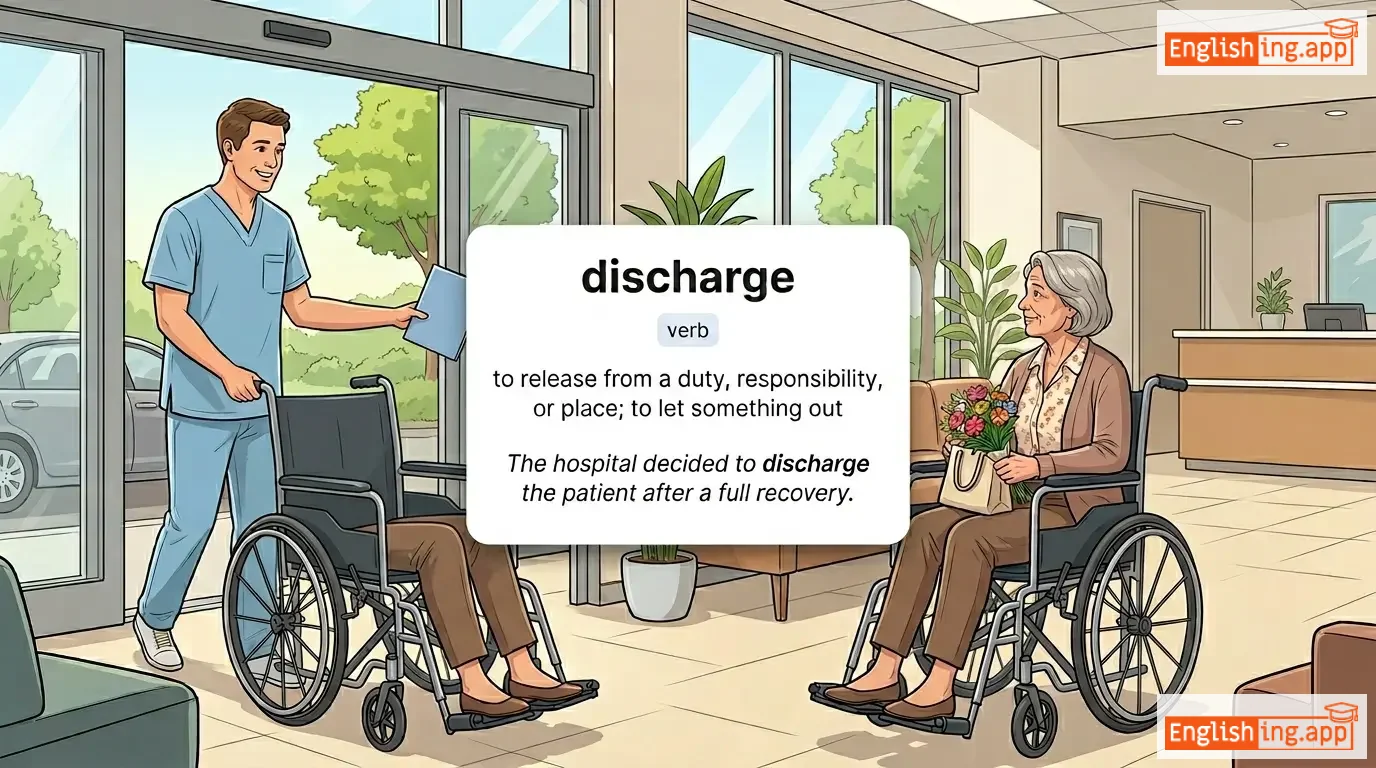
to release from a duty, responsibility, or place; to let something out
to release or dismiss from duty; to emit or give off
Traduction de la signification
relâcher une responsabilité, un devoir ou un lieu ; laisser sortir quelque chose

Phrases d'exemple

The hospital decided to discharge the patient after a full recovery.

L'hôpital a décidé de décharger le patient après une récupération complète.

The hospital will discharge the patient tomorrow.

L'hôpital va libérer le patient demain.
L'hopital va liberer le patient demain

Expressions d'exemple

discharge one's duty
accomplir son devoir

Synonymes

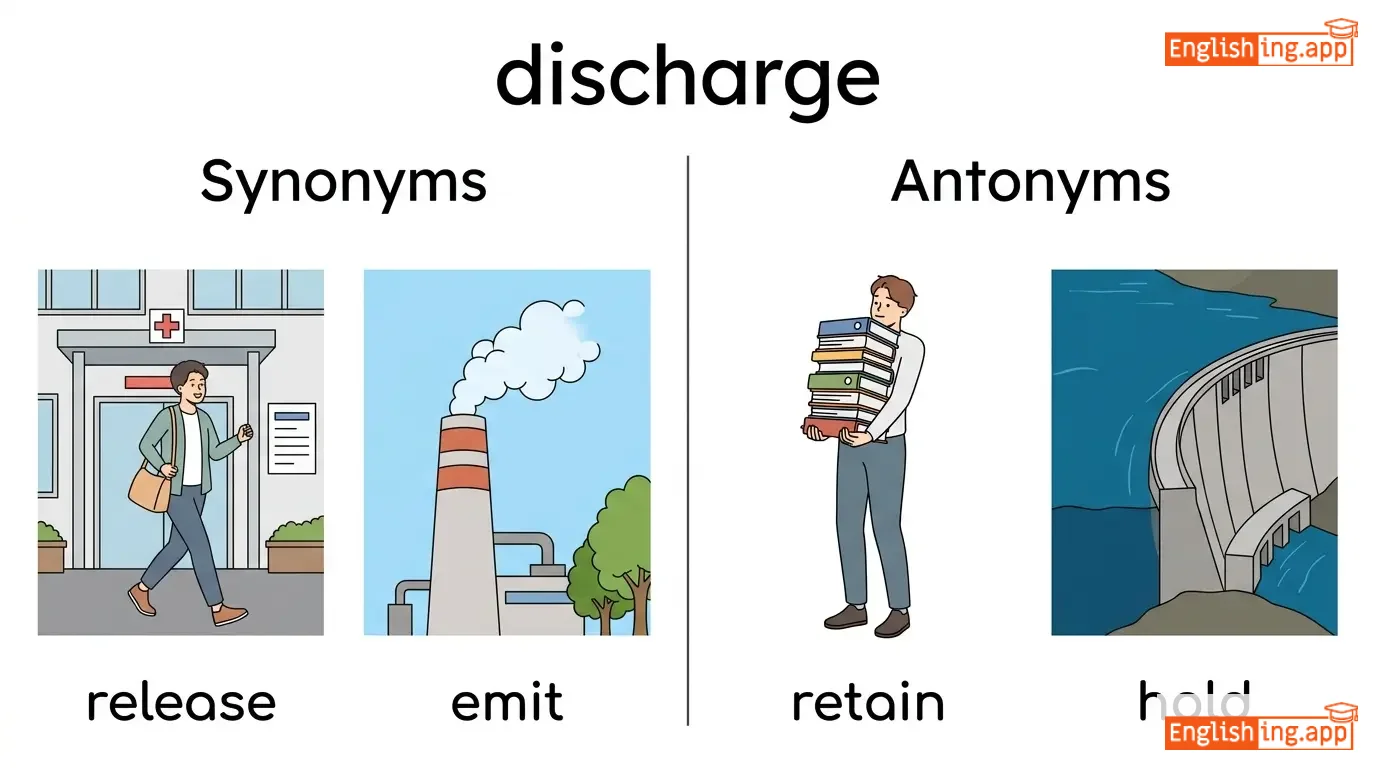
release, emit, expel, dismiss, free
Entrée 1
release, emit, expel, dismiss, free
Entrée 2
release, dismiss, emit, expel

Antonymes

retain, hold, keep, admit
Entrée 1
retain, hold, keep
Entrée 2
admit, retain, hold, keep

Collocations

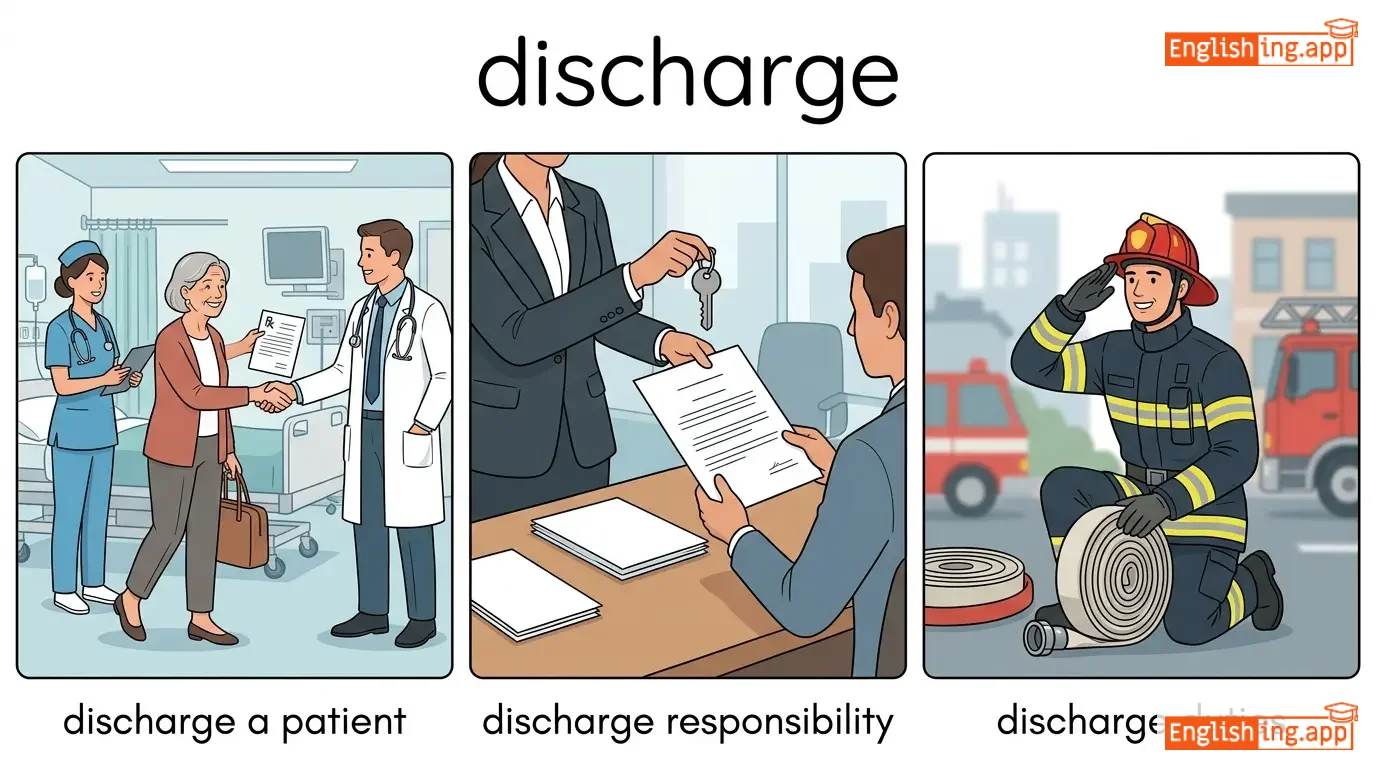
discharge a patient, discharge responsibility, discharge duties, discharge cargo, discharge patients, discharge from hospital, discharge completely, discharge safely
Entrée 1
discharge a patient, discharge responsibility, discharge duties, discharge cargo
Entrée 2
discharge patients, discharge duties, discharge from hospital, discharge completely, discharge safely

Vocabulaires connexes

to turn into vapor or gas
to bring to an end; to decide based on evidence
To judge something as less important or smaller than it really is.
to speak aloud in a formal, passionate, or theatrical way
to take control of something or someone by force
to accumulate and hide away a large supply of something, often secretly