The Evolution of Modern Farming
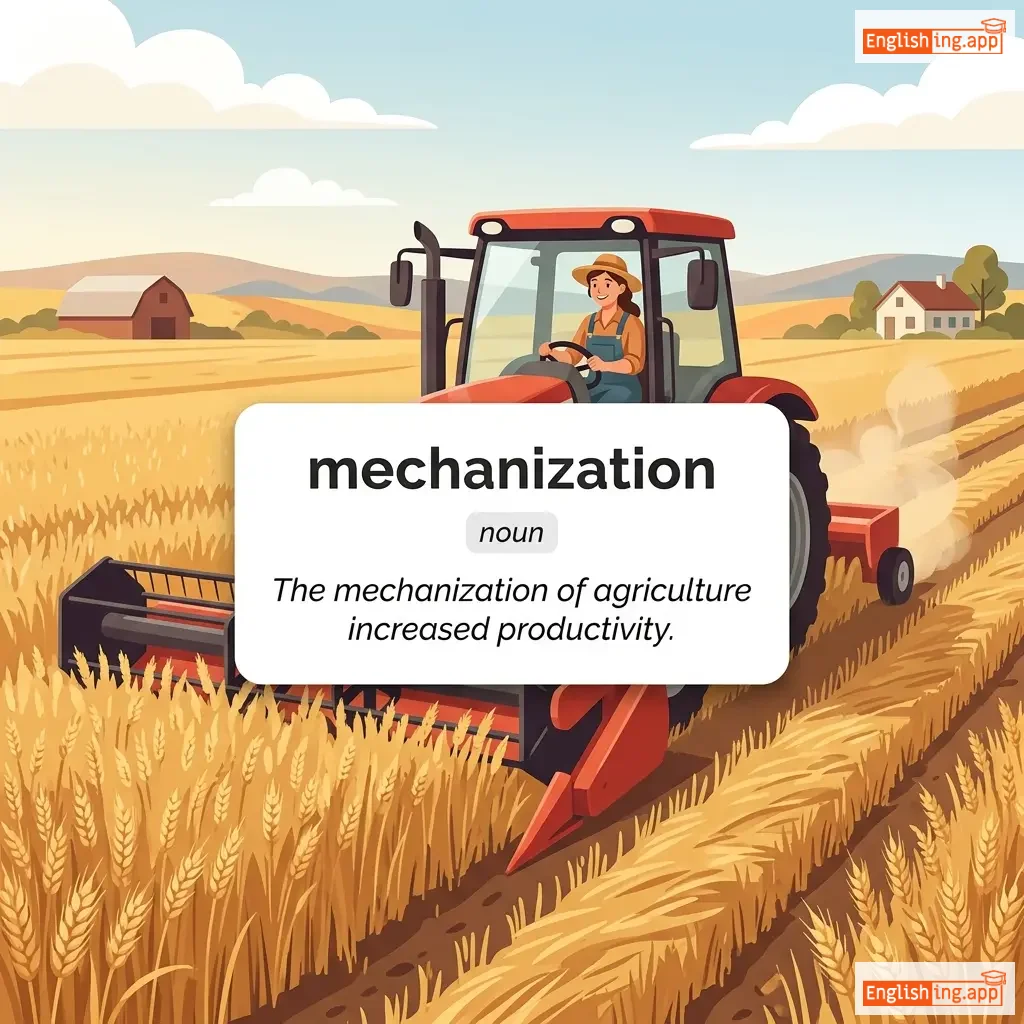
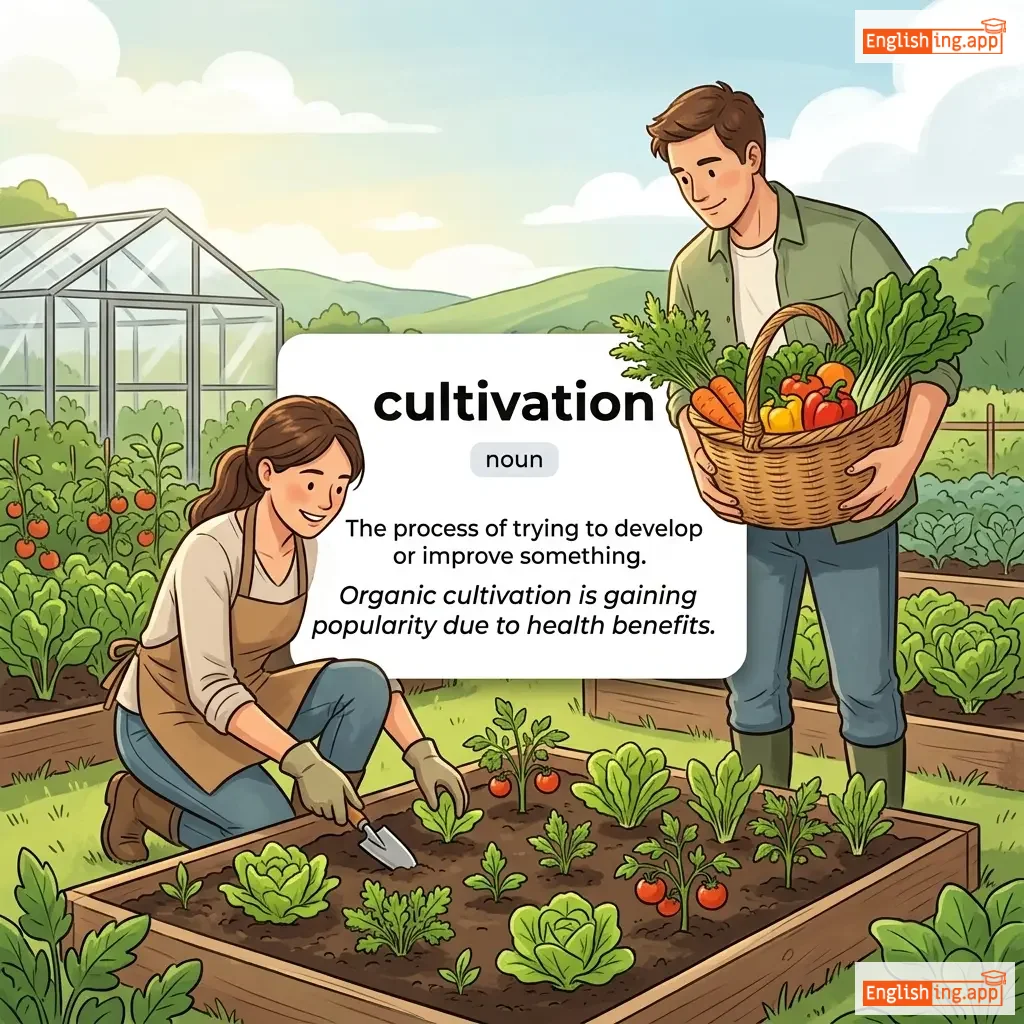
L’histoire de l’agriculture a connu des changements au fil des siècles. Autrefois, le travail agricole était entièrement manuel, mais la mechanization a apporté une nouvelle révolution au secteur agricole. L’agriculture moderne ne se limite plus à la cultivation ou à la production de cultures, elle met également l’accent sur la sustainability et la préservation de la biodiversity.
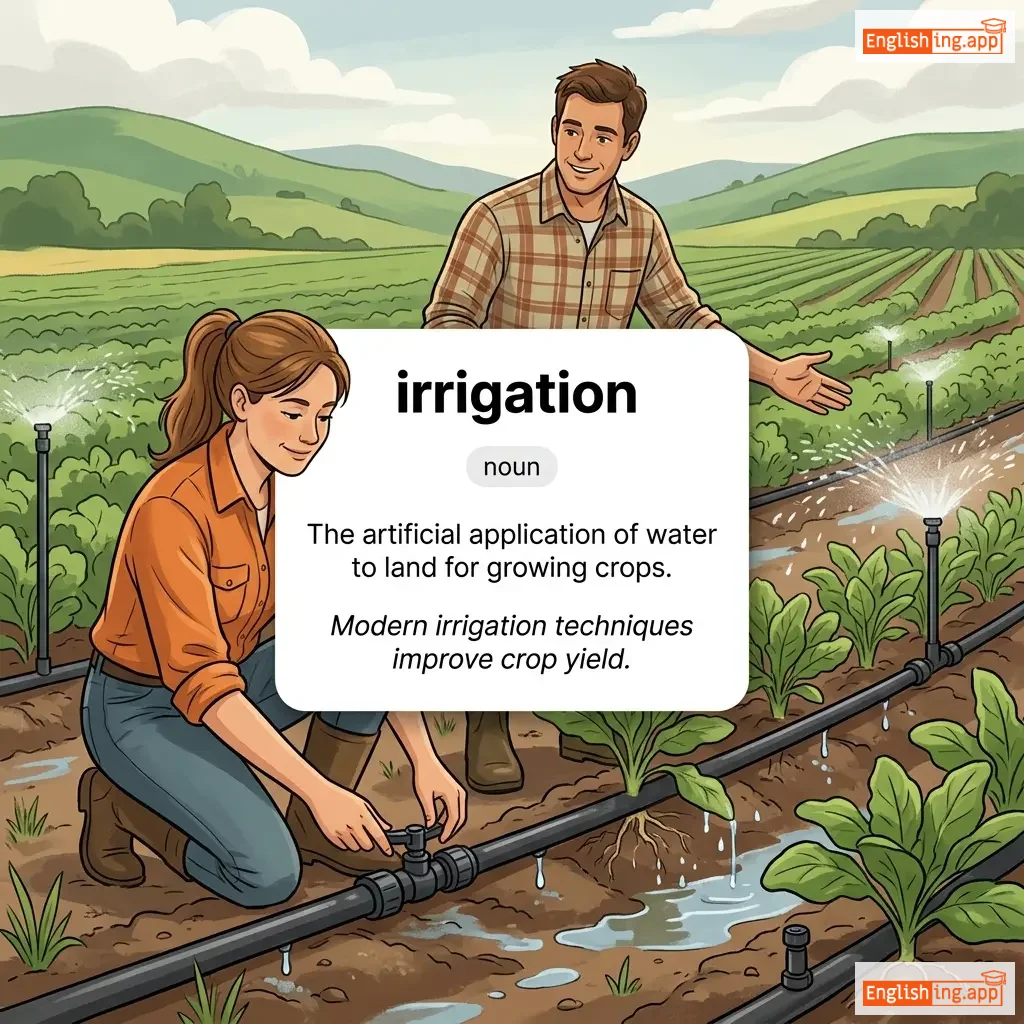
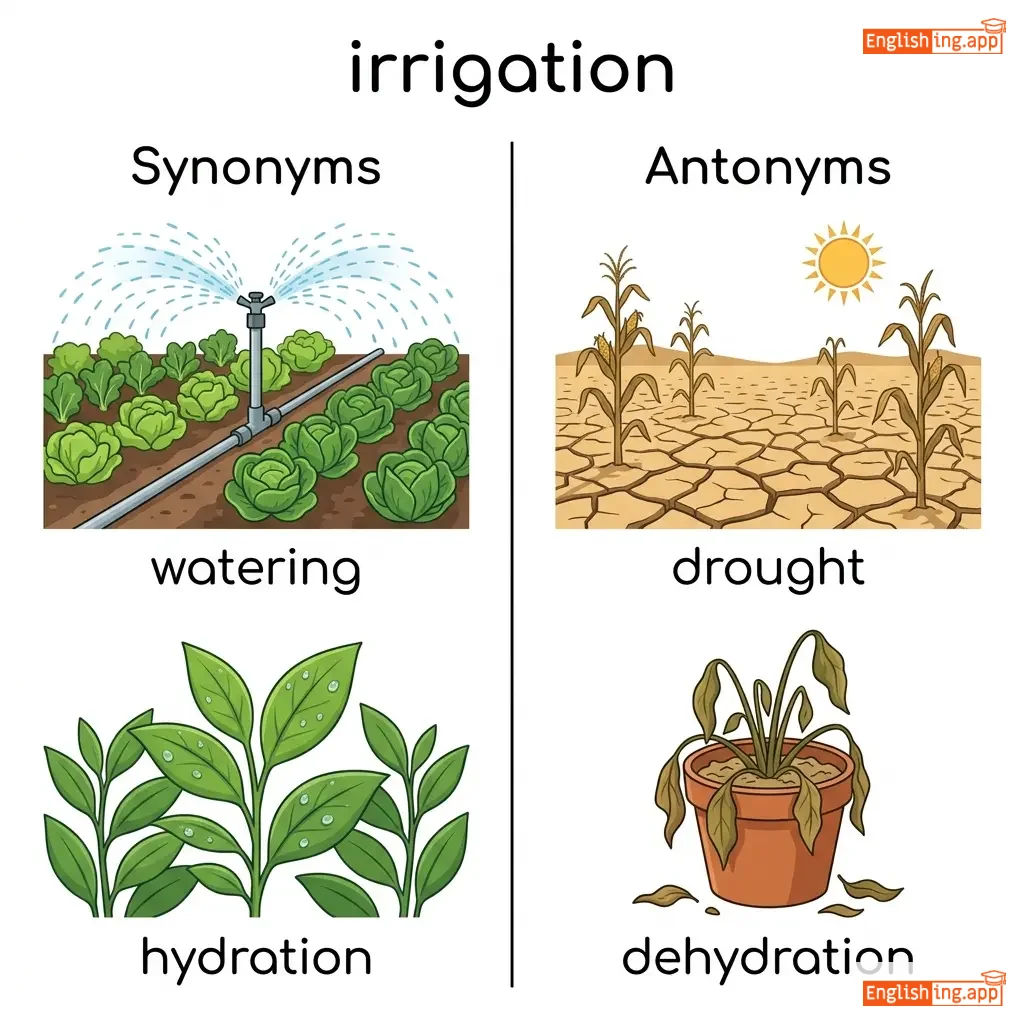
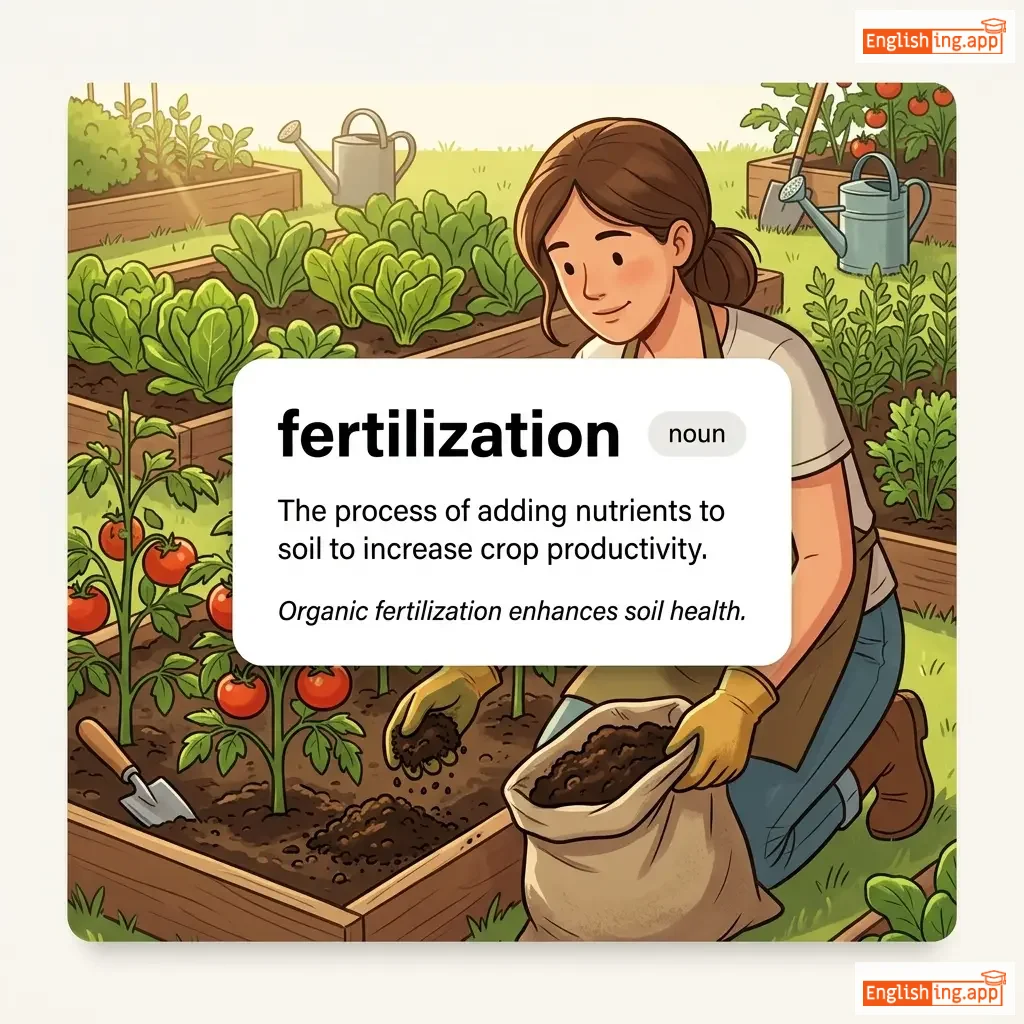
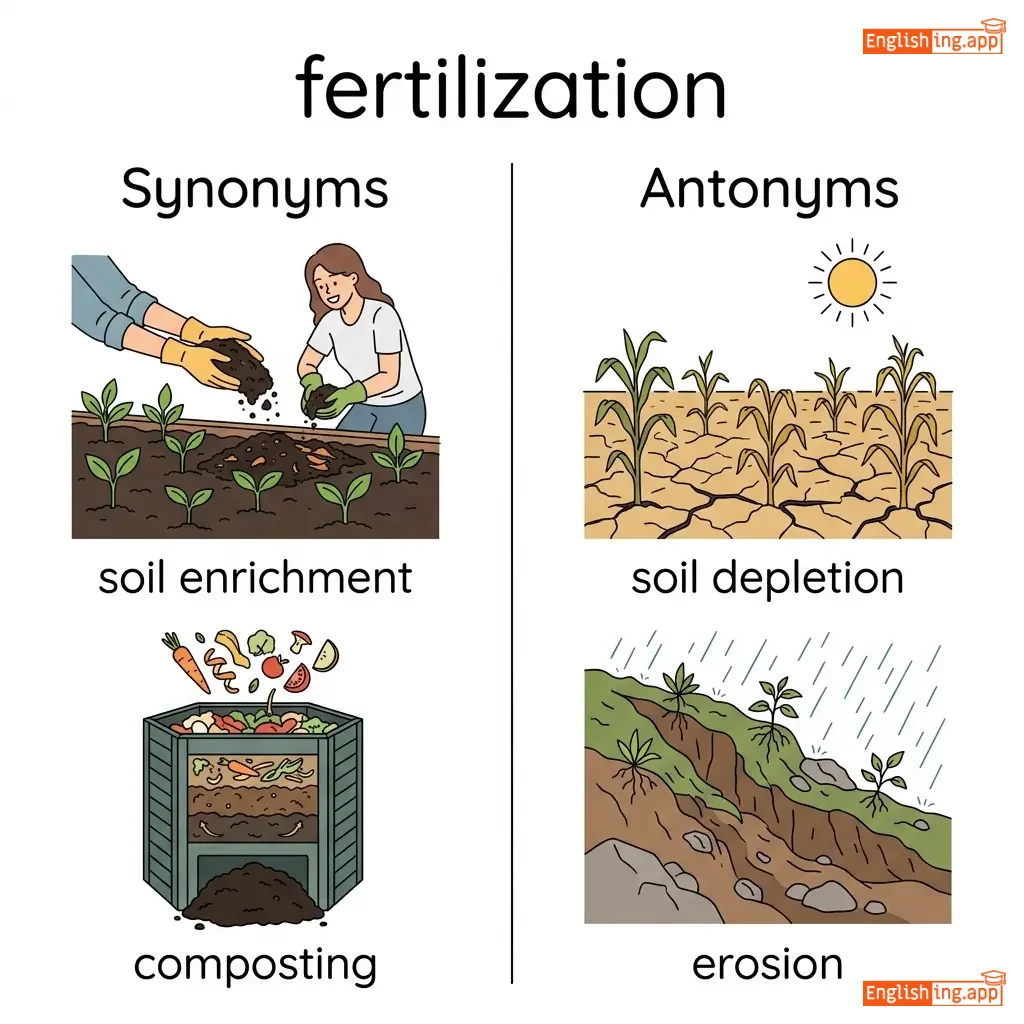
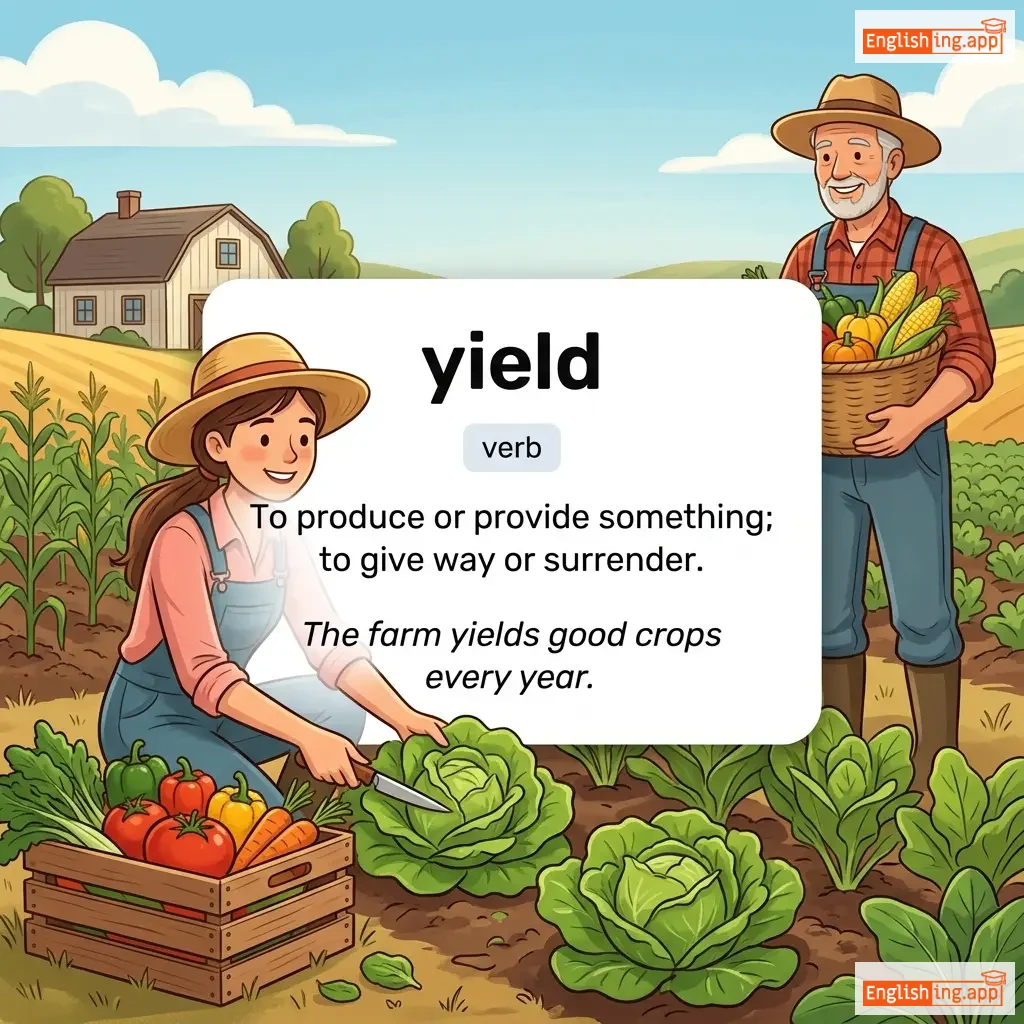
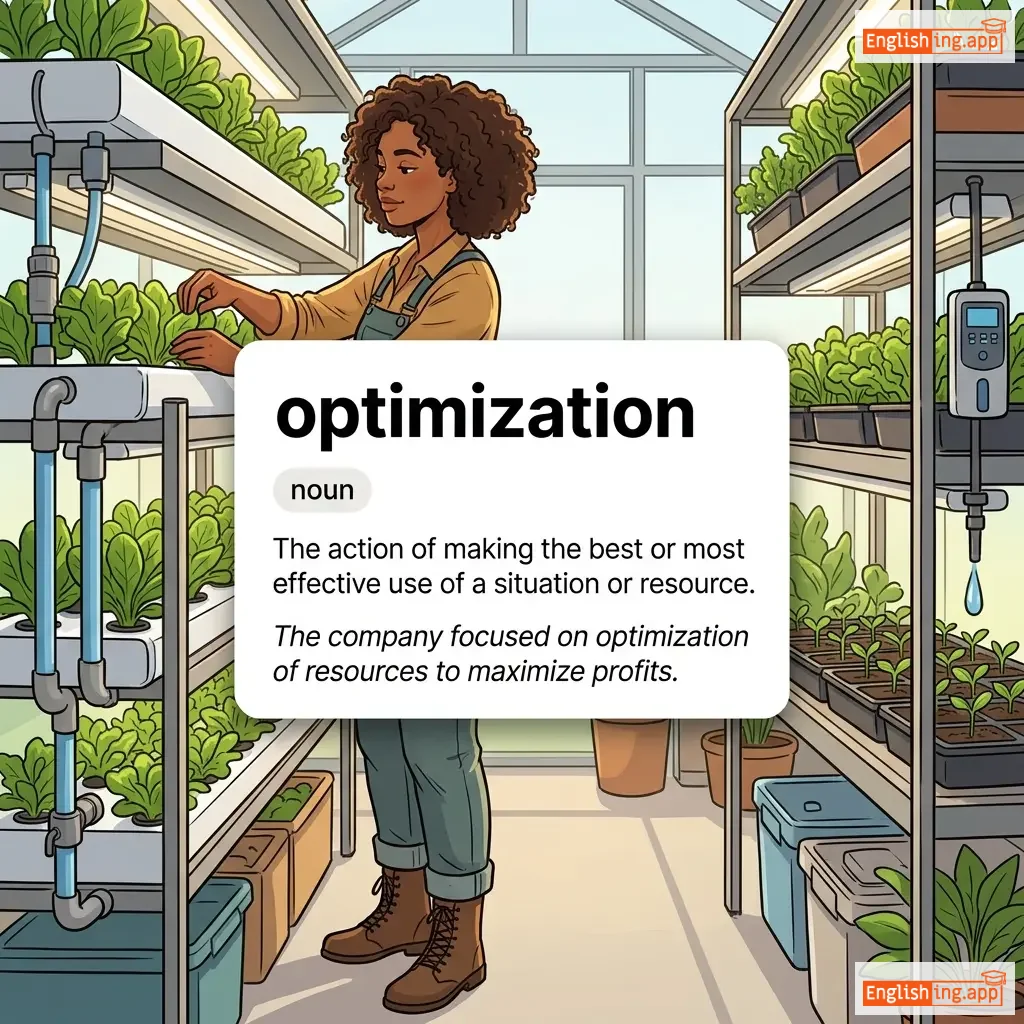
Les méthodes agricoles modernes ont amélioré les systèmes d’irrigation et de fertilization, ce qui aide à augmenter le yield et l’optimization des récoltes. Cependant, l’industrialization a entraîné des problèmes d’soil erosion et de depletion. Par conséquent, la regenerative farming et la organic farming sont devenues beaucoup plus populaires.
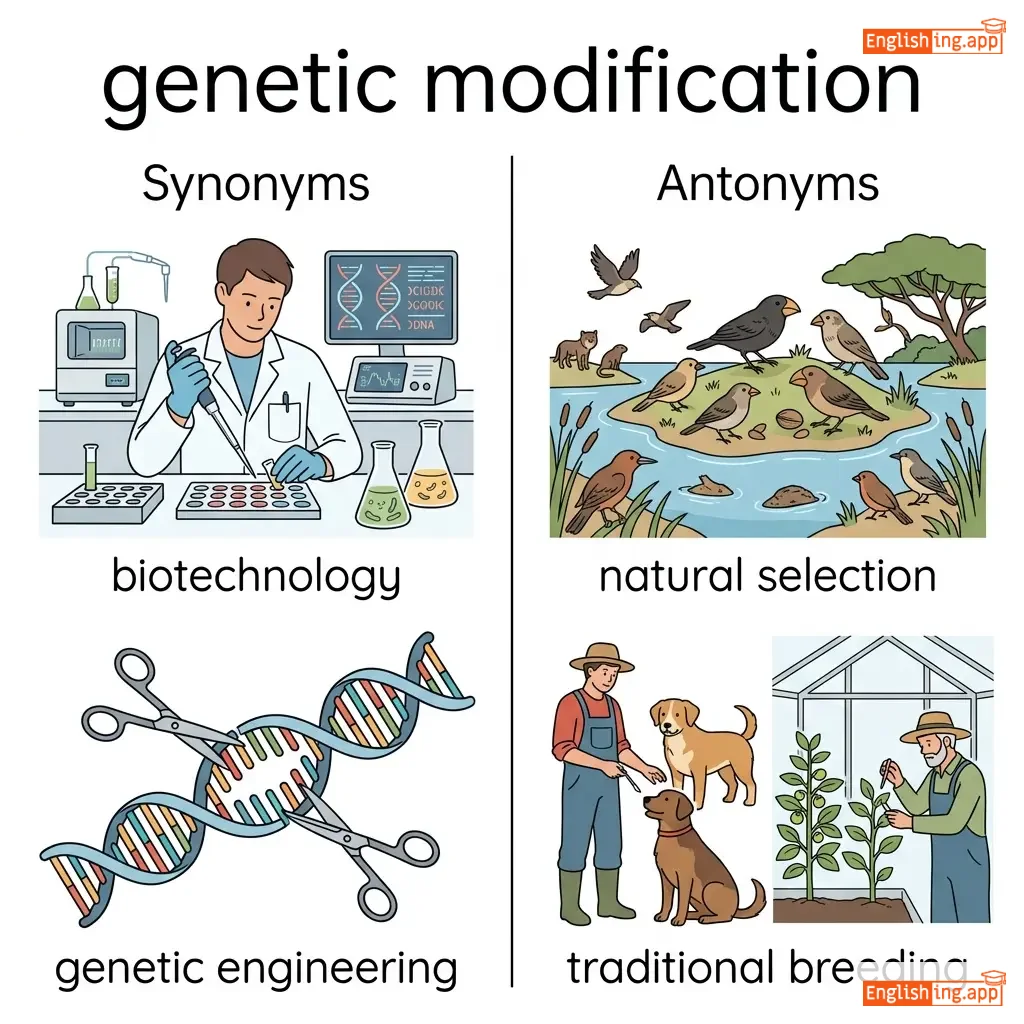
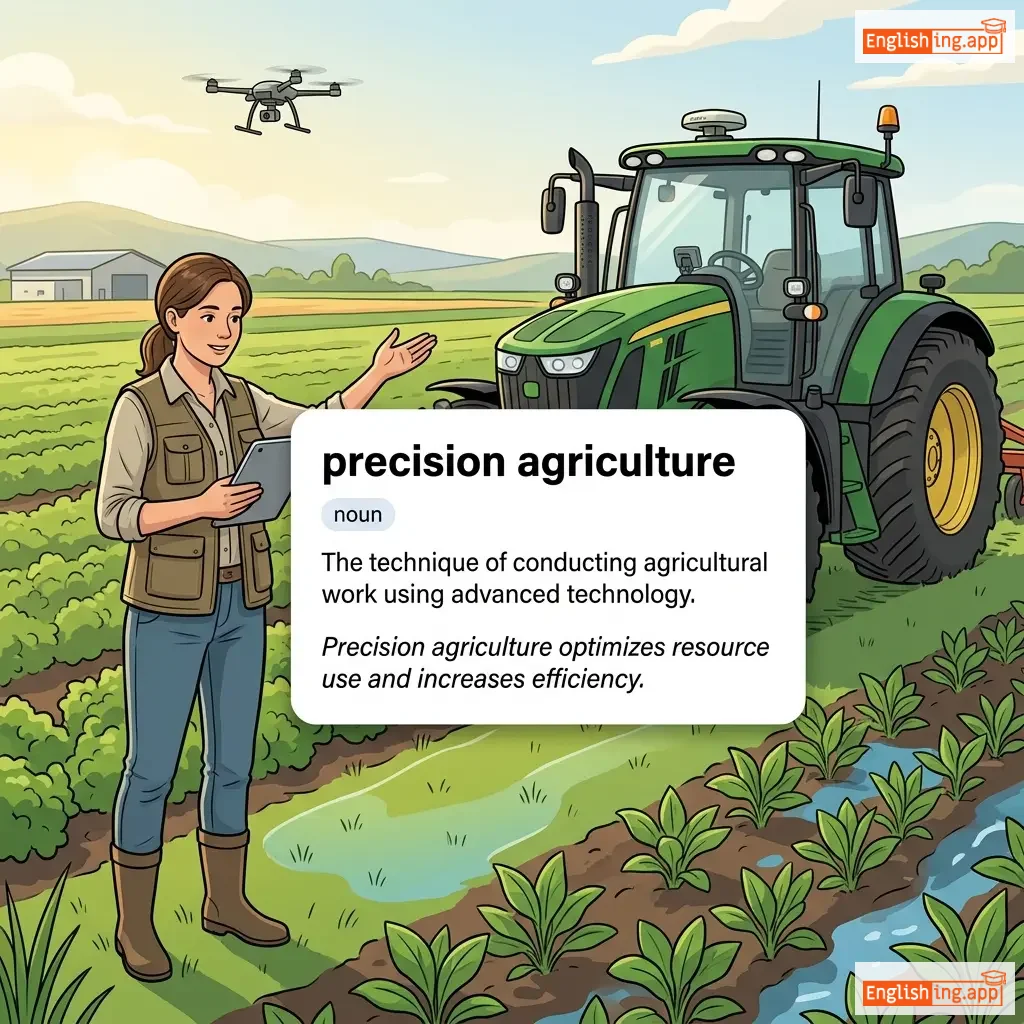
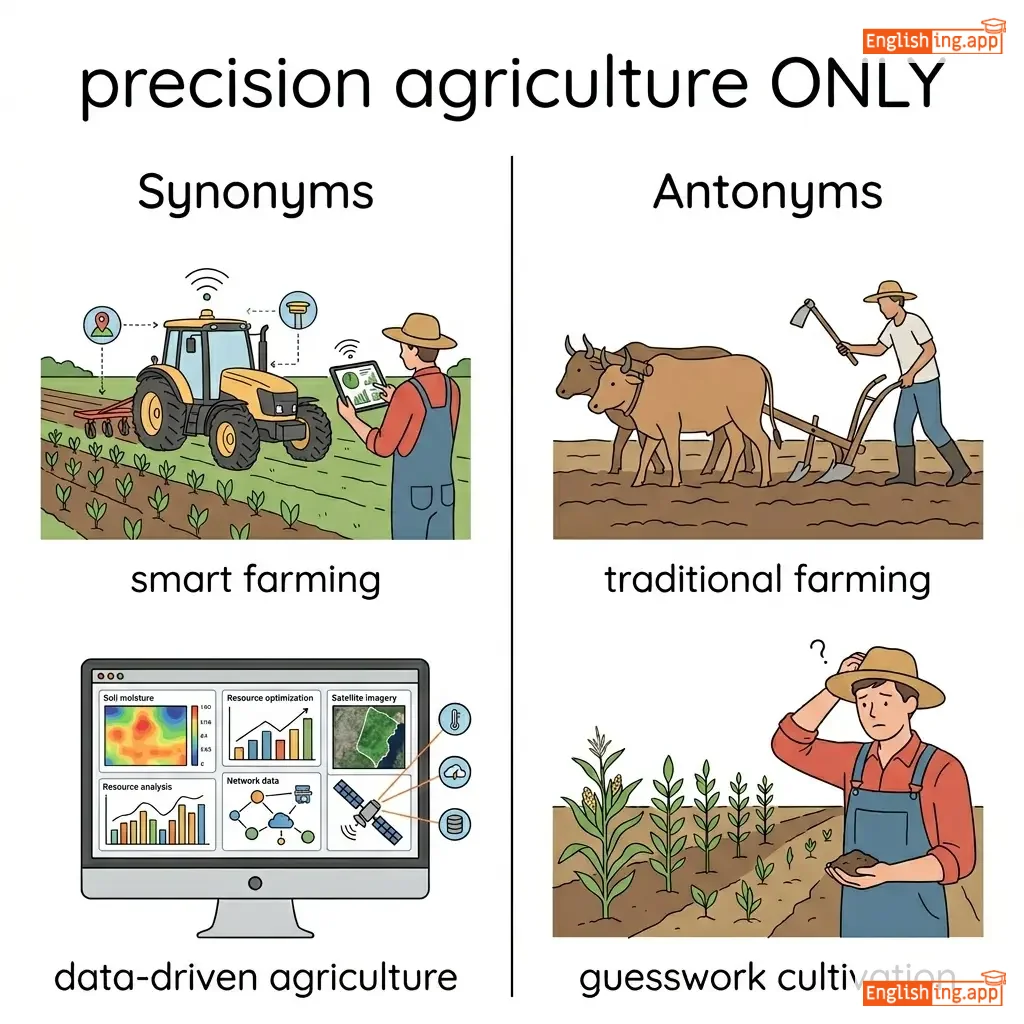
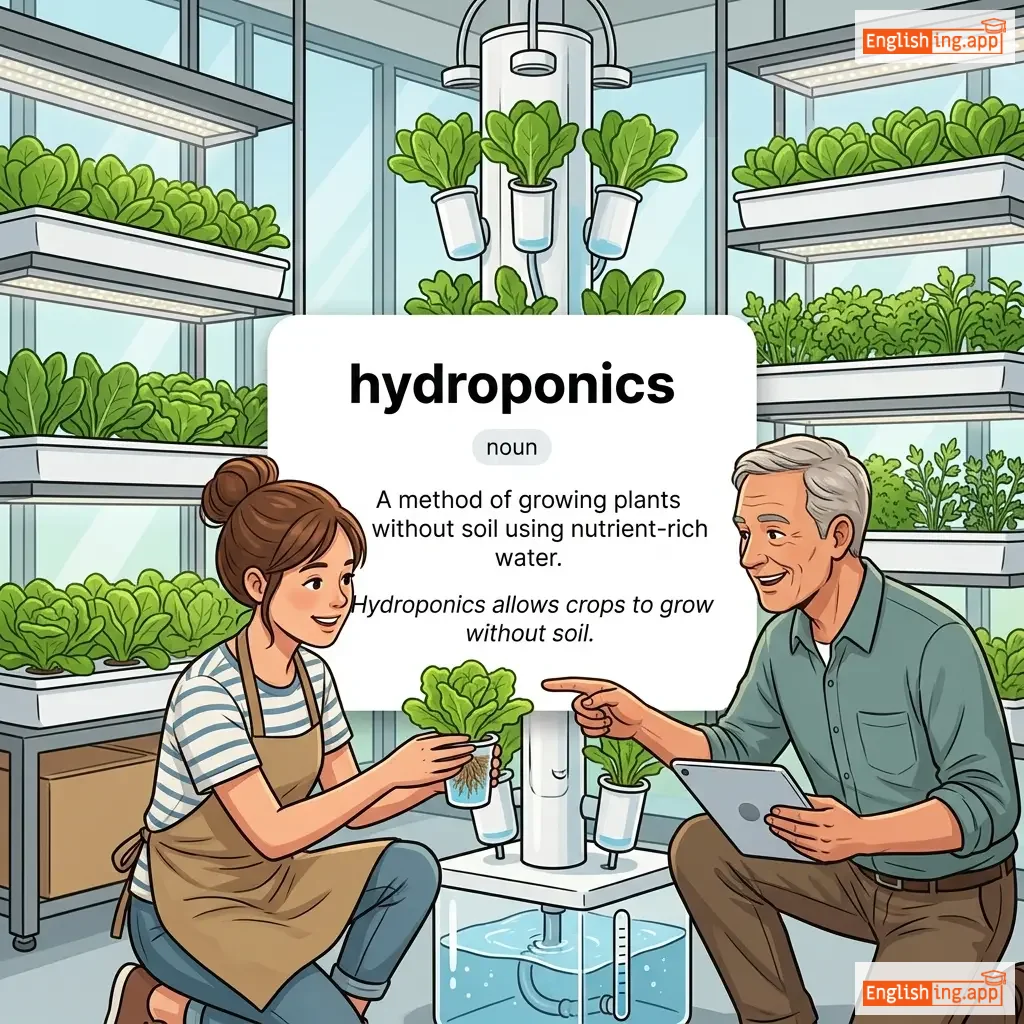
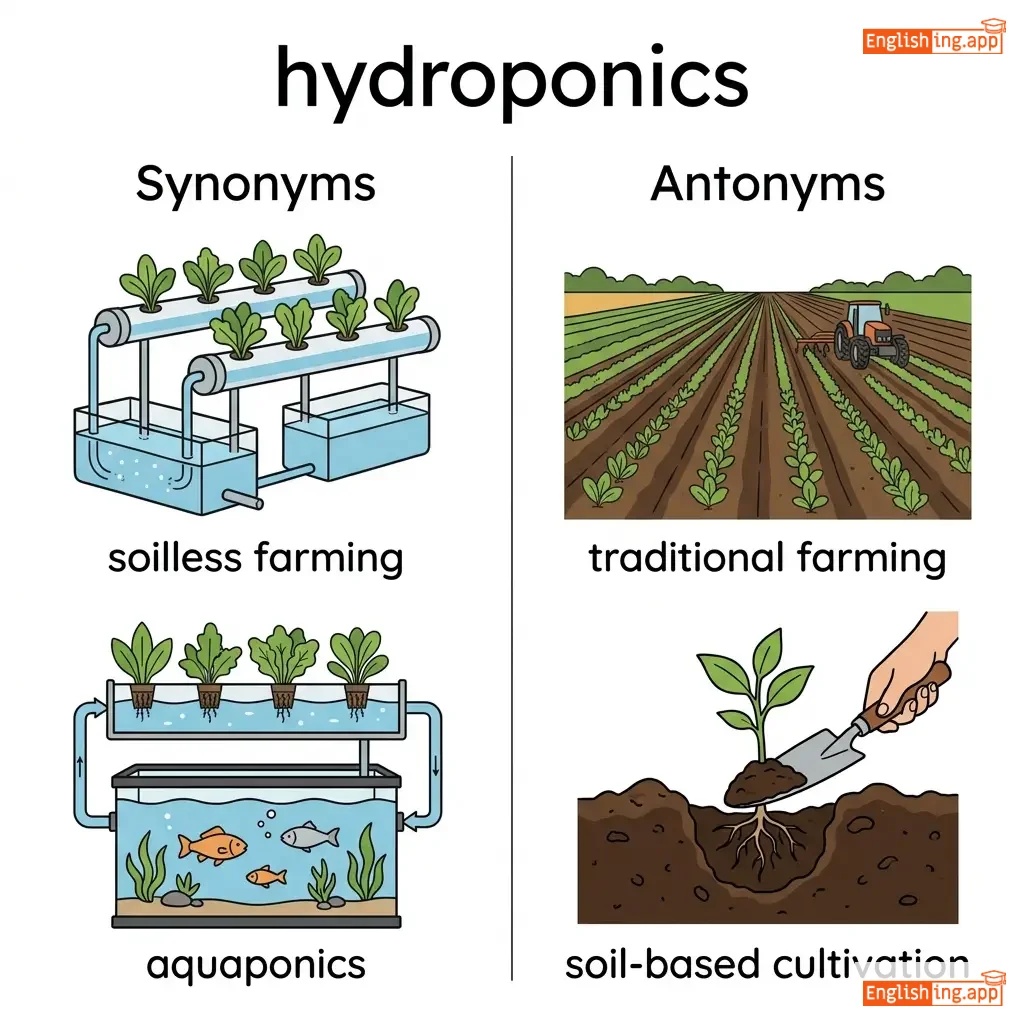
Grâce à la recherche scientifique, la genetic modification et la precision agriculture ont ouvert de nouvelles possibilités pour les agriculteurs. Dans de nombreux endroits, la hydroponics est utilisée pour produire des légumes sans sol.
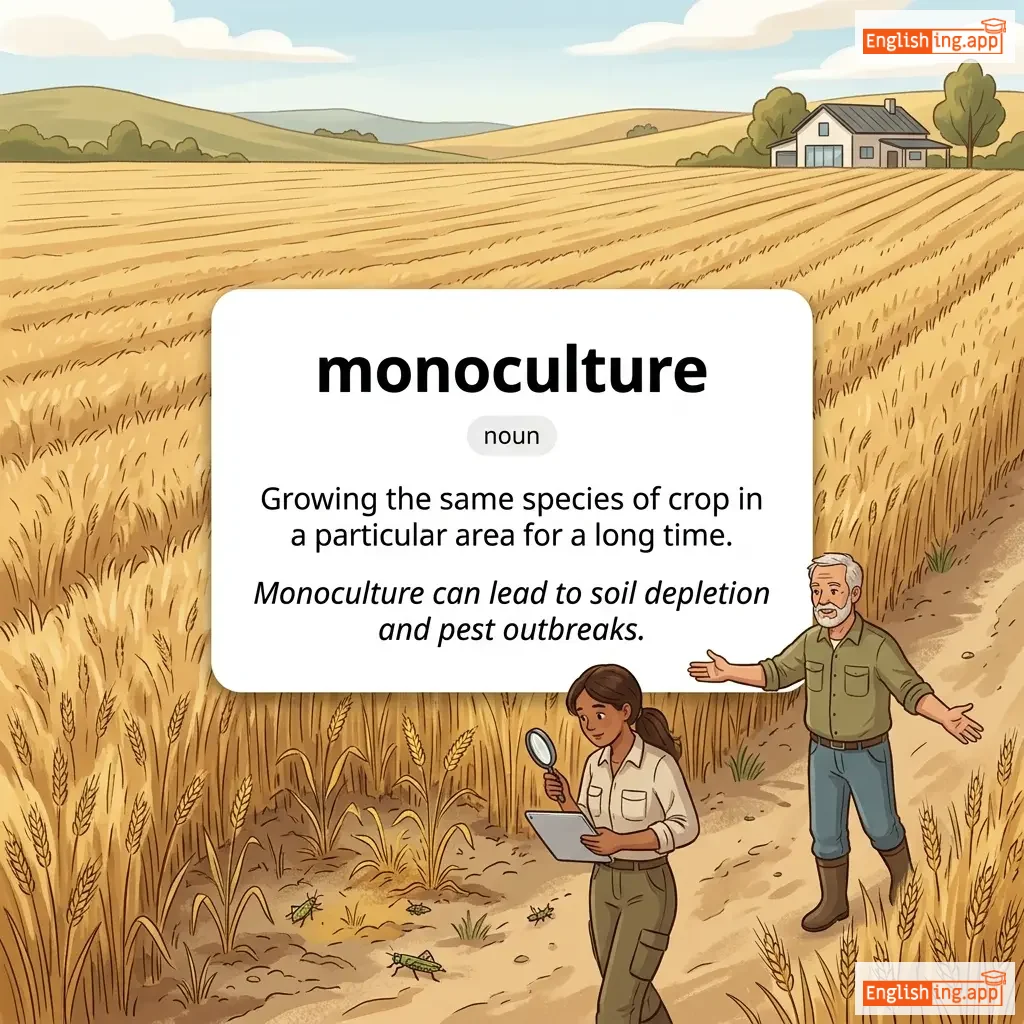
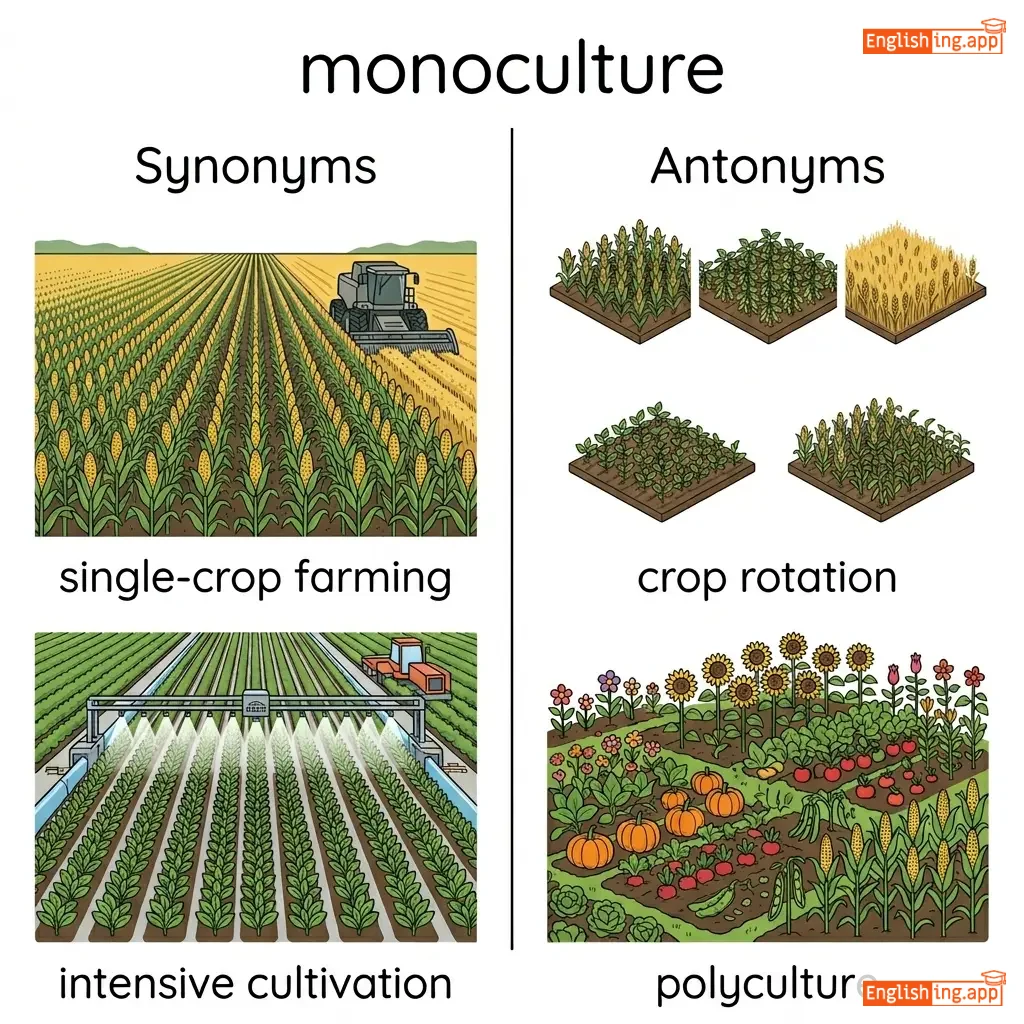
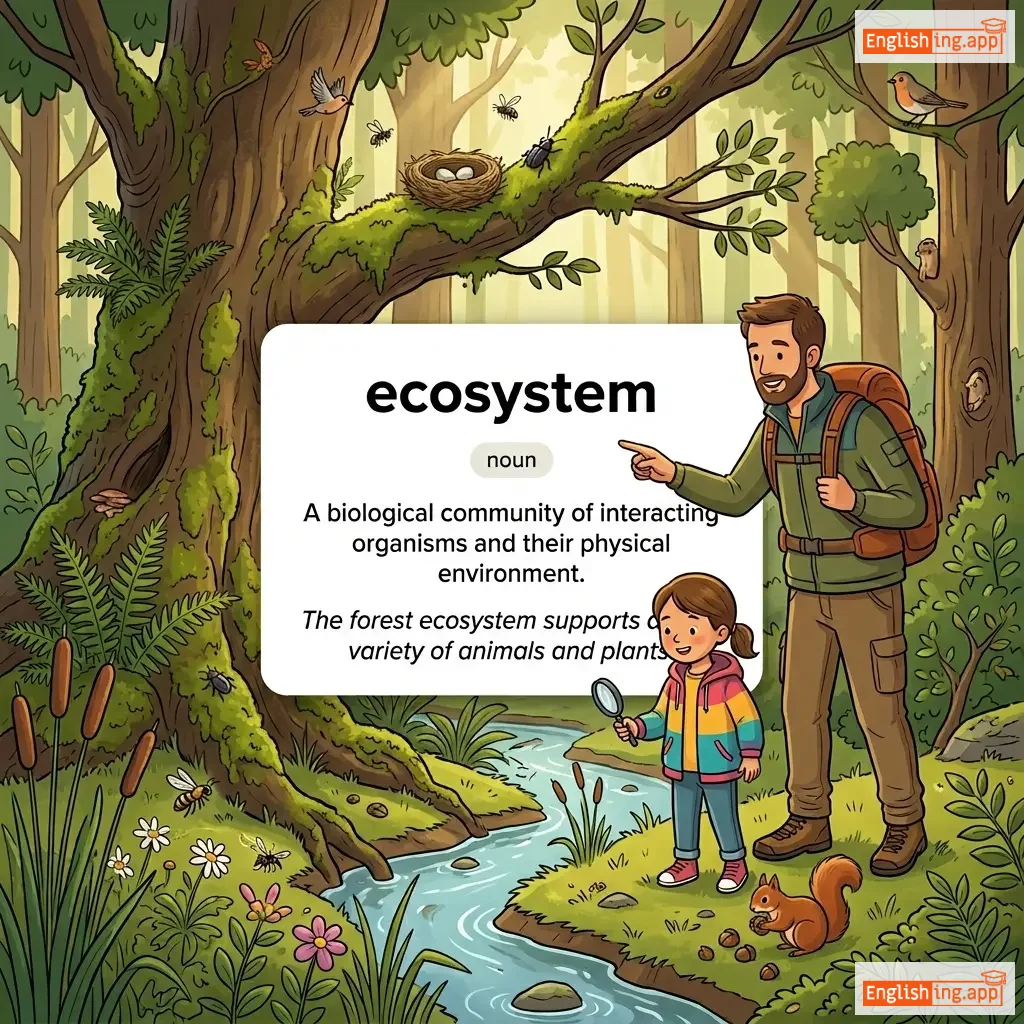
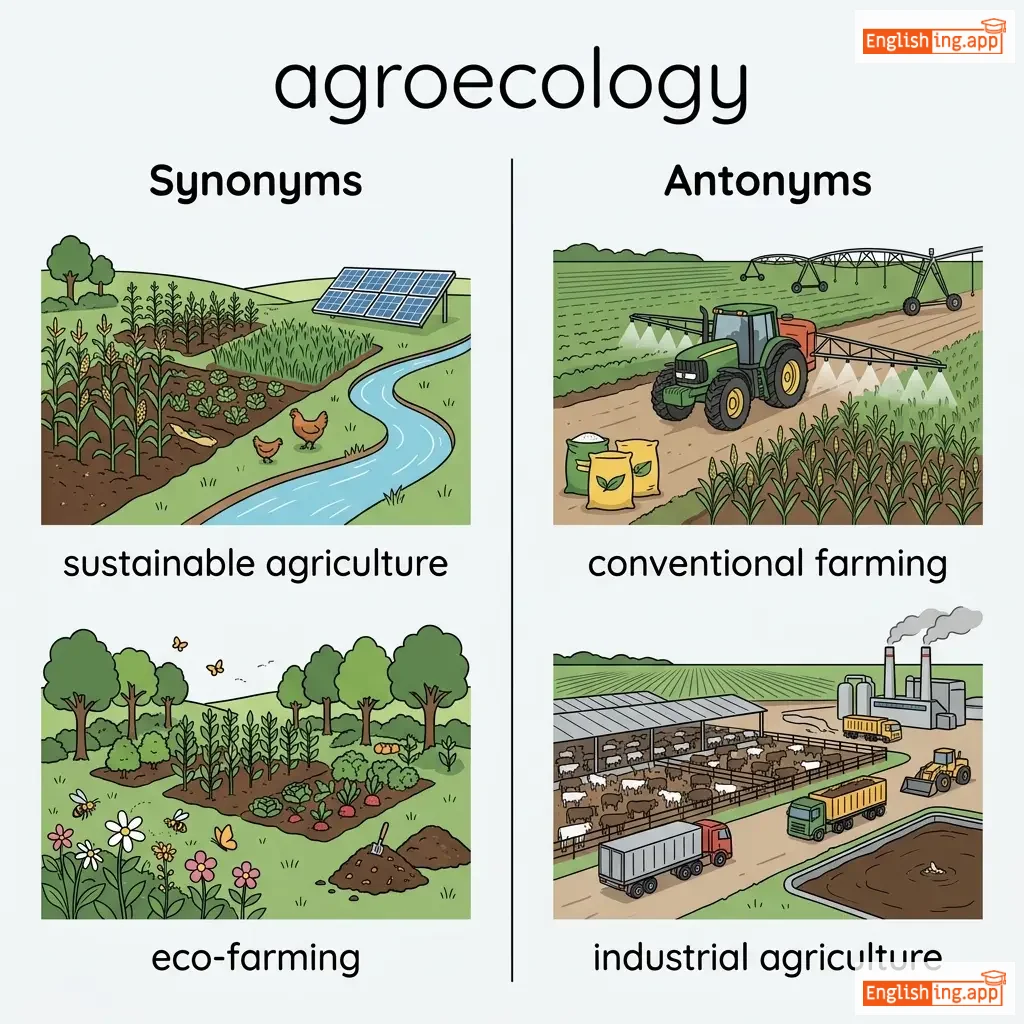
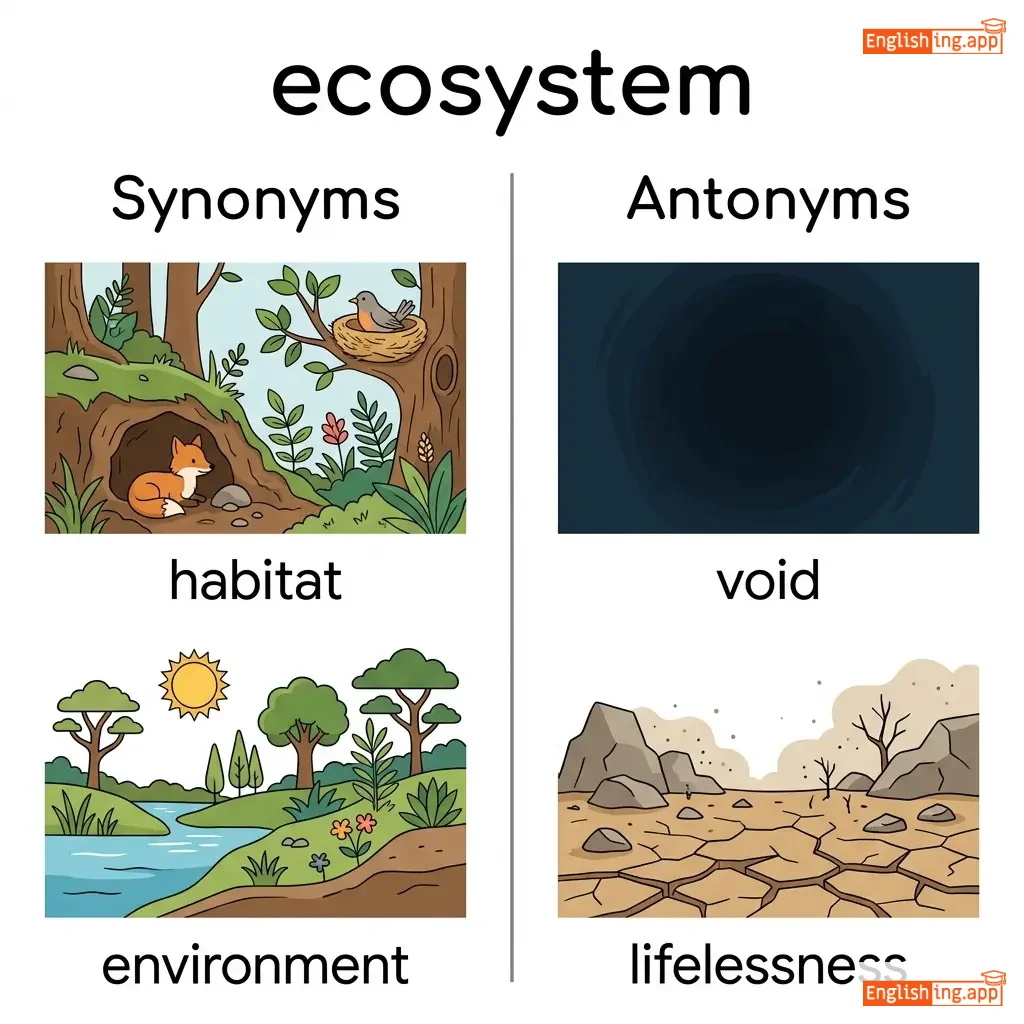
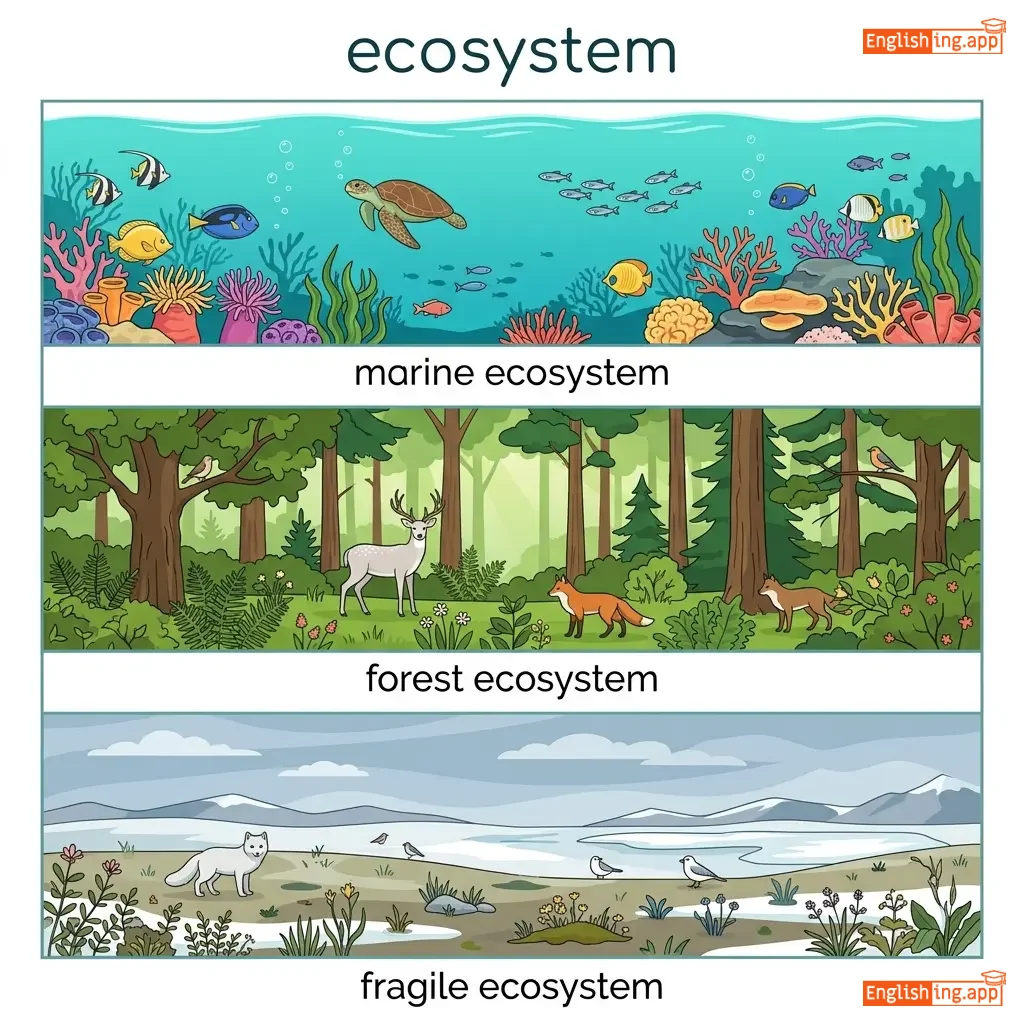
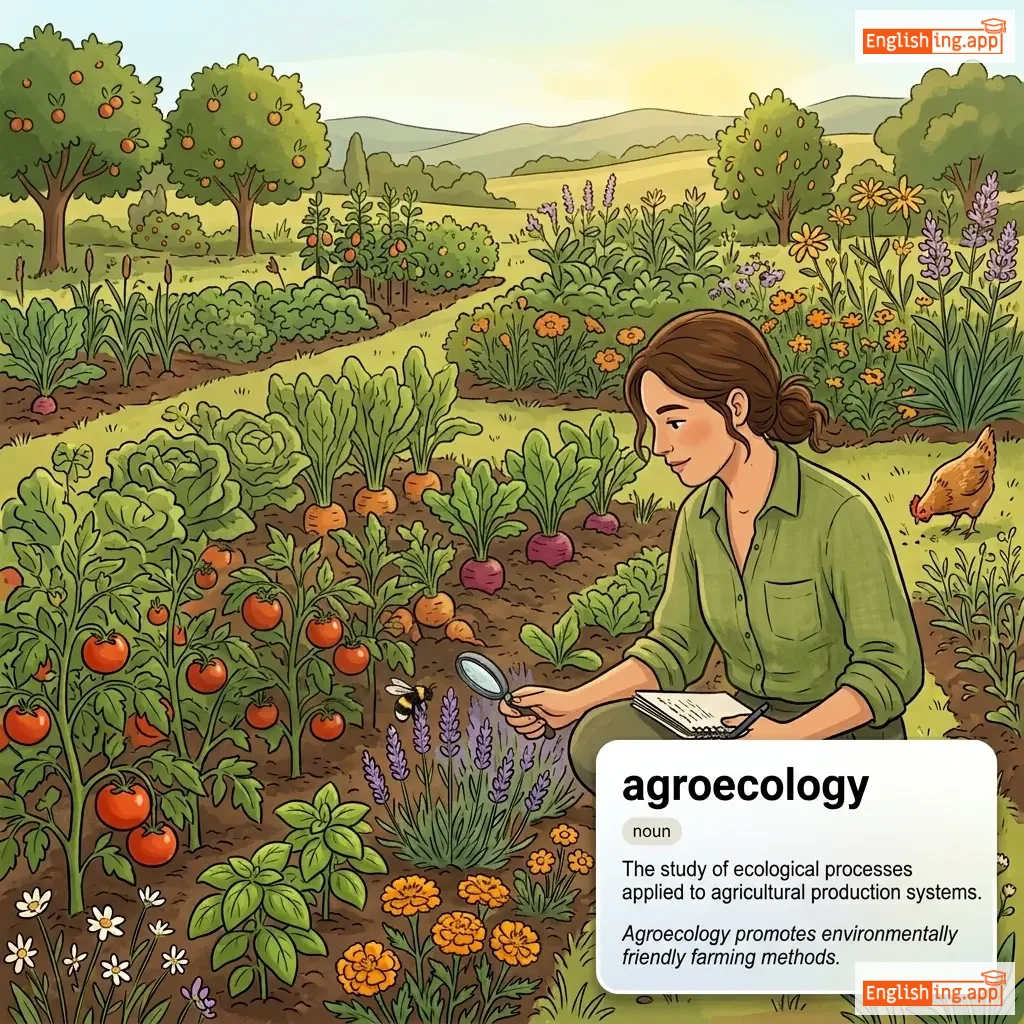
Cependant, les systèmes agricoles de monoculture augmentent le risque de destruction de l’ecosystem. Par conséquent, l’application du modèle d’agroecology est désormais essentielle pour garantir un développement durable de l’agriculture.
Message vocabulaire Pro
Passer à la version ProMessage phrases Pro
Passer à la version Pro|
Émoji
|
Mot | Images | Signification | Phrase d'Exemple | Synonymes | Antonymes |
|---|---|---|---|---|---|---|
|
#3128
⚙️
|
ˌmɛk.ə.nɪˈzeɪ.ʃən
noun
••••••
|
•••••• |
The use of machines in agriculture or industry to increase production efficiency.
••••••
|
The mechanization of agriculture increased productivity. |
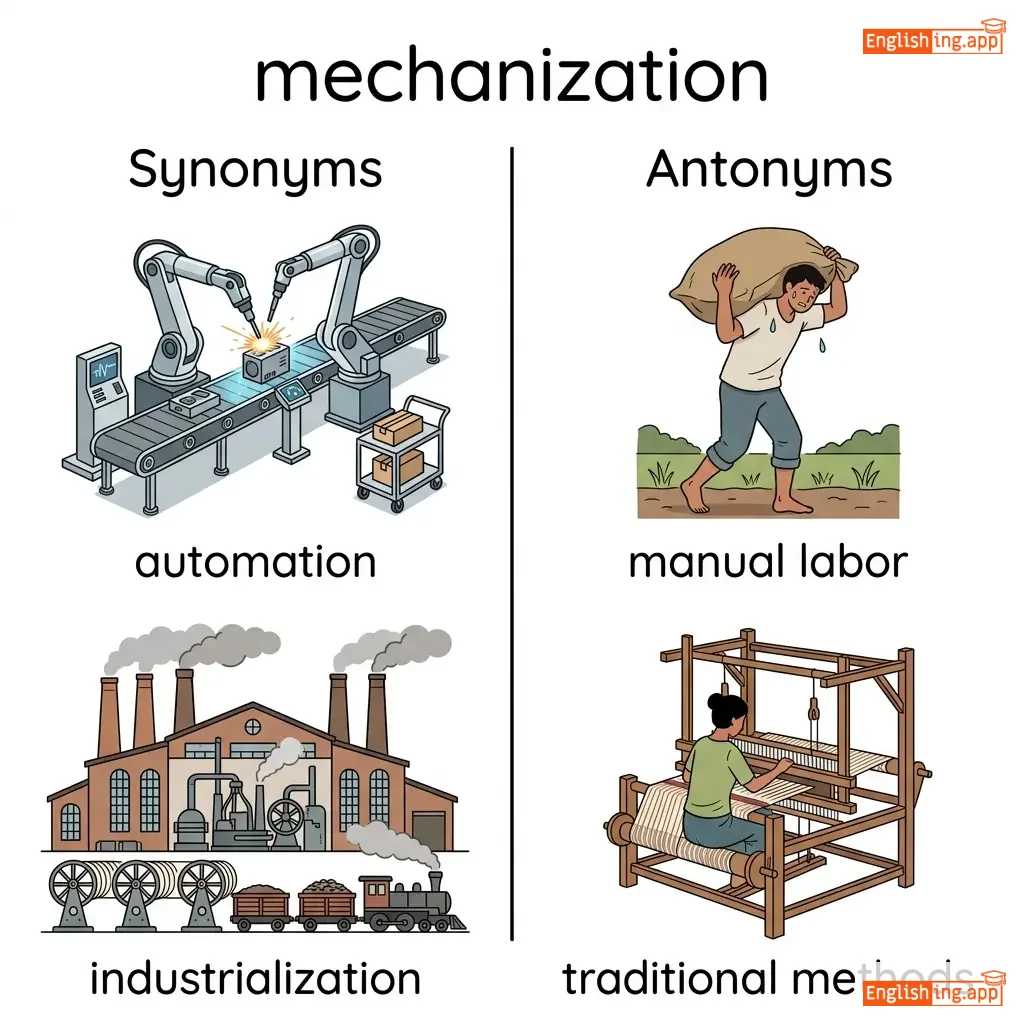
automation, industrialization, modernization
••••••
|
manual labor, traditional methods, handcraft
••••••
|
|
#3129
🌱
|
ˌkʌl.tɪˈveɪ.ʃən
noun
••••••
|
•••••• |
The practice of farming and growing crops on land.
••••••
|
Modern cultivation techniques improve crop yield. |
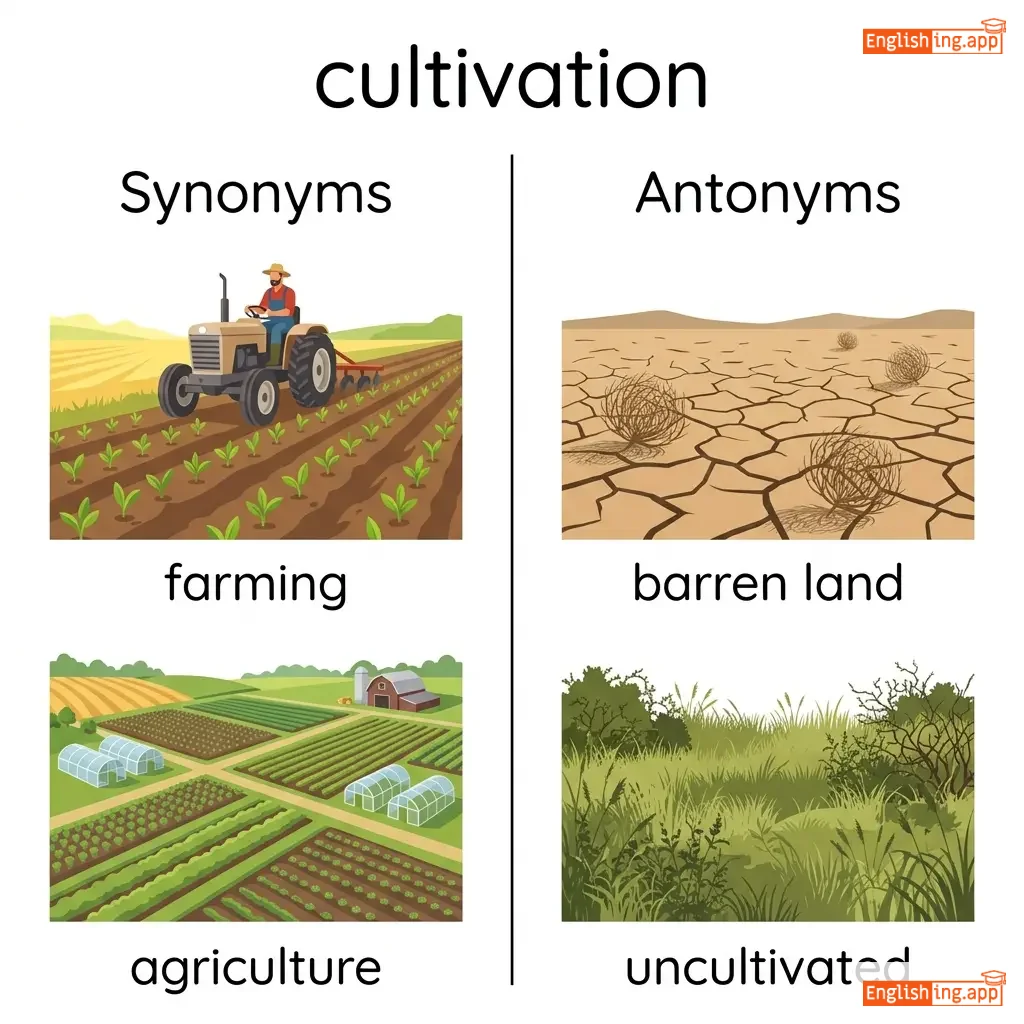
farming, agriculture, tilling
••••••
|
neglect, abandonment, barren land
••••••
|
|
#3130
♻️
|
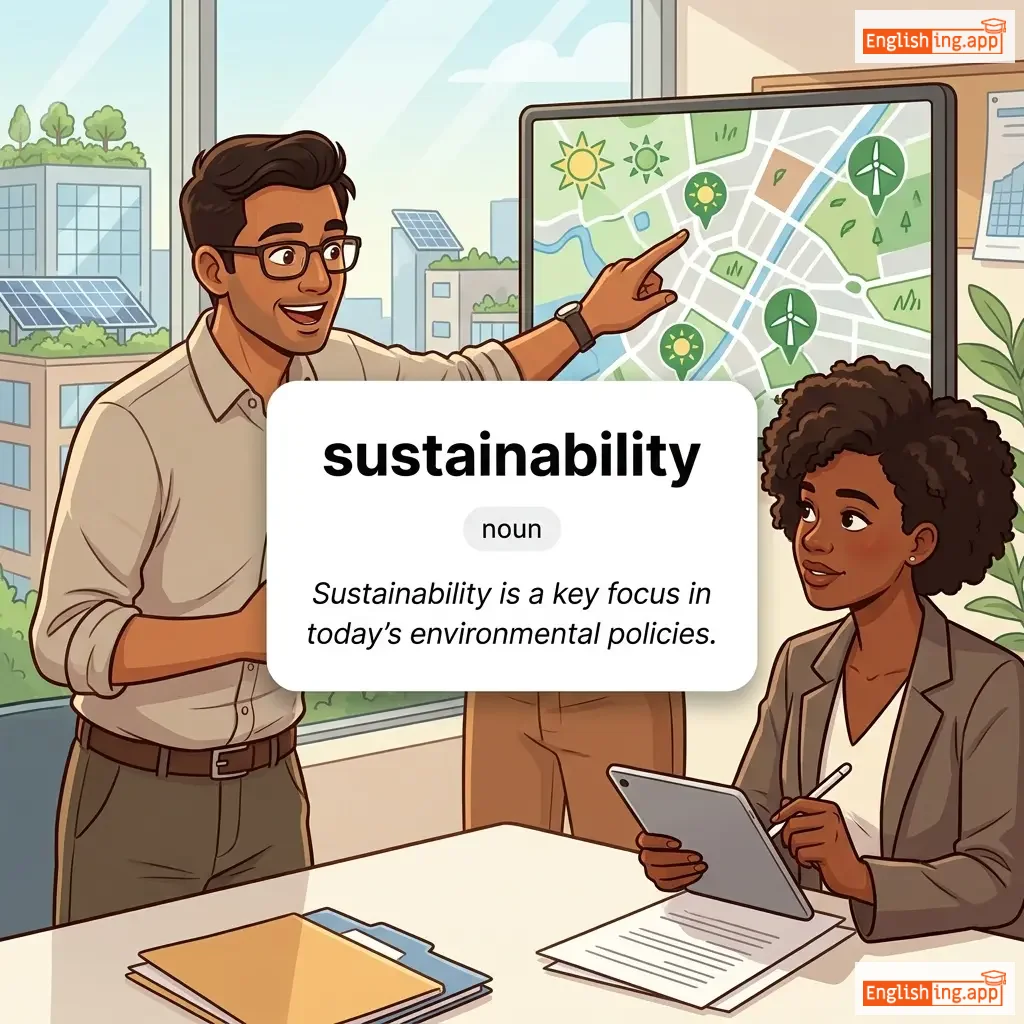
səˌsteɪ.nəˈbɪl.ə.ti
noun
••••••
|
•••••• |
The ability to maintain balance in environment, economy and society for the long term.
••••••
|
Sustainability is key to preserving natural resources. |
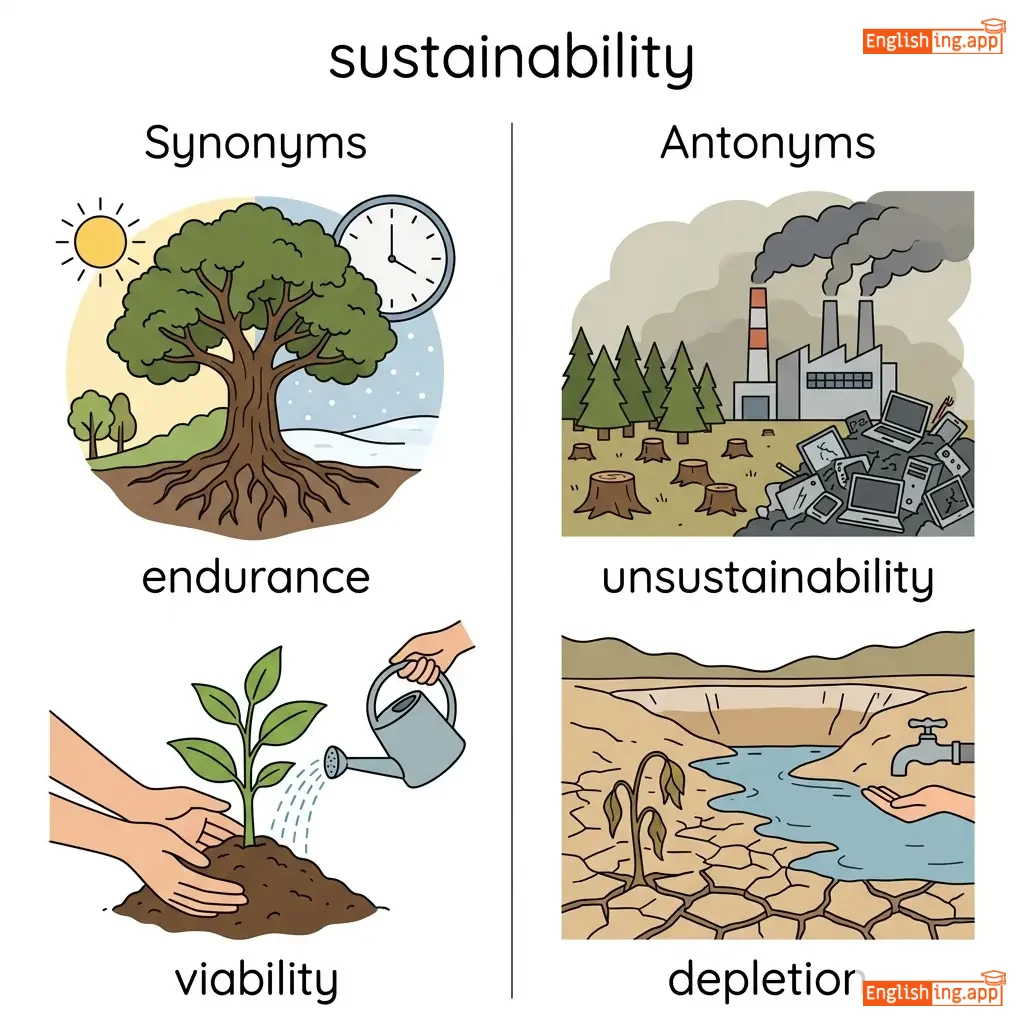
durability, eco-friendliness, long-term viability
••••••
|
unsustainability, instability, short-term growth
••••••
|
|
#3131
🌿
|
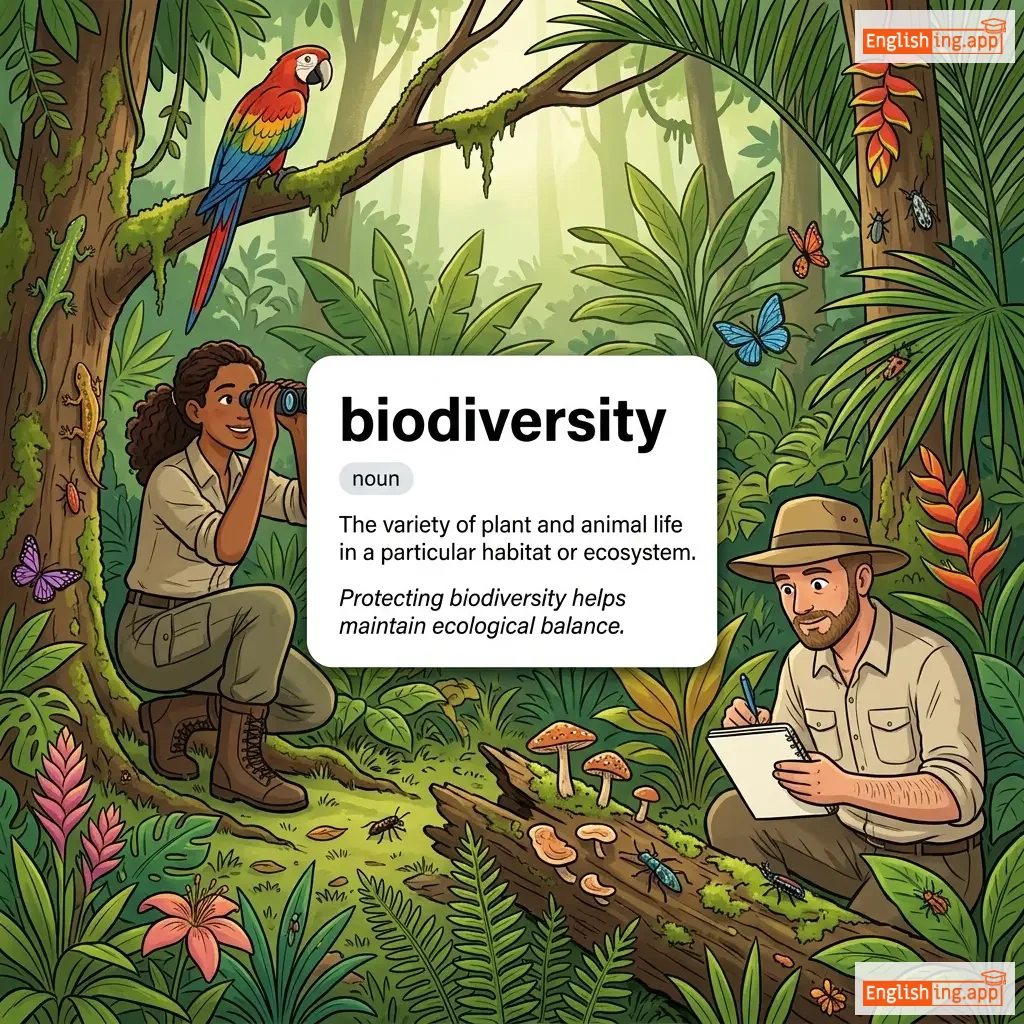
ˌbaɪ.oʊ.daɪˈvɜː.sə.ti
noun
••••••
|
•••••• |
The presence of different species of plants and animals in a particular region.
••••••
|
Protecting biodiversity is essential for ecological balance. |
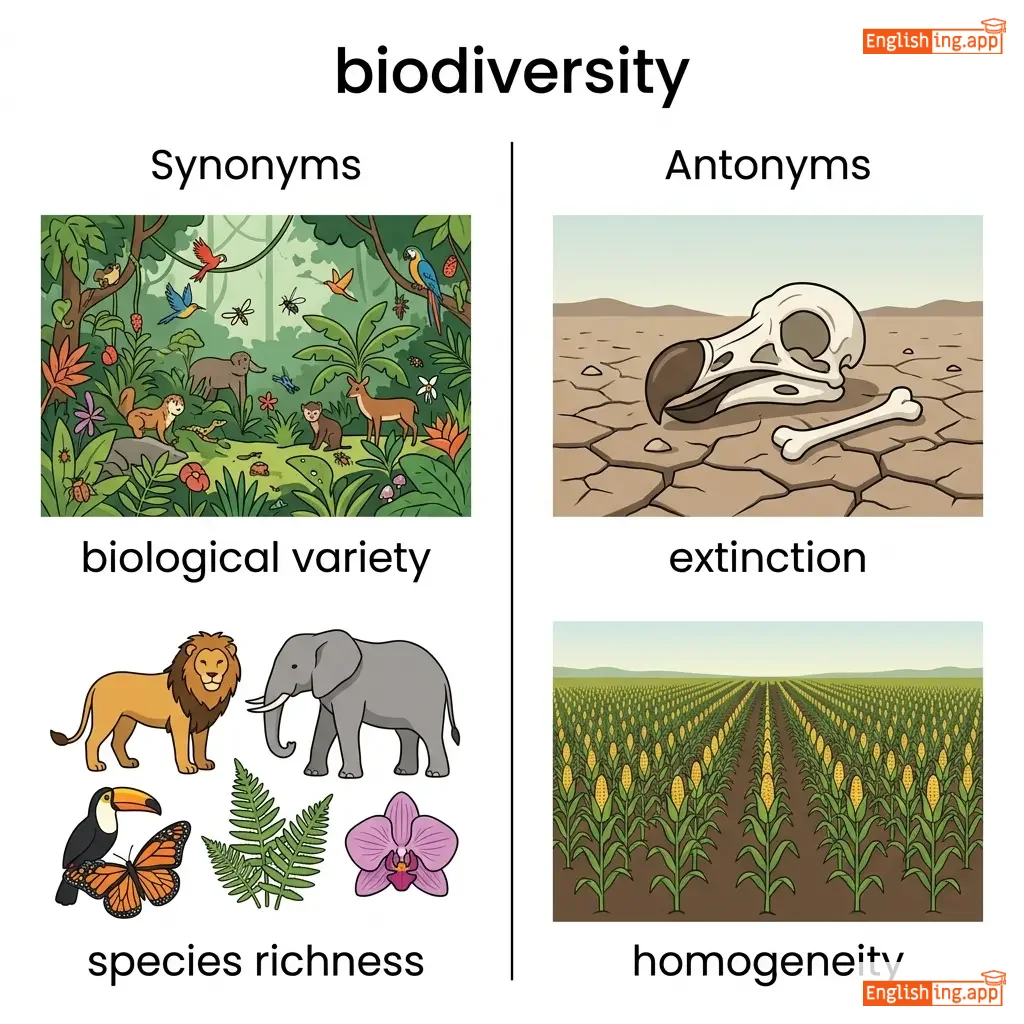
ecosystem variety, species richness, genetic diversity
••••••
|
monoculture, uniformity, species loss
••••••
|
|
#3132
🚿
|
ˌɪr.ɪˈɡeɪ.ʃən
noun
••••••
|
•••••• |
The controlled supply of water to land for agricultural production.
••••••
|
Irrigation helps increase agricultural productivity. |
watering, hydration, flooding
••••••
|
drought, dehydration, dryness
••••••
|
|
#3133
🌾
|
ˌfɜːr.tɪ.laɪˈzeɪ.ʃən
noun
••••••
|
•••••• |
The process of adding nutrients to soil to increase crop productivity.
••••••
|
Organic fertilization enhances soil health. |
soil enrichment, composting, manuring
••••••
|
soil depletion, erosion, nutrient loss
••••••
|
|
#3134
📈
|
jiːld
noun/verb
••••••
|
•••••• |
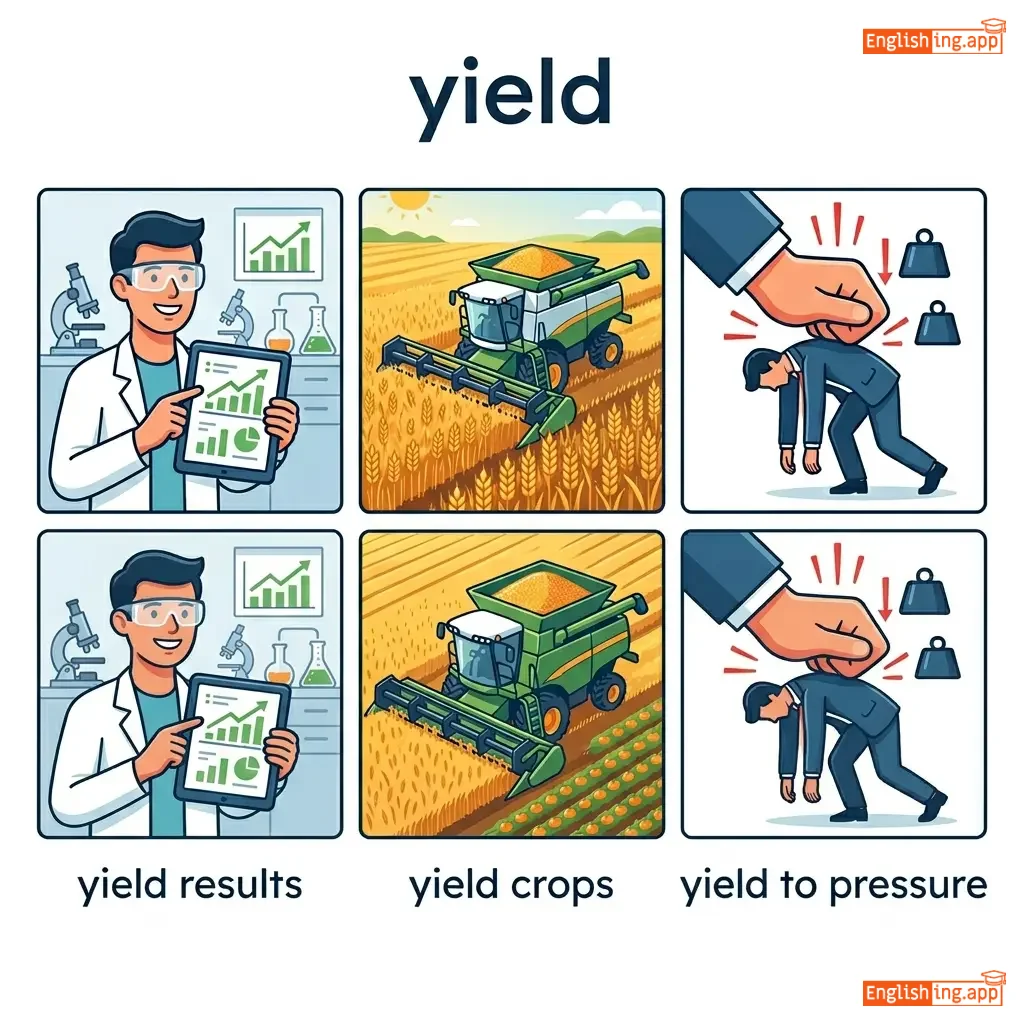
The amount of agricultural or industrial products produced in a specific time.
••••••
|
The farm's wheat yield increased due to better irrigation. |
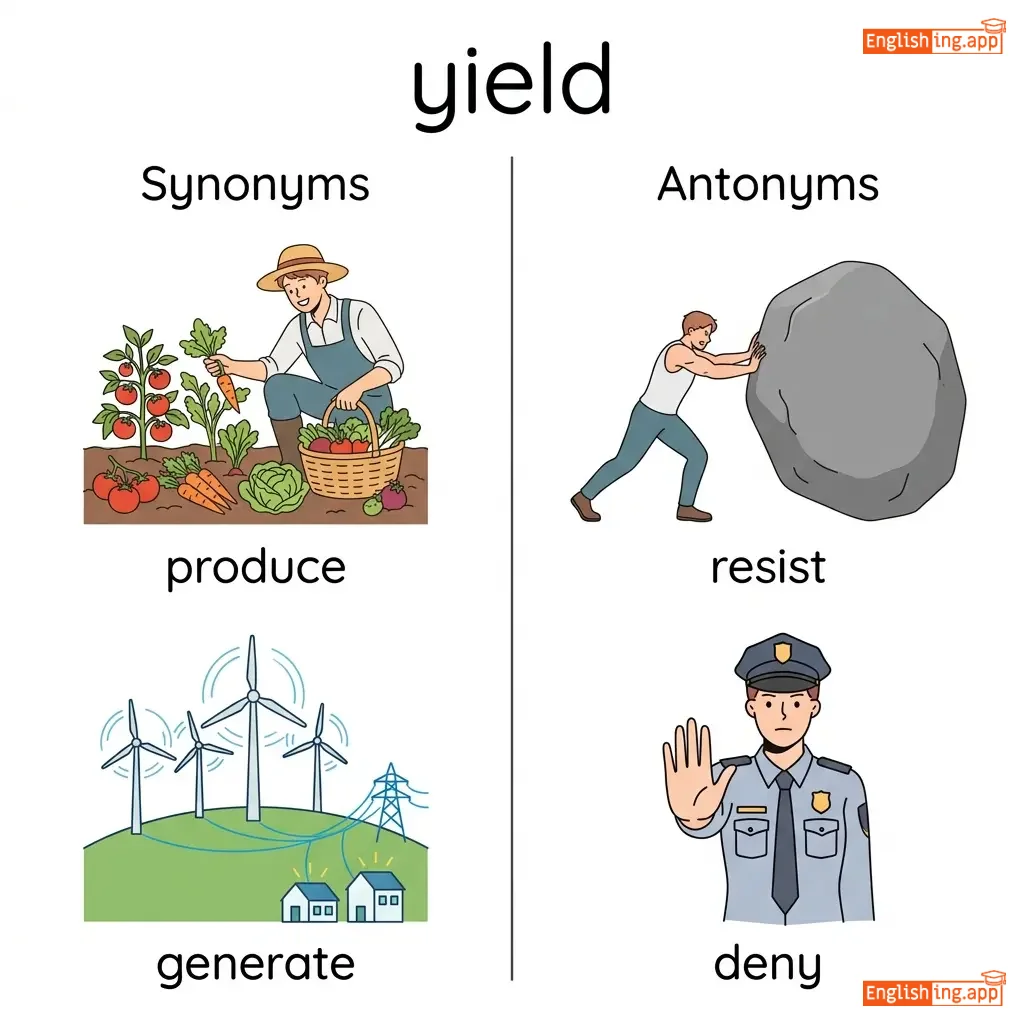
production, harvest, output
••••••
|
loss, deficiency, reduction
••••••
|
|
#3135
⚡
|
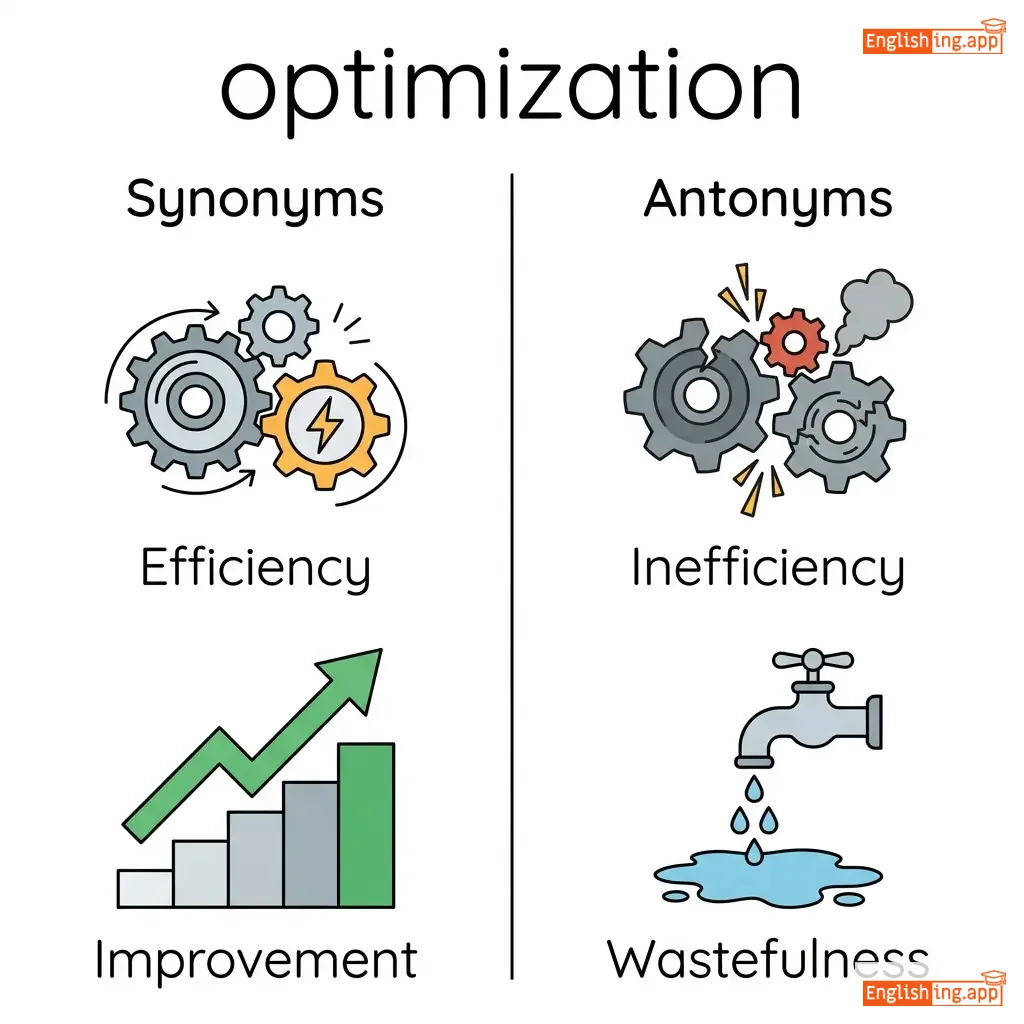
ˌɒp.tɪ.mɪˈzeɪ.ʃən
noun
••••••
|
•••••• |
The process of making something work in the best possible way or achieving maximum efficiency.
••••••
|
The company focused on optimization of resources to maximize profits. |
efficiency, improvement, refinement
••••••
|
inefficiency, wastefulness, mismanagement
••••••
|
|
#3136
🏭
|
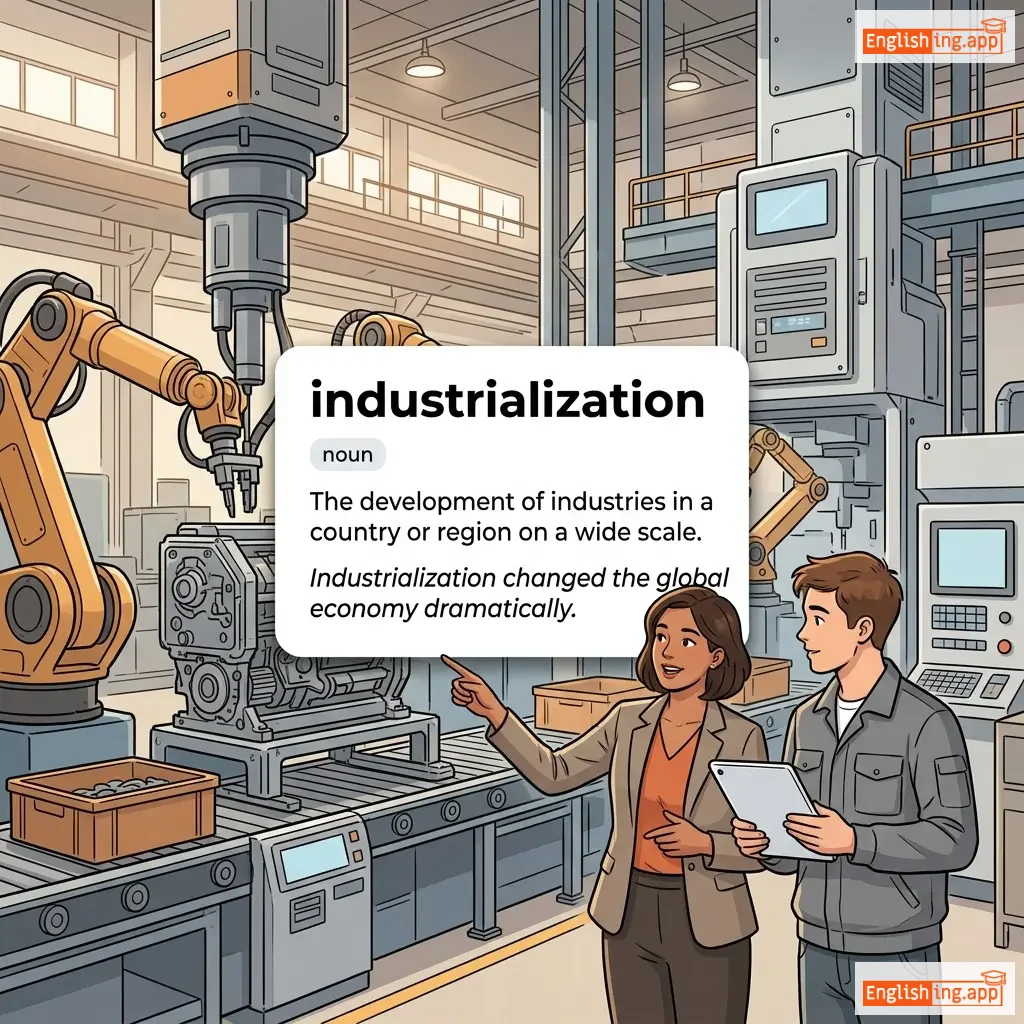
ɪnˌdʌs.tri.ə.laɪˈzeɪ.ʃən
noun
••••••
|
•••••• |
The development of manufacturing sectors for economic growth.
••••••
|
Rapid industrialization transformed rural economies. |
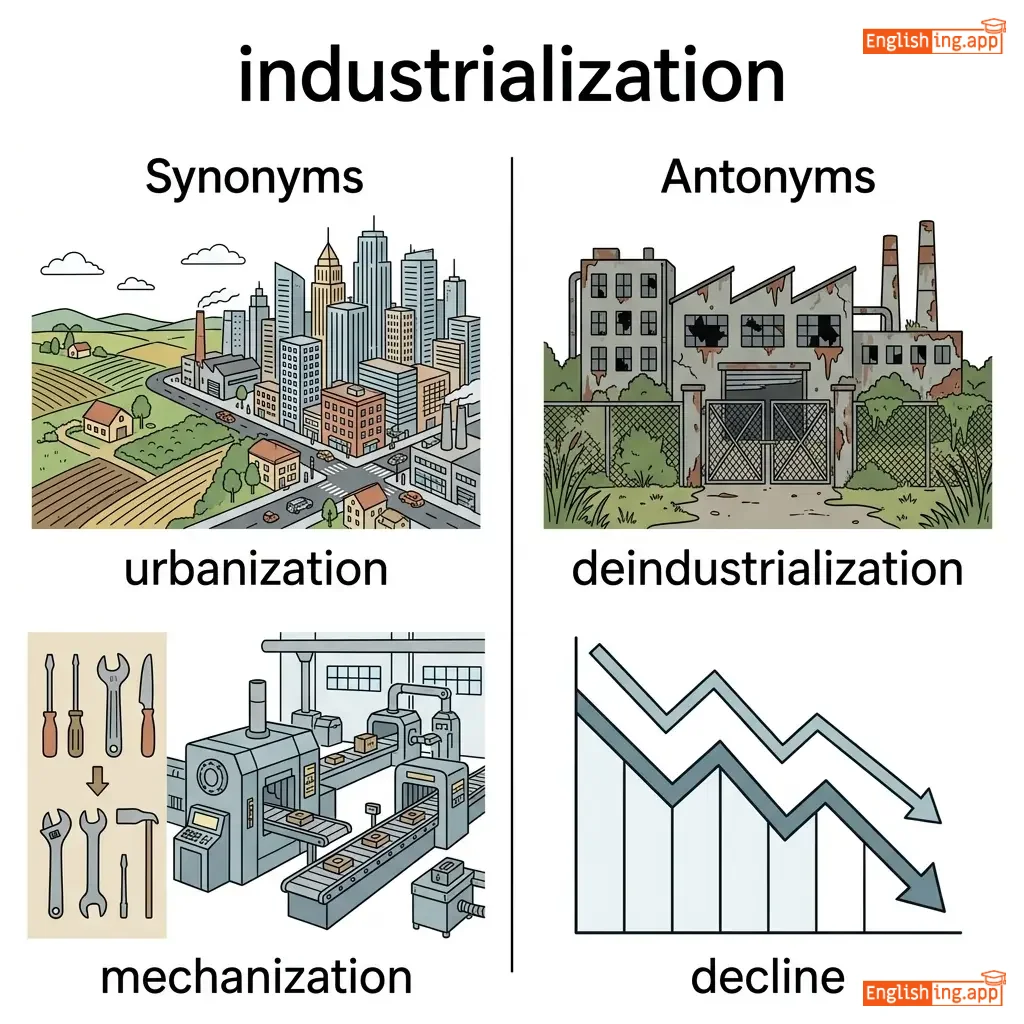
manufacturing growth, urbanization, mechanization
••••••
|
deindustrialization, agrarianism, underdevelopment
••••••
|
|
#3137
🌪️
|
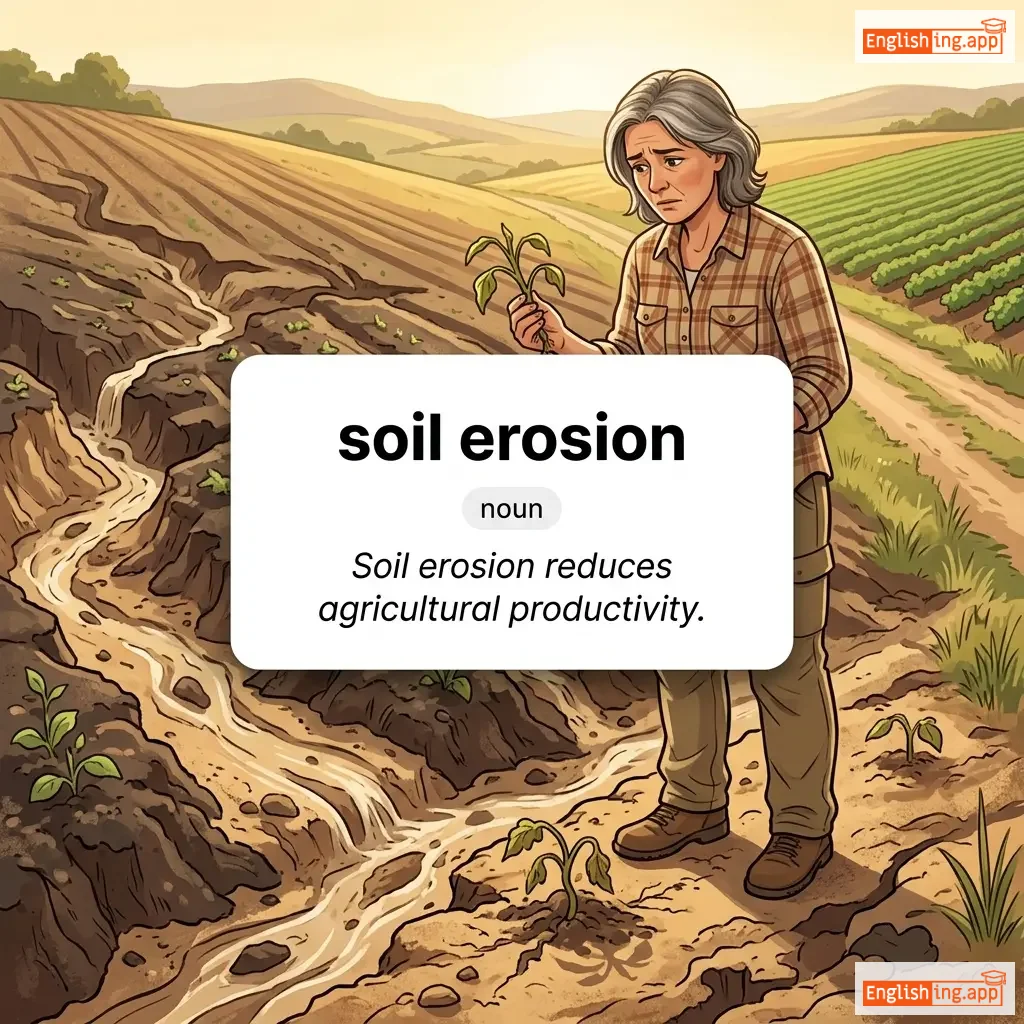
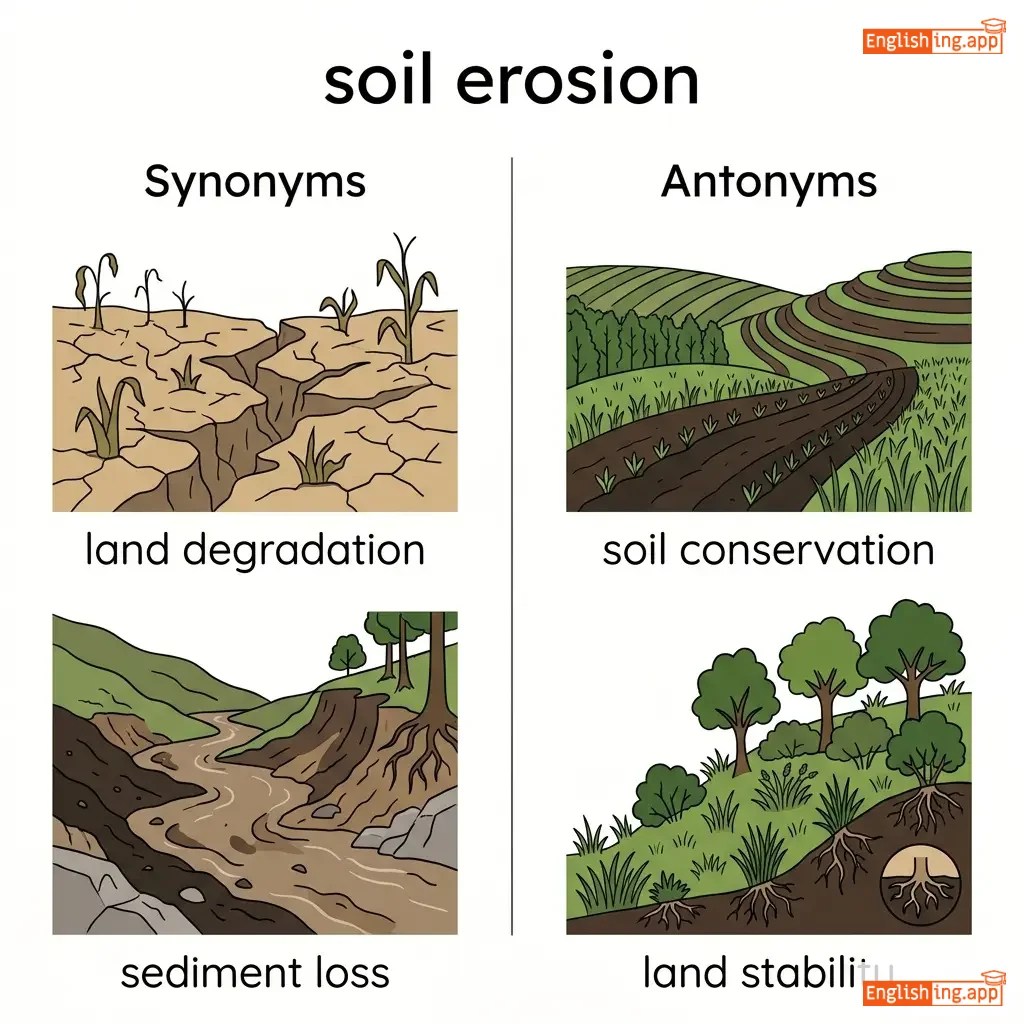
sɔɪl ɪˈroʊ.ʒən
noun
••••••
|
•••••• |
The damage to the topsoil due to wind, water or agricultural activities.
••••••
|
Deforestation accelerates soil erosion, reducing agricultural productivity. |
land degradation, soil loss, weathering
••••••
|
soil conservation, land stability, fertility enhancement
••••••
|
|
#3138
📉
|
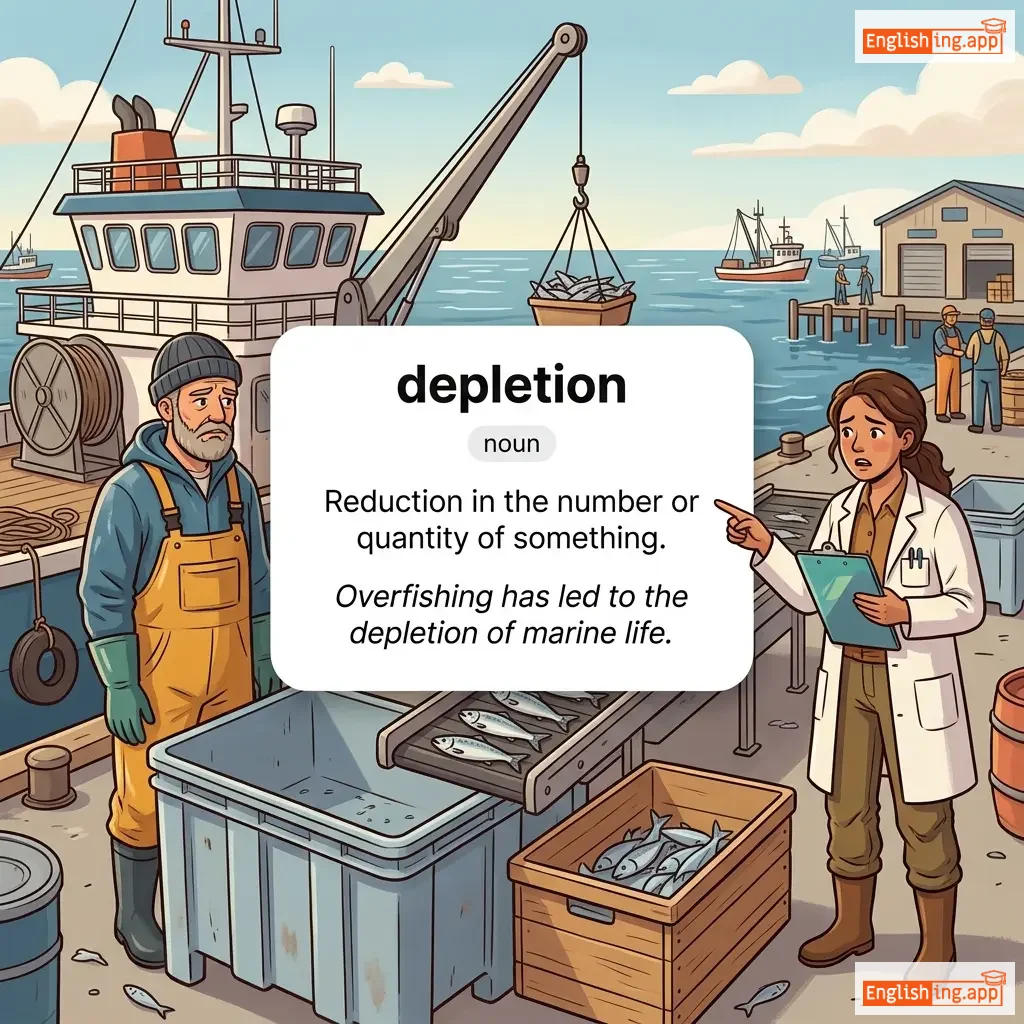
dɪˈpliː.ʃən
noun
••••••
|
•••••• |
The gradual reduction or exhaustion of a resource or substance.
••••••
|
Overuse of groundwater leads to depletion of water resources. |
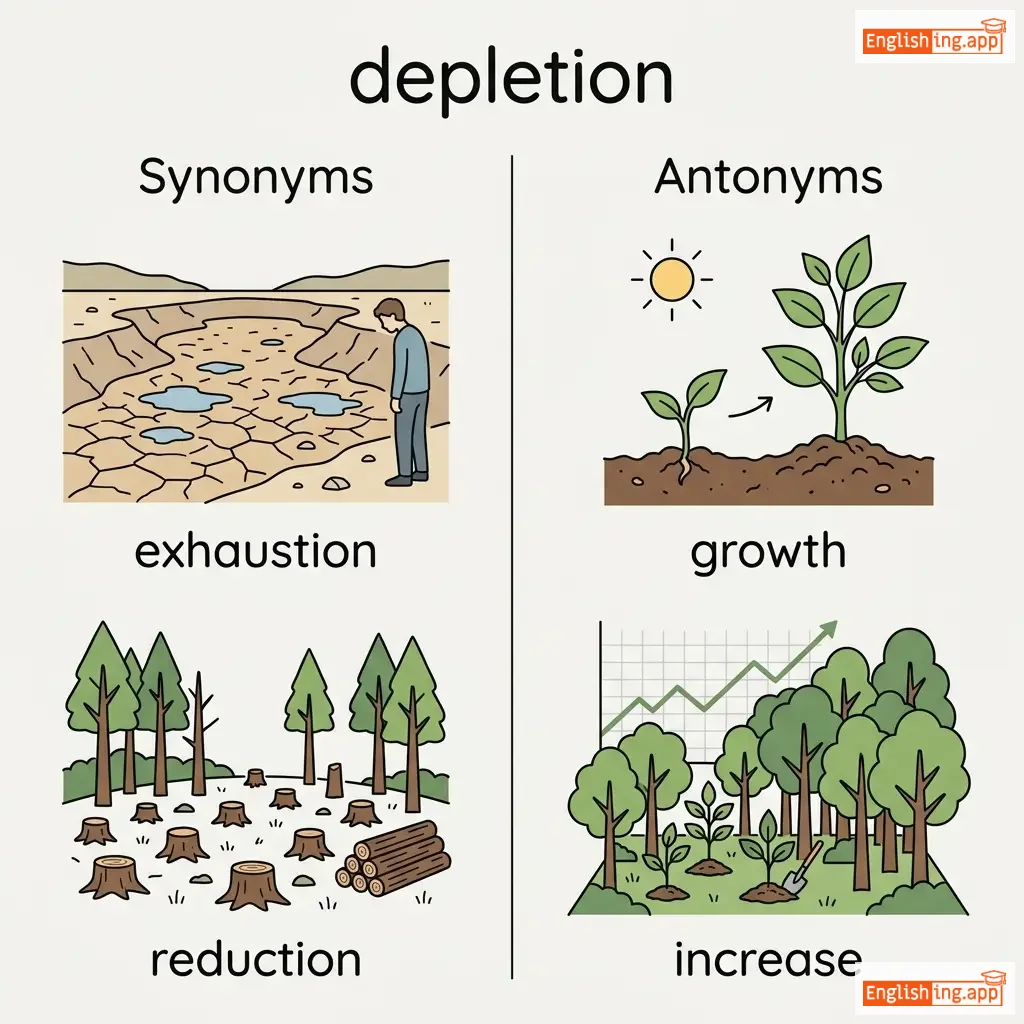
exhaustion, reduction, decline
••••••
|
growth, increase, abundance
••••••
|
|
#3139
🔄
|
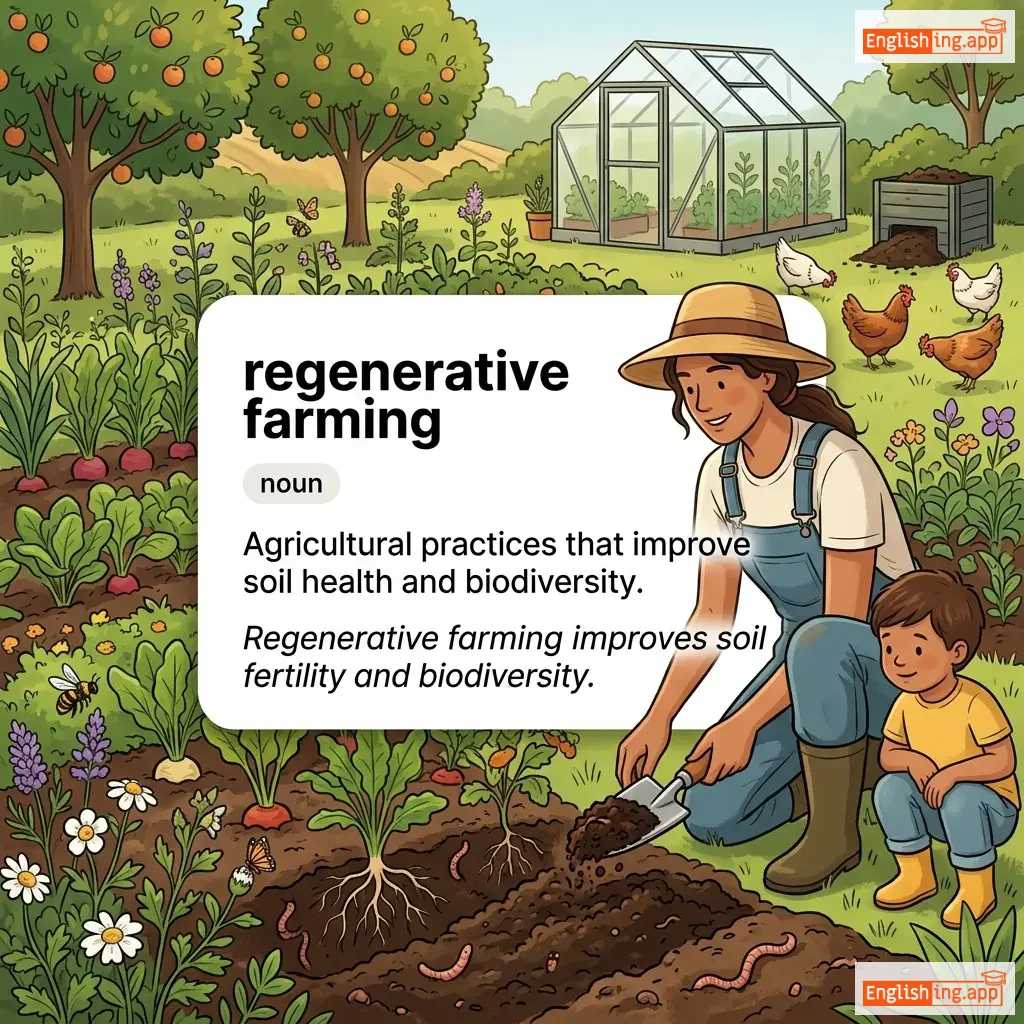
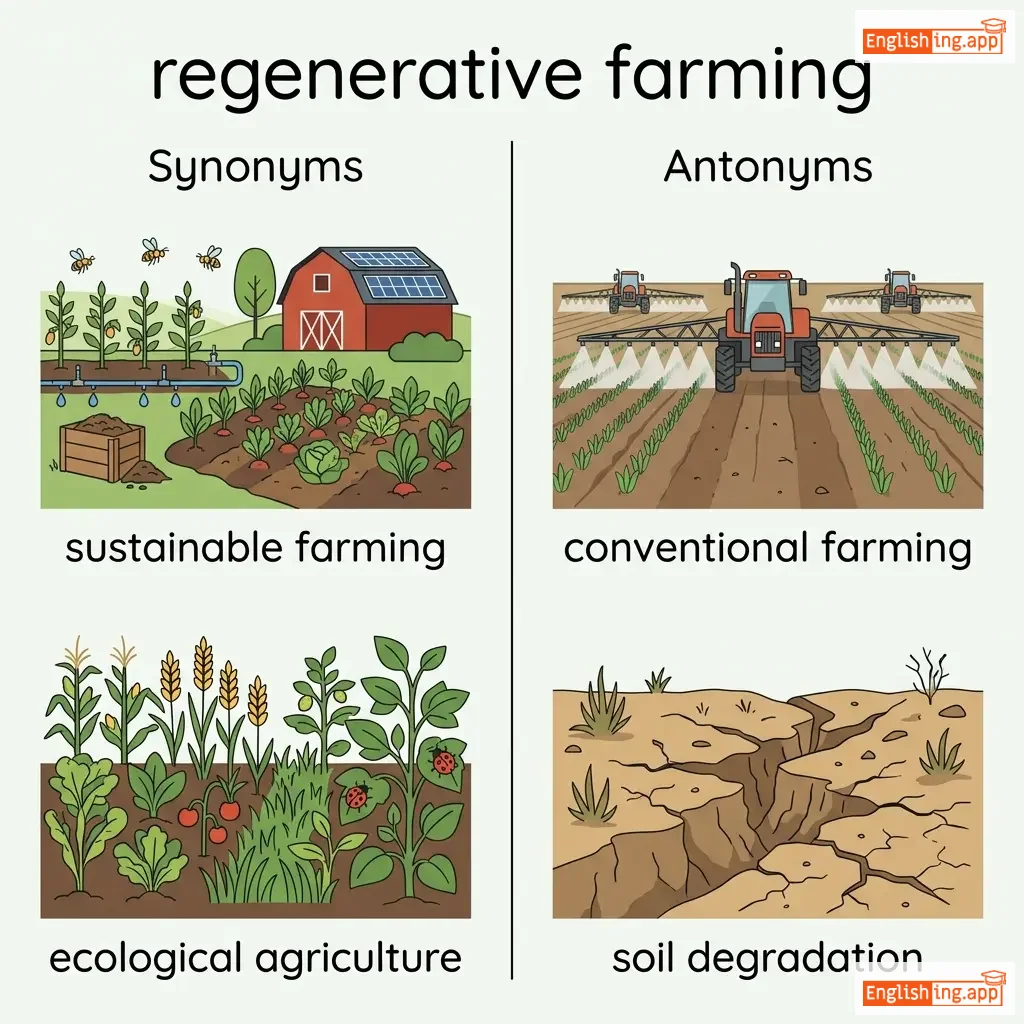
rɪˈdʒɛn.ər.ə.tɪv ˈfɑːr.mɪŋ
noun
••••••
|
•••••• |
Agricultural practices that improve soil health and biodiversity.
••••••
|
Regenerative farming improves soil fertility and biodiversity. |
sustainable farming, ecological agriculture, soil restoration
••••••
|
conventional farming, soil degradation, monoculture
••••••
|
|
#3140
🌱
|
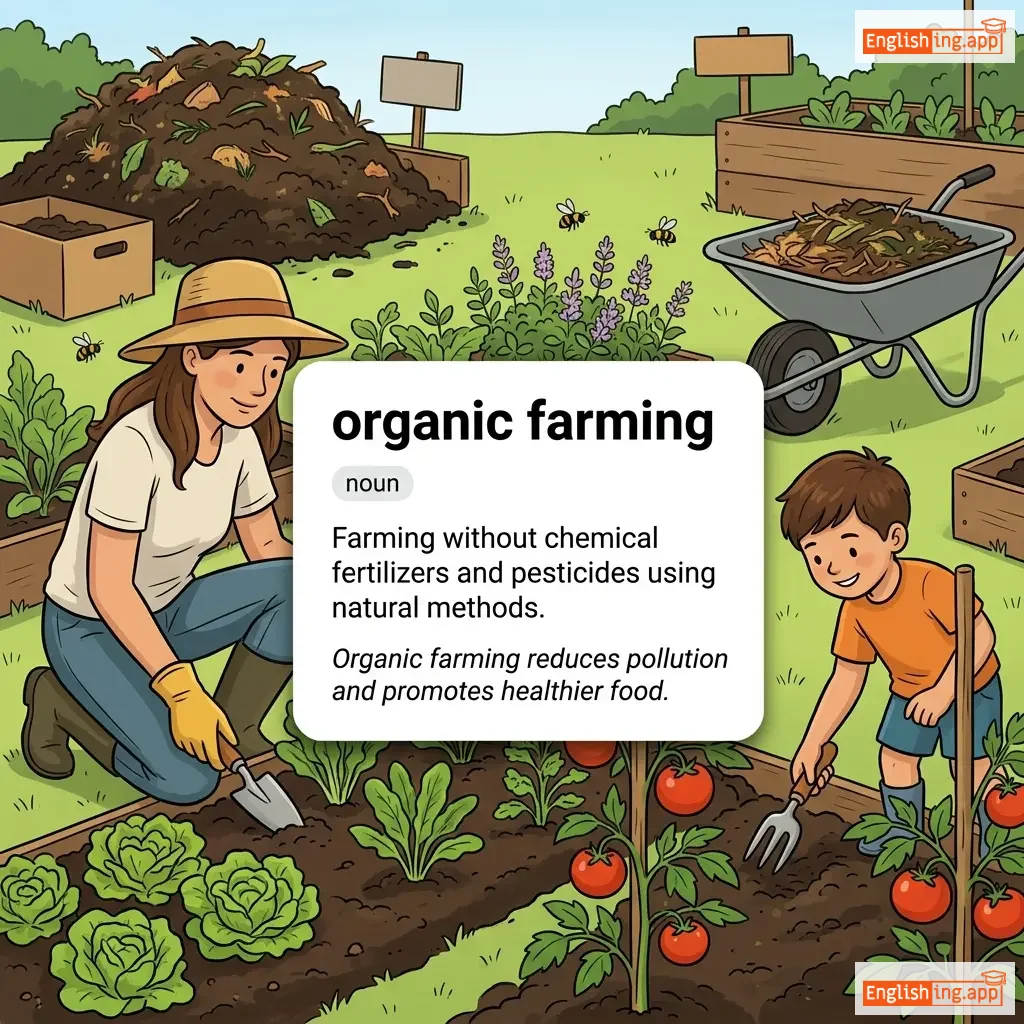
ˈɔːr.ɡə.nɪk ˈfɑːr.mɪŋ
noun
••••••
|
•••••• |
Farming without chemical fertilizers and pesticides using natural methods.
••••••
|
Organic farming reduces pollution and promotes healthier food. |
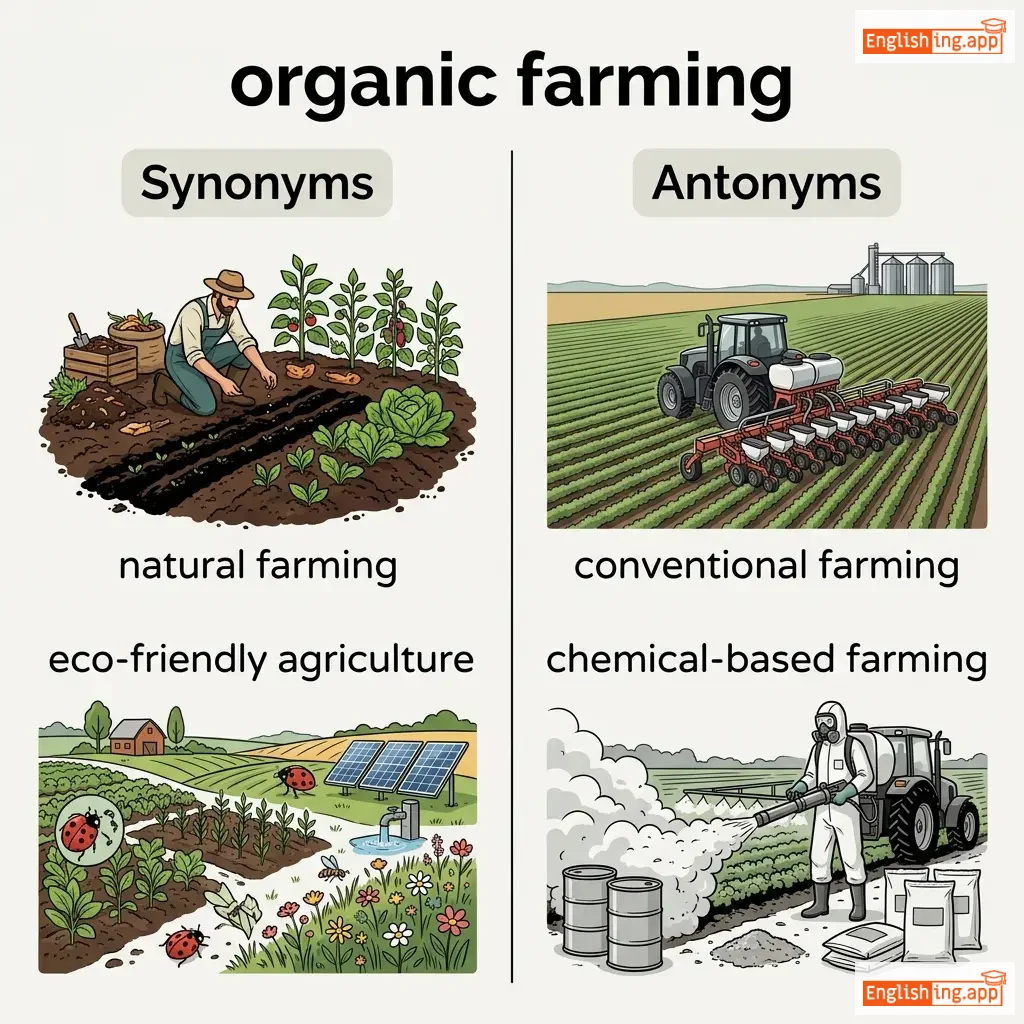
natural farming, eco-friendly agriculture, sustainable cultivation
••••••
|
conventional farming, chemical-based farming, GMO farming
••••••
|
|
#3141
🧬
|
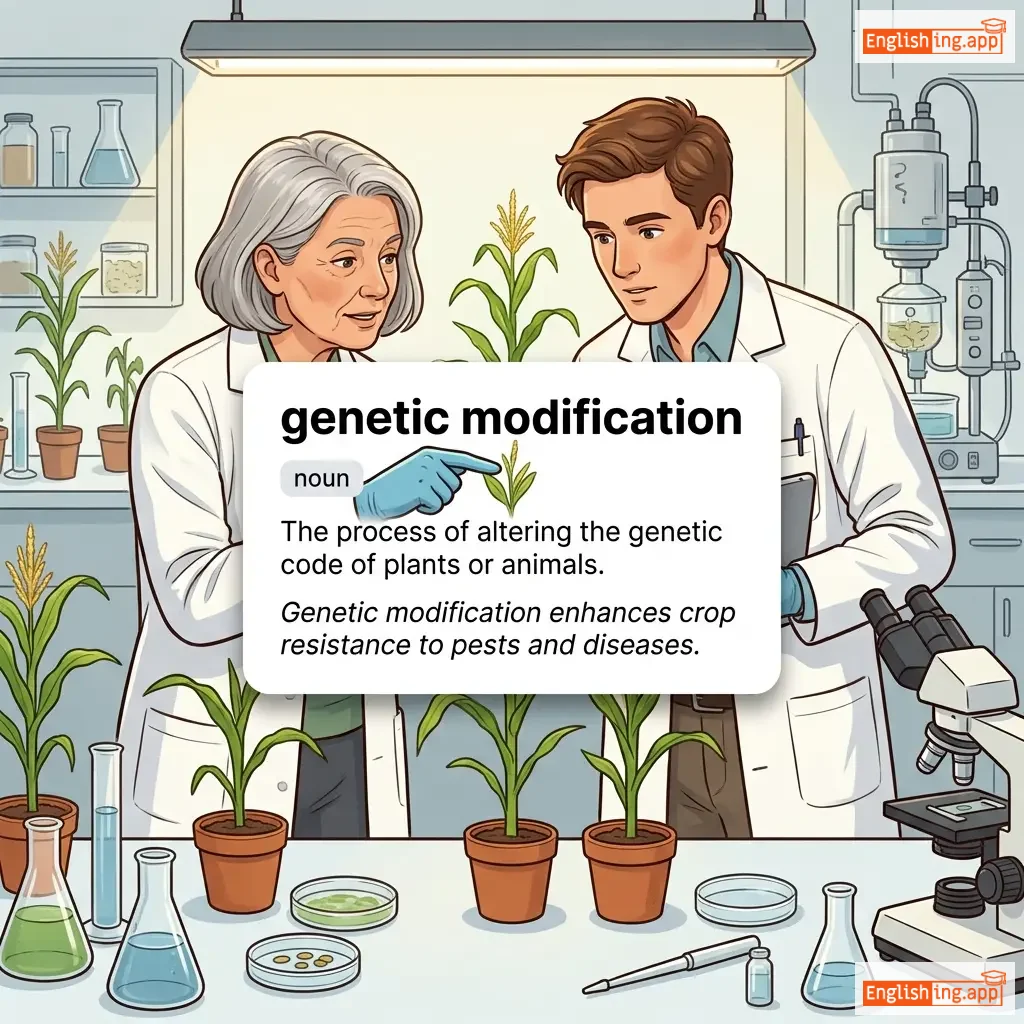
dʒəˈnɛt.ɪk ˌmɒd.ɪ.fɪˈkeɪ.ʃən
noun
••••••
|
•••••• |
The process of altering the genetic code of plants or animals.
••••••
|
Genetic modification enhances crop resistance to pests and diseases. |
biotechnology, genetic engineering, GMOs
••••••
|
natural selection, traditional breeding, unaltered organisms
••••••
|
|
#3142
🎯
|
prɪˈsɪʒ.ən ˈæɡ.rɪ.kʌl.tʃər
noun
••••••
|
•••••• |
The technique of conducting agricultural work using advanced technology.
••••••
|
Precision agriculture optimizes resource use and increases efficiency. |
smart farming, data-driven agriculture, high-tech cultivation
••••••
|
traditional farming, guesswork cultivation, low-tech farming
••••••
|
|
#3143
💧
|
ˌhaɪ.droʊˈpɒn.ɪks
noun
••••••
|
•••••• |
Growing plants using nutrient-rich water instead of soil.
••••••
|
Hydroponics allows crops to grow without soil. |
soilless farming, aquaponics, controlled agriculture
••••••
|
traditional farming, soil-based cultivation, land-dependent agriculture
••••••
|
|
#3144
🌾
|
ˈmɒn.əˌkʌl.tʃər
noun
••••••
|
•••••• |
Growing the same species of crop in a particular area for a long time.
••••••
|
Monoculture can lead to soil depletion and pest outbreaks. |
single-crop farming, intensive cultivation, large-scale farming
••••••
|
crop rotation, polyculture, diversified farming
••••••
|
|
#3145
🌍
|
ˈiː.kəʊˌsɪs.təm
noun
••••••
|
•••••• |
The interconnection between animals, plants and environment.
••••••
|
Climate change is disrupting the global ecosystem. |
habitat, biodiversity, natural environment
••••••
|
environmental degradation, artificial system, pollution
••••••
|
|
#3146
🌿
|
ˌæɡ.roʊ.iːˈkɒl.ə.dʒi
noun
••••••
|
•••••• |
An integrated system of environmental and social components for sustainable agriculture.
••••••
|
Agroecology promotes farming practices that protect the environment. |
sustainable agriculture, eco-friendly farming, green farming
••••••
|
industrial agriculture, chemical farming, unregulated farming
••••••
|