Vocabularios

Descubra, aprenda y domine el vocabulario en inglés

noun C2
/tʊˈriːn/
terrine (terrine)

A large deep dish with a cover, used for serving soups or stews.

"She brought the hot soup to the table in a silver tureen."

"Elle apporta la soupe chaude à la table dans une terrine argentée." (Elle apporta la soupe chaude à la table dans une terrine argentée.)
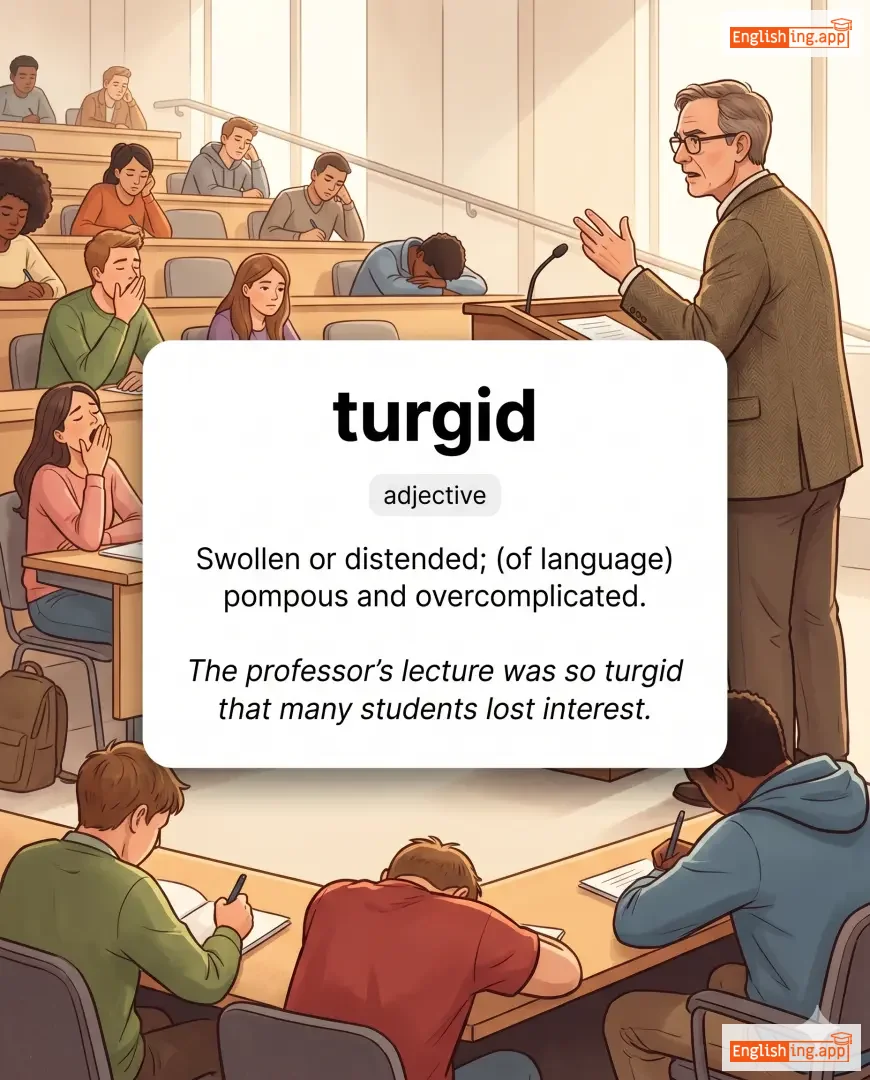
turgid definition card — visual illustration of the meaning
adjective C2
/ˈtɜːrdʒɪd/
gonflé, pompeux (gonfle, pompeux)

Swollen or distended; (of language) pompous and overcomplicated.

"The professor’s lecture was so turgid that many students lost interest."

"Le cours du professeur était si pompeux que beaucoup d’étudiants ont perdu leur intérêt." (Le cours du professeur était si pompeux que beaucoup d’étudiants ont perdu leur intérêt.)
noun C2
/ˈtɜːrnkoʊt/
traître (traitre)

a person who switches allegiance, often betraying a cause or group

"He was branded a turncoat after joining the rival political party."

"Il a été qualifié de traître après avoir rejoint le parti politique rival." (Il a été qualifié de traître après avoir rejoint le parti politique rival.)
noun C2
/ˈtɜːrpɪtuːd/
dépravation (depravation)

depraved or wicked behavior or character

"The judge condemned the criminal’s act of moral turpitude."

"Le juge a condamné l'acte de dépravation morale du criminel." (Le juge a condamné l'acte de dépravation morale du criminel.)
noun C2
/ˈtjuːtɪlɪdʒ/
tutelle (tutelle)

The act of guarding, protecting, or guiding; instruction or teaching.

"She studied painting under the tutelage of a famous artist."

"Elle a étudié la peinture sous la tutelle d'un artiste célèbre." (Elle a étudié la peinture sous la tutelle d'un artiste célèbre.)
adjective C2
/ˈtjuːtɪlɑːr/
tutélaire (tutelaire)

Serving as a guardian or protector.

"The tutelar spirit of the forest was believed to protect travelers."

"On croyait que l'esprit tutélaire de la forêt protégeait les voyageurs." (On croyait que l'esprit tutélaire de la forêt protégeait les voyageurs.)
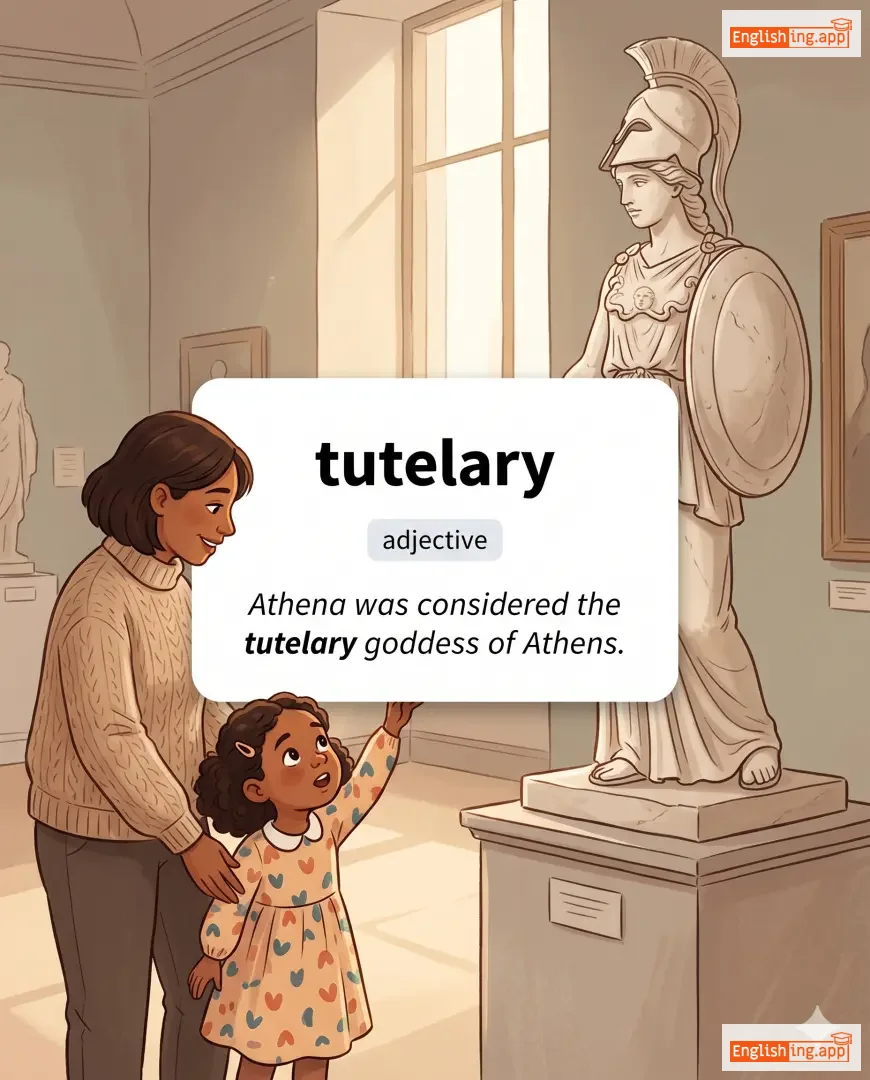
tutelary definition card — visual illustration of the meaning
adjective C2
/ˈtjuːtɪləri/
tutélaire (tutelaire)

Relating to or serving as a guardian or protector, often used for deities or spirits.

"Athena was considered the tutelary goddess of Athens."

"Athéna était considérée comme la déesse tutélaire d'Athènes." (Athéna était considérée comme la déesse tutélaire d'Athènes.)
noun C2
/ˈtjuːtərʃɪp/
tutorat (tutorat)

The office or position of a tutor; guidance or instruction given by a tutor.

"He thrived under the tutorship of his mentor."

"Il a prospéré sous le tutorat de son mentor." (Il a prospéré sous le tutorat de son mentor.)
noun C2
/ˈtaɪroʊ/
débutant (debutant)

A beginner or novice in a field or activity.

"As a tyro in programming, she needed constant guidance."

"En tant que débutant en programmation, elle avait besoin d'une orientation constante." (En tant que débutant en programmation, elle avait besoin d'une orientation constante.)
adjective C2
/juːˈbɪkwɪtəs/
omniprésent (omnipresent)

Present, appearing, or found everywhere.

"Smartphones have become ubiquitous in modern society."

"Les smartphones sont devenus omniprésents dans la société moderne." (Les smartphones sont devenus omniprésents dans la société moderne.)
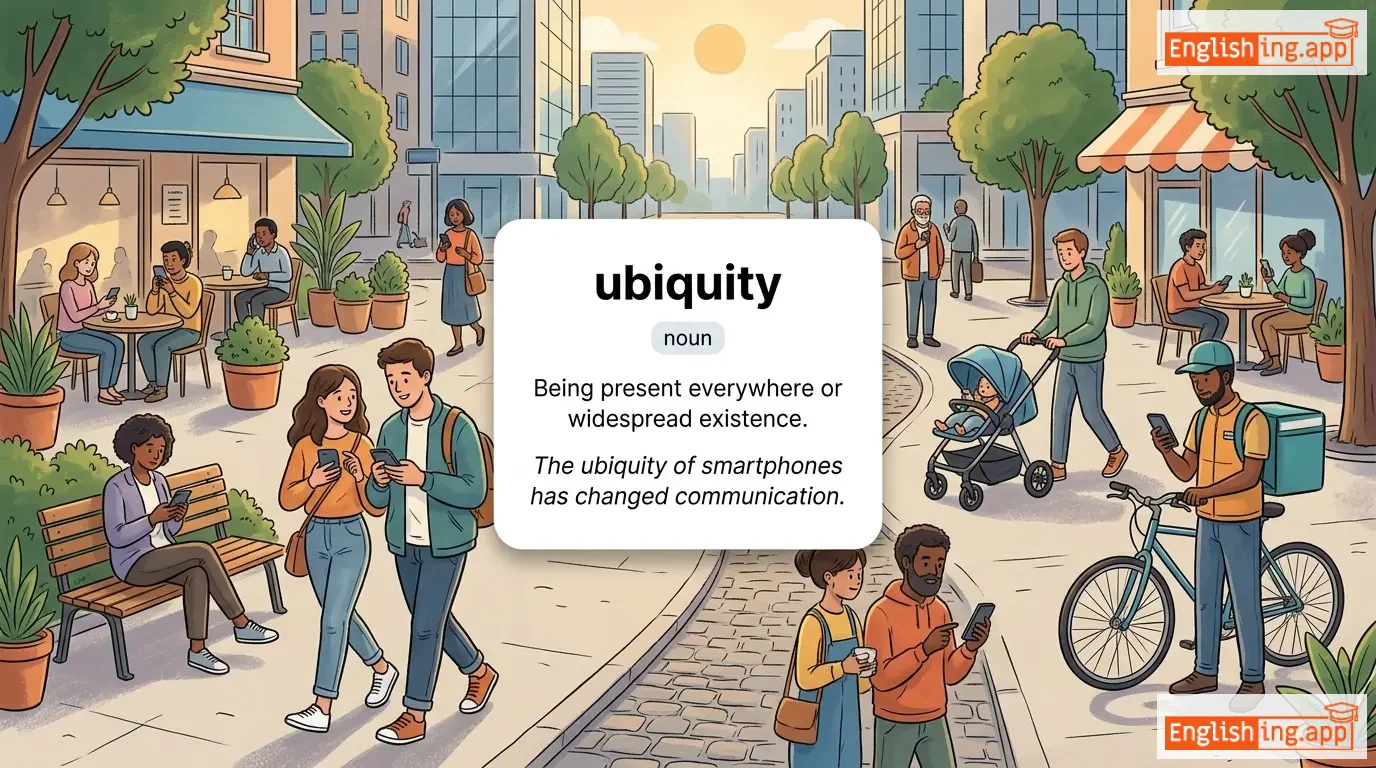
ubiquity definition card — visual illustration of the meaning
noun C2
/juːˈbɪk.wɪ.ti/
ubiquité (ubiquité)

Being present everywhere or widespread existence.

"The ubiquity of smartphones has changed communication."

"L'ubiquité des smartphones a changé la communication." (L'ubiquité des smartphones a changé la communication.)
noun C2
/juːˈkeɪs/
décret (decret)

An authoritative decree or order, especially one issued by a sovereign or government.

"The czar issued a ukase restricting the freedom of the press."

"Le tsar a émis un décret restreignant la liberté de la presse." (Le tsar a émis un décret restreignant la liberté de la presse.)
adjective C2
/ˌʌltrəˈmɒnteɪn/
partisan du Pape (partisan du Pape)

beyond the mountains, especially referring to support for the Pope over local church authority

"The debate highlighted the ultramontane position in church politics."

"Le débat a mis en lumière la position ultramontaine dans la politique ecclésiastique." (Le debat a mis en lumiere la position ultramontaine dans la politique ecclesiastique.)
adjective C2
/ˌʌltrəˈmʌndeɪn/
ultramondain (ultramondain)

Relating to things beyond the physical world; supernatural or transcendental.

"Philosophers often discuss ultramundane realities beyond human perception."

"Les philosophes discutent souvent des réalités ultramondaines au-delà de la perception humaine." (Les philosophes discutent souvent des realites ultramondaines au-dela de la perception humaine.)
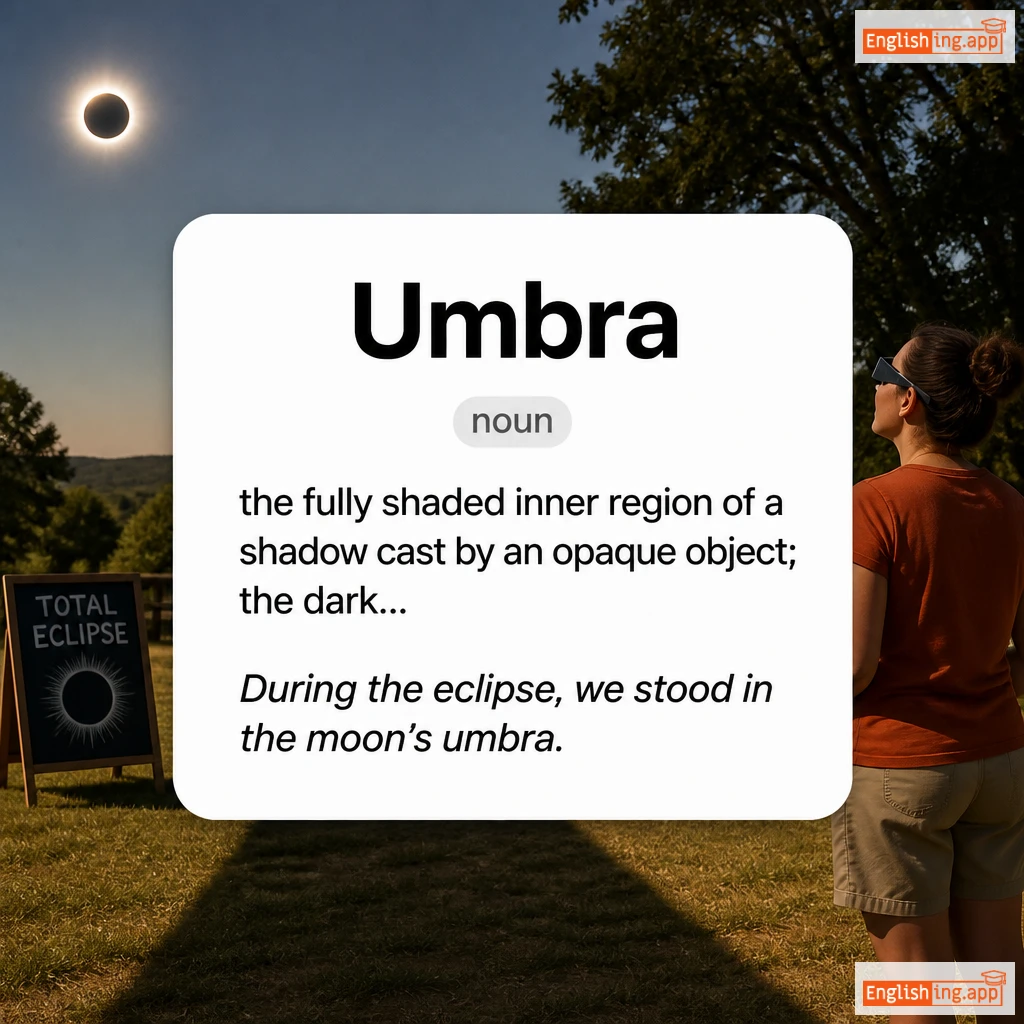
Umbra definition card — visual illustration of the meaning
noun C2
/ˈʌm.brə/
ombre totale, région sombre d'une tache solaire (ombre totale, region sombre d'une tache solaire)

the fully shaded inner region of a shadow cast by an opaque object; the dark center of a sunspot

"During the eclipse, we stood in the moon's umbra."

"Pendant l'éclipse, nous nous sommes tenus dans l'ombre de la lune." (Pendant l'éclipse, nous nous sommes tenus dans l'ombre de la lune.)
noun C2
/ˈʌmbrɪdʒ/
mécontentement, offense (mécontentement, offense)

A feeling of resentment or offense.

"She took umbrage at his rude remark."

"Elle s'est vexée par sa remarque grossière." (Elle s'est vexée par sa remarque grossière.)
adjective C2
/ʌnˈælɔɪd/
pur (pur)

Pure, complete, and not mixed with anything else.

"She felt unalloyed joy at the news of her success."

"Elle a ressenti une joie pure en entendant la nouvelle de son succès." (Elle a ressenti une joie pure en entendant la nouvelle de son succès.)
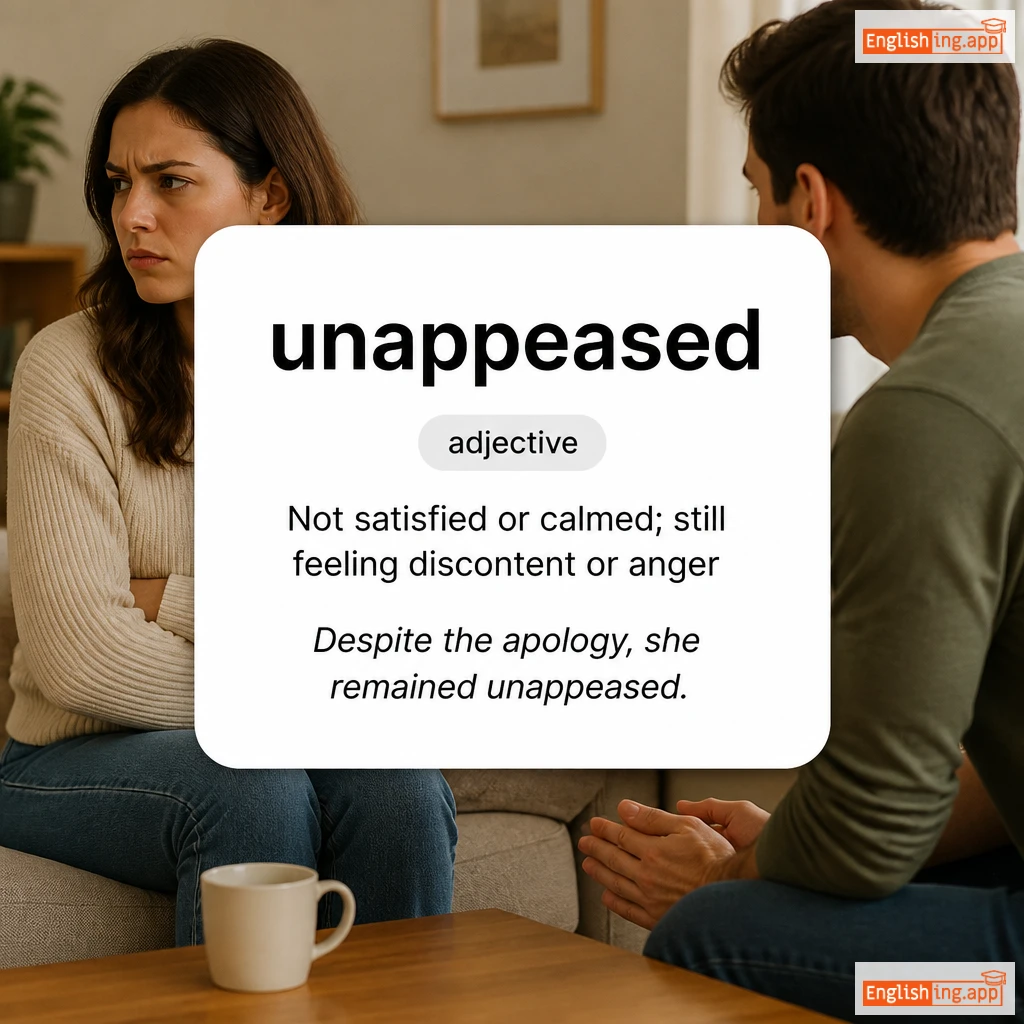
unappeased definition card — visual illustration of the meaning
adjective C2
/ʌnəˈpiːzd/
insatisfait (insatisfait)

Not satisfied or calmed; still feeling discontent or anger

"Despite the apology, she remained unappeased."

"Malgré les excuses, elle est restée insatisfaite." (Malgre les excuses, elle est restee insatisfaite)
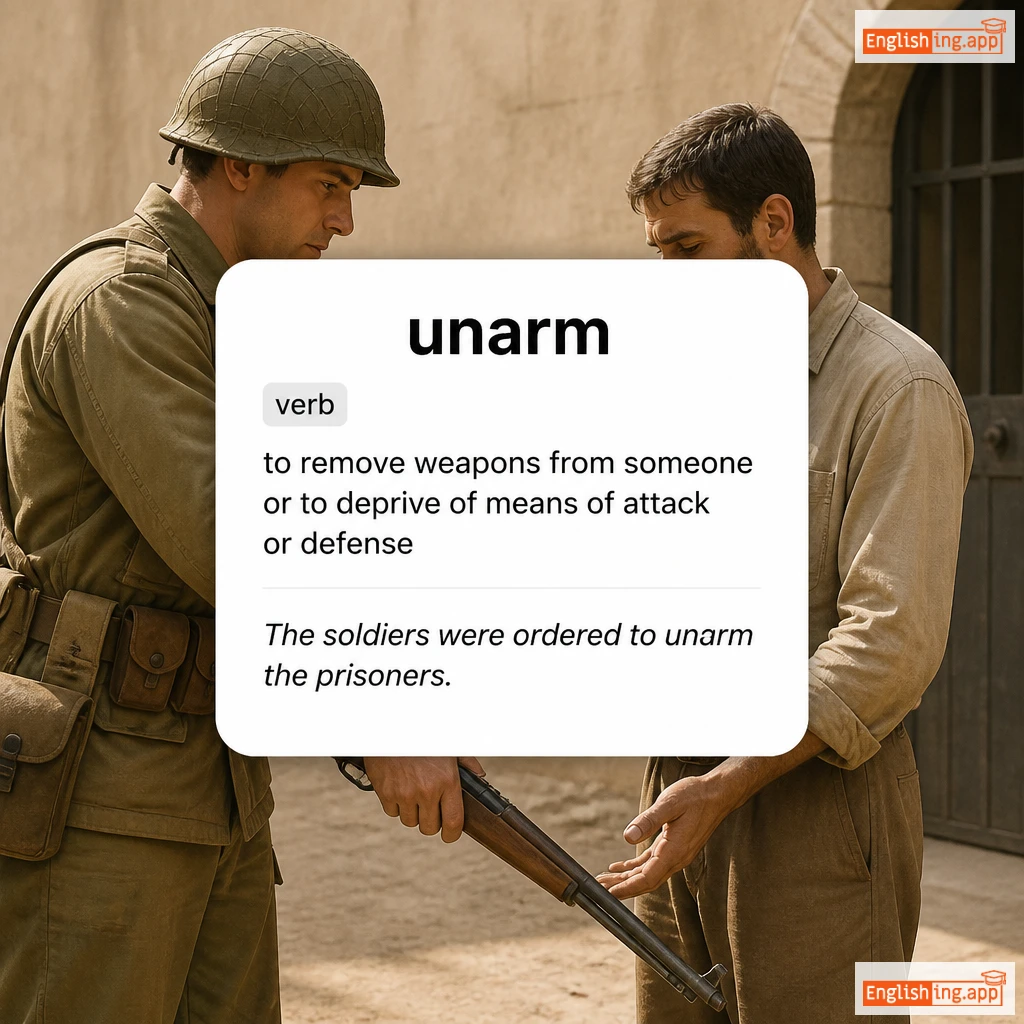
unarm definition card — visual illustration of the meaning
verb C2
/ʌnˈɑːrm/
désarmer (desarmer)

to remove weapons from someone or to deprive of means of attack or defense

"The soldiers were ordered to unarm the prisoners."

"Les soldats ont reçu l'ordre de désarmer les prisonniers." (Les soldats ont recu l'ordre de desarmer les prisonniers)
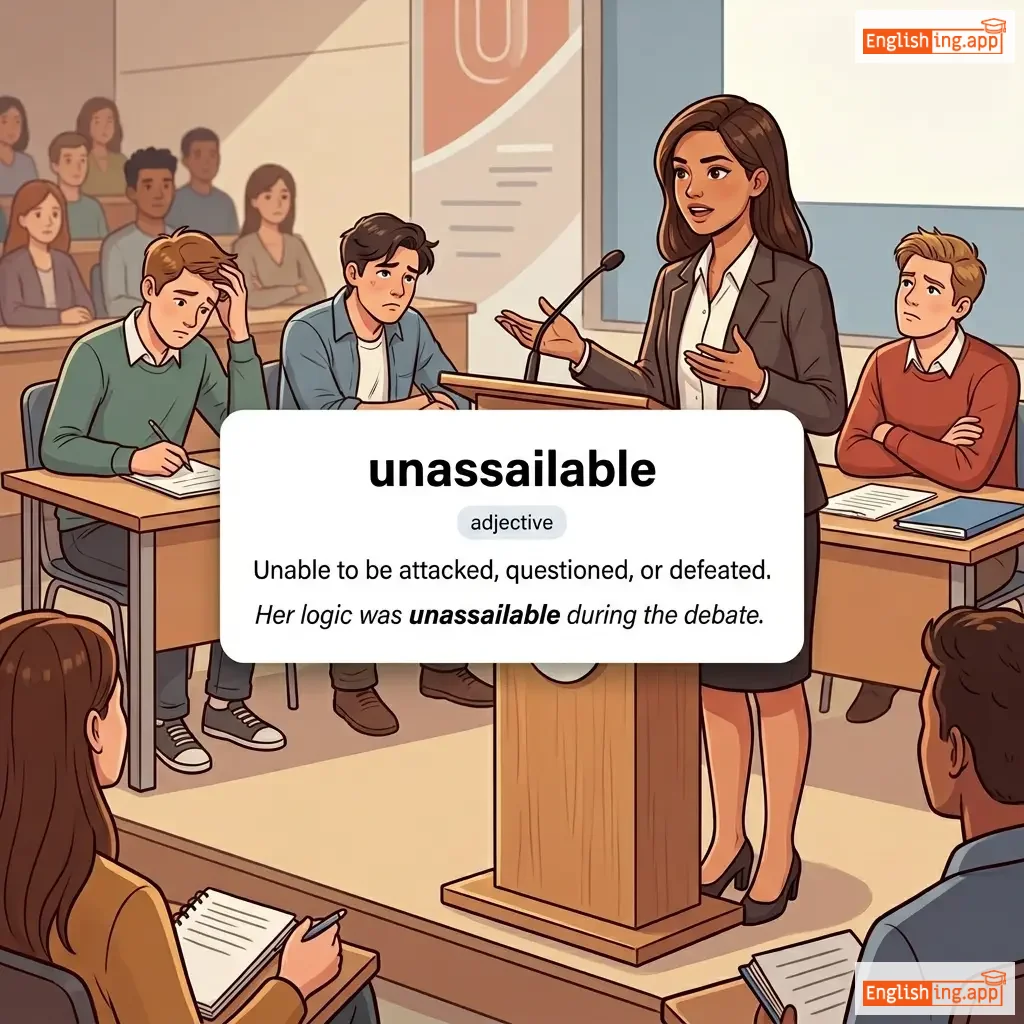
unassailable definition card — visual illustration of the meaning
adjective C2
/ˌʌnəˈseɪləbl/
inattaquable (inattaquable)

Unable to be attacked, questioned, or defeated.

"Her logic was unassailable during the debate."

"Sa logique était inattaquable pendant le débat." (Sa logique était inattaquable pendant le débat.)
adjective C2
/ˌʌnəˈsweɪdʒd/
inquiet (inquiet)

Not made less intense or relieved; unrelieved.

"His grief remained unassuaged despite the passage of time."

"Sa douleur est restée inquiète malgré le passage du temps." (Sa douleur est restée inquiète malgré le passage du temps.)
adjective C2
/ˌʌnəˈʃʊəd/
incertain (incertain)

Lacking confidence or certainty.

"She gave an unassured answer during the interview."

"Elle a donné une réponse incertaine lors de l'entretien." (Elle a donné une réponse incertaine lors de l'entretien.)
adjective C2
/ʌnˈblʌʃɪŋ/
effronté; sans vergogne (effronte; sans vergogne)

showing no shame or embarrassment; boldly shameless

"He told the unblushing lie without any hesitation."

"Il a dit le mensonge effronté sans hésitation." (Il a dit le mensonge effronte sans hesiter.)
adjective C2
/ˌʌnsɛrəˈmoʊniəs/
sans cérémonie/rude (sans ceremonie/rude)

Done without formality or courtesy; abrupt or rude.

"He made an unceremonious exit from the party."

"Il a fait une sortie sans cérémonie de la fête." (Il a fait une sortie sans cérémonie de la fête.)
adjective C2
/ʌnˈtʃeɪst/
immoral; impur; (immoral; impur;)

not celibate; having engaged in sexual relations; lacking moral purity

"The conservative society considered her behavior unchaste and improper."

"La société conservatrice a jugé son comportement immoral et inapproprié." (La société conservatrice a jugé son comportement immoral et inapproprié.)
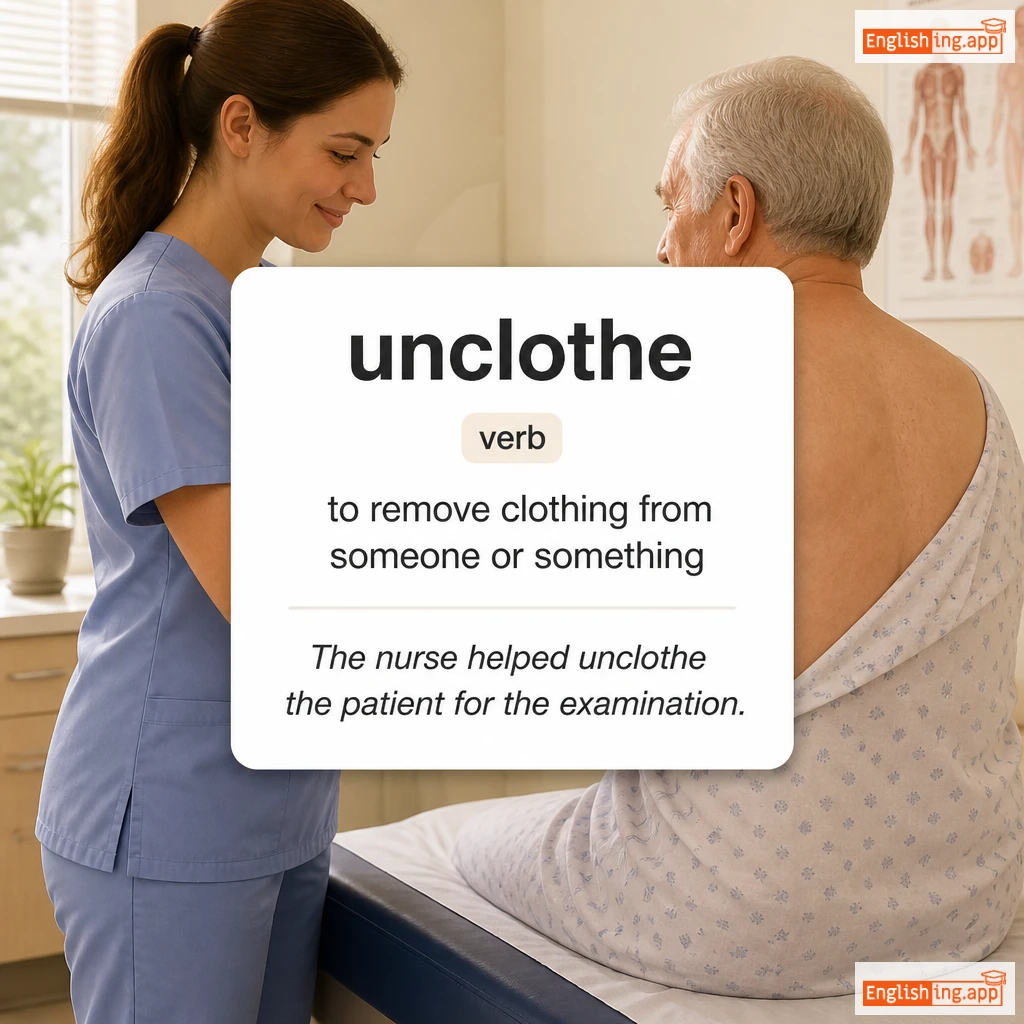
unclothe definition card — visual illustration of the meaning
verb C2
/ʌnˈkloʊð/
déshabiller; enlever les vêtements (deshabiller; enlever les vetements)

to remove clothing from someone or something

"The nurse helped unclothe the patient for the examination."

"L'infirmière a aidé à déshabiller le patient pour l'examen." (L'infirmiere a aide a deshabiller le patient pour l'examen)
noun C2
/ʌnˈkloʊðɪŋ/
déshabillage (déshabillage)

the act or process of removing clothing

"The child quickly ran inside for unclothing after playing in the mud."

"L'enfant est rapidement allé à l'intérieur pour le déshabillage après avoir joué dans la boue." (L'enfant est rapidement alle a l'interieur pour le deshabillage apres avoir joue dans la boue)
adjective C2
/ʌnˈkɒnʃənəbl/
injustifiable (injustifiable)

shockingly unfair or unreasonable

"The company made unconscionable profits from the crisis."

"L'entreprise a réalisé des bénéfices injustifiables pendant la crise." (L'entreprise a réalisé des bénéfices injustifiables pendant la crise.)
verb C2
/ʌnˈkaʊtʃ/
retirer du canapé (usage rare) (retirer du canape)

to remove from a couch or to release from being laid down (rare/archaic usage)

"The surgeon attempted to uncouch the cataract."

"Le chirurgien a tenté d'enlever la cataracte." (Le chirurgien a tente d'enlever la cataracte.)
noun C2
/ˈʌŋkʃən/
unction (unction)

The act of anointing as part of a religious or ceremonial ritual; excessive or insincere flattery.

"The priest performed the holy unction with solemnity."

"Le prêtre a accompli l'unction sacrée avec solennité." (Le pretre a accompli l'unction sacree avec solenite.)
adjective C2
/ˈʌŋk.tʃu.əs/
flatteur (flatteur)

Excessively flattering or ingratiating; oily in texture.

"His unctuous tone made everyone uncomfortable."

"Son ton flatteur a mis tout le monde mal à l'aise." (Son ton flatteur a mis tout le monde mal à l'aise.)
verb C2
/ˌʌn.dɪˈsiːv/
désillusionner (desillusionner)

To free someone from a misconception or false belief.

"She tried to undeceive him about the false rumors."

"Elle a essayé de le désillusionner au sujet des fausses rumeurs." (Elle a essaye de le desillusionner au sujet des fausses rumeurs.)
verb C2
/ˌʌndərˈɡɜːrd/
soutenir, renforcer (soutenir, renforcer)

to provide support or foundation for; to strengthen

"Strong values undergird a healthy society."

"Les valeurs fortes soutiennent une société saine." (Les valeurs fortes soutiennent une société saine.)
noun C2
/ˈʌndərlɪŋ/
subordonné (subordonne)

a person of low rank or importance; a subordinate

"The manager ordered his underlings to finish the task quickly."

"Le directeur a ordonné à ses subordonnés de terminer rapidement la tâche." (Le directeur a ordonné à ses subordonnés de terminer rapidement la tâche.)
verb C2
/ˈʌndərˌmæn/
manquer de personnel (manquer de personnel)

to supply with fewer workers or personnel than needed

"The hospital was undermanned during the flu outbreak."

"L'hôpital était sous-effectif pendant l'épidémie de grippe." (L'hopital etait sous-effectif pendant l'epidemie de grippe.)
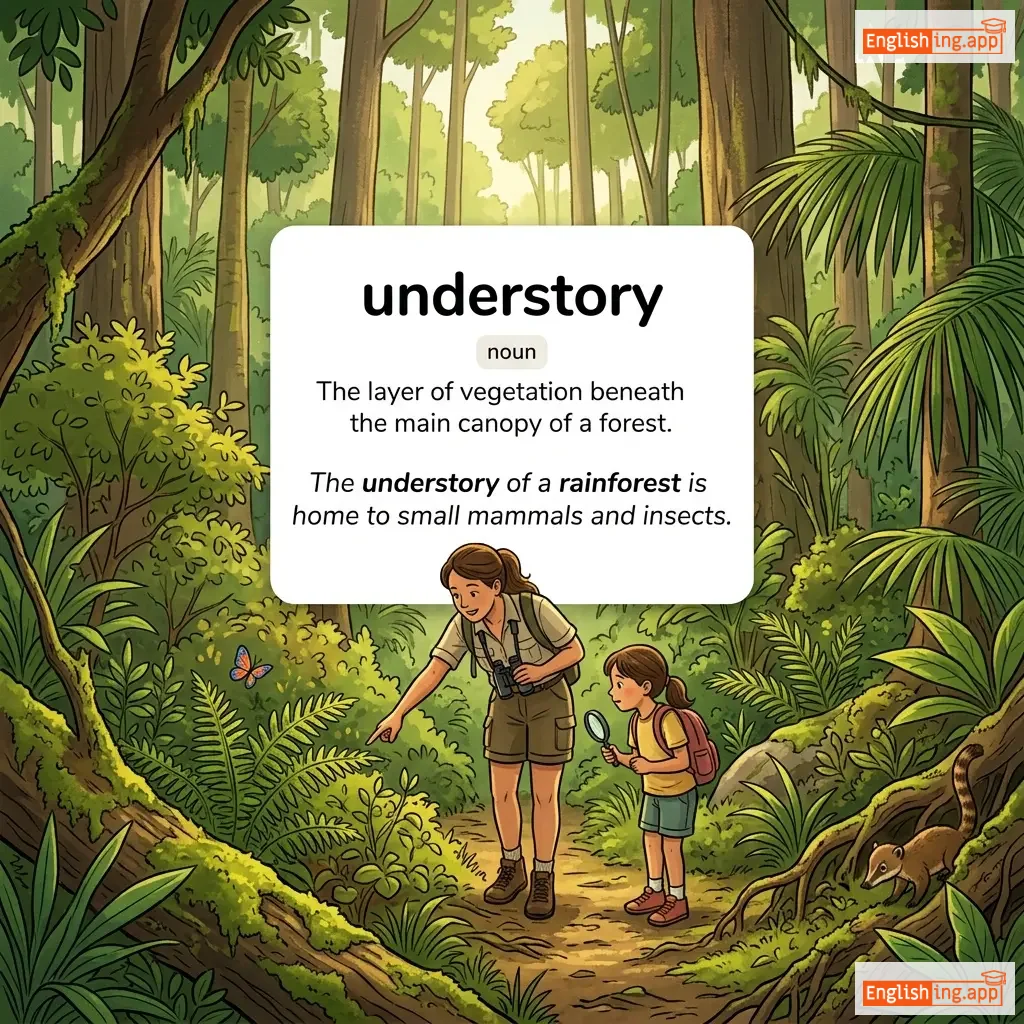
understory definition card — visual illustration of the meaning
noun C2
/ˈʌn.dɚˌstɔː.ri/
végétation inférieure (vegetation inferieure)

The layer of vegetation beneath the main canopy of a forest.

"The understory of a rainforest is home to small mammals and insects."

"La végétation inférieure d'une forêt tropicale est le foyer de petits mammifères et d'insectes." (La vegetation inferieure d'une foret tropicale est le foyer de petits mammiferes et d'insectes.)
verb C2
/ˈʌndərˌraɪt/
garantir un soutien financier (garantir un soutien financier)

To guarantee financial support, especially by agreeing to cover losses or risks; in insurance, to assess and accept risks.

"The bank agreed to underwrite the company's new bond issue."

"La banque a accepté de souscrire à la nouvelle émission d'obligations de l'entreprise." (La banque a accepté de souscrire à la nouvelle émission d'obligations de l'entreprise.)
verb C2
/ˈʌndjʊleɪt/
onduler (onduler)

To move with a smooth, wave-like motion.

"The snake undulated across the sand."

"Le serpent ondulait à travers le sable." (Le serpent ondulait à travers le sable.)
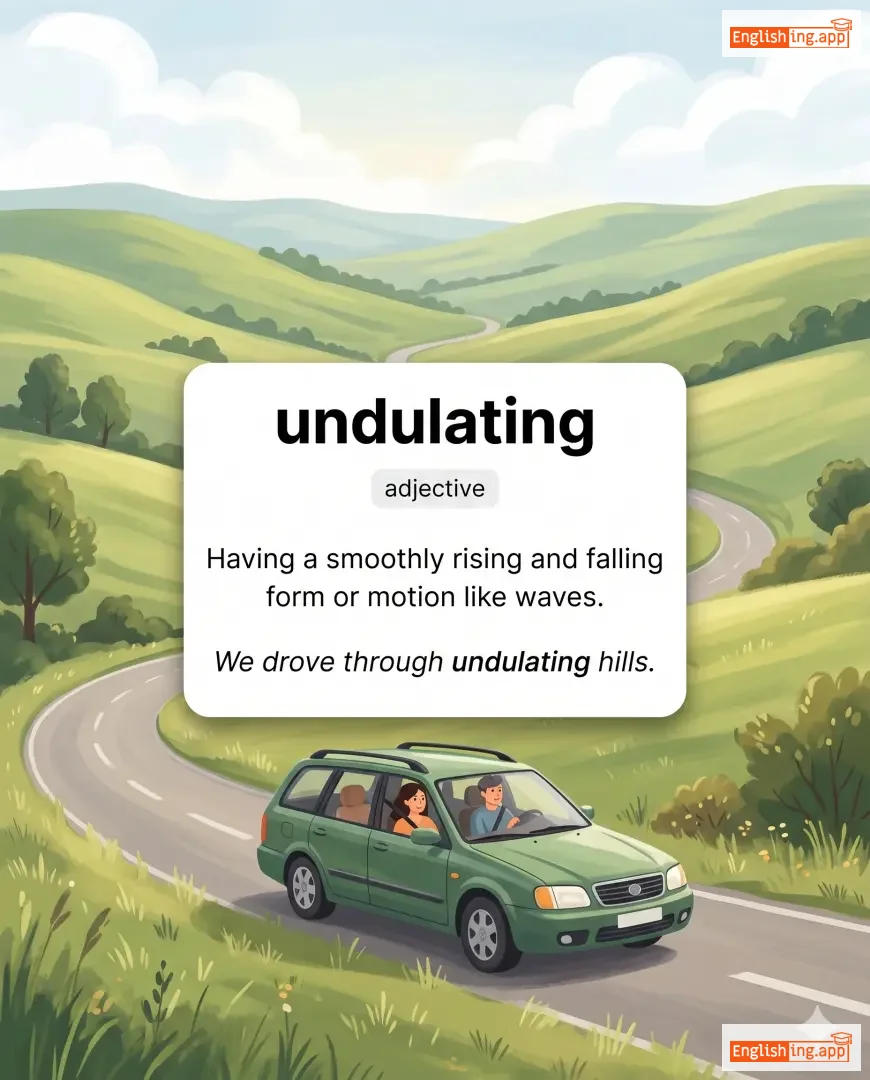
undulating definition card — visual illustration of the meaning
adjective C2
/ˈʌndjʊleɪtɪŋ/
ondulant (ondulant)

Having a smoothly rising and falling form or motion like waves.

"We drove through undulating hills."

"Nous avons conduit à travers des collines ondulantes." (Nous avons conduit à travers des collines ondulantes.)
adjective C2
/ˈʌndjʊləs/
ondulé (ondulé)

Having a wavy surface or form.

"The artist painted the undulous sea at sunset."

"L'artiste a peint la mer ondulée au coucher du soleil." (L'artiste a peint la mer ondulée au coucher du soleil.)
adverb C2
/ʌnˈɜːrɪŋli/
sans erreur (sans erreur)

Without making any mistakes; always accurate

"The archer aimed unerringly at the target."

"L'archer a visé sans erreur la cible." (L'archer a vise sans erreur la cible.)
adjective C2
/ˌʌnɪkˈsɛpʃənəbl/
irréprochable (irreprochable)

Not open to objection; acceptable and unobjectionable

"His behavior was unexceptionable throughout the event."

"Son comportement était irréprochable tout au long de l'événement." (Son comportement était irréprochable tout au long de l'événement.)
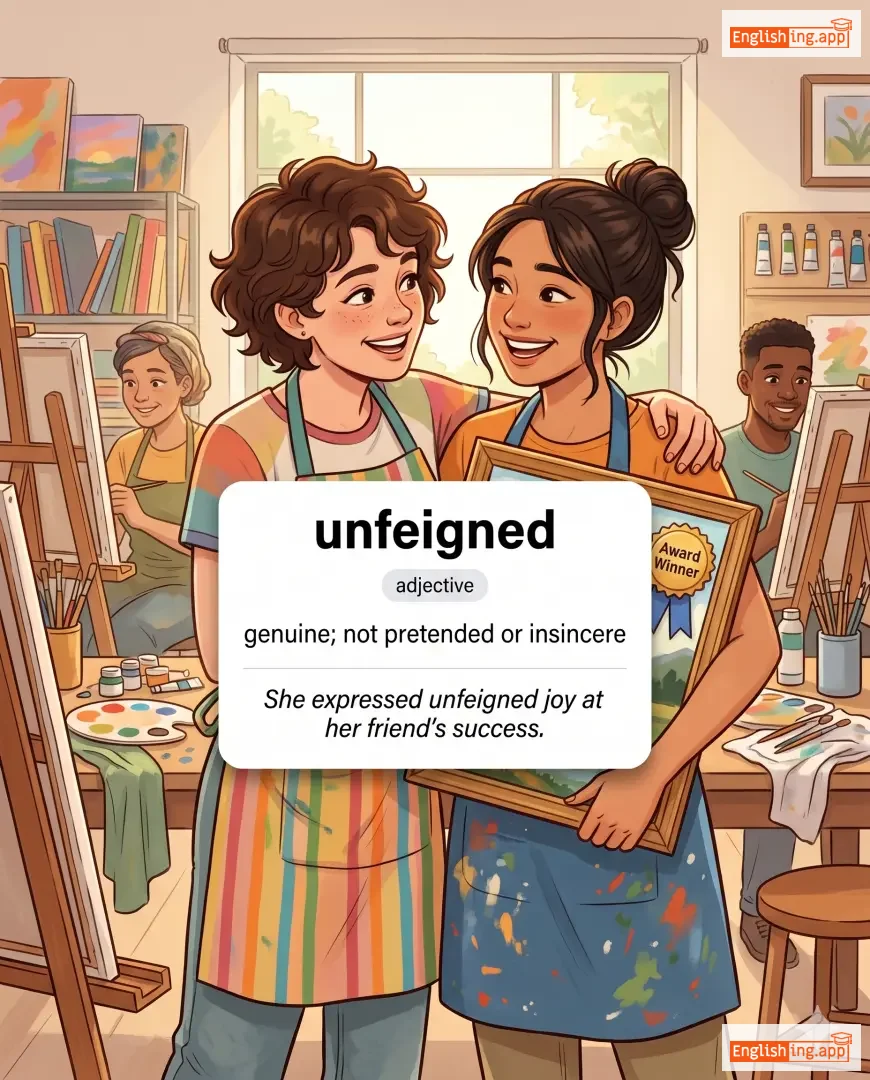
unfeigned definition card — visual illustration of the meaning
adjective C2
/ʌnˈfeɪnd/
authentique (authentique)

genuine; not pretended or insincere

"She expressed unfeigned joy at her friend's success."

"Elle a exprimé une joie authentique lors du succès de son amie." (Elle a exprimé une joie authentique lors du succès de son amie.)
verb C2
/ʌnˈfɛtər/
délier (delier)

to release from restraint or restriction; to free

"The new law will unfetter small businesses from excessive regulations."

"La nouvelle loi libérera les petites entreprises des régulations excessives." (La nouvelle loi libérera les petites entreprises des régulations excessives.)
adjective C2
/ʌnˈflæpəbəl/
imperturbable (imperturbable)

calm and composed, especially in difficult situations

"Despite the crisis, he remained unflappable and confident."

"Malgré la crise, il est resté imperturbable et confiant." (Malgré la crise, il est resté imperturbable et confiant.)
adjective C2
/ʌnˈflɛdʒd/
inexpérimenté (inexperimente)

Inexperienced, immature, or not fully developed.

"The unfledged writer struggled to complete his first novel."

"L'écrivain inexpérimenté a eu du mal à terminer son premier roman." (L'ecrivain inexperimente a eu du mal a terminer son premier roman.)
verb C2
/ʌnˈfrɒk/
dévêtir un prêtre de sa position (devetir un pretres de sa position)

To remove a priest from his position or deprive someone of a rank.

"The corrupt priest was unfrocked after the investigation."

"Le prêtre corrompu a été défroqué après l'enquête." (Le prêtre corrompu a été défroqué après l'enquête.)
adjective C2
/ʌnˈɡeɪnli/
maladroit (maladroit)

Awkward, clumsy, or lacking grace in movement or appearance.

"The tall boy moved in an ungainly manner."

"Le garçon grand s'est déplacé de manière maladroite." (Le garçon grand s'est deplace de maniere maladroite.)
noun C2
/ˈʌŋɡwənt/
onguent (onguent)

A soothing or healing ointment applied to the skin.

"The doctor applied an unguent to heal the burn."

"Le médecin a appliqué un onguent pour guérir la brûlure." (Le médecin a appliqué un onguent pour guérir la brûlure.)
adjective C2
/ˌʌnɪmˈpiːtʃəbl/
irréprochable (irreprochable)

Not able to be doubted, questioned, or criticized; completely trustworthy.

"She is known for her unimpeachable honesty."

"Elle est connue pour son honnêteté irréprochable." (Elle est connue pour son honnêteté irréprochable.)