Vocabularios

Descubra, aprenda y domine el vocabulario en inglés

adjective C2
/tɛnˈdɛnʃəs/
偏向的 (henkō-teki)

Expressing or promoting a particular cause or point of view, often biased.

"The article was criticized for its tendentious tone."

"その記事は偏向的な口調で批判されました。" (Sono kiji wa henko-teki na kuchō de hihan saremashita.)
adjective C2
/ˈtɛnɪbrəs/
陰鬱な (in'utsu na)

dark, shadowy, or obscure

"The cave was damp and tenebrous, filled with eerie sounds."

"洞窟は湿っぽくて、陰気で不気味な音が響いていました。" (Doukutsu wa shippo kutte, in'ki de bukimi na oto ga hibiiteimashita.)
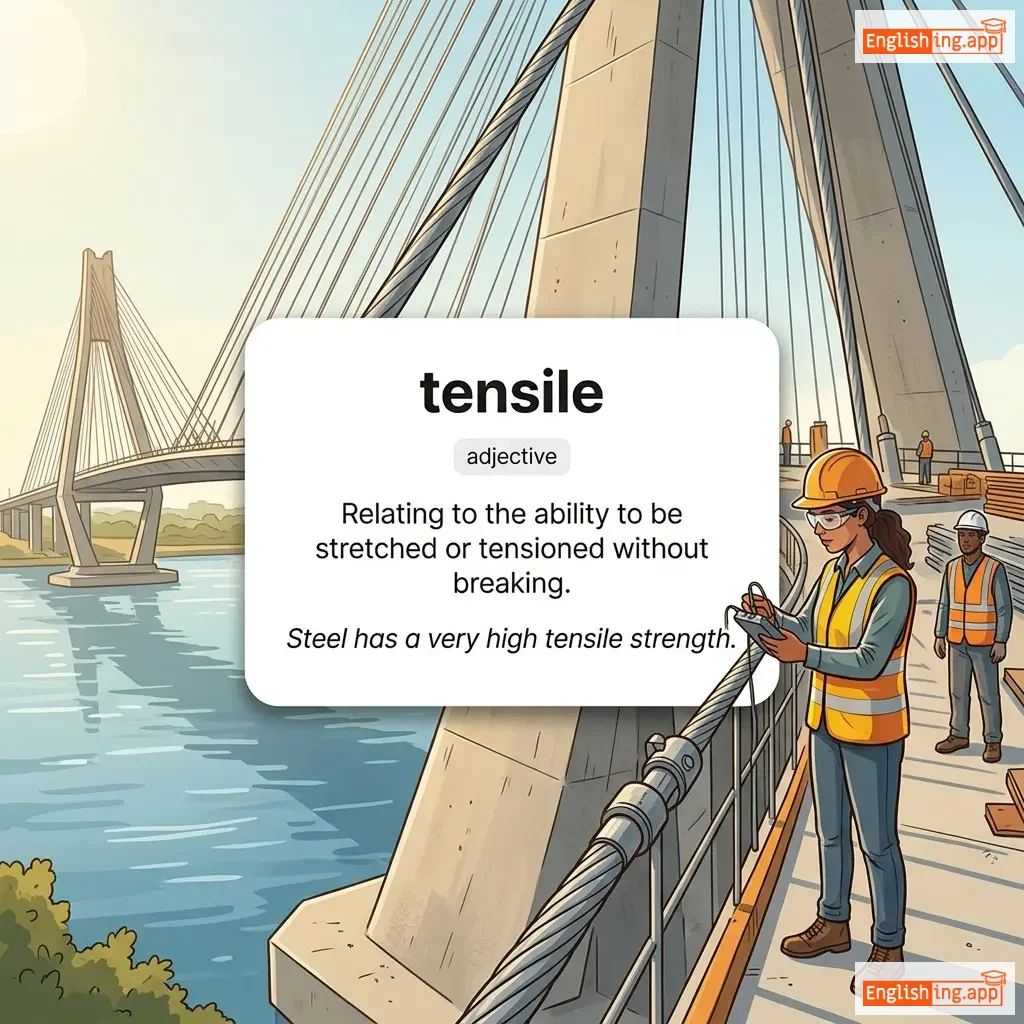
tensile definition card — visual illustration of the meaning
adjective C2
/ˈtɛn.saɪl/
伸張性 (shinchou-sei)

Relating to the ability to be stretched or tensioned without breaking.

"Steel has a very high tensile strength."

"鋼鉄は非常に高い伸張性を持っています。" (kōtetsu wa hijō ni takai shinchō-sei o motteimasu.)
noun C2
/ˌtɜːsənˈtɛnəri/
三百周年記念 (sanbyaku shuunen kinen)

The 300th anniversary of an event.

"The city celebrated its tercentenary with a grand festival."

"その都市は盛大な祭りで三百年祭を祝いました。" (Sono toshi wa seidaina matsuri de sanbyaku nen sai o iwaimashita.)
noun C2
/ˌtɜːdʒɪvərˈseɪʃən/
回避, 二重性 (kaibi, nijūsei)

Evasion of straightforward action or speech; changing sides or being inconsistent.

"The politician’s tergiversation frustrated his supporters."

"その政治家のタージヴァーセイションは彼の支持者を失望させた。" (Sono seijika no tājivāseishon wa kare no shijisha o shitsubō saseta.)
noun C2
/ˈtɜːrməɡənt/
気難しく支配的な女性 (kimuzukashiku shihai-tekina josei)

A harsh-tempered or overbearing woman.

"The character was portrayed as a loud and domineering termagant."

"キャラクターは騒々しく支配的なターマガントとして描かれました。" (Kyarakutā wa sōzōshiku shihai-tekina tāmaganto to shite egakaremashita.)
noun C2
/ˈterəpɪn/
小さな淡水カメ (chiisana tansui kame)

a small freshwater turtle, especially one found in North America

"The terrapin slowly crawled into the pond."

"テラピンはゆっくりと池に這い込んだ。" (Terapin wa yukkuri to ike ni haikonda.)
adjective C2
/ˈtɛsəleɪtɪd/
タイル模様 (tairu moyou)

arranged in a pattern of repeated shapes fitting together without gaps

"The tessellated floor was made of colorful tiles arranged in perfect symmetry."

"テセレイテッドな床はカラフルなタイルで作られ、完璧な対称性で配置されていました。" (Tesserated na yuka wa karafuru na tairu de tsukurare, kanpeki na taishō-sei de haichi sarete imashita.)
noun C2
/ˈtɛsteɪtər/
遺言者 (yigonsha)

a person who has made a will

"The lawyer read the will of the deceased testator."

"弁護士は故人の遺言を読みました。" (Bengoshi wa kojin no yigon o yomimashita.)
noun C2
/ˈθɔːməˌtɜrdʒɪst/
奇術師 (kijutsushi)

A worker of miracles or magician.

"The thaumaturgist amazed the audience with his tricks."

"その奇術師は技で観客を驚かせました。" (Sono kijutsushi wa waza de kankyaku o odorokasemashita.)
noun C2
/ˈθiː.ɑːr.ki/
神政政治 (shinsei seiji)

Rule or government by the gods; divine sovereignty.

"In ancient cultures, some societies believed in thearchy where gods directly guided human affairs."

"古代の文化では、いくつかの社会が神々が人間の事柄を直接導く神政政治を信じていました。" (Kodai no bunka de wa, ikutsu ka no shakai ga kamigami ga ningen no koto o chokusetsu michibiku shinsei seiji o shinjite imashita.)
noun C2
/ˈθiːɪzəm/
神義論 (shingiron)

Belief in the existence of a god or gods, especially a creator who intervenes in the universe.

"Theism is central to many world religions."

"神義論は多くの世界の宗教において中心的な存在です。" (Shingiron wa ōku no sekai no shūkyō ni oite chūshin-teki na sonzai desu.)
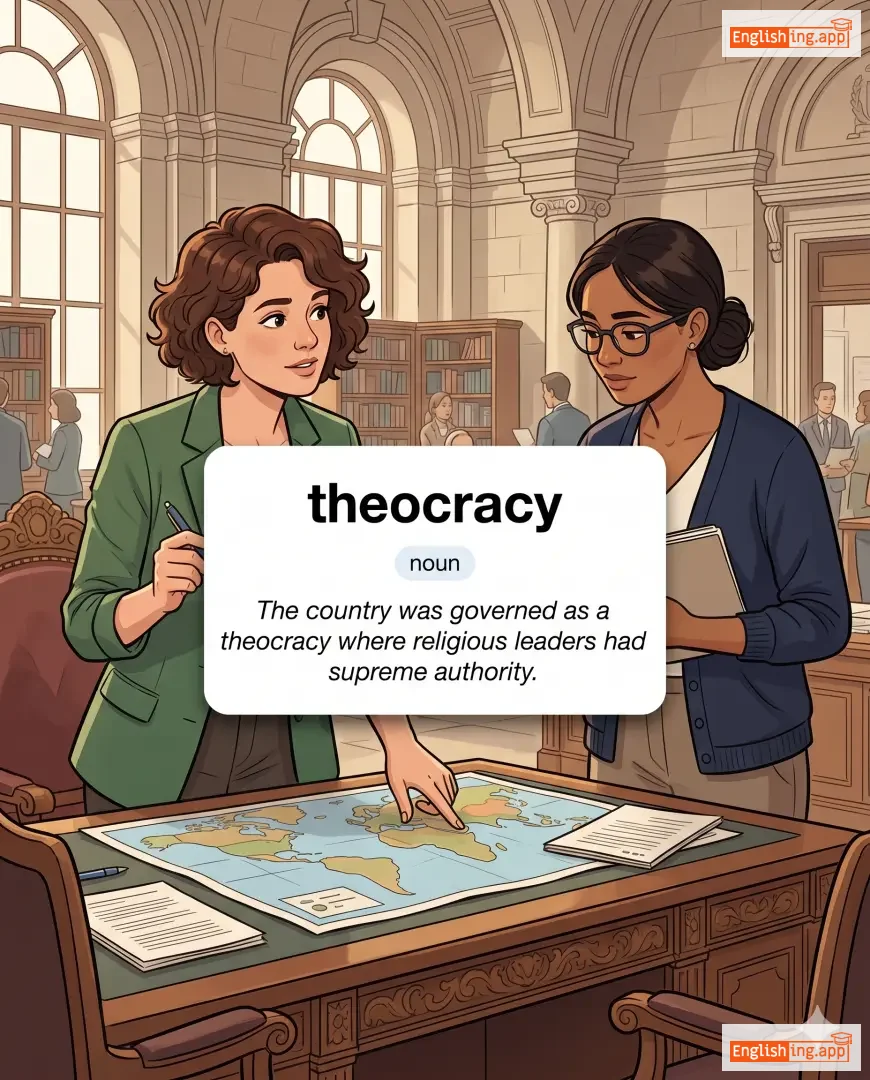
theocracy definition card — visual illustration of the meaning
noun C2
/θiˈɒkrəsi/
神権政治 (shinken seiji)

A system of government in which priests or religious leaders rule in the name of God or a deity.

"The country was governed as a theocracy where religious leaders had supreme authority."

"その国は神権政治として統治され、宗教指導者が最高の権限を持っていました。" (Sono kuni wa shinken seiji toshite tochi sare, shukyo shido sha ga saiko no kenken o motte imashita.)
noun C2
/θiˈɒkrəsi/
神権政治 (shinken seiji)

Government or rule by religious leaders or clergy.

"Theocrasy often merges religious authority with political power."

"神権政治はしばしば宗教的権威と政治的権力を融合させます。" (Shinken seiji wa shibashiba shukyo teki ken'i to seijiteki kenryoku o yugo sasemasu.)
noun C2
/ˌθiːəˈloʊdʒən/
神学者 (shingakusha)

A person who studies or is an expert in theology.

"Theologians often debate complex questions of faith and morality."

"神学者は信仰と道徳について複雑な問題を議論することがよくあります。" (Shingakusha wa shinkou to doutoku ni tsuite fukuzatsu na mondai wo giron suru koto ga yoku arimasu.)
noun C2
/θiˈɒsəfi/
テオソフィー (teosofī)

A religious or philosophical belief system that seeks direct knowledge of the mysteries of life and the divine.

"Theosophy attracted people interested in mysticism and spiritual growth."

"テオソフィーは神秘主義や精神的成長に興味を持つ人々を引き寄せた。" (Teosofī wa shinpi shūgi ya seishinteki seichō ni kyōmi o motsu hitobito o hiki yose ta.)
adverb C2
/ˌðeərˈwɪð/
それと一緒に; (sore to issho ni)

together with that; in addition to that

"He handed me the contract and the pen therewith."

"彼は契約書とペンをそれと一緒に私に渡した。" (Kare wa keiyaku-sho to pen o sore to issho ni watashita.)
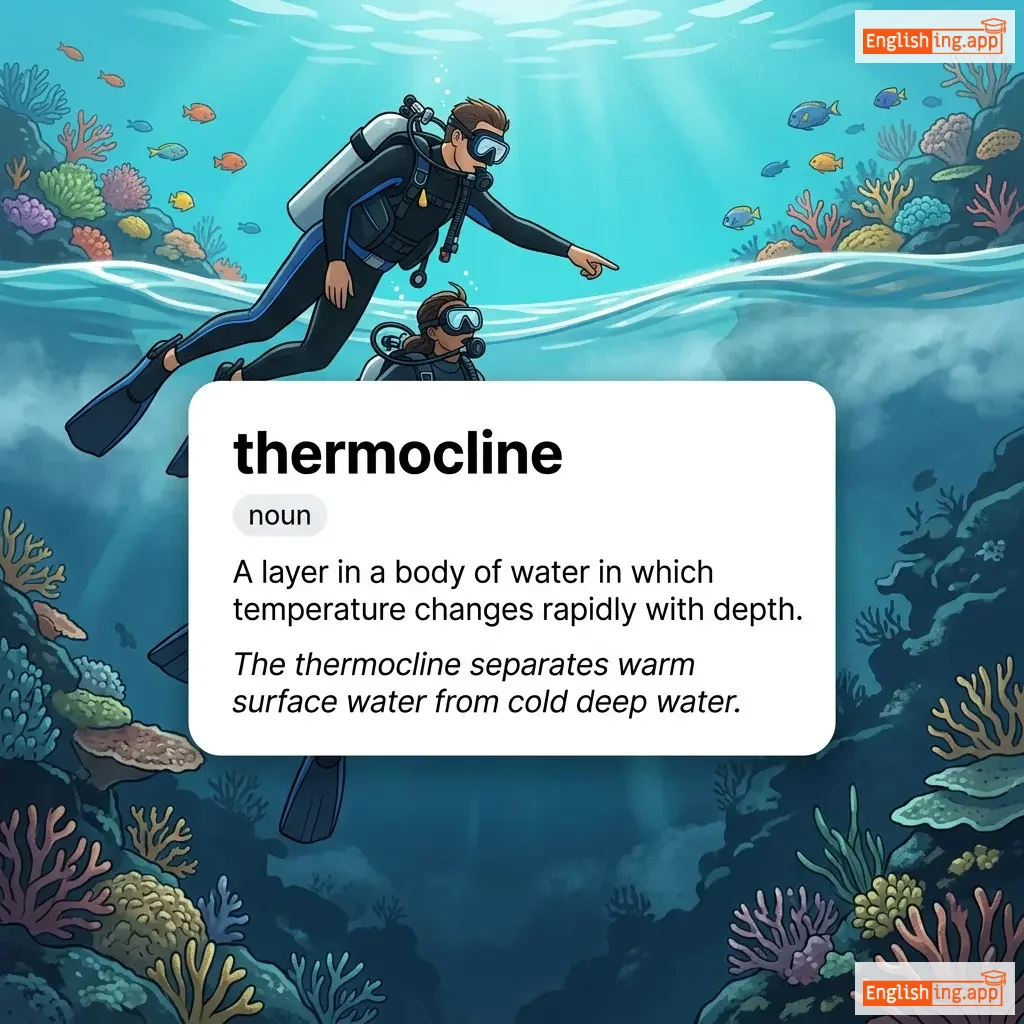
thermocline definition card — visual illustration of the meaning
noun C2
/ˈθɝː.moʊ.klaɪn/
サーモクライン (saamokurain)

A layer in a body of water in which temperature changes rapidly with depth.

"The thermocline separates warm surface water from cold deep water."

"サーモクラインは、暖かい表面水と冷たい深層水を分けます。" (Saamokurain wa, atatakai hyōmen sui to tsumetai shinsō sui o wakemasu.)
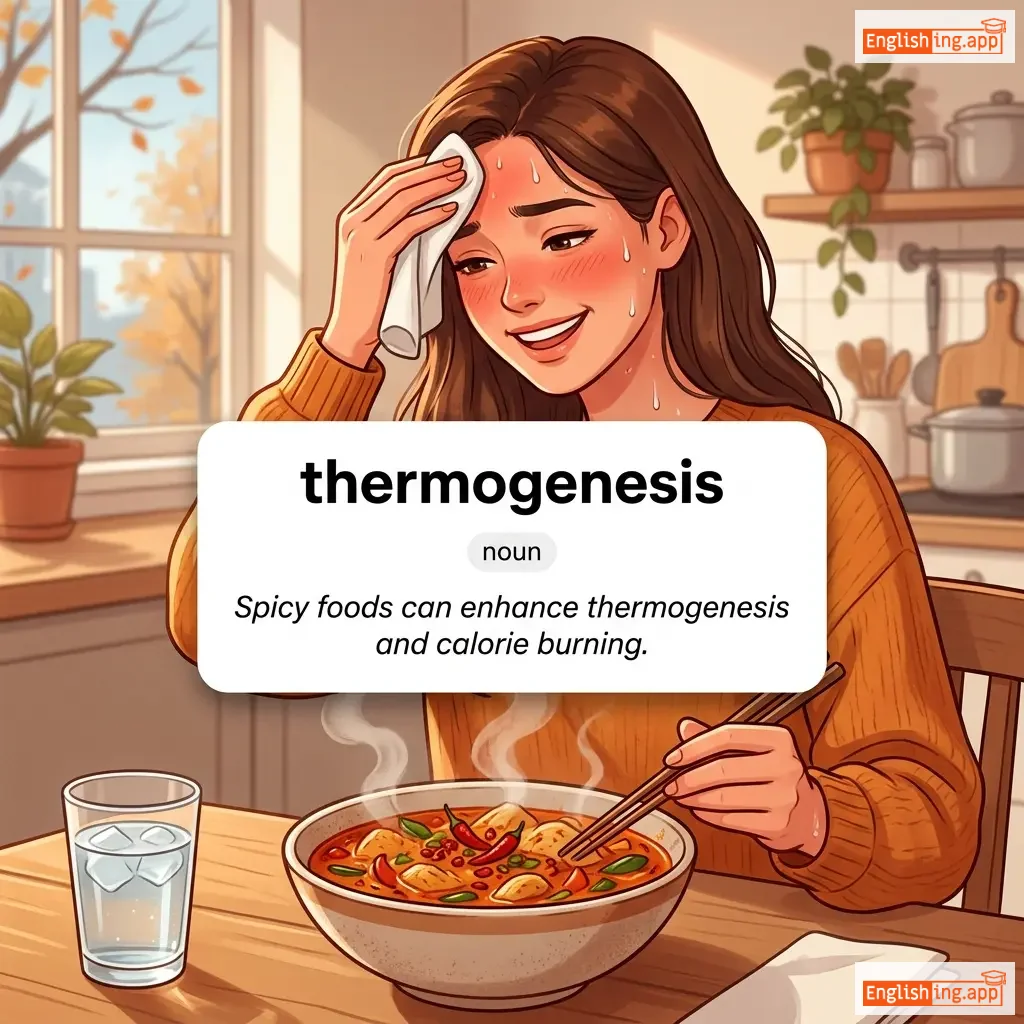
thermogenesis definition card — visual illustration of the meaning
noun C2
/ˌθɜː.məʊˈdʒen.ɪ.sɪs/
熱の生成過程 (netsu no seisei katei)

The process of heat production in living organisms, often associated with burning calories and energy expenditure.

"Spicy foods can enhance thermogenesis and calorie burning."

"スパイシーな食品はサーモジェネシスとカロリー燃焼を促進できます。" (Supai-shī na shokuhin wa sāmojeneshisu to karorii nenshō o sokushin dekimasu.)
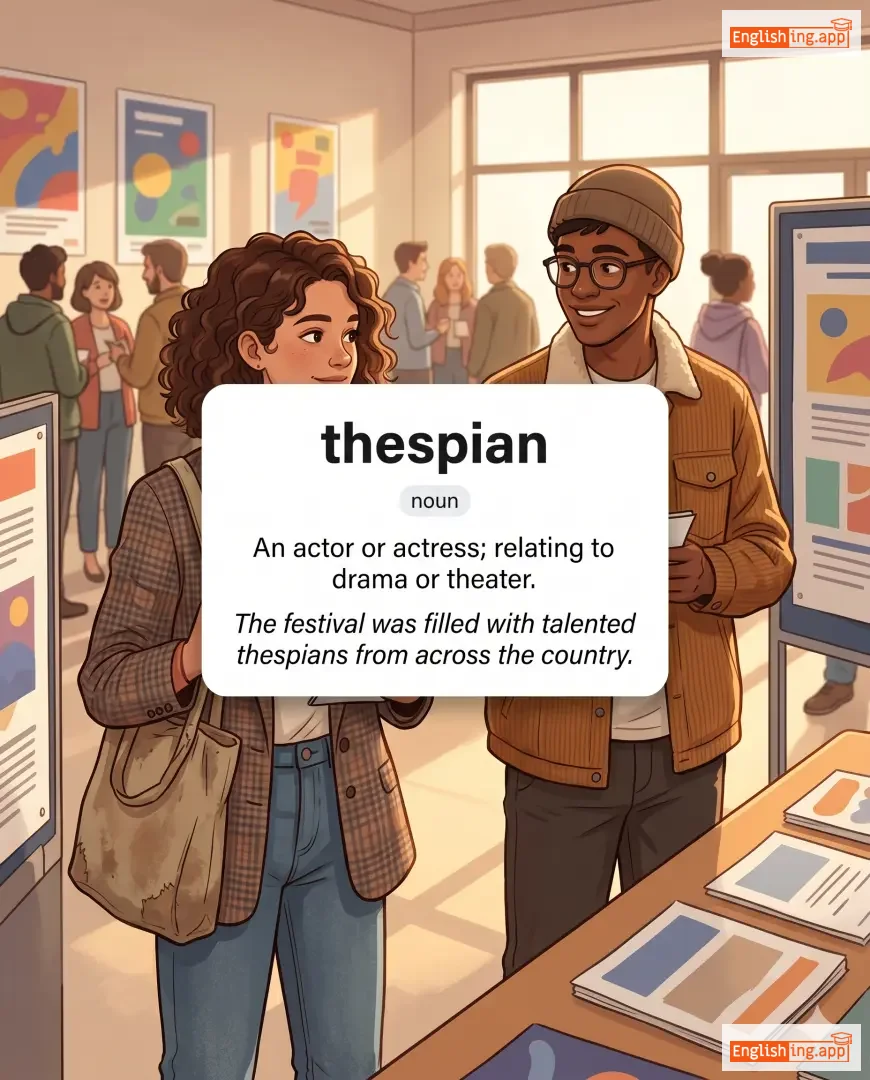
thespian definition card — visual illustration of the meaning
noun C2
/ˈθɛspiən/
俳優 (haiyū)

An actor or actress; relating to drama or theater.

"The festival was filled with talented thespians from across the country."

"フェスティバルは、国内各地から集まった才能豊かな俳優たちで満たされていました。" (Fesutibaru wa, kokunai kakuchi kara atsumatta sainō yutakana haiyū-tachi de mitasarete imashita.)
adjective C2
/ˈθʌroʊˌɡoʊɪŋ/
完全な、徹底的な (kanzen na, tetteiteki na)

carried out to the full extent; absolute and complete

"She is a thoroughgoing professional in every sense."

"彼女はあらゆる意味で徹底的なプロフェッショナルです。" (Kanojo wa arayuru imi de tetteiteki na purofesshonaru desu.)
⛓️

thrall

noun C2
/θrɔːl/

The state of being in someone's power or under strong influence; slavery or bondage.

"He was in thrall to the powerful leader."

adjective C2
/ˈθrɛdˌbɛr/
過度な使用で薄くて擦り切れた (kadona shiyou de usukute surikireta)

Worn out and thin from too much use; shabby.

"His threadbare coat could not keep him warm in winter."

"彼の擦り切れたコートは冬に彼を温かく保つことができませんでした。" (Kare no surikireta kōto wa fuyu ni kare o atatakaku tamotsu koto ga dekimasen deshita.)
noun C2
/ˈθrɛnədi/
哀歌、追悼歌 (aika, tsuitouka)

A song, poem, or speech of mourning for someone who has died; a lament.

"The poet composed a moving threnody for the fallen soldiers."

"詩人は戦死した兵士たちのために感動的な追悼歌を作った。" (Shijin wa senshi shita heishitachi no tame ni kandouteki na tsuitouka wo tsukutta.)
verb C2
/θrɛʃ/

to separate grain from the plant by beating or by using a machine

"Farmers used machines to thresh the wheat after harvest."

noun C2
/θroʊz/
激痛 (gekitou)

intense or violent pain and struggle, often at the beginning or end of something

"The country was in the throes of a political crisis."

"その国は政治的危機の激痛の中にあった。" (Sono kuni wa seijiteki kiki no gekitou no naka ni atta.)
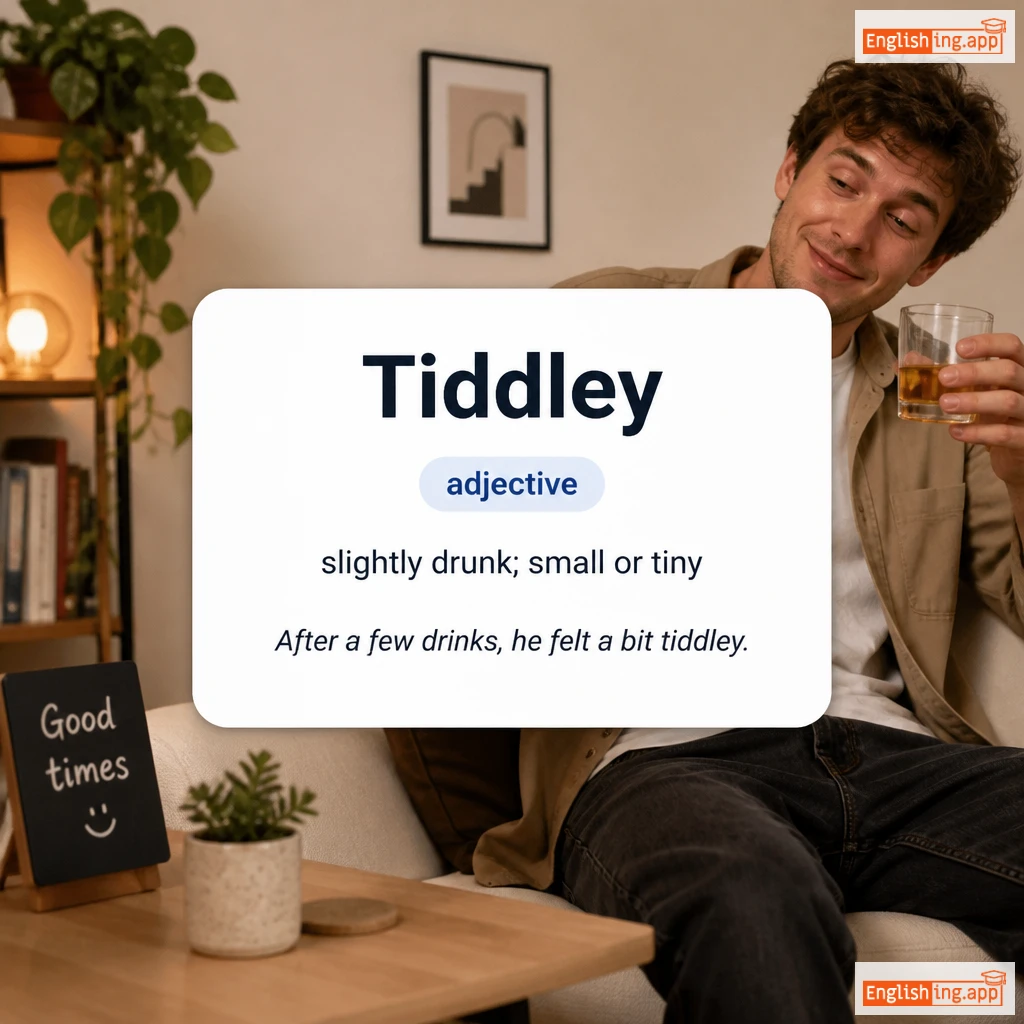
Tiddley definition card — visual illustration of the meaning
adjective C2
/ˈtɪd.li/
軽く酔った; 小さいまたは微小 (tiddli)

slightly drunk; small or tiny

"After a few drinks, he felt a bit tiddley."

"いくつかの飲み物を飲んだ後、彼は少しtiddliに感じた。" (Ikutsuka no nomimono o nonda ato, kare wa sukoshi tiddli ni kanjita.)
adjective C2
/ˌtaɪtˈfɪstɪd/
けちな (kechina)

unwilling to spend money; stingy

"He is so tightfisted that he refuses to tip at restaurants."

"彼はとてもけちで、レストランではチップを渡すことを拒否します。" (Kare wa totemo kechi de, resutoran de wa chippu o watasu koto o kyohi shimasu.)
noun C2
/ˈtaɪtwɒd/
けちん坊 (kechinbō)

a person who is unwilling to spend money; a miser

"Everyone calls him a tightwad because he never buys gifts."

"誰もが彼をけちん坊と呼ぶ、彼は決してプレゼントを買わないから。" (Dare mo ga kare o kechinbō to yobu, kare wa kesshite purezento o kawanai kara.)
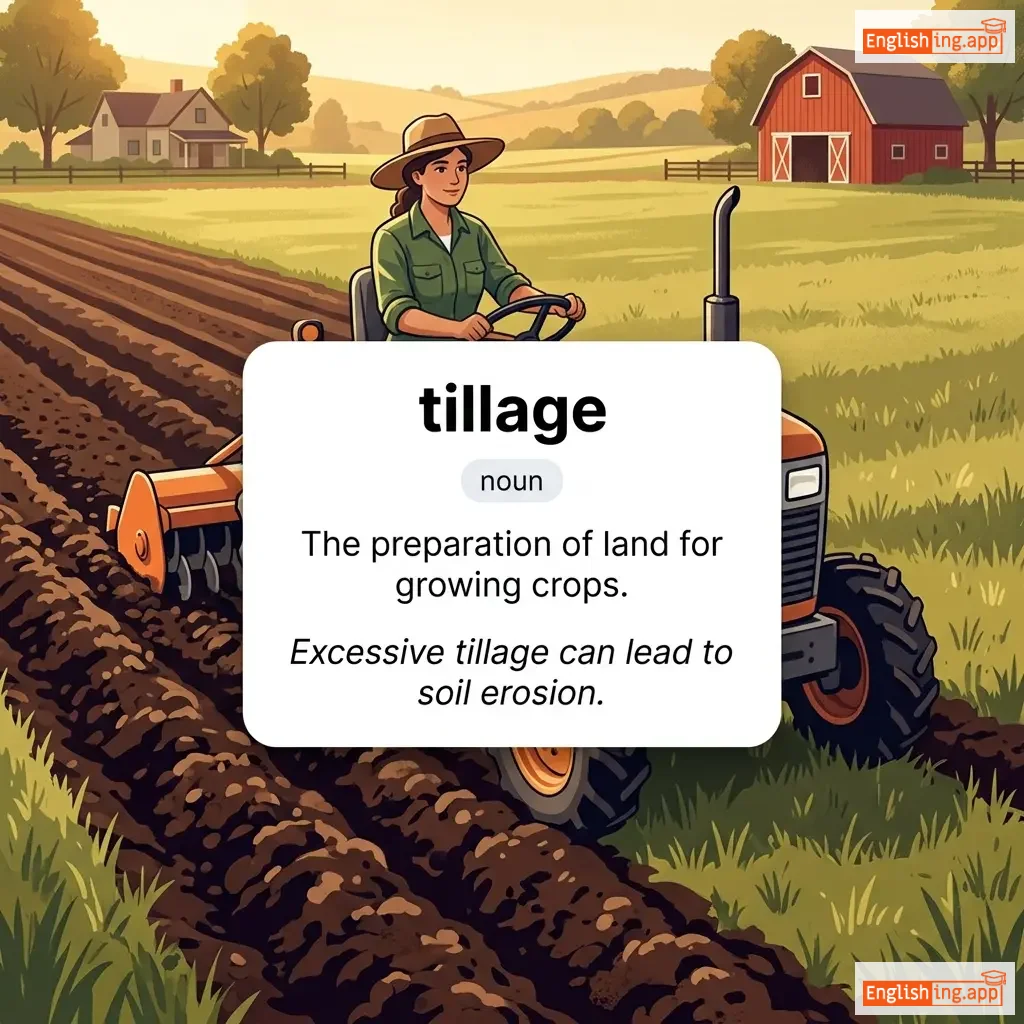
tillage definition card — visual illustration of the meaning
noun C2
ˈtɪl.ɪdʒ
耕作 (kousaku)

The preparation of land for growing crops.

"Excessive tillage can lead to soil erosion."

"過度の耕作は土壌侵食を引き起こす可能性があります。" (Kado no kousaku wa dojo shinshoku o hikiokosu kanousei ga arimasu.)
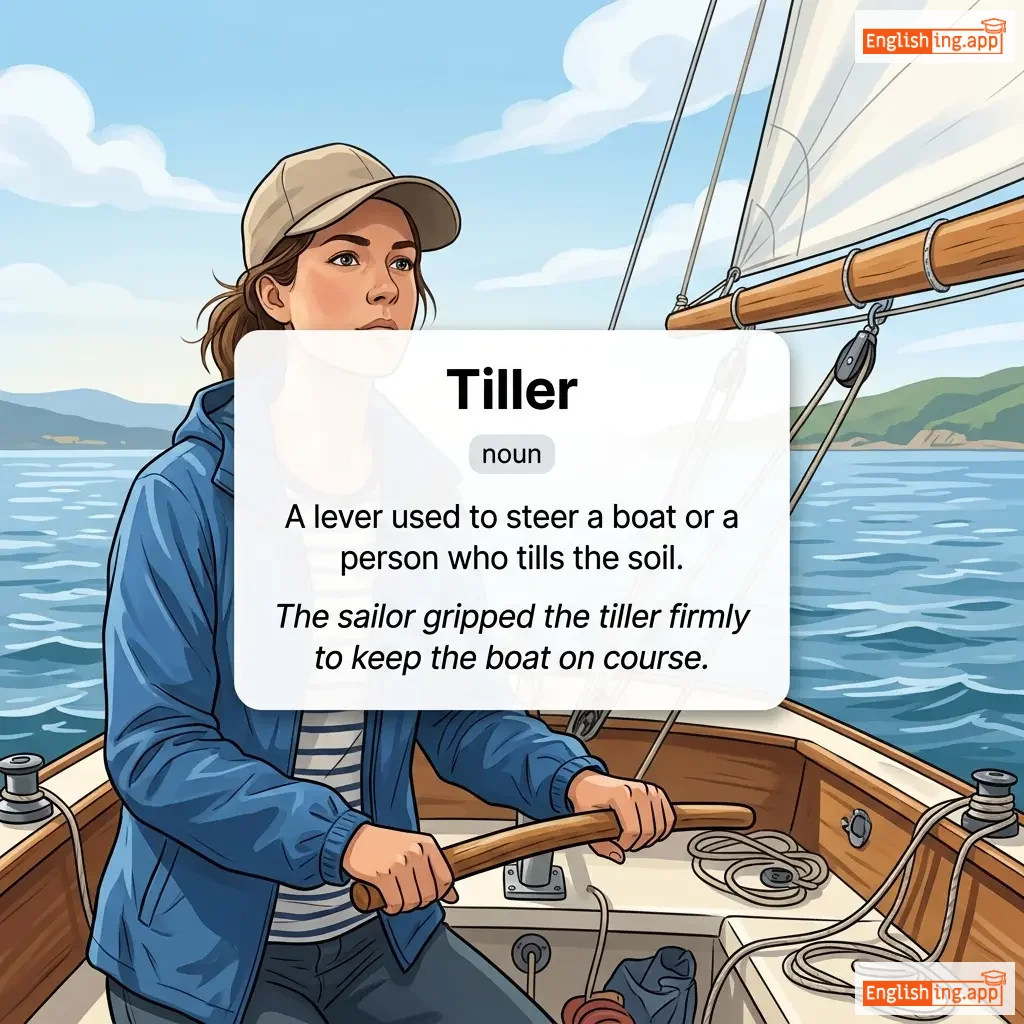
Tiller definition card — visual illustration of the meaning
noun C2
/ˈtɪlər/
舵または土地を耕す人 (tada matawa tochi wo tagayasu hito)

A lever used to steer a boat or a person who tills the soil.

"The sailor gripped the tiller firmly to keep the boat on course."

"水夫はボートをコースに保つために舵をしっかり握った。" (Suifu wa bōto o kōsu ni tamotsu tame ni tada o shikkari nitta.)
noun C2
/tɪlθ/
土壌の状態(作物を植えるための適合性) (dojō no jōtai (sakumotsu o ueru tame no tekigōsei))

The physical condition of soil in relation to its suitability for planting crops.

"The farmer checked the soil's tilth before planting the seeds."

"農家は種を植える前に土壌のtilthを確認しました。" (Nōka wa tane o ueru mae ni dojō no tilth o kakunin shimashita.)
noun C2
/ˈtæmbər/ or /ˈtɪmbər/
音色 (onsoku)

The character or quality of a musical sound or voice as distinct from its pitch and intensity.

"Her voice had a warm timbre that soothed the audience."

"彼女の声には温かみのある音色があり、聴衆を落ち着かせた。" (Kanojo no koe ni wa atatakai no aru onsoku ga ari, choushuu o ochitsukase ta.)
adjective C2
/ˈtaɪmwɔːrn/
時間によって擦り切れた (jikan ni yotte surikireta)

Worn or impaired by age; old and used many times.

"The timeworn house carried a sense of history and nostalgia."

"時間によって擦り切れた家は、歴史と郷愁を感じさせた。" (Jikan ni yotte surikireta ie wa, rekishi to kyoushuu wo kanjiseta.)
adjective C2
/ˈtɪmərəs/
臆病な (okubyō na)

showing or suffering from nervousness, fear, or lack of confidence

"The timorous student hesitated to ask the teacher a question."

"その臆病な学生は、教師に質問するのをためらいました。" (Sono okubyō na gakusei wa, kyōshi ni shitsumon suru no o tamerarimashita.)
noun C2
/ˈtɪŋktʃər/
わずかな痕跡、薬をアルコールに溶かして作られた薬 (wazuka na konseki, kusuri o arukōru ni tokashite tsukurareta kusuri)

a slight trace of something; a medicine made by dissolving a drug in alcohol

"There was a tincture of sadness in her smile."

"彼女の笑顔にはわずかな悲しみの痕跡があった。" (kanojo no egao ni wa wazuka na kanashimi no konseki ga atta.)
verb C2
/ˈtɪpəl/
少し飲む (sukoshi nomu)

to drink alcohol, especially regularly or in small amounts

"He likes to tipple at the local pub after work."

"彼は仕事の後、地元のパブで少し飲むのが好きです。" (Kare wa shigoto no ato, jimoto no pabu de sukoshi nomu no ga suki desu.)
noun C2
/taɪð/
十分の一 (juubun no ichi)

A tenth part of one’s income or produce, often given as a religious offering.

"He gave a tithe of his earnings to the church."

"彼は収入の十分の一を教会に寄付しました。" (Kare wa shuunyuu no juubun no ichi wo kyoukai ni kifu shimashita.)
verb C2
/ˈtɪtəleɪt/
興奮させる (koufun saseru)

To excite or amuse, especially in a slightly sexual or playful way.

"The comedian's jokes titillated the audience."

"コメディアンのジョークは観客を興奮させた。" (Komedian no jooku wa kankyaku o koufun saseta.)
verb C2
/ˈtɪtər/
小さく笑う (chiisaku warau)

to laugh in a quiet, nervous, or restrained way

"The students began to titter when the projector froze."

"プロジェクターがフリーズすると、学生たちは小さく笑い始めた。" (Purojekutā ga furīzu suruto, gakusei-tachi wa chiisaku warai hajimeta.)
adjective C2
/ˈtɪtjələr/
名義上の (meigi jō no)

holding a title or position in name only without real power; relating to the title of a work

"She is the titular head of the committee, but decisions are made by the coordinator."

"彼女は委員会の名義上の長であり、決定はコーディネーターによって行われます。" (Kanojo wa iinkai no meigi jō no chō de ari, kettei wa kōdinētā ni yotte okonawaremasu.)
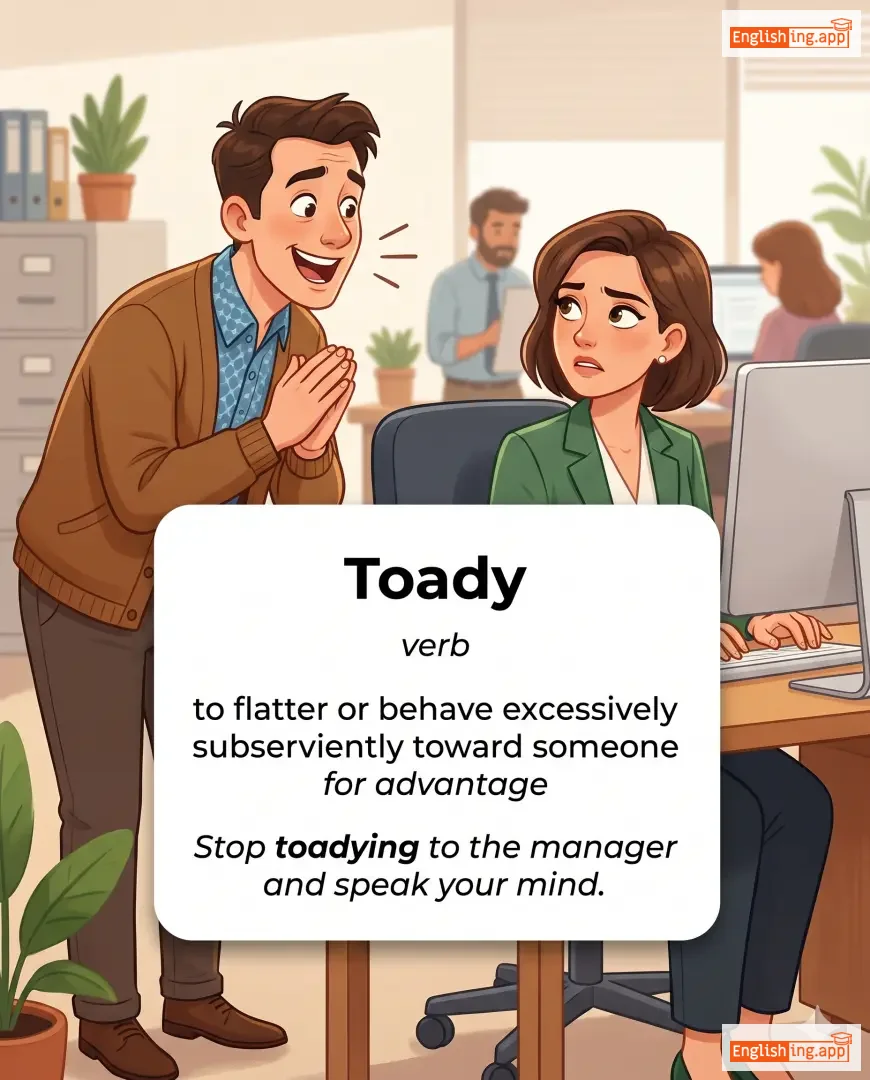
Toady definition card — visual illustration of the meaning
🙇‍♂️

Toady

verb C2
/ˈtoʊdi/

to flatter or behave excessively subserviently toward someone for advantage

"Stop toadying to the manager and speak your mind."

noun C2
/ˈtɒksɪn/
警報ベル (keihou beru)

an alarm bell or signal; a warning that something bad is about to happen

"The data breach sounded a tocsin for stricter security."

"データ漏洩は厳重なセキュリティ強化のための警報ベルのように鳴った。" (Deeta roei wa genjuuna sekyuriti kyouka no tame no keihou beru no you ni natta.)
adjective C2
/ˈtɔɪl.səm/
骨の折れる (hone no oreru)

Involving hard or exhausting work; laborious.

"The workers had a toilsome day in the hot sun."

"作業員たちは暑い太陽の下で骨の折れる一日を過ごした。" (Sagyouin-tachi wa atsui taiyou no shita de hone no oreru ichinichi o sugoshita.)
adjective C2
/tɒnˈsɔːriəl/
理髪師に関連する (rihatsushi ni kanren suru)

relating to barbers or hairdressing

"The town's new barber offered a wide range of tonsorial services."

"町の新しい理髪師は、幅広いトンソリアルサービスを提供しました。" (Machi no atarashii rihatsushi wa, habahiroi tonsorial sābisu o teikyō shimashita.)
noun C2
/ˈtɒnʃər/
托恩修亞 (toenshua)

the practice of shaving or cutting the hair on the scalp, especially in a religious context

"The monk received his tonsure as part of his religious initiation."

"修道士は宗教的な入門儀式の一環としてトンシュアを受けました。" (Shūdōshi wa shūkyō-teki na nyūmon gishiki no ikkanshite tonshua o ukemashita.)
adjective C2
/ˈtɔːrpɪd/
無気力 (torpid)

Mentally or physically inactive; sluggish or lethargic.

"After the long hike, he felt torpid and unmotivated."

"長いハイキングの後、彼は無気力でやる気が出なかった。" (Nagai haikingu no ato, kare wa mukiryoku de yaruki ga denakatta.)
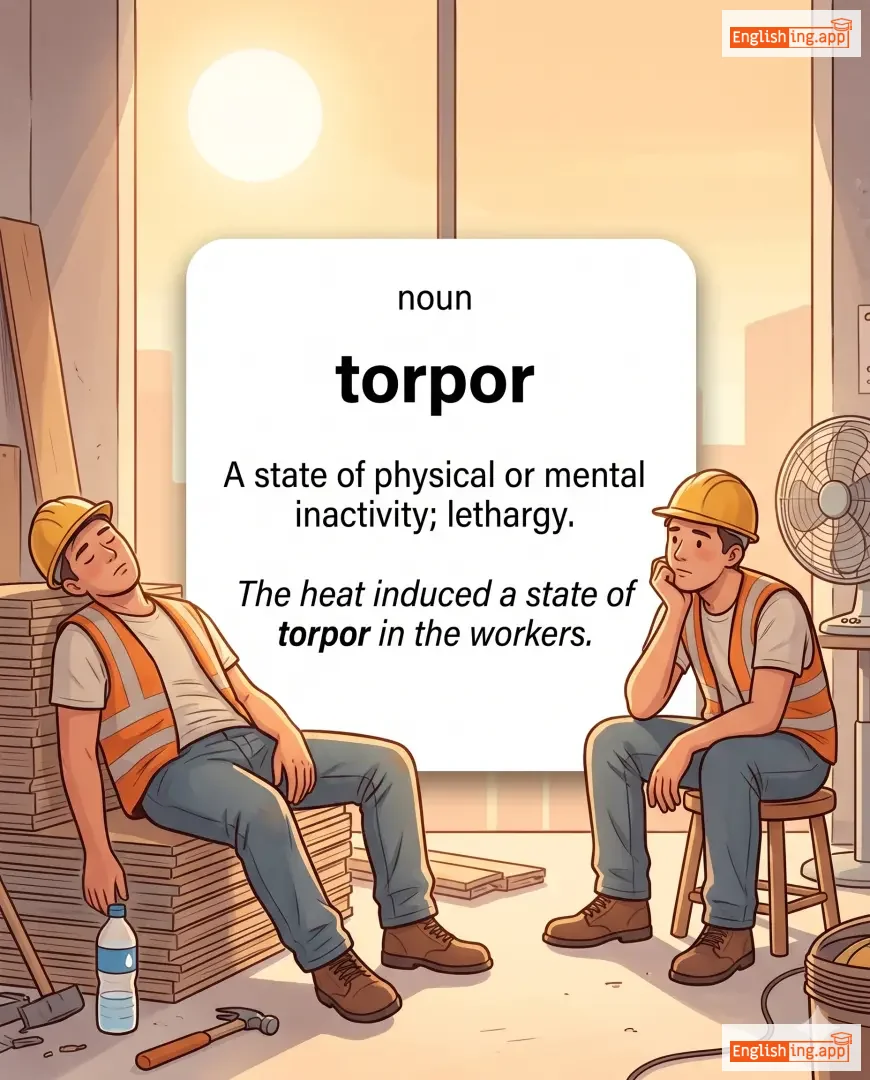
torpor definition card — visual illustration of the meaning
noun C2
/ˈtɔːrpər/
昏睡 (torpor)

A state of physical or mental inactivity; lethargy.

"The heat induced a state of torpor in the workers."

"暑さは労働者に昏睡状態を引き起こした。" (Atsusa wa roudousha ni konsui joutai wo hikiokoshita.)
adjective C2
/ˈtɔːrʃəs/
不法行為 (fuhou koui)

Relating to or involving a wrongful act leading to legal liability.

"The company was found guilty of tortious interference with contracts."

"その企業は契約への不法干渉で有罪判決を受けた。" (Sono kigyou wa keiyaku e no fuhou kanshou de yuuzen hanketsu wo uketa.)
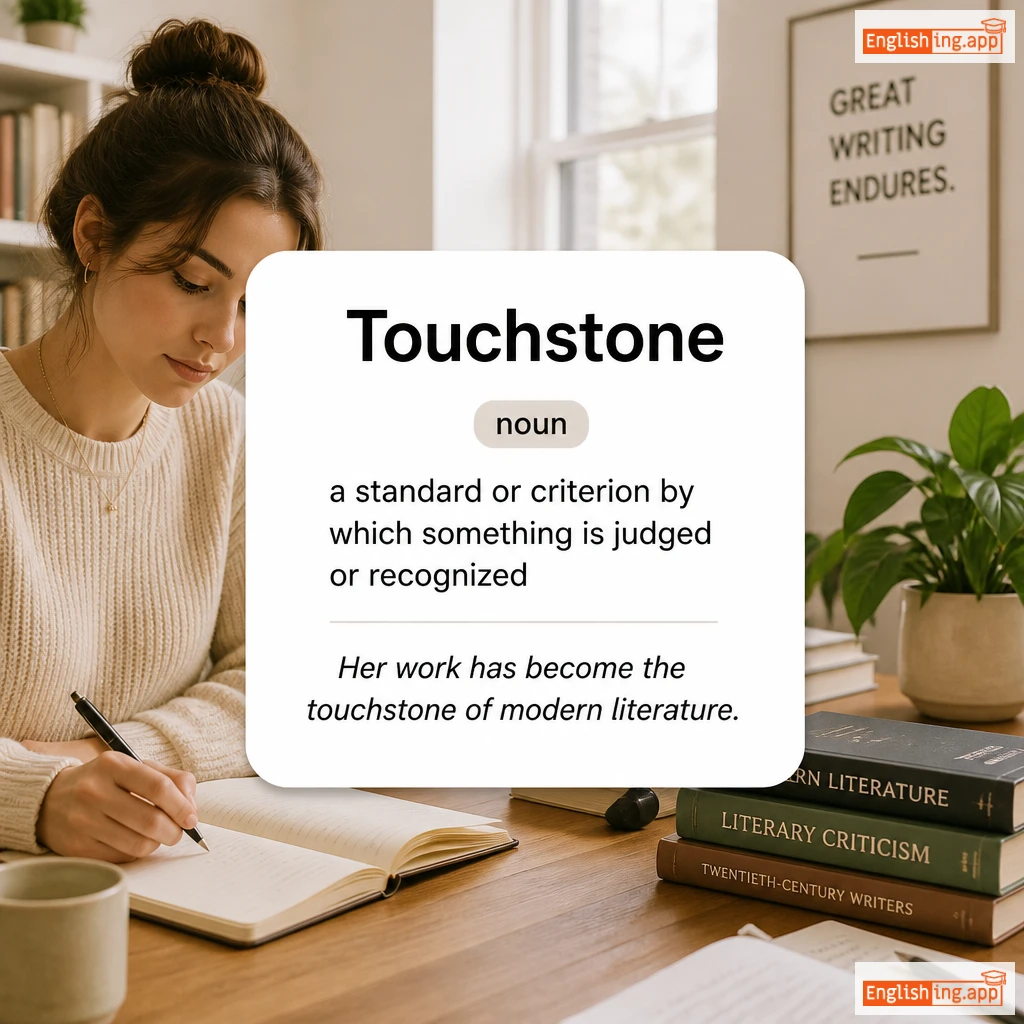
Touchstone definition card — visual illustration of the meaning
noun C2
/ˈtʌtʃstoʊn/
試金石 (shikinseki)

a standard or criterion by which something is judged or recognized

"Her work has become the touchstone of modern literature."

"彼女の作品は現代文学のタッチストーンになった。" (Kanojo no sakuhin wa gendai bungaku no tacchisuto-n ni natta.)