Vocabularios

Descubra, aprenda y domine el vocabulario en inglés

noun C2
/ˈsweɪʒən/
説得 (settoku)

the act of persuading or influencing someone

"The leader used gentle suasion to win support for the plan."

"リーダーは計画への支援を得るために穏やかな説得を使用しました。" (Rīdā wa keikaku e no shien o eru tame ni odayakana settoku o shiyō shimashita.)
noun C2
/ˈswɑːvɪti/
優雅さと魅力 (yūgasa to miryoku)

smoothness and charm in manner

"His suavity made him popular in social gatherings."

"彼の優雅さと魅力は社交の場で彼を人気者にした。" (Kare no yūgasa to miryoku wa shakō no ba de kare o ninkimono ni shita.)
adverb C2
/ˌsʌb ˈroʊzə/
秘密裏に (himitsuri ni)

secretly, in confidence, or in private

"The deal was made sub rosa to avoid public scrutiny."

"取引はサブ ローザで行われ、公衆の監視を避けるためでした。" (Torihiki wa sub rosa de okonaware, kōshū no kanshi o sake ru tame deshita.)
adjective C2
/ˈsʌb.æs.ɪd/
やや酸っぱい (yaya suppai)

Slightly sour or acidic in taste or nature.

"The fruit had a subacid flavor that was refreshing on a hot day."

"その果物はやや酸っぱい味がして、暑い日にさっぱりとした味わいだった。" (Sono kudamono wa yaya suppai aji ga shite, atsui hi ni sappari to shita ajiwai datta.)
noun C2
/sʌbˈɔːl.tən/
下級の立場にある人;軍隊では、若い将校 (sabornā)

A person holding a subordinate position; in the military, a junior officer.

"The subaltern was responsible for leading a small platoon of soldiers."

"サブオルターナは小さな小隊を指揮する責任がありました。" (Sabornā wa chīsana shōtai o shiki suru sekinin ga arimashita.)
adjective C2
/ˌsʌb.əˈkwɒt.ɪk/
水中 (suichū)

Existing, living, or located under water.

"Divers explored the subaquatic cave system filled with rare fish."

"ダイバーたちは珍しい魚でいっぱいの水中洞窟システムを探査しました。" (Daibā-tachi wa mezurashī sakana de ippai no suichū dōkutsu shisutemu o tansa shimashita.)
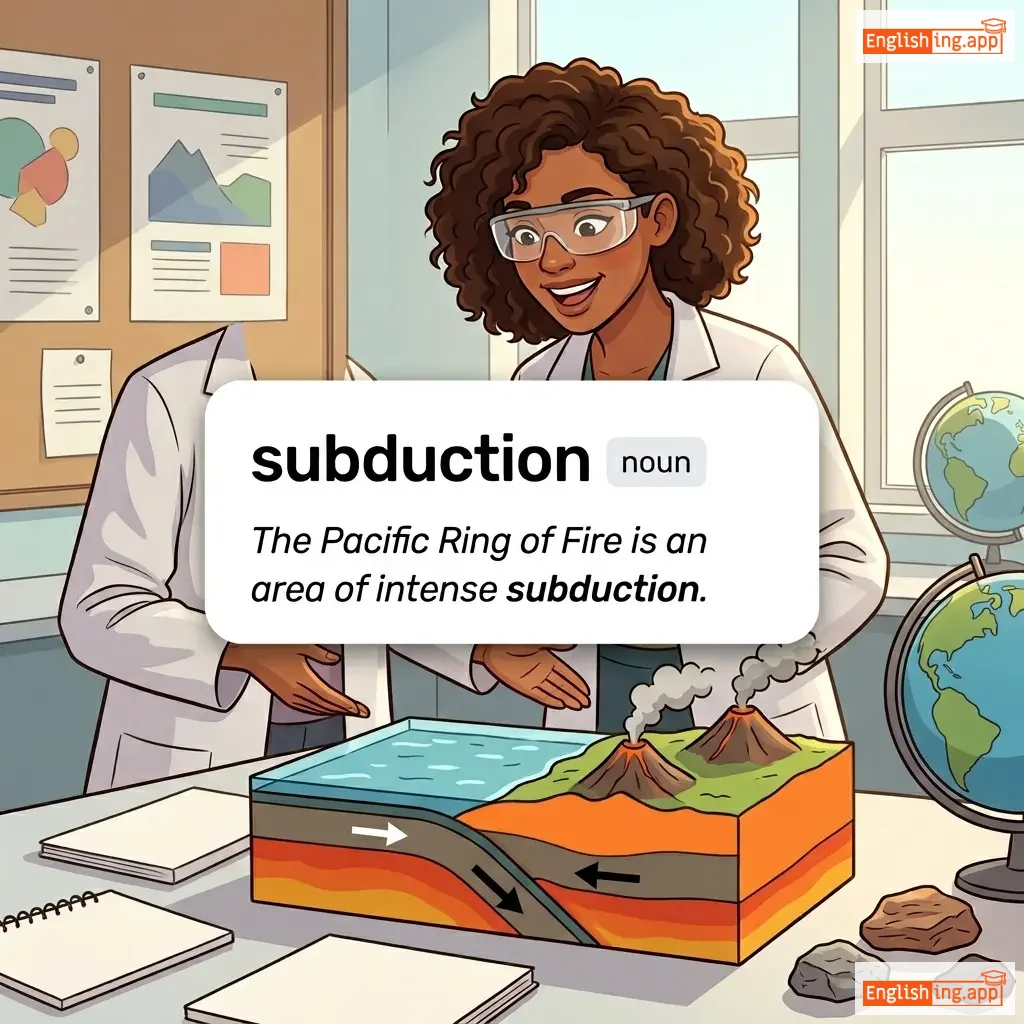
subduction definition card — visual illustration of the meaning
noun C2
/səbˈdʌk.ʃən/
地殻の一層が別の層の下に移動すること。 (Chikaku no issō ga betsu no sō no shita ni idō suru koto.)

The lateral and downward movement of the edge of a plate of the earth's crust into the mantle beneath another plate.

"The Pacific Ring of Fire is an area of intense subduction."

"太平洋の火の輪は激しいサブダクションの領域です。" (Taiheiyō no hi no wa wa hageshī sabudakushon no ryōiki desu.)
adjective C2
/sʌbˈdʒeɪsənt/
下層の (kasō no)

lying immediately beneath; underlying

"The geological survey revealed subjacent layers of rock."

"地質調査は下層の岩層を明らかにした。" (Chishitsu chōsa wa kasō no gansō o akiraka ni shita.)
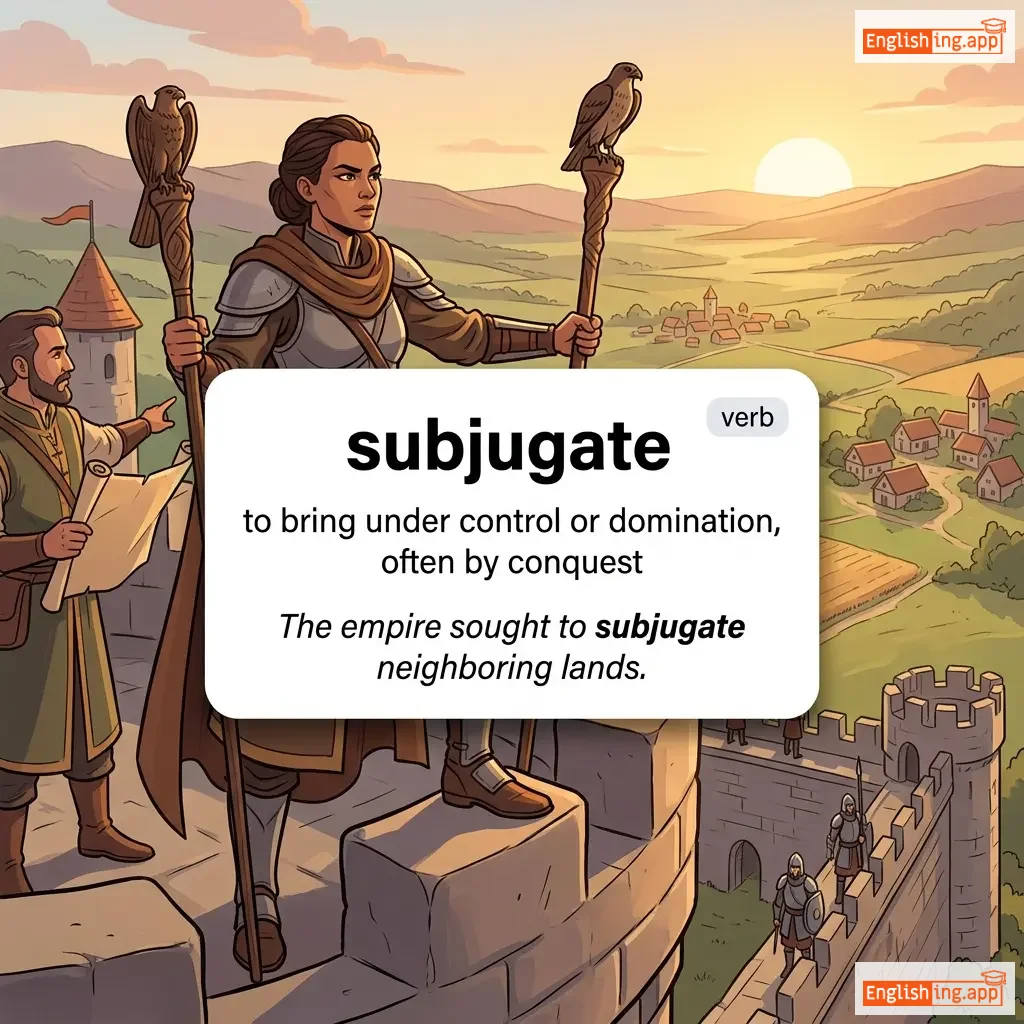
subjugate definition card — visual illustration of the meaning
verb C2
/ˈsʌbdʒʊˌɡeɪt/
征服する (seifuku suru)

to bring under control or domination, often by conquest

"The empire sought to subjugate neighboring lands."

"帝国は隣接する土地を征服しようとした。" (Teikoku wa rinsetsu suru tochi wo seifuku shiyou to shita.)
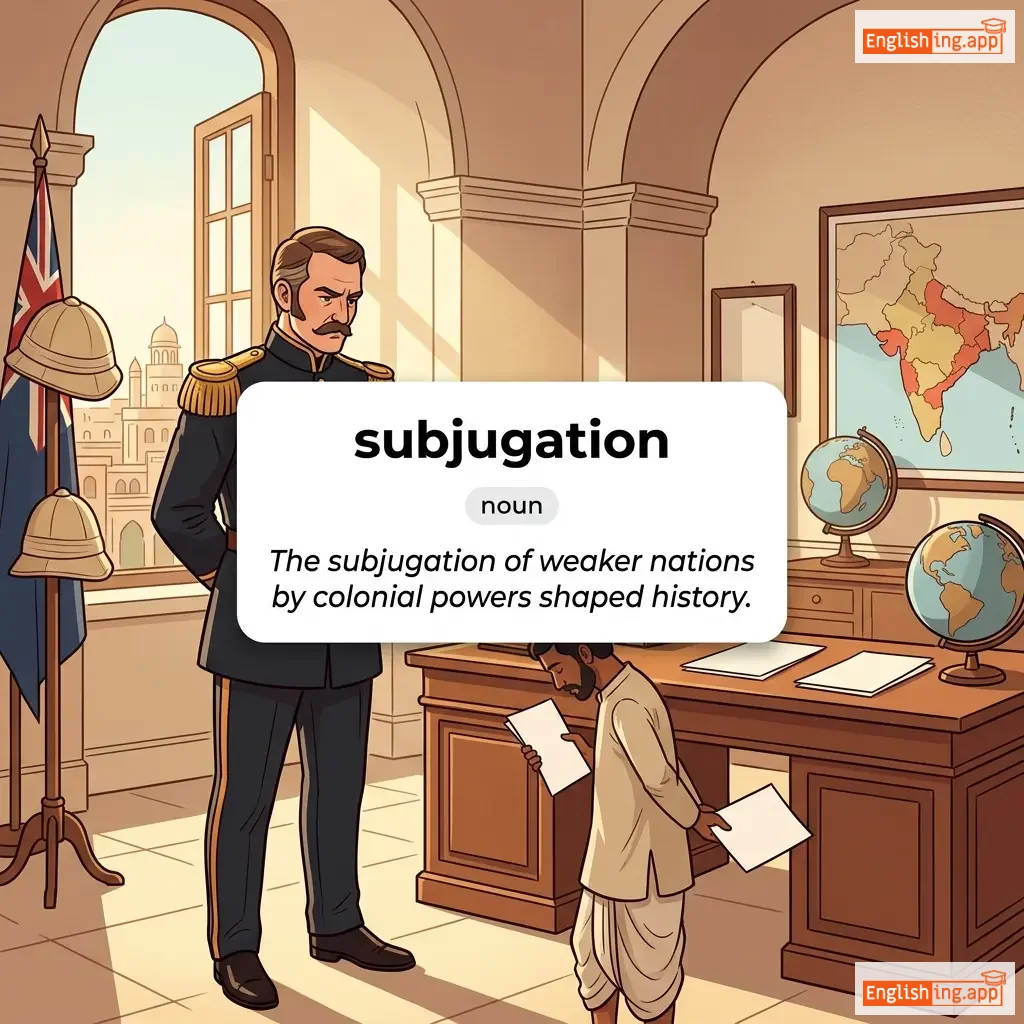
subjugation definition card — visual illustration of the meaning
noun C2
ˌsʌb.dʒʊˈɡeɪ.ʃən
支配または征服 (shihai matawa seifuku)

The action of bringing someone or something under domination or control, especially by force.

"The subjugation of weaker nations by colonial powers shaped history."

"植民地の強国による弱小国の支配は歴史を形作った。" (Shokuminchi no kyōkoku ni yoru jakushōkoku no shihai wa rekishi o katachi zukutta.)
verb C2
/ˈsʌblɪmeɪt/
より高い活動に変換する (yori takai katsudō ni henkan suru)

to redirect strong emotions or desires into socially acceptable activities or channels

"She sublimated her anger into painting beautiful landscapes."

"彼女は美しい風景を描くことで怒りをサブリメートしました。" (Kanojo wa utsukushī fūkei o kaku koto de ikari o saburimēto shimashita.)
adjective C2
/sʌbˈlɪŋɡwəl/
舌下 (zetsuka)

situated or applied under the tongue

"The doctor prescribed a sublingual tablet for faster absorption."

"医師は吸収を早めるために舌下錠を処方しました。" (Ishi wa kyūshū o hayameru tame ni zetsuka jō o shohō shimashita.)
adjective, noun C2
/səbˈmɜːrsəbl/
潜水艇 (sensuitei)

capable of being submerged; a small underwater craft

"The scientists explored the deep ocean using a submersible."

"科学者たちは潜水艇を使って深海を探査した。" (Kagakusha-tachi wa sensuitei o tsukatte shinkai o tansa shita.)
noun C2
/səbˈmɜːrʒən/
沈没 (chinmotsu)

the state of being under water

"The submersion of the fields lasted for several days after the heavy rain."

"激しい雨の後、畑の沈没は数日間続いた。" (Hageshii ame no ato, hatake no chinmotsu wa suujitsukan tsuzita.)
verb C2
/səˈbɔːrn/
買収する (baishū suru)

to bribe or induce someone unlawfully to perform an act, especially to commit perjury

"The lawyer was accused of trying to suborn a witness."

"弁護士は証人を買収しようとしたと非難された。" (Bengoshi wa shōnin o baishū shiyō to shita to hinan sareta.)
noun C2
/səbˈsɜːviəns/
従順 (juujun)

the condition of being too willing to obey or serve others

"His subservience to authority annoyed his colleagues."

"権威への従順さが同僚たちを苛立たせた。" (Ken'i e no juujun-sa ga douryou-tachi o iradataseta.)
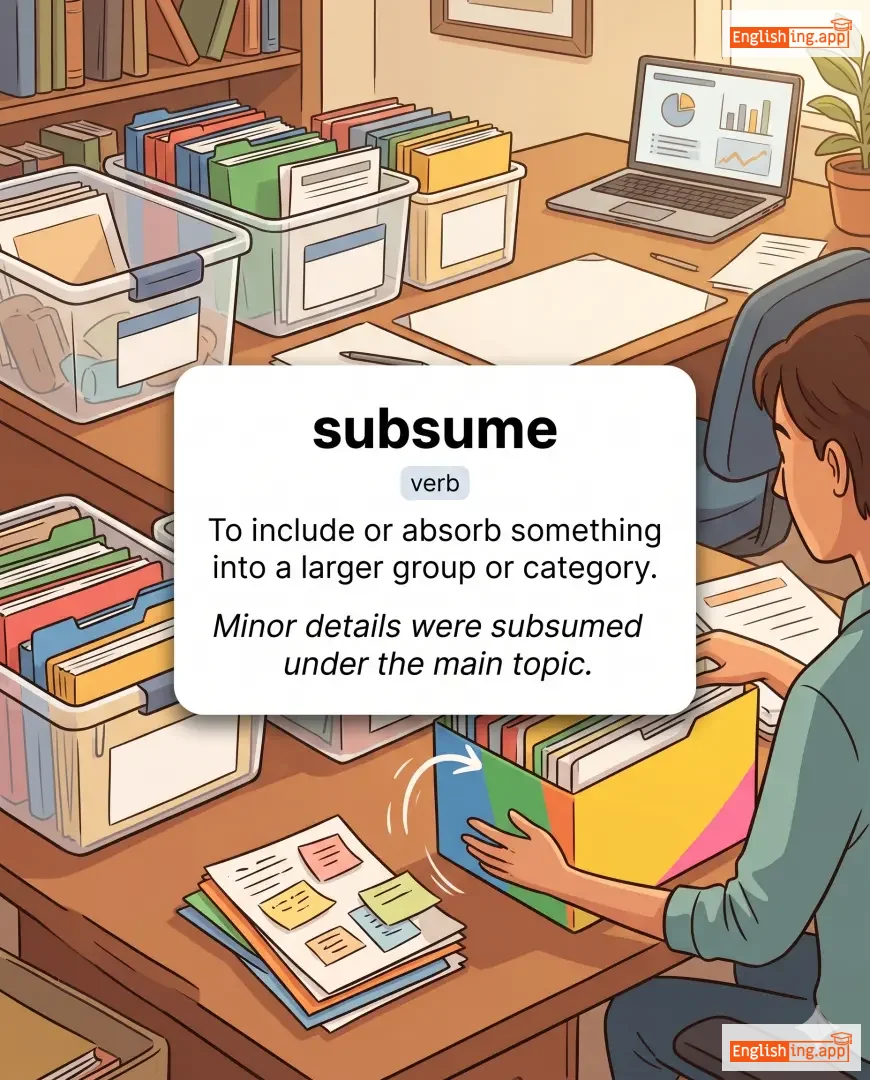
subsume definition card — visual illustration of the meaning
verb C2
/səbˈsjuːm/
含む (fukumu)

To include or absorb something into a larger group or category.

"Minor details were subsumed under the main topic."

"マイナーな詳細は主要なトピックに含まれました。" (Mainā na shōsai wa shuyō na topikku ni fukamaremashita.)
verb C2
/sʌbˈtɛnd/
角度を作る (kakudo o tsukuru)

To extend across or form an angle at a particular point, often used in geometry.

"The arc subtends a 60-degree angle at the center of the circle."

"アークは円の中心で60度の角度を作ります。" (Aaku wa en no chuushin de 60 do no kakudo o tsukurimasu.)
noun C2
/ˈsʌbtərˌfjuːdʒ/
策略 (saron)

Deceit used to achieve one's goal; a trick or excuse to evade something.

"They used subterfuge to avoid paying taxes."

"彼らは税金を回避するために策略を使った。" (Karera wa zeikin o kaihi suru tame ni saron o tsukatta.)
noun C2
/ˈsʌbtrəˌhɛnd/
引数 (hinshū)

a number that is to be subtracted from another number

"In the equation 10 - 4, the number 4 is the subtrahend."

"方程式 10 - 4 では、4 は引数です。" (Hōteishiki 10 - 4 de wa, 4 wa hinshū desu.)
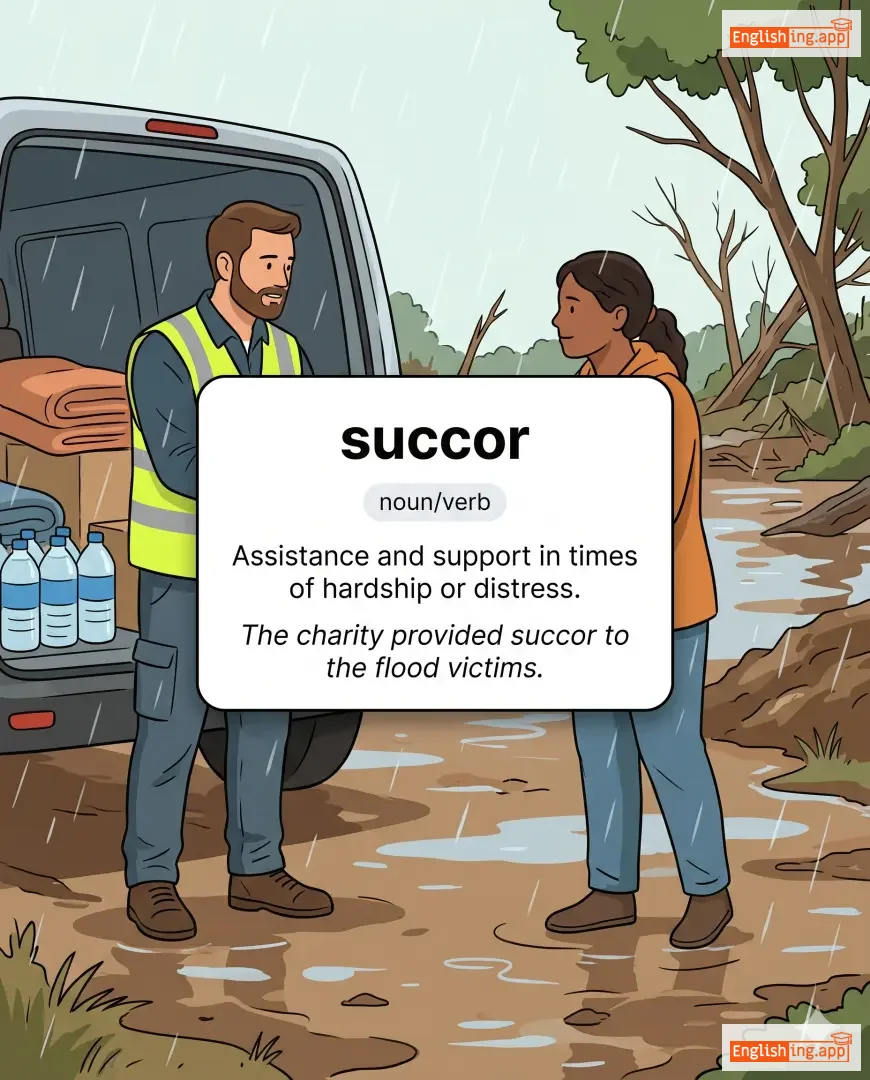
succor definition card — visual illustration of the meaning
noun/verb C2
/ˈsʌkər/
援助 (enjo)

Assistance and support in times of hardship or distress.

"The charity provided succor to the flood victims."

"慈善団体は洪水の被害者に援助を提供しました。" (Jizen dantai wa kōzui no higaisha ni enjo o teikyō shimashita.)
verb C2
/ˈsʌk.əl/
授乳する (junyu suru)

to feed a baby or young animal with milk from the breast or udder

"The mother cat suckled her kittens in the basket."

"母猫はバスケットで子猫にお乳を与えていました。" (Haha neko wa basuketto de koneko ni onochi wo ataete imashita.)
adjective C2
/ˌsuːdəˈrɪfɪk/
発汗促進剤 (hakkansokushinzai)

causing or increasing sweating

"The doctor prescribed a sudorific drug to help reduce the fever."

"医者は発熱を下げるために発汗を促進する薬を処方しました。" (Isha wa hatsunetsu wo sageru tame ni hakkansokushin suru kusuri wo shohou shimashita.)
noun C2
/ˈsʌfərəns/
寛容 (kanyou)

patient endurance of pain, hardship, or delay; passive consent or tolerance

"He lived in poverty with quiet sufferance."

"彼は貧困の中で静かに寛容をもって生きていた。" (Kare wa hinkon no naka de shizuka ni kanyou o motte ikite ita.)
noun C2
/ˈsʌfrədʒɪst/
女性参政権運動家 (josei senseiken undōka)

a person advocating the extension of suffrage, especially to women

"The suffragists organized rallies to demand voting rights for women."

"女性参政権運動家たちは女性の投票権を求めて集会を開いた。" (Josei senseiken undōka-tachi wa josei no tōhyōken o motomete shūkai o hiraita.)
verb C2
/səˈfjuːz/
広がる (hirogaru)

to gradually spread through or over something

"A warm glow suffused her face as she smiled."

"彼女が微笑んだとき、暖かい輝きが彼女の顔に広がった。" (Kanojo ga hohoenda toki, atatakai kagayaki ga kanojo no kao ni hirogatta.)
adjective C2
/səˈdʒɛstəbəl/
影響されやすい (eikyō sareyasui)

easily influenced by the suggestions of others

"Children are highly suggestible and may believe what they are told."

"子供たちは非常に影響されやすく、言われたことを信じるかもしれません。" (Kodomotachi wa hijō ni eikyō sareyasuku, iwareta koto o shinjiru kamoshiremasen.)
verb C2
/ˈsʌli/
汚す (yogosu)

to damage the purity, integrity, or reputation of something

"The scandal sullied the politician’s reputation."

"スキャンダルは政治家の評判を汚した。" (Sukyandaru wa seijika no hyōban o yogoshita.)
adjective C2
/ˈsʌmp.tʃuˌɛr.i/
贅沢品の個人的な支出を制限する法律または規制に関連する (zeitakuhin no kojinteki na shishutsu o seigen suru hōritsu matawa kisei ni kanren suru)

Relating to laws or regulations intended to limit personal spending on luxury goods.

"In medieval Europe, sumptuary laws restricted the wearing of expensive fabrics to the nobility."

"中世ヨーロッパでは、贅沢品法が高価な布地の着用を貴族に限定していました。" (Chūsei Yōroppa de wa, zeitakuhin-hō ga kōka na nuno no chakuyō o kizoku ni gentei shite imashita.)
verb C2
/ˈsʌn.dər/
引き裂く (hikisaku)

To split apart or separate, especially with force.

"The war sundered families and friends."

"戦争は家族と友人を引き裂きました。" (Sensou wa kazoku to yuujin o hikisakimashita.)
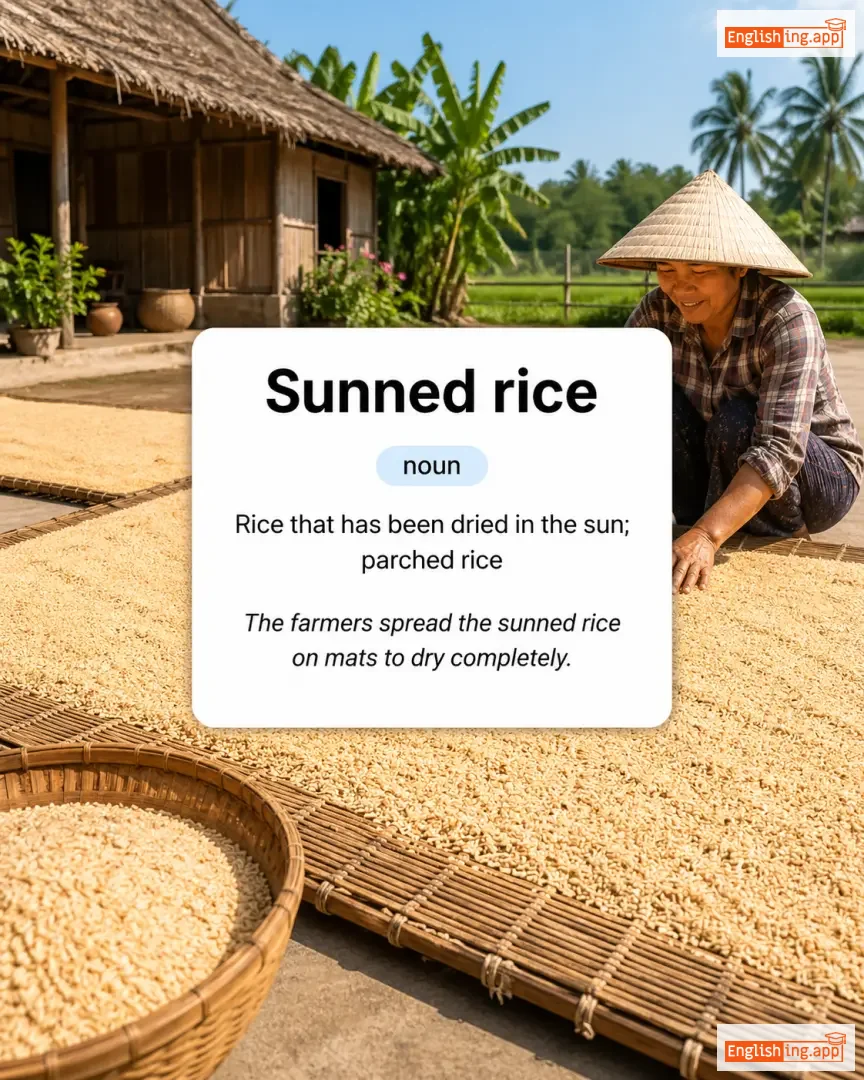
Sunned rice definition card — visual illustration of the meaning
noun C2
/sʌnd raɪs/
日干し米 (Hiboshi-gome)

Rice that has been dried in the sun; parched rice

"The farmers spread the sunned rice on mats to dry completely."

"農民たちは日干し米を完全に乾かすためにマットに広げました。" (Nōmin-tachi wa hiboshi-gome o kanzen ni kawakasu tame ni matto ni hirogemashita.)
noun C2
/ˌsuː.pər.əˈbʌn.dəns/
過剰な豊富さ (Kajou na houfusa)

An excessive or overflowing amount of something.

"The garden was filled with a superabundance of flowers."

"庭は花の過剰な豊富さで満たされていました。" (Niwa wa hana no kajou na houfusa de mitasarete imashita.)
verb C2
/ˌsuːpərˈæd/
追加する (tsuika suru)

to add something to what has already been added

"The author chose to superadd a new chapter to the revised edition."

"著者は改訂版に新しい章を追加することに決めました。" (Chosha wa kaitei-ban ni atarashii shou wo tsuika suru koto ni kimemashita.)
verb C2
/ˌsuːpərˈæn.ju.eɪt/
年金付き退職 (nenkin tsuki taishoku)

to retire someone with a pension, usually due to age or long service

"The company decided to superannuate its senior employees after thirty years of service."

"その会社は三十年の勤務後、上級社員を年金付き退職することに決めました。" (Sono kaisha wa sanjū-nen no kinmu go, jōkyū shain o nenkin tsuki taishoku suru koto ni kimemashita.)
adjective C2
/ˌsuːpərˈæn.ju.eɪ.tɪd/
時代遅れの (jidaiokure no)

old and no longer useful or valid; retired due to age

"The factory was filled with superannuated machines that slowed production."

"工場には生産を遅くする時代遅れの機械が満載でした。" (Kōjō ni wa seisan o osoku suru jidaiokure no kikai ga manzai deshita.)
adjective C2
/ˌsuː.pɚˈsɪl.i.əs/
傲慢な (gōman na)

Behaving or looking as though one thinks one is superior to others; arrogant and disdainful.

"She gave him a supercilious smile as if he was beneath her."

"彼女は彼に傲慢な笑顔を見せた、まるで彼が彼女より下のように。" (Kanojo wa kare ni gōman na egao o miseta, marude kare ga kanojo yori shita no yō ni.)
adjective C2
/ˌsuː.pər.ɪˈrɑː.ɡə.tɔːr.i/
過剰 (kajou)

Going beyond what is required or expected; more than necessary.

"His donation was supererogatory, far beyond what anyone had asked for."

"彼の寄付は過剰で、誰もが求めていた以上のものでした。" (Kare no kifu wa kajou de, dare mo ga motomete ita ijou no mono deshita.)
noun C2
/ˌsuː.pɚˈfluː.ə.t̬i/
過剰 (kajou)

An excessive amount of something; more than what is needed.

"The room was filled with a superfluity of decorations."

"部屋は装飾で過剰に満たされていました。" (Heya wa sōshoku de kajō ni mitasarete imashita.)
verb C2
/ˌsuːpərˈhiːt/
過熱する (kanetsu suru)

to heat a substance beyond its normal boiling point without it becoming vapor

"Engineers superheat the steam to increase the efficiency of the turbine."

"エンジニアはタービンの効率を上げるために蒸気を加熱しすぎます。" (Enjinia wa tābin no kōritsu o ageru tame ni jōki o kanetsu shisugimasu.)
verb C2
/ˌsuːpərɪnˈtɛnd/
監督する (kantoku suru)

to oversee and direct the work or operation of something

"She was hired to superintend the construction project."

"彼女は建設プロジェクトを監督するために雇われました。" (Kanojo wa kensetsu purojekuto o kantoku suru tame ni yato ware mashita.)
noun C2
/ˌsuːpərɪnˈtɛndəns/
監督 (kantoku)

the act of overseeing, supervising, or managing

"The superintendence of the school is the principal’s duty."

"学校の監督は校長の責任です。" (Gakkō no kantoku wa kōchō no sekinin desu.)
adjective C2
/suːˈpɜːrnəl/
天上的 (tenjō no)

Relating to the heavens; celestial or divine.

"The painting captured a supernal beauty that felt otherworldly."

"その絵は、まるで別の世界から来たような天上的な美しさを捉えました。" (Sono e wa, marude betsu no sekai kara kita yō na tenjō-teki na utsukushisa o toraemashita.)
adjective C2
/ˌsuːpərˈnuːmərɛri/
余分な (yobunna)

Exceeding the usual number; extra or unnecessary.

"The play included several supernumerary actors to fill the background scenes."

"その劇は背景のシーンを埋めるためにいくつかの余分な俳優を含んでいました。" (Sono geki wa haikei no shīn o umeru tame ni ikutsuka no yobunna haiyū o fukunde imashita.)
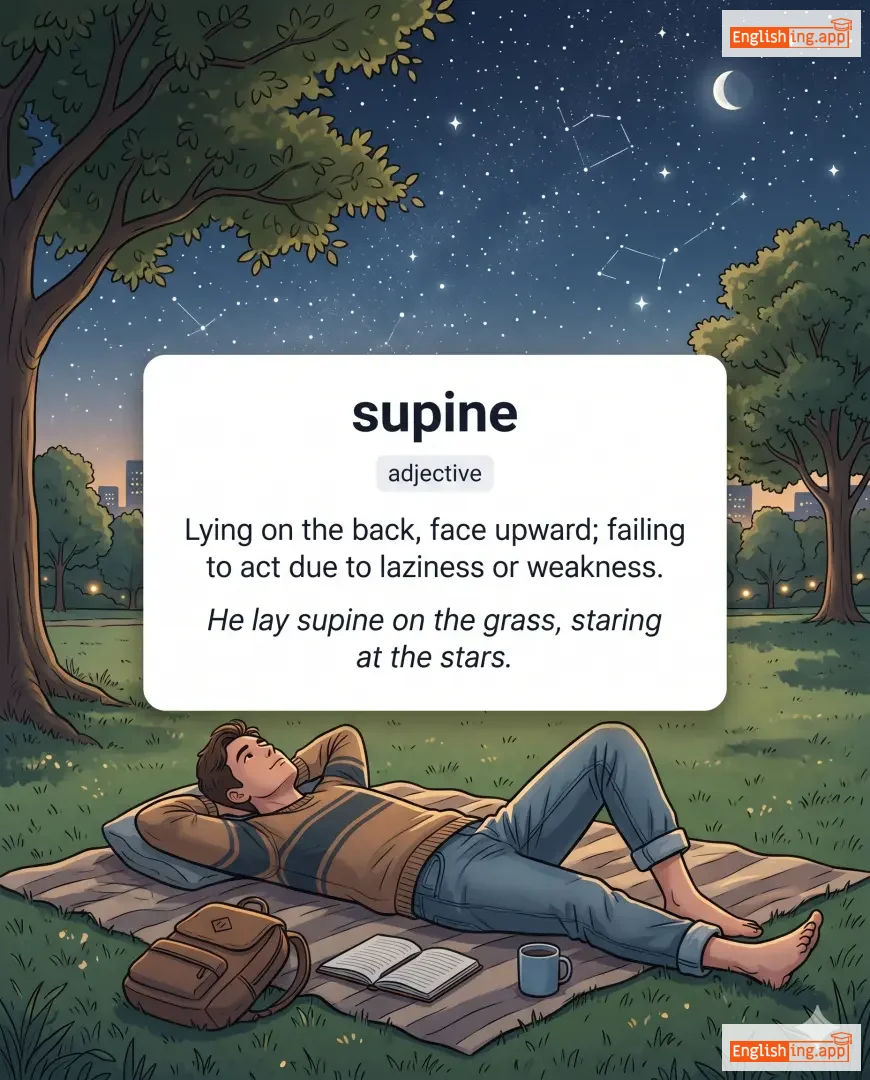
supine definition card — visual illustration of the meaning
adjective C2
/ˈsuːpaɪn/
仰向けで横たわる (aomuke de yokotawaru)

Lying on the back, face upward; failing to act due to laziness or weakness.

"He lay supine on the grass, staring at the stars."

"彼は草の上に仰向けで横たわり、星を見ていた。" (Kare wa kusa no ue ni aomuke de yokotawari, hoshi o mite ita.)
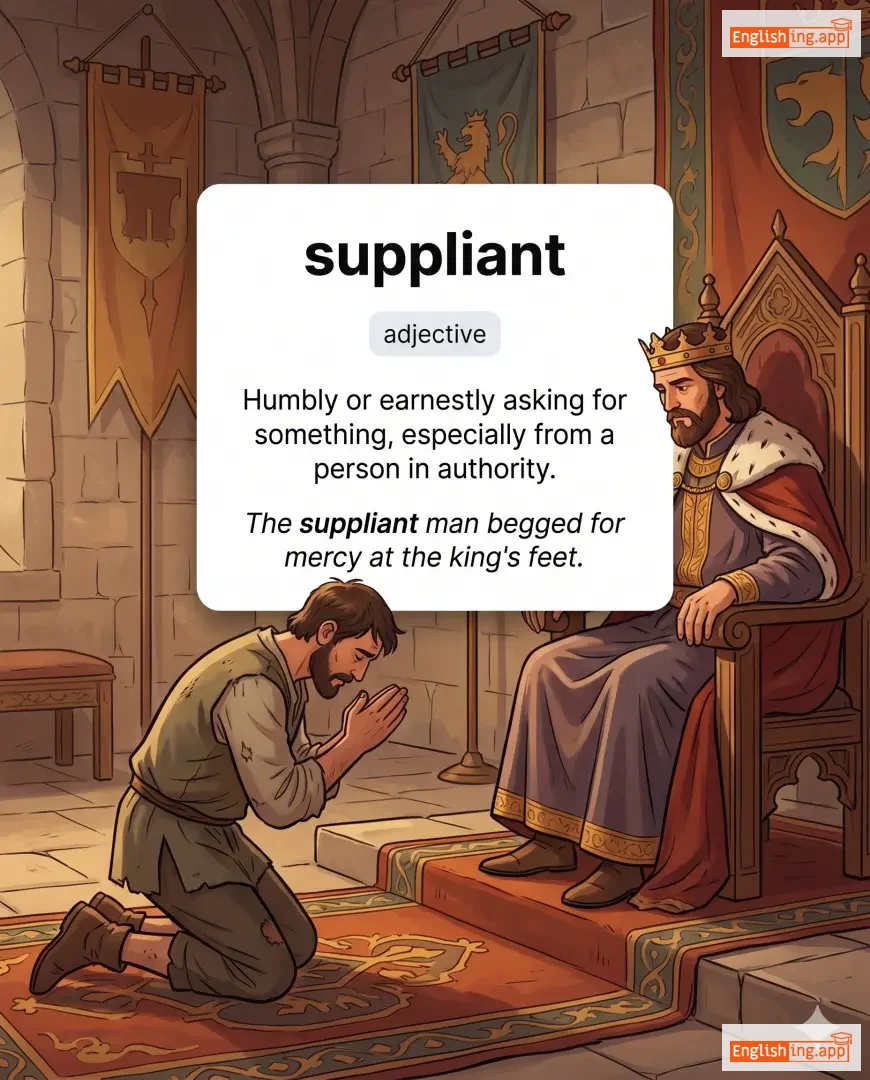
suppliant definition card — visual illustration of the meaning
adjective C2
/ˈsʌpliənt/
請願者 (seigan-sha)

Humbly or earnestly asking for something, especially from a person in authority.

"The suppliant man begged for mercy at the king's feet."

"請願者は王の足元で慈悲を乞いました。" (Seigansha wa ō no ashimoto de jihī o koimashita.)
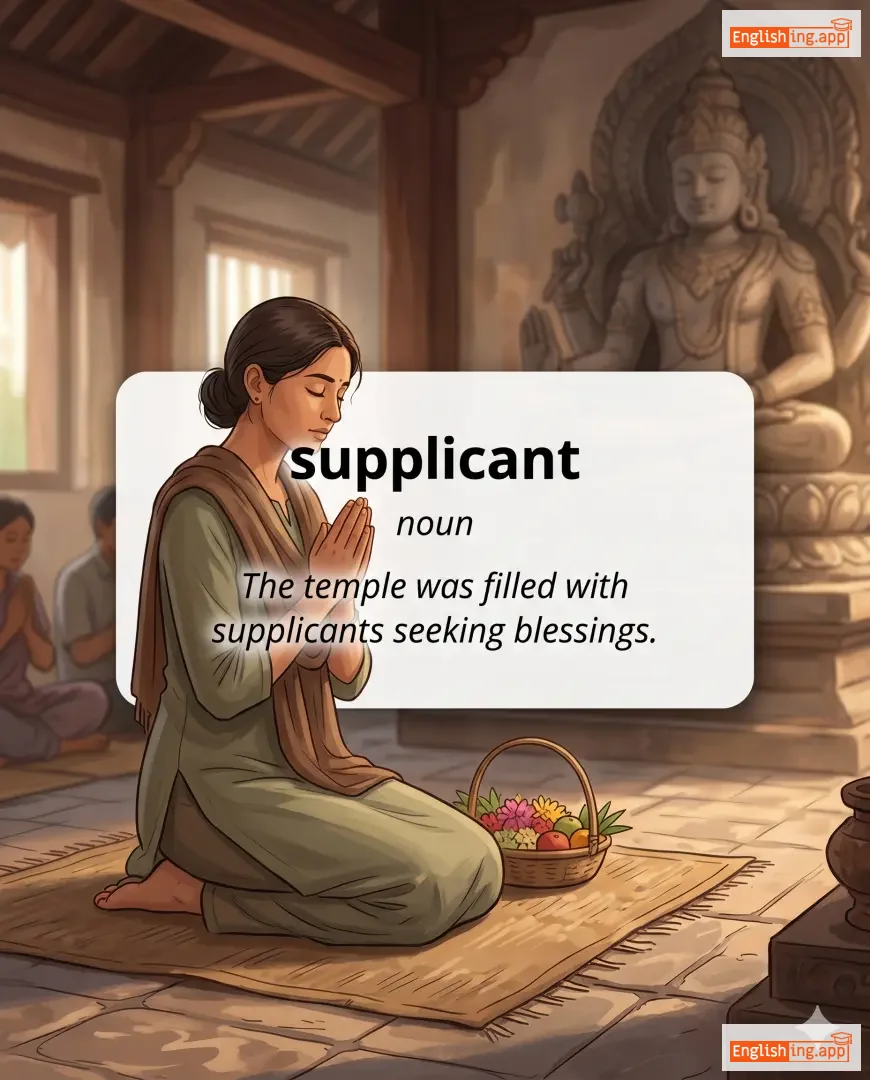
supplicant definition card — visual illustration of the meaning
noun C2
/ˈsʌplɪkənt/
請願者 (seigan-sha)

A person who humbly or earnestly asks for something, usually from a person of authority.

"The temple was filled with supplicants seeking blessings."

"寺院には祝福を求める請願者で溢れていました。" (Jiin ni wa shukufuku o motomeru seigan-sha de afurete imashita.)
verb C2
/ˈsʌplɪˌkeɪt/
お願いする (onegai suru)

To ask for something earnestly or humbly, often in a religious context.

"The villagers supplicated the gods for rain during the drought."

"村人たちは干ばつの間、雨を求めて神々にお願いした。" (Murabito-tachi wa kanbatsu no aida, ame o motomete kamigami ni onegai shita.)
adjective C2
/ˌsʌpəzɪˈtɪʃəs/
仮定的 (kateiteki)

Based on assumption rather than fact; not genuine or authentic.

"The story turned out to be supposititious, with no evidence to support it."

"その話は仮定的であり、それを支持する証拠はありませんでした。" (Sono hanashi wa kateiteki de ari, sore o shiji suru shōko wa arimasen deshita.)
adjective C2
/səˈprɛsəbl̩/
抑制可能な (yokusei kanou na)

capable of being restrained, controlled, or prevented

"The symptoms of the disease are suppressible with medication."

"病気の症状は薬で抑制可能です。" (Byouki no shoujou wa kusuri de yokusei kanou desu.)
verb C2
/ˈsʌpjʊˌreɪt/
膿が出る (nō ga deru)

to form or discharge pus, usually as a result of infection

"The wound began to suppurate after a few days."

"傷口は数日後に膿を出し始めました。" (Kizuguchi wa sūjitsugo ni nō o dashi hajimemashita.)