Vocabularios

Descubra, aprenda y domine el vocabulario en inglés

noun C2
/ˈspæŋɡəl/
スパンコール (supankōru)

A small shiny piece of metal or plastic used for decoration on clothes.

"Her dress was covered with silver spangles that glittered in the light."

"彼女のドレスは銀色のスパンコールで覆われていて、光の中でキラキラ光っていた。" (Kanojo no doresu wa giniro no supankōru de ōwarete ite, hikari no naka de kirakira hikatte ita.)
adjective C2
/spæzˈmɒdɪk/
痙攣性 (keirensei)

occurring irregularly or in sudden bursts

"The patient experienced spasmodic coughing during the night."

"患者は夜間に痙攣性の咳を経験しました。" (Kanja wa yakan ni keirensei no seki o keiken shimashita.)
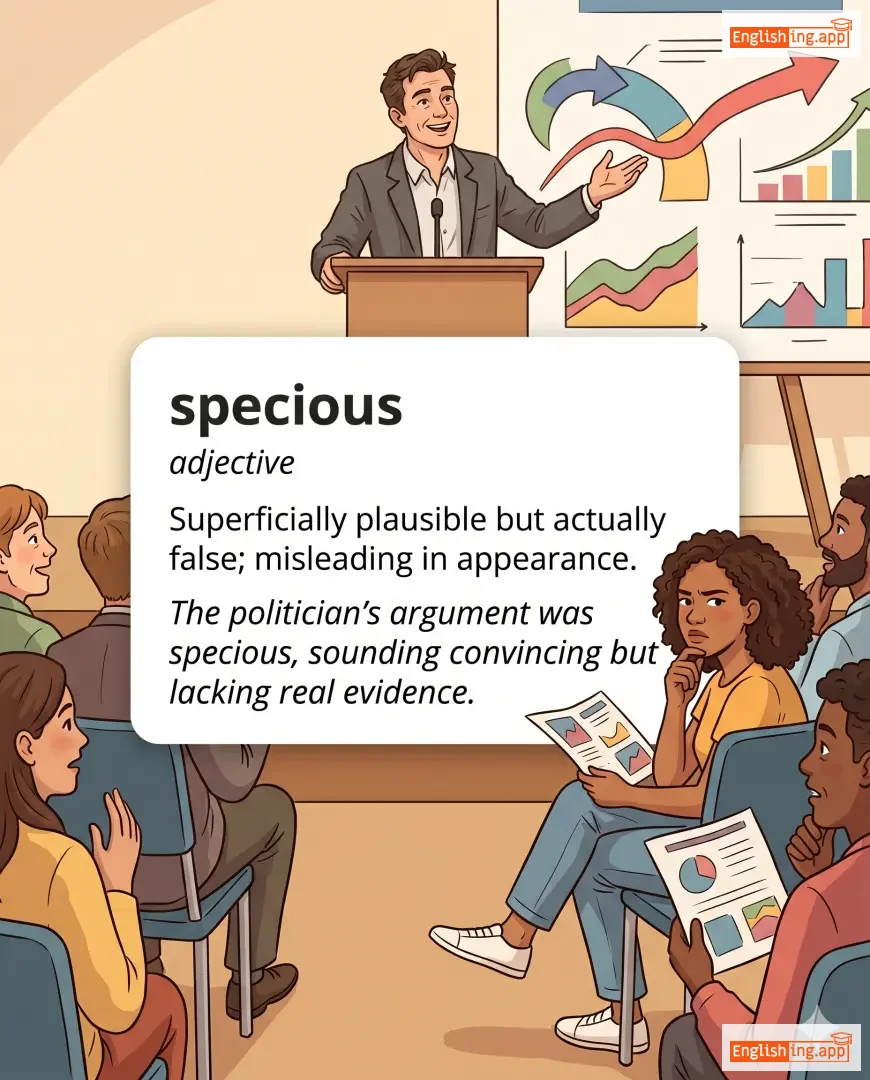
specious definition card — visual illustration of the meaning
adjective C2
/ˈspiːʃəs/
見せかけの (misekake no)

Superficially plausible but actually false; misleading in appearance.

"The politician’s argument was specious, sounding convincing but lacking real evidence."

"その政治家の議論は見せかけのもので、説得力があるように見えたが、実際の証拠は欠けていた。" (Sono seijika no giron wa misekake no mono de, settokuryoku ga aru you ni mieta ga, jissai no shouko wa kakete ita.)
noun C2
/spɪˈlʌŋkər/
洞窟探検家 (dōkutsu tankenka)

A person who explores caves as a hobby.

"The spelunker carried ropes and lights into the dark cave."

"洞窟探検家は暗い洞窟にロープとライトを持って行きました。" (Dōkutsu tankenka wa kurai dōkutsu ni rōpu to raito o motte ikimashita.)
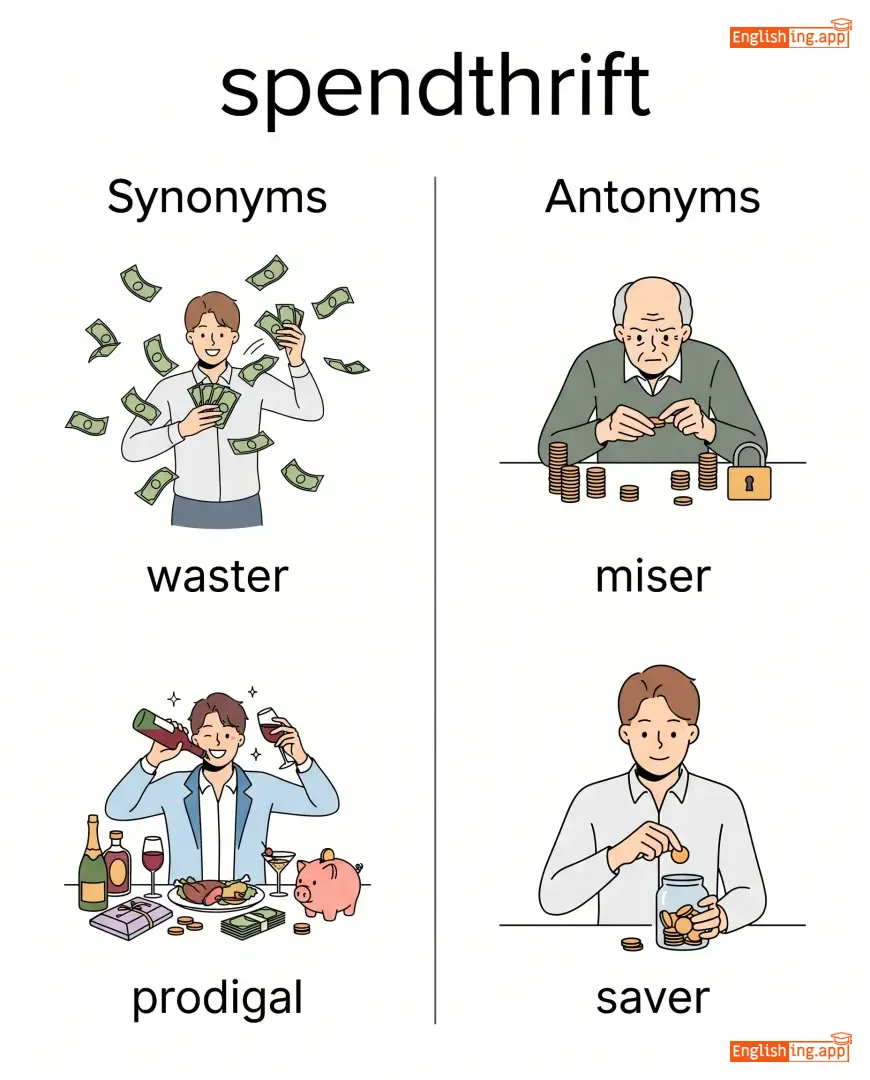
spendthrift definition card — visual illustration of the meaning
noun C2
/ˈspɛndˌθrɪft/
浪費家 (rōhika)

A person who spends money extravagantly or wastefully.

"The young prince was known as a spendthrift, wasting his fortune on lavish parties."

"若い王子は浪費家として知られ、贅沢なパーティーに財産を浪費していた。" (Wakai ōji wa rōhika toshite shirare, zeitakuna pātī ni zaisan o rōhi shite ita.)
noun C2
/sfɛˈrɪsɪti/
球形 (kyūkei)

The quality or state of being spherical; roundness.

"The sphericity of the ball made it roll smoothly on the ground."

"ボールの球形は、地面でスムーズに転がるのを可能にしました。" (Bōru no kyūkei wa, jimen de sumūzu ni korogaru no o kanō ni shimashita.)
noun C2
/ˈsfɛrɔɪd/
回転楕円体 (kaiten daen-tai)

A three-dimensional shape that is almost spherical but slightly flattened or elongated.

"The Earth is not a perfect sphere but an oblate spheroid."

"地球は完璧な球体ではなく、偏平な回転楕円体です。" (chikyuu wa kanpeki na kyutai dewa naku henpei na kaiten daentai desu)
noun C2
/sfɪˈrɒmɪtər/
球面測定器 (kyūmen sokuteiki)

An instrument used for measuring the curvature of spherical surfaces.

"The scientist used a spherometer to measure the lens curvature."

"科学者はレンズの曲率を測定するためにスフェロメーターを使用しました。" (Kagakusha wa renzu no kyokuritsu o sokutei suru tame ni suferomēta o shiyō shimashita.)
adjective C2
/ˈsfɪŋks laɪk/
神秘的な (shinpitekina)

Mysterious, enigmatic, or difficult to interpret

"Her sphinx-like smile made it hard to guess what she was thinking."

"彼女のスフィンクスのような微笑みは、彼女が何を考えているのかを予測するのを難しくさせた。" (Kanojo no sufinx no yōna bishōmi wa, kanojo ga nani o kangaete iru no ka o yosoku suru no o muzukashiku saseta.)
adjective C2
/spɪk/
非常にきれいで整頓された; 完璧 (supikku)

extremely clean and neat; immaculate

"The house was spick and span after the cleaning."

"掃除後、家はまるで新品のようにきれいで整然としていました。" (Sōji go, ie wa marude shinpin no yō ni kirei de seizen to shite imashita.)
adjective C2
/ˈspaɪnəs/
棘のある (toge no aru)

Having spines or thorn-like projections

"The spinous cactus was difficult to handle without gloves."

"その棘のあるサボテンは手袋なしでは取り扱いにくかった。" (Sono toge no aru saboten wa tebukuro nashi de wa toriatsukai nikukatta.)
noun C2
/spliːn/
脾臓; 怒り (hizō; ikari)

an organ in the body that produces lymphocytes and filters blood; also refers to bad temper or spite

"He vented his spleen on his coworkers after the meeting."

"会議後、彼は同僚に対して怒りをぶつけました。" (Kaigi go, kare wa dōryō ni taishite ikari o butsukemashita.)
adjective C2
/splɪˈnɛtɪk/
怒りっぽい、意地悪な (ikarippoi, ijiwaru na)

bad-tempered, irritable, spiteful

"His splenetic remarks offended everyone in the room."

"彼の怒りっぽいコメントは部屋の皆を怒らせた。" (Kare no ikarippoi komento wa heya no mina o okorase ta.)
noun C2
/ˌspoʊliˈeɪʃən/
破壊 (hakai)

The act of destroying or ruining something, often evidence or property.

"The court punished the company for the spoliation of evidence."

"裁判所は証拠の破壊のために会社を罰しました。" (Saibansho wa shōko no hakai no tame ni kaisha o bashimashita.)
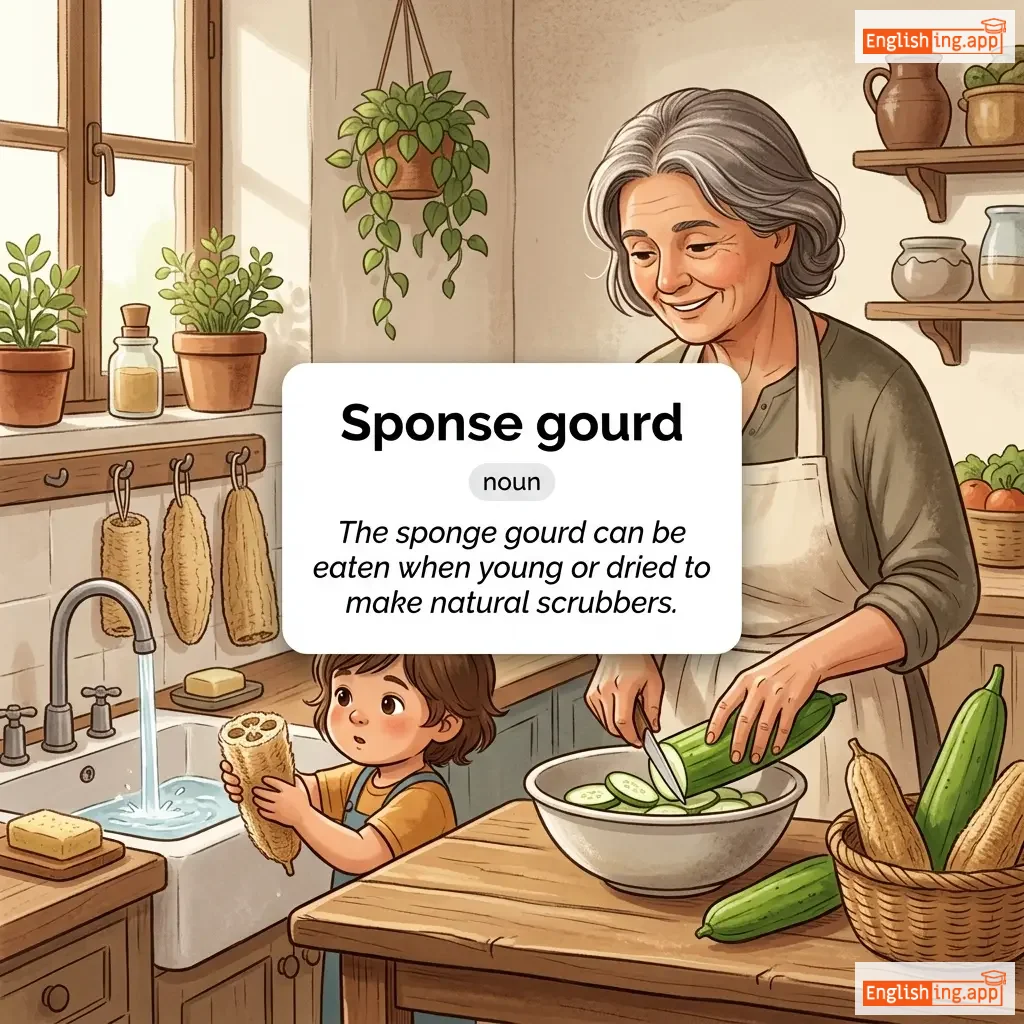
Sponse gourd definition card — visual illustration of the meaning
noun C2
/spʌndʒ ɡɔːrd/
スポンジカボチャ (sponji kabocha)

a fibrous gourd that becomes sponge-like when dried, used for cleaning and in cooking when young

"The sponge gourd can be eaten when young or dried to make natural scrubbers."

"スポンジカボチャは若い時に食べることができるか、乾燥させて自然のスポンジを作ることができます。" (Sponji kabocha wa wakai toki ni taberu koto ga dekiru ka, kansou sasete shizen no suponji o tsukuru koto ga dekimasu.)
noun C2
/ˈspuːnərɪzəm/
スプーナリズム (supunarizumu)

A verbal error in which the initial sounds of words are swapped to create a humorous effect.

"He made a spoonerism by saying 'queer old dean' instead of 'dear old queen'."

"彼は『変な老院長』と言って『親愛なる老女王』の代わりにスプーナリズムを作った。" (Kare wa 'hen na rōin chō' to itte 'shin'ai naru rō joō' no kawari ni supunarizumu o tsukutta.)
adjective C2
/ˈspɔːrtɪv/
スポーティブ (supōtibu)

Playful, lively, or full of fun.

"The children were in a sportive mood during the picnic."

"子供たちはピクニック中にスポーティブな気分でした。" (Kodomotachi wa pikunikku-chū ni supōtibu na kibun deshita.)
noun C2
/ˈspɒt.ɪd sneɪk hed/
カムルチー (kamuruchi)

a type of freshwater fish with spotted markings and an elongated head resembling a snake

"The spotted snake head is a popular fish for aquaculture in South Asia."

"カムルチーは南アジアで人気のある養殖魚です。" (kamuruchi wa minami ajia de ninki no aru yoshokugyo desu)
adjective C2
/spraɪ/
活発 (kappatsu)

active and lively, especially in old age

"The spry grandmother surprised everyone with her quick dance steps."

"活発な祖母は素早いダンスステップで皆を驚かせました。" (Kappatsu na sobo wa subayai dansu suteppu de mina o odorokasemashita.)
noun C2
/spjuːm/
(awa)

Froth or foam, especially found on waves or liquids.

"The waves crashed against the rocks, leaving spume in the air."

"波が岩にぶつかり、空気中に泡を残した。" (Nami ga iwa ni butsukari, kuuchichuu ni awa wo nokoshita.)
🌧️

squelch

verb C2
/skwɛltʃ/

to make a soft sucking sound, such as when walking on mud; to suppress or silence

"His boots squelched in the wet ground."

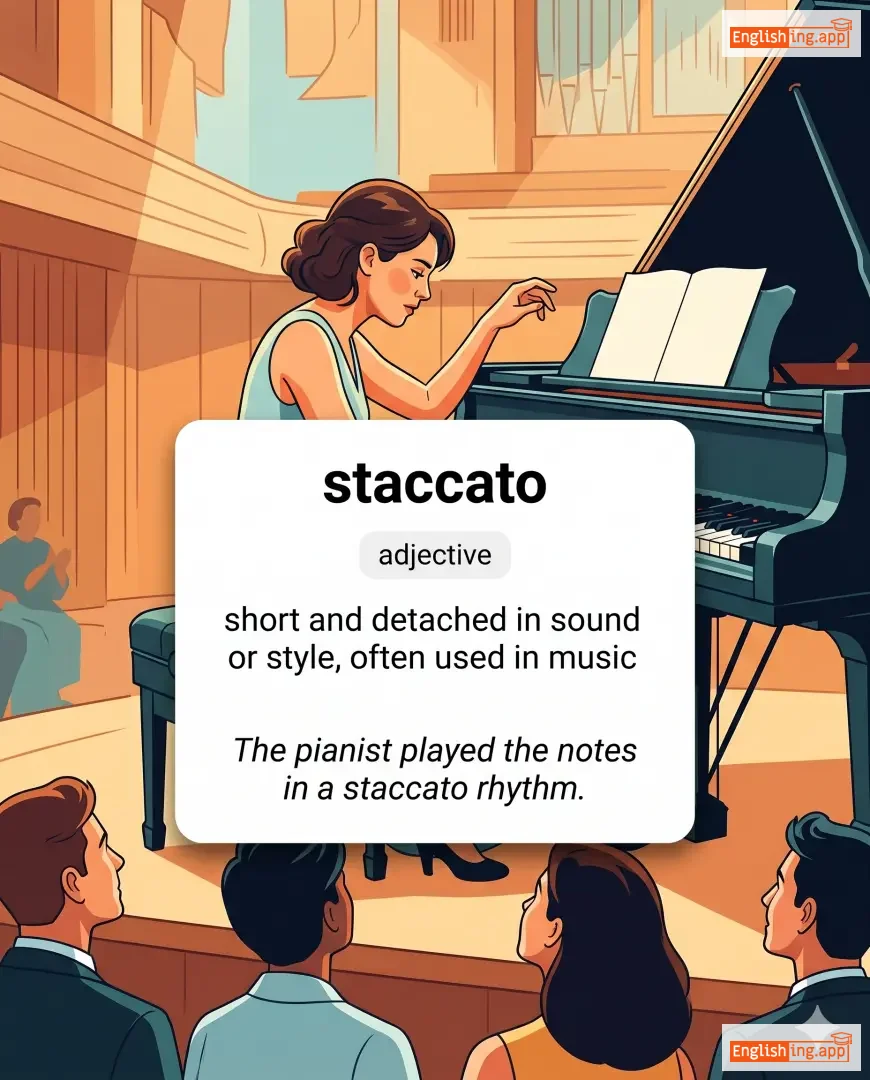
staccato definition card — visual illustration of the meaning
adjective C2
/stəˈkɑː.təʊ/
スタッカート (suttakāto)

short and detached in sound or style, often used in music

"The pianist played the notes in a staccato rhythm."

"ピアニストはスタッカートのリズムで音符を弾きました。" (Pianisuto wa suttakāto no rizumu de onpu o hikimashita.)
adjective C2
/ˈsteɪ.dʒi/
過剰に演劇的 (kajou ni engekiteki)

Overly theatrical, artificial, or exaggerated in manner or style.

"Her performance felt stagy and unnatural."

"彼女のパフォーマンスは過剰に演劇的で不自然に感じられた。" (Kanojo no pafomansu wa kajou ni engekiteki de fushizen ni kanjirareta.)
verb C2
/stɑːntʃ/
止血する (shiketsu suru)

to stop the flow of blood or liquid from a wound or source

"The nurse quickly stanched the bleeding from the cut."

"看護師はすぐに切り傷からの出血を止めました。" (kangoshi wa sugu ni kirikizu kara no shukketsu wo tome mashita)
noun C2
/ˈstænʃən/
支柱 (shichū)

a strong upright bar or post used as support or to control movement

"The red rope was attached to the stanchions to guide the crowd."

"赤いロープは群衆を導くためにスタンションに取り付けられていた。" (Akai rūpu wa gunshū o michibiku tame ni sutanshon ni toritsukerarete ita.)
noun C2
/ˈsteɪsɪs/ or /ˈstæsɪs/
停滞 (teitai)

A state of inactivity or equilibrium; a situation where nothing changes.

"The negotiations reached a state of stasis with no progress made."

"交渉は停滞状態に達し、進展はありませんでした。" (Kōshō wa teitai jōtai ni tasshi, shinten wa arimasen deshita.)
noun C2
/ˈsteɪtkraft/
国政術 (kokusetsu)

The art of governing and managing state affairs effectively.

"The leader was praised for his exceptional statecraft in handling international relations."

"リーダーは国際関係を扱う際の卓越した国政術に対して称賛されました。" (Rīdā wa kokusai kankei o atsukau sai no takuetsu shita kokusetsu ni taishite shōsan saremashita.)
noun C2
/ˈstætɪks/
静力学 (seiryokugaku)

The branch of mechanics dealing with bodies at rest and forces in equilibrium.

"She is studying statics as part of her engineering course."

"彼女は工学のコースの一環として静力学を学んでいます。" (Kanojo wa kōgaku no kōsu no ikkan toshite seiryokugaku o manandeimasu.)
adjective C2
/ˌstætʃuˈɛsk/
彫像のような (chouza no youna)

Having the grace, beauty, or dignity of a statue; tall and attractively proportioned.

"She had a statuesque figure that turned heads wherever she went."

"彼女は彫像のような体型をしていて、どこに行っても人々の視線を引きつけていた。" (Kanojo wa chouza no youna taikei o shite ite, doko ni itte mo hitobito no shisen o hikitsukete ita.)
noun C2
/staɪn/
ビールジョッキ (bīru jokki)

A large beer mug, typically made of glass or stoneware.

"He raised his stein to toast his friends."

"彼は友達のために乾杯するためにシュタインを持ち上げました。" (Kare wa tomodachi no tame ni kanpai suru tame ni shutain o mochiagemashita.)
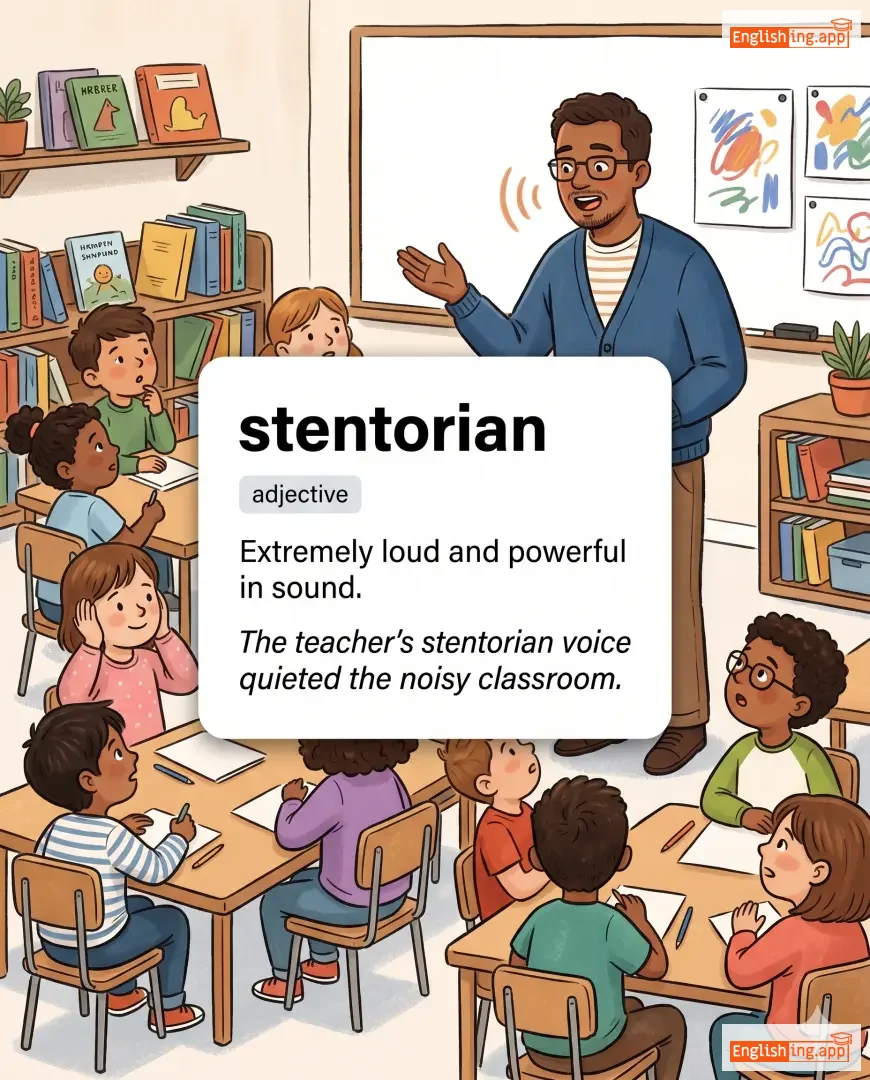
stentorian definition card — visual illustration of the meaning
adjective C2
/stɛnˈtɔːriən/
雷鳴のような (raimei no yōna)

Extremely loud and powerful in sound.

"The teacher’s stentorian voice quieted the noisy classroom."

"教師の雷鳴のような声が騒々しい教室を静めた。" (Kyōshi no raimei no yōna koe ga sōzōshī kyōshitsu o shizumeta.)
noun C2
/stɛp/
ステップ (suteppu)

A large flat area of unforested grassland, especially in southeastern Europe or Siberia.

"The nomads traveled across the vast steppe with their herds."

"遊牧民は自分の家畜を連れて広大なステップを渡っていた。" (Yūbokumin wa jibun no kachiku o tsurete kōdaina suteppu o watatte ita.)
adjective C2
/ˈstɜːr.tər.əs/
重いいびき (omoi ibiki)

Characterized by heavy snoring or breathing.

"The patient’s stertorous breathing alarmed the nurses."

"患者のステルトラスな呼吸は看護師たちを驚かせました。" (Kanja no sutetorasuna kokyū wa kangoshitachi o odorokasemashita.)
noun C2
/ˈstiː.vəˌdɔːr/
荷役作業員 (niyaku sagyouin)

A person employed to load and unload cargo from ships.

"The stevedores worked tirelessly to unload the cargo before dawn."

"荷役作業員たちは夜明け前に貨物を下ろすために疲れ知らずに働いた。" (Niyaku sagyouin-tachi wa yoake mae ni kamotsu o orosu tame ni tsukare shirazu ni hataraita.)
verb C2
/ˈstɪp.əl/
小さな点で覆う (chiisana ten de oou)

to cover a surface with numerous small dots or specks, often in drawing or painting

"The artist stippled the canvas to create a textured effect."

"アーティストはキャンバスに小さな点をつけて、テクスチャ効果を作り出しました。" (Aatisuto wa kyanbasu ni chiisana ten o tsukete, tekusuchā kōka o tsukuridashimashita.)
noun C2
/stɒˈkeɪd/
木製の塀 (mokusei no hei)

a defensive barrier made of strong posts or timbers, often around a fort or prison

"The prisoners were kept inside the wooden stockade."

"囚人は木製の塀の中に閉じ込められていました。" (Shūjin wa mokusei no hei no naka ni tojikomere rarete imashita.)
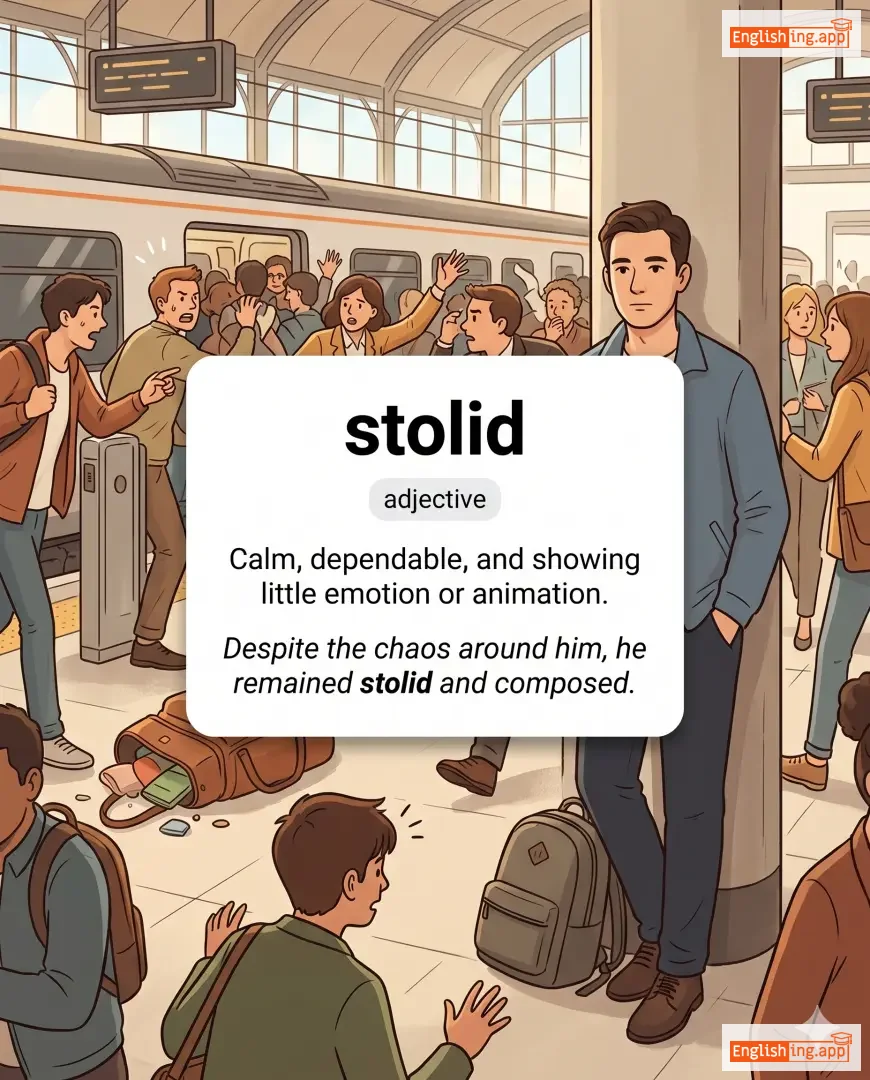
stolid definition card — visual illustration of the meaning
adjective C2
/ˈstɒlɪd/
冷静な、無表情な (reisei na, muhyoujou na)

Calm, dependable, and showing little emotion or animation.

"Despite the chaos around him, he remained stolid and composed."

"周りの混乱にもかかわらず、彼は冷静で落ち着いていました。" (Mawari no konran ni mo kakawarazu, kare wa reisei de ochitsuite imashita.)
adjective C2
/ˌstaʊtˈhɑːrtɪd/
勇敢な (yūkan na)

Brave, determined, and courageous

"The stouthearted soldier never gave up."

"勇敢な兵士は決して諦めなかった。" (Yūkan na heishi wa kesshite akiramenakatta.)
verb C2
/ˈstræɡəl/
不規則に動く (fukisoku ni ugoku)

To move or spread in an irregular, scattered, or untidy way.

"The children began to straggle behind on the long hike."

"子供たちは長いハイキングで後れを取るようになった。" (Kodomotachi wa nagai haikingu de okure wo toru you ni natta.)
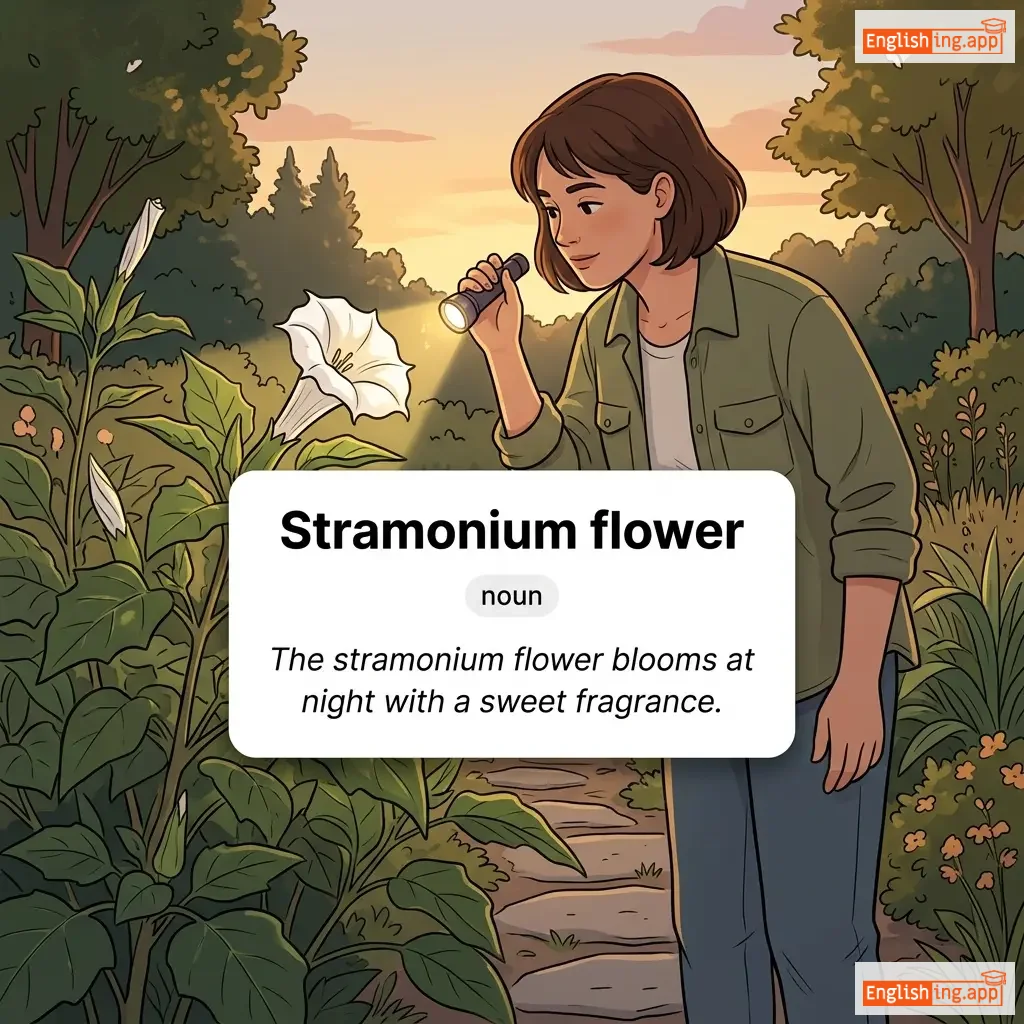
Stramonium flower definition card — visual illustration of the meaning
noun C2
/strəˈmoʊ.ni.əm ˌflaʊ.ər/
ジムソンウィードの花 (jimusonwīdo no hana)

A trumpet-shaped white or purple flower from the jimsonweed plant, known for its toxic properties

"The stramonium flower blooms at night with a sweet fragrance."

"ジムソンウィードの花は夜に咲き、甘い香りを放ちます。" (jimusonwīdo no hana wa yoru ni saki, amai kaori wo hanachimasu)
noun C2
/ˈstrætədʒəm/
策略 (sakuryaku)

a plan or scheme designed to achieve a particular goal, often by trickery

"The general devised a clever stratagem to outwit the enemy."

"将軍は敵を欺くために巧妙な策略を考案しました。" (Shōgun wa teki o azamuku tame ni kōmyōna sakuryaku o kōan shimashita.)
noun C2
/ˈstriːmlɪt/
小川 (ogawa)

a small stream; a tiny brook or rivulet

"A streamlet flowed through the meadow."

"小川が草地を流れていました。" (Ogawa ga kusachi wo nagarete imashita.)
verb, adjective C2
/ˈstraɪeɪt/
縞模様にする (shimayou ni suru)

to mark with stripes or grooves; striped or streaked in appearance

"The rock surface was striated by glacial movement."

"氷河の動きによって岩石の表面に縞模様ができました。" (Hyōgawa no ugoki ni yotte ganshaku no hyōmen ni shimayou ga dekimashita.)
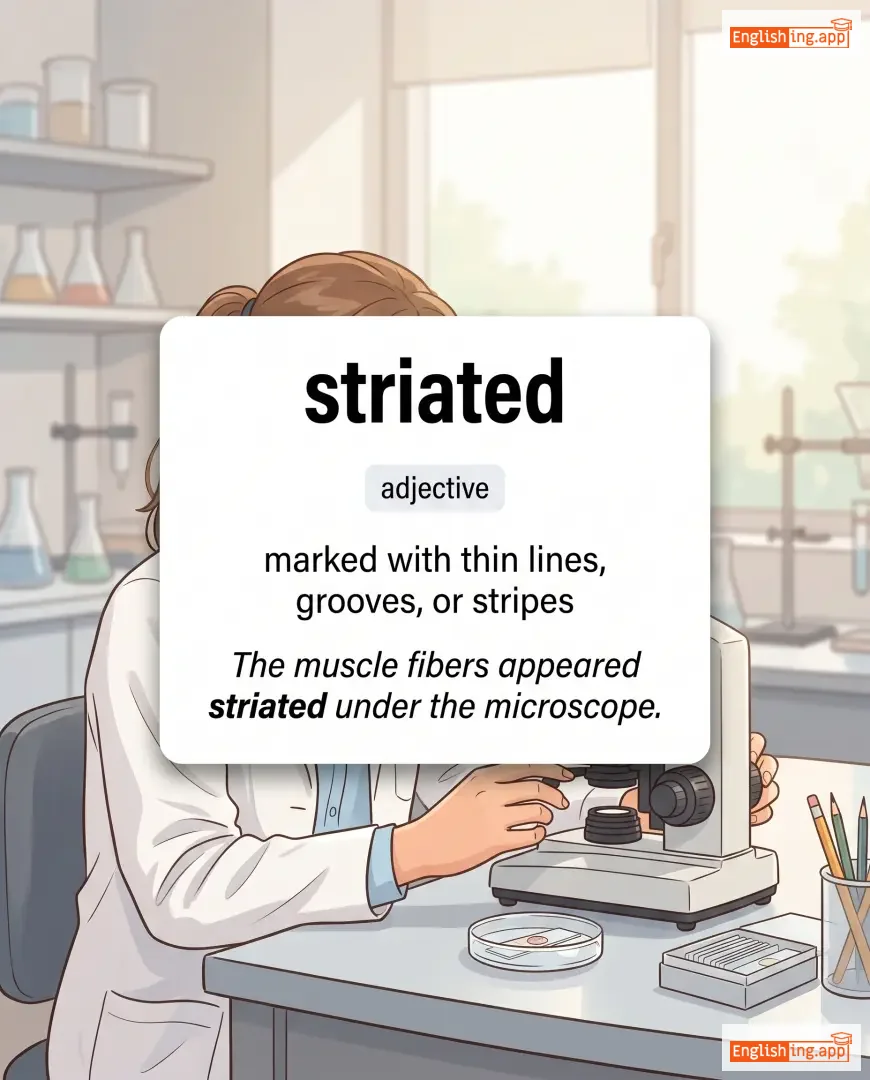
striated definition card — visual illustration of the meaning
adjective C2
/ˈstraɪ.eɪ.tɪd/
縞目模様の (kamome moyou no)

marked with thin lines, grooves, or stripes

"The muscle fibers appeared striated under the microscope."

"顕微鏡で筋肉の繊維が縞目模様のように見えました。" (Kenbikyo de kinniku no sen'i ga kamome moyou no you ni miemashita.)
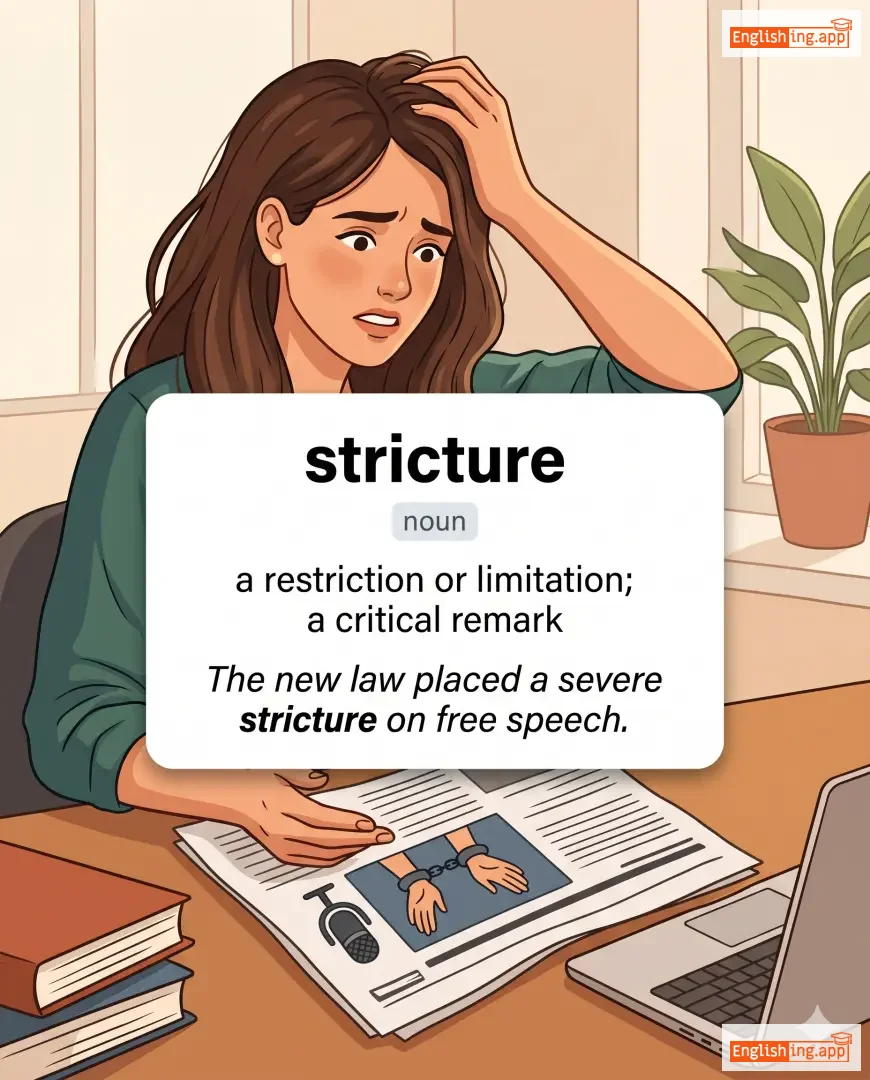
stricture definition card — visual illustration of the meaning
noun C2
/ˈstrɪk.tʃər/
制限、批判 (seigen, hihan)

a restriction or limitation; a critical remark

"The new law placed a severe stricture on free speech."

"新しい法律は言論の自由に厳しい制限を課した。" (Atarashii hōritsu wa genron no jiyū ni kibishī seigen o kashita.)
noun C2
/ˈstrɪndʒənsi/
厳格さ (genkaku-sa)

the quality of being strict, precise, or severe

"The stringency of the new rules surprised everyone."

"新しい規則の厳格さはみんなを驚かせました。" (Atarashī kisoku no genkaku-sa wa minna o odorokasemashita.)
noun C2
/ˈstrɪplɪŋ/
若者 (wakamono)

a young man who is not yet fully grown

"The stripling dreamed of becoming a brave knight."

"その若者は勇敢な騎士になることを夢見ていた。" (Sono wakamono wa yuukan na kishi ni naru koto o yumemite ita.)
verb C2
/ˈstʌltɪfaɪ/
愚かに見せる、または効果や熱意を妨げる (oroka ni miseru, matawa kōka ya netsui o samatageru)

to make someone or something appear foolish, or to hinder effectiveness and enthusiasm

"The repetitive tasks seemed to stultify the workers' creativity."

"繰り返しの仕事が労働者の創造性を鈍らせているようだった。" (Kurikaeshi no shigoto ga rōdōsha no sōzō-sei o noborasete iru yō datta.)
verb C2
/ˈstjuːpɪˌfaɪ/
驚かす (odorokasu)

to make someone unable to think clearly, usually because of surprise or shock

"The magician's tricks stupefied the audience."

"マジシャンのトリックは観客を驚かせた。" (Majishan no torikku wa kankyaku o odorokaseta.)
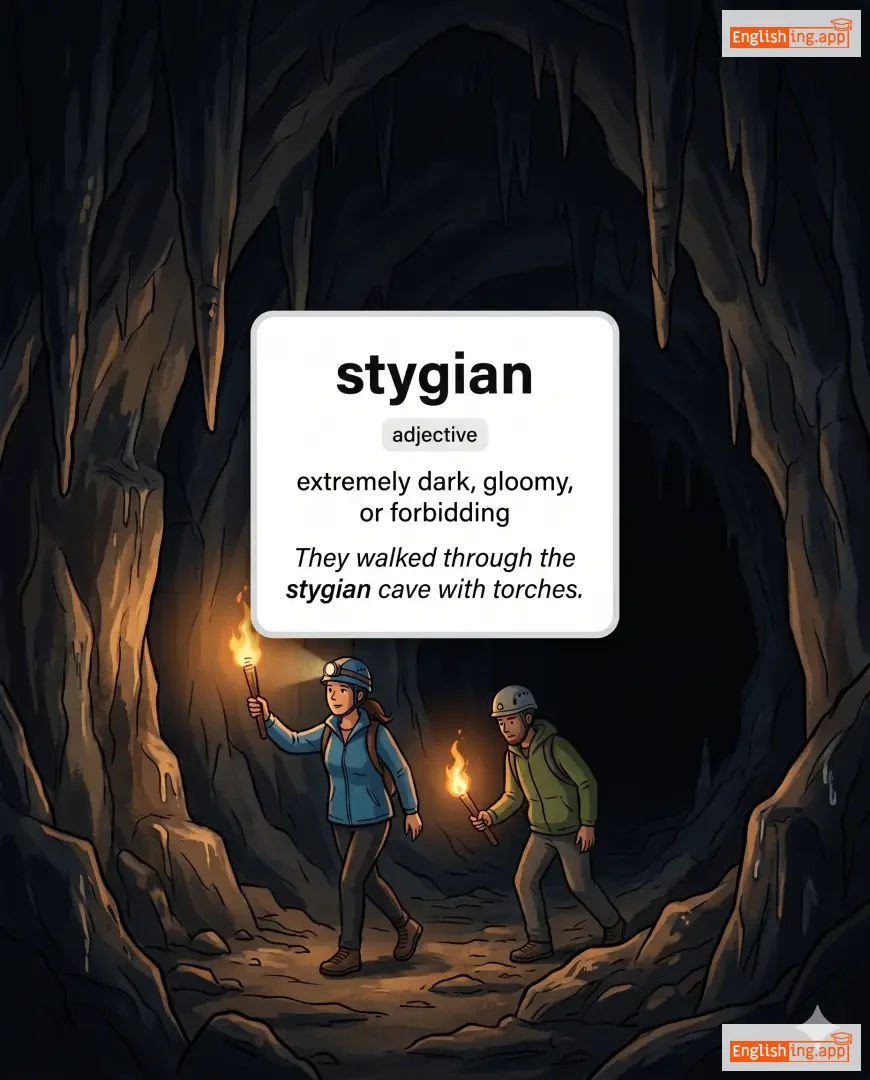
stygian definition card — visual illustration of the meaning
adjective C2
/ˈstɪdʒiən/
暗黒 (ankoku)

extremely dark, gloomy, or forbidding

"They walked through the stygian cave with torches."

"彼らは松明を持って暗黒の洞窟を歩いていました。" (Karera wa taima o motte ankoku no dōkutsu o aruiteimashita.)