Vocabularios

Descubra, aprenda y domine el vocabulario en inglés

Sedulous definition card — visual illustration of the meaning
adjective C2
/ˈsɛdʒʊləs/
勤勉な (kinmen na)

showing great care, attention, and diligence in work or tasks

"She was admired for her sedulous efforts in completing the project on time."

"彼女はプロジェクトを時間通りに完了させるための勤勉な努力で賞賛されました。" (Kanojo wa purojekuto o jikan dōri ni kanryou saseru tame no kinmen na doryoku de shousan saremashita.)
adjective C2
/ˈsiːmli/
適切 (tekisetsu)

proper or appropriate in behavior or appearance

"It was not seemly to argue loudly during the ceremony."

"式典中に大声で議論するのは適切ではありませんでした。" (Shikiten-chuu ni oogoe de giron suru no wa tekisetsu de wa arimasen deshita.)
noun C2
/ˈseɪnjər/
封建領主 (hōken ryōshu)

A feudal lord; a man of authority in medieval Europe.

"The seignior demanded taxes from the peasants."

"封建領主は農民から税金を要求した。" (Hōken ryōshu wa nōmin kara zeikin o yōkyū shita.)
noun C2
/seɪn/
大きな網 (ōkina ami)

A large fishing net that hangs vertically in the water.

"The fishermen cast their seine into the river."

"漁師たちは大きな網を川に投げ入れました。" (Ryōshitachi wa ōkina ami o kawa ni nageiremashita.)
noun C2
/ˈsaɪz.mə.ɡræf/
地震計 (jishinkei)

An instrument that measures and records details of earthquakes, such as force and duration.

"The seismograph detected a strong tremor in the area."

"地震計はその地域で強い揺れを検出しました。" (Jishinkei wa sono chiiki de tsuyoi yure o kenshutsu shimashita.)
noun C2
/ˌself əˈbeɪs.mənt/
自己卑下 (jiko hige)

The act of belittling or humiliating oneself.

"His constant self-abasement made others uncomfortable."

"彼の絶え間ない自己卑下は他の人々を不快にさせた。" (Kare no tae manai jiko hige wa hoka no hitobito wo fukai ni saseta.)
adjective C2
/ˌsɛm.iˈsɪv.ə.laɪzd/
半文明 (hanbunmei)

Partially civilized; having some aspects of civilization but not fully developed.

"The tribe was described as semicivilized by early explorers."

"その部族は初期の探検家によって半文明と説明されました。" (Sono buzoku wa shoki no tankenka ni yotte hanbunmei to setsumei saremashita.)
adjective C2
/ˌsɛm.iˈkɒn.ʃəs/
半意識 (han ishiki)

Only partly conscious; not fully aware of surroundings.

"He was semiconscious after the accident and could barely respond."

"彼は事故後セミコンシャスで、ほとんど反応できなかった。" (Kare wa jiko go semiconscious de, hotondo hannō dekinakatta.)
noun C2
/ˈsɛm.ɪ.nɛr.i/
神学校 (shingakkou)

A school or college for training priests, ministers, or rabbis.

"He decided to enroll in a seminary to study theology."

"彼は神学校に入学して神学を学ぶことに決めました。" (Kare wa shingakkou ni nyuugaku shite shingaku o manabu koto ni kimemashita.)
noun C2
/səˈnɛs.əns/
老化 (rōka)

The process of growing old or the condition of aging.

"The biologist studied senescence in plants to understand aging."

"生物学者は植物のセネセンスを研究して、老化を理解しようとしました。" (Seibutsugakusha wa shokubutsu no senesensu o kenkyū shite, rōka o rikai shiyō to shimashita.)
noun C2
/sɛnˈsɔːrɪəm/
感覚中枢 (kankaku chūsu)

The part of the brain or mind concerned with the reception and interpretation of sensory stimuli.

"The patient’s sensorium was clouded after the accident."

"事故後、患者の感覚中枢はぼやけていた。" (jiko go, kanja no kankaku chūsu wa boyakete ita.)
adjective C2
/sɛnˈtɛnʃəs/
道徳的な; 道徳的に説教する (dōtoku-teki na; dōtoku-teki ni sekkyō suru)

Given to moralizing in a pompous or affected manner.

"His sententious remarks annoyed the audience."

"彼の道徳的なコメントは観客をイライラさせた。" (Kare no dōtoku-teki na komentā wa kankyaku o iraira saseta.)
noun C2
/ˈsɛnʃəns/
感覚能力 (kankaku nōryoku)

The capacity to feel, perceive, or experience subjectively.

"Many argue that animals possess sentience."

"多くの人々は動物が感覚能力を持っていると主張しています。" (Ōku no hitobito wa dōbutsu ga kankaku nōryoku o motte iru to shuchō shiteimasu.)
adjective C2
/ˈsɛpərəbəl/
分離可能な (bunri kanō na)

Capable of being separated or divided.

"The two issues are separable and should be discussed independently."

"この二つの問題は分離可能であり、独立して議論されるべきです。" (Kono futatsu no mondai wa bunri kanō de ari, dokuritsu shite giron sareru beki desu.)
adjective C2
/sɛpˈtɛnɪəl/
7年ごとの (7 nen goto no)

Occurring every seven years.

"The festival is a septennial tradition in the village."

"その祭りは村で7年ごとの伝統です。" (Sono matsuri wa mura de 7 nen goto no dentou desu.)
noun C2
/ˈsɛpəlkər/
墓室 (boku shitsu)

A small room or monument, cut in rock or built of stone, in which a dead person is buried.

"The ancient king was laid to rest in a grand sepulcher."

"古代の王は大きな墓室に埋葬されました。" (Kodai no ō wa ōkina boku shitsu ni maizō saremashita.)
adjective C2
/səˈpʌlkrəl/
墓に関連する、陰気な (haka ni kanren suru, inki na)

Relating to a tomb or burial; gloomy, dismal.

"The abandoned house had a sepulchral silence about it."

"放棄された家には墓のような静けさが漂っていた。" (Hōki sareta ie ni wa haka no yō na shizukesa ga tadayotte ita.)
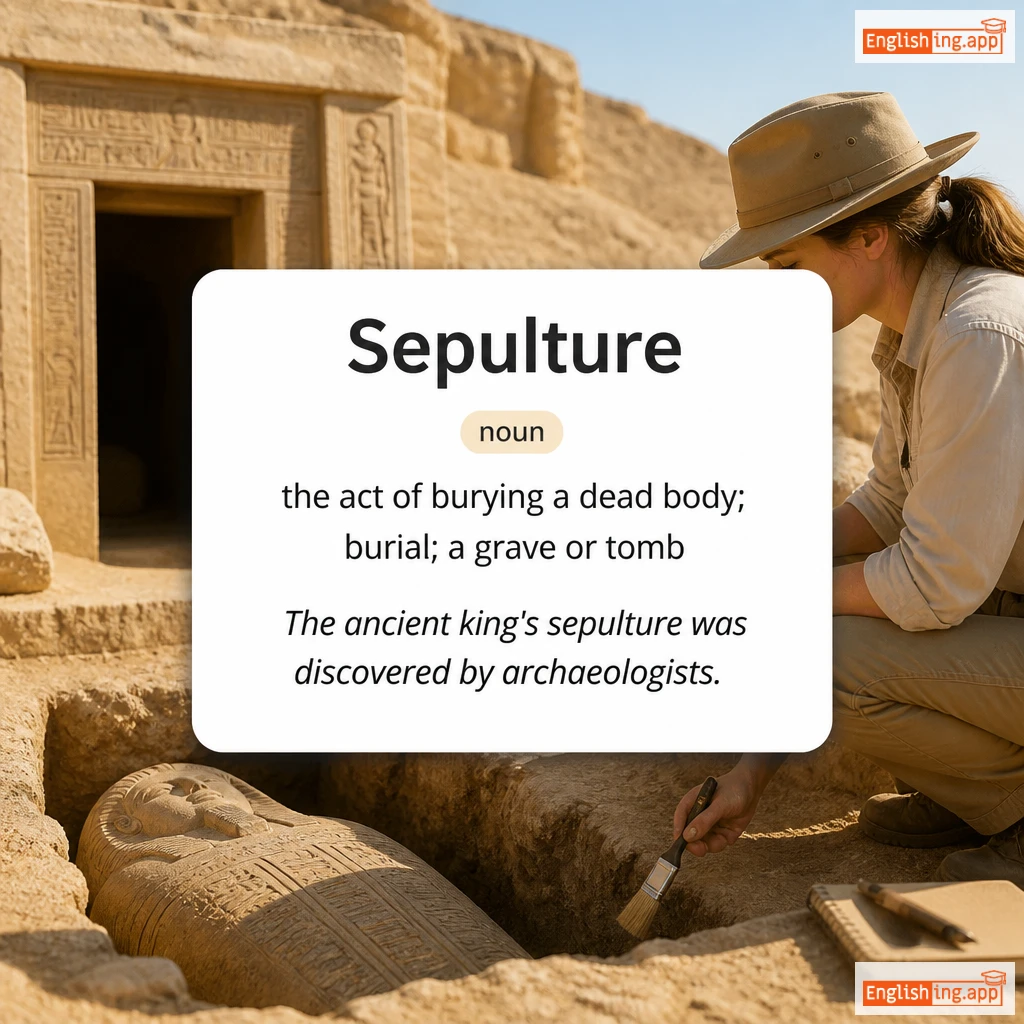
Sepulture definition card — visual illustration of the meaning
noun C2
/ˈsɛpəlˌtʃər/
墓; 埋葬; (haka; maisou)

the act of burying a dead body; burial; a grave or tomb

"The ancient king's sepulture was discovered by archaeologists."

"古代の王のセパルチャーは考古学者によって発見されました。" (Kodai no ou no separuchaa wa koukogakusha ni yotte hakken saremashita.)
adjective C2
/sɪˈkweɪʃəs/
盲目的に従う (mōmokuteki ni shitagau)

Lacking independence of thought; blindly following.

"The sequacious students never questioned their teacher's opinions."

"シクウェイシャスな学生は、教師の意見に疑問を呈することはありませんでした。" (Shikweishasu na gakusei wa, kyōshi no iken ni gimon o teishutsu suru koto wa arimasen deshita.)
noun C2
/sɪˈkwiːlə/
後遺症 (kōishō)

A condition that is the consequence of a previous disease or injury.

"Lung scarring can be a sequela of severe pneumonia."

"肺の瘢痕は重度の肺炎の後遺症である可能性があります。" (Hai no hankon wa jūdona haien no kōishō de aru kanōsei ga arimasu.)
adjective C2
/ˈsiːkwənt/
次の (tsugi no)

Following in order or as a result.

"The sequent events changed the course of history."

"次の出来事は歴史の流れを変えました。" (Tsugi no dekigoto wa rekishi no nagare o kaemashita.)
verb C2
/sɪˈkwɛstreɪt/
差し押さえる (sashiosaeru)

To take legal possession of assets until a debt is paid or disputes are resolved.

"The court decided to sequestrate the company's property."

"裁判所は会社の財産を差し押さえることを決定しました。" (Saibansho wa kaisha no zaisan o sashiosaeru koto o kettei shimashita.)
noun C2
/ˈsɛrəf/
セラフィム (serafimu)

An angelic being associated with light and purity, often depicted as a high-ranking angel in Christian theology.

"The stained-glass window depicted a seraph with outstretched wings."

"ステンドグラスの窓には、翼を広げたセラフィムが描かれていました。" (Sutendogurasu no mado ni wa, tsubasa o hirogeta serafimu ga egakarete imashita.)
adjective C2
/səˈræfɪk/
天使のような (tenshi no you na)

Of or like a seraph; angelic, pure, and blissful.

"She gave him a seraphic smile that calmed his fears."

"彼女は彼に天使のような微笑みをくれて、彼の恐れを和らげた。" (Kanojo wa kare ni tenshi no you na bishou wo kurete, kare no osore wo yawarageteta.)
adjective C2
/sɪər/
枯れた (kareta)

Dry or withered, especially vegetation.

"The sere leaves crumbled under his feet."

"枯れた葉が彼の足元で崩れた。" (Kareta ha ga kare no ashimoto de kuzureta.)
noun C2
/ˈsɜːfdəm/
農奴制 (nōdosei)

The status or condition of being a serf, bound to work for a lord.

"Many peasants in medieval Europe lived under serfdom."

"中世ヨーロッパの多くの農民は農奴制の下で生活していた。" (Chūsei Yōroppa no ōku no nōmin wa nōdosei no moto de seikatsu shite ita.)
noun C2
/ˈsɑːrdʒənt ət ɑːrmz/
会議警備員 (kaigi keibiin)

An officer responsible for maintaining order during meetings or legislative sessions.

"The sergeant-at-arms escorted the disruptive member out of the hall."

"会議警備員は、秩序を乱すメンバーを会場から退場させました。" (Kaigi keibiin wa, chitsujo o midasu menbā o kaijō kara taijō saseshimashita.)
verb C2
/ˈsɛreɪt/
ギザギザの縁を作る (gizagiza no fuchi o tsukuru)

To make a saw-toothed edge or notched margin.

"The craftsman serrated the knife blade for better cutting."

"職人はより良い切断のためにナイフの刃をセレイトしました。" (Shokunin wa yori yoi setsudan no tame ni naifu no ha o sereito shimashita.)
adjective C2
/ˈsɛrid/
整列した (seiretsu shita)

pressed or crowded together, often in rows or ranks

"The soldiers stood in serried ranks, ready for inspection."

"兵士たちは整列した行列で立って、点検の準備ができていました。" (Heishi-tachi wa seiretsu shita gyōretsu de tatte, tenken no junbi ga dekiteimashita.)
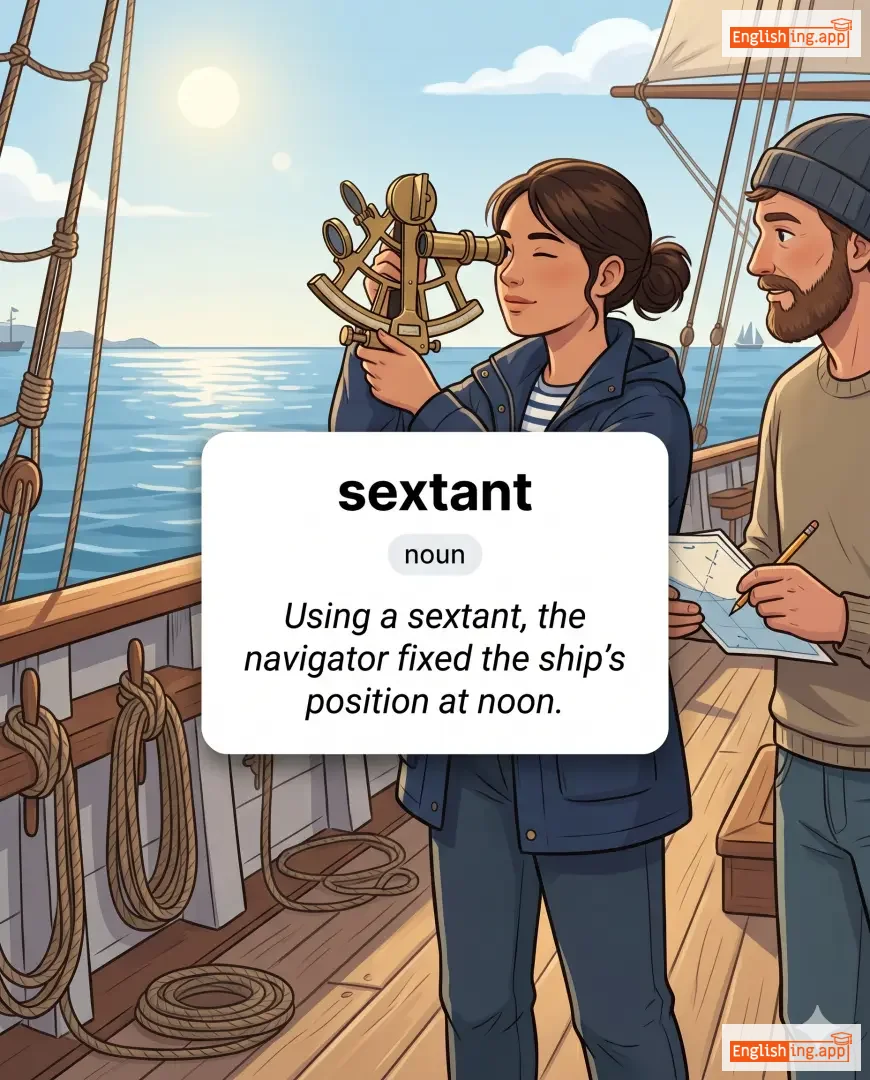
sextant definition card — visual illustration of the meaning
noun C2
/ˈsɛkstənt/
セクスタント (sekusutanto)

a navigational instrument with a graduated arc of 60°, used to measure the angle between a celestial object and the horizon

"Using a sextant, the navigator fixed the ship’s position at noon."

"セクスタントを使用して、ナビゲーターは正午に船の位置を特定しました。" (Sekusutanto o shiyō shite, nabigētā wa shōgo ni fune no ichi o tokutei shimashita.)
noun C2
/sɛkˈstɛt/
六重奏 (rokujūzō)

a group of six people playing music or a piece written for six performers

"The jazz sextet filled the small club with a warm, layered sound."

"ジャズのセクステットは、小さなクラブを温かく層状の音で満たしました。" (Jazu no sekusutetto wa, chīsana kurabu o atatakai sōjō no oto de mitashimashita.)
verb C2
/sɛkˈstuːpəl/
セクストゥプル (sekusutupuru)

to make or become six times as great or as many

"Within two quarters, the campaign sextupled their daily sign-ups."

"2つの四半期で、キャンペーンは毎日のサインアップ数を6倍にしました。" (Futatsu no shihanki de, kyanpēn wa mainichi no sain appu sū o roku-bai ni shimashita.)
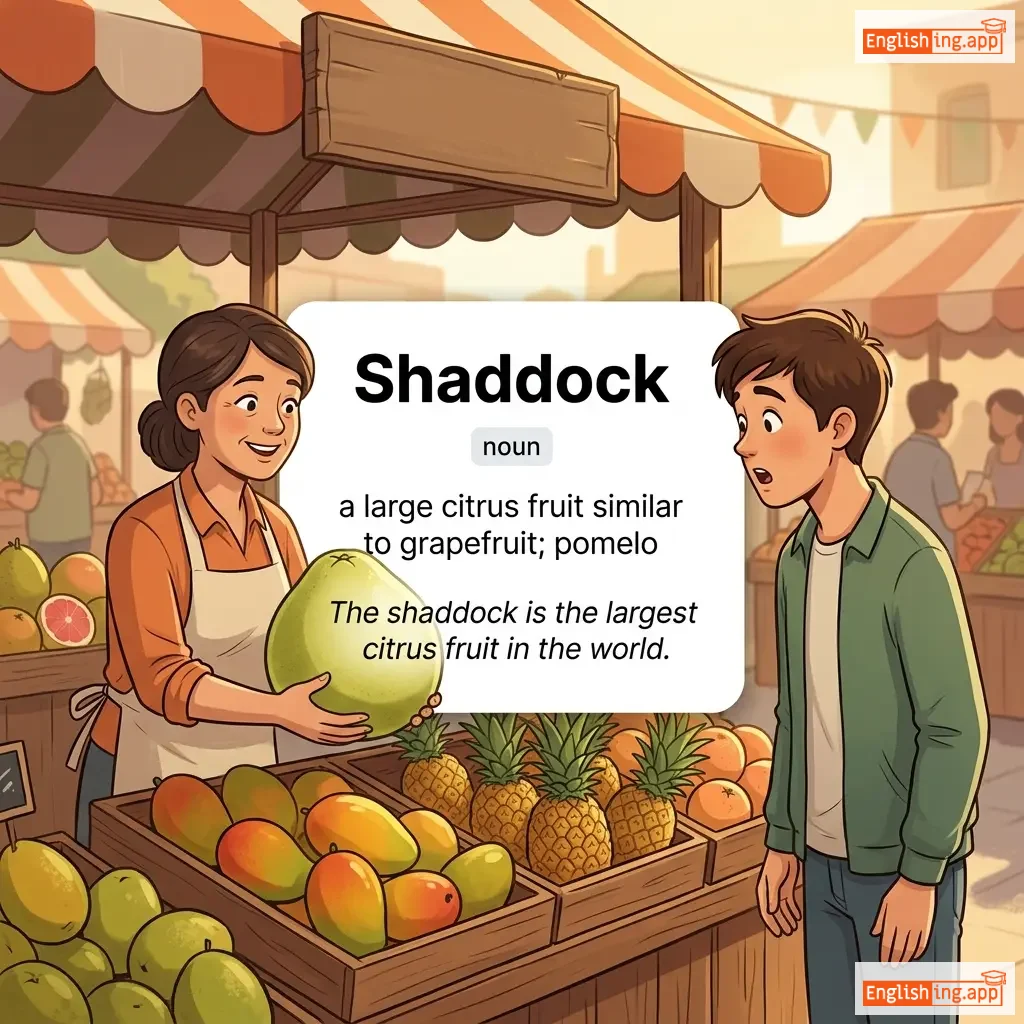
Shaddock definition card — visual illustration of the meaning
noun C2
/ˈʃæd.ək/
ポメロ (pomero)

a large citrus fruit similar to grapefruit; pomelo

"The shaddock is the largest citrus fruit in the world."

"シャドックは世界で最も大きな柑橘類の果物です。" (Shadokku wa sekai de mottomo ōkina kankitsurui no kudamono desu.)
noun C2
/ˌʃæŋɡriˈlɑː/
架空の楽園 (kakū no rakuen)

a remote, beautiful, imaginary place where life is perfect and peaceful

"They described the island as a modern-day Shangri-La."

"彼らはその島を現代版シャングリ・ラとして描写しました。" (Karera wa sono shima o gendai-ban Shangri-La to shite byōsha shimashita.)
noun C2
/ʃiːf/
麦の束 (mugi no taba)

a bundle of grain stalks laid lengthwise and tied together after reaping; a bundle of objects tied together

"The farmer carried a sheaf of wheat on his shoulder."

"農夫は肩に小麦の束を運んでいました。" (Nōfu wa kata ni komugi no taba o hakonde imashita.)
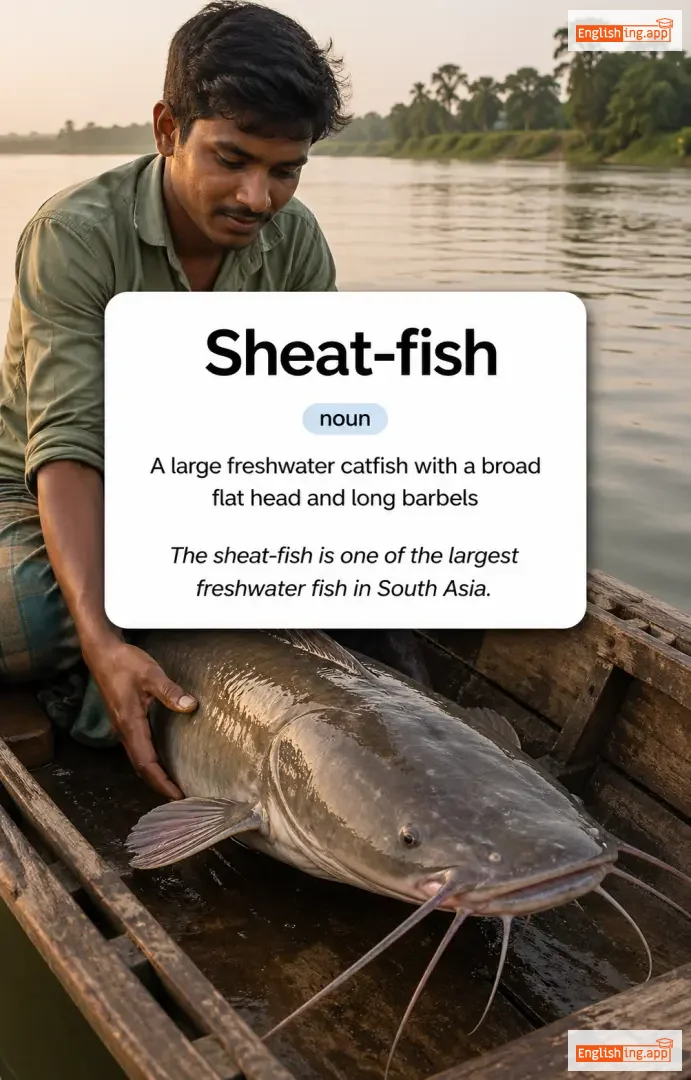
Sheat-fish definition card — visual illustration of the meaning
noun C2
/ʃiːt fɪʃ/
ナマズ (namazu)

A large freshwater catfish with a broad flat head and long barbels

"The sheat-fish is one of the largest freshwater fish in South Asia."

"ナマズは南アジアで最大の淡水魚の一つです。" (Namazu wa minami ajia de saidai no tansui gyo no hitotsu desu)
verb C2
/ʃiːð/
鞘に戻す (saya ni modosu)

to put a sword or knife back into its cover

"He quickly sheathed his sword after the duel."

"彼は決闘の後、素早く剣を鞘に戻した。" (Kare wa kettou no ato, subayaku ken o saya ni modoshita.)
noun C2
/ˈʃɪbəˌlɛθ/
特定のグループを識別するための表現や信念 (tokutei no gurūpu o shikibetsu suru tame no hyōgen ya shin'nen)

A custom, phrase, or belief distinguishing a particular group of people, often used to identify outsiders.

"The phrase became a political shibboleth during the campaign."

"そのフレーズはキャンペーン中に政治的なシボレスとなった。" (Sono furēzu wa kyanpēn-chū ni seijiteki na shiboresu to natta.)
adjective C2
/ˈʃɪft.ləs/
怠け者 (namakemono)

Lacking ambition or the ability to accomplish anything; lazy and unmotivated.

"He was seen as a shiftless young man with no goals."

"彼は目標のない怠け者の若者として見られていた。" (Kare wa mokuhyō no nai namakemono no wakamono toshite mirarれていた。)
adjective C2
/ˈʃɑːpwɔːrn/
古くなった / 色あせた (furukunatta / iroaseta)

worn or faded from being displayed in a shop; no longer fresh or original

"The shopworn shoes were sold at a discount."

"ショッピングワーンの靴は割引価格で販売されました。" (Shoppingworn no kutsu wa waribiki kakaku de hanbai saremashita.)
verb C2
/ʃʌk/
殻を剥く (kara o muku)

To remove the outer covering, such as the husk of corn or shell of shellfish.

"She learned how to shuck oysters quickly."

"彼女は牡蠣の殻を素早く剥く方法を学びました。" (Kanojo wa kaki no kara o subayaku muku hōhō o manabimashita.)
noun C2
/ˈʃaɪstər/
詐欺師 (sagishi)

a person, especially a lawyer, who uses unscrupulous or dishonest methods

"The businessman was exposed as a shyster who cheated clients."

"そのビジネスマンは、顧客を騙す詐欺師として暴露されました。" (Sono bijinesuman wa, kokyaku o damasu sagishi to shite bakuro saremashita.)
noun C2
/ˈsɪbɪləns/
シューシュー音 (shūshū on)

A hissing or hushing sound, especially in speech with 's' or 'sh'.

"The poet used sibilance to create a soft, hissing effect in the verse."

"詩人は詩の中で柔らかいシューシュー音を作り出すためにシビランスを使いました。" (Shijin wa shi no naka de yawarakai shūshū on o tsukuridashu tame ni shibiransu o tsukaimashita.)
adjective C2
/ˈsɪbɪlənt/
シーシー音がする (shīshī on ga suru)

Making or characterized by a hissing sound.

"The word 'snake' starts with a sibilant sound."

"'snake' という単語はシビラント音で始まります。" ('Snake' to iu tango wa shibiranto oto de hajimarimasu.)
verb C2
/ˈsɪbəleɪt/
シューという音で発音する (shū to iu oto de hatsuon suru)

To pronounce with a hissing sound.

"The actor sibilated his lines for dramatic effect."

"俳優はドラマチックな効果のためにセリフをシューという音で発音しました。" (Haiyū wa doramachikku na kōka no tame ni serifu o shū to iu oto de hatsuon shimashita.)
adjective C2
/ˈsɪbɪlaɪn/
神託的 (shintokuteki)

Prophetic, mysterious, or cryptic in meaning.

"The old woman gave a sibylline warning about the future."

"その老婦人は未来について神託的な警告をした。" (Sono rō fujin wa mirai ni tsuite shintokuteki na keikoku o shita.)
adjective, adverb C2
/ˈsaɪdlɔːŋ/
斜め目線 (naname mesen)

Directed to the side; indirect, furtive, or not straightforward.

"She gave him a sidelong glance across the room."

"彼女は部屋を横切って彼に斜め目線を送った。" (Kanojo wa heya o yokogitte kare ni naname mesen o okutta.)
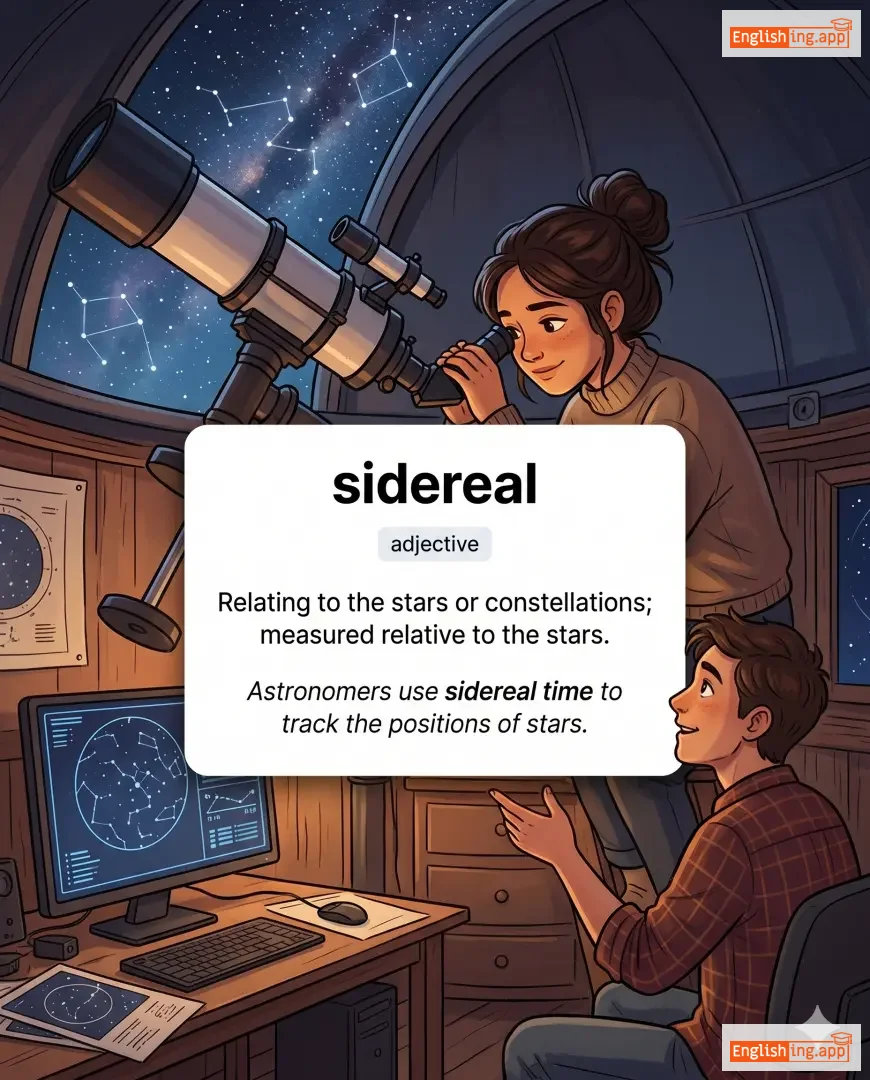
sidereal definition card — visual illustration of the meaning
adjective C2
/saɪˈdɪəriəl/
恒星の (kōsei no)

Relating to the stars or constellations; measured relative to the stars.

"Astronomers use sidereal time to track the positions of stars."

"天文学者は恒星時を使用して星の位置を追跡します。" (tenmongakusha wa kōsei-ji o shiyō shite hoshi no ichi o tsuiseki shimasu.)
noun C2
/ˌsɪɡnɪfɪˈkeɪʃən/
意味 (imi)

the meaning or sense conveyed by a word, action, or symbol

"The signification of the gesture was misunderstood."

"そのジェスチャーの意味は誤解されていました。" (Sono jesuchā no imi wa gokai sarete imashita.)
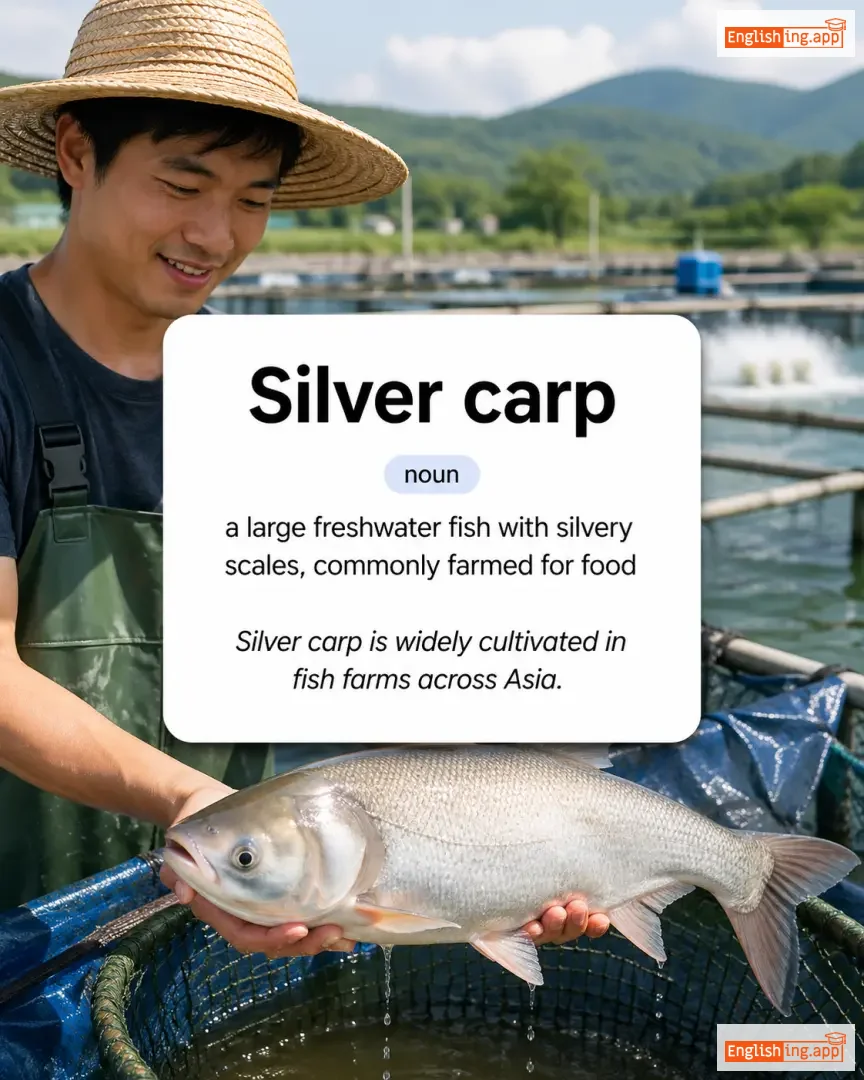
Silver carp definition card — visual illustration of the meaning
noun C2
/ˈsɪlvər kɑrp/
銀鯉 (gin goi)

a large freshwater fish with silvery scales, commonly farmed for food

"Silver carp is widely cultivated in fish farms across Asia."

"銀鯉はアジアの養魚場で広く養殖されています。" (gin goi wa ajia no yougyojo de hiroku youshoku sareteimasu.)