Vocabularios

Descubra, aprenda y domine el vocabulario en inglés

adjective C2
/rɪˈtɪkjʊlət/
сетчатый (setchatyy)

Having a net-like pattern or structure.

"The leaf had a reticulate pattern of veins."

"Лист имел сетчатый рисунок вен." (List imel setchatyy risunok ven.)
noun C2
/ˈrɛtɪnjuː/
свита (svita)

A group of attendants or followers accompanying an important person.

"The king entered the hall followed by his retinue."

"Царь вошел в зал, за ним следовала его свита." (Tsar' voshel v zal, za nim sleduyushchaya ego svita.)
verb C2
/rɪˈtrɛntʃ/
сокращать расходы, увольнять сотрудников (sokrashchat' raskhody, uvol'nyat' sotrudnikov)

to reduce costs, spending, or staff to save resources

"The company had to retrench employees due to financial difficulties."

"Компания была вынуждена уволить сотрудников из-за финансовых трудностей." (Kompaniya byla vynuzhdena uvolit' sotrudnikov iz-za finansovykh trudnostey.)
noun C2
/ˌrɛtroʊˈɡrɛʃən/
ретроградность (retrgradnost)

a return to a worse or less developed state

"The country experienced economic retrogression after the crisis."

"Страна пережила экономическую ретроградность после кризиса." (Strana perezhila ekonomicheskuyu retrogradnost posle krizisa.)
noun C2
/ˈrɛvəlri/
праздник (prazdnik)

Lively and noisy festivities, especially involving drinking and dancing.

"The sound of revelry could be heard throughout the night."

"Звук праздника был слышен всю ночь." (Zvuk prazdnika byl slyshen vsyu noch'.)
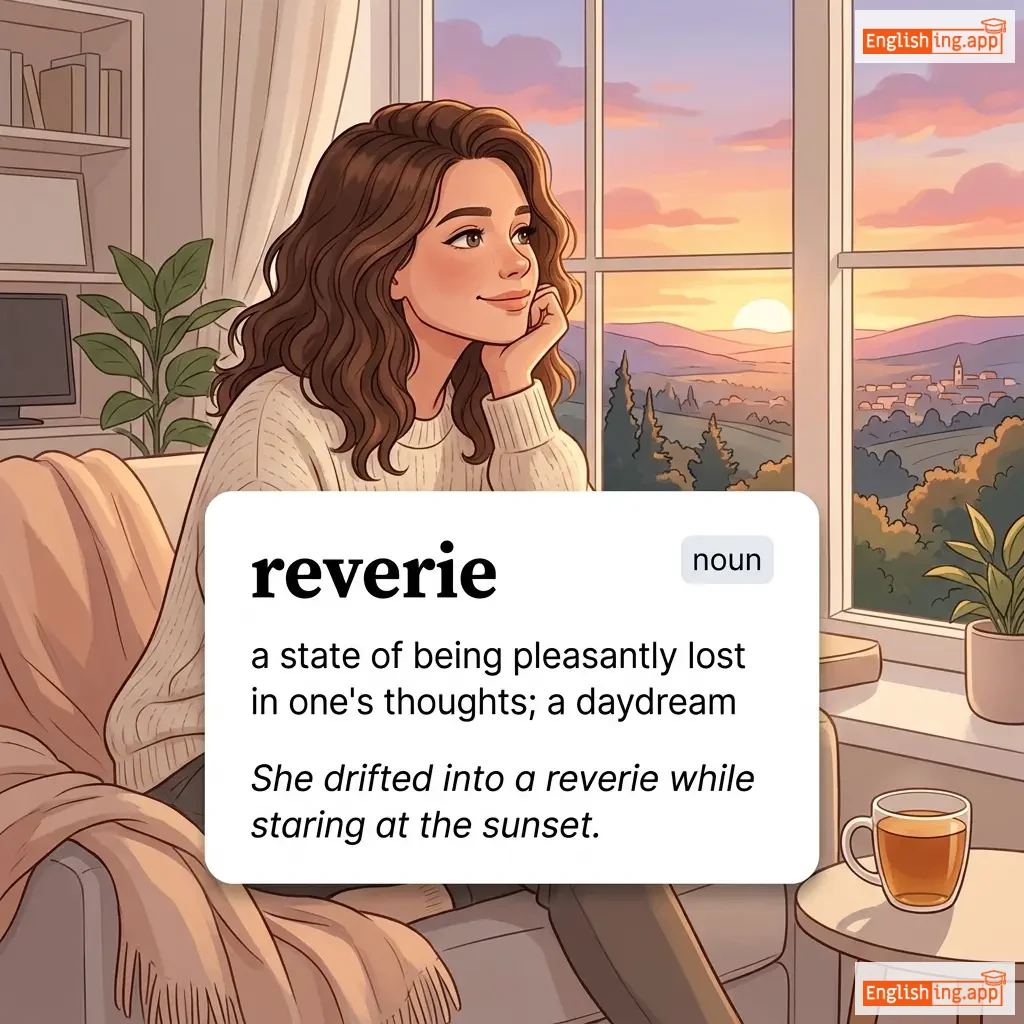
reverie definition card — visual illustration of the meaning
noun C2
/ˈrɛvəri/
мечтания (mechtaniya)

a state of being pleasantly lost in one's thoughts; a daydream

"She drifted into a reverie while staring at the sunset."

"Она погрузилась в мечтания, наблюдая за закатом." (Ona pogruzilas v mechtaniya, nablyudaya za zakatom.)
verb C2
/rɪˈvaɪl/
презирать (prezirat)

to criticize in an abusive or angrily insulting manner

"The politician was reviled by the public for his corruption."

"Политик был презираем общественностью за свою коррупцию." (Politik byl prezirayem obshchestvennost'yu za svoju korruptsiyu.)
noun C2
/rɪˈvaɪlər/
оскорбитель (oskorbitel)

a person who criticizes or insults others abusively

"He was known as a reviler of all who opposed him."

"Он был известен как оскорбитель всех, кто ему противостоял." (On byl izvesten kak oskorbitel vsekh, kto emu protivostoyal.)
noun C2
/rɪˈvaɪ.zəl/
пересмотр (peresmotr)

The act of revising, reviewing, or making changes to something.

"The revisal of the contract took longer than expected."

"Пересмотр контракта занял больше времени, чем ожидалось." (Peresmotr kontrakta zanyal bolshe vremeni, chem ozhidalos.)
noun C2
/ˌrɛv.əˈkeɪ.ʃən/
аннулирование (annulirovanie)

The act of officially canceling or withdrawing something.

"The court ordered the revocation of his license."

"Суд постановил аннулировать его лицензию." (Sud postanovil annulirovat' ego litsenziyu.)
verb C2
/ˈræpsəˌdaɪz/
восторженно говорить (vostorzhyenno govorit')

to speak or write with great enthusiasm and admiration

"He would often rhapsodize about his travels to Europe."

"Он часто восторженно говорил о своих путешествиях по Европе." (On chasto vostorzhyenno govoril o svoikh puteshestviyakh po Yevrope.)
noun C2
/ˈræpsədi/
возвышенная песня/похвала (vozzvishennaya pesnya/pokhvala)

an expression of great enthusiasm or an epic musical composition

"The singer’s performance was a rhapsody of emotions."

"Выступление певца было рhapsody эмоций." (Vystuplenie pevtsa bylo rhapsody emotsiy.)
noun C2
/ˌrɛtəˈrɪʃən/
оратор (orator)

A person who is skilled in the art of rhetoric or persuasive speaking/writing.

"The rhetorician captivated the audience with his eloquence."

"Оратор очаровал аудиторию своей красноречивостью." (Orator ocharoval auditoriyu svoey krasnorechivost'yu.)
adjective C2
/ˈruːmi/
слезящиеся (slezyashchiesya)

Watery, especially referring to the eyes.

"His rheumy eyes showed signs of age and fatigue."

"Его слезящиеся глаза показывали признаки старения и усталости." (Ego slezyashchiesya glaza pokazyvali priznaki stareniya i ustalosti.)
adjective C2
/ˈrɪbɔːld/
непристойные шутки (nepristojnye shutki)

Referring to sexual matters in a humorous or vulgar way.

"The comedian’s ribald jokes made the audience laugh uncomfortably."

"Непристойные шутки комика заставили зрителей смеяться с неудобством." (Nepristojnye shutki komika zastavili zriteley smeyat'sya s neudobstvom.)
noun C2
/ˈrɪɡməˌroʊl/
сложность (slozhnost)

a long, complicated, and confusing process or story

"Getting a visa was such a rigmarole of paperwork and interviews."

"Получение визы было настоящим замешательством из бумаги и интервью." (Polucheniye vizi bylo nastoyashchim zameshatel'stvom iz bumagi i intervyu.)
noun C2
/raɪm/
инашение (inashenije)

frost formed on cold surfaces by freezing water vapor

"The trees were covered with a white rime after the cold night."

"Деревья были покрыты белым инеем после холодной ночи." (Derev'ya byli pokryty belym inem posle kholodnoy nochi.)
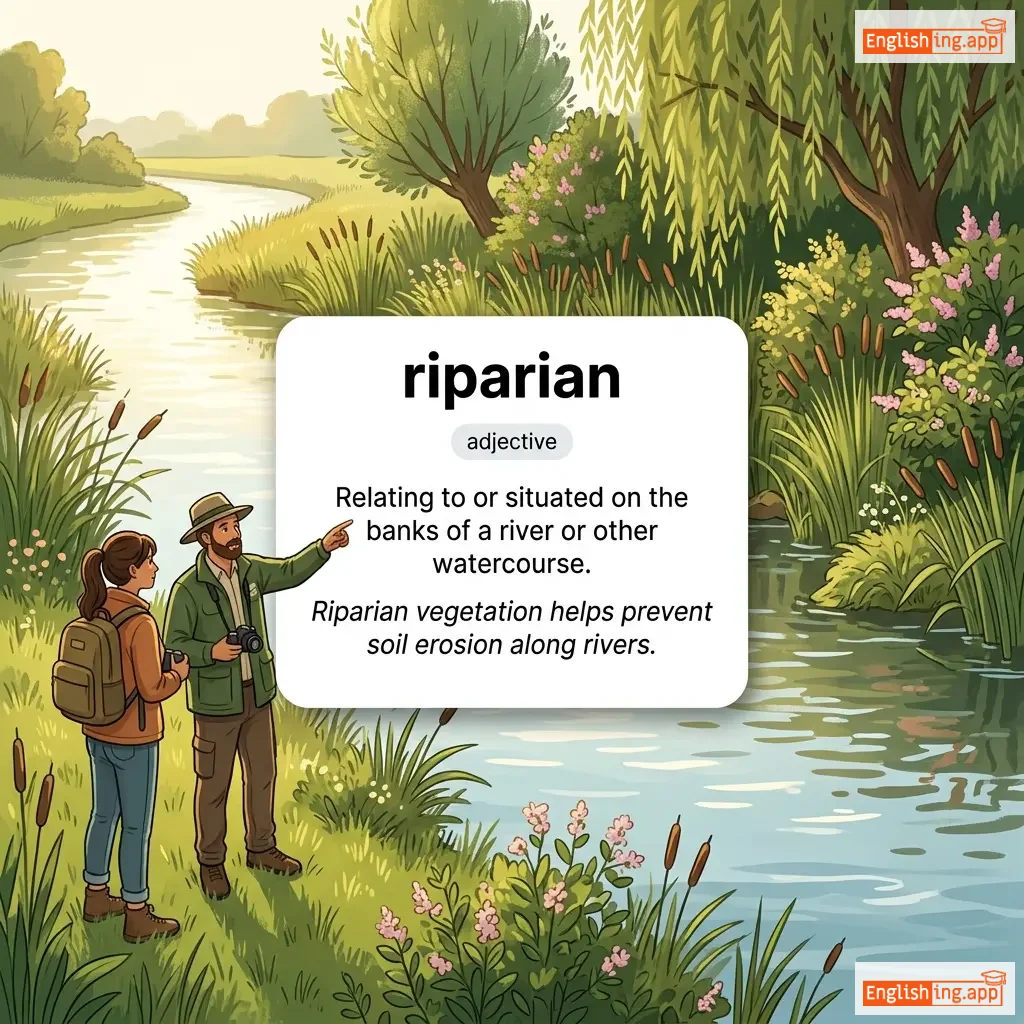
riparian definition card — visual illustration of the meaning
adjective C2
/raɪˈpɛə.ri.ən/
относящийся к или расположенный на берегах реки или другого водоема (otnosyashchijsya k ili raspolozhennyj na beregakh reki ili drugogo vodoema)

Relating to or situated on the banks of a river or other watercourse.

"Riparian vegetation helps prevent soil erosion along rivers."

"Рипарская растительность помогает предотвращать эрозию почвы вдоль рек." (Riparskaya rastenitel'nost' pomogayet predotvrashchat' eroziyu pochvy vdol' rek.)
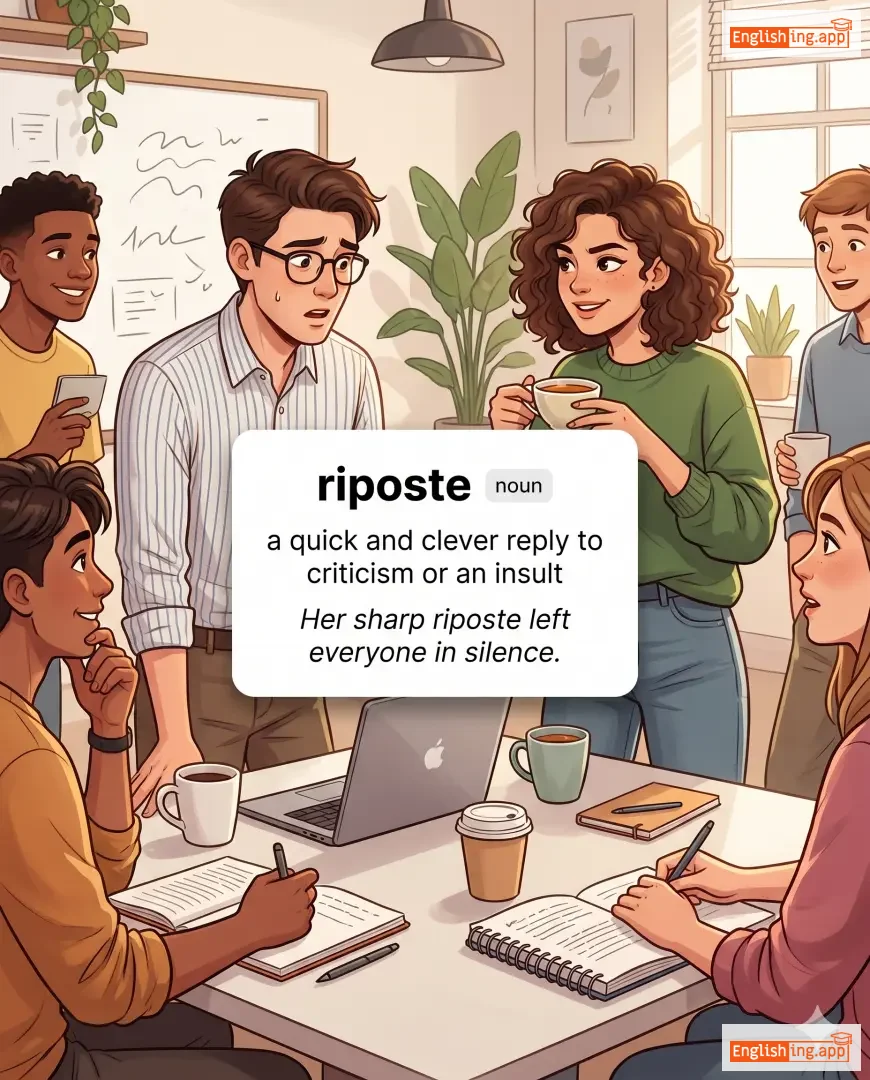
riposte definition card — visual illustration of the meaning
noun C2
/rɪˈpoʊst/
острая реплика (ostrya replika)

a quick and clever reply to criticism or an insult

"Her sharp riposte left everyone in silence."

"Ее острая реплика оставила всех в молчании." (Eyo ostryaya replika ostavila vsekh v molchanii.)
noun C2
/ˈrɪp.lɪt/
маленькая волна (malenkaya volna)

a small or tiny ripple

"Tiny ripplets appeared on the lake as the fish moved."

"Маленькие волны появились на озере, когда рыба двигалась." (Malen'kiye volny poyavilis' na ozyere, kogda ryba dvigalas'.)
adjective C2
/ˈrɪz.ə.bəl/
смешной (smeshnoy)

so absurd or ridiculous that it deserves to be laughed at

"The idea of flying pigs is completely risible."

"Идея летающих свиней совершенно смешная." (Ideya letayushchikh sviney sovershenno smeshnaya.)
verb C2
/raɪv/
рвать (rvat)

to tear apart violently

"The earthquake rived the ground in several places."

"Землетрясение разорвало землю в нескольких местах." (Zemletryaseniye razorvalo zemlyu v neskol'kikh mestakh.)
noun C2
/ˈrɪvjʊlət/
ручей (ruchey)

a small stream of water; a tiny brook

"A rivulet ran down the hillside after the rain."

"Ручей спустился с холма после дождя." (Ruchey spustilsya s kholma posle dozhdya.)
adjective C2
/roʊn/
роан (roan)

denoting an animal, especially a horse, having a coat of mixed colors, typically reddish-brown and white

"The rider mounted a roan horse with a speckled coat."

"Наездник вскочил на лошадь роан с пятнистым окрасом." (Naezdnik vskochil na loshad' roan s pyatnistym okrasom.)
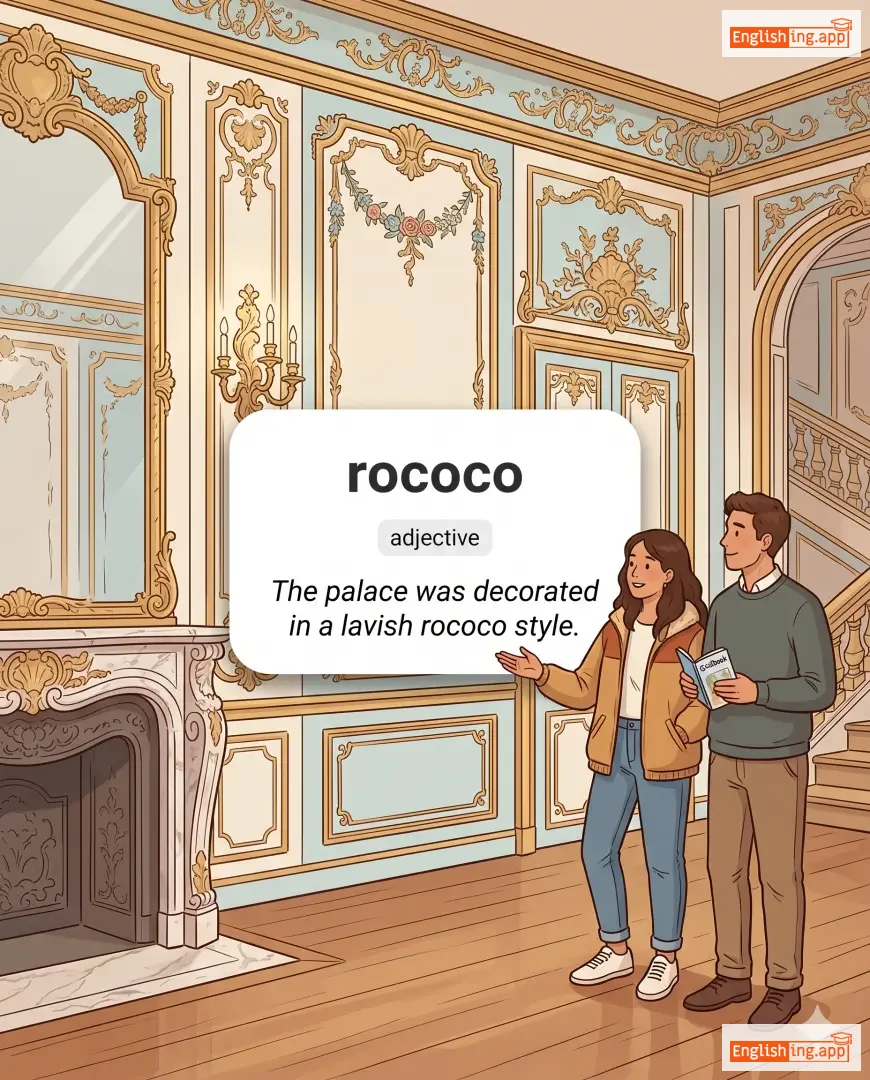
rococo definition card — visual illustration of the meaning
adjective C2
/rəˈkoʊkoʊ/
рококо (rococo)

characterized by ornate detail and elaborate decoration, especially in art, architecture, and design

"The palace was decorated in a lavish rococo style."

"Дворец был украшен в роскошном стиле рококо." (Dvorets byl ukrashchen v roskoshnom stile rokoko.)
verb C2
/rɔɪl/
взбалтывать (vzbaltivat)

to make a liquid muddy or disturbed; to cause agitation or disorder

"The constant protests roiled the city streets."

"Постоянные протесты взбалтывали улицы города." (Postoyannyye protesty vzbaltývali ulitsy goroda.)
verb C2
/ˈrɔɪstər/
праздновать громко (prazdnovat' gromko)

to revel noisily; to engage in loud, boisterous celebration

"The fans roistered in the streets after the victory."

"Фанаты праздновали громко на улицах после победы." (Fanaty prazdnovali gromko na ulitsakh posle pobedy.)
noun C2
/ˈrɒndoʊ/
музыкальное произведение (с повторяющейся темой) (muzykalnoe proizvedenie (s povtoryayushcheysya temoy))

a musical composition with a recurring leading theme

"The pianist ended the recital with a lively rondo."

"Пианист завершил концерт живым рондо." (Pianist zavershil kontsert zhivym rondo.)
noun C2
/ruːd/
крест (krest)

a crucifix, especially one positioned above the entrance to the chancel of a church

"The old church displayed a carved rood above the altar."

"Старый храм показывал вырезанный крест над алтарем." (Staryy khram pokazyval vyrezannyy krest nad altaryom.)
noun C2
/ˈrʊkəri/
птичий питомник (ptichiy pitomnik)

a place where rooks or other birds breed and nest in colonies

"We saw a rookery full of noisy birds near the forest."

"Мы увидели птичий питомник, полный шумных птиц, рядом с лесом." (My uvideli ptichiy pitomnik, polnyy shumnykh ptits, ryadom s lesom.)
adjective C2
/ˈroʊziət/
розовый, оптимистичный (rozovyi, optimistichnyi)

Having a pink color; optimistic or idealistic.

"She looked at the future with roseate optimism."

"Она посмотрела на будущее с розовым оптимизмом." (Ona posmotrela na budushchee s rozovym optimizmom.)
adjective C2
/roʊˈtʌnd/
круглый (krugly)

round or plump in shape; full in sound

"The rotund cat struggled to climb the fence."

"Круглый кот с трудом забрался на забор." (Krugly kot s trudom zabral'sya na zabor.)
noun C2
/roʊˈtʌn.də/
круглый зал (kruglyy zal)

a large circular building or hall, often with a dome

"Tourists gathered inside the grand rotunda of the capitol."

"Туристы собрались внутри большой ротонды Капитолия." (Turisty sobralis vnutri bol'shoy rotondy Kapitoliya.)
noun C2
/roʊˈtʌn.də.ti/
круглость (kruglost)

the quality of being round or plump

"The rotundity of the balloon made it float gracefully."

"Круглость шара заставила его плавно плавать." (Kruglost' shara zastavila ego plavno plavat'.)
noun C2
/ruːˈeɪ/
человек, посвятивший свою жизнь чувственным удовольствиям (chelovek, posvyativshiy svoyu zhizn' chuvstvennym udovol'stviyam)

A man devoted to a life of sensual pleasure; a debauched man.

"The old roue squandered his fortune on gambling and women."

"Старый руэ растратил свое состояние на азартные игры и женщин." (Staryy rue rastratil svoe sostoyanie na azartnye igry i zhenshchin.)
adjective C2
/ˈruːbɪkənd/
рубинового оттенка лицо (rubikand)

Having a healthy reddish complexion.

"The old man’s rubicund face showed he was in good health."

"Рубиновое лицо старика показывало, что он был в хорошем здоровье." (Rubinovoye litso starika pokazyvalo, chto on byl v khoroshem zdorov'ye.)
adjective C2
/ˈrʌdi/
румяный (rumyany)

Having a healthy red color in the face.

"She had a ruddy complexion from working outdoors."

"У неё был румяный цвет лица от работы на улице." (U neyo byl rumyanyy tsvet litsa ot raboty na ulitse.)
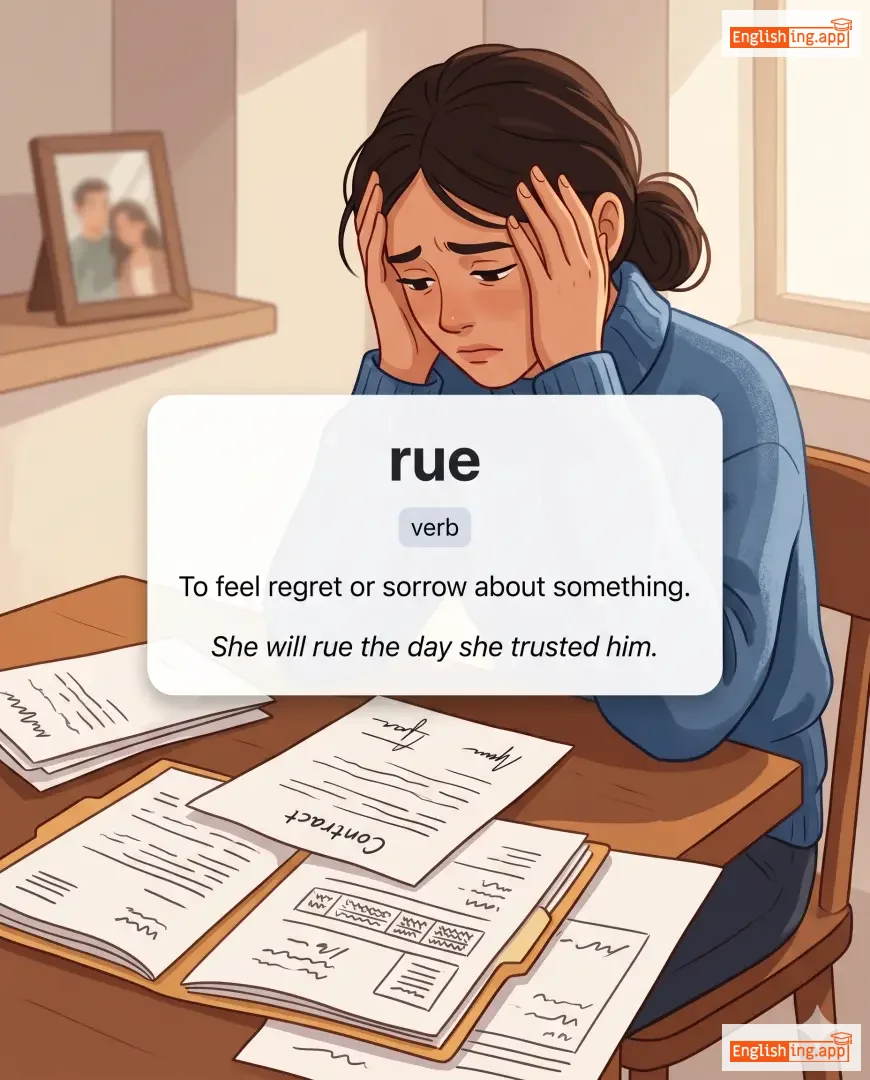
rue definition card — visual illustration of the meaning
verb C2
/ruː/
сожалеть (sozhalet')

To feel regret or sorrow about something.

"She will rue the day she trusted him."

"Она будет сожалеть о том дне, когда доверилась ему." (Ona budet sozhalet' o tom dne, kogda doverilas' yemu.)
noun C2
/ˈruː.mɪ.nənt/
жвачные животные (zhvachnye zhivotnye)

a cud-chewing mammal, such as a cow or sheep

"Cows are ruminants that chew cud."

"Корова — жвачное животное, которое пережевывает жвачку." (Korova — zhvachnoe zhivotnoe, kotoroe perezhivayut zhvachku.)
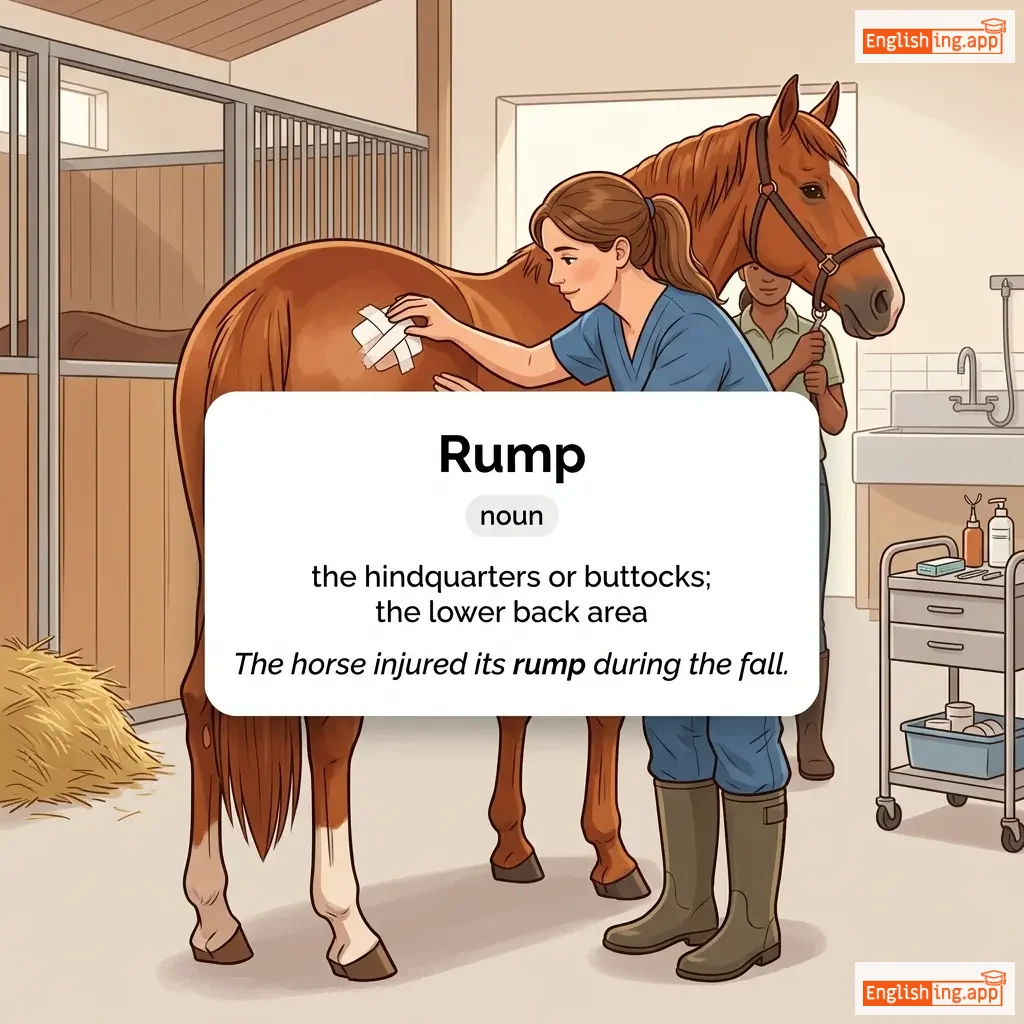
Rump definition card — visual illustration of the meaning
noun C2
/rʌmp/
задняя часть; ягодицы; нижняя часть спины (ramp)

the hindquarters or buttocks; the lower back area

"The horse injured its rump during the fall."

"Лошадь повредила свою заднюю часть во время падения." (Loshad' povredila svoyu zadyanyu chast' vo vremya padenya.)
verb C2
/ˈrʌmpəl/
мять (myat')

to make something untidy or wrinkled by creasing or crumpling

"She accidentally rumpled her dress while packing."

"Она случайно помяла своё платье, пока упаковывала вещи." (Ona sluchayno pomyala svoyo plat'ye, poka upakovivala veshchi.)
adjective C2
/ˈruːnɪk/
связанный с рунами (svyazannyy s runami)

relating to or consisting of runes; mysterious or magical

"The old stone had strange runic carvings on it."

"Старый камень имел странные рунические надписи." (Staryy kamen' imel strannyye runicheskiye nadpisi.)
verb C2
/ˈrʌstɪkeɪt/
Поехать в деревню / временное отчисление из университета (Poekhali v derevnyu / vremennoye otchisleniye iz universiteta)

To go to the countryside or to suspend someone from university.

"He decided to rusticate in the village to escape the busy city life."

"Он решил поехать в деревню, чтобы сбежать от напряженной городской жизни." (On reshil poekhat' v derevnyu, chtoby sbezhat' ot napryazhennoy gorodskoy zhizni.)
noun C2
/ruːθ/
сострадание (sostradanie)

A feeling of pity, compassion, or sorrow.

"He felt no ruth for the people he had betrayed."

"Он не почувствовал сострадания к людям, которых он предал." (On ne pochuvstvoval sostradaniya k lyudyam, kotorykh on predal.)
adjective C2
/ˈsækərɪn/
счастье (schastye)

Excessively sweet or sentimental.

"His saccharine smile seemed insincere."

"Она не могла скрыть своего счастья, когда получила награду." (Ona ne mogla skryt' svoego schast'ya, kogda poluchila nagradu.)
adjective C2
/ˌsæsərˈdoʊtl/
священнический (svyashchennicheskiy)

Relating to priests or the priesthood.

"The ritual had a distinctly sacerdotal character."

"Ритуал имел явно священнический характер." (Ritual imel yavno svyashchennicheskiy kharakter.)
noun C2
/ˈsækrɪsti/
сакристия (sakristiya)

a room in a church where sacred vessels and vestments are kept

"The priest entered the sacristy before the mass began."

"Священник вошел в сакристию перед началом мессы." (Svyashchennik voshel v sakristiyu pered nachalom messy.)
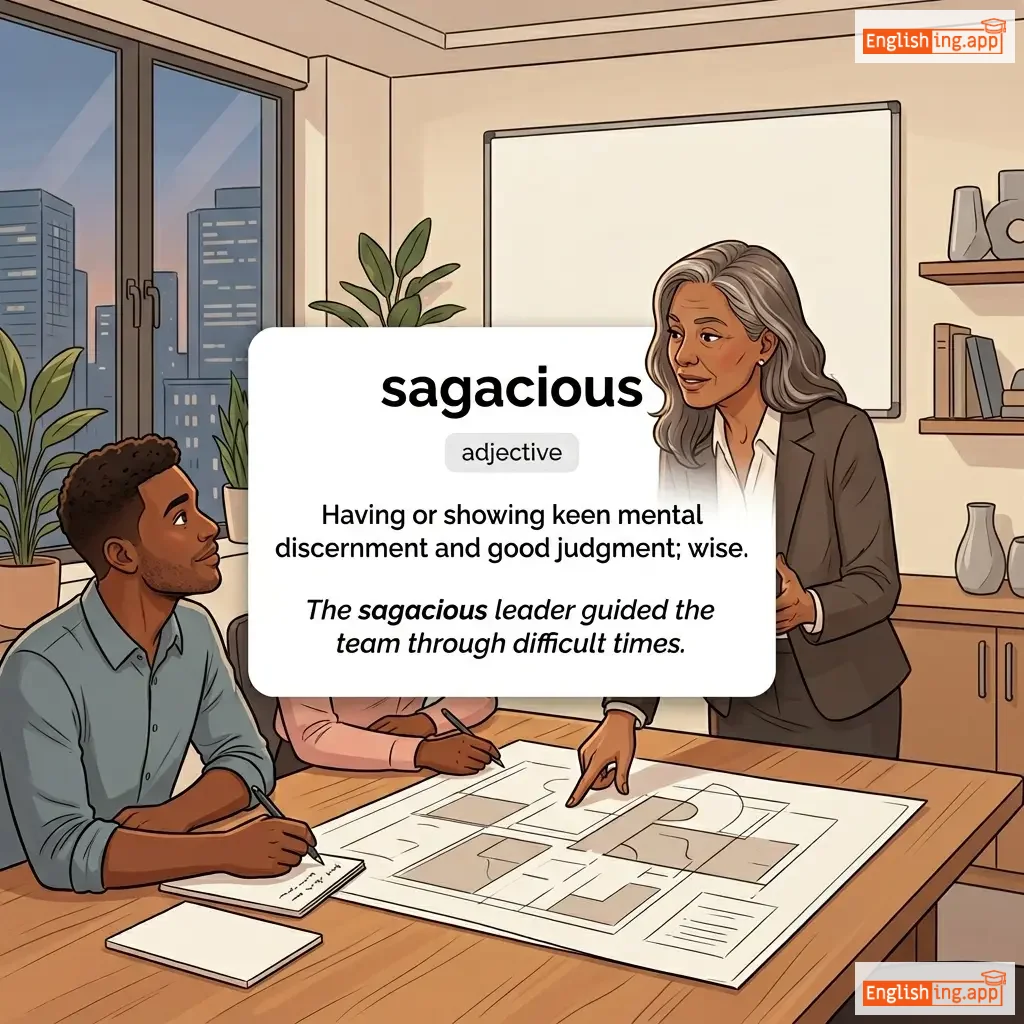
sagacious definition card — visual illustration of the meaning
adjective C2
/səˈɡeɪʃəs/
мудрый (mudryj)

Having or showing keen mental discernment and good judgment; wise.

"The sagacious leader guided the team through difficult times."

"Мудрый лидер направил команду через трудные времена." (Mudryj lider napravyl komanduy cherez trudnye vremena.)
sagacity definition card — visual illustration of the meaning
noun C2
/səˈɡæs.ə.t̬i/
глубокое знание (glubokoe znanie)

The quality of being sagacious; having or showing keen mental discernment and good judgment.

"His sagacity made him a great leader."

"Его сагасити сделало его великим лидером." (Ego sagasiti sdelalo ego velikim liderom.)
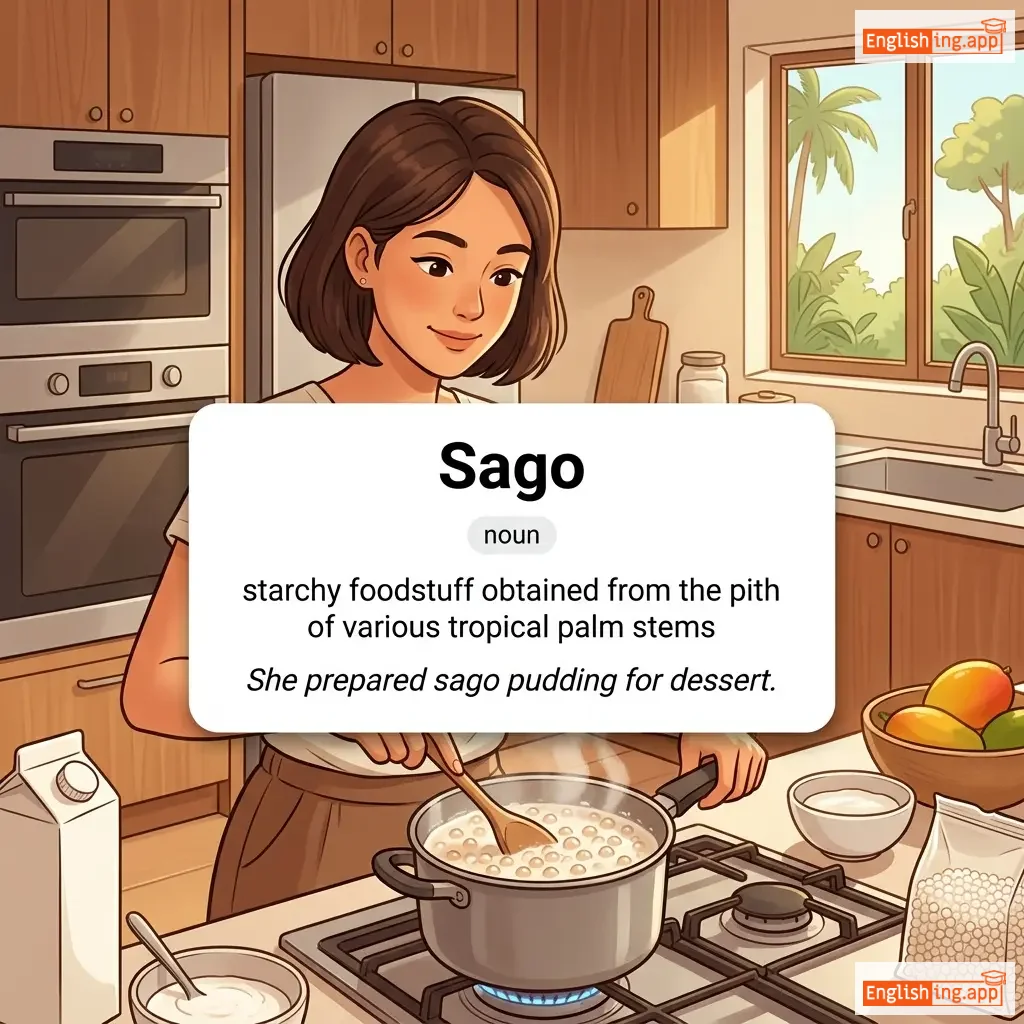
Sago definition card — visual illustration of the meaning
noun C2
/ˈseɪ.ɡoʊ/
саго (sago)

starchy foodstuff obtained from the pith of various tropical palm stems

"She prepared sago pudding for dessert."

"Она приготовила пудинг из саги на десерт." (Ona prigotovila puding iz sagi na desert.)