Vocabularios

Descubra, aprenda y domine el vocabulario en inglés

verb C2
/ˌpriːɪˈstæblɪʃ/
আগে থেকে প্রতিষ্ঠা করা (age theke protistha kora)

To establish or set up beforehand.

"Certain rules were preestablished before the meeting."

"সভা শুরু হওয়ার আগে কিছু নিয়ম আগে থেকে প্রতিষ্ঠা করা হয়েছিল।" (Sobha shuru howar age kichu niyom age theke protistha kora hoyechhilo.)
verb C2
/ˌpriːɪɡˈzɪst/
আগে থেকেই অস্তিত্ব থাকা (age thekei ostittwo thaka)

to exist beforehand or before something else

"These customs preexist the arrival of modern technology."

"এই প্রথাগুলি আধুনিক প্রযুক্তির আগমনের আগেই বিদ্যমান ছিল।" (Ei prothaguli adhunic projuktir agomoner agei bidyoman chilo.)
noun C2
/ˌpriːɪɡˈzɪstəns/
পূর্ব অস্তিত্ব (purbo ostittwo)

the state of existing before something else

"Philosophers often debated the preexistence of the soul."

"দার্শনিকরা প্রায়শই আত্মার পূর্ব অস্তিত্ব নিয়ে বিতর্ক করতেন।" (Darshonikra prayoshi atmar purbo ostittwo niye bitork korten.)
adjective C2
/ˈprɛfətɔːri/
প্রারম্ভিক (prarombhik)

serving as an introduction or preface

"He made some prefatory remarks before the lecture began."

"তিনি বক্তৃতা শুরু হওয়ার আগে কিছু প্রারম্ভিক মন্তব্য করেছিলেন।" (Tini boktrita suru howar age kichu prarombhik mormok korechilen.)
noun C2
/prɪˈfɜːrmənt/
পদোন্নতি (podonnoti)

promotion or advancement in rank, position, or office

"He hoped for preferment in the government office."

"সে সরকারি অফিসে পদোন্নতির আশা করেছিল।" (Se sarkari office e podonnitir asha korechilo.)
verb C2
/priːˈfɪɡjər/
আগাম ইঙ্গিত দেওয়া (agam ingit deowa)

to represent, show, or foreshadow something in advance

"The economic reforms prefigure major social changes."

"অর্থনৈতিক সংস্কার বড় সামাজিক পরিবর্তনের আগাম ইঙ্গিত দেয়।" (Arthonoitik songsar boro samajik poribortoner agam ingit dey.)
adjective C2
/prɪˈhɛnsɪbəl/
ধরা যায় এমন; গ্রাহ্য (dhora jay emon; grahyo)

capable of being grasped or seized

"The tool has a prehensible handle that improves safety."

"যন্ত্রটিতে একটি ধরার উপযোগী হ্যান্ডল আছে যা নিরাপত্তা বাড়ায়।" (Jontrotite ekti dhorar upojogi handle ache ja nirapotta baray.)
adjective C2
/prɪˈhɛnsaɪl/
ধরার উপযোগী; আঁকড়ে ধরতে সক্ষম (dhorar upojogi; ankore dhorte sokkhom)

adapted for seizing or grasping, especially by wrapping around an object

"The monkey used its prehensile tail to hang from the branch."

"বানরটি ডালের সাথে ঝুলতে তার ধরার উপযোগী লেজ ব্যবহার করেছিল।" (Banorti daler sathe jhulte tar dhorar upojogi lej byabohar korechhilo.)
noun C2
/prɪˈhɛnʃən/
আঁকড়ে ধরা; ধরার ক্ষমতা (ankore dhora; dhorar khomota)

the act of grasping or seizing; the ability to take hold of something

"Therapists assessed the patient's prehension during hand therapy."

"হাতের থেরাপির সময় থেরাপিস্টরা রোগীর ধরার ক্ষমতা মূল্যায়ন করেন।" (Hater therapy r somoy therapist ra rogir dhorar khomota mullyayon koren.)
noun C2
/ˈprɛləsi/
ধর্মীয় পদমর্যাদা (dhormiyo podmorjada)

The office, dignity, or system of church government by prelates.

"The medieval church was dominated by prelacy and its traditions."

"মধ্যযুগীয় গির্জা প্রেলাসি এবং এর ঐতিহ্য দ্বারা প্রভাবিত ছিল।" (Maddhyajugiyo girja prelasi ebong er oitihho dara prabhobito chilo.)
noun C2
/ˈprɛlət/
উচ্চপদস্থ ধর্মযাজক (uchchopodostho dhormojajok)

A high-ranking member of the clergy, especially a bishop or abbot.

"The prelate delivered a sermon to the congregation."

"প্রেলেট সভায় একটি ধর্মোপদেশ দিয়েছিলেন।" (Prelet shobay ekti dhormopodesh diyechilen.)
adjective C2
/prɪˈmɒnɪtəri/ or /ˌpriːməˈnɪtəri/
পূর্বাভাসমূলক / সতর্কতামূলক (purbo vash mulok / sotorkota mulok)

giving a warning or prediction about something, especially something unpleasant

"He ignored the premonitory signs of illness."

"সে অসুস্থতার পূর্বাভাসমূলক লক্ষণগুলো উপেক্ষা করেছিল।" (Se osustotar purbo vash mulok lokkhongulo upeksha korechilo.)
verb C2
/ˌpriːɔːrˈdeɪn/
আগেই নির্ধারিত করা (agei nirdharito kora)

To decide or determine an outcome in advance, especially by fate or divine will.

"They believed their meeting was preordained by destiny."

"তারা বিশ্বাস করত তাদের দেখা হওয়া ভাগ্য দ্বারা আগেই নির্ধারিত ছিল।" (tara bishash korto tader dekha howa vaggo dvara agei nirdharito chhilo.)
noun C2
/prɪˈpɒndərəns/
অধিকতা (odhikota)

The quality or fact of being greater in number, quantity, or importance.

"There was a preponderance of evidence against the defendant."

"আসামির বিরুদ্ধে প্রমাণের অধিকতা ছিল।" (Asamir biruddhe promaner odhikota chilo.)
adjective C2
/prɪˈpɒndərənt/
প্রভাবশালী (probhobshali)

Having superior weight, force, influence, or importance.

"The preponderant influence of the media shapes public opinion."

"গণমাধ্যমের প্রভাবশালী ভূমিকা জনমতকে গঠন করে।" (Gonmadhyomer probhobshali vumikha jonmotke gothon kore.)
verb C2
/prɪˈpɒndəreɪt/
প্রভাবশালী হওয়া (probhobshali howa)

To be greater in influence, weight, or number.

"In the debate, logical arguments preponderated over emotional appeals."

"বিতর্কে যৌক্তিক যুক্তি আবেগময় আবেদনকে ছাপিয়ে গিয়েছিল।" (Bitorke jogtik jukti abegmoy abedonke chapiye giyechilo.)
adjective C2
/ˌpriːpəˈzɛsɪŋ/
আকর্ষণীয় (akorShoniyo)

Attractive or appealing in appearance or manner.

"She had a prepossessing smile that charmed everyone."

"তার আকর্ষণীয় হাসি সবাইকে মুগ্ধ করেছিল।" (Tar akorShoniyo hasi sobaike mugdho korechilo.)
noun C2
/ˌpriːpəˈzɛʃən/
পক্ষপাত (pokkhopat)

An opinion or feeling formed beforehand; a prejudice or preoccupation.

"His prepossession in favor of tradition made him resist change."

"প্রথার প্রতি তার পক্ষপাত তাকে পরিবর্তনের বিরোধী করে তুলেছিল।" (Prothar proti tar pokkhopat take poribortoner birodhi kore tulchilo.)
verb C2
/ˈprɛsɪdʒ/
পূর্বাভাস দেওয়া (purvabash deowa)

to be a sign or warning that something will happen; to foreshadow

"Dark clouds presage a storm."

"কালো মেঘ ঝড়ের পূর্বাভাস দেয়।" (Kalo megh jhorer purvabash deya.)
noun C2
/ˈprɛʃəns/ or /ˈpriːʃəns/
ভবিষ্যৎজ্ঞান (vobisshojgyan)

the ability to know or predict what will happen in the future

"Her prescience about market trends saved the company."

"বাজারের প্রবণতা সম্পর্কে তার ভবিষ্যৎজ্ঞান কোম্পানিকে বাঁচিয়েছিল।" (Bajarer pronota somporke tar vobisshojgyan kompanike banchiechelo.)
adjective C2
/ˈprɛʃənt/ or /ˈpriːʃənt/
ভবিষ্যৎজ্ঞ (vobisshojgo)

having or showing knowledge of events before they take place

"The prescient investor sold his shares just before the market crashed."

"ভবিষ্যৎজ্ঞ বিনিয়োগকারী বাজার ধসের ঠিক আগে তার শেয়ার বিক্রি করেছিলেন।" (Vobisshojgo biniyogkari bajar dhoser thik age tar shear bikri korechilen.)
noun C2
/ˈpriːskrɪpt/
নিয়ম (niyom)

An authoritative rule or direction; something laid down as a command.

"The prescript of the organization required strict punctuality."

"সংগঠনের নিয়ম কঠোর সময়ানুবর্তিতা দাবি করত।" (Songghotoner niyom kothor somayanubortita dabi korto.)
adjective C2
/prɪˈskrɪptɪbəl/
নির্ধারণযোগ্য (nirdharon joggo)

Capable of being prescribed or laid down as a rule or directive.

"Certain regulations are prescriptible under the law."

"কিছু নিয়ম আইন অনুযায়ী নির্ধারণযোগ্য।" (Kichu niyom ain onujayi nirdharon joggo.)
adjective C2
/prɪˈsɛnʃənt/
পূর্বানুভূতিপ্রবণ (purbanubhutiprobhon)

Having a feeling or sense of something about to happen; predictive.

"She was presentient of the coming disaster."

"সে আসন্ন বিপর্যয়ের পূর্বানুভূতি পেয়েছিল।" (Se asonna biporjoyer purbanubhuti peyechilo.)
noun C2
/prɪˈsɛntɪmənt/
পূর্বানুভূতি (purbanubhuti)

An intuitive feeling about the future, especially of something bad about to happen.

"He had a strong presentiment that the plan would fail."

"তার দৃঢ় পূর্বানুভূতি ছিল যে পরিকল্পনাটি ব্যর্থ হবে।" (Tar drirro purbanubhuti chilo je porikolpanati byartho hobe.)
noun C2
/prɪˈzɛntmənt/
প্রদর্শন বা আনুষ্ঠানিক উপস্থাপনা (prodarshan ba anushthanik uposthapona)

The act of presenting something formally or officially; a formal statement or document.

"The lawyer made a presentment of the evidence to the court."

"আইনজীবী আদালতে প্রমাণের আনুষ্ঠানিক উপস্থাপনা করেছিলেন।" (Ainjibi adalte promaner anushthanik uposthapona korechilen.)
adjective C2
/prɪˈzʌmptɪv/
অনুমানযোগ্য (onumanojoggo)

Based on probability or assumption rather than proof.

"She is the presumptive nominee for the party."

"তিনি দলের অনুমানযোগ্য প্রার্থী।" (tini daler onumanojoggo prarthi.)
adjective C2
/ˌpriːtərˈnætʃərəl/
অলৌকিক (oloukik)

Beyond what is normal or natural; extraordinary or supernatural.

"She had a preternatural ability to remain calm in any crisis."

"যে কোনো সংকটে শান্ত থাকার তার অলৌকিক ক্ষমতা ছিল।" (je kono songkote shanto thakar tar oloukik khomota chilo.)
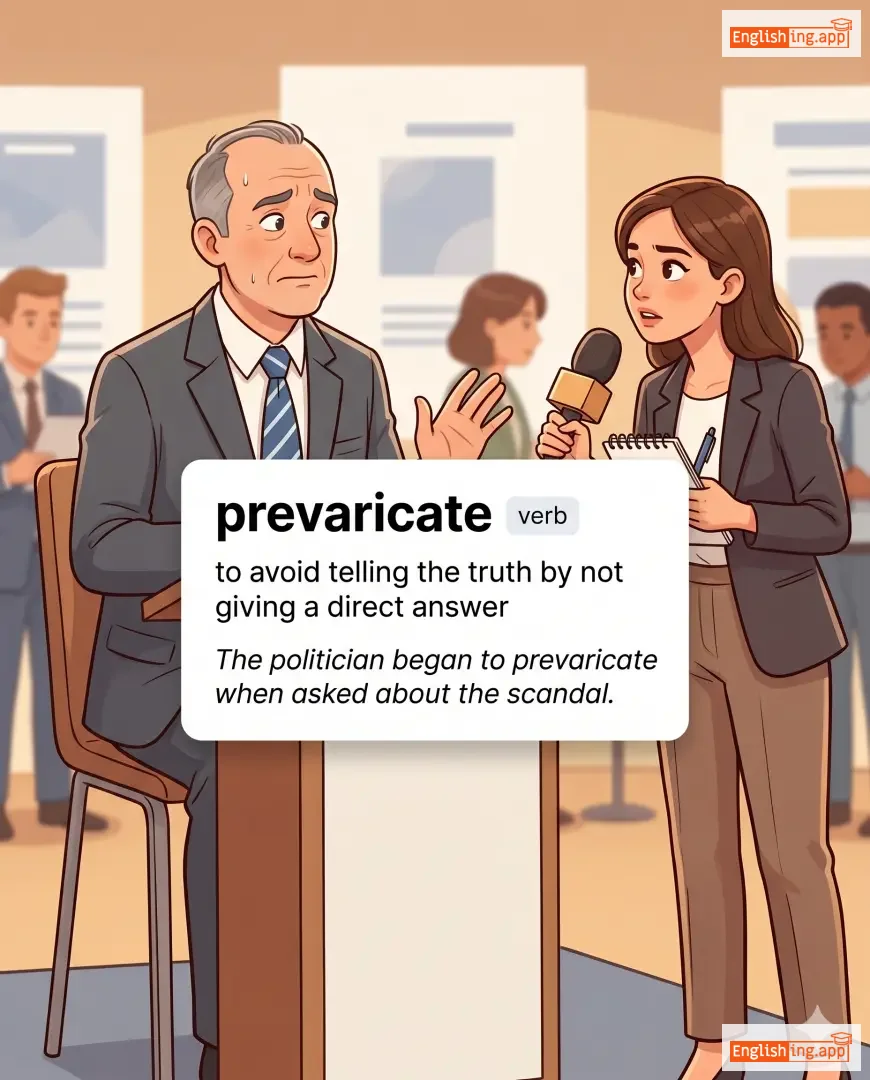
prevaricate definition card — visual illustration of the meaning
verb C2
/prɪˈværɪkeɪt/
এড়িয়ে কথা বলা (eriyo kotha bola)

to avoid telling the truth by not giving a direct answer

"The politician began to prevaricate when asked about the scandal."

"কেলেঙ্কারির বিষয়ে জিজ্ঞাসা করলে রাজনীতিবিদ এড়িয়ে কথা বলতে শুরু করলেন।" (kelenkari r bishoye jigyasa korle rajniti bid eriyo kotha bolte shuru korlen.)
adjective C2
/ˈprɪɡɪʃ/
আত্মম্ভরী নীতিবাদী (atmombhori nitibadi)

self-righteously moralistic and superior

"He came across as priggish when correcting everyone's manners."

"অন্যদের শিষ্টাচার সংশোধন করতে গিয়ে সে আত্মম্ভরী মনে হচ্ছিল।" (Onnoder shishtachar songshodhon korte giye se atmombhori mone hochhilo.)
noun C2
/ˌpraɪmoʊˈdʒɛnɪtʃər/
জ্যেষ্ঠপুত্রাধিকার (joesthoputroadhikar)

The right of the firstborn child to inherit the family estate or title.

"Under primogeniture, the eldest son inherited the entire estate."

"জ্যেষ্ঠপুত্রাধিকারের অধীনে, জ্যেষ্ঠ ছেলে পুরো সম্পত্তি উত্তরাধিকার সূত্রে পেত।" (Joesthoputroadhikarer odhine, joestho chele puro sompotti uttaradhikar sutre peto.)
verb C2
/prɪmp/
অলংকার করা (alankar kora)

To spend time making minor adjustments to one's appearance.

"She primped in front of the mirror before the party."

"সে পার্টির আগে আয়নার সামনে দাঁড়িয়ে নিজেকে সাজালো।" (Se partyr age aynar samne dariye nije ke sajalo.)
noun C2
/ˌprɪnsɪˈpæləti/
রাজ্য (rajjo)

a state ruled by a prince

"Monaco is a famous principality in Europe."

"মোনাকো ইউরোপের একটি বিখ্যাত রাজ্য।" (Monaco Europe er ekti bikhyat rajjo.)
noun C2
/ˈpraɪəri/
মঠ (moth)

a small monastery or convent governed by a prior or prioress

"The old priory was converted into a museum."

"পুরানো প্রাইরিকে একটি জাদুঘরে রূপান্তর করা হয়েছিল।" (Purano prairike ekti jadughore rupantor kora hoyechhilo.)
noun C2
/ˌpraɪvəˈtɪə/
সরকারি অনুমোদিত জলদস্যু জাহাজ (sorkari onumodito joldossu jahaj)

A privately owned armed ship authorized by a government to attack enemy ships during war.

"The privateer captured several enemy vessels during the conflict."

"প্রাইভেটিয়ার যুদ্ধের সময় কয়েকটি শত্রু জাহাজ দখল করেছিল।" (Privateer juddher somoy koyekti shotro jahaj dokhol korechilo.)
noun C2
/praɪˈveɪʃən/
অভাব, দারিদ্র্য (abhav, daridryo)

A state in which things essential for human well-being such as food and warmth are lacking.

"The refugees suffered great privation during the harsh winter."

"শরণার্থীরা কঠিন শীতে প্রচণ্ড অভাব ভোগ করেছিল।" (Shoronarthira kothin shite prochondo abhab bhog korechilo.)
noun C2
/ˈprɪvɪti/
ঘনিষ্ঠ সম্পর্ক, চুক্তিগত সম্পর্ক (ghonishto somporko, chuktigoto somporko)

A close, private, or special relationship; in law, the direct connection between parties to a contract.

"There was no privity of contract between the supplier and the customer."

"সরবরাহকারী ও গ্রাহকের মধ্যে কোনো চুক্তিগত সম্পর্ক ছিল না।" (Sorborahkari o grahoker modhye kono chuktigoto somporko chilo na.)
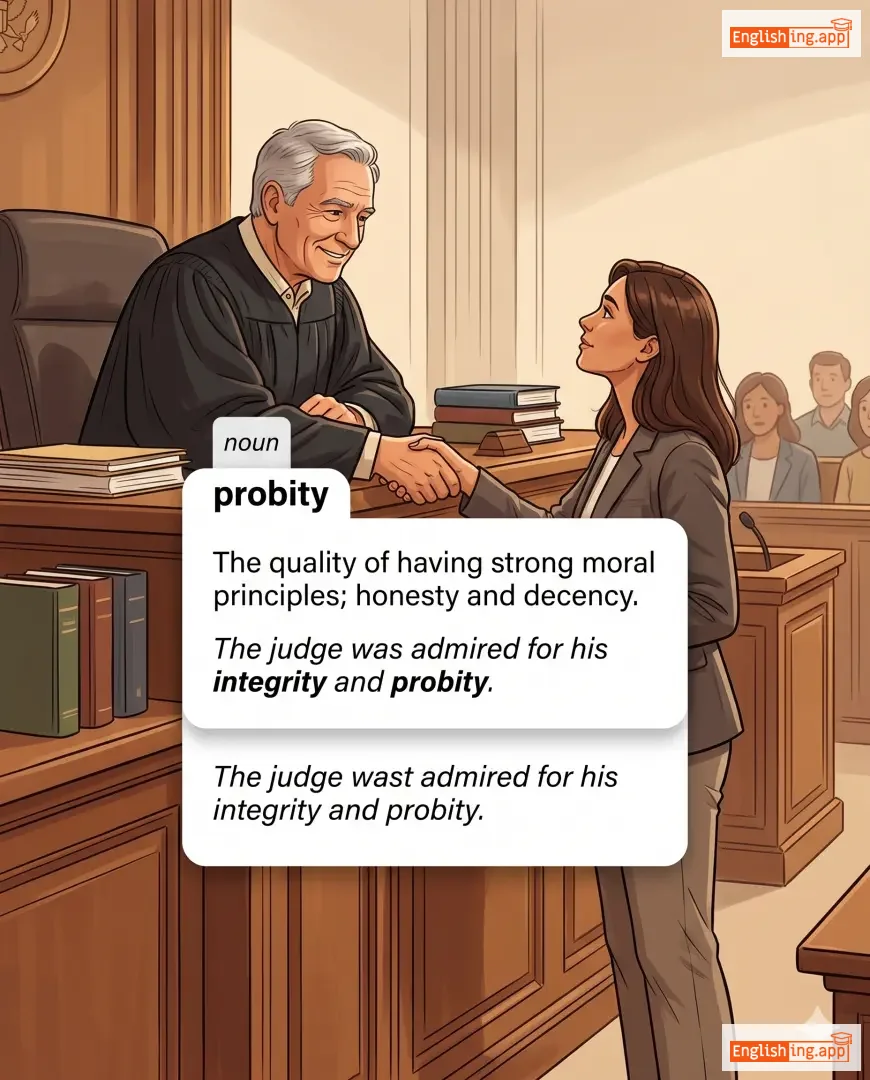
probity definition card — visual illustration of the meaning
noun C2
/ˈproʊbɪti/
নৈতিক সততা (noitik sotota)

The quality of having strong moral principles; honesty and decency.

"The judge was admired for his integrity and probity."

"বিচারককে তাঁর সততা ও নৈতিকতার জন্য প্রশংসা করা হয়েছিল।" (Bicharkke tar sotota o noitikotar jonno proshongsha kora hoyechhilo.)
noun C2
/proʊˈbɑːsɪs/
শুঁড় (shur)

The long, flexible nose of some animals, especially an elephant, or a tubular feeding and sucking organ in insects.

"The elephant used its proboscis to grab food."

"হাতি তার শুঁড় ব্যবহার করে খাবার তুলেছিল।" (Hati tar shur byabohar kore khabar tulchhilo.)
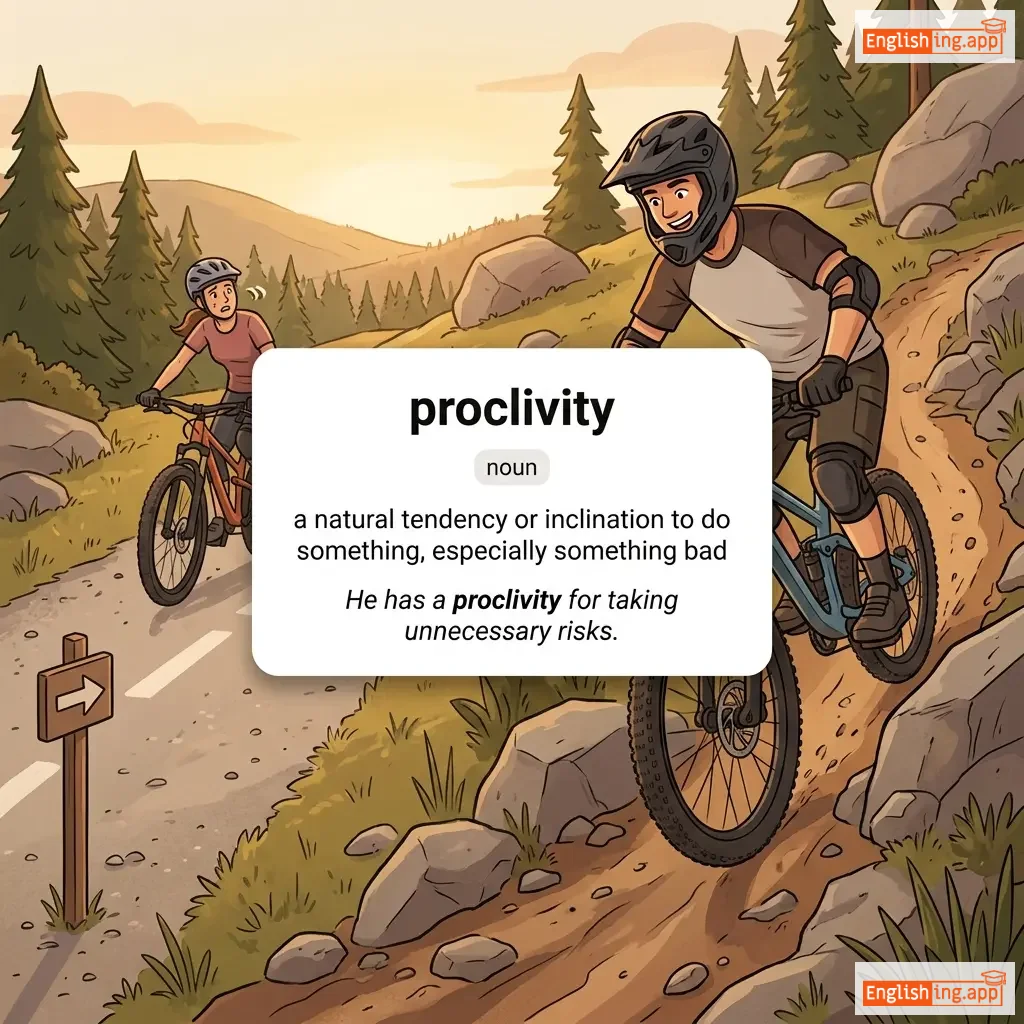
proclivity definition card — visual illustration of the meaning
noun C2
/prəˈklɪvɪti/
প্রবণতা (pronota)

a natural tendency or inclination to do something, especially something bad

"He has a proclivity for taking unnecessary risks."

"তার অপ্রয়োজনীয় ঝুঁকি নেওয়ার প্রবণতা রয়েছে।" (Tar apryojoniyo jhuki newar pronota royeche.)
noun C2
/ˌprɒdɪˈɡæləti/
অপব্যয়িতা (opobyoita)

the quality of being wastefully extravagant

"His prodigality with money left him bankrupt."

"অতিরিক্ত খরচ করার কারণে সে দেউলিয়া হয়ে গেল।" (Otirikto khoroch korar karone se deuliyo hoye gelo.)
noun C2
/ˈprɑːflɪɡəsi/
অপচয় (opochoy)

reckless wastefulness or extravagance

"His profligacy with money led him to bankruptcy."

"টাকার অপচয় তাকে দেউলিয়া করেছে।" (Takar opochoy take deuliya koreche.)
adjective C2
/ˈprɑːflɪɡət/
অমিতব্যয়ী (omitobyoyi)

recklessly extravagant or wasteful in resources

"The king was known for his profligate lifestyle."

"রাজা তার অমিতব্যয়ী জীবনের জন্য পরিচিত ছিলেন।" (Raja tar omitobyoyi jibon er jonno porichito chilen.)
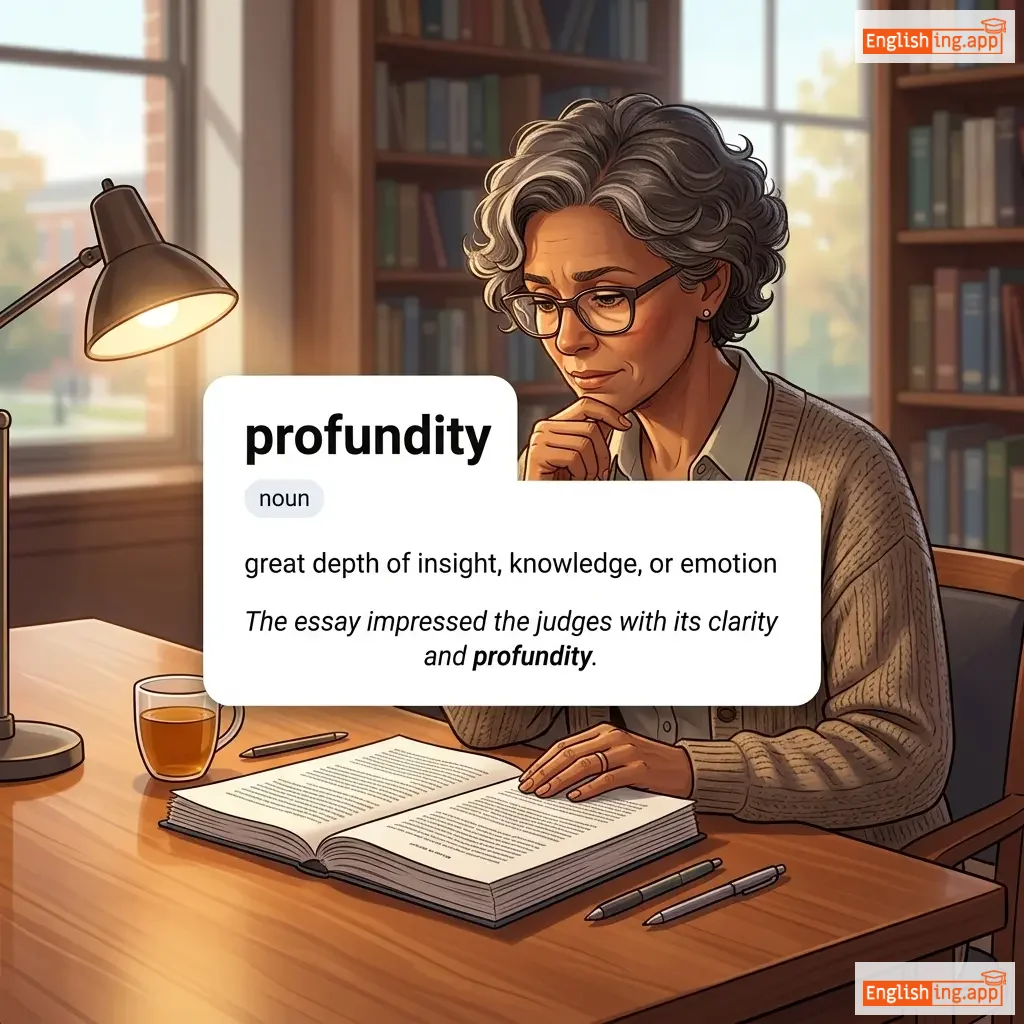
profundity definition card — visual illustration of the meaning
noun C2
/prəˈfʌndɪti/
গভীরতা (gobhirata)

great depth of insight, knowledge, or emotion

"The essay impressed the judges with its clarity and profundity."

"নিবন্ধটি তার স্বচ্ছতা ও গভীরতার জন্য বিচারকদের মুগ্ধ করেছিল।" (nibondhoti tar swachchhota o gobhiratar jonno bicharkoder mugdho korechhilo.)
noun C2
/prəˈfjuːʒən/
প্রাচুর্য (prachurjo)

an abundance or large quantity of something

"Spring brought a profusion of wildflowers to the valley."

"বসন্ত উপত্যকায় বুনো ফুলের প্রাচুর্য নিয়ে এলো।" (bosonto upottakay buno phuler prachurjo niye elo.)
noun C2
/proʊˈdʒɛnɪtər/
পূর্বপুরুষ (purbo purus)

a direct ancestor; a person or thing that originates something

"Researchers traced the custom back to a common progenitor."

"গবেষকেরা প্রথাটির উৎস একটি সাধারণ পূর্বপুরুষের কাছে খুঁজে পেয়েছেন।" (gabeshokera prothatir uts ekti shadharono purbopurusher kache khuje peyechhen.)
adjective C2
/ˈprɒɡnəθəs/
অগ্রচোয়ালবিশিষ্ট (ogrochowalbishishto)

Having jaws that project forward beyond the rest of the face.

"The fossil displayed a distinctly prognathous skull structure."

"জীবাশ্মটিতে স্পষ্টভাবে অগ্রচোয়ালবিশিষ্ট খুলি দেখা গেছে।" (Jibashmotite spostovabe ogrochowalbishishto khuli dekha geche.)
verb C2
/prɒɡˈnɒstɪkeɪt/
ভবিষ্যদ্বাণী করা (vobisshodbani kora)

To foretell or predict future events, especially based on current signs.

"Experts attempted to prognosticate the outcome of the election."

"বিশেষজ্ঞরা নির্বাচনের ফলাফল অনুমান করার চেষ্টা করেছিলেন।" (Bishesoggora nirbachoner folafol onuman korar chesta korechilen.)
noun C2
/prɒɡˌnɒstɪˈkeɪʃən/
ভবিষ্যদ্বাণী (vobisshodbani)

The act of foretelling or predicting future events.

"The astrologer's prognostication fascinated the audience."

"জ্যোতিষীর ভবিষ্যদ্বাণী শ্রোতাদের মুগ্ধ করেছিল।" (Jyotishir vobisshodbani shrotader mughdo korechilo.)
noun C2
/ˌproʊɪˈbɪʃənɪst/
নিষিদ্ধবাদী (nishedhbadi)

A person who supports or advocates prohibition, especially of alcohol.

"The prohibitionist campaigned against the sale of liquor in the town."

"নিষিদ্ধবাদী শহরে মদ বিক্রির বিরুদ্ধে প্রচারণা চালিয়েছিলেন।" (Nishedhbadi shohoore mod bikrir biruddhe procharona chaliyechilen.)