Vocabularios

Descubra, aprenda y domine el vocabulario en inglés

adjective C2
/hɪk/
田舎者; 田舎の人 (inakamono; inaka no hito)

unsophisticated person from a rural area; country bumpkin

"He had a hick accent from growing up in a small town."

"彼は小さな町で育ったため、田舎者のアクセントがあった。" (Kare wa chiisana machi de sodatta tame, inakamono no akusento ga atta.)
adjective C2
/ˈhaɪd.baʊnd/

unwilling or unable to change because of tradition or convention

"He is too hidebound to accept new ideas."

verb C2
/haɪ/
急ぐ (isogu)

to go quickly; hasten

"He hied to the station to catch the train."

"彼は電車に乗るために駅へ急いだ。" (Kare wa densha ni noru tame ni eki e isoida.)
noun C2
/ˈhaɪərəˌɡlɪf/
ヒエログリフ (hierogurifu)

A picture or symbol used in ancient writing systems, especially Egyptian writing.

"The walls of the temple were covered in hieroglyphs."

"寺院の壁はヒエログリフで覆われていた。" (Jiin no kabe wa hierogurifu de owarete ita.)
adjective/noun C2
/ˌhaɪərəˈɡlɪfɪk/
ヒエログリフ的 (hierogurifuteki)

Relating to or written in hieroglyphs; symbols or writing that is difficult to understand.

"The archaeologists studied the hieroglyphic inscriptions carefully."

"考古学者たちはヒエログリフ的な碑文を慎重に研究した。" (Kougakusha-tachi wa hierogurifuteki na hibun o shinchou ni kenkyuu shita.)
adjective C2
/ˌhaɪ ˈfloʊn/
高飛車な (takabisha na)

Using fancy or pretentious language; lofty in style but often overblown.

"The politician gave a high-flown speech full of promises."

"その政治家は約束でいっぱいの高飛車なスピーチをした。" (Sono seijika wa yakusoku de ippai no takabisha na supīchi o shita.)
adjective C2
/ˈhaɪˌbraʊ/
知的に優れた (chiteki ni sugureta)

intellectually superior or cultured; often describing art, literature, or activities appealing to intellectual tastes

"The museum is known for its highbrow exhibitions."

"その博物館は知的な展示で知られています。" (Sono hakubutsukan wa chitekina tenji de shirareteimasu.)
noun C2
/hɪˈlærɪti/
爆笑 (bakushou)

Extreme amusement, especially when expressed by laughter.

"The movie caused great hilarity among the audience."

"その映画は観客の間で大きな爆笑を引き起こしました。" (Sono eiga wa kankyaku no aida de ookina bakushou o hikiokoshimashita.)
noun C2
/ˈhɪlək/
小山 (koyama)

A small hill or mound.

"The children climbed up the grassy hillock to watch the sunset."

"子供たちは夕日を見るために草で覆われた小山に登った。" (Kodomotachi wa yūhi o miru tame ni kusa de ōwareta koyama ni nobotta.)
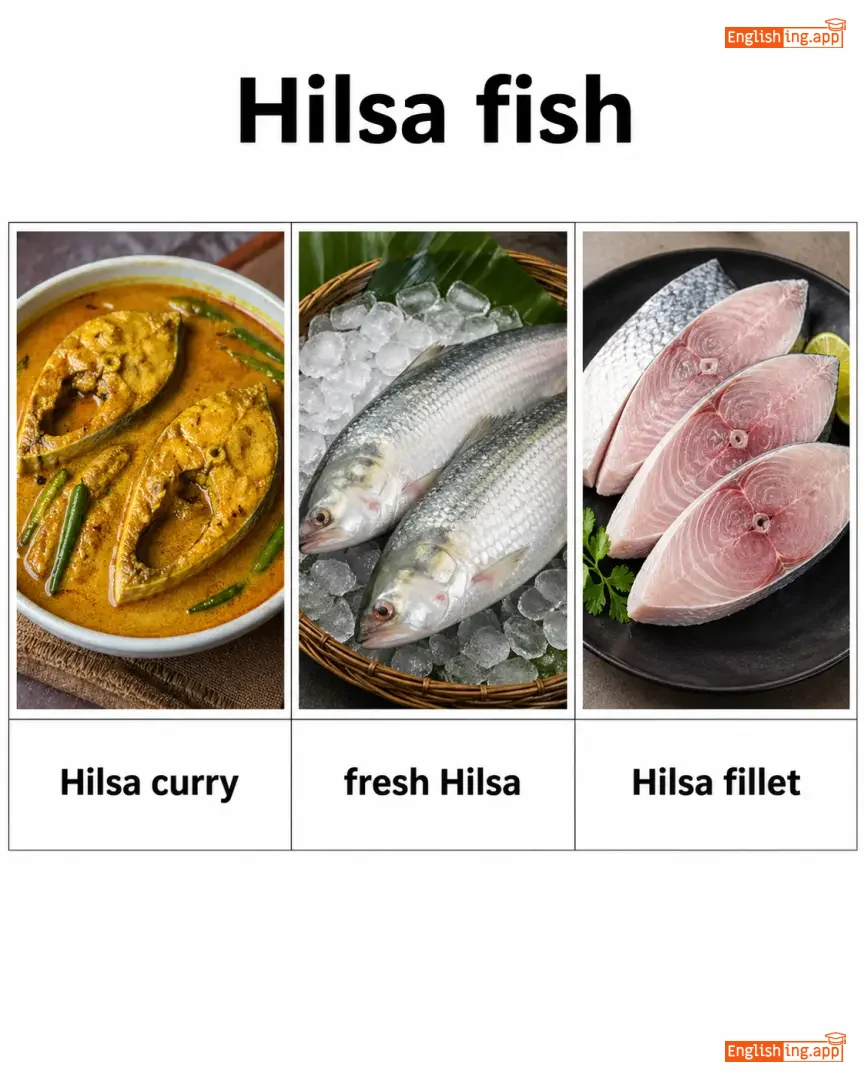
Hilsa fish definition card — visual illustration of the meaning
noun C2
/ˈhɪl.sə fɪʃ/
ヒルサ魚 (Hirusa sakana)

a popular fish species found in South Asian rivers, especially prized in Bengali cuisine

"Hilsa fish is considered a delicacy in Bengali culture."

"ヒルサフィッシュはベンガル文化ではごちそうと見なされています。" (Hirusa fisshu wa Bengaru bunka de wa gochisō to minasareteimasu.)
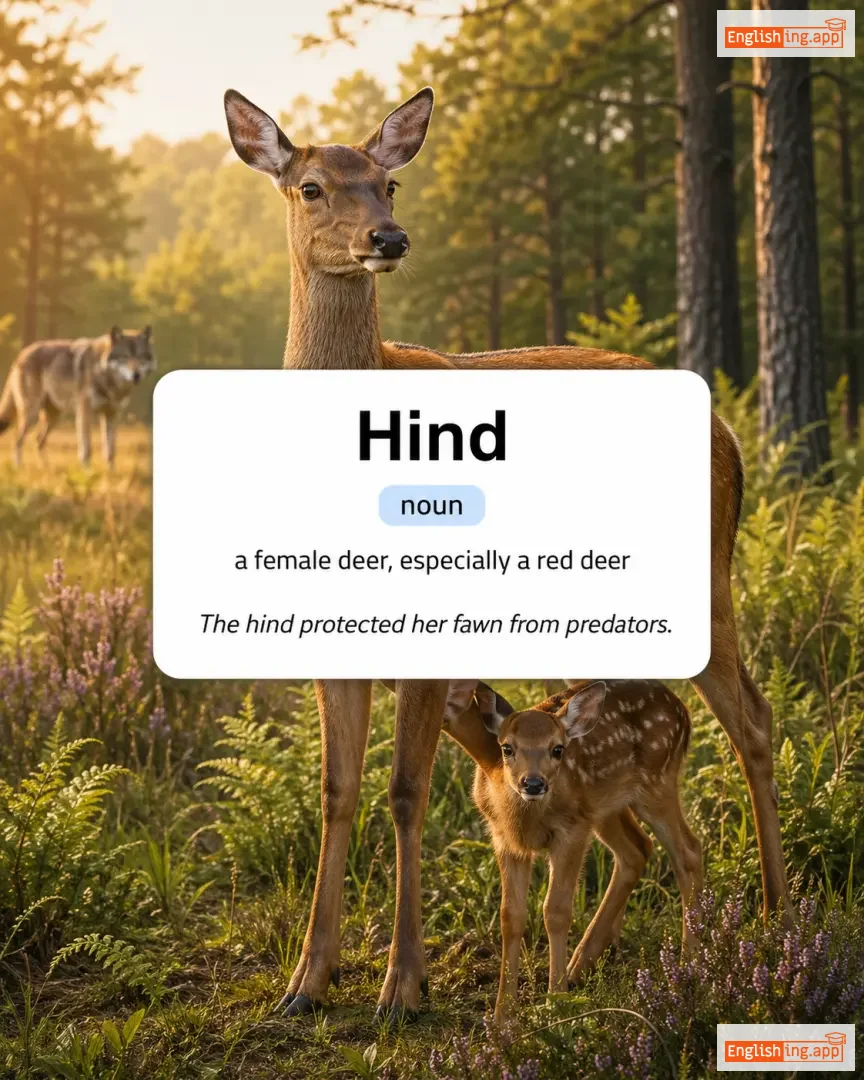
Hind definition card — visual illustration of the meaning
🦌♀️

Hind (haindo)

noun C2
/haɪnd/
雌鹿 (meshi shika)

a female deer, especially a red deer

"The hind protected her fawn from predators."

"雌鹿は捕食者から子鹿を守りました。" (Meshi shika wa hoshokusha kara kogitsune o mamorimashita.)
adjective C2
/ˈhaɪndmoʊst/
最も後ろの (mottomo ushiro no)

Farthest back; last in position.

"The hindmost car in the convoy broke down first."

"隊列で最も後ろの車が最初に壊れた。" (Tairetsu de mottomo ushiro no kuruma ga saisho ni kowareta.)
noun C2
/ˈhaɪərlɪŋ/
傭兵 (yōhei)

A person who works for payment only, often with little loyalty or principle.

"The mercenary was dismissed as just a hireling with no real loyalty."

"傭兵は、忠誠心のないただのハイヤーリングとして解雇された。" (Yōhei wa, chūseishin no nai tada no hayāringu toshite kaiko sareta.)
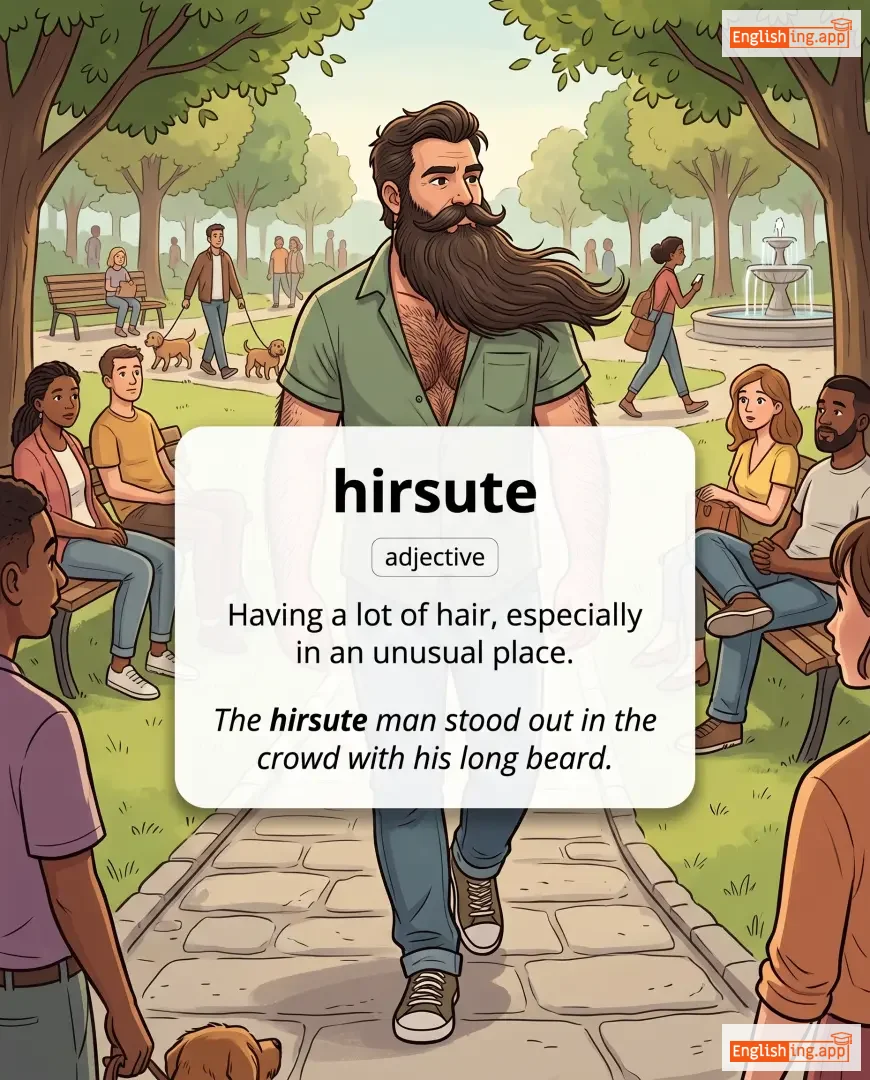
hirsute definition card — visual illustration of the meaning
adjective C2
/ˈhɜːrsuːt/

Having a lot of hair, especially in an unusual place.

"The hirsute man stood out in the crowd with his long beard."

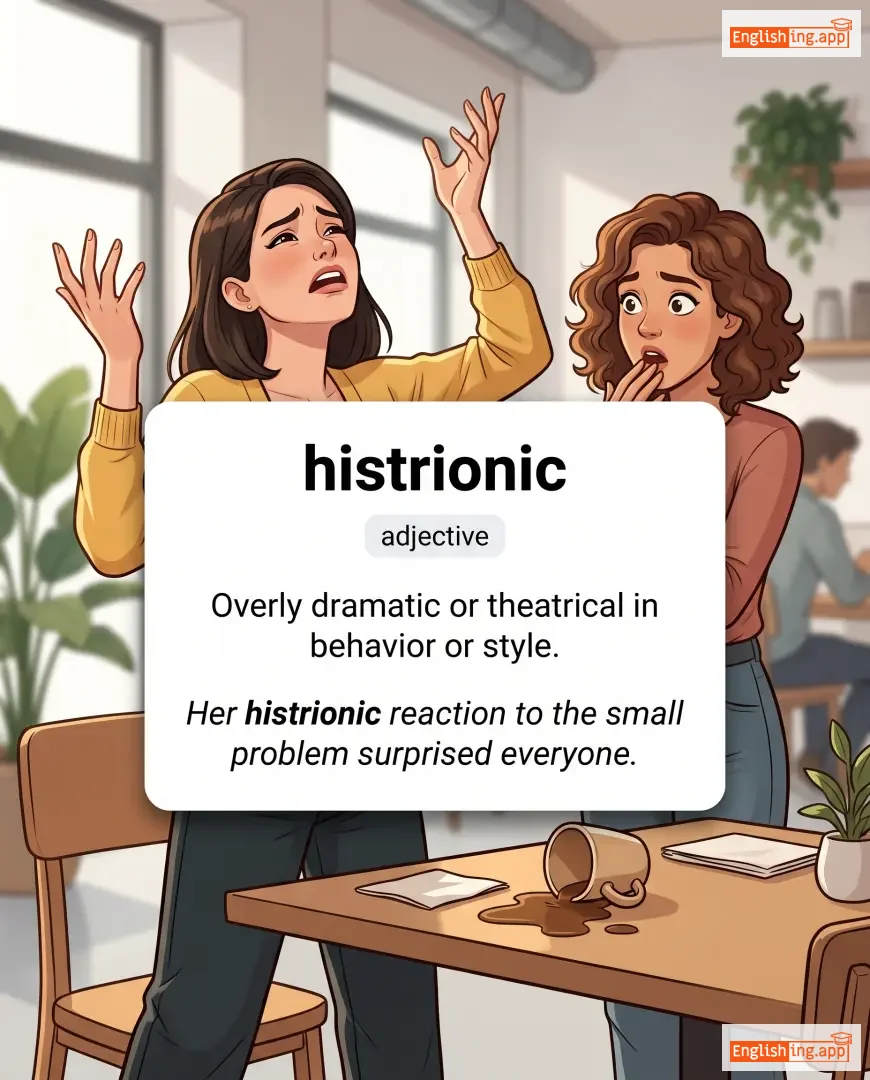
histrionic definition card — visual illustration of the meaning
adjective C2
/ˌhɪstriˈɒnɪk/

Overly dramatic or theatrical in behavior or style.

"Her histrionic reaction to the small problem surprised everyone."

adjective C2
/ˈhɔːri/
灰色の, 古い (haiiro no, furui)

gray or white with age; very old and respected

"The hoary oak tree stood as a witness to centuries of history."

"古いオークの木は何世代にもわたる歴史の証人として立っていた。" (Furui ōku no ki wa nan sedai ni mo wataru rekishi no shōnin to shite tatte ita.)
verb C2
/ˈhɑːbəl/
よろけて歩く (yorokete aruku)

to walk awkwardly with difficulty, usually due to injury

"He hobbled across the room after twisting his ankle."

"彼は足首をひねった後、部屋をよろよろと歩いた。" (Kare wa ashi kubi o hinetta ato, heya o yorokete aruita.)
noun C2
/ˈhɒdʒ.pɒdʒ/
寄せ集め (yoseatsume)

A confusing mixture of different things; a jumble.

"The essay was a hodgepodge of unrelated ideas."

"そのエッセイは関係のないアイデアの寄せ集めだった。" (Sono essei wa kankei no nai aidea no yoseatsume datta.)
noun C2
/hoʊ/
クワ (kuwa)

a gardening tool with a thin metal blade used for breaking up soil and removing weeds

"The farmer used a hoe to remove weeds from his vegetable garden."

"農夫は野菜畑から雑草を取り除くためにクワを使いました。" (Noufu wa yasai hatake kara zassou o torinozoku tame ni kuwa o tsukaimashita.)
noun C2
/hɔːɡ plʌm/
ホッグプラム (Hog puramu)

tropical fruit with yellow skin and sour taste

"Hog plums are often used to make pickles and chutneys."

"ホッグプラムはよくピクルスやチャツネを作るために使われます。" (Hog puramu wa yoku pikurusu ya chatune o tsukuru tame ni tsukawaremasu.)
noun C2
/ˈhɒɡz.hɛd/
大樽 (dai-taru)

A large cask or barrel, traditionally used for storing liquids like wine or beer.

"The cellar was filled with hogsheads of ale."

"地下室はビールの大樽でいっぱいだった。" (Chikashitsu wa biiru no dai-taru de ippai datta.)
noun C2
/ˈhoʊl.stər/
ホルスター (horusutā)

A holder or case for carrying a gun, typically worn on a belt or shoulder.

"The sheriff kept his revolver in a leather holster."

"保安官は自分のリボルバーを革製のホルスターに入れておいた。" (Hoankan wa jibun no riborubā o kawa-sei no horusutā ni irete oita.)
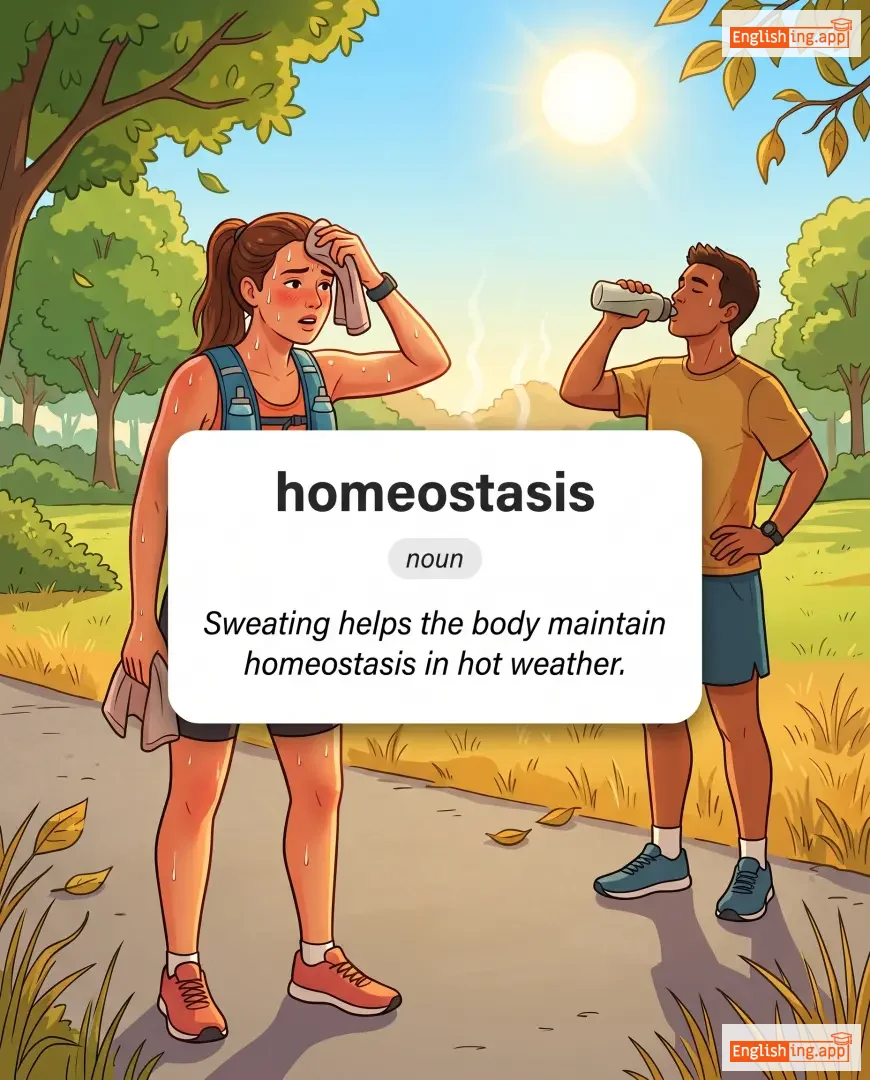
homeostasis definition card — visual illustration of the meaning
noun C2
/ˌhoʊmi.oʊˈsteɪsɪs/
恒常性 (kōjōsei)

The ability of a living system or organism to maintain internal stability despite changes in external conditions.

"Sweating helps the body maintain homeostasis in hot weather."

"汗をかくことで、暑い天気の中で体が恒常性を維持するのを助けます。" (Ase o kaku koto de, atsui tenki no naka de karada ga kōjōsei o iji suru no o tasukemasu.)
adjective C2
/ˈhoʊm.spʌn/
手作り (tezukuri)

Simple and unsophisticated; made at home rather than in a factory.

"She wore a homespun dress to the village festival."

"彼女は村の祭りに手作りのドレスを着て行った。" (Kanojo wa mura no matsuri ni tezukuri no doresu o kite itta.)
Homily definition card — visual illustration of the meaning
noun C2
/ˈhɑː.mə.li/
説教 (sekkyou)

A religious or moral lecture; a sermon.

"The priest delivered a touching homily on kindness."

"司祭は親切について感動的な説教をしました。" (Shisai wa shinsetsu ni tsuite kandō-teki na sekkyō o shimashita.)
noun C2
/ˌhoʊmə.dʒəˈniːəti/

The quality or state of being all the same or all of the same kind.

"The cultural homogeneity of the village made it feel unified."

verb C2
/həˈmɑː.dʒə.naɪz/
均質化 (kinshitsuka)

To make uniform or similar by blending or mixing different elements.

"The company tried to homogenize its products across global markets."

"その会社は世界市場で製品を均質化しようとしました。" (Sono kaisha wa sekai shijō de seihin o kinshitsuka shiyō to shimashita.)
adjective C2
/həˈmɑː.lə.ɡəs/
同源 (構造) (dōgen (kōzō))

Having the same relation, relative position, or structure, especially due to evolutionary origin.

"The wings of bats and the arms of humans are homologous structures."

"コウモリの翼と人間の腕は同源の構造です。" (Kōmori no tsubasa to ningen no ude wa dōgen no kōzō desu.)
noun C2
/ˌɒnəˈreəriəm/
謝礼 (sharei)

A payment given for professional services that are rendered without a fee.

"The guest lecturer received an honorarium for her talk."

"ゲスト講師は彼女の講演に対して謝礼を受け取った。" (Gesuto kōshi wa kanojo no kōen ni taishite sharei o uketotta.)
verb C2
/ˈhʊdwɪŋk/
だます (damasu)

To deceive or trick someone.

"The scammer hoodwinked many people with false promises."

"詐欺師は嘘の約束で多くの人々をだました。" (Sagishi wa uso no yakusoku de ōku no hitobito o damashita.)
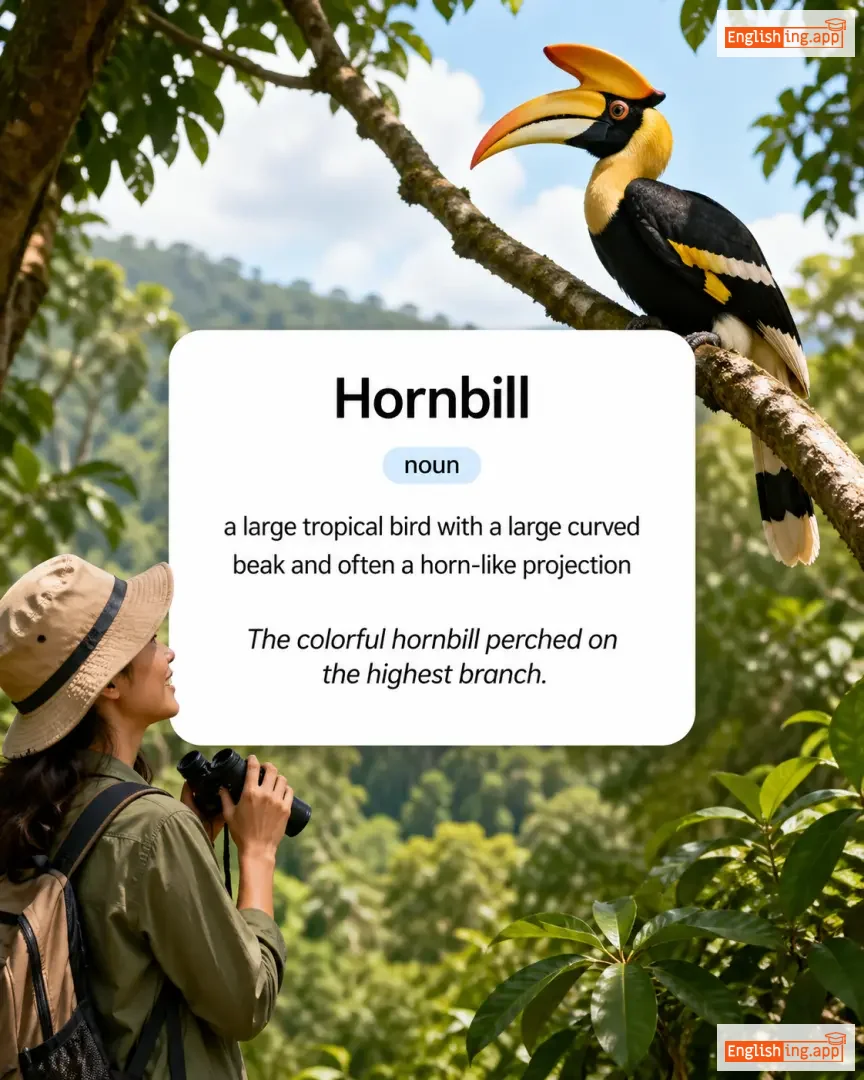
Hornbill definition card — visual illustration of the meaning
noun C2
/ˈhɔːrn.bɪl/
ホーンビル鳥 (hōn biru tori)

a large tropical bird with a large curved beak and often a horn-like projection

"The colorful hornbill perched on the highest branch."

"色とりどりのホーンビルが最も高い枝に止まった。" (Irotoridori no hōn biru ga mottomo takai eda ni tomatta.)
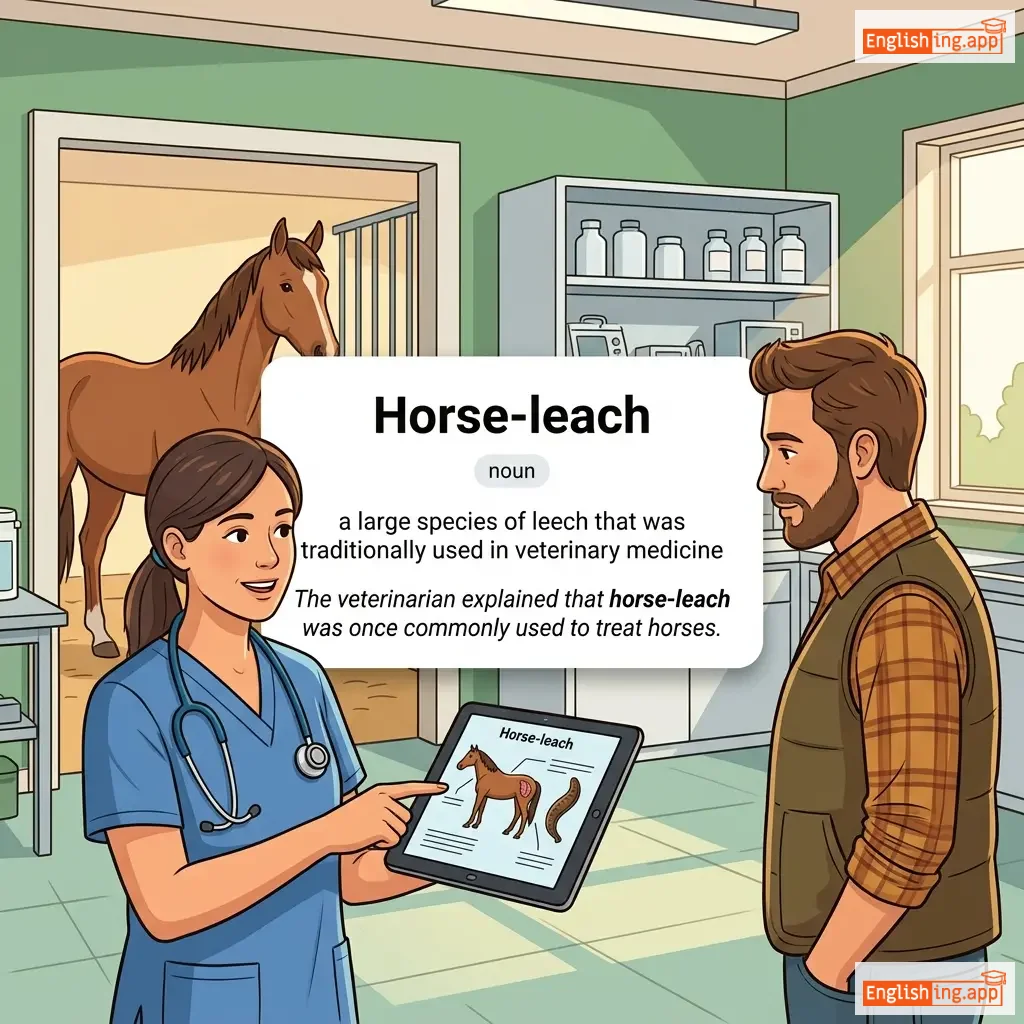
Horse-leach definition card — visual illustration of the meaning
noun C2
/ˈhɔːrs.liːt͡ʃ/
馬のヒル (uma no hiru)

a large species of leech that was traditionally used in veterinary medicine

"The veterinarian explained that horse-leach was once commonly used to treat horses."

"獣医は、馬のヒルがかつて馬の治療に広く使われていたと説明しました。" (Jūi wa, uma no hiru ga katsute uma no chiryō ni hiroku tsukawarete ita to setsumei shimashita.)
adjective C2
/ˈhɔːrtətɪv/

Giving strong encouragement or urging.

"The teacher gave a hortative speech to motivate the students before the exam."

adjective C2
/ˈhɔːrtətɔːri/

Intended to encourage or urge to action.

"The manager’s hortatory words inspired the team to work harder."

noun C2
/ˈhoʊʒəri/
靴下や足用の衣類 (kutsushita ya ashiyou no irui)

Stockings, socks, and other knitted clothing for the legs and feet.

"She bought new hosiery for the winter season."

"彼女は冬のシーズン用に新しいホジエリーを買いました。" (Kanojo wa fuyu no shiizun you ni atarashii hojierii wo kaimashita.)
noun C2
/ˈhɑːstəlri/
宿泊施設 (shukuhaku shisetsu)

An inn or lodging place, especially one for travelers.

"They stayed at a small hostelry near the mountains."

"彼らは山の近くの小さな宿泊施設に泊まりました。" (Karera wa yama no chikaku no chiisana shukuhaku shisetsu ni tomarimashita.)
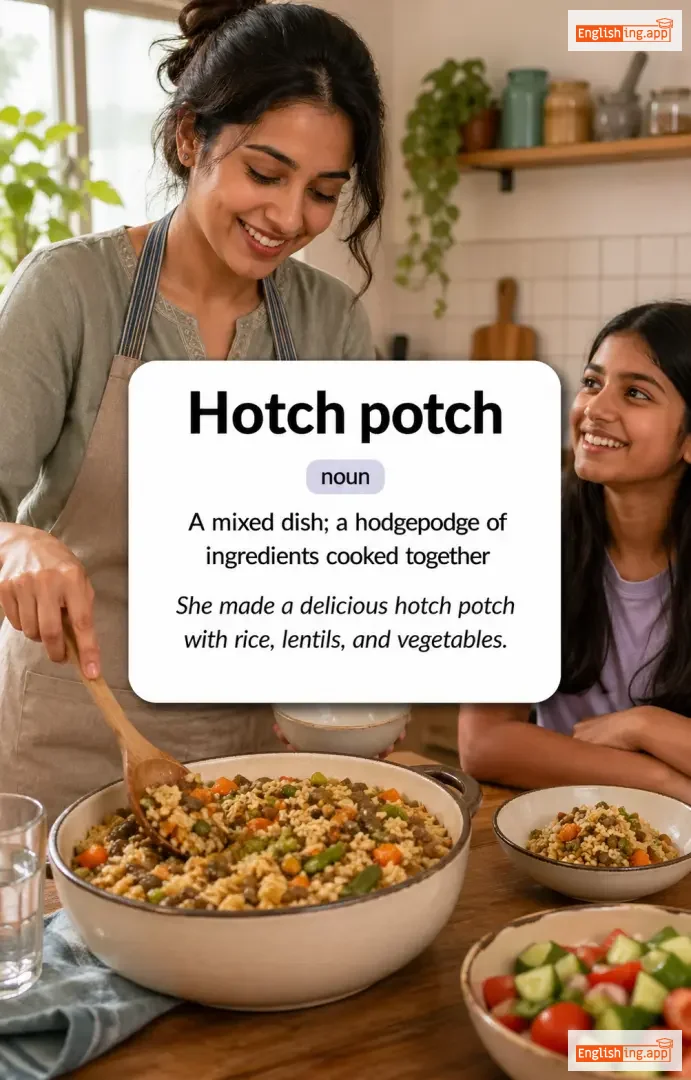
Hotch potch definition card — visual illustration of the meaning
noun C2
/hɒtʃ pɒtʃ/
煮込み料理 (nikomi ryouri)

A mixed dish; a hodgepodge of ingredients cooked together

"She made a delicious hotch potch with rice, lentils, and vegetables."

"彼女はご飯、レンズ豆、野菜で美味しいホッチポッチを作った。" (Kanojo wa gohan, renzudou, yasai de oishii hotch potch o tsukutta.)
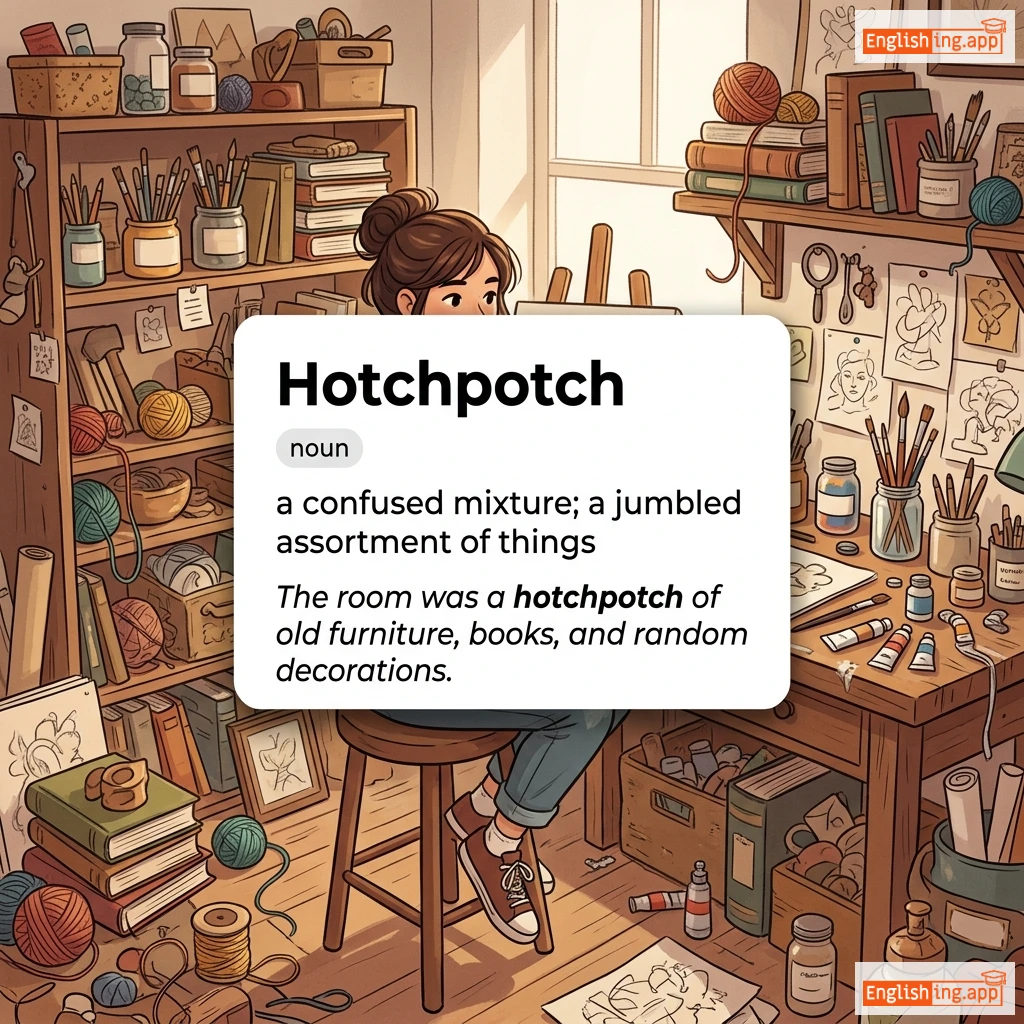
Hotchpotch definition card — visual illustration of the meaning
noun C2
/ˈhɑːtʃ.pɑːtʃ/
ごちゃ混ぜ; 物の無秩序な集まり (gochamaze; mono no muchitsujo na atsumari)

a confused mixture; a jumbled assortment of things

"The room was a hotchpotch of old furniture, books, and random decorations."

"部屋は古い家具、本、ランダムな飾り付けのごちゃ混ぜだった。" (Heya wa furui kagu, hon, randamu na kazarikake no gochamaze datta.)
noun C2
/ˈhɒthɛd/
短気な人 (tanki na hito)

a person who acts quickly and without thinking when angry

"He is such a hothead that he often starts arguments."

"彼は短気な人で、よく議論を始める。" (Kare wa tanki na hito de, yoku giron o hajimeru.)
noun C2
/ˈhaʊsˌbreɪkɪŋ/
住居侵入 (jūkyo shinnyū)

the crime of breaking into a house with intent to steal

"The thief was arrested for housebreaking."

"泥棒は住居侵入で逮捕された。" (Dorobō wa jūkyo shinnyū de taiho sareta.)
🏚️

hovel

noun C2
/ˈhʌvəl/

a small, poorly built, and dirty house

"The refugees lived in a makeshift hovel."

noun C2
/ˈhɔɪdən/
やんちゃな女の子 (yancha na onna no ko)

a boisterous or tomboyish girl

"The hoyden preferred climbing trees to playing with dolls."

"やんちゃな女の子は、ぬいぐるみで遊ぶよりも木に登るのが好きでした。" (Yancha na onna no ko wa, nuigurumi de asobu yorimo ki ni noboru no ga suki deshita.)
noun C2
/ˈhʌk.stər/
露天商人 (roten shōnin)

A person who sells small items aggressively, often in a showy or dishonest way.

"The huckster loudly promoted his goods in the busy marketplace."

"その露天商人は賑やかな市場で自分の商品を大声で宣伝していました。" (Sono roten shōnin wa nigi yaka na ichiba de jibun no shōhin o ōgoe de senden shite imashita.)
noun phrase C2
/ˌhjuː ən ˈkraɪ/
大声の抗議 (oogoe no kougi)

A loud public outcry or protest, often demanding action.

"There was a hue and cry over the new policy changes."

"新しい政策変更に対して、大声の抗議が起こった。" (Atarashii seisaku henkou ni taishite, oogoe no kougi ga okotta.)
noun C2
/ˈhʌmbʌɡ/
詐欺, くだらないこと (sagi, kudaranai koto)

Deceptive or false talk or behavior; nonsense.

"He dismissed the idea as humbug."

"彼はその考えをくだらないことだとして退けた。" (Kare wa sono kangae o kudaranai koto da to shite sōshita.)
adjective C2
/ˈhʌmdrʌm/
単調 (tanchou)

Lacking excitement or variety; dull and monotonous.

"She grew tired of the humdrum routine of office life."

"彼女はオフィスライフの単調な日常に疲れました。" (Kanojo wa ofisu raifu no tanchou na nichijou ni tsukaremashita.)
noun C2
/ˌhjuː.mɪ.fɪˈkeɪ.ʃən/
腐植化 (fushokuka)

The process of organic matter decomposition to form humus in soil.

"Humification enhances soil structure and fertility."

"腐植化は土壌の構造と肥沃度を向上させます。" (Fushokuka wa dojo no kōzō to hiyokudo o kōjō sasemasu.)
noun C2
/ˈhʌm.ək/
小丘 (shōkyū)

A small hill, mound, or ridge of earth or ice.

"The hikers rested on a grassy hummock by the river."

"ハイカーたちは川のそばの草むらの小丘で休憩した。" (Haikā-tachi wa kawa no soba no kusamura no shōkyū de kyūkei shita.)
noun C2
/ˈhjuːməs/
腐植土 (fushokudo)

The dark, organic material in soil formed from decayed plants and animals.

"The gardener enriched the soil with humus to improve plant growth."

"庭師は植物の成長を促進するために土にフムスを加えました。" (Niwa-shi wa shokubutsu no seichō o sokushin suru tame ni tsuchi ni humusu o kuwaemashita.)
verb C2
/ˈhɜːrtl/
猛スピードで進む (mō supīdo de susumu)

To move or cause to move at great speed, often in a dangerous way.

"The car hurtled down the mountain road."

"車は山道を猛スピードで下っていました。" (Kuruma wa yamamichi o mō supīdo de kudatte imashita.)