Vocabularios

Descubra, aprenda y domine el vocabulario en inglés

noun C2
/ˌɛksɪˈɡjuːɪti/
匮乏 (kuì fá)

the quality of being scanty or meager in amount

"The exiguity of resources made the project difficult to complete."

"资源的匮乏使得项目完成变得困难。" (Zīyuán de kuì fá shǐdé xiàngmù wánchéng biàn dé kùnnán.)
adjective C2
/ɛɡˈzɪɡjuəs/
稀缺 (xique)

small in amount; scanty or inadequate

"They survived on exiguous rations during the journey."

"他们在旅途中依靠稀缺的口粮生存。" (Tāmen zài lǚtú zhōng yīkào xīquē de kǒu liáng shēngcún.)
noun C2
/ɪɡˈzɔːrbɪtəns/
过度 (guòdù)

The quality of being excessive, unreasonable, or going beyond proper limits.

"The exorbitance of the hotel's prices shocked the tourists."

"酒店价格的过度让游客们震惊。" (Jiǔdiàn jiàgé de guòdù ràng yóukèmen zhènjīng.)
exorcise definition card — visual illustration of the meaning
verb C2
/ˈeksɔːrsaɪz/

To drive out an evil spirit or bad influence through rituals or prayers.

"The priest was called to exorcise the spirit from the house."

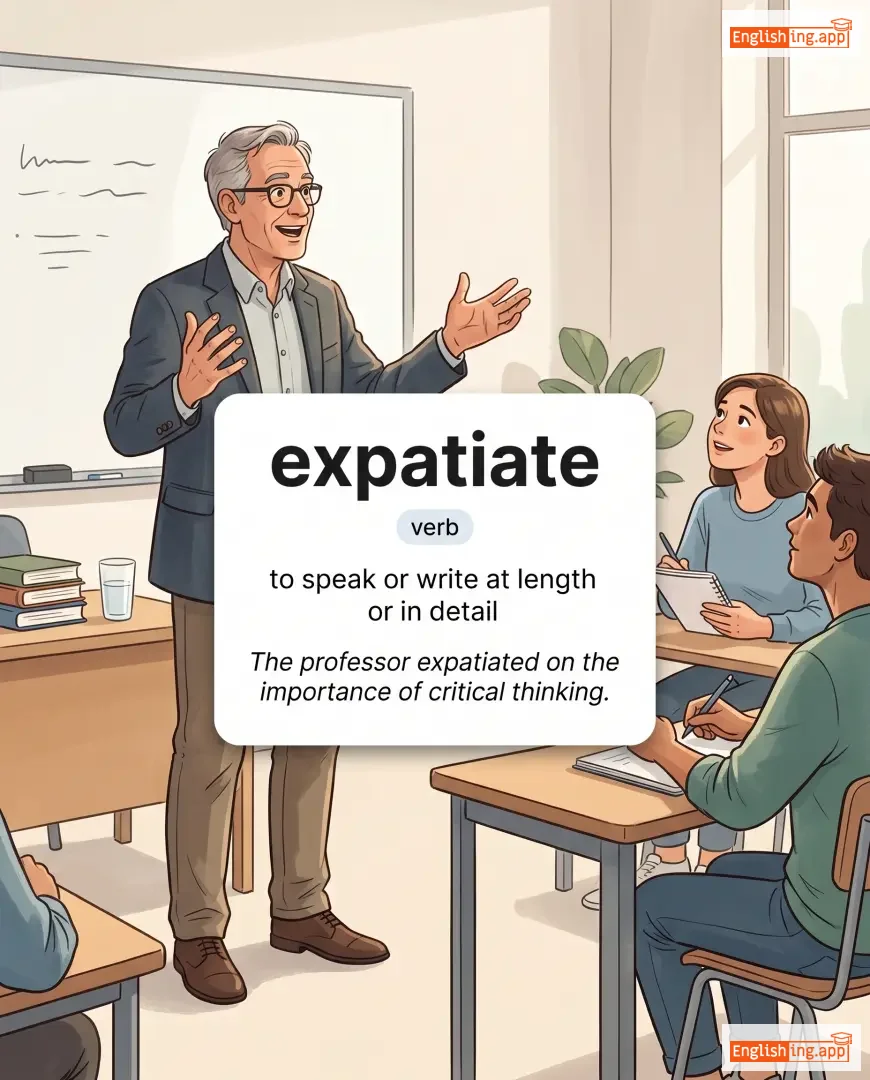
expatiate definition card — visual illustration of the meaning
verb C2
/ɪkˈspeɪʃiˌeɪt/
详细讨论或写作 (xiángxì tǎlùn huò xiězuò)

to speak or write at length or in detail

"The professor expatiated on the importance of critical thinking."

"教授详细阐述了批判性思维的重要性。" (Jiàoshòu xiángxì chǎnshù le pīpànxìng sīwéi de zhòngyàoxìng.)
verb C2
/ɪkˈspɛktəreɪt/
吐痰 (tǔtán)

to cough up and spit out mucus from the throat or lungs

"The patient began to expectorate thick mucus."

"患者开始吐出厚重的粘液。" (Huànzhě kāishǐ tǔchū hòu zhòng de zhān yè.)
noun C2
/ɪkˈspiːdiənsi/
机会主义 (jīhuì zhǔyì)

the quality of being convenient and practical despite possibly being improper or immoral

"He acted out of political expediency rather than principle."

"他是出于政治机会主义而非原则行事。" (Tā shì chūyú zhèngzhì jīhuì zhǔyì ér fēi yuánzé xíngshì.)
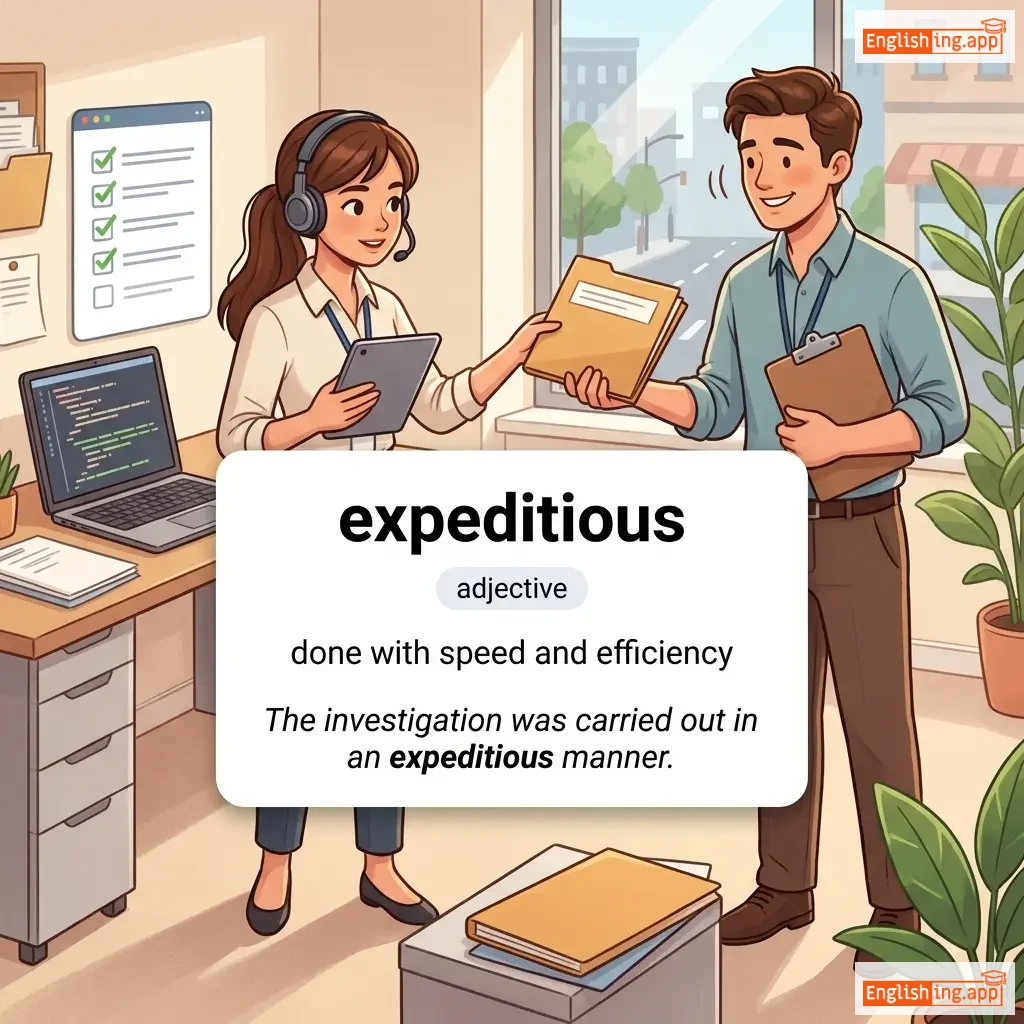
expeditious definition card — visual illustration of the meaning
adjective C2
/ˌɛkspəˈdɪʃəs/
快速且高效 (kuai su qie gao xiao)

done with speed and efficiency

"The investigation was carried out in an expeditious manner."

"调查以快速且高效的方式进行。" (Diaocha yi kuaisu qie gaoxiao de fangshi jinxing.)
adverb C2
/ˌɛkspəˈdɪʃəsli/
迅速而高效地 (xùn sù ér gāo xiào de)

in a quick and efficient manner

"The application was processed expeditiously."

"申请被迅速而高效地处理了。" (Shēnqǐng bèi xùn sù ér gāo xiào de chǔ lǐ le.)
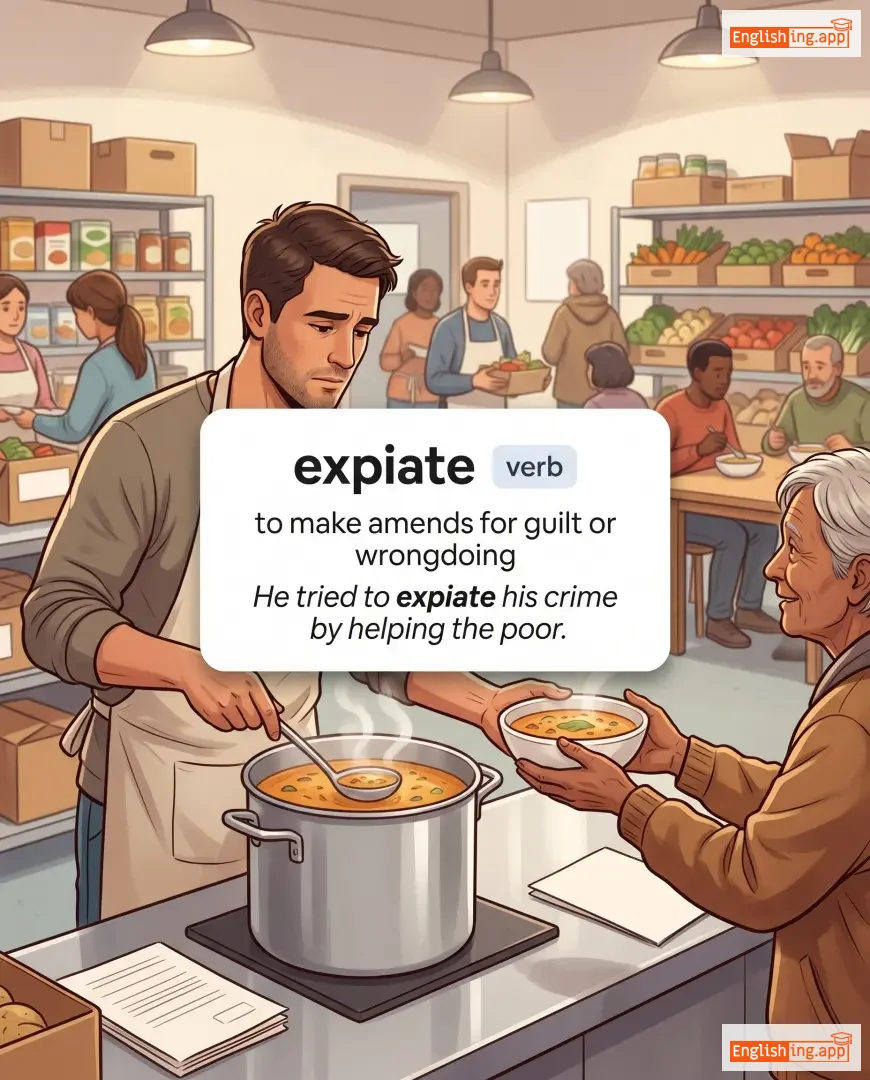
expiate definition card — visual illustration of the meaning
verb C2
/ˈɛkspieɪt/

to make amends for guilt or wrongdoing

"He tried to expiate his crime by helping the poor."

noun C2
/ˈɛksplətɪv/
脏话 (zānghuà)

a word or phrase used as an exclamation, often offensive or profane

"He shouted an expletive when he dropped the hammer on his foot."

"当他把锤子掉到脚上时,他喊出了一个脏话。" (Dāng tā bǎ chuízi diào dào jiǎo shàng shí, tā hǎn chūle yīgè zānghuà.)
adjective C2
/ˈɛksplɪkəbəl/
可解释的 (kě jiěshì de)

able to be explained or understood

"His sudden anger was explicable given the stressful situation."

"他的突然愤怒是可以解释的,考虑到紧张的情况。" (Tā de tūrán fènnù shì kě jiěshì de, kǎolǜ dào jǐnzhāng de qíngkuàng.)
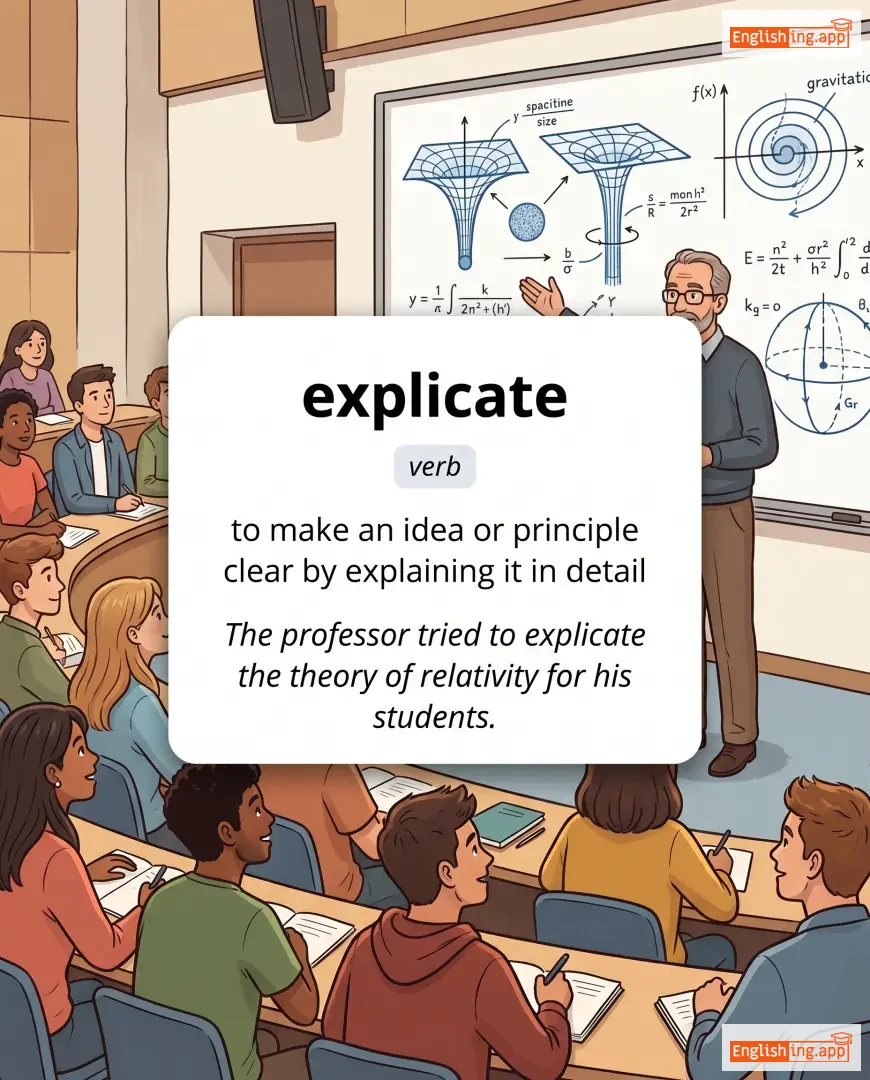
explicate definition card — visual illustration of the meaning
verb C2
/ˈɛksplɪkeɪt/
解释 (jiěshì)

to make an idea or principle clear by explaining it in detail

"The professor tried to explicate the theory of relativity for his students."

"教授试图为他的学生解释相对论的理论。" (Jiàoshòu shìtú wèi tā de xuéshēng jiěshì xiāngduìlùn de lǐlùn.)
noun C2
/ˈɛksplɪkeɪtər/
阐释者 (chǎnshì zhě)

a person who explains or interprets something in detail

"The critic served as an explicator of the poet’s complex works."

"评论家担任了诗人复杂作品的阐释者。" (Pínglùn jiā dānrènle shīrén fùzá zuòpǐn de chǎnshì zhě.)
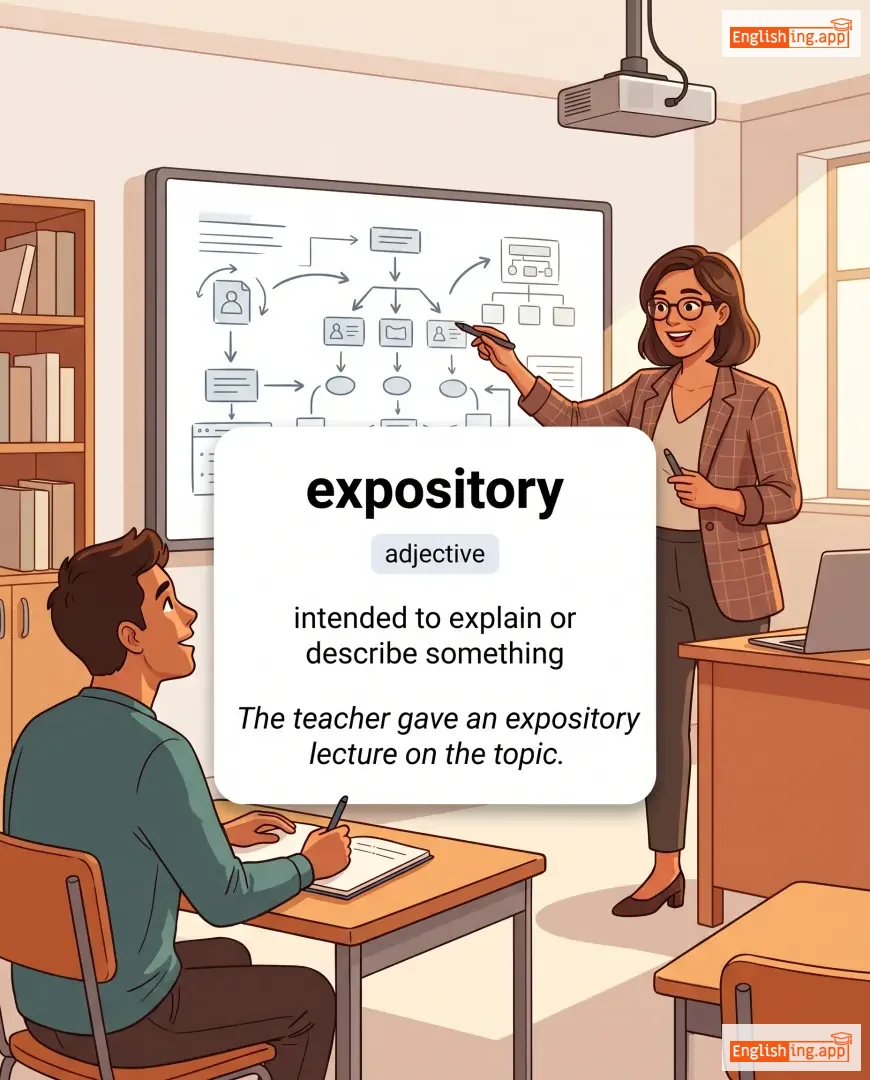
expository definition card — visual illustration of the meaning
adjective C2
/ɪkˈspɒzɪtəri/
说明的 (shuōmíng de)

intended to explain or describe something

"The teacher gave an expository lecture on the topic."

"老师就这个话题进行了说明性的讲座。" (Lǎoshī jiù zhège huàtí jìnxíngle shuōmíng xìng de jiǎngzuò.)
verb C2
/ɪkˈspɒstjʊleɪt/
表示不同意见 (biǎoshì bùtóng yìjiàn)

to express strong disapproval or disagreement

"She expostulated with her friend about the risky decision."

"她对她朋友关于冒险决定的看法表达了不同意见。" (Tā duì tā péngyǒu guānyú màoxiǎn juédìng de kànfǎ biǎodále bùtóng yìjiàn.)
noun C2
/ɪkˌspɒstjʊˈleɪʃən/
抗议 (kàngyì)

the act of expressing protest or disagreement

"His expostulation against the unfair rules was ignored."

"他对不公平规则的抗议被忽视了。" (Tā duì bù gōngpíng guīzé de kàngyì bèi hūshìle.)
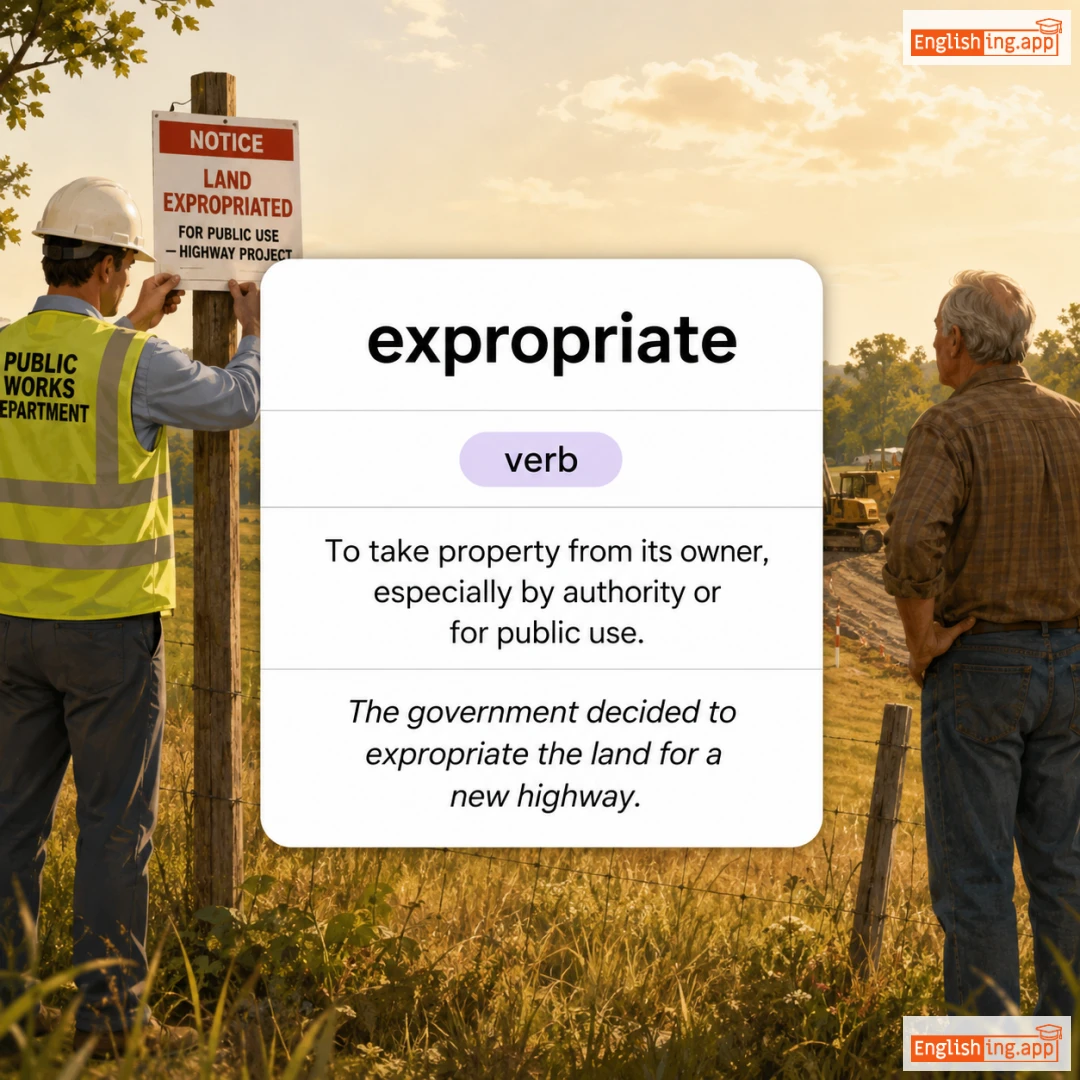
expropriate definition card — visual illustration of the meaning
verb C2
/ɛksˈproʊprieɪt/
征用 (zhēng yòng)

To take property from its owner, especially by authority or for public use.

"The government decided to expropriate the land for a new highway."

"政府决定征用这块土地来修建一条新高速公路。" (Zhèngfǔ juédìng zhēngyòng zhè kuài tǔdì lái xiūjiàn yītiáo xīn gāosù gōnglù.)
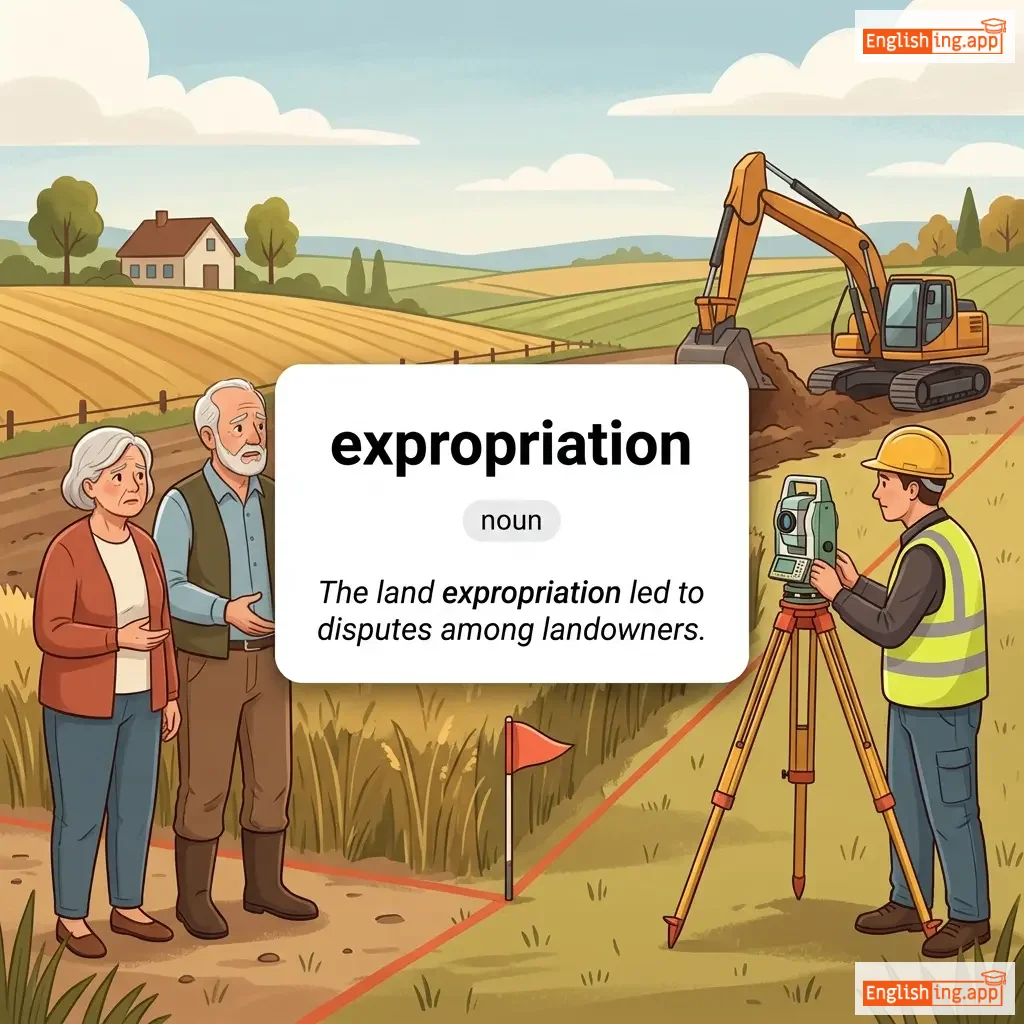
expropriation definition card — visual illustration of the meaning
noun C2
/ɪkˌsprəʊ.priˈeɪ.ʃən/
征用 (zhēngyòng)

The act of government taking private property, also known as confiscation, nationalization, or seizure.

"The land expropriation led to disputes among landowners."

"土地征用导致了土地所有者之间的争议。" (Tǔdì zhēngyòng dǎozhìle tǔdì suǒyǒu zhě zhī jiān de zhēngyì.)
verb C2
/ɪkˈspʌndʒ/
擦除 (cāchú)

To erase or remove completely, often something unwanted.

"He managed to expunge the embarrassing memory from his mind."

"他设法把尴尬的记忆从脑海中抹去。" (Tā shèfǎ bǎ gāngà de jìyì cóng nǎohǎi zhōng mǒqù.)
verb C2
/ˈekspərˌɡeɪt/
删改 (shangai)

To remove offensive or objectionable parts from a text or speech.

"The publisher decided to expurgate the novel before reprinting it."

"出版社决定在再版前删改这部小说。" (chubanshe jueding zai zaiban qian shangai zhe bu xiaoshuo)
extant definition card — visual illustration of the meaning
adjective C2
/ˈɛkstənt/
现存 (xiàncún)

Still in existence; surviving.

"Only a few manuscripts from the ancient library are extant."

"只有几份古老图书馆的手稿仍然存在。" (Zhǐyǒu jǐ fèn gǔlǎo túshūguǎn de shǒugǎo réngrán cúnzài.)
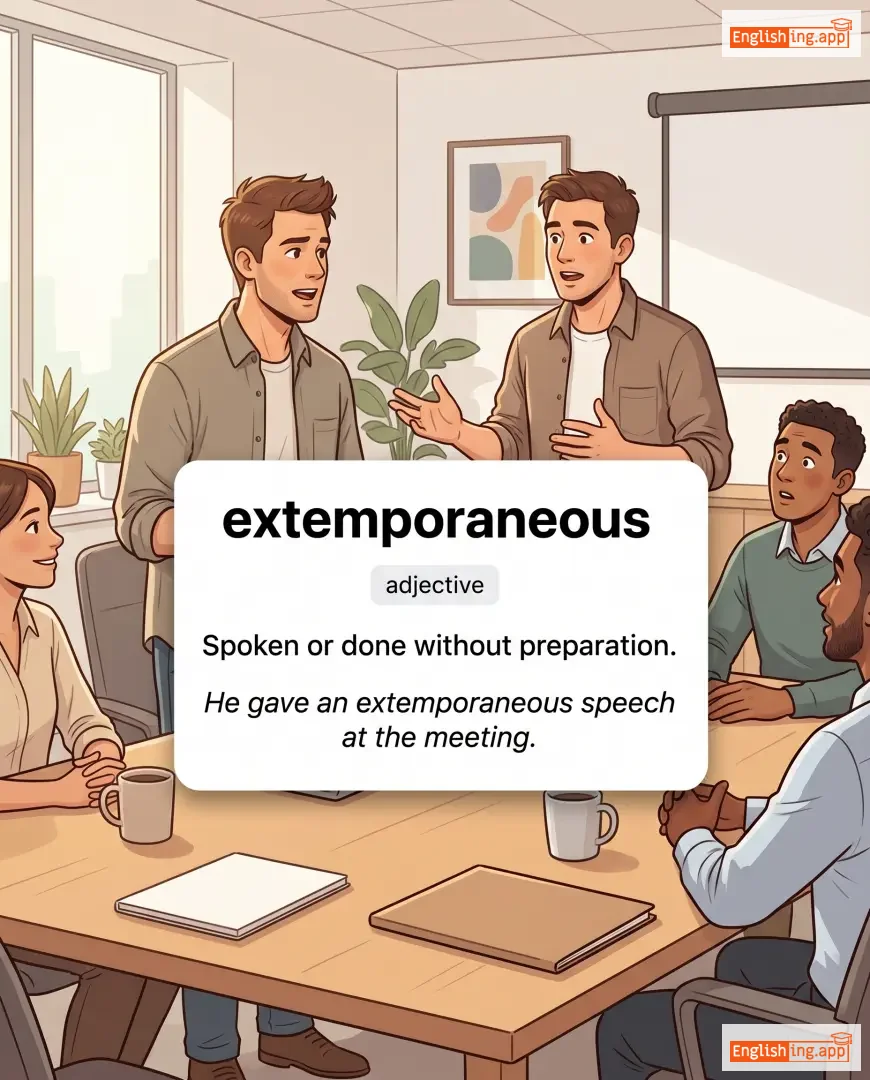
extemporaneous definition card — visual illustration of the meaning
adjective C2
/ɪkˌstɛmpəˈreɪniəs/
没有准备的讲话或行为 (mei you zhun bei de jiang hua huo xing wei)

Spoken or done without preparation.

"He gave an extemporaneous speech at the meeting."

"他在会议上发表了即兴演讲。" (Ta zai hui yi shang fa biao le ji xing yan jiang.)
adverb C2
/ɪkˈstɛmpəri/
即兴 (jixing)

Spoken or done without preparation; impromptu.

"She recited the poem extempore in class."

"她在课堂上即兴朗诵了诗歌。" (Ta zai kètáng shàng jìxìng lǎngsòngle shīgē.)
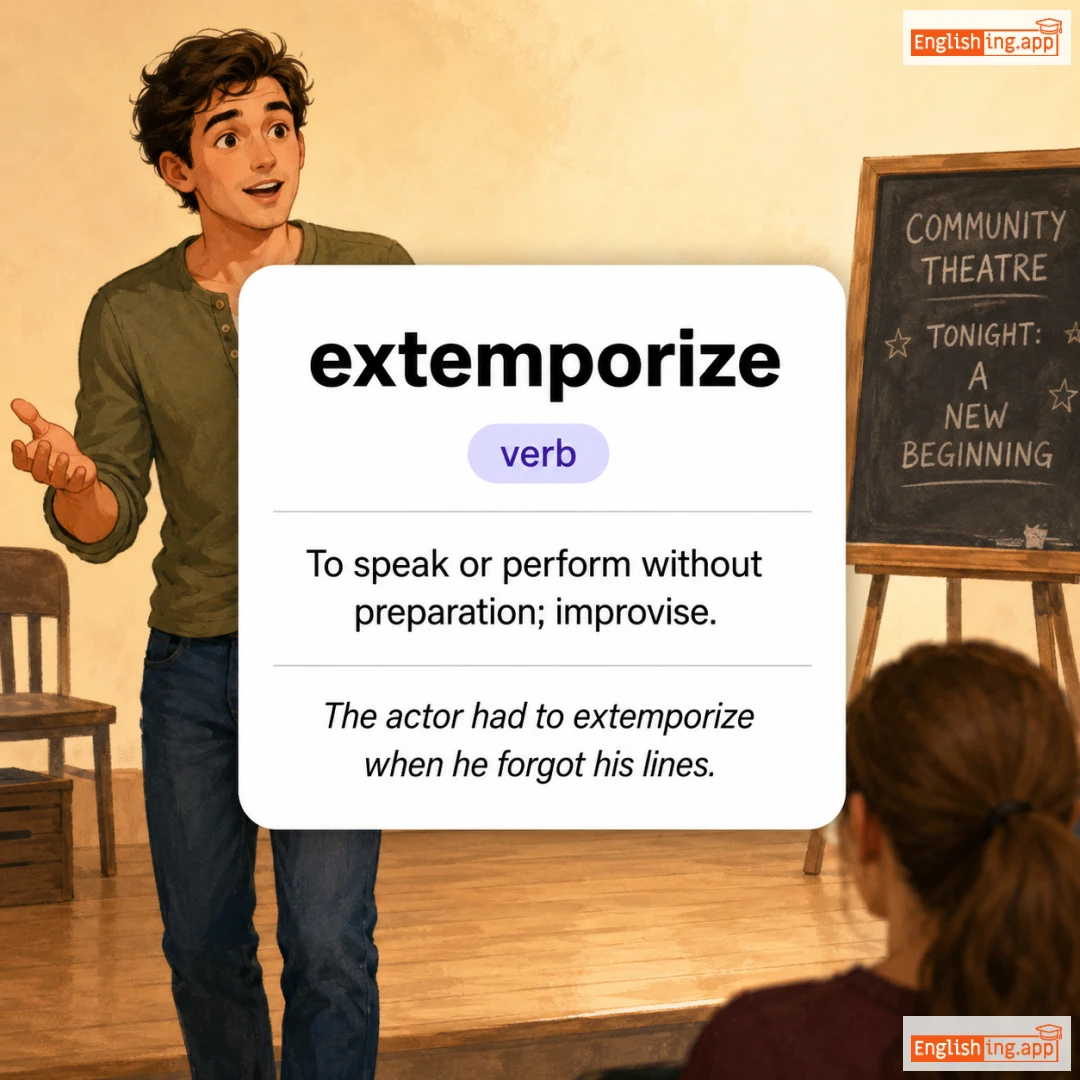
extemporize definition card — visual illustration of the meaning
verb C2
/ɪkˈstɛmpəraɪz/
即兴表演 (jíxìng biǎoyǎn)

To speak or perform without preparation; improvise.

"The actor had to extemporize when he forgot his lines."

"当演员忘记台词时,他不得不即兴表演。" (Dāng yǎnyuán wàngjì táicí shí, tā bùdé bù jíxìng biǎoyǎn.)
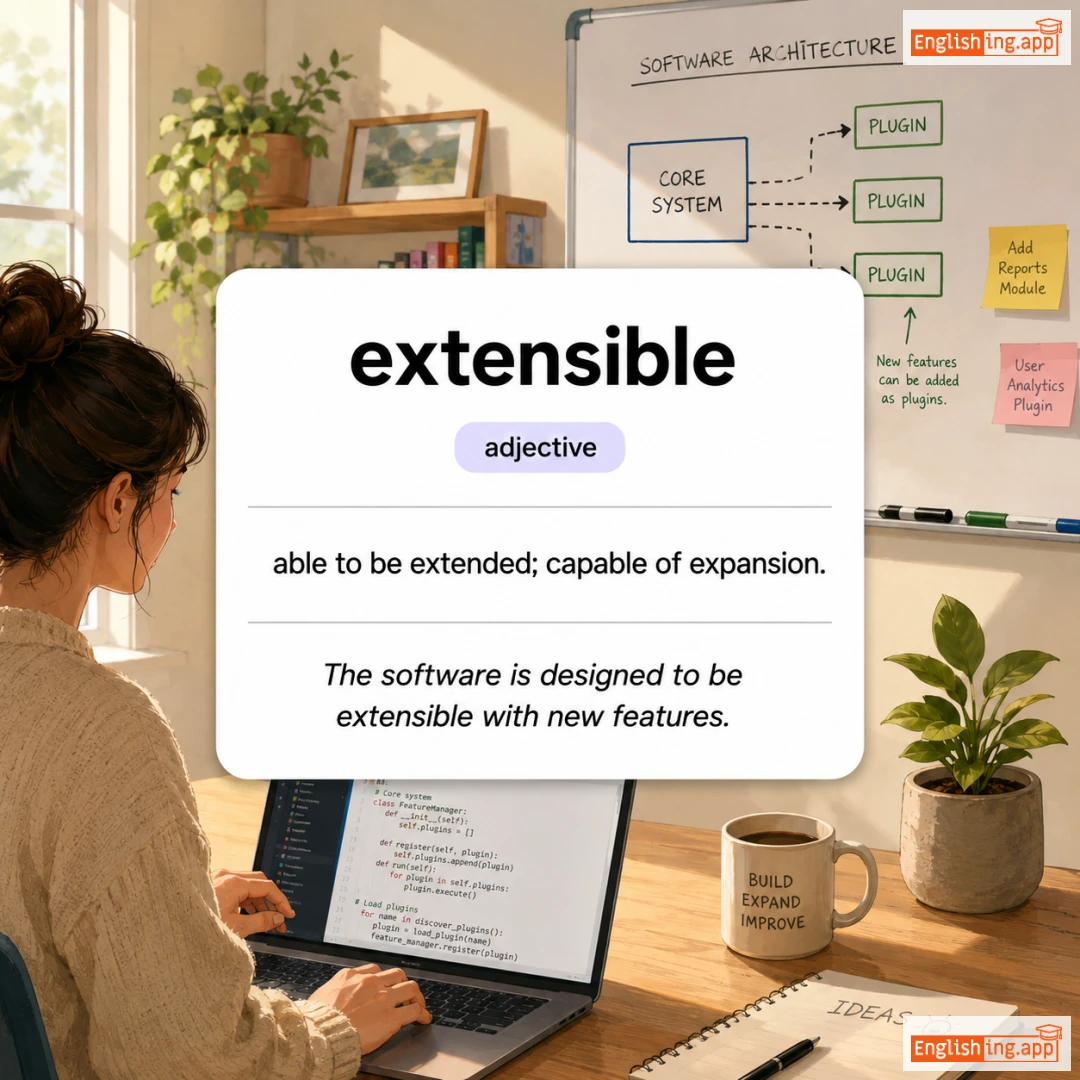
extensible definition card — visual illustration of the meaning
adjective C2
/ɪkˈstɛnsəbl/
可扩展的 (kě kuò zhǎn de)

able to be extended; capable of expansion.

"The software is designed to be extensible with new features."

"该软件设计为可以通过新功能扩展。" (Gāi ruǎnjiàn shèjì wèi kě yǐ tōngguò xīn gōngnéng kuò zhǎn.)
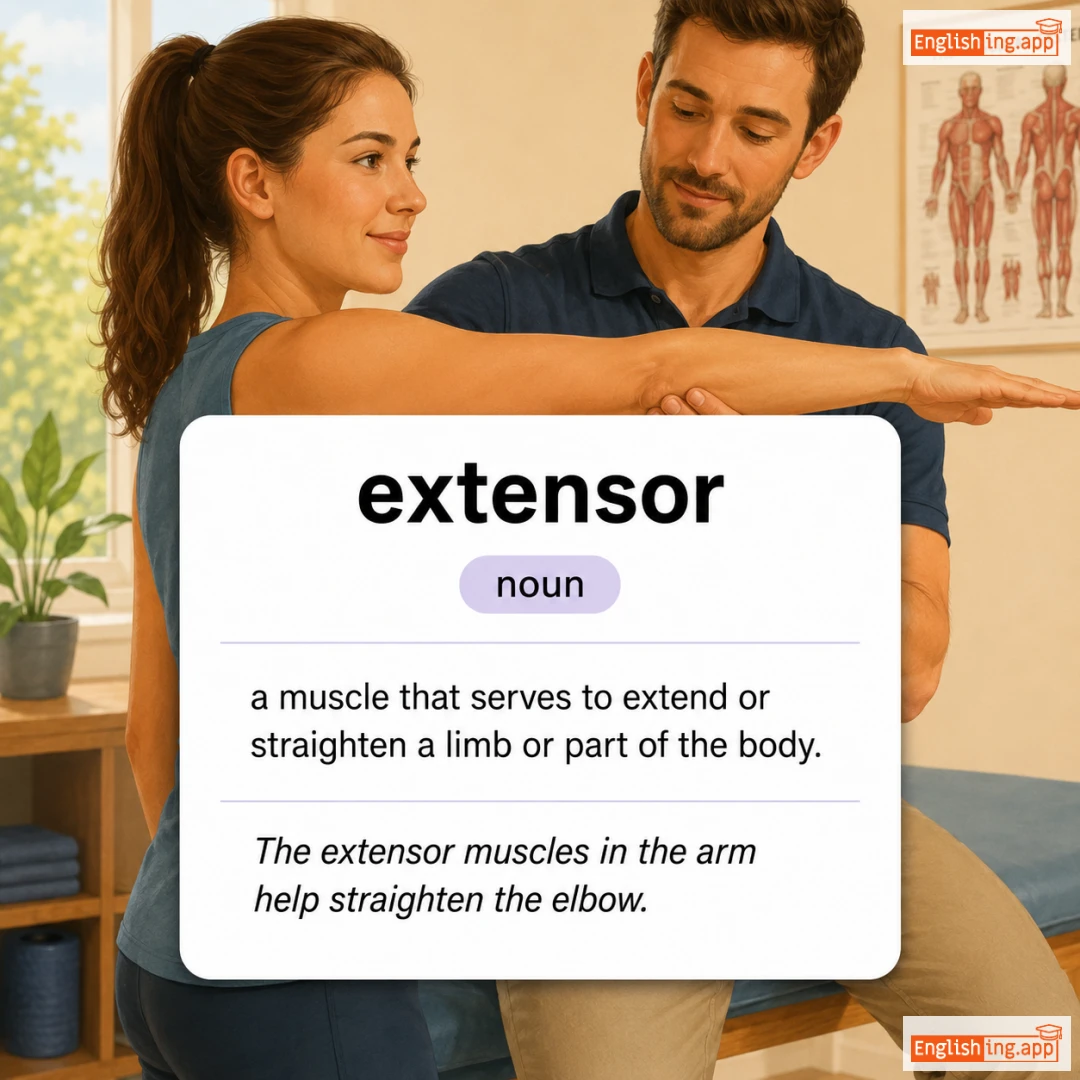
extensor definition card — visual illustration of the meaning
noun C2
/ɪkˈstɛnsər/
伸肌 (shēn jī)

a muscle that serves to extend or straighten a limb or part of the body.

"The extensor muscles in the arm help straighten the elbow."

"手臂的伸肌帮助伸直肘部。" (Shǒubì de shēn jī bāngzhù shēnzhí zhǒubù.)
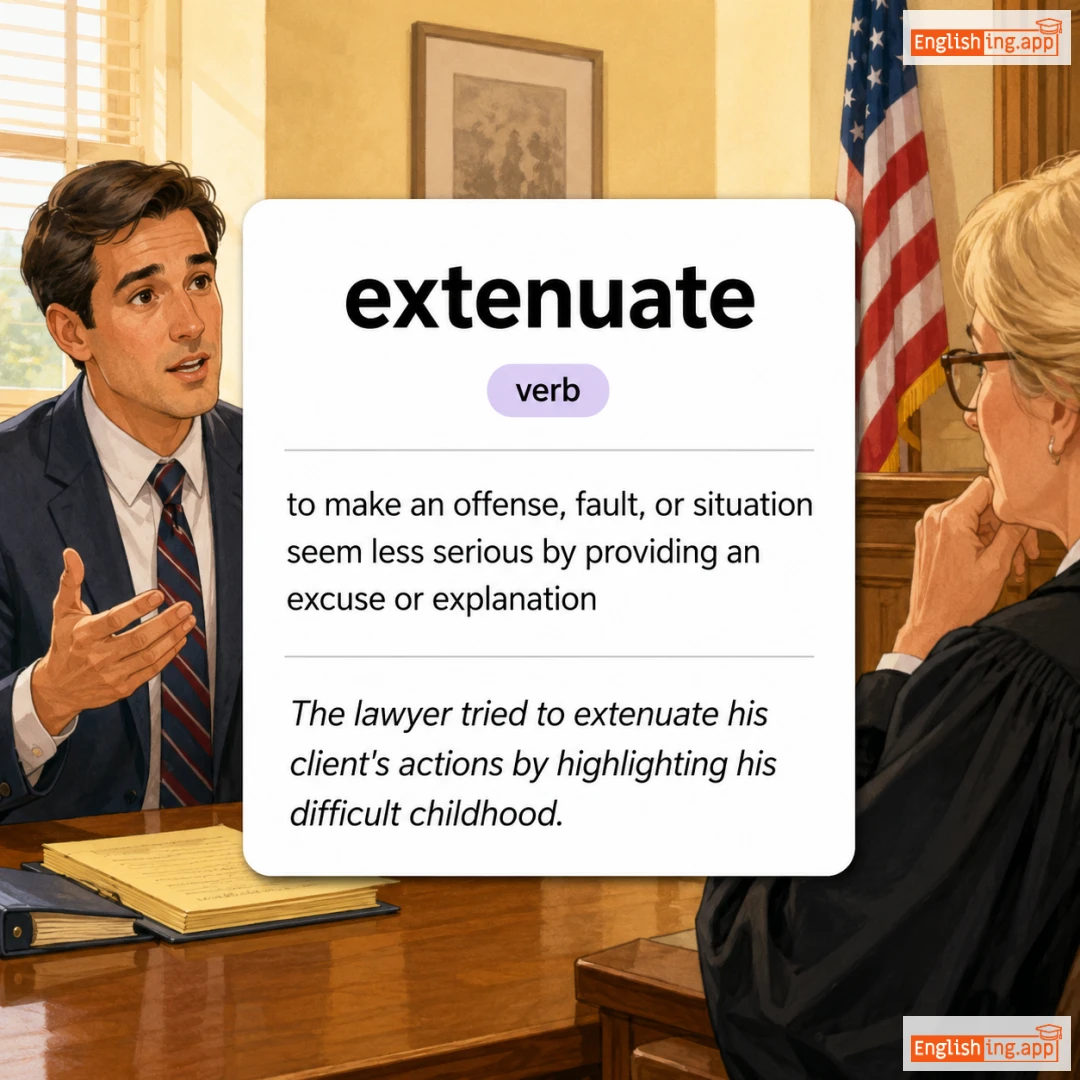
extenuate definition card — visual illustration of the meaning
verb C2
/ɪkˈstɛnjueɪt/
减轻 (jianqing)

to make an offense, fault, or situation seem less serious by providing an excuse or explanation

"The lawyer tried to extenuate his client's actions by highlighting his difficult childhood."

"律师通过强调客户的艰难童年,试图减轻他的行为。" (Lüshi tongguo qiangdiao kehu de jiannan tongnian, shitu jianqing tā de xíngwéi.)
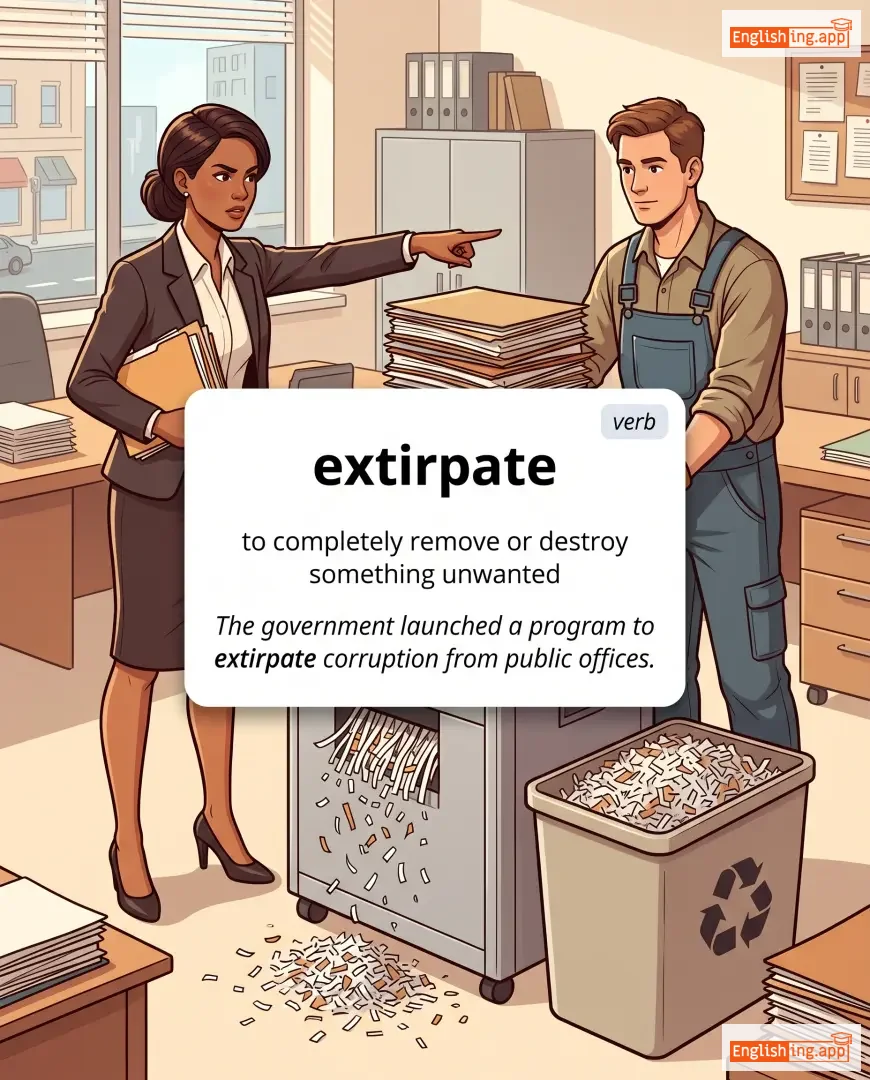
extirpate definition card — visual illustration of the meaning
verb C2
/ˈek.stər.peɪt/
根除 (gēnchú)

to completely remove or destroy something unwanted

"The government launched a program to extirpate corruption from public offices."

"政府启动了一个旨在清除公共部门腐败的项目。" (Zhèngfǔ qǐdòngle yīgè zhǐ zài qīngchú gōnggòng bùmén fǔbài de xiàngmù.)
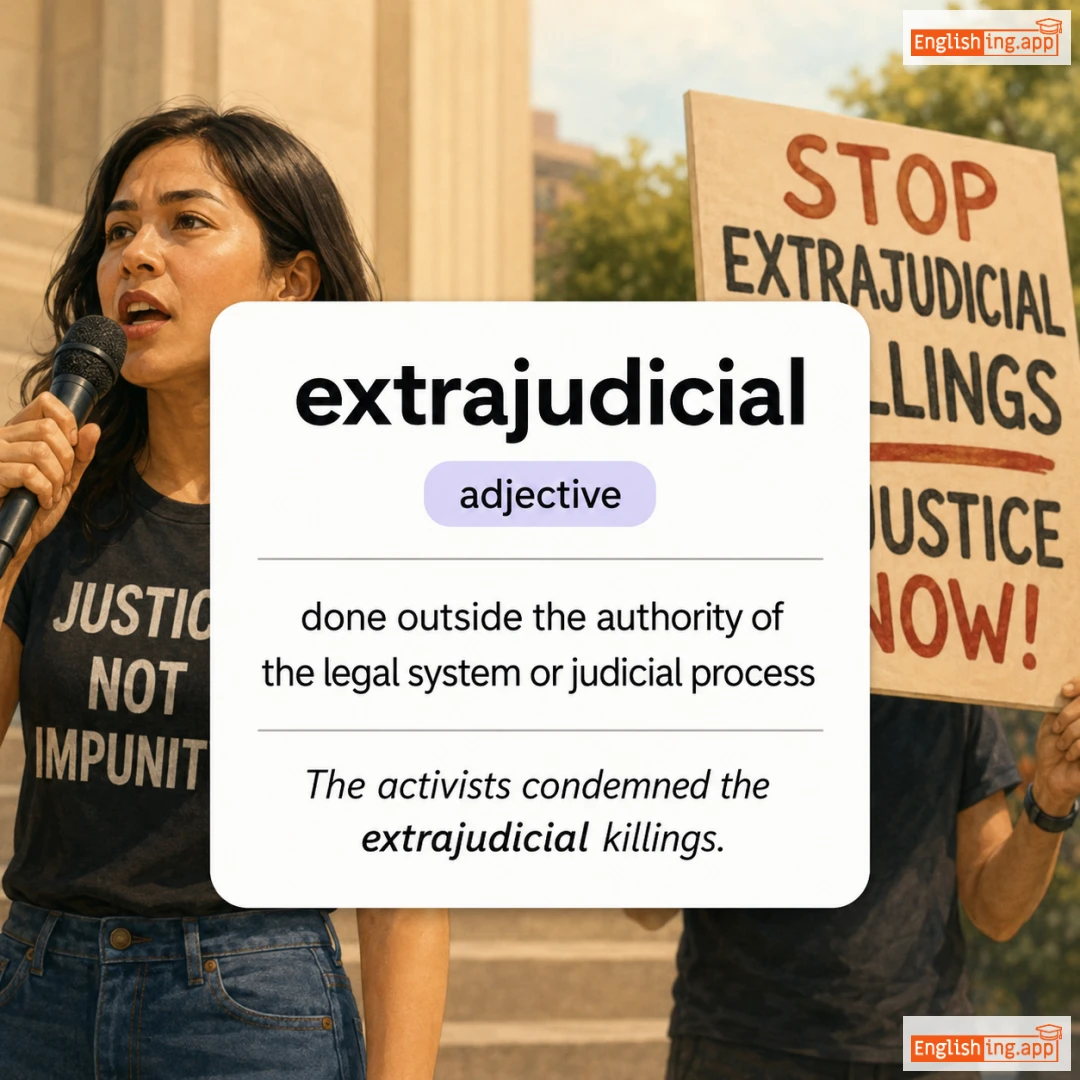
extrajudicial definition card — visual illustration of the meaning
adjective C2
/ˌɛkstrəˌdʒuːˈdɪʃəl/
非司法的 (fei si fa de)

done outside the authority of the legal system or judicial process

"The activists condemned the extrajudicial killings."

"活动家谴责了非司法的谋杀。" (Huódòngjiā qiǎnzéle fēi sīfǎ de móushā.)
extrinsic definition card — visual illustration of the meaning
adjective C2
/ɛkˈstrɪnzɪk/
外在 (wàizài)

Not part of the essential nature of someone or something; coming from outside.

"His motivation was largely extrinsic, driven by rewards and recognition."

"他的动力主要是外在的,受到奖励和认可的驱动。" (Tā de dònglì zhǔyào shì wàizài de, shòudào jiǎnglì hé rènkě de qūdòng.)
verb C2
/ɪkˈstruːd/
挤出 (jichu)

to force something out through a small opening; to shape by pushing material through a mold

"The factory extrudes plastic pipes using modern machines."

"工厂使用现代机器挤出塑料管。" (Gongchang shiyong xiandai jiqi jichu su liao guan.)
exult definition card — visual illustration of the meaning
verb C2
/ɪɡˈzʌlt/
欢呼 (huān hū)

to show or feel great joy, often as a result of success

"The fans exulted after their team won the championship."

"球迷们在他们的球队赢得冠军后欢呼雀跃。" (Qiúmí men zài tāmen de qiúduì yíngdé guànjūn hòu huān hū què yuè.)
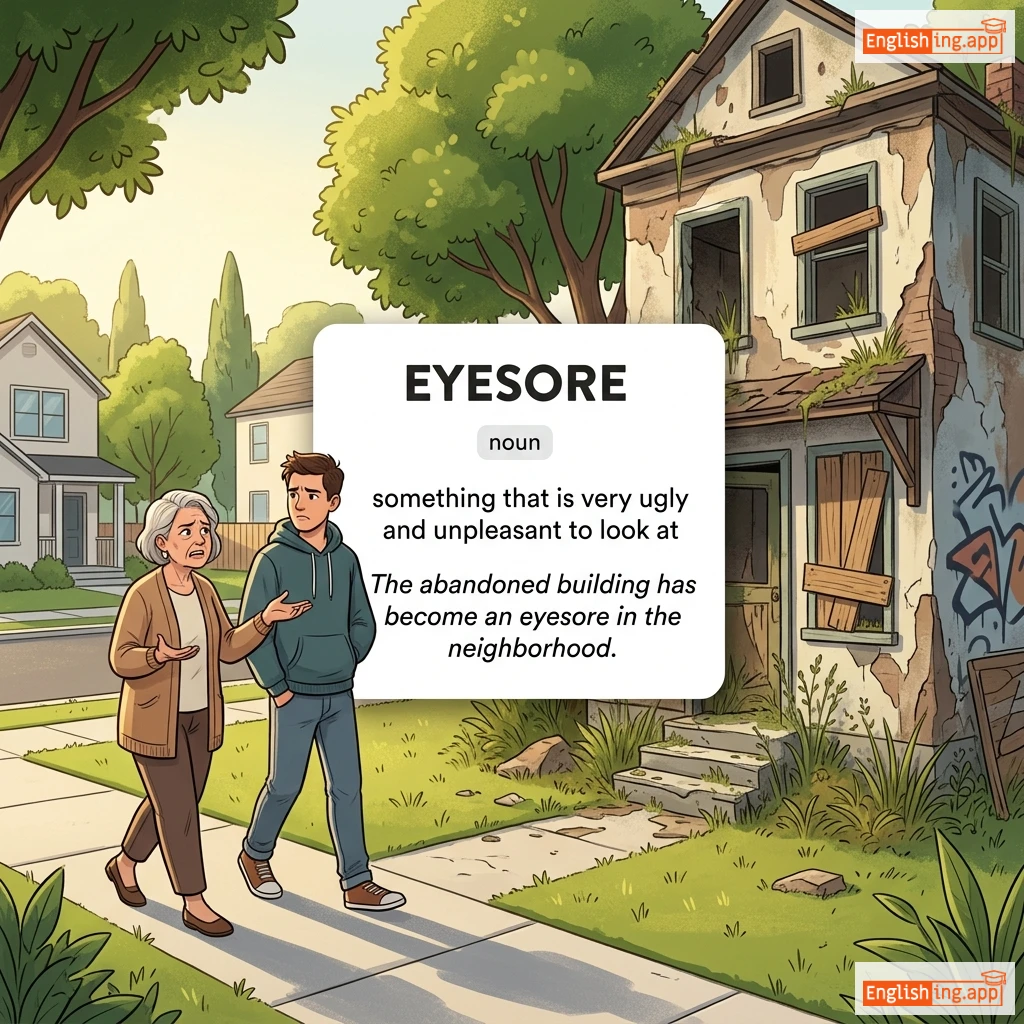
Eyesore definition card — visual illustration of the meaning
noun C2
/ˈaɪ.sɔːr/
令人不悦的视觉效果; 恶心的景象 (lìng rén bù yuè de shìjué xiàoguǒ; èxīn de jǐngxiàng)

something that is very ugly and unpleasant to look at

"The abandoned building has become an eyesore in the neighborhood."

"废弃的建筑已成为社区中的眼中钉。" (Fèiqì de jiànzhú yǐ chéngwéi shèqū zhōng de yǎnzhōng dīng.)
noun C2
/ˈɪəri/
鹰巢 (ying chao)

the nest of a bird of prey, such as an eagle, typically built high on a cliff or tree

"The eagle’s eyrie was perched high on the mountain cliff."

"鹰巢位于山崖的顶端。" (Ying chao wei yu shan ya de ding duan.)
noun C2
/ˈɪəri/
猛禽巢 (měngqín cháo)

an alternative spelling of eyrie; a nest of a bird of prey

"The falcon guarded its eyry fiercely."

"猎鹰猛烈地守护着它的巢。" (Lièyīng měngliè de shǒuhùzhe tā de cháo.)
facetious definition card — visual illustration of the meaning
adjective C2
/fəˈsiːʃəs/
讽刺的 (fengci de)

Treating serious issues with deliberately inappropriate humor

"He was being facetious when he said he wanted to live on the moon."

"他说他想住在月球上时,他是在开玩笑。" (Tā shuō tā xiǎng zhù zài yuèqiú shàng shí, tā shì zài kāi wánxiào.)
Facile definition card — visual illustration of the meaning
adjective C2
/ˈfæsɪl/
简单,表面,轻松 (jiǎndān, biǎomiàn, qīngsōng)

easily achieved or effortless; superficial or simplistic

"He gave a facile explanation that ignored the complexities of the problem."

"他给出了一个简单的解释,忽视了问题的复杂性。" (Tā gěi chūle yīgè jiǎndān de jiěshì, hūshìle wèntí de fùzáxìng.)
facsimile definition card — visual illustration of the meaning
noun C2
/fækˈsɪmɪli/
传真副本 (chuánzhēn fùběn)

an exact copy or reproduction of a document

"He sent a facsimile of the contract to the client."

"他把合同的传真副本发送给了客户。" (Tā bǎ hé tóng de chuánzhēn fùběn fāsòng gěi le kèhù.)
factious definition card — visual illustration of the meaning
adjective C2
/ˈfækʃəs/
分裂的 (fenlie de)

causing disagreement or division within a group; inclined to form factions

"The debate became factious, splitting the committee into rival camps."

"辩论变得分裂,委员会被分成了对立的阵营。" (Bianlun biande fenlie, weiyuanhui bei fenchengle duili de zhenying.)
factitious definition card — visual illustration of the meaning
adjective C2
/fækˈtɪʃəs/
人为的,不真实的 (rénwéi de, bù zhēnshí de)

artificial or fabricated; not natural or genuine

"The excitement in his story seemed factitious and forced."

"他的故事中的兴奋感看起来是人为的且强迫的。" (Tā de gùshì zhōng de xīngfèn gǎn kàn qǐlái shì rénwéi de qiě qiǎngpò de.)
factotum definition card — visual illustration of the meaning
noun C2
/fækˈtoʊtəm/
全能工人 (quánnéng gōngrén)

an employee who does many different types of work; a general servant

"He worked as a factotum, handling both clerical and maintenance duties."

"他作为一个全能工人工作,处理行政和维护任务。" (Tā zuòwéi yīgè quánnéng gōngrén gōngzuò, chǔlǐ xíngzhèng hé wéihù rènwù.)
adjective C2
/ˈfædɪʃ/
短暂的时尚 (duǎnzàn de shíshàng)

Following a temporary trend or fashion

"Wearing neon clothes was a faddish style in the 1980s."

"穿着霓虹服装在1980年代是一种时尚。" (Chuan zhuo nihong fuzhuang zai 1980 niandai shi yizhong shishang.)
fain definition card — visual illustration of the meaning
adjective/adverb C2
/feɪn/
心甘情愿地, 乐意地 (xīn gān qíng yuàn de, lè yì de)

gladly, willingly, or with pleasure

"I would fain help you if I had the time."

"如果我有时间,我会很乐意帮你。" (Rúguǒ wǒ yǒu shíjiān, wǒ huì hěn lèyì bāng nǐ.)
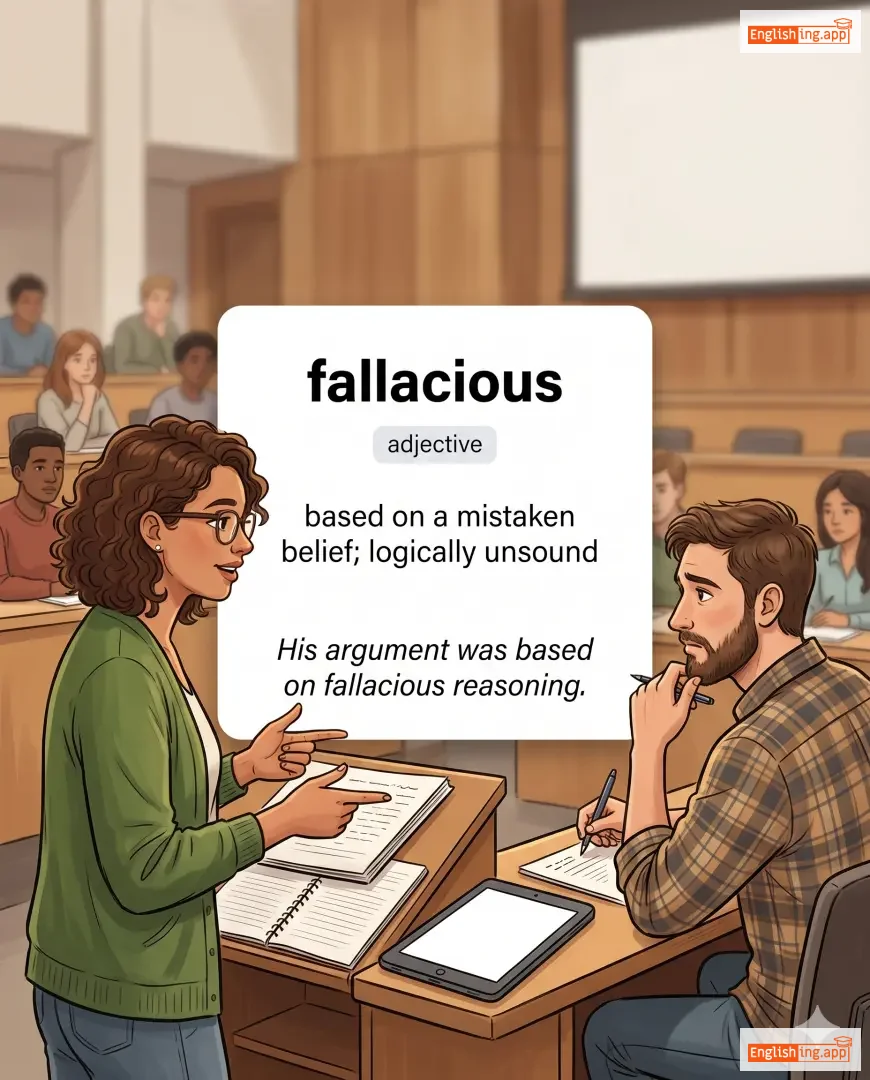
fallacious definition card — visual illustration of the meaning
adjective C2
/fəˈleɪ.ʃəs/
虚假 (xūjiǎ)

based on a mistaken belief; logically unsound

"His argument was based on fallacious reasoning."

"他的论点建立在虚假的推理上。" (Tā de lùndiǎn jiànlì zài xūjiǎ de tuīlǐ shàng.)
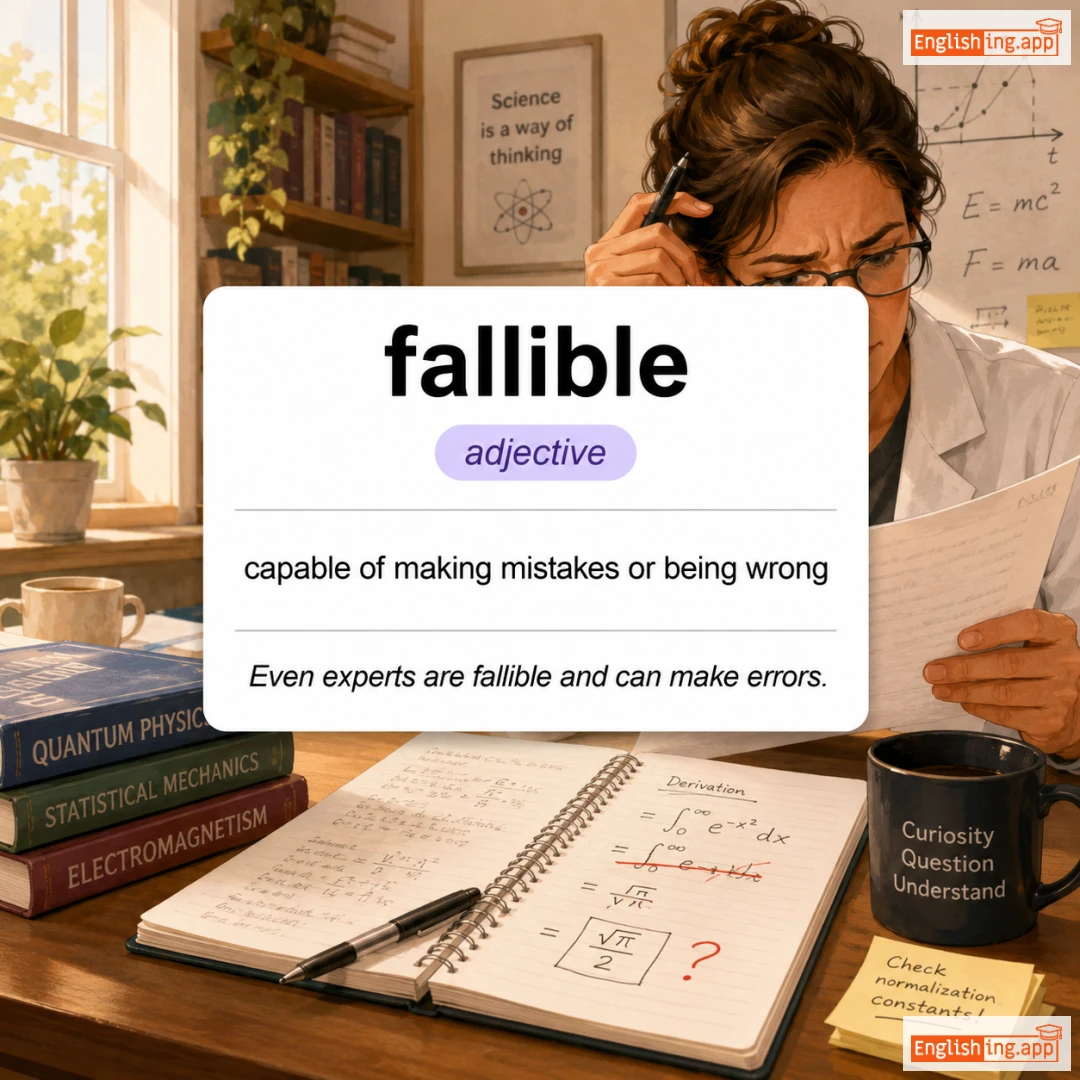
fallible definition card — visual illustration of the meaning
adjective C2
/ˈfæləbl/
容易犯错 (róng yì fàn cuò)

capable of making mistakes or being wrong

"Even experts are fallible and can make errors."

"即使是专家也会犯错。" (Jíshǐ shì zhuānjiā yě huì fàn cuò.)
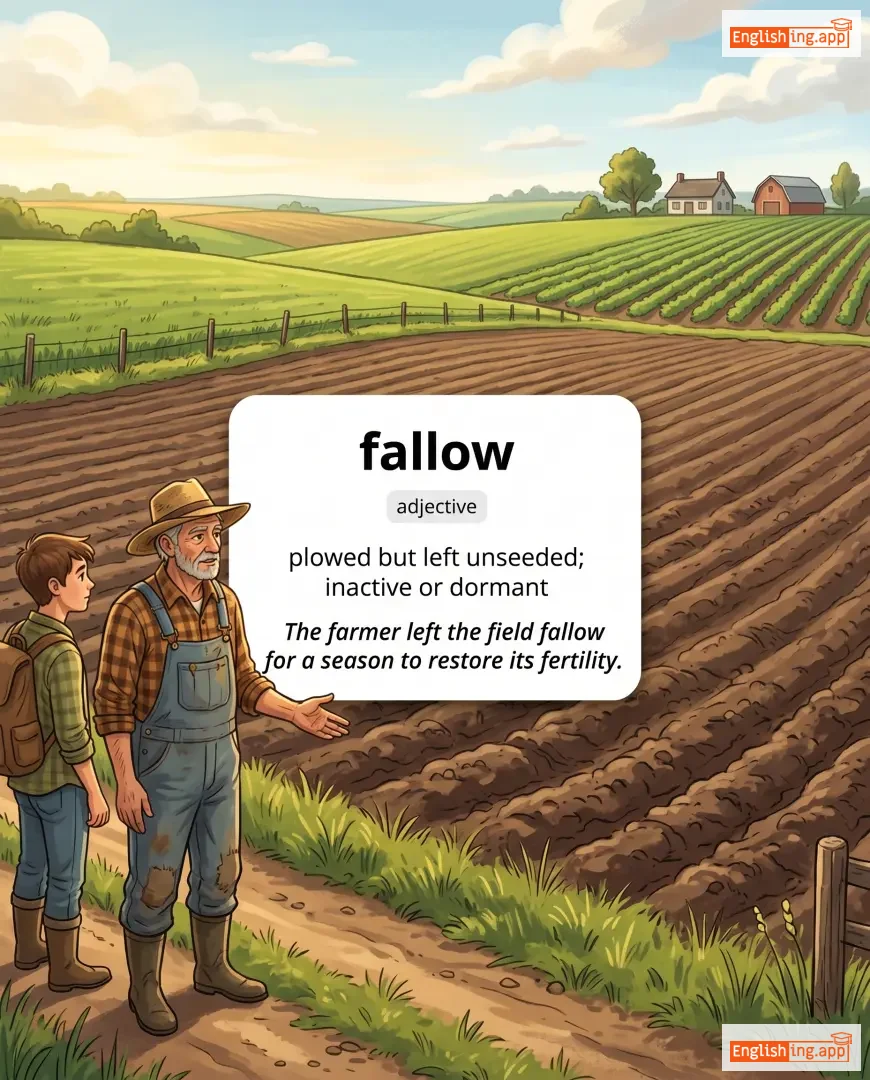
fallow definition card — visual illustration of the meaning
adjective C2
/ˈfæloʊ/
休耕, 不活跃 (xiū gēng, bù huó yuè)

plowed but left unseeded; inactive or dormant

"The farmer left the field fallow for a season to restore its fertility."

"农民让田地休耕一个季节,以恢复其肥力。" (Nóngmín ràng tiándì xiū gēng yīgè jìjié, yǐ huīfù qí féilì.)
verb C2
/ˈfæmɪʃ/
挨饿 (āi è)

to suffer or cause to suffer from extreme hunger

"The stranded hikers began to famish after several days without food."

"困住的徒步旅行者在没有食物的几天后开始感到饥饿。" (kùn zhù de tú bù lǚ xíng zhě zài méi yǒu shí wù de jǐ tiān hòu kāi shǐ gǎn dào jī è.)
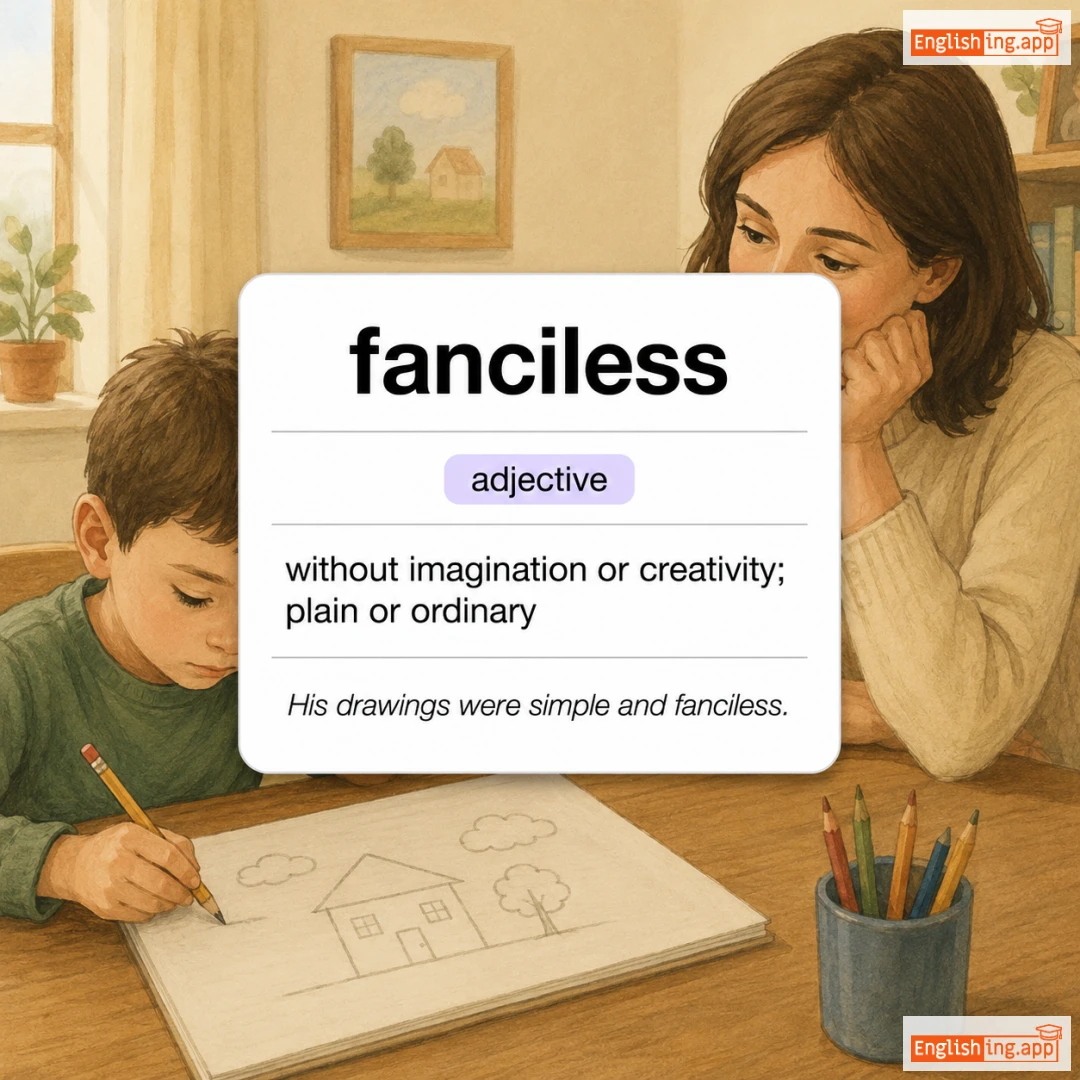
fanciless definition card — visual illustration of the meaning
adjective C2
/ˈfæn.sɪ.ləs/
没有想象力的,普通的 (meiyou xiangxiangli de, putong de)

without imagination or creativity; plain or ordinary

"His drawings were simple and fanciless."

"他的画作既简单又没有想象力。" (Tā de huàzuò jì jiǎndān yòu méiyǒu xiǎngxiànglì.)
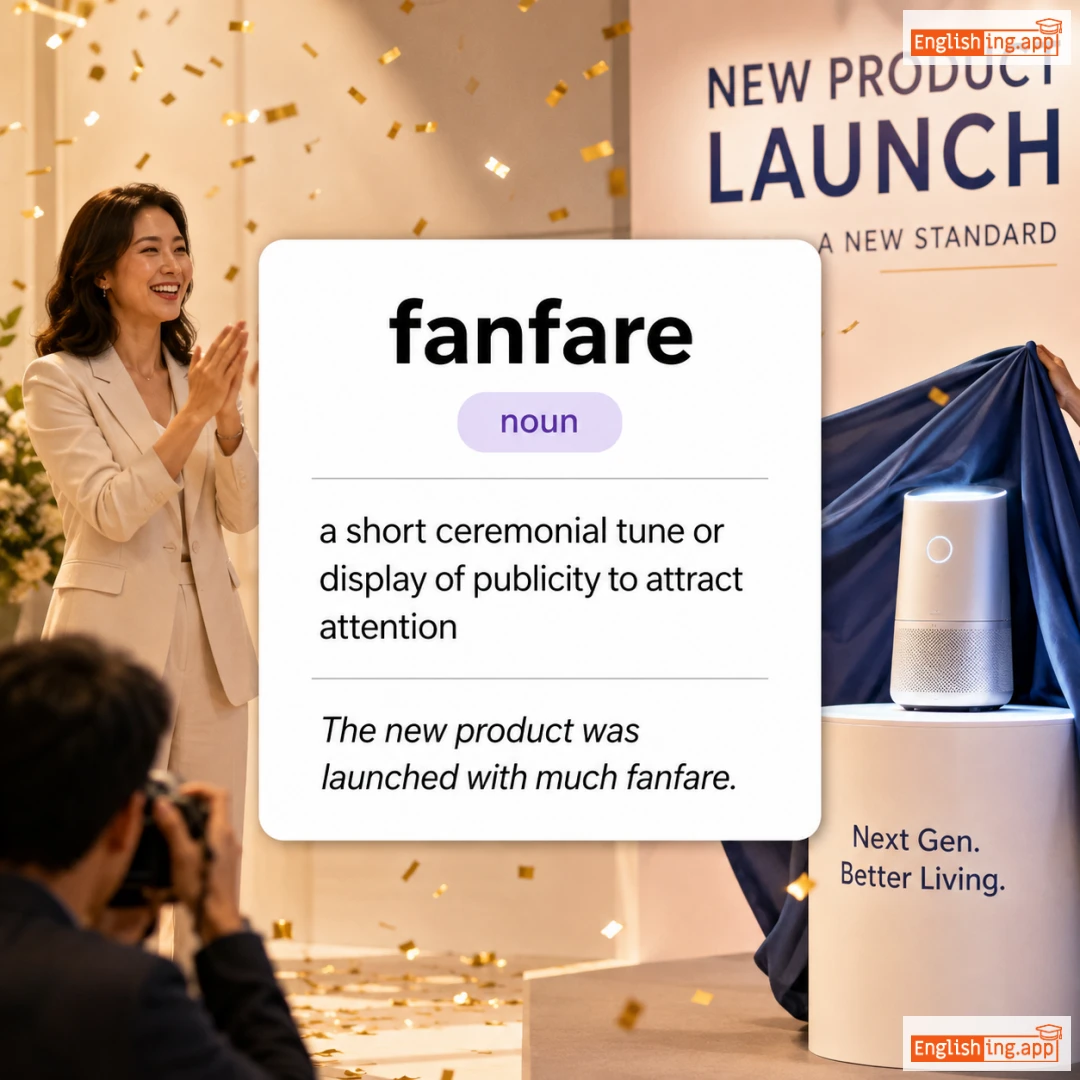
fanfare definition card — visual illustration of the meaning
noun C2
/ˈfæn.feər/
盛大场面, 宣传 (shèngdà chǎngmiàn, xuānchuán)

a short ceremonial tune or display of publicity to attract attention

"The new product was launched with much fanfare."

"新产品在盛大场面下发布。" (Xīn chǎnpǐn zài shèngdà chǎngmiàn xià fābù.)