Vocabularios

Descubra, aprenda y domine el vocabulario en inglés

noun C2
/ˈhen.ə/
ヘンナ (henna)

a reddish-brown dye made from the powdered leaves of a tropical shrub, used to color hair and decorate skin

"The bride's hands were beautifully decorated with intricate henna patterns for her wedding ceremony."

"花嫁の手は、彼女の結婚式のために精巧なヘンナの模様で美しく飾られていました。" (Hanayome no te wa, kanojo no kekkonshiki no tame ni seikou na henna no moyou de utsukushiku kazarareteimashita.)
verb C2
/ˈhɛnˌpɛk/

To continually criticize, nag, or dominate (especially a husband).

"He felt henpecked by his overly controlling wife."

noun C2
/ˈhɛptəˌɡɒn/
七角形 (shichikakukei)

A polygon with seven sides and seven angles.

"The math teacher drew a heptagon on the board."

"数学の先生は黒板にヘプタゴンを描きました。" (Sūgaku no sensei wa kokuban ni heptagon o kakimashita.)
noun C2
/ˈhɛptɑːrki/
七王国連邦 (shichi ōkoku renpō)

A group of seven rulers or governments, especially the seven Anglo-Saxon kingdoms in early England.

"The history book described the heptarchy of Anglo-Saxon England."

"歴史書はアングロサクソンのイングランドのヘプターキーを説明していました。" (Rekishi-sho wa Anguro-Sakuson no Ingurando no heptākī o setsumei shite imashita.)
adjective C2
/hɜːrˈbeɪʃəs/
草本 (sōhon)

Relating to or resembling herbs; plants with soft, non-woody stems.

"The garden was filled with herbaceous plants that thrived in the summer."

"庭園には夏に繁茂する草本植物で満たされていた。" (Teien ni wa natsu ni hanmō suru sōhon shokubutsu de mitasarete ita.)
noun C2
/hɜːrˈbɛəriəm/
標本館 (hyōhonkan)

A collection of preserved plant specimens and associated data used for scientific study.

"The university maintains a large herbarium for research and education."

"大学は研究と教育のために大きな標本館を維持しています。" (Daigaku wa kenkyū to kyōiku no tame ni ōkina hyōhonkan o iji shiteimasu.)
adjective C2
/ˌhɜːrkjʊˈliːən/
非常に困難 (hijō ni konnan)

Requiring great strength or effort; very difficult to perform.

"It was a herculean task to rebuild the city after the disaster."

"災害後に都市を再建することは非常に困難な仕事でした。" (Saigai-go ni toshi o saiken suru koto wa hijō ni konnan na shigoto deshita.)
adjective C2
/həˈrɛtɪkəl/
異端的な (idanteki na)

Relating to or characterized by departure from accepted beliefs or standards, especially in religion.

"The priest condemned the book as heretical."

"神父はその本を異端的だとして非難した。" (Shinpu wa sono hon o idanteki da to shite hinan shita.)
hermetic definition card — visual illustration of the meaning
adjective C2
/hərˈmɛtɪk/
密閉 (mippei)

Completely sealed, especially so that no air can enter or escape.

"The medicine was kept in a hermetic container."

"薬は密閉された容器に保管されていました。" (Kusuri wa mippei sareta yōki ni hokan sarete imashita.)
adverb C2
/hərˈmɛtɪkli/
密封的に (mippūteki ni)

In a way that is completely airtight or sealed off.

"The jars were hermetically sealed to preserve freshness."

"瓶は新鮮さを保つために密封的に封印されました。" (Bin wa shinsensa o tamotsu tame ni mippūteki ni fūin saremashita.)
noun C2
/ˈhɜːrmɪtɪdʒ/
隠遁所 (intonsho)

A secluded residence or retreat, often for a hermit or religious recluse.

"The monk spent years in a hermitage deep in the forest."

"その僧侶は森の奥深くの隠遁所で数年間を過ごしました。" (Sono sōryo wa mori no oku fukaku no intonsho de suunenkan o sugoshimashita.)
noun C2
/ˌhɜːrpəˈtɒlədʒɪst/
爬虫類学者 (hachuu rui gakusha)

A scientist who studies reptiles and amphibians.

"The herpetologist discovered a new species of frog in the rainforest."

"その爬虫類学者は熱帯雨林で新しいカエルの種を発見した。" (Sono hachūruigakusha wa nettai urin de atarashī kaeru no shū o hakken shita.)
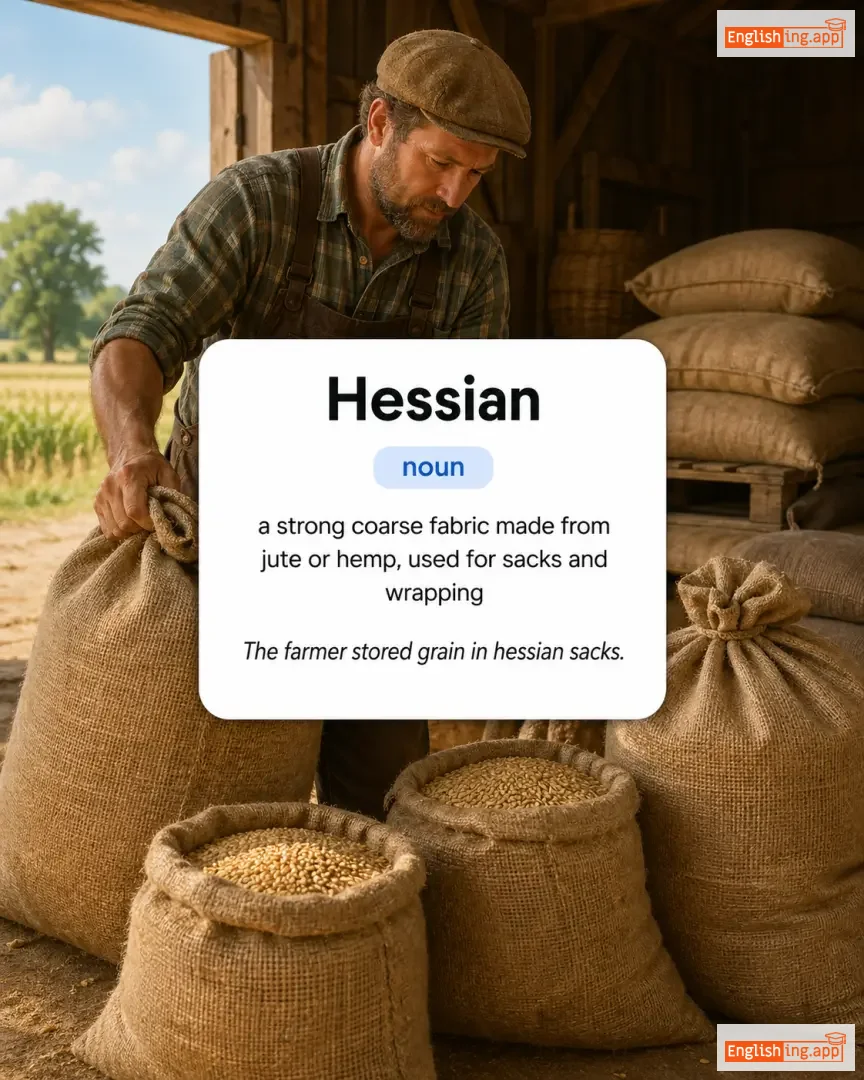
Hessian definition card — visual illustration of the meaning
noun C2
/ˈhɛʃ.ən/
ジュート布 (juuto nuno)

a strong coarse fabric made from jute or hemp, used for sacks and wrapping

"The farmer stored grain in hessian sacks."

"農家はジュート布袋に穀物を保管していました。" (Nouka wa juuto nuno bukuro ni kokumotsu o hokanshite imashita.)
heterodox definition card — visual illustration of the meaning
adjective C2
/ˈhɛtərəˌdɒks/
異端 (idan)

not conforming with accepted or orthodox standards or beliefs

"The professor was known for his heterodox views on religion."

"教授は宗教についての異端的な見解で知られていました。" (Kyōju wa shūkyō ni tsuite no idanteki na kenkai de shirarete imashita.)
noun C2
/ˌhɛtərəʤəˈniːɪti/
異質性 (ishitsusei)

the quality or state of being diverse in character or content

"The cultural heterogeneity of the city makes it vibrant and unique."

"その都市の文化的異質性は、それを活気に満ちたユニークなものにしています。" (Sono toshi no bunkateki ishitsusei wa, sore o kakki ni michita yuniiku na mono ni shiteimasu.)
adjective C2
/ˌhɛtərəʊˈmɔːrfɪk/
異形の (ikei no)

Having different forms or shapes, especially in the same species or organism.

"Butterflies are heteromorphic during their life cycle, changing forms from larva to adult."

"蝶々はそのライフサイクルの中で異形であり、幼虫から成虫に変化します。" (Chōchō wa sono raifusaikuru no naka de ikei de ari, yōchū kara seichū ni henka shimasu.)
heuristic definition card — visual illustration of the meaning
adjective C2
hjʊəˈrɪs.tɪk
ヒューリスティック (hyūrisutikku)

Enabling a person to discover or learn something for themselves; using practical experience rather than theory.

"The scientist used a heuristic approach to solve the problem."

"科学者は問題を解決するためにヒューリスティックアプローチを使用しました。" (Kagakusha wa mondai o kaiketsu suru tame ni hyūrisutikku apurōchi o shiyō shimashita.)
verb C2
/hjuː/
切る (kiru)

To chop or cut something, especially wood or stone, with a tool.

"The workers hewed logs to build the cabin."

"労働者たちは小屋を建てるために丸太を切った。" (Roudoushatachi wa koya o tateru tame ni maruta o kitta.)
adjective C2
/hɛkˈsæŋɡjələr/
六角形の (rokkakukei no)

Having six angles or corners.

"The artist designed a hexangular frame for the mirror."

"アーティストは鏡のために六角形のフレームをデザインしました。" (Ātisuto wa kagami no tame ni rokkakukei no fureemu o dezain shimashita.)
noun C2
/ˈhɛksəˌpɒd/
ヘクサポッド (hekusapoddo)

An insect or other organism with six legs.

"The scientist observed a hexapod crawling on the leaf."

"科学者は葉の上を這うヘクサポッドを観察しました。" (Kagakusha wa ha no ue o hau hekusapoddo o kansatsu shimashita.)
noun C2
/ˈheɪ.deɪ/
絶頂期; 黄金時代; ピーク時 (zetchouki; ougon jidai; piiku ji)

the period of a person's or thing's greatest success, popularity, or vigor; prime time

"During her heyday as a singer, she performed in sold-out concerts around the world."

"歌手としての絶頂期に、彼女は世界中で完売したコンサートに出演していました。" (Kashu to shite no zetchouki ni, kanojo wa sekaijuu de kanbai shita konsaato ni shutsuen shite imashita.)
❄️

hibernal

adjective C2
/haɪˈbɜːrnəl/

Relating to or occurring in winter.

"The hibernal season is often harsh in the mountains."

adjective/noun C2
/haɪˈbɜːrniən/
アイリッシュ (airisshu)

Relating to Ireland or the Irish.

"He enjoyed reading about Hibernian culture and history."

"彼はハイバーニアン文化と歴史について読むのが好きでした。" (Kare wa haibānian bunka to rekishi ni tsuite yomu no ga suki deshita.)
adjective C2
/hɪk/
田舎者; 田舎の人 (inakamono; inaka no hito)

unsophisticated person from a rural area; country bumpkin

"He had a hick accent from growing up in a small town."

"彼は小さな町で育ったため、田舎者のアクセントがあった。" (Kare wa chiisana machi de sodatta tame, inakamono no akusento ga atta.)
adjective C2
/ˈhaɪd.baʊnd/

unwilling or unable to change because of tradition or convention

"He is too hidebound to accept new ideas."

verb C2
/haɪ/
急ぐ (isogu)

to go quickly; hasten

"He hied to the station to catch the train."

"彼は電車に乗るために駅へ急いだ。" (Kare wa densha ni noru tame ni eki e isoida.)
noun C2
/ˈhaɪərəˌɡlɪf/
ヒエログリフ (hierogurifu)

A picture or symbol used in ancient writing systems, especially Egyptian writing.

"The walls of the temple were covered in hieroglyphs."

"寺院の壁はヒエログリフで覆われていた。" (Jiin no kabe wa hierogurifu de owarete ita.)
adjective/noun C2
/ˌhaɪərəˈɡlɪfɪk/
ヒエログリフ的 (hierogurifuteki)

Relating to or written in hieroglyphs; symbols or writing that is difficult to understand.

"The archaeologists studied the hieroglyphic inscriptions carefully."

"考古学者たちはヒエログリフ的な碑文を慎重に研究した。" (Kougakusha-tachi wa hierogurifuteki na hibun o shinchou ni kenkyuu shita.)
adjective C2
/ˌhaɪ ˈfloʊn/
高飛車な (takabisha na)

Using fancy or pretentious language; lofty in style but often overblown.

"The politician gave a high-flown speech full of promises."

"その政治家は約束でいっぱいの高飛車なスピーチをした。" (Sono seijika wa yakusoku de ippai no takabisha na supīchi o shita.)
adjective C2
/ˈhaɪˌbraʊ/
知的に優れた (chiteki ni sugureta)

intellectually superior or cultured; often describing art, literature, or activities appealing to intellectual tastes

"The museum is known for its highbrow exhibitions."

"その博物館は知的な展示で知られています。" (Sono hakubutsukan wa chitekina tenji de shirareteimasu.)
noun C2
/hɪˈlærɪti/
爆笑 (bakushou)

Extreme amusement, especially when expressed by laughter.

"The movie caused great hilarity among the audience."

"その映画は観客の間で大きな爆笑を引き起こしました。" (Sono eiga wa kankyaku no aida de ookina bakushou o hikiokoshimashita.)
noun C2
/ˈhɪlək/
小山 (koyama)

A small hill or mound.

"The children climbed up the grassy hillock to watch the sunset."

"子供たちは夕日を見るために草で覆われた小山に登った。" (Kodomotachi wa yūhi o miru tame ni kusa de ōwareta koyama ni nobotta.)
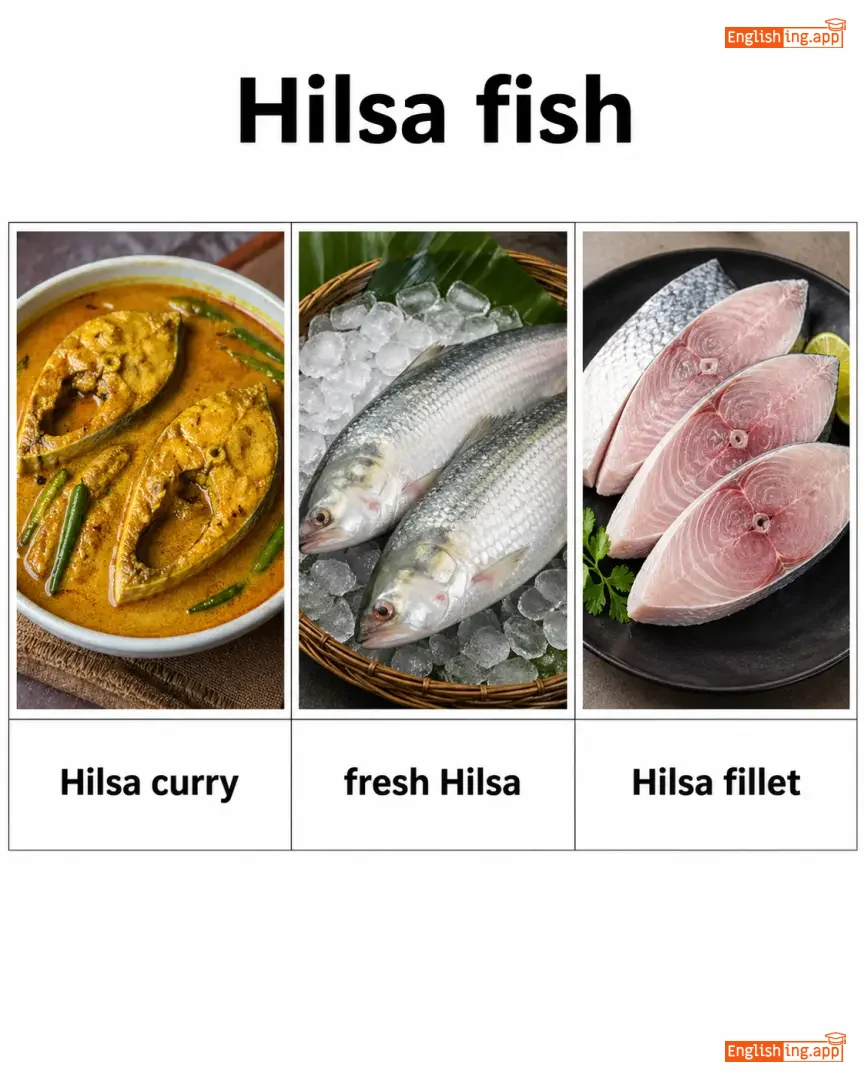
Hilsa fish definition card — visual illustration of the meaning
noun C2
/ˈhɪl.sə fɪʃ/
ヒルサ魚 (Hirusa sakana)

a popular fish species found in South Asian rivers, especially prized in Bengali cuisine

"Hilsa fish is considered a delicacy in Bengali culture."

"ヒルサフィッシュはベンガル文化ではごちそうと見なされています。" (Hirusa fisshu wa Bengaru bunka de wa gochisō to minasareteimasu.)
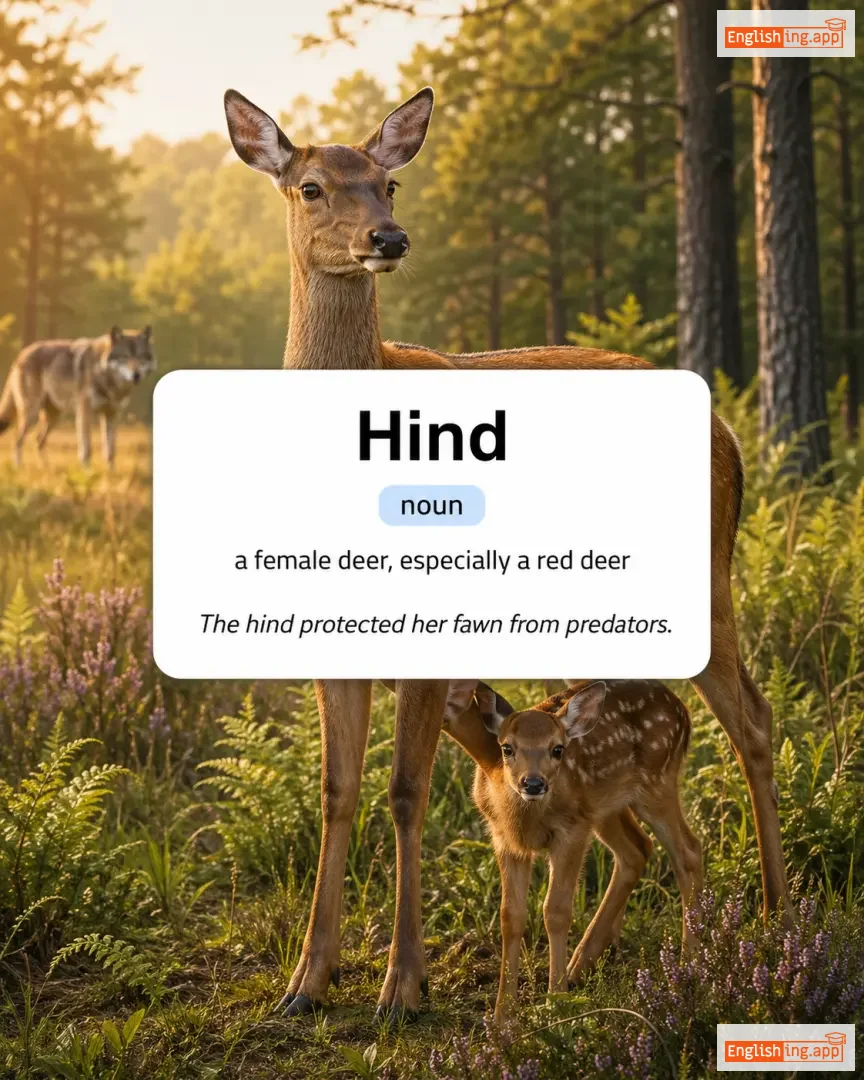
Hind definition card — visual illustration of the meaning
🦌♀️

Hind (haindo)

noun C2
/haɪnd/
雌鹿 (meshi shika)

a female deer, especially a red deer

"The hind protected her fawn from predators."

"雌鹿は捕食者から子鹿を守りました。" (Meshi shika wa hoshokusha kara kogitsune o mamorimashita.)
adjective C2
/ˈhaɪndmoʊst/
最も後ろの (mottomo ushiro no)

Farthest back; last in position.

"The hindmost car in the convoy broke down first."

"隊列で最も後ろの車が最初に壊れた。" (Tairetsu de mottomo ushiro no kuruma ga saisho ni kowareta.)
noun C2
/ˈhaɪərlɪŋ/
傭兵 (yōhei)

A person who works for payment only, often with little loyalty or principle.

"The mercenary was dismissed as just a hireling with no real loyalty."

"傭兵は、忠誠心のないただのハイヤーリングとして解雇された。" (Yōhei wa, chūseishin no nai tada no hayāringu toshite kaiko sareta.)
hirsute definition card — visual illustration of the meaning
adjective C2
/ˈhɜːrsuːt/

Having a lot of hair, especially in an unusual place.

"The hirsute man stood out in the crowd with his long beard."

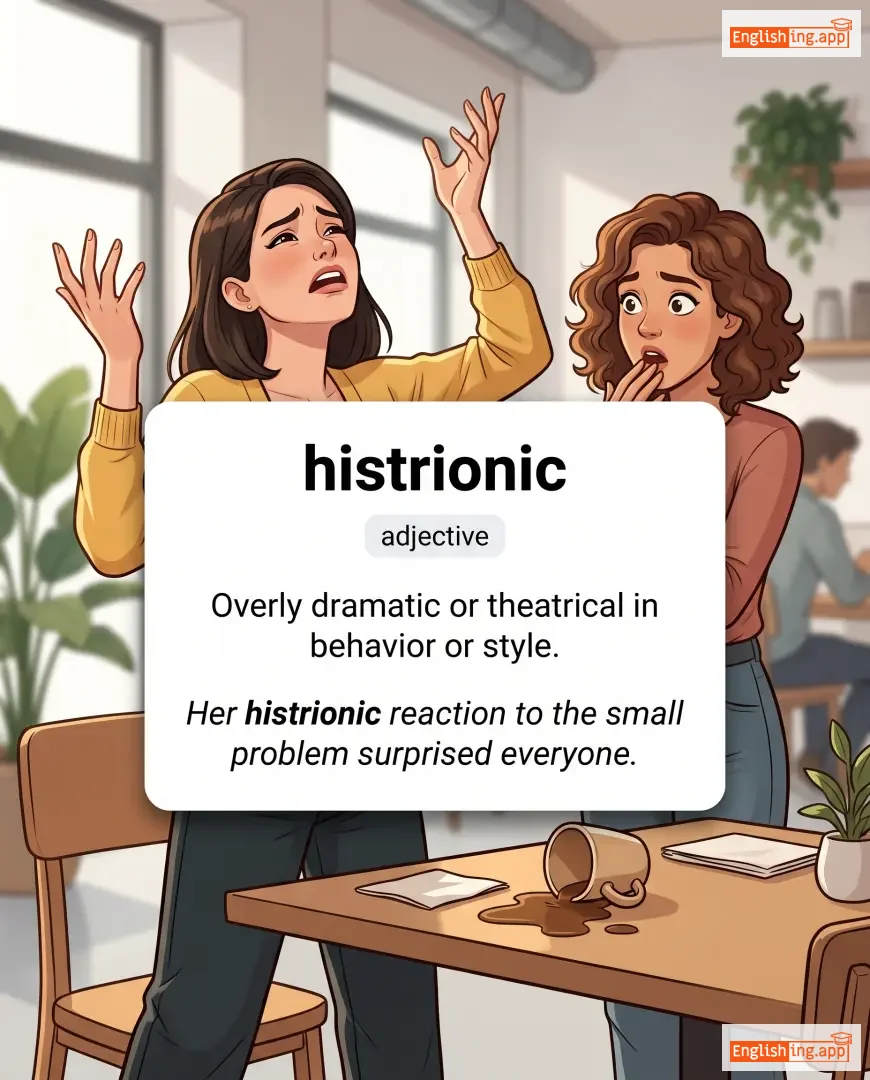
histrionic definition card — visual illustration of the meaning
adjective C2
/ˌhɪstriˈɒnɪk/

Overly dramatic or theatrical in behavior or style.

"Her histrionic reaction to the small problem surprised everyone."

adjective C2
/ˈhɔːri/
灰色の, 古い (haiiro no, furui)

gray or white with age; very old and respected

"The hoary oak tree stood as a witness to centuries of history."

"古いオークの木は何世代にもわたる歴史の証人として立っていた。" (Furui ōku no ki wa nan sedai ni mo wataru rekishi no shōnin to shite tatte ita.)
verb C2
/ˈhɑːbəl/
よろけて歩く (yorokete aruku)

to walk awkwardly with difficulty, usually due to injury

"He hobbled across the room after twisting his ankle."

"彼は足首をひねった後、部屋をよろよろと歩いた。" (Kare wa ashi kubi o hinetta ato, heya o yorokete aruita.)
noun C2
/ˈhɒdʒ.pɒdʒ/
寄せ集め (yoseatsume)

A confusing mixture of different things; a jumble.

"The essay was a hodgepodge of unrelated ideas."

"そのエッセイは関係のないアイデアの寄せ集めだった。" (Sono essei wa kankei no nai aidea no yoseatsume datta.)
noun C2
/hoʊ/
クワ (kuwa)

a gardening tool with a thin metal blade used for breaking up soil and removing weeds

"The farmer used a hoe to remove weeds from his vegetable garden."

"農夫は野菜畑から雑草を取り除くためにクワを使いました。" (Noufu wa yasai hatake kara zassou o torinozoku tame ni kuwa o tsukaimashita.)
noun C2
/hɔːɡ plʌm/
ホッグプラム (Hog puramu)

tropical fruit with yellow skin and sour taste

"Hog plums are often used to make pickles and chutneys."

"ホッグプラムはよくピクルスやチャツネを作るために使われます。" (Hog puramu wa yoku pikurusu ya chatune o tsukuru tame ni tsukawaremasu.)
noun C2
/ˈhɒɡz.hɛd/
大樽 (dai-taru)

A large cask or barrel, traditionally used for storing liquids like wine or beer.

"The cellar was filled with hogsheads of ale."

"地下室はビールの大樽でいっぱいだった。" (Chikashitsu wa biiru no dai-taru de ippai datta.)
noun C2
/ˈhoʊl.stər/
ホルスター (horusutā)

A holder or case for carrying a gun, typically worn on a belt or shoulder.

"The sheriff kept his revolver in a leather holster."

"保安官は自分のリボルバーを革製のホルスターに入れておいた。" (Hoankan wa jibun no riborubā o kawa-sei no horusutā ni irete oita.)
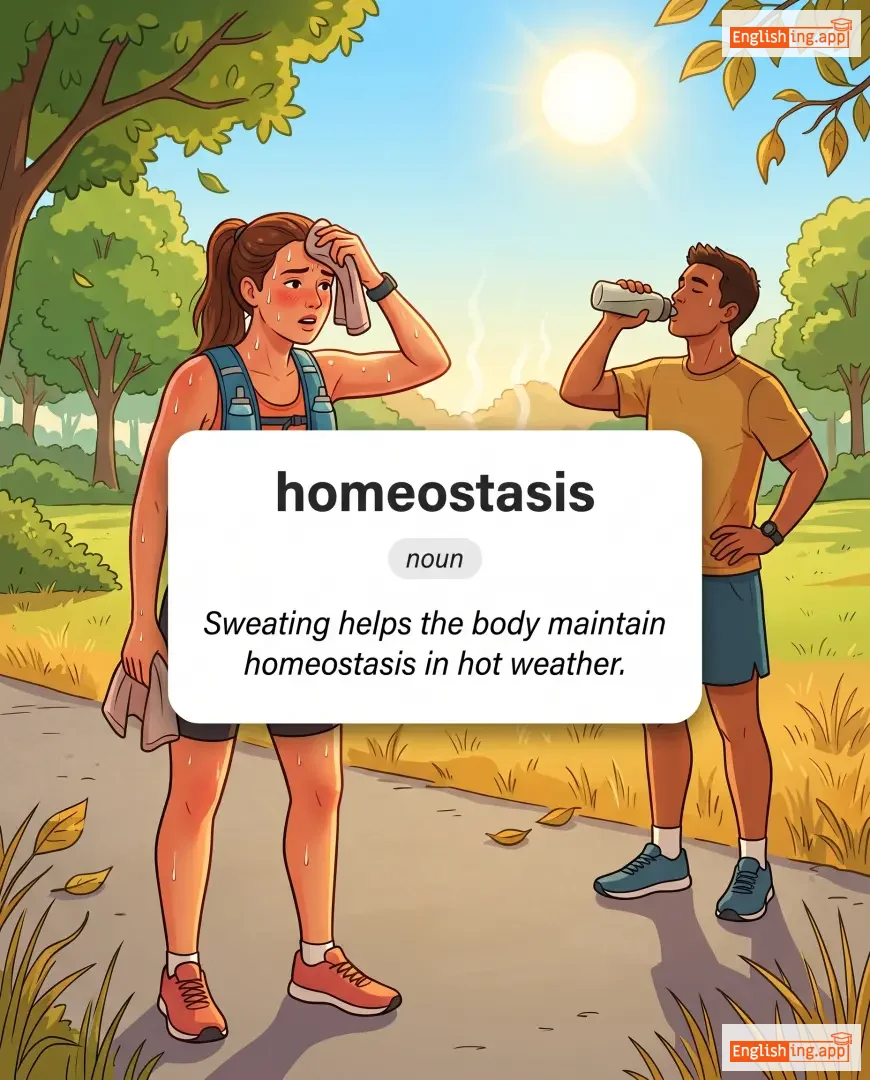
homeostasis definition card — visual illustration of the meaning
noun C2
/ˌhoʊmi.oʊˈsteɪsɪs/
恒常性 (kōjōsei)

The ability of a living system or organism to maintain internal stability despite changes in external conditions.

"Sweating helps the body maintain homeostasis in hot weather."

"汗をかくことで、暑い天気の中で体が恒常性を維持するのを助けます。" (Ase o kaku koto de, atsui tenki no naka de karada ga kōjōsei o iji suru no o tasukemasu.)
adjective C2
/ˈhoʊm.spʌn/
手作り (tezukuri)

Simple and unsophisticated; made at home rather than in a factory.

"She wore a homespun dress to the village festival."

"彼女は村の祭りに手作りのドレスを着て行った。" (Kanojo wa mura no matsuri ni tezukuri no doresu o kite itta.)
Homily definition card — visual illustration of the meaning
noun C2
/ˈhɑː.mə.li/
説教 (sekkyou)

A religious or moral lecture; a sermon.

"The priest delivered a touching homily on kindness."

"司祭は親切について感動的な説教をしました。" (Shisai wa shinsetsu ni tsuite kandō-teki na sekkyō o shimashita.)
noun C2
/ˌhoʊmə.dʒəˈniːəti/

The quality or state of being all the same or all of the same kind.

"The cultural homogeneity of the village made it feel unified."

verb C2
/həˈmɑː.dʒə.naɪz/
均質化 (kinshitsuka)

To make uniform or similar by blending or mixing different elements.

"The company tried to homogenize its products across global markets."

"その会社は世界市場で製品を均質化しようとしました。" (Sono kaisha wa sekai shijō de seihin o kinshitsuka shiyō to shimashita.)