Vocabularios

Descubra, aprenda y domine el vocabulario en inglés

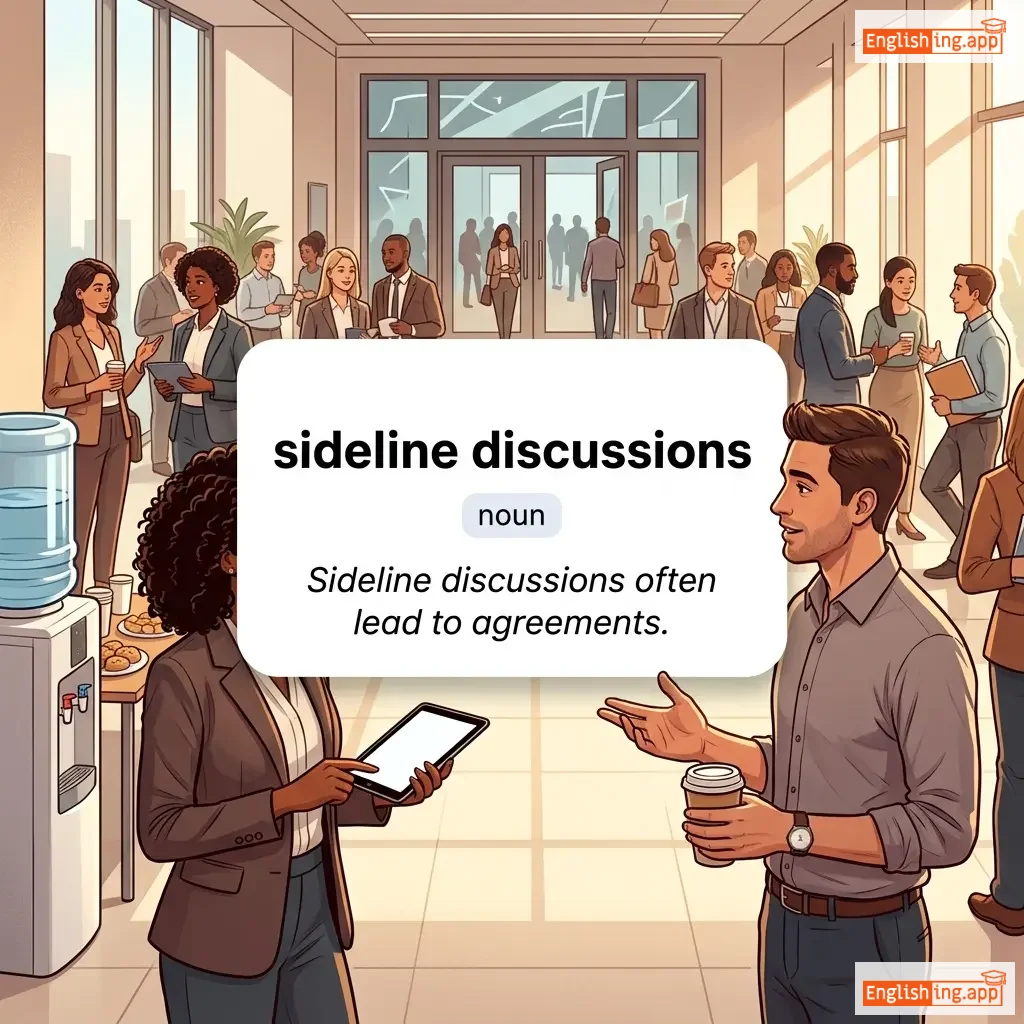
sideline discussions definition card — visual illustration of the meaning
noun C1
/ˈsaɪd.laɪn dɪˈskʌʃənz/
discusiones secundarias (discusiones secundarias)

Informal or secondary conversations that occur outside the main agenda of a formal meeting.

"Sideline discussions often lead to agreements."

"Las discusiones secundarias a menudo conducen a acuerdos." (Las discusiones secundarias a menudo conducen a acuerdos.)
verb C1
/ˈsaɪdˌstɛp/
eludir (eludir)

To avoid something by stepping aside; to evade a problem or question indirectly.

"The politician tried to sidestep the difficult question."

"El político intentó eludir la difícil pregunta." (El político intentó eludir la difícil pregunta.)
verb C1
/ˈsaɪdˌtræk/
desviar (desviar)

To distract from the main subject or activity.

"She was sidetracked by an unexpected phone call."

"Ella se desvió por una llamada telefónica inesperada." (Ella se desvió por una llamada telefónica inesperada.)
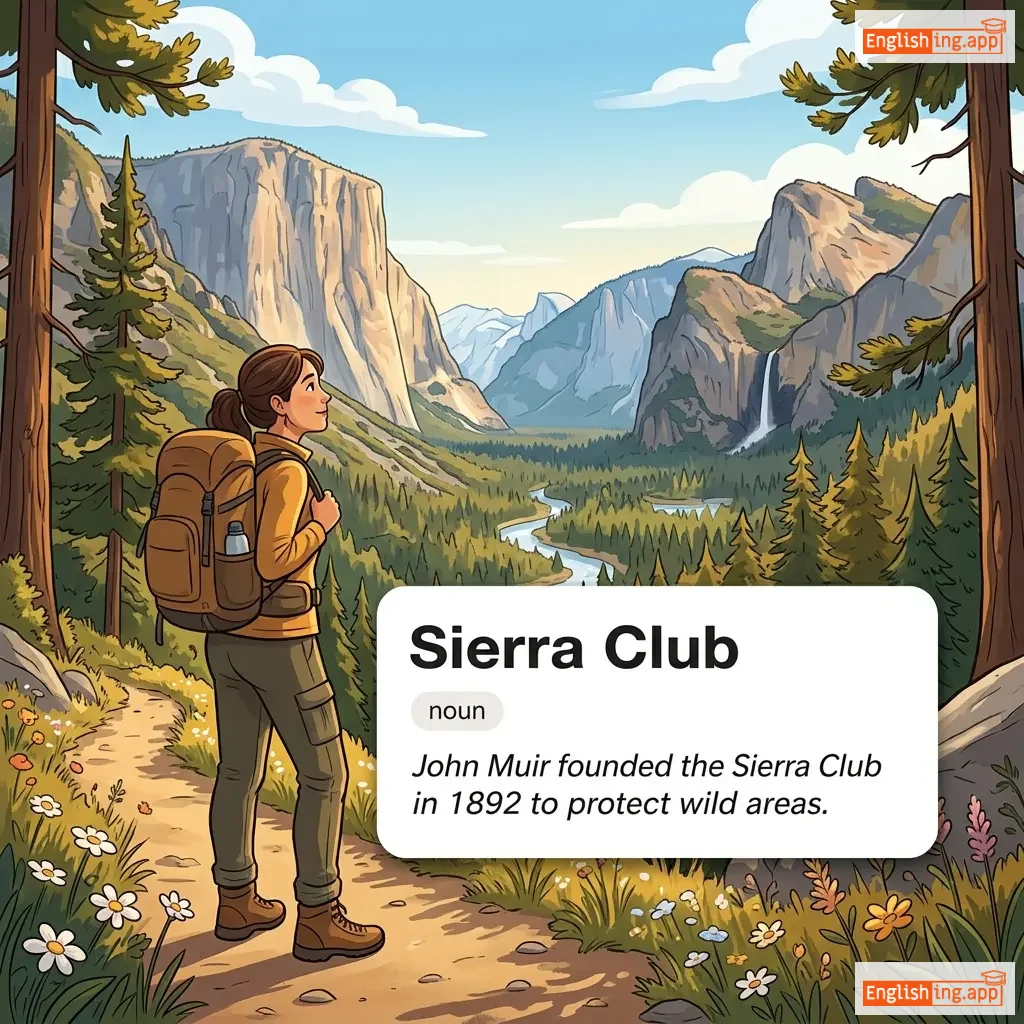
Sierra Club definition card — visual illustration of the meaning
noun C1
/siˈɛrə klʌb/
Sierra Club (Sierra Club)

An American environmental organization founded in 1892 by John Muir, focused on promoting conservation of the natural environment by influencing public policy decisions.

"John Muir founded the Sierra Club in 1892 to protect wild areas."

"John Muir fundó el Sierra Club en 1892 para proteger áreas salvajes." (John Muir fundo el Sierra Club en 1892 para proteger areas salvajes.)
noun C1
/sɪv/
colador (colador)

a utensil with a mesh or perforated bottom, used for straining or sifting

"She used a sieve to strain the pasta."

"Ella usó un colador para colar la pasta." (Ella usó un colador para colar la pasta.)
verb C1
/sɪft/
tamizar / examinar cuidadosamente (tamizar / examinar cuidadosamente)

to separate or sort through carefully, often using a sieve or by examining closely

"She sifted the flour before adding it to the cake mixture."

"Ella tamizó la harina antes de agregarla a la mezcla del pastel." (Ella tamizó la harina antes de agregarla a la mezcla del pastel.)
👁️‍🗨️

Sightless (saitles)

adjective C1
/ˈsaɪt.ləs/
ciego; sin visión (ciego; sin vision)

unable to see; blind; lacking vision

"The sightless man navigated the street with his guide dog."

"El hombre ciego navegó por la calle con su perro guía." (El hombre ciego navego por la calle con su perro guia)
noun C1
/sɪlk klɔːθ/
tela de seda (tela de seda)

fabric made from natural fibers produced by silkworms

"The bride wore a beautiful dress made of silk cloth."

"La novia llevaba un hermoso vestido hecho de tela de seda." (La novia llevaba un hermoso vestido hecho de tela de seda.)
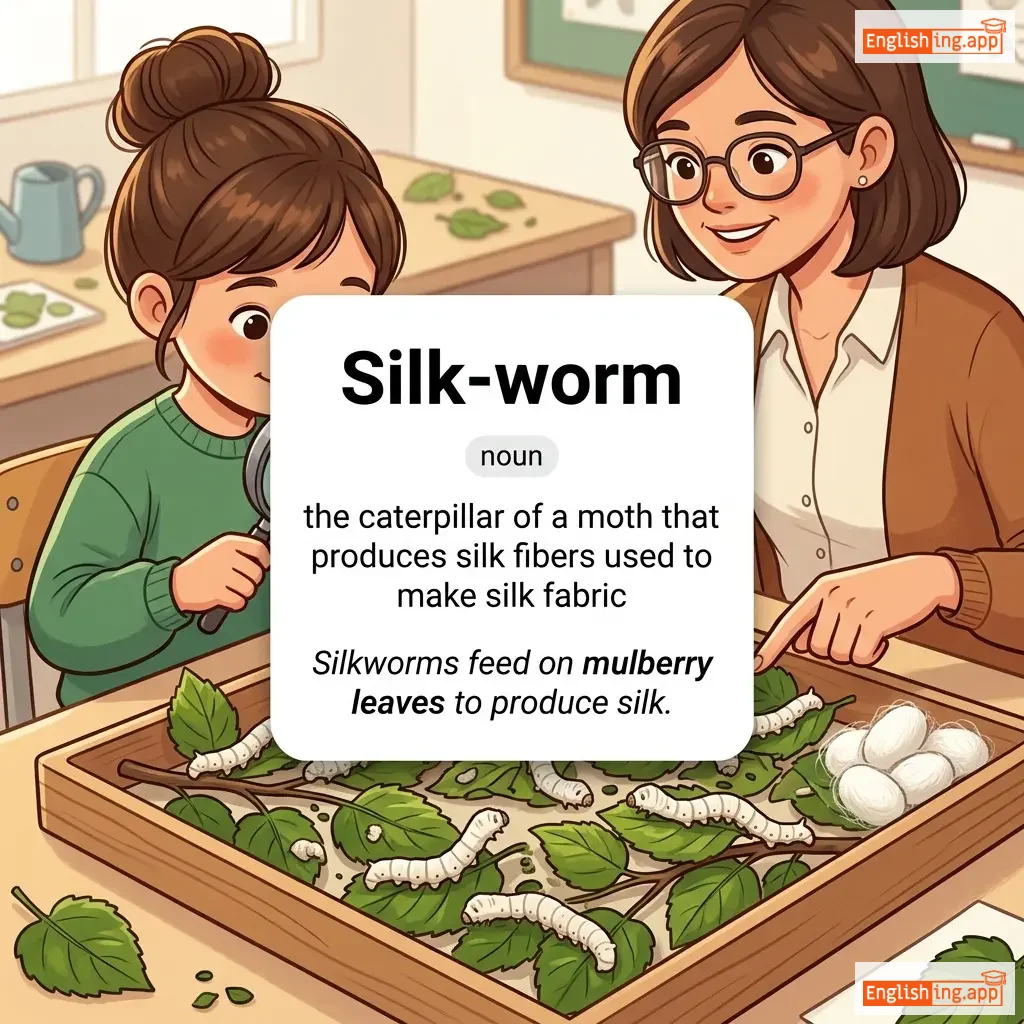
Silk-worm definition card — visual illustration of the meaning
noun C1
/ˈsɪlk.wɜːrm/
gusano de seda (gusano de seda)

the caterpillar of a moth that produces silk fibers used to make silk fabric

"Silkworms feed on mulberry leaves to produce silk."

"Los gusanos de seda se alimentan de hojas de morera para producir seda." (Los gusanos de seda se alimentan de hojas de morera para producir seda.)
adjective C1
/ˈsɪlkən/
de seda; suave; brillante; (de seda)

made of silk; smooth and soft like silk

"She wore a beautiful silken dress to the party."

"Ella llevaba un hermoso vestido de seda a la fiesta." (Ella llevaba un hermoso vestido de seda a la fiesta.)
noun C1
/sɪlt/
lodo (lodo)

Fine sand, clay, or other material carried by running water and deposited as a sediment.

"The river deposited layers of silt along its banks."

"El río depositó capas de lodo a lo largo de sus orillas." (El río depositó capas de lodo a lo largo de sus orillas.)
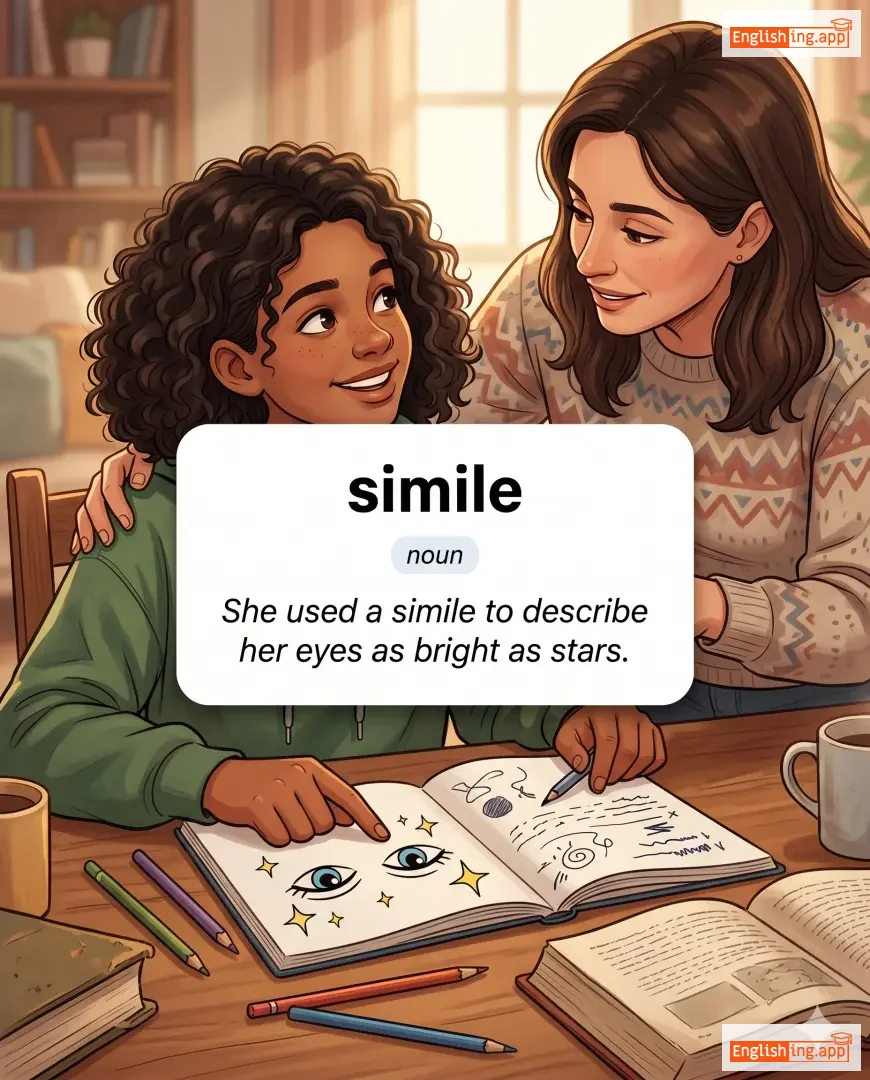
simile definition card — visual illustration of the meaning
noun C1
/ˈsɪməli/
símil (simil)

A figure of speech involving the comparison of one thing with another using 'like' or 'as'.

"She used a simile to describe her eyes as bright as stars."

"Ella usó un símil para describir sus ojos tan brillantes como las estrellas." (Ella uso un simil para describir sus ojos tan brillantes como las estrellas.)
adjective C1
/sɪmˈplɪstɪk/
excesivamente simplificado (excesivamente simplificado)

treating complex issues as if they were much simpler than they really are

"His explanation was too simplistic and ignored key details."

"Su explicación fue demasiado simplificada e ignoró detalles clave." (Su explicación fue demasiado simplificada e ignoró detalles clave.)
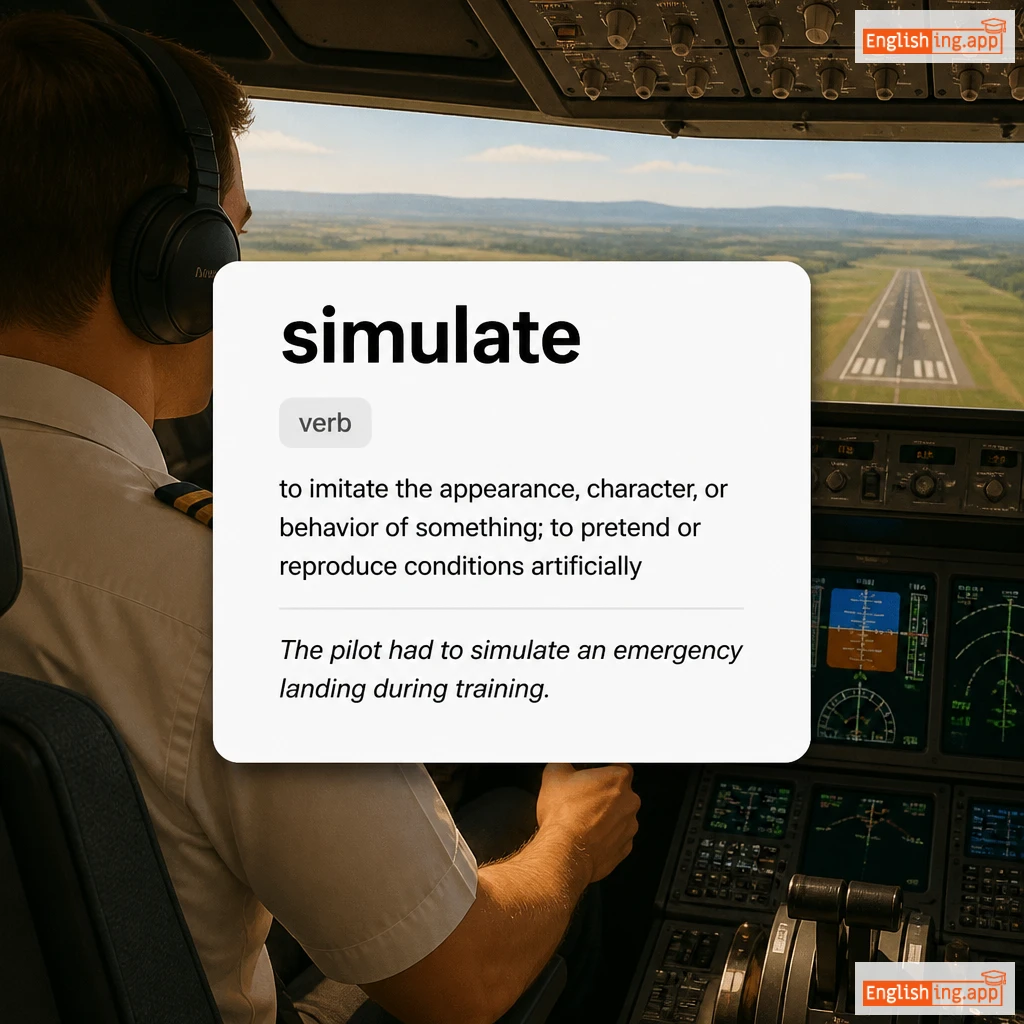
simulate definition card — visual illustration of the meaning
verb C1
/ˈsɪmjʊˌleɪt/
simular (simular)

to imitate the appearance, character, or behavior of something; to pretend or reproduce conditions artificially

"The pilot had to simulate an emergency landing during training."

"El piloto tuvo que simular un aterrizaje de emergencia durante el entrenamiento." (El piloto tuvo que simular un aterrizaje de emergencia durante el entrenamiento.)
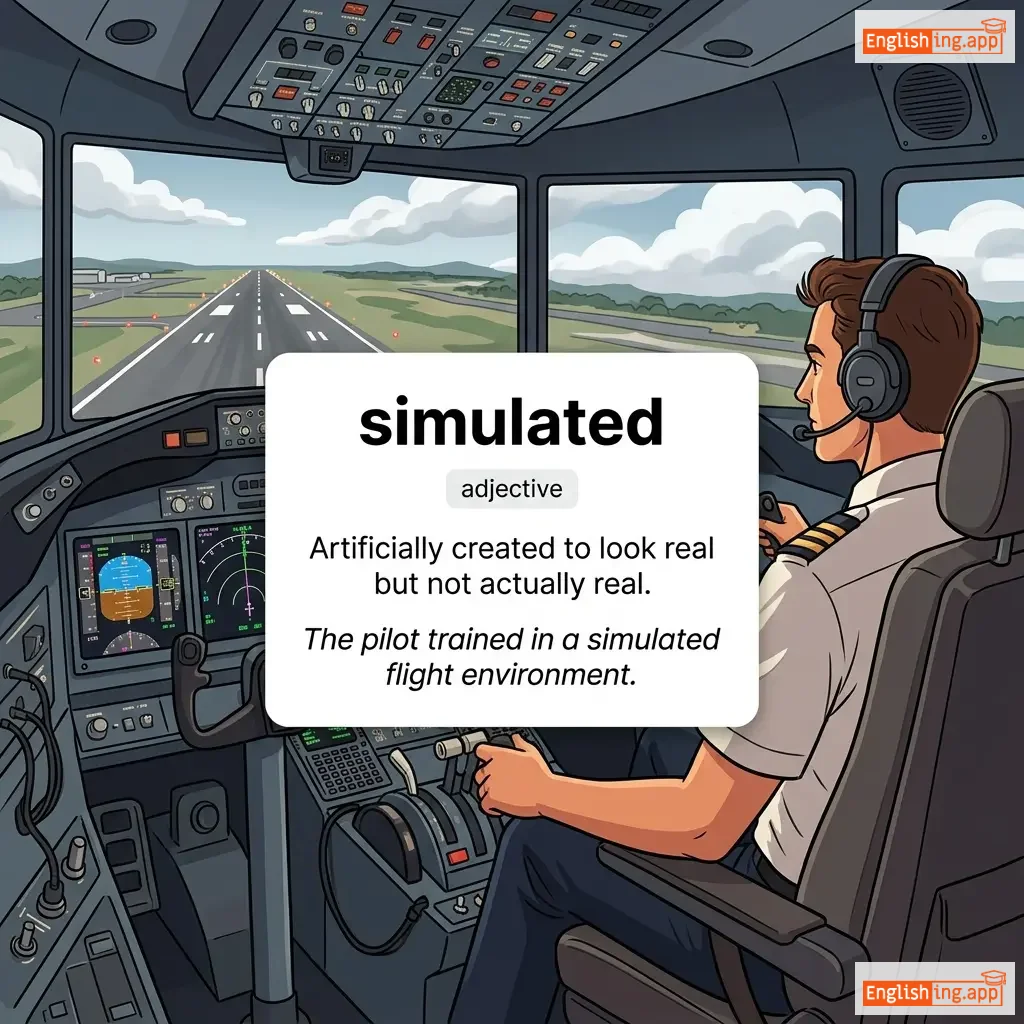
simulated definition card — visual illustration of the meaning
adjective C1
/ˈsɪm.jʊ.leɪ.tɪd/
simulado (simulado)

Artificially created to look real but not actually real.

"The pilot trained in a simulated flight environment."

"El piloto entrenó en un ambiente de vuelo simulado." (El piloto entrenó en un ambiente de vuelo simulado.)
verb C1
/sɪndʒ/
quemar ligeramente (quemar ligeramente)

To burn something superficially or lightly, especially at the edges.

"The fire singed his eyebrows."

"El fuego le quemó las cejas." (El fuego le quemó las cejas.)
adjective C1
/ˈsɪnləs/
sin pecado; inocente; puro (sin pecado; inocente; puro)

free from sin; pure and innocent; without moral fault

"The innocent child appeared sinless in her pure white dress."

"La niña inocente apareció sin pecado con su vestido blanco puro." (La niña inocente apareció sin pecado con su vestido blanco puro.)
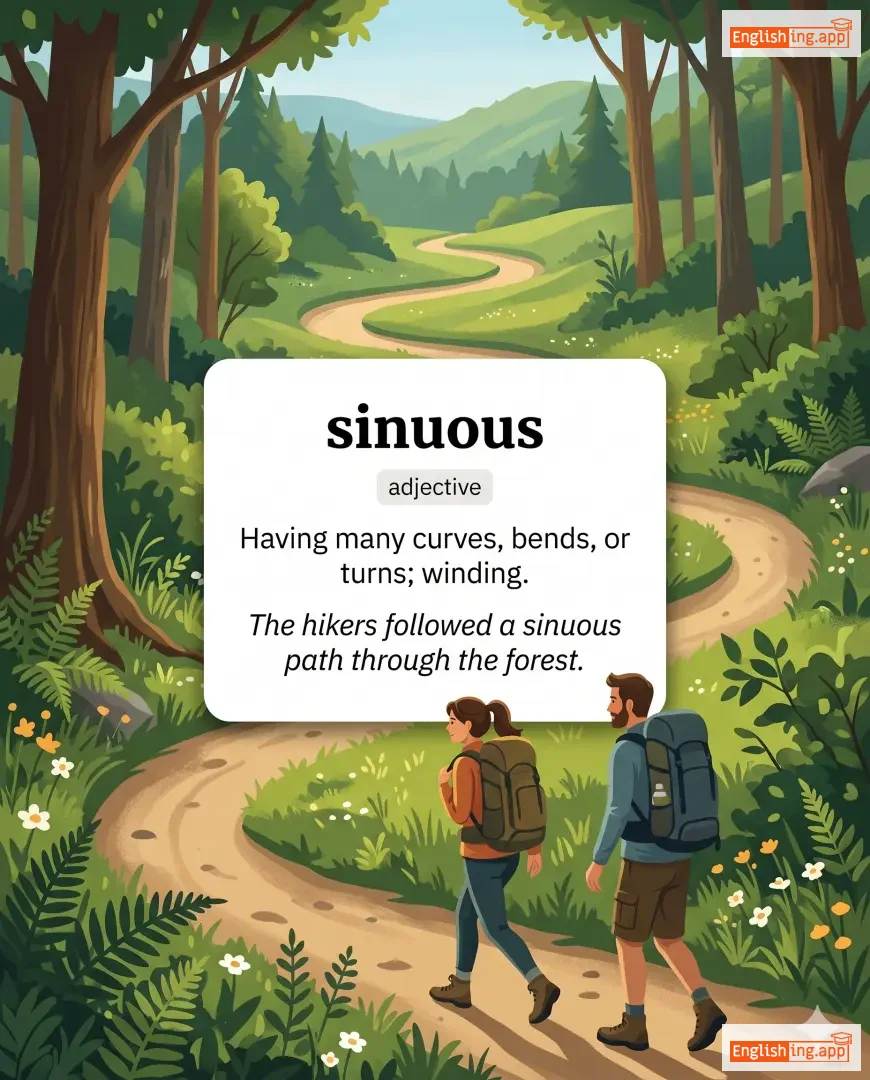
sinuous definition card — visual illustration of the meaning
adjective C1
/ˈsɪnjuəs/
sinuoso (sinuoso)

Having many curves, bends, or turns; winding.

"The hikers followed a sinuous path through the forest."

"Los excursionistas siguieron un camino sinuoso a través del bosque." (Los excursionistas siguieron un camino sinuoso a través del bosque.)
noun C1
/ˈsaɪnəs/
seno (seno)

A cavity within a bone or tissue, especially those in the bones of the face connected with the nasal cavities.

"He suffered from a sinus infection that caused headaches."

"Él sufrió de una infección sinusal que le causó dolor de cabeza." (Él sufrió de una infección sinusal que le causó dolor de cabeza.)
noun C1
/ˈsɪstərhʊd/
hermandad (hermandad)

The relationship between sisters, or a community of women united by shared experiences or goals.

"The feminist movement created a strong sense of sisterhood among women."

"El movimiento feminista creó un fuerte sentido de hermandad entre las mujeres." (El movimiento feminista creo un fuerte sentido de hermandad entre las mujeres.)
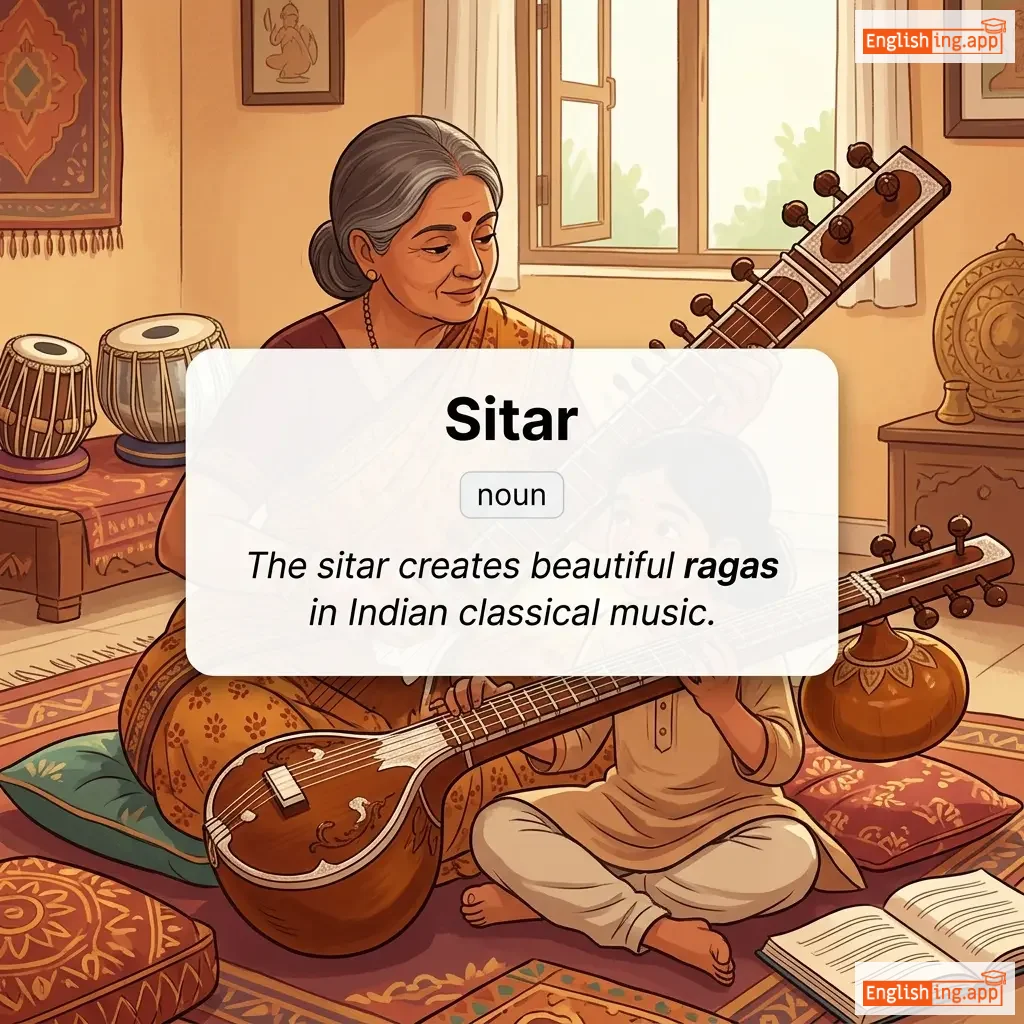
Sitar definition card — visual illustration of the meaning
noun C1
/sɪˈtɑːr/
sitar (sitar)

a traditional Indian stringed musical instrument with a long neck and resonating body

"The sitar creates beautiful ragas in Indian classical music."

"El sitar crea hermosos ragas en la música clásica india." (El sitar crea hermosos ragas en la música clásica india.)
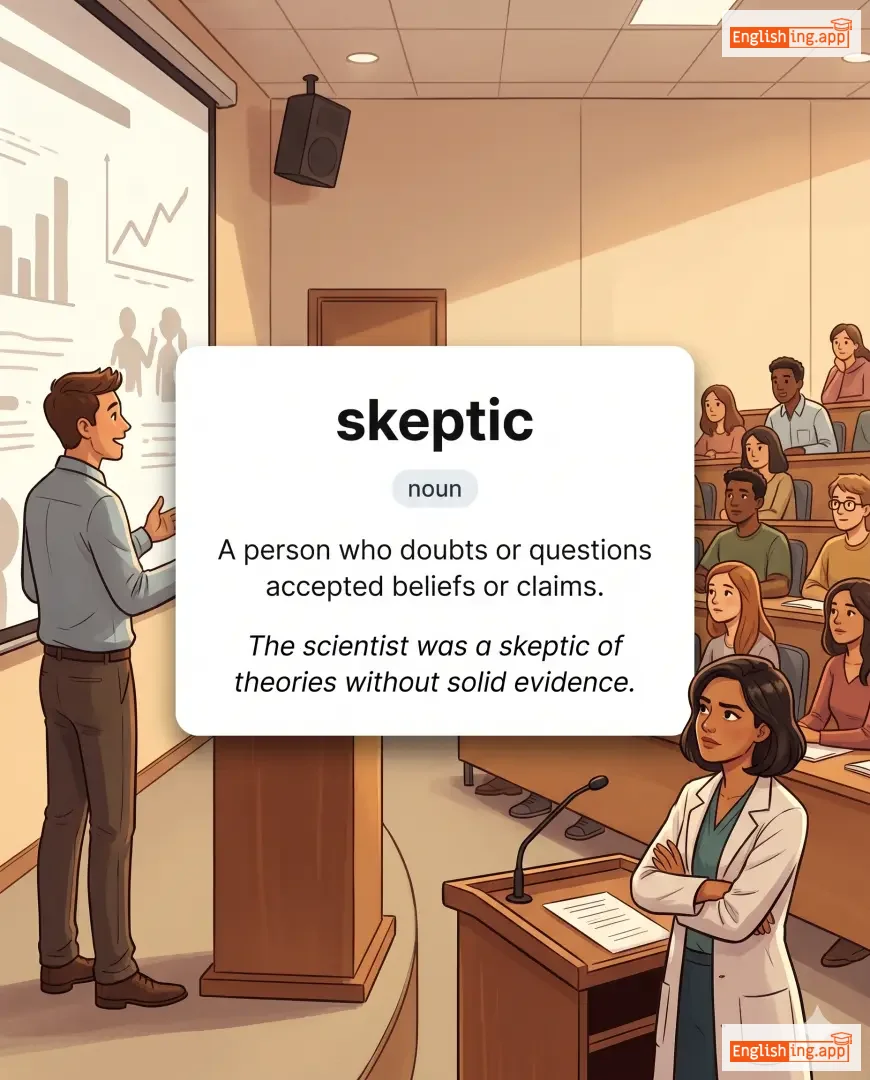
skeptic definition card — visual illustration of the meaning
noun C1
/ˈskɛptɪk/
escéptico (esceptico)

A person who doubts or questions accepted beliefs or claims.

"The scientist was a skeptic of theories without solid evidence."

"El científico era escéptico de las teorías sin evidencia sólida." (El cientifico era esceptico de las teorias sin evidencia solida.)
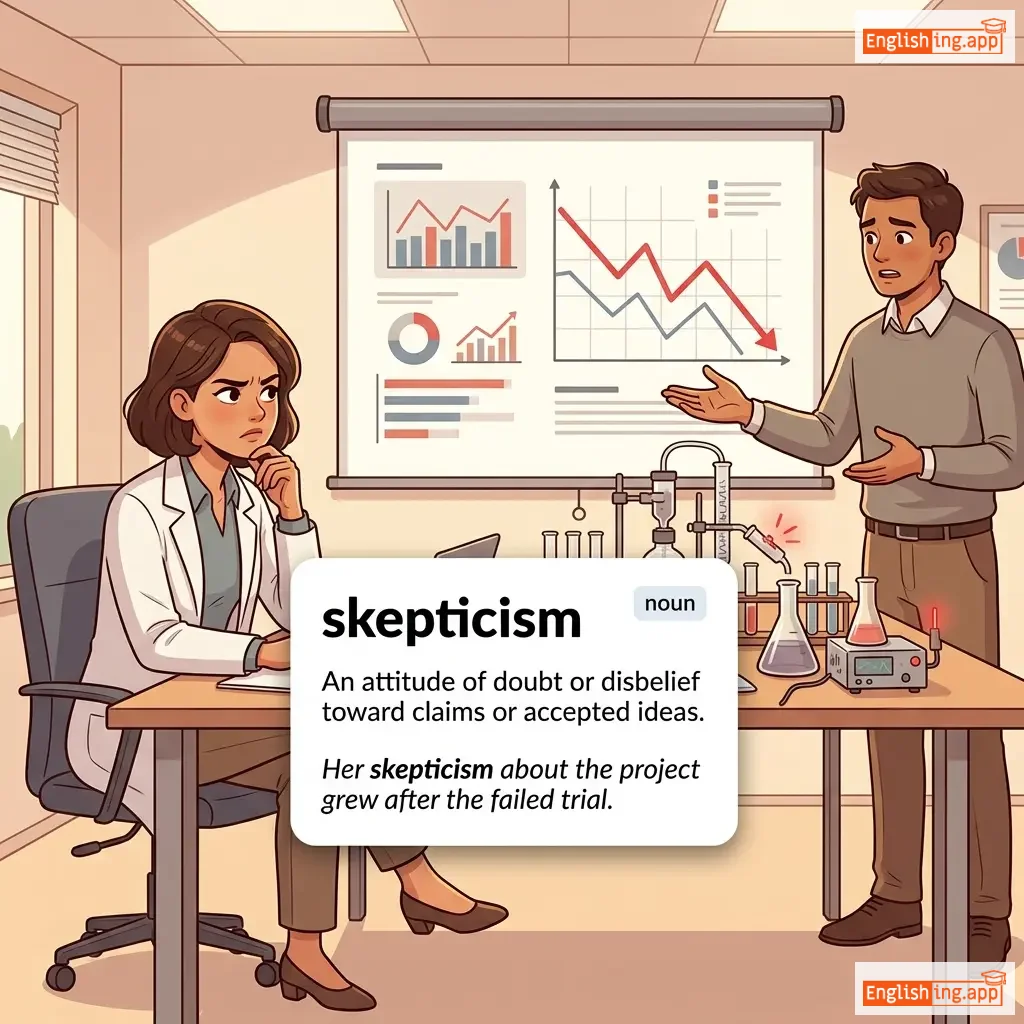
skepticism definition card — visual illustration of the meaning
noun C1
/ˈskɛptɪˌsɪzəm/
escepticismo (escepticismo)

An attitude of doubt or disbelief toward claims or accepted ideas.

"Her skepticism about the project grew after the failed trial."

"Su escepticismo sobre el proyecto creció después del juicio fallido." (Su escepticismo sobre el proyecto creció después del juicio fallido.)
adjective C1
/ˈskɛtʃi/
incompleto (incompleto)

not thorough or detailed; suspicious or unsafe

"The details of the project were still sketchy."

"Los detalles del proyecto aún estaban incompletos." (Los detalles del proyecto aún estaban incompletos.)
verb C1
/skɪmp/
escatimar (escatimar)

to use less of something than is necessary in order to save money or effort

"Don’t skimp on quality when buying a new laptop."

"No escatimes en calidad al comprar una nueva laptop." (No escatimes en calidad al comprar una nueva laptop.)
noun/verb C1
/ˈskɜːrmɪʃ/
escaramuza (escaramuza)

a small or brief fight between groups of soldiers; to engage in such a fight

"The soldiers got into a skirmish near the border."

"Los soldados se metieron en una escaramuza cerca de la frontera." (Los soldados se metieron en una escaramuza cerca de la frontera.)
noun C1
/skɪt/
sketch (sketch)

a short, humorous performance or piece of writing

"The students performed a funny skit at the event."

"Los estudiantes realizaron un divertido sketch en el evento." (Los estudiantes realizaron un divertido sketch en el evento.)
adjective C1
/ˈskɪtɪʃ/
nervioso (nervioso)

easily frightened or nervous; unpredictable

"The horse was too skittish to ride."

"El caballo estaba demasiado nervioso para montar." (El caballo estaba demasiado nervioso para montar.)
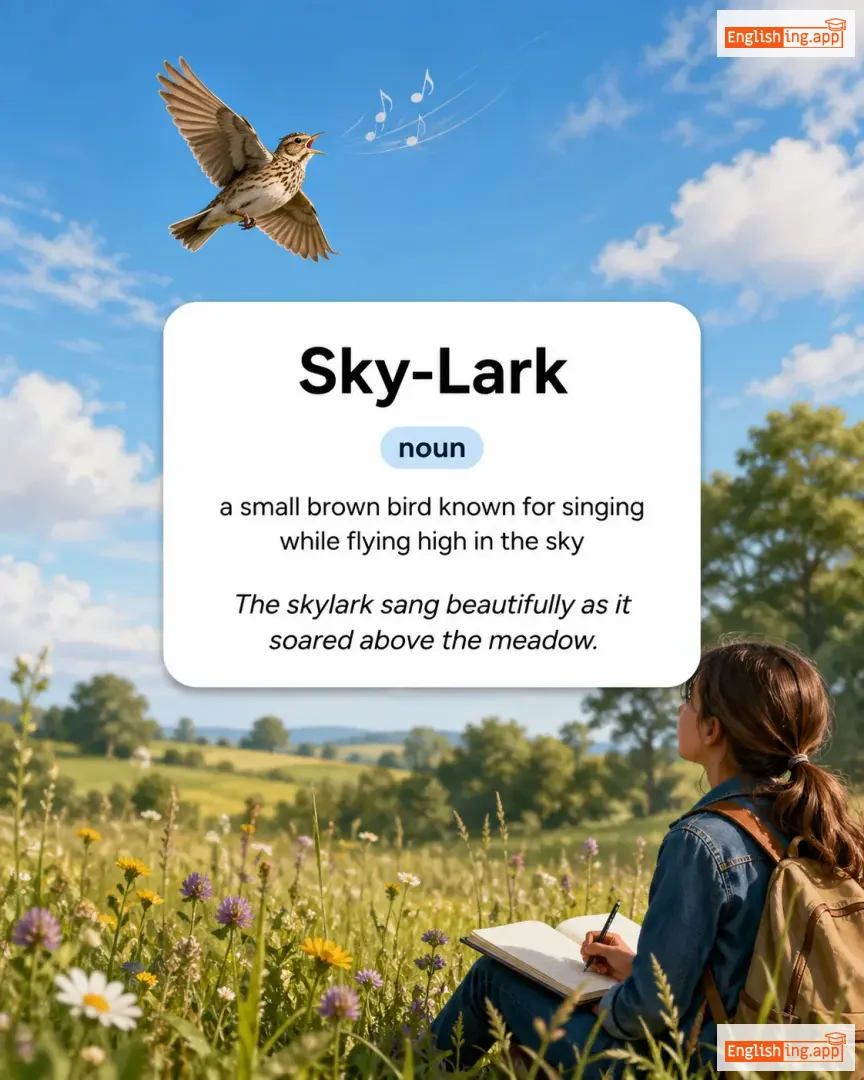
Sky-Lark definition card — visual illustration of the meaning
noun C1
/ˈskaɪ.lɑːrk/
alondra (alondra)

a small brown bird known for singing while flying high in the sky

"The skylark sang beautifully as it soared above the meadow."

"La alondra cantó hermosamente mientras se elevaba sobre el prado." (La alondra cato hermosamente mientras se elevaba sobre el prado)
noun C1
/slæb/
losa (losa)

a large, thick, flat piece of stone, concrete, or other hard material

"The workers laid a concrete slab for the foundation."

"Los trabajadores colocaron una losa de concreto para la fundación." (Los trabajadores colocaron una losa de concreto para la fundación.)
verb C1
/ˈslækən/
aflojar (aflojar)

to make or become less tight, less active, or slower

"The driver slackened his speed as he approached the village."

"El conductor redujo su velocidad al acercarse al pueblo." (El conductor redujo su velocidad al acercarse al pueblo.)
noun C1
/slæɡ/
escoria (escoria)

Stony waste matter separated from metals during the smelting process.

"The factory dumped the slag near the river."

"La fábrica arrojó la escoria cerca del río." (La fábrica arrojó la escoria cerca del río.)
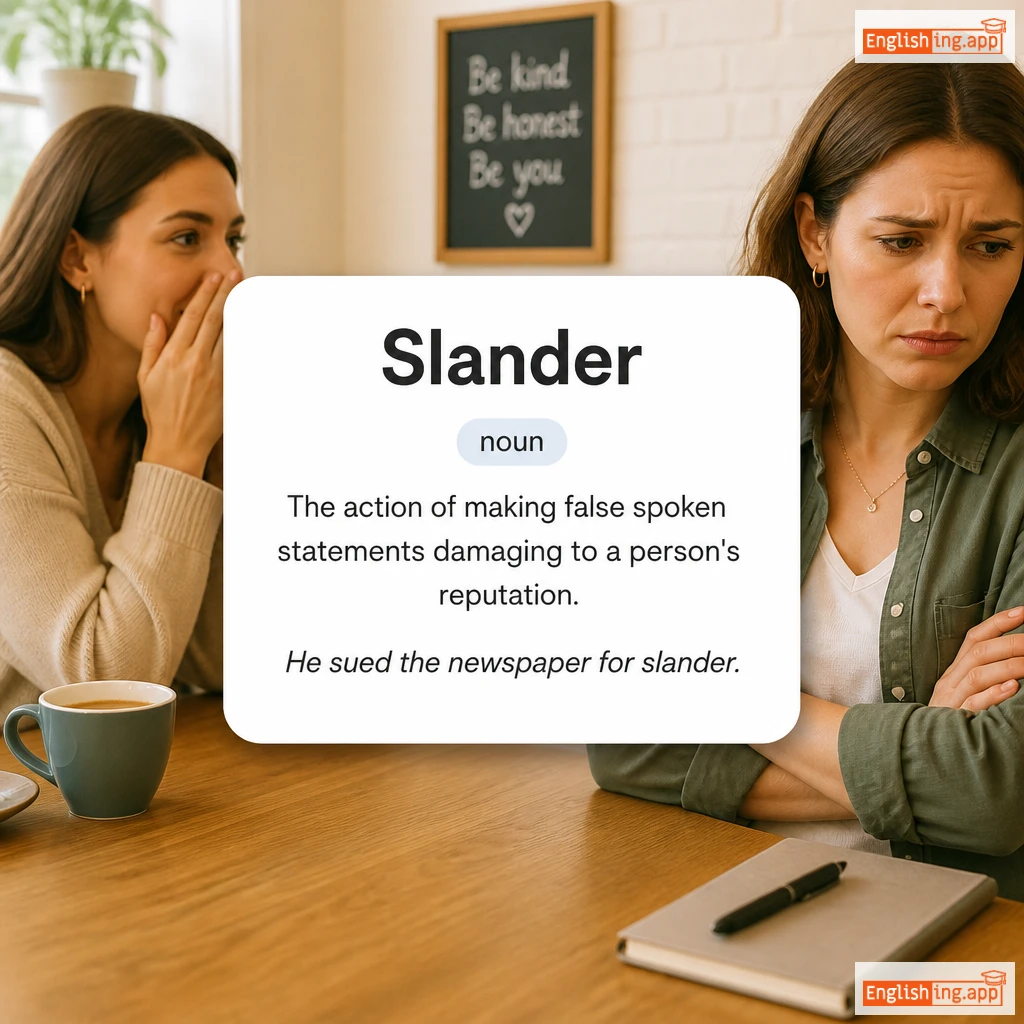
Slander definition card — visual illustration of the meaning
noun C1
/ˈslændər/
calumnia (calumnia)

The action of making false spoken statements damaging to a person's reputation.

"He sued the newspaper for slander."

"Demandó al periódico por calumnia." (Demandó al periódico por calumnia.)
noun/verb C1
/sleɪt/
pizarra / programar (pizarra / programar)

a fine-grained rock used for roofing or writing; to schedule or designate for a task

"The meeting is slated for next Monday."

"La reunión está programada para el próximo lunes." (La reunión está programada para el próximo lunes.)
adjective C1
/ˈsleɪ.vɪʃ/
esclavo (esclavo)

showing no originality; completely imitative or overly submissive

"His slavish devotion to tradition prevented any innovation."

"Su devoción esclava a la tradición impidió cualquier innovación." (Su devoción esclava a la tradición impidió cualquier innovación.)
verb C1
/sleɪ/
matar (matar)

to kill violently; informally, to impress greatly

"The hero vowed to slay the dragon."

"El héroe juró matar al dragón." (El héroe juró matar al dragón.)
adjective C1
/ˈsliːzi/
de mala calidad, inmoral o barato (de mala calidad, inmoral o barato)

morally low, dirty, or cheap in quality

"He avoided the sleazy nightclub downtown."

"Él evitó el club nocturno sórdido en el centro." (Él evitó el club nocturno sórdido en el centro.)
adjective C1
/sliːk/
elegante y brillante (elegante y brillante)

smooth, shiny, and stylish

"She drove a sleek black sports car."

"Ella condujo un coche deportivo brillante y elegante." (Ella condujo un coche deportivo brillante y elegante.)
noun C1
/sleɪ/
trineo (trineo)

A vehicle pulled by horses or reindeer over snow or ice.

"Children were excited to ride in the sleigh through the snowy village."

"Los niños estaban emocionados de montar en el trineo por el pueblo nevado." (Los ninos estaban emocionados de montar en el trineo por el pueblo nevado.)
verb C1
/sluː/
girar bruscamente (girar bruscamente)

To turn or slide violently in a particular direction.

"The car slewed across the icy road."

"El coche se deslizó por la carretera helada." (El coche se deslizó por la carretera helada.)
verb C1
/slɪŋ/
colgar, lanzar (colgar, lanzar)

to throw or hang something roughly or carelessly

"He slung his bag over his shoulder before leaving."

"Él colgó su bolso sobre su hombro antes de salir." (El colgo su bolso sobre su hombro antes de salir.)
verb C1
/slɪŋk/
deslizarse en silencio (deslizarse en silencio)

to move quietly and secretly, often to avoid being noticed

"The cat slunk into the room without making a sound."

"El gato entró en la habitación sin hacer ruido." (El gato entro en la habitacion sin hacer ruido.)
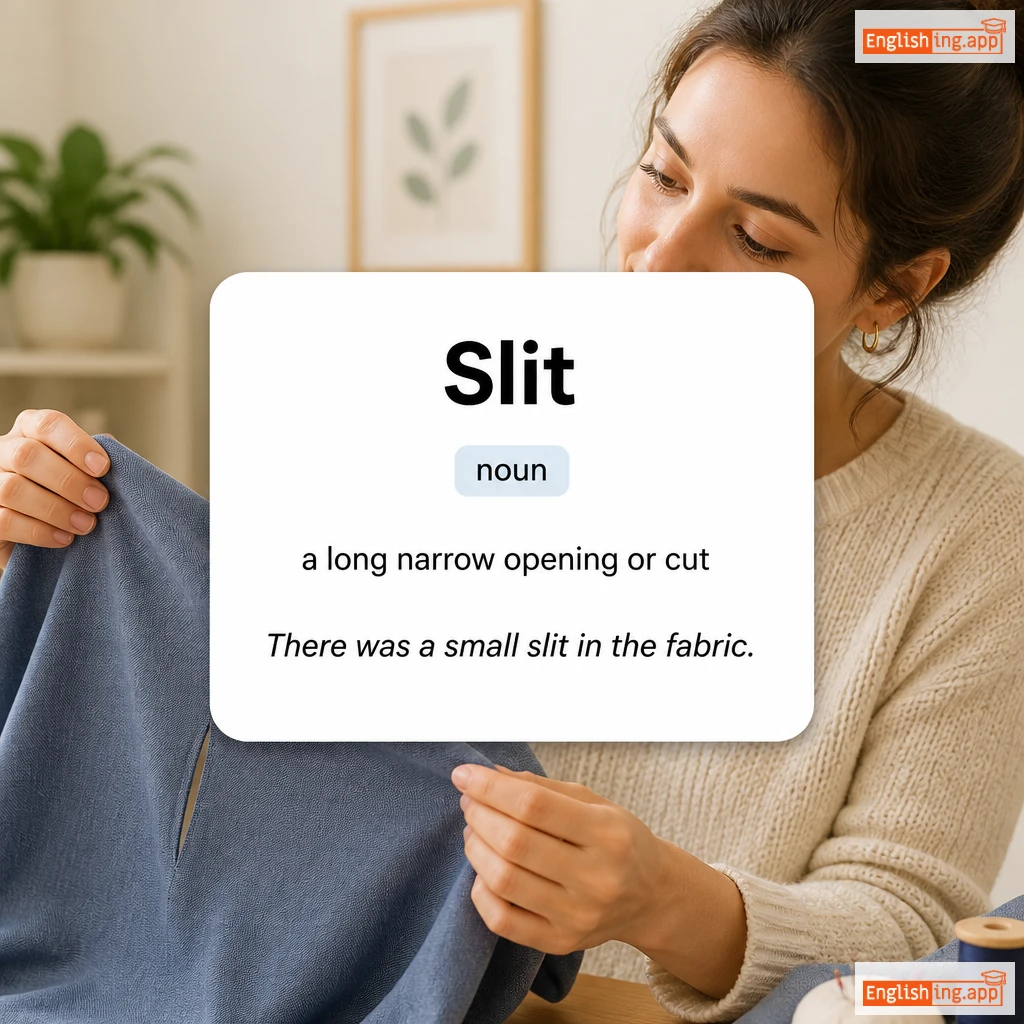
Slit definition card — visual illustration of the meaning
noun C1
/slɪt/
rendija (rendija)

a long narrow opening or cut

"There was a small slit in the fabric."

"Había una pequeña rendija en la tela." (Había una pequeña rendija en la tela.)
verb C1
/ˈslɪðər/
deslizarse (deslizarse)

to move smoothly over a surface with a twisting, sliding motion, like a snake

"The snake slithered through the grass."

"La serpiente se deslizó a través de la hierba." (La serpiente se deslizó a través de la hierba.)
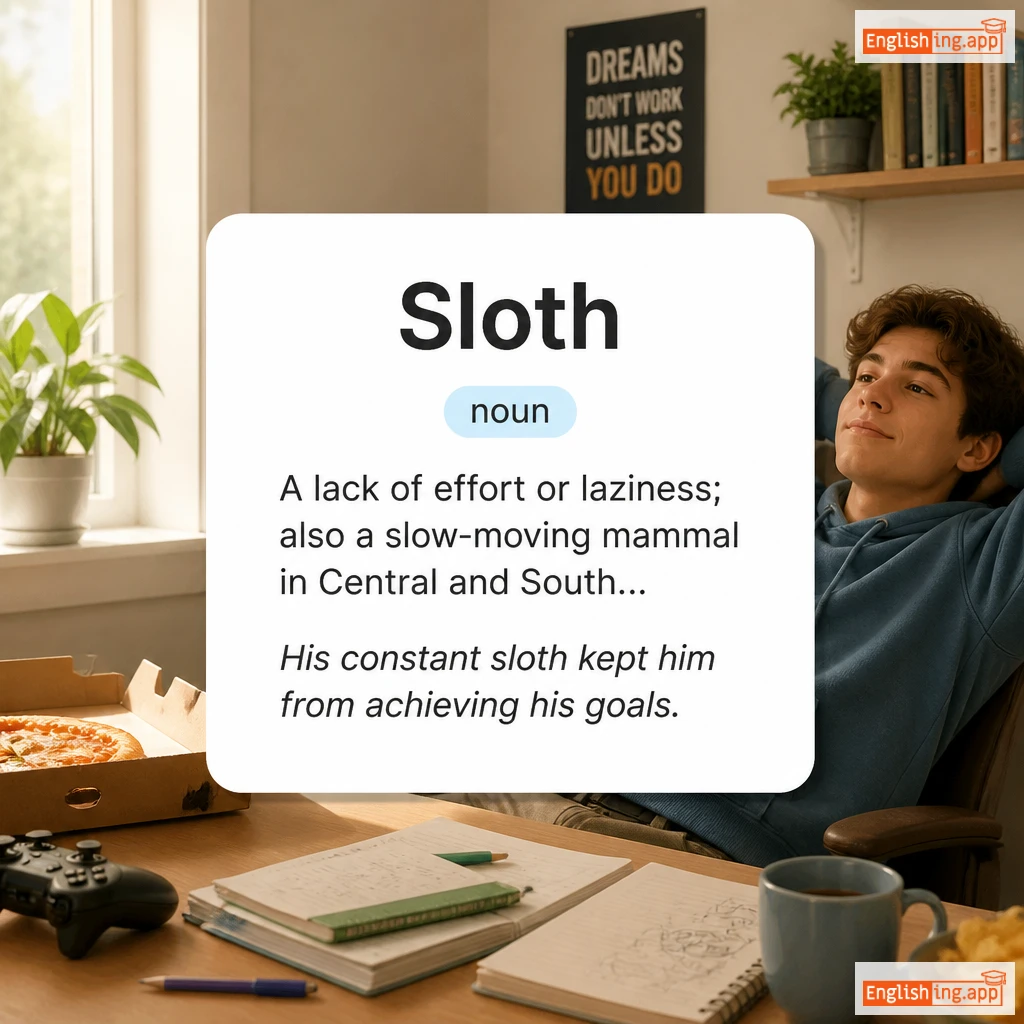
Sloth definition card — visual illustration of the meaning
noun C1
/sloʊθ/ or /slɒθ/
pereza (pereza)

A lack of effort or laziness; also a slow-moving mammal in Central and South America.

"His constant sloth kept him from achieving his goals."

"Su constante pereza lo mantenía alejado de sus objetivos." (Su constante pereza lo mantenía alejado de sus objetivos.)
verb C1
/slaʊtʃ/
encorvarse (encorvarse)

To stand, sit, or move in a lazy or awkward way.

"He slouched in the chair, looking tired."

"Se encorvó en la silla, luciendo cansado." (Se encorvó en la silla, luciendo cansado.)
noun/verb C1
/ˈslʌmbər/
sueño (sueno)

A state of sleep; to sleep lightly or rest.

"The child slumbered peacefully through the night."

"El niño durmió pacíficamente durante la noche." (El nino durmio pacíficamente durante la noche.)
noun, verb C1
/slɜːr/
insulto / palabra despectiva (insulto / palabra despectiva)

An insulting remark or suggestion; or to speak indistinctly.

"He made a slur against her character."

"Hizo un comentario despectivo sobre su carácter." (Hizo un comentario despectivo sobre su carácter.)
noun C1
/ˈsmætərɪŋ/
conocimiento superficial (conocimiento superficial)

A small amount or superficial knowledge of something.

"He has a smattering of Spanish."

"Él tiene un conocimiento superficial de español." (El tiene un conocimiento superficial de espanol.)
verb C1
/smɪr/
untar / difamar (untar / difamar)

to spread or apply a substance messily; to damage someone's reputation with false or unfair words

"The child smeared paint across the wall."

"El niño untó pintura en la pared." (El niño untó pintura en la pared.)