Vocabularios

Descubra, aprenda y domine el vocabulario en inglés

noun C1
/ˈmʌltɪtuːd/
多数 (tashū)

A large number of people or things.

"A multitude of fans gathered at the stadium."

"スタジアムに多数のファンが集まりました。" (Sutajiamu ni tashū no fan ga atsumarimashita.)
verb C1
/ˈmʌmbəl/

To speak quietly and not clearly so that words are difficult to understand.

"He mumbled an apology before leaving."

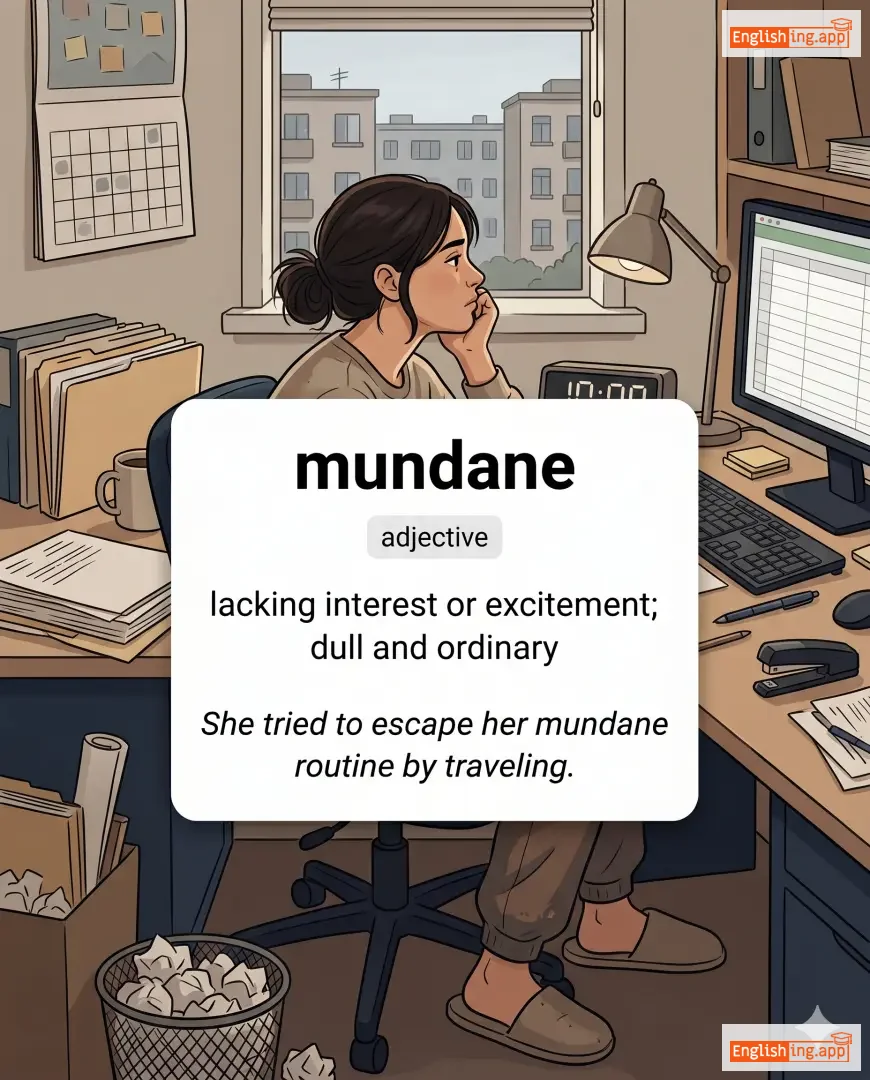
mundane definition card — visual illustration of the meaning
adjective C1
/mʌnˈdeɪn/
平凡 (heibon)

lacking interest or excitement; dull and ordinary

"She tried to escape her mundane routine by traveling."

"彼女は旅行をして平凡な日常から逃げようとした。" (Kanojo wa ryokou o shite heibon na nichijou kara nigeyou to shita.)
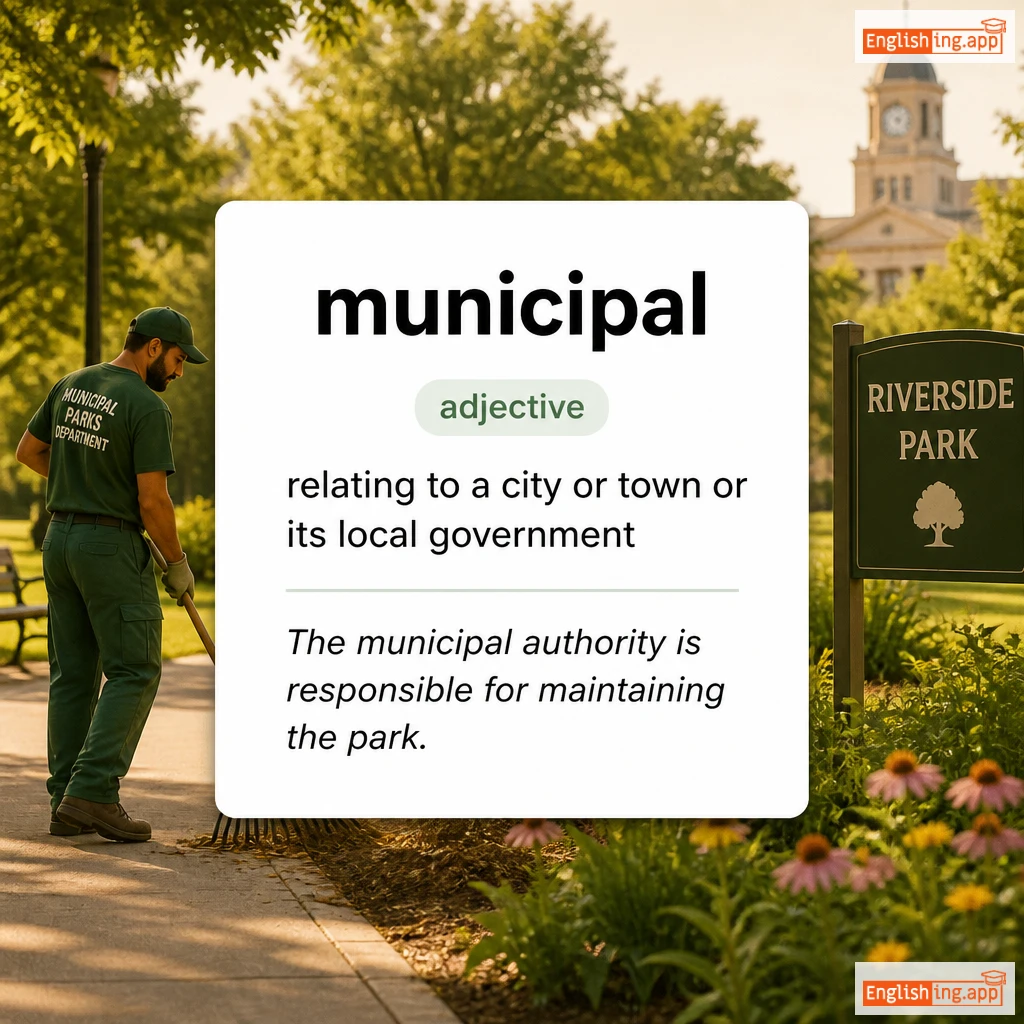
municipal definition card — visual illustration of the meaning
adjective C1
/mjuːˈnɪsɪpəl/
市営の (shiei no)

relating to a city or town or its local government

"The municipal authority is responsible for maintaining the park."

"市営当局は公園の維持管理を担当しています。" (Shiei tōkyoku wa kōen no iji kanri o tantō shiteimasu.)
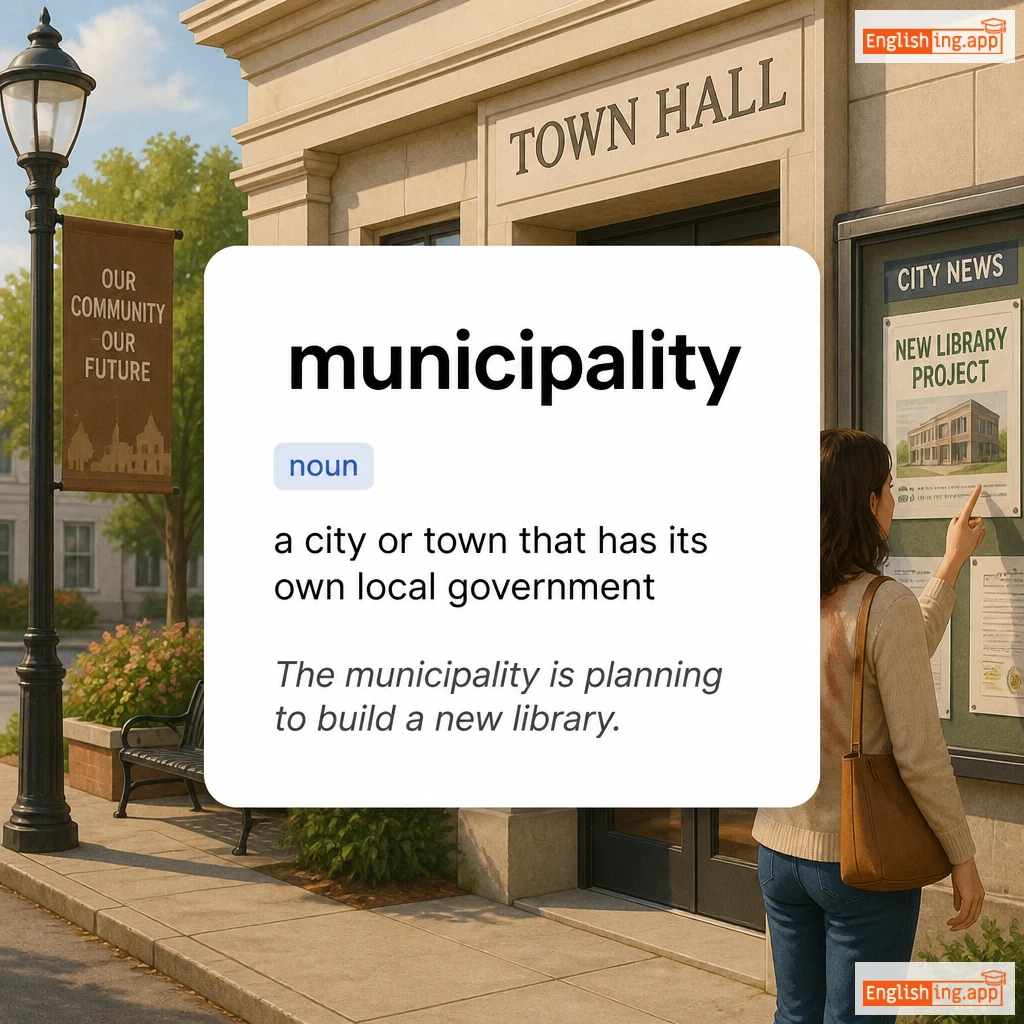
municipality definition card — visual illustration of the meaning
noun C1
/ˌmjuːnɪsɪˈpæləti/

a city or town that has its own local government

"The municipality is planning to build a new library."

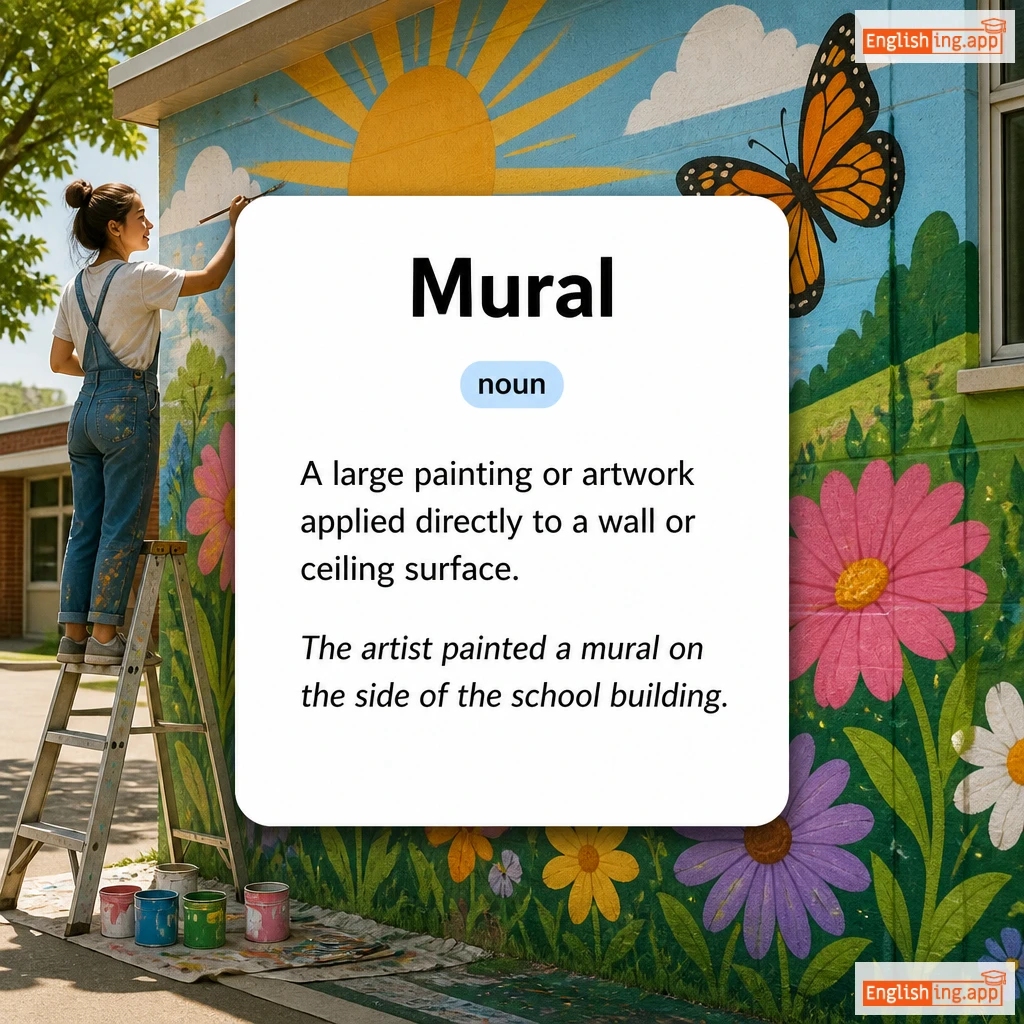
Mural definition card — visual illustration of the meaning
noun C1
/ˈmjʊərəl/
壁画 (hekiga)

A large painting or artwork applied directly to a wall or ceiling surface.

"The artist painted a mural on the side of the school building."

"アーティストは学校の建物の側面に壁画を描きました。" (Ātisuto wa gakkō no tatemono no sokumen ni hekiga o kakimashita.)
adjective C1
/ˈmɜː(r)dərəs/
殺人的; 殺意を持っている; 極端に暴力的; 血に飢えた (maadarasu; satsui wo motteiru; kyokutani bouryokuteki; chi ni ueta)

having the intent to kill; extremely violent; bloodthirsty

"The murderous look in his eyes frightened everyone."

"彼の目にあった殺人的な視線はみんなを恐怖させた。" (Kare no me ni atta maadarasu-teki na shisen wa minna wo kyoufu saseta.)
adjective C1
/ˈmɜːki/
濁った (nigotta)

Dark, gloomy, and difficult to see through; obscure.

"We avoided swimming in the murky river."

"私たちは濁った川で泳ぐのを避けました。" (Watashitachi wa nigotta kawa de oyogu no o sakemashita.)
verb C1
/ˈmɜːrmər/
つぶやく (tsubuyaku)

To say something in a low, soft, or indistinct voice.

"She murmured a prayer before going to sleep."

"彼女は寝る前に祈りをささやきました。" (Kanojo wa neru mae ni inori o sasayakimashita.)
🤔

muse

verb, noun C1
/mjuːz/

to think deeply about something; a source of inspiration, especially for an artist or writer

"She sat by the window to muse about her future."

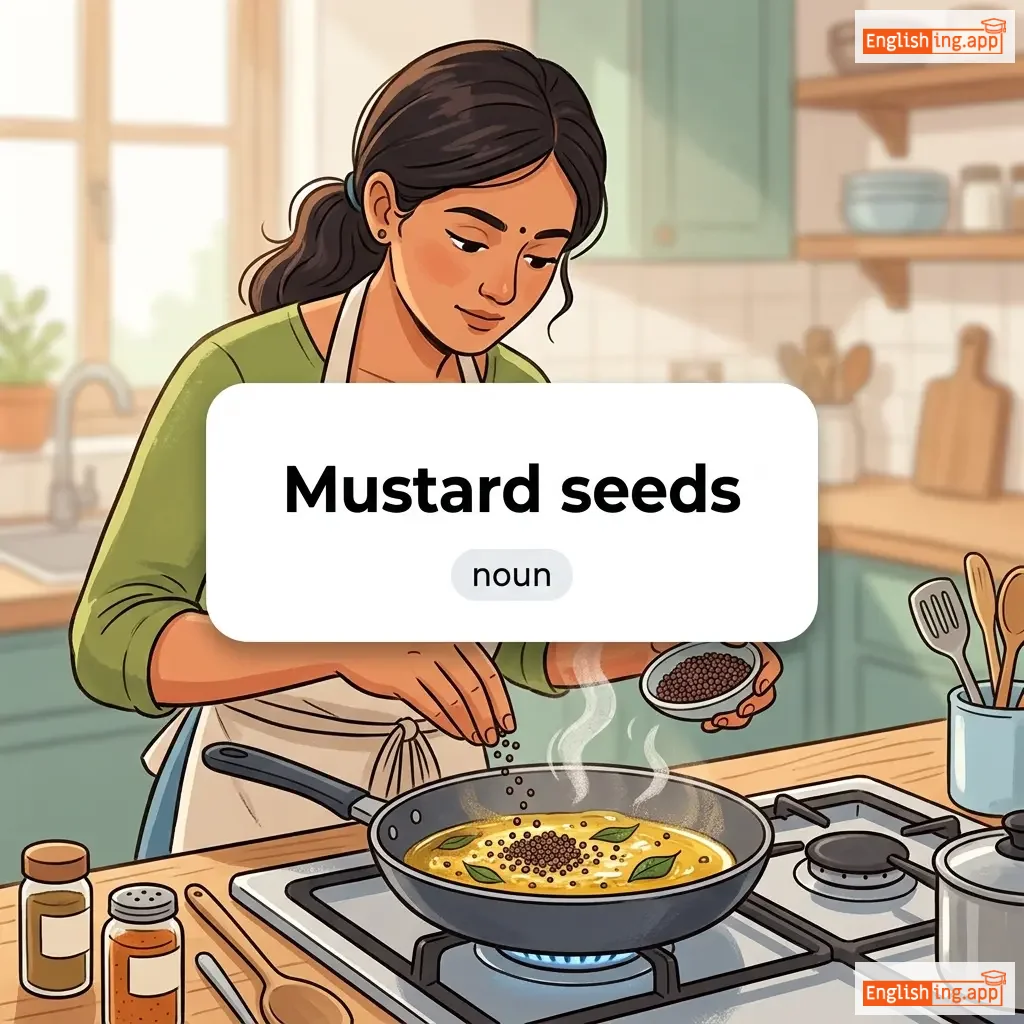
Mustard seeds definition card — visual illustration of the meaning
noun C1
/ˈmʌs.tərd siːdz/
マスタードシード (masutādo shīdo)

small round seeds from the mustard plant, used as a spice and for making mustard condiment

"Mustard seeds are often tempered in hot oil to release their nutty flavor before adding to dishes."

"マスタードシードは、料理に加える前に、そのナッツのような風味を引き出すために熱い油で炒められることがよくあります。" (Masutādo shīdo wa, ryōri ni kuwaeru mae ni, sono nattsu no yō na fūmi o hikidasu tame ni atsui abura de itamerareru koto ga yoku arimasu.)
verb, noun C1
/ˈmʌstər/
集める / 勇気を出す (atsumeru / yūki o dasu)

to gather people, especially soldiers; to summon courage or strength

"He mustered enough courage to face the challenge."

"彼は挑戦に立ち向かうために十分な勇気を集めました。" (Kare wa chōsen ni tachimukau tame ni jūbun na yūki o atsumemashita.)
verb C1
/ˈmjuːteɪt/
突然変異する (totsuzenhen'i suru)

To change or cause to change in form, nature, or character.

"The virus can mutate into a more dangerous strain."

"ウイルスはより危険な株にミュートすることができます。" (Uirusu wa yori kiken na kabu ni myuuto suru koto ga dekimasu.)
noun C1
/mjuːˈteɪʃn/
突然変異、遺伝的変化 (totsuzen hen'i, iden-teki henka)

A change in form, structure, or nature, especially in genetics.

"Scientists discovered a genetic mutation that caused the disorder."

"科学者たちは、その障害を引き起こした遺伝的な突然変異を発見しました。" (Kagakusha-tachi wa, sono shougai o hikiokoshita iden-teki na totsuzen hen'i o hakken shimashita.)
adjective C1
/ˈmjuːtɪd/
muted (ミューテッド) (myutedd)

softened in sound, color, or effect; subdued

"The room was painted in muted shades of blue and grey."

"部屋は青と灰色の muted な色合いで塗られていました。" (Heya wa ao to haiiro no myutedd na iroai de nurareteimashita.)
noun C1
/ˈmjuːtɪni/
反乱 (hanran)

an open rebellion against authority, especially by soldiers or sailors

"The sailors staged a mutiny against their captain."

"船員たちはキャプテンに対して反乱を起こした。" (Sen'in-tachi wa kyaputen ni taishite hanran o okoshita.)
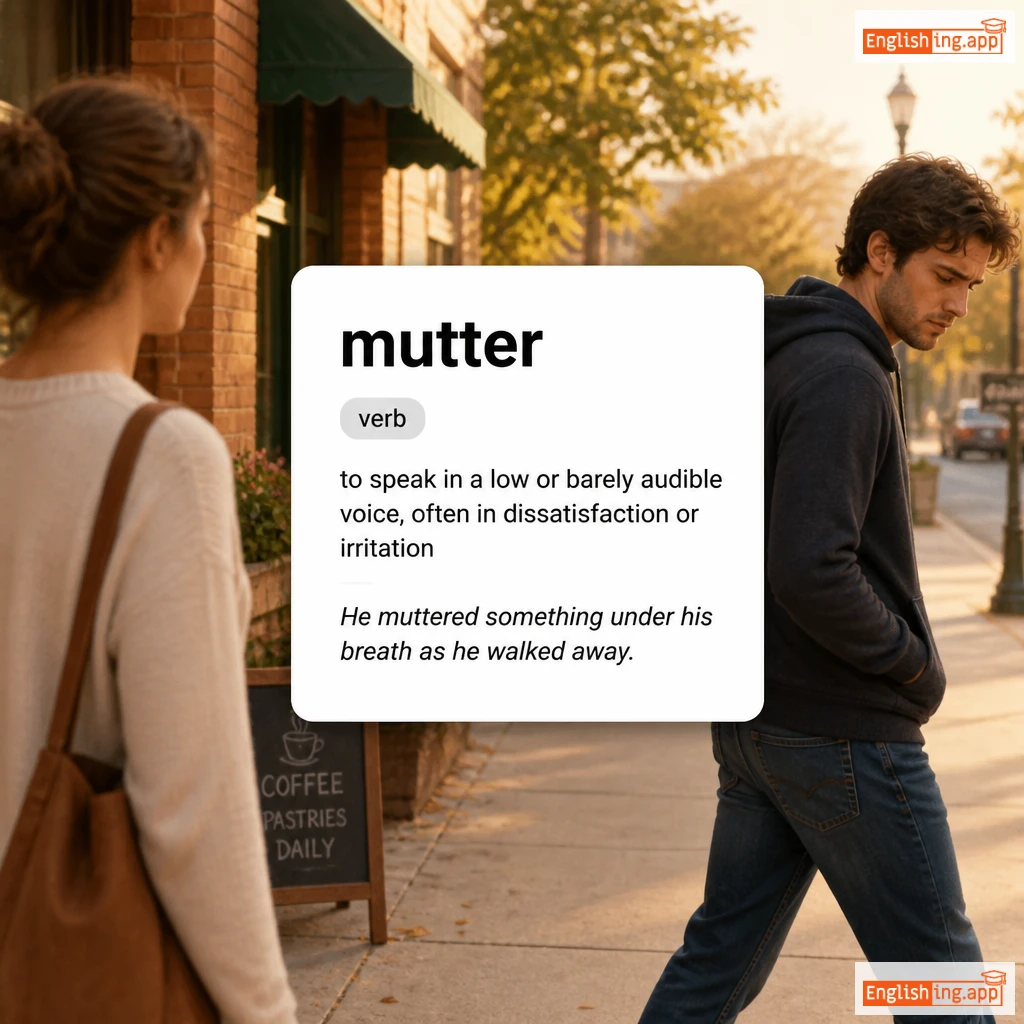
mutter definition card — visual illustration of the meaning
verb C1
/ˈmʌtər/
呟く (tsubuyaku)

to speak in a low or barely audible voice, often in dissatisfaction or irritation

"He muttered something under his breath as he walked away."

"彼は歩きながら何かを呟いた。" (Kare wa aruki nagara nanika o tsubuyaita.)
adjective C1
/maɪˈɑːpɪk/
近視的な、視野が狭い (kinshitekina, shiya ga semai)

lacking foresight or long-term perspective; also refers to nearsightedness

"The company’s myopic strategy led to long-term losses."

"その会社の近視的な戦略は、長期的な損失を招いた。" (Sono kaisha no kinshiteki na senryaku wa, chōkitekina sonshitsu o manekita.)
noun/adjective C1
/ˈmɪriəd/
無数 (musuu)

a countless or extremely great number

"There are myriad stars in the night sky."

"夜空には無数の星がある。" (Yozora ni wa musuu no hoshi ga aru.)
noun/adjective C1
/ˈmɪstɪk/
神秘的な、精神的な探求者 (mishitikuna, seishintekina tankyūsha)

relating to mysteries, spirituality, or hidden truths; a person who seeks spiritual insight

"The mystic devoted his life to meditation and spiritual discovery."

"その神秘的な探求者は瞑想と精神的発見に人生を捧げました。" (Sono mishitekina tankyūsha wa meisō to seishinteki hakken ni jinsei o sasagemashita.)
noun C1
/naɪˈiːvteɪ/

The quality of being naive; lack of experience, wisdom, or judgment.

"His naivete made him an easy target for manipulation."

noun C1
/naɪˈiːvɪti/
無邪気 (muzaki)

The quality of being innocent, simple, and lacking experience or sophistication.

"Her naivety made her trust people too easily."

"彼女の無邪気は、彼女が人々をあまりにも簡単に信頼させました。" (Kanojo no muzaki wa, kanojo ga hitobito o amari ni mo kantan ni shinrai sasemashita.)
adjective C1
/ˈneɪmləs/
無名 (mumei)

Without a name or not known by name.

"A nameless fear crept over him in the dark room."

"無名の恐怖が暗い部屋で彼を襲った。" (Mumei no kyōfu ga kurai heya de kare o osotta.)
nanotechnology definition card — visual illustration of the meaning
noun C1
ˌnæn.oʊ.tekˈnɒl.ə.dʒi
ナノテクノロジー (nanotekunorojī)

The branch of technology that deals with dimensions and tolerances of less than 100 nanometers.

"Nanotechnology is advancing medical treatments."

"ナノテクノロジーは医療治療の進歩を促進しています。" (Nanotekunorojī wa iryō chiryō no shinpo o sokushin shiteimasu.)
narcissism definition card — visual illustration of the meaning
noun C1
/ˈnɑːrsɪsɪzəm/
自己愛 (jikoi)

Excessive interest in or admiration of oneself.

"His constant selfies were a sign of his narcissism."

"彼の絶え間ない自撮りは、彼の自己愛の表れだった。" (kare no taemajanai jidorii wa, kare no jikoi no araware datta.)
noun C1
/ˈnɑːrsɪsɪst/
ナルシシスト (narushisuto)

A person who has an excessive interest in or admiration of themselves.

"Everyone avoided him because he was a narcissist."

"みんな彼を避けていた、なぜなら彼はナルシシストだったから。" (Minna kare o sakete ita, nazenara kare wa narushisuto datta kara.)
noun C1
/nɑːrˈkɒtɪk/
麻薬 (mayaku)

A drug that dulls the senses and relieves pain, often causing sleep and sometimes addiction.

"The police seized a large amount of narcotic substances."

"警察は大量の麻薬を押収した。" (Keisatsu wa tairyo no mayaku o oshū shita.)
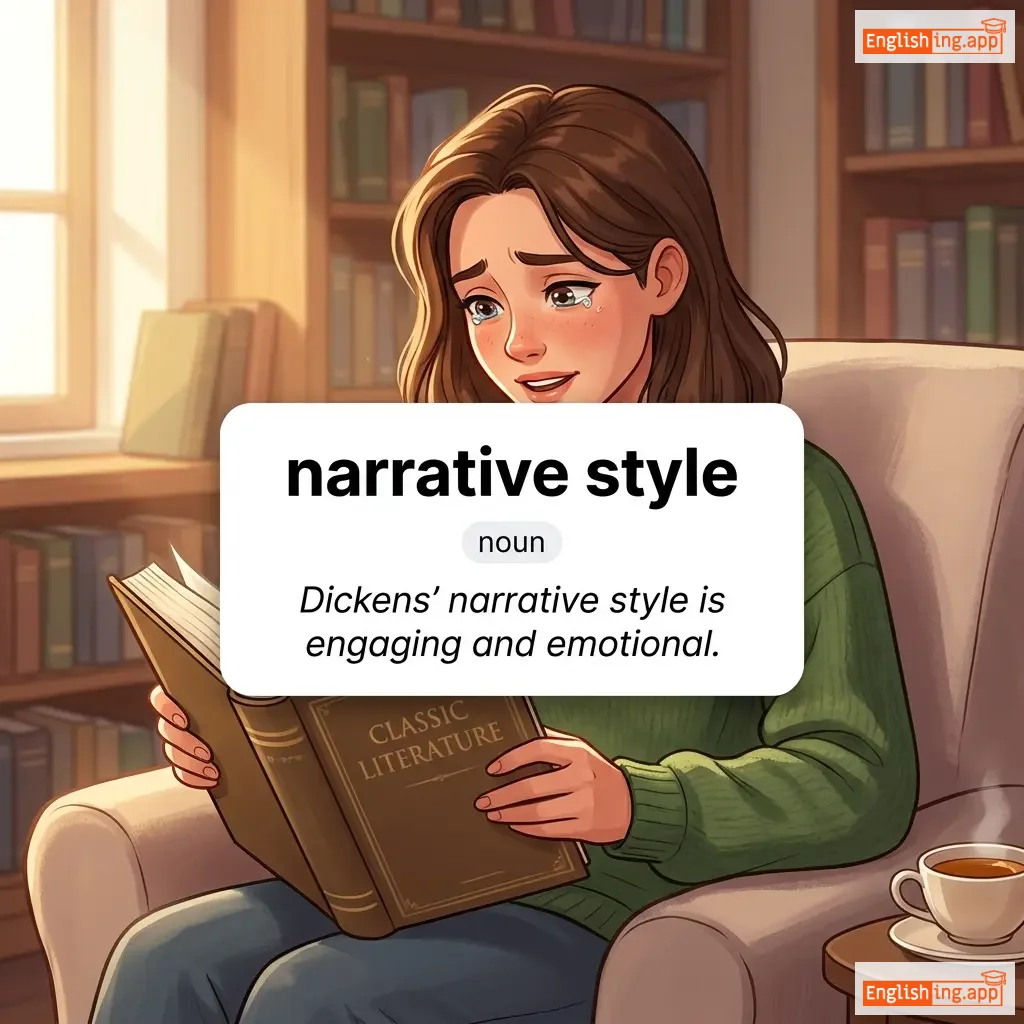
narrative style definition card — visual illustration of the meaning
noun C1
ˈnærətɪv staɪl
物語のスタイル (monogatari no sutairu)

The way in which a story is told, including the point of view and the voice of the narrator.

"Dickens' narrative style is engaging and emotional."

"ディケンズの物語のスタイルは魅力的で感情的です。" (Dikenzu no monogatari no sutairu wa miryokuteki de kanjō-teki desu.)
adjective C1
/ˌnæroʊˈmaɪndɪd/

Having a limited outlook or unwillingness to accept different opinions or ideas.

"She was too narrow-minded to consider other perspectives."

adverb C1
/ˈnæroʊli/
かろうじて; 辛うじて (karōjite; karōjite)

by a small margin; barely; in a limited way

"She narrowly escaped the accident."

"彼女は事故をかろうじて避けた。" (Kanojo wa jiko o karōjite saketa.)
adjective C1
/ˈneɪzl/
鼻音の (bion no)

Relating to the nose; a sound produced through the nose.

"He spoke with a nasal voice due to his cold."

"風邪で彼は鼻声で話した。" (Kaze de kare wa hanagoe de hanashita.)
nascent definition card — visual illustration of the meaning
adjective C1
/ˈneɪsnt/
萌芽 (hōga)

Just coming into existence and beginning to develop.

"The nascent technology has great potential."

"萌芽中の技術は大きな可能性を持っています。" (Hōgachū no gijutsu wa ōkina kanōsei o motteimasu.)
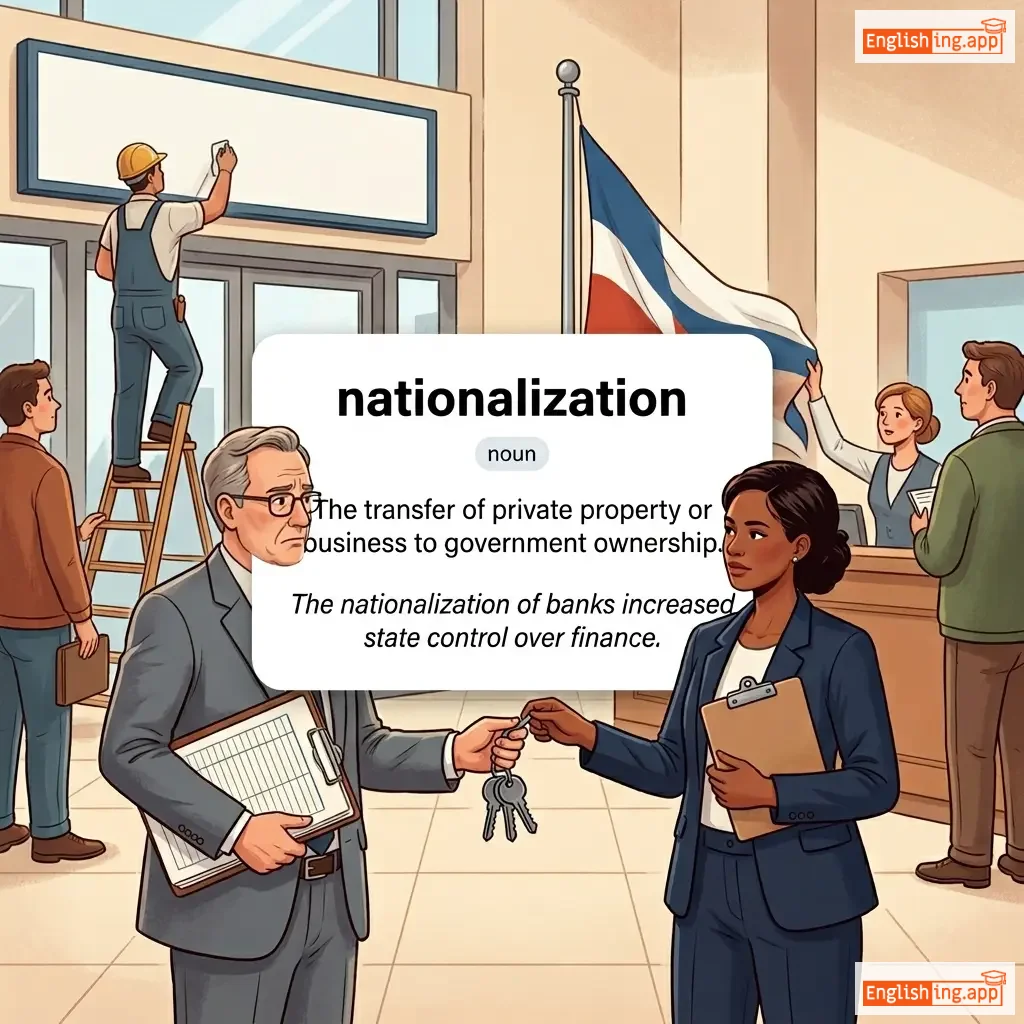
nationalization definition card — visual illustration of the meaning
noun C1
/ˌnæʃ.ən.ə.laɪˈzeɪ.ʃən/
国有化 (kokuyuka)

The transfer of private property or business to government ownership.

"The nationalization of banks increased state control over finance."

"銀行の国有化は、金融への国家の管理を強化した。" (Ginkou no kokuyuka wa, kin'yu e no kokka no kanri o kyōka shita.)
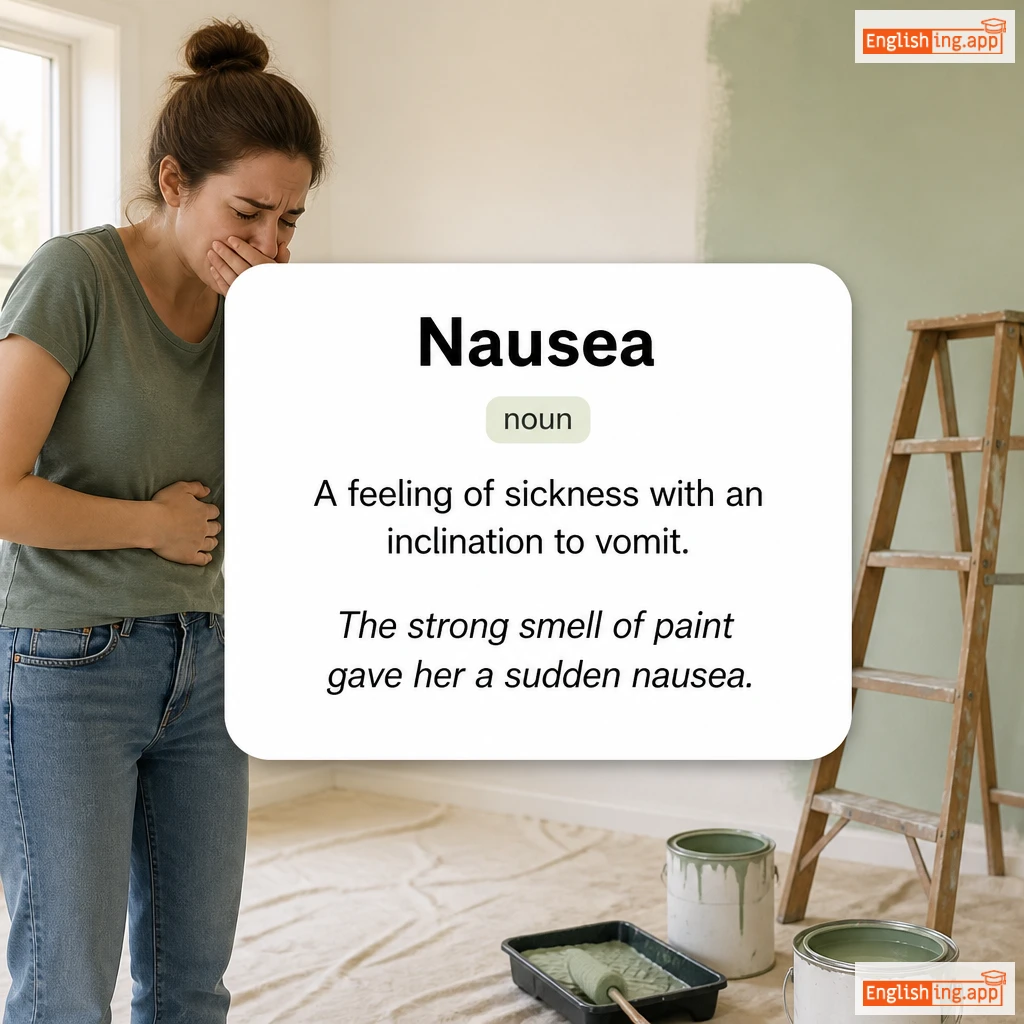
Nausea definition card — visual illustration of the meaning
noun C1
/ˈnɔːziə/
吐き気 (hakike)

A feeling of sickness with an inclination to vomit.

"The strong smell of paint gave her a sudden nausea."

"強いペンキの匂いが彼女に突然吐き気を与えた。" (Tsuyoi penki no nioi ga kanojo ni totsuzen hakike o ataeta.)
adjective C1
/ˈnɔːʃəs/
吐き気を感じる (hakike o kanjiru)

feeling like you are about to vomit; causing a feeling of sickness

"The smell of rotten food made her feel nauseous."

"腐った食べ物の匂いが彼女に吐き気を感じさせた。" (kusatta tabemono no nioi ga kanojo ni hakike o kanjiraseta.)
adjective C1
/ˈnɔːtɪkəl/
航海 (koukai)

relating to ships, sailors, or navigation on water

"He studied nautical charts before setting sail."

"彼は出航前に海図を勉強しました。" (Kare wa shukkou mae ni kaizu wo benkyou shimashita.)
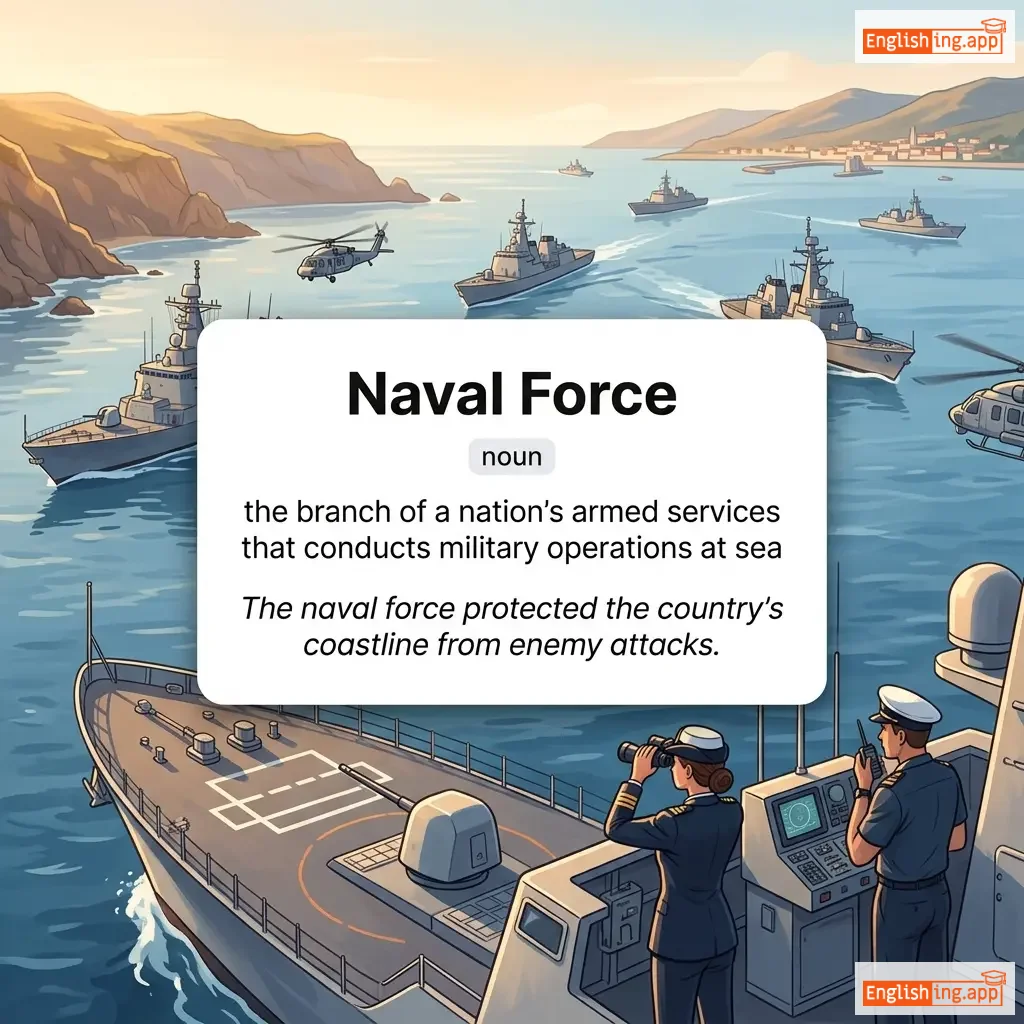
Naval Force definition card — visual illustration of the meaning
noun C1
/ˈneɪ.vəl fɔːrs/
海軍 (Kaigun)

the branch of a nation's armed services that conducts military operations at sea

"The naval force protected the country's coastline from enemy attacks."

"海軍は敵の攻撃から国の海岸線を守った" (Kaigun wa teki no kougeki kara kuni no kaiganssen o mamotta)
👶

Navel

noun C1
/ˈneɪvəl/

the small hollow or raised area in the middle of the stomach, also called the belly button

"The baby’s navel was carefully cleaned after birth."

adjective C1
/ˈnæv.ɪ.ɡə.bəl/
航行可能 (kōkō kanō)

Able to be sailed on or through by ships or boats.

"The river is navigable for large cargo ships."

"その川は大型貨物船にとって航行可能です。" (Sono kawa wa ōgata kamotsusen ni totte kōkō kanō desu.)
noun C1
/ˈneb.jʊ.lə/
星雲 (seiun)

A cloud of gas and dust in outer space, sometimes visible in the night sky.

"The Orion Nebula is one of the brightest in the sky."

"オリオン星雲は空で最も明るいものの一つです。" (Orion seiun wa sora de mottomo akarui mono no hitotsu desu.)
verb C1
/nəˈsɛsɪteɪt/
必要とする (hitsuyou to suru)

To make something necessary or unavoidable.

"The heavy rains necessitated the cancellation of the event."

"激しい雨はイベントのキャンセルを避けられないものにしました。" (Hageshī ame wa ibento no kyansel o sakerarenai mono ni shimashita.)
noun C1
/ˈnɛkˌlaɪn/
ネックライン (nekkurain)

the edge of a garment around the neck, especially as cut to form a particular shape

"The dress has a beautiful V-shaped neckline."

"そのドレスには美しいV字型のネックラインがあります。" (Sono doresu ni wa utsukushī V-ji-gata no nekkurain ga arimasu.)
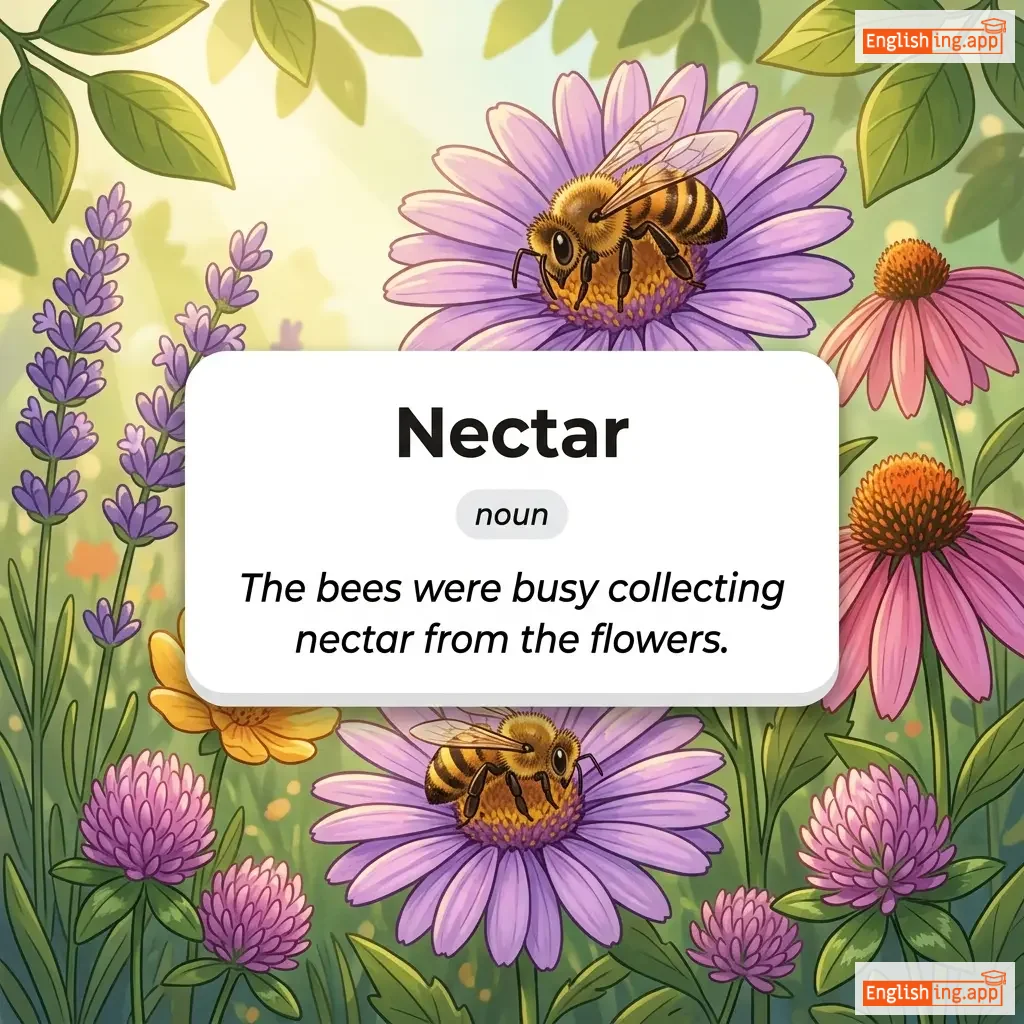
Nectar definition card — visual illustration of the meaning
noun C1
/ˈnɛktər/
甘露 (kanro)

a sweet liquid produced by flowers and collected by bees; in mythology, the drink of the gods

"The bees were busy collecting nectar from the flowers."

"蜂たちは花からネクターを集めるのに忙しかった。" (Hachitachi wa hana kara nekutā o atsumeru no ni isogashikatta.)
noun C1
/ˈnɛktəriːn/
ネクタリン (滑らかな皮の桃の一種) (nekutarin)

A smooth-skinned variety of peach.

"She bought a basket of fresh nectarines from the market."

"彼女は市場から新鮮なネクタリンのバスケットを買いました。" (Kanojo wa shijou kara shinzen na nekutarin no basuketto o kaimashita.)
adjective C1
/ˈniːd.ləs/
不必要な (nidoresu)

unnecessary; not required; without purpose

"The argument was needless and could have been avoided."

"その議論は不必要で、避けることができたはずだ。" (Sono giron wa fuhitsuyou de, sakeru koto ga dekita hazu da.)
noun C1
/ˈniːdəlwɜːrk/
刺繍, 手芸 (shishū, shugei)

The craft of sewing, embroidery, or knitting done with a needle.

"Her grandmother taught her the art of needlework."

"彼女の祖母は彼女にニードルワークの技術を教えました。" (Kanojo no sobo wa kanojo ni needlework no gijutsu o oshiemashita.)
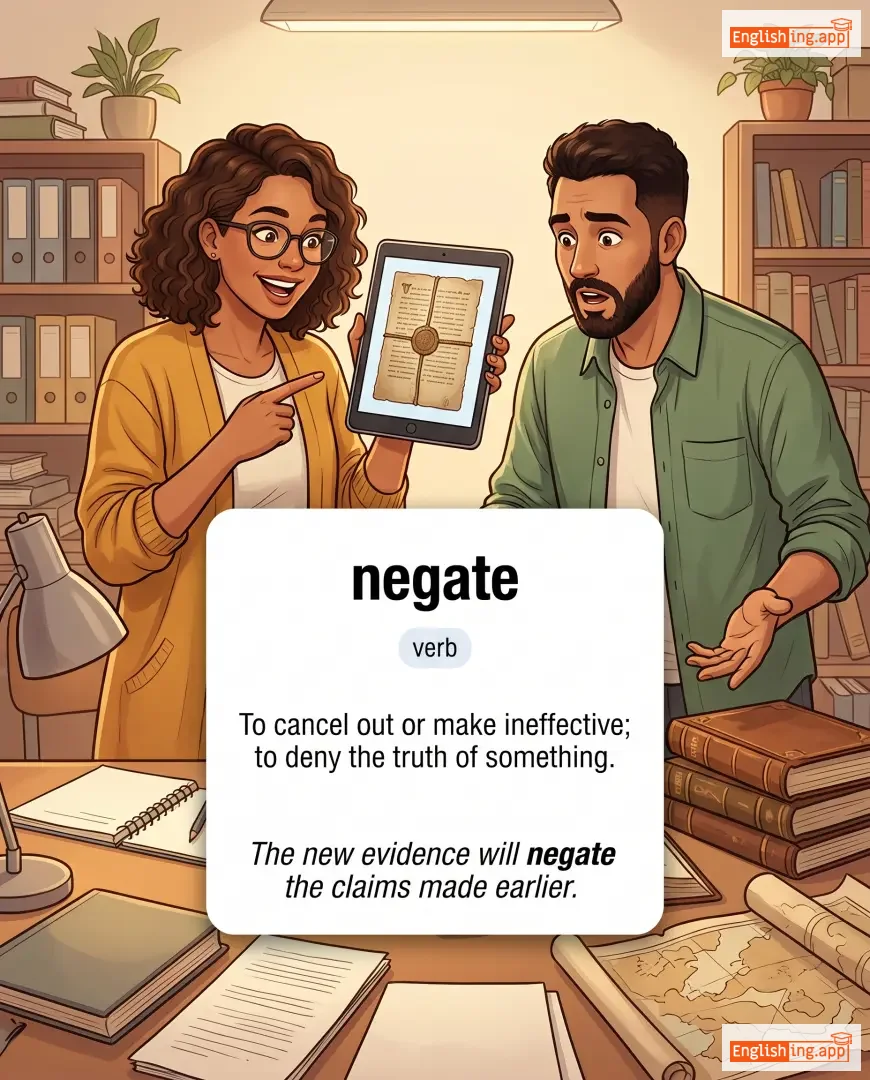
negate definition card — visual illustration of the meaning
verb C1
/nɪˈɡeɪt/

To cancel out or make ineffective; to deny the truth of something.

"The new evidence will negate the claims made earlier."

noun C1
/nɪˈɡeɪʃən/
否定 (hitei)

The act of denying something; the contradiction or absence of something.

"The theory is built on the negation of traditional beliefs."

"理論は伝統的な信念の否定に基づいています。" (Riron wa dentō-teki na shinnen no hitei ni motozuite imasu.)
adjective C1
/nɪˈɡlɛktfʊl/
無関心 (mukanshin)

Failing to give proper care or attention.

"The neglectful parent left the child alone for hours."

"無関心な親は子供を何時間も一人で放置した。" (Mukanshin na oya wa kodomo o nan-jikan mo hitori de hōchi shita.)
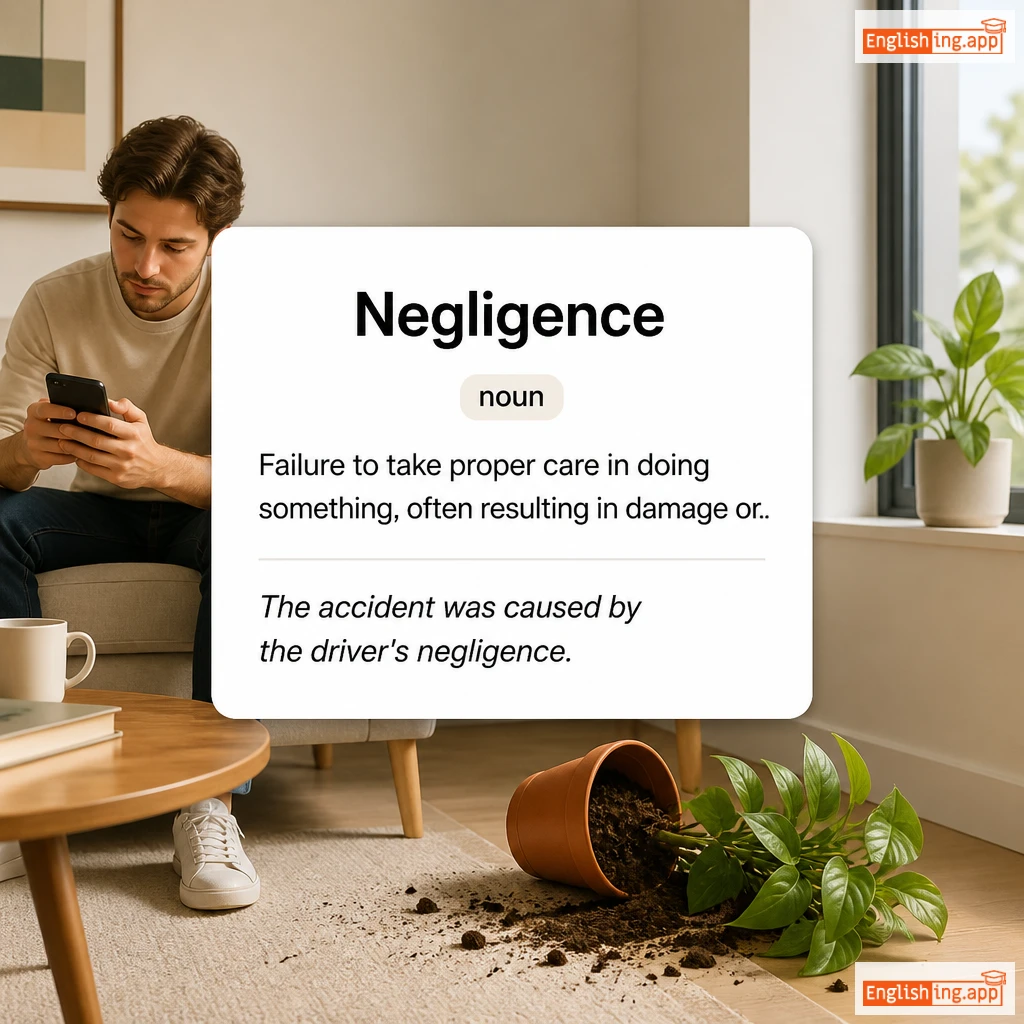
Negligence definition card — visual illustration of the meaning
noun C1
/ˈnɛɡlɪdʒəns/
怠慢 (taiman)

Failure to take proper care in doing something, often resulting in damage or harm.

"The accident was caused by the driver's negligence."

"その事故は運転手の怠慢によって引き起こされました。" (Sono jiko wa untenshu no taiman ni yotte hikiokosaremashita.)