Vocabularios

Descubra, aprenda y domine el vocabulario en inglés

verb C1
/mæʃ/
捣碎 (daosui)

to crush or mix food into a soft mass, usually by pressing or beating

"She mashed the potatoes before serving dinner."

"她在上菜前把土豆捣碎了。" (ta zai shang cai qian ba tudou daosui le.)
noun C1
/ˈmeɪsən/
泥瓦匠 (niwa jiang)

a person skilled in building with stone, brick, or concrete

"The mason carefully laid the bricks for the new house."

"泥瓦匠小心地铺设了新房子的砖块。" (Niwa jiang xiaoxin de pufangle xinfangzi de zhuankuai.)
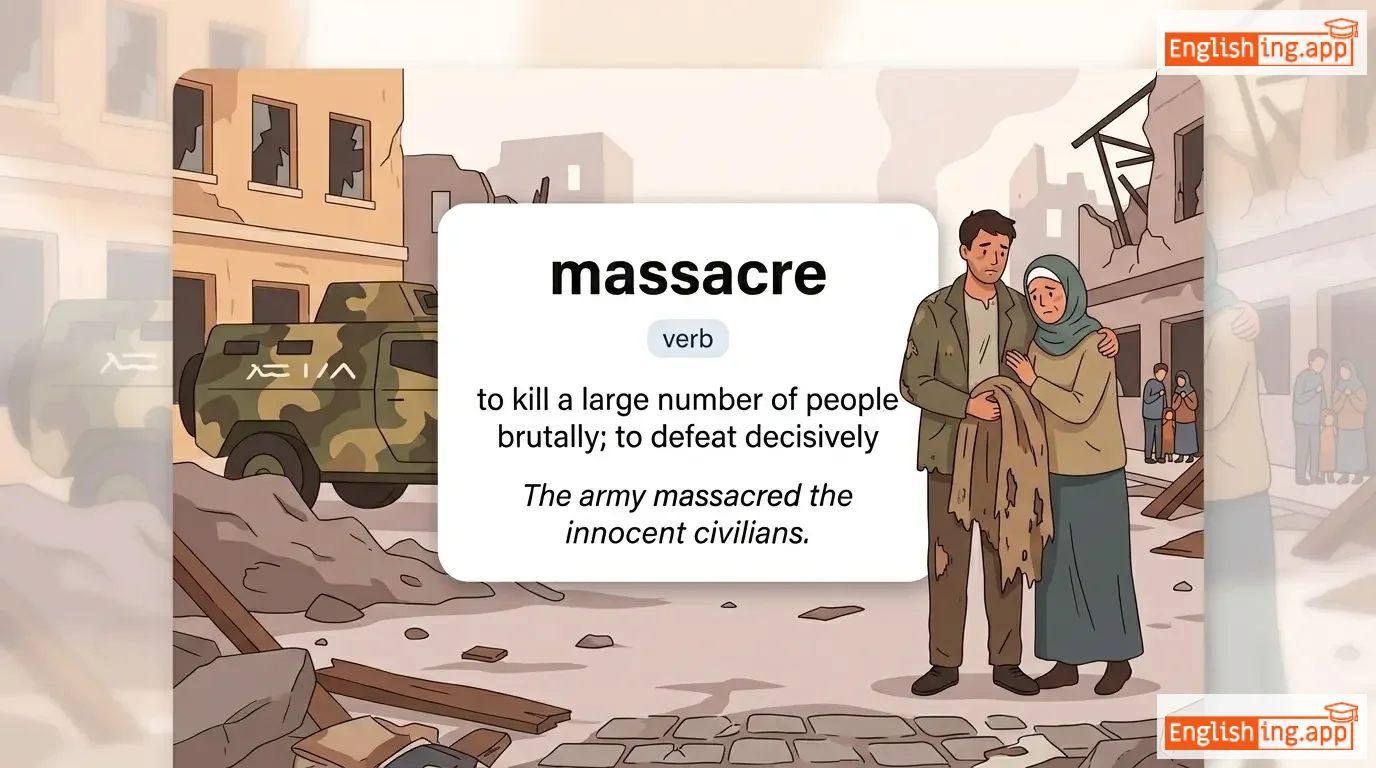
massacre definition card — visual illustration of the meaning
noun C1
/ˈmæsəkər/
大屠杀 (dà túshā)

the killing of a large number of people, usually in a violent way

"The massacre resulted in the deaths of hundreds of civilians."

"大屠杀导致数百名平民死亡。" (Dà túshā dǎozhì shù bǎi míng píngmín sǐwáng.)
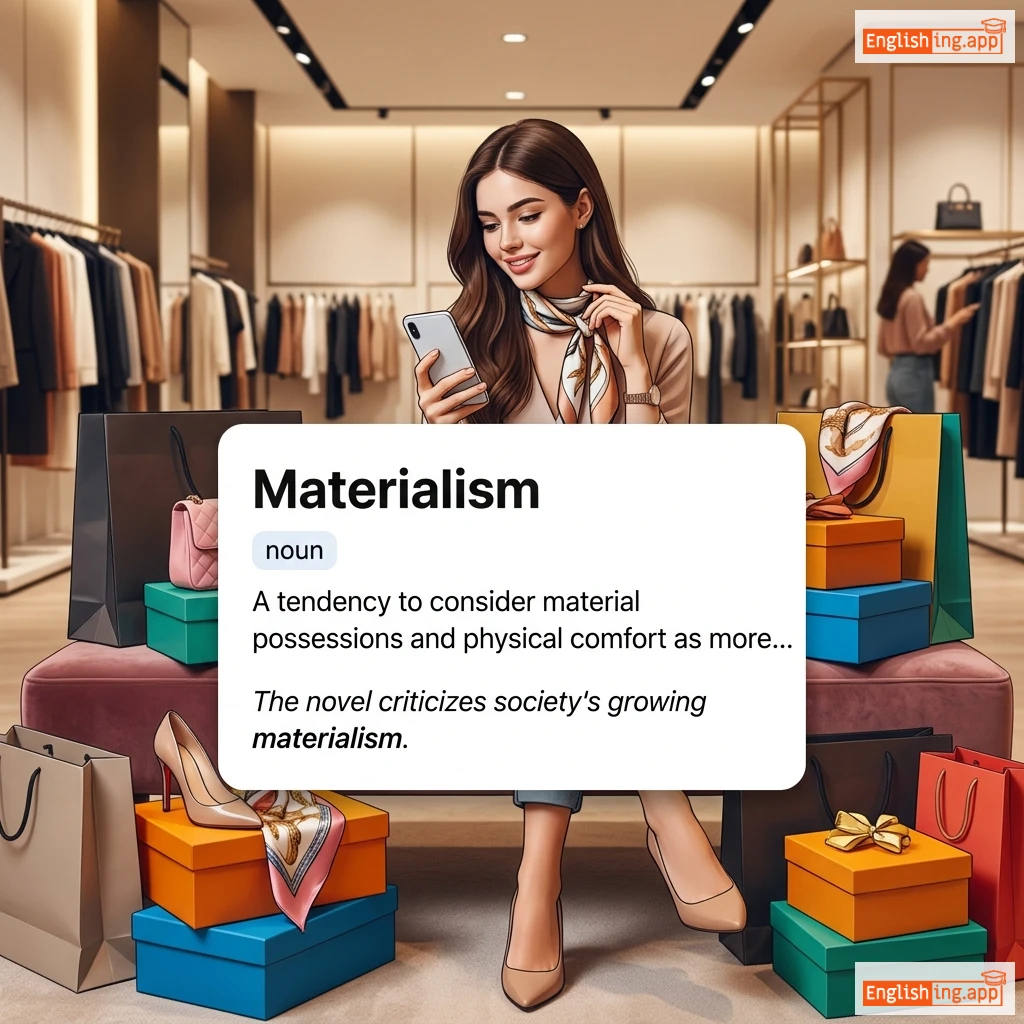
Materialism definition card — visual illustration of the meaning
noun C1
/məˈtɪəriəlɪzəm/
物质主义 (wùzhì zhǔyì)

A tendency to consider material possessions and physical comfort as more important than spiritual or moral values.

"The novel criticizes society's growing materialism."

"小说批评了社会日益增长的物质主义。" (Xiǎoshuō pīpíngle shèhuì rìyì zēngzhǎng de wùzhì zhǔyì.)
materialistic lifestyle definition card — visual illustration of the meaning
noun C1
məˌtɪərɪəˈlɪstɪk ˈlaɪfstaɪl
物质主义生活方式 (wùzhì zhǔyì shēnghuó fāngshì)

A way of living focused on acquiring material possessions and wealth.

"A materialistic lifestyle often leads to moral decline."

"物质主义生活方式常常导致道德衰退。" (Wùzhì zhǔyì shēnghuó fāngshì chángcháng dǎozhì dàodé shuāituì.)
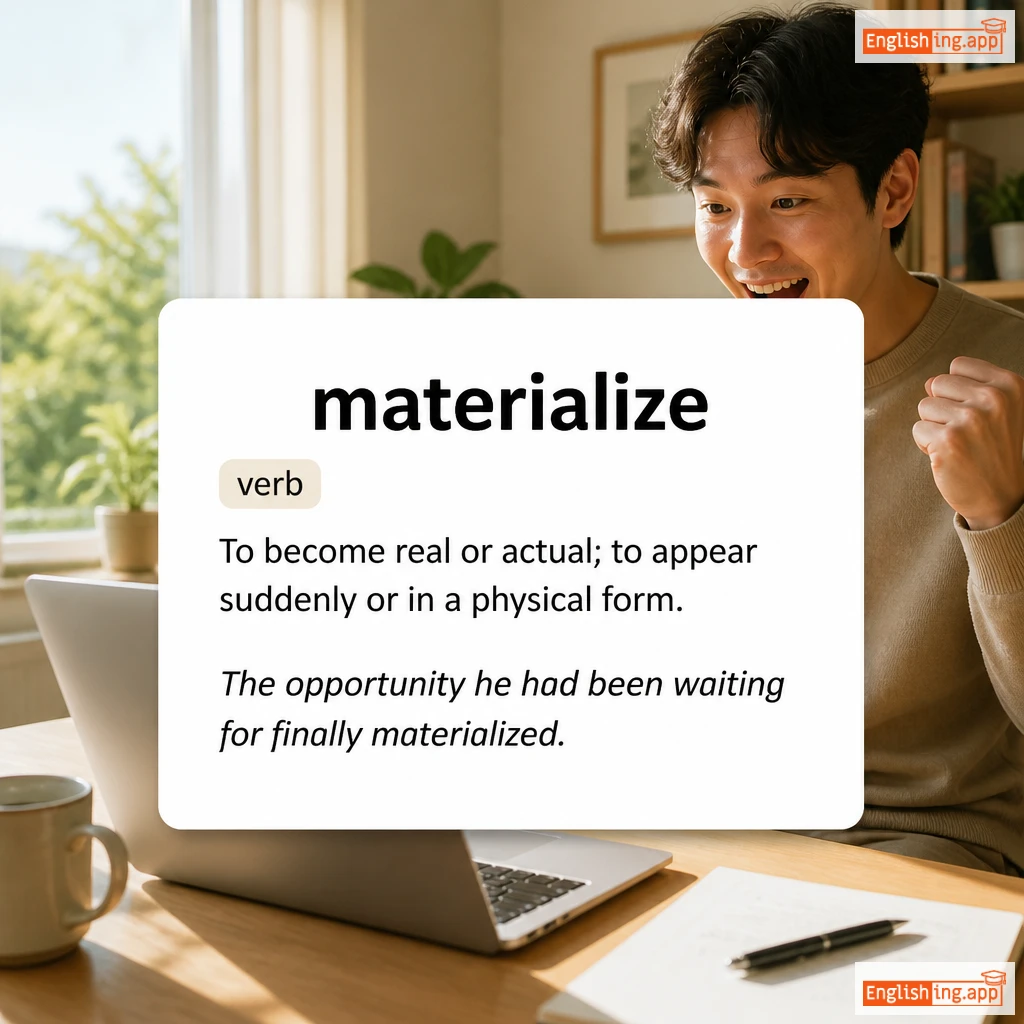
materialize definition card — visual illustration of the meaning
verb C1
/məˈtɪərɪəlaɪz/
实现 (shixian)

To become real or actual; to appear suddenly or in a physical form.

"The opportunity he had been waiting for finally materialized."

"他一直等待的机会终于实现了。" (Ta yizhi dengdai de jihui zhongyu shixianle.)
adjective C1
/məˈtɜːnəl/
母性 (mǔxìng)

Relating to a mother; showing motherly qualities such as care and protection.

"She showed great maternal affection toward the child."

"她表现出对孩子的极大母性关爱。" (Tā biǎoxiàn chū duì háizi de jí dà mǔxìng guān'ài.)
Maternity definition card — visual illustration of the meaning
noun C1
/məˈtɜːrnəti/
母性 (mǔxìng)

The state of being a mother; motherhood

"The hospital has an excellent maternity ward for new mothers."

"医院为新妈妈提供了一个优秀的产科病房。" (Yīyuàn wèi xīn māmā tígōngle yīgè yōuxiù de chǎnkē bìngfáng.)
mathematically definition card — visual illustration of the meaning
adverb C1
/ˌmæθəˈmætɪkli/
从数学上 (cong shuxue shang)

in a way that relates to mathematics; using numbers, formulas, or logical calculation

"The problem can be solved mathematically rather than by guesswork."

"这个问题可以从数学上解决,而不是靠猜测。" (zhege wenti keyi cong shuxue shang jiejue er bu shi kao caice)
noun C1
/ˈmætɪneɪ/
下午场 (xiawu chang)

A performance, especially a play or movie, that takes place in the afternoon.

"We bought tickets for the Sunday afternoon matinee."

"我们买了周日下午场的票。" (Wo men mai le zhou ri xia wu chang de piao.)
👩‍👩‍👧‍👦

matriarch

noun C1
/ˈmeɪ.triˌɑːrk/

A woman who is the head of a family or community.

"The matriarch of the family made all important decisions."

noun C1
/ˈmætrəˌmoʊni/
婚姻 (hūnyīn)

The state of being married; marriage.

"They entered into matrimony after years of friendship."

"他们在多年友谊后进入了婚姻。" (Tāmen zài duōnián yǒuyì hòu jìnrùle hūnyīn.)
noun C1
/ˈmeɪ.trɪks/
矩阵, 结构 (jǔzhèn, jiégòu)

An environment or structure in which something develops; also a mathematical array of numbers.

"The cultural matrix shaped his worldview."

"文化矩阵塑造了他的世界观。" (Wénhuà jǔzhèn sùzào le tā de shìjièguān.)
verb C1
/mɔːl/
伤害 (shānghài)

To wound or injure someone by scratching or tearing; to handle roughly.

"The bear mauled the camper in the forest."

"那只熊在森林里伤害了露营者。" (Nà zhī xióng zài sēnlín lǐ shānghài le lùyíng zhě.)
adjective C1
/moʊv/
浅紫色 (qian zi se)

a pale purple color with a grayish or bluish tinge

"She wore a beautiful mauve dress to the party."

"她穿着一件漂亮的浅紫色连衣裙参加了聚会。" (Ta chuan zhuo yi jian piaoliang de qian zise lian yi qun can jia le ju hui.)
maverick definition card — visual illustration of the meaning
noun C1
/ˈmævərɪk/
特立独行者 (tè lì dú xíng zhě)

an independent thinker who does not go along with a group or rules

"She was a political maverick who challenged traditional ideas."

"她是一个政治上的特立独行者,挑战传统的思想。" (Tā shì yī gè zhèng zhì shàng de tè lì dú xíng zhě, tiǎo zhàn chuán tǒng de sī xiǎng.)
noun C1
/ˈmæksɪm/
格言 (geyan)

a short, well-known statement expressing a general truth or rule of conduct

"Honesty is a timeless maxim valued in every culture."

"诚实是一条在每种文化中都受到尊重的永恒格言。" (Chengshi shi yitiaou zai meizhong wenhua zhong dou shoudao zunzhong de yongheng ge yan.)
noun C1
/ˈmeɪhɛm/
混乱 (hùnluàn)

Violent or extreme disorder; chaos and destruction.

"The protest turned into mayhem when the crowd clashed with the police."

"当抗议者与警方发生冲突时,抗议活动变成了混乱。" (Dāng kàngyì zhě yǔ jǐngfāng fāshēng chōngtū shí, kàngyì huódòng biàn chéngle hùnluàn.)
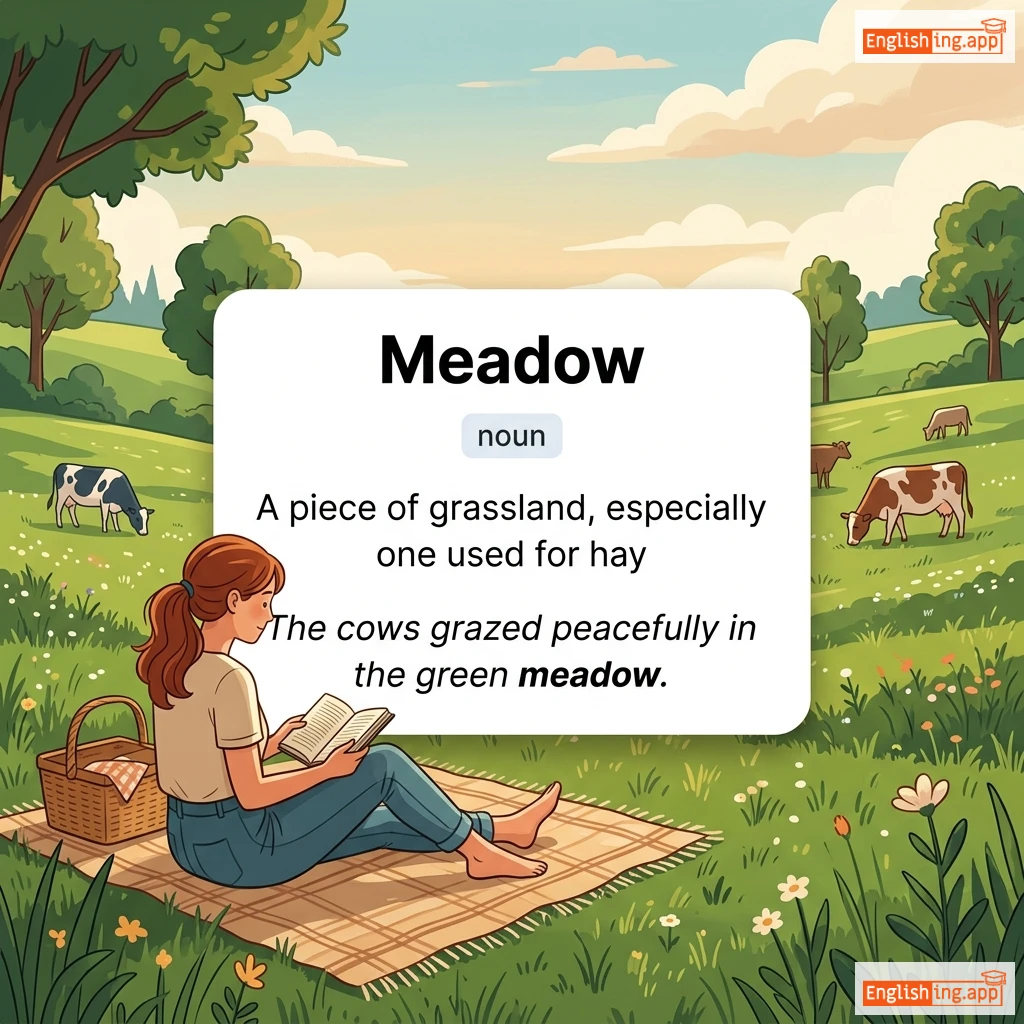
Meadow definition card — visual illustration of the meaning
noun C1
/ˈmedoʊ/
草地 (meido)

A piece of grassland, especially one used for hay

"The cows grazed peacefully in the green meadow."

"奶牛在绿色的草地上安静地吃草。" (Nai niu zai lüse de caodi shang anjing de chi cao.)
adjective C1
/ˈmiːɡər/
贫乏 (pinfá)

Lacking in quantity or quality; inadequate.

"He could barely survive on his meager salary."

"他几乎无法靠他微薄的薪水生存。" (Tā jīhū wúfǎ kào tā wēibó de xīnshuǐ shēngcún.)
verb, noun C1
/miˈændər/
漫游 (mànyóu)

to wander aimlessly or follow a winding course

"We meandered through the old streets of the city."

"我们在城市的老街道上漫步。" (Wǒmen zài chéngshì de lǎo jiēdào shàng mànbù.)
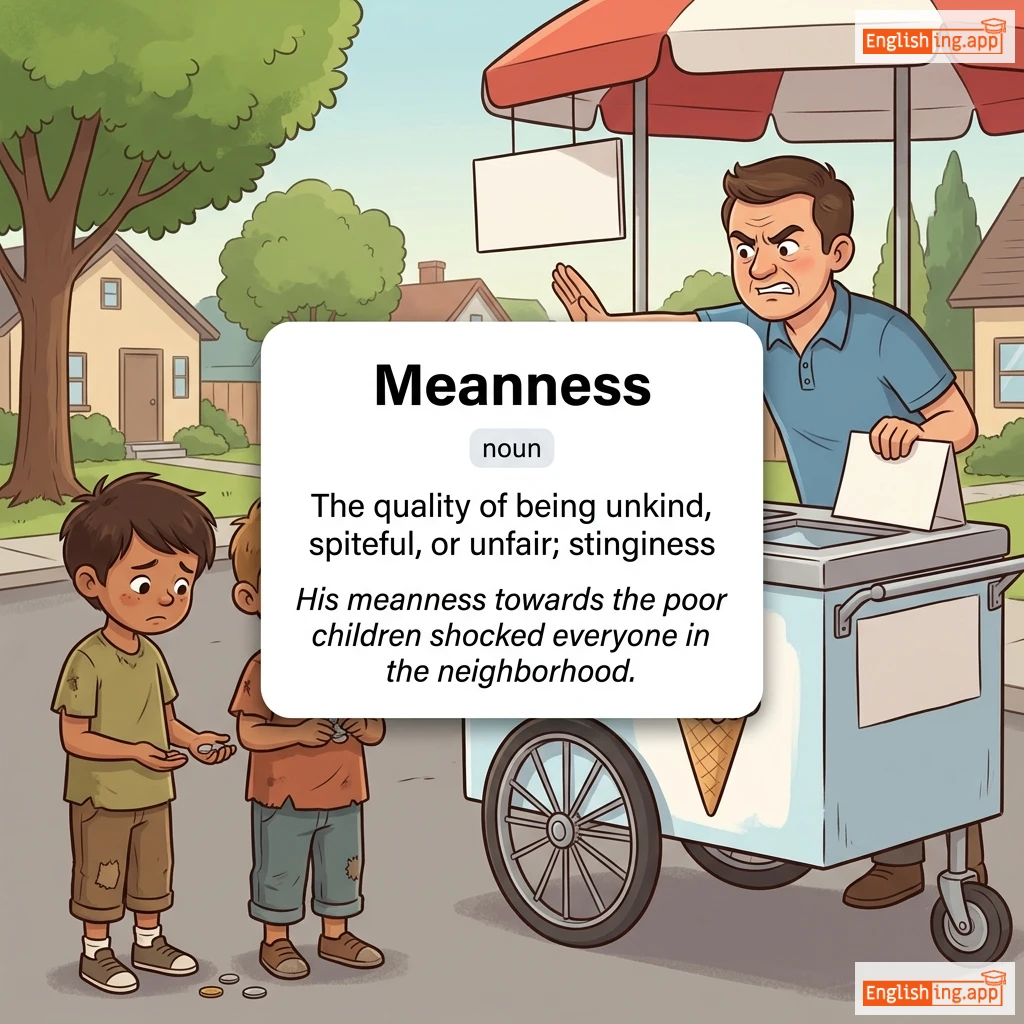
Meanness definition card — visual illustration of the meaning
noun C1
/ˈmiːnnəs/
恶意; 吝啬 (mines)

The quality of being unkind, spiteful, or unfair; stinginess

"His meanness towards the poor children shocked everyone in the neighborhood."

"他对贫困孩子的恶意让邻里的人都感到震惊。" (Ta dui pinkun haizi de eyi rang linli de ren dou gandao zhenjing.)
adjective C1
/ˈmeʒ.ər.ə.bəl/
可测量的; 可量化的 (ke ce shi de; ke lianghua de)

able to be measured; quantifiable

"The project's success was measurable by increased sales."

"项目的成功可以通过销售增长来衡量。" (xiangmu de chenggong keyi tongguo xiaoshou zengzhang lai hengliang.)
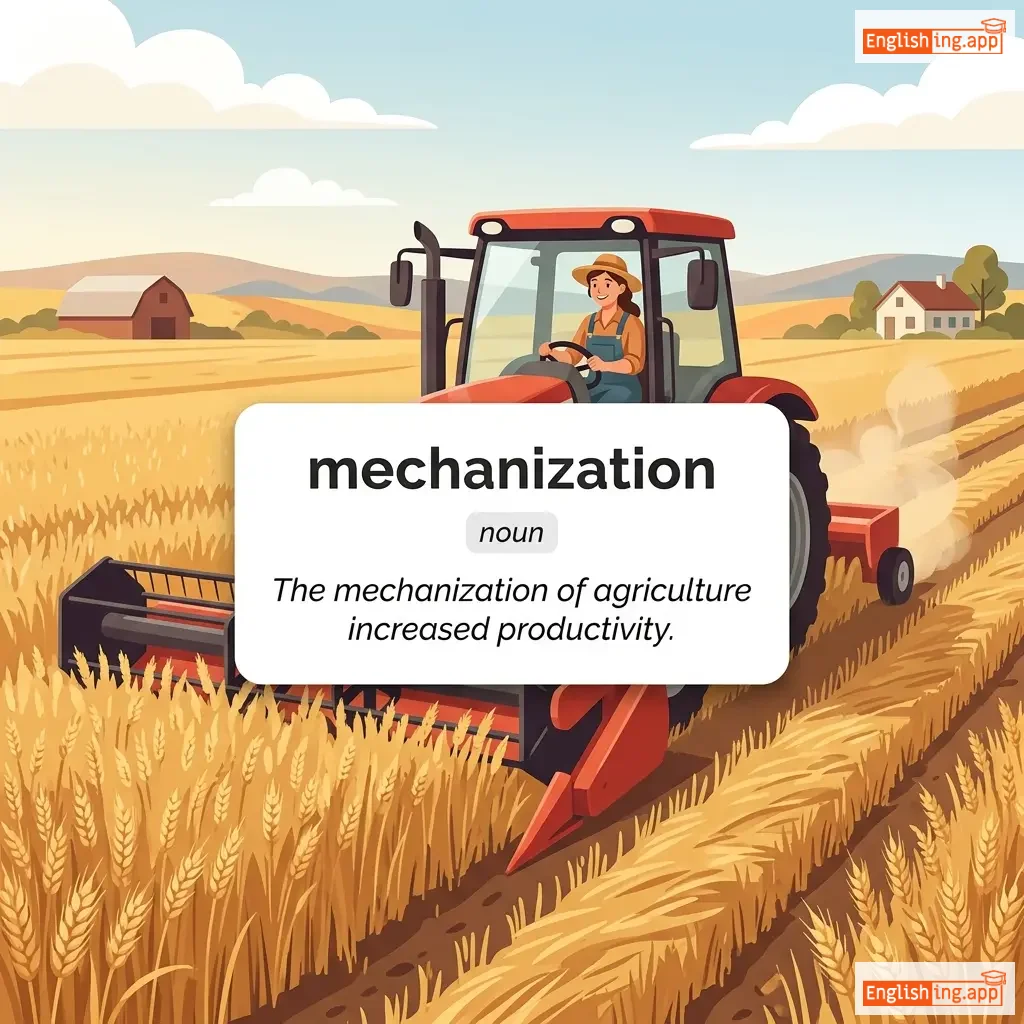
mechanization definition card — visual illustration of the meaning
noun C1
ˌmɛk.ə.nɪˈzeɪ.ʃən
机械化 (jīxièhuà)

The use of machines in agriculture or industry to increase production efficiency.

"The mechanization of agriculture increased productivity."

"农业机械化提高了生产力。" (Nongye jixiehua tigao le shengchan li.)
verb C1
/ˈmɛdəl/
干涉与自己无关的事情 (gānshè yǔ zìjǐ wúguān de shìqíng)

to interfere in something that is not one's concern

"He always tries to meddle in other people’s business."

"他总是试图干涉别人的事务。" (Tā zǒng shì shìtú gānshè biérén de shìwù.)
media dominance definition card — visual illustration of the meaning
noun C1
ˈmiːdiə ˈdɒmɪnəns
媒体主导地位 (méitǐ zhǔdǎo dìwèi)

The control and powerful influence that media has over communication and information distribution in society.

"The internet has enhanced media dominance globally."

"互联网增强了全球媒体主导地位。" (Hùliánwǎng zēngqiángle quánqiú méitǐ zhǔdǎo dìwèi.)
adjective C1
/ˌmed.iˈiː.vəl/
中世纪的 (zhōngshìjì de)

relating to the Middle Ages; medieval

"The castle displayed mediaeval architecture and design."

"城堡展示了中世纪的建筑风格和设计。" (Chéngbǎo zhǎnshìle zhōngshìjì de jiànzhú fēnggé hé shèjì.)
verb C1
/ˈmiː.di.eɪt/
调解 (tiaojie)

To act as an intermediary in bringing about agreement or reconciliation between parties.

"She was asked to mediate between the two companies."

"她被要求在两家公司之间调解。" (Ta bei yaoqiu zai liang jia gongsi zhi jian tiaojie.)
mediation definition card — visual illustration of the meaning
noun C1
/ˌmiːdɪˈeɪʃən/
调解 (tiaojie)

Intervention between parties to promote reconciliation, settlement, or compromise.

"The mediation helped resolve the conflict between the two teams."

"调解帮助解决了两队之间的冲突。" (Tiaojie bangzhu jiejuele liang dui zhijian de chongtu.)
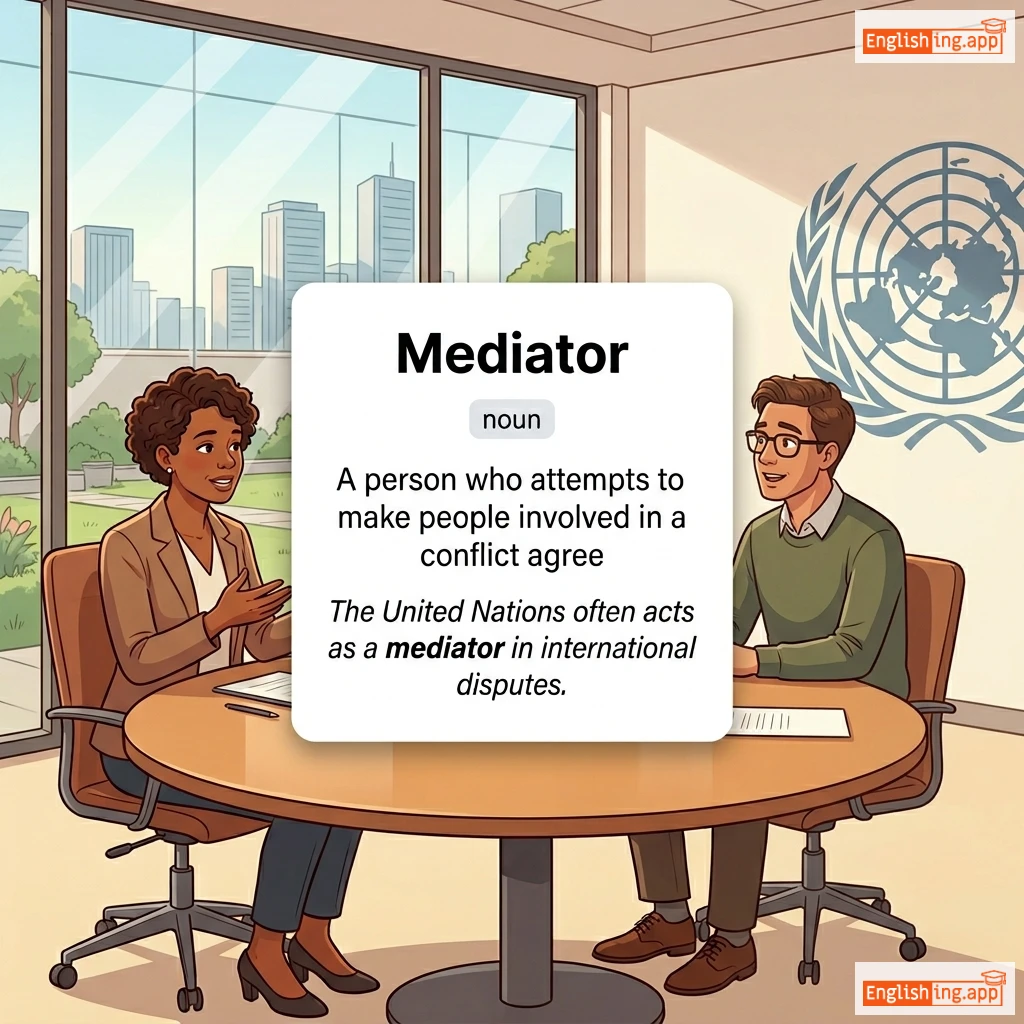
Mediator definition card — visual illustration of the meaning
noun C1
/ˈmiːdieɪtər/
调解员 (tiaojieyuan)

A person who attempts to make people involved in a conflict agree

"The United Nations often acts as a mediator in international disputes."

"联合国常常在国际争端中充当调解员。" (Liánhéguó chángcháng zài guójì zhēngduān zhōng chōngdāng tiáojiěyuán.)
medicate definition card — visual illustration of the meaning
verb C1
/ˈmedɪkeɪt/
用药治疗 (yòng yào zhìliáo)

to treat with medicine; to give drugs to someone for medical purposes

"The doctor will medicate the patient to reduce inflammation."

"医生将为病人治疗以减轻炎症。" (Yīshēng jiāng wèi bìngrén zhìliáo yǐ jiǎnqīng yánzhèng.)
adjective C1
/ˌmiː.diˈoʊ.kər/
平庸 (pingyong)

Of only average quality; not very good.

"The movie was entertaining but overall mediocre."

"这部电影很有趣,但总体来说平庸。" (Zhè bù diànyǐng hěn yǒuqù, dàn zǒngtǐ lái shuō píngyōng.)
mediocrity definition card — visual illustration of the meaning
noun C1
ˌmiː.diˈɒk.rə.ti
平庸 (píngyōng)

Being average or ordinary, not particularly good.

"He refused to settle for mediocrity and aimed for greatness."

"他拒绝满足于平庸,努力追求伟大。" (Tā jùjué mǎnzú yú píngyōng, nǔlì zhuīqiú wěidà.)
noun C1
/ˈmɛdli/
混合 (hunhe)

A mixture of different things, especially musical tunes combined together.

"The band played a medley of popular songs."

"乐队演奏了流行歌曲的混合曲目。" (Yuèduì yǎnzòu le liúxíng gēqǔ de hùnhé qūmù.)
adjective C1
/miːk/
温顺 (wēnshùn)

Quiet, gentle, and submissive in nature.

"Despite his strength, he remained meek and humble."

"尽管他很强壮,他依然保持温顺和谦虚。" (Jǐnguǎn tā hěn qiángzhuàng, tā yīrán bǎochí wēnshùn hé qiānxū.)
adverb C1
/ˈmiːk.li/
顺从地; 温顺地 (shùn cóng de; wēn shùn de)

in a quiet, gentle way; without resistance or protest

"He meekly accepted the criticism without arguing."

"他顺从地接受了批评,没有争论。" (Tā shùn cóng de jiē shòu le pī píng, méi yǒu zhēng lùn.)
Meekness definition card — visual illustration of the meaning
noun C1
/ˈmiːknəs/
谦逊 (qianxun)

The quality of being quiet, gentle, and submissive

"His meekness was often mistaken for weakness by his colleagues."

"他的谦逊常常被同事误解为软弱。" (Tā de qiānxùn chángcháng bèi tóngshì wùjiě wéi ruǎnruò.)
adjective C1
/ˌmel.ənˈkɒl.ɪk/
悲伤和沉思;感受或表达悲伤 (youyu de)

sad and thoughtful; feeling or expressing sadness

"The melancholic music made everyone feel sad."

"忧郁的音乐让每个人都感到悲伤。" (Youyu de yinyue rang mei ge ren dou gandao beishang)
Melancholy definition card — visual illustration of the meaning
noun C1
/ˈmɛlənˌkɒli/
忧郁 (youyu)

A deep, persistent sadness or gloom.

"She felt a deep melancholy after hearing the tragic news."

"她在听到悲惨的消息后感到深深的忧郁。" (Ta zai tingdao beican de xiaoxi hou gandu shenshen de youyu.)
adjective C1
/ˈmel.əʊ/
柔和宜人; 放松温和 (méiluò)

soft and pleasant; relaxed and gentle

"The mellow evening light created a peaceful atmosphere."

"温柔的晚霞创造了一个宁静的氛围。" (wēnróu de wǎnxiá chuàngzàole yīgè níngjìng de fēnwéi.)
adjective C1
/məˈloʊdiəs/
悦耳的 (yue er de)

Having a pleasant tune; tuneful.

"She played a melodious tune on the piano."

"她在钢琴上弹奏了一首悦耳的旋律。" (Tā zài gāngqín shàng tánzòu le yī shǒu yuè ěr de xuànlǜ.)
noun C1
/ˈmɛləˌdrɑːmə/
夸张的戏剧 (kuāzhāng de xìjù)

A dramatic piece with exaggerated characters and exciting events intended to appeal to the emotions.

"The movie was criticized for its excessive melodrama."

"这部电影因其过度的戏剧性而受到批评。" (Zhè bù diànyǐng yīn qí guòdù de xìjù xìng ér shòudào pīpíng.)
noun C1
/ˈmɛm.breɪn/
(mó)

A thin layer of tissue or material that covers, separates, or connects structures.

"The cell membrane controls the movement of substances in and out of the cell."

"细胞膜控制物质进出细胞的运动。" (Xìbāo mó kòngzhì wùzhí jìnchū xìbāo de yùndòng.)
noun C1
/məˈmɛn.toʊ/
纪念品 (jìniànpǐn)

An object kept as a reminder of a person, place, or event.

"She kept the ticket as a memento of their first concert together."

"她保留了这张票作为他们第一次一起参加音乐会的纪念品。" (Tā bǎoliúle zhè zhāng piào zuòwéi tāmen dì yī cì yīqǐ cānjiā yīnyuè huì de jìniànpǐn.)
memoir definition card — visual illustration of the meaning
noun C1
/ˈmɛm.wɑːr/
回忆录 (huiyilu)

A historical account or autobiography written from personal experience.

"The author’s memoir details her journey through hardship and success."

"作者的回忆录详细描述了她通过困难和成功的旅程。" (Zuòzhě de huíyìlù xiángxì miáoshùle tā tōngguò kùnnán hé chénggōng de lǚchéng.)
memorization definition card — visual illustration of the meaning
noun C1
ˌmɛməraɪˈzeɪʃən
记忆 (jiyi)

The process of learning or committing something to memory

"Memorization of important information is crucial for exams."

"重要信息的记忆对于考试至关重要。" (Zhòngyào xìnxī de jìyì duìyú kǎoshì zhìguān zhòngyào.)
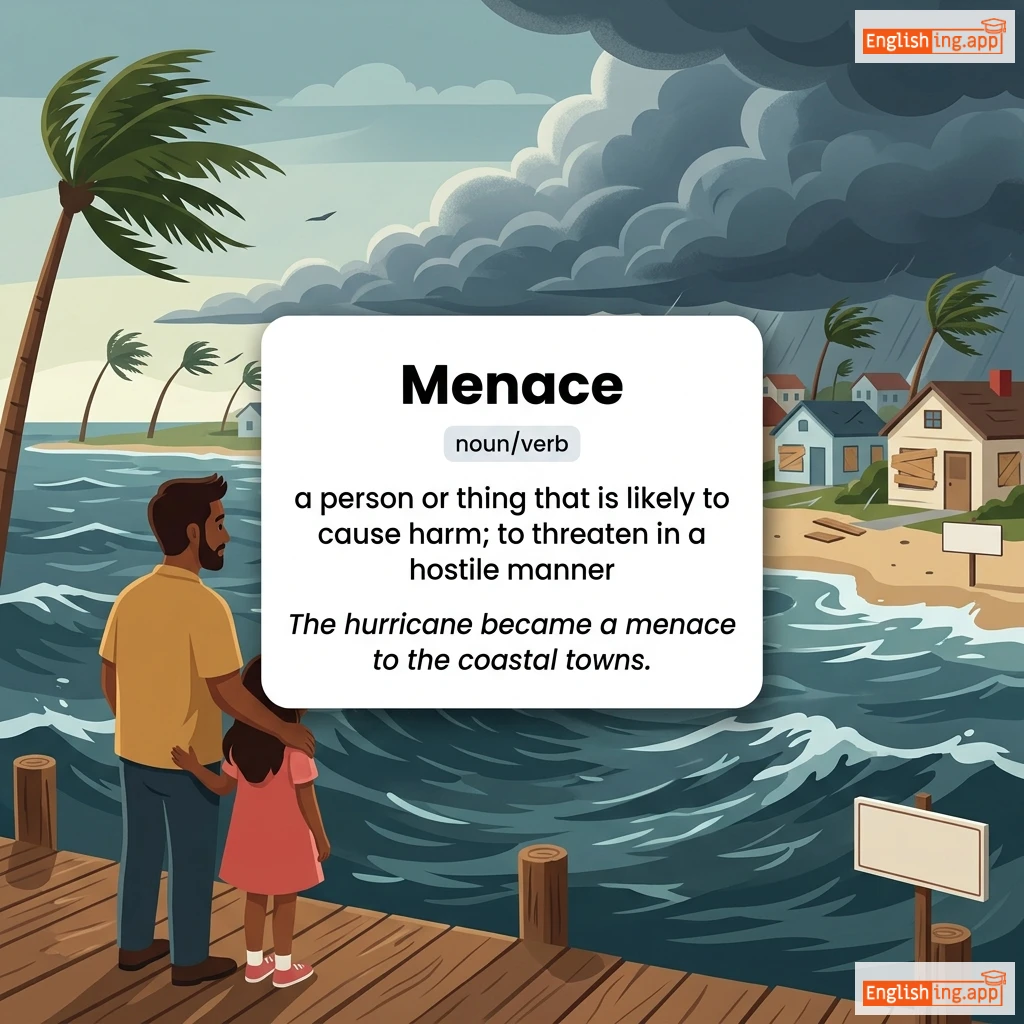
Menace definition card — visual illustration of the meaning
noun/verb C1
/ˈmɛnəs/
幸福 (xìngfú)

a person or thing that is likely to cause harm; to threaten in a hostile manner

"The hurricane became a menace to the coastal towns."

"她无法掩饰收到奖项时的幸福。" (Tā wúfǎ yǎnshì shōudào jiǎngxiàng shí de xìngfú.)
noun C1
/ˈmɜːrsəˌnɛri/
雇佣兵 (gùyòng bīng)

a professional soldier hired to serve in a foreign army; also used to describe someone motivated solely by money.

"The mercenary fought for whoever paid the highest wage."

"雇佣兵为支付最高工资的人而战斗。" (Gùyòng bīng wèi zhīfù zuìgāo gōngzī de rén ér zhàndòu.)
adjective C1
/ˈmɜːrsɪfəl/
仁慈 (réncí)

showing compassion or forgiveness towards someone one has the power to punish or harm.

"The judge was merciful and gave him a lighter sentence."

"法官很仁慈,给了他一个更轻的判决。" (fǎguān hěn réncí, gěile tā yīgè gèng qīng de pànjué.)
adjective C1
/ˈmɜːrsɪləs/
无情 (wúqíng)

showing no mercy or compassion; cruel and ruthless.

"The dictator was merciless in crushing the rebellion."

"独裁者在镇压叛乱时无情。" (Dúcáizhě zài zhènyā pànluàn shí wúqíng.)