Vocabularios

Descubra, aprenda y domine el vocabulario en inglés

verb C1
/ɪnˈvælɪdeɪt/
аннулировать (annulirovat)

To make something not valid or legally acceptable.

"The new evidence may invalidate the previous ruling."

"Новые доказательства могут аннулировать предыдущее решение." (Novye dokazyatel'stva mogut annulirovat' predydushchee reshenie.)
adjective C1
/ɪnˈvæljʊəbl/
бесценный (bestsennyy)

Extremely useful or indispensable.

"Her advice proved invaluable to my success."

"Её совет оказался бесценным для моего успеха." (Eyo sovet okazalsya bestsennym dlya moyego uspekha.)
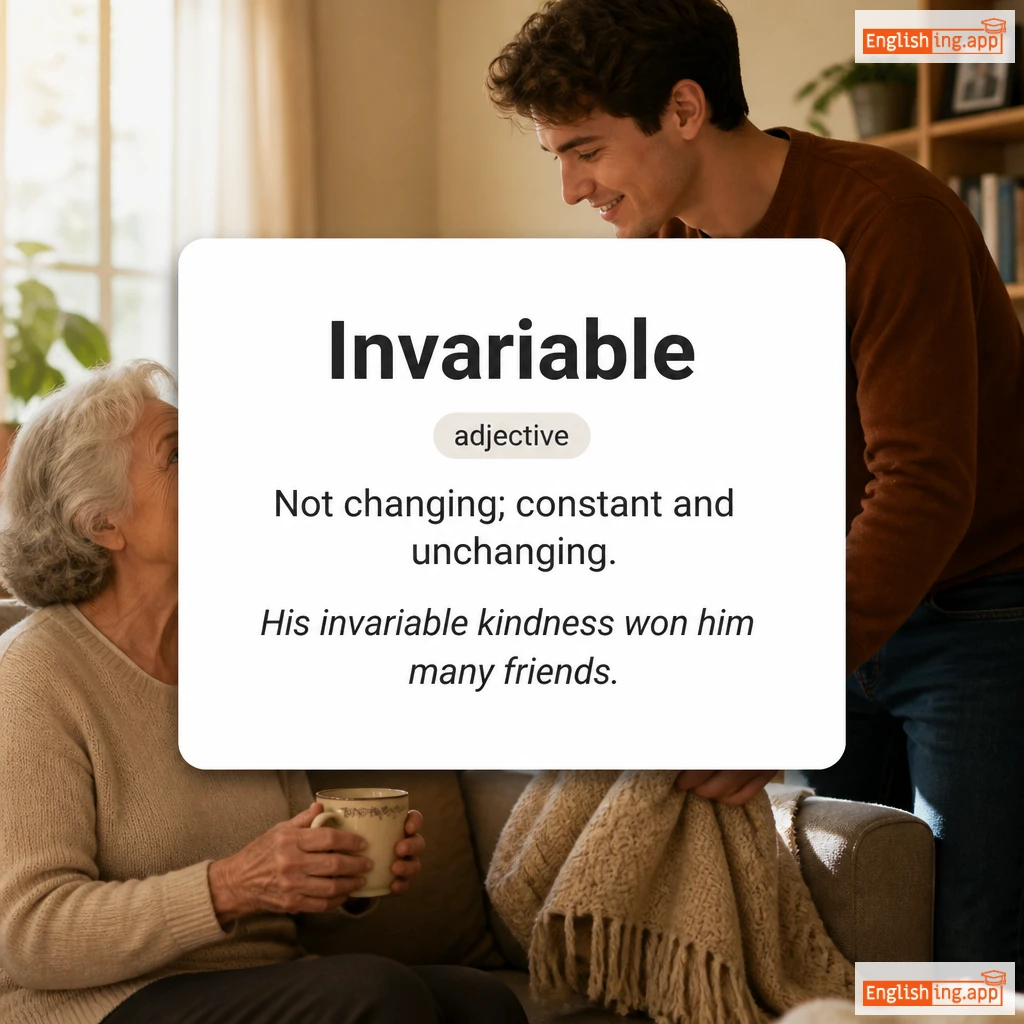
Invariable definition card — visual illustration of the meaning
adjective C1
/ɪnˈvɛəriəbl/
неизменный (neizmenniy)

Not changing; constant and unchanging.

"His invariable kindness won him many friends."

"Его неизменная доброта принесла ему много друзей." (Yego neizmennaia dobrota prinesla yemu mnogo druzey.)
adjective C1
/ɪnˈveɪsɪv/
инвазивный (invazivnyy)

Tending to spread harmfully, intruding aggressively, or encroaching beyond proper boundaries.

"The doctor explained that the procedure was minimally invasive."

"Врач объяснил, что процедура была минимально инвазивной." (Vrach ob'yasnil, chto protsedura byla minimal'no invazivnoy.)
adjective C1
/ɪnˈvɛntɪv/
изобретательский (izobretatelskiy)

Having the ability to create or design new things or to think originally.

"The inventor was known for his inventive solutions to everyday problems."

"Изобретатель был известен своими изобретательскими решениями повседневных проблем." (Izobretatel' byl izvesten svoimi izobreterskimi resheniyami povsednevnykh problem.)
adjective C1
/ˌɪnˈvɜːrs/
обратный (obratny)

Opposite in position, direction, order, or effect.

"There is an inverse relationship between price and demand."

"Существует обратная зависимость между ценой и спросом." (Sushchestvuet obratnaya zavisimost' mezhdu tsenoy i sprosom.)
adverb C1
/ɪnˈvɜːrs.li/
наоборот; противоположным образом (naoborot; protivopolozhnym obrazom)

in a way that is opposite or contrary; in reverse order or manner

"The price of goods is inversely related to their availability in the market."

"Цена товаров обратно пропорциональна их доступности на рынке." (Tsena tovarov obratno proporcionali naikh dostupnosti na rynke.)
noun C1
/ɪnˈvɜːrʒən/
инверсия (inversiya)

A reversal of the normal order, position, or relationship.

"In poetry, inversion is often used to create emphasis."

"В поэзии инверсия часто используется для создания акцента." (V poezii inversiya chasto ispol'zuyetsya dlya sozdaniya aktsenta.)
verb C1
/ɪnˈvɜːrt/
перевернуть (perevernut')

To turn something upside down or in the opposite position, order, or direction.

"He inverted the glass to let the water drain out."

"Он инвертировал стакан, чтобы вода стекала." (On invertiroval stakan, chtoby voda stekala.)
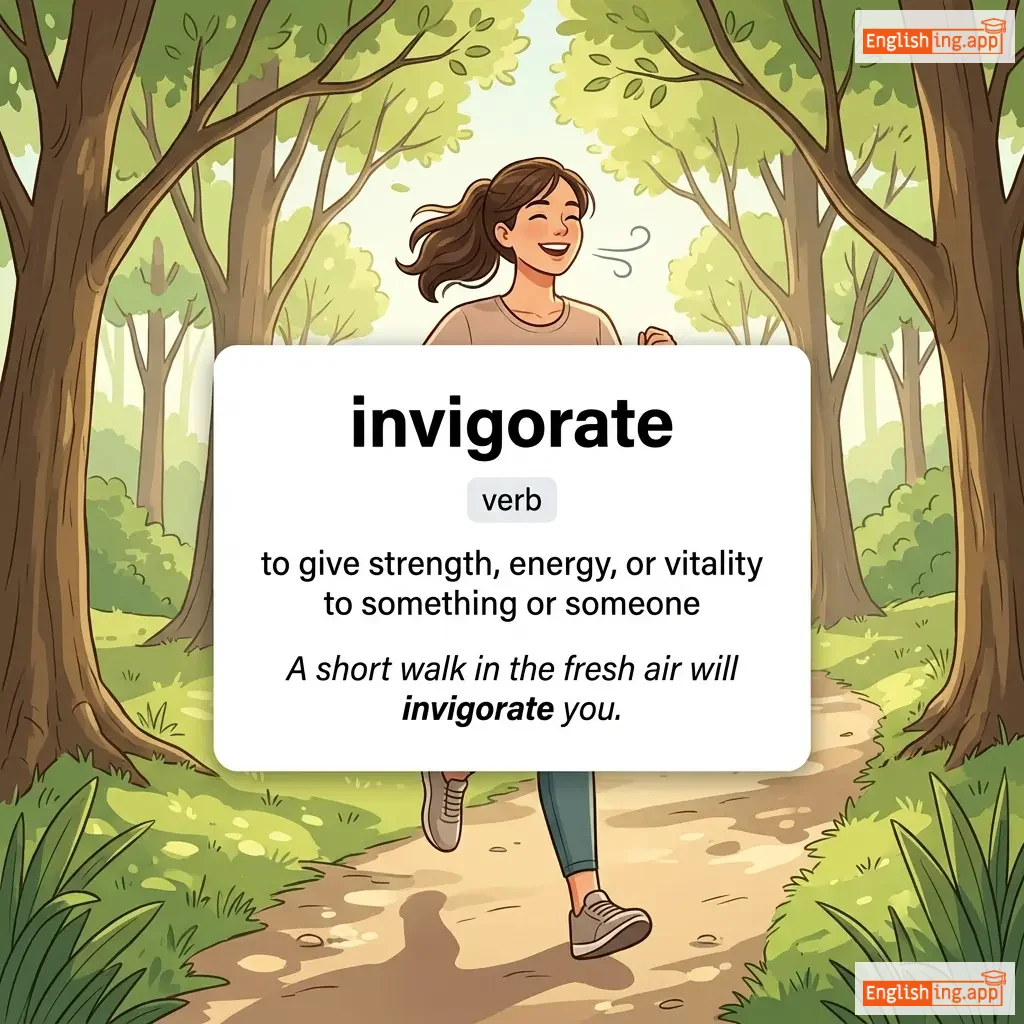
invigorate definition card — visual illustration of the meaning
verb C1
/ɪnˈvɪɡəreɪt/
вдохновить (vdokhnovit)

to give strength, energy, or vitality to something or someone

"A short walk in the fresh air will invigorate you."

"Небольшая прогулка на свежем воздухе придаст вам силы." (Nebol'shaya progulka na svezhem vozdukhe pridast vam sily.)
adjective C1
/ɪnˈvɪnsəbl/
непобедимый (nepobedimy)

too powerful to be defeated or overcome

"The team seemed invincible after winning ten matches in a row."

"Команда казалась непобедимой после того, как выиграла десять матчей подряд." (Komanda kazalas' nepobedimoy posle togo, kak vyigrala desyat' matchey podryad.)
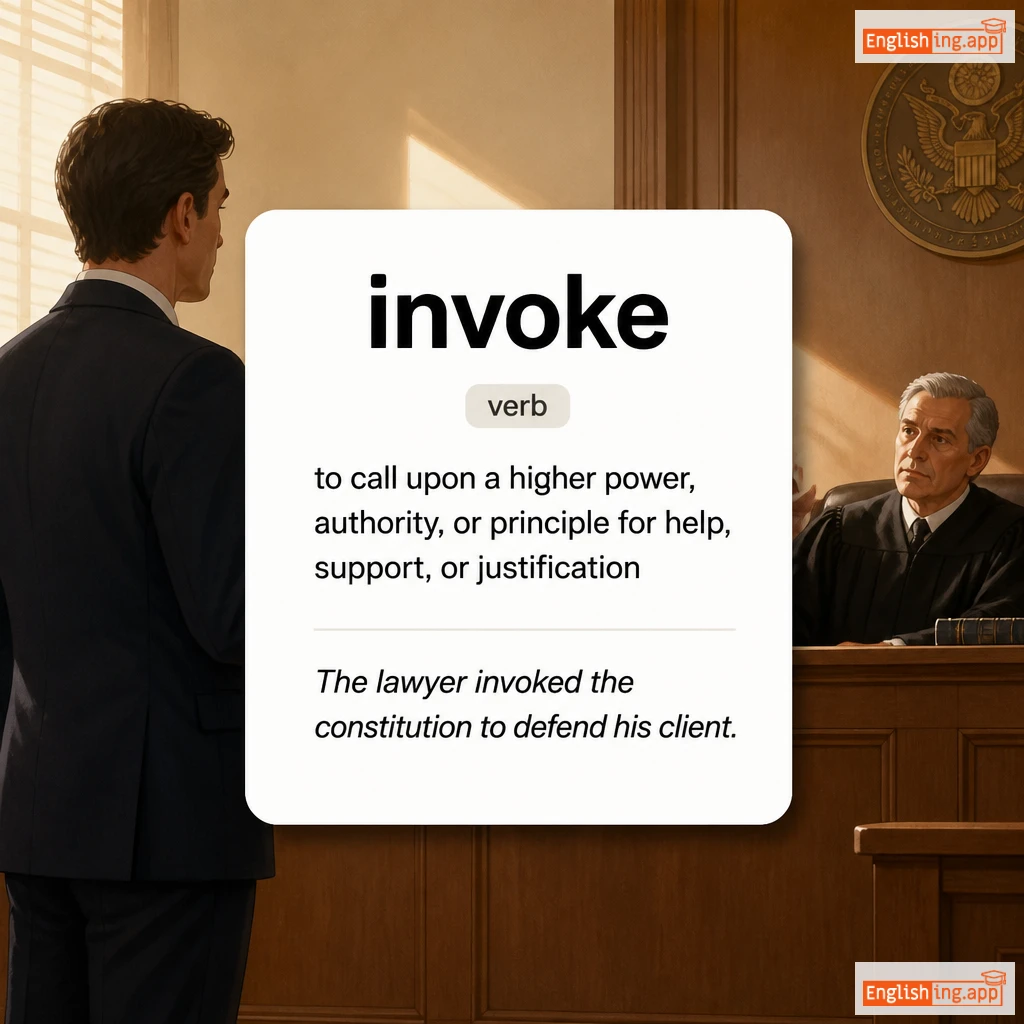
invoke definition card — visual illustration of the meaning
verb C1
/ɪnˈvoʊk/
взывать (vzyvat)

to call upon a higher power, authority, or principle for help, support, or justification

"The lawyer invoked the constitution to defend his client."

"Адвокат сослался на конституцию, чтобы защитить своего клиента." (Advokat soslalsya na konstitutsiyu, chtoby zashchitit' svoego klienta.)
adjective C1
/ɪnˈvɑːlənˌtɛri/
непроизвольный (neproizvol'nyy)

done without will or conscious control

"He gave an involuntary shiver when he heard the loud noise."

"Он невольно вздрогнул, услышав громкий звук." (On nevol'no vzdrognul, uslyshav gromkiy zvuk.)
adverb C1
/ˈɪnwərdli/
внутренне (vnutrenne)

In the mind or spirit; not outwardly visible.

"She smiled outwardly but inwardly she was worried."

"Она улыбалась снаружи, но внутри была обеспокоена." (Ona ulybalas' snaruzi, no vnutri byla obespokoena.)
adjective C1
/aɪˈreɪt/
взбешённый (vzbeshyonny)

Extremely angry.

"The customer became irate after waiting for hours."

"Клиент стал взбешённым после того, как ждал несколько часов." (Klient stal vzbeshyonnym posle togo, kak zhdal neskol'ko chasov.)
adjective C1
/ˈɜːrksəm/
раздражающий (razdrazhayushchiy)

annoying or irritating

"Waiting in a long line is one of the most irksome tasks."

"Ожидание в длинной очереди — одна из самых раздражающих задач." (Ozhidanie v dlinnoi ocheredi — odna iz samykh razdrazhayushchikh zadach.)
adjective C1
/ˈaɪərnˌklæd/
непоколебимый (ironclad)

impossible to change, break, or dispute; very strong and firm

"The company had an ironclad contract with its suppliers."

"Компания имела непоколебимый контракт с поставщиками." (Kompaniya imela nepokolebimyy kontrakt s postavshchikami.)
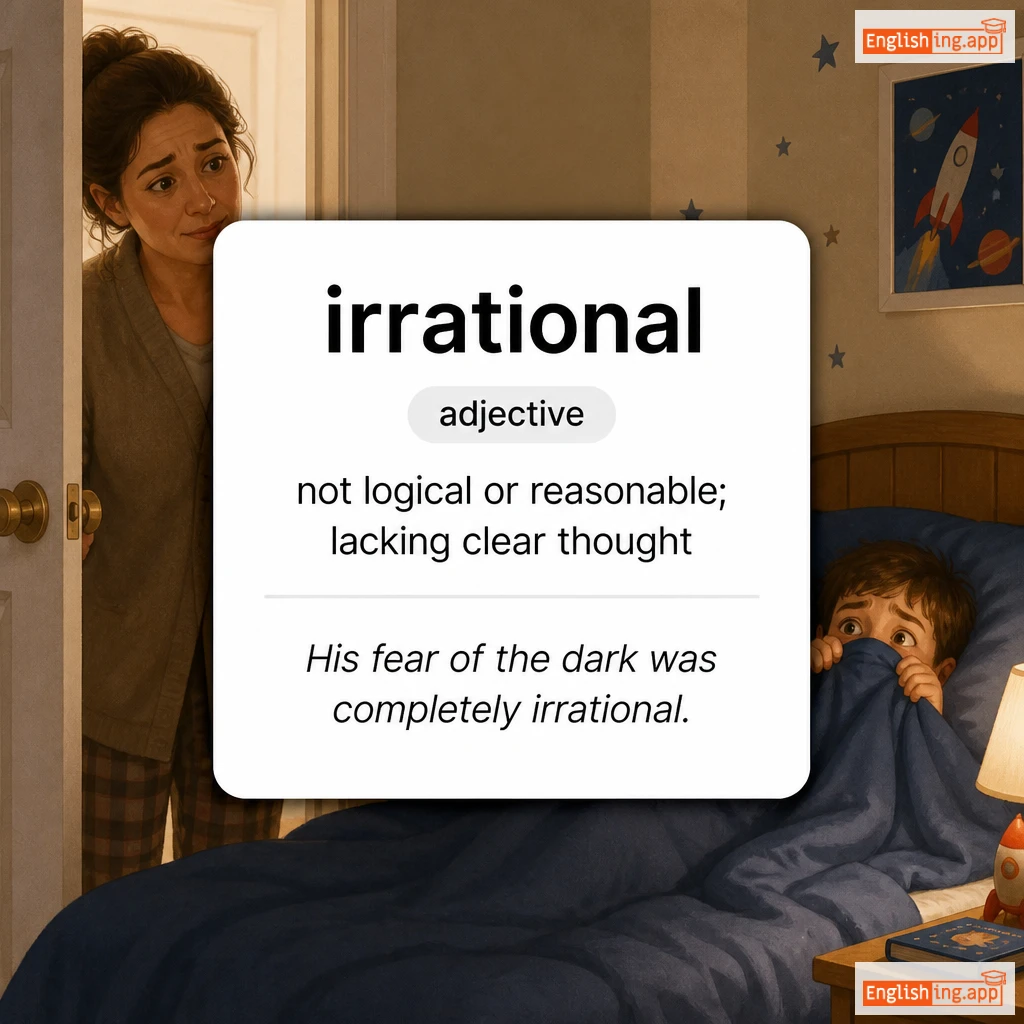
irrational definition card — visual illustration of the meaning
adjective C1
/ɪˈræʃənəl/
иррациональный (irratsional'nyy)

not logical or reasonable; lacking clear thought

"His fear of the dark was completely irrational."

"Его страх перед темнотой был совершенно иррациональным." (Yego strakh pered temnotoj byl sovershenno irratsional'nym.)
irrationality definition card — visual illustration of the meaning
noun C1
ɪˌræʃ.ənˈæl.ɪ.ti
иррациональность, абсурд, нелогичность (irratsionalnost', absurd, nelogichnost')

The quality of being illogical or unreasonable; lack of rational thought.

"His decision was driven by complete irrationality."

"Его решение было основано на полной иррациональности." (Ego reshenie bylo osnovano na polnoy irratsional'nosti.)
adjective C1
/ˌɪrɪˈfjuːtəbəl/
неопровержимый (neopoverzhimy)

Impossible to deny or disprove

"The scientist provided irrefutable proof of the theory."

"Ученый предоставил неопровержимое доказательство теории." (Uchenyi predostavil neoprovyerzhimoe dokazatel'stvo teorii.)
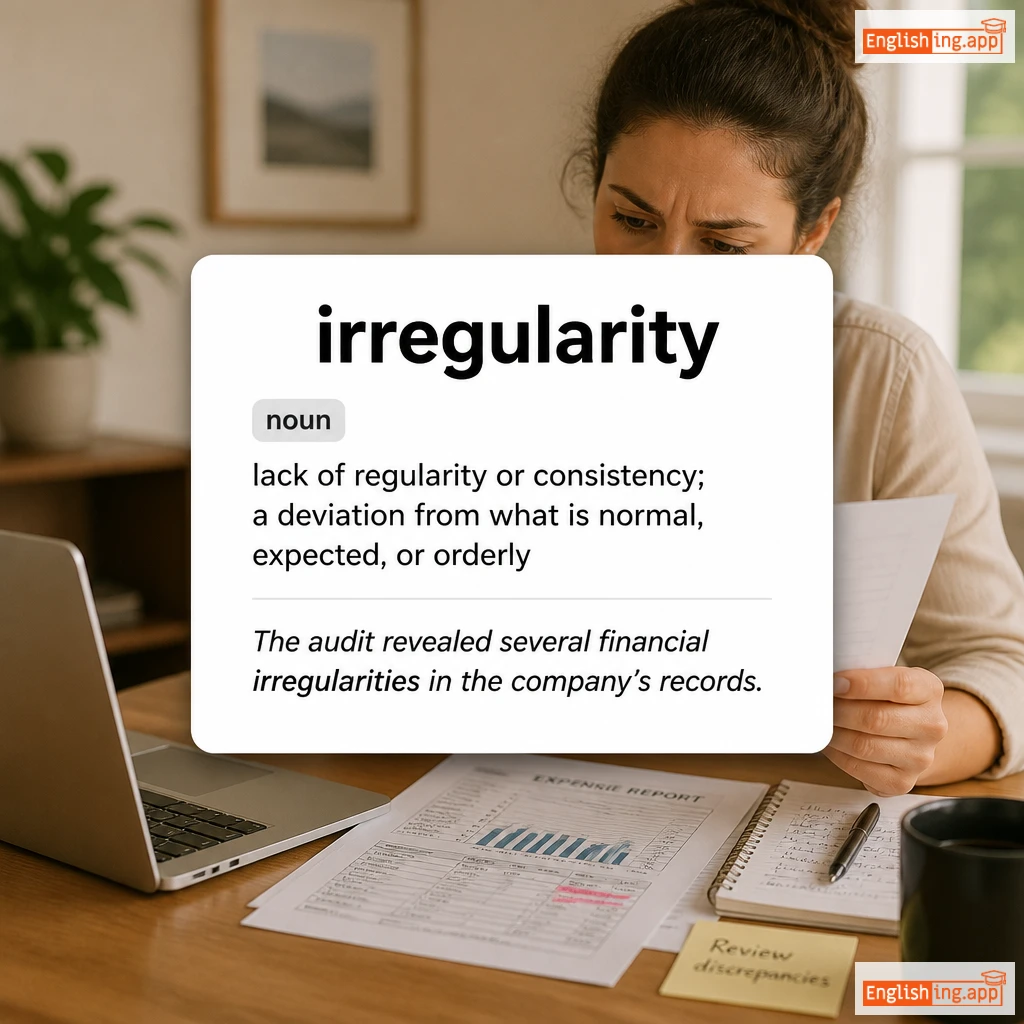
irregularity definition card — visual illustration of the meaning
noun C1
/ɪˌreɡjəˈlærɪti/
нерегулярность (neregulyarnost)

lack of regularity or consistency; a deviation from what is normal, expected, or orderly

"The audit revealed several financial irregularities in the company’s records."

"Аудит выявил несколько финансовых нерегулярностей в документах компании." (Audit vyyavil neskolko finansovykh neregulyarnostei v dokumentakh kompanii)
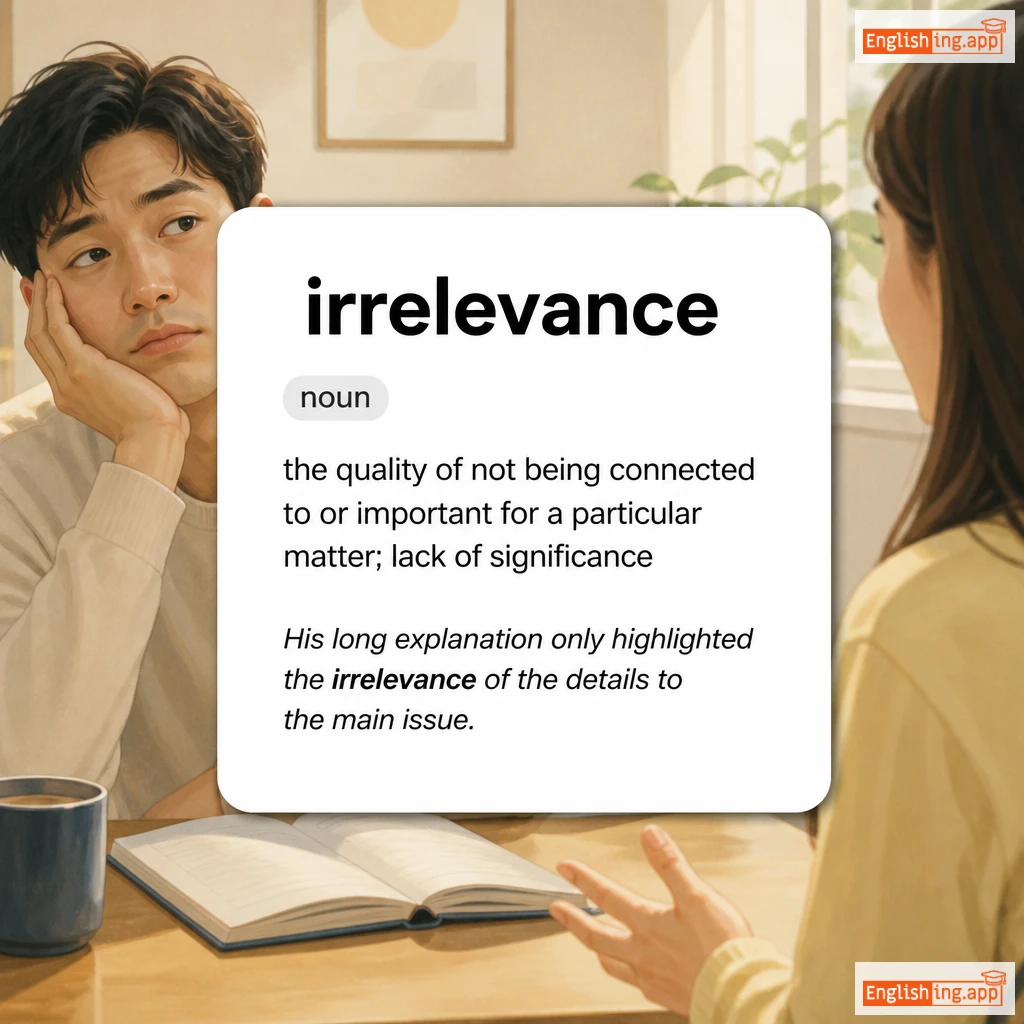
irrelevance definition card — visual illustration of the meaning
noun C1
/ɪˈreləvəns/
нерелевантность (nerelevantnost)

the quality of not being connected to or important for a particular matter; lack of significance

"His long explanation only highlighted the irrelevance of the details to the main issue."

"Его долгое объяснение лишь подчеркнуло нерелевантность деталей к основной проблеме." (ego dolgoye obyasneniye lish podcherknulo nerelevantnost detaley k osnovnoy probleme)
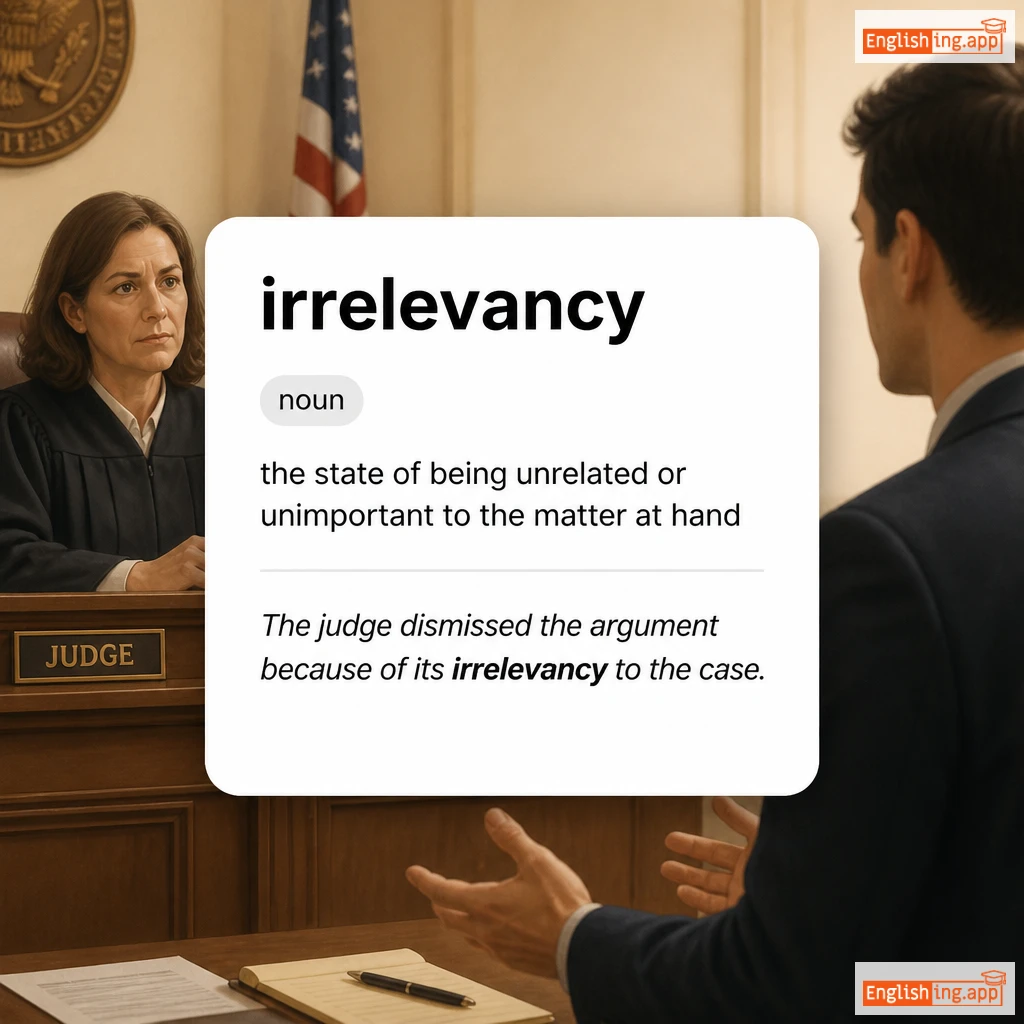
irrelevancy definition card — visual illustration of the meaning
noun C1
/ɪˈrɛlɪvənsi/
нерелевантность (nerelevantnost)

the state of being unrelated or unimportant to the matter at hand

"The judge dismissed the argument because of its irrelevancy to the case."

"Судья отклонил аргумент из-за его нерелевантности делу." (sudya otklonil argument iz-za ego nerelevantnosti delu)
adjective C1
/ɪˈrɛpərəbl̩/
неподдающийся ремонту (nepoddayushchiesya remontu)

Too severe to be corrected or repaired.

"The earthquake caused irreparable damage to the village."

"Землетрясение причинило непоправимый ущерб деревне." (Zemletryasenie prichinilo nepopravimy ushcherb derevne.)
adjective C1
/ˌɪrɪˈprɛsəbl̩/
непреодолимый (nepreodolimyy)

Impossible to control or restrain.

"She had an irrepressible urge to laugh during the speech."

"Она не могла скрыть свое непреодолимое желание смеяться во время речи." (Ona ne mogla skryt' svoe nepreodolimoe zhelanie smeyat'sya vo vremya rechi.)
adjective C1
/ˌɪrɪˈspɛktɪv/
независимо от; без учета (nezavisimo ot; bez ucheta)

without taking something into account; regardless of

"All students will be treated equally, irrespective of their background."

"Все студенты будутtreated одинаково, независимо от их происхождения." (Vse studenty budut otnositsya odinakovo, nezavisimo ot ikh proiskhozhdeniya.)
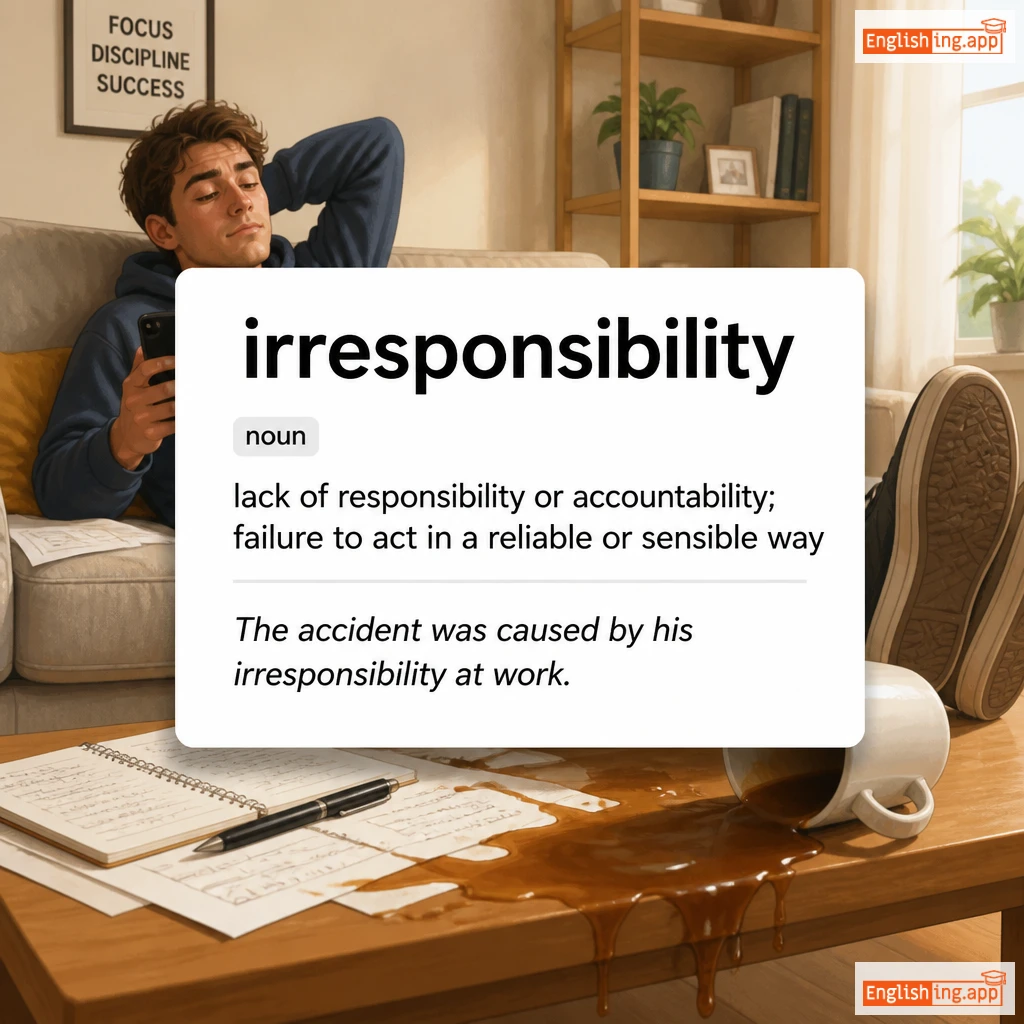
irresponsibility definition card — visual illustration of the meaning
noun C1
/ˌɪrɪˌspɒnsəˈbɪləti/
безответственность (bezotvetstvennost)

lack of responsibility or accountability; failure to act in a reliable or sensible way

"The accident was caused by his irresponsibility at work."

"Авария произошла из-за его безответственности на работе." (Avariya proisoshla iz-za ego bezotvetstvennosti na rabote)
adjective C1
/ɪˈrɛvərənt/
неуважительный (neuvazhitel'nyy)

showing a lack of respect for people or things that are usually respected

"The comedian’s irreverent jokes offended some of the audience."

"Невежливые шутки комика оскорбили некоторых зрителей." (Nevezhlivye shutki komika oskorbili nekotorykh zriteley.)
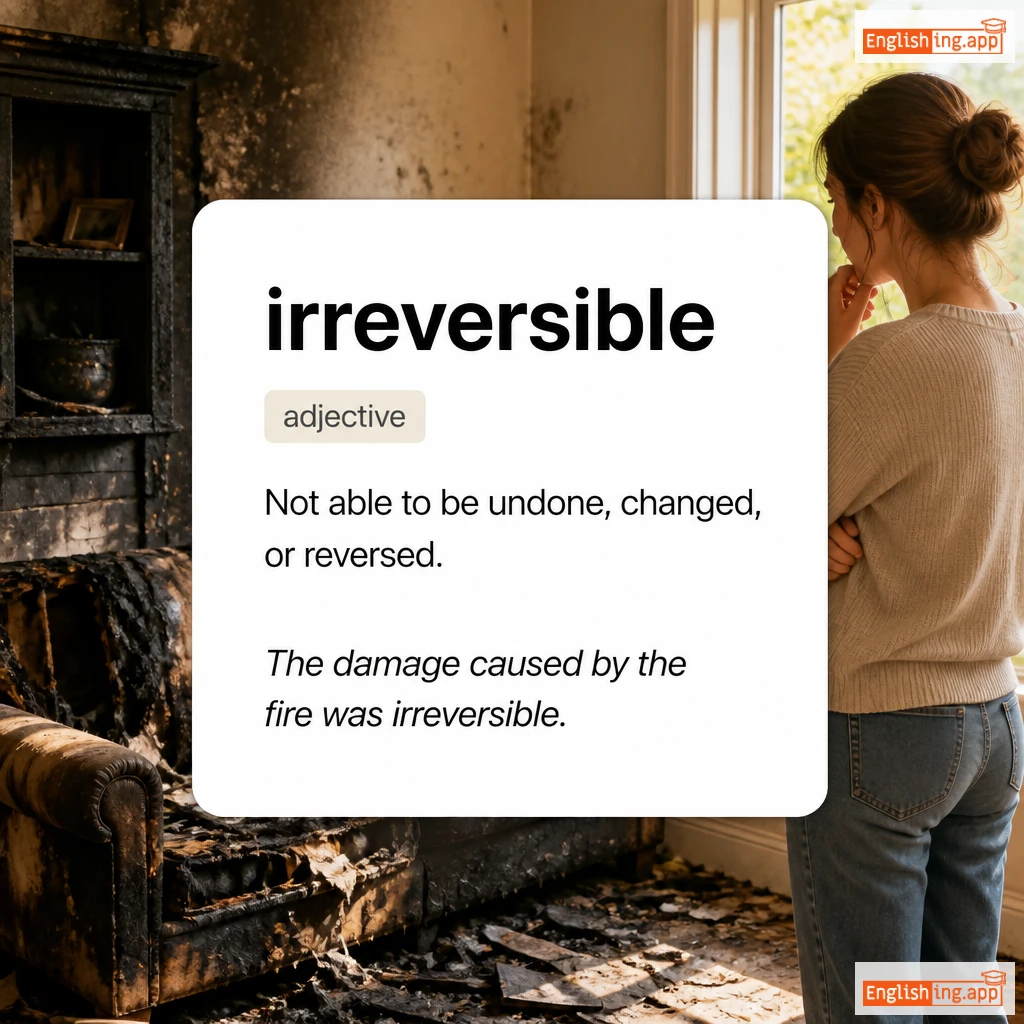
irreversible definition card — visual illustration of the meaning
adjective C1
/ˌɪrɪˈvɜːrsəbl/
необратимый (neobratimy)

Not able to be undone, changed, or reversed.

"The damage caused by the fire was irreversible."

"Ущерб, причиненный огнем, был необратим." (Ushcherb, prichinennyj ognyom, byl neobratim.)
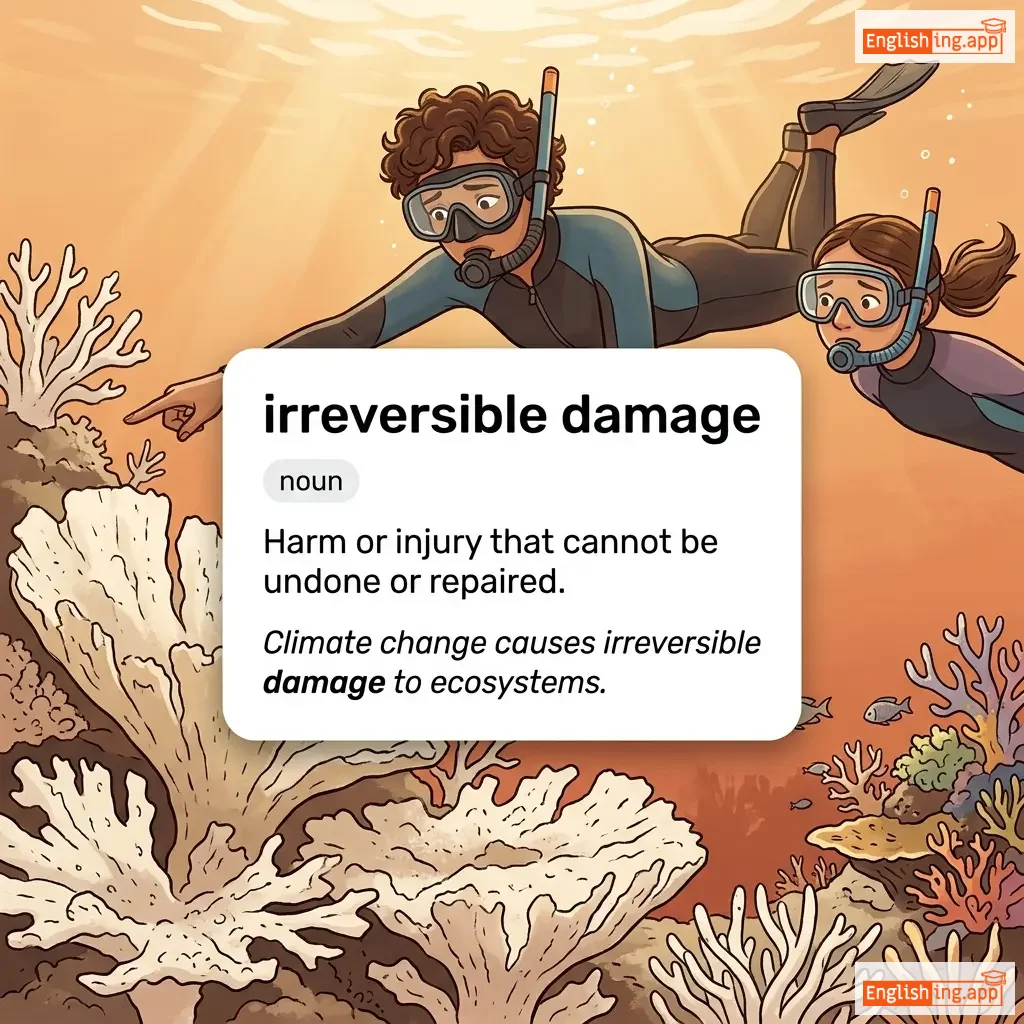
irreversible damage definition card — visual illustration of the meaning
noun C1
ˌɪrɪˈvɜːrsəbl ˈdæmɪdʒ
необратимый ущерб (neobratimy ushcherb)

Harm or injury that cannot be undone or repaired.

"Climate change causes irreversible damage to ecosystems."

"Изменение климата вызывает необратимый ущерб экосистемам." (Izmenenie klimata vyzyvaet neobratimy ushcherb ekosistemam.)
adjective C1
/ɪˈrɛvəkəbl/
неподлежащий отмене (nepodlezhashchiy otmene)

Not able to be revoked, changed, or undone.

"She made an irrevocable decision to leave the company."

"Она приняла необратимое решение покинуть компанию." (Ona prinяла neobratimoe reshenie pokinut' kompaniyu.)
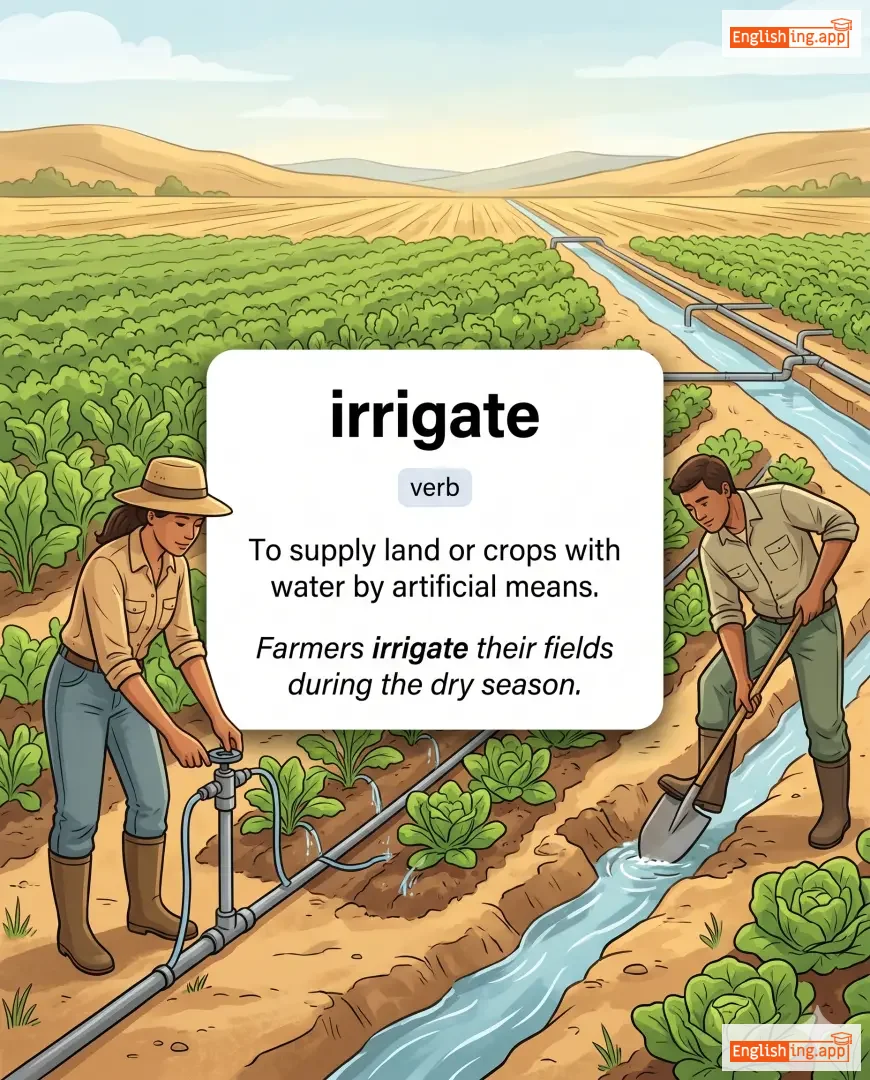
irrigate definition card — visual illustration of the meaning
verb C1
/ˈɪrɪɡeɪt/
орошать (oroschat')

To supply land or crops with water by artificial means.

"Farmers irrigate their fields during the dry season."

"Фермеры орошают свои поля в сухой сезон." (Fermery oroshayut svoi polya v sukhoy sezon.)
adjective C1
/ˈɪrɪtəbl/

easily annoyed or made angry

"She became irritable after working long hours without rest."

noun C1
/ˈɪrɪtənt/
раздражающее вещество (razdrazhayushchee veshchestvo)

something that causes irritation or discomfort

"Dust is a common irritant for people with allergies."

"Пыль является обычным раздражающим веществом для людей с аллергией." (Pyl' yavlyaetsya obychnym razdrazhayushchim veshchestvom dlya lyudey s allergiyey.)
noun C1
/aɪl/
маленький остров (malen'kiy ostrov)

A small island or peninsula, often poetic or literary.

"They spent their honeymoon on a beautiful tropical isle."

"Они провели медовый месяц на прекрасном тропическом острове." (oni proveli medovyy mesyats na prekrasnom tropicheskom ostrove.)
noun C1
/ˈaɪsətəʊp/
изотоп (izotop)

Atoms of the same element with equal number of protons but different numbers of neutrons.

"Carbon-14 is a radioactive isotope used in dating fossils."

"Углерод-14 — это радиоактивный изотоп, используемый для датировки окаменелостей." (Uglerod-14 — eto radioaktivnyy izotop, ispol'zuyemyy dlya datirovki okanenelostey.)
itchiness definition card — visual illustration of the meaning
noun C1
/ˈɪtʃ.i.nəs/
зуд (zud)

The quality or condition of feeling an irritating sensation on the skin that causes a desire to scratch.

"Eye itchiness often leads to rubbing."

"Зуд в глазах часто приводит к тереблению." (Zud v glazakh chasto privodyt k tereblyeniyu.)
verb C1
/ˈɪtəreɪt/
итерировать (iterirovat)

To repeat a process or statement, often to improve or refine.

"The software team will iterate the design until it meets user needs."

"Команда разработчиков будет итерационно улучшать дизайн до тех пор, пока он не будет соответствовать требованиям пользователей." (Komanda razrabotchikov budet iterrirovat' dizajn do tekh por, poka on ne budet sootvetstvovat' trebuyemym pol'zovateley.)
itinerary definition card — visual illustration of the meaning
noun C1
/aɪˈtɪnərɛri/
маршрут (marshrut)

A planned route or schedule of a journey or trip.

"The travel agent gave us a detailed itinerary for our vacation."

"Туристический агент дал нам подробный маршрут для нашего отпуска." (Turisticheskiy agent dal nam podrobnoye marshrut dlya nashego otpuska.)
verb C1
/dʒæb/
пихать (pihat)

To poke or thrust quickly, often with a finger or something pointed.

"He jabbed his finger at the map to show the location."

"Он пихал пальцем по карте, чтобы показать местоположение." (On pikhал pal'tsem po karte, chtoby pokazat' mestopolozhenie.)
noun C1
/ˈdʒækˌfruːt/
джекфрут (dzekfrut)

a large tropical fruit with a spiky exterior and sweet flesh inside

"The jackfruit is the largest tree fruit in the world."

"Джекфрут — самый большой фрукт на дереве в мире." (Dzekfrut — samyy bol'shoy frukt na dereve v mire.)
adjective C1
/ˈdʒeɪ.dɪd/
утомленный, равнодушный (utomlennyj, ravnodushnyj)

Tired, bored, or lacking enthusiasm, typically after having had too much of something.

"After years of traveling, she felt jaded by the constant movement."

"После многих лет путешествий, она почувствовала усталость от постоянного движения." (Posle mnogikh let puteshestvij, ona pochuvstvovala ustalost ot postoyannogo dvizhniya.)
Jamboree definition card — visual illustration of the meaning
noun C1
/ˌdʒæm.bəˈriː/
праздник; фестиваль; (prazdnik, festival)

a large celebration or party; a gathering with entertainment; a festive event

"The scout jamboree brought together thousands of young people from around the world."

"Скаутский джамбори собрал тысячи молодых людей со всего мира." (Skauts'kiy dzhambori sobral tysyachi molodykh lyudey so vsego mira.)
noun C1
/ˈdʒɑːr.ɡən/
жаргон (zhargon)

Specialized or technical language used by a particular group or profession.

"The lawyer’s explanation was full of legal jargon."

"Объяснение адвоката было полно юридического жаргона." (Ob'yasnenie advokata bylo polno yuridicheskogo zhargona.)
adjective C1
/ˈdʒɑː.rɪŋ/
пугающий, неожиданный удар (pugayushchiy, neozhidannyy udar)

Striking or shocking in a way that creates a strong contrast or clash.

"The sudden loud noise was jarring to everyone in the room."

"Внезапный громкий шум был шокирующим для всех в комнате." (Vnezapnyy gromkiy shum byl shokiruyushchim dlya vsekh v komnate.)
noun C1
/ˈdʒɔːn.dɪs/
желтуха (zheltukha)

A medical condition in which the skin and eyes become yellow due to liver problems.

"The doctor diagnosed the baby with jaundice."

"Доктор поставил диагноз ребенку — желтуха." (Doktor postavil diagnoz rebenku — zheltukha.)
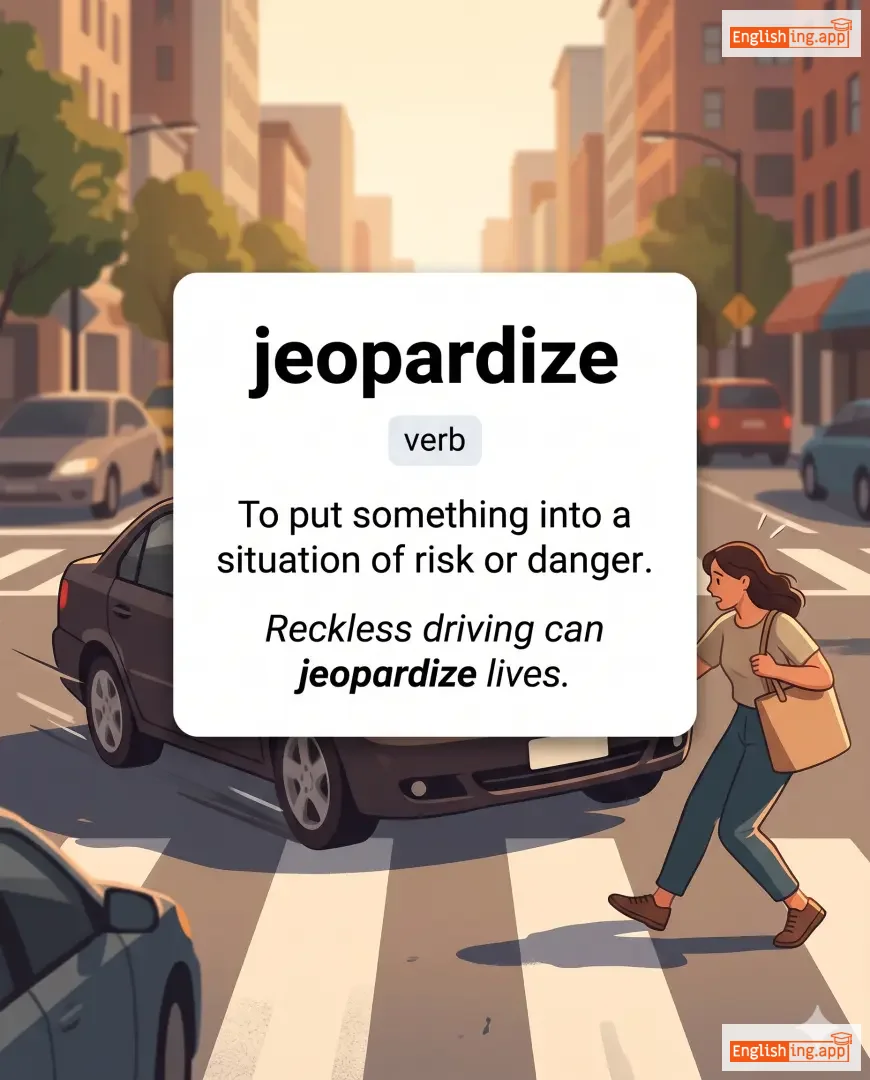
jeopardize definition card — visual illustration of the meaning
verb C1
/ˈdʒɛpərdaɪz/
подвергать опасности (podvergat' opasnosti)

To put something into a situation of risk or danger.

"Reckless driving can jeopardize lives."

"Безрассудное вождение может поставить жизни под угрозу." (Bezrassudnoe vozdenie mozhet postavit' zhizni pod ugrozu.)
noun C1
/ˈdʒɛpərdi/
опасность (opasnost)

Danger of loss, harm, or failure.

"His careless driving put everyone in jeopardy."

"Его неосторожное вождение поставило всех в опасность." (Ego neostorozhnoe vozdenie postavilo vsekh v opasnost.)
Jest definition card — visual illustration of the meaning
noun, verb C1
/dʒɛst/
шутка (shutka)

A joke or witty remark; to speak humorously.

"He spoke in jest, but his words offended her."

"Он говорил в шутку, но его слова оскорбили её." (On govoril v shutku, no ego slova oskorbili yeё.)
/ˈdʒɛtɪsən/
выбросить (vibrosit)

to throw or drop something from a ship, aircraft, or vehicle to lighten the load; to abandon something no longer wanted

"The crew had to jettison cargo to save the sinking ship."

"Экипажу пришлось выбросить груз, чтобы спасти тонущий корабль." (Ekipazhu prishlos' vybrosit' gruz, chtoby spasti tonushchiy korabl')