Vocabularios

Descubra, aprenda y domine el vocabulario en inglés

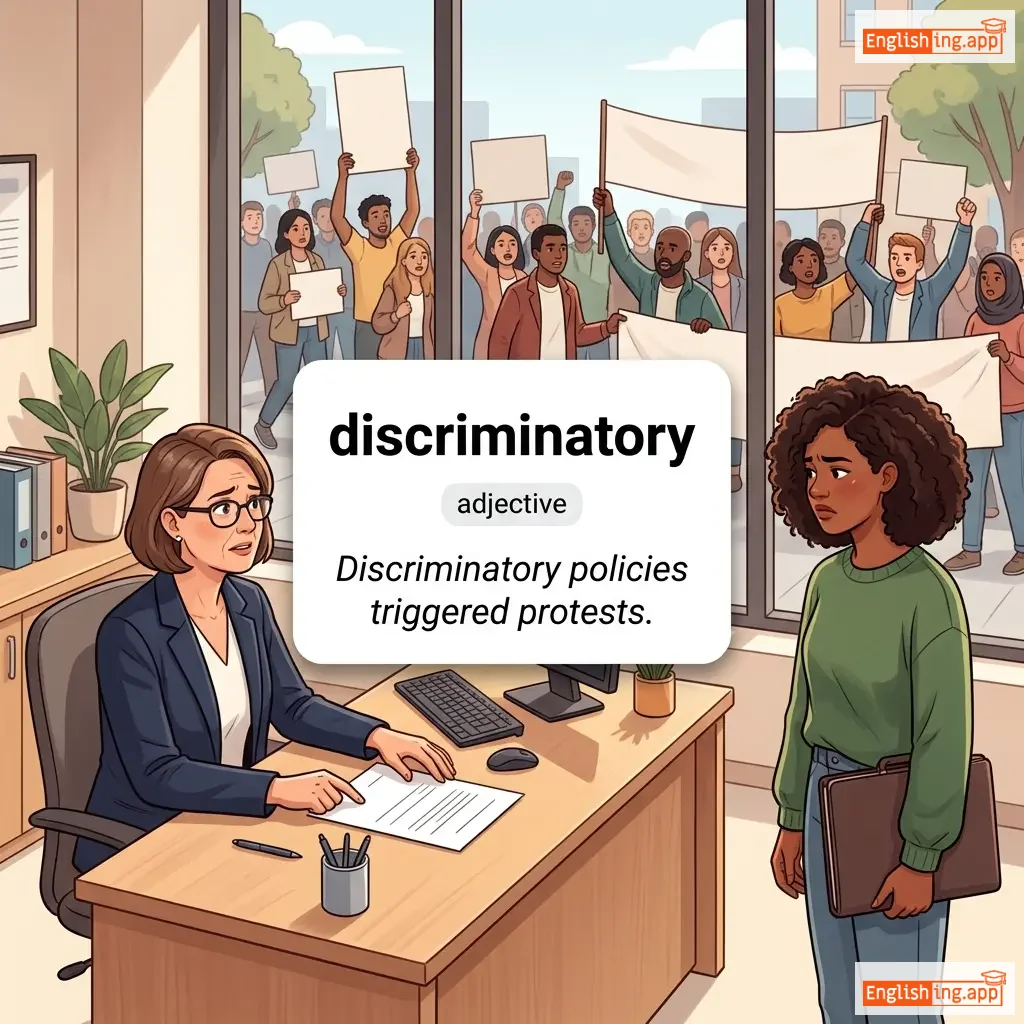
discriminatory definition card — visual illustration of the meaning
adjective C1
dɪˈskrɪmɪnətɔːri
discriminatorio (discriminatorio)

Making or showing an unfair or prejudicial distinction between different categories of people or things.

"Discriminatory policies triggered protests."

"Las políticas discriminatorias desencadenaron protestas." (Las politicas discriminatorias desencadenaron protestas.)
noun/verb C1
/dɪsˈdeɪn/
desdén (desden)

The feeling that someone or something is unworthy of respect; to regard with contempt.

"She looked at the messy room with open disdain."

"Ella miró la habitación desordenada con desprecio." (Ella miro la habitacion desordenada con desprecio.)
verb C1
/ˌdɪsɪmˈbɑːrk/
desembarcar (desembarcar)

To leave a ship, aircraft, or other vehicle.

"The passengers disembarked from the plane after landing."

"Los pasajeros desembarcaron del avión después del aterrizaje." (Los pasajeros desembarcaron del avion despues del aterrizaje.)
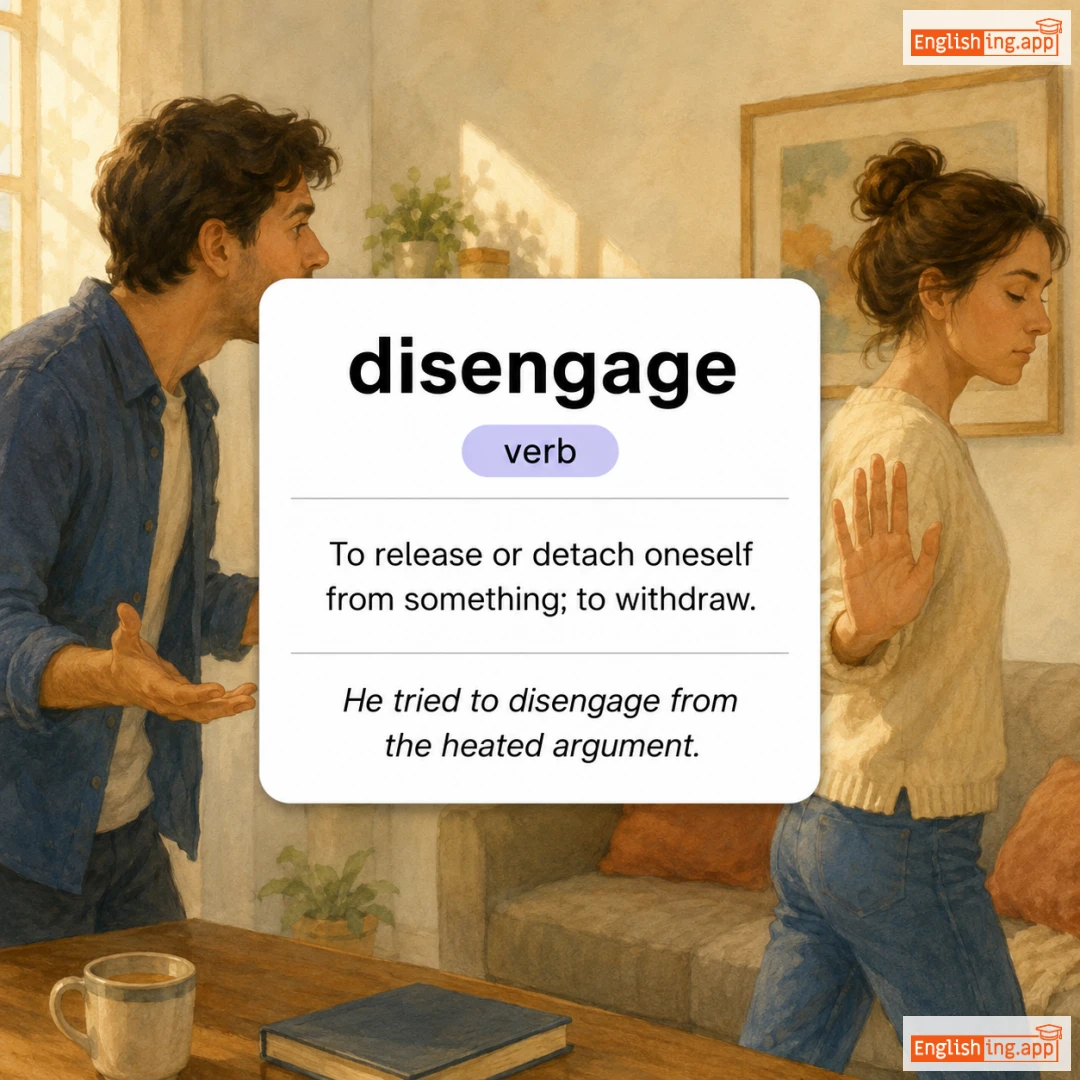
disengage definition card — visual illustration of the meaning
verb C1
/ˌdɪsɪnˈɡeɪdʒ/
desconectar (desconectar)

To release or detach oneself from something; to withdraw.

"He tried to disengage from the heated argument."

"Trató de desconectarse de la acalorada discusión." (Trató de desconectarse de la acalorada discusión.)
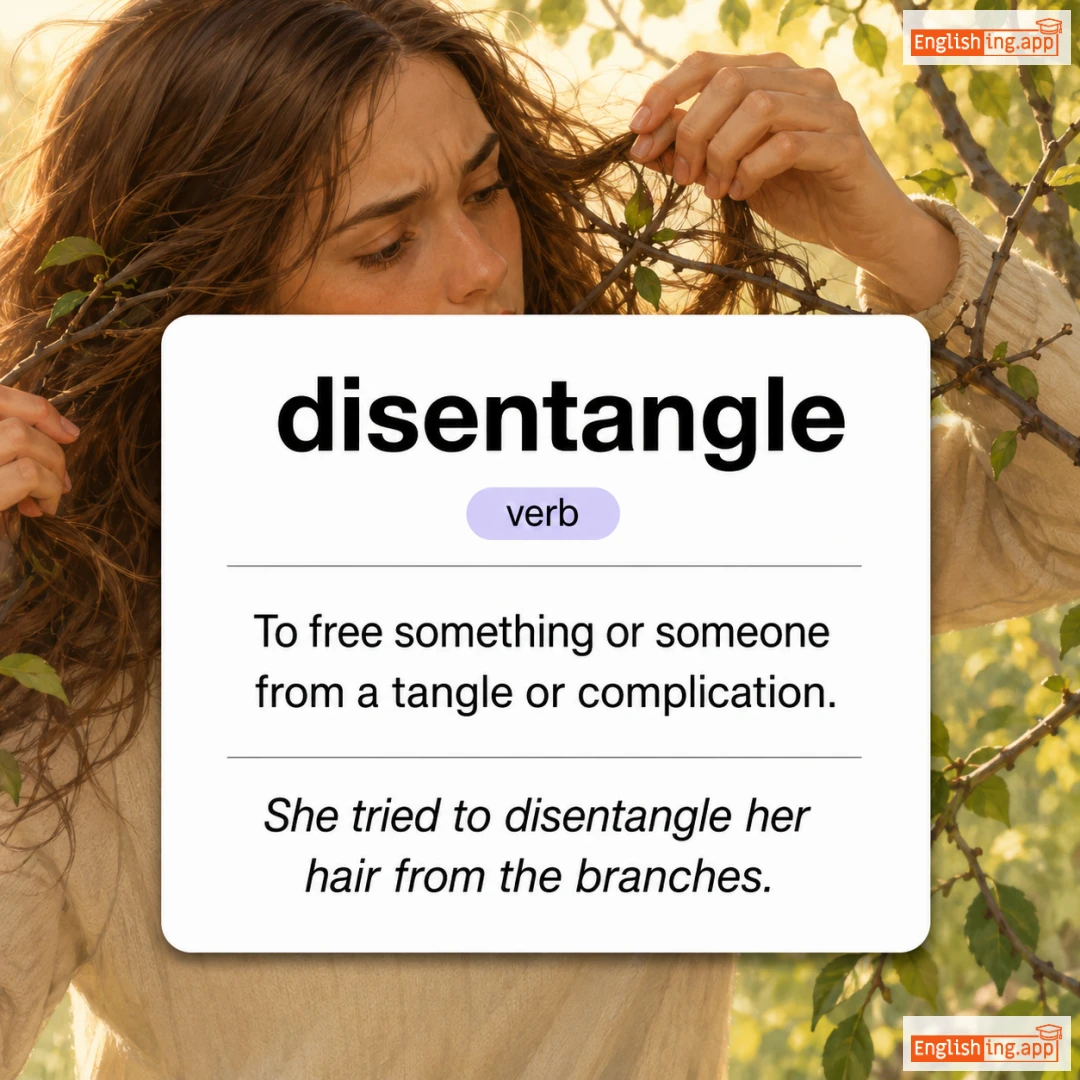
disentangle definition card — visual illustration of the meaning
verb C1
/ˌdɪsɪnˈtæŋɡl/
desenredar (desenredar)

To free something or someone from a tangle or complication.

"She tried to disentangle her hair from the branches."

"Ella intentó desenredar su cabello de las ramas." (Ella intentó desenredar su cabello de las ramas.)
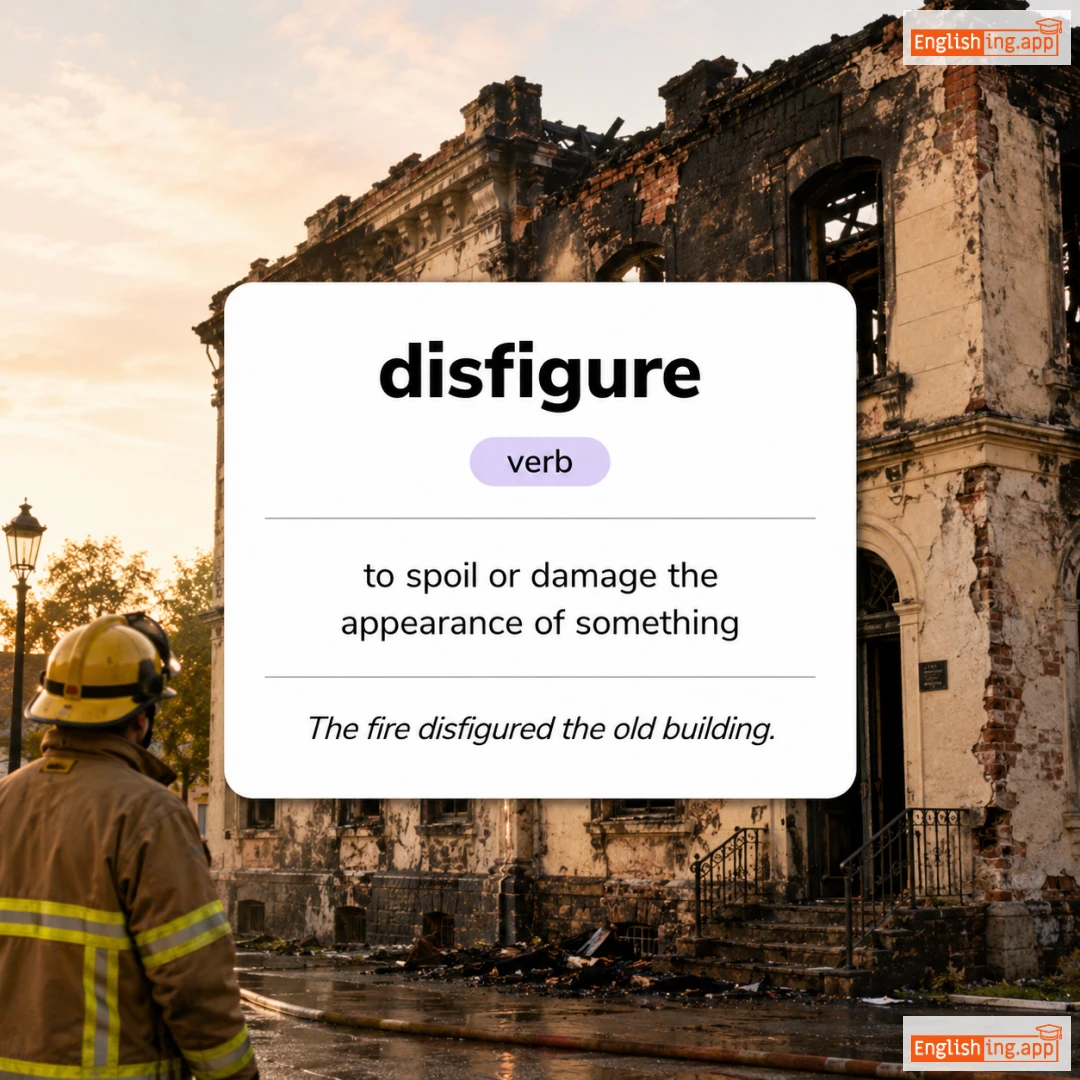
disfigure definition card — visual illustration of the meaning
verb C1
/dɪsˈfɪɡjər/
desfigurar (desfigurar)

to spoil or damage the appearance of something

"The fire disfigured the old building."

"El fuego desfiguró el viejo edificio." (El fuego desfiguro el viejo edificio.)
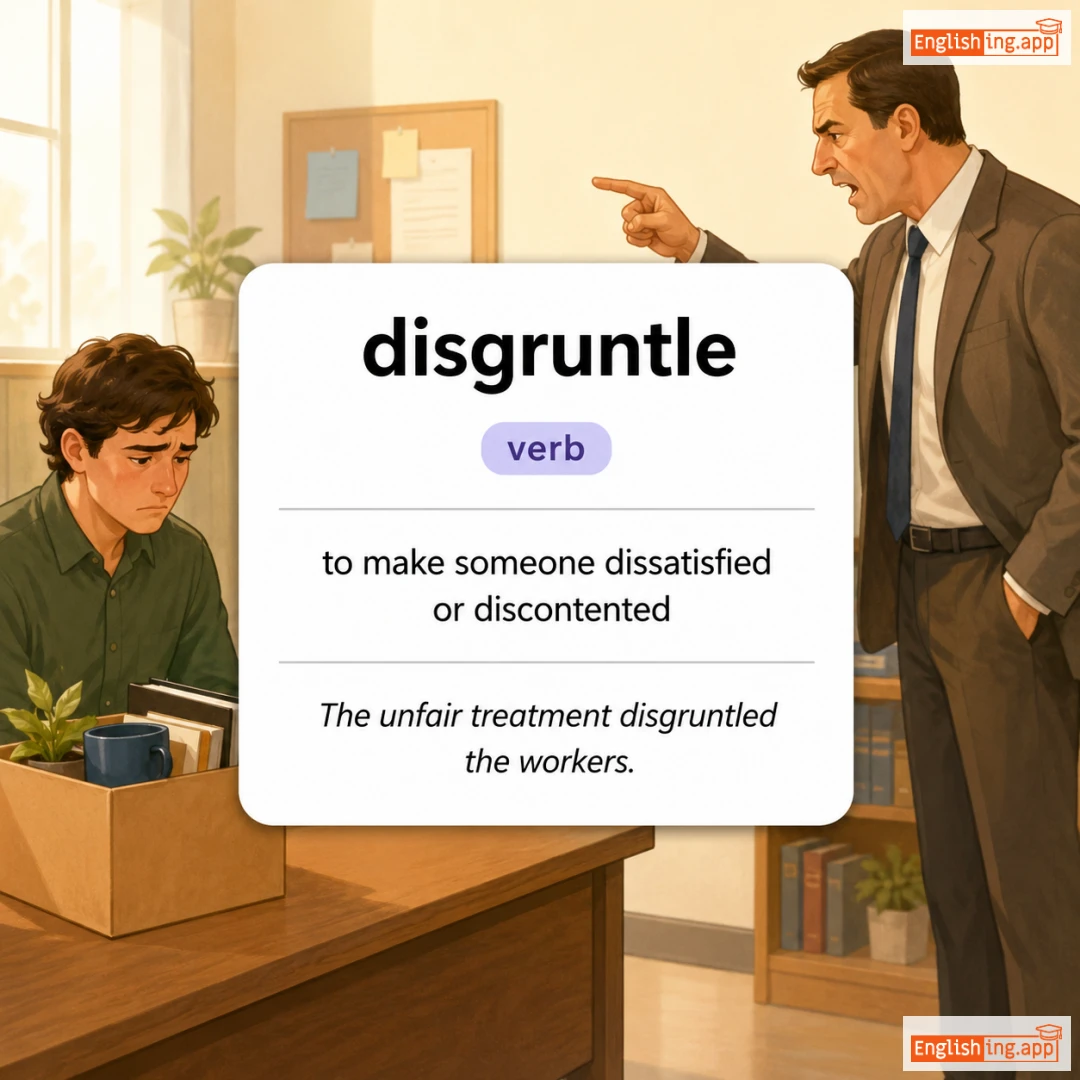
disgruntle definition card — visual illustration of the meaning
verb C1
/dɪsˈɡrʌntl/
descontentar (descontentar)

to make someone dissatisfied or discontented

"The unfair treatment disgruntled the workers."

"El trato injusto descontentó a los trabajadores." (El trato injusto descontento a los trabajadores.)
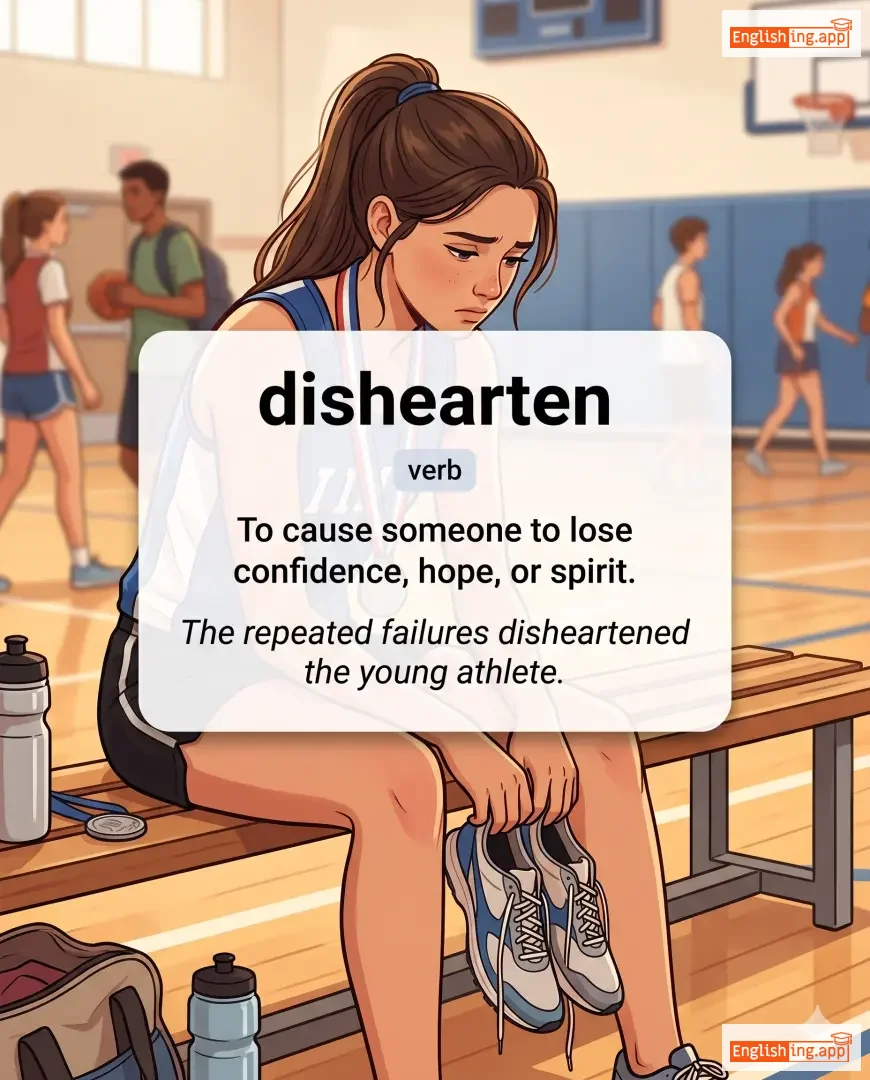
dishearten definition card — visual illustration of the meaning
verb C1
/dɪsˈhɑːrtən/
desmoralizar (desmoralizar)

To cause someone to lose confidence, hope, or spirit.

"The repeated failures disheartened the young athlete."

"Los fracasos repetidos desmoralizaron al joven atleta." (Los fracasos repetidos desmoralizaron al joven atleta.)
adjective C1
/dɪsˈhɑːrtənd/
desanimado (desanimado)

Having lost confidence, hope, or spirit; discouraged.

"She looked disheartened after receiving the bad news."

"Ella parecía desanimada después de recibir la mala noticia." (Ella parecia desanimada despues de recibir la mala noticia.)
adjective C1
/dɪˈʃɛvəld/
desordenado (desordenado)

Untidy, messy, or in disorder, especially of hair or clothing.

"He arrived with disheveled hair and wrinkled clothes."

"Él llegó con el cabello desordenado y la ropa arrugada." (Él llegó con el cabello desordenado y la ropa arrugada.)
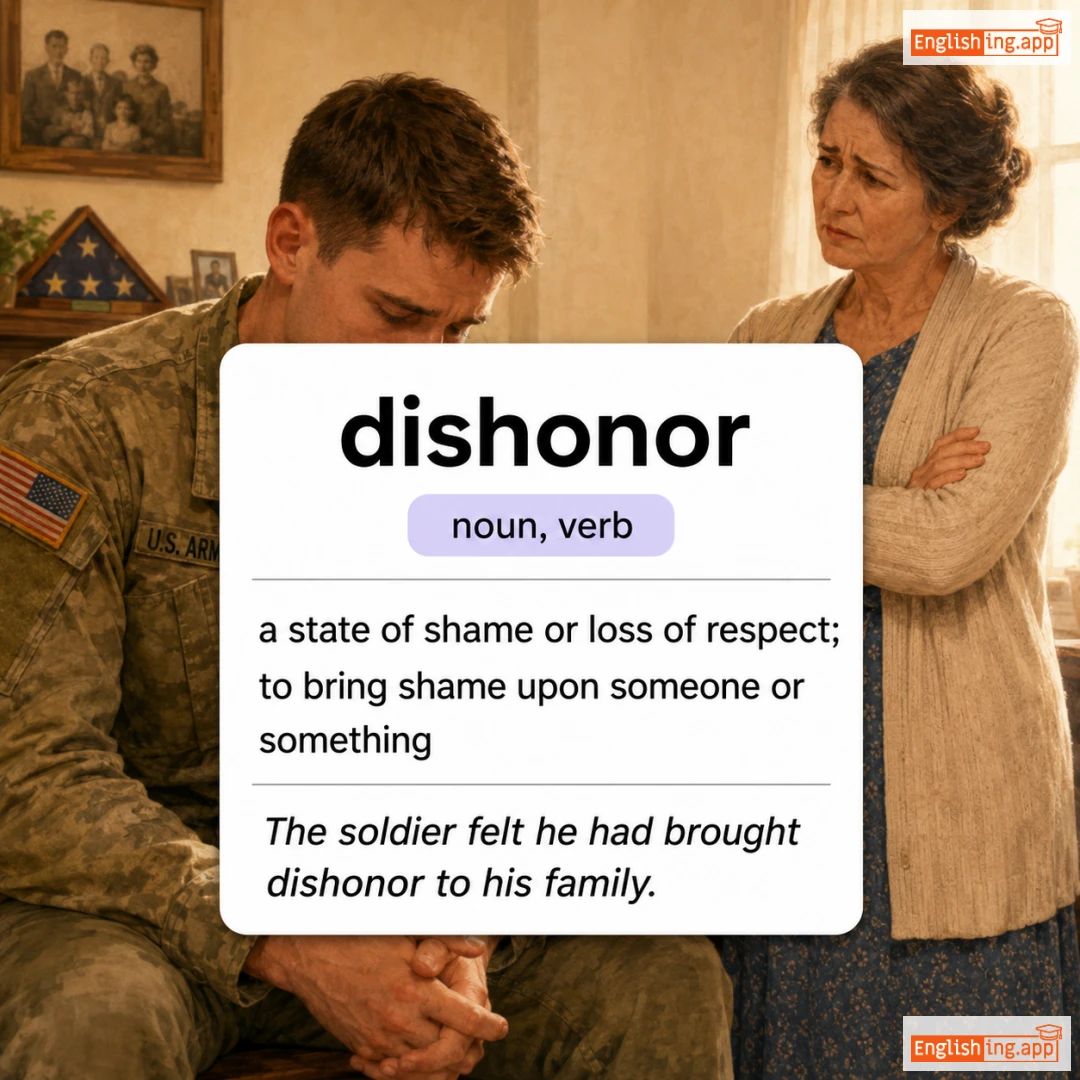
dishonor definition card — visual illustration of the meaning
noun, verb C1
/dɪsˈɑːnər/
deshonra (deshonra)

a state of shame or loss of respect; to bring shame upon someone or something

"The soldier felt he had brought dishonor to his family."

"El soldado sintió que había traído deshonra a su familia." (El soldado sintió que había traído deshonra a su familia.)
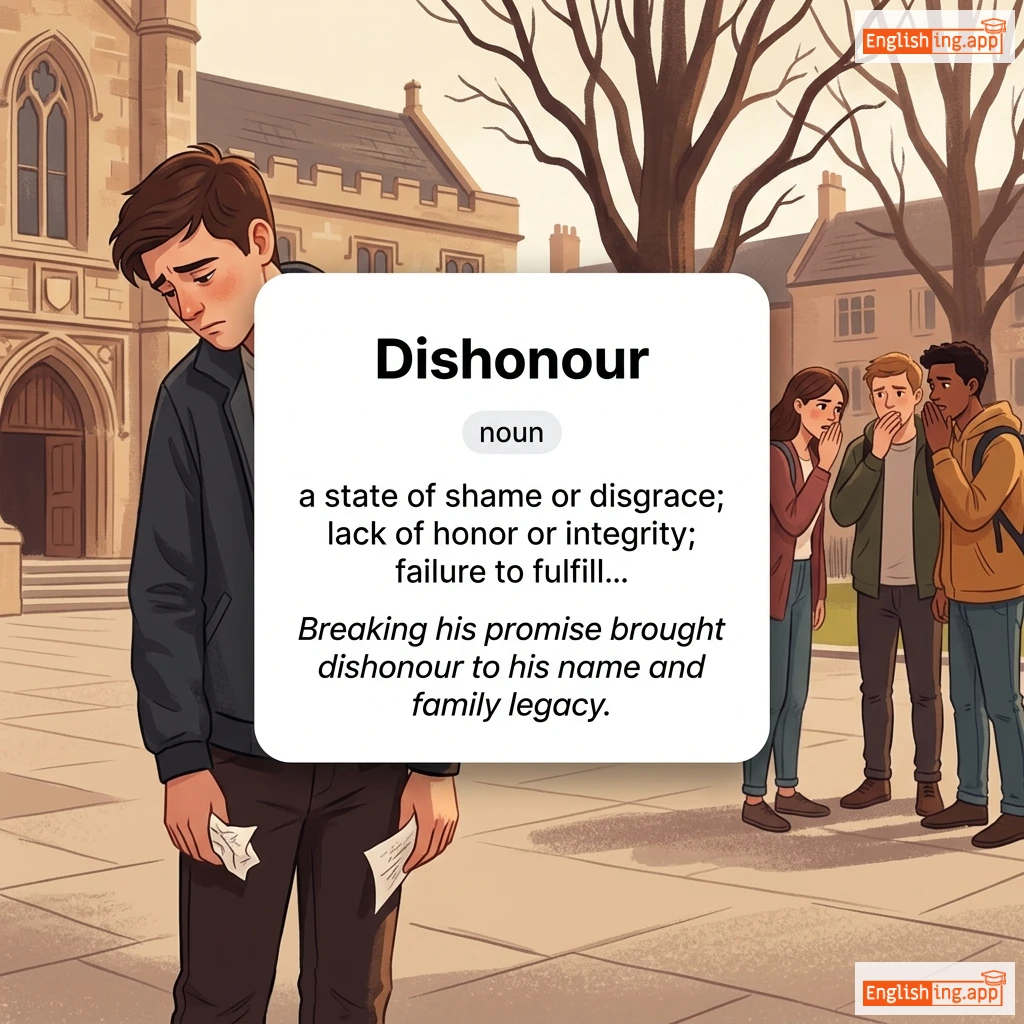
Dishonour definition card — visual illustration of the meaning
noun C1
/dɪsˈɒn.ər/
deshonra (deshonra)

a state of shame or disgrace; lack of honor or integrity; failure to fulfill obligations

"Breaking his promise brought dishonour to his name and family legacy."

"Romper su promesa trajo deshonra a su nombre y legado familiar." (Romper su promesa trajo deshonra a su nombre y legado familiar.)
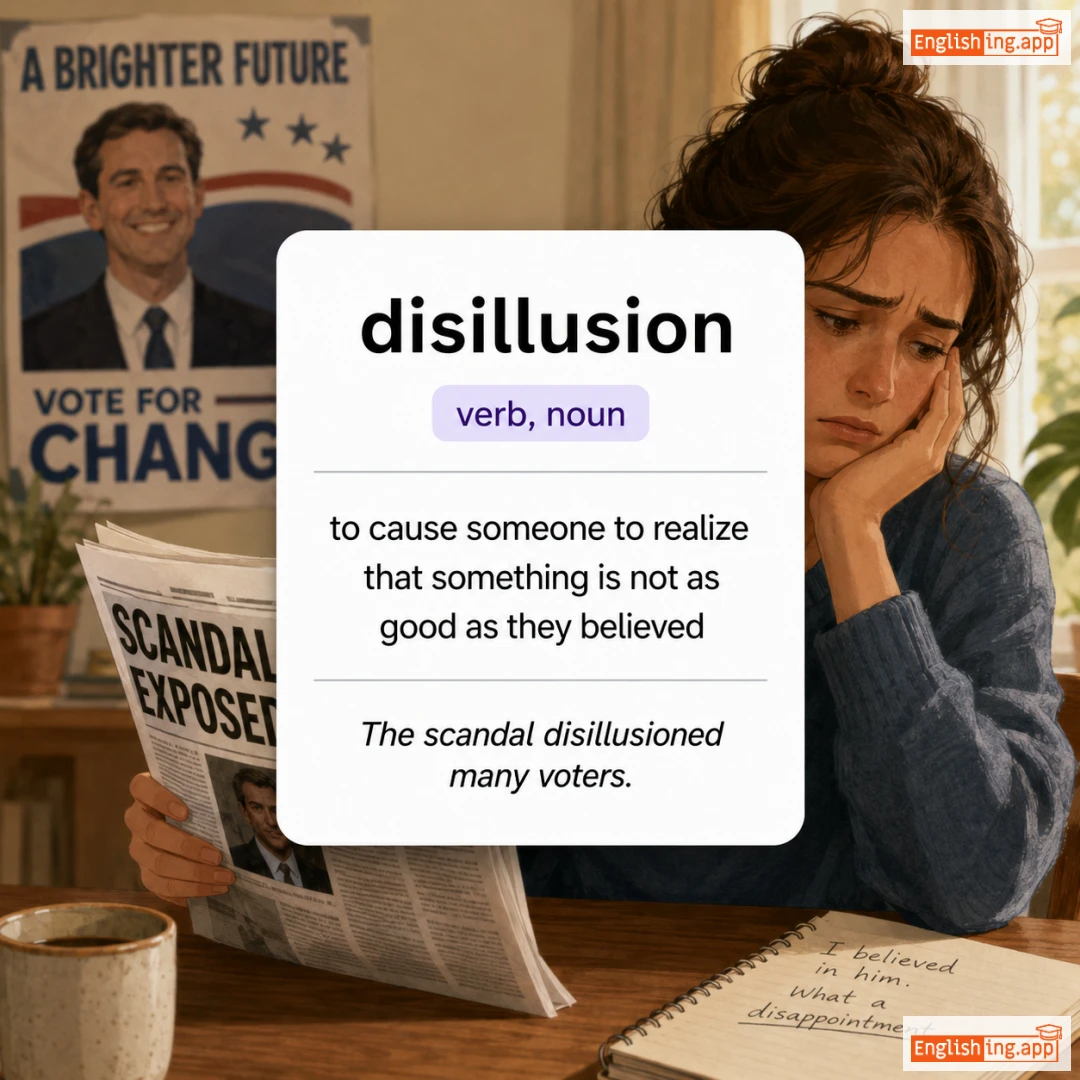
disillusion definition card — visual illustration of the meaning
verb, noun C1
/ˌdɪsɪˈluːʒən/
desilusión (desilusion)

to cause someone to realize that something is not as good as they believed

"The scandal disillusioned many voters."

"El escándalo desilusionó a muchos votantes." (El escandalo desilusiono a muchos votantes.)
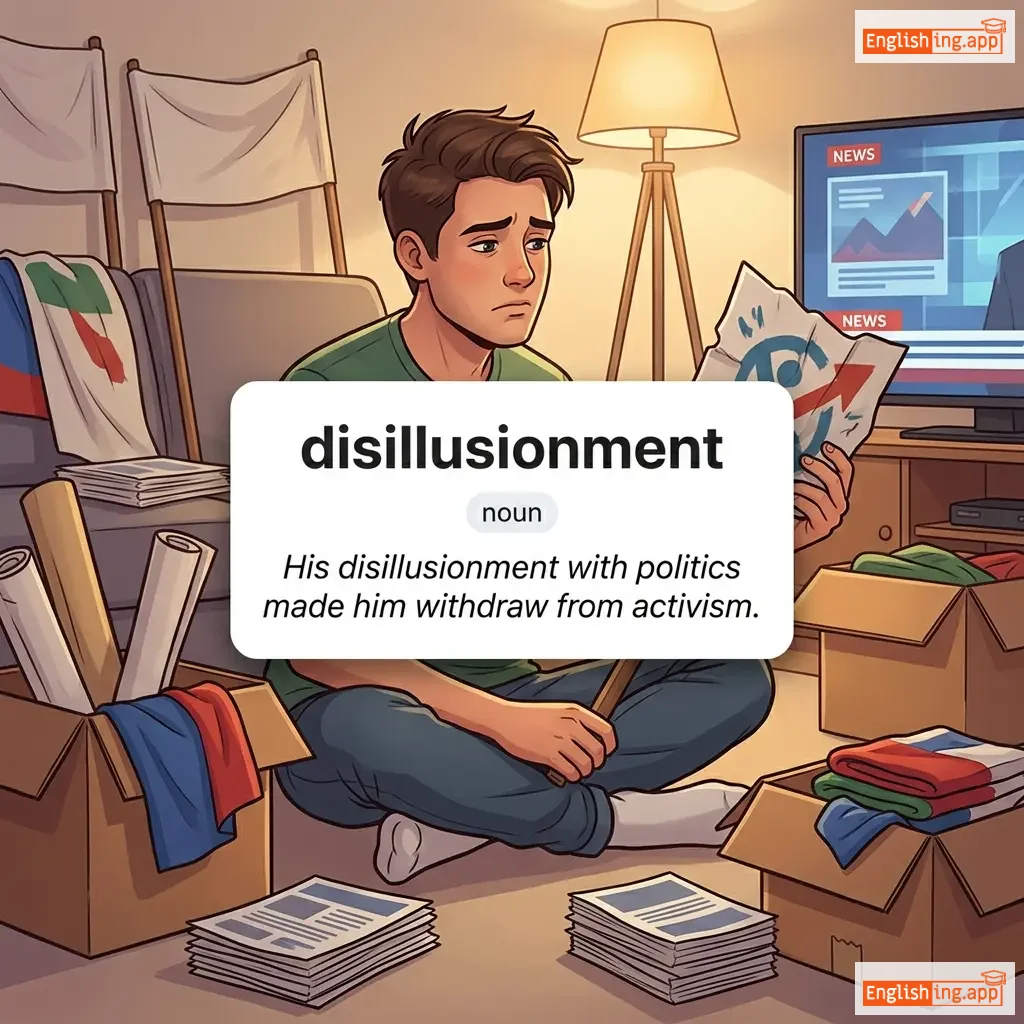
disillusionment definition card — visual illustration of the meaning
noun C1
/ˌdɪs.ɪˈluː.ʒən.mənt/
desilusión (desilusion)

A feeling of disappointment resulting from the discovery that something is not as good as one believed it to be.

"His disillusionment with politics made him withdraw from activism."

"Su desilusión con la política lo hizo alejarse del activismo." (Su desilusion con la politica lo hizo alejarse del activismo.)
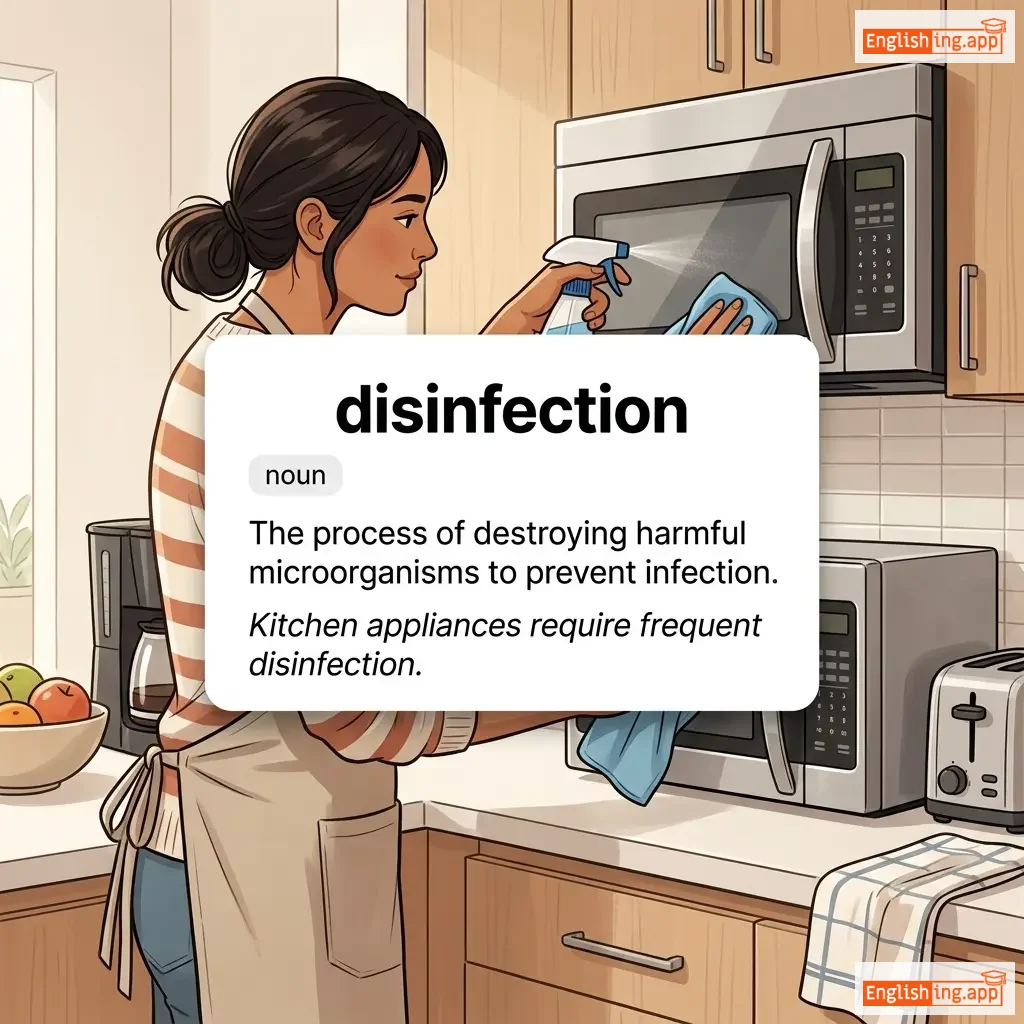
disinfection definition card — visual illustration of the meaning
noun C1
ˌdɪs.ɪnˈfek.ʃən
desinfección (desinfeccion)

The process of destroying harmful microorganisms to prevent infection.

"Kitchen appliances require frequent disinfection."

"Los electrodomésticos requieren desinfección frecuente." (Los electrodomesticos requieren desinfeccion frecuente.)
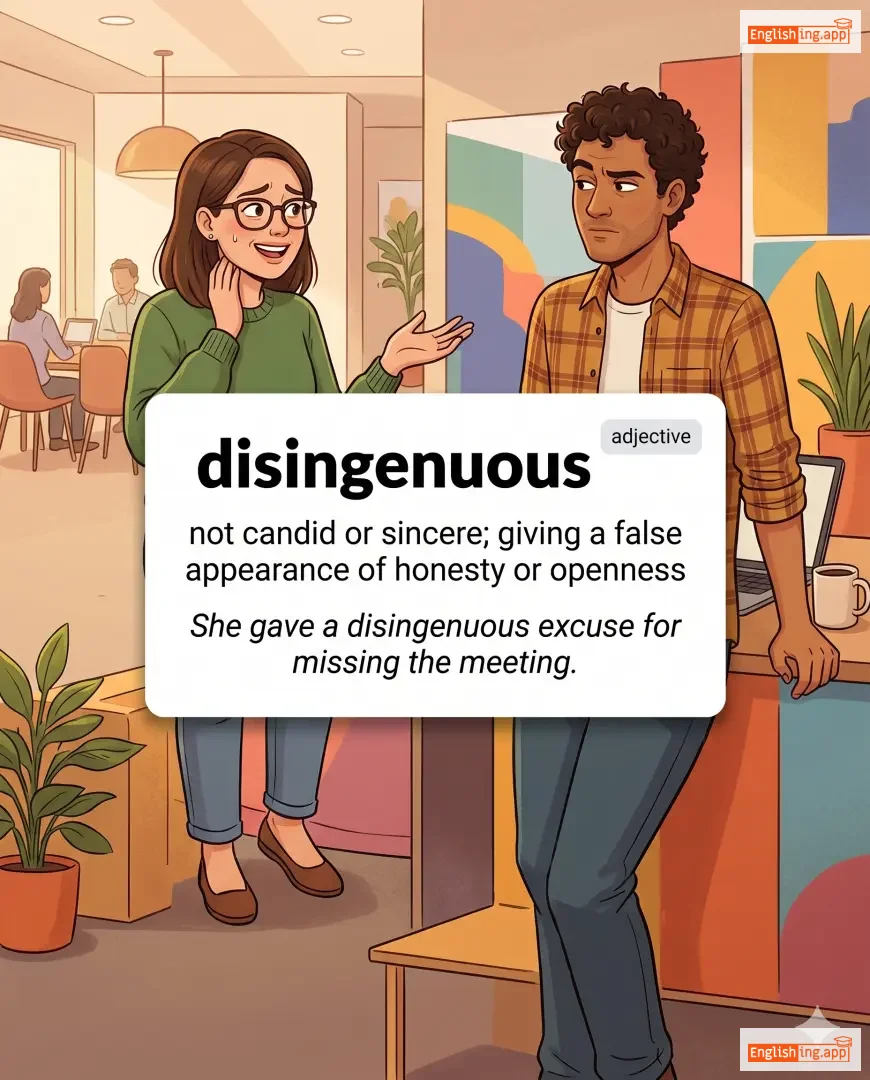
disingenuous definition card — visual illustration of the meaning
adjective C1
/ˌdɪsɪnˈdʒɛnjʊəs/
falso (falso)

not candid or sincere; giving a false appearance of honesty or openness

"She gave a disingenuous excuse for missing the meeting."

"Ella dio una excusa falsa por no asistir a la reunión." (Ella dio una excusa falsa por no asistir a la reunion.)
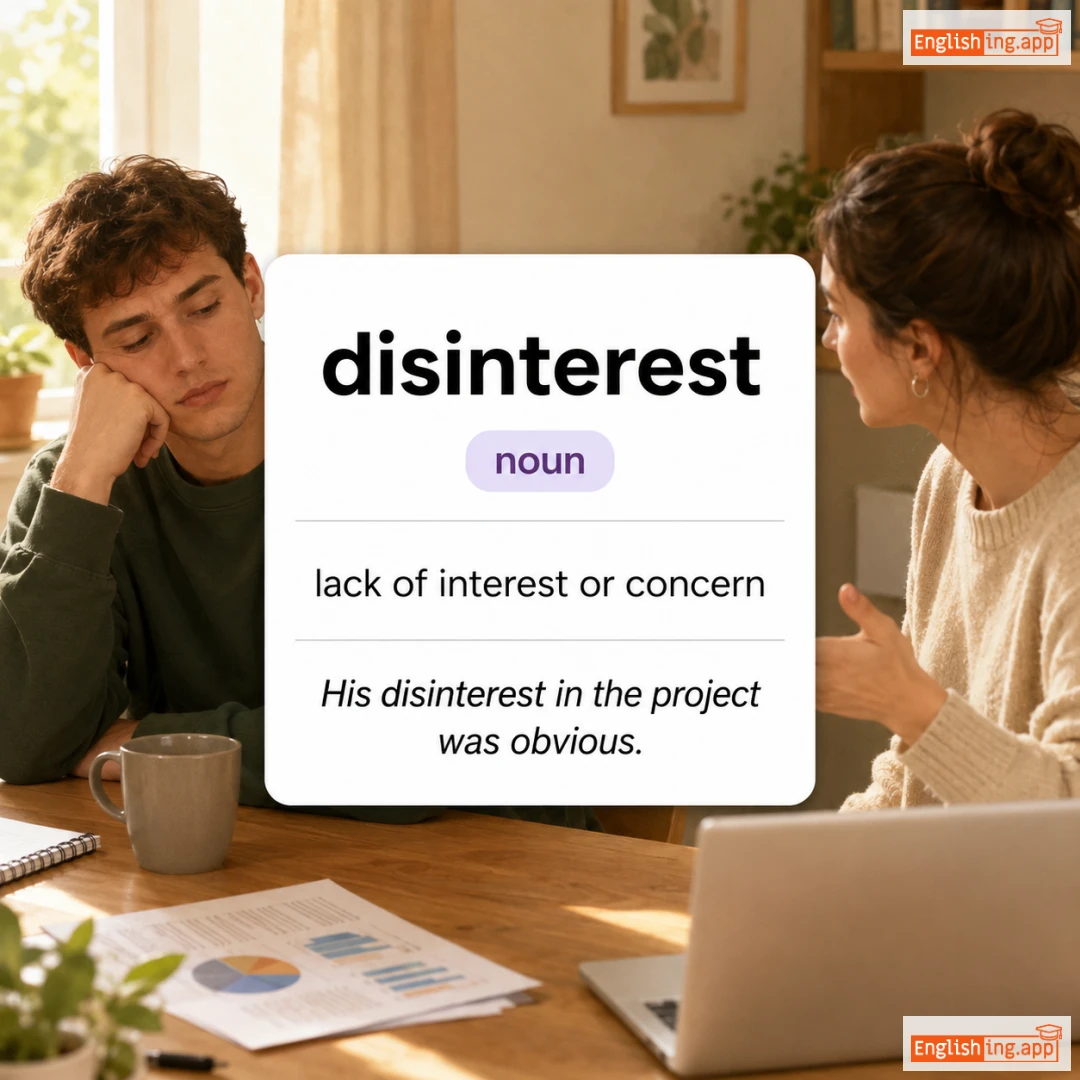
disinterest definition card — visual illustration of the meaning
noun C1
/dɪsˈɪntrəst/
desinterés (desinteres)

lack of interest or concern

"His disinterest in the project was obvious."

"Su desinterés en el proyecto era obvio." (Su desinteres en el proyecto era obvio.)
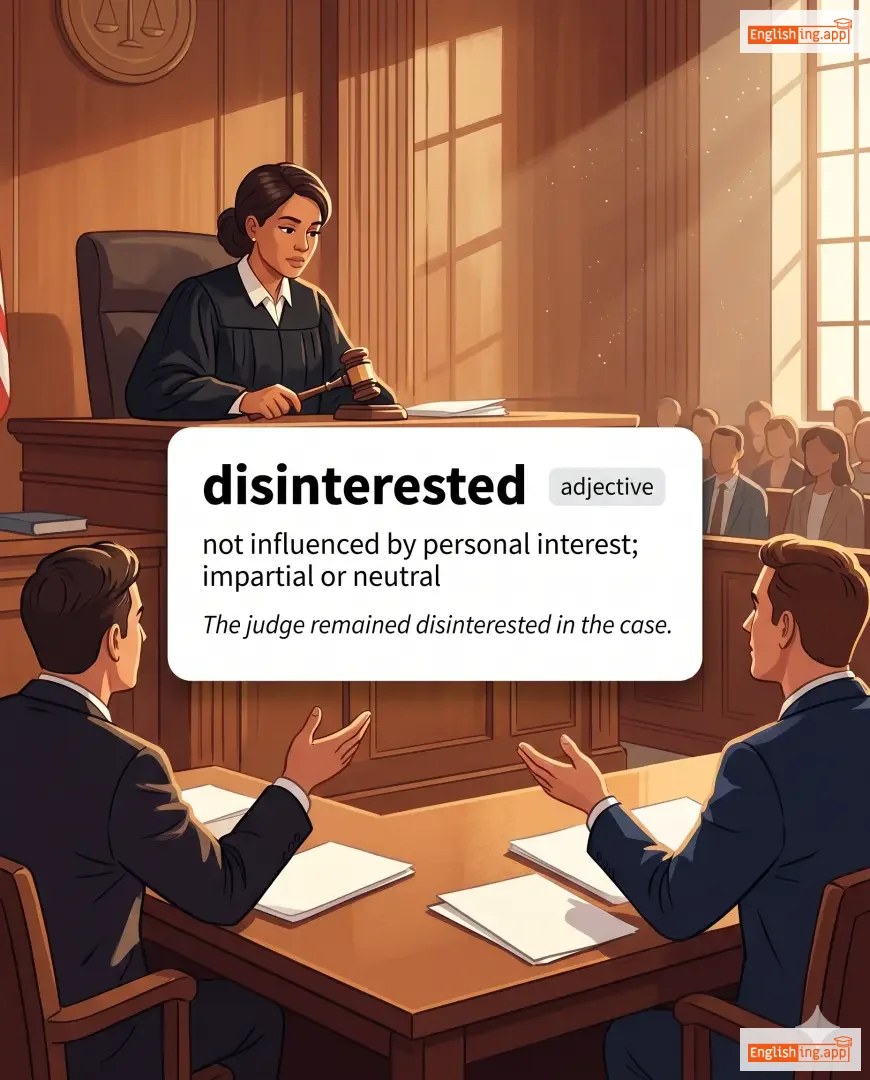
disinterested definition card — visual illustration of the meaning
adjective C1
/dɪsˈɪntrəstɪd/
desinteresado (desinteresado)

not influenced by personal interest; impartial or neutral

"The judge remained disinterested in the case."

"El juez se mantuvo desinteresado en el caso." (El juez se mantuvo desinteresado en el caso.)
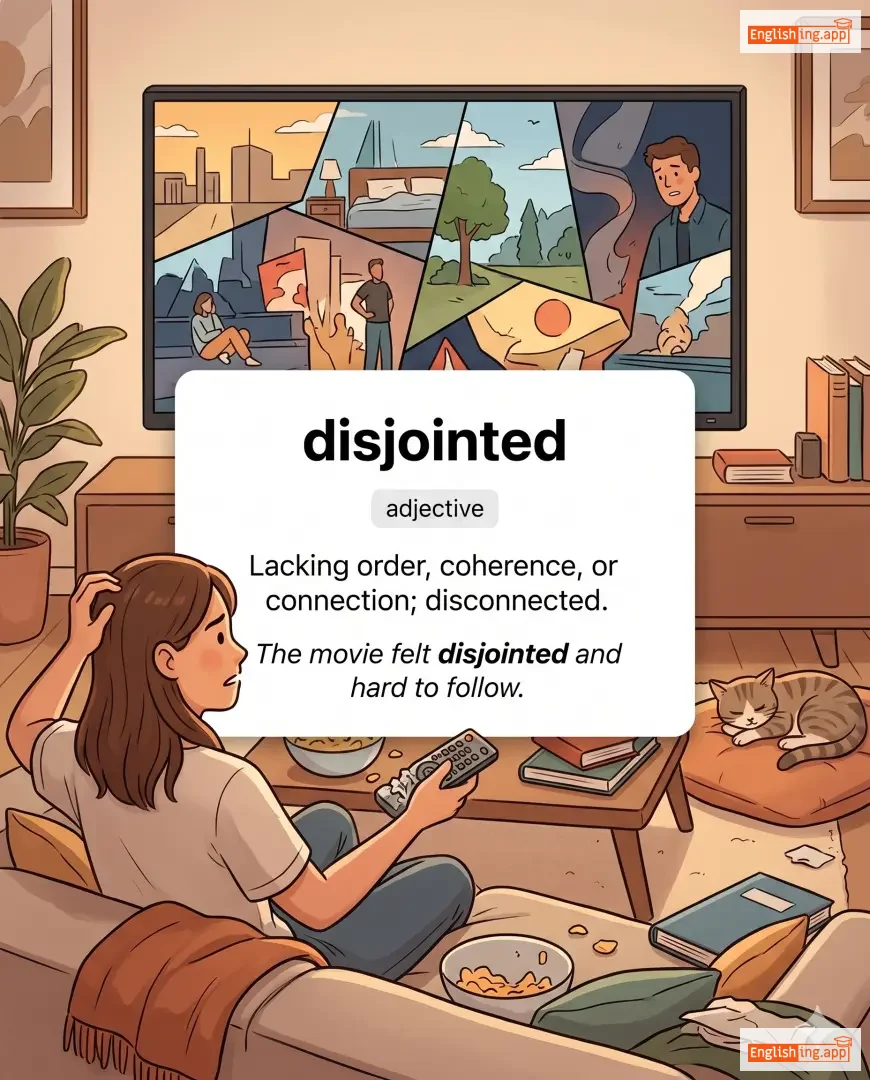
disjointed definition card — visual illustration of the meaning
adjective C1
/dɪsˈdʒɔɪntɪd/
desordenado (desordenado)

Lacking order, coherence, or connection; disconnected.

"The movie felt disjointed and hard to follow."

"La película se sintió desordenada y difícil de seguir." (La pelicula se sintió desordenada y dificil de seguir.)
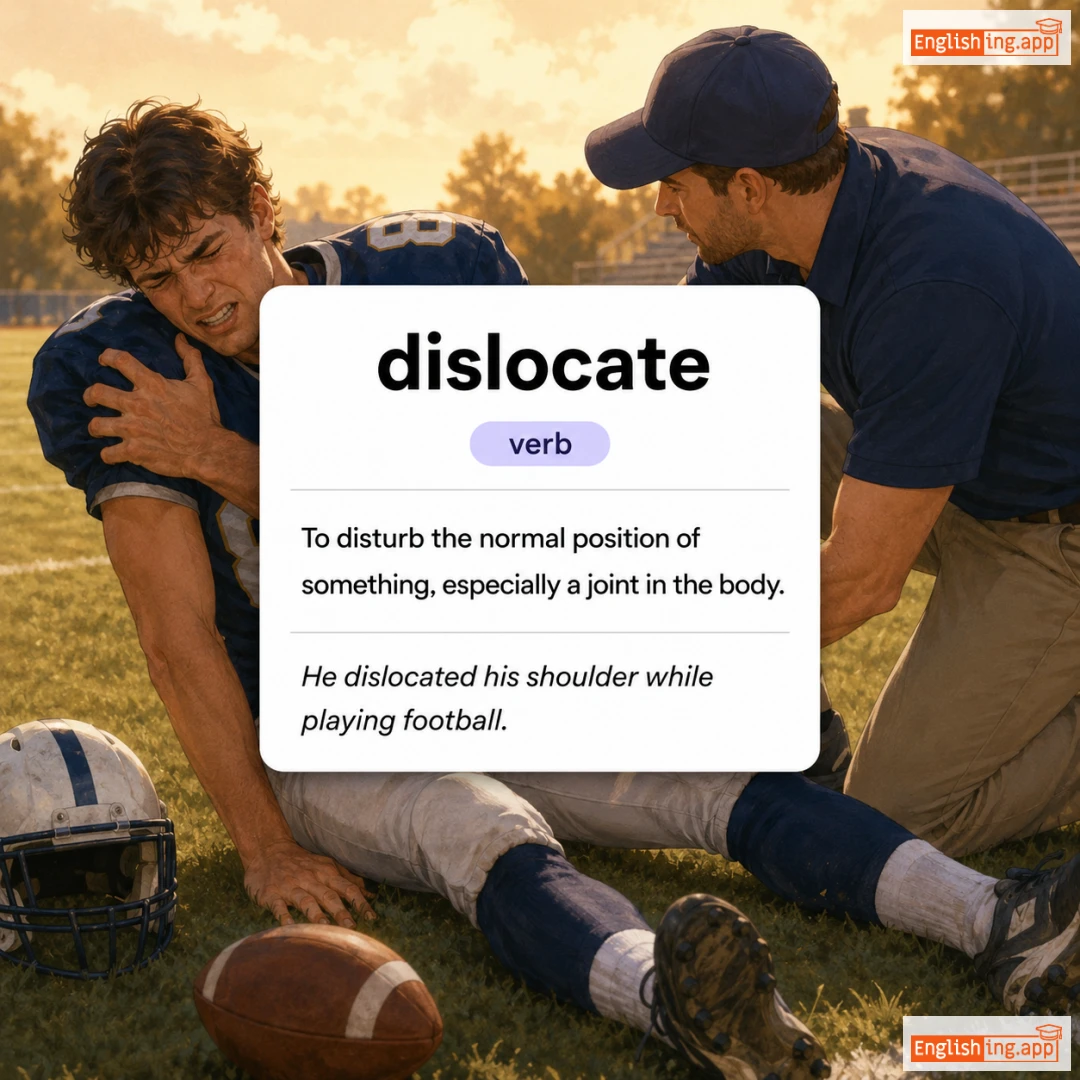
dislocate definition card — visual illustration of the meaning
verb C1
/ˈdɪsləkeɪt/
dislocar (dislokar)

To disturb the normal position of something, especially a joint in the body.

"He dislocated his shoulder while playing football."

"Él dislocó su hombro mientras jugaba al fútbol." (El disloko su hombro mientras jugaba al futbol.)
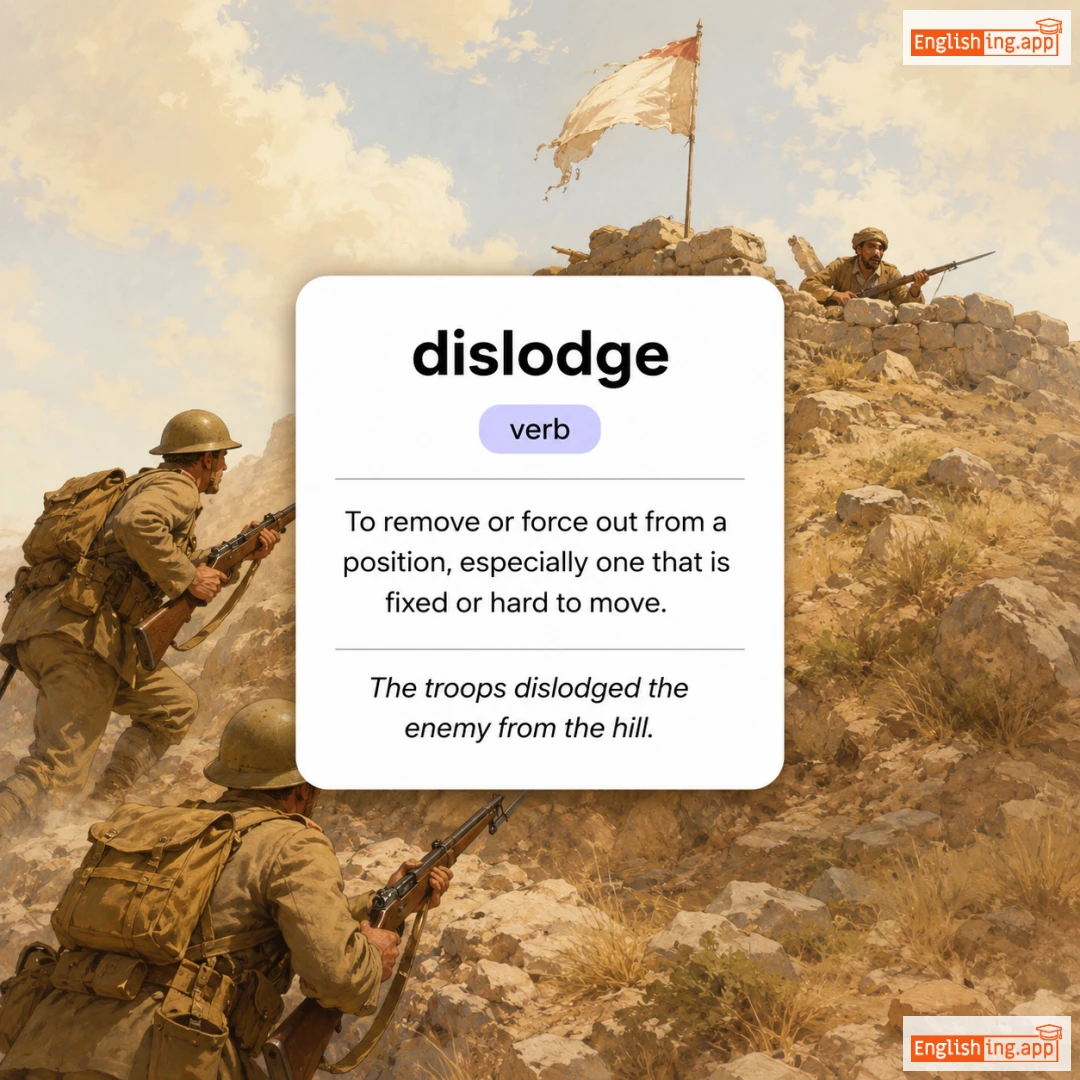
dislodge definition card — visual illustration of the meaning
verb C1
/dɪsˈlɒdʒ/
desalojar (desalojar)

To remove or force out from a position, especially one that is fixed or hard to move.

"The troops dislodged the enemy from the hill."

"Las tropas desalojaron al enemigo de la colina." (Las tropas desalojaron al enemigo de la colina.)
adjective C1
/ˈdɪzməl/
oscuro; deprimente; triste (oscuro; deprimente; triste)

gloomy; depressing; causing sadness or despair

"The weather was dismal with heavy rain and dark clouds."

"El clima estaba oscuro con lluvia intensa y nubes oscuras." (El clima estaba oscuro con lluvia intensa y nubes oscuras.)
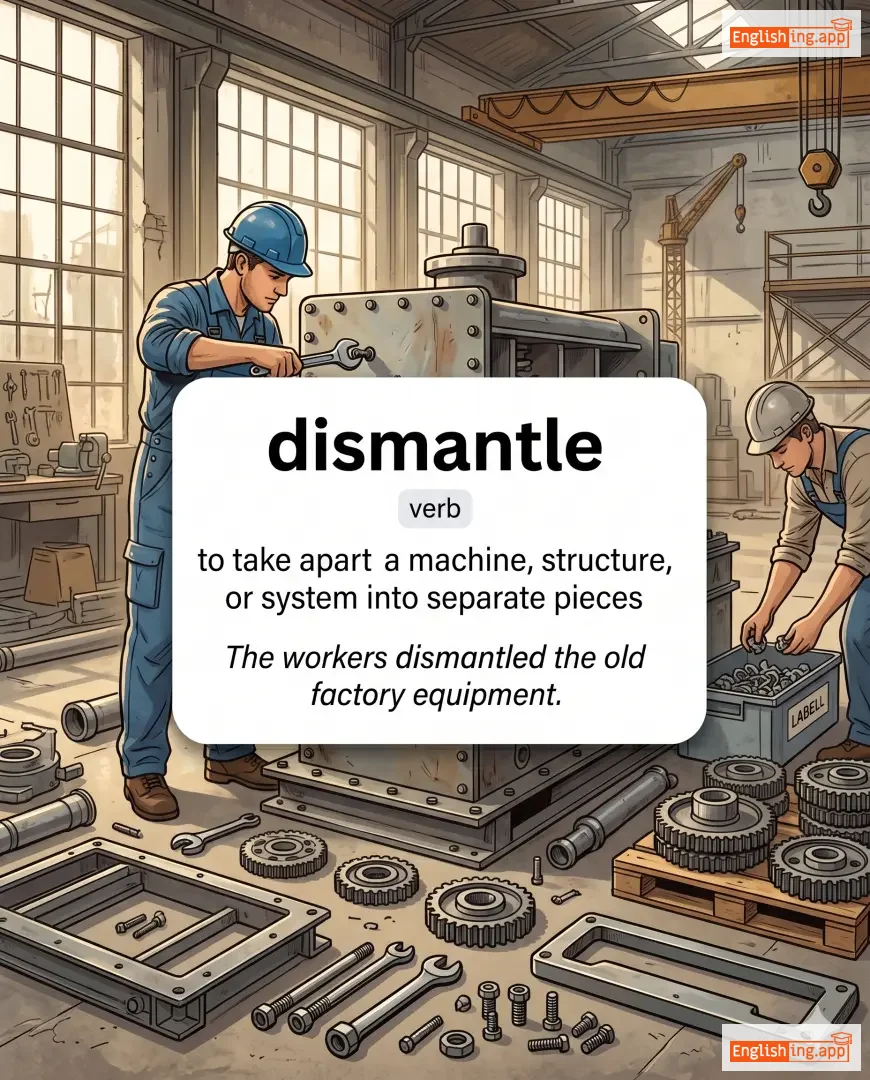
dismantle definition card — visual illustration of the meaning
verb C1
/dɪsˈmæntl̩/
desmontar (desmontar)

to take apart a machine, structure, or system into separate pieces

"The workers dismantled the old factory equipment."

"Los trabajadores desmontaron el equipo de la vieja fábrica." (Los trabajadores desmontaron el equipo de la vieja fábrica.)
verb C1
/ˌdɪsˈmaʊnt/
bajarse (bajarse)

to get off or down from something, especially a horse, bicycle, or motorcycle

"The rider dismounted from the horse after a long journey."

"El jinete se bajó del caballo después de un largo viaje." (El jinete se bajo del caballo despues de un largo viaje.)
noun C1
/ˌdɪsəˈbiːdiəns/
desobediencia (desobediencia)

failure or refusal to obey rules, laws, or authority

"The child's disobedience worried his parents."

"La desobediencia del niño preocupó a sus padres." (La desobediencia del niño preocupó a sus padres.)
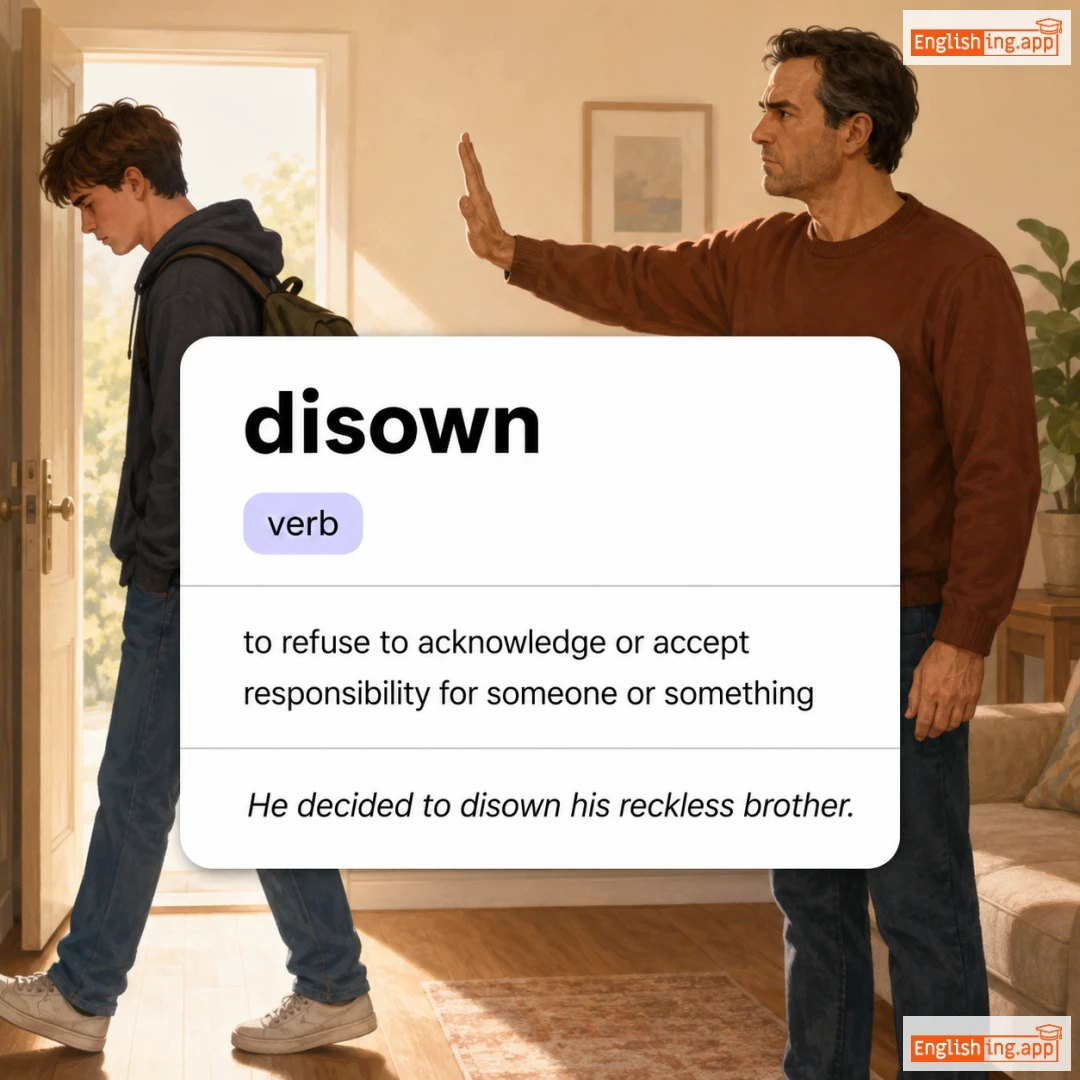
disown definition card — visual illustration of the meaning
verb C1
/dɪsˈoʊn/
desheredar (desheredar)

to refuse to acknowledge or accept responsibility for someone or something

"He decided to disown his reckless brother."

"Él decidió desheredar a su hermano imprudente." (El decidió desheredar a su hermano imprudente.)
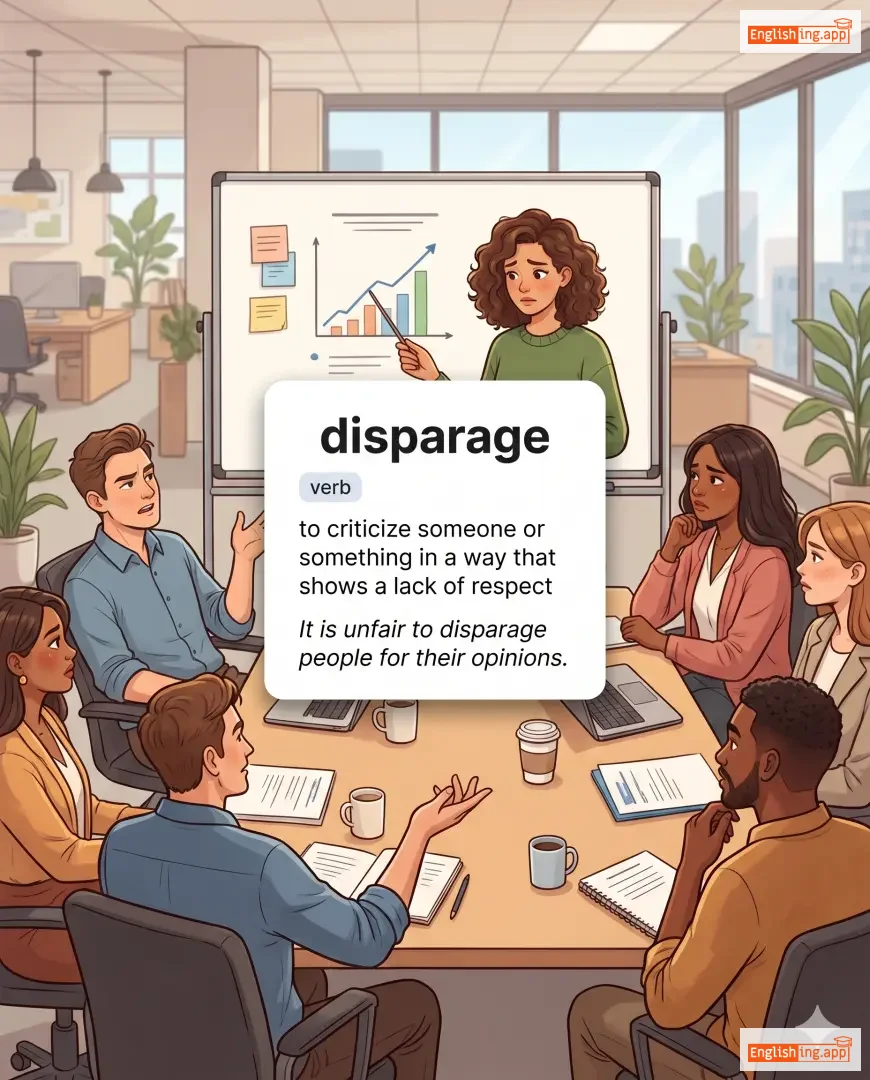
disparage definition card — visual illustration of the meaning
verb C1
/dɪsˈpærɪdʒ/
despreciar (despreciar)

to criticize someone or something in a way that shows a lack of respect

"It is unfair to disparage people for their opinions."

"Es injusto despreciar a las personas por sus opiniones." (Es injusto despreciar a las personas por sus opiniones.)
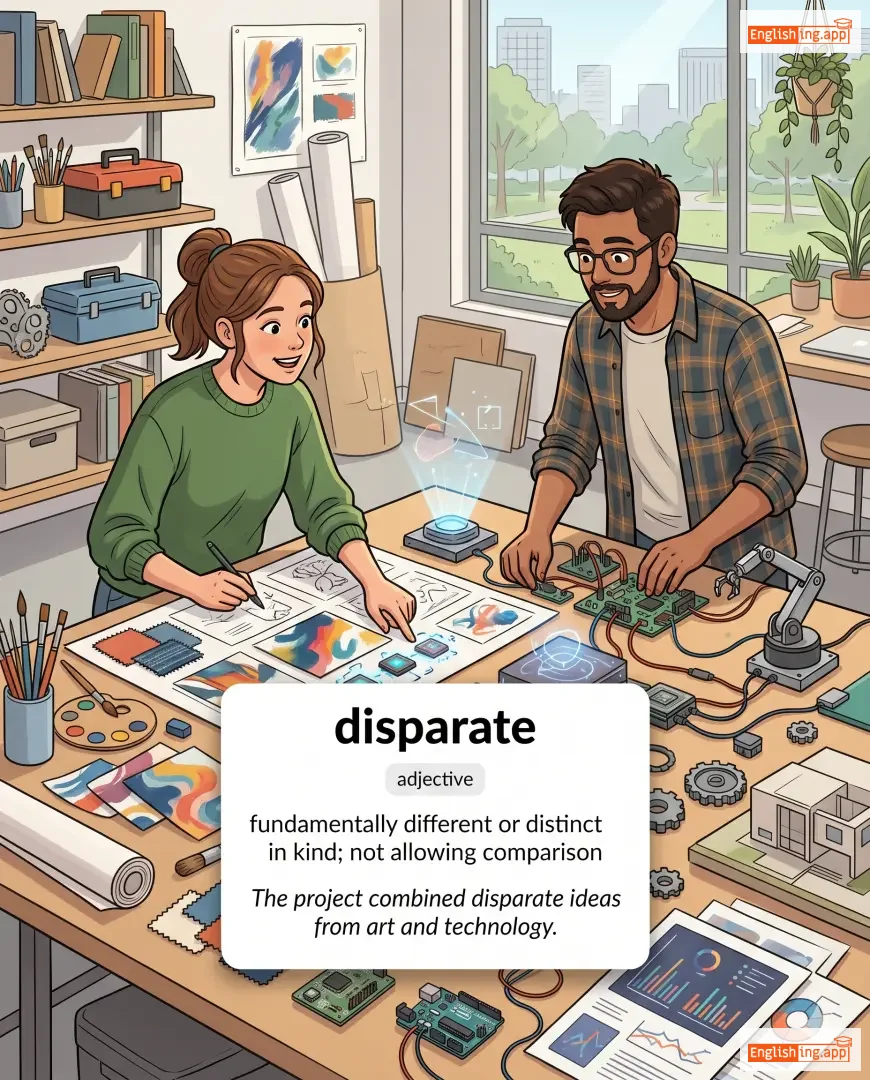
disparate definition card — visual illustration of the meaning
adjective C1
/ˈdɪspərət/
dispar (dispar)

fundamentally different or distinct in kind; not allowing comparison

"The project combined disparate ideas from art and technology."

"El proyecto combinó ideas dispares de arte y tecnología." (El proyecto combino ideas dispares de arte y tecnologia.)
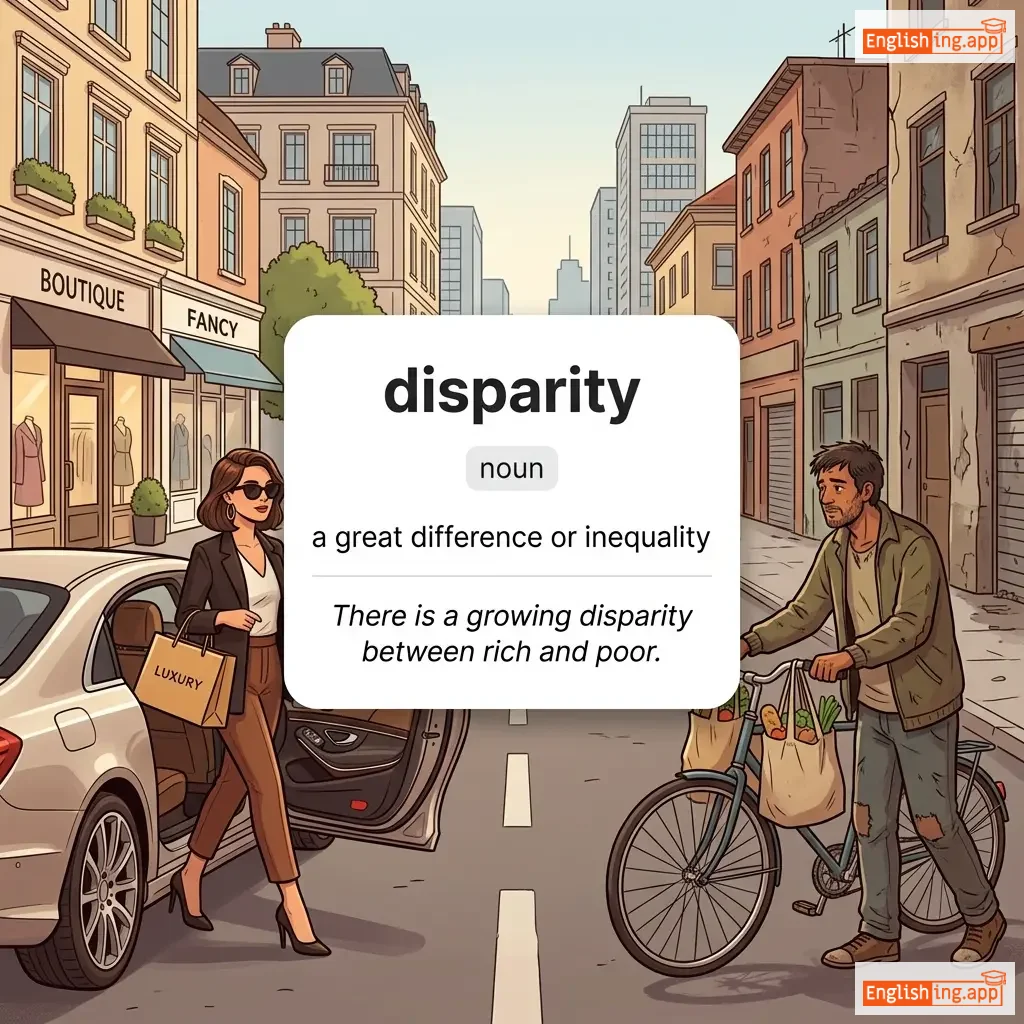
disparity definition card — visual illustration of the meaning
noun C1
/dɪˈspærəti/
desigualdad (desigualdad)

a great difference or inequality

"There is a growing disparity between rich and poor."

"Hay una creciente desigualdad entre ricos y pobres." (Hay una creciente desigualdad entre ricos y pobres.)
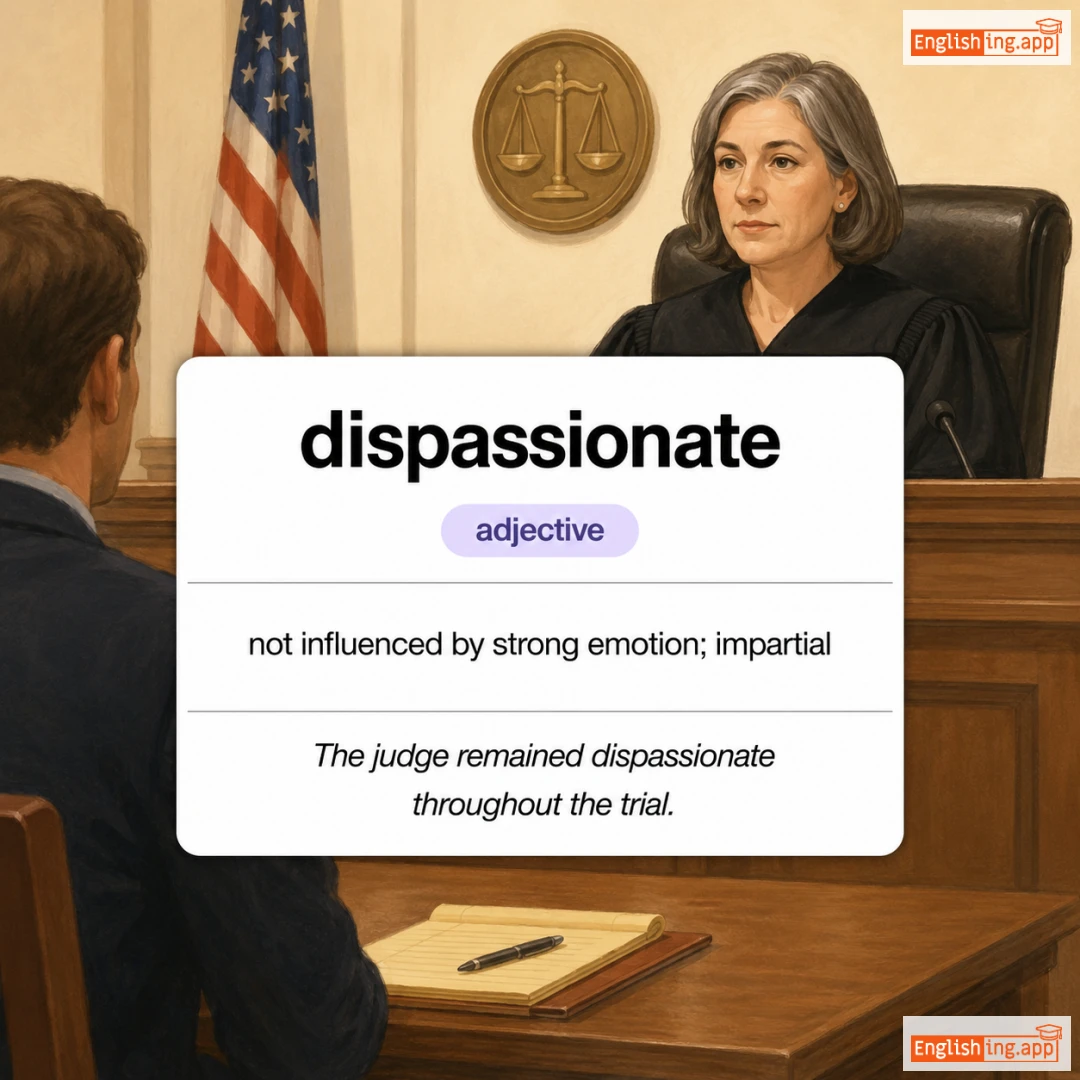
dispassionate definition card — visual illustration of the meaning
adjective C1
/dɪsˈpæʃənət/
imparcial (imparcial)

not influenced by strong emotion; impartial

"The judge remained dispassionate throughout the trial."

"El juez se mantuvo imparcial durante el juicio." (El juez se mantuvo imparcial durante el juicio.)
verb C1
/dɪˈspɛl/
disipar (disipar)

to make a doubt, feeling, or belief disappear

"The teacher's explanation dispelled the students' confusion."

"La explicación del profesor disipó la confusión de los estudiantes." (La explicacion del profesor disipo la confusion de los estudiantes.)
noun C1
/ˌdɪspɛnˈseɪʃən/
dispensa (dispensacion)

An exemption from a rule or usual requirement; a system of order, government, or control.

"The school granted him a special dispensation to skip the exam due to illness."

"La escuela le concedió una dispensa especial para ausentarse del examen debido a una enfermedad." (La escuela le concedio una dispensa especial para ausentarse del examen debido a una enfermedad.)
verb C1
/dɪˈspɛns/
distribuir (distribuir)

To distribute or provide something, especially in portions.

"The machine dispenses clean drinking water."

"La máquina dispensa agua potable limpia." (La maquina dispensa agua potable limpia.)
verb C1
/dɪˈspɜːrs/
dispersar (dispersar)

To scatter or spread widely in different directions.

"The police used tear gas to disperse the crowd."

"La policía usó gas lacrimógeno para dispersar a la multitud." (La policía usó gas lacrimógeno para dispersar a la multitud.)
adjective C1
/dɪˈspɜːrst/
disperso (disperso)

Scattered or spread across a wide area.

"The dispersed population made it difficult to provide public services."

"La población dispersa dificultó la prestación de servicios públicos." (La poblacion dispersa dificulto la prestacion de servicios publicos.)
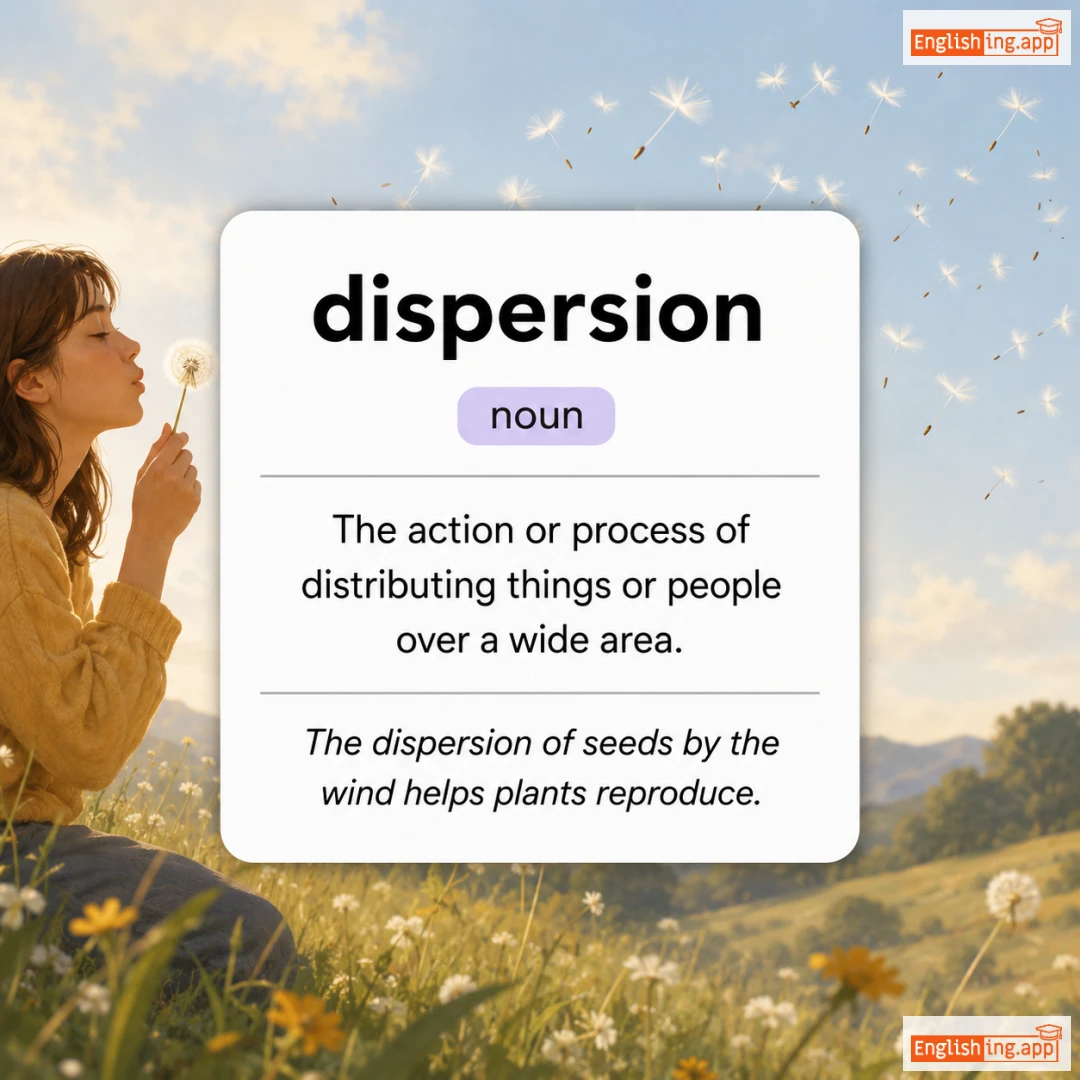
dispersion definition card — visual illustration of the meaning
noun C1
/dɪˈspɜːrʒən/
dispersión (dispersión)

The action or process of distributing things or people over a wide area.

"The dispersion of seeds by the wind helps plants reproduce."

"La dispersión de semillas por el viento ayuda a las plantas a reproducirse." (La dispersión de semillas por el viento ayuda a las plantas a reproducirse.)
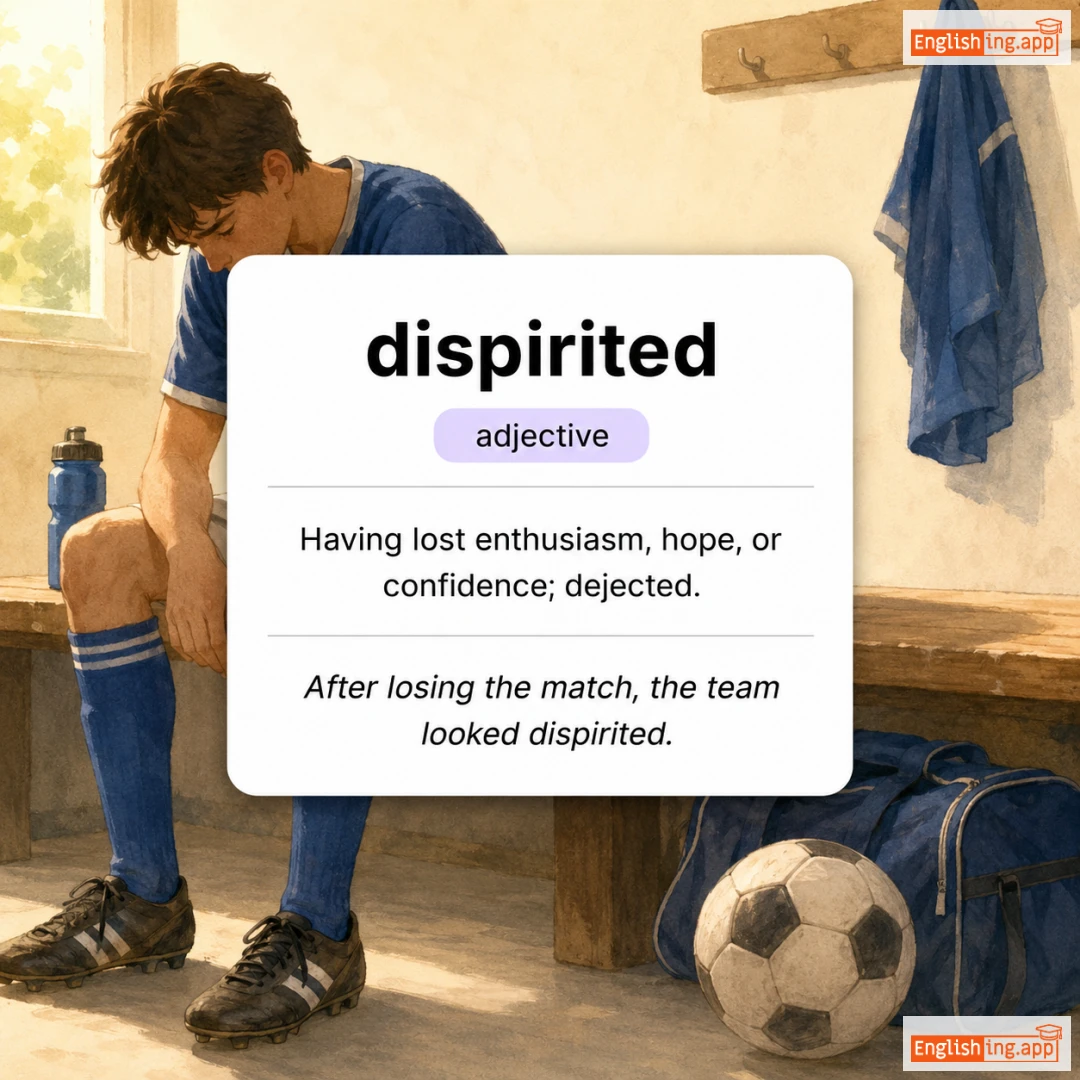
dispirited definition card — visual illustration of the meaning
adjective C1
/dɪˈspɪrɪtɪd/
desanimado (desanimado)

Having lost enthusiasm, hope, or confidence; dejected.

"After losing the match, the team looked dispirited."

"Después de perder el partido, el equipo se veía desanimado." (Despues de perder el partido, el equipo se veia desanimado.)
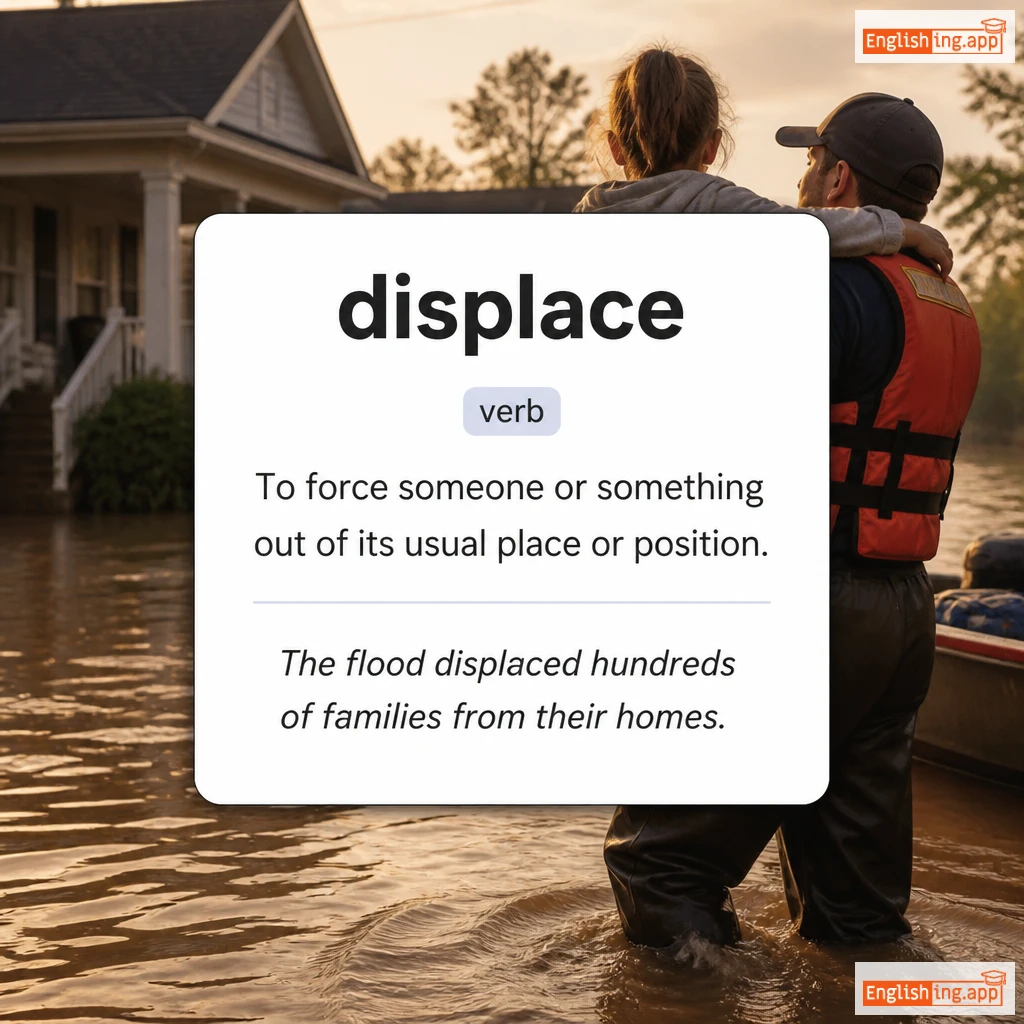
displace definition card — visual illustration of the meaning
verb C1
/dɪsˈpleɪs/
desplazar (desplazar)

To force someone or something out of its usual place or position.

"The flood displaced hundreds of families from their homes."

"La inundación desplazó a cientos de familias de sus hogares." (La inundación desplazó a cientos de familias de sus hogares.)
noun C1
/ˌdɪspəˈzɪʃən/
disposición (disposicion)

A person's usual attitude or temperament; arrangement or tendency.

"She has a cheerful disposition despite the difficulties."

"Ella tiene una disposición alegre a pesar de las dificultades." (Ella tiene una disposicion alegre a pesar de las dificultades.)
verb C1
/dɪsˈpruːv/
refutar (refutar)

to show that something is false or wrong

"The scientist worked hard to disprove the old theory."

"El científico trabajó duro para refutar la antigua teoría." (El científico trabajó duro para refutar la antigua teoría.)
verb C1
/dɪsˈkwɑːlɪfaɪ/
descalificar (descalificar)

to officially prevent someone from participating or being eligible

"The referee decided to disqualify the player for cheating."

"El árbitro decidió descalificar al jugador por hacer trampa." (El árbitro decidió descalificar al jugador por hacer trampa.)
noun/verb C1
/dɪsˈkwaɪət/
inquietud (inquietud)

A feeling of worry or unease; to make someone feel anxious or uneasy.

"The strange silence filled the room with disquiet."

"El extraño silencio llenó la habitación de inquietud." (El extrano silencio lleno la habitacion de inquietud.)
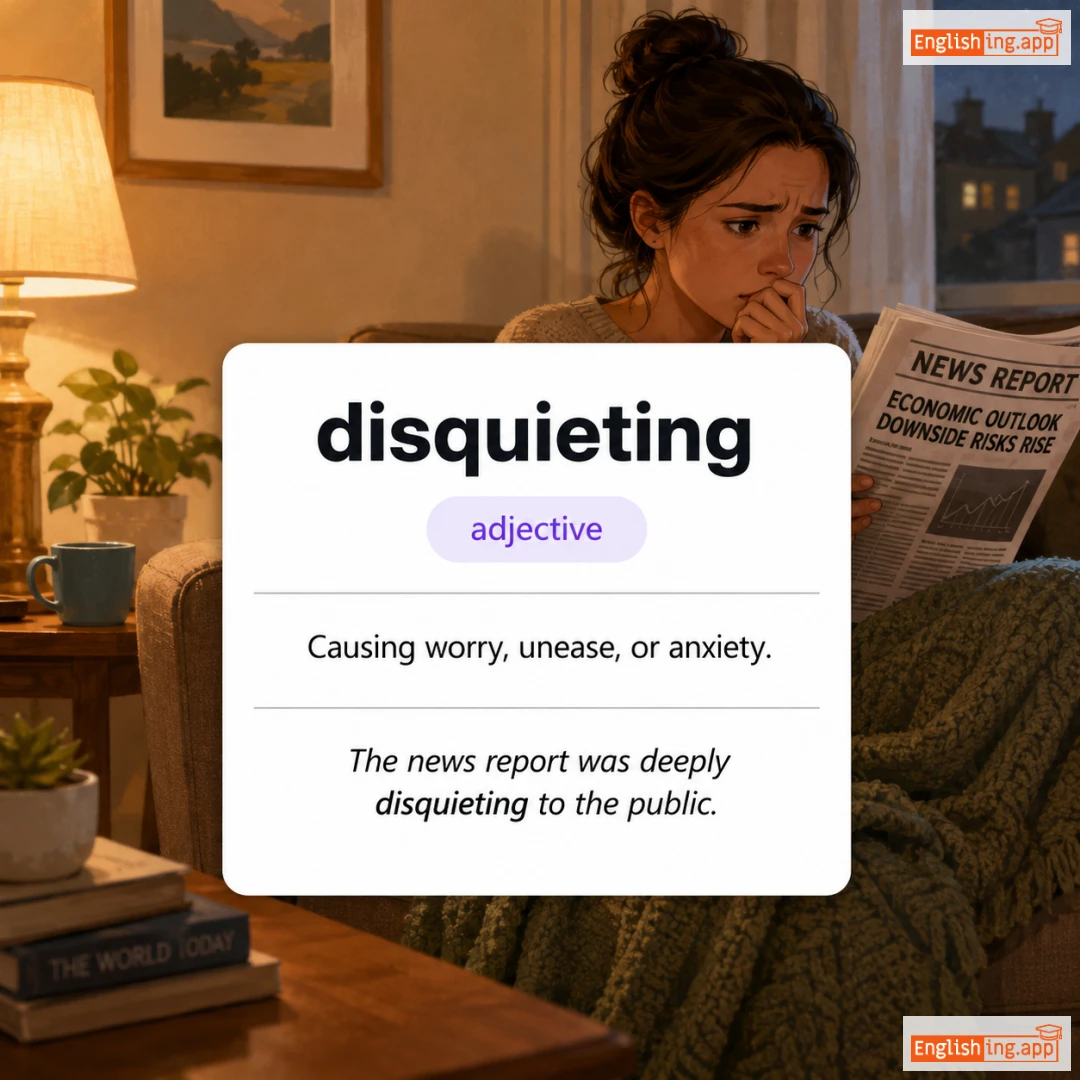
disquieting definition card — visual illustration of the meaning
adjective C1
/dɪsˈkwaɪətɪŋ/
perturbador (perturbador)

Causing worry, unease, or anxiety.

"The news report was deeply disquieting to the public."

"El informe de noticias fue profundamente perturbador para el público." (El informe de noticias fue profundamente perturbador para el público.)
adjective C1
/dɪsˈrɛpjətəbl̩/
desprestigiado (desprestigiado)

having a bad reputation; not considered respectable or trustworthy

"The journalist avoided staying in the disreputable part of town."

"El periodista evitó quedarse en la parte desprestigiada de la ciudad." (El periodista evito quedarse en la parte desprestigiada de la ciudad.)
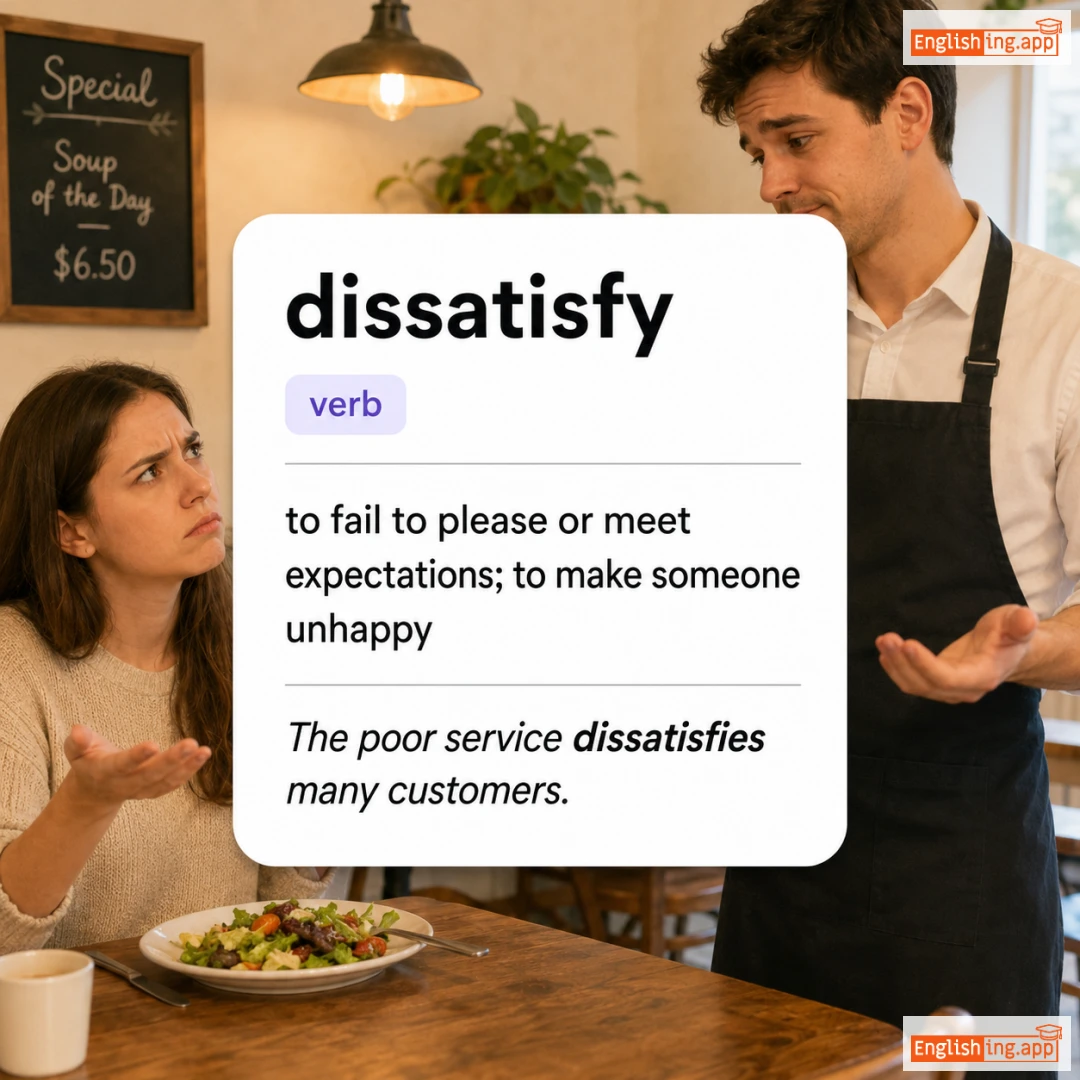
dissatisfy definition card — visual illustration of the meaning
verb C1
/dɪsˈsætɪsfaɪ/
desacontentar (desacontentar)

to fail to please or meet expectations; to make someone unhappy

"The poor service dissatisfies many customers."

"El mal servicio disatisface a muchos clientes." (El mal servicio disatisface a muchos clientes.)
verb C1
/dɪˈsɛkt/
disecar (disekar)

to cut apart an animal, plant, or other organism to study its internal parts; to analyze something in detail

"In biology class, students had to dissect a frog to learn about its anatomy."

"En la clase de biología, los estudiantes tuvieron que diseccionar una rana para aprender sobre su anatomía." (En la clase de biología, los estudiantes tuvieron que diseccionar una rana para aprender sobre su anatomía.)
noun C1
/daɪˈsɛkʃən/
disección (disekshon)

the act of cutting apart or analyzing something in detail, especially a body or structure

"The dissection of the specimen revealed important details about its structure."

"La disección del espécimen reveló detalles importantes sobre su estructura." (La disección del espécimen reveló detalles importantes sobre su estructura.)
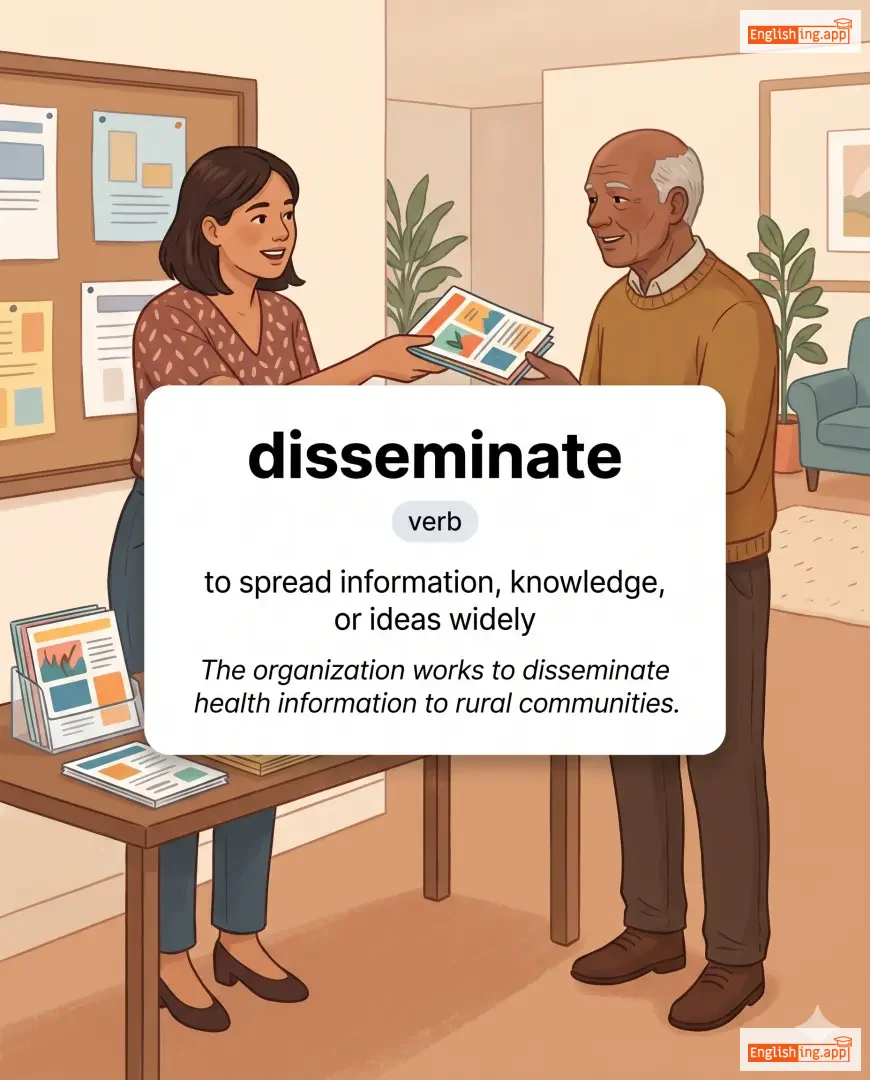
disseminate definition card — visual illustration of the meaning
verb C1
/dɪˈsɛmɪˌneɪt/
diseminar (diseminar)

to spread information, knowledge, or ideas widely

"The organization works to disseminate health information to rural communities."

"La organización trabaja para difundir información de salud a las comunidades rurales." (La organizacion trabaja para difundir informacion de salud a las comunidades rurales.)
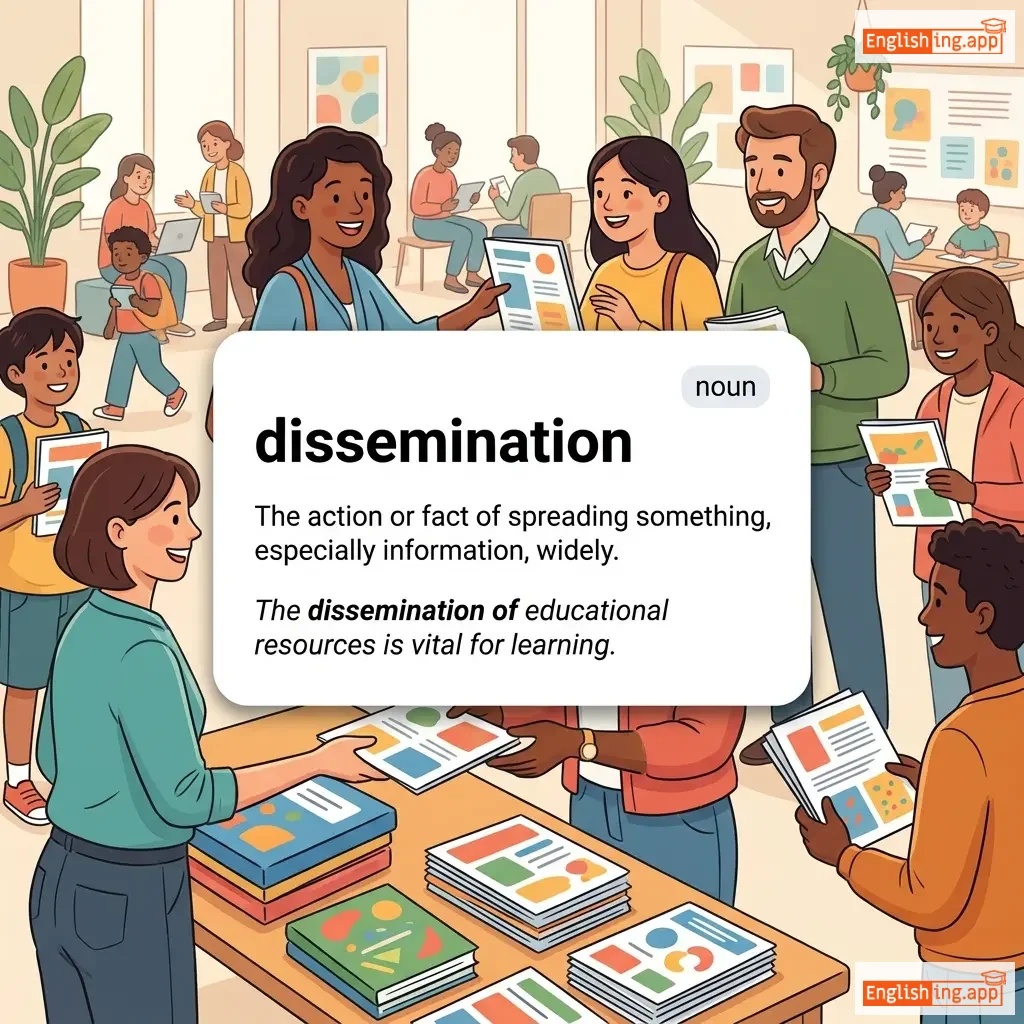
dissemination definition card — visual illustration of the meaning
noun C1
dɪˌsɛm.ɪˈneɪ.ʃən
diseminación (diseminacion)

The action or fact of spreading something, especially information, widely.

"The dissemination of educational resources is vital for learning."

"La diseminación de recursos educativos es vital para el aprendizaje." (La diseminacion de recursos educativos es vital para el aprendizaje.)
verb C1
/dɪˈsɛnt/
disentir (disentir)

To hold or express opinions that are different from those officially accepted.

"Several members dissented from the majority decision."

"Varios miembros disintieron de la decisión mayoritaria." (Varios miembros disintieron de la decisión mayoritaria.)