Vocabularios

Descubra, aprenda y domine el vocabulario en inglés

noun C1
/ˈpæs.ɪ.fɪst/
शांतिवादी (shantivadi)

a person who believes in peace and opposes war or violence

"She is a committed pacifist who campaigns against armed conflict."

"वह एक प्रतिबद्ध शांतिवादी है जो सशस्त्र संघर्ष के खिलाफ अभियान चलाता है।" (Wah ek pratibaddh shantivadi hai jo sashastr sangharsh ke khilaf abhiyan chalata hai.)
pacify definition card — visual illustration of the meaning
verb C1
/ˈpæs.ɪ.faɪ/
शांत करना (shant karna)

to calm someone down; to bring peace to a situation

"The mother tried to pacify the crying baby."

"माँ ने रोते हुए बच्चे को शांत करने की कोशिश की।" (Maan ne rote huye bachche ko shant karne ki koshish ki.)
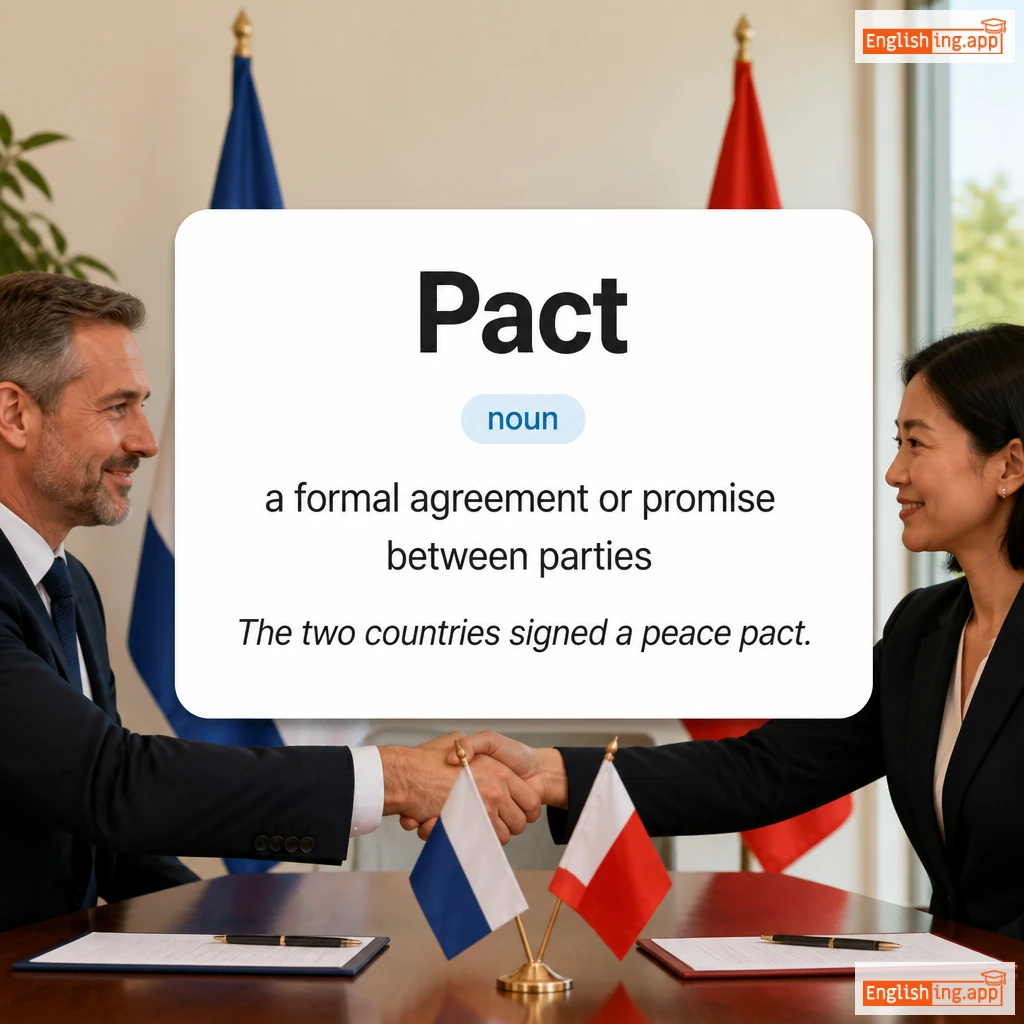
Pact definition card — visual illustration of the meaning
noun C1
/pækt/
संधि (sandhi)

a formal agreement or promise between parties

"The two countries signed a peace pact."

"दो देशों ने एक शांति संधि पर हस्ताक्षर किए।" (Do deshon ne ek shanti sandhi par hastakshar kiye.)
noun C1
/ˈpæd.ək/
घोड़े या अन्य जानवरों के लिए बंद क्षेत्र (ghode ya anya janwaron ke liye band kshetra)

a small enclosed field where horses or other animals are kept

"The horses were grazing in the paddock."

"घोड़े पैडोक में घास खा रहे थे।" (ghode paddock mein ghash kha rahe the.)
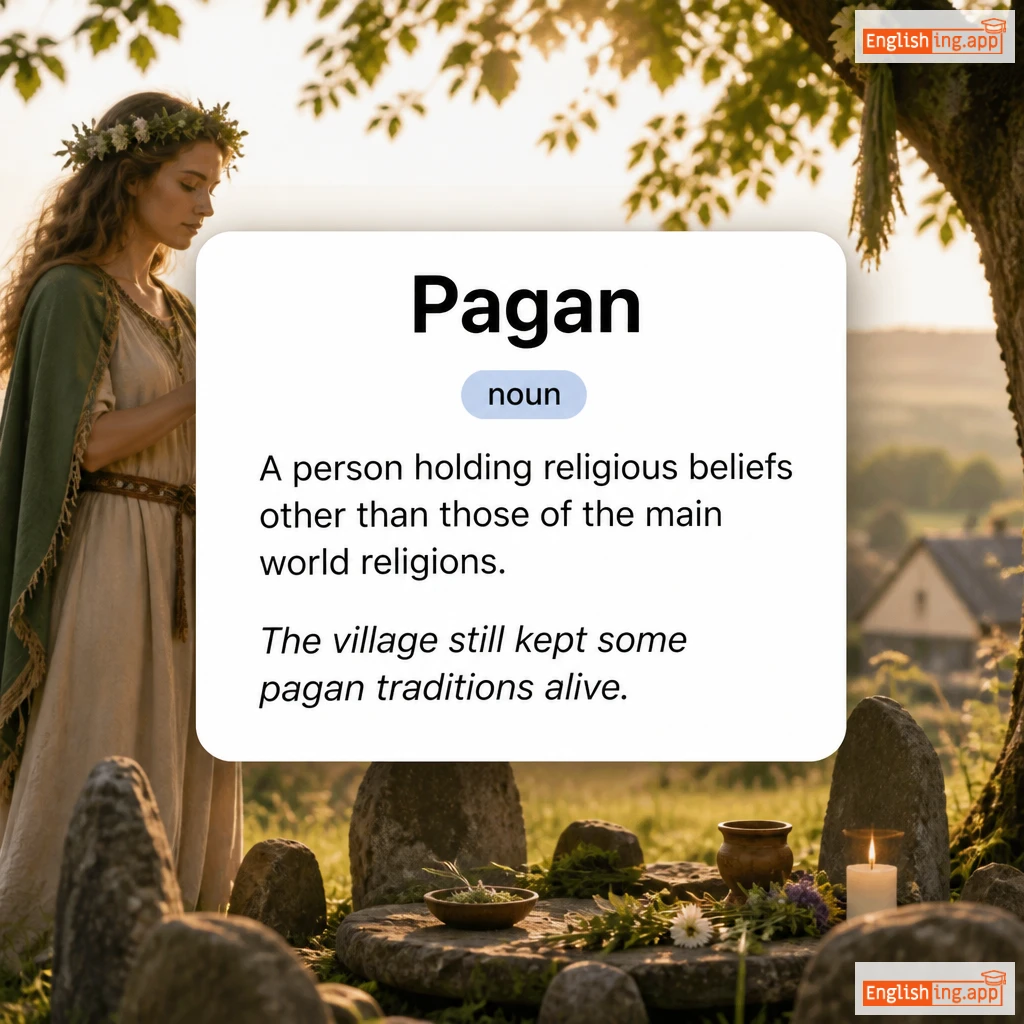
Pagan definition card — visual illustration of the meaning
noun C1
/ˈpeɪɡən/
पगन (pagan)

A person holding religious beliefs other than those of the main world religions.

"The village still kept some pagan traditions alive."

"गांव ने अभी भी कुछ पगन परंपराओं को जीवित रखा था।" (gaon ne abhi bhi kuch pagan paramparayon ko jivit rakha tha.)
noun C1
/ˈpædʒənt/
सौंदर्य प्रतियोगिता (soundarya pratyogita)

A public entertainment consisting of a procession of people in elaborate costumes, or a beauty contest.

"She won first place in the beauty pageant."

"उसने सौंदर्य प्रतियोगिता में पहला स्थान जीता" (usne soundarya pratyogita mein pehla sthan jeeta)
adjective C1
/ˈpeɪnzˌteɪkɪŋ/
अत्यधिक प्रयास (atyadhik prayaas)

Done with great care and thoroughness.

"The artist completed the project with painstaking detail."

"कला के व्यक्ति ने परियोजना को अत्यधिक प्रयास के साथ पूरा किया।" (kala ke vyakti ne pariyojana ko atyadhik prayaas ke saath poora kiya.)
adjective C1
/ˈpæl.ə.tə.bəl/
स्वादिष्ट (swadisht)

pleasant or acceptable to the taste, mind, or feelings

"The meal was simple but quite palatable."

"खाना साधारण था लेकिन बहुत स्वादिष्ट था।" (Khana sadharan tha lekin bahut swadisht tha.)
Palatable meat definition card — visual illustration of the meaning
noun C1
/ˈpæl.ə.tə.bəl miːt/
स्वादिष्ट मांस (swadisht maans)

Meat that is pleasant to taste; appetizing meat dish

"The chef prepared palatable meat dishes for the dinner party."

"शेफ ने डिनर पार्टी के लिए स्वादिष्ट मांस व्यंजन तैयार किए।" (shef ne dinner party ke liye swadisht maans vyajan tayar kiye.)
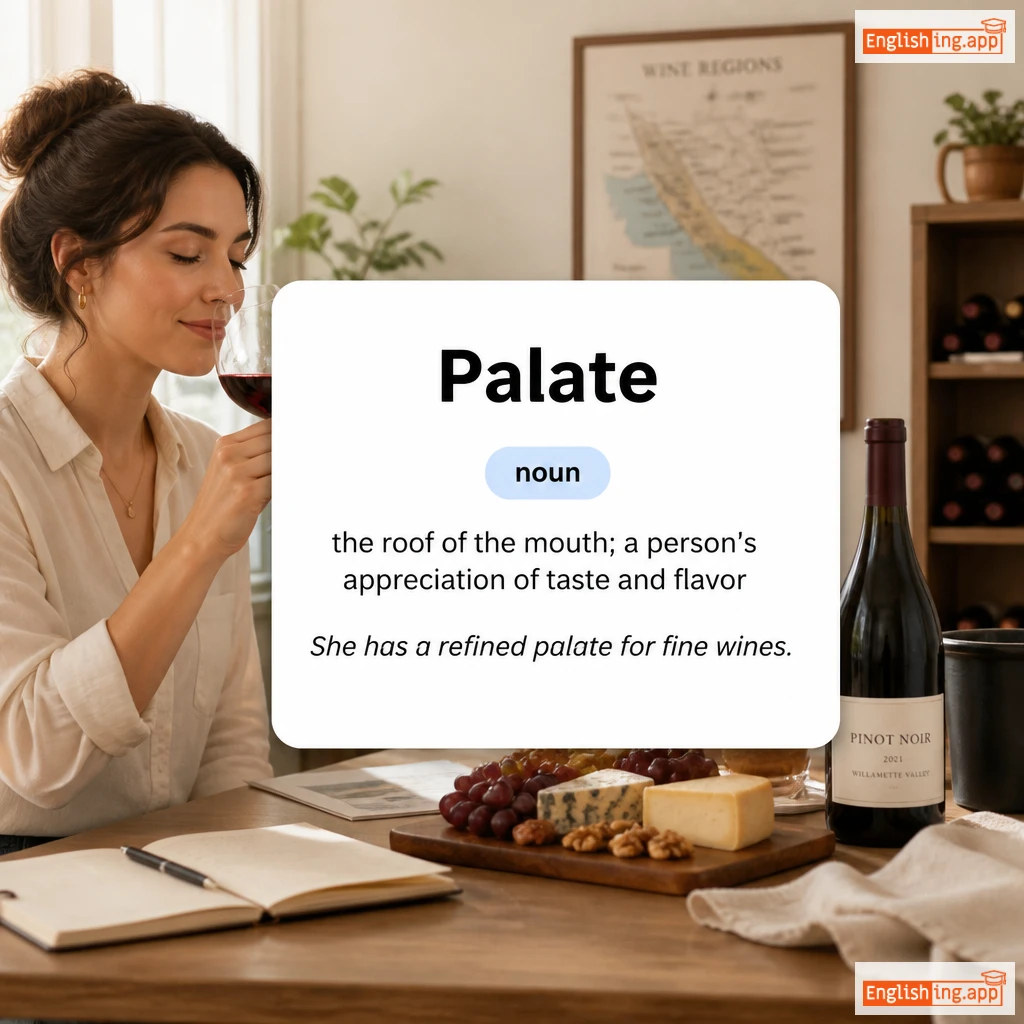
Palate definition card — visual illustration of the meaning
noun C1
/ˈpæl.ət/
स्वाद ग्रहन क्षमता / तालु (swad grahan kshamata / taalu)

the roof of the mouth; a person's appreciation of taste and flavor

"She has a refined palate for fine wines."

"उसकी शानदार मदिरा के लिए एक परिष्कृत तालु है।" (Uski shandaar madira ke liye ek parishkrit taalu hai.)
adjective C1
/pəˈleɪ.ʃəl/
महल जैसा (mahal jaisa)

resembling a palace in being spacious and splendid

"They stayed in a palatial hotel during their vacation."

"वे अपनी छुट्टियों के दौरान एक महल जैसे होटल में रुके थे।" (Ve apni chhuttiyon ke dauran ek mahal jaisa hotel mein ruke the.)
noun C1
/ˌpeɪ.li.ɒnˈtɒl.ə.dʒi/
पैलियोन्टोलॉजी (paleontology)

the branch of science concerned with fossil animals and plants

"She decided to study paleontology at university."

"उसने विश्वविद्यालय में पैलियोन्टोलॉजी अध्ययन करने का निर्णय लिया।" (Usne vishwavidyalay mein paleontology adhyayan karne ka nirnay liya.)
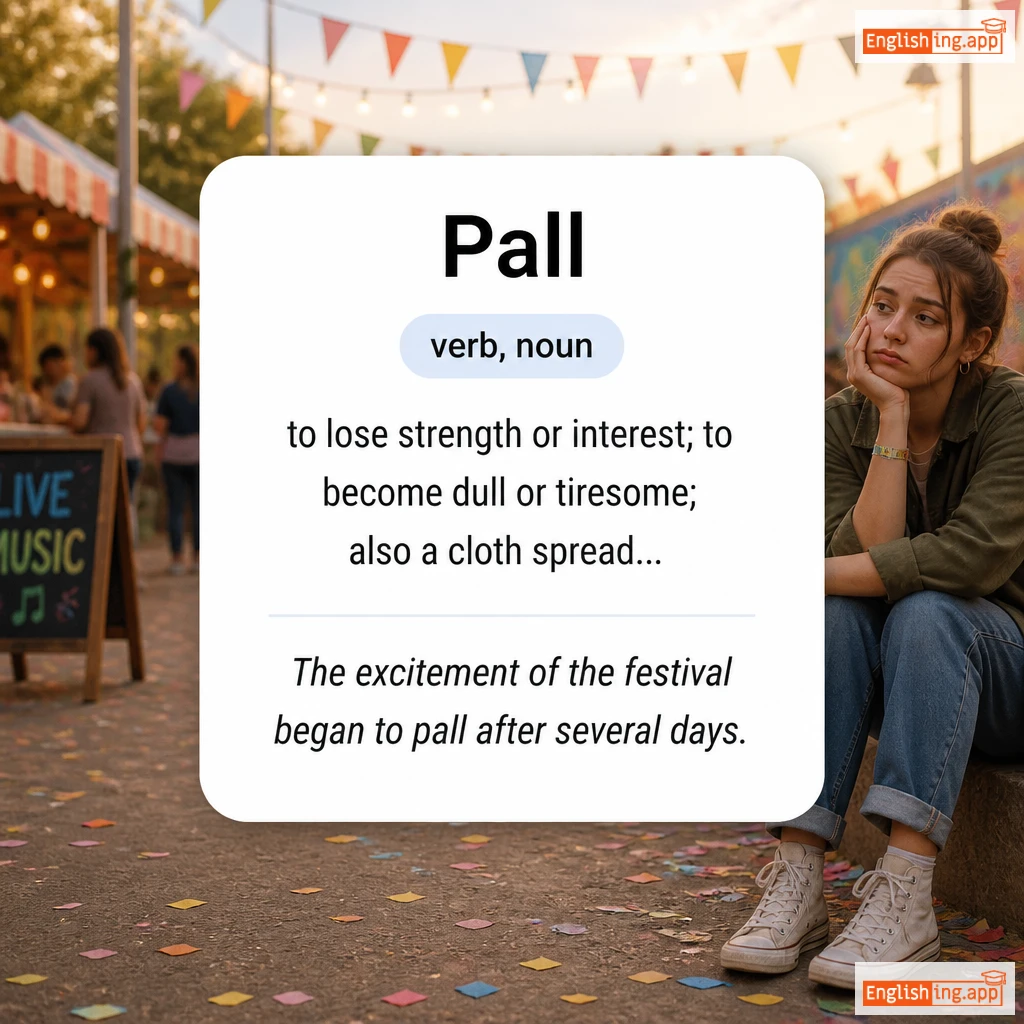
Pall definition card — visual illustration of the meaning
verb, noun C1
/pɔːl/
उबाऊ, कफिन पर चढ़ने वाला कपड़ा (ubau, kafin par chadhne wala kapda)

to lose strength or interest; to become dull or tiresome; also a cloth spread over a coffin

"The excitement of the festival began to pall after several days."

"त्योहार की उत्तेजना कुछ दिनों बाद मद्धम हो गई।" (tyohar ki uttejana kuch dinon baad maddham ho gayi.)
noun C1
/ˈpælɪt/
प्लेटफॉर्म (platform)

a flat wooden platform used for moving or storing goods; also a makeshift bed

"The boxes were stacked on a wooden pallet for easy transport."

"बॉक्सों को आसानी से परिवहन के लिए लकड़ी के पैलेट पर ढेर किया गया था।" (Boxon ko aasani se parivahan ke liye lakdi ke pallet par dher kiya gaya tha.)
adjective C1
/ˈpælɪd/
पीला (peela)

pale, typically because of poor health or lack of vitality

"The patient looked pallid after weeks of illness."

"मरीज कई हफ्तों तक बीमारी के बाद पीला दिख रहा था।" (Mareez kai hafton tak bimari ke baad peela dikh raha tha.)
adjective C1
/ˈpælpəbl̩/
सुख (sukh)

easily perceived or felt; so intense as to seem almost tangible

"There was a palpable sense of excitement in the room."

"जब उसे पुरस्कार मिला, तो वह अपनी खुशी को छिपा नहीं सकी।" (Jab use puraskaar mila, to vah apni khushi ko chhupa nahi sake.)
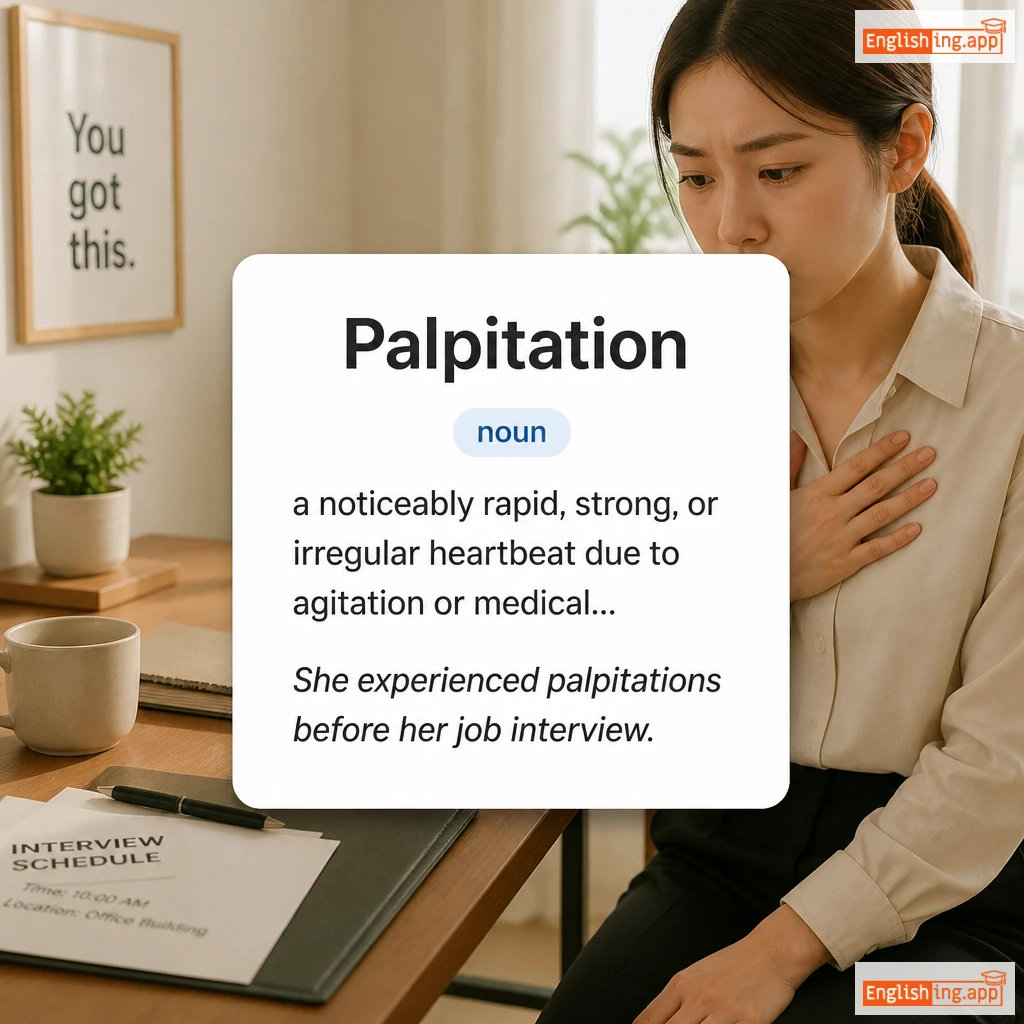
Palpitation definition card — visual illustration of the meaning
noun C1
/ˌpæl.pɪˈteɪ.ʃən/
धड़कन का तेज़, मजबूत, या अनियमित होना जो उत्तेजना या चिकित्सा स्थिति के कारण होता है (dhadkan ka tez, majboot, ya aniyamit hona jo uttejana ya chikitsa sthiti ke kaaran hota hai)

a noticeably rapid, strong, or irregular heartbeat due to agitation or medical condition

"She experienced palpitations before her job interview."

"उसने अपनी नौकरी के इंटरव्यू से पहले धड़कन की तेज़ी का अनुभव किया।" (usne apni naukri ke interview se pehle dhadkan ki tezi ka anubhav kiya.)
adjective C1
/ˈpɔːltri/
तुच्छ, नगण्य (tuchchh, naganya)

small or meager; lacking in value or importance

"They offered him a paltry sum for his work."

"उन्होंने उसके काम के लिए तुच्छ राशि प्रस्तावित की।" (Unhone uske kaam ke liye tuchchh rashi prastavit ki.)
verb C1
/ˈpæmpər/
लाड़ करना / पालना (laad karna / paalna)

to treat with excessive care and attention; to spoil

"Parents often pamper their first child."

"माता-पिता अक्सर अपने पहले बच्चे को बहुत अधिक लाड़ करते हैं।" (Mata-pita aksar apne pehle bachche ko bahut adhik laad karte hain.)
adjective C1
/ˌpæn.əˈmer.ɪ.kən/
पैन-अमेरिकन (pan-amerikan)

relating to all the countries of North, Central, and South America

"The Pan-American Games bring together athletes from across the continent."

"पैन-अमेरिकन खेलों में महाद्वीप भर के एथलीट्स एक साथ आते हैं।" (Pan-American khelon mein mahadweep bhar ke athletes ek sath aate hain.)
noun C1
/ˌpænəˈsiːə/
सर्व रोगों का इलाज (sarv rogon ka ilaaj)

A solution or remedy for all difficulties or diseases.

"Education is often seen as a panacea for social problems."

"शिक्षा को अक्सर सामाजिक समस्याओं के लिए एक पैनेसिया के रूप में देखा जाता है।" (Shiksha ko aksar samajik samasyaon ke liye ek panacea ke roop mein dekha jaata hai.)
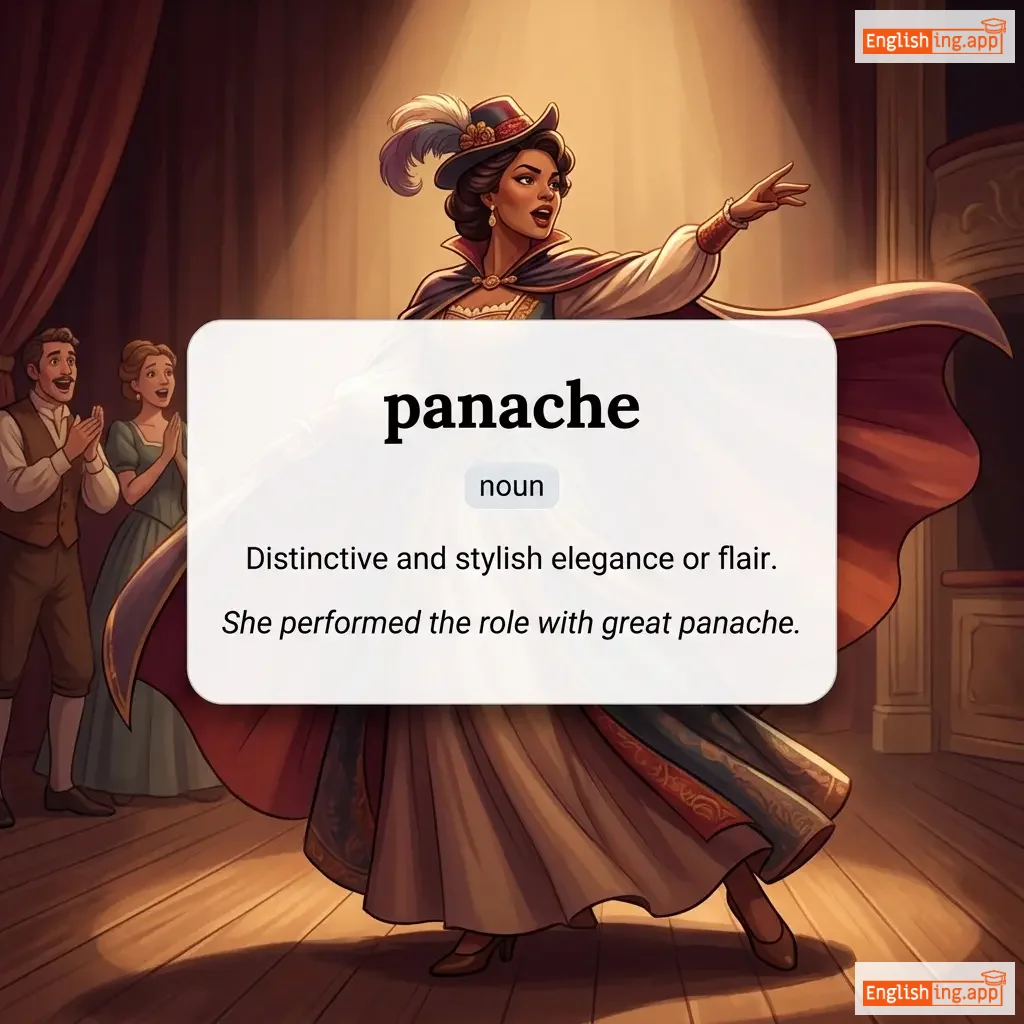
panache definition card — visual illustration of the meaning
noun C1
/pəˈnæʃ/
शानदार अंदाज (shandar andaaz)

Distinctive and stylish elegance or flair.

"She performed the role with great panache."

"उसने भूमिका को शानदार ढंग से निभाया।" (Usne bhumika ko shandar dang se nibhaaya.)
noun C1
/ˈpæŋkriəs/
अग्न्याशय (agnyashay)

A gland in the abdomen that produces insulin and digestive enzymes.

"The pancreas plays a vital role in digestion and blood sugar regulation."

"अग्न्याशय पाचन और रक्त शर्करा नियंत्रण में महत्वपूर्ण भूमिका निभाता है।" (Agnyashay pachan aur rakt sharkara niyantran mein mahatvapurn bhoomika nibhaata hai.)
noun C1
/ˌpændəˈmoʊniəm/
उथल-पुथल (uthal-puthal)

Wild and noisy disorder or confusion; uproar.

"When the concert was canceled, pandemonium broke out among the crowd."

"जब संगीत कार्यक्रम रद्द कर दिया गया, तो भीड़ में उथल-पुथल मच गई।" (Jab sangeet karyakram radd kar diya gaya, to bheed mein uthal-puthal mach gayi.)
verb C1
/ˈpændər/
चाटुकारिता करना, तुष्ट करना (chatukarita karna, tusht karna)

to indulge or exploit the weaknesses, desires, or immoral tendencies of others

"The politician was accused of pandering to voters' fears."

"राजनीतिज्ञ पर वोटरों के डर को तुष्ट करने का आरोप था।" (Rajnitik vyakti par votaron ke dar ko tusht karne ka aarop tha.)
noun C1
/pæŋ/
दर्द या मानसिक कष्ट का अचानक तेज़ अनुभव (dard ya maansik kasht ka achanak tez anubhav)

a sudden sharp feeling of pain or emotional distress

"She felt a pang of guilt after the argument."

"विवाद के बाद उसे अपराधबोध का दर्द महसूस हुआ।" (Vivad ke baad use aparadhbodh ka dard mehsoos hua.)
noun C1
/ˌpæn.əˈræm.ə/
सुंदर दृश्य (sundar drishya)

An unbroken view of the whole region surrounding an observer.

"From the hilltop, we enjoyed a breathtaking panorama of the city."

"पहाड़ी की चोटी से, हमने शहर का शानदार दृश्य देखा।" (pahaadi ki chhoti se, humne shaher ka shandar drishya dekha.)
adjective C1
/ˌpæn.əˈræm.ɪk/
विस्तृत दृश्य (vistrit drishya)

Giving a wide view of an extensive area in all directions.

"The hotel offers panoramic views of the ocean."

"होटल समुंदर के विस्तृत दृश्य प्रदान करता है।" (hotel samundar ke vistrit drishya pradan karta hai.)
noun C1
/ˈpæn.θi.ən/
सभी देवताओं का समुदाय, देवालय (sabhi devtaon ka samudaay, devaalay)

All the gods of a religion collectively; a building dedicated to all gods.

"The Roman Pantheon is one of the best-preserved ancient temples."

"रोमन पंथियन प्राचीनतम संरक्षित मन्दिरों में से एक है।" (Roman Pantheon pracheentam sanrakshit mandiron mein se ek hai.)
noun C1
/ˈpæntəmaɪm/
मूक अभिनय (mook abhinay)

A type of theatrical performance using gestures and movements without spoken words; in Britain, a musical comedy play for families performed at Christmas.

"The children enjoyed the Christmas pantomime at the local theater."

"बच्चों ने स्थानीय थिएटर में क्रिसमस पैन्टमाइम का आनंद लिया।" (bachchon ne sthaniy theater me Christmas pantomime ka anand liya.)
noun C1
/pəˈpaɪrəs/
पपीरस (papyrus)

An ancient writing material made from the pith of the papyrus plant; also refers to the plant itself.

"The ancient scroll was written on papyrus."

"प्राचीन स्क्रॉल पपीरस पर लिखा गया था।" (Prachin scroll papyrus par likha gaya tha.)
noun C1
/ˈpærəbl/
उपदेशात्मक कथा (updeshatmak katha)

A simple story used to illustrate a moral or spiritual lesson.

"Jesus often taught using a parable to convey deeper truths."

"यीशु अक्सर गहरी सच्चाई को व्यक्त करने के लिए एक उपदेशात्मक कथा का उपयोग करते थे।" (Yeeshu aksar gehri sachai ko vyakt karne ke liye ek updeshatmak katha ka upyog karte the.)
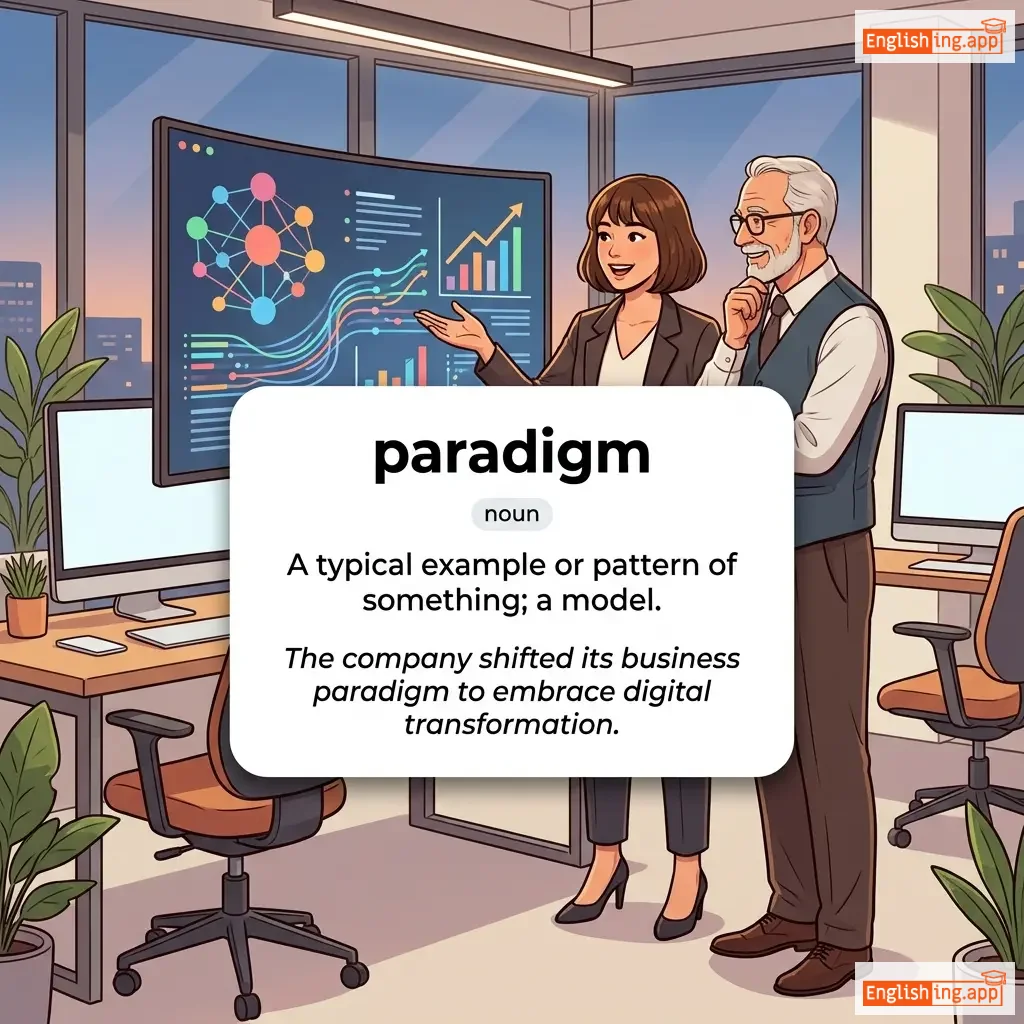
paradigm definition card — visual illustration of the meaning
noun C1
/ˈpærədaɪm/
मॉडल (model)

A typical example or pattern of something; a model.

"The company shifted its business paradigm to embrace digital transformation."

"कंपनी ने डिजिटल परिवर्तन को अपनाने के लिए अपने व्यापार के मॉडल को बदल दिया।" (Company ne digital parivartan ko apnane ke liye apne vyapar ke model ko badal diya.)
adjective C1
/ˌpærəˈdɒksɪkəl/
विरोधाभासी (virodhabhasi)

Seemingly contradictory or opposed to common sense, yet possibly true.

"It is paradoxical that standing is often more tiring than walking."

"यह विरोधाभासी है कि खड़ा होना अक्सर चलने से अधिक थकाऊ होता है।" (Yah virodhabhasi hai ki khada hona aksar chalne se adhik thakau hota hai.)
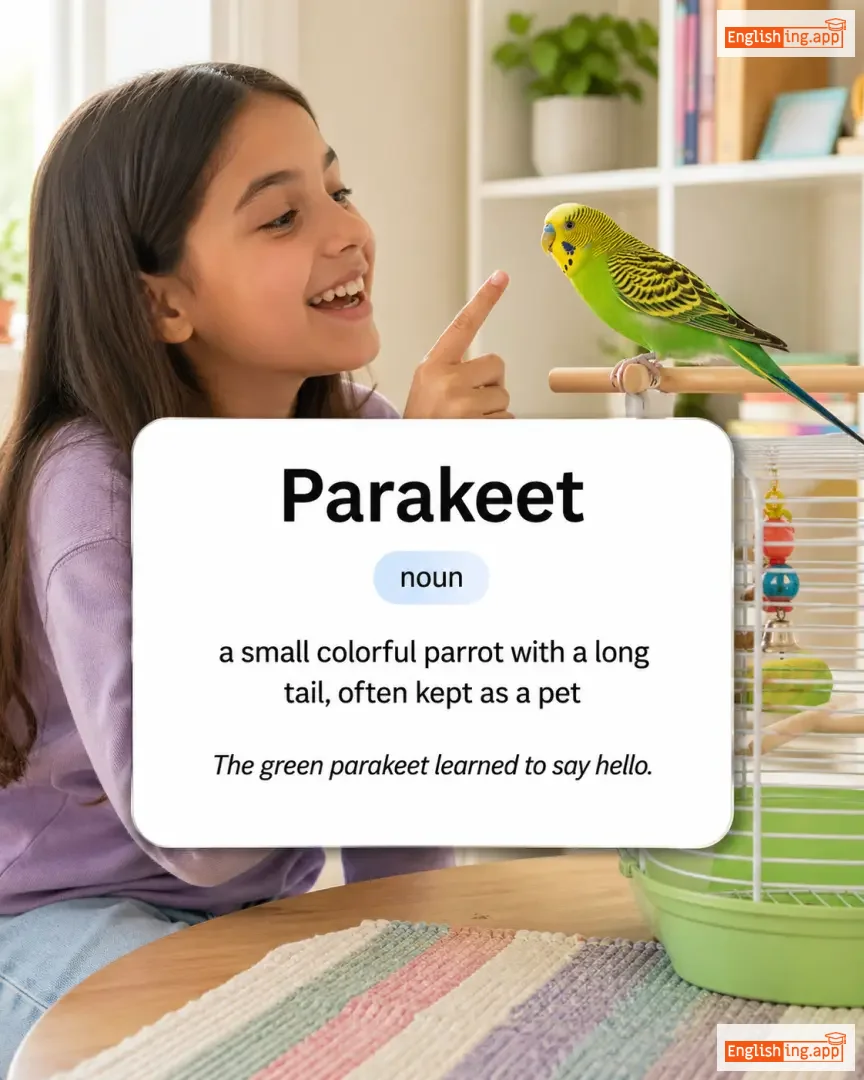
Parakeet definition card — visual illustration of the meaning
noun C1
/ˈpær.ə.kiːt/
तोता (tota)

a small colorful parrot with a long tail, often kept as a pet

"The green parakeet learned to say hello."

"हरी तोता हेलो कहना सीख गया।" (hari tota hello kehna seekh gaya.)
noun C1
/ˈpærəˌlɛlɪzəm/
समानांतरवाद (samaantarvaad)

The state of being parallel or similar; in literature, the use of components in a sentence that are grammatically the same or similar in construction.

"The writer used parallelism to give rhythm to his prose."

"लेखक ने अपनी गद्य में लय देने के लिए समानांतरवाद का उपयोग किया।" (Lekhak ne apni gadya mein lay dene ke liye samaantarvaad ka upyog kiya.)
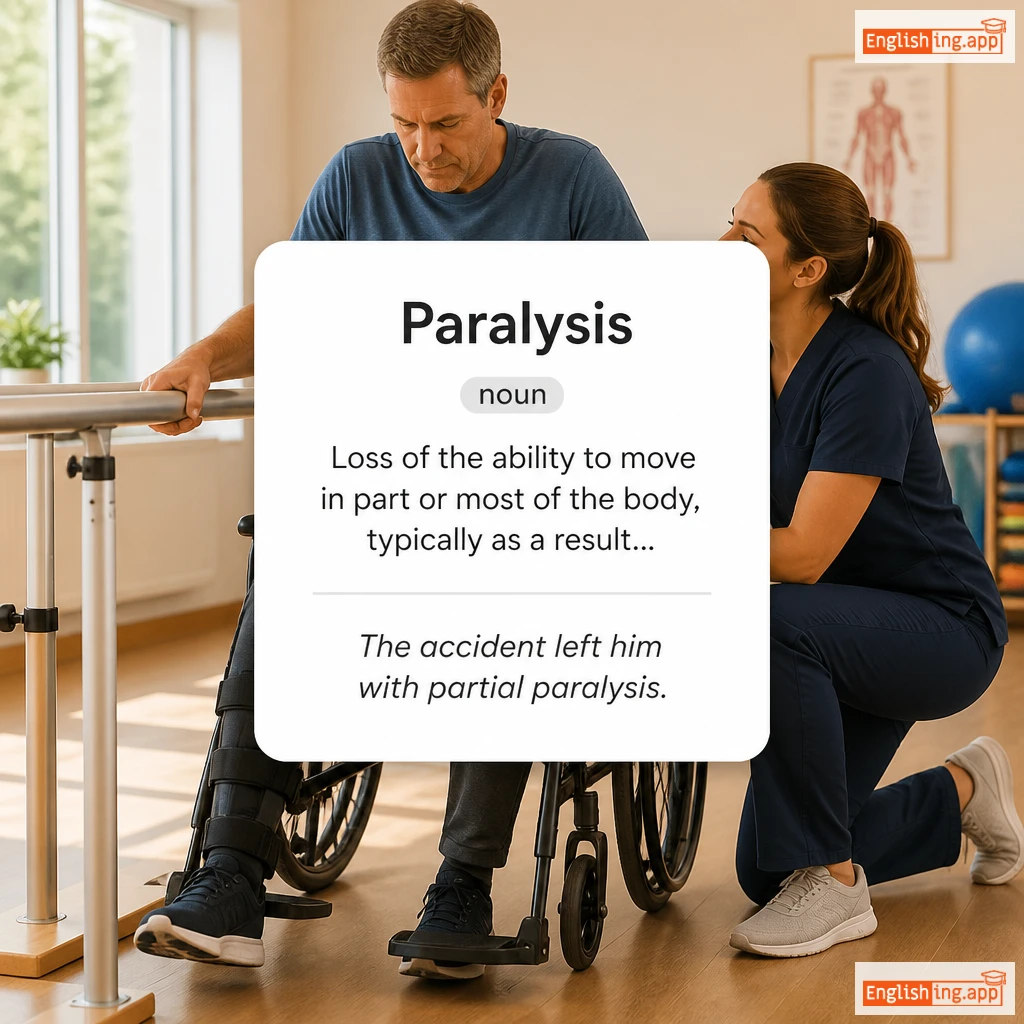
Paralysis definition card — visual illustration of the meaning
noun C1
/pəˈræləsɪs/
लकवा (lakva)

Loss of the ability to move in part or most of the body, typically as a result of illness or injury.

"The accident left him with partial paralysis."

"दुर्घटना के कारण उसे आंशिक लकवा हो गया था।" (Durghatna ke karan use aanshik lakva ho gaya tha.)
verb C1
/ˈpærəlaɪz/
अक्षम करना (aksham karna)

to cause someone or something to lose the ability to move or function normally

"The sudden shock seemed to paralyze him."

"अचानक झटका उसे अक्षम कर गया।" (Achanak jhatka use aksham kar gaya.)
adjective C1
/ˈpærəmaʊnt/
अत्यंत महत्वपूर्ण (atyant mahatvapurn)

more important than anything else; supreme

"Safety is of paramount importance in this factory."

"इस फैक्ट्री में सुरक्षा अत्यंत महत्वपूर्ण है।" (Is factory mein suraksha atyant mahatvapurn hai.)
noun C1
/ˌpærəˈnɔɪə/
अवास्तविक और लगातार यह महसूस होना कि लोग आपको नुकसान पहुँचाने की कोशिश कर रहे हैं या हमेशा आपको देख रहे हैं (avasthavik aur lagatar yah mahsus hona ki log aapko nuksan pahunchane ki koshish kar rahe hain ya hamesha aapko dekh rahe hain)

an irrational and persistent feeling that people are 'out to get you' or are constantly watching you

"His constant paranoia made it hard for him to trust anyone."

"उसका लगातार डर उसे किसी पर भी विश्वास करने नहीं देता था।" (Uska lagatar dar use kisi par bhi vishwas karne nahi deta tha.)
adjective C1
/ˈpær.ə.nɔɪd/
अवास्तविक डर या संदेह होना (avastavik dar ya sandeh hona)

having an unreasonable fear or suspicion of others

"She became paranoid after hearing strange noises outside."

"अजीब आवाजें सुनने के बाद वह डर से भर गई।" (ajeeb aawazein sunne ke baad vah dar se bhar gayi.)
noun C1
/ˌpærəfəˈneɪliə/
सामग्री (saamagri)

Miscellaneous articles, especially equipment needed for a particular activity.

"The fisherman carried all his fishing paraphernalia in a large box."

"मछुआरे ने अपना सारा मछली पकड़ने का सामान एक बड़े बॉक्स में रखा था।" (Machhuaare ne apna saara machhli pakadne ka saamaan ek bade box mein rakha tha.)
verb C1
/ˈpærəfreɪz/
सुख (sukh)

To express the meaning of something using different words, often to make it clearer.

"The teacher asked the students to paraphrase the poem in their own words."

"वह पुरस्कार मिलने पर अपनी खुशी को छिपा नहीं सकी।" (vah puraskar milne par apni khushi ko chhupa nahi sakee.)
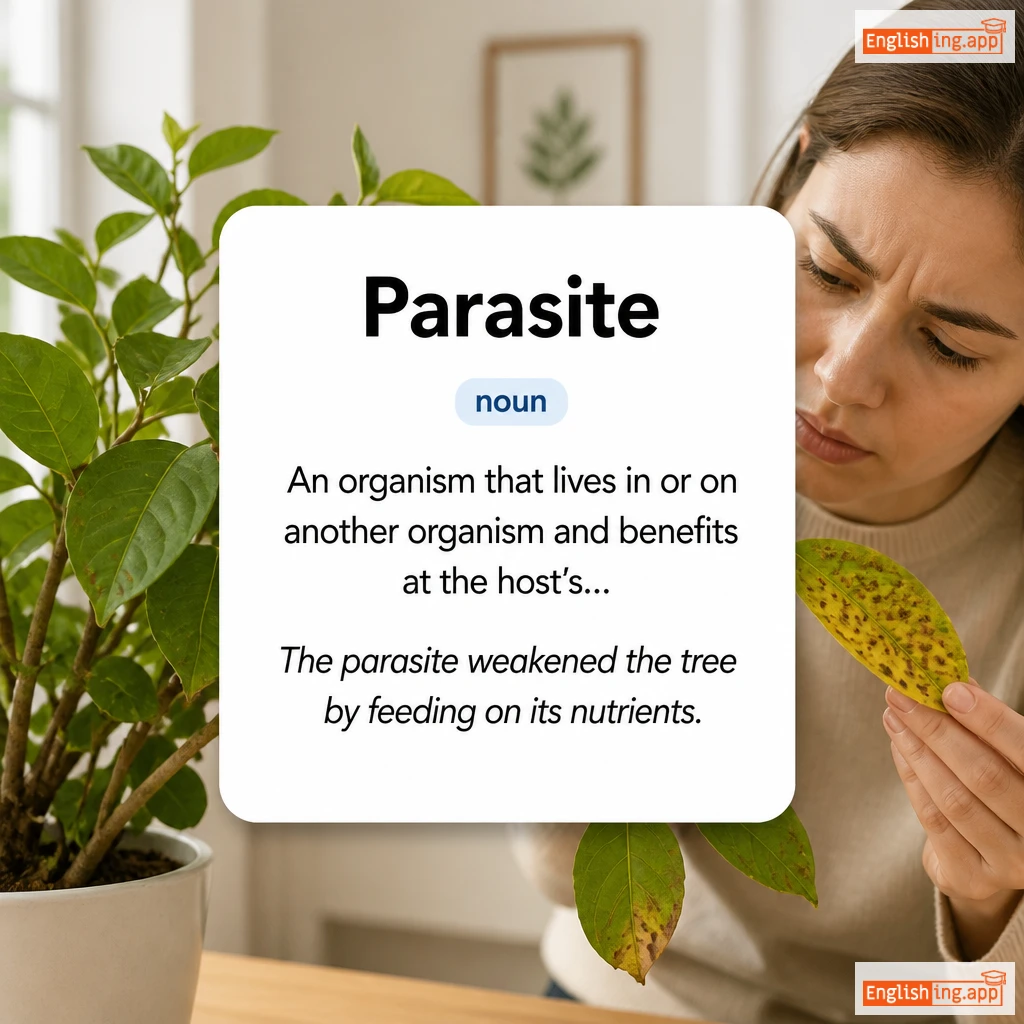
Parasite definition card — visual illustration of the meaning
noun C1
/ˈpærəsaɪt/
परजीवी (parjivi)

An organism that lives in or on another organism and benefits at the host’s expense.

"The parasite weakened the tree by feeding on its nutrients."

"परजीवी ने अपने पोषक से पोषक तत्व खाकर पेड़ को कमजोर कर दिया" (Parjivi ne apne poshak se poshak tatva khakar ped ko kamzor kar diya)
adjective C1
/pɑːrtʃt/
बेहद प्यासा (behad pyasa)

extremely dry, especially because of heat or thirst

"After walking in the desert, he was parched with thirst."

"मरुस्थल में चलने के बाद, वह प्यास से बेहद प्यासा था।" (Marusthal mein chalne ke baad, wah pyas se behad pyasa tha.)
noun C1
/ˈpɑːrtʃmənt/
चर्मपत्र (charmapatra)

a thin material made from animal skin, used in the past for writing

"The ancient manuscript was written on parchment."

"प्राचीन पांडुलिपि चर्मपत्र पर लिखी गई थी।" (Prachin pandulipi charmpatra par likhi gayi thi.)
adjective C1
/ˈpɑːr.dən.ə.bəl/
क्षमापनीय (kshamapneey)

able to be forgiven; excusable

"His mistake was pardonable given the difficult circumstances."

"उसकी गलती माफ की जा सकती थी, क्योंकि परिस्थितियाँ कठिन थीं।" (uski galti maaf ki ja sakti thi, kyunki paristhitiyan kathin thi.)
verb C1
/per/
छीलना (cheelna)

to cut away the outer covering or reduce something gradually

"She pared the apple before eating it."

"वह खाने से पहले सेब का छिलका उतार रही थी।" (Vah khane se pehle seb ka chilka utar rahi thi.)
noun C1
/ˈpɛrəntɪdʒ/
वंशावली (vanshavali)

The identity and origins of one's parents; descent or lineage.

"Her noble parentage gave her access to the royal court."

"उसकी शाही वंशावली ने उसे शाही दरबार में प्रवेश का अवसर दिया।" (Uski shahī vanshavali ne use shahī darbar mein pravesh ka avsar diya.)
noun C1
/pəˈrɛnθəsɪs/
कोष्ठक (koshthak)

A pair of curved marks ( ) used to enclose words or numbers; also an interruption or digression in speech or writing.

"The explanation was given in a parenthesis within the text."

"व्याख्या पाठ में कोष्ठक के भीतर दी गई थी।" (vyakhya path mein koshthak ke bhitar di gayi thi.)