Vokabulare

Englisches Vokabelwörterbuch | Wortbedeutungen, Definitionen & Beispiele

adjective C2
/ˈwæɡ.ɪʃ/
顽皮或淘气 (wánpí huò táoqì)

playfully humorous or mischievous

"His waggish remarks made everyone laugh."

"他的顽皮评论让每个人都笑了。" (Tā de wánpí pínglùn ràng měi gè rén dōu xiàole.)
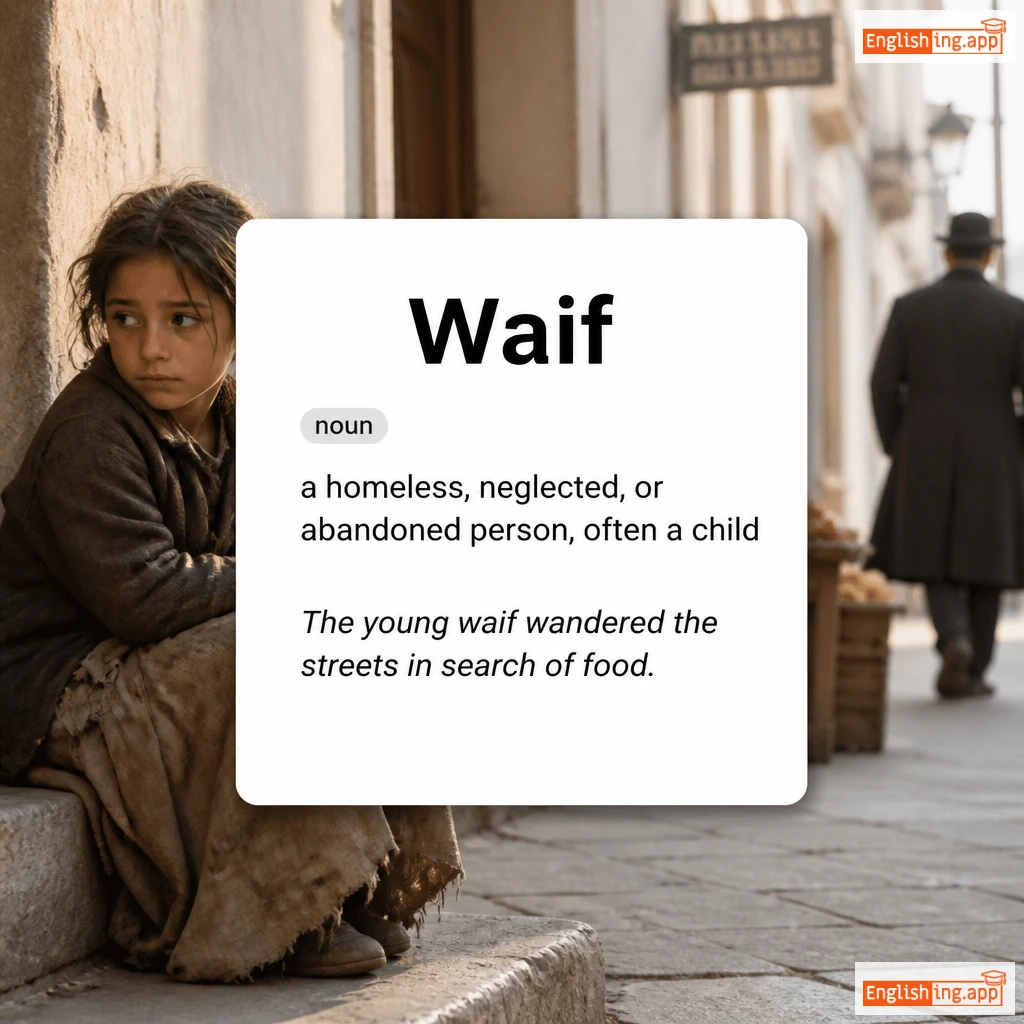
Waif definition card — visual illustration of the meaning
noun C2
/weɪf/
流浪儿童 (liúlàng értóng)

a homeless, neglected, or abandoned person, often a child

"The young waif wandered the streets in search of food."

"那个流浪儿童在街头徘徊,寻找食物。" (Nàgè liúlàng értóng zài jiētóu páihuí, xúnzhǎo shíwù.)
noun C2
/ˈwɑːmpəm/
贝壳项链 (beike xianglian)

beads made by Native Americans from shells, used as money or decoration

"The tribe traded furs for wampum."

"部落用皮毛换取贝壳项链。" (Buluo yong pimao huan qu beike xianglian.)
verb C2
/ˈwaŋɡl/
通过巧妙手段获得某物 (tōngguò qiǎomiào shǒuduàn huòqǔ mǒuwù)

To achieve something by clever or sometimes dishonest persuasion or trickery.

"He wangled a free ticket to the concert."

"他通过巧妙手段获得了免费的音乐会票。" (Tā tōngguò qiǎomiào shǒuduàn huòqǔ le miǎnfèi de yīnyuè huì piào.)
noun C2
/ˈwɒntənnəs/
无缘的残忍 (wúyuán de cánrěn)

The quality of being reckless, cruel, or deliberately malicious.

"His wantonness shocked everyone at the gathering."

"他的无缘残忍震惊了聚会上的每一个人。" (Tā de wúyuán cánrěn zhèngjīngle jùhuì shàng de měi yīgè rén.)
verb C2
/ˈwɔːbəl/
用颤抖的声音或发出颤音唱歌或吹口哨 (yòng zhàndǒu de shēngyīn huò fāchū zhànyīn chànggē huò chuī kǒushào)

To sing or whistle with a quavering voice or with trills.

"The bird warbled a sweet tune in the morning."

"那只鸟在早上用甜美的旋律歌唱。" (Nà zhī niǎo zài zǎoshang yòng tiánměi de xuánlǜ gēchàng.)
noun C2
/ˈwɔːrˌmʌŋɡər/
战争煽动者 (zhànzhēng shāndòng zhě)

A person who advocates or promotes war or conflict.

"The leader was criticized as a warmonger by his opponents."

"这位领导人被对手批评为战争煽动者。" (Zhè wèi lǐngdǎo rén bèi duìshǒu pīpíng wéi zhànzhēng shāndòng zhě.)
noun C2
/ˈwɒrən/
兔子洞的网络 (warren)

A network of interconnected rabbit burrows; also used metaphorically for a densely populated building or district.

"The old part of the city is a warren of narrow streets."

"这座城市的老部分是一个狭窄街道的网络。" (Zhè zuò chéngshì de lǎo bùfen shì yīgè xiázhǎi jiēdào de wǎngluò.)
noun C2
/ˈweɪstrəl/
挥霍者, 无所事事的人 (wastrel)

A person who wastes time, money, or resources; an idler or spendthrift.

"The young man was dismissed as a wastrel by his family."

"这个年轻人被他的家人当作挥霍者解雇了。" (Zhège niánqīngrén bèi tā de jiārén dàngzuò huīhuò zhě jiěgùle.)
noun C2
/ˈweɪvlət/
小波 (xiao bo)

a small wave or ripple on the surface of water or another medium

"The pond was disturbed only by the tiny wavelets caused by the breeze."

"池塘只有微风引起的小波动才会扰动。" (Chítáng zhǐyǒu wēifēng yǐnqǐ de xiǎo bōdòng cái huì rǎodòng.)
verb C2
/ˌweɪˈleɪ/
突然拦住 / 攻击 (tudian lan zhu / gongji)

to stop or interrupt someone unexpectedly, often to attack or detain them

"He was waylaid by reporters as he left the courthouse."

"当他离开法院时,被记者拦住了。" (Dang ta likai fayuan shi, bei jizhe lan zhu le.)
adjective C2
/ˈwiːk niːd/
胆小 (dan xiao)

Lacking determination or courage; easily frightened or yielding.

"The leader was criticized for being weak-kneed in the face of opposition."

"领导者因在面对反对时胆小而受到批评。" (Lingdaozhe yin zai miandui fandui shi danxiao er shoudao piping.)
noun C2
/wiːl/
幸福 (xìngfú)

A raised mark on the skin left after a blow; or general well-being and prosperity.

"The charity worked for the common weal of the community."

"当她获得奖项时,她无法掩饰自己的幸福。" (Dāng tā huò dé jiǎngxiàng shí, tā wúfǎ yǎnshì zìjǐ de xìngfú.)
noun C2
/ˈwɛlkɪn/
天空 (tiānkōng)

The sky, the heavens, or the upper air.

"The eagle soared high into the welkin."

"鹰飞得高进入了天空。" (Yīng fēi dé gāo jìnrùle tiānkōng.)
noun C2
/wɛlt/
肿块 (zhǒng kuài)

A raised mark on the skin, usually from a blow or allergic reaction.

"He had a red welt on his arm after the bee sting."

"他在蜜蜂蜇伤后,手臂上有一个红色的肿块。" (Tā zài mìfēng zhē shāng hòu, shǒubì shàng yǒu yīgè hóngsè de zhǒng kuài.)
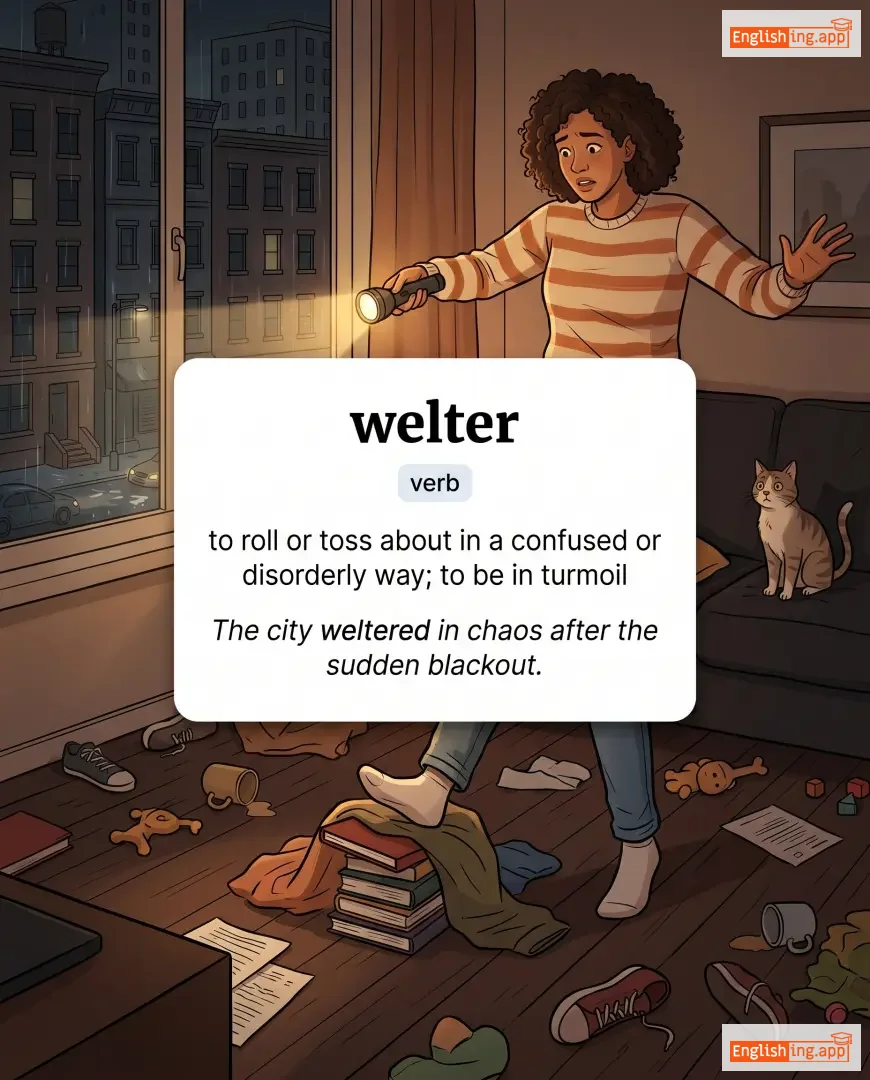
welter definition card — visual illustration of the meaning
verb C2
/ˈwɛltər/
在混乱中翻滚 (zai hunluan zhong fengun)

to roll or toss about in a confused or disorderly way; to be in turmoil

"The city weltered in chaos after the sudden blackout."

"城市在突然的停电后陷入混乱。" (Chéngshì zài túrán de tíngdiàn hòu xiànrù hùnluàn.)
verb C2
/ˈwiːdəl/
用奉承说服 (yòng fèngchéng shuōfú)

to persuade or coax someone by using flattery or smooth talk

"She managed to wheedle extra pocket money from her father."

"她成功地从父亲那里获得了额外的零花钱。" (Tā chénggōng de cóng fùqīn nàlǐ huòqǔle éwài de línghuā qián.)
noun C2
/wɛlp/
小狗 (xiao gou)

a young offspring of a dog or other carnivorous mammal; sometimes used to mean an impudent young person

"The farmer found a wolf whelp hiding near the barn."

"农民在谷仓附近发现了一只藏起来的狼崽。" (Nongmin zai gucang fujin faxian le zhi cang qilai de lang zai.)
adverb, noun C2
/ˈwɛə.wɪð/
手段 (shǒuduàn)

With which; the means or resources needed for something.

"He lacked the money wherewith to buy a new house."

"他没有足够的钱来买新房。" (Tā méiyǒu zúgòu de qián lái mǎi xīn fáng.)
verb C2
/ˈwɪni/
嘶鸣 (sīmíng)

to make the high-pitched sound a horse makes

"The horse whinnied when it saw its rider."

"马看到骑手时,嘶鸣了一声。" (Mǎ kàn dào qí shǒu shí, sīmíng le yī shēng.)
noun C2
/wɪt/
极小的量 (jí xiǎo de liàng)

a very small part or amount

"He doesn't care a whit about the outcome."

"他一点也不在乎结果。" (Tā yīdiǎn yě bù zàihu jiéguǒ.)
noun C2
/wɜːrl/
螺旋 (luóxuán)

A pattern of spirals or concentric circles, often found in fingerprints, shells, or flowers.

"The fingerprint displayed a clear whorl pattern."

"指纹显示出清晰的螺旋图案。" (Zhǐwén xiǎnshì chū qīngxī de luóxuán tú'àn.)
noun C2
/waɪl/
狡猾, 欺骗 (jiaohua, qipian)

A trick or clever scheme meant to deceive or outwit someone.

"He used every wile to win her trust."

"他用了所有的狡猾来赢得她的信任。" (Ta yongle suoyou de jiaohua lai yingde ta de xinren.)
adjective C2
/ˈwɪloʊi/
优雅、苗条且柔韧,如同柳树 (youyao, miaotiao qie rouren, ru tong liushu)

Gracefully tall, slender, and flexible, like a willow tree.

"She moved with a willowy elegance across the stage."

"她在舞台上优雅地移动,像柳树一样。" (ta zai wutai shang youyao de yidong, xiang liushu yiyang)
noun C2
/ˈwɪndbæɡ/
话多的人 (huà duō de rén)

a person who talks too much, especially in a boring or boastful way

"Everyone avoided the windbag at the party because he never let anyone else speak."

"大家在聚会上避免接近那个话多的人,因为他从不让别人说话。" (dà jiā zài jù huì shàng bì miǎn jiē jìn nà ge huà duō de rén, yīn wèi tā cóng bù ràng bié rén shuō huà.)
verb C2
/ˈwɪn.oʊ/
筛选;将谷物与稻草分离 (shaixuan; jiang guwu yu daocao fenli)

to remove the less desirable parts from a group; originally, to separate grain from chaff by blowing air

"The committee will winnow the list of applicants to ten finalists."

"委员会将把申请者名单减少到十个决赛选手。" (Wei yuan hui jiang ba shenqingzhe mingdan jianshao dao shige jue sai xuan shou.)
adjective C2
/ˈwɪnsəm/
迷人 (mírén)

pleasant and attractive in a fresh, innocent, or charming way

"Her winsome smile instantly put the nervous guests at ease."

"她迷人的微笑立即让紧张的客人感到放松。" (Tā mírén de wéixiào lìjí ràng jǐnzhāng de kèrén gǎndào fàngsōng.)
adjective C2
/ˈwɪspi/
细薄而脆弱 (xì bó ér cuì ruò)

Thin, delicate, and weak in appearance or form.

"Her wispy hair blew gently in the breeze."

"她那细薄的头发在微风中轻轻飘动。" (Tā nà xì bó de tóufǎ zài wēifēng zhōng qīngqīng piāodòng.)
adjective C2
/ˈwɪtləs/
愚蠢的 (yúchǔn de)

lacking intelligence or good sense

"It was a witless decision to leave the door unlocked."

"把门留 unlocked 是一个愚蠢的决定。" (Bǎ mén liú unlocked shì yīgè yúchǔn de juédìng.)
noun C2
/ˈwɪtlɪŋ/
傻瓜 / 假装聪明 (shǎguā / jiǎzhuāng cōngmíng)

a person who has little wit or pretends to be witty

"He acted like a witling among scholars."

"他在学者中表现得像个傻瓜。" (Tā zài xuézhě zhōng biǎoxiàn dé xiàng gè shǎguā.)
noun C2
/ˈwɪtɪˌsɪzəm/
机智的评论 / 笑话 (jīzhì de pínglùn / xiàohuà)

a clever or funny remark

"Her witticism made everyone laugh during the meeting."

"她的机智评论让所有人都在会议期间笑了。" (Tā de jīzhì pínglùn ràng suǒyǒu rén dōu zài huìyì qījiān xiàole.)
adverb C2
/ˈwɪtɪŋli/
故意 (gùyì)

Consciously and intentionally; on purpose.

"He wittingly withheld information from the police."

"他故意隐瞒了警方的信息。" (Tā gùyì yǐnmánle jǐngfāng de xìnxī.)
verb C2
/ˈwɪzn/
枯萎 (kūwěi)

To become dry, shrunken, and wrinkled.

"The flowers began to wizen after days without water."

"花朵在几天没有水后开始枯萎。" (Huāduǒ zài jǐ tiān méiyǒu shuǐ hòu kāishǐ kūwěi.)
adjective C2
/ˈwɪzn feɪst/
干燥皱巴巴的面孔 (gānzào zhòubābā de miànkǒng)

Having a dry, wrinkled, and withered face.

"A wizen-faced old man sat quietly in the corner."

"一个干燥皱巴巴的面孔的老人静静地坐在角落里。" (Yī ge gānzào zhòubābā de miànkǒng de lǎorén jìngjìng de zuò zài jiǎoluò lǐ.)
adjective C2
/ˈwɪznd/
皱缩的 (zhòusuō de)

Shriveled, wrinkled, or withered, often due to age.

"The wizened tree stood in the field for centuries."

"那棵皱缩的树在田野中屹立了几个世纪。" (Nà kē zhòusuō de shù zài tiányě zhōng yì lìle jǐ gè shìjì.)
adjective C2
/woʊnt/ or /wɔːnt/
习惯 (xíguàn)

accustomed or used to doing something

"She rose early, as she was wont to do."

"她早早起床,正如她习惯做的那样。" (Tā zǎo zǎo qǐ chuáng, zhèng rú tā xíguàn zuò de nà yàng.)
adjective C2
/ˈwɜːkmənˌlaɪk/
务实 (wùshí)

Showing efficient, competent, and practical skill, but without flair or creativity.

"The carpenter delivered a workmanlike performance on the project."

"木匠在项目中交付了一个务实的表现。" (Mùjiàng zài xiàngmù zhōng jiāofùle yīgè wùshí de biǎoxiàn.)
noun C2
/reɪθ/
幽灵 (youling)

A ghost or ghostlike image of someone, especially seen shortly before or after their death.

"A wraith appeared in the fog near the old castle."

"在旧城堡附近的雾中出现了一个幽灵。" (Zai jiu chengbao fujin de wu zhong chuxian le yi ge youling.)
noun C2
/ˈræŋɡlər/
牧牛人 (mù niú rén)

a person who argues noisily; or someone who takes care of livestock on a ranch

"The cowboy worked as a wrangler on the ranch."

"牛仔在牧场作为牧牛人工作。" (Niú zǎi zài mù chǎng zuò wèi mù niú rén gōngzuò.)
verb C2
/rɛst/
用力夺取 (yongli duóqǔ)

to forcibly pull something from a person's grasp; to seize with effort or struggle

"The police had to wrest the weapon from the suspect's hand."

"警察不得不从嫌疑人的手中夺走武器。" (Jǐngchá bùdé bù cóng xiányí rén de shǒuzhōng duózǒu wǔqì.)
noun C2
/rɛtʃ/
不幸的人 (buxing de ren)

an unfortunate or miserable person; a despicable or contemptible person

"The poor wretch was left out in the cold with no shelter."

"那个不幸的人被遗弃在寒冷中,没有避难所。" (Na ge buxing de ren bei yiqi zai hanleng zhong, meiyou binan suo.)
adjective C2
/ˌrɒŋˈhɛd.ɪd/
错误的思想 (cuò wù de sī xiǎng)

Having or showing bad judgment or stubbornly holding to wrong ideas.

"The policy was considered wrongheaded and harmful."

"这项政策被认为是错误的思想并且有害。" (zhè xiàng zhèng cè bèi rèn wéi shì cuò wù de sī xiǎng bìng qiě yǒu hài.)