Vokabulare

Englisches Vokabelwörterbuch | Wortbedeutungen, Definitionen & Beispiele

🙅‍♂️💵

tightwad (taɪtwɒd)

noun C2
/ˈtaɪtwɒd/
avare (avare)

a person who is unwilling to spend money; a miser

"Everyone calls him a tightwad because he never buys gifts."

"Tout le monde l'appelle avare parce qu'il n'achète jamais de cadeaux." (Tout le monde l'appelle avare parce qu'il n'achete jamais de cadeaux.)
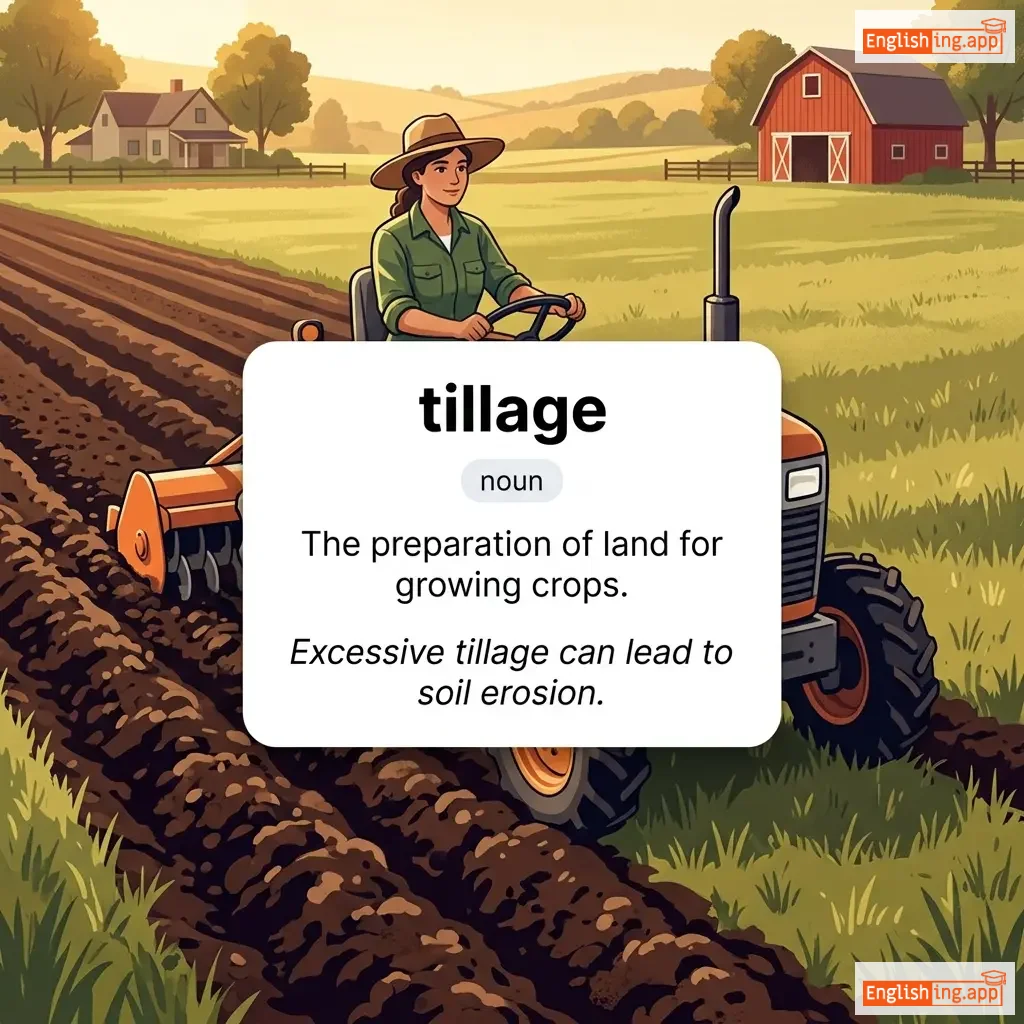
tillage definition card — visual illustration of the meaning
noun C2
ˈtɪl.ɪdʒ
labours agricoles (labours agricoles)

The preparation of land for growing crops.

"Excessive tillage can lead to soil erosion."

"Un excès de travail du sol peut entraîner de l'érosion." (Un exces de travail du sol peut entrainer de l'erosion.)
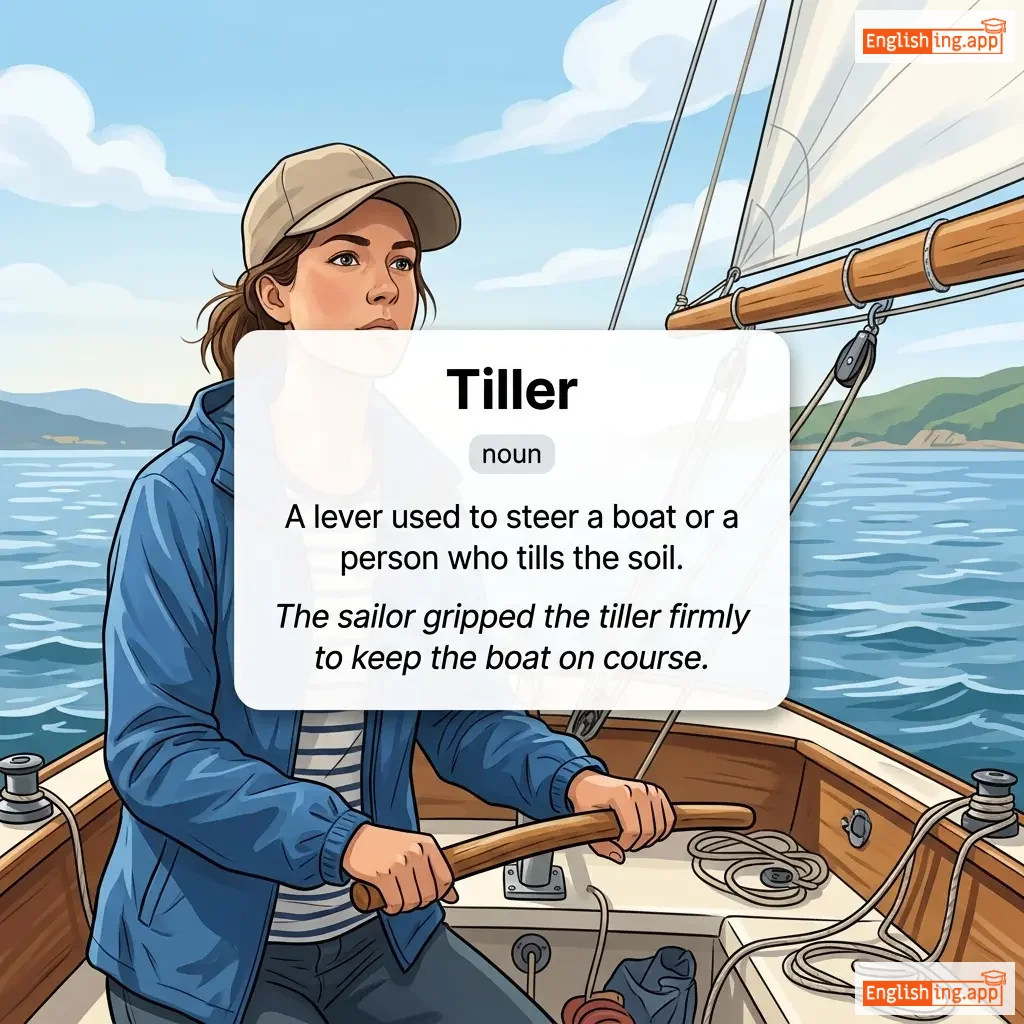
Tiller definition card — visual illustration of the meaning
noun C2
/ˈtɪlər/
barre ou personne qui laboure la terre (barre ou personne qui laboure la terre)

A lever used to steer a boat or a person who tills the soil.

"The sailor gripped the tiller firmly to keep the boat on course."

"Le marin a fermement saisi la barre pour maintenir le bateau sur la bonne trajectoire." (Le marin a fermement saisi la barre pour maintenir le bateau sur la bonne trajectoire.)
noun C2
/tɪlθ/
état du sol (aptitude à cultiver des cultures) (etat du sol (aptitude a cultiver des cultures))

The physical condition of soil in relation to its suitability for planting crops.

"The farmer checked the soil's tilth before planting the seeds."

"Le fermier a vérifié l'état du sol avant de planter les graines." (Le fermier a verifie l'etat du sol avant de planter les graines.)
noun C2
/ˈtæmbər/ or /ˈtɪmbər/
caractère du son musical ou de la voix (caractere du son musical ou de la voix)

The character or quality of a musical sound or voice as distinct from its pitch and intensity.

"Her voice had a warm timbre that soothed the audience."

"Sa voix avait un timbre chaleureux qui apaisait le public." (Sa voix avait un timbre chaleureux qui apaisait le public.)
adjective C2
/ˈtaɪmwɔːrn/
usé par le temps (use par le temps)

Worn or impaired by age; old and used many times.

"The timeworn house carried a sense of history and nostalgia."

"La maison usée par le temps portait un sens de l'histoire et de la nostalgie." (La maison usee par le temps portait un sens de l'histoire et de la nostalgie.)
adjective C2
/ˈtɪmərəs/
craintif (craintif)

showing or suffering from nervousness, fear, or lack of confidence

"The timorous student hesitated to ask the teacher a question."

"L'étudiant craintif a hésité à poser une question au professeur." (L'étudiant craintif a hésité à poser une question au professeur.)
noun C2
/ˈtɪŋktʃər/
une légère trace, un médicament fabriqué en dissolvant une drogue dans de l'alcool (une legere trace, un medicament fabrique en dissolvant une drogue dans de l'alcool)

a slight trace of something; a medicine made by dissolving a drug in alcohol

"There was a tincture of sadness in her smile."

"Il y avait une légère trace de tristesse dans son sourire." (Il y avait une legere trace de tristesse dans son sourire.)
verb C2
/ˈtɪpəl/
boire (boire)

to drink alcohol, especially regularly or in small amounts

"He likes to tipple at the local pub after work."

"Il aime boire au pub local après le travail." (Il aime boire au pub local après le travail.)
noun C2
/taɪð/
dixième (dixieme)

A tenth part of one’s income or produce, often given as a religious offering.

"He gave a tithe of his earnings to the church."

"Il a donné un dixième de ses gains à l'église." (Il a donné un dixieme de ses gains à l'église.)
verb C2
/ˈtɪtəleɪt/
exciter (exciter)

To excite or amuse, especially in a slightly sexual or playful way.

"The comedian's jokes titillated the audience."

"Les blagues du comédien excitaient le public." (Les blagues du comédien excitaient le public.)
verb C2
/ˈtɪtər/
rire timidement (rire timidement)

to laugh in a quiet, nervous, or restrained way

"The students began to titter when the projector froze."

"Les étudiants ont commencé à rire timidement lorsque le projecteur s'est figé." (Les étudiants ont commencé à rire timidement lorsque le projecteur s'est figé.)
adjective C2
/ˈtɪtjələr/
titulaire (titulaire)

holding a title or position in name only without real power; relating to the title of a work

"She is the titular head of the committee, but decisions are made by the coordinator."

"Elle est la titulaire du comité, mais les décisions sont prises par le coordinateur." (Elle est la titulaire du comite, mais les decisions sont prises par le coordinateur.)
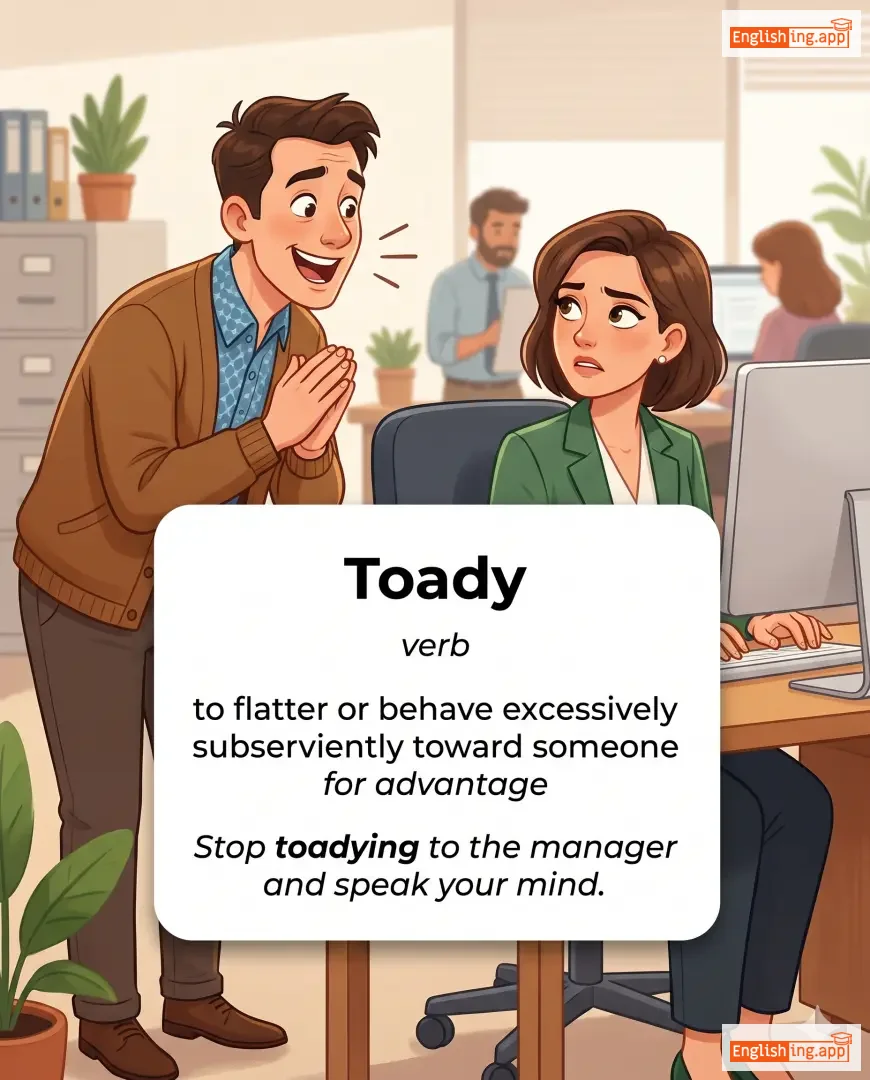
Toady definition card — visual illustration of the meaning
🙇‍♂️

Toady (toʊdi)

verb C2
/ˈtoʊdi/
lèche-bottes (leche-bottes)

to flatter or behave excessively subserviently toward someone for advantage

"Stop toadying to the manager and speak your mind."

"Arrête de lécher les bottes du manager et dis ce que tu penses." (Arrête de lécher les bottes du manager et dis ce que tu penses.)
noun C2
/ˈtɒksɪn/
cloche d'alarme (cloche d'alarme)

an alarm bell or signal; a warning that something bad is about to happen

"The data breach sounded a tocsin for stricter security."

"La fuite de données a retenti comme une cloche d'alarme pour une sécurité renforcée." (La fuite de donnees a retenti comme une cloche d'alarme pour une securite renforcee.)
adjective C2
/ˈtɔɪl.səm/
épuisant (epuisant)

Involving hard or exhausting work; laborious.

"The workers had a toilsome day in the hot sun."

"Les travailleurs ont eu une journée épuisante sous le soleil chaud." (Les travailleurs ont eu une journée épuisante sous le soleil chaud.)
adjective C2
/tɒnˈsɔːriəl/
relatif au barbier (relatif au barbier)

relating to barbers or hairdressing

"The town's new barber offered a wide range of tonsorial services."

"Le nouveau barbier de la ville a offert une large gamme de services tonsoriaux." (Le nouveau barbier de la ville a offert une large gamme de services tonsoriaux.)
noun C2
/ˈtɒnʃər/
tonsure (tonsure)

the practice of shaving or cutting the hair on the scalp, especially in a religious context

"The monk received his tonsure as part of his religious initiation."

"Le moine a reçu sa tonsure dans le cadre de son initiation religieuse." (Le moine a recu sa tonsure dans le cadre de son initiation religieuse.)
adjective C2
/ˈtɔːrpɪd/
léthargique (torpid)

Mentally or physically inactive; sluggish or lethargic.

"After the long hike, he felt torpid and unmotivated."

"Après la longue randonnée, il se sentait léthargique et démotivé." (Apres la longue randonnee, il se sentait lethargique et demotive.)
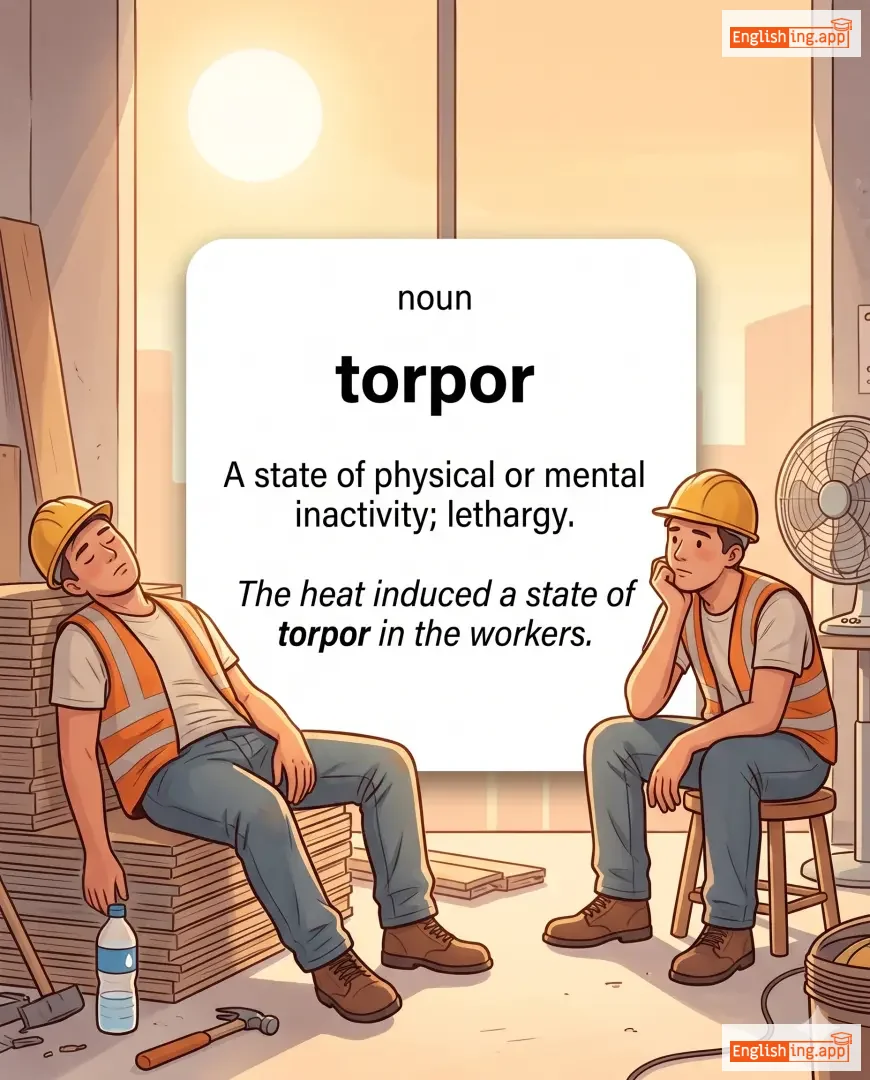
torpor definition card — visual illustration of the meaning
noun C2
/ˈtɔːrpər/
torpeur (torpor)

A state of physical or mental inactivity; lethargy.

"The heat induced a state of torpor in the workers."

"La chaleur a induit un état de torpeur chez les travailleurs." (La chaleur a induit un etat de torpeur chez les travailleurs.)
adjective C2
/ˈtɔːrʃəs/
acte illicite (acte illicite)

Relating to or involving a wrongful act leading to legal liability.

"The company was found guilty of tortious interference with contracts."

"L'entreprise a été reconnue coupable d'interférence illicite avec les contrats." (L'entreprise a été reconnue coupable d'interférence illicite avec les contrats.)
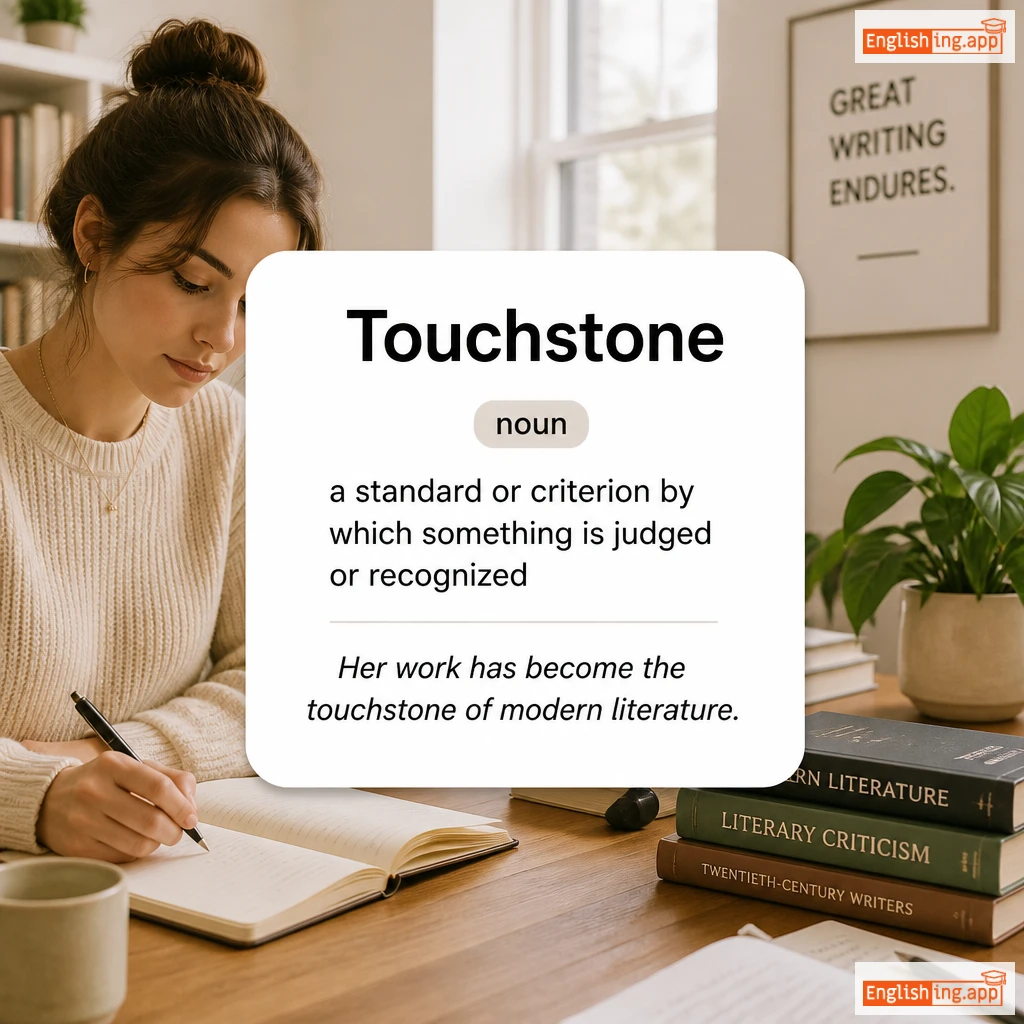
Touchstone definition card — visual illustration of the meaning
noun C2
/ˈtʌtʃstoʊn/
pierre de touche (pierre de touche)

a standard or criterion by which something is judged or recognized

"Her work has become the touchstone of modern literature."

"Son travail est devenu la pierre de touche de la littérature moderne." (Son travail est devenu la pierre de touche de la littérature moderne.)
noun C2
/ˈtʊrnɪkɪt/
garrot (garrot)

a device used to stop bleeding by compressing blood vessels

"The medic applied a tourniquet to stop the bleeding."

"Le médecin a appliqué un garrot pour arrêter le saignement." (Le médecin a appliqué un garrot pour arrêter le saignement.)
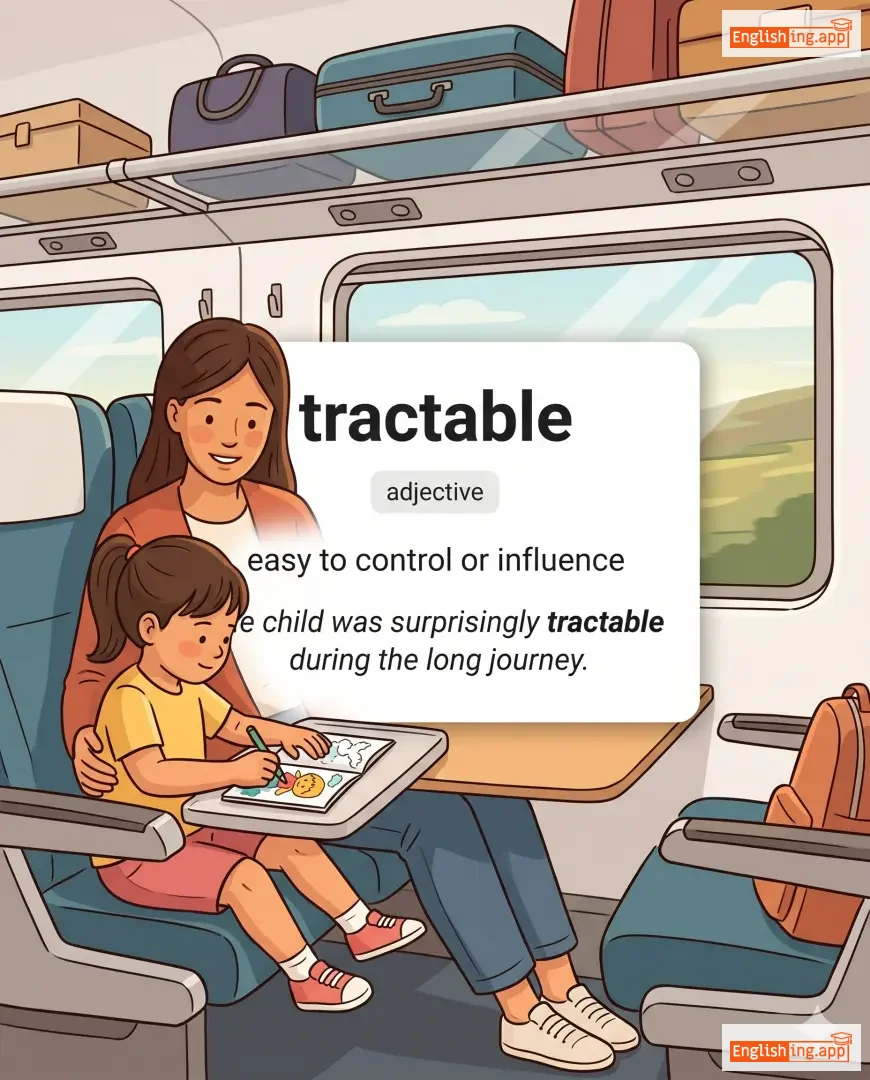
tractable definition card — visual illustration of the meaning
adjective C2
/ˈtræktəbəl/
facile à contrôler ou influencer (facile a controler ou influencer)

easy to control or influence

"The child was surprisingly tractable during the long journey."

"L'enfant était étonnamment facile à contrôler pendant le long voyage." (L'enfant était étonnamment facile à contrôler pendant le long voyage.)
verb C2
/trəˈdjuːs/
diffamer (diffamer)

To speak badly of someone or tell lies to damage their reputation.

"He was furious when he found out that his rivals had traduced him."

"Il était furieux quand il a découvert que ses rivaux l'avaient diffamé." (Il était furieux quand il a découvert que ses rivaux l'avaient diffamé.)
noun, verb C2
/ˈtræməl/
entrave (entrave)

A restriction or impediment to freedom of action; to restrict.

"The strict rules trammel the creativity of the students."

"Les règles strictes entravent la créativité des étudiants." (Les regles strictes entravent la creativite des etudiants.)
adjective C2
/trænzˈæl.paɪn/
au-delà des Alpes (au-dela des Alpes)

situated beyond or across the Alps, especially from the viewpoint of Italy

"The Romans referred to France as Transalpine Gaul."

"Les Romains appelaient la France la Gaule transalpine." (Les Romains appelaient la France la Gaule transalpine.)
noun C2
/ˌtrænsfəˈriː/
cessionnaire (cessionnaire)

A person to whom a right, property, or responsibility is transferred.

"The transferee must sign the contract before taking ownership."

"Le cessionnaire doit signer le contrat avant de prendre possession." (Le cessionnaire doit signer le contrat avant de prendre possession.)
verb C2
/trænsˈfɪɡjʊər/
transfigurer (transfigurer)

To transform the outward appearance or form, often in a way that elevates or glorifies.

"The artist managed to transfigure simple clay into a beautiful sculpture."

"L'artiste a réussi à transformer de l'argile simple en une belle sculpture." (L'artiste a réussi à transformer de l'argile simple en une belle sculpture.)
verb C2
/trænsˈfjuːz/
transférer du sang ou un autre liquide dans une veine ou une partie du corps (transferer du sang ou un autre liquide dans une veine ou une partie du corps)

to transfer blood or another fluid into a vein or body part; to instill a quality or idea into someone or something

"The doctor had to transfuse blood into the patient after the surgery."

"Le médecin a dû transfuser du sang au patient après la chirurgie." (Le médecin a dû transfuser du sang au patient après la chirurgie.)
adjective C2
/trænsˈfjuːzəbl̩/
transfusible (transfusible)

capable of being transfused, especially referring to blood or fluids

"Only transfusible blood types are used in the hospital."

"Seuls les groupes sanguins transfusibles sont utilisés à l'hôpital." (Seuls les groupes sanguins transfusibles sont utilisés à l'hôpital.)
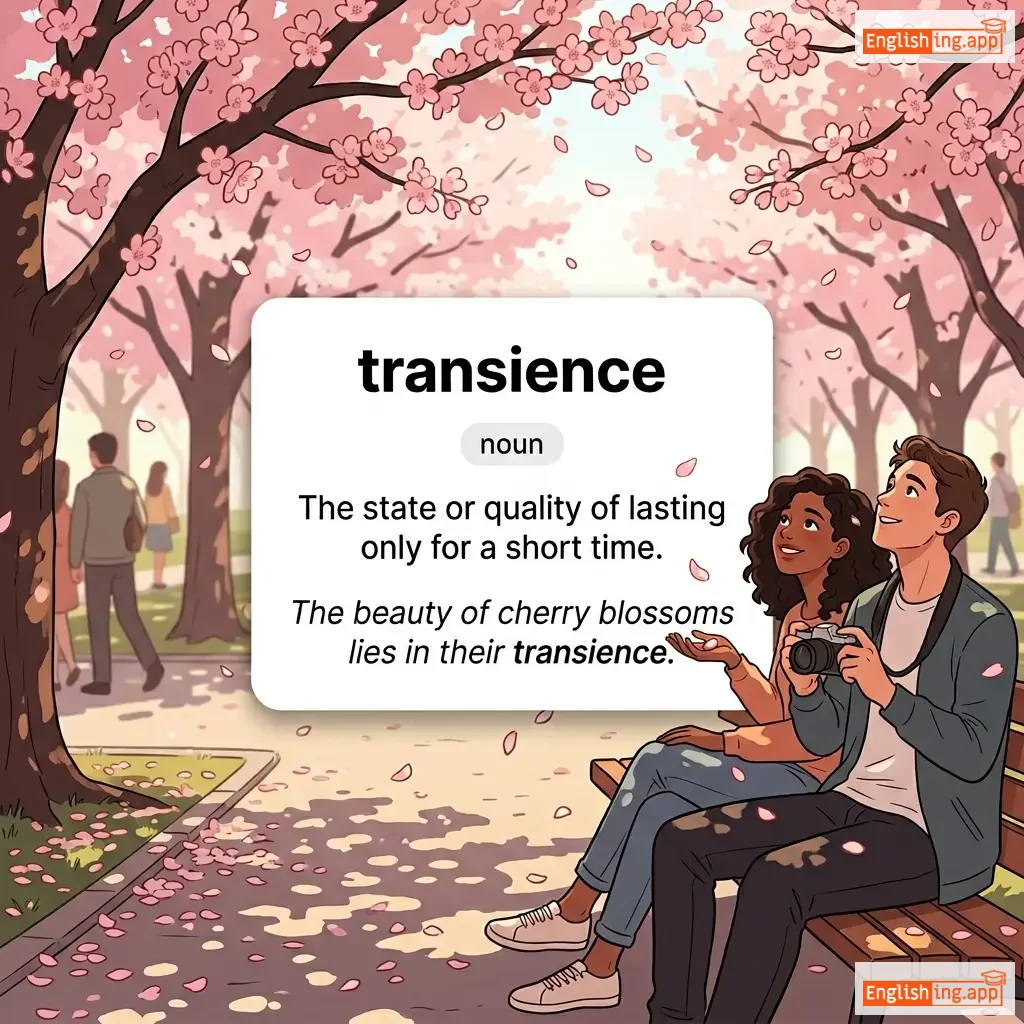
transience definition card — visual illustration of the meaning
noun C2
/ˈtrænziəns/
transience (transience)

The state or quality of lasting only for a short time.

"The beauty of cherry blossoms lies in their transience."

"La beauté des fleurs de cerisier réside dans leur transience." (La beauté des fleurs de cerisier réside dans leur transience.)
noun C2
/trænsˈluːsəns/
semi-transparence (semi-transparence)

the quality of allowing light to pass through but not detailed shapes

"The translucence of the curtains filled the room with soft light."

"La semi-transparence des rideaux remplissait la pièce de lumière douce." (La semi-transparence des rideaux remplissait la pièce de lumière douce.)
adjective C2
/trænzˈmɪsəbl/
transmissible (transmissible)

able to be passed or spread from one person or thing to another

"COVID-19 is a highly transmissible disease."

"COVID-19 est une maladie hautement transmissible." (COVID-19 est une maladie hautement transmissible.)
verb C2
/trænzˈmjuːt/
transmuter (transmuter)

to change in form, nature, or substance

"Alchemy aimed to transmute lead into gold."

"L'alchimie cherchait à transmuter le plomb en or." (L'alchimie cherchait à transmuter le plomb en or.)
verb C2
/trænˈspoʊz/
transposer (transposer)

to change the order or position of something

"The editor transposed two paragraphs in the article."

"L'éditeur a transposé deux paragraphes dans l'article." (L'éditeur a transposé deux paragraphes dans l'article.)
noun C2
/ˌtrænspəˈzɪʃən/
transposition (transposition)

the act of changing the order or position of something

"The transposition of digits caused an error in the calculation."

"La transposition des chiffres a causé une erreur dans le calcul." (La transposition des chiffres a cause une erreur dans le calcul.)
travail definition card — visual illustration of the meaning
noun C2
/trəˈveɪl/
travail pénible (travail penible)

Painful or laborious effort; suffering or hardship.

"After years of travail, she finally completed her degree."

"Après des années de travail pénible, elle a enfin obtenu son diplôme." (Apres des années de travail pénible, elle a enfin obtenu son diplôme.)
adjective C2
/ˈtriːkli/
Excessivement sucré ou sentimental, comme de la mélasse. (Excessivement sucré ou sentimental, comme de la mélasse.)

Excessively sweet or sentimental, like treacle.

"The movie was too treacly for my taste."

"Le film était trop sirupeux pour mon goût." (Le film était trop sirupeux pour mon goût.)
adjective C2
/ˈtriːzənəbl/
trahison (trahison)

Relating to or involving the crime of treason.

"The general was accused of treasonable conduct."

"Le général a été accusé de conduite traitresse." (Le général a été accusé de conduite traitresse.)
adverb C2
/ˈtrɛbli/
triplement (triplement)

in a triple manner or to a threefold degree

"The sound was trebly distorted through the old speakers."

"Le son était distordu triplement par les vieux haut-parleurs." (Le son etait distordu triplement par les vieux haut-parleurs.)
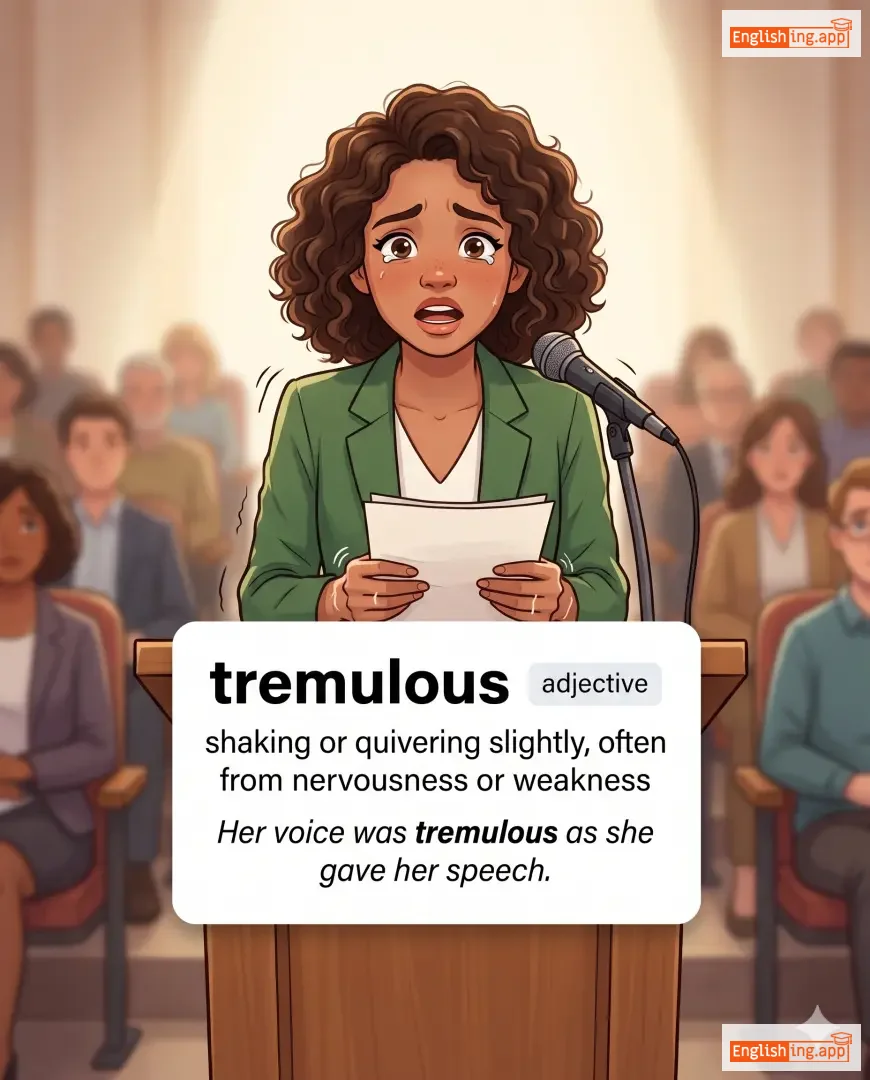
tremulous definition card — visual illustration of the meaning
adjective C2
/ˈtrɛmjələs/
tremblant (tremblant)

shaking or quivering slightly, often from nervousness or weakness

"Her voice was tremulous as she gave her speech."

"Sa voix était tremblante lorsqu'elle a donné son discours." (Sa voix était tremblante lorsqu'elle a donné son discours.)
adjective C2
/ˈtrɛntʃənt/
tranchant (tranchant)

expressed strongly, effectively, and clearly; sharp or cutting in style or expression

"Her trenchant criticism of the policy left no room for misunderstanding."

"Sa critique tranchante de la politique n'a laissé aucune place à des malentendus." (Sa critique tranchante de la politique n'a laissé aucune place à des malentendus.)
noun C2
/ˈtrɛntʃərmən/
goinfre (goinfre)

a person who eats in a hearty or robust manner; a big eater

"The trencherman devoured the feast with great enthusiasm."

"Le goinfre dévora le festin avec un grand enthousiasme." (Le goinfre devora le festin avec un grand enthousiasme.)
noun C2
/ˈtrɛsəl/
étrier (etrier)

a frame or support consisting of a horizontal beam held up by two pairs of sloping legs, used especially for supporting a bridge or table

"The workers built a wooden trestle to support the temporary bridge."

"Les travailleurs ont construit un tréteau en bois pour soutenir le pont temporaire." (Les travailleurs ont construit un tréteau en bois pour soutenir le pont temporaire.)
noun C2
/ˈtrɪbjuːn/
tribune / tribun (tribune)

a person or platform representing the people; historically, a Roman official elected to protect citizens' rights

"He was seen as a tribune of the common people."

"Il était considéré comme un tribun du peuple." (Il etait considere comme un tribun du peuple)
noun/adjective C2
/ˈtraɪkʌlər/
drapeau tricolore (drapeau tricolore)

A flag with three colors; consisting of three colors.

"The French tricolor is one of the most famous national flags in the world."

"Le drapeau tricolore français est l'un des drapeaux nationaux les plus célèbres au monde." (Le drapeau tricolore français est l'un des drapeaux nationaux les plus célèbres au monde.)
noun C2
/ˈtraɪdənt/
trident (trident)

A three-pronged spear, often associated with Neptune or Poseidon.

"The statue of Poseidon holds a mighty trident."

"La statue de Poséidon tient un puissant trident." (La statue de Poséidon tient un puissant trident.)
adjective C2
/traɪˈɛniəl/
triennal (triennal)

Occurring once every three years.

"The art festival is a triennial event in the city."

"Le festival d'art est un événement triennal dans la ville." (Le festival d'art est un evenement triennal dans la ville.)
noun C2
/ˈtrɪmnəs/
ordre (ordre)

the quality of being neat, orderly, or slender and well-proportioned

"Her room’s trimness reflected a habit of putting everything back in its place."

"L'ordre dans sa chambre reflétait l'habitude de tout remettre à sa place." (L'ordre dans sa chambre reflétait l'habitude de tout remettre à sa place.)