Vokabulare

Englisches Vokabelwörterbuch | Wortbedeutungen, Definitionen & Beispiele

verb C2
/ˈdʒæbər/
おしゃべりする (oshaberi suru)

To talk quickly and excitedly but with little sense.

"The children jabbered happily after the show."

"子供たちはショーの後に楽しそうにおしゃべりしました。" (Kodomotachi wa shō no ato ni tanoshisō ni oshaberi shimashita.)
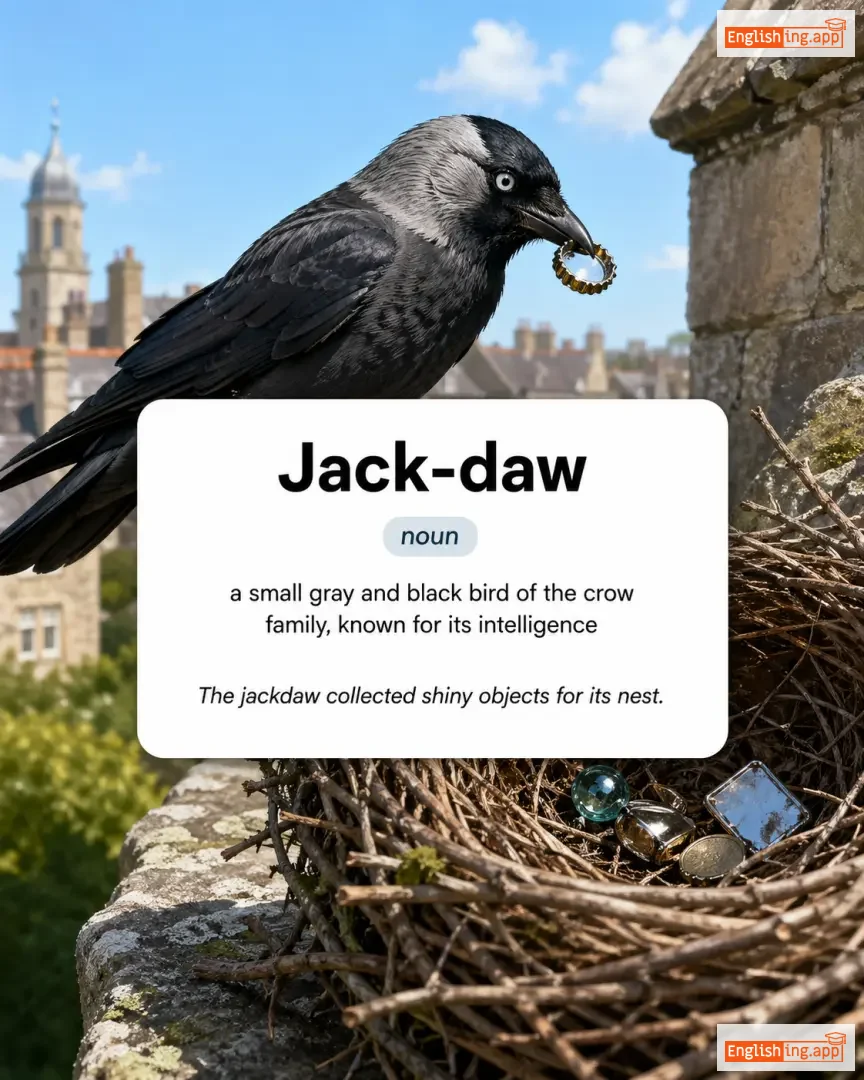
Jack-daw definition card — visual illustration of the meaning
noun C2
/ˈdʒæk.dɔː/
小さなカラス (chiisana karasu)

a small gray and black bird of the crow family, known for its intelligence

"The jackdaw collected shiny objects for its nest."

"ジャックドーはその巣のために輝く物を集めました。" (Jack-dou wa sono su no tame ni kagayaku mono wo atsumemashita.)
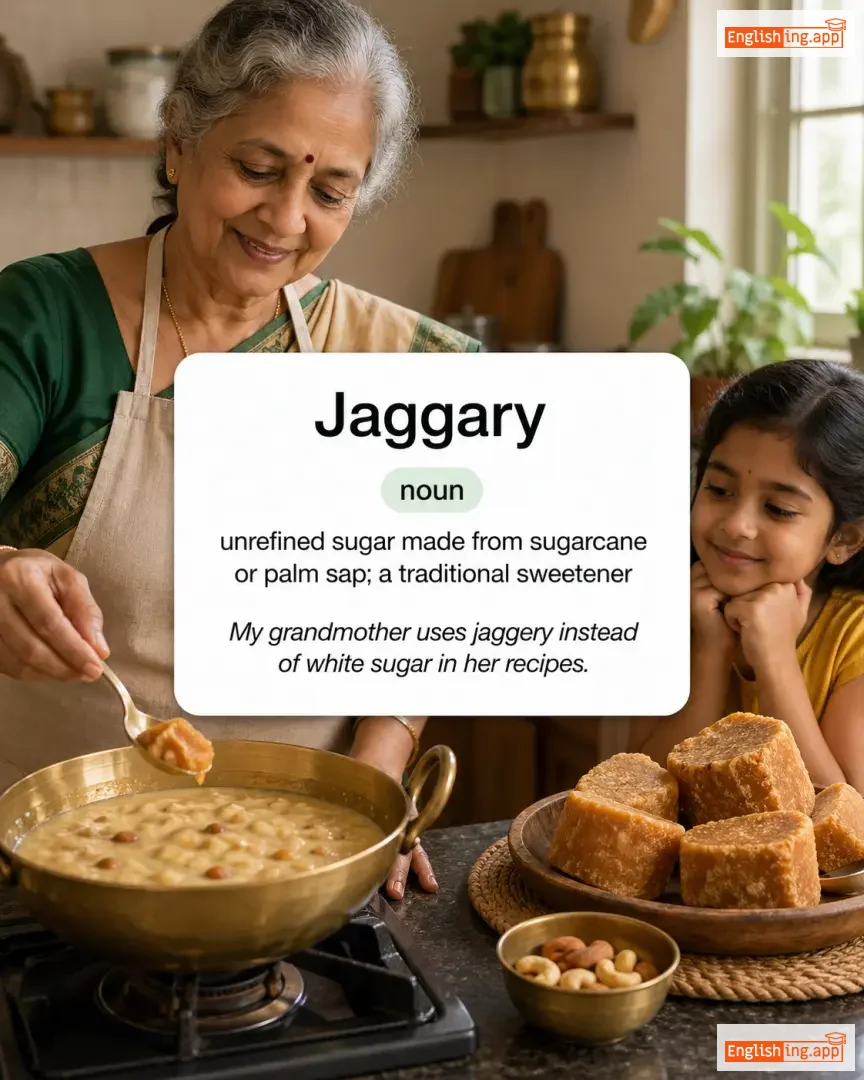
Jaggary definition card — visual illustration of the meaning
noun C2
/ˈdʒæɡ.ər.i/
ジャガリー (jagari)

unrefined sugar made from sugarcane or palm sap; a traditional sweetener

"My grandmother uses jaggery instead of white sugar in her recipes."

"私の祖母はレシピで白い砂糖の代わりにジャガリーを使います。" (watashi no sobo wa reshipi de shiroi satō no kawari ni jagari o tsukaimasu)
noun C2
/dʒæm/
ドア枠 (doawaku)

The side post or surface of a doorway, window, or fireplace.

"The carpenter carefully measured the width of the door jamb."

"大工はドア枠の幅を慎重に測定した。" (Daiku wa doa-waku no haba o shinchō ni sokutei shita.)
noun C2
/dʒeɪp/
冗談, いたずら (jōdan, itazura)

A practical joke or humorous remark.

"He enjoyed a harmless jape with his friends."

"彼は友達と無害な冗談を楽しんだ。" (Kare wa tomodachi to mugai na jōdan o tanoshinda.)
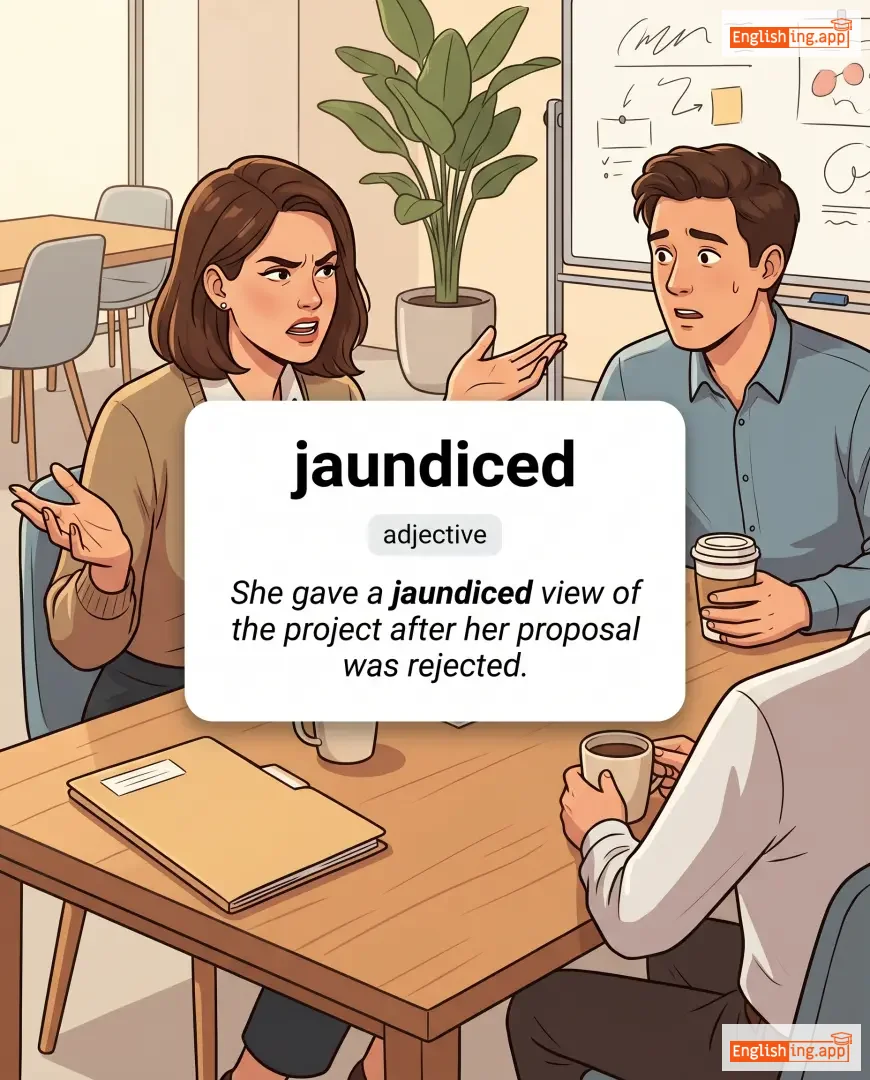
jaundiced definition card — visual illustration of the meaning
adjective C2
/ˈdʒɔːndɪst/
偏見のある / 嫉妬深い / 黄疸による (henken no aru / shitto-bukai / ōdan ni yoru)

Affected by or displaying prejudice, envy, or bitterness; also refers to having a yellowish discoloration of the skin due to jaundice.

"She gave a jaundiced view of the project after her proposal was rejected."

"彼女は提案が却下された後、プロジェクトに偏見を持った見方を示した。" (Kanojo wa teian ga kyakka sareta ato, purojekuto ni henken o motta mikata o shimeshita.)
noun C2
/dʒɔːnt/
短い旅行 (mijikai ryokou)

A short journey or excursion, usually taken for pleasure.

"They went on a weekend jaunt to the countryside."

"彼らは週末に田舎へ短い旅行に行きました。" (Karera wa shūmatsu ni inaka e mijikai ryokou ni ikimashita.)
adjective C2
/ˈdʒɔːnti/
陽気な (yōkina)

Having a lively, cheerful, and self-confident manner or appearance.

"He walked into the room with a jaunty step."

"彼は陽気な足取りで部屋に入った。" (kare wa yōkina ashidori de heya ni haitta.)
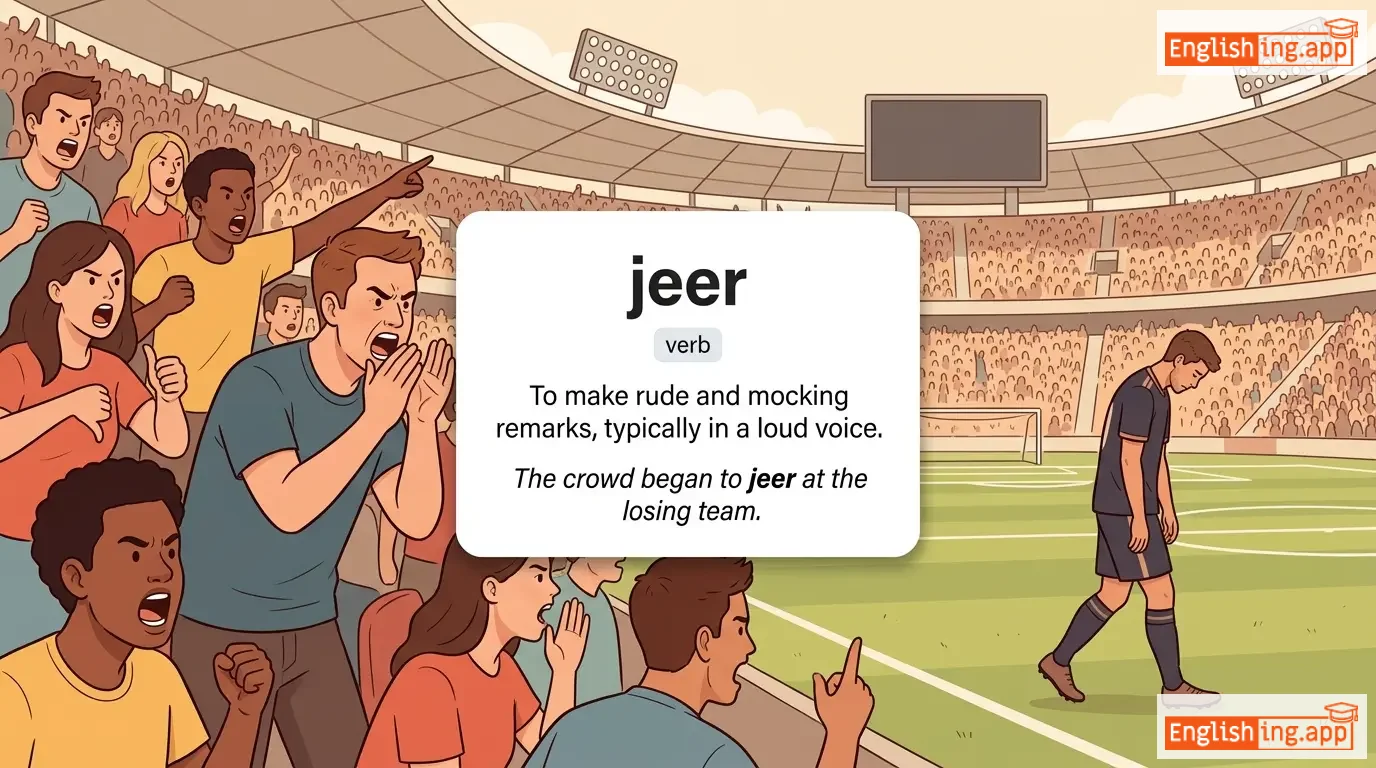
jeer definition card — visual illustration of the meaning
verb C2
/dʒɪər/
嘲笑する (choushou suru)

To make rude and mocking remarks, typically in a loud voice.

"The crowd began to jeer at the losing team."

"群衆は負けているチームを嘲笑し始めた。" (Gunshuu wa maketeiru chiimu o choushou shi hajimeta.)
adjective C2
/dʒɪˈdʒuːn/
未熟 / 表面的 / 退屈 (mijuku / hyōmen-teki / taikutsu)

Naive, simplistic, and superficial; also dull or uninteresting.

"The professor dismissed the essay as jejune and lacking depth."

"教授はそのエッセイを未熟で深みがないとして却下した。" (Kyōju wa sono essei o mijuku de fukami ga nai to shite kyakka shita.)
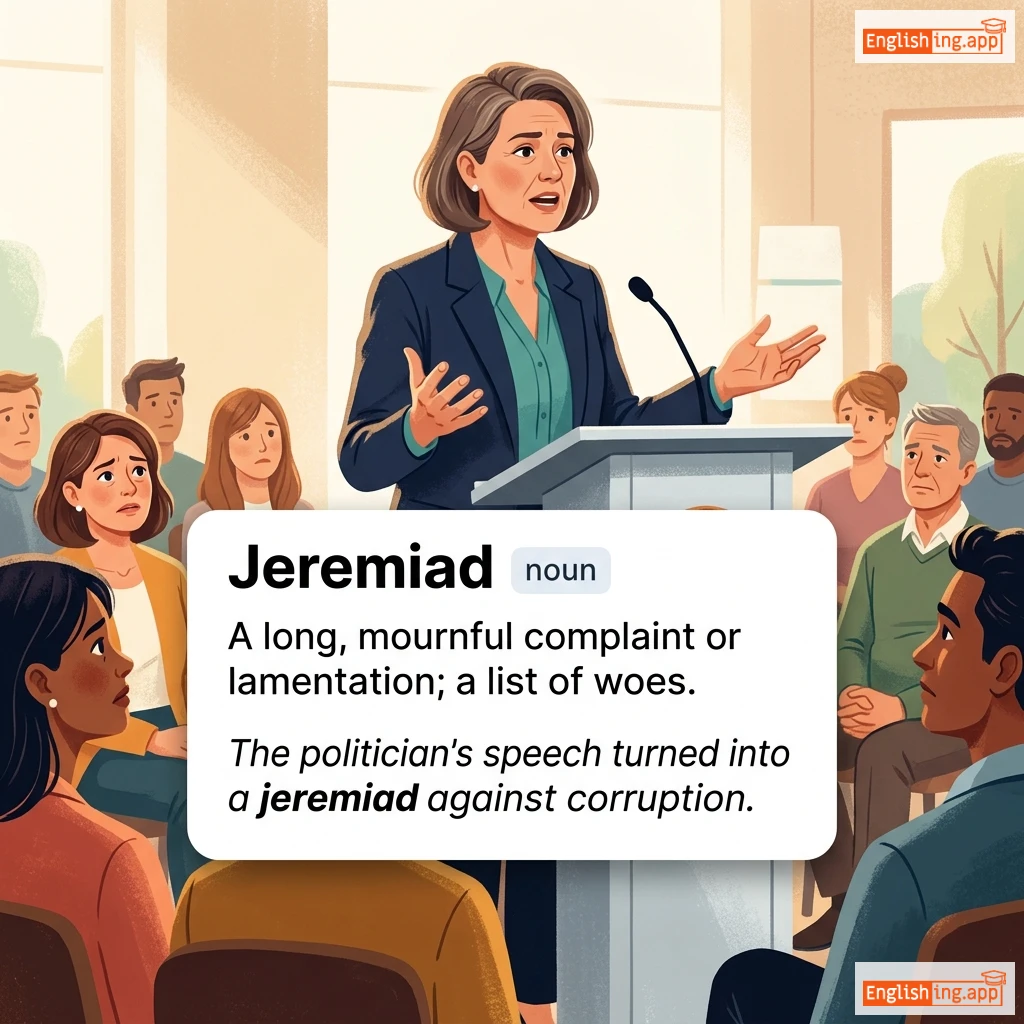
Jeremiad definition card — visual illustration of the meaning
noun C2
/ˈdʒɛrəˌmaɪæd/
嘆き (nageki)

A long, mournful complaint or lamentation; a list of woes.

"The politician's speech turned into a jeremiad against corruption."

"政治家のスピーチは腐敗に対する嘆きに変わった。" (Seijika no supīchi wa fuhai ni taisuru nageki ni kawatta.)
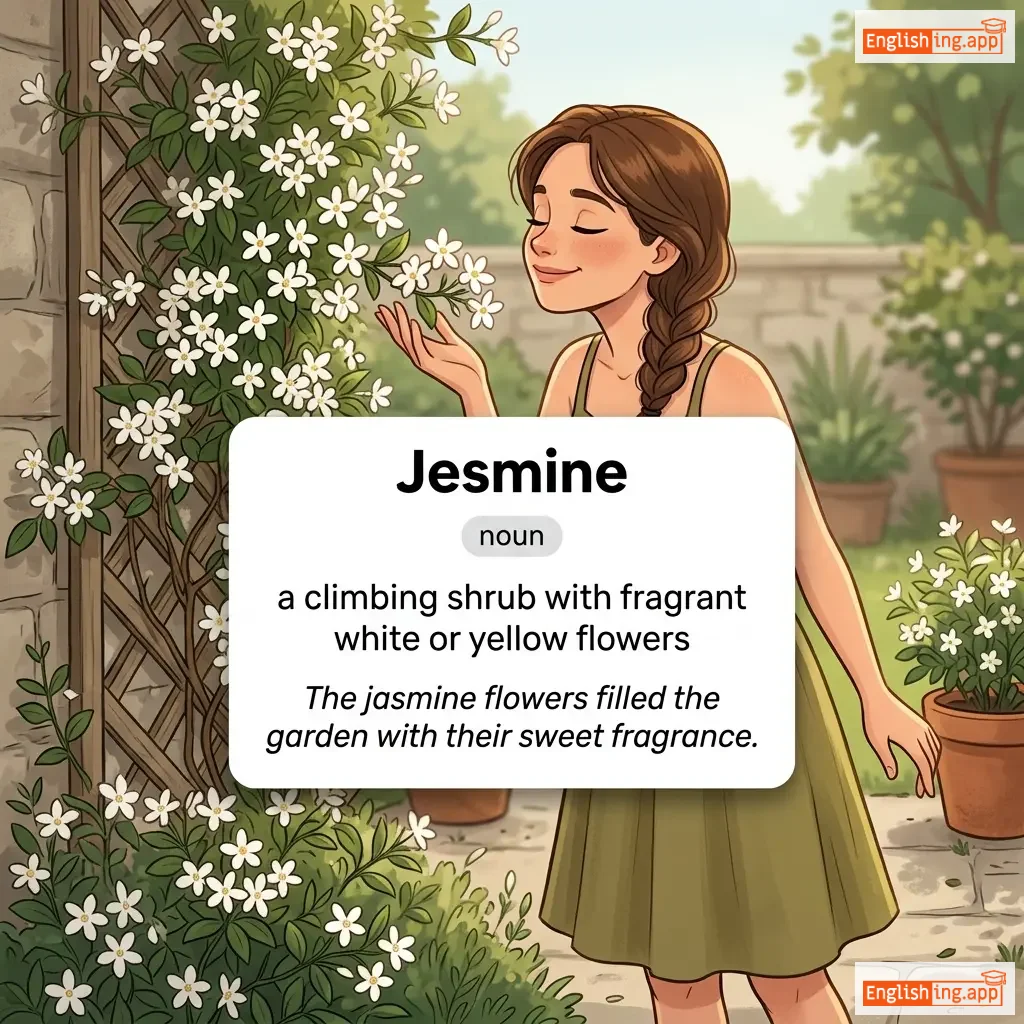
Jesmine definition card — visual illustration of the meaning
noun C2
/ˈdʒæz.mɪn/
ジャスミン (jasumin)

a climbing shrub with fragrant white or yellow flowers

"The jasmine flowers filled the garden with their sweet fragrance."

"ジャスミンの花が庭を甘い香りで満たした。" (jasumin no hana ga niwa o amai kaori de mitashita)
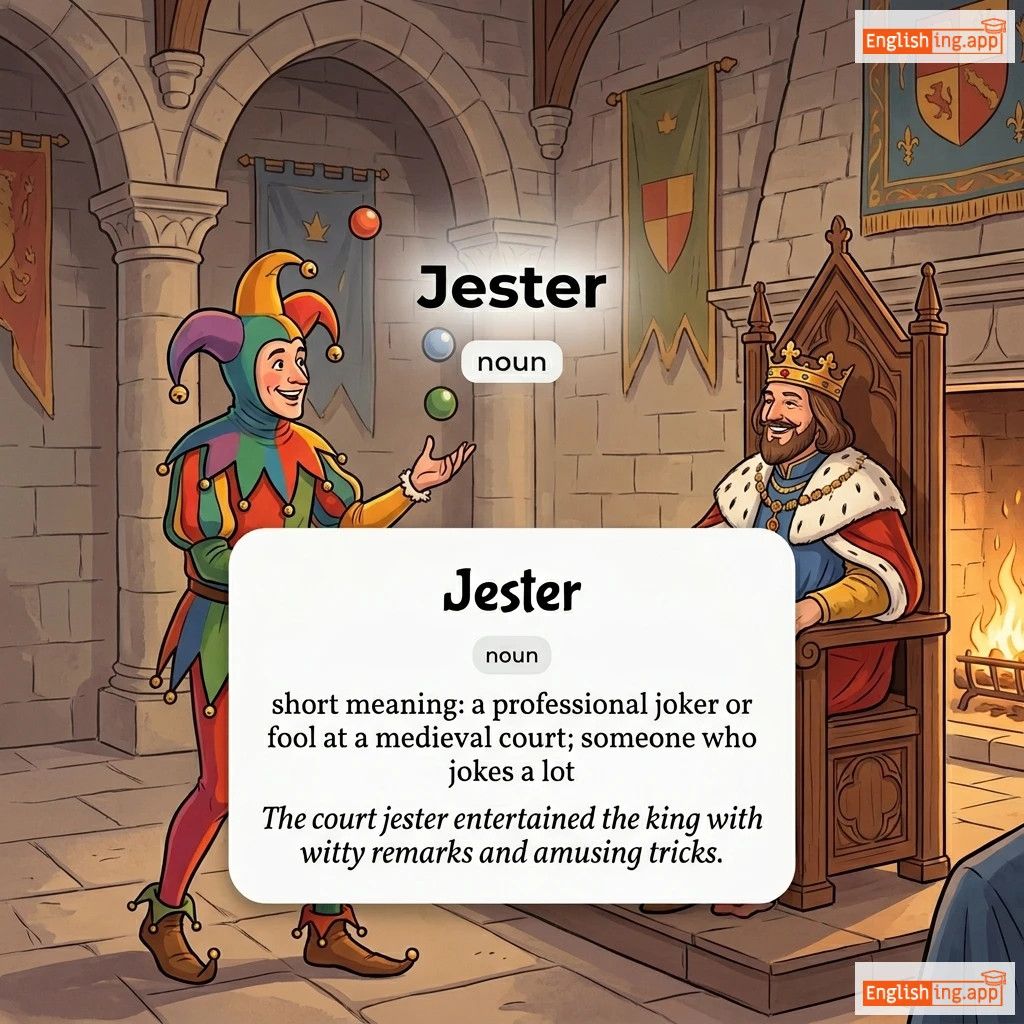
Jester definition card — visual illustration of the meaning
noun C2
/ˈdʒes.tər/
道化師; ピエロ (dōkashi, piero)

a professional joker or fool at a medieval court; someone who jokes a lot

"The court jester entertained the king with witty remarks and amusing tricks."

"宮廷の道化師は、鋭いコメントや面白いトリックで王様を楽しませた。" (Kyūtei no dōkashi wa, surudoi komento ya omoshiroi torikku de ōsama o tanoshimaseta.)
adjective C2
/ˈdʒes.tɪŋ/
冗談めいた (jesuting)

joking or teasing in a playful manner

"He was only jesting when he said he would quit his job."

"彼が仕事を辞めると言ったとき、彼はただ冗談を言っていただけだった。" (hii wazu onrii jesuting wen hii seddo hi uddo kuitto hizu jobu)
noun C2
/ˈdʒɛtsəm/
船から投げ捨てられ、岸に打ち寄せられた不要な物や品物 (fune kara nage suterare, kishi ni uchi yoserareta fuyōna mono ya shinmotsu)

Unwanted material or goods thrown overboard from a ship and washed ashore.

"The beach was littered with jetsam after the storm."

"嵐の後、ビーチにはジェットサムが散乱していました。" (Arashi no ato, bīchi ni wa jettsamu ga sanran shiteimashita.)
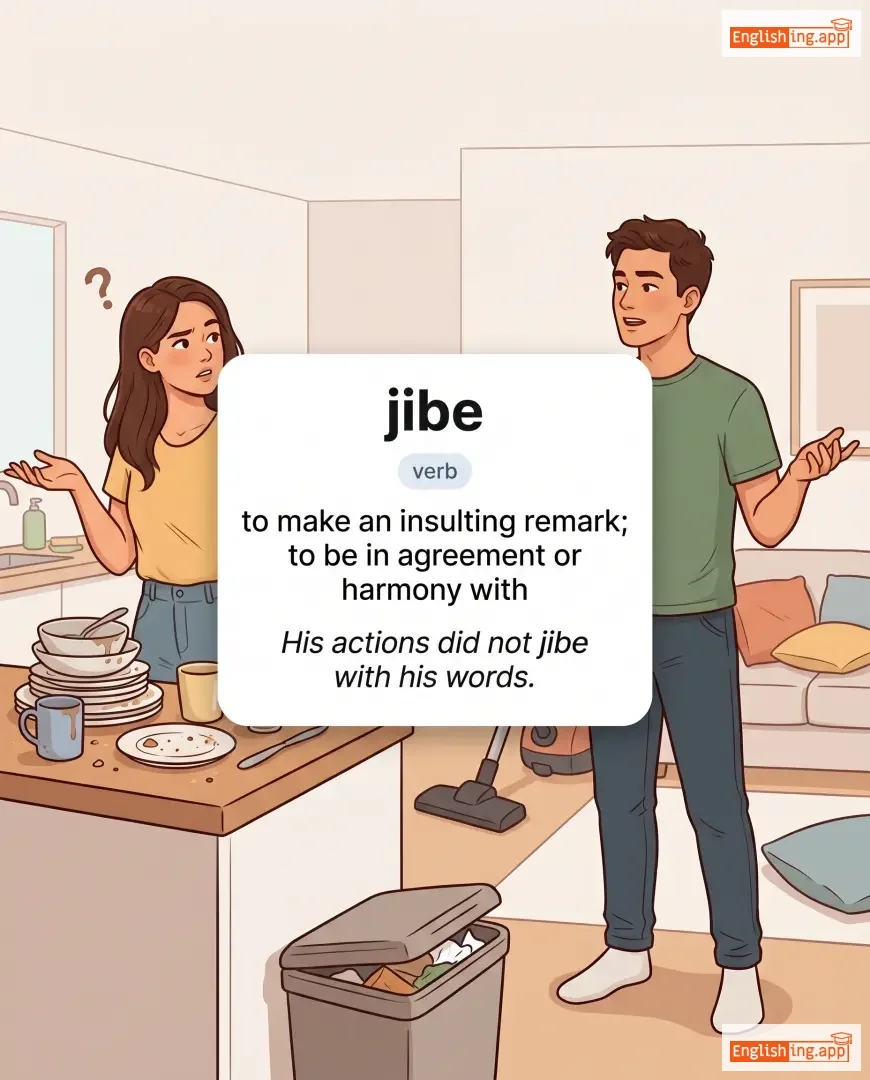
jibe definition card — visual illustration of the meaning
verb C2
/dʒaɪb/
皮肉を言う / 一致する (hiniku wo iu / itchi suru)

to make an insulting remark; to be in agreement or harmony with

"His actions did not jibe with his words."

"彼の行動は彼の言葉と一致していなかった。" (Kare no kōdō wa kare no kotoba to itchi shite inakatta.)
adjective C2
/ˈdʒɪg.ərd/
驚いた; びっくりした; (jigaado)

surprised or astonished; confused or puzzled

"I'll be jiggered if I know what happened here."

"ここで何が起こったのか知っていたら驚くでしょう。" (Koko de nani ga okotta no ka shittetara odoroku deshou.)
noun C2
/ˈdʒɪŋɡoʊ/
戦争支持の国家主義者 (sensō shiji no kokka shugi-sha)

a person who strongly supports warlike or aggressive foreign policy; an extreme nationalist

"The leader was criticized as a reckless jingo."

"その指導者は無謀なジンゴとして批判された。" (Sono shidōsha wa mubōna jingo toshite hihan sareta.)
noun C2
/ˈdʒɪŋɡoʊˌɪzəm/
過激な愛国主義 (kageki na aikokushugi)

extreme patriotism expressed in aggressive foreign policy

"The politician's speech was filled with jingoism."

"その政治家の演説はジンゴイズムに満ちていました。" (Sono seijika no enzetsu wa jingoizumu ni michiteimashita.)
noun C2
/ˈdʒɪŋɡoʊɪst/
ジンゴイスト (jingoisuto)

a person who supports jingoism; an extreme nationalist with aggressive foreign policies

"He was labeled a jingoist for his extreme views."

"彼は自分の極端な意見のためにジンゴイストとレッテルを貼られた。" (Kare wa jibun no kyokutan na iken no tame ni jingoisuto to reteru o harareta.)
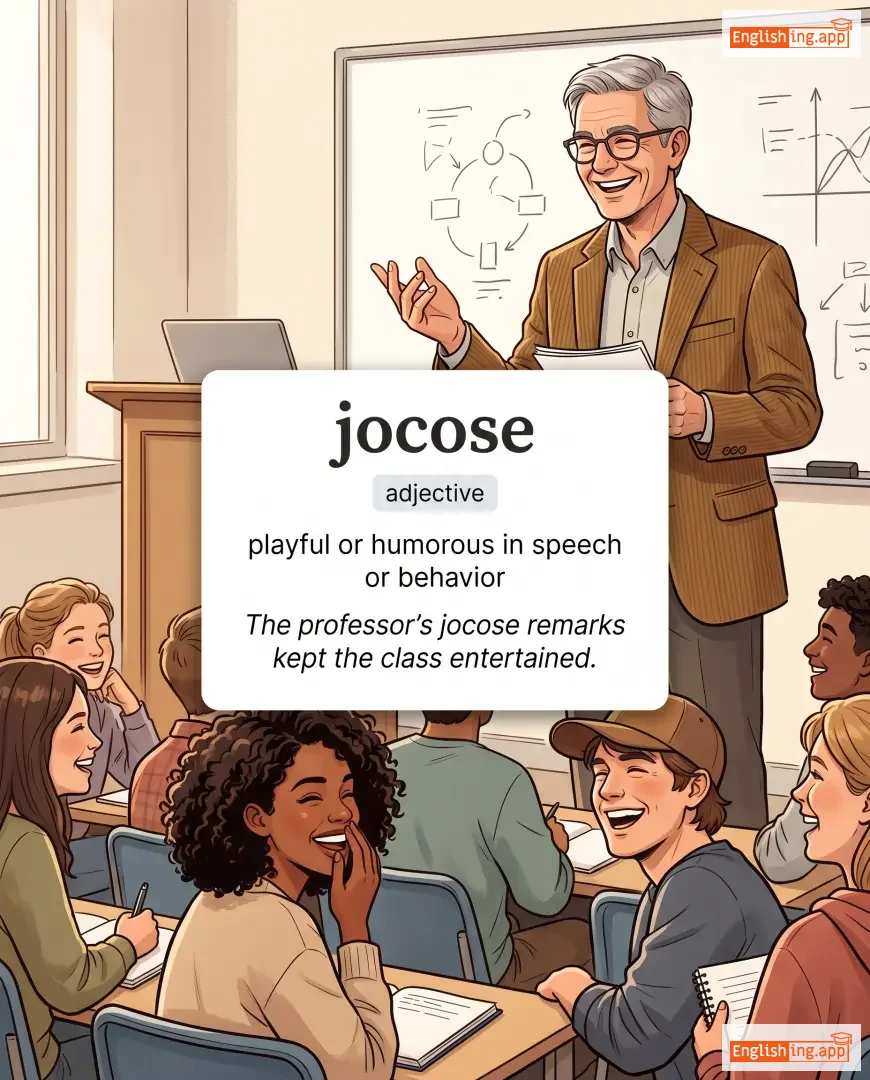
jocose definition card — visual illustration of the meaning
adjective C2
/dʒoʊˈkoʊs/
冗談めかした (joudanmekashita)

playful or humorous in speech or behavior

"The professor’s jocose remarks kept the class entertained."

"教授の冗談めかした発言がクラスを楽しませました。" (Kyouju no joudanmekashita hatsugen ga kurasu o tanoshimase mashita.)
adjective C2
/ˈdʒɒkjələr/
冗談好きな (joudan sukina)

fond of or characterized by joking; humorous

"His jocular nature made him popular among colleagues."

"彼の冗談好きな性格は同僚の中で人気があった。" (Kare no joudan sukina seikaku wa dōryō no naka de ninki ga atta.)
adjective C2
/ˈdʒɒkənd/
陽気な (yōkina)

cheerful and lighthearted

"They walked together in a jocund mood after the celebration."

"彼らは祝賀会の後、陽気な気分で一緒に歩いていた。" (Karera wa shukugakai no ato, yōkina kibun de issho ni aruite ita.)
verb C2
/ˈdʒɒɡəl/
軽く揺する (karuku yusuru)

to shake slightly; to move or cause to move with quick, small jerks

"He joggled the table and the vase nearly fell."

"彼はテーブルを揺すって、花瓶が倒れそうになった。" (Kare wa teeburu o yusutte, kabin ga taoresou ni natta.)
noun C2
/ˈdʒɒlɪti/
楽しさ (tanoshisa)

lively and cheerful activity or celebration

"The wedding was full of jollity and laughter."

"結婚式は楽しさと笑いに満ちていました。" (Kekkonshiki wa tanoshisa to warai ni michite imashita.)
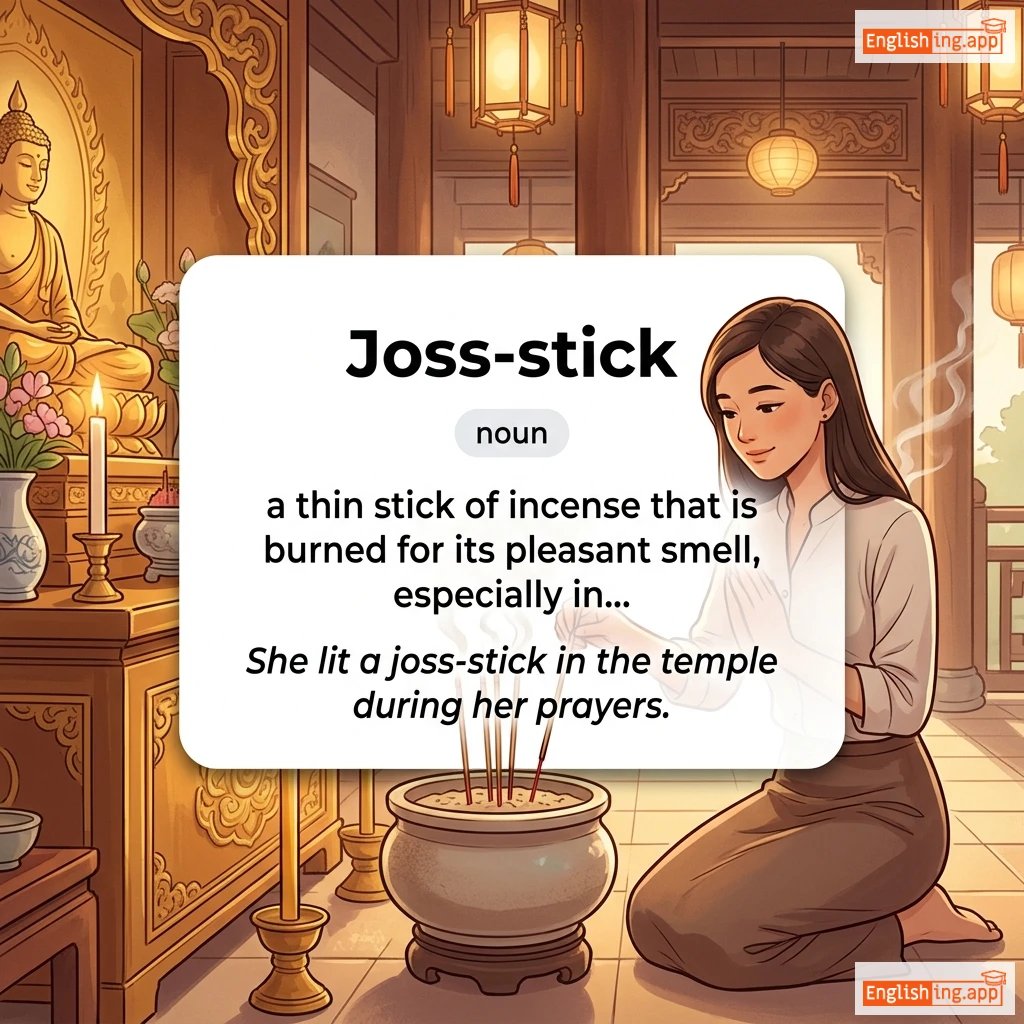
Joss-stick definition card — visual illustration of the meaning
noun C2
/ˈdʒɒs.stɪk/
お香 (okou)

a thin stick of incense that is burned for its pleasant smell, especially in religious ceremonies

"She lit a joss-stick in the temple during her prayers."

"彼女は寺院で祈りの間にお香を灯しました。" (Kanojo wa jiin de inori no aida ni okou o tomoshimashita.)
verb C2
/ˈdʒɜːrnəlaɪz/
日記に記録する (nikki ni kiroku suru)

to record daily transactions or events in a journal, especially in accounting

"The accountant will journalize all financial transactions at the end of the day."

"会計士は一日の終わりにすべての財務取引をジャーナライズします。" (Kaikeishi wa ichinichi no owari ni subete no zaimu torihiki o jānaraizu shimasu.)
🤺

joust

verb C2
/dʒaʊst/

to engage in a medieval contest on horseback with lances; to compete or argue

"The knights prepared to joust in front of the cheering crowd."

noun C2
/ˈdʒʌŋk.tʃər/
重要な局面 (jūyō na kyokumen)

a particular point in time, especially one of great importance or crisis

"At this critical jucture, the company must decide whether to expand or downsize."

"この重要な局面で、会社は拡大するか縮小するかを決定しなければなりません。" (Kono jūyō na kyokumen de, kaisha wa kakudai suru ka shukushō suru ka o kettei shinakereba narimasen.)
noun C2
/ˈdʒuː.dɪˌkeɪ.tʃər/
司法制度 (shihou seido)

the administration of justice or the system of courts

"The judicature ensures that laws are fairly applied."

"司法制度は法律が公平に適用されることを保証します。" (Shihou seido wa houritsu ga kouhei ni tekiyou sareru koto wo hoshou shimasu.)
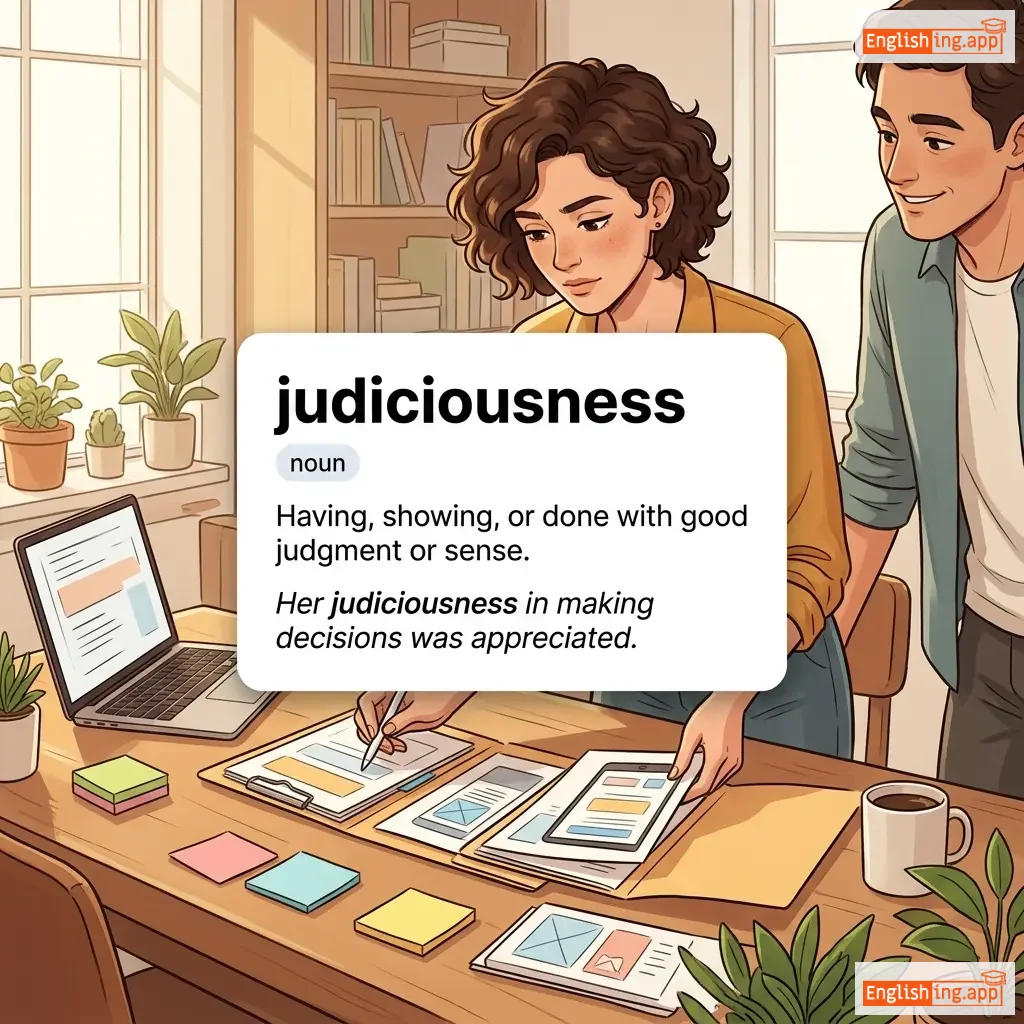
judiciousness definition card — visual illustration of the meaning
noun C2
dʒʊˈdɪʃəsnɪs
慎重さ、賢明さ (shinchousa, kenmei sa)

Having, showing, or done with good judgment or sense.

"Her judiciousness in making decisions was appreciated."

"意思決定における彼女の慎重さは評価されました。" (Ishikettei ni okeru kanojo no shinchousa wa hyouka saremashita.)
noun C2
/ˈdʒʌɡləri/
ジャグリング (jaguringu)

The performance of tricks and illusions, especially by sleight of hand.

"The magician's jugglery amazed the audience."

"魔法使いのジャグリングは観客を驚かせました。" (Mahōtsukai no jaguringu wa kankyaku o odorokasemashita.)
noun C2
/ˈdʒʌɡjələr/
頸静脈 (keijoumyaku)

A large vein in the neck that carries blood from the head back to the heart.

"The doctor checked the patient's jugular vein for signs of pressure."

"医者は患者の頸静脈に圧力の兆候がないかを確認しました。" (Isha wa kanja no keijoumyaku ni atsuryoku no choukou ga nai ka wo kakunin shimashita.)
noun C2
/ˈdʒʌŋkɪt/
旅行または祝賀 (ryokou matawa shukuga)

A trip or celebration, often funded by someone else, usually for pleasure or promotional purposes.

"The company organized a junket for journalists to promote their new resort."

"会社はジャーナリストのために新しいリゾートを宣伝するための旅行を組織しました。" (Kaisha wa jānarisuto no tame ni atarashī rizōto o senden suru tame no ryokō o soshiki shimashita.)
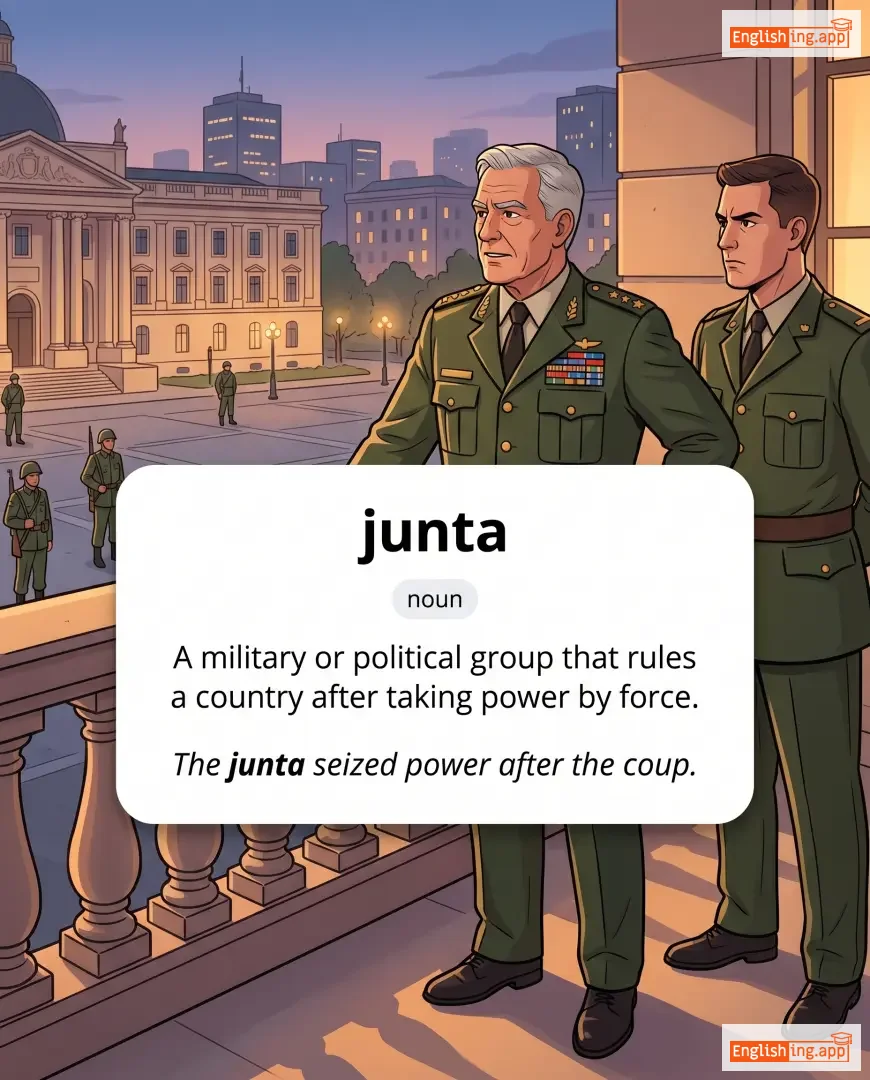
junta definition card — visual illustration of the meaning
noun C2
/ˈdʒʊntə/
軍事政権 (gunji seiken)

A military or political group that rules a country after taking power by force.

"The junta seized power after the coup."

"クーデター後、軍事政権が権力を掌握しました。" (Kūdetā go, gunji seiken ga kenryoku o shōaku shimashita.)
adjective C2
/dʒʊˈrɪdɪkəl/
司法的 (shihou teki)

Relating to judicial proceedings or the administration of law.

"The case raised important juridical questions."

"その事件は重要な司法的問題を提起しました。" (Sono jiken wa jūyōna shihōteki mondai o teiki shimashita.)
noun C2
/ˌdʒʊərɪsˈpruːdəns/
法学 (hōgaku)

The theory, philosophy, or science of law.

"She is a professor of jurisprudence at the university."

"彼女は大学で法学の教授です。" (Kanojo wa daigaku de hōgaku no kyōju desu.)
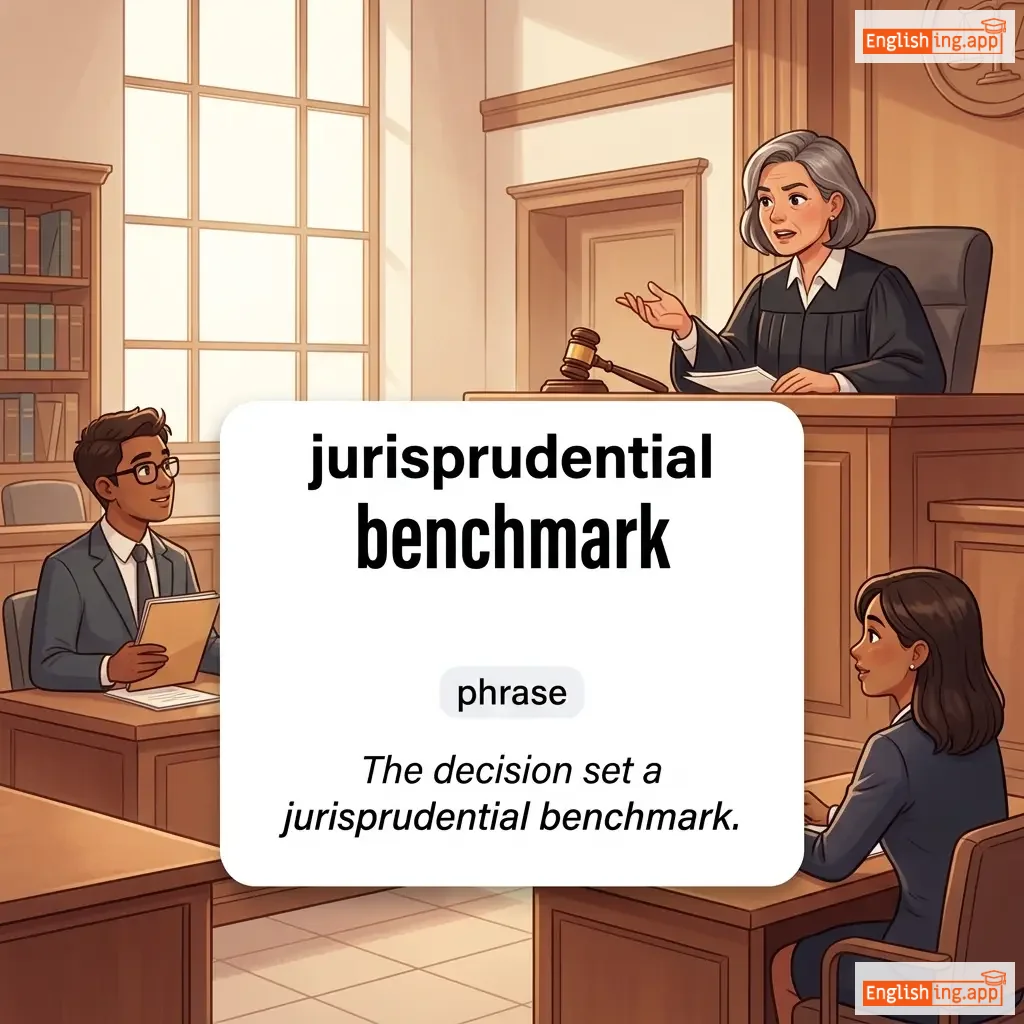
jurisprudential benchmark definition card — visual illustration of the meaning
phrase C2
ˌdʒʊə.rɪs.pruːˈden.ʃəl ˈbentʃ.mɑːk
法的基準 (hōteki kijun)

A legal standard or precedent that serves as a reference point for future legal decisions.

"The decision set a jurisprudential benchmark."

"その決定は法的基準を設定しました。" (Sono kettei wa hōteki kijun o settei shimashita.)
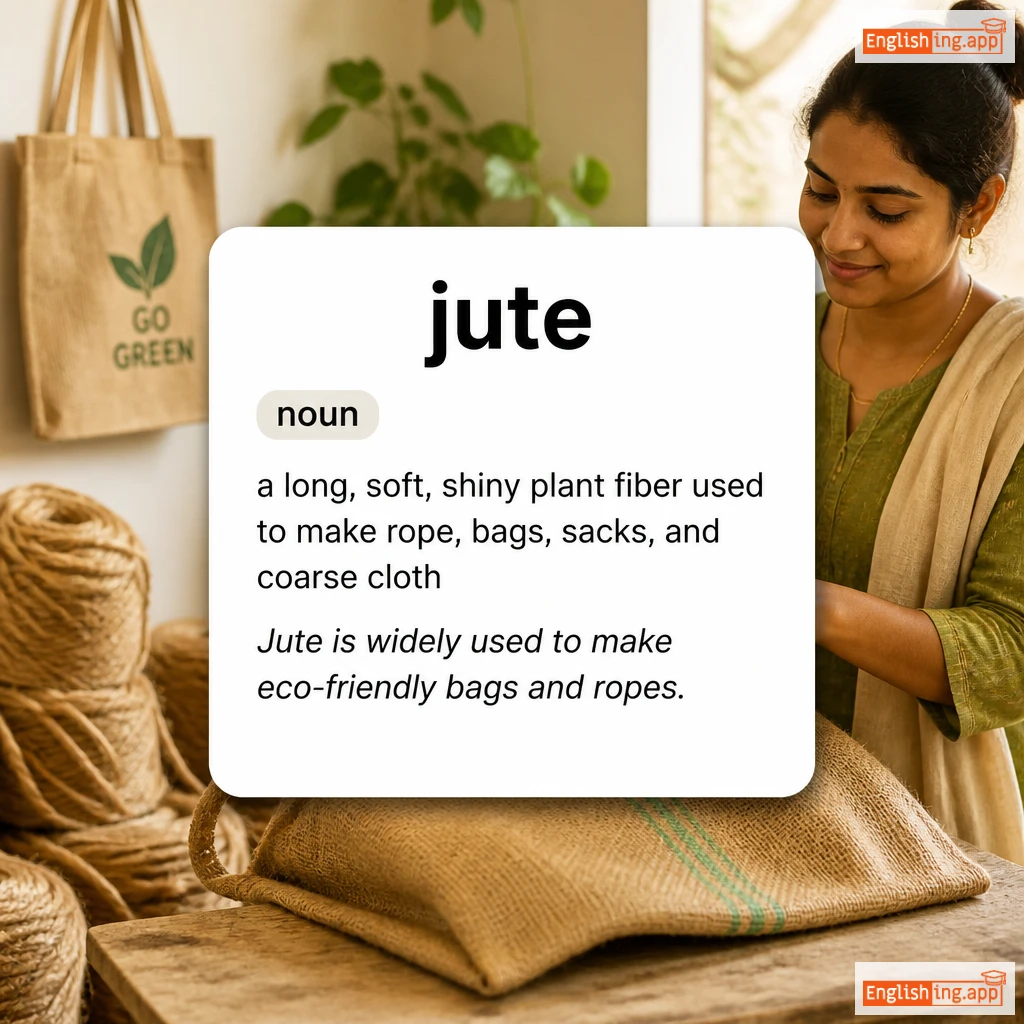
jute definition card — visual illustration of the meaning
noun C2
/dʒuːt/
黄麻 (ouma)

a long, soft, shiny plant fiber used to make rope, bags, sacks, and coarse cloth

"Jute is widely used to make eco-friendly bags and ropes."

"黄麻は環境にやさしい素材です。" (ouma wa kankyou ni yasashii sozai desu)
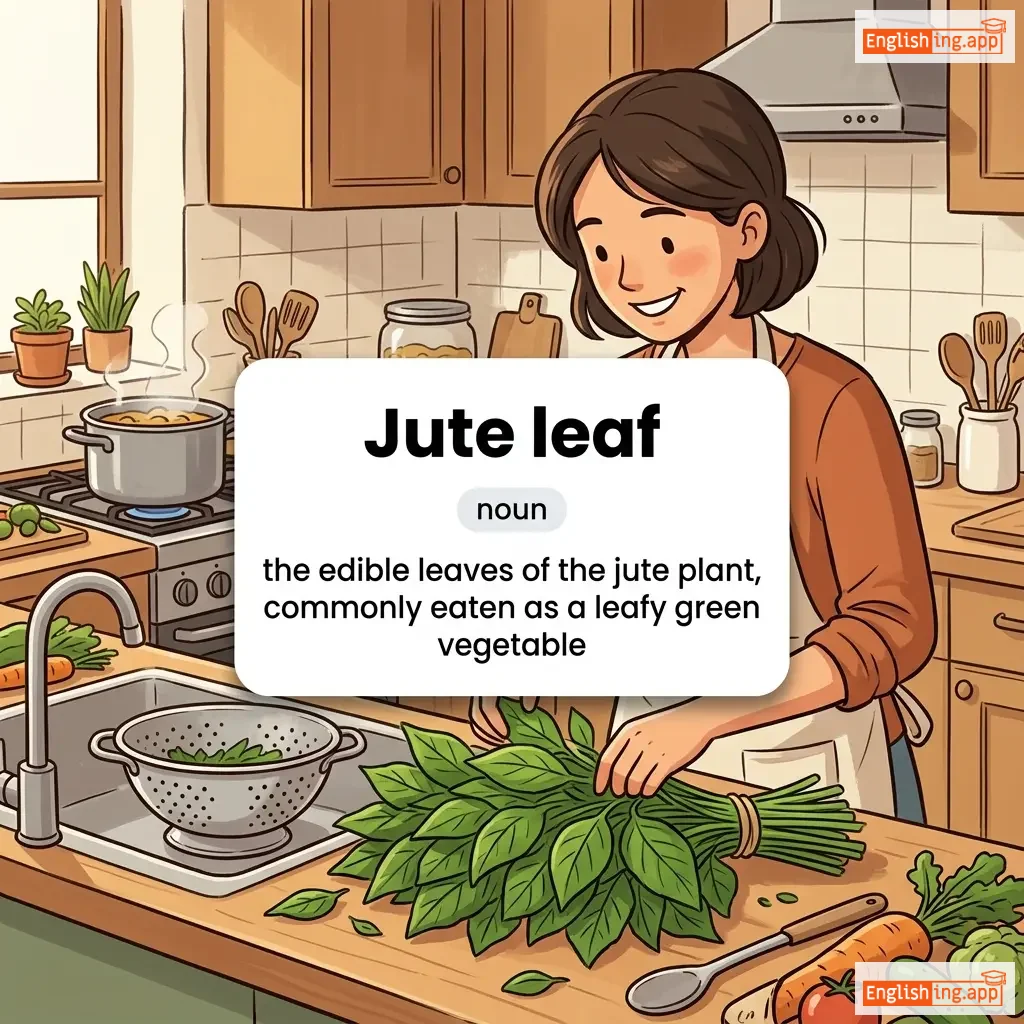
Jute leaf definition card — visual illustration of the meaning
noun C2
/dʒuːt liːf/
ジュートの葉 (juuto riifu)

the edible leaves of the jute plant, commonly eaten as a leafy green vegetable

"Jute leaf is rich in vitamins and minerals and is often cooked with lentils in Bengali cuisine."

"ジュートの葉はビタミンやミネラルが豊富で、ベンガル料理ではしばしばレンズ豆と一緒に調理されます。" (juuto no ha wa bitamin ya mineraru ga houfu de bengaru ryouri de wa shibashiba renzu mame to issho ni chouri saremasu.)