Vokabulare

Englisches Vokabelwörterbuch | Wortbedeutungen, Definitionen & Beispiele

adjective C2
/həˈmɑː.lə.ɡəs/
гомологичный (структура) (gomologichnyy (struktura))

Having the same relation, relative position, or structure, especially due to evolutionary origin.

"The wings of bats and the arms of humans are homologous structures."

"Крылья летучих мышей и руки людей - это гомологичные структуры." (Krylya letuchikh myshey i ruki lyudey - eto gomologichnye struktury.)
noun C2
/ˌɒnəˈreəriəm/
гонорар (gonorar)

A payment given for professional services that are rendered without a fee.

"The guest lecturer received an honorarium for her talk."

"Гость-лекционер получил гонорар за свою лекцию." (Gost' lektsioner poluchil gonorar za svoju lektsiju.)
verb C2
/ˈhʊdwɪŋk/
обманывать (obmanyvat)

To deceive or trick someone.

"The scammer hoodwinked many people with false promises."

"Мошенник обманул многих людей ложными обещаниями." (Moshenik obmanul mnogikh lyudey lozhnymi obeshchaniyami.)
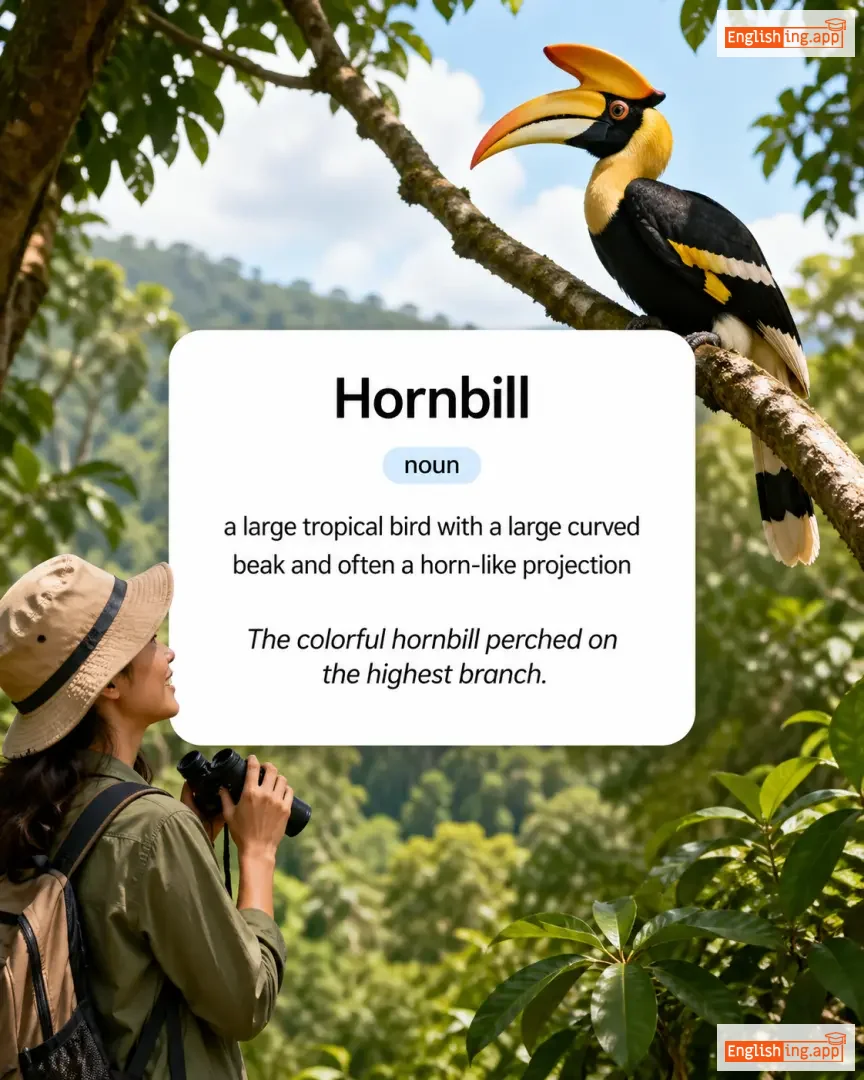
Hornbill definition card — visual illustration of the meaning
noun C2
/ˈhɔːrn.bɪl/
Птица хорнбил (ptitsa hornbil)

a large tropical bird with a large curved beak and often a horn-like projection

"The colorful hornbill perched on the highest branch."

"Яркий хорнбил сел на самую высокую ветку." (Yarkiy hornbil sel na samuyu vysokuyu vetku.)
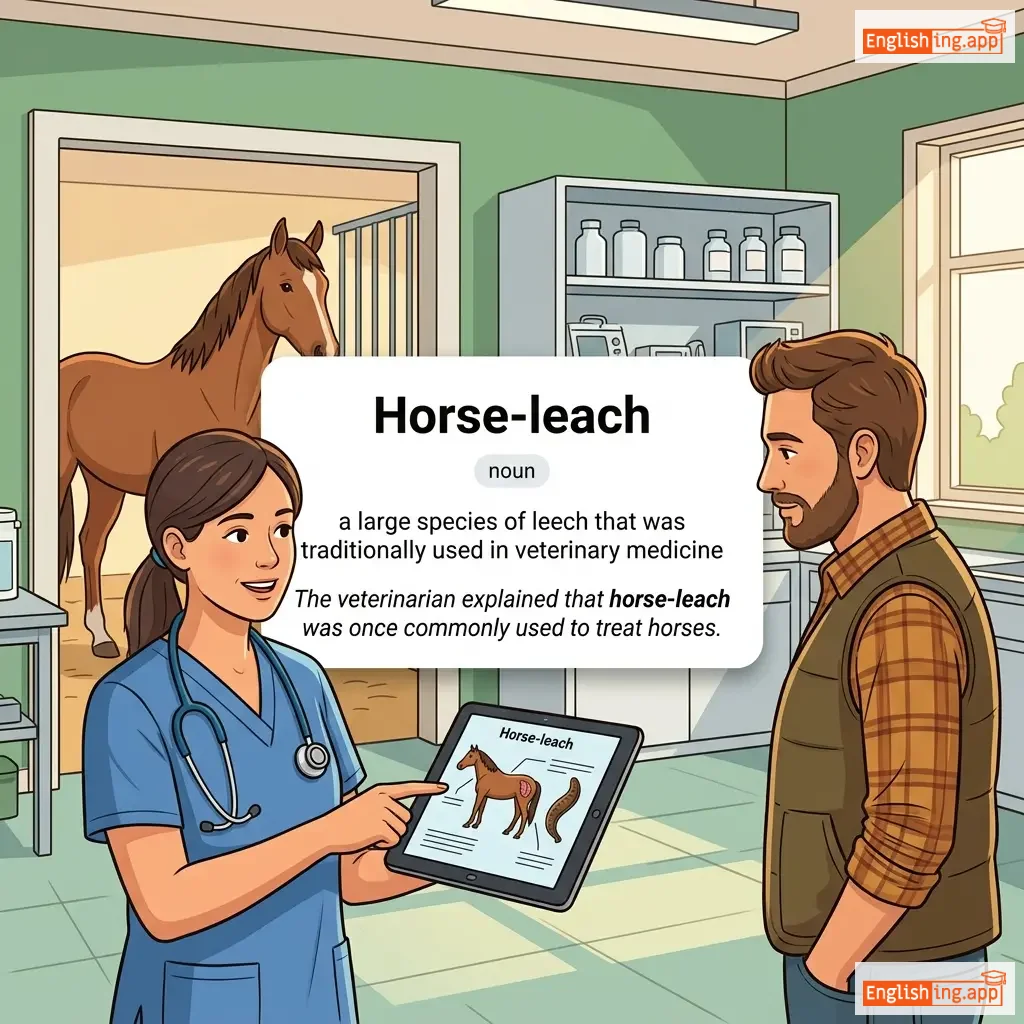
Horse-leach definition card — visual illustration of the meaning
noun C2
/ˈhɔːrs.liːt͡ʃ/
лошадинный пиявка (loshadinny pilyavka)

a large species of leech that was traditionally used in veterinary medicine

"The veterinarian explained that horse-leach was once commonly used to treat horses."

"Ветеринар объяснил, что лошадинные пиявки когда-то широко использовались для лечения лошадей." (Veterinar ob'yasnil, chto loshadinnyye pilyavki kogda-to shiroko ispol'zovalis' dlya lecheniya loshadey.)
adjective C2
/ˈhɔːrtətɪv/
ободряющий (obodryayushchiy)

Giving strong encouragement or urging.

"The teacher gave a hortative speech to motivate the students before the exam."

"Учитель произнес ободряющую речь, чтобы мотивировать учеников перед экзаменом." (Uchitel prozines obodryayushchuyu rech chtoby motivirovat uchenikov pered ekzamenom)
adjective C2
/ˈhɔːrtətɔːri/
побудительный (pobuditelnyy)

Intended to encourage or urge to action.

"The manager’s hortatory words inspired the team to work harder."

"Побудительные слова менеджера вдохновили команду работать усерднее." (Pobuditelnyye slova menedzhera vdokhnovili komandu rabotat userdnee)
noun C2
/ˈhoʊʒəri/
носки и одежда для ног (noski i odezhda dlya nog)

Stockings, socks, and other knitted clothing for the legs and feet.

"She bought new hosiery for the winter season."

"Она купила новые чулки для зимнего сезона." (Ona kupila novye chulki dlya zimnego sezona.)
noun C2
/ˈhɑːstəlri/
гостиница (gostinitsa)

An inn or lodging place, especially one for travelers.

"They stayed at a small hostelry near the mountains."

"Они остановились в маленькой гостинице у подножия гор." (Oni ostanovilis' v malen'koy gostinitse u podnozh'ya gor.)
Hotch potch definition card — visual illustration of the meaning
noun C2
/hɒtʃ pɒtʃ/
рагу (ragu)

A mixed dish; a hodgepodge of ingredients cooked together

"She made a delicious hotch potch with rice, lentils, and vegetables."

"Она приготовила вкусное хотч потч с рисом, чечевицей и овощами." (Ona prigotovila vkusnoe hotch potch s risom, chechevitsyei i ovochami.)
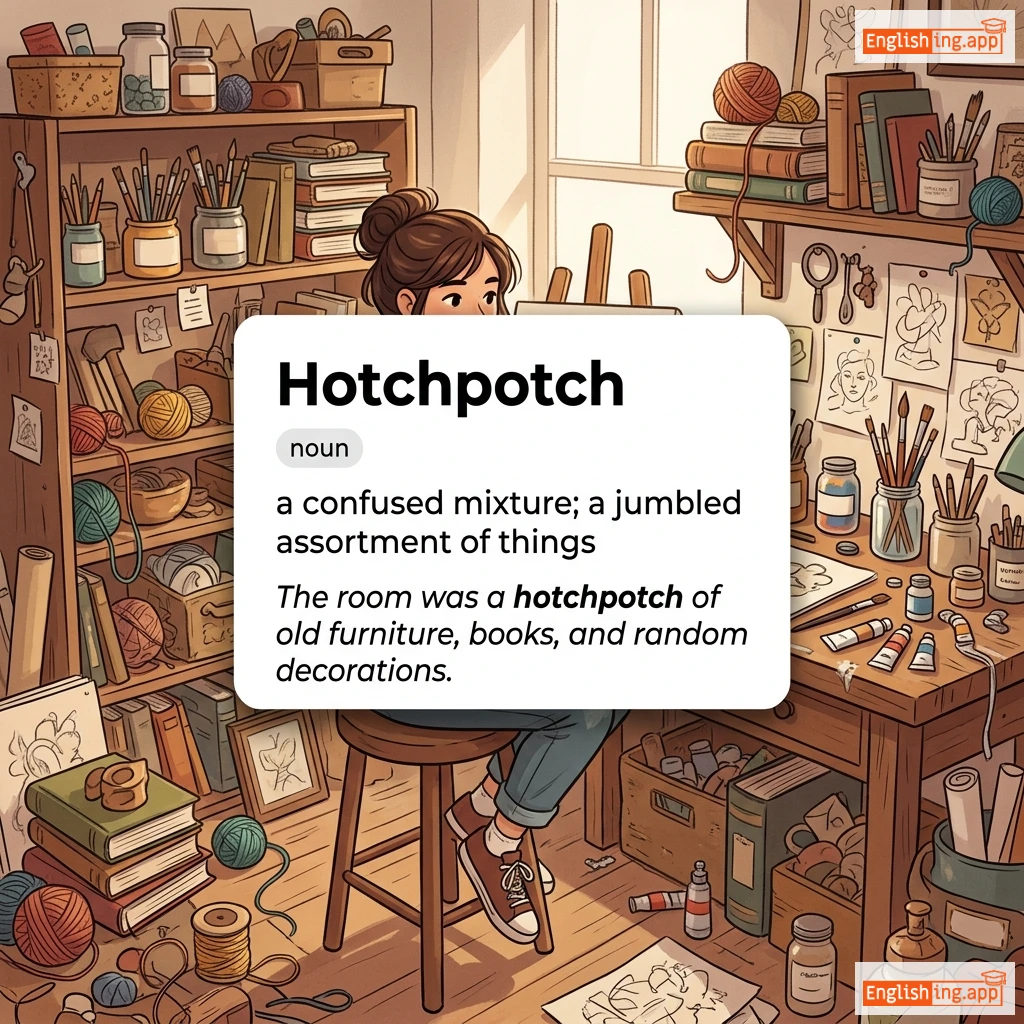
Hotchpotch definition card — visual illustration of the meaning
noun C2
/ˈhɑːtʃ.pɑːtʃ/
беспорядочная смесь; куча перемешанных вещей (besporyadochnaya smes; kucha peremeshannykh veshchey)

a confused mixture; a jumbled assortment of things

"The room was a hotchpotch of old furniture, books, and random decorations."

"Комната была беспорядочной смесью старой мебели, книг и случайных украшений." (Komnata byla besporyadochnoy smes'yu staroy mebeli, knig i sluchaynykh ukrasheny.)
noun C2
/ˈhɒthɛd/
вспыльчивый человек (vspylchivyy chelovek)

a person who acts quickly and without thinking when angry

"He is such a hothead that he often starts arguments."

"Он такой вспыльчивый, что часто начинает ссоры." (On takoy vspylchivyy, chto chasto nachinayet ssory.)
noun C2
/ˈhaʊsˌbreɪkɪŋ/
взлом дома (vzlom doma)

the crime of breaking into a house with intent to steal

"The thief was arrested for housebreaking."

"Вора арестовали за взлом дома." (Vora arestovali za vzlom doma.)
noun C2
/ˈhʌvəl/
хибара (khibara)

a small, poorly built, and dirty house

"The refugees lived in a makeshift hovel."

"Беженцы жили в самодельной хибаре." (bezhentsy zhili v samodelnoy khibare)
noun C2
/ˈhɔɪdən/
шаловливая девочка (shalovlivaya devochka)

a boisterous or tomboyish girl

"The hoyden preferred climbing trees to playing with dolls."

"Шаловливая девочка предпочитала лазить по деревьям, чем играть с куклами." (Shalovlivaya devochka predpochitala lazit' po derev'yam, chem igrat' s kuklami.)
noun C2
/ˈhʌk.stər/
уличный торговец (ulichnyy torgovets)

A person who sells small items aggressively, often in a showy or dishonest way.

"The huckster loudly promoted his goods in the busy marketplace."

"Уличный торговец громко рекламировал свои товары на шумном рынке." (Ulichnyy torgovets gromko reklamiroval svoi tovar na shumom rynke.)
noun phrase C2
/ˌhjuː ən ˈkraɪ/
громкий протест (gromkiy protest)

A loud public outcry or protest, often demanding action.

"There was a hue and cry over the new policy changes."

"Был громкий протест по поводу новых изменений в политике." (Byl gromkiy protest po povodu novykh izmeneniy v politike.)
noun C2
/ˈhʌmbʌɡ/
обман, чепуха (obman, chepukha)

Deceptive or false talk or behavior; nonsense.

"He dismissed the idea as humbug."

"Он отверг эту идею как чепуху." (On otverg etu ideyu kak chepukhu.)
adjective C2
/ˈhʌmdrʌm/
монотонный (monotonnij)

Lacking excitement or variety; dull and monotonous.

"She grew tired of the humdrum routine of office life."

"Она устала от однообразной рутины офисной жизни." (Ona ustala ot odnoobraznoj rutiny ofisnoj zhizni.)
noun C2
/ˌhjuː.mɪ.fɪˈkeɪ.ʃən/
гумификация (gumifikatsiya)

The process of organic matter decomposition to form humus in soil.

"Humification enhances soil structure and fertility."

"Гумификация улучшает структуру и плодородие почвы." (Gumifikatsiya uluchshaet strukturu i plodorodie pochvy.)
noun C2
/ˈhʌm.ək/
курган (kurgan)

A small hill, mound, or ridge of earth or ice.

"The hikers rested on a grassy hummock by the river."

"Путники отдохнули на травяном кургане у реки." (Putniki otdokhnuli na travyanom kurgane u reki.)
noun C2
/ˈhjuːməs/
хумус (khumus)

The dark, organic material in soil formed from decayed plants and animals.

"The gardener enriched the soil with humus to improve plant growth."

"Садовник обогатил почву хумусом, чтобы улучшить рост растений." (Sadovnik obogatil pochvu khumusom, chtoby uluchshit' rost rasteniy.)
verb C2
/ˈhɜːrtl/
мчаться (mchatsya)

To move or cause to move at great speed, often in a dangerous way.

"The car hurtled down the mountain road."

"Машина мчалась по горной дороге." (Mashina mchalas' po gornoy doroge.)
noun C2
/hʌsk/
оболочка (obolochka)

the dry outer covering of some fruits or seeds

"The corn husk was peeled away before cooking."

"Оболочка кукурузы была снята перед готовкой." (Obolochka kukuruzyi byla snyata pered gotovkoy.)
adjective C2
/ˈhʌski/
хриплый (khaski)

deep, rough, and slightly hoarse voice; also refers to a strong and sturdy build

"He spoke in a husky voice after shouting all day."

"Он говорил хриплым голосом после того, как целый день кричал." (On govoril hriplym golosom posle togo kak tseliy den krichal)
noun C2
/hʊˈzɑːr/
гусар (gusar)

a member of a light cavalry regiment in European armies, especially the Hungarian cavalry

"The hussar rode swiftly across the battlefield."

"Гусар быстро ехал по полю битвы." (Gusar bystro yekhal po polyu bitvy.)
noun C2
/ˈhʌstɪŋz/
предвыборная кампания (predvybornaya kampaniya)

the political campaigning and speeches before an election

"The candidate gained popularity during the hustings."

"Кандидат набрал популярность во время предвыборной кампании." (Kandidat nabral popularnost' vo vremya predvybornoy kampanii.)
noun C2
/ˈhaɪdrə/
гидра (gidra)

a many-headed serpent in Greek mythology; a problem that seems to grow worse when attempts are made to solve it

"Corruption is like a hydra, hard to defeat completely."

"Коррупция как гидра, её трудно победить полностью." (Korruptsiya kak gidra, yeye trudno pobedit' polnost'yu.)
noun C2
/ˌhaɪdroʊdaɪˈnæmɪks/
гидродинамика (gidrodinamika)

The branch of science concerned with the motion of fluids, especially liquids, and the forces acting on solid bodies immersed in fluids.

"Hydrodynamics is essential in designing efficient ship hulls."

"Гидродинамика необходима при проектировании эффективных обводов корпуса судна." (Gidrodinamika neobhodima pri proektirovanii effektivnyh obvodov korpusa sudna)
hydrolysis definition card — visual illustration of the meaning
noun C2
/haɪˈdrɒl.ɪ.sɪs/
гидролиз (gidroliz)

A chemical process that breaks down compounds by adding water, splitting complex molecules into simpler forms.

"Hydrolysis breaks down complex molecules into simpler forms."

"Гидролиз разрушает сложные молекулы на более простые формы." (Gidroliz razrushayet slozhnye molekuly na boleye prostye formy.)
noun C2
/ˌhaɪdroʊməˈkænɪks/
гидромеханика (gidromekhanika)

The study of the mechanical properties and behavior of fluids in motion and at rest.

"Hydromechanics provides the foundation for naval architecture."

"Гидромеханика является основой для судостроения." (Gidromekhanika yavlyayetsya osnovoy dlya sudostroyeniya.)
noun C2
/haɪˈdrɒmɪtər/
гидрометр (gidrometr)

An instrument used to measure the density or specific gravity of liquids.

"The brewer used a hydrometer to test the sugar content of the solution."

"Пивовар использовал гидрометр, чтобы измерить плотность сахарного раствора." (Pivovar ispolzoval gidrometr chtoby izmerit plotnost sakharnoho rastvora)
noun C2
/ˌhaɪdroʊˈfoʊbiə/
гидрофобия (gidrofobiya)

Extreme or irrational fear of water; historically, another name for rabies.

"After being bitten by a stray dog, the man was treated for hydrophobia."

"После укуса бродячей собаки мужчину лечили от гидрофобии." (Posle ukusa brodyachey sobaki muzhchinu lechili ot gidrofobii.)
noun C2
/ˌhaɪdrəˈstætɪks/
гидростатика (gidrostatika)

The branch of science concerned with the mechanical properties of fluids at rest.

"Hydrostatics is essential in understanding how dams and reservoirs function."

"Гидростатика важна для понимания того, как работают дамбы и водохранилища." (Gidrostatika vazhna dlya ponimaniya togo, kak rabotayut damby i vodokhranilishcha.)
adjective C2
/ˈhaɪdrəs/
водяной (vodyanoy)

Containing water, especially water of crystallization.

"The mineral is hydrous because it contains water molecules in its structure."

"Этот минерал гидратирован, потому что в его структуре содержатся молекулы воды." (Ehtot mineral gidratiravan, potomu chto v ego strukture soderzhatsya molekuly vody.)
adjective C2
/ˌhaɪpərˈbɔːriən/
гиперборейский (giperboreyskiy)

Relating to the extreme north; very cold or frigid.

"The explorers prepared for the hyperborean climate of the Arctic."

"Исследователи готовились к гиперборейскому климату Арктики." (Issledovateli gotovilis' k giperboreyskomu klimatu Arktiki.)
hyperconnectivity definition card — visual illustration of the meaning
noun C2
ˌhaɪ.pər.kəˈnɛk.tɪ.vɪ.ti
гиперконнективность (giperkonnectivnost)

The use of multiple systems and devices to remain constantly connected.

"The era of hyperconnectivity has led to a digital revolution."

"Эра гиперконнективности привела к цифровой революции." (Era giperkonnectivnosti privedla k tsifrovoy revolyutsii.)
adjective C2
/ˌhaɪpərˈkrɪtɪkl/
гиперкритичный (giperkritichny)

Excessively or unreasonably critical.

"The teacher was often hypercritical of small mistakes."

"Учитель часто был гиперкритичен к небольшим ошибкам." (Uchitel' chasto byl giperkritichen k nebol'shim oshibkam.)
noun C2
/ˌhaɪpəˈkɒndrɪæk/
ипохондрик (ipohondrik)

a person who is excessively worried about having a serious illness

"She is a hypochondriac who visits the doctor every week."

"Она ипохондрик, которая каждую неделю ходит к врачу." (Ona ipohondrik, kotoraya kazhduyu nedelyu khodit k vrachu.)
adjective C2
/ˌhaɪpəˈdɜːrmɪk/
гиподермический (hypodermic)

relating to the region immediately beneath the skin; also refers to a type of needle or syringe used to inject drugs beneath the skin.

"The doctor used a hypodermic needle to administer the vaccine."

"Доктор использовал гиподермическую иглу для введения вакцины." (Doktor ispolzoval gipodermicheskuyu iglu dlya vvedeniya vaktsiny.)
verb C2
/haɪˈpɒθɪkeɪt/

to pledge something, such as property, as security for a debt without giving up possession of it.

"The company hypothecated its assets to secure the loan."