Vokabulare

Englisches Vokabelwörterbuch | Wortbedeutungen, Definitionen & Beispiele

noun C2
/ˌdɪpsəˈmeɪniæk/
मद्यपानप्रेमी (madyapanpremi)

A person with an uncontrollable craving for alcoholic drinks.

"The novel portrayed the tragic downfall of a dipsomaniac who lost everything to alcohol."

"उपन्यास में एक डिप्सोमैनियाक की दुखद गिरावट को दर्शाया गया है, जिसने शराब के कारण सब कुछ खो दिया।" (Upanyas mein ek dipsomaniak ki dukhd ghirawat ko darshaya gaya hai, jisne sharab ke karan sab kuch kho diya.)
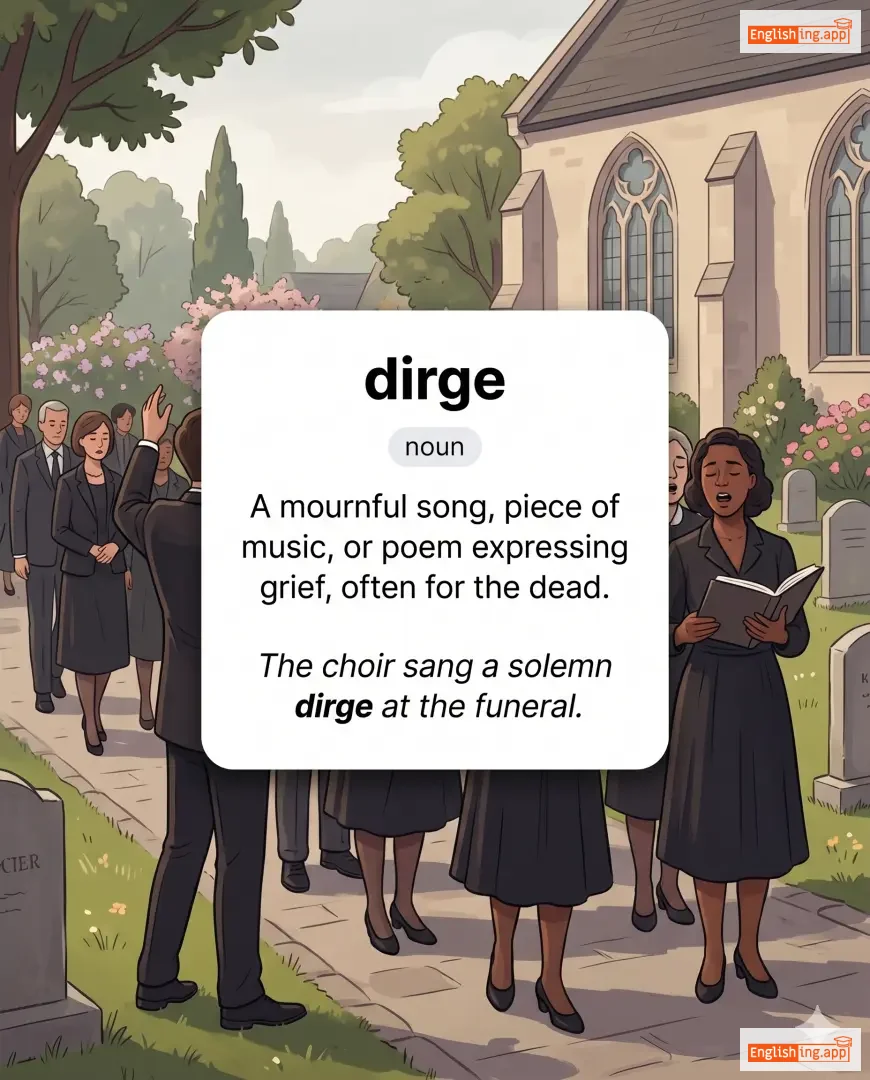
dirge definition card — visual illustration of the meaning
noun C2
/dɜːrdʒ/
शोकगीत (shokgeet)

A mournful song, piece of music, or poem expressing grief, often for the dead.

"The choir sang a solemn dirge at the funeral."

"कोरस ने अंतिम संस्कार में एक गंभीर शोकगीत गाया।" (Koras ne antim sanskar mein ek gambhir shokgeet gaya.)
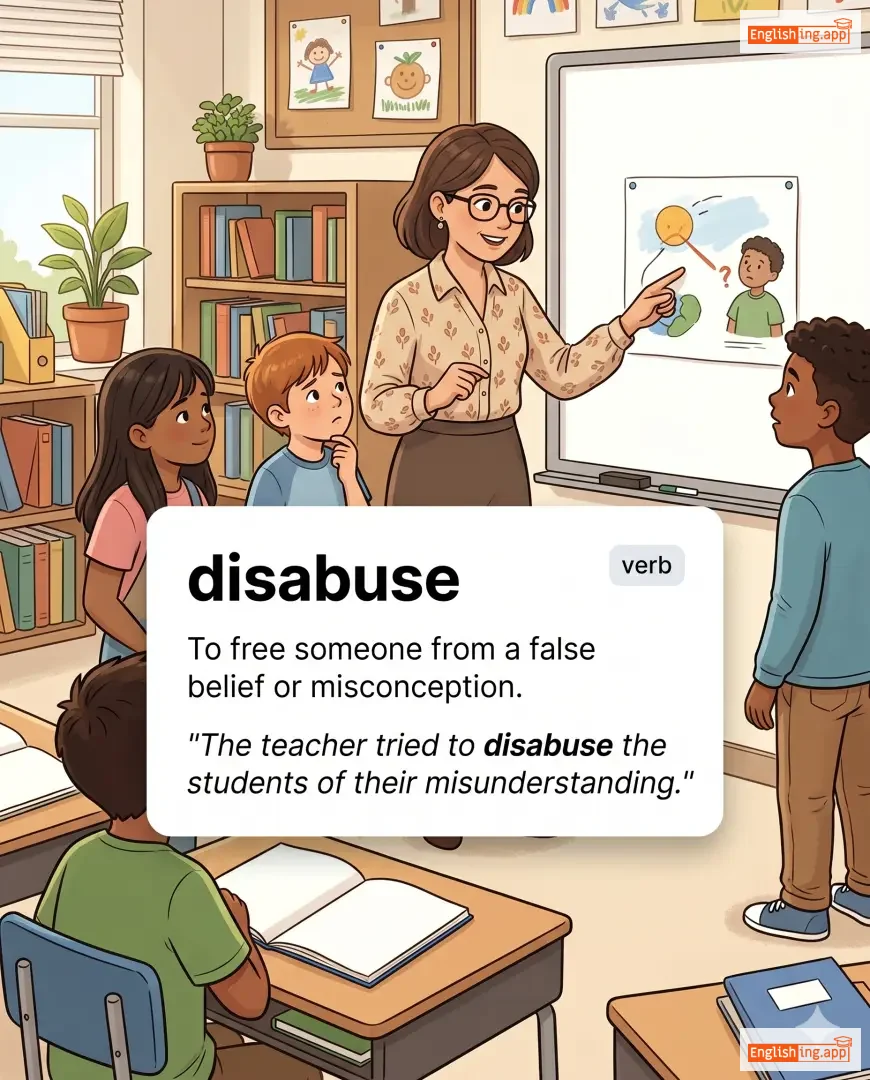
disabuse definition card — visual illustration of the meaning
verb C2
/ˌdɪsəˈbjuːz/
झूठी धारणा से मुक्त करना (jhoothi dharana se mukt karna)

To free someone from a false belief or misconception.

"The teacher tried to disabuse the students of their misunderstanding."

"शिक्षक ने छात्रों को उनकी गलतफहमी से मुक्त करने की कोशिश की।" (Shikshak ne chhatron ko unki galatfahmi se mukt karne ki koshish ki.)
adjective C2
/ˌdɪsəˈfɛktɪd/
असंतुष्ट (asantusht)

Dissatisfied and rebellious, especially against authority or leadership.

"The reforms were introduced to calm the disaffected youth."

"संशोधन उन असंतुष्ट युवाओं को शांत करने के लिए पेश किए गए थे।" (Sanshodhan un asantusht yuvao ko shant karne ke liye pesh kiye gaye the.)
noun C2
/ˌdɪsæprəˈbeɪʃən/
कठोर अस्वीकृति (kathor asweekriti)

strong disapproval, typically on moral grounds

"The policy was met with widespread disapprobation."

"नीति को व्यापक अस्वीकृति का सामना करना पड़ा था।" (Neeti ko vyapak asweekriti ka samna karna pada tha.)
verb C2
/ˌdɪsəˈreɪndʒ/
अगठन करना (agathan karna)

to disturb the order or arrangement of something

"The wind disarranged her hair."

"हवा ने उसके बाल बिगाड़ दिए।" (hawa ne uske baal bigaad diye.)
verb C2
/ˌdɪsəˈvaʊ/
नकारना (nakarna)

to deny responsibility for or connection with something

"He disavowed any involvement in the scandal."

"उसने स्कैंडल में किसी भी संबंध को नकारा।" (usne scandal mein kisi bhi sambandh ko nakara.)
noun C2
/ˌdɪsəˈvaʊəl/
अस्वीकरण (asvikaran)

the denial of any responsibility, connection, or support

"The politician issued a firm disavowal of the controversial remarks."

"राजनीतिक नेता ने विवादास्पद टिप्पणियों का दृढ़ अस्वीकरण जारी किया।" (Raajneetik neta ne vivaadaspad tippaniyon ka drirh asvikaran jari kiya.)
verb C2
/dɪsˈbɑːr/
किसी वकील को कानूनी पेशे से औपचारिक रूप से हटा देना (kisi vakil ko kanooni peshe se aupcharik roop se hata dena)

to officially remove a lawyer from the legal profession

"The corrupt lawyer was disbarred for unethical conduct."

"भ्रष्ट वकील को अनैतिक आचरण के लिए डिसबार किया गया था।" (Bhrasht vakil ko anaitik aacharan ke liye disbar kiya gaya tha.)
verb C2
/dɪsˈbɜːrdən/
बोझ मुक्त करना (bojh mukt karna)

to relieve someone of a burden or load

"She disburdened herself of worries by sharing them with her friend."

"वह अपनी चिंता को दोस्त के साथ बांट कर अपने आप को बोझ से मुक्त कर दी।" (Vah apni chinta ko dost ke saath baant kar apne aap ko bojh se mukt kar di.)
verb C2
/dɪsˈbɜːrs/
धन वितरण करना (dhan vitran karna)

to pay out money, especially from a fund

"The organization will disburse the funds to the affected families."

"संगठन प्रभावित परिवारों को फंड वितरित करेगा।" (Sangathan prabhavit parivaron ko fund vitrit karega.)
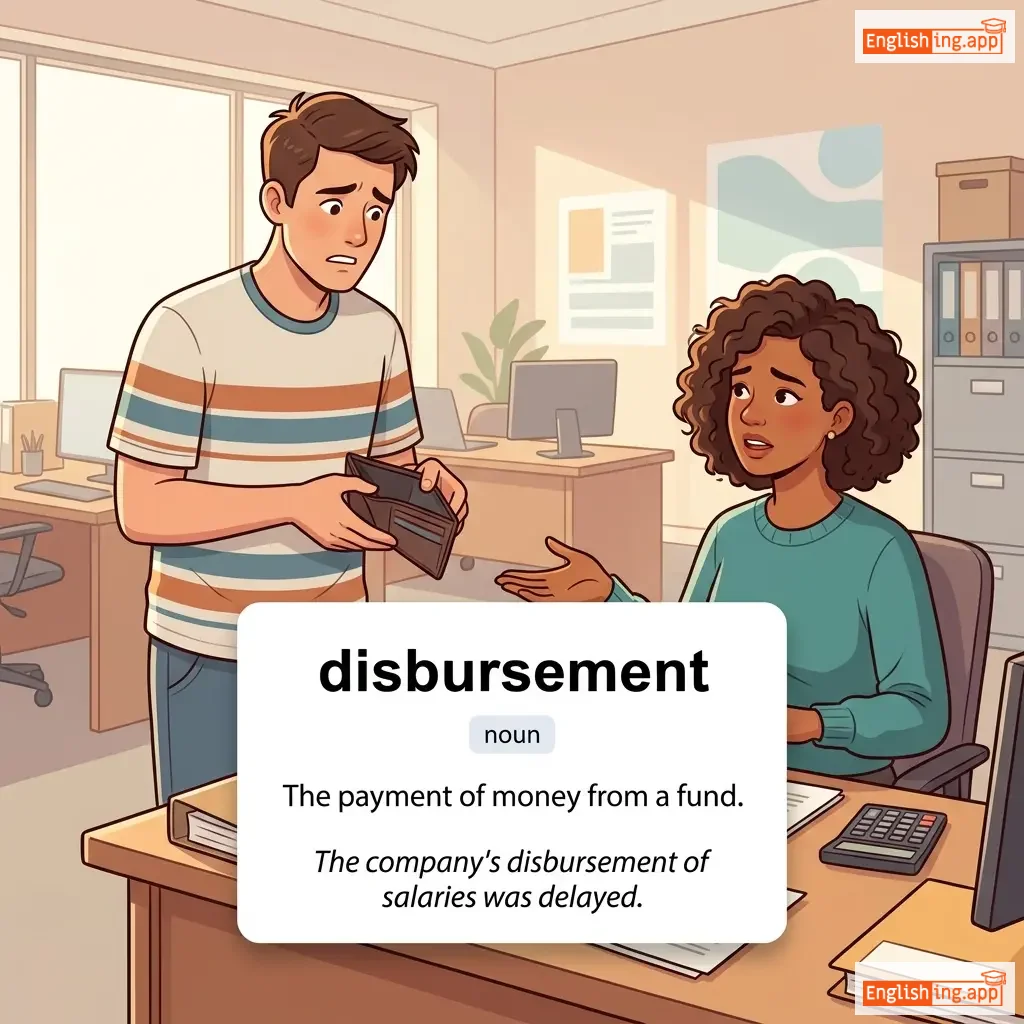
disbursement definition card — visual illustration of the meaning
noun C2
dɪsˈbɜːs.mənt
वितरण (vitaran)

The payment of money from a fund.

"The company's disbursement of salaries was delayed."

"कंपनी की वेतन वितरण में देरी हो गई थी।" (Company ki vetan vitran mein deri ho gayi thi.)
verb C2
/ˌdɪskəmˈbɑːbjuleɪt/
भ्रांत करना (bhrant karna)

to confuse or disconcert; to upset the normal order

"The sudden question seemed to discombobulate him."

"अचानक सवाल ने उसे भ्रमित कर दिया।" (Achanak sawal ne use bhramit kar diya.)
adjective C2
/ˌdɪskəmˈbɑːbjuleɪtɪd/
भ्रमित (bhramit)

confused and disoriented; feeling unsettled

"She looked discombobulated after hearing the unexpected news."

"अप्रत्याशित खबर सुनने के बाद वह भ्रमित दिख रही थी।" (Apratyashit khabar sunne ke baad wah bhramit dikh rahi thi.)
discomfit definition card — visual illustration of the meaning
verb C2
/dɪsˈkʌmfɪt/
असहज करना (asahaj karna)

to make someone feel uneasy, embarrassed, or confused

"The interviewer’s tough questions discomfited the candidate."

"इंटरव्यूअर के कठिन सवालों ने उम्मीदवार को असहज कर दिया।" (Interviewer ke kathin sawalon ne ummidwar ko asahaj kar diya.)
adjective C2
/dɪsˈkʌmfɪtɪŋ/
असुविधाजनक (asuvidhajanak)

Causing unease, embarrassment, or discomfort.

"His discomfiting questions made everyone shift uncomfortably in their seats."

"उसके असुविधाजनक सवालों ने सभी को अपनी सीटों पर असहज रूप से हिलने पर मजबूर कर दिया।" (uske asuvidhajanak sawalon ne sabhi ko apni seaton par asahaj roop se hilne par majboor kar diya.)
verb C2
/ˌdɪskəˈmoʊd/
असुविधा पहुँचाना (asuvidha pahuchana)

To cause inconvenience or trouble to someone.

"I hope my request does not discommode you."

"मैं आशा करता हूँ कि मेरी अनुरोध आपको असुविधा नहीं पहुँचाएगी।" (main asha karta hoon ki meri anurodh aapko asuvidha nahi pahuchayegi.)
verb C2
/ˌdɪskəmˈpoʊz/
बेचैन करना (bechain karna)

To disturb the order or calmness of something or someone.

"The unexpected question seemed to discompose her."

"अप्रत्याशित सवाल ने उसे बेचैन कर दिया।" (apratyashit sawaal ne use bechain kar diya.)
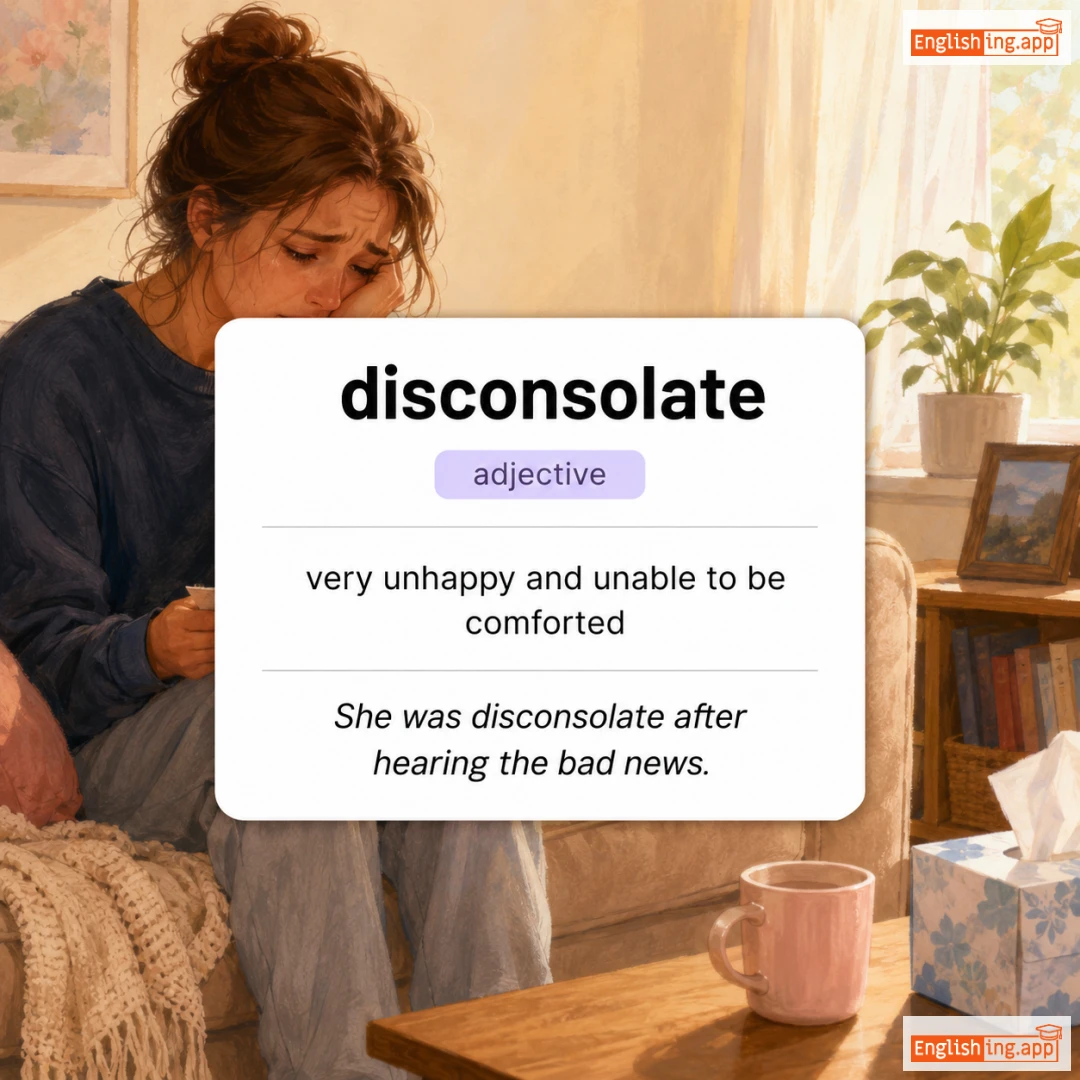
disconsolate definition card — visual illustration of the meaning
adjective C2
/dɪsˈkɒnsələt/
निराश (niraash)

very unhappy and unable to be comforted

"She was disconsolate after hearing the bad news."

"खराब खबर सुनने के बाद वह निराश थी।" (Kharab khabar sunne ke baad vah niraash thi.)
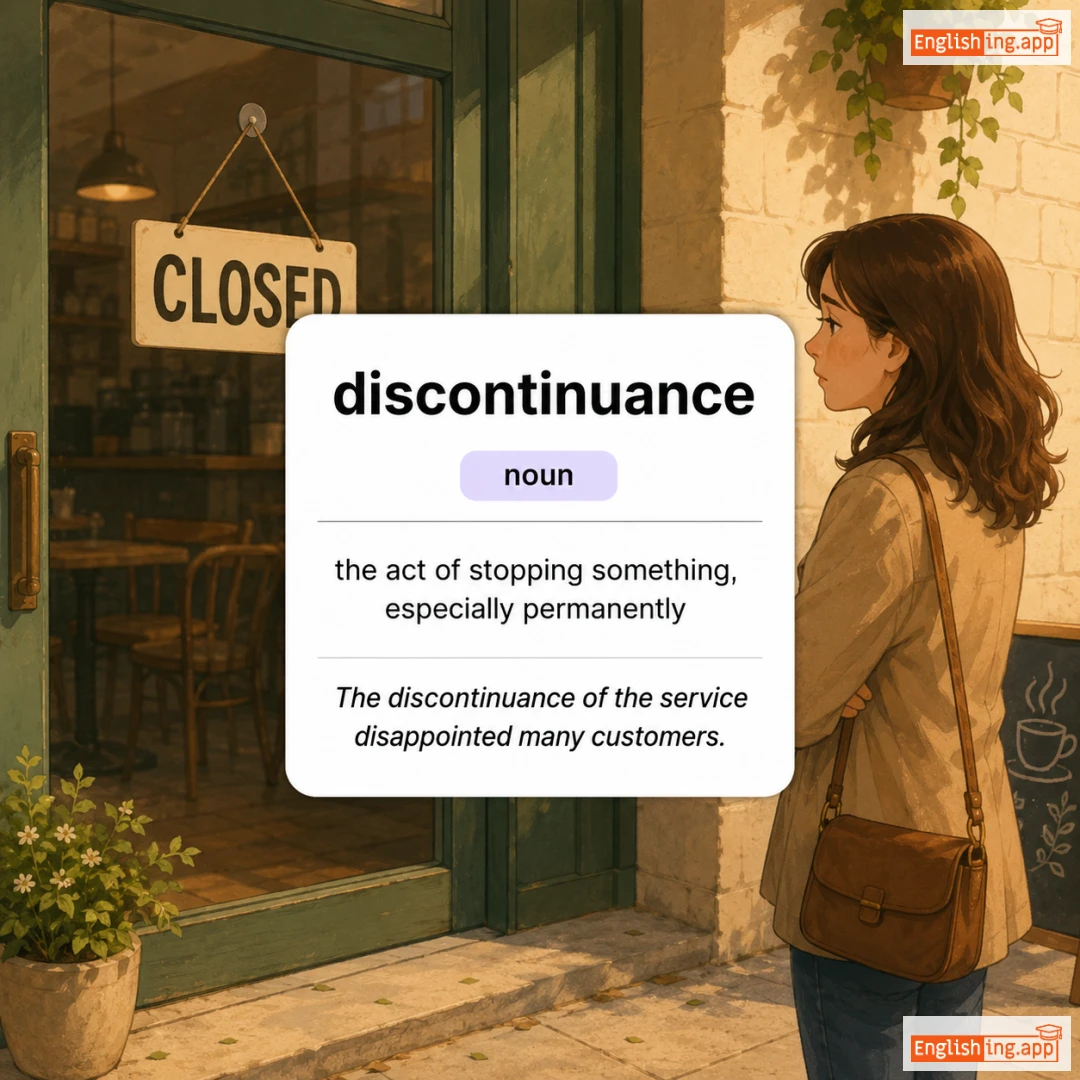
discontinuance definition card — visual illustration of the meaning
noun C2
/ˌdɪskənˈtɪnjʊəns/
विराम (viram)

the act of stopping something, especially permanently

"The discontinuance of the service disappointed many customers."

"सेवा की समाप्ति ने कई ग्राहकों को निराश किया।" (seva ki samaapti ne kai graahkon ko niraash kiya.)
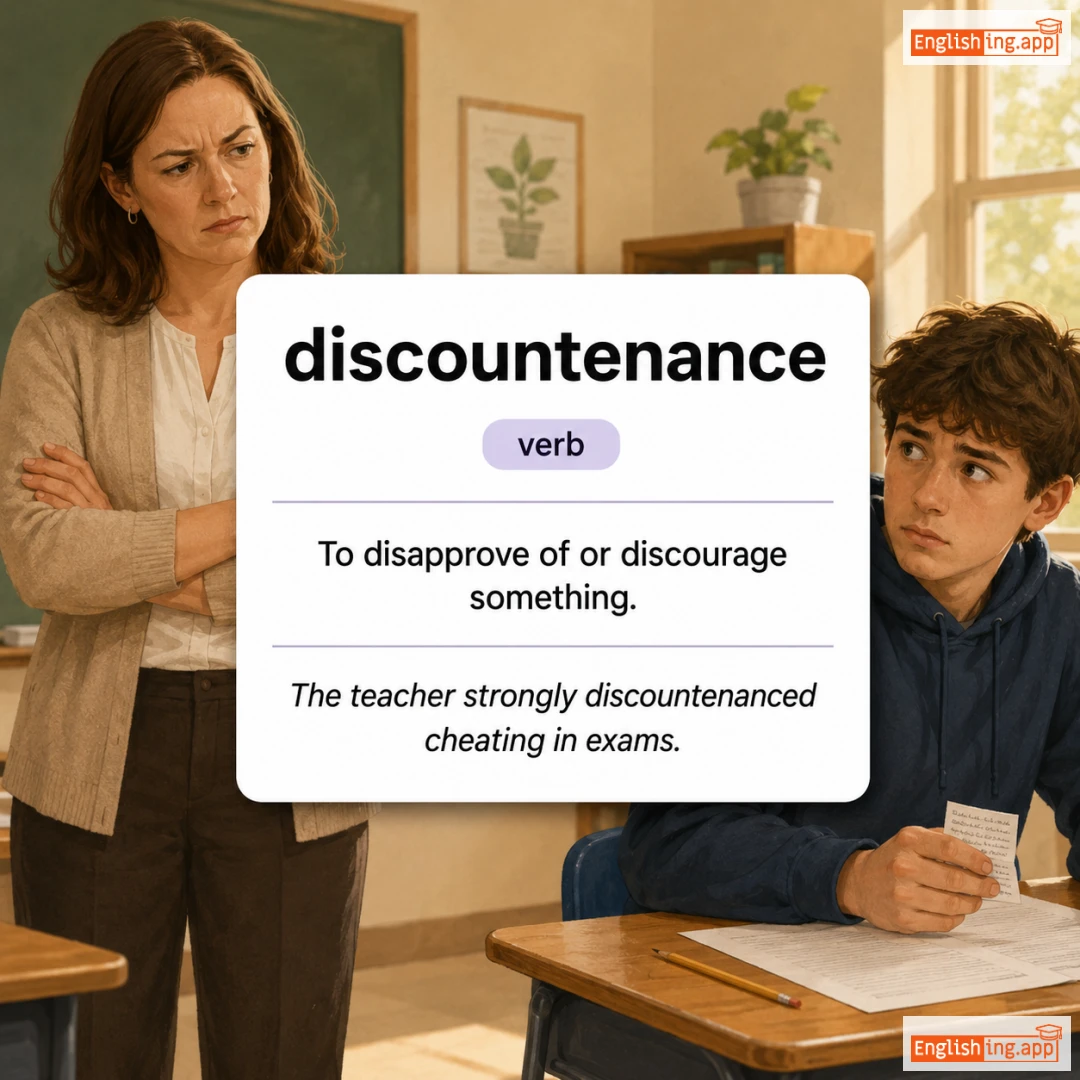
discountenance definition card — visual illustration of the meaning
verb C2
/dɪsˈkaʊntənəns/
नापसंद करना (napasand karna)

To disapprove of or discourage something.

"The teacher strongly discountenanced cheating in exams."

"अध्यापक ने परीक्षा में धोखाधड़ी को सख्ती से नकारा।" (Adhyapak ne pariksha mein dhokhadhadi ko sakhti se nakara.)
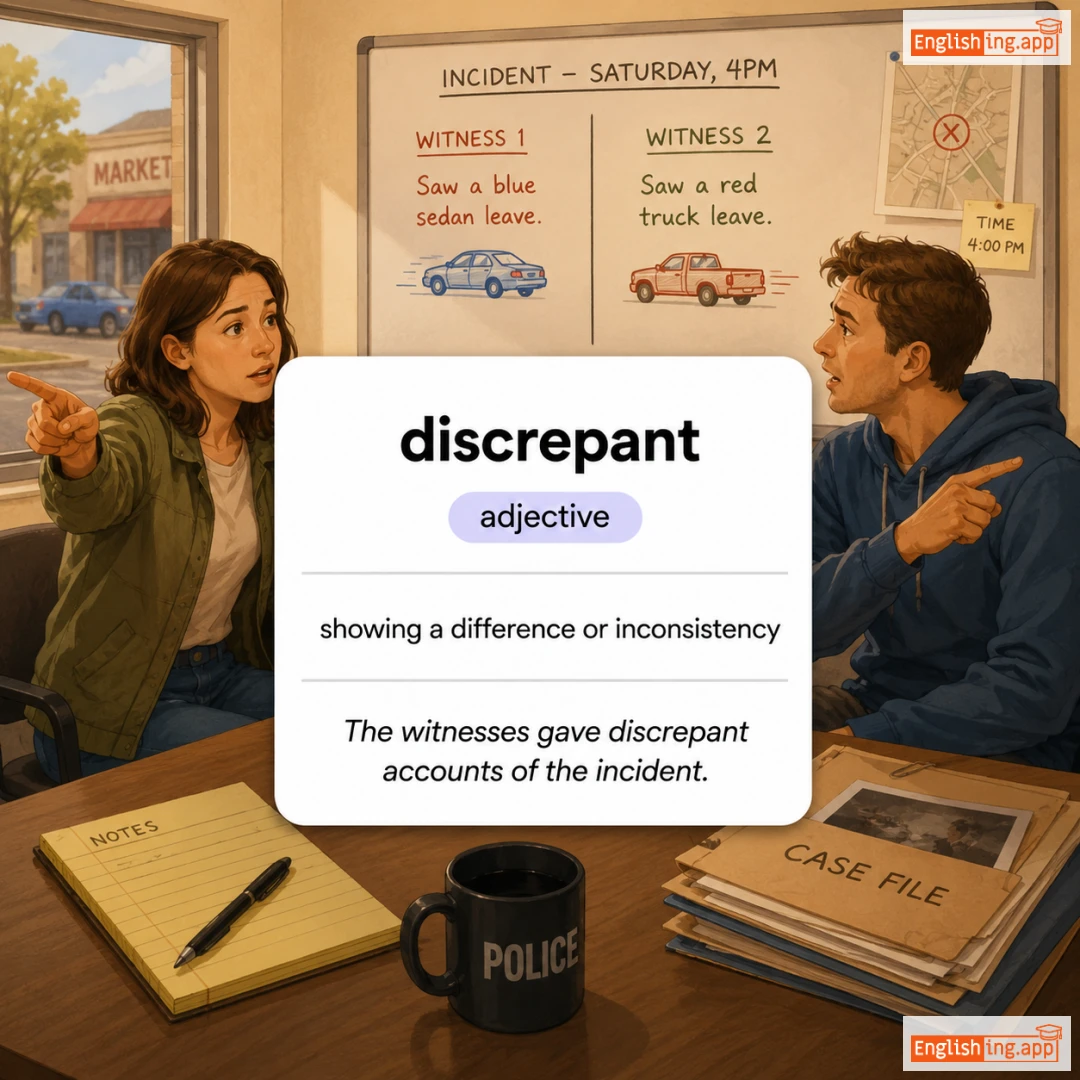
discrepant definition card — visual illustration of the meaning
adjective C2
/dɪˈskrɛpənt/
विरोधात्मक (virodhatmak)

showing a difference or inconsistency

"The witnesses gave discrepant accounts of the incident."

"गवाहों ने घटना के बारे में विरोधात्मक विवरण दिए।" (Gawahoon ne ghatna ke baare mein virodhatmak vivaran diye.)
adjective C2
/dɪsˈkɜrsɪv/
विषयांतरक (vishayantark)

Tending to digress or move from topic to topic; lengthy and rambling.

"His discursive style made the lecture hard to follow."

"उसकी विषयांतरक शैली ने व्याख्यान को समझना मुश्किल बना दिया था।" (Uski vishayantark shaili ne vyakhyan ko samajhna mushkil bana diya tha.)
verb C2
/ˌdɪsɪnˈfræntʃaɪz/
मतदान से वंचित करना (matdan se vanchit karna)

To deprive someone of the right to vote or other rights.

"The new law could disenfranchise thousands of voters."

"नया कानून हजारों मतदाताओं को मतदान से वंचित कर सकता है।" (Naya kanoon hazaron matdataon ko matdan se vanchit kar sakta hai.)
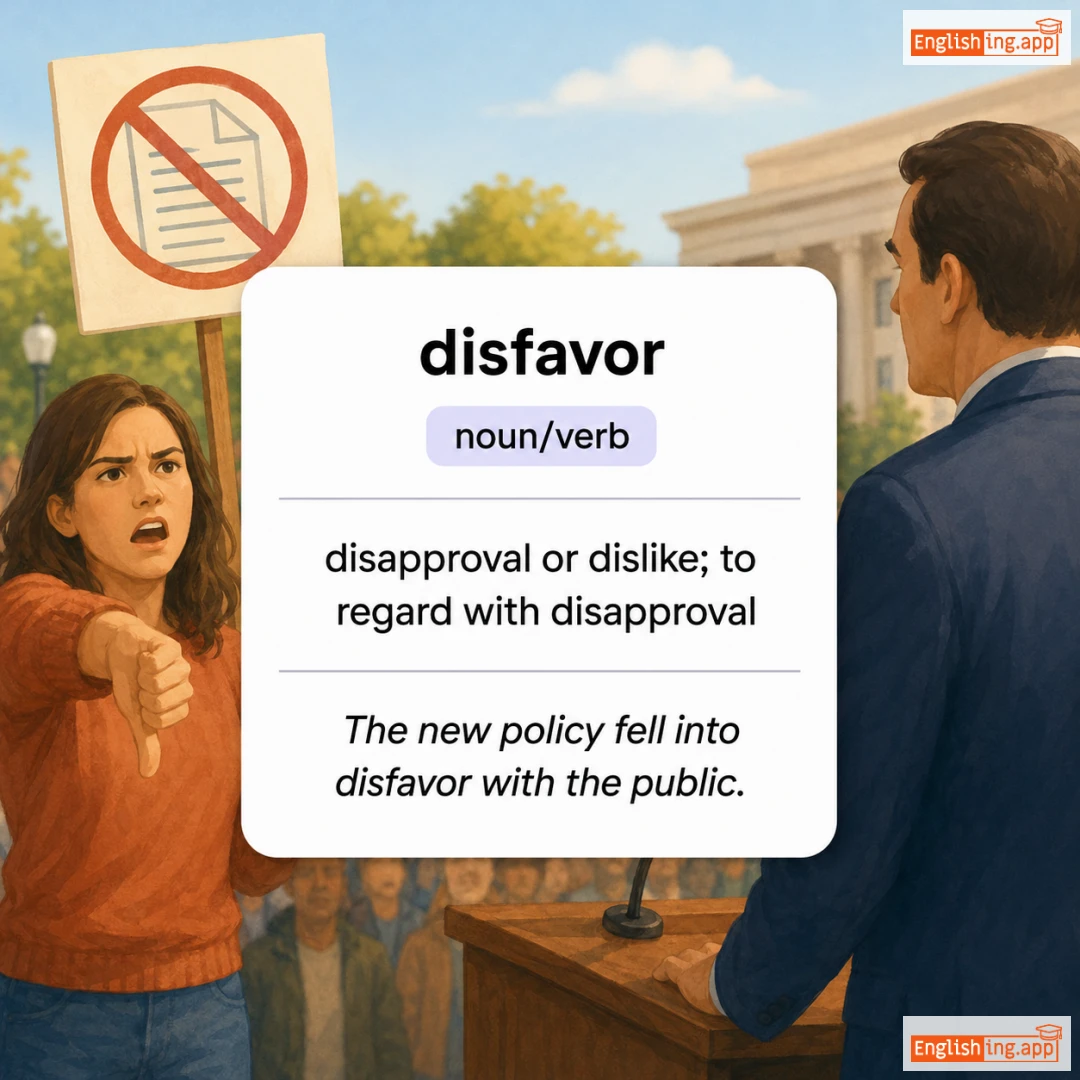
disfavor definition card — visual illustration of the meaning
noun/verb C2
/dɪsˈfeɪvər/
अप्रसन्नता / नापसंदगी (aprasannata / napasandgi)

disapproval or dislike; to regard with disapproval

"The new policy fell into disfavor with the public."

"नई नीति जनता के बीच नापसंदगी का शिकार हो गई।" (Nayi niti janta ke beech napasandgi ka shikar ho gayi.)
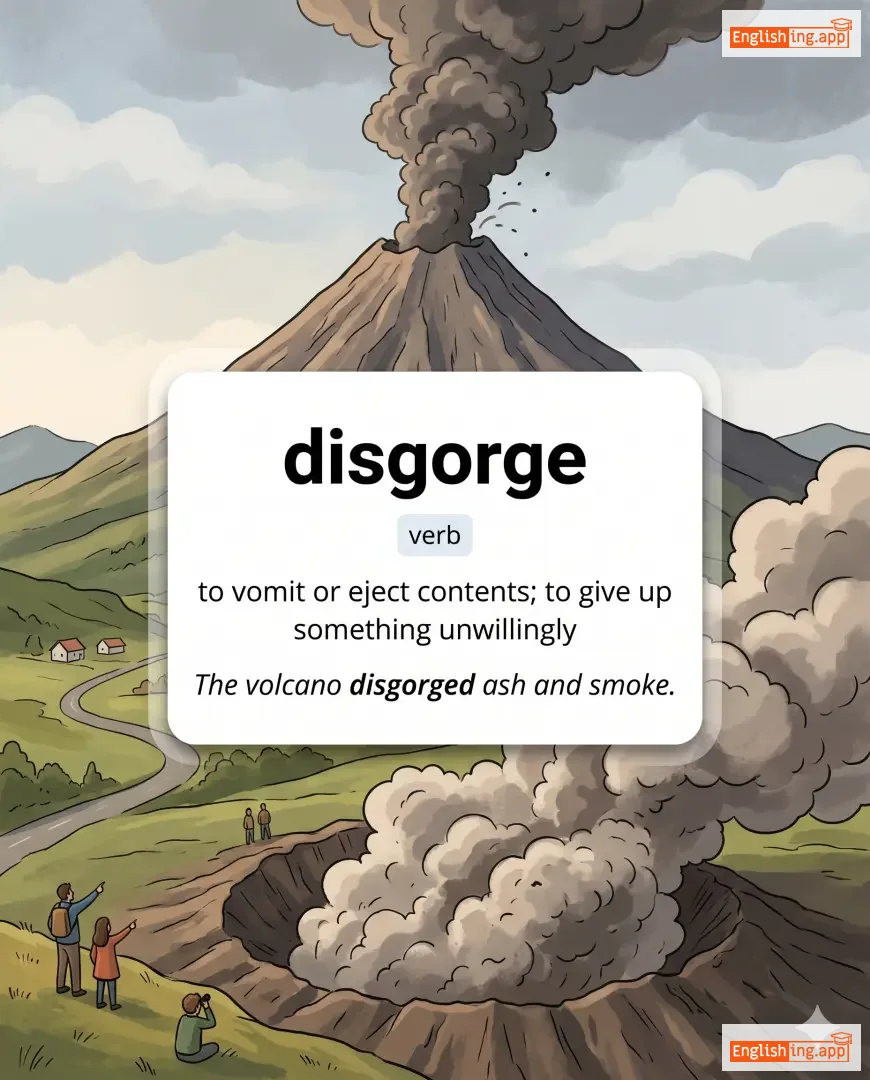
disgorge definition card — visual illustration of the meaning
verb C2
/dɪsˈɡɔrdʒ/
उल्टी करना / कुछ ज़बरदस्ती बाहर निकालना (ulti karna / kuch zabardasti bahar nikalna)

to vomit or eject contents; to give up something unwillingly

"The volcano disgorged ash and smoke."

"ज्वालामुखी ने राख और धुंआ बाहर उगला।" (Jwalamukhi ne rakh aur dhuan bahar ugla.)
noun C2
/ˌdɪʃəˈbiːl/
अर्धनग्नता (ardhangnatha)

The state of being only partly or loosely dressed; casual or careless attire.

"She answered the door in a state of dishabille, wearing just a robe."

"उसने दरवाजे का जवाब एक आंशिक पोशाक में दिया, केवल एक चादर पहने हुए।" (Usne darwaje ka jawab ek aanshik poshak mein diya, keval ek chadar pehne hue.)
noun C2
/ˌdɪsɪnklɪˈneɪʃən/
अवसाद (avasad)

a lack of willingness or desire to do something

"She showed a clear disinclination to join the meeting."

"उसने बैठक में शामिल होने की स्पष्ट अवसाद दिखायी।" (Usne baithak mein shamil hone ki spasht avasad dikhayi.)
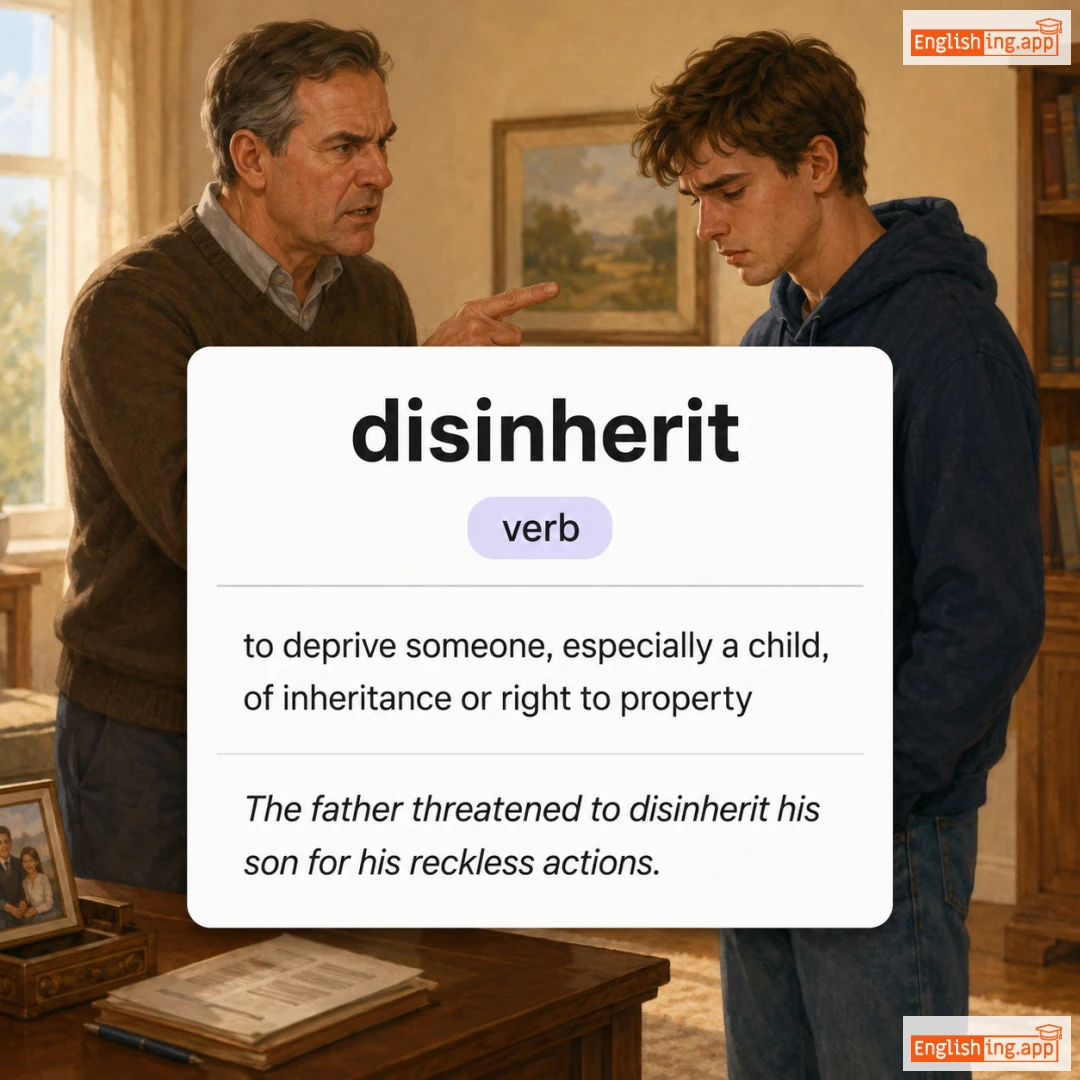
disinherit definition card — visual illustration of the meaning
verb C2
/ˌdɪsɪnˈhɛrɪt/
विरासत से वंचित करना (virasat se vanchit karna)

to deprive someone, especially a child, of inheritance or right to property

"The father threatened to disinherit his son for his reckless actions."

"पिता ने अपने बेटे को उसके लापरवाह कार्यों के लिए विरासत से वंचित करने की धमकी दी।" (Pita ne apne bete ko uske laaparwah karyon ke liye virasat se vanchit karne ki dhamki di.)
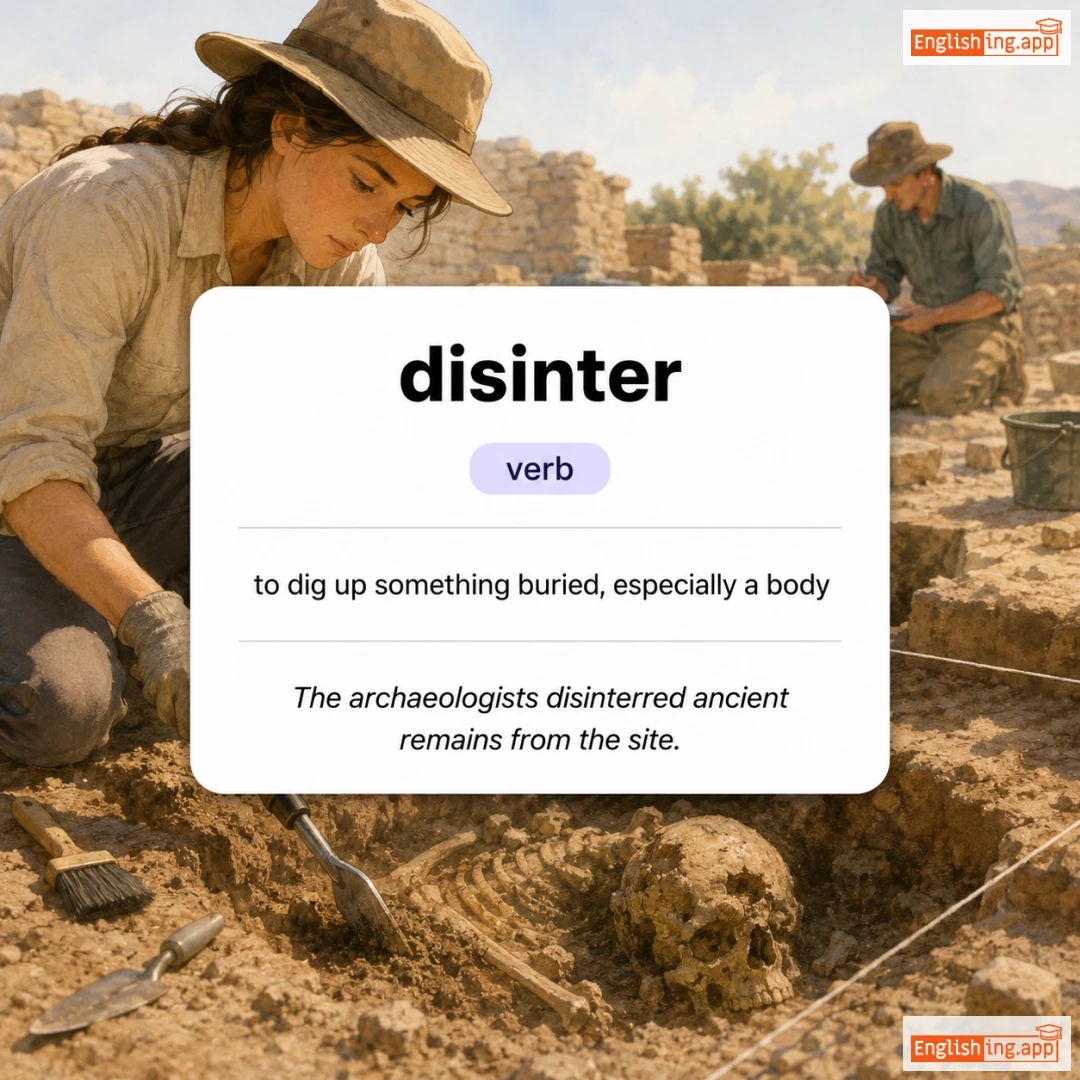
disinter definition card — visual illustration of the meaning
verb C2
/ˌdɪsɪnˈtɜːr/
कब्र खोदना (kabr khodna)

to dig up something buried, especially a body

"The archaeologists disinterred ancient remains from the site."

"पुरातत्वविदों ने साइट से प्राचीन अवशेष निकाले।" (Puratatvavidon ne site se prachin avashesh nikaale.)
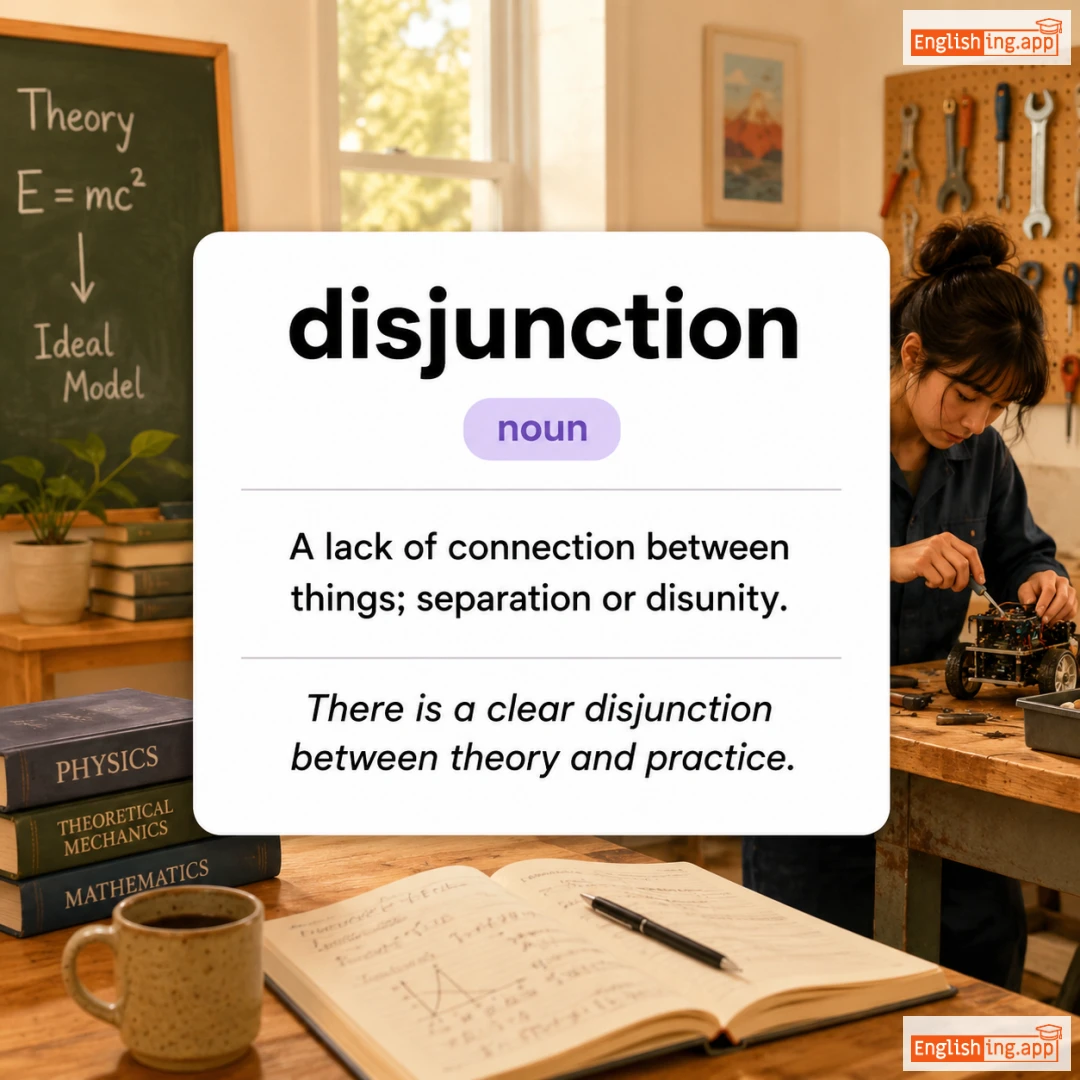
disjunction definition card — visual illustration of the meaning
noun C2
/dɪsˈdʒʌŋkʃən/
वियोग (viyog)

A lack of connection between things; separation or disunity.

"There is a clear disjunction between theory and practice."

"सिद्धांत और व्यवहार के बीच एक स्पष्ट वियोग है।" (Siddhant aur vyavhaar ke beech ek spashth viyog hai.)
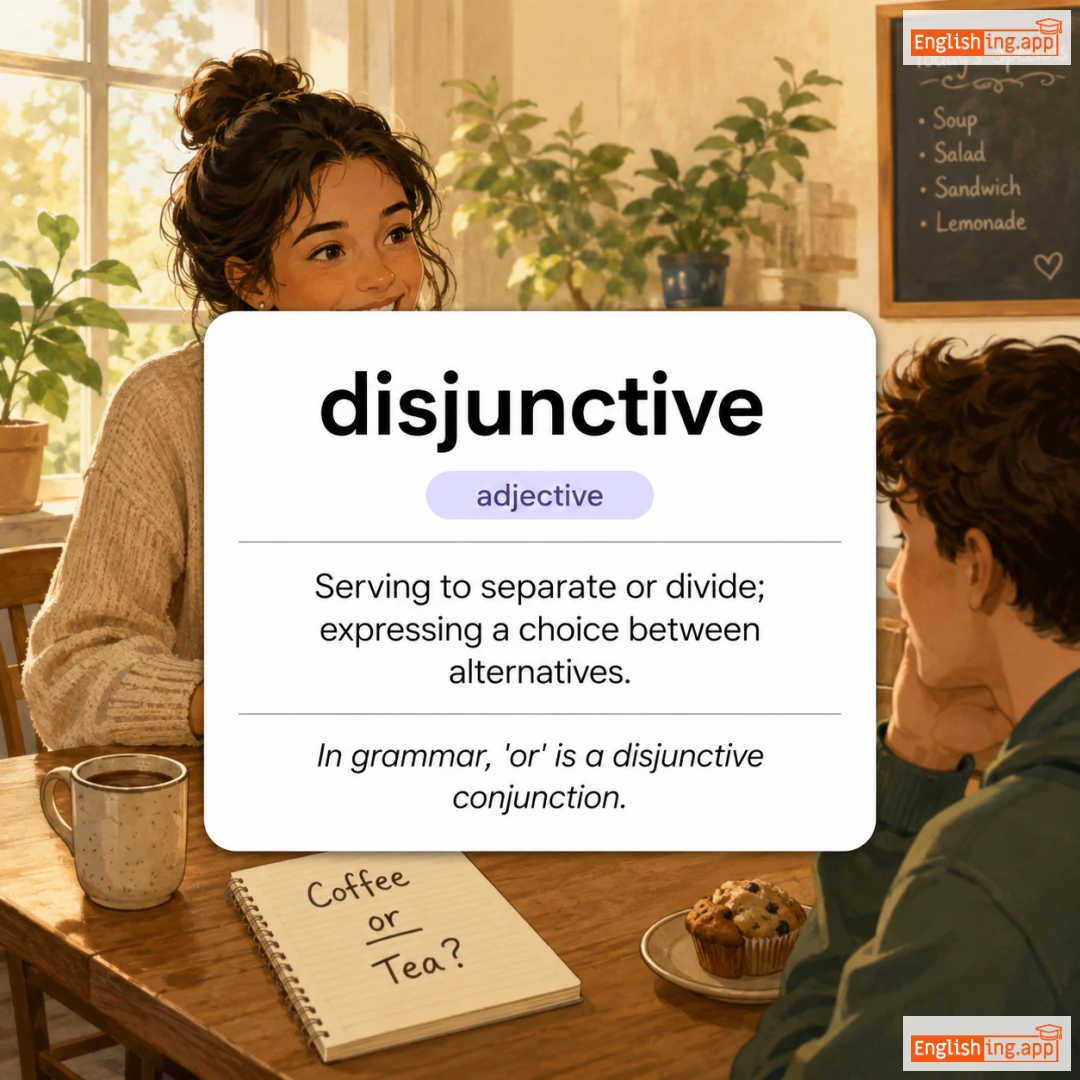
disjunctive definition card — visual illustration of the meaning
adjective C2
/dɪsˈdʒʌŋktɪv/
विच्छेदक (vichchhedak)

Serving to separate or divide; expressing a choice between alternatives.

"In grammar, 'or' is a disjunctive conjunction."

"व्याकरण में, 'या' एक विच्छेदक संयोजक है।" (Vyakaran mein, 'ya' ek vichchhedak sanyojak hai.)
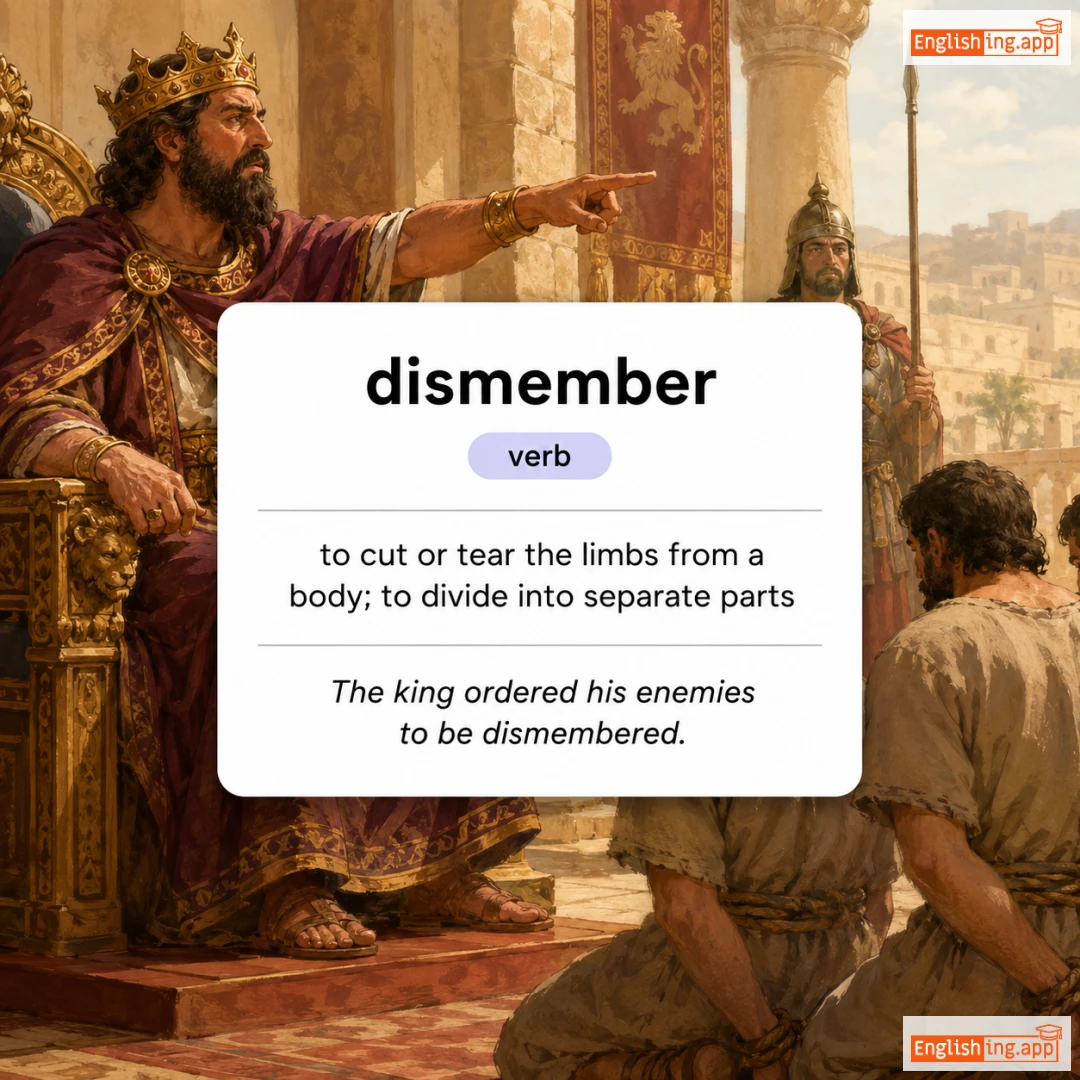
dismember definition card — visual illustration of the meaning
verb C2
/dɪsˈmɛmbər/
अंगभंग करना (angbhang karna)

to cut or tear the limbs from a body; to divide into separate parts

"The king ordered his enemies to be dismembered."

"राजा ने अपने दुश्मनों को अंगभंग करने का आदेश दिया।" (raja ne apne dushmanon ko angbhang karne ka aadesh diya.)
verb C2
/dɪsˈpɔːrt/
मनोरंजन करना (manoranjan karna)

To amuse oneself in a lively or playful way.

"The children disported themselves in the garden."

"बच्चे बग़ीचे में मनोरंजन कर रहे थे।" (Bachche bagiche mein manoranjan kar rahe the.)
verb C2
/ˌdɪspəˈzɛs/
वंचित करना (vanchit karna)

to deprive someone of land, property, or other possessions

"The new law threatened to dispossess many farmers of their land."

"नया कानून कई किसानों को उनकी ज़मीन से वंचित करने की धमकी देता है।" (Naya kanoon kai kisano ko unki zameen se vanchit karne ki dhamki deta hai.)
noun C2
/ˌdɪsprəˈpɔːrʃən/
असंतुलन (asantulan)

a lack of balance or symmetry; an inequality

"There is a clear disproportion between rich and poor in many societies."

"विभिन्न समाजों में अमीर और गरीब के बीच स्पष्ट असंतुलन है।" (Vibhinn samajon mein ameer aur gareeb ke beech spasht asantulan hai.)
adjective C2
/dɪˈspjuːtəbl/
विवादास्पद; संदेहास्पद (vivaadaspad; sandehaspad)

open to debate or argument; questionable

"The facts in the case are disputable and need further investigation."

"मामले के तथ्य विवादास्पद हैं और आगे की जांच की आवश्यकता है।" (maamle ke tathya vivaadaspad hain aur aage ki jaanch ki avashyakta hai.)
noun C2
/ˌdɪspjuːˈteɪʃən/
विवाद (vivad)

a formal debate or argument

"The disputation between the two scholars lasted for hours."

"द दो स्कॉलर्स के बीच विवाद घंटों तक चला।" (Da do scholars ke beech vivad ghanton tak chala.)
adjective C2
/ˌdɪspjuːˈteɪʃəs/
विवादप्रिय (vivaadpriya)

fond of or given to argument and debate

"His disputatious nature often led to heated conversations."

"उसका विवादप्रिय स्वभाव अक्सर गर्मागर्म चर्चाओं का कारण बनता था।" (Uska vivaadpriya swabhav aksar garmagarm charchao ka kaaran banta tha.)
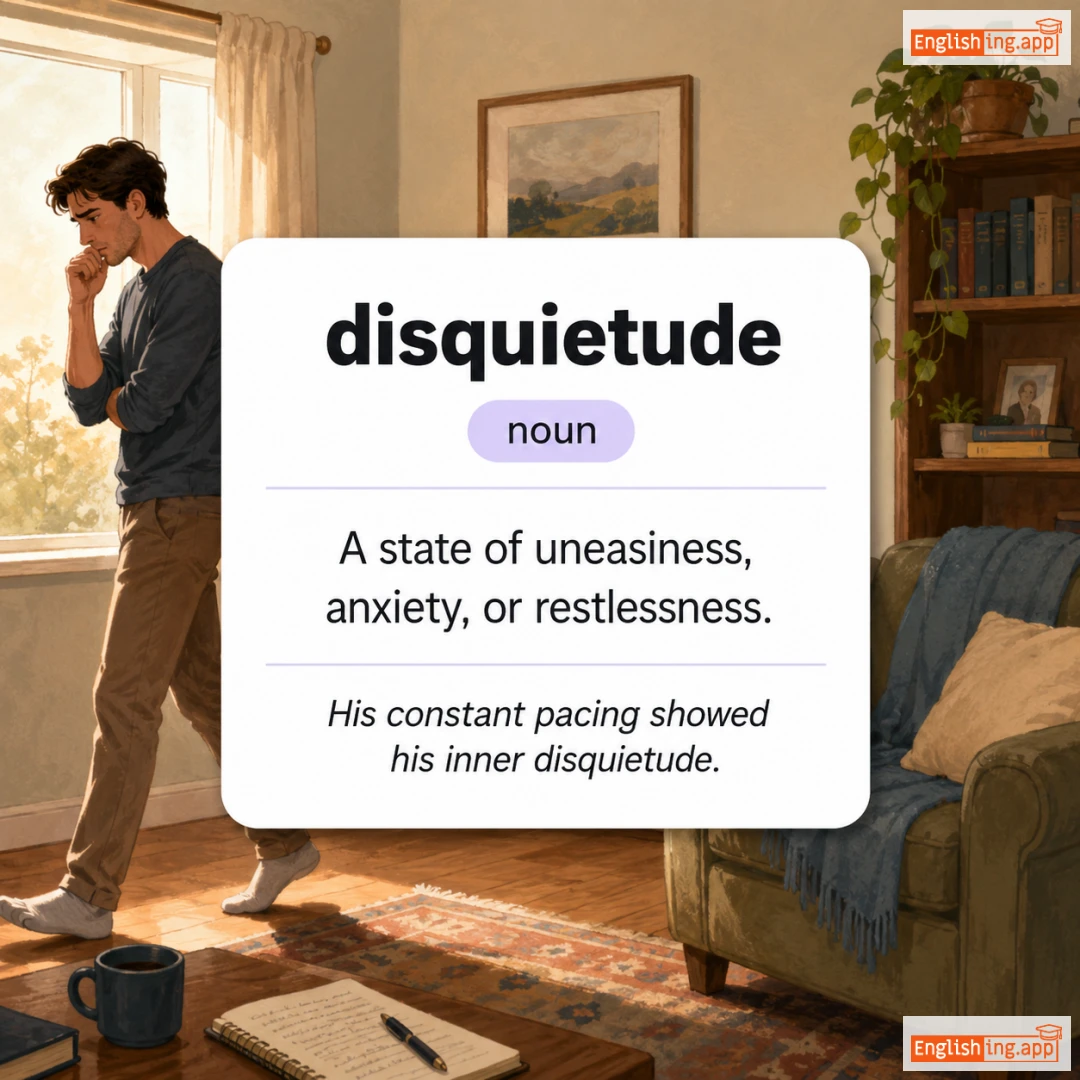
disquietude definition card — visual illustration of the meaning
noun C2
/dɪsˈkwaɪɪtjuːd/
बेचैनी (disquietude)

A state of uneasiness, anxiety, or restlessness.

"His constant pacing showed his inner disquietude."

"उसकी लगातार चहलकदमी ने उसकी आंतरिक बेचैनी को दिखाया।" (Uski lagataar chahalkadmi ne uski aantarik bechaini ko dikhaya.)
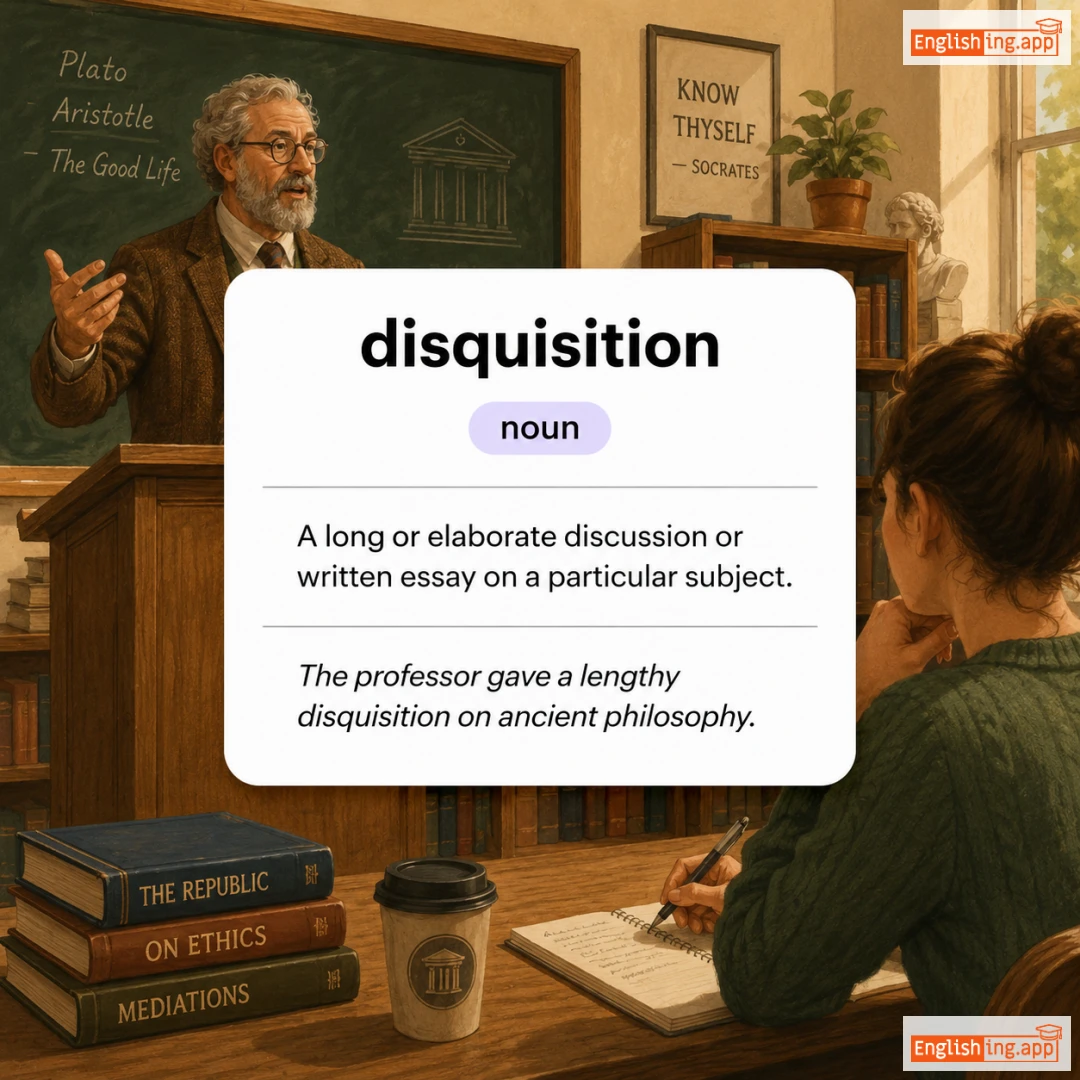
disquisition definition card — visual illustration of the meaning
noun C2
/ˌdɪskwɪˈzɪʃən/
विस्तृत विवेचन (vistrit vivechan)

A long or elaborate discussion or written essay on a particular subject.

"The professor gave a lengthy disquisition on ancient philosophy."

"प्रोफेसर ने प्राचीन दर्शन पर एक लंबी विवेचना दी।" (Professor ne pracheen darshan par ek lambi vivechana dee.)
noun C2
/ˌdɪsrɪˈpjuːt/
कुख्याति (kukhyati)

the state of being held in low esteem or having a bad reputation

"The scandal brought the politician into disrepute."

"उस कांड ने राजनीतिज्ञ को कुख्याति में डाल दिया।" (Us kaand ne rajneetijy ko kukhyati mein daal diya.)
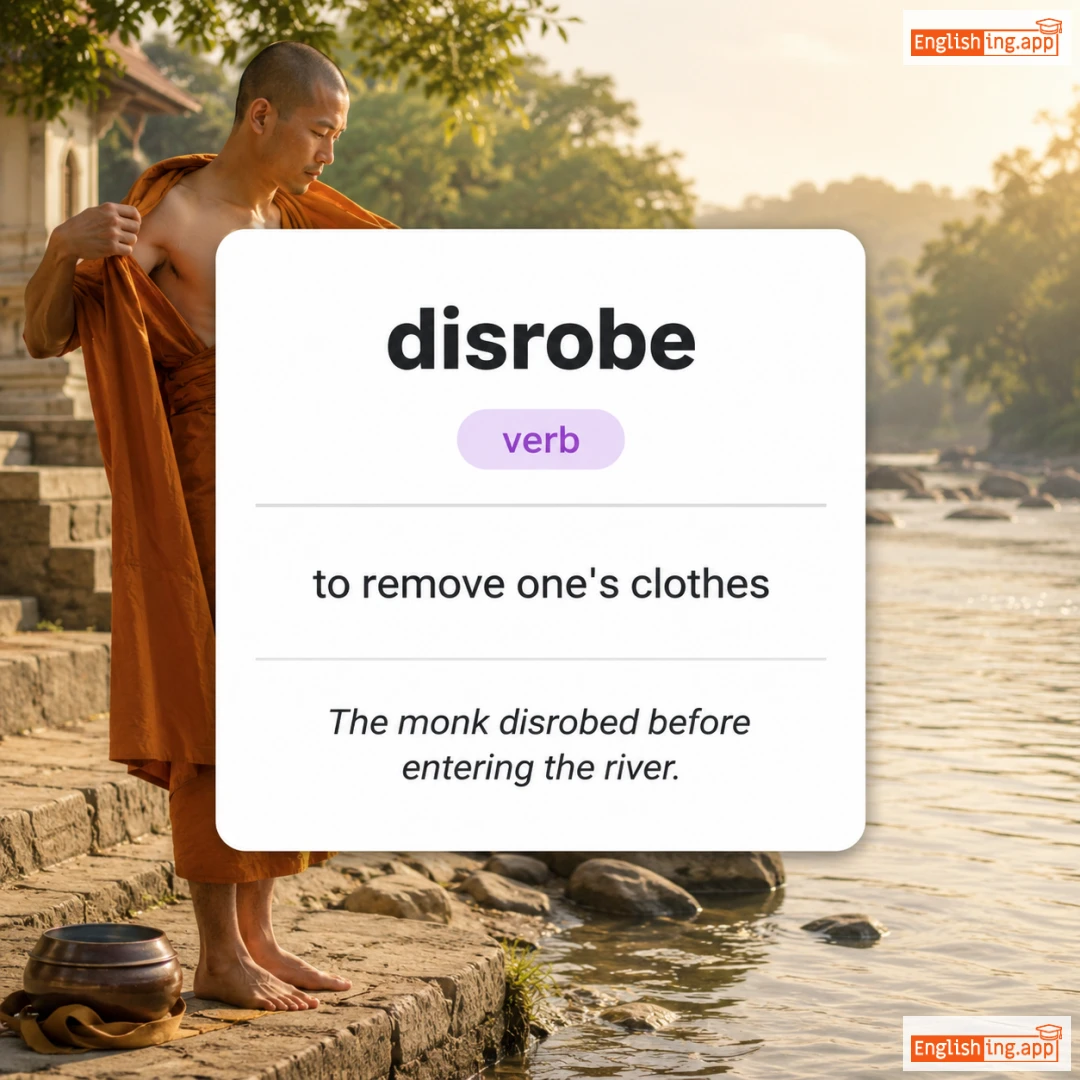
disrobe definition card — visual illustration of the meaning
verb C2
/dɪsˈroʊb/
कपड़े उतारना (kapde utaarna)

to remove one's clothes

"The monk disrobed before entering the river."

"संन्यासी नदी में प्रवेश करने से पहले कपड़े उतारने लगे।" (Sannyaasi nadi mein pravesh karne se pehle kapde utaarne lage.)
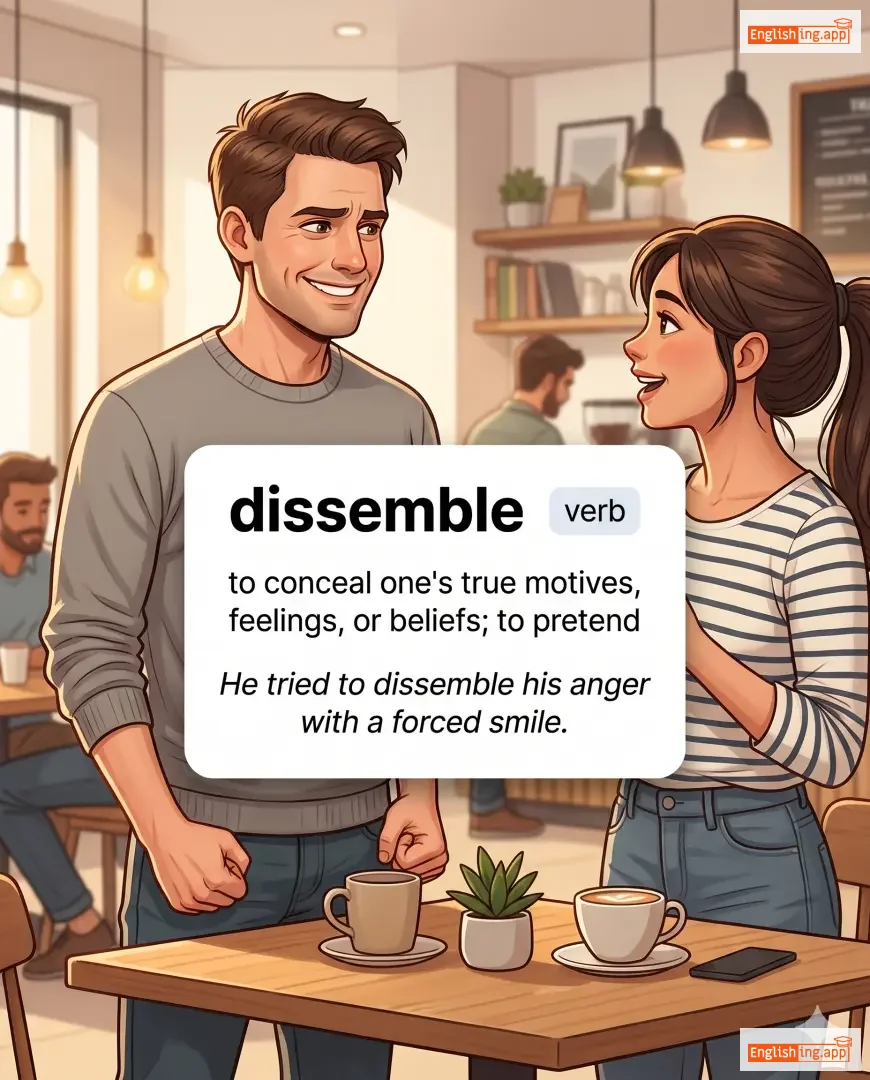
dissemble definition card — visual illustration of the meaning
verb C2
/dɪˈsɛmbəl/
बनावटी करना (banavati karna)

to conceal one's true motives, feelings, or beliefs; to pretend

"He tried to dissemble his anger with a forced smile."

"उसने एक मजबूरी मुस्कान के साथ अपने गुस्से को छिपाने की कोशिश की।" (Usne ek majboori muskaan ke saath apne gusse ko chhupane ki koshish ki.)
noun C2
/dɪˈsɛmbələr/
ढोंगी (dhongi)

a person who conceals their real feelings or intentions; a hypocrite or pretender

"The politician was accused of being a dissembler who never revealed his true plans."

"राजनेता को एक ढोंगी होने का आरोप लगाया गया था, जिसने कभी अपनी असली योजनाओं को नहीं उजागर किया।" (Rajneeta ko ek dhongi hone ka aarop lagaya gaya tha, jisne kabhi apni asli yojnaon ko nahin ujagar kiya.)
noun C2
/dɪˈsɛnʃən/
विरोध (virodh)

Strong disagreement or difference of opinion, especially leading to discord within a group.

"The meeting ended in dissension among the committee members."

"बैठक समिति के सदस्यों के बीच विरोध में समाप्त हो गई।" (Baithak samiti ke sadasyon ke beech virodh mein samaapt ho gayi.)
adjective C2
/dɪˈsɛnʃənt/
विपक्षी (vipakshi)

Expressing or holding opinions that are opposed to the majority or official view.

"Only a few dissentient voices were heard during the debate."

"बहस के दौरान केवल कुछ ही विपक्षी आवाजें सुनी गईं।" (Bahas ke dauran keval kuch hi vipakshi aawaazain suni gayin.)
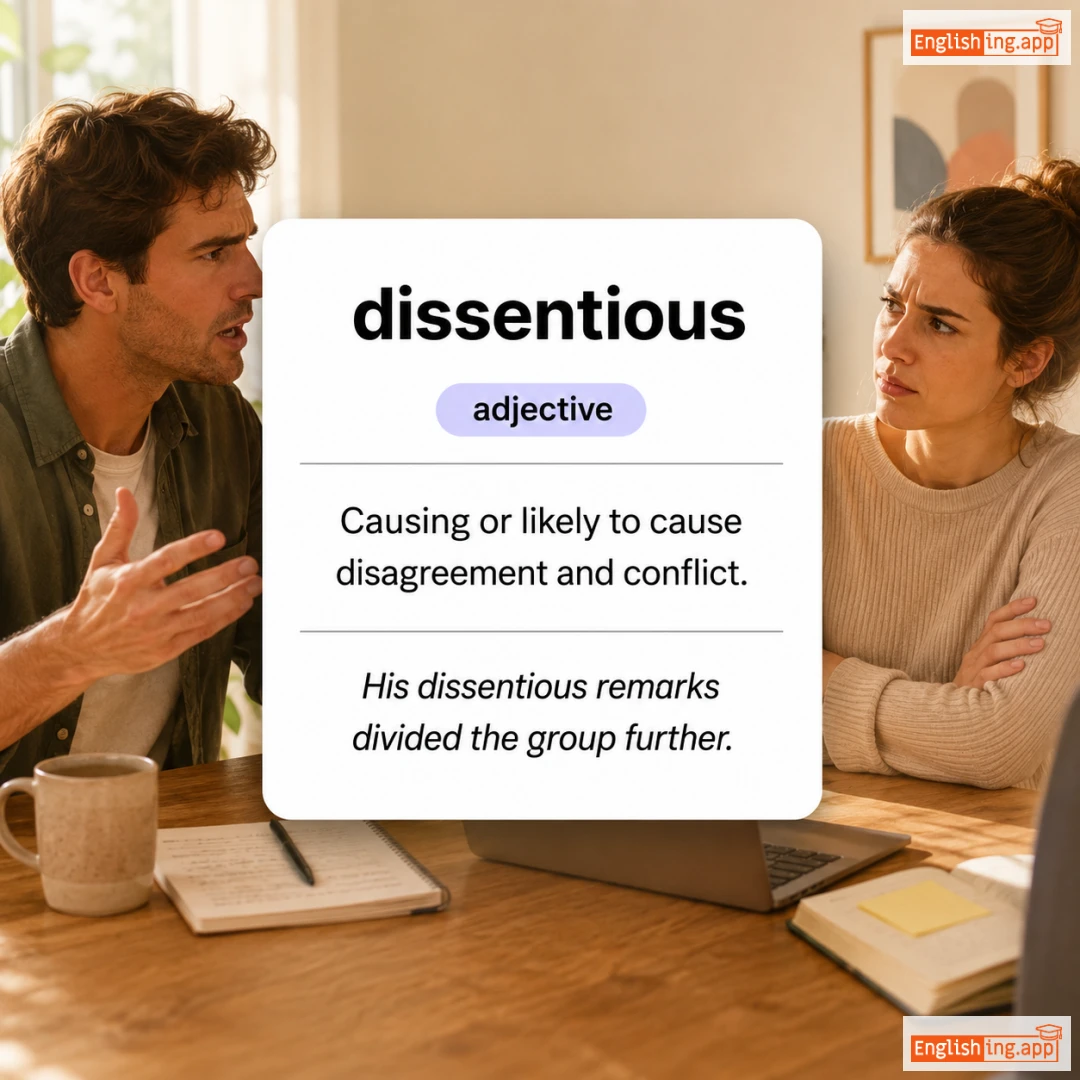
dissentious definition card — visual illustration of the meaning
adjective C2
/dɪˈsɛnʃəs/
विरोधी (virodhi)

Causing or likely to cause disagreement and conflict.

"His dissentious remarks divided the group further."

"उसकी विरोधी टिप्पणियों ने समूह को और अधिक विभाजित कर दिया।" (Uski virodhi tippaniyon ne samooh ko aur adhik vibhaajit kar diya.)
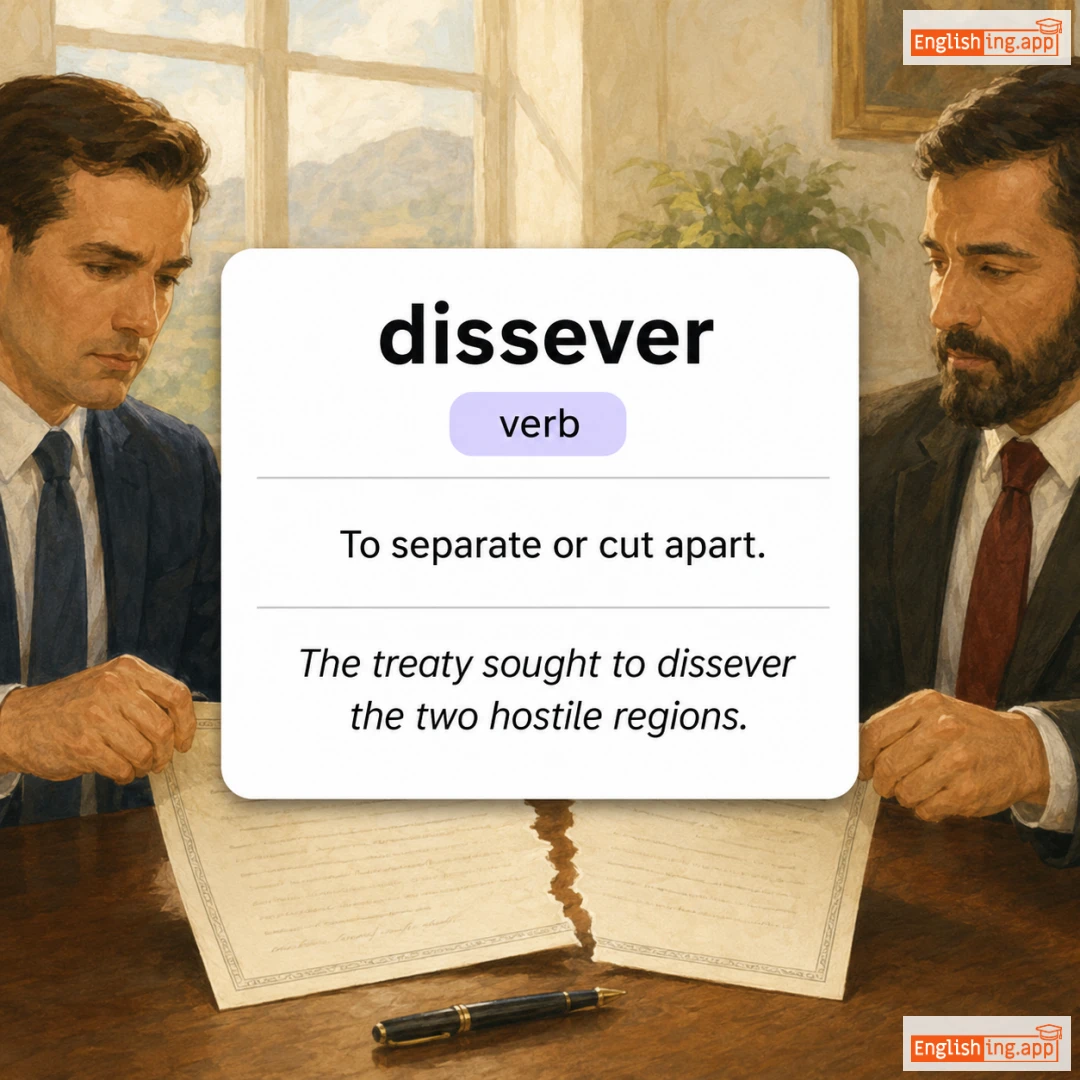
dissever definition card — visual illustration of the meaning
verb C2
/dɪˈsɛvər/
विभाजित करना (vibhajit karna)

To separate or cut apart.

"The treaty sought to dissever the two hostile regions."

"संधि ने दो शत्रु प्रवृत्त क्षेत्रों को विभाजित करने का प्रयास किया।" (Sandhi ne do shatru pravrit kshetron ko vibhajit karne ka prayas kiya.)
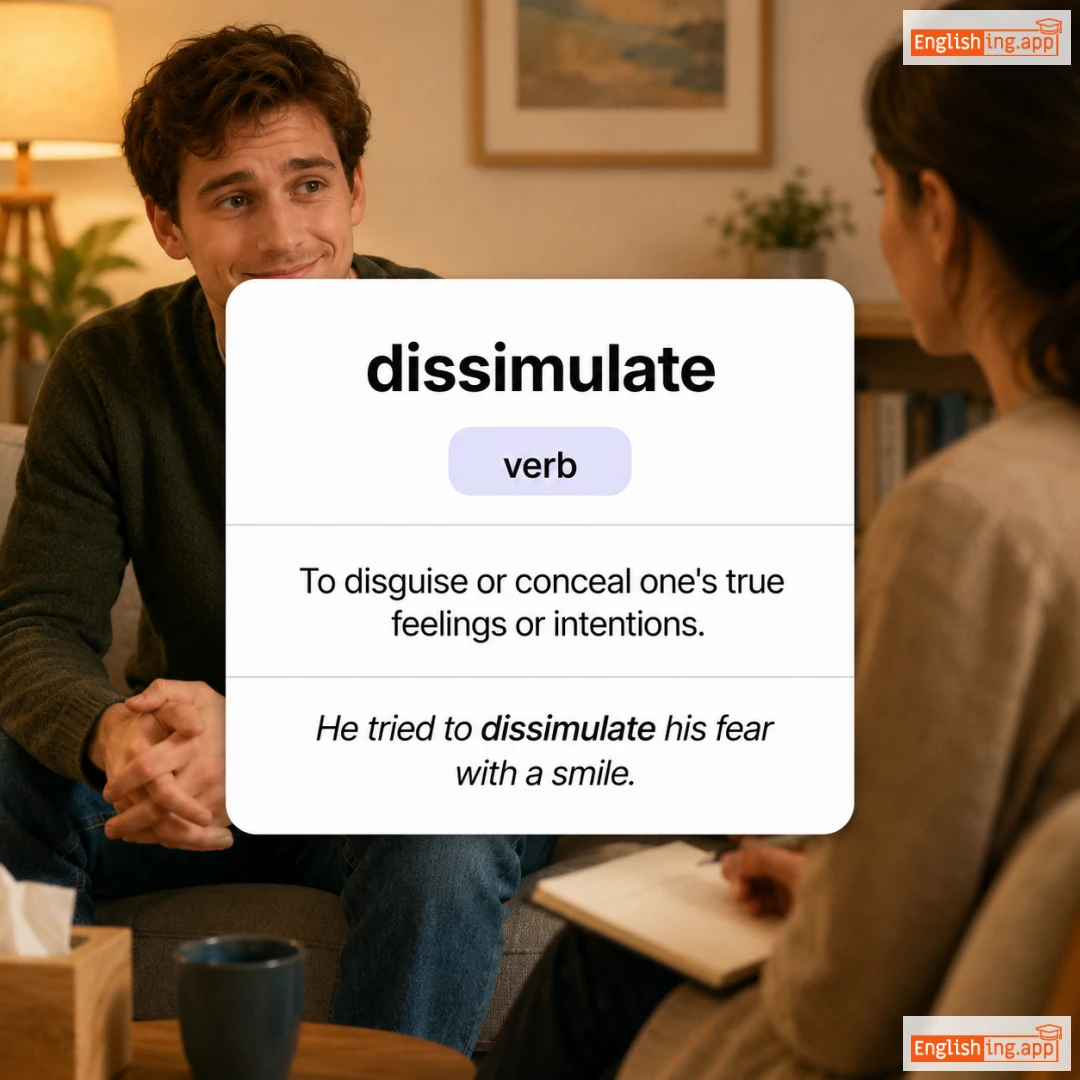
dissimulate definition card — visual illustration of the meaning
verb C2
/dɪˈsɪmjʊˌleɪt/
छिपाना (chhupana)

To disguise or conceal one's true feelings or intentions.

"He tried to dissimulate his fear with a smile."

"उसने मुस्कान के साथ अपने डर को छिपाने की कोशिश की।" (Usne muskan ke saath apne dar ko chhupane ki koshish ki.)