Vokabulare

Englisches Vokabelwörterbuch | Wortbedeutungen, Definitionen & Beispiele

verb C1
/ˈpærəfreɪz/
幸福 (kōfuku)

To express the meaning of something using different words, often to make it clearer.

"The teacher asked the students to paraphrase the poem in their own words."

"彼女は賞を受け取ったとき、自分の幸せを隠せなかった。" (Kanojo wa shō o uketotta toki, jibun no kōfuku o kakusenakatta.)
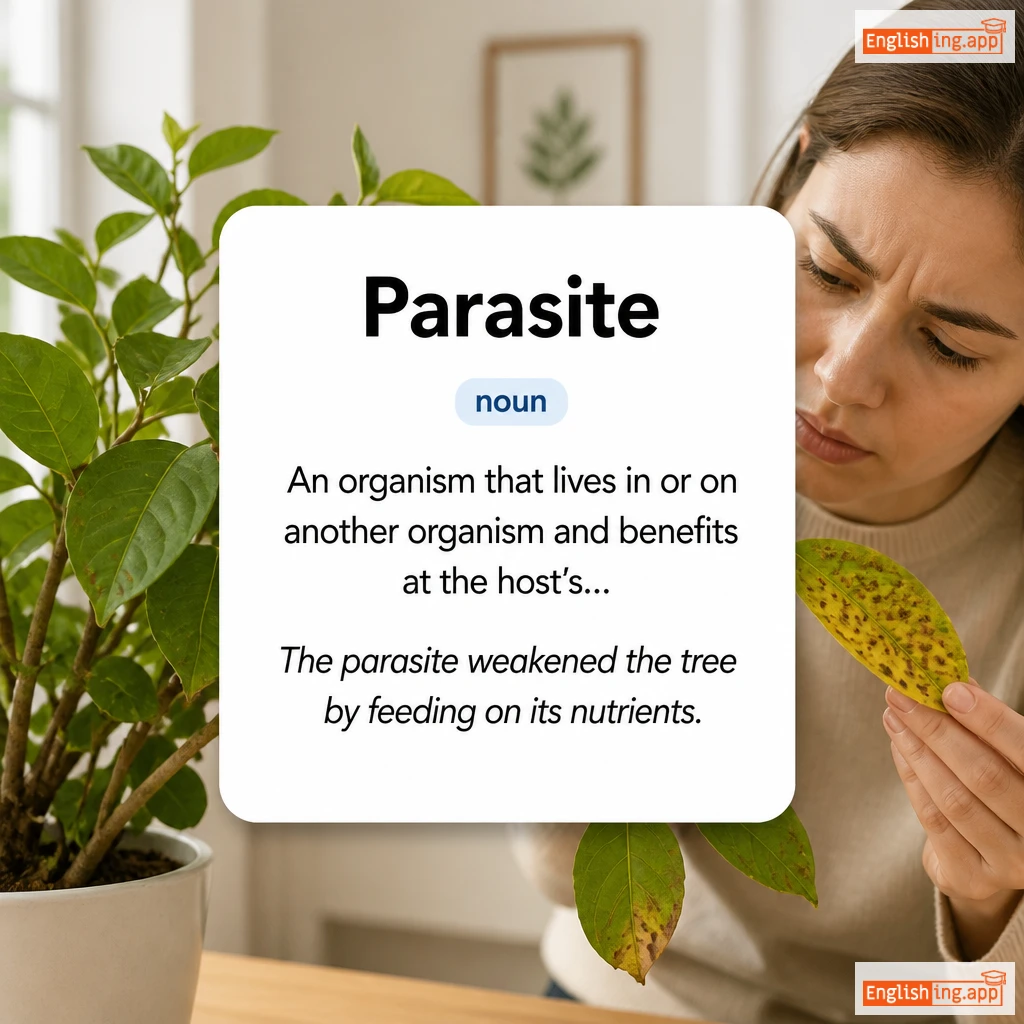
Parasite definition card — visual illustration of the meaning
noun C1
/ˈpærəsaɪt/
寄生虫 (kiseichū)

An organism that lives in or on another organism and benefits at the host’s expense.

"The parasite weakened the tree by feeding on its nutrients."

"寄生虫は栄養を吸収して木を弱らせました。" (Kiseichū wa eiyō o kyūshū shite ki o yowarasemashita.)
adjective C1
/pɑːrtʃt/
極度に喉が渇いた (kyokudo ni nodo ga kawaita)

extremely dry, especially because of heat or thirst

"After walking in the desert, he was parched with thirst."

"砂漠を歩いた後、彼は極度に喉が渇いていた。" (Sabaku o aruita ato, kare wa kyokudo ni nodo ga kawaita.)
noun C1
/ˈpɑːrtʃmənt/
羊皮紙 (yōhishi)

a thin material made from animal skin, used in the past for writing

"The ancient manuscript was written on parchment."

"古代の写本は羊皮紙に書かれていました。" (Kodai no shahon wa yōhishi ni kakarete imashita.)
adjective C1
/ˈpɑːr.dən.ə.bəl/
許容可能な (kyoryo kanno na)

able to be forgiven; excusable

"His mistake was pardonable given the difficult circumstances."

"彼の誤りは許容可能でした、困難な状況を考慮すると。" (kare no ayamari wa kyoryo kanou deshita, konnan na joukyou o kouryo suru to.)
verb C1
/per/
皮をむく (kawa wo muku)

to cut away the outer covering or reduce something gradually

"She pared the apple before eating it."

"彼女はリンゴを食べる前に皮をむいた。" (Kanojo wa ringo wo taberu mae ni kawa wo muita.)
noun C1
/ˈpɛrəntɪdʒ/
家系 (kakei)

The identity and origins of one's parents; descent or lineage.

"Her noble parentage gave her access to the royal court."

"彼女の高貴な家系は、彼女に王室へのアクセスを与えた。" (Kanojo no kōkina kakei wa, kanojo ni ōshitsu e no akusesu o ataeta.)
noun C1
/pəˈrɛnθəsɪs/
括弧 (kakko)

A pair of curved marks ( ) used to enclose words or numbers; also an interruption or digression in speech or writing.

"The explanation was given in a parenthesis within the text."

"説明はテキスト内の括弧に含まれていました。" (Setsumei wa tekisuto nai no kakko ni fukumareteimashita.)
noun C1
/pəˈraɪə/
社会的に追放された人 (shakai-teki ni tsuihō sareta hito)

An outcast; someone who is rejected by society or a social group.

"After the scandal, he became a social pariah."

"スキャンダルの後、彼は社会的なパリアになった。" (Sukyandaru no ato, kare wa shakai-teki na paria ni natta.)
adjective C1
/pəˈrɪʒən/
パリに関連する (pari ni kanren suru)

relating to Paris or its people

"She wore a Parisian style dress at the party."

"彼女はパリジャンスタイルのドレスをパーティーで着ていた。" (Kanojo wa parijan sutairu no doresu o pātī de kiteita.)
noun C1
/ˈpærɪti/
平等 (byoudou)

the state or condition of being equal, especially in status or pay

"The campaign aims to achieve pay parity between men and women."

"キャンペーンは男性と女性の間で給与の平等を達成することを目指しています。" (Kyanpēn wa dansei to josei no aida de kyūyo no byōdō o tassei suru koto o mezashiteimasu.)
noun C1
/ˈpɑːrlər/
サロン、店 (parlor)

A sitting room in a private house, or a shop providing specified services.

"They welcomed the guests into the front parlor."

"彼らは前のパーラーでゲストを迎えました。" (Karera wa mae no pāra de gesuto o mukaemashita.)
adjective C1
/pəˈroʊkiəl/
狭い (parokial)

Having a limited or narrow outlook; relating to a parish.

"His parochial view prevented him from understanding global issues."

"彼の狭い視点は、彼が世界的な問題を理解するのを妨げました。" (Kare no semai shiten wa, kare ga sekaiteki na mondai o rikai suru no o samatagemashita.)
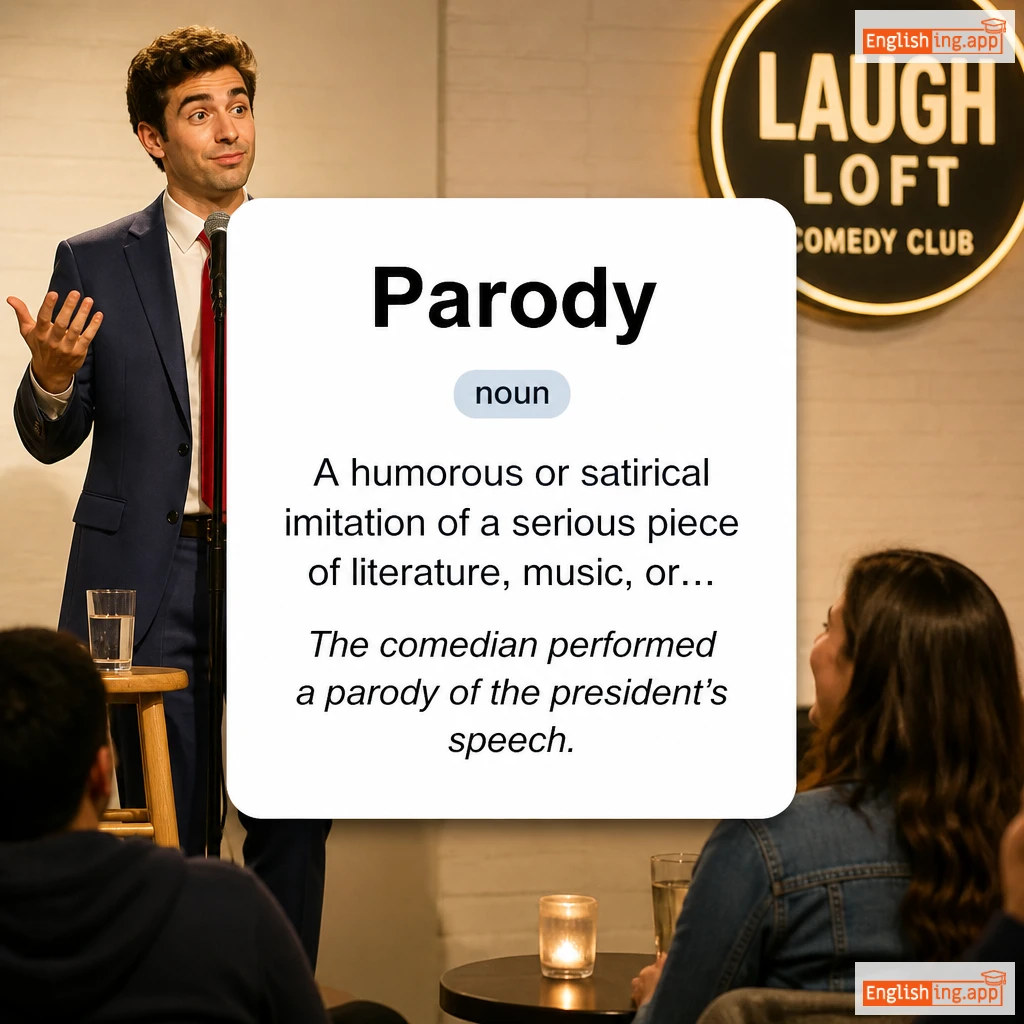
Parody definition card — visual illustration of the meaning
noun C1
/ˈpærədi/
パロディ (parodi)

A humorous or satirical imitation of a serious piece of literature, music, or style.

"The comedian performed a parody of the president’s speech."

"コメディアンは大統領の演説のパロディを演じた。" (Komedian wa daitōryō no enzetsu no parodi o enjita.)
noun C1
/ˈpɑːr.keɪ/
木製の床 (mokusei no yuka)

A floor made of wooden blocks arranged in a geometric pattern.

"The old mansion had a beautiful parquet floor."

"その古い邸宅には美しい木製の床がありました。" (Sono furui teitaku ni wa utsukushii mokusei no yuka ga arimashita.)
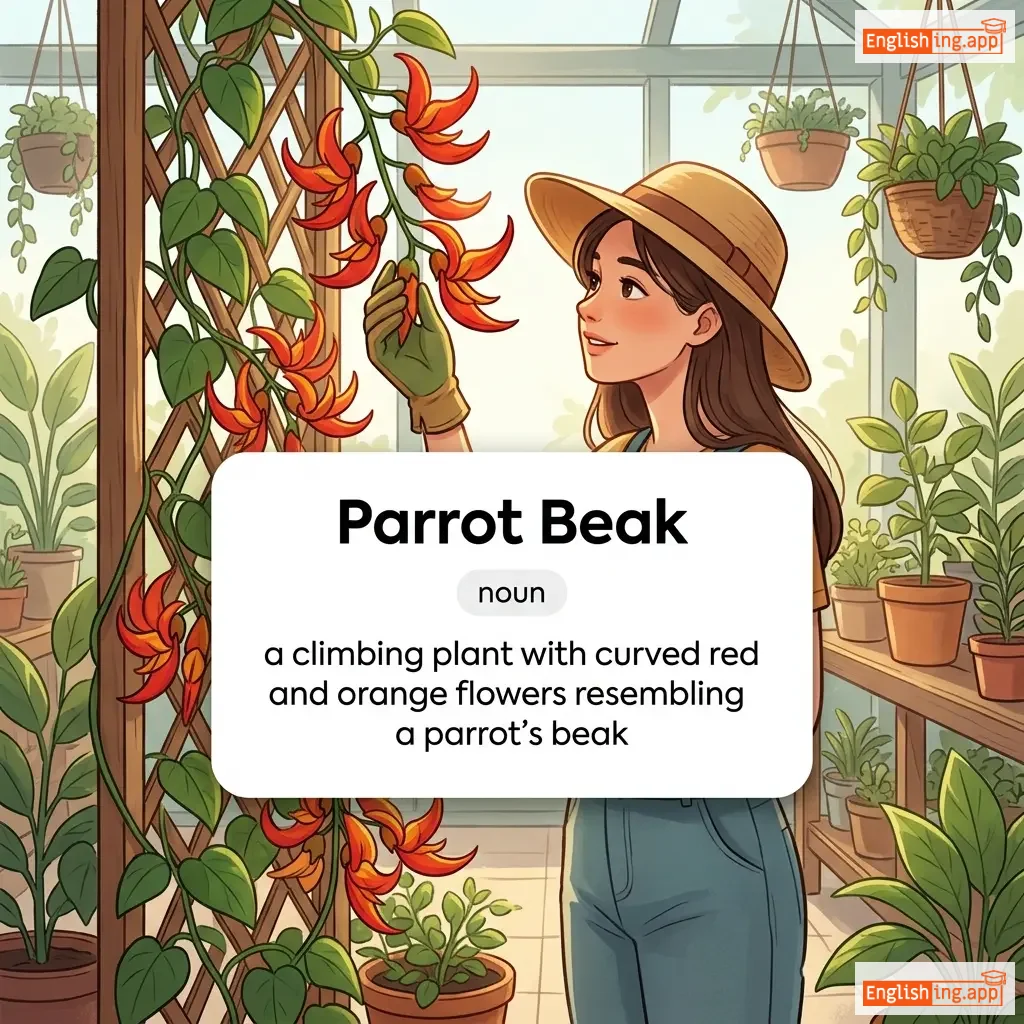
Parrot Beak definition card — visual illustration of the meaning
noun C1
/ˈpær.ət biːk/
パロットビーク (parotto bīku)

a climbing plant with curved red and orange flowers resembling a parrot's beak

"The parrot beak flower's unique curved shape makes it a fascinating addition to any garden."

"パロットビークの花はユニークな曲線を持っており、どんな庭にも魅力的な追加要素となります。" (Parotto bīku no hana wa yunikuna kyokusen o motteori, donna niwa ni mo miryokuteki na tsuika yōso to narimasu.)
verb C1
/ˈpæri/
攻撃をかわす (kōgeki o kawasu)

to ward off or deflect an attack, especially in fencing or conversation

"He managed to parry the opponent’s sword with quick reflexes."

"彼は素早い反応で相手の剣をかわすことができた。" (Kare wa subayai hannō de aite no ken o kawasu koto ga dekita.)
verb C1
/pɑːrs/
文法解析 (bunpou kaiseki)

to analyze a sentence or text grammatically or logically

"The software can parse large amounts of text data efficiently."

"ソフトウェアは、大量のテキストデータを効率的に解析できます。" (Sofutowea wa, tairyou no tekisuto dēta o kōritsuteki ni kaiseki dekimasu.)
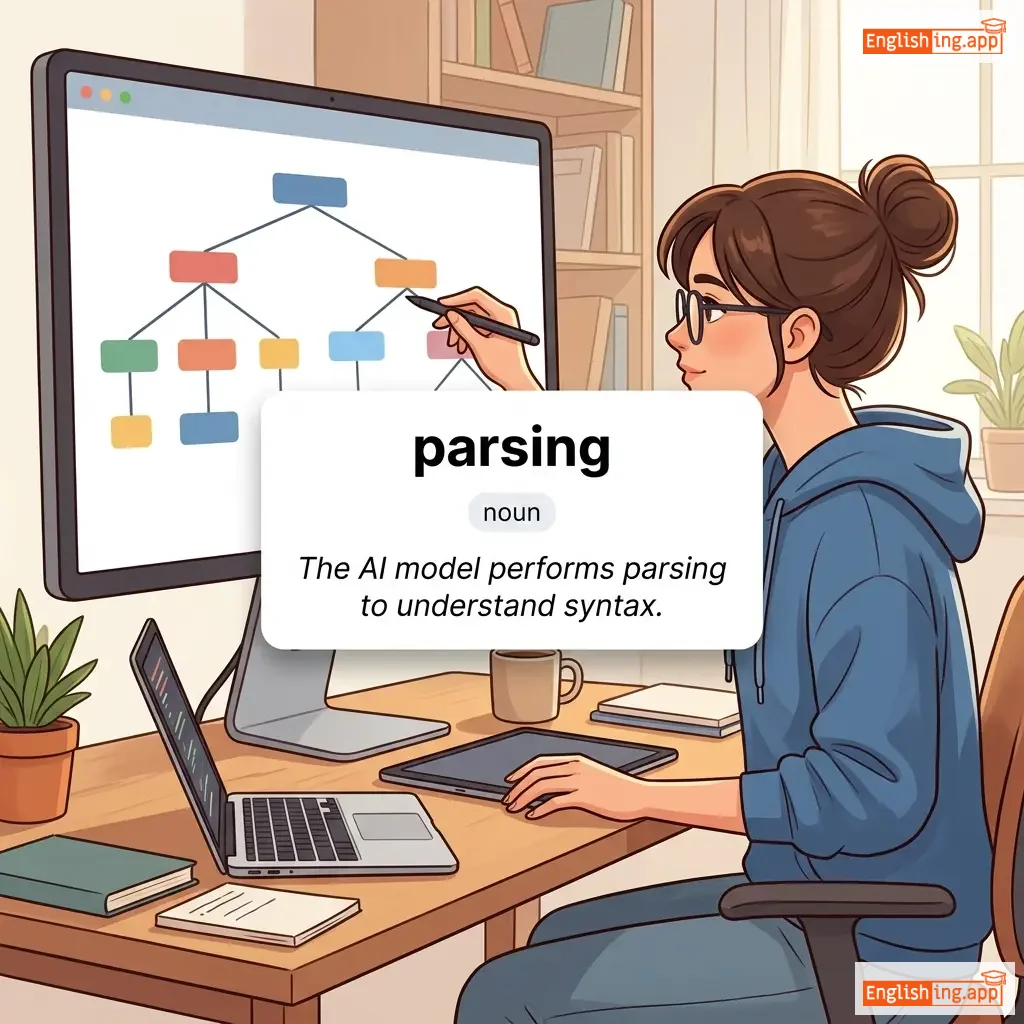
parsing definition card — visual illustration of the meaning
noun C1
ˈpɑː.sɪŋ
文の構造解析 (parsing)

The process of analyzing sentence structure to understand grammatical relationships.

"The AI model performs parsing to understand syntax."

"AIモデルは構文解析を行い、構造を理解します。" (AI moderu wa koubun kaiseki wo okonai, kouzou wo rikai shimasu.)
noun C1
/ˌpɑːrʃiˈæləti/
偏見 (henken)

an unfair preference or bias toward one side or person

"The judge was criticized for showing partiality in the case."

"裁判官は事件で偏見を示したとして批判されました。" (Saibankan wa jiken de henken o shimeshita to shite hihan saremashita.)
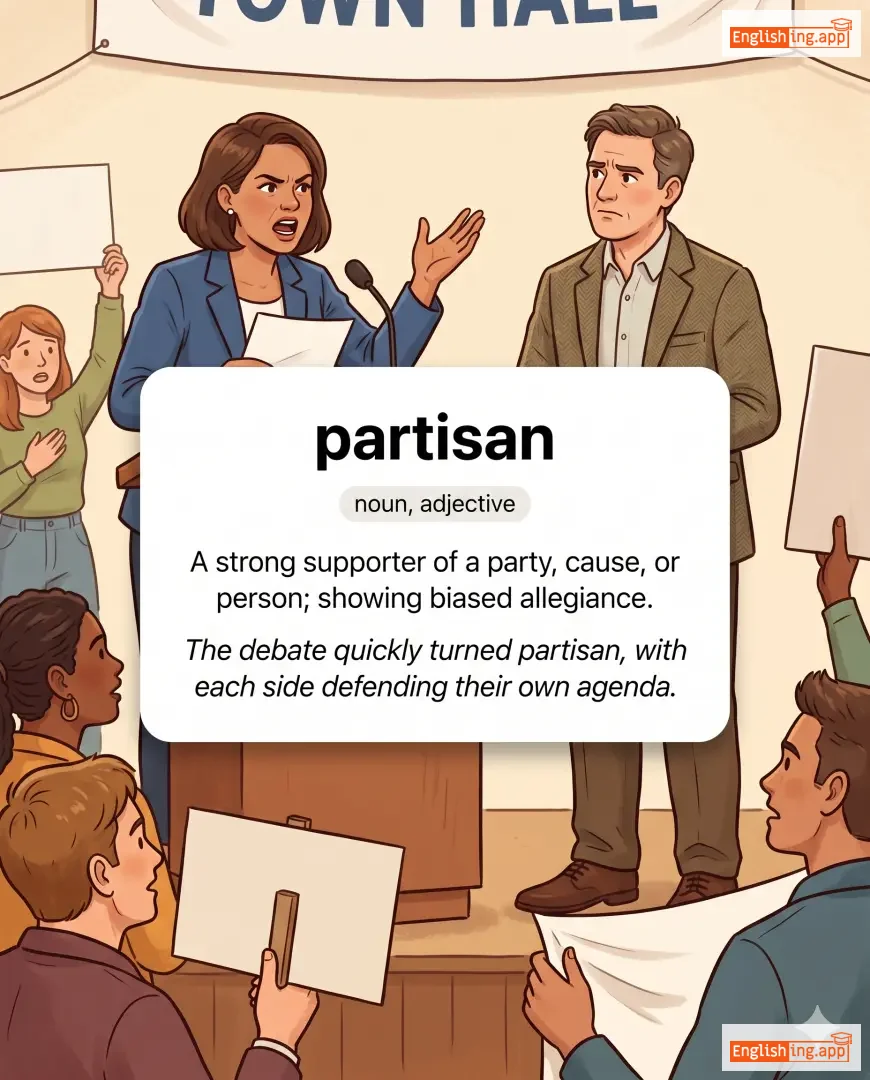
partisan definition card — visual illustration of the meaning
noun, adjective C1
/ˈpɑːrtɪzən/
党派の支持者 (tōha no shijisha)

A strong supporter of a party, cause, or person; showing biased allegiance.

"The debate quickly turned partisan, with each side defending their own agenda."

"議論はすぐに党派的になり、各側は自分のアジェンダを擁護しました。" (Giron wa sugu ni tōhateki ni nari, kaku-gawa wa jibun no ajenda o yōgo shimashita.)
adjective C1
/ˈpæs.ə.bəl/
受け入れ可能 (ukeire kanou)

good enough to be accepted, though not excellent

"The road is barely passable after the storm."

"嵐の後、道はかろうじて通行可能です。" (Arashi no ato, michi wa karoujite tsuukou kanou desu.)
adjective C1
/pæˈseɪ/
時代遅れの; 流行遅れ (jidaiokure no; ryūkōokure)

no longer fashionable or current; out of date

"Some trends from last decade feel utterly passé now."

"昨今のトレンドのいくつかは今や完全に時代遅れに見える。" (Sakonkō no torendo no ikutsuka wa imaya kanzen ni jidaiokure ni mieru.)
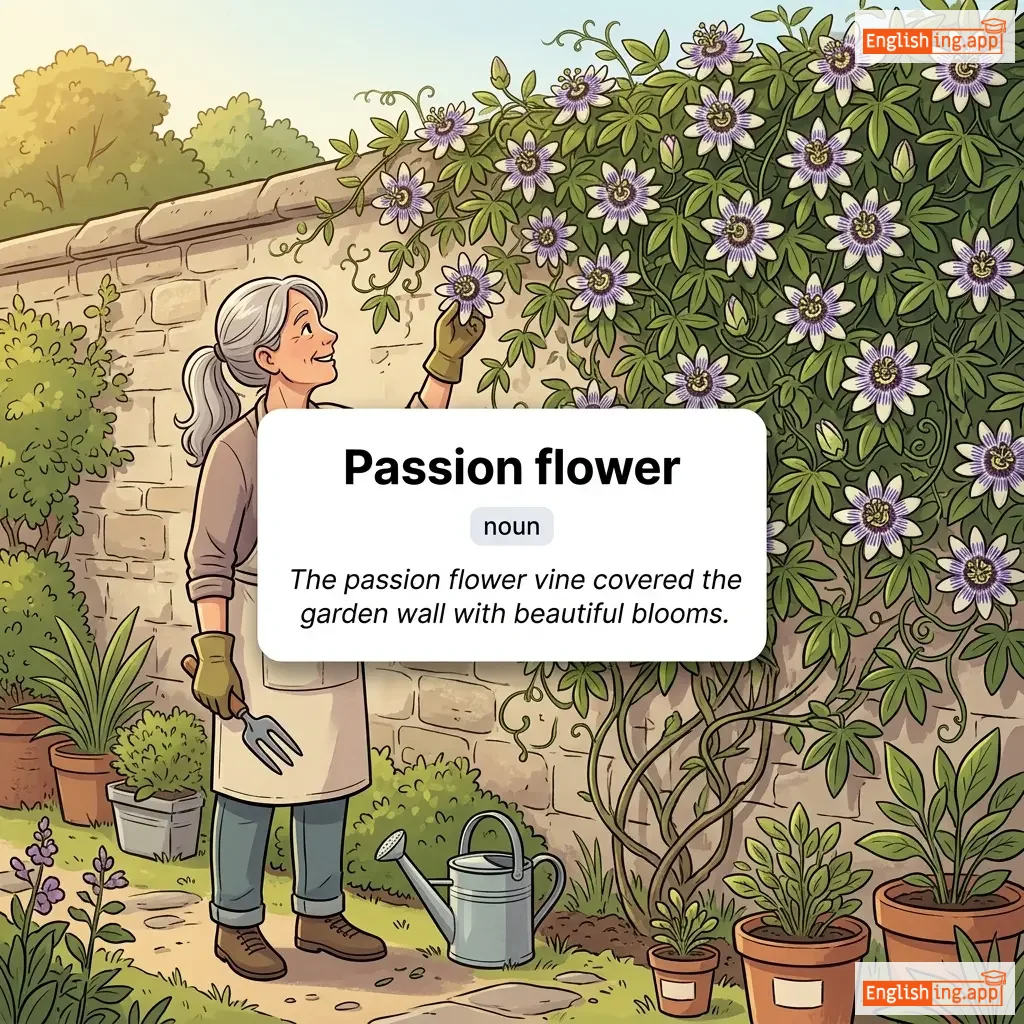
Passion flower definition card — visual illustration of the meaning
noun C1
/ˈpæʃ.ən ˌflaʊ.ər/
パッションフラワー (passhon furawā)

A climbing plant with intricate, colorful flowers; also refers to royal poinciana tree with red-orange blooms

"The passion flower vine covered the garden wall with beautiful blooms."

"パッションフラワーのつるが美しい花で庭の壁を覆いました。" (passhon furawā no tsuru ga utsukushī hana de niwa no kabe o ōimashita.)
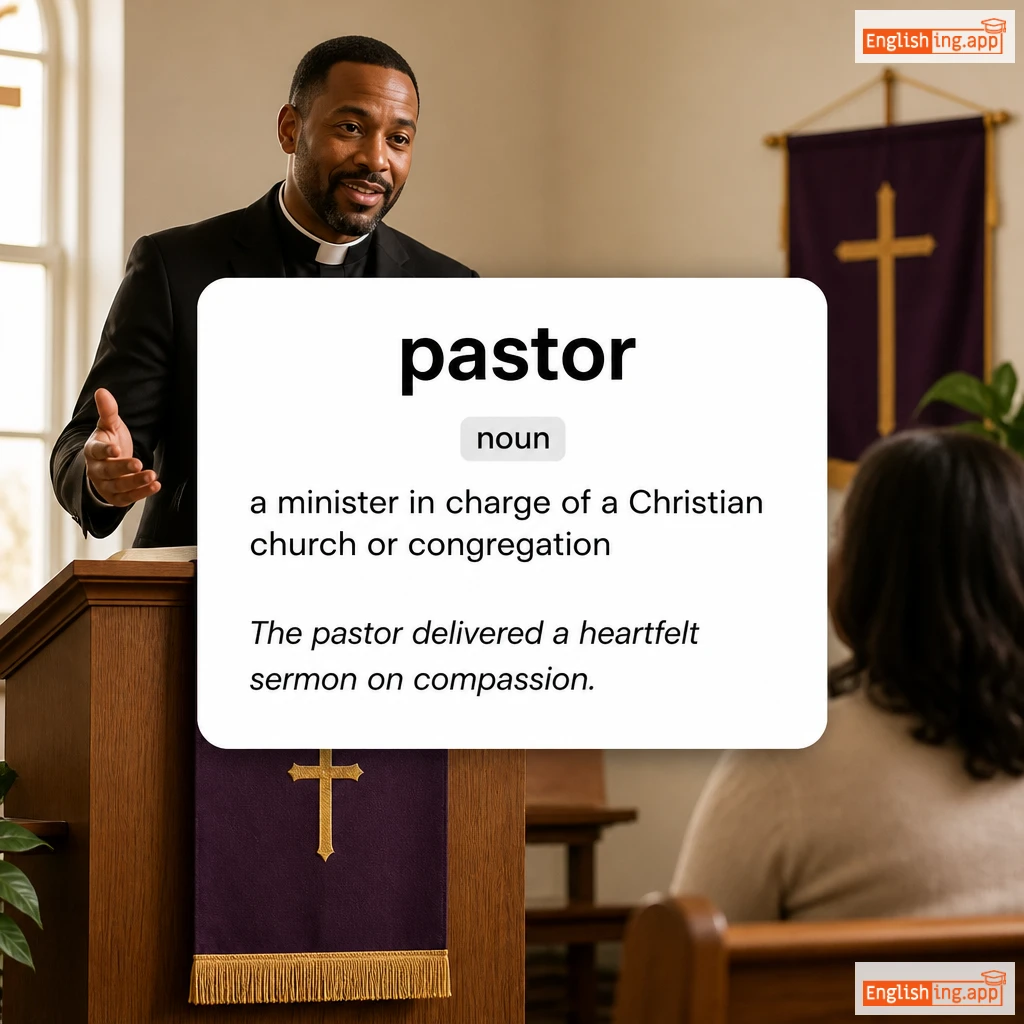
pastor definition card — visual illustration of the meaning
noun C1
/ˈpæstər/
牧師 (bokushi)

a minister in charge of a Christian church or congregation

"The pastor delivered a heartfelt sermon on compassion."

"牧師は思いやりのある説教をしました。" (Bokushi wa omoiyari no aru sekkyou o shimashita.)
adjective, noun C1
/ˈpæstərəl/
田園の、牧羊者に関連する (den'en no, bokuyousha ni kanren suru)

relating to the countryside, shepherds, or rural life; also relating to spiritual guidance by a pastor

"The painting had a calm pastoral scene with sheep grazing."

"その絵画には羊が草を食べている静かな田園風景が描かれていた。" (Sono kaiga ni wa hitsuji ga kusa o tabete iru shizuka na den'en fuukei ga egakarete ita.)
adjective C1
/pəˈtɜːrnəl/
父性的 (chichisei)

Relating to or characteristic of a father.

"He took a paternal interest in the boy’s education."

"彼はその男の子の教育に父性的な関心を示しました。" (Kare wa sono otokonoko no kyōiku ni chichiseina kanshin o shimashita.)
noun C1
/pəˈtɜːrnəti/
父性 (hosei)

The state of being someone's father.

"He demanded a paternity test to confirm his relationship with the child."

"彼は子供との関係を確認するために、父性検査を要求しました。" (Kare wa kodomo to no kankei o kakunin suru tame ni, hosei kensa o yōkyū shimashita.)
adjective C1
/ˌpæθəˈdʒɛnɪk/
病原性 (byōgensei)

Capable of causing disease.

"Some bacteria are harmless, while others are highly pathogenic."

"いくつかの細菌は無害で、他の細菌は非常に病原性があります。" (Ikutsuka no saikin wa mugai de, hoka no saikin wa hijō ni byōgensei ga arimasu.)
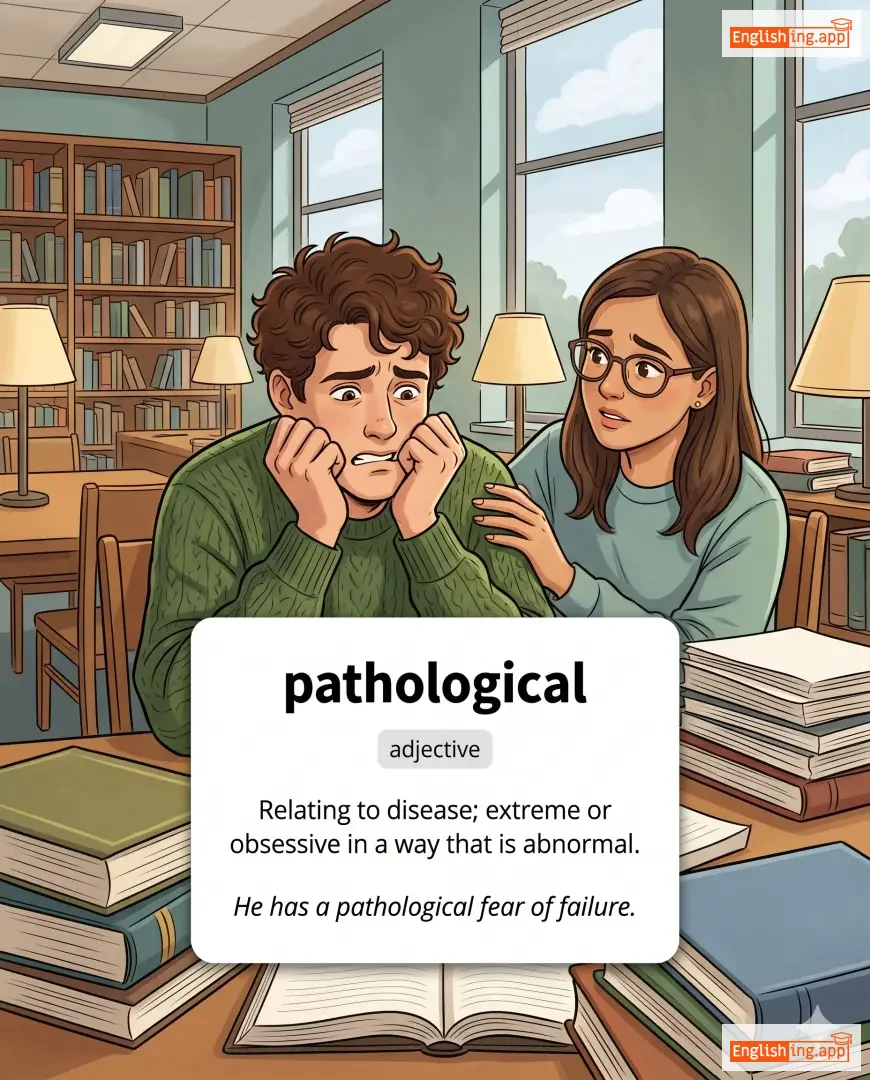
pathological definition card — visual illustration of the meaning
adjective C1
/ˌpæθəˈlɑːdʒɪkəl/
病理的, 病的 (byōriteki, byōteki)

Relating to disease; extreme or obsessive in a way that is abnormal.

"He has a pathological fear of failure."

"彼は失敗に対して病理的な恐怖を抱えている。" (Kare wa shippai ni taishite byōriteki na kyōfu o kakaete iru.)
noun C1
/pəˈθɒlədʒi/
病理学 (byōrigaku)

the scientific study of diseases, their causes, processes, and effects on the body

"Advances in pathology helped the doctors identify the rare infection quickly."

"病理学の進歩により、医師は珍しい感染症を迅速に特定できました。" (Byōrigaku no shinpo ni yori, ishi wa mezurashī kansenshō o jinsoku ni tokutei dekimashita.)
noun C1
/ˈpeɪθɒs/
パトス (pathos)

a quality in speech, writing, or events that evokes pity or deep emotion

"The documentary balanced pathos with hope, making the audience both weep and think."

"ドキュメンタリーは、パトスと希望をうまくバランスさせ、観客を泣かせ、考えさせました。" (dokyumentarī wa, patosu to kibō o umaku baransu sase, kankyaku o nakase, kangaesasemashita.)
noun C1
/ˈpeɪtriɑːrk/
家長 (kachou)

a male head of a family or tribe; an older respected man who leads a group

"As the family patriarch, he mediated disputes and kept long traditions alive."

"家族の家長として、彼は争いごとを解決し、長い伝統を守りました。" (kazoku no kachou toshite, kare wa arasoi goto o kaiketsu shi, nagai dentou o mamorimashita.)
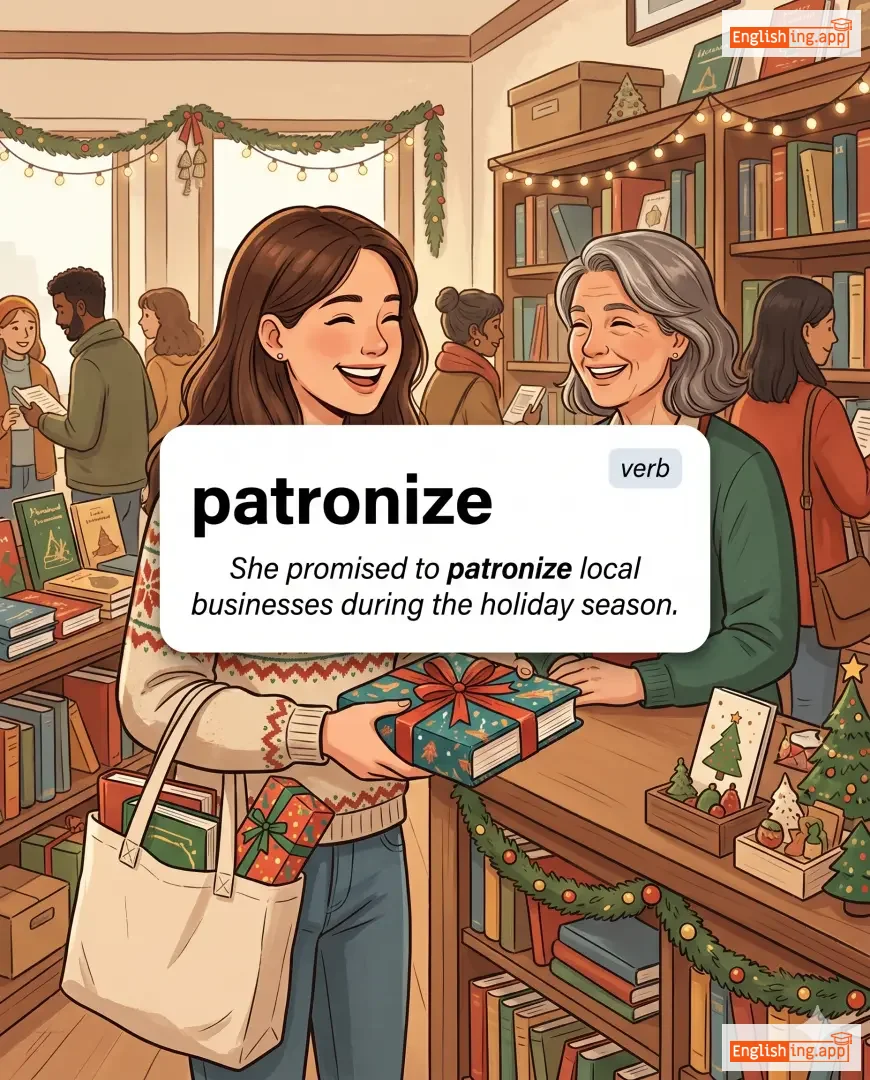
patronize definition card — visual illustration of the meaning
🛍️

patronize

verb C1
/ˈpeɪtrənaɪz/

to support or sponsor; to treat someone with apparent kindness that betrays a sense of superiority; to be a regular customer of a business

"She promised to patronize local businesses during the holiday season."

adjective C1
/ˈpeɪtrənaɪzɪŋ/
見下す (mikedasu)

showing kindness that is perceived as condescending or superior

"His patronizing tone offended the audience."

"彼の見下すような口調は観客を不快にさせた。" (Kare no mikedasu yōna kuchō wa kankyaku o fukai ni saseta.)
verb C1
/ˈpætər/
繰り返される軽いタップ音を立てる / 機械的に素早く話す (kurikaesaru karui tappu-on wo tateru / kikai-teki ni subayaku hanasu)

to make a repeated light tapping sound; to talk quickly in a rehearsed or mechanical way

"Rain pattered softly on the window."

"雨は窓に静かにパタパタと音を立てていた。" (Ame wa mado ni shizuka ni patapata to oto wo tatete ita.)
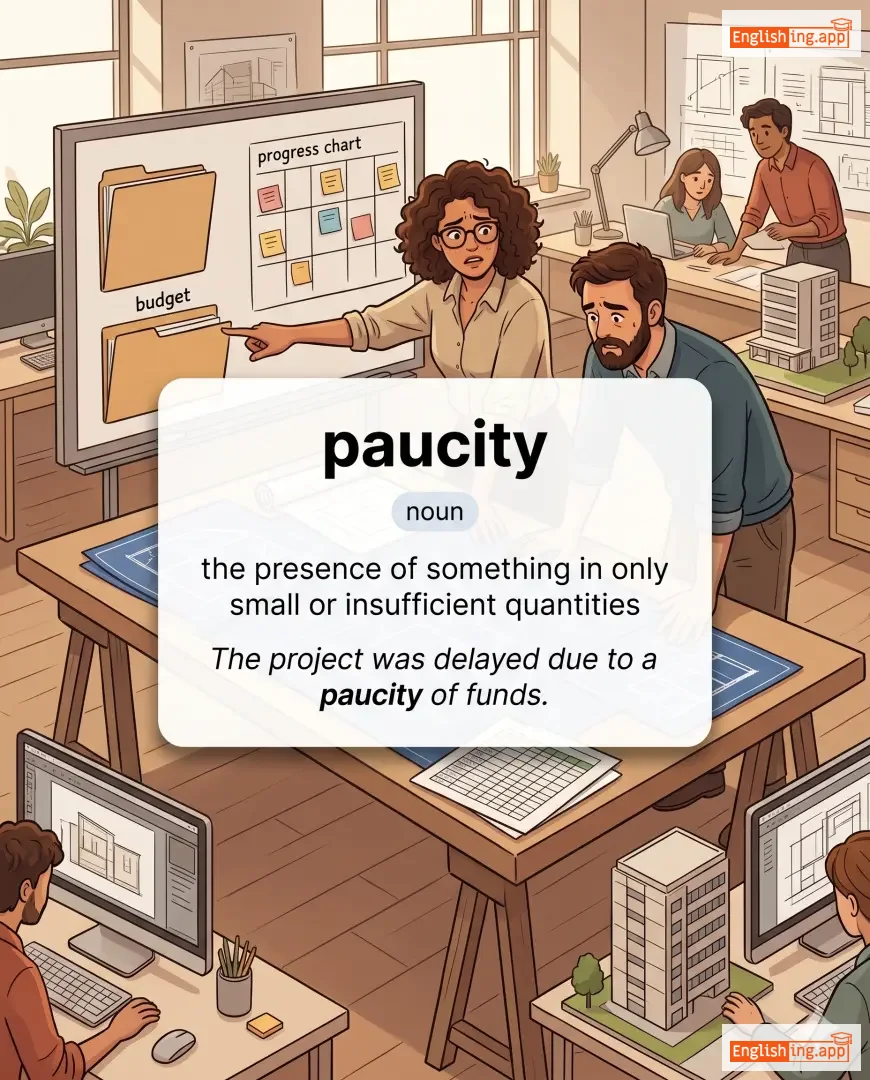
paucity definition card — visual illustration of the meaning
noun C1
/ˈpɔːsɪti/
不足 / 欠乏 (fusoku / ketsubou)

the presence of something in only small or insufficient quantities

"The project was delayed due to a paucity of funds."

"プロジェクトは資金不足のため遅れました。" (Purojekuto wa shikin fusoku no tame okuremashita.)
noun C1
/ˈpɔːpər/
乞食人 (kōjiki jin)

A very poor person.

"The pauper begged for food on the street corner."

"その乞食人は街角で食べ物を求めていた。" (Sono kōjiki jin wa machikado de tabemono o motomete ita.)
noun C1
/pəˈvɪliən/
パビリオン (pabirion)

A large tent or temporary building, often used for events or exhibitions.

"The wedding reception was held in a decorated pavilion."

"結婚式のレセプションは装飾されたパビリオンで開催されました。" (Kekkonshiki no resepushon wa sōshoku sareta pabirion de kaisai saremashita.)
noun C1
/peɪˈiː/
受取人 (uketorinin)

A person to whom money is paid or is to be paid.

"The payee must sign the check before cashing it."

"受取人は小切手を現金化する前に署名する必要があります。" (Uketorinin wa kogitte o genkin ka suru mae ni shomei suru hitsuyō ga arimasu.)
adjective C1
/ˈpiːsəbl/
平和な (heiwa na)

inclined to avoid conflict; friendly and non-violent in nature

"She is a peaceable neighbor who never quarrels with anyone."

"彼女は争いごとをしない平和な隣人です。" (Kanojo wa arasoi goto o shinai heiwa na rinjin desu.)
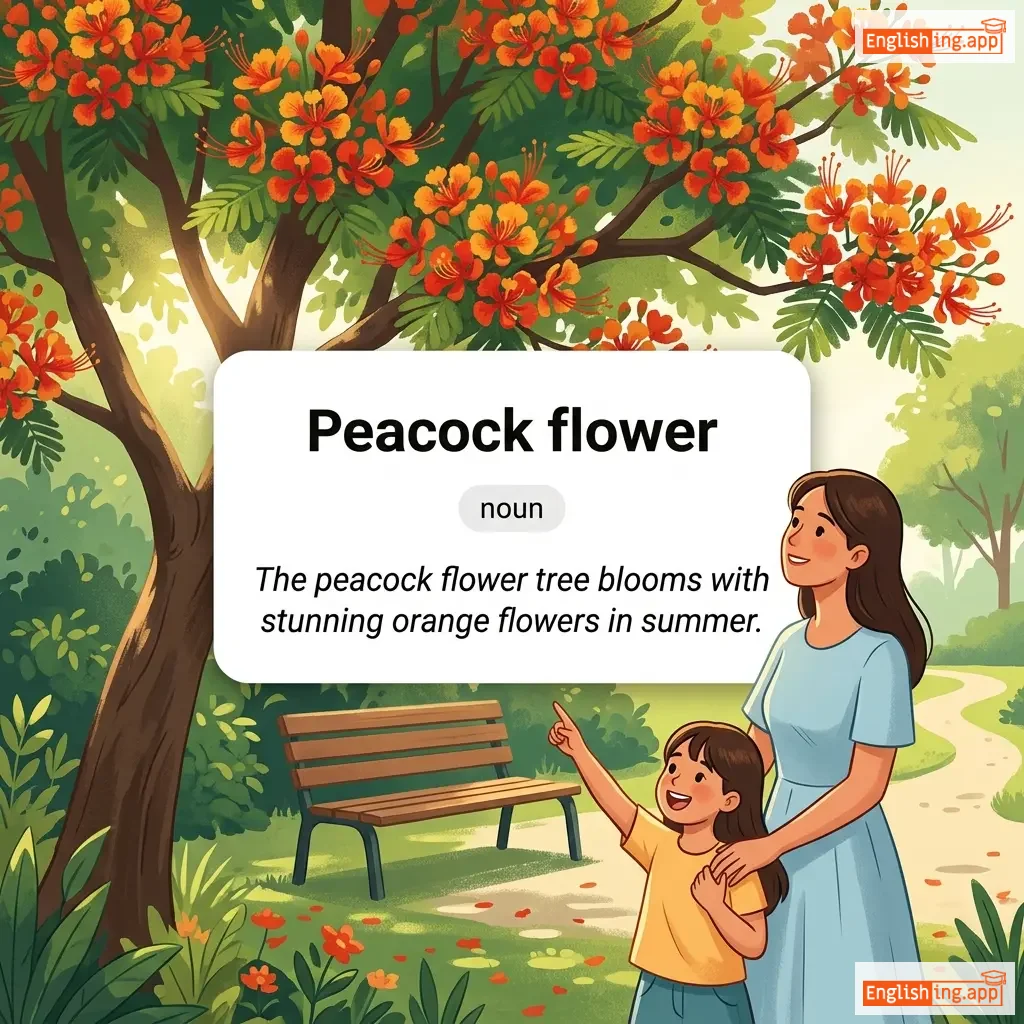
Peacock flower definition card — visual illustration of the meaning
noun C1
/ˈpiː.kɒk ˈflaʊ.ər/
クジャクの花 (kujaku no hana)

a tropical tree with bright orange and red flowers that resemble a peacock's tail

"The peacock flower tree blooms with stunning orange flowers in summer."

"クジャクの花の木は夏に素晴らしいオレンジ色の花を咲かせます。" (Kujaku no hana no ki wa natsu ni subarashī orenji-iro no hana o sakasemasu.)
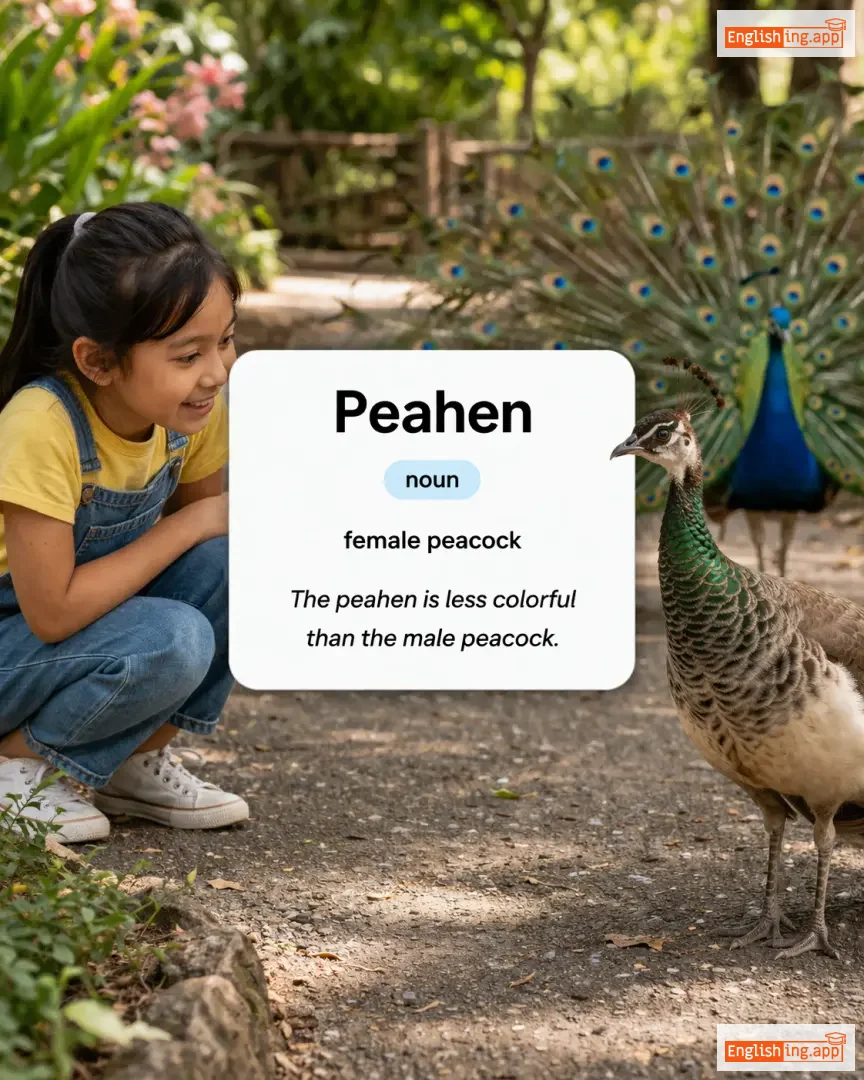
Peahen definition card — visual illustration of the meaning
noun C1
/ˈpiː.hən/
メスのクジャク (mesu no kujaku)

female peacock

"The peahen is less colorful than the male peacock."

"メスのクジャクはオスよりも色が少ない。" (Mesu no kujaku wa osu yori mo iro ga sukunai.)
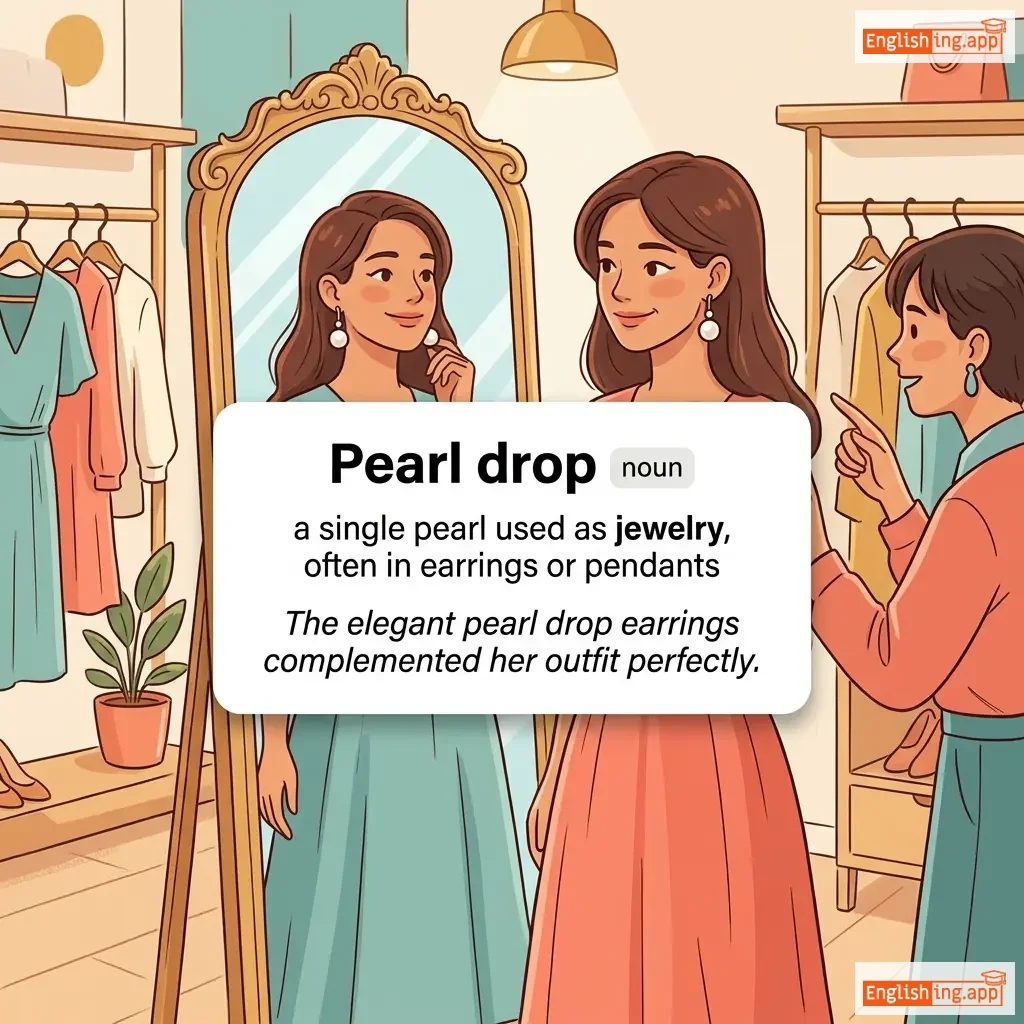
Pearl drop definition card — visual illustration of the meaning
noun C1
/pɜːrl drɒp/
パールの滴 (pāru no shizuku)

a single pearl used as jewelry, often in earrings or pendants

"The elegant pearl drop earrings complemented her outfit perfectly."

"そのエレガントなパールの滴のイヤリングは、彼女の服装に完璧にマッチしていました。" (sono ereganto na pāru no shizuku no iyaringu wa, kanojo no fukusō ni kanpeki ni matchi shite imashita)
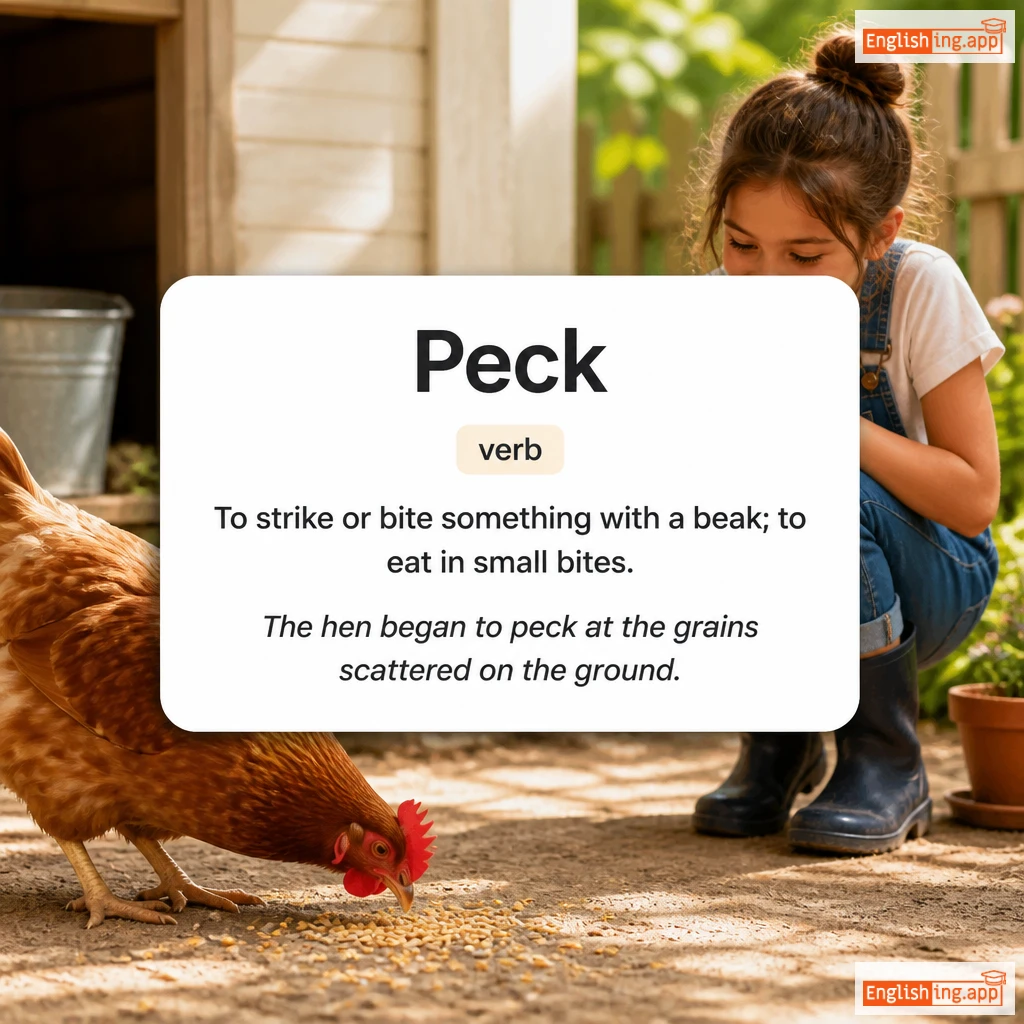
Peck definition card — visual illustration of the meaning
verb C1
/pɛk/
ついばむ (tsuibamu)

To strike or bite something with a beak; to eat in small bites.

"The hen began to peck at the grains scattered on the ground."

"その雌鳥は地面に散らばった穀物をついばみ始めました。" (Sono mesutori wa jimen ni chirabatta kokumotsu o tsuibami hajimemashita.)
adjective C1
/pɪˈkjuːniˌɛri/
財政的な (zaiseiteki na)

relating to money or financial matters

"They faced pecuniary difficulties after the business failed."

"彼らはビジネスが失敗した後、財政的な困難に直面しました。" (Karera wa bijinesu ga shippai shita ato, zaiseiteki na konnan ni chokumen shimashita.)
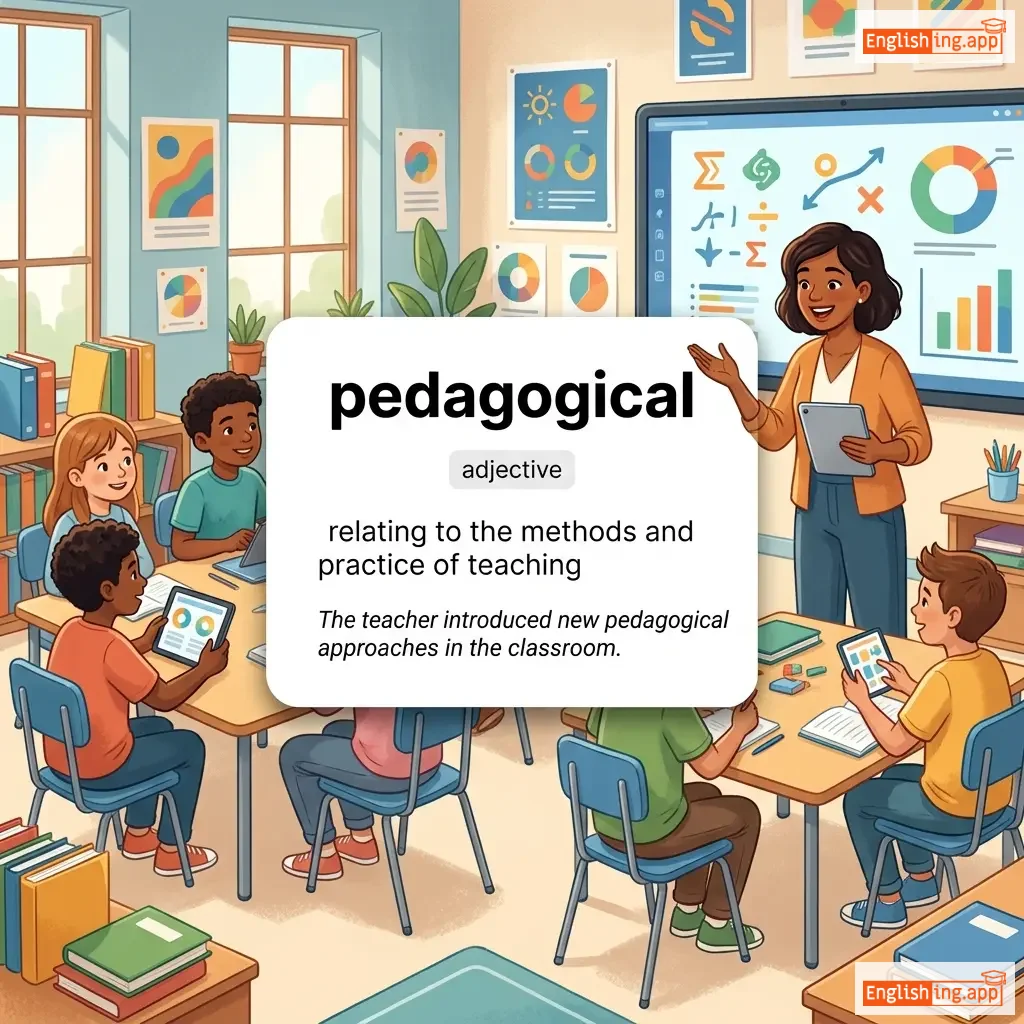
pedagogical definition card — visual illustration of the meaning
adjective C1
/ˌpɛdəˈɡɒdʒɪkəl/
教育学的な (kyoiku-gakuteki na)

relating to the methods and practice of teaching

"The teacher introduced new pedagogical approaches in the classroom."

"教師は教室で新しい教育学的アプローチを導入しました。" (Kyoushi wa kyoushitsu de atarashī kyoiku-gakuteki apurōchi o dōnyū shimashita.)
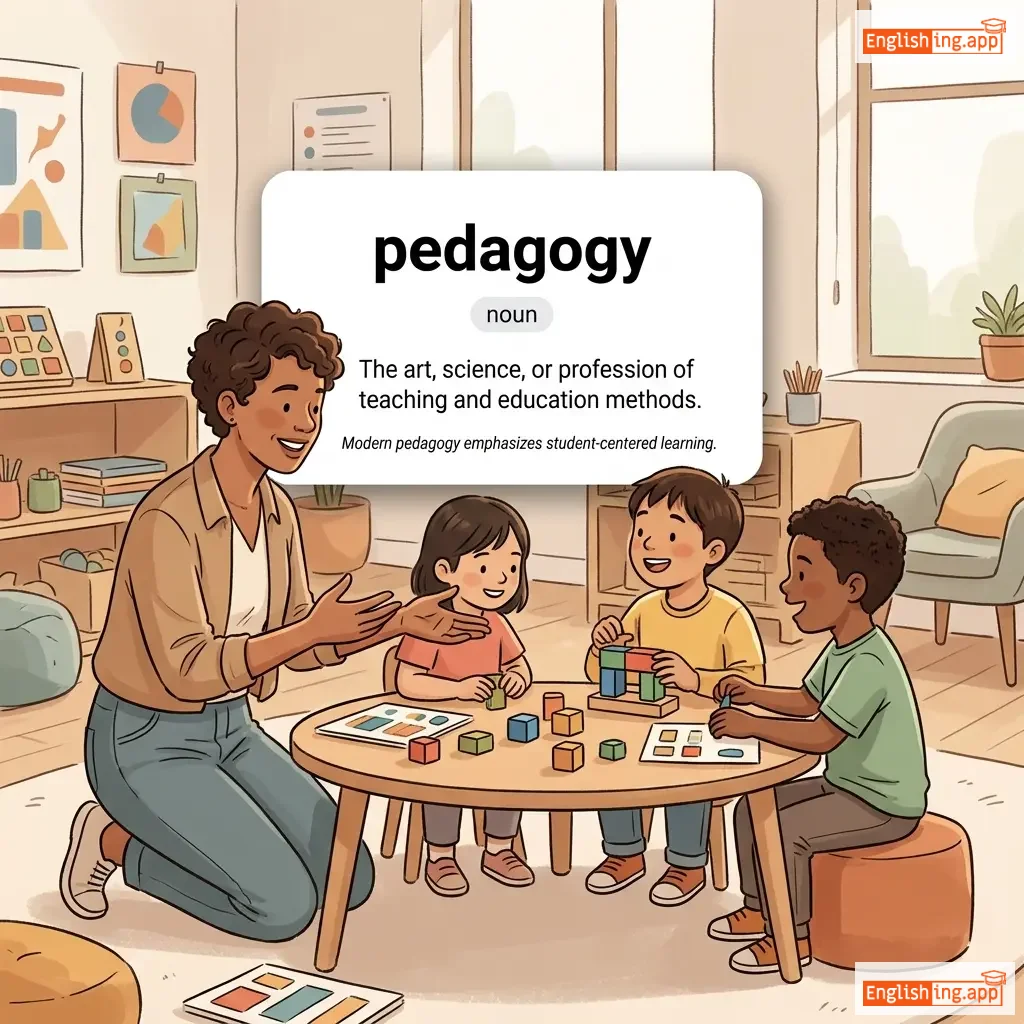
pedagogy definition card — visual illustration of the meaning
noun C1
/ˈpɛdəˌɡoʊdʒi/
教育学 (kyōikugaku)

The art, science, or profession of teaching and education methods.

"Modern pedagogy emphasizes student-centered learning."

"現代の教育学は学生中心の学習を強調しています。" (Gendai no kyōikugaku wa gakusei chūshin no gakushū o kyōchō shiteimasu.)
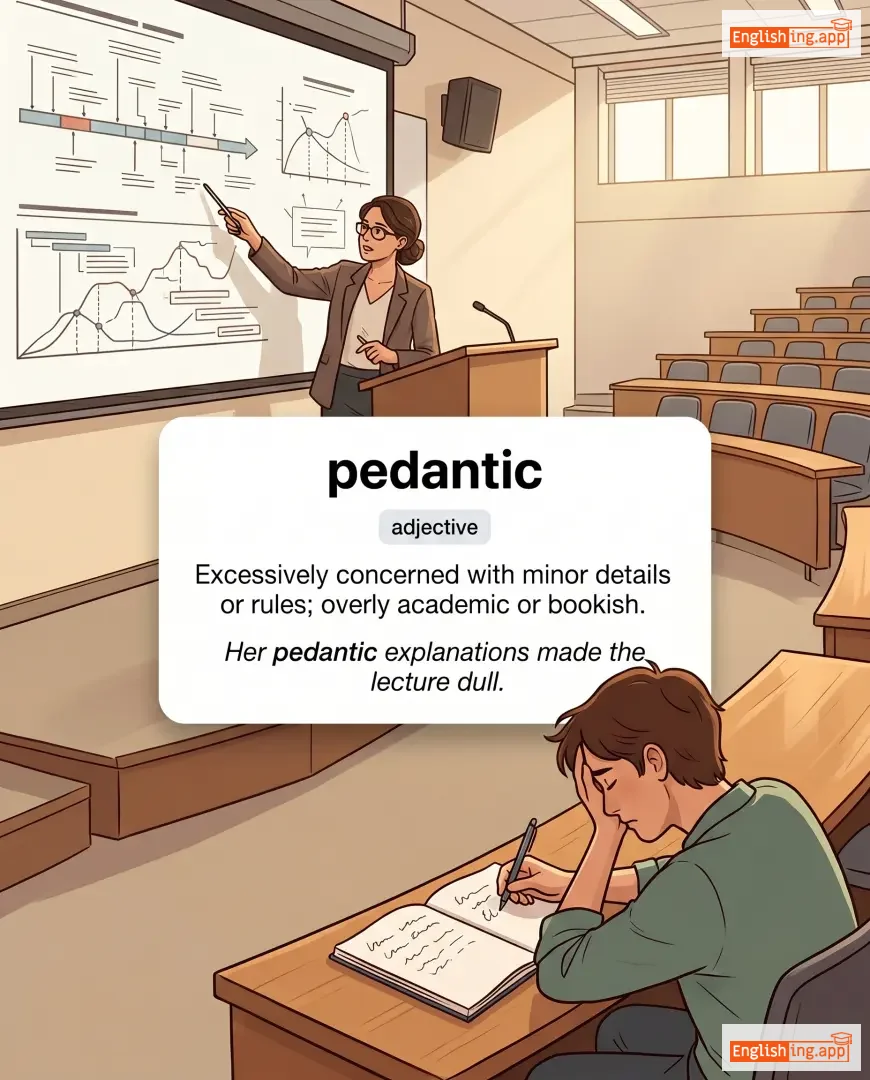
pedantic definition card — visual illustration of the meaning
adjective C1
/pəˈdæntɪk/
細かい詳細や規則に過度にこだわる (komakai shousai ya kisoku ni kadoni kodawaru)

Excessively concerned with minor details or rules; overly academic or bookish.

"Her pedantic explanations made the lecture dull."

"彼女のペダンティックな説明は講義を退屈にした。" (Kanojo no pedantikku na setsumei wa kougi wo taikutsu ni shita.)
verb C1
/ˈpɛdəl/
売る (uru)

To sell goods, often by going from place to place; sometimes used negatively to mean promoting an idea or product in a pushy way.

"Street vendors peddle handmade jewelry to tourists."

"ストリートの販売員は観光客に手作りのジュエリーを売っている。" (Sutōrīto no hanbai-in wa kankōkyaku ni tedukuri no jūerī o utte iru.)