Vokabulare

Englisches Vokabelwörterbuch | Wortbedeutungen, Definitionen & Beispiele

adjective C1
/ˈhæbɪtəbl/
пригодный для жилья (prigodnyy dlya zhilya)

Suitable to live in; capable of sustaining life.

"Scientists are searching for habitable planets beyond our solar system."

"Учёные ищут пригодные для жилья планеты за пределами нашей солнечной системы." (Uchёnyye ishchut prigodnye dlya zhilya planety za predelami nashey solnechnoy sistemy.)
adjective C1
/həˈbɪtʃuəl/
привычный (privychny)

Done or doing constantly or as a habit; customary.

"He was a habitual latecomer to class."

"Он был привычным опоздавшим на занятия." (On byl privychnym opazdvshim na zanyatiya.)
adjective C1
/ˈhæk.nid/
избитый (izbity)

Used too often and therefore lacking originality or freshness.

"The speech was filled with hackneyed phrases that failed to inspire the audience."

"Речь была полна избитых фраз, которые не смогли вдохновить аудиторию." (Rech' byla polna izbitykh fraz, kotorye ne smogli vdokhnovit' auditoriyu.)
adjective C1
/ˈhæɡ.ərd/
истощённый (istoŝchennyj)

Looking exhausted, unwell, or worn out, especially from fatigue or suffering.

"After working all night, she looked pale and haggard."

"После работы всю ночь она выглядела бледной и измождённой." (Posle raboty vsyu noch' ona vyglyadela blednoy i izmozhdyonnoy.)
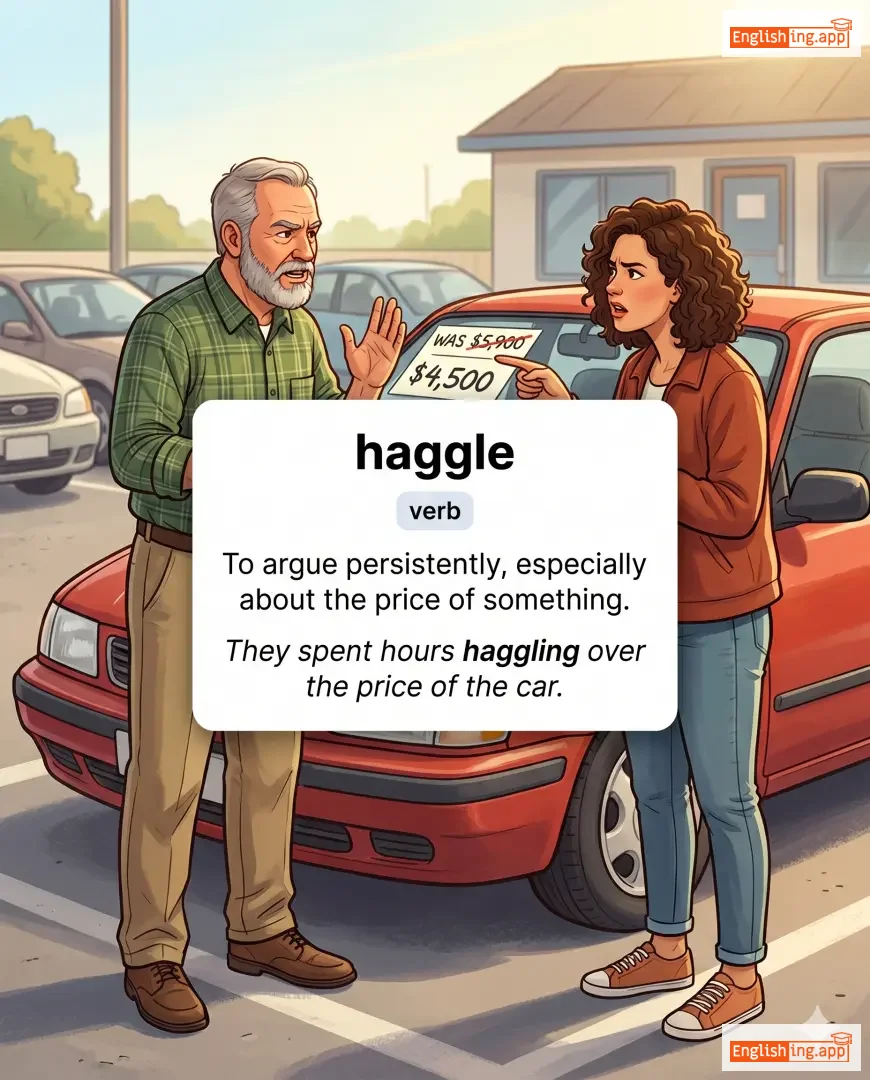
haggle definition card — visual illustration of the meaning
verb C1
/ˈhæɡ.l̩/
торговаться (torgovatsya)

To argue persistently, especially about the price of something.

"They spent hours haggling over the price of the car."

"Они провели часы, торгуясь о цене машины." (Oni proveli chasy, torguyas' o tsene mashiny.)
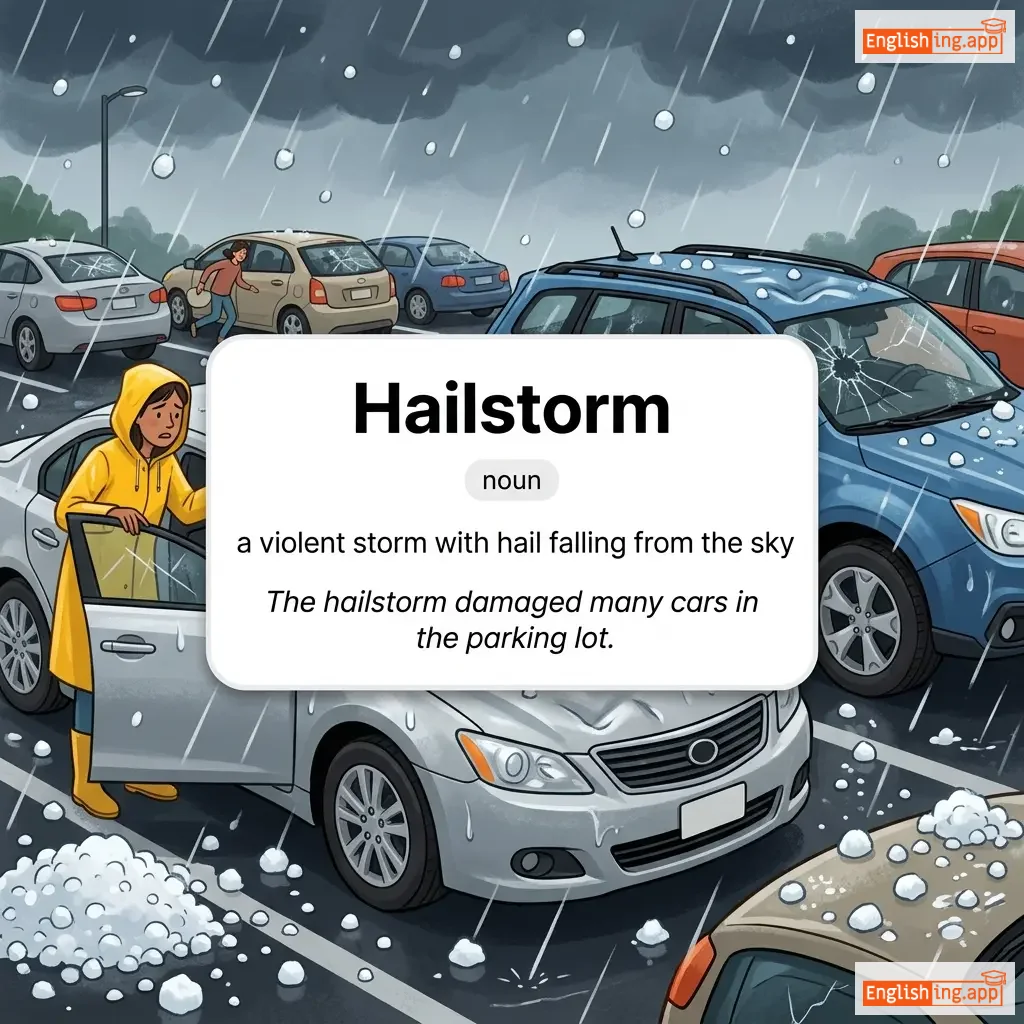
Hailstorm definition card — visual illustration of the meaning
noun C1
/ˈheɪl.stɔːrm/
гроза с градом (groza s gradom)

a violent storm with hail falling from the sky

"The hailstorm damaged many cars in the parking lot."

"Градовый шторм повредил множество автомобилей на парковке." (Gradovyy shtorm povredil mnogochislennoe avto na parkovke.)
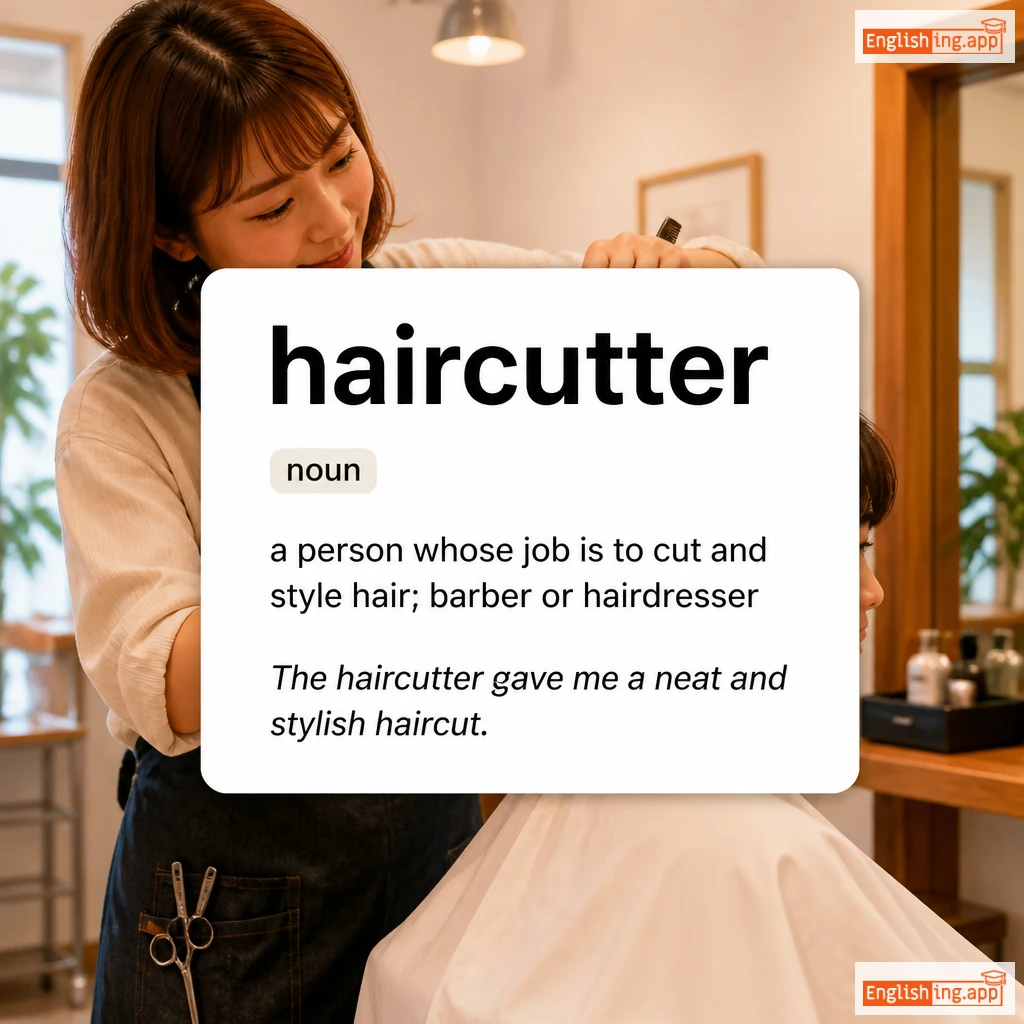
haircutter definition card — visual illustration of the meaning
noun C1
/ˈheəˌkʌtər/
парикмахер (parikmakher)

a person whose job is to cut and style hair; barber or hairdresser

"The haircutter gave me a neat and stylish haircut."

"Парикмахер сделал мне хорошую стрижку." (parikmakher sdelal mne khoroshuyu strizhku)
noun C1
/ˈhɔːl.mɑːrk/
характерная черта (kharakternaya cherta)

a typical characteristic or feature of someone or something

"Honesty is the hallmark of a good leader."

"Честность - это характерная черта хорошего лидера." (Chestnost' - eto kharakternaya cherta khoroshego lidera.)
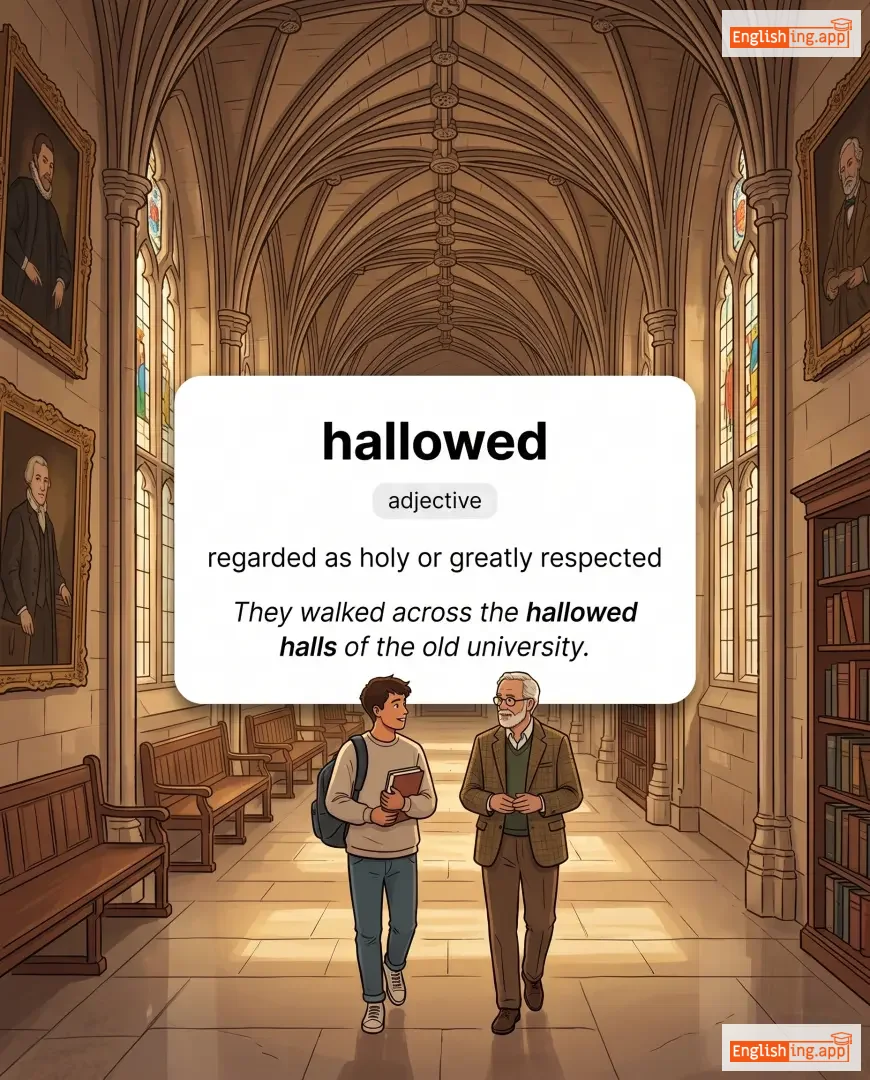
hallowed definition card — visual illustration of the meaning
adjective C1
/ˈhæloʊd/
священный (svyashchennyy)

regarded as holy or greatly respected

"They walked across the hallowed halls of the old university."

"Они прошли через священные залы старого университета." (Oni proshli cherez svyashchennye zaly starogo universiteta.)
verb C1
/həˈluːsɪneɪt/
галлюцинировать (gallyutsinirovat)

to see, hear, or sense things that are not actually present, often due to illness or drugs

"After taking the medicine, he began to hallucinate strange shapes."

"После приема лекарства он начал галлюцинировать странные формы." (Posle priema lekarstva on nachal gallyutsinirovat' strannye formy.)
noun C1
/həˌluːsɪˈneɪʃən/
галлюцинация (gallyutsinatsiya)

a false perception of objects or events, usually caused by mental illness or drugs

"After the medication, he began to experience vivid hallucinations."

"После приема лекарства он начал испытывать яркие галлюцинации." (Posle priema lekarstva on nachal ispytyvat' yarkie gallyutsinatsii.)
adjective C1
/ˈhɔːltɪŋ/
колеблющийся (koleblyushchijsya)

slow and hesitant, especially due to lack of confidence

"She gave a halting reply during the interview."

"Она дала запоздалый ответ на интервью." (Ona dala zapozdalyj otvet na interv'yu.)
noun C1
/ˈhæm.lət/
маленькое поселение (malen'koye poseleniye)

a small rural settlement, smaller than a village; a small community

"The tiny hamlet nestled in the valley had only a dozen houses and one small church."

"Маленькое поселение, расположенное в долине, имело всего дюжину домов и одну маленькую церковь." (Malen'koye poseleniye, raspolozhennoye v doline, imelo vsego dyuzhinu domov i odnu malen'kuyu tserkov'.)
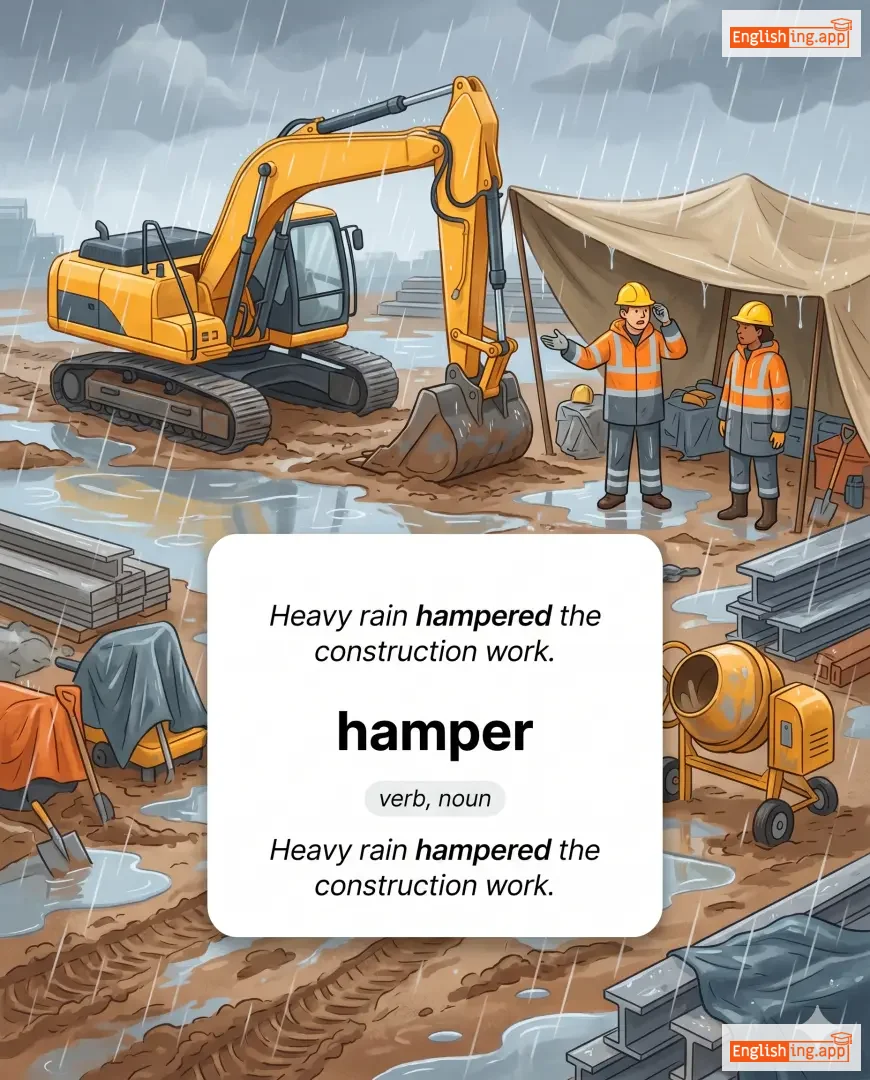
hamper definition card — visual illustration of the meaning
verb, noun C1
/ˈhæmpər/
препятствовать, корзина для белья (prepyatstvovat, korzina dlya belya)

to prevent or slow down the progress of something; also, a basket with a lid, typically for laundry.

"Heavy rain hampered the construction work."

"Сильный дождь затруднил строительные работы." (Sil'nyy dozhd' zatrudnil stroitel'nye raboty.)
noun C1
/ˈhæŋ.ər/
ангар (angar)

a large building with extensive floor area, typically for housing aircraft; an aircraft shelter

"The airplane was stored safely in the hangar during the severe thunderstorm."

"Самолет был надежно припаркован в ангаре во время сильного шторма." (Samolyot byl nadezhno priparkovann v angare vo vremya sil'nogo shtorma.)
Hanger definition card — visual illustration of the meaning
noun C1
/ˈhæŋ.ər/
вешалка (veshalka)

a shaped piece of wood, plastic, or metal with a hook at the top, used to hang up clothes

"She hung her dress on a wooden hanger to prevent it from getting wrinkled."

"Она повесила свое платье на деревянную вешалку, чтобы оно не помялось." (Ona povesila svoe plat'ye na derevyannuyu veshalku, chtoby ono ne pomyalos'.)
adjective C1
/hæpˈhæzərd/
беспорядочный, случайный (besporyadochnyy, sluchaynyy)

lacking any obvious order or organization; random

"The books were stacked in a haphazard way on the table."

"Книги были сложены беспорядочно на столе." (Knihi byli slozheny besporyadochno na stole.)
adjective C1
/ˈhæpləs/
неудачливый, жалкий (neudachlivyy, zhalkiy)

unfortunate, unlucky, deserving pity

"The hapless traveler lost his passport on the very first day."

"Неудачливый путешественник потерял свой паспорт в первый же день." (Neudachlivyy puteshestvennik poteryal svoy pasport v pervyy zhe den.)
adjective C1
/ˌhæpi ɡoʊ ˈlʌki/
беззаботный, расслабленный, без беспокойства (bezzabotny, rasslablenniy, bez bespokoystva)

cheerfully unconcerned about the future; carefree

"She has a happy-go-lucky attitude and never worries about tomorrow."

"У неё беззаботное отношение, и она никогда не переживает о завтрашнем дне." (U neyo bezzabotnoe otnoshenie, i ona nikogda ne perezhivayet o zavtrashnem dne.)
adjective C1
/ˌhɑːrdˈhɑːrtɪd/
жестокий (zhestokiy)

showing no kindness or sympathy; cruel

"The landlord was hard-hearted and refused to help the poor family."

"Арендодатель был жестоким и отказался помочь бедной семье." (Arendodatel byl zhestokim i otkazalsya pomoch' bednoy sem'ye.)
adjective C1
/ˈhɑːrdi/
выносливый, крепкий (vynoslivy, krepkij)

Strong, robust, and capable of enduring difficult conditions.

"Hardy plants can survive the harsh winter."

"Выносливые растения могут пережить суровую зиму." (Vynoslivye rasteniya mogut perezhit' surovuyu zimu.)
harmonization definition card — visual illustration of the meaning
noun C1
/ˌhɑːmənaɪˈzeɪʃən/
гармонизация, согласование (garmonizatsiya, soglasovanie)

The process of making things compatible or consistent with one another.

"The harmonization of different policies ensures consistent results."

"Гармонизация различных политик обеспечивает согласованные результаты." (Garmonizatsiya razlichnykh politik obespechivaet soglasovannye rezul'taty.)
Harp definition card — visual illustration of the meaning
verb C1
/hɑːrp/
постоянно жаловаться, упорствовать (postoyanno zhalovatsya, uporstvovat')

To dwell on or complain about something persistently.

"He kept harping on the same mistake over and over."

"Он продолжал жаловаться на одну и ту же ошибку снова и снова." (On prodolzhal zhalovatsya na odnu i tu zhe oshibku snova i snova.)
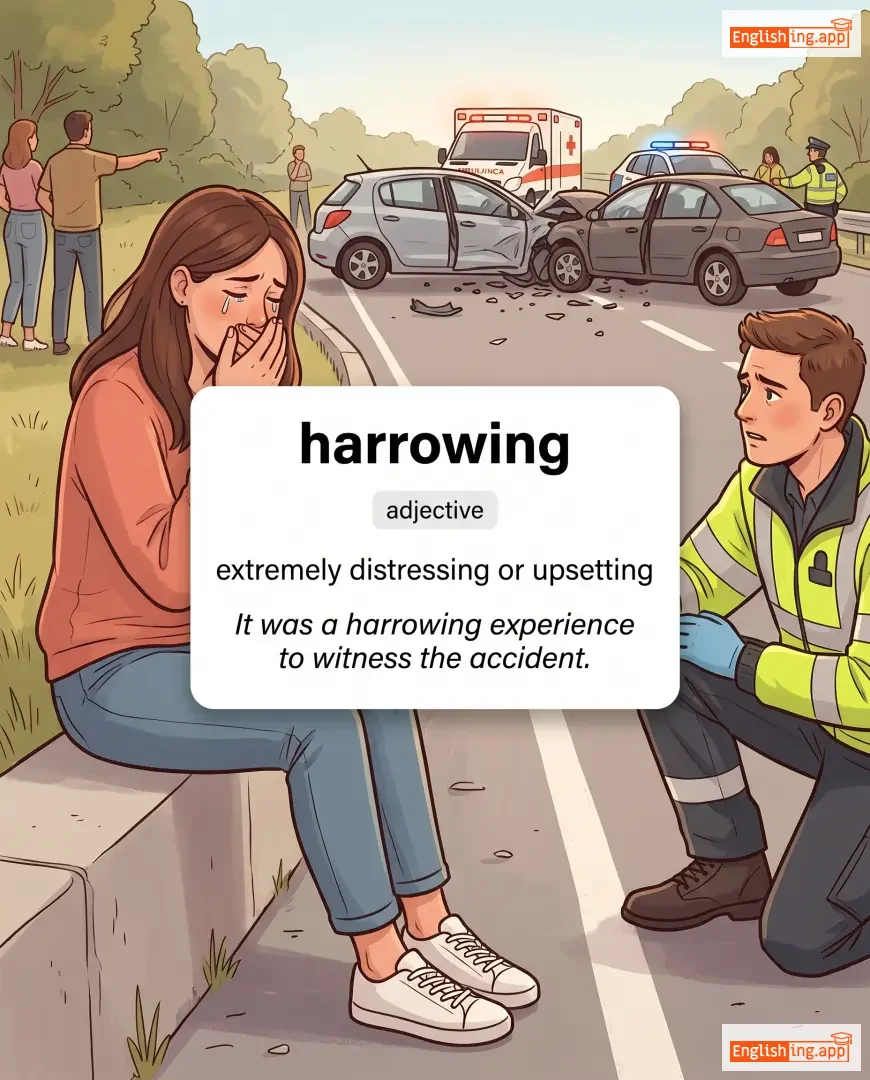
harrowing definition card — visual illustration of the meaning
adjective C1
/ˈhær.oʊ.ɪŋ/
ужасающий и мучительный (uzhasayushchiy i muchitel'nyy)

extremely distressing or upsetting

"It was a harrowing experience to witness the accident."

"Это был ужасный опыт — быть свидетелем аварии." (Eto byl uzhasnyy opyt — byt' svidetelem avarii.)
verb C1
/ˈheɪsən/
поспешить (pospeshit)

To move or act quickly; to cause something to happen sooner.

"He hastened to finish his work before the deadline."

"Он поспешил завершить свою работу до крайнего срока." (On pospeshil zavershit' svoyu rabotu do kraynego sroka.)
adverb C1
/ˈheɪs.tɪ.li/
поспешно (pospeshno)

in a hurried or rushed manner; quickly and carelessly

"She hastily packed her bags before leaving for the airport."

"Она поспешно собрала сумки, прежде чем уехать в аэропорт." (Ona pospeshno sobrala sumki, prezhde chem uyekhat' v aeroport.)
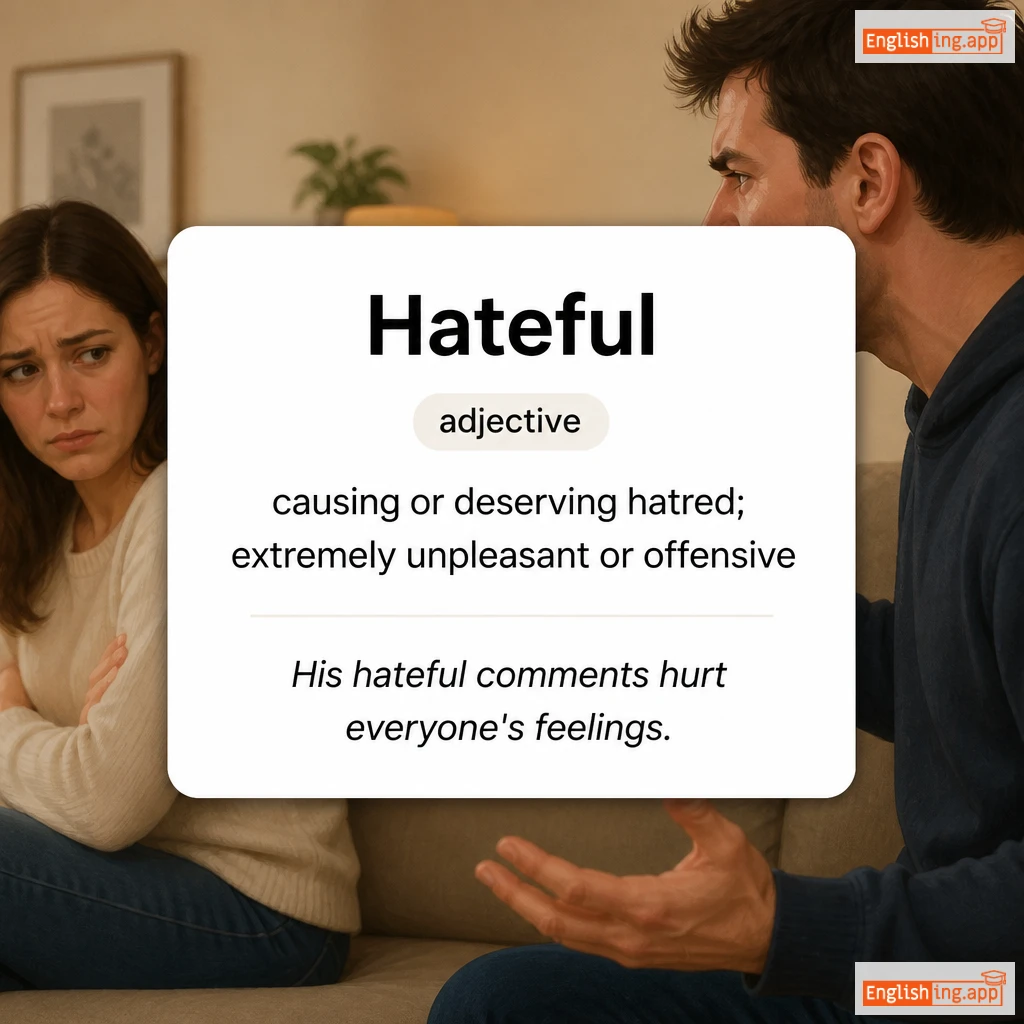
Hateful definition card — visual illustration of the meaning
adjective C1
/ˈheɪt.fəl/
Ненавистный (nenavistny)

causing or deserving hatred; extremely unpleasant or offensive

"His hateful comments hurt everyone's feelings."

"Его ненавистные комментарии ранили чувства всех." (Yego nenavistnye kommentarii ranili chuvstva vsekh.)
adjective C1
/ˈhɔːti/
высокомерный (vysokomernyy)

arrogantly superior and disdainful

"She gave him a haughty look and walked away."

"Она посмотрела на него высокомерным взглядом и ушла." (Ona posmotrela na nego vysokomernym vzglyadom i ushla.)
haul definition card — visual illustration of the meaning
verb C1
/hɔːl/
тащить (tashchit)

to pull or drag something heavy with effort

"The workers hauled the boxes into the truck."

"Рабочие тянули коробки в грузовик." (Rabochie tyanuli korobki v gruzovik.)
noun C1
/ˈheɪvən/
убежище (ubezhishche)

a safe place or shelter

"The library became a haven for students during exams."

"Библиотека стала убежищем для студентов во время экзаменов." (Biblioteka stala ubezhishchem dlya studentov vo vremya ekzamenov.)
noun C1
/ˈhævək/
опустошение (opustoshenie)

widespread destruction or disorder

"The storm caused havoc in the coastal villages."

"Шторм вызвал опустошение в прибрежных деревнях." (Shtorm vyzval opustoshenie v pribrezhnykh derevnyakh.)
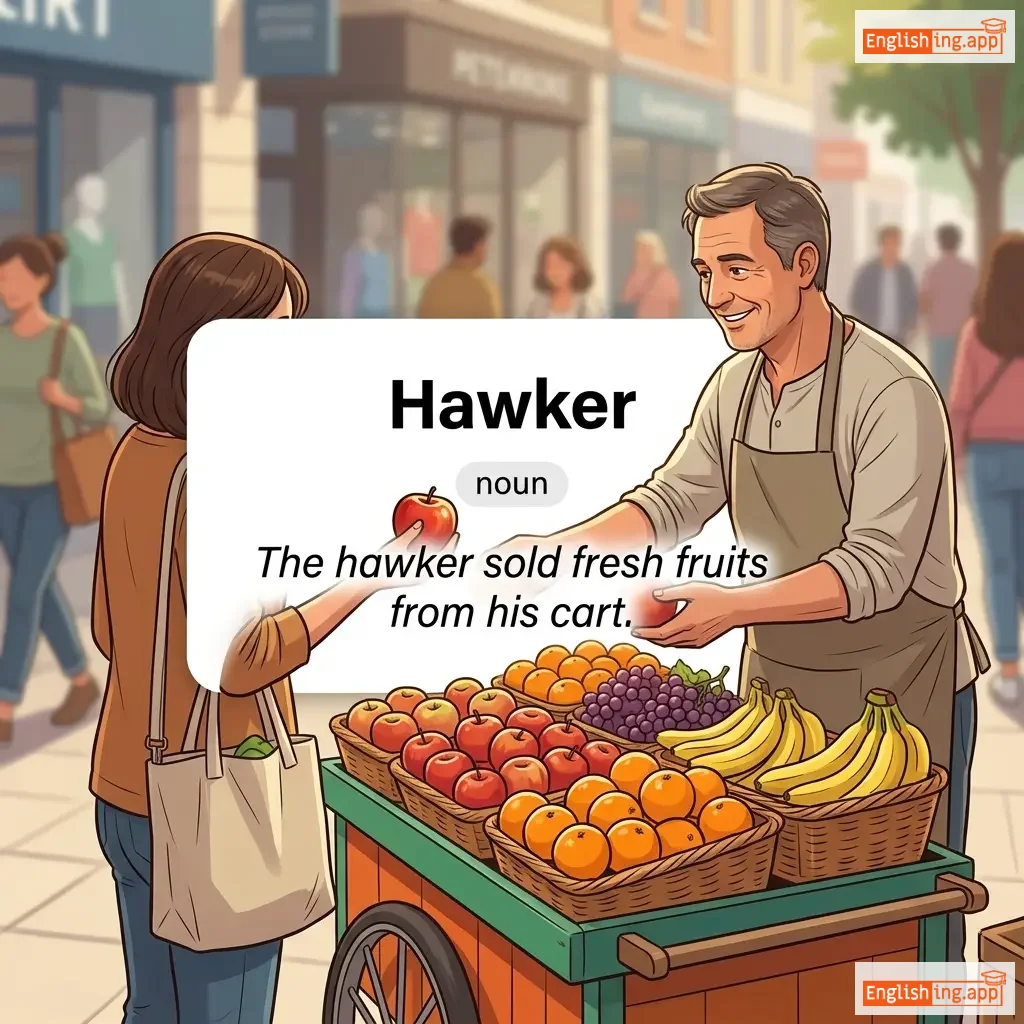
Hawker definition card — visual illustration of the meaning
noun C1
/ˈhɔː.kər/
уличный продавец (ulichnyy prodavets)

a person who travels about selling goods, typically from door to door or on the street

"The hawker sold fresh fruits from his cart."

"Уличный продавец продавал свежие фрукты со своего тележки." (Ulichnyy prodavets prodaval svezhiye frukty so svoego telezhki.)
🌫️

Haze (hez)

noun C1
/heɪz/
туман (tuman)

a slight obscuration of the lower atmosphere, typically caused by fine suspended particles; confusion

"The morning haze lifted gradually as the sun rose higher in the sky."

"Утренний туман постепенно исчез, когда солнце поднималось выше в небе." (Utrenny tuman postepenno ischez, kogda solntse podnimalos' vyshe v nebe.)
adjective C1
/ˈheɪzi/
туманный (tumanny)

Unclear, misty, or not easy to see; also vague or uncertain.

"The mountains looked hazy in the morning light."

"Горы выглядели туманными при утреннем свете." (Gory viglyadeli tumannymi pri utrevnem svete.)
adverb C1
/ˈhed ɑn/
лоб в лоб (lob v lob)

directly facing; in direct confrontation or collision

"The two cars collided head-on at the intersection."

"Два автомобиля столкнулись лоб в лоб на перекрестке." (Dva avto mobilia stolknulis' lob v lob na perekrestke.)
adverb C1
/ˌhɛdˈfɜrst/
головой вперёд (golovoy vperyod)

With the head leading; in a reckless or hasty manner.

"He dived headfirst into the pool."

"Он нырнул головой вперёд в бассейн." (On nyrnul golovoy vperyod v basseyn.)
adverb C1
/ˈhɛdˌlɔŋ/
в слепую (v slepuyu)

With the head leading; in a rush or without thinking.

"She rushed headlong into the new project."

"Она в слепую бросилась в новый проект." (Ona v slepuyu brosilas' v novyy proyekt.)
adjective C1
/ˈhɛdˌstrɔŋ/
упрямый (upryamy)

Determined to do what one wants, even if it is not sensible.

"The headstrong child refused to listen to anyone."

"Упрямый ребенок отказался слушать кого-либо." (Upryamy rebenok otkazalsya slushat' kogo-libo.)
noun C1
/ˈhed.weɪ/
прогресс; продвижение; успех (progress, prodvizhenie, uspekh)

forward movement or progress, especially when this is slow or difficult

"Despite the challenges, the research team made significant headway in developing the new vaccine."

"Несмотря на трудности, исследовательская группа достигла значительного прогресса в разработке новой вакцины." (Nesmotrya na trudnosti, issledovatelskaya gruppa dostigla znachitelnogo progressa v razrabotke novoy vaktsiny.)
adjective C1
/ˈhɛlθfəl/
оздоровительный (ozdorovitel'nyy)

Promoting good health; beneficial to health.

"A healthful diet includes fresh fruits and vegetables."

"Оздоровительная диета включает свежие фрукты и овощи." (Ozdorovitel'naya dieta vklyuchayet svezhiye frukty i ovoshchi.)
noun C1
/ˈhɪərseɪ/
слух (slukh)

Information received from other people that cannot be substantiated; rumor.

"The decision was based on hearsay, not evidence."

"Решение было основано на слухах, а не на доказательствах." (Reshenie bylo osnovano na slukhakh, a ne na dokazaetel'stvakh.)
adverb C1
/ˈhɑr.tɪ.li/
от всей души; искренне (ot vsei dushi; iskrenne)

in a sincere and enthusiastic manner; wholeheartedly

"She heartily welcomed her guests to the party."

"Она с радостью поприветствовала своих гостей на вечеринке." (O-na s ra-do-st'yu po-priv-jet-stvo-va-la svo-ikh gos-tei na ve-che-rin-ke.)
adjective C1
/ˈhɑːrtˌrɛndɪŋ/
душераздирающий (dusherazdiraushchiy)

Causing great sadness or distress; very moving emotionally.

"The documentary showed heartrending scenes of war victims."

"Документальный фильм показал душераздирающие сцены жертв войны." (Dokumental'nyy film pokazal dusherazdyirayushchiye stseny zhertv voyny.)
noun C1
/ˈhiːdəˌnɪzəm/
гедонизм (gedonizm)

The pursuit of pleasure and self-indulgence as the highest goal.

"The lifestyle of the rich is often criticized as pure hedonism."

"Образ жизни богатых часто критикуется как чистый гедонизм." (Obraz zhizni bogatykh chasto kritikuetsya kak chisty gedonizm.)
noun C1
/ˈhiːdənɪst/
гедонист (gedonist)

A person who believes that the pursuit of pleasure is the most important thing in life.

"She was called a hedonist because she always prioritized enjoyment over duty."

"Ее называли гедонистом, потому что она всегда ставила удовольствие выше долга." (Eyo nazyvali gedonistom, potomu chto ona vsegda stavila udovol'stviye vyshe dolga.)
verb C1
/hiːd/
обратить внимание (obratit vnimanie)

to pay attention to; to take notice of

"You should heed the teacher's advice."

"Ты должен обратить внимание на советы учителя." (Ty dolzhen obratit vnimanie na sovety uchitelya.)
adjective C1
/ˈhiːdləs/
беспечный (bespechnyy)

showing a reckless lack of care or attention

"He drove with heedless disregard for the rules."

"Он ехал с беспечным пренебрежением к правилам." (On yekhal s bespechnym prenebrazheniyem k pravilam.)
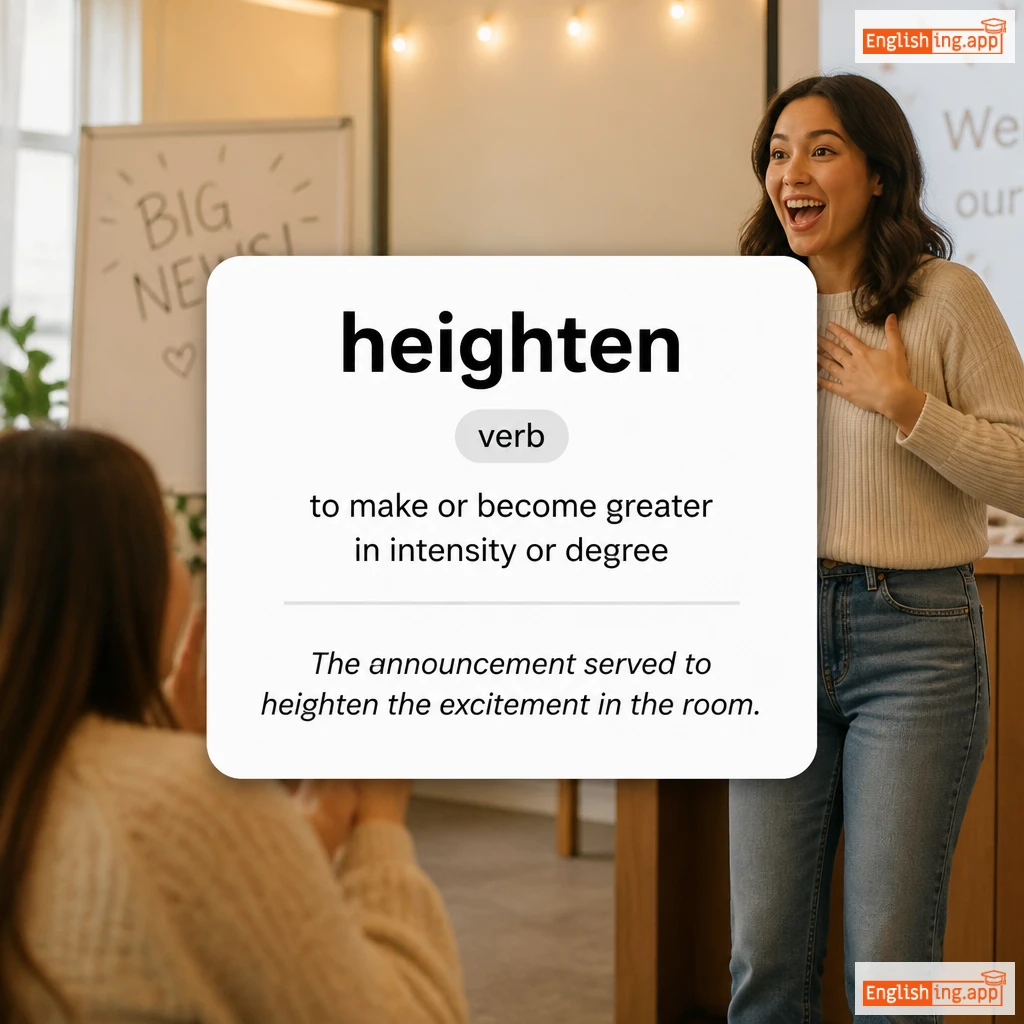
heighten definition card — visual illustration of the meaning
verb C1
/ˈhaɪtən/
повышать (povyshat')

to make or become greater in intensity or degree

"The announcement served to heighten the excitement in the room."

"Объявление помогло повысить волнение в комнате." (Ob'yavlenie pomoglo povysit' volnenie v komnate.)
adjective C1
/ˈheɪ.nəs/
мерзкий (merzkiy)

extremely wicked, deeply offensive, or shockingly evil

"The dictator was condemned for his heinous crimes against humanity."

"Диктатор был осуждён за свои мерзкие преступления против человечности." (Diktator byl osuzhdyon za svoi merzkiye prestupleniya protiv chelovechnosti.)
noun C1
/ˈɛər.luːm/
наследие (naslediye)

a valuable object that has belonged to a family for several generations

"The ring is a family heirloom passed down from her grandmother."

"Кольцо — это семейное наследие, переданное от бабушки." (Kol'tso — eto semeynoye naslediye, peredannoye ot babushki.)