ভোকাবুলারিসমূহ

ইংরেজি শব্দের বাংলা অর্থ | English to Bangla Word Meaning Dictionary

adjective C2
/ʌnˈspɛərɪŋ/
беспощадный (bessposhchadny)

Showing no mercy or generosity; harsh or severe.

"The critic was unsparing in his review of the play."

"Критик был беспощаден в своем обзоре пьесы." (Kritik byl bessposhchadny v svoyem obzore pyesy.)
adjective C2
/ʌnˈstɪntɪŋ/
щедрый (shchedry)

given generously without holding back

"She received unstinting support from her family."

"Она получила щедрую поддержку от своей семьи." (Ona poluchila shchedruyu podderzhku ot svoey sem'i.)
adjective C2
/ʌnˈsʌlid/
непорочный (neporochnyy)

not spoiled or made impure; perfectly clean or pure

"His reputation remained unsullied despite the accusations."

"Его репутация осталась непорочной, несмотря на обвинения." (Ego reputatsiya ostalas' neporochnoy, nesmotrya na obvineniya.)
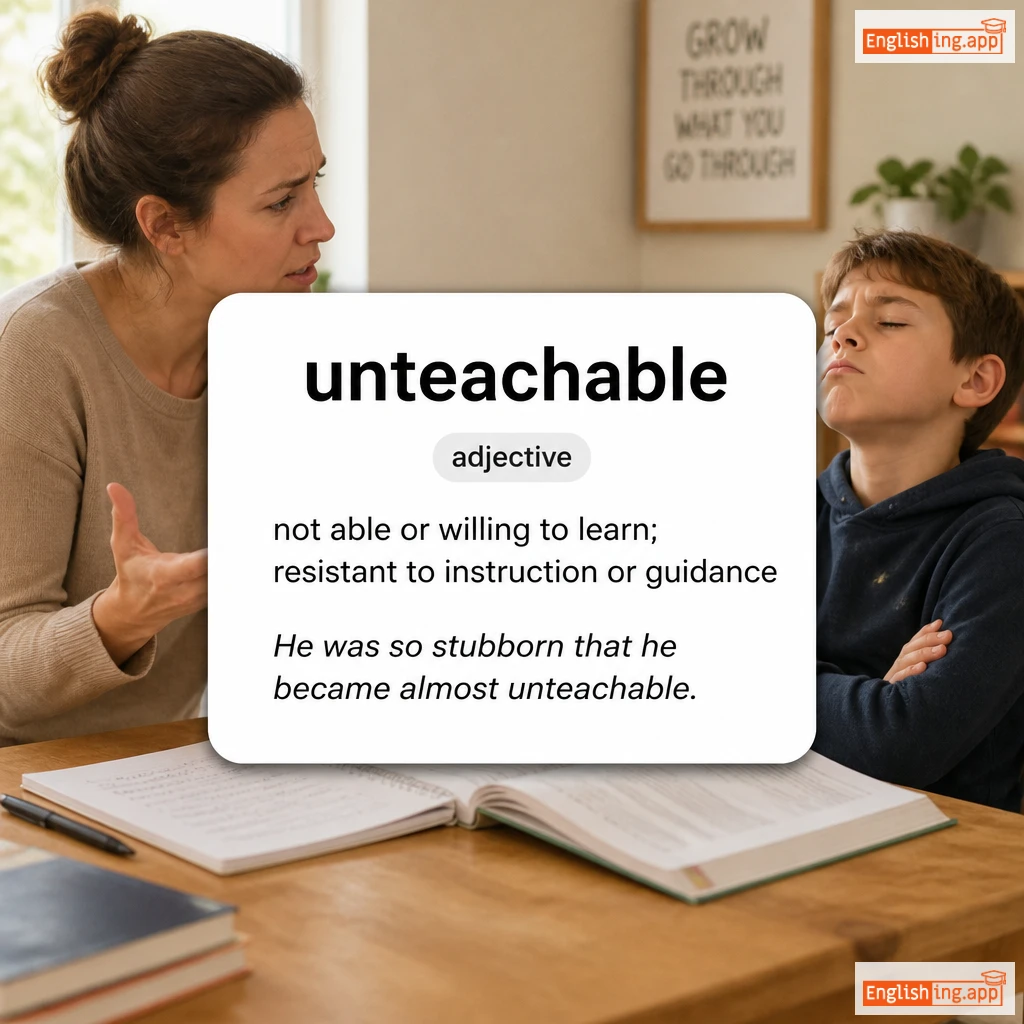
unteachable definition card — visual illustration of the meaning
adjective C2
/ʌnˈtiːtʃəbəl/
необучаемый (neobuchaemyy)

not able or willing to learn; resistant to instruction or guidance

"He was so stubborn that he became almost unteachable."

"Он был таким упрямым, что стал почти необучаемым." (on byl takim upryamym chto stal pochti neobuchaemym)
adjective C2
/ʌnˈtɛmpərd/
неумеренный (neumerennyy)

not moderated or softened; lacking proper balance or control

"The untempered anger of the crowd caused chaos."

"Неумеренный гнев толпы вызвал хаос." (Neumerennyy gnev tolpy vyzval khaos.)
adjective C2
/ˌʌn.təˈwɔːrd/
непредсказуемый (nepredskazuemyi)

Unexpected and inappropriate or inconvenient.

"The meeting ended without any untoward incidents."

"Встреча завершилась без непредсказуемых инцидентов." (Vstrecha zavershilas' bez nepredskazuemykh intsidentov.)
adjective C2
/ʌnˈtræməld/
неограниченная свобода (neogranichennaia svoboda)

Not restricted or hampered; free and unrestricted.

"She enjoyed untrammeled freedom in her new life abroad."

"Она наслаждалась неограниченной свободой в своей новой жизни за границей." (Ona naslazhdalas' neogranichennoi svobodoi v svoei novei zhizni za granitsey.)
adjective C2
/ʌnˈʌtərəbl/
невыразимый (nevyrazimy)

Too great, intense, or awful to be expressed or described in words.

"She was filled with unutterable joy at the news of her success."

"Она была наполнена невыразимой радостью, услышав новости о своем успехе." (Ona byla napolnena nevyrazimoy radost'yu, uslyshav novosti o svoem uspekhe.)
adjective C2
/ʌnˈwiːldi/
неудобный (neudobny)

Difficult to carry or move because of its size, shape, or weight.

"The box was too unwieldy to carry up the stairs."

"Коробка была слишком неудобной, чтобы поднять ее по лестнице." (Korobka byla slishkom neudobnoy, chtoby podnyat yejo po lestnitse.)
adjective C2
/ʌnˈwəʊntɪd/
необычный (neobychnyj)

Unusual, uncommon, or out of the ordinary.

"She spoke with an unwonted gentleness that surprised everyone."

"Она говорила с необычной мягкостью, которая удивила всех." (Ona govoryla s neobychnoy myagkost'yu, kotoraya udivila vsekh.)
verb C2
/ʌnˈjoʊk/
развязать (razvyazat)

To release from a yoke or to free from restraint or obligation.

"The farmer unyoked the oxen after a long day of work."

"Фермер развязал волов после долгого рабочего дня." (Fermer razvyazal volov posle dolgogo rabochego dnya.)
verb C2
/ʌpˈbreɪd/
отчитывать (otchityvat)

To scold or criticize someone harshly.

"The teacher upbraided the student for being late again."

"Учитель отругал студента за опоздание еще раз." (Uchitel' otrugal studenta za opozdanie eshche raz.)
noun/verb C2
/ˈʌpˌkæst/
бросить вверх (brosit vverkh)

Verb: To cast or throw upward. Noun: Something thrown or directed upward.

"The fisherman upcast his net into the air."

"Рыбак забросил свою сеть в воздух." (Rybak zabrosil svoyu set' v vozdukh.)
verb C2
/ʌpˈhiːv/
поднимать (podnimat')

to lift or raise something forcefully; to cause to rise suddenly

"The workers had to upheave the heavy stone to clear the path."

"Рабочие должны были поднять тяжелый камень, чтобы очистить путь." (Rabochie dolzhny byli podnyat' tyazhelyy kamen', chtoby ochistit' put'.)
adjective C2
/ʌpˈrɔːr.i.əs/
крайне смешной (kraine smeshnoi)

Extremely funny or noisy; causing loud laughter or commotion.

"The comedian's jokes were absolutely uproarious."

"Шутки комика были абсолютно крайне смешные." (Shutki komika byli absolyutno kraine smeshnye.)
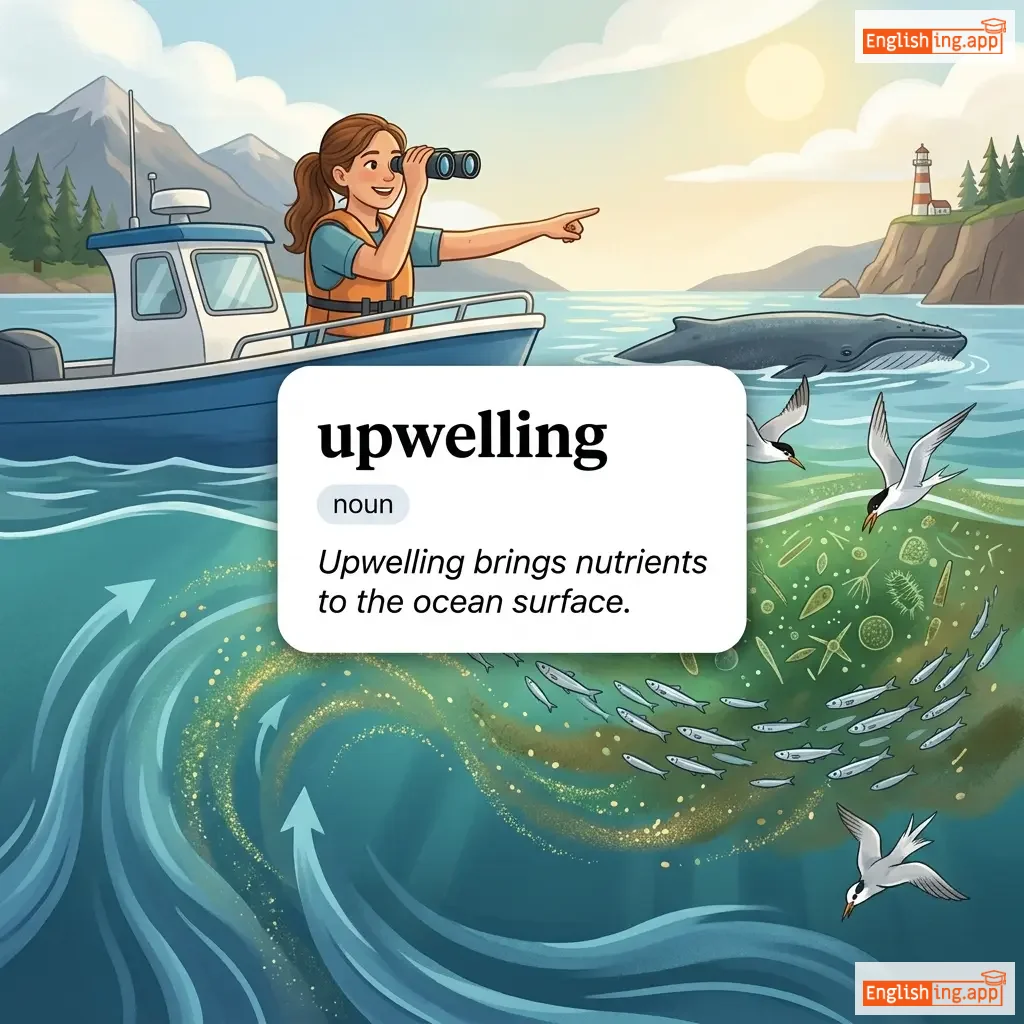
upwelling definition card — visual illustration of the meaning
noun C2
/ˈʌp.wel.ɪŋ/
Океанографическое явление, включающее движение плотной, холодной и богатой питательными веществами воды к поверхности океана. (Okeanograficheskoe yavlenie, vklyuchayushchee dvizhennye plotnoy, kholodnoy i bogatoy pitatel'nymi veshchestvami vody k poverkhnosti okeana.)

An oceanographic phenomenon that involves wind-driven motion of dense, cooler, and nutrient-rich water towards the ocean surface.

"Upwelling brings nutrients to the ocean surface."

"Апвеллинг приносит питательные вещества на поверхность океана." (Apwelling prinosit pitatelnye veshchestva na poverkhnost' okeana.)
adjective C2
/ɜːrˈbeɪn/
урбанистический (urbanisticheskiy)

showing polished manners, refinement, and sophistication

"He was an urbane gentleman who charmed everyone at the party."

"Он был урбанистическим джентльменом, который очаровал всех на вечеринке." (On byl urbanisticheskim dzentl'menom, kotoryy ocharoval vsekh na vecherinke.)
noun C2
/ɜːrˈbænɪti/
урбанизм (urbaniizm)

refined courtesy, elegance, and sophistication in manner

"Her urbanity made her popular among diplomats and leaders."

"Ее урбанизм сделал ее популярной среди дипломатов и лидеров." (Yeyo urbaniizm sdelal yeye populyarnoy sredi diplomatov i liderov.)
noun C2
/ˈɜːrtʃɪn/
уличный ребенок (ulichnyy rebenok)

a mischievous or poorly dressed child, often from the streets

"The ragged urchins played by the riverbank."

"Лохматые уличные дети играли у речного берега." (Lokhmatye ulichnye deti igrali u rechnogo berega.)
adjective C2
/ˈɜːrsaɪn/
медвежий (medvezhiy)

Relating to or resembling a bear.

"The man’s ursine strength amazed everyone."

"Медвежья сила этого человека удивила всех." (Medvezh'ya sila etogo cheloveka udivila vsekh.)
noun C2
/ˈjuːzjuːfrʌkt/
пользование (pol'zovanie)

The legal right to use and enjoy the benefits of someone else’s property without owning it.

"The tenant had the usufruct of the land but not its ownership."

"Арендатор имел право на использование земли, но не на ее владение." (Arendator imel pravo na ispol'zovanie zemli, no ne na yeye vladeniye.)
adjective C2
/juːˈʒʊəriəs/
лихварский (likhvarskiy)

Charging excessively high interest rates on loans.

"The bank was accused of offering loans at usurious rates."

"Банк был обвинён в предоставлении кредитов по лихварским ставкам." (Bank byl obvinyon v predostavlenii kreditov po likhvarskim stavkam.)
usurp definition card — visual illustration of the meaning
verb C2
/juːˈzɜːrp/
узурпировать (uzurpirovat')

To take someone else's position or power illegally or by force.

"He tried to usurp the throne from the rightful king."

"Он пытался узурпировать трон у законного короля." (On pytalsya uzurpírovat' tron u zakonnogo korolya.)
noun C2
/ˌjuːzɜːrˈpeɪʃən/
узурпация (uzurpatsiya)

The act of taking someone's power or property illegally or by force.

"The general's usurpation of the presidency led to political unrest."

"Узурпация президентства генералом привела к политической нестабильности." (Uzurpatsiya prezidentstva generalom privela k politicheskoy nestabil'nosti.)
usury definition card — visual illustration of the meaning
noun C2
/ˈjuːʒəri/
ростовщичество (rostovshchichestvo)

The practice of lending money at unreasonably high interest rates.

"The law strictly prohibits usury."

"Закон строго запрещает ростовщичество." (Zakon strogo zapreshchayet rostovshchichestvo.)
noun C2
/juːˌtɪlɪˈtɛəriənɪzəm/
утилизм (utilizm)

The ethical theory that actions are right if they are useful or for the benefit of the majority.

"Utilitarianism suggests that we should act to maximize overall happiness."

"Утилитаризм предполагает, что мы должны действовать, чтобы максимизировать общее счастье." (Utilitarizm predpolagayet, chto my dolzhny deystvovat', chtoby maksimalizirovat' obshchee schast'ye.)
adjective C2
/ʌkˈsɔːriəs/
чрезмерно преданный своей жене (chrezmerno predannyy svoey zhene)

excessively fond of or submissive to one's wife

"He was so uxorious that he agreed with everything his wife said."

"Он был так uxorious, что согласился со всем, что его жена сказала." (On byl tak uxorious, chto soglasilsya so vsem, chto ego zhena skazala.)