ভোকাবুলারিসমূহ

ইংরেজি শব্দের বাংলা অর্থ | English to Bangla Word Meaning Dictionary

adjective C2
/juːˈbɪkwɪtəs/
无处不在 (wuchubuzai)

Present, appearing, or found everywhere.

"Smartphones have become ubiquitous in modern society."

"智能手机已经在现代社会中无处不在。" (Zhìnéng shǒujī yǐjīng zài xiàndài shèhuì zhōng wú chù bù zài.)
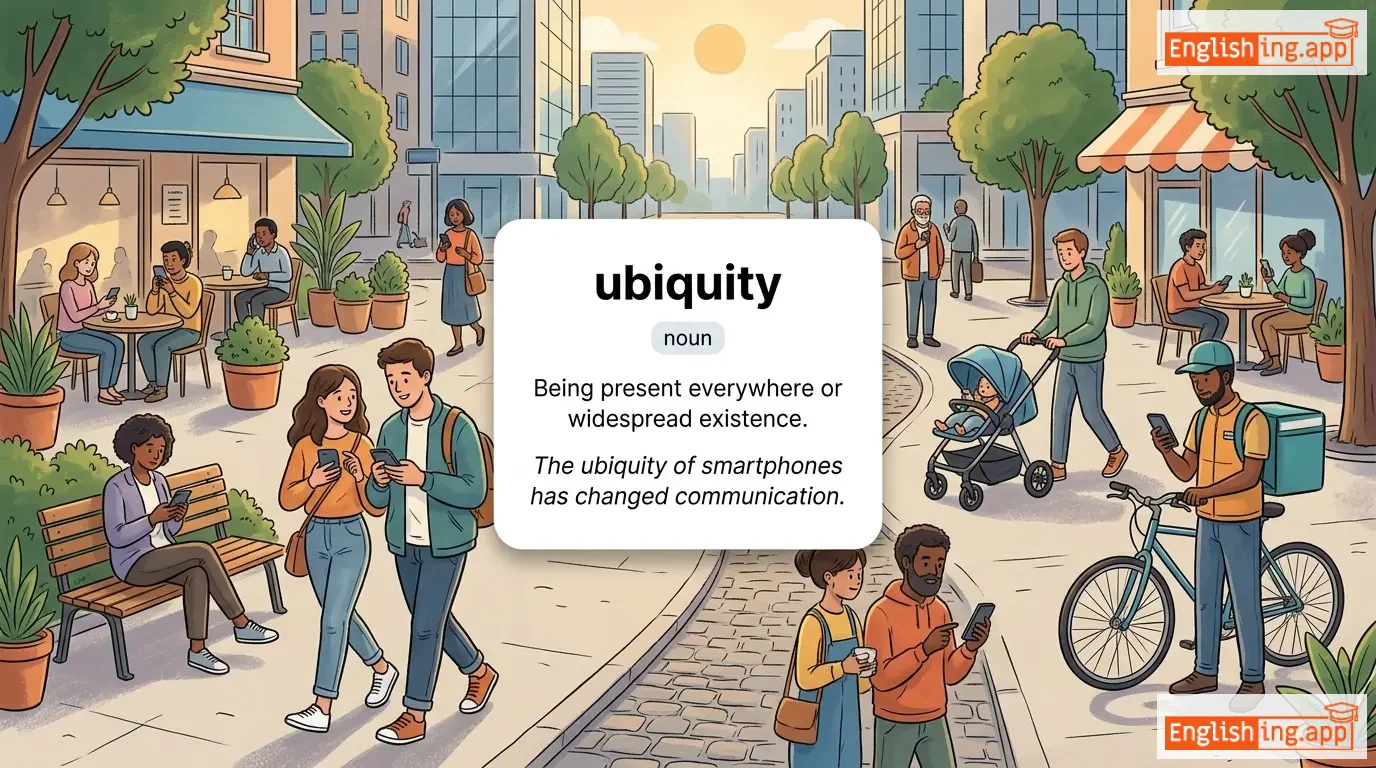
ubiquity definition card — visual illustration of the meaning
noun C2
/juːˈbɪk.wɪ.ti/
普遍性 (pǔbiàn xìng)

Being present everywhere or widespread existence.

"The ubiquity of smartphones has changed communication."

"智能手机的普遍性改变了沟通方式。" (Zhìnéng shǒujī de pǔbiàn xìng gǎibiànle gōutōng fāngshì.)
noun C2
/juːˈkeɪs/
法令 (faling)

An authoritative decree or order, especially one issued by a sovereign or government.

"The czar issued a ukase restricting the freedom of the press."

"沙皇发布了一项限制新闻自由的法令。" (Shahuang fabule yixiang xianzhi xinwen ziyou de faling.)
adjective C2
/ˌʌltrəˈmɒnteɪn/
教皇支持者 (jiaohuang zhichi zhe)

beyond the mountains, especially referring to support for the Pope over local church authority

"The debate highlighted the ultramontane position in church politics."

"辩论突出了教会政治中超山的立场。" (Bianlun tuchu le jiaohui zhengzhi zhong chaoshan de lichang.)
adjective C2
/ˌʌltrəˈmʌndeɪn/
超凡 (chaofan)

Relating to things beyond the physical world; supernatural or transcendental.

"Philosophers often discuss ultramundane realities beyond human perception."

"哲学家们常常讨论超越人类感知的超凡现实。" (Zhexueshi men changchang taolun chaoyue renlei ganzhi de chaofan xianshi.)
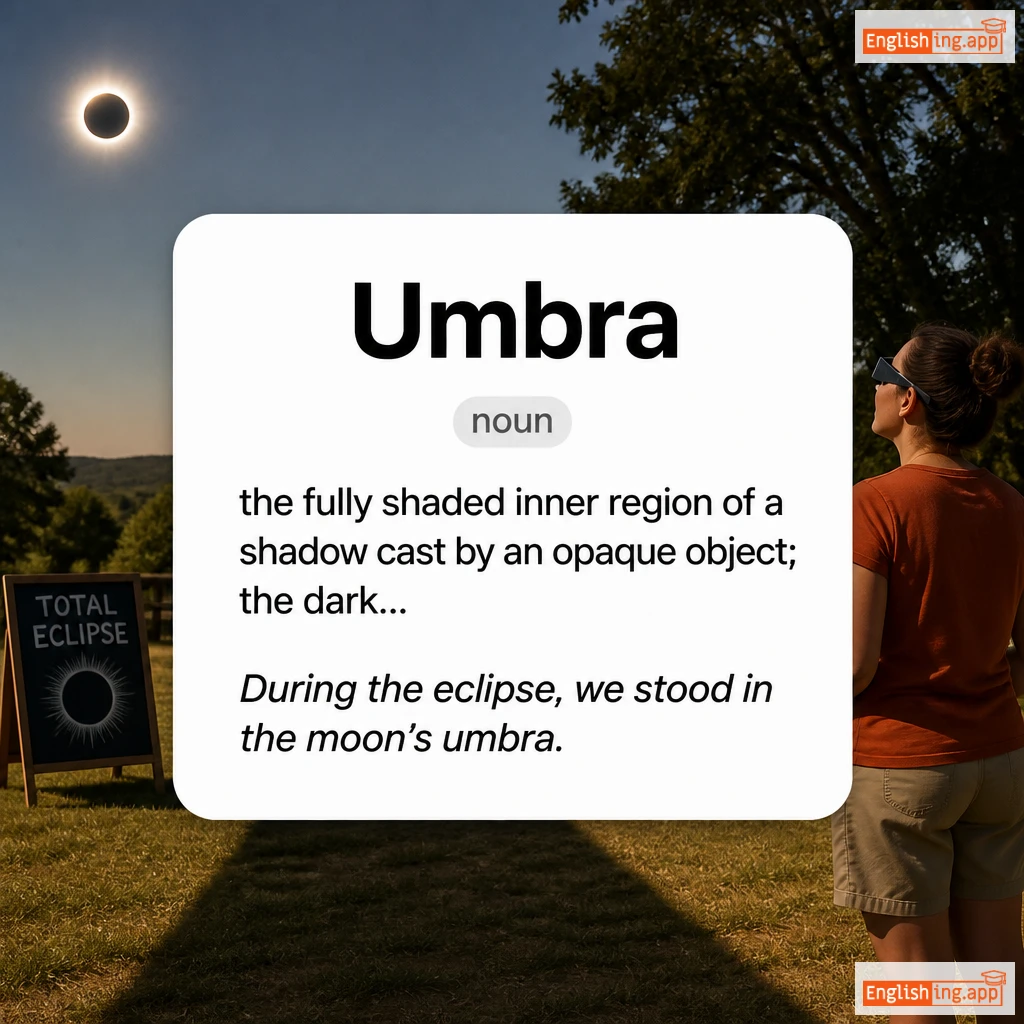
Umbra definition card — visual illustration of the meaning
noun C2
/ˈʌm.brə/
完全的阴影,太阳黑子的黑暗中心 (wánquán de yīnyǐng, tàiyáng hēizǐ de hēi'àn zhōngxīn)

the fully shaded inner region of a shadow cast by an opaque object; the dark center of a sunspot

"During the eclipse, we stood in the moon's umbra."

"在日食期间,我们站在月亮的本影中。" (zài rìshí qījiān, wǒmen zhàn zài yuèliàng de běn yǐng zhōng)
noun C2
/ˈʌmbrɪdʒ/
冒犯,愤怒 (maofan, fennu)

A feeling of resentment or offense.

"She took umbrage at his rude remark."

"她对他的粗鲁言论感到愤怒。" (Tā duì tā de cūlǔ yánlùn gǎndào fènnù.)
adjective C2
/ʌnˈælɔɪd/
纯净 (chunjing)

Pure, complete, and not mixed with anything else.

"She felt unalloyed joy at the news of her success."

"她听到成功的消息时感到纯粹的喜悦。" (Tā tīngdào chénggōng de xiāoxī shí gǎndào chúncuì de xǐyuè.)
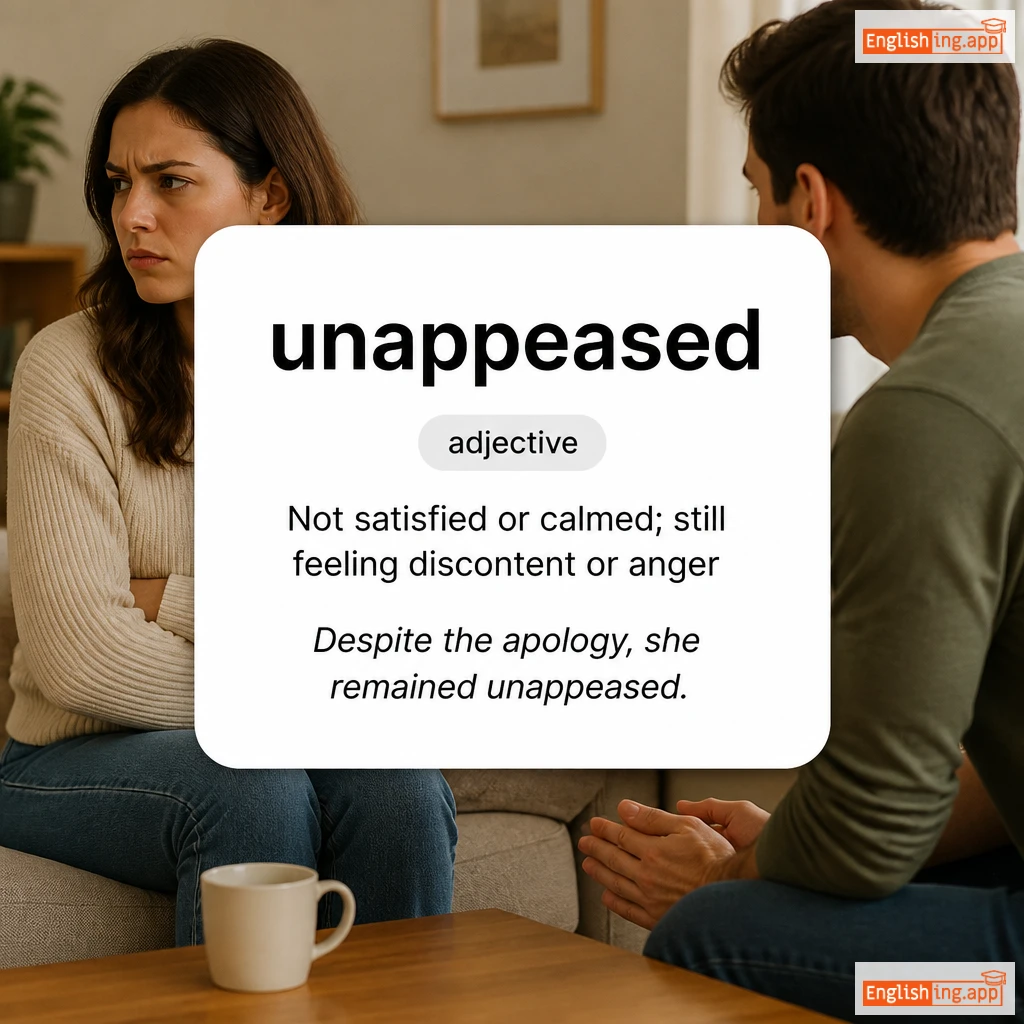
unappeased definition card — visual illustration of the meaning
adjective C2
/ʌnəˈpiːzd/
不平息的 (bu pingxi de)

Not satisfied or calmed; still feeling discontent or anger

"Despite the apology, she remained unappeased."

"尽管道歉,她仍然不平息的。" (Jingguan daoqian, ta rengran bu pingxi de)
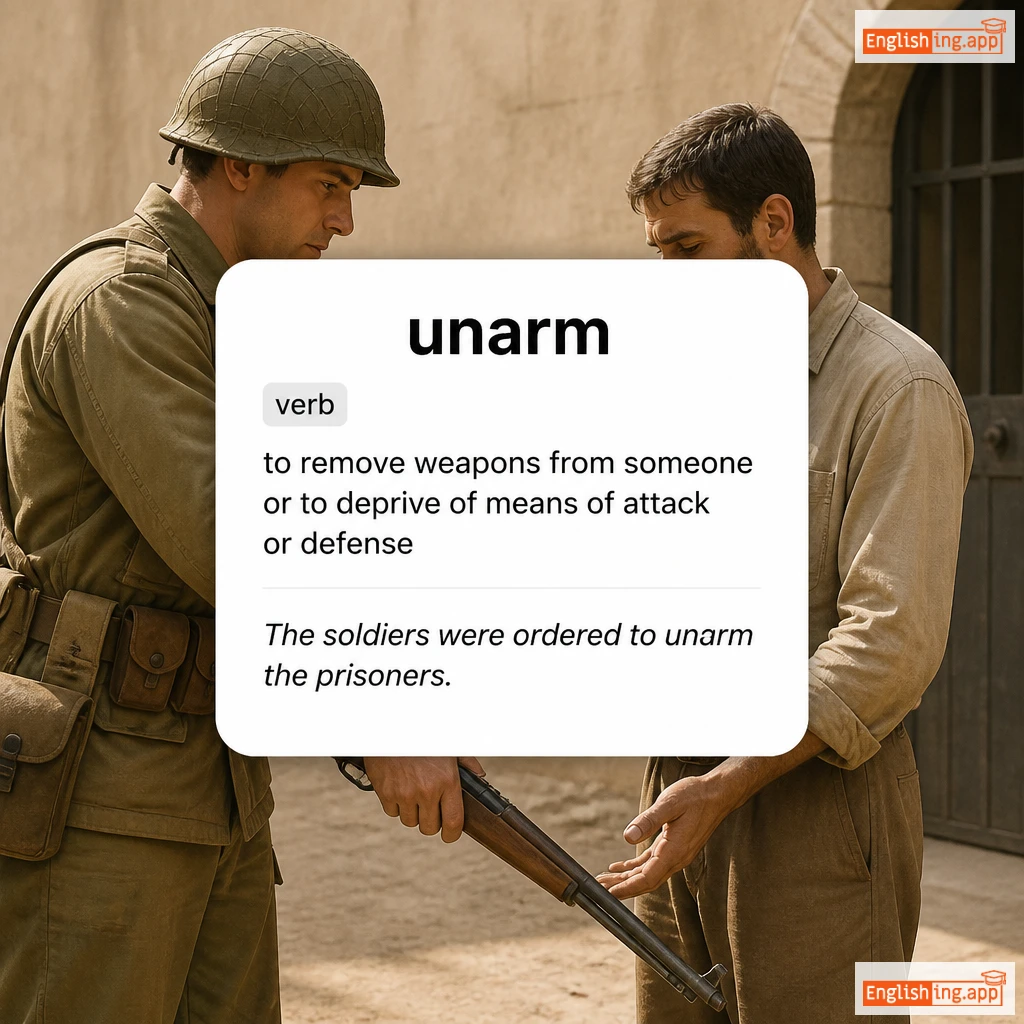
unarm definition card — visual illustration of the meaning
verb C2
/ʌnˈɑːrm/
解除武装 (jiechu wuzhuang)

to remove weapons from someone or to deprive of means of attack or defense

"The soldiers were ordered to unarm the prisoners."

"士兵接到命令解除囚犯的武装。" (Shibing jiedao mingling jiechu qiu fan de wuzhuang)
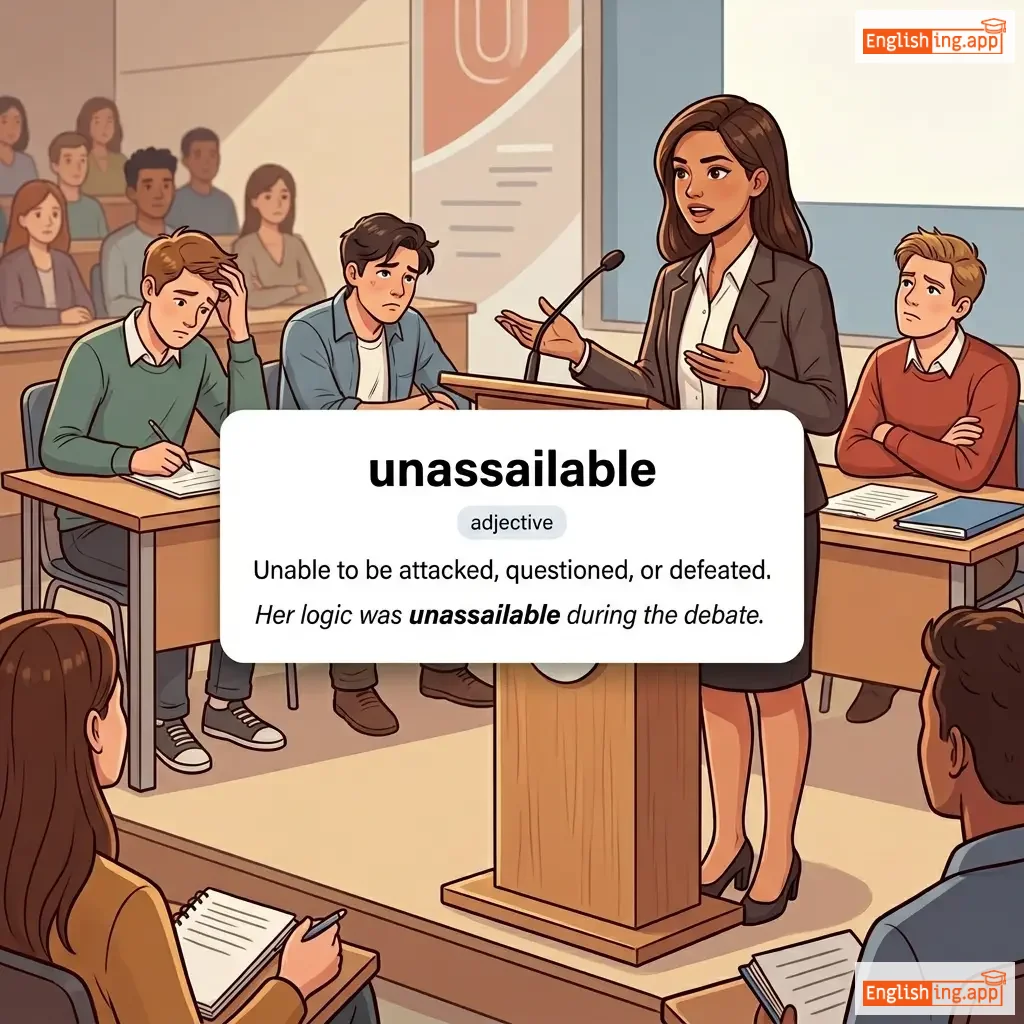
unassailable definition card — visual illustration of the meaning
adjective C2
/ˌʌnəˈseɪləbl/
不可攻击 (bù kě gōng jī)

Unable to be attacked, questioned, or defeated.

"Her logic was unassailable during the debate."

"她的逻辑在辩论中是不可攻击的。" (Tā de luójí zài biànlùn zhōng shì bù kě gōng jī de.)
adjective C2
/ˌʌnəˈsweɪdʒd/
未缓解 (wei huanjie)

Not made less intense or relieved; unrelieved.

"His grief remained unassuaged despite the passage of time."

"他的痛苦尽管时间流逝依然未缓解。" (Tā de tòngkǔ jǐnguǎn shíjiān liúshì yīrán wèi huǎnjiě.)
adjective C2
/ˌʌnəˈʃʊəd/
不确定的 (bù què dìng de)

Lacking confidence or certainty.

"She gave an unassured answer during the interview."

"她在面试中给出了一个不确定的答案。" (Tā zài miànshì zhōng gěichūle yīgè bù quèdìng de dá'àn.)
adjective C2
/ʌnˈblʌʃɪŋ/
厚颜无耻的; 放肆的 (hòu yán wú chǐ de; fàng sì de)

showing no shame or embarrassment; boldly shameless

"He told the unblushing lie without any hesitation."

"他毫不犹豫地说了那个无耻的谎言。" (Tā háo bù yóuyù de shuō le nàgè wúchǐ de huǎngyán.)
adjective C2
/ˌʌnsɛrəˈmoʊniəs/
不拘礼节/粗鲁 (bù jū lǐ jié/cū lǔ)

Done without formality or courtesy; abrupt or rude.

"He made an unceremonious exit from the party."

"他从派对上不拘礼节地离开。" (Tā cóng pàiduì shàng bù jū lǐjié de líkāi.)
adjective C2
/ʌnˈtʃeɪst/
不道德的; 不纯洁的; (bù dàodé de; bù chúnjié de;)

not celibate; having engaged in sexual relations; lacking moral purity

"The conservative society considered her behavior unchaste and improper."

"保守的社会认为她的行为不道德和不合适。" (Bǎoshǒu de shèhuì rènwéi tā de xíngwéi bù dàodé hé bù héshì.)
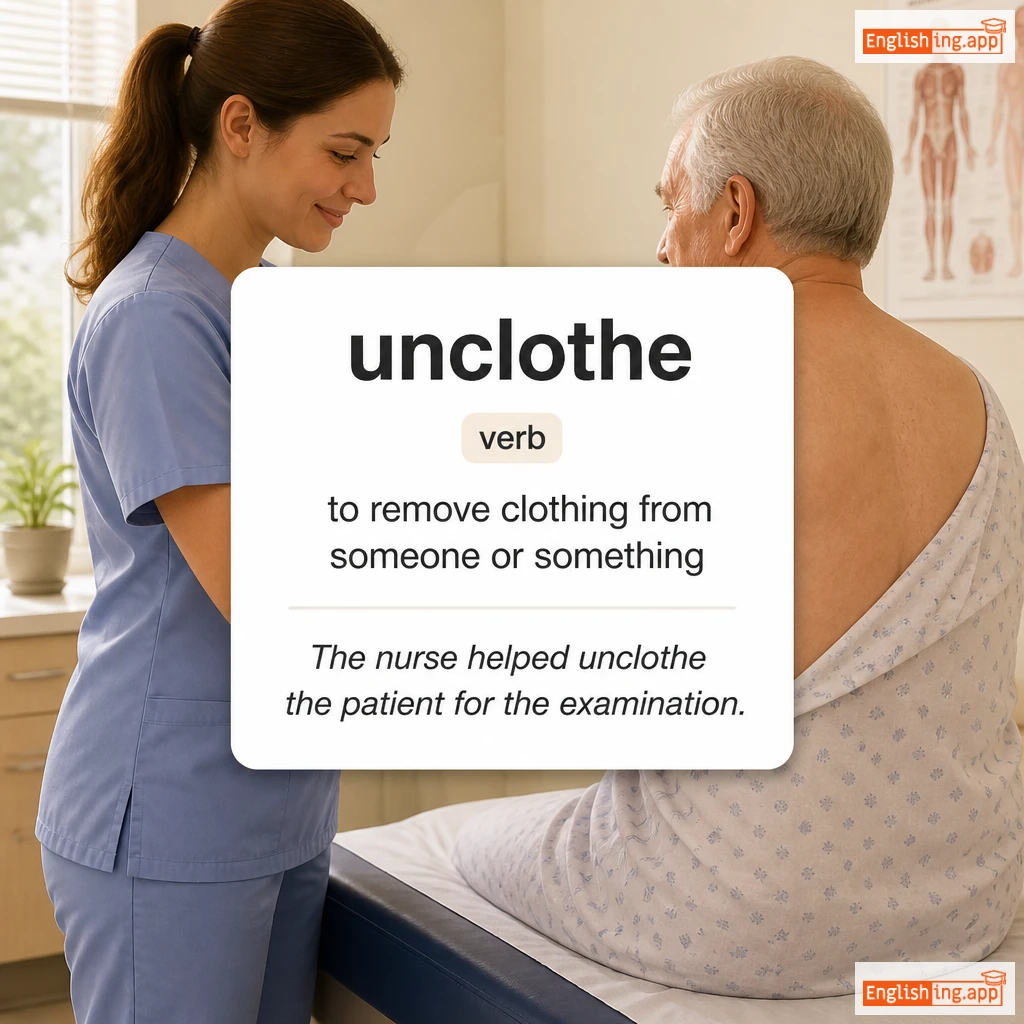
unclothe definition card — visual illustration of the meaning
verb C2
/ʌnˈkloʊð/
脱衣; 脱掉衣服 (tuoyi; tuo diao yifu)

to remove clothing from someone or something

"The nurse helped unclothe the patient for the examination."

"护士帮助病人脱衣进行检查。" (hushi bangzhu bingren tuoyi jinxing jiancha)
noun C2
/ʌnˈkloʊðɪŋ/
脱衣 (tuoyi)

the act or process of removing clothing

"The child quickly ran inside for unclothing after playing in the mud."

"孩子在泥地玩耍后迅速跑进去脱衣。" (haizi zai nidi wanshua hou xunsu pao jinqu tuoyi)
adjective C2
/ʌnˈkɒnʃənəbl/
不合理的 (bù hélǐ de)

shockingly unfair or unreasonable

"The company made unconscionable profits from the crisis."

"公司从危机中获得了不合理的利润。" (Gōngsī cóng wēijī zhōng huò déle bù hélǐ de lìrùn.)
verb C2
/ʌnˈkaʊtʃ/
从沙发上移开(罕见用法) (cóng shāfā shàng yí kāi)

to remove from a couch or to release from being laid down (rare/archaic usage)

"The surgeon attempted to uncouch the cataract."

"外科医生试图去除白内障。" (Wàikē yīshēng shìtú qùchú báinèizhàng.)
noun C2
/ˈʌŋkʃən/
涂抹 (tumo)

The act of anointing as part of a religious or ceremonial ritual; excessive or insincere flattery.

"The priest performed the holy unction with solemnity."

"牧师庄重地进行了神圣的涂抹仪式。" (Mùshī zhuāngzhòng de jìnxíngle shénshèng de túmǒ yíshì.)
adjective C2
/ˈʌŋk.tʃu.əs/
阿谀奉承 (āyú fèngchéng)

Excessively flattering or ingratiating; oily in texture.

"His unctuous tone made everyone uncomfortable."

"他那种阿谀奉承的语气让每个人都感到不舒服。" (Tā nà zhǒng āyú fèngchéng de yǔqì ràng měi gèrén dōu gǎndào bù shūfú.)
verb C2
/ˌʌn.dɪˈsiːv/
解惑 (jiě huò)

To free someone from a misconception or false belief.

"She tried to undeceive him about the false rumors."

"她试图让他摆脱这些错误的谣言。" (tā shì tú ràng tā bǎi tuō zhèxiē cuò wù de yáo yán.)
verb C2
/ˌʌndərˈɡɜːrd/
支持,强化 (zhīchí, qiánghuà)

to provide support or foundation for; to strengthen

"Strong values undergird a healthy society."

"强大的价值观支撑着一个健康的社会。" (Qiángdà de jiàzhíguān zhīchēngzhe yīgè jiànkāng de shèhuì.)
noun C2
/ˈʌndərlɪŋ/
下属 (xiàshǔ)

a person of low rank or importance; a subordinate

"The manager ordered his underlings to finish the task quickly."

"经理命令他的下属快速完成任务。" (Jīnglǐ mìnglìng tā de xiàshǔ kuàisù wánchéng rènwù.)
verb C2
/ˈʌndərˌmæn/
人员不足 (renyuan buzu)

to supply with fewer workers or personnel than needed

"The hospital was undermanned during the flu outbreak."

"医院在流感爆发期间人手不足。" (Yiyuan zai liugan baofa qijian renshou buzu.)
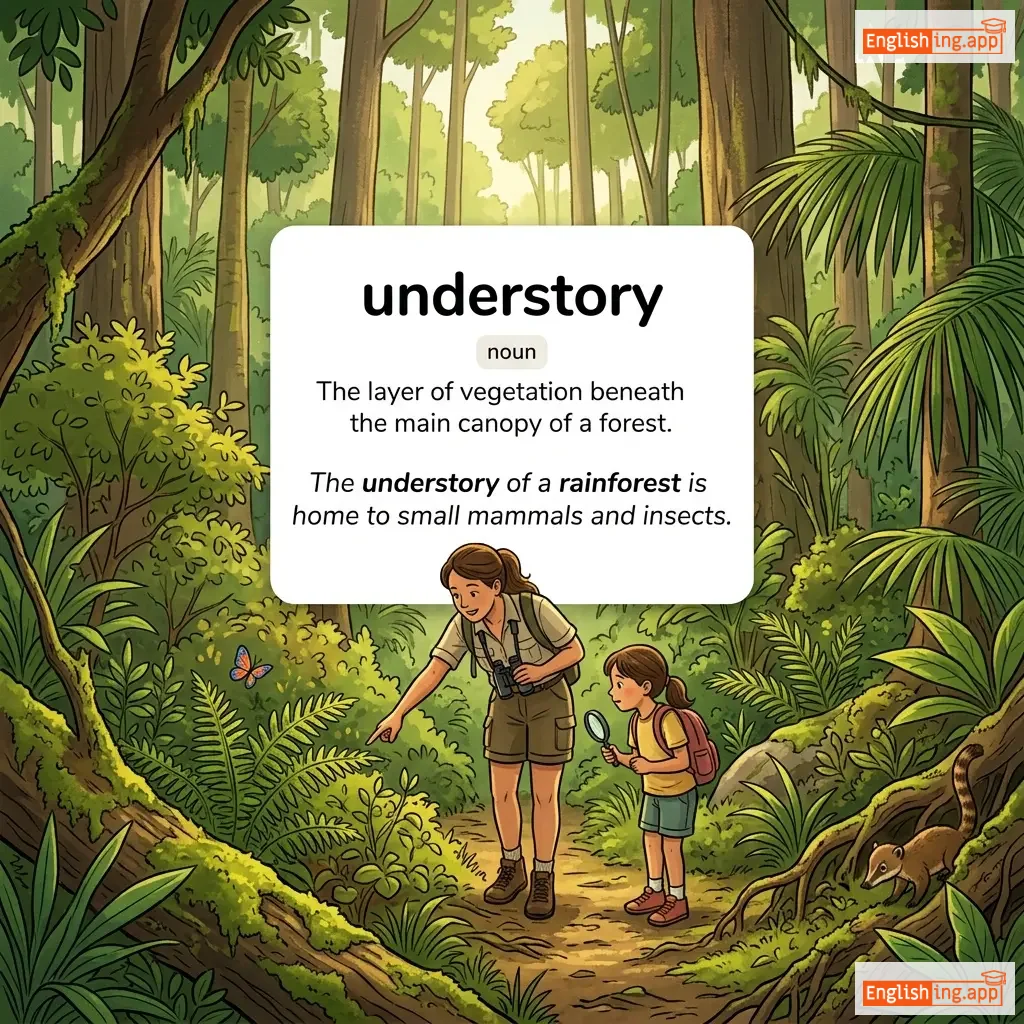
understory definition card — visual illustration of the meaning
noun C2
/ˈʌn.dɚˌstɔː.ri/
下层植被 (xiaceng zhipei)

The layer of vegetation beneath the main canopy of a forest.

"The understory of a rainforest is home to small mammals and insects."

"雨林的下层植被是小型哺乳动物和昆虫的家园。" (Yulin de xiaceng zhipei shi xiaoxing buru dongwu he kunchong de jiayuan.)
verb C2
/ˈʌndərˌraɪt/

To guarantee financial support, especially by agreeing to cover losses or risks; in insurance, to assess and accept risks.

"The bank agreed to underwrite the company's new bond issue."

verb C2
/ˈʌndjʊleɪt/
波动 (bō dòng)

To move with a smooth, wave-like motion.

"The snake undulated across the sand."

"蛇在沙滩上蜿蜒前行。" (Shé zài shātān shàng wān yán qián xíng.)
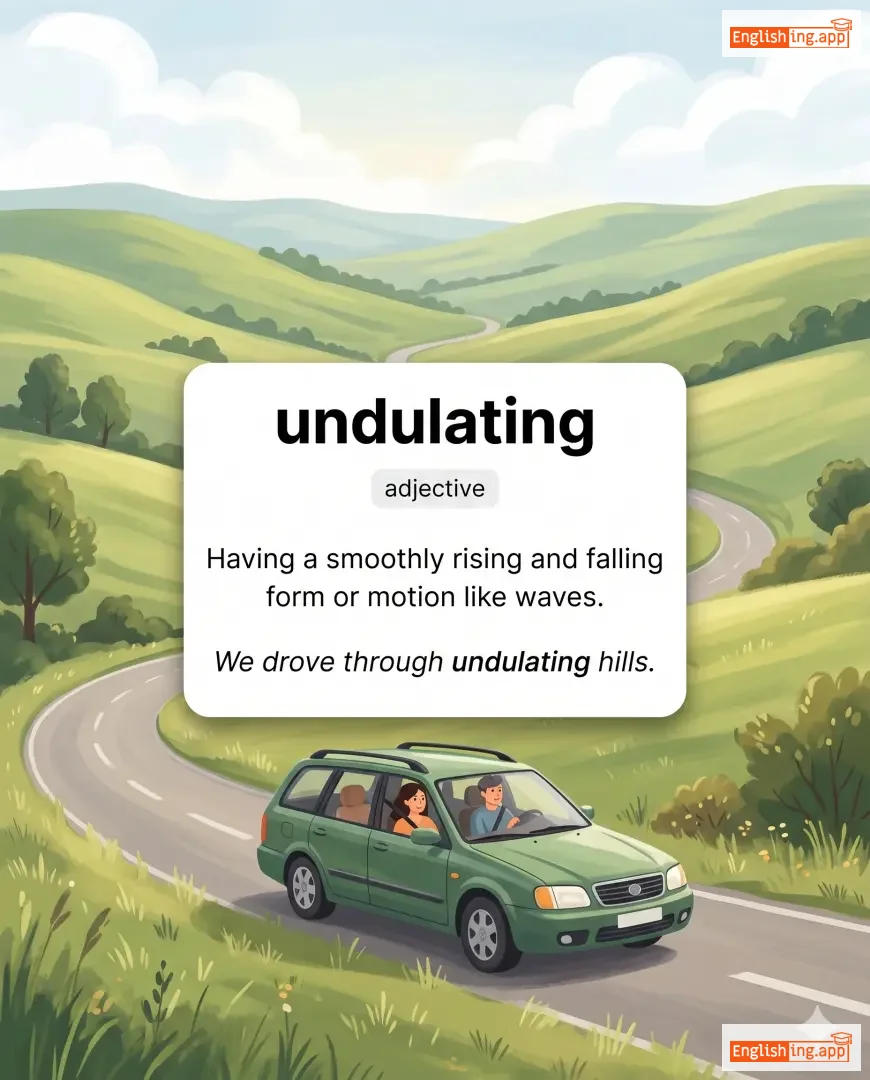
undulating definition card — visual illustration of the meaning
adjective C2
/ˈʌndjʊleɪtɪŋ/
波动的 (bōdòng de)

Having a smoothly rising and falling form or motion like waves.

"We drove through undulating hills."

"我们驱车穿过起伏的山丘。" (Wǒmen qūchē chuānguò qǐfú de shānqiū.)
adjective C2
/ˈʌndjʊləs/
波浪形的 (bōlàng xíng de)

Having a wavy surface or form.

"The artist painted the undulous sea at sunset."

"艺术家在日落时画了波浪形的海洋。" (Yìshùjiā zài rìluò shí huàle bōlàng xíng de hǎiyáng.)
adverb C2
/ʌnˈɜːrɪŋli/
毫无错误 (háo wú cuò wù)

Without making any mistakes; always accurate

"The archer aimed unerringly at the target."

"弓箭手毫无错误地瞄准了目标。" (Gōngjiàn shǒu háo wú cuò wù de miáo zhǔnle mùbiāo.)
adjective C2
/ˌʌnɪkˈsɛpʃənəbl/
无可指摘 (wú kě zhǐ zhāi)

Not open to objection; acceptable and unobjectionable

"His behavior was unexceptionable throughout the event."

"他的行为在整个事件中都是无可指摘的。" (Tā de xíngwéi zài zhěnggè shìjiàn zhōng dōu shì wú kě zhǐ zhāi de.)
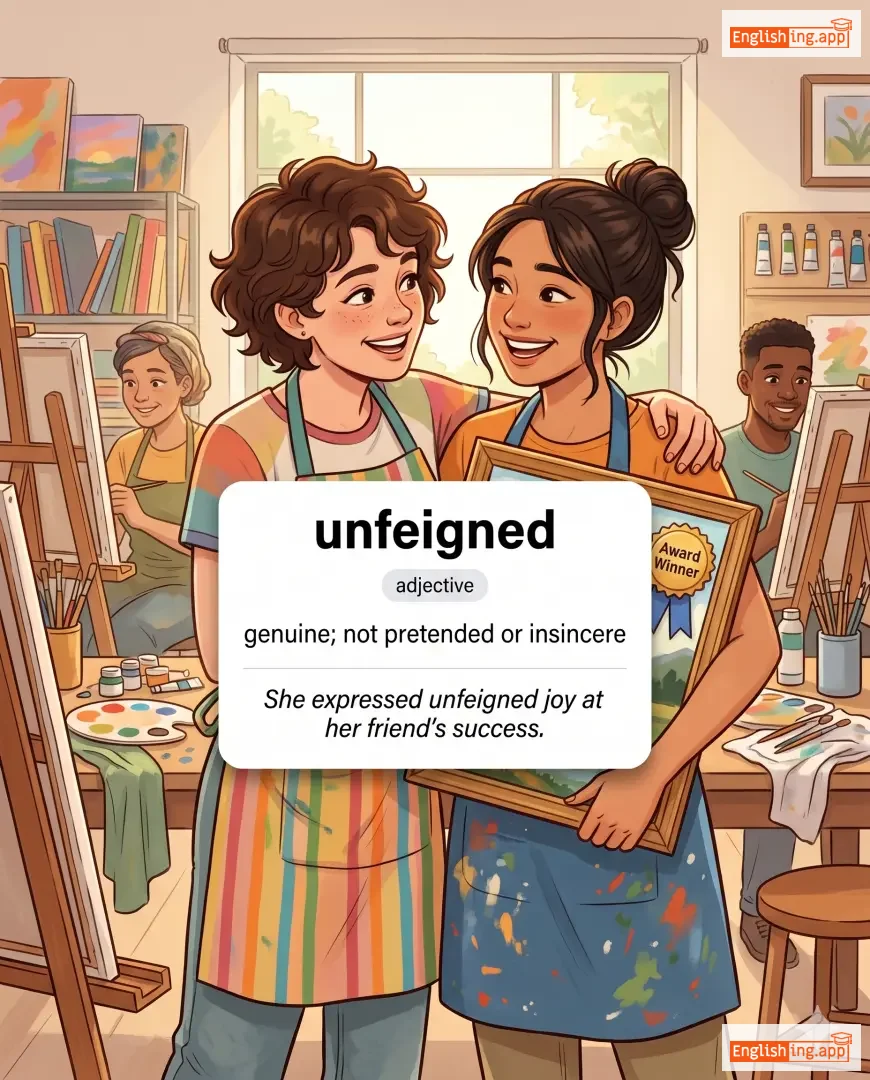
unfeigned definition card — visual illustration of the meaning
adjective C2
/ʌnˈfeɪnd/
真诚 (zhēnchéng)

genuine; not pretended or insincere

"She expressed unfeigned joy at her friend's success."

"她在朋友的成功上表达了真诚的喜悦。" (Tā zài péngyǒu de chénggōng shàng biǎodá le zhēnchéng de xǐyuè.)
verb C2
/ʌnˈfɛtər/
解开束缚 (jiě kāi shù fù)

to release from restraint or restriction; to free

"The new law will unfetter small businesses from excessive regulations."

"新法律将使小企业免于过多的规定。" (Xīn fǎlǜ jiāng shǐ xiǎo qǐyè miǎn yú guò duō de guīdìng.)
adjective C2
/ʌnˈflæpəbəl/
冷静沉着 (lěngjìng chénzhuó)

calm and composed, especially in difficult situations

"Despite the crisis, he remained unflappable and confident."

"尽管面临危机,他依然保持冷静沉着,充满自信。" (Jǐnguǎn miànlín wēijī, tā yīrán bǎochí lěngjìng chénzhuó, chōngmǎn zìxìn.)
adjective C2
/ʌnˈflɛdʒd/
未经训练的 (wei jing xunlian de)

Inexperienced, immature, or not fully developed.

"The unfledged writer struggled to complete his first novel."

"这个未经训练的作家难以完成他的第一本小说。" (Zhe ge wei jing xunlian de zuojia nanyi wancheng tade di yi ben xiaoshuo.)
verb C2
/ʌnˈfrɒk/
剥夺神职 (bōduó shénzhí)

To remove a priest from his position or deprive someone of a rank.

"The corrupt priest was unfrocked after the investigation."

"腐败的牧师在调查后被解除职务。" (fǔbài de mùshī zài diàochá hòu bèi jiěchú zhíwù.)
adjective C2
/ʌnˈɡeɪnli/
笨拙 (bènzhuō)

Awkward, clumsy, or lacking grace in movement or appearance.

"The tall boy moved in an ungainly manner."

"那个高个男孩以笨拙的方式走动。" (Nàgè gāo gè nán hái yǐ bènzhuō de fāngshì zǒudòng.)
noun C2
/ˈʌŋɡwənt/
药膏 (yàogāo)

A soothing or healing ointment applied to the skin.

"The doctor applied an unguent to heal the burn."

"医生涂抹了药膏来治愈烧伤。" (Yīshēng túmǒ le yàogāo lái zhìyù shāoshāng.)
adjective C2
/ˌʌnɪmˈpiːtʃəbl/
无可指摘 (wú kě zhǐ zhāi)

Not able to be doubted, questioned, or criticized; completely trustworthy.

"She is known for her unimpeachable honesty."

"她因其无可指摘的诚实而闻名。" (tā yīn qí wú kě zhǐ zhāi de chéng shí ér wén míng.)
adjective C2
/juːˈnɪsənənt/
和谐的 (héxié de)

Sounding together or in harmony.

"The unisonant voices created a powerful effect."

"和谐的声音创造了强大的效果。" (Héxié de shēngyīn chuàngzàole qiángdà de xiàoguǒ.)
noun C2
/ˌjuːnɪˈtɛəriən/
一神论者 (yīshénlùnzhě)

A person who believes that God exists as one entity rather than as a Trinity; a member of a religious denomination that emphasizes individual freedom of belief.

"The Unitarian church is known for its inclusive and open-minded approach."

"一神论教会以其包容和开放的思想方式而闻名。" (Yīshénlùn jiàohuì yǐ qí bāoróng hé kāifàng de sīxiǎng fāngshì ér wénmíng.)
noun C2
/ˈjuːnɪvəˌlɛns/
单价性 (dānjiàxìng)

The state of having a single valence or combining power, especially in chemistry.

"Hydrogen is characterized by its univalence in chemical reactions."

"氢气在化学反应中以其单价性为特点。" (Qīngqì zài huàxué fǎnyìng zhōng yǐ qí dānjiàxìng wéi tèdiǎn.)
adjective C2
/ʌnˈlɛtəd/
文盲 (wénmáng)

lacking education or the ability to read and write; illiterate

"The unlettered villagers relied on oral traditions to preserve their history."

"那些文盲村民依赖口头传统来保存他们的历史。" (Nàxiē wénmáng cūnmín yīlài kǒutóu chuántǒng lái bǎocún tāmen de lìshǐ.)
adjective C2
/ʌnˈmɪtɪɡeɪtɪd/
完全 (wanquan)

absolute; not lessened or moderated

"The meeting was an unmitigated disaster."

"会议是一次完全的灾难。" (Huiyi shi yici wanquan de zainan.)
adjective C2
/ˌʌnpriːpəˈzɛsɪŋ/
不吸引人 (bù xīyǐn rén)

not attractive or appealing in appearance

"Despite his unprepossessing looks, he was very kind and intelligent."

"尽管他的外貌不吸引人,他还是非常友善和聪明。" (Jǐnguǎn tā de wàibiǎo bù xīyǐn rén, tā hái shì fēicháng yǒushàn hé cōngmíng.)
adjective C2
/ˌʌnprəˈpɪʃəs/
不利 (bùlì)

Not giving or indicating a good chance of success; unfavorable.

"The team began their journey under unpropitious weather conditions."

"团队在不利的天气条件下开始了他们的旅程。" (Tuánduì zài bùlì de tiānqì tiáojiàn xià kāishǐle tāmen de lǚchéng.)
adjective C2
/ˌʌn.rɪˈdʒɛn.ər.ət/
顽固 (wángù)

Not reformed or showing no signs of change; stubbornly refusing to reform or repent.

"He remained an unregenerate opponent of progress."

"他仍然是进步的顽固反对者。" (Tā réngrán shì jìnbù de wángù fǎnduìzhě.)
adjective C2
/ˌʌnrɪˈmɪtɪŋ/
不断的 (buduan de)

Never relaxing or stopping; persistent.

"Her unremitting efforts finally paid off."

"她不懈的努力终于得到了回报。" (Tā bùxiè de nǔlì zhōngyú dédàole huíbào.)