ভোকাবুলারিসমূহ

ইংরেজি শব্দের বাংলা অর্থ | English to Bangla Word Meaning Dictionary

adjective C1
/skænt/
稀缺的 (xiquede)

Barely sufficient or inadequate in amount, degree, or quantity.

"There was scant evidence to support the claim."

"几乎没有证据支持该声明。" (Jihu meiyou zhengju zhichi gai shengming.)
adjective C1
/ˈskænti/
稀缺 (xique)

Small in quantity; insufficient or meager.

"The refugees survived on scanty food supplies."

"难民们靠着稀缺的食物存活。" (Nanmin men kao zhe xique de shiwul cunhuo.)
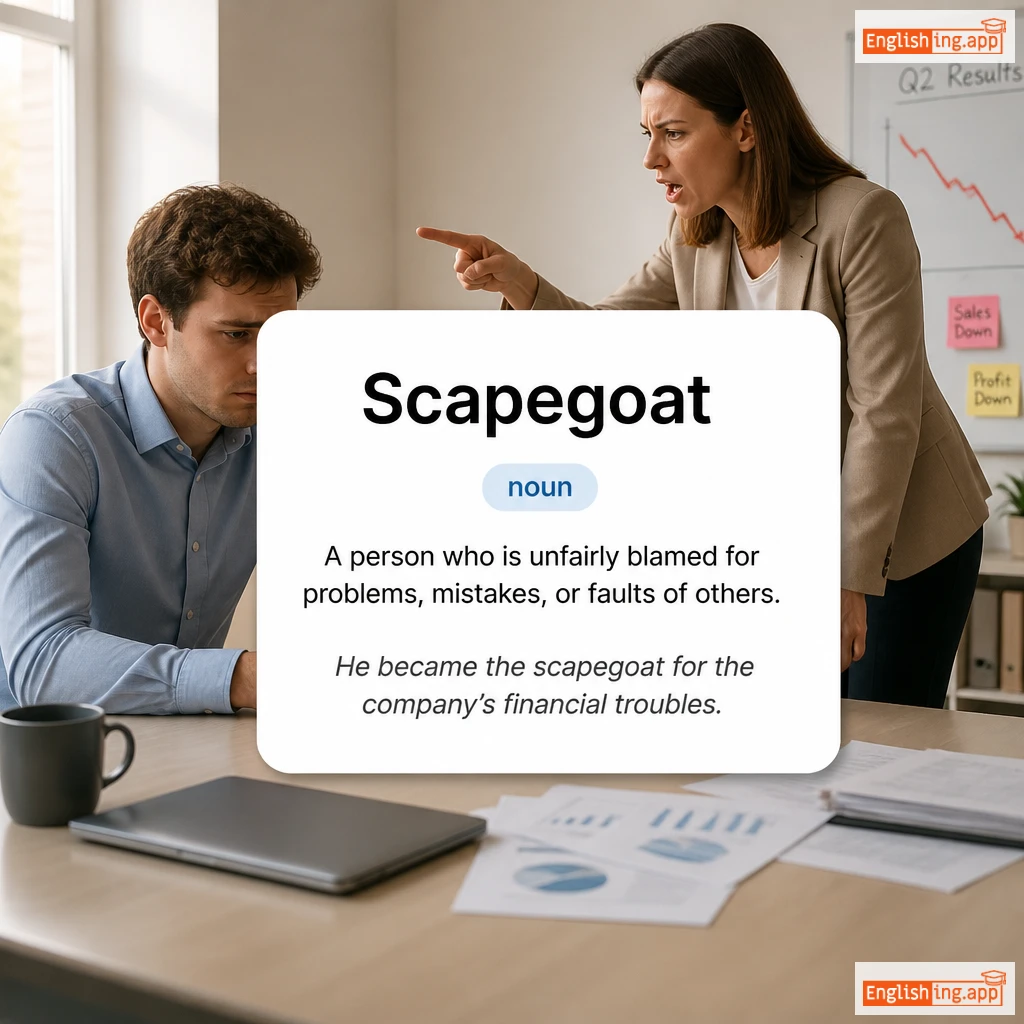
Scapegoat definition card — visual illustration of the meaning
noun C1
/ˈskeɪpˌɡoʊt/
替罪羊 (tìzuìyáng)

A person who is unfairly blamed for problems, mistakes, or faults of others.

"He became the scapegoat for the company’s financial troubles."

"他成了公司财务问题的替罪羊。" (Tā chéngle gōngsī cáiwù wèntí de tìzuìyáng.)
adjective C1
/ˈskeɪðɪŋ/
尖锐的批评 (jianrui de piping)

severely critical; harshly scornful

"The critic wrote a scathing review of the movie."

"评论家写了一篇尖锐的电影评论。" (Pinglunya xie le yipian jianrui de dianying piping.)
verb C1
/ˈskævɪndʒ/
在垃圾中寻找 (zai laji zhong xunzhao)

to search through waste or discarded material to find useful items

"The children scavenged for food in the garbage dump."

"孩子们在垃圾堆里找食物。" (Haizimen zai laji dui li zhao shiwu.)
noun C1
/ˈskævɪndʒər/
食尸者 / 垃圾收集者 (shíshī zhě / lājī shōují zhě)

an animal or person that feeds on dead or discarded material

"Vultures are natural scavengers that clean up the environment."

"秃鹫是自然的清道夫,清理环境。" (Tū jiù shì zìrán de qīng dào fū, qīnglǐ huánjìng.)
Schematic definition card — visual illustration of the meaning
noun, adjective C1
/skiːˈmætɪk/
示意图 (shì yì tú)

a simplified or symbolic representation of a system or plan

"The engineer showed a schematic of the electrical circuit."

"工程师展示了电气电路的示意图。" (Gōngchéngshī zhǎnshì le diànqì diànlù de shì yì tú.)
adjective C1
/skəˈlæstɪk/
学术的 (xuéshù de)

Relating to schools, education, or academic learning.

"The school organizes scholastic competitions every year."

"学校每年举办学术竞赛。" (Xuéxiào měi nián jǔbàn xuéshù jìngsài.)
adjective C1
/ˈsɪn.tɪ.leɪ.tɪŋ/
闪耀的 (shanyao de)

brilliantly clever, exciting, or sparkling

"Her scintillating conversation kept everyone entertained."

"她那闪耀的谈话让每个人都感到娱乐。" (Ta na shanyao de tanhua rang meiren dou gandao yule.)
noun C1
/ˈsaɪ.ən/
后代 (hòudài)

a descendant of a wealthy, aristocratic, or influential family

"He is the scion of a wealthy industrialist family."

"他是一个富有的工业家家庭的后代。" (Tā shì yīgè fùyǒu de gōngyèjiā jiātíng de hòudài.)
verb C1
/skɒf/
嘲笑 (chaoxiao)

to speak about something in a mocking or dismissive way

"He scoffed at the idea of moving abroad."

"他嘲笑搬到国外的想法。" (Ta chaoxiao bandao guowai de xiangfa.)
verb C1
/skɔːrtʃ/
烧焦 (shao jiao)

to burn the surface of something slightly

"The fire scorched the walls of the building."

"火焰烧焦了建筑物的墙壁。" (Huo yan shao jiao le jian zhu wu de qiang bi.)
adjective C1
/ˈskɔːrnfəl/
轻蔑的 (qīngmiè de)

showing contempt or disdain; expressing scorn

"She gave him a scornful look when he made the rude comment."

"当他做出粗鲁的评论时,她投以蔑视的目光。" (Dāng tā zuò chū cūlǔ de pínglùn shí, tā tóuyǐ mièshì de mùguāng.)
verb/noun C1
/skɒtʃ/
结束 / 苏格兰威士忌 (jieshu / sugelan weishi ji)

to put an end to something; also a type of whisky

"The report scotched the rumors of a merger."

"报告停止了关于合并的谣言。" (Baogao tingzhile guanyu hebing de yaoyan.)
noun C1
/ˈskaʊndrəl/
无赖 (wú lài)

a dishonest or unscrupulous person; a villain

"That scoundrel cheated the old man out of his savings."

"那个无赖骗取了老人家的积蓄。" (Nàgè wúlài piànqǔle lǎorén jiā de jīxù.)
verb C1
/ˈskaʊər/
擦洗 / 彻底搜索 (cāxǐ / chèdǐ sōusuǒ)

to clean or brighten the surface of something by scrubbing; to search thoroughly

"She scoured the kitchen until it shone."

"她打扫厨房直到它闪闪发光。" (Tā dǎsǎo chúfáng zhídào tā shǎnshǎn fāguāng.)
noun/verb C1
/skɜːrdʒ/

A source of great pain or punishment; to whip or inflict suffering on someone.

"Disease and poverty remain a scourge in many regions."

verb/noun C1
/skaʊl/
皱眉 (zhòu méi)

To frown in an angry or bad-tempered way.

"She scowled when she heard the unfair remark."

"她听到不公正的评论时,皱起了眉头。" (Tā tīng dào bù gōng zhèng de píng lùn shí, zhòu qǐ le méi tóu.)
adjective C1
/ˈskræpi/
好斗 / 杂乱 (hǎo dòu / zá luàn)

Determined and willing to fight or argue; also messy or disorganized.

"Despite being small, he was a scrappy fighter."

"尽管身材小,他却是一个好斗的战士。" (Jǐnguǎn shēncái xiǎo, tā què shì yīgè hǎo dòu de zhànshì.)
verb C1
/skrɔːl/
匆忙地写 (cong mang de xie)

to write or draw something quickly and carelessly, making it hard to read

"He scrawled his signature at the bottom of the page."

"他在页面底部匆忙签上了自己的名字。" (Ta zai ye mian di bu cong mang qian shang le zi ji de ming zi.)
adjective C1
/ˈskrɔːni/
瘦弱 (shòuruò)

very thin and bony, often looking unhealthy

"The scrawny boy could barely lift the heavy bag."

"那个瘦弱的男孩几乎无法提起沉重的包。" (Nàgè shòuruò de nánhái jīhū wúfǎ tíqǐ chénzhòng de bāo.)
noun C1
/skraɪb/
抄写员 (chāo xiě yuán)

a person who writes documents, especially in ancient times; a professional copyist

"In ancient Egypt, scribes recorded important events."

"在古埃及,抄写员记录了重要的事件。" (Zài gǔ āijí, chāo xiě yuán jìlùle zhòngyào de shìjiàn.)
noun C1
/ˈskrɪmɪdʒ/
练习赛 (liànxí sài)

A practice game or informal match, often in sports, especially football.

"The team had a scrimmage before the official season started."

"在正式赛季开始之前,球队进行了一场练习赛。" (Zài zhèngshì sàijì kāishǐ zhīqián, qiúduì jìnxíngle yī chǎng liànxí sài.)
adjective C1
/ˈskrɪptʃərəl/
圣经的 (shèngjīng de)

Relating to or contained in the scriptures or holy writings.

"The priest gave a scriptural reference during the sermon."

"牧师在布道中引用了圣经的参考。" (Mùshī zài bùdào zhōng yǐnyòngle shèngjīng de cānkǎo.)
scrolling addiction definition card — visual illustration of the meaning
noun C1
স্ক্রোলিং অ্যাডিকশন
滚动成瘾 (gǔn dòng chéng yǐn)

A compulsive need to continuously scroll through content on digital devices, particularly smartphones and social media platforms.

"Scrolling addiction is a growing concern among smartphone users."

"滚动成瘾在智能手机用户中是一个日益严重的问题。" (Gǔn dòng chéng yǐn zài zhìnéng shǒujī yònghù zhōng shì yīgè rìyì yánzhòng de wèntí.)
adjective C1
/ˈskrʌfi/
邋遢的或不整洁的外观;脏的和磨损的 (lātā de huò bù zhěngjié de wàiguān; zāng de hé móshā de)

untidy or unkempt in appearance; shabby and worn

"The scruffy old dog wandered through the streets looking for food."

"那只邋遢的老狗在街上徘徊,寻找食物。" (Nà zhī lātā de lǎo gǒu zài jiē shàng pái huí, xún zhǎo shí wù.)
adjective C1
/ˈskrʌmpʃəs/
美味的 (meiwei de)

extremely tasty or delicious

"She baked a scrumptious chocolate cake for the party."

"她为派对烤了一个美味的巧克力蛋糕。" (Ta wei paidui kaole yige meiwei de qiaokeli dangao.)
noun C1
/ˈskruːpəl/
顾忌 (gùjì)

A moral or ethical consideration that restrains actions.

"He had no scruples about lying to get ahead."

"他在为了进步而撒谎时没有任何顾忌。" (Tā zài wèile jìnbù ér sāhuǎng shí méiyǒu rènhé gùjì.)
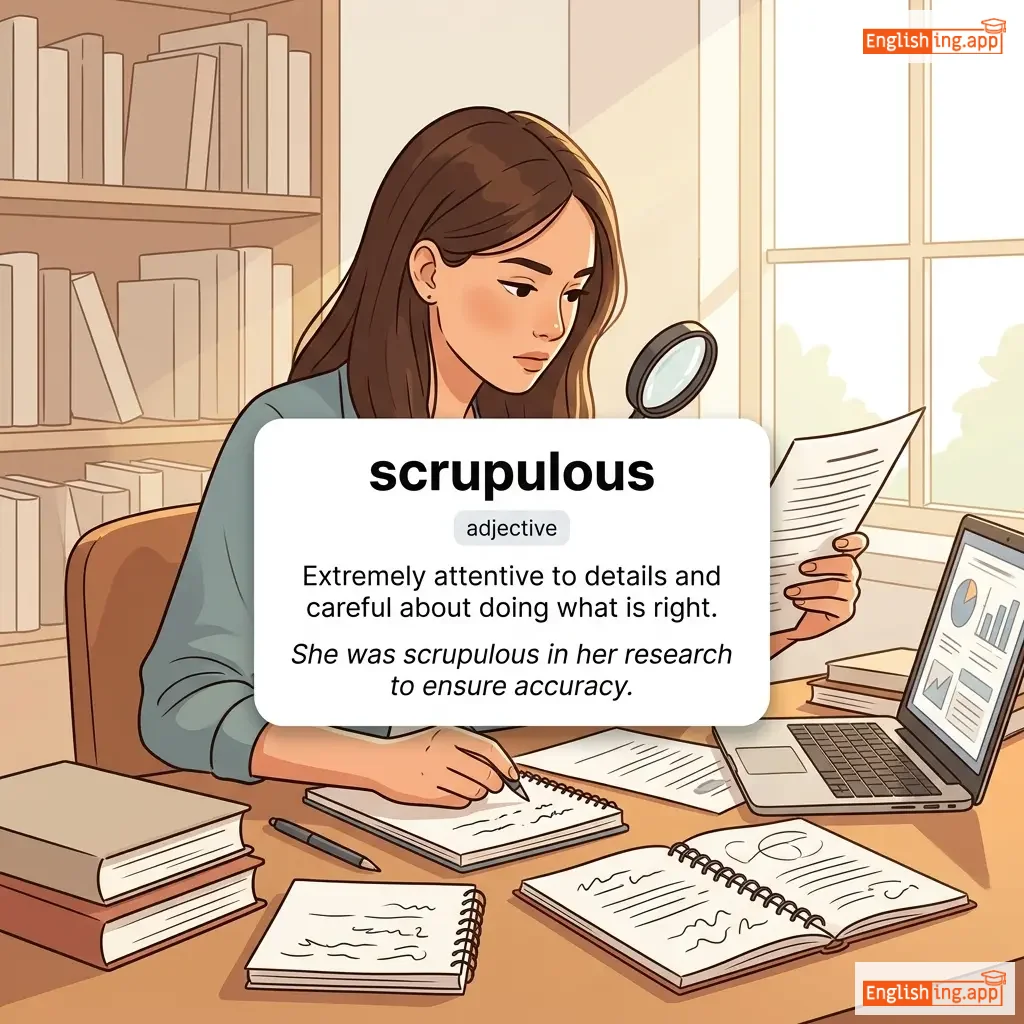
scrupulous definition card — visual illustration of the meaning
adjective C1
/ˈskruːpjələs/
一丝不苟 (yī sī bù gǒu)

Extremely attentive to details and careful about doing what is right.

"She was scrupulous in her research to ensure accuracy."

"她在研究中一丝不苟,以确保准确性。" (Ta zai yanjiu zhong yī sī bù gǒu, yǐ quèbǎo zhǔnquè xìng.)
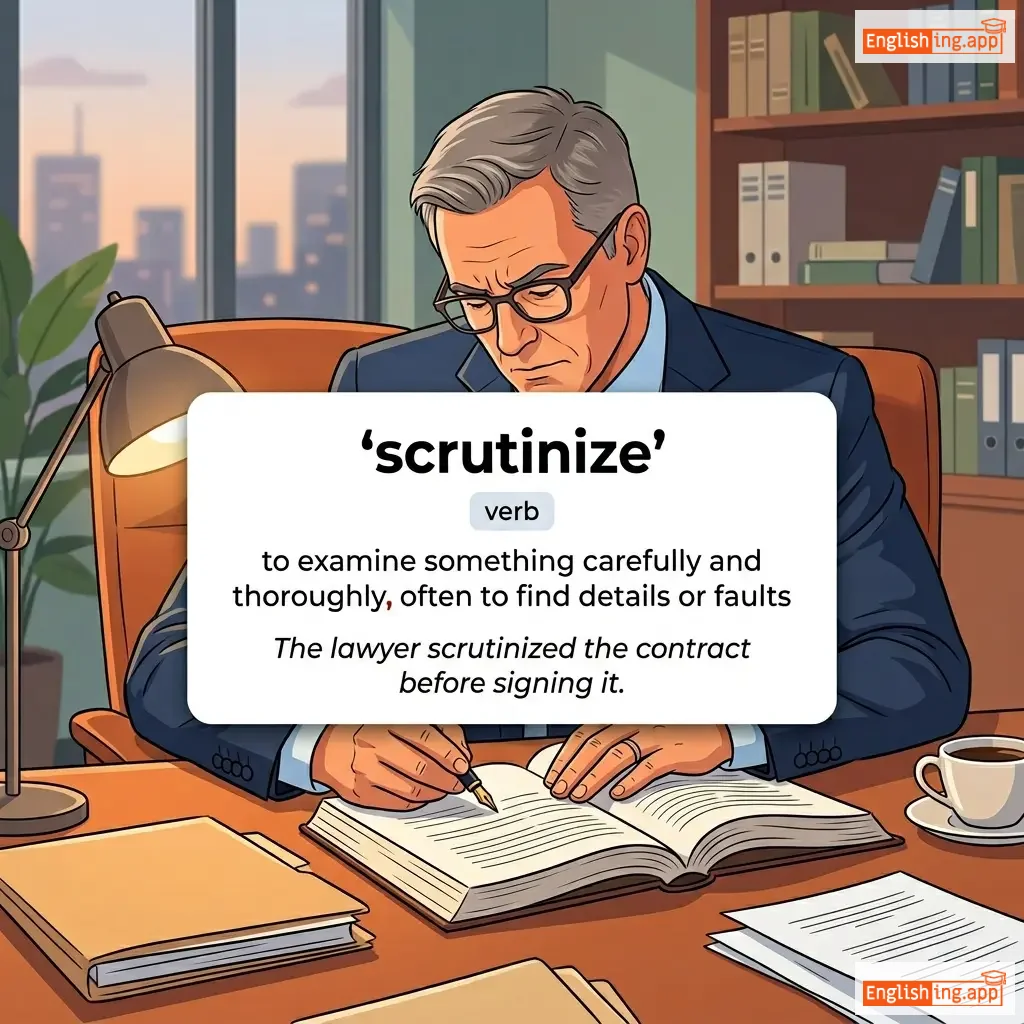
scrutinize definition card — visual illustration of the meaning
verb C1
/ˈskruː.tɪ.naɪz/

to examine something carefully and thoroughly, often to find details or faults

"The lawyer scrutinized the contract before signing it."

verb C1
/skʌf/
擦伤 (ca shang)

to mark or scratch the surface of something by rubbing

"He scuffed his shoes on the pavement."

"他在人行道上擦伤了他的鞋子。" (Ta zai renxingdao shang ca shang le ta de xiezi.)
noun, verb C1
/ˈskʌf.əl/
冲突 (chongtu)

a short, confused fight or struggle; to engage in such a fight

"Two players scuffled on the field after the foul."

"两名球员在犯规后在场上发生了冲突。" (Liang ming qiuyuan zai fanguihou zai changshang fashengle chongtu.)
verb C1
/skʌlpt/
幸福 (xìng fú)

to create or shape something by carving or molding

"The artist sculpted a beautiful statue from marble."

"她在获得奖项时无法掩饰自己的幸福。" (Tā zài huòdé jiǎngxiàng shí wúfǎ yǎnshì zìjǐ de xìngfú.)
verb C1
/ˈskʌr.i/
快速跑 (kuài sù pǎo)

To move quickly with short, hurried steps.

"The mice scurried across the kitchen floor when the lights turned on."

"老鼠在灯光打开时快速穿过厨房的地板。" (Lǎo shǔ zài dēng guāng dǎ kāi shí kuài sù chuān guò chú fáng de dì bǎn.)
verb C1
/ˈskʌt.əl/
幸福 (xingfu)

To run hurriedly with short, quick steps; or to deliberately sink a ship.

"The children scuttled back to their seats when the teacher entered."

"她在收到奖项时无法掩饰她的幸福感。" (Tā zài shōu dào jiǎng xiàng shí wúfǎ yǎnshì tā de xìngfú gǎn.)
noun C1
/saɪð/
镰刀 (liándāo)

A tool with a long curved blade used for cutting grass or grain.

"The farmer sharpened his scythe before harvesting the wheat."

"农民在收割小麦之前磨利了他的镰刀。" (Nóngmín zài shōu gē xiǎomài zhīqián mó lìle tā de liándāo.)
noun C1
/ˈseɪɑːns/
灵媒会议 (língméi huìyì)

A meeting where people attempt to communicate with the spirits of the dead.

"They held a seance to contact their late grandmother."

"他们举行了灵媒会议,以联系已故的祖母。" (Tāmen jǔxíngle língméi huìyì, yǐ liánxì yǐgù de zǔmǔ.)
verb C1
/sɪr/
煎制 (jian zhi)

To burn or scorch the surface of something with intense heat.

"The chef seared the steak to lock in the flavor."

"厨师将牛排煎制,以锁住味道。" (Chushi jiang niupai jianzhi, yi suozhu weidao.)
adverb C1
/ˈsɜːrtʃɪŋli/
寻找地 (xúnzhǎo de)

In a way that seems to look for hidden meanings or truth.

"She looked at him searchingly, hoping for an honest answer."

"她带着寻求的目光看着他,希望得到诚实的回答。" (Tā dàizhe xúnqiú de mùguāng kànzhe tā, xīwàng dédào chéngshí de huídá.)
noun C1
/ˈsiːskeɪp/
海景 (haijing)

A view or painting of the sea.

"The artist painted a beautiful seascape at sunset."

"艺术家在日落时画了一幅美丽的海景。" (Yishujia zai riluo shi hua le yi fu meili de haijing.)
adjective C1
/ˈsiːzənəbl/
应季的 (yīngjì de)

Appropriate to the time of year or season.

"We had seasonable weather for autumn."

"我们有一个适合秋季的季节性天气。" (Wǒmen yǒu yīgè shìhé qiūjì de jìjiéxìng tiānqì.)
adjective/verb C1
/ˈsiːzənd/
经验丰富的 / 加调料的 (jīngyàn fēngfù de / jiā tiáoliào de)

Experienced in a particular activity; also, flavored with spices.

"She is a seasoned teacher with over 20 years of experience."

"她是一位拥有超过20年经验的资深教师。" (Tā shì yī wèi yōngyǒu chāoguò 20 nián jīngyàn de zīshēn jiàoshī.)
verb C1
/sɪˈsiːd/
脱离 (tuōlí)

To formally withdraw from a political or organizational union.

"Several states threatened to secede from the union."

"几个州威胁要脱离联邦。" (Jǐ gè zhōu wēixié yào tuōlí liánbāng.)
noun C1
/sɪˈsɛʃən/
分裂 (fenlie)

The action of formally withdrawing from membership of a federation or body.

"The secession of the southern states led to the Civil War."

"南方各州的分裂导致了内战。" (Nanfang ge zhou de fenlie dao zhi le neizhan.)
verb C1
/sɪˈkluːd/
隔离 (gélí)

To keep someone away from other people; to isolate.

"The monk chose to seclude himself in the mountains."

"僧侣选择在山中独自生活。" (Sēnglǚ xuǎnzé zài shān zhōng dúzì shēnghuó.)
adjective C1
/sɪˈkluːdɪd/
隐蔽的 (yinbi de)

Placed apart from other people or things; private and quiet.

"They spent their vacation in a secluded beach house."

"他们在一个隐蔽的海滩小屋度过了假期。" (Tamen zai yige yinbi de haitan xiaowu duoguo le jiaqi.)
noun C1
/sɪˈkluːʒən/
隐居 (yinju)

The state of being private, away from other people.

"She spent the weekend in complete seclusion in her cabin."

"她在她的小屋里度过了完全的隐居周末。" (Tā zài tā de xiǎowū lǐ dùguò le wánquán de yǐnjū zhōumò.)
adjective C1
/ˌsekənd ˈreɪt/
二流 (er liu)

Of mediocre or inferior quality.

"The movie was entertaining but clearly second-rate compared to the original."

"这部电影很有趣,但与原版相比明显是二流的。" (Zhe bu dianying hen youqu, dan yu yuanban xiangbi mingxian shi er liu de.)
secrete definition card — visual illustration of the meaning
verb C1
/sɪˈkriːt/
分泌 (fēnmì)

to produce and release a substance from a cell, gland, or organ

"The pancreas secretes insulin to regulate blood sugar levels."

"胰腺分泌胰岛素以调节血糖水平。" (Yíxiàn fēnmì yídǎosù yǐ tiáojié xuètáng shuǐpíng.)
Secretion definition card — visual illustration of the meaning
noun C1
/sɪˈkriː.ʃən/
分泌 (fenmi)

a process by which substances are produced and discharged from a cell or gland

"Insulin secretion is crucial for blood sugar regulation."

"胰岛素分泌对血糖的调节至关重要。" (yidaosun fenmi dui xuetang de tiaojie zhiguang zhongyao)