ভোকাবুলারিসমূহ

ইংরেজি শব্দের বাংলা অর্থ | English to Bangla Word Meaning Dictionary

adjective C1
/ˈpaɪəs/
敬虔な (keiken na)

devoutly religious or showing strong moral and spiritual devotion

"He led a pious life, always helping those in need."

"彼はいつも困っている人々を助け、敬虔な生活を送っていました。" (Kare wa itsumo komatte iru hitobito o taske, keiken na seikatsu o okutte imashita.)
adjective C1
/ˈpiːkənt/
辛い (karai)

having a pleasantly sharp or spicy taste; interestingly provocative

"The chef added a piquant sauce to the dish to enhance its flavor."

"シェフは料理に辛いソースを加えて、味を引き立てました。" (Shefu wa ryōri ni karai sōsu o kuwaete, aji o hikidatemashita.)
verb C1
/piːk/
引き起こす (hikiokosu)

to stimulate interest or curiosity; to arouse resentment or anger

"Her remarks piqued his curiosity about the secret project."

"彼女のコメントは秘密のプロジェクトに対する彼の好奇心を引き起こしました。" (Kanojo no komento wa himitsu no purojekuto ni taisuru kare no koukishin wo hikiokoshimashita.)
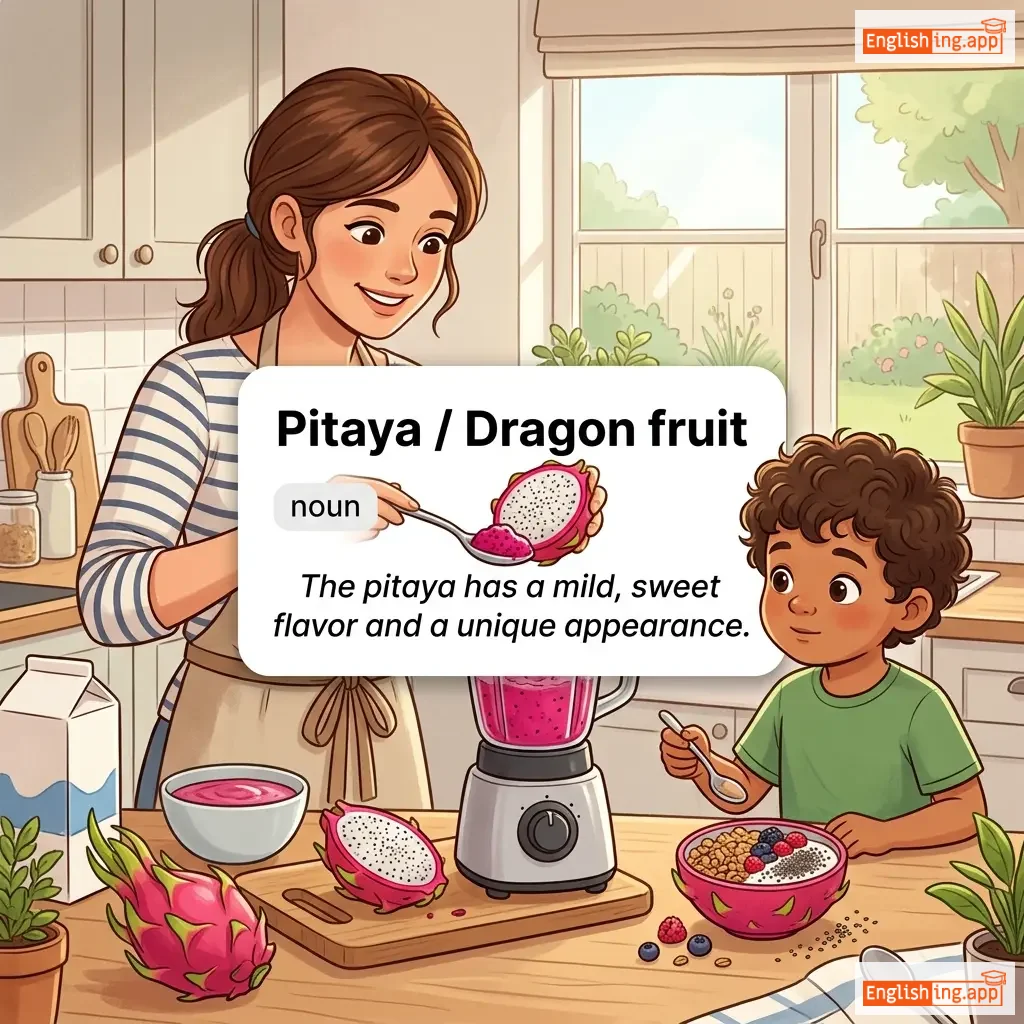
Pitaya / Dragon fruit definition card — visual illustration of the meaning
noun C1
/pɪˈtaɪə/
ドラゴンフルーツ (doragon furuutsu)

a tropical fruit with bright pink or red skin and white flesh speckled with black seeds

"The pitaya has a mild, sweet flavor and a unique appearance."

"ピタヤは、まろやかで甘い味とユニークな外見を持っています。" (pitaya wa, maroyaka de amai aji to yuniiku na geken o motteimasu.)
adjective C1
/ˈpɪtiəs/
哀れな、同情を誘う (aware na, dōjō o sasou)

deserving or arousing pity; sad and pathetic

"The stray dog looked up with a piteous expression."

"迷子の犬は哀れな表情で上を見上げました。" (Maigo no inu wa aware na hyōjō de ue o miagemashita.)
noun C1
/ˈpɪt.fɔːl/
落とし穴, 障害 (otoshiana, shougai)

a hidden or unexpected danger or difficulty

"Investors must be aware of the pitfalls of the market."

"投資家は市場の落とし穴に注意する必要があります。" (Tōshika wa shijō no otoshiana ni chūi suru hitsuyō ga arimasu.)
adjective C1
/ˈpɪθ.i/
簡潔で意味深い (kanketsu de imi fukai)

concise and meaningful; full of substance

"She gave a pithy comment that summarized the issue perfectly."

"彼女は問題を完璧に要約した簡潔なコメントをしました。" (Kanojo wa mondai o kanpeki ni youyaku shita kanketsu na komento o shimashita.)
adjective C1
/ˈpɪt.i.ə.bəl/
哀れな (aware na)

deserving sympathy or compassion

"The stray dog looked pitiable in the rain."

"その迷子の犬は雨の中で哀れに見えた。" (Sono maigo no inu wa ame no naka de aware ni mieta.)
adjective C1
/ˈpɪt.i.ləs/
無慈悲 (mujihi)

showing no pity or compassion; cruel

"The pitiless ruler ignored the suffering of his people."

"無慈悲な支配者は自分の民の苦しみを無視した。" (Mujihi na shihaisha wa jibun no tami no kurushimi o mushishita.)
noun C1
/ˈpɪt.əns/
わずかな額 (wazuka na gaku)

a very small or inadequate amount of money

"She worked long hours for a mere pittance."

"彼女はわずかな額のために長時間働いた。" (Kanojo wa wazuka na gaku no tame ni chōjikan hataraita.)
pivot definition card — visual illustration of the meaning
noun/verb C1
ˈpɪv.ət
戦略的変更、軸、プロセスの変更 (senryakuteki henkou, jiku, purosesu no henkou)

A significant change in business strategy or direction.

"The company decided to pivot its business strategy."

"会社はビジネス戦略を変更する決定をしました。" (Kaisha wa bijinesu senryaku o henkou suru kettei o shimashita.)
pivotal definition card — visual illustration of the meaning
adjective C1
/ˈpɪv.ə.tl/
極めて重要な (kiwamete jūyō na)

of crucial importance in relation to the development or success of something else

"Her role was pivotal in the success of the project."

"彼女の役割はプロジェクトの成功において極めて重要でした。" (Kanojo no yakuwari wa purojekuto no seikō ni oite kiwamete jūyō deshita.)
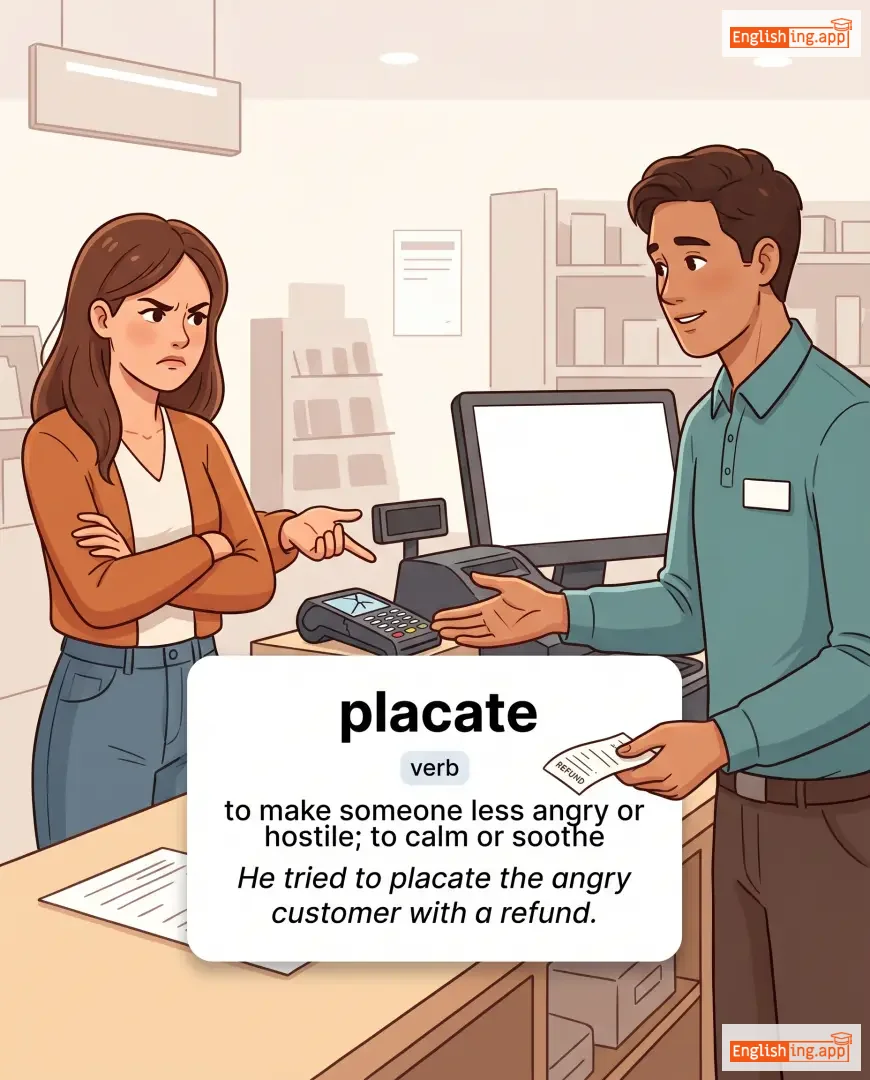
placate definition card — visual illustration of the meaning
verb C1
/pləˈkeɪt/
なだめる (nadameru)

to make someone less angry or hostile; to calm or soothe

"He tried to placate the angry customer with a refund."

"彼は返金で怒っている顧客をなだめようとした。" (Kare wa henkin de okotte iru kokyaku o nadameyō to shita.)
noun C1
/pləˈsiːboʊ/
プラセボ (purasebo)

a substance with no therapeutic effect, used as a control in testing new drugs

"The patient was given a placebo to compare the effect of the real drug."

"患者は実際の薬の効果と比較するためにプラセボを与えられました。" (Kanja wa jissai no kusuri no kouka to hikaku suru tame ni purasebo wo ataeraremashita.)
adjective C1
/ˈplæsɪd/
穏やかな、静かな (odayakana, shizukana)

calm and peaceful, not easily disturbed

"She had a placid expression despite the chaos around her."

"彼女は周囲の混乱にもかかわらず、穏やかな表情をしていた。" (Kanojo wa shūi no konran ni mo kakawarazu, odayakana hyōjō o shite ita.)
noun C1
/ˈpleɪdʒərɪzəm/
盗作 (dōzoku)

the practice of taking someone else's work or ideas and passing them off as one's own

"The student was expelled for committing plagiarism in his essay."

"学生はエッセイで盗作を行ったため、退学させられました。" (Gakusei wa essei de dousaku o okonatta tame, taigaku saseraremashita.)
verb C1
/ˈpleɪdʒəraɪz/
盗作する (tōsaku suru)

to take someone else's work or ideas and present them as your own

"He was warned not to plagiarize his friend's essay."

"彼は友達のエッセイを盗用しないよう警告されました。" (Kare wa tomodachi no essei o tōyō shinai yō keikoku saremashita.)
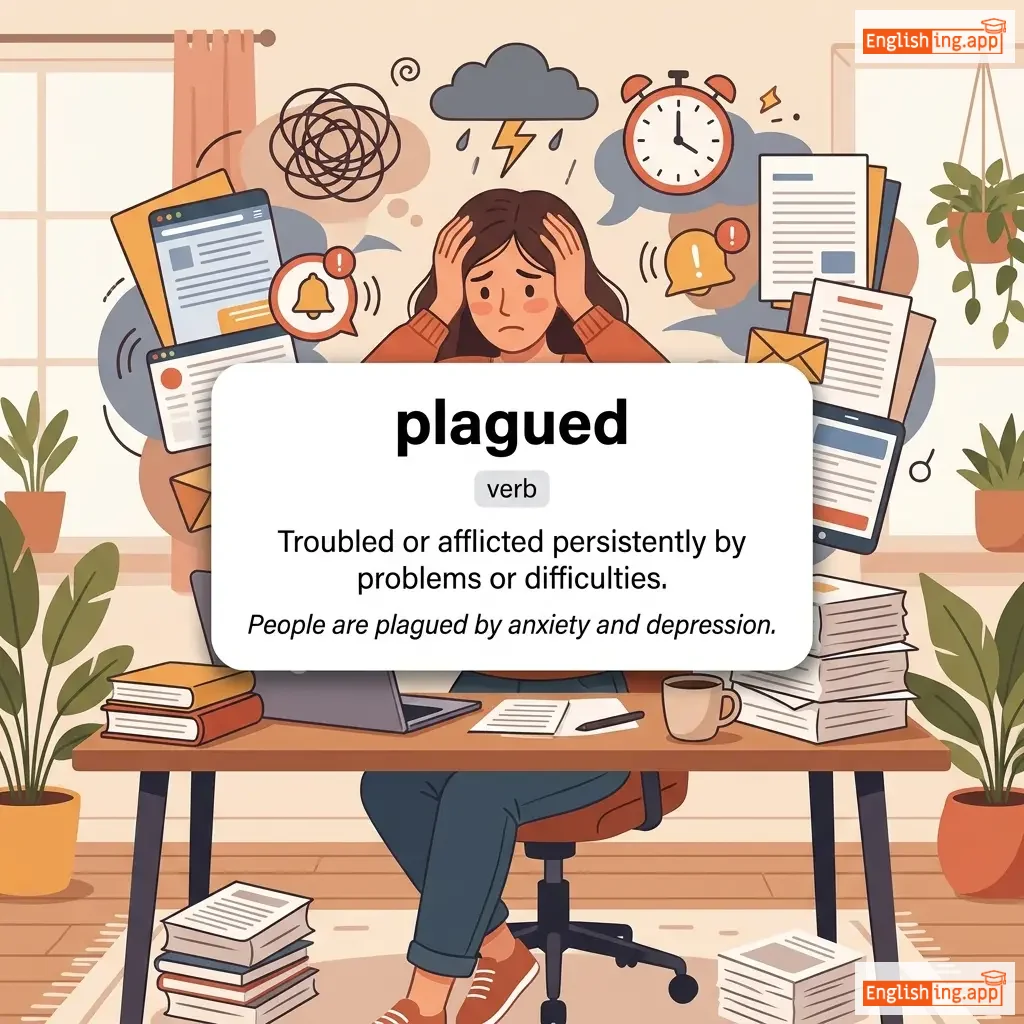
plagued definition card — visual illustration of the meaning
verb C1
pleɪɡd
悩まされる (nayamasareru)

Troubled or afflicted persistently by problems or difficulties.

"People are plagued by anxiety and depression."

"人々は不安と抑うつに悩まされています。" (Hitobito wa fuan to yokutsuni nayamasareteimasu.)
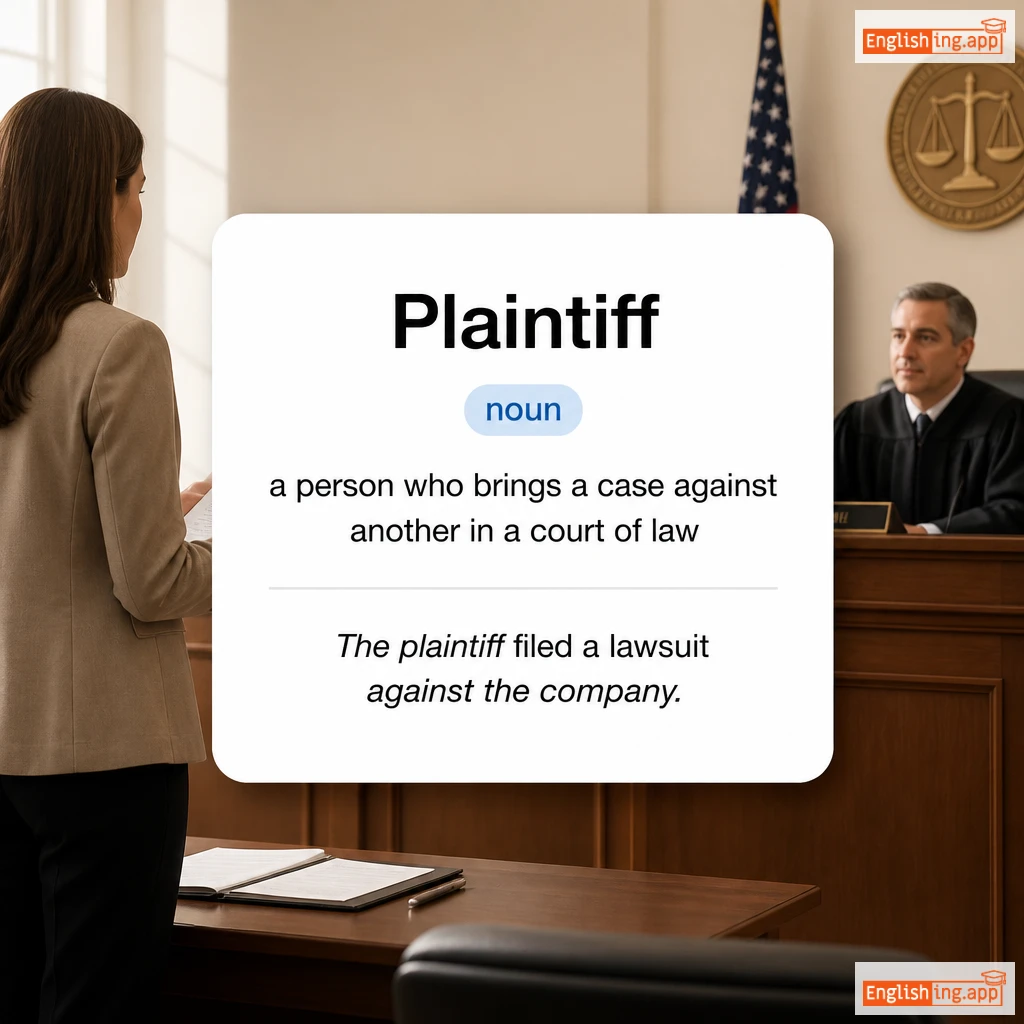
Plaintiff definition card — visual illustration of the meaning
noun C1
/ˈpleɪntɪf/
原告 (genkoku)

a person who brings a case against another in a court of law

"The plaintiff filed a lawsuit against the company."

"原告は会社に対して訴訟を起こしました。" (Genkoku wa kaisha ni taishite soshō o okoshimashita.)
adjective C1
/ˈpleɪntɪv/
悲しげな, 哀れな (kanashigena, aware na)

expressing sadness or sorrow

"He raised a plaintive cry for help."

"彼は助けを求めて哀願するような叫びを上げた。" (Kare wa tasuke o motomete aigan suru yō na sakebi o ageta.)
noun,verb C1
/pleɪt/
編み込み (amikomi)

a braid of hair or straw; to braid

"She decided to plait her hair before the party."

"彼女はパーティーの前に髪を編むことに決めました。" (Kanojo wa pātii no mae ni kami o amu koto ni kimemashita.)
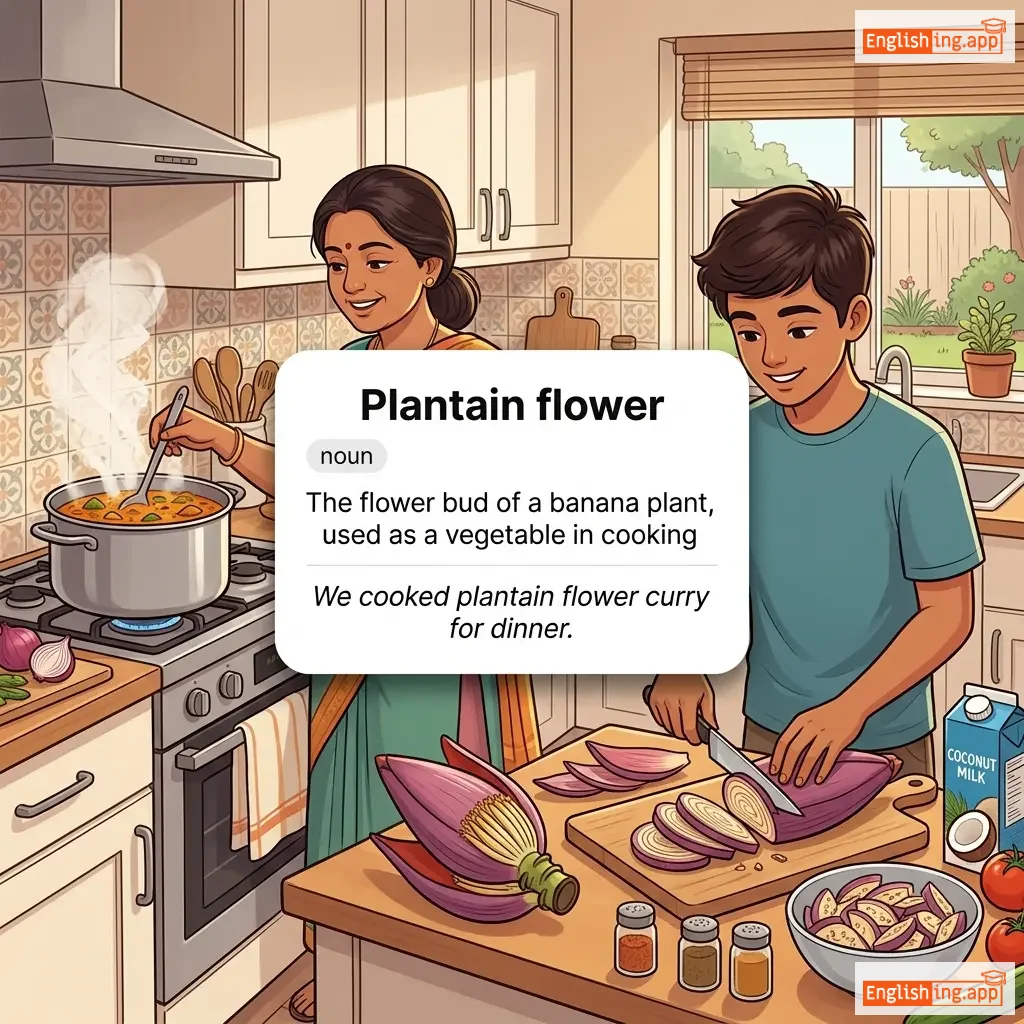
Plantain flower definition card — visual illustration of the meaning
noun C1
/ˈplæn.teɪn ˈflaʊ.ər/
プランテンの花 (puranten no hana)

The flower bud of a banana plant, used as a vegetable in cooking

"We cooked plantain flower curry for dinner."

"私たちは夕食にプランテンの花のカレーを作りました。" (watashitachi wa yūshoku ni puranten no hana no karē o tsukurimashita.)
noun C1
/ˈplæz.mə/
血液の液体部分; 電離したガス; 凝固因子のない血清 (purazuma)

the liquid part of blood; ionized gas; blood serum without clotting proteins

"Blood plasma contains various proteins and nutrients."

"血漿はさまざまなタンパク質や栄養素を含んでいます。" (kesshou wa samazama na tanpakushitsu ya eiyouso o fundeimasu.)
plasticity definition card — visual illustration of the meaning
noun C1
/plæsˈtɪsəti/
可塑性、適応能力 (kasosei, tekiou nouryoku)

the quality of being easily shaped or molded; adaptability

"The brain's plasticity allows it to adapt after injury."

"脳の可塑性により、怪我の後に適応することができます。" (Nou no kasosei ni yori, kega no ato ni tekiou suru koto ga dekimasu.)
adjective C1
/pləˈtɒnɪk/
プラトニック (puratonikku)

relating to a close relationship that is not romantic or sexual

"They have a platonic friendship that has lasted for years."

"彼らは長年続いているプラトニックな友情を持っています。" (Karera wa naganen tsuduite iru puratonikku na yūjō o motteimasu.)
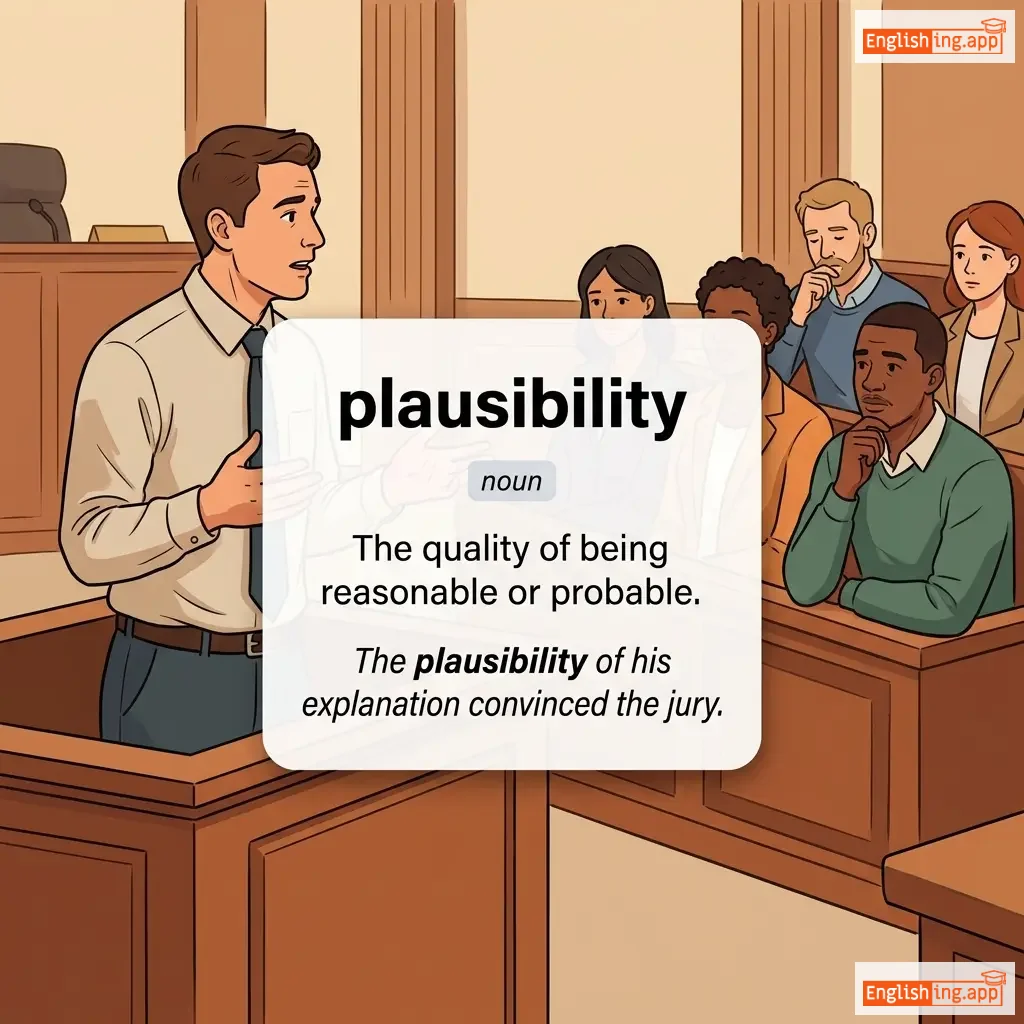
plausibility definition card — visual illustration of the meaning
noun C1
/ˌplɔː.zəˈbɪl.ə.ti/
信頼性 (shinraisei)

The quality of being reasonable or probable.

"The plausibility of his explanation convinced the jury."

"彼の説明の信頼性は陪審員を納得させました。" (Kare no setsumei no shinraisei wa baishin'in o nattoku saserimashita.)
noun C1
/ˈpleɪˌraɪt/
劇作家 (gekisakka)

a person who writes plays

"Shakespeare is considered the greatest playwright of all time."

"シェイクスピアはすべての時代で最も偉大な劇作家と見なされています。" (Sheikusupia wa subete no jidai de mottomo idaina gekisakka to minasareteimasu.)
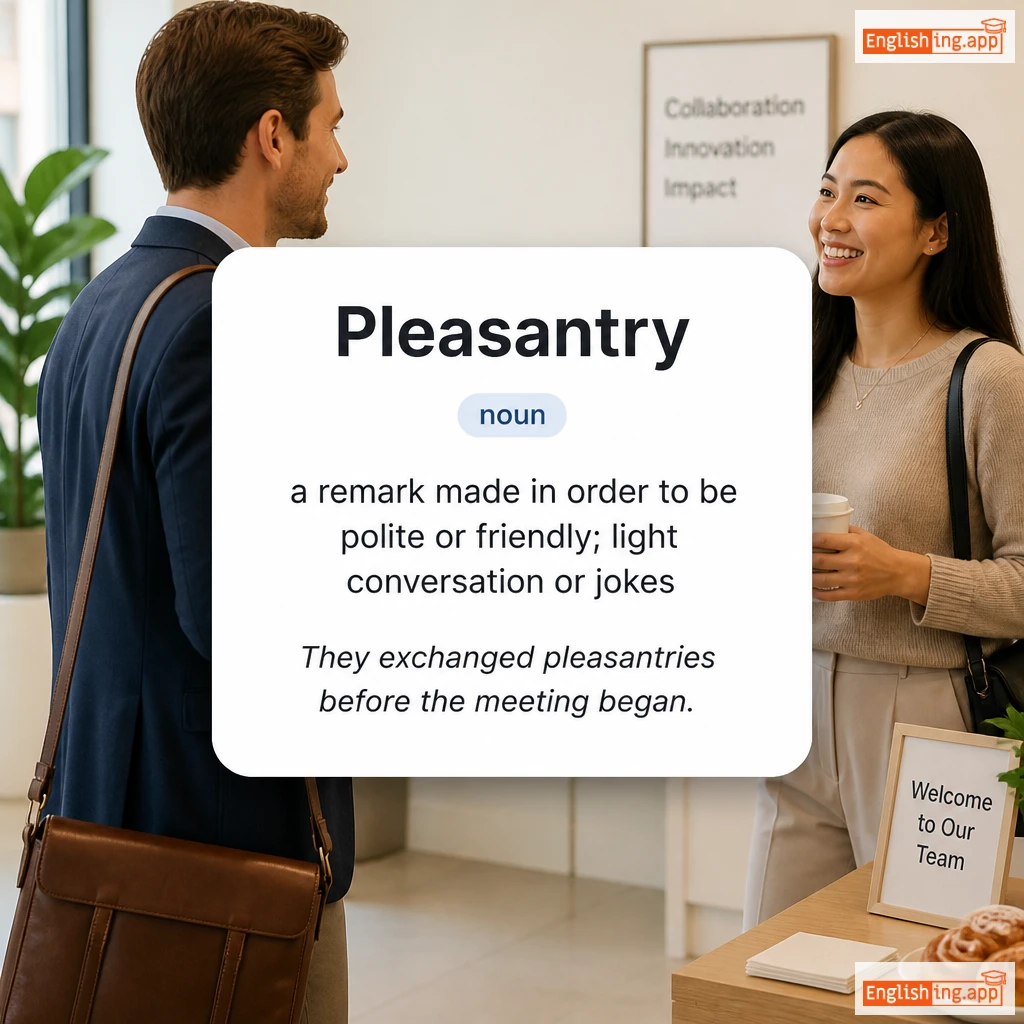
Pleasantry definition card — visual illustration of the meaning
noun C1
/ˈplez.ən.tri/
社交辞令 (shakōjōjirei)

a remark made in order to be polite or friendly; light conversation or jokes

"They exchanged pleasantries before the meeting began."

"彼らは会議が始まる前に社交辞令を交わした。" (Karera wa kaigi ga hajimaru mae ni shakōjōjirei o kawashita.)
noun, verb C1
/pliːt/
プリーツ (purītsu)

a fold in fabric made by doubling the material back upon itself

"She added a pleat to the skirt for extra volume."

"彼女はスカートにボリュームを加えるためにプリーツを入れました。" (Kanojo wa sukāto ni boryūmu o kuwaeru tame ni purītsu o iremashita.)
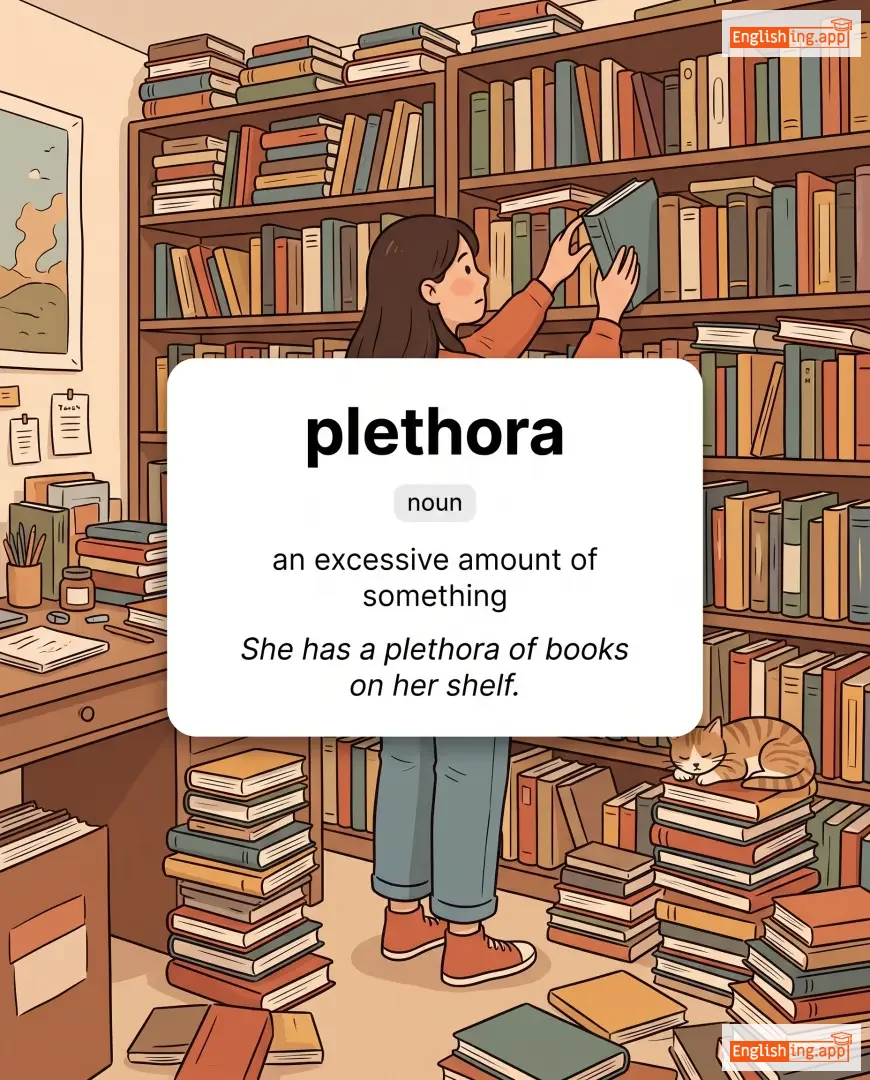
plethora definition card — visual illustration of the meaning
noun C1
/ˈplɛθərə/
過剰な量 (kajo na ryo)

an excessive amount of something

"She has a plethora of books on her shelf."

"彼女の棚には過剰な量の本があります。" (Kanojo no tana ni wa kajo na ryo no hon ga arimasu.)
adjective C1
/ˈplaɪəbəl/
柔軟な (jūnan na)

easily bent or flexible; adaptable

"The metal is pliable enough to be shaped into jewelry."

"その金属は十分に柔軟で、ジュエリーに成形することができます。" (Sono kinzoku wa jūbun ni jūnan de, juwerī ni seikei suru koto ga dekimasu.)
adjective C1
/ˈplaɪənt/
柔軟な、影響を受けやすいまたは適応可能な (jūnan na, eikyō o uke yasui matawa tekiō kanō na)

flexible; easily influenced or adaptable

"She has a pliant personality that adapts well to new situations."

"彼女は新しい状況にうまく適応できる柔軟な性格を持っています。" (Kanojo wa atarashī jōkyō ni umaku tekiō dekiru jūnan na seikaku o motteimasu.)
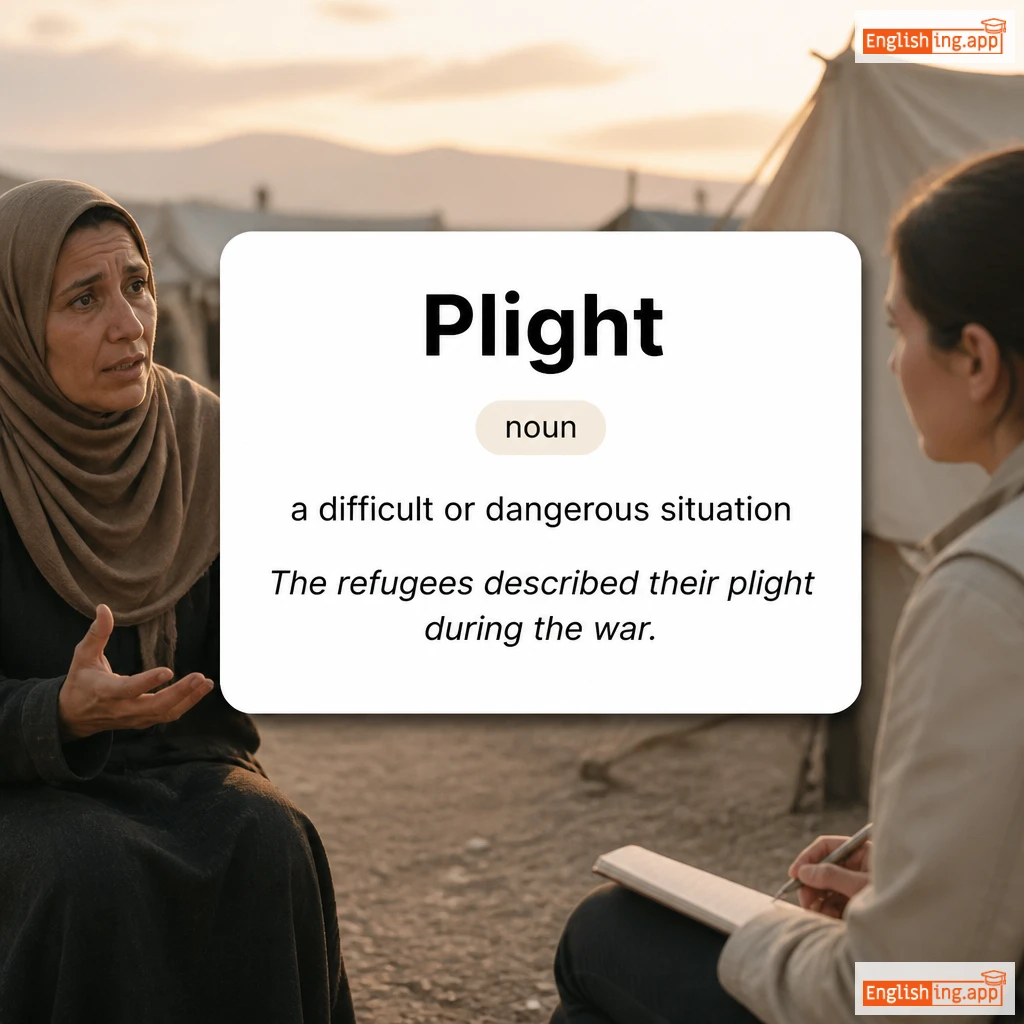
Plight definition card — visual illustration of the meaning
noun C1
/plaɪt/
困難、危機的な状況 (konnan, kikiteki na joukyou)

a difficult or dangerous situation

"The refugees described their plight during the war."

"難民は戦争中の困難を説明しました。" (Nanmin wa sensouchuu no konnan wo setsumeishimashita.)
verb C1
/plɒd/
ゆっくりと働く (yukkuri to hataraku)

to work slowly and steadily, often with effort or difficulty

"He plodded through his homework despite feeling tired."

"疲れていたけど、彼は宿題をゆっくりやっていた。" (Tsukarete ita kedo, kare wa shukudai wo yukkuri yatte ita.)
adjective C1
/ˈplɒd.ɪŋ/
遅くて退屈な (osokute taikutsuna)

slow-moving and unexciting; showing steady effort

"The movie was entertaining but a bit plodding in the middle."

"その映画は面白かったが、真ん中で少し遅くて退屈だった。" (Sono eiga wa omoshirokatta ga, mannaka de sukoshi osokute taikutsu datta.)
noun C1
/plɔɪ/
巧妙な策略 (koumyou na sakuryaku)

a clever plan or action designed to gain an advantage

"She used a clever ploy to win the debate."

"彼女は討論に勝つために巧妙な策略を使いました。" (Kanojo wa tooron ni katsu tame ni koumyou na sakuryaku wo tsukaimashita.)
adjective C1
/ˈplʌk.i/
勇敢 (yūkan)

having or showing courage and determination

"The plucky child rescued the kitten from the tree."

"勇敢な子供が木から子猫を救いました。" (Yūkan na kodomo ga ki kara koneko o sukūmashita.)
noun C1
/ˈpluː.mɪdʒ/
羽毛 (umou)

the feathers covering a bird's body

"The peacock's plumage was vibrant and eye-catching."

"クジャクの羽毛は鮮やかで目を引いた。" (Kujaku no umou wa azayaka de me wo hiita.)
verb C1
/plʌm/
深さを測るまたは詳細に調べる (fukasa o hakaru matawa shousai ni shiraberu)

to measure the depth of water or examine closely

"They used a line to plumb the depth of the lake."

"彼らは湖の深さを測るためにラインを使いました。" (Karera wa mizuumi no fukasa o hakaru tame ni rain o tsukaimashita.)
noun C1
/pluːm/
大きくて柔らかい羽または羽のようなもの (ookikute yawarakai hane matawa hane no you na mono)

a large, soft feather or something resembling a feather

"The soldier wore a red plume on his helmet."

"兵士はヘルメットに赤い羽をつけていた。" (Heishi wa herumetto ni akai hane o tsukete ita.)
plummet definition card — visual illustration of the meaning
verb C1
/ˈplʌm.ɪt/
速い速度で真っ直ぐに落ちる (hayai sokudo de massugu ni ochiru)

to fall straight down at high speed

"Stock prices plummeted after the sudden market crash."

"株価は市場の突然の暴落後に急落しました。" (Kabuka wa shijō no totsuzen no bōraku go ni kyūraku shimashita.)
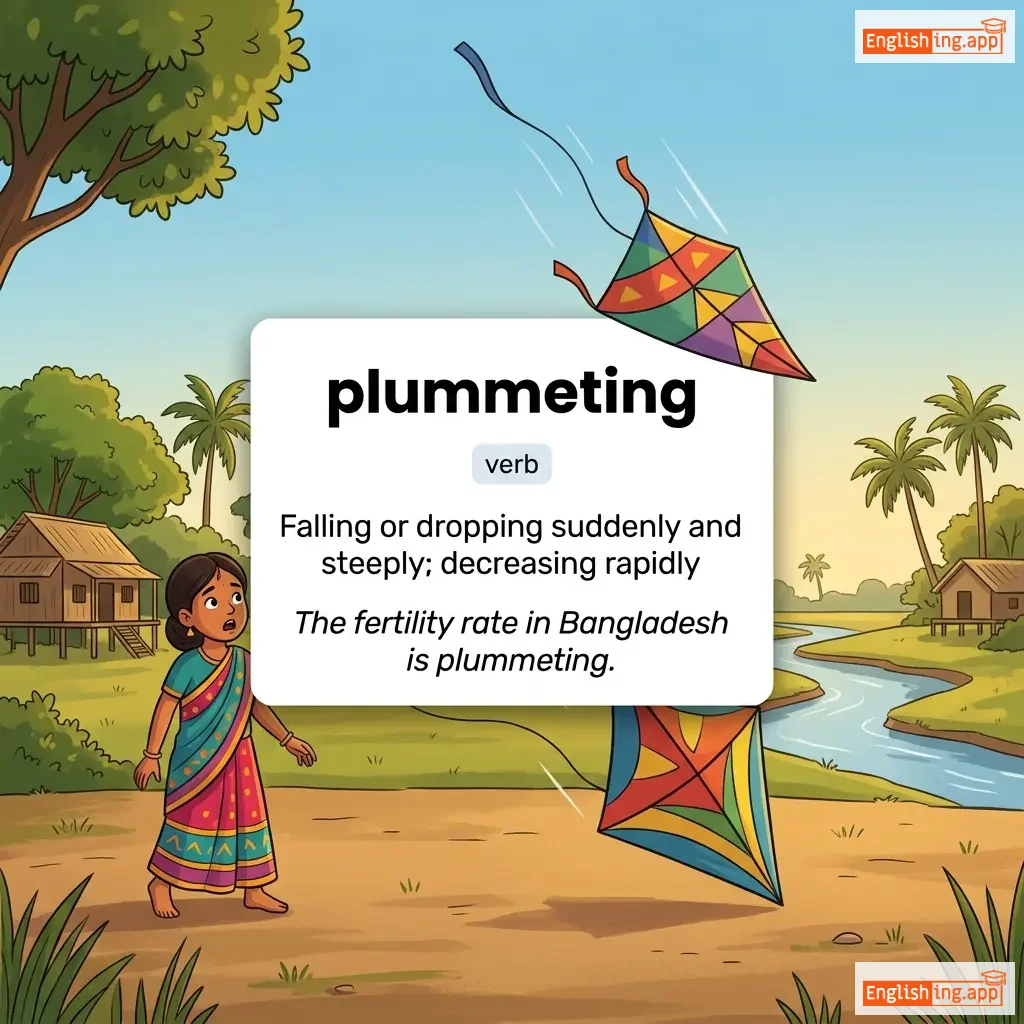
plummeting definition card — visual illustration of the meaning
verb C1
ˈplʌmɪtɪŋ
急落 (kyūraku)

Falling or dropping suddenly and steeply; decreasing rapidly

"The fertility rate in Bangladesh is plummeting."

"バングラデシュの出生率は急落しています。" (Banguradeshu no shusseiritsu wa kyūraku shiteimasu.)
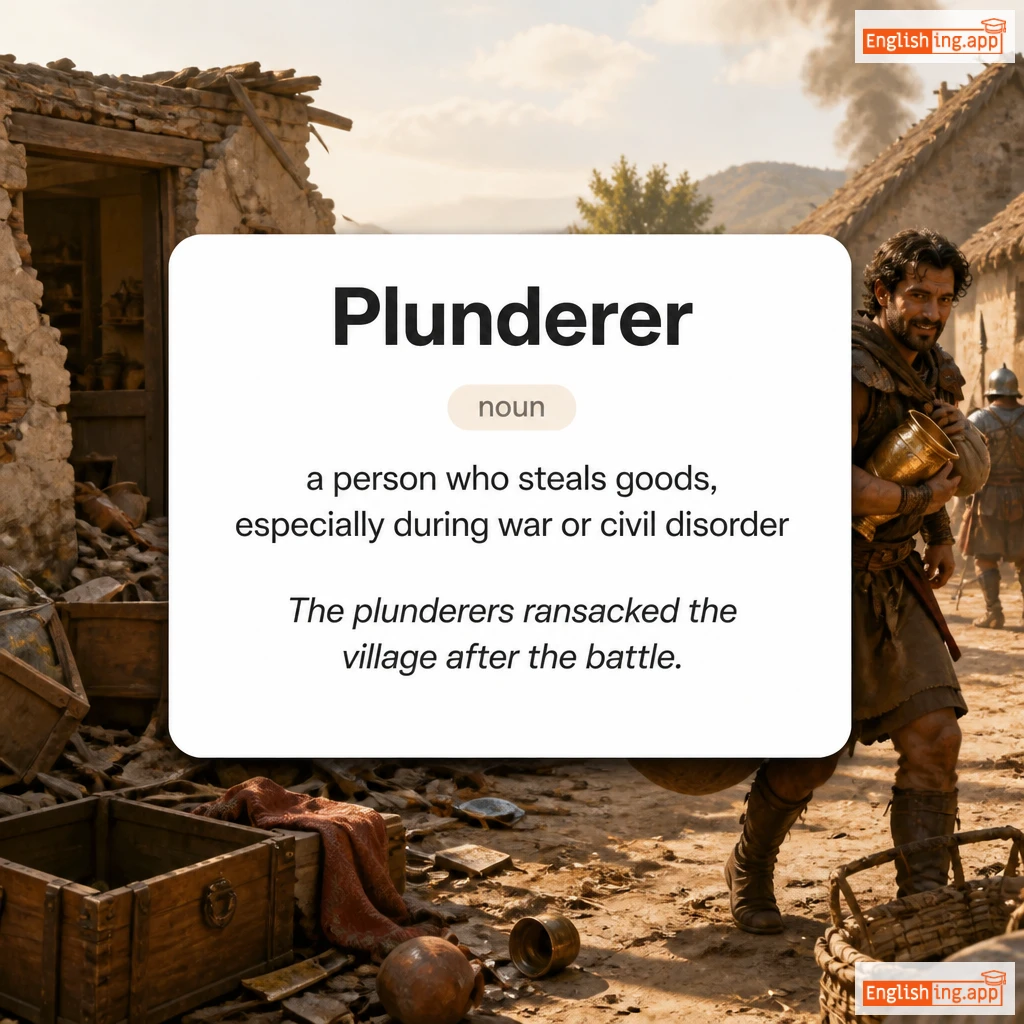
Plunderer definition card — visual illustration of the meaning
noun C1
/ˈplʌn.dər.ər/
略奪者 (ryakudatsusha)

a person who steals goods, especially during war or civil disorder

"The plunderers ransacked the village after the battle."

"戦いの後、略奪者たちは村を荒らしました。" (tatakai no ato, ryakudatsusha-tachi wa mura wo arashimashita.)
noun C1
/plʊəˈrælɪti/
多数派または過半数 (tasūha mata wa kahansū)

the state of being multiple; the greater part or majority

"In the election, she won by a plurality of votes."

"選挙では、彼女は票の多数で勝利しました。" (Senkyō de wa, kanojo wa hyō no tasū de shōri shimashita.)
noun C1
/ˈpoʊdiətrɪst/
足病医 (ashibi-ii)

a doctor specializing in foot care

"I have an appointment with the podiatrist for my ankle pain."

"足首の痛みのためにポディアトリストに予約があります。" (Ashikubi no itami no tame ni podiatrist ni yoyaku ga arimasu.)
noun C1
/poʊˈɛt.ɪks/
詩学、詩の理論 (shigaku, shi no riron)

the study or theory of poetry and its principles

"He wrote a book on poetics explaining the art of verse."

"彼は詩の技法を説明するポエティクスに関する本を書きました。" (Kare wa shi no gihou o setsumei suru poetikusu ni kansuru hon o kakimashita.)
noun C1
/ˈpɔɪ.nən.si/
悲しみ, 痛み (kanashimi, itami)

the quality of evoking a keen sense of sadness or regret; emotionally touching

"The poignancy of the farewell brought tears to everyone's eyes."

"別れの痛ましさは、みんなの目に涙をもたらした。" (Wakare no itamashisa wa, minna no me ni namida o motarashita.)
adjective C1
/ˈpɔɪ.njənt/
胸を打つ, 感動的 (mune wo utsu, kandouteki)

evoking a keen sense of sadness or regret; deeply touching

"The movie's ending was so poignant that many in the audience were moved to tears."

"映画のラストシーンは非常に感動的で、多くの観客が涙を流しました。" (Eiga no rasuto shi-n wa hijou ni kandouteki de, ooku no kankyaku ga namida wo nagashimashita.)
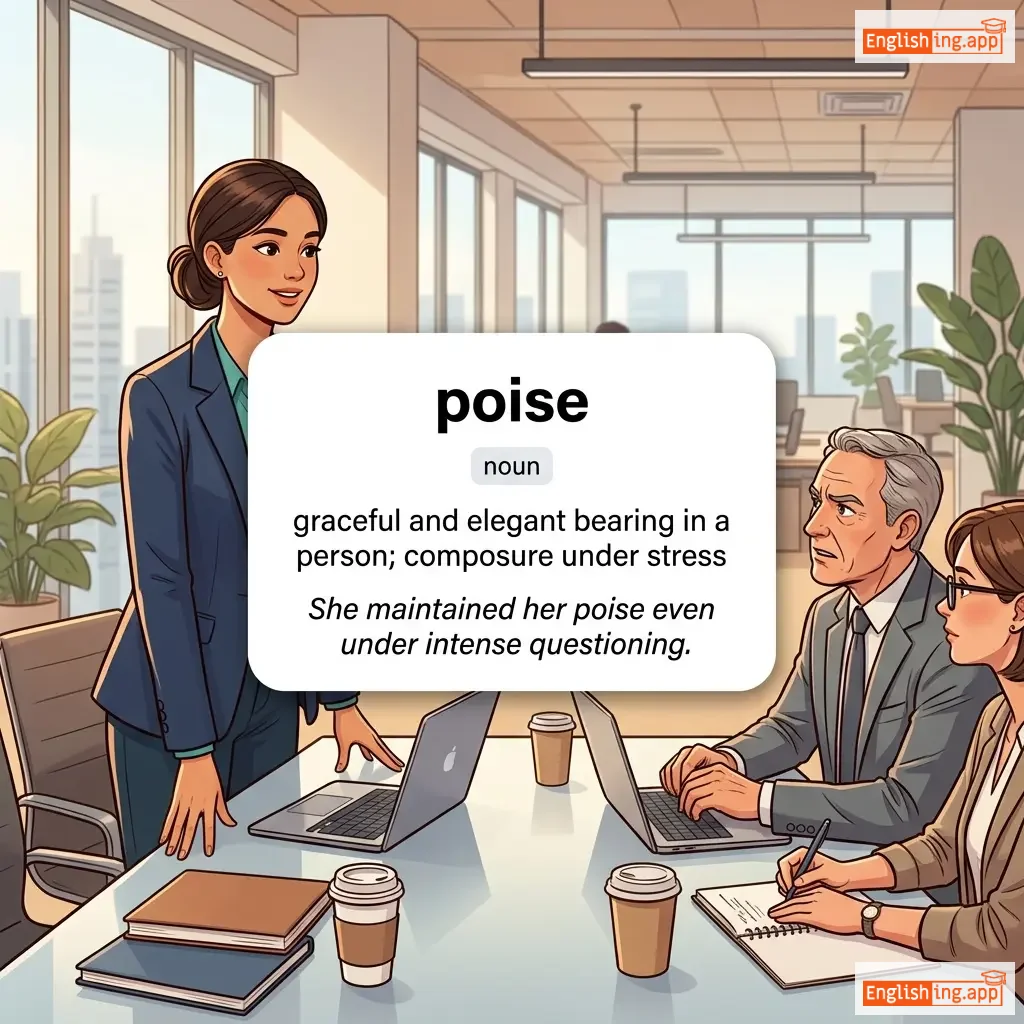
poise definition card — visual illustration of the meaning
noun C1
/pɔɪz/
優雅, 落ち着き, 姿勢 (yūga, ochitsuki, shisei)

graceful and elegant bearing in a person; composure under stress

"She maintained her poise even under intense questioning."

"彼女は激しい尋問の中でも冷静さを保ちました。" (Kanojo wa hageshī jinmon no naka demo reisei-sa o tamochimashita.)
noun C1
/poʊˈlær.ɪ.ti/
極性 (kyokusei)

the state of having two opposite or contradictory tendencies, opinions, or aspects

"The polarity between the two political parties is growing stronger."

"二つの政治党派の間の極性は強くなりつつあります。" (Futatsu no seiji touha no aida no kyokusei wa tsuyoku nari tsutsu arimasu.)