ভোকাবুলারিসমূহ

ইংরেজি শব্দের বাংলা অর্থ | English to Bangla Word Meaning Dictionary

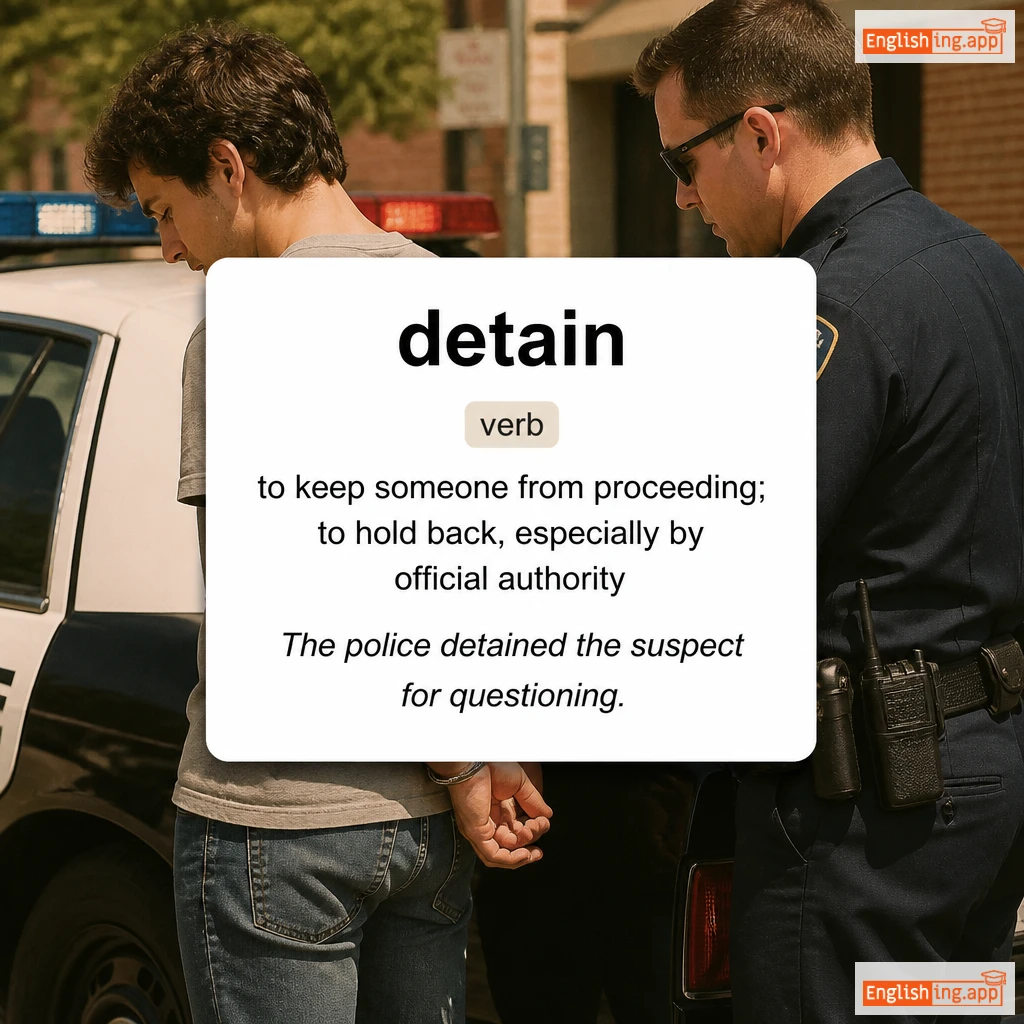
detain definition card — visual illustration of the meaning
verb C1
/dɪˈteɪn/

to keep someone from proceeding; to hold back, especially by official authority

"The police detained the suspect for questioning."

noun C1
/deɪˈtɒnt/
緊張関係の緩和 (kinchou kankei no kanwa)

the easing of strained relations, especially between countries

"The treaty helped bring about a détente between the two nations."

"その条約は、二国間の緊張関係を緩和するのに役立ちました。" (Sono jouyaku wa, nikokukan no kinchou kankei o kanwa suru no ni yakudachimashita.)
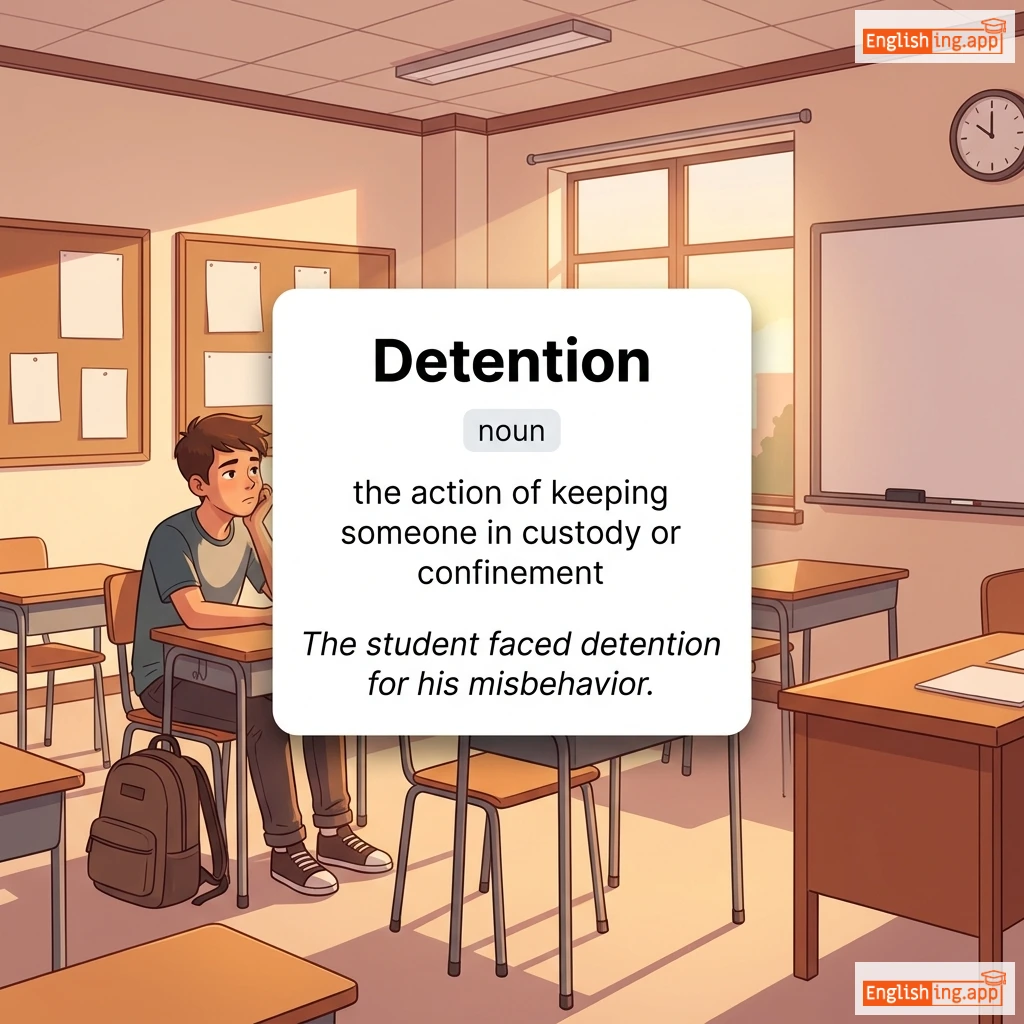
Detention definition card — visual illustration of the meaning
noun C1
/dɪˈtɛnʃən/
拘束 (kousoku)

the action of keeping someone in custody or confinement

"The student faced detention for his misbehavior."

"学生は不正行為で拘束を受けました。" (Gakusei wa fusei koui de kousoku wo ukemashita.)
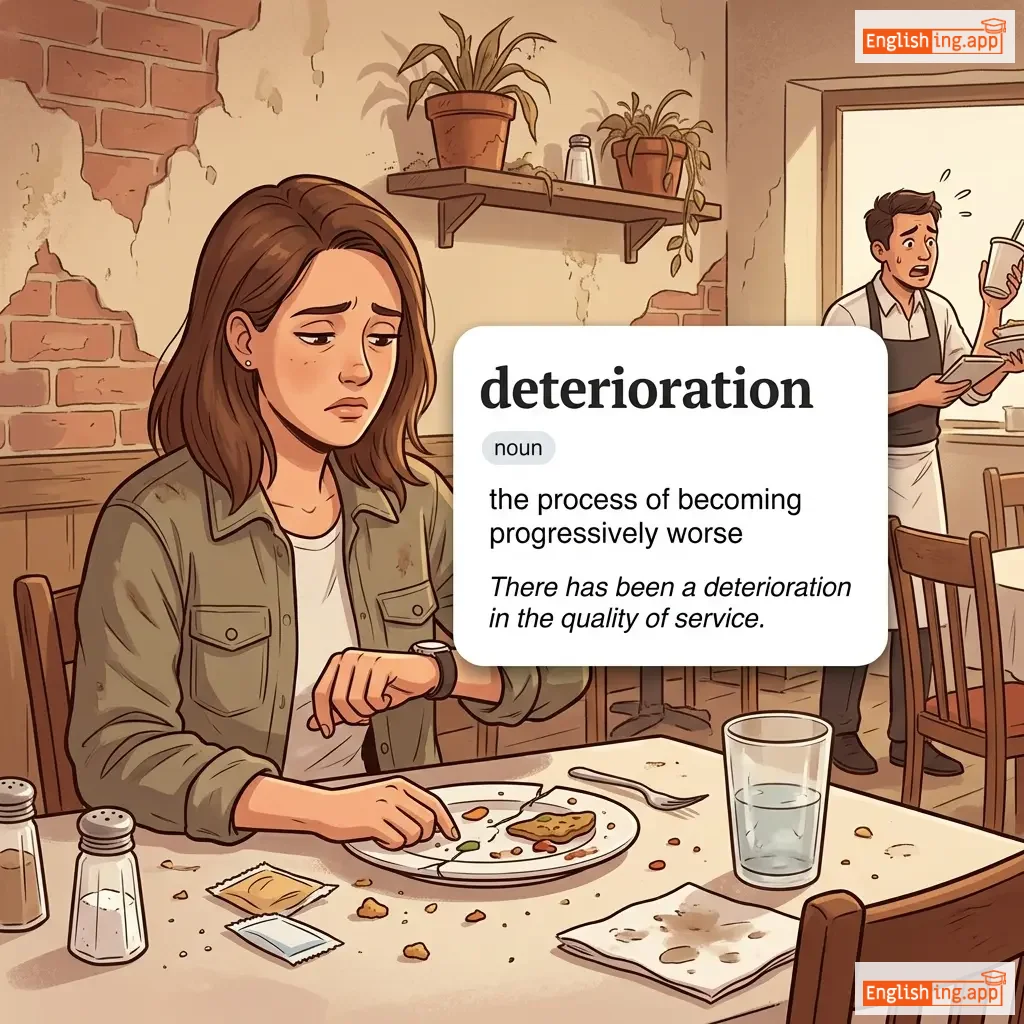
deterioration definition card — visual illustration of the meaning
noun C1
/dɪˌtɪriəˈreɪʃən/
悪化 (akka)

the process of becoming progressively worse

"There has been a deterioration in the quality of service."

"サービスの質が悪化しました。" (Sābisu no shitsu ga akka shimashita.)
determinant definition card — visual illustration of the meaning
noun C1
/dɪˈtɜːrmɪnənt/
決定要因 (kettei yōin)

a factor that decisively affects the nature or outcome of something

"Education is a key determinant of economic growth."

"教育は経済成長の主要な決定要因です。" (Kyōiku wa keizai seichō no shuyō na kettei yōin desu.)
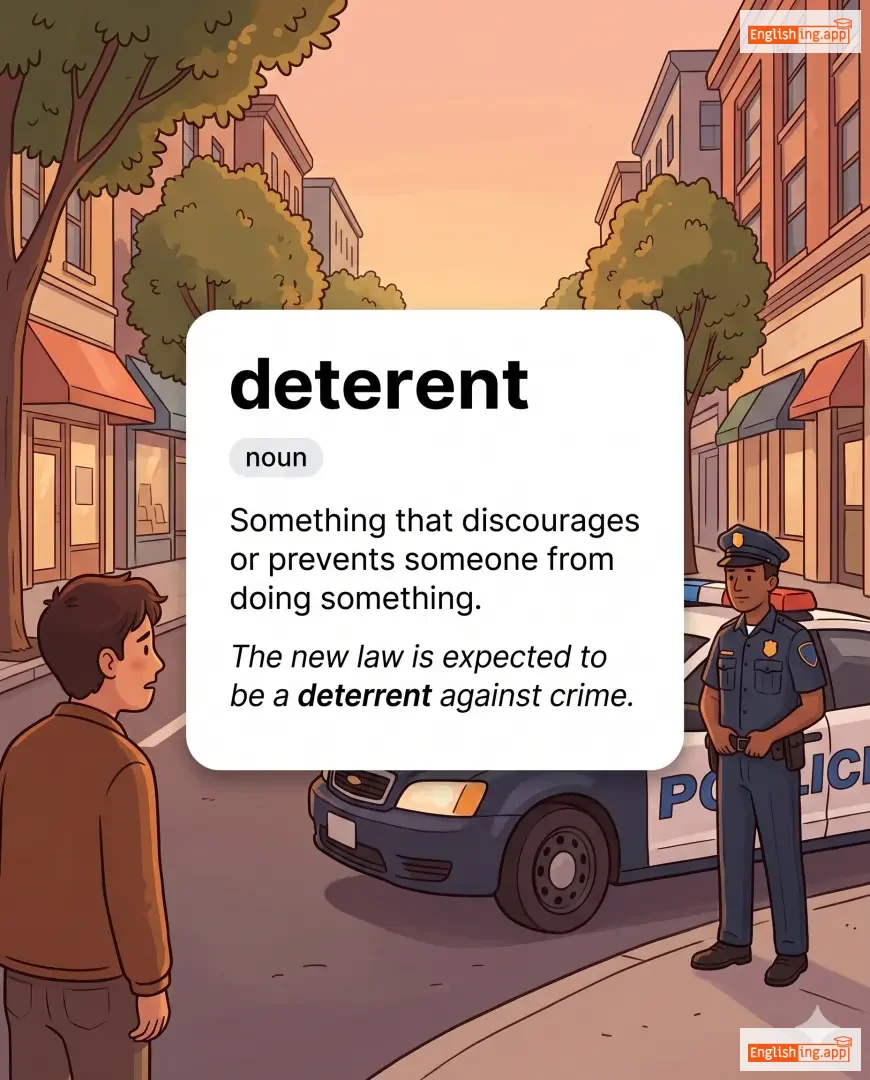
deterrent definition card — visual illustration of the meaning
noun C1
/dɪˈtɜːrənt/
抑止力 (yokushiryoku)

Something that discourages or prevents someone from doing something.

"The new law is expected to be a deterrent against crime."

"新しい法律は犯罪に対する抑止力になると予想されています。" (Atarashī hōritsu wa hanzai ni taisuru yokushiryoku ni naru to yosō sareteimasu.)
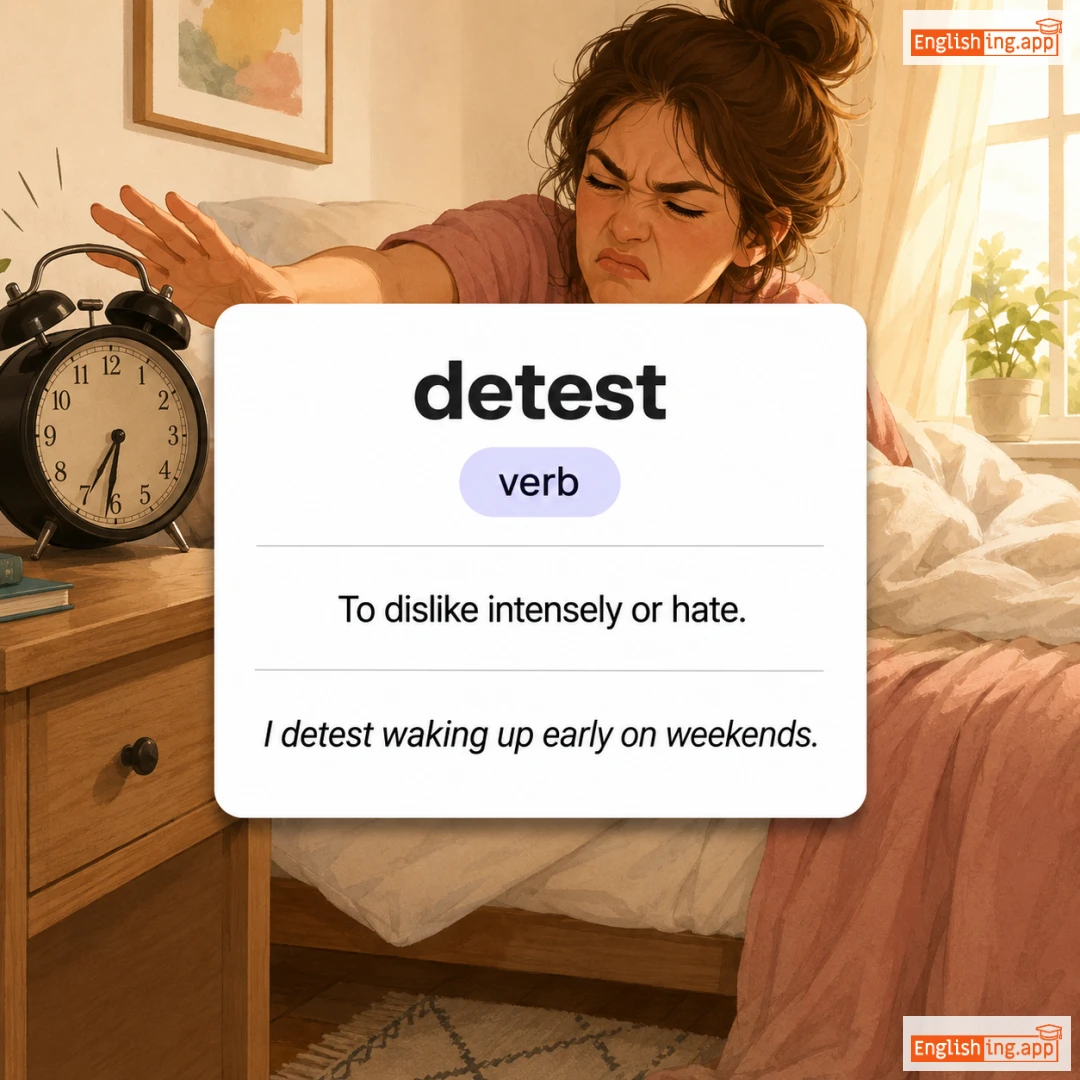
detest definition card — visual illustration of the meaning
verb C1
/dɪˈtɛst/
嫌う (kirau)

To dislike intensely or hate.

"I detest waking up early on weekends."

"私は週末に早起きするのが嫌いです。" (Watashi wa shuumatsu ni hayaoki suru no ga kirai desu.)
noun C1
/ˌdɛtəˈneɪʃən/
爆発 (bakuhatsu)

The act of exploding or causing something to explode.

"The sudden detonation shook the entire building."

"突然の爆発が建物全体を揺さぶった。" (Totsuzen no bakuhatsu ga tatemono zentai o yusabutta.)
detoxification definition card — visual illustration of the meaning
noun C1
/dɪˌtɒksɪfɪˈkeɪʃən/
解毒 (gedoku)

The process of removing toxic substances or effects from the body.

"Detoxification is often the first step in treating drug addiction."

"解毒はしばしば薬物依存症治療の最初のステップです。" (Gedoku wa shibashiba yakubutsu izonshou chiryou no saisho no suteppu desu.)
verb C1
/dɪˈtrækt/

To reduce or take away the worth or value of something.

"His rude behavior will detract from his good reputation."

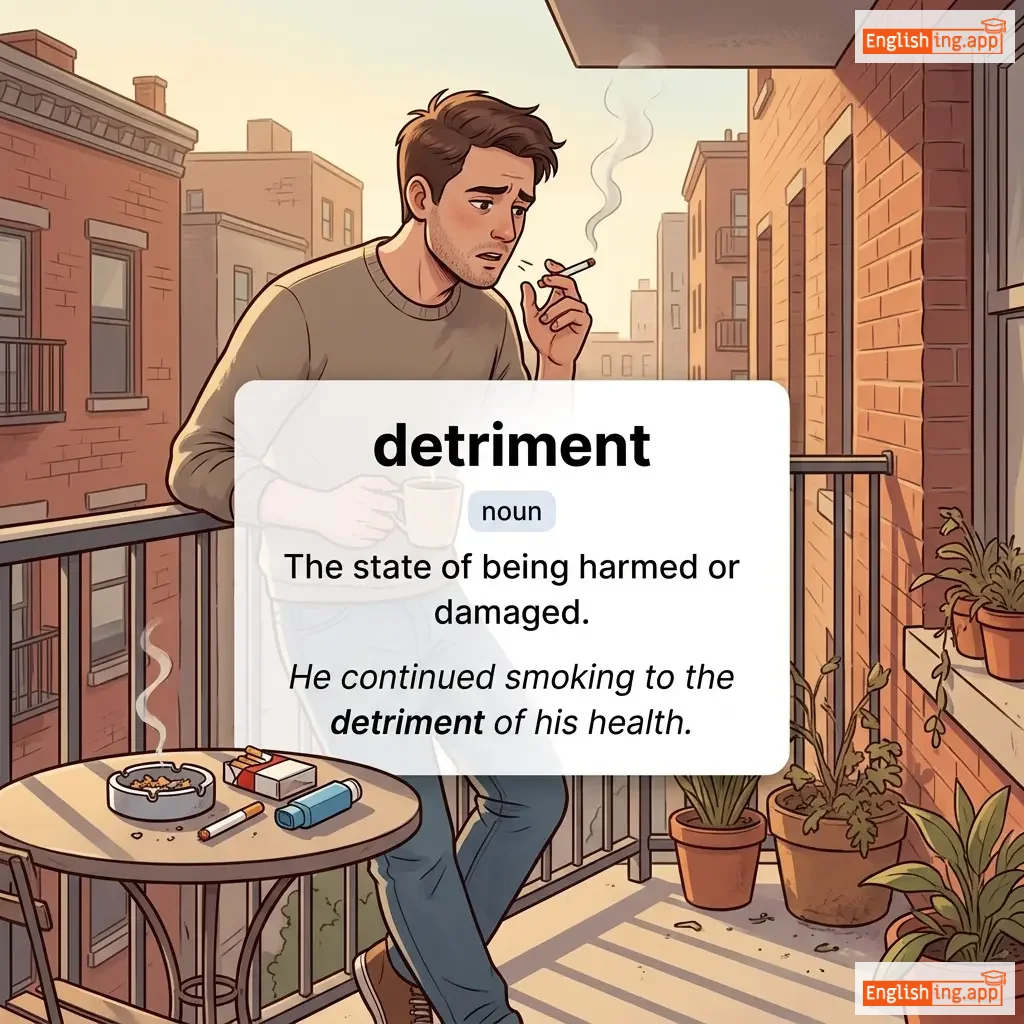
detriment definition card — visual illustration of the meaning
noun C1
/ˈdɛtrɪmənt/
損害 (songai)

The state of being harmed or damaged.

"He continued smoking to the detriment of his health."

"彼は健康に損害を与えるにもかかわらず、喫煙を続けました。" (Kare wa kenkou ni songai wo ataeru nimokakawarazu, kitsuen wo tsuzukemashita.)
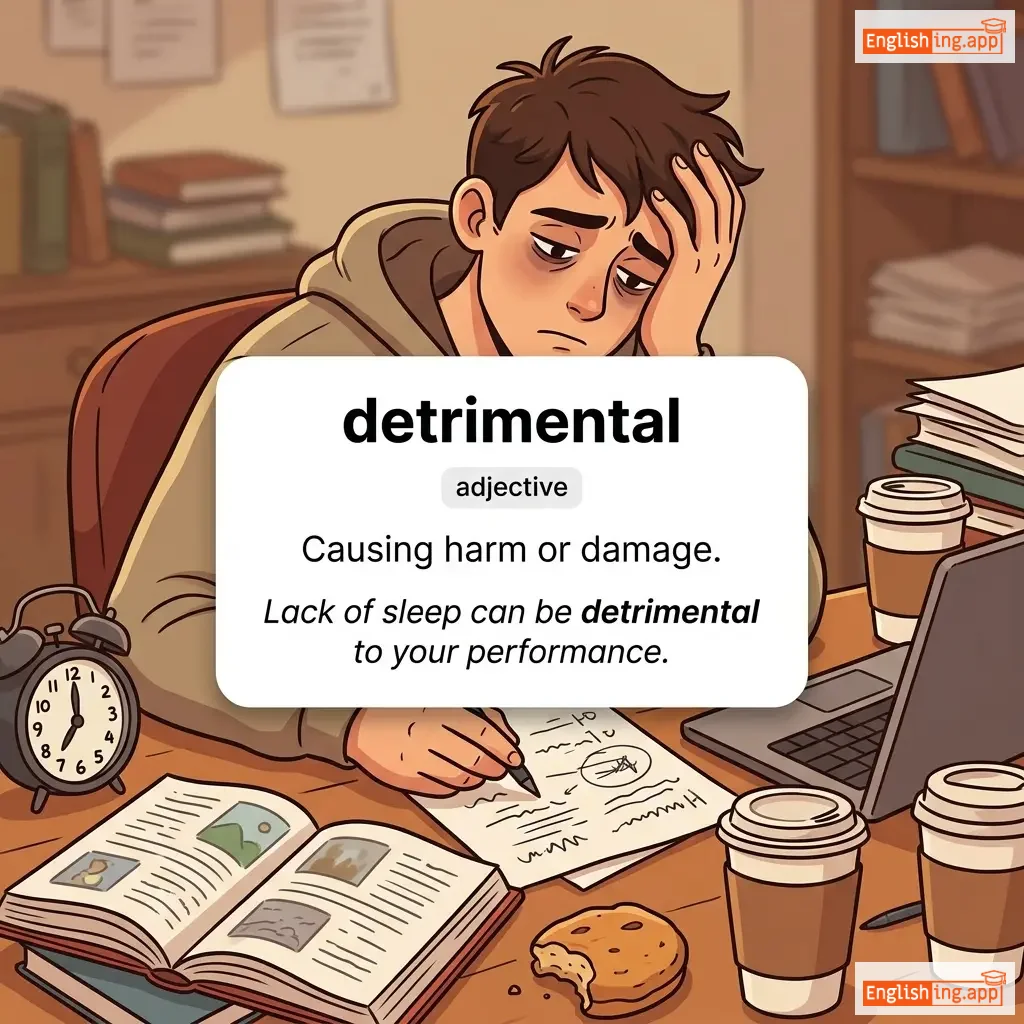
detrimental definition card — visual illustration of the meaning
adjective C1
/ˌdɛtrɪˈmɛntəl/

Causing harm or damage.

"Lack of sleep can be detrimental to your performance."

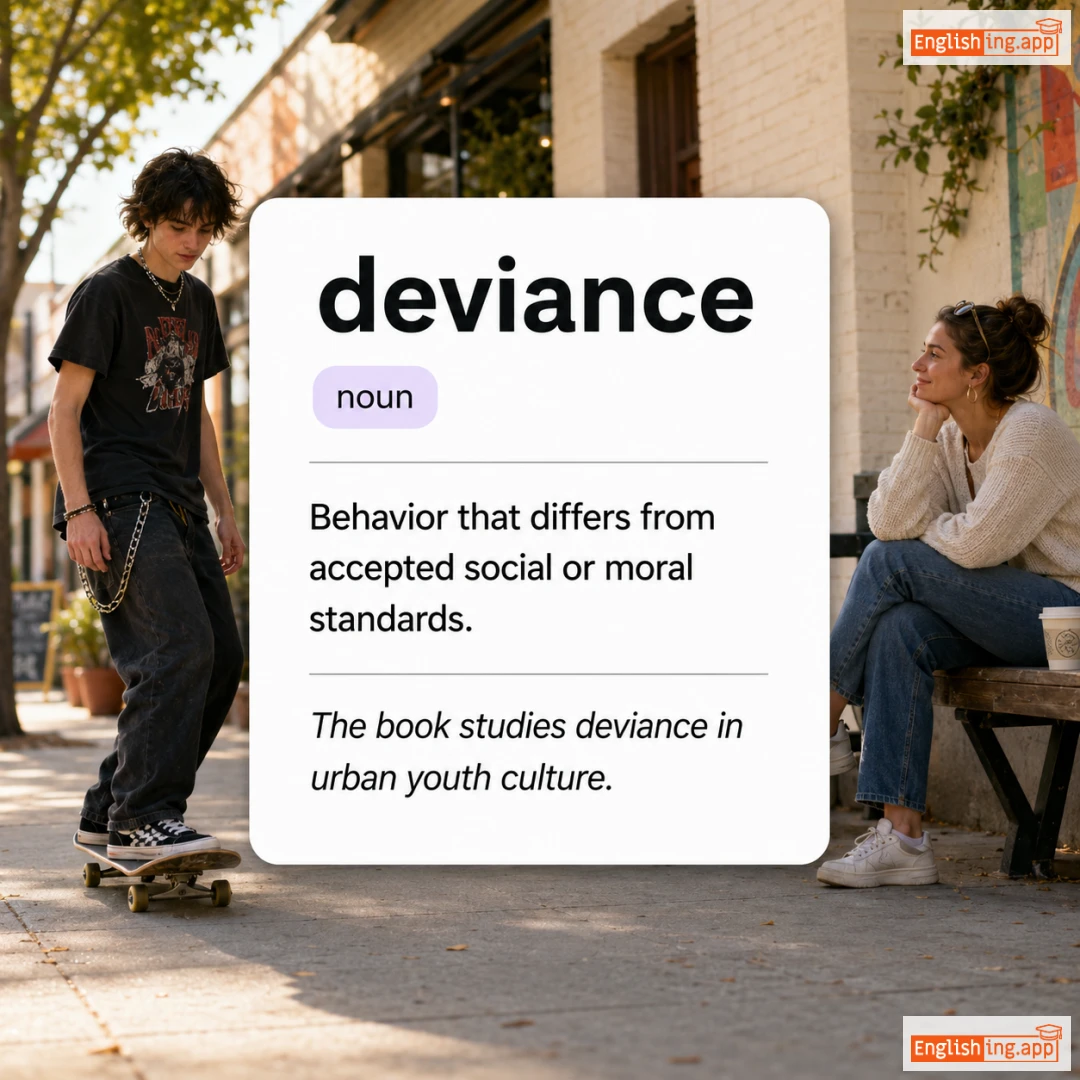
deviance definition card — visual illustration of the meaning
noun C1
/ˈdiːviəns/
逸脱 (itsudatsu)

Behavior that differs from accepted social or moral standards.

"The book studies deviance in urban youth culture."

"その本は都市の若者文化における逸脱を研究しています。" (Sono hon wa toshi no wakamono bunka ni okeru itsudatsu o kenkyu shiteimasu.)
deviate definition card — visual illustration of the meaning
verb C1
/ˈdiːvieɪt/
逸脱する (itsudatsu suru)

To depart from an established course or norm.

"He decided to deviate from the original plan."

"彼は元の計画から逸脱することに決めました。" (Kare wa moto no keikaku kara itsudatsu suru koto ni kimemashita.)
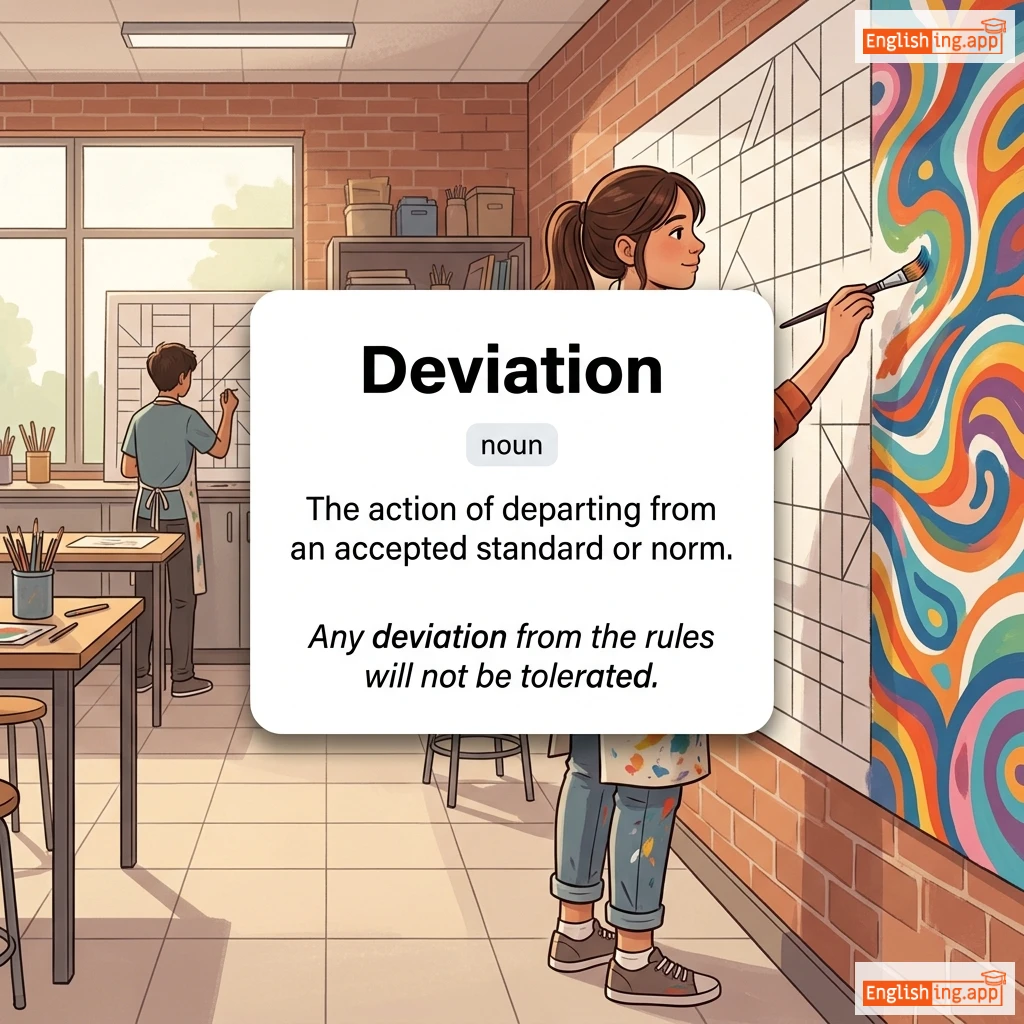
Deviation definition card — visual illustration of the meaning
noun C1
/ˌdiːviˈeɪʃn/
偏差 (hensha)

The action of departing from an accepted standard or norm.

"Any deviation from the rules will not be tolerated."

"規則からのいかなる偏差も許されません。" (Kisoku kara no ikannaru hensha mo yurusaremasen.)
adjective C1
/ˈdiːviəs/
狡猾な (kōkatsu na)

Skillful at using underhanded tactics to achieve goals; not straightforward.

"He used a devious plan to gain control of the company."

"彼は会社の支配権を握るために、狡猾な計画を使いました。" (Kare wa kaisha no shihai ken o nigiru tame ni, kōkatsu na keikaku o tsukaimashita.)
adjective C1
/dɪˈvɔɪd/
空虚 (kūkyō)

Completely lacking or without something.

"His speech was devoid of any real emotion."

"彼のスピーチは実際の感情が空虚だった。" (Kare no supīchi wa jissai no kanjō ga kūkyō datta.)
verb C1
/dɪˈvɒlv/
委譲する (いじょうする)

To pass power, responsibility, or duties to another person or group.

"The responsibility will devolve on the new manager."

"責任は新しいマネージャーに委譲されます。" (Sekinin wa atarashī manējā ni ijō saremasu.)
noun C1
/ˌdɛvəˈtiː/
献身者 (kenshinsha)

A person who is very enthusiastic about or strongly dedicated to something or someone.

"He is a great devotee of classical music."

"彼はクラシック音楽の大きな献身者です。" (kare wa kurashikku ongaku no ookina kenshinsha desu)
adjective C1
/dɪˈvaʊt/
献身的 (kenshin-teki)

Deeply religious or sincere.

"He is a devout believer who prays every day."

"彼は毎日祈る献身的な信者です。" (Kare wa mainichi inoru kenshin-teki na shinja desu.)
dexterity definition card — visual illustration of the meaning
noun C1
/dɛkˈstɛrɪti/
器用さ (kiyousa)

Skill in using the hands or body; mental quickness.

"She showed great dexterity in playing the piano."

"彼女はピアノを弾く際に優れた器用さを示しました。" (Kanojo wa piano o hiku sai ni sugureta kiyousa o shimeshimashita.)
dexterous definition card — visual illustration of the meaning
adjective C1
/ˈdɛkstrəs/
器用 (kiyou)

Skillful and quick, especially with the hands.

"The craftsman was dexterous in carving wood."

"職人は木を彫るのが器用だった。" (Shokunin wa ki o horu no ga kiyou datta.)
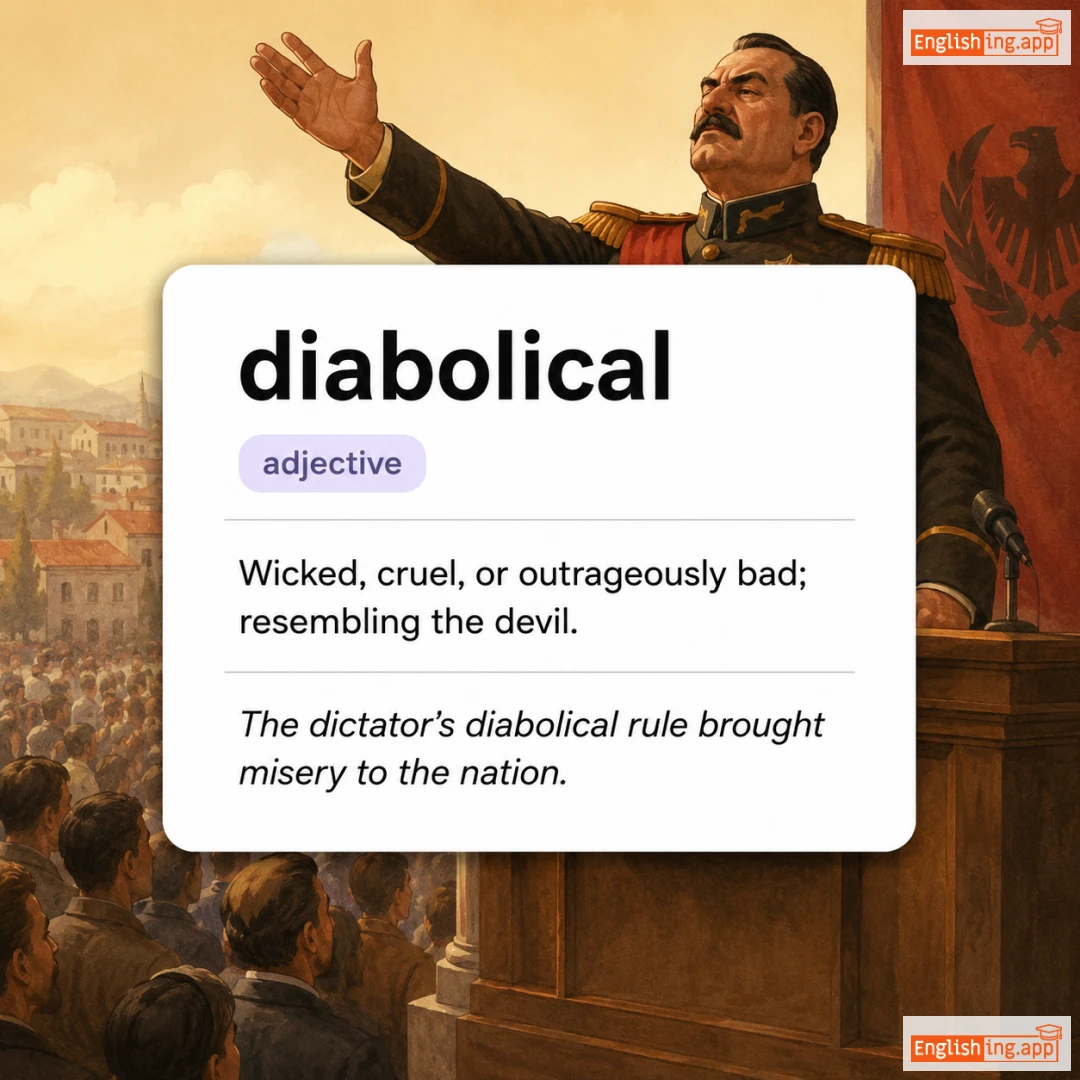
diabolical definition card — visual illustration of the meaning
adjective C1
/ˌdaɪəˈbɒlɪkəl/
悪魔的 (akumateki)

Wicked, cruel, or outrageously bad; resembling the devil.

"The dictator’s diabolical rule brought misery to the nation."

"独裁者の悪魔的な支配は国に苦しみをもたらした。" (Dokusaisha no akumateki na shihai wa kuni ni kurushimi o motarashita.)
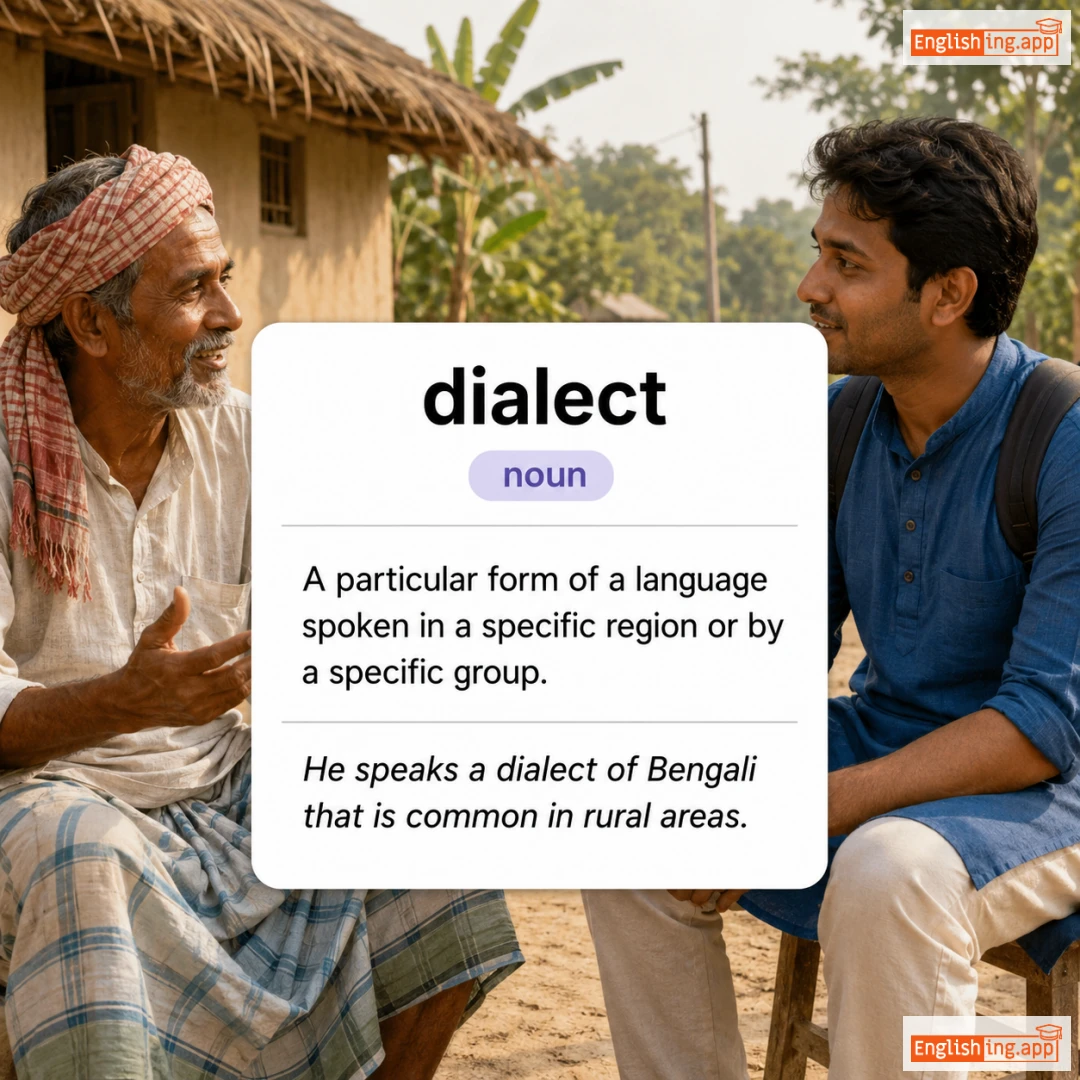
dialect definition card — visual illustration of the meaning
noun C1
/ˈdaɪəˌlɛkt/
方言 (hougen)

A particular form of a language spoken in a specific region or by a specific group.

"He speaks a dialect of Bengali that is common in rural areas."

"彼は田舎で一般的なベンガル語の方言を話します。" (Kare wa inaka de ippantekina bengarugo no hōgen o hanashimasu.)
adjective C1
/ˈdaɪ.si/
危険な (kiken na)

Risky or unpredictable; potentially dangerous.

"Investing in that company looks pretty dicey right now."

"その会社への投資は今、かなり危険なように見える。" (Sono kaisha e no tōshi wa ima, kanari kiken na yō ni mieru.)
dichotomy definition card — visual illustration of the meaning
noun C1
/daɪˈkɒtəmi/
二項対立 (nikou tairitsu)

A division or contrast between two things that are completely different.

"There is a clear dichotomy between good and evil."

"善と悪の間には明確な二項対立があります。" (Zen to aku no aida ni wa meikaku na nikou tairitsu ga arimasu.)
adjective C1
/ˌdɪktəˈtɔːriəl/
独裁的 (dokusai teki)

Having or showing a tendency to tell people what to do in an autocratic way.

"His dictatorial style made him unpopular among colleagues."

"彼の独裁的なスタイルは、同僚たちの間で不人気だった。" (Kare no dokusai-teki na sutairu wa, dōryō-tachi no aida de funinki datta.)
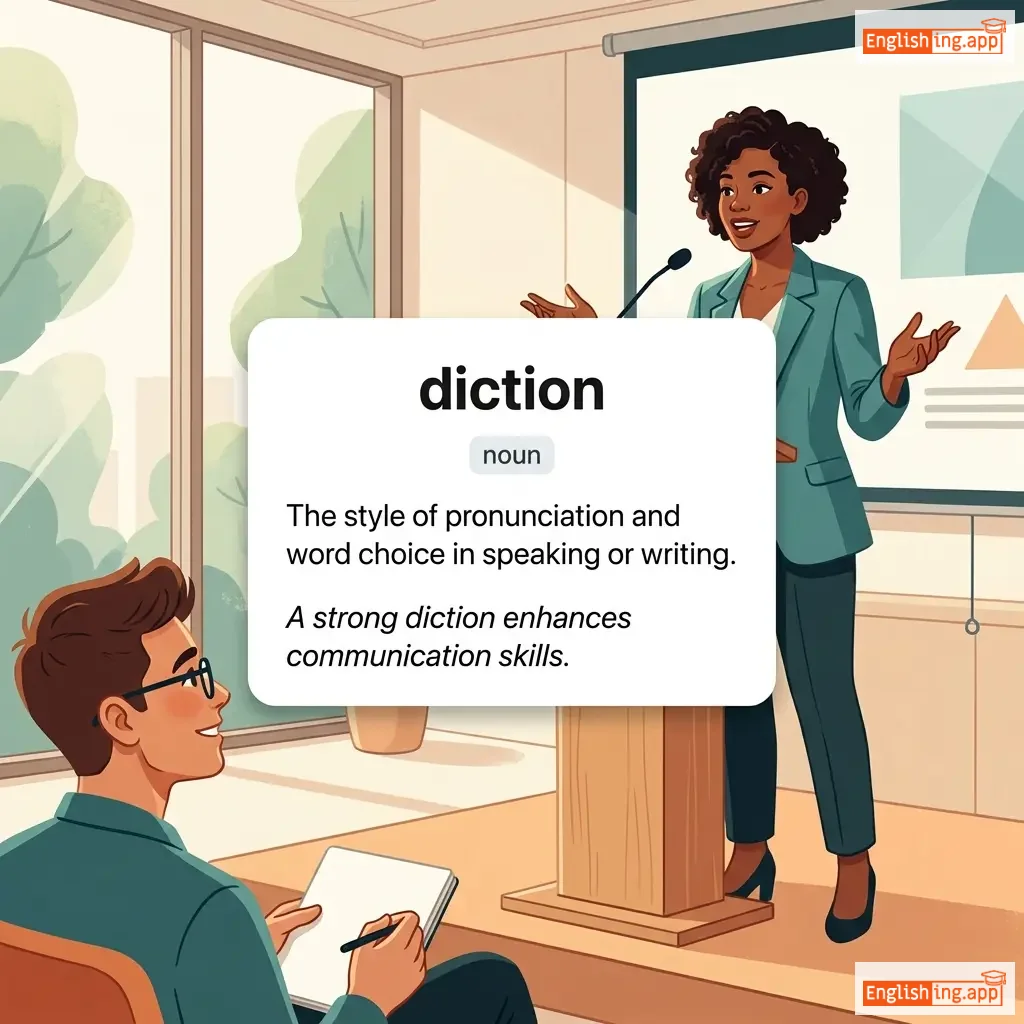
diction definition card — visual illustration of the meaning
noun C1
ˈdɪk.ʃən
発音と単語の選択 (hatsuon to tango no sentaku)

The style of pronunciation and word choice in speaking or writing.

"A strong diction enhances communication skills."

"強いディクションはコミュニケーション能力を向上させます。" (Tsuyoi dikushon wa komyunikeeshon nouryoku o koujou sasemasu.)
noun C1
/ˈdaɪhɑːrd/

A person who strongly resists change and remains loyal to a belief or cause.

"He is a diehard fan of classic rock music."

adjective C1
/ˌdɪfəˈrɛnʃəl/
差別的 (sabetsuteki)

Relating to or showing a difference; involving a distinction.

"There is a differential treatment between the two groups."

"2つのグループ間に差別的な扱いがあります。" (Futatsu no gurūpu-kan ni sabetsuteki na atsukai ga arimasu.)
differentiation definition card — visual illustration of the meaning
noun C1
/ˌdɪf.ə.ren.ʃiˈeɪ.ʃən/
差別化, 区別, 分化 (sabetsuka, kubetsu, bunka)

The action or process of differentiating or distinguishing between two or more things or people.

"Strong differentiation sets brands apart from competitors."

"強いディファレンシエーションは、ブランドを競合他社と差別化します。" (Tsuyoi differentiation wa, burando o kyōgō tashā to sabetsuka shimasu.)
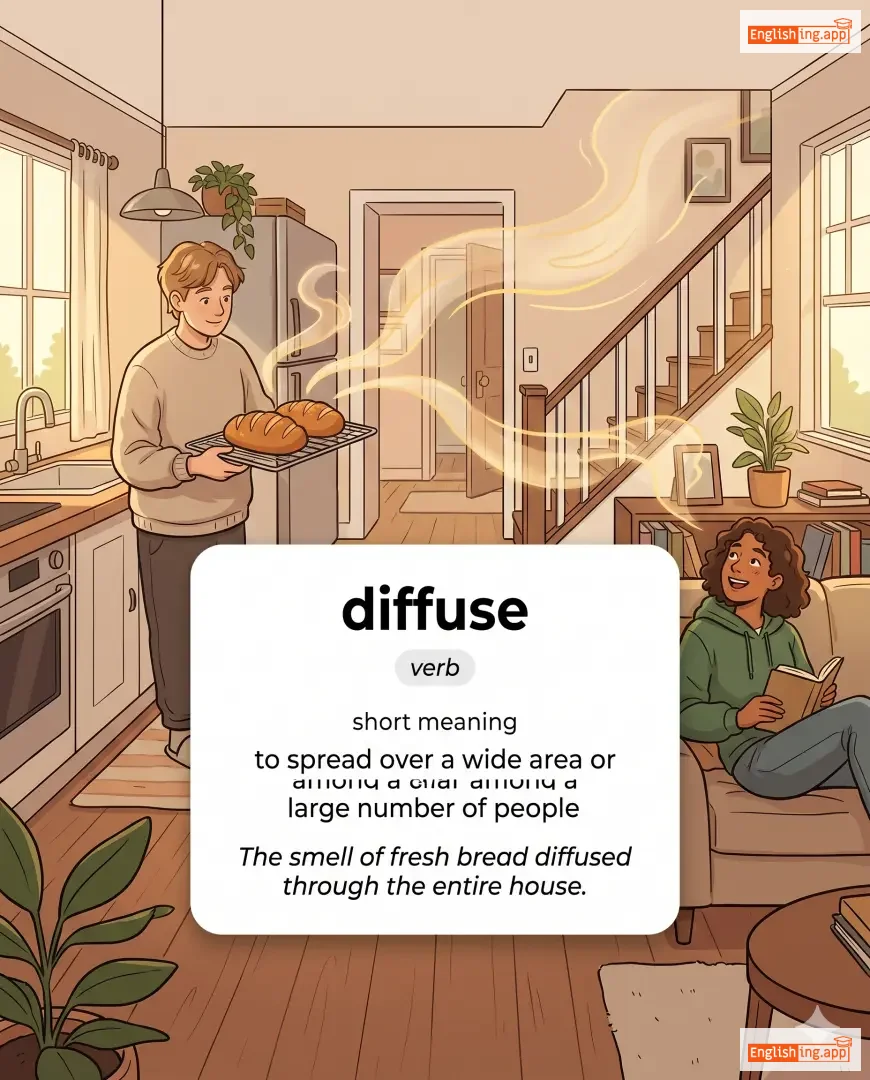
diffuse definition card — visual illustration of the meaning
🌫️

diffuse

verb C1
/dɪˈfjuːz/

to spread over a wide area or among a large number of people

"The smell of fresh bread diffused through the entire house."

noun C1
/dɪˈfjuːʒən/

the spreading of something more widely or the movement of particles from high to low concentration

"The diffusion of information on social media is rapid."

noun C1
/ˈdɪɡnɪˌtɛri/
重要人物 (jūyō jinbutsu)

a person considered to be important because of high rank or office

"Several foreign dignitaries attended the state banquet."

"数人の外国の重要人物が国の晩餐会に出席しました。" (Sūnin no gaikoku no jūyō jinbutsu ga kuni no bansankai ni shusseki shimashita.)
↪️

digress

verb C1
/daɪˈɡrɛs/

To leave the main subject temporarily in speech or writing.

"The professor began to digress from the main topic of the lecture."

adjective C1
/dɪˈlæpɪˌdeɪtɪd/
老朽化した (rōkyūka shita)

Fallen into disrepair or ruin due to neglect or age.

"The family lived in a dilapidated house at the edge of town."

"その家族は町の端にある老朽化した家に住んでいました。" (Sono kazoku wa machi no hashi ni aru rōkyūka shita ie ni sunde imashita.)
verb C1
/daɪˈleɪt/
拡大する (kakudai suru)

To make wider, larger, or more open.

"The doctor used drops to dilate the patient's pupils."

"医者は患者の瞳孔を拡げるために点眼薬を使いました。" (Isha wa kanja no tōkō o hirakeru tame ni tengenyaku o tsukaimashita.)
diligence definition card — visual illustration of the meaning
noun C1
/ˈdɪlɪdʒəns/
勤勉 (kinmen)

Careful and persistent work or effort.

"Through diligence and determination, she completed her research on time."

"勤勉と決意をもって、彼女は研究を時間通りに終わらせた。" (Kinmen to ketsui o motte, kanojo wa kenkyū o jikan dōri ni owaraseta.)
verb C1
/daɪˈluːt/
薄める (usumeru)

To make a liquid thinner or weaker by adding water or another solvent.

"You should dilute the juice with water before serving it to children."

"子供たちに出す前にジュースを水で薄めるべきです。" (Kodomotachi ni dasu mae ni jūsu o mizu de usumeru beki desu.)
diminution definition card — visual illustration of the meaning
noun C1
/ˌdɪmɪˈnjuːʃən/

a reduction in the size, extent, or importance of something

"The report showed a steady diminution of resources over the last decade."

adjective C1
/dɪˈmɪnjətɪv/
非常に小さい (hijō ni chiisai)

extremely or unusually small

"Despite his diminutive size, he was a powerful leader."

"その非常に小さい体格にもかかわらず、彼は強力なリーダーだった。" (Sono hijō ni chiisai taikaku ni mo kakawarazu, kare wa kyōryoku na rīdā datta.)
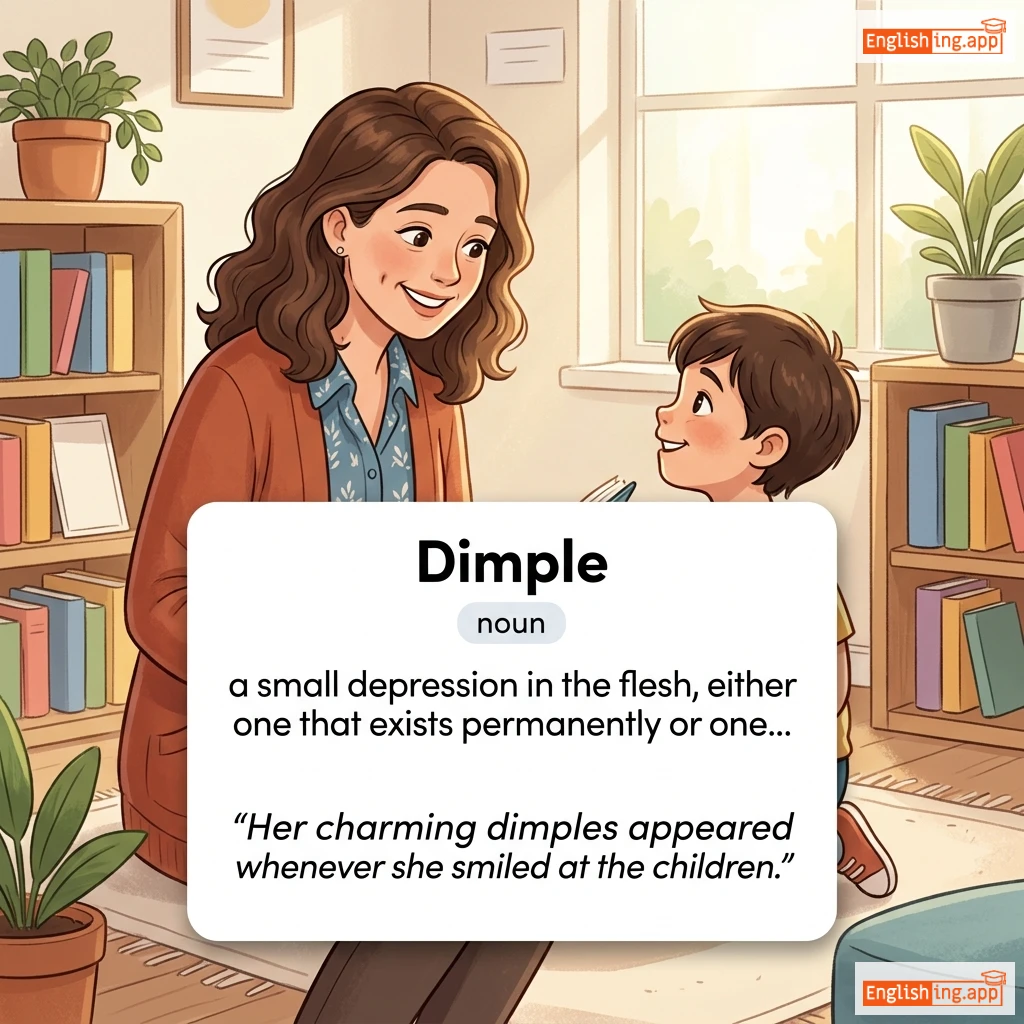
Dimple definition card — visual illustration of the meaning
noun C1
/ˈdɪm.pəl/
えくぼ (ekubo)

a small depression in the flesh, either one that exists permanently or one that forms when smiling

"Her charming dimples appeared whenever she smiled at the children."

"彼女の魅力的なえくぼは、子供たちに微笑むたびに現れました。" (kanojo no miryokuteki na ekubo wa, kodomotachi ni hohoemu tabi ni arawaremashita.)
noun C1
/dɪn/
騒音 (souon)

a loud, unpleasant, and prolonged noise

"The din of traffic outside made it hard to concentrate."

"外の交通の騒音が集中するのを困難にしていた。" (Soto no koutsuu no souon ga shuuchuu suru no wo konnan ni shite ita.)
noun C1
/ˈdɪŋɡi/
ディンギーボート (dingī bōto)

a small boat, often carried or towed by a larger vessel, used for short trips or as a lifeboat

"They rowed the dinghy back to the yacht."

"彼らはヨットに戻るためにディンギーを漕いだ。" (Karera wa yotto ni modoru tame ni dingī o koida.)
adjective C1
/ˈdɪndʒi/
汚い (kitanai)

gloomy and drab; dirty or discolored

"The old hotel room looked dark and dingy."

"古いホテルの部屋は暗くて汚れているように見えた。" (Furui hoteru no heya wa kurakute yogorete iru you ni mieta.)
noun C1
/ˌdaɪəˈrɑːmə/
ジオラマ (diorama)

a three-dimensional model representing a scene, often with miniature figures

"The museum displayed a diorama of an ancient village."

"博物館に古代の村のジオラマが展示されていました。" (Hakubutsukan ni kodai no mura no diorama ga tenji sarete imashita.)
diplomatic milestone definition card — visual illustration of the meaning
noun C1
/ˌdɪp.ləˈmæt.ɪk ˈmaɪl.stəʊn/
外交上のマイルストーン (gaikou jou no mairusutoon)

A significant achievement or important event in diplomatic relations.

"Hosting the summit was a diplomatic milestone."

"サミットの開催は外交上のマイルストーンでした。" (Samitto no kaisai wa gaikou jou no mairusutoon deshita.)
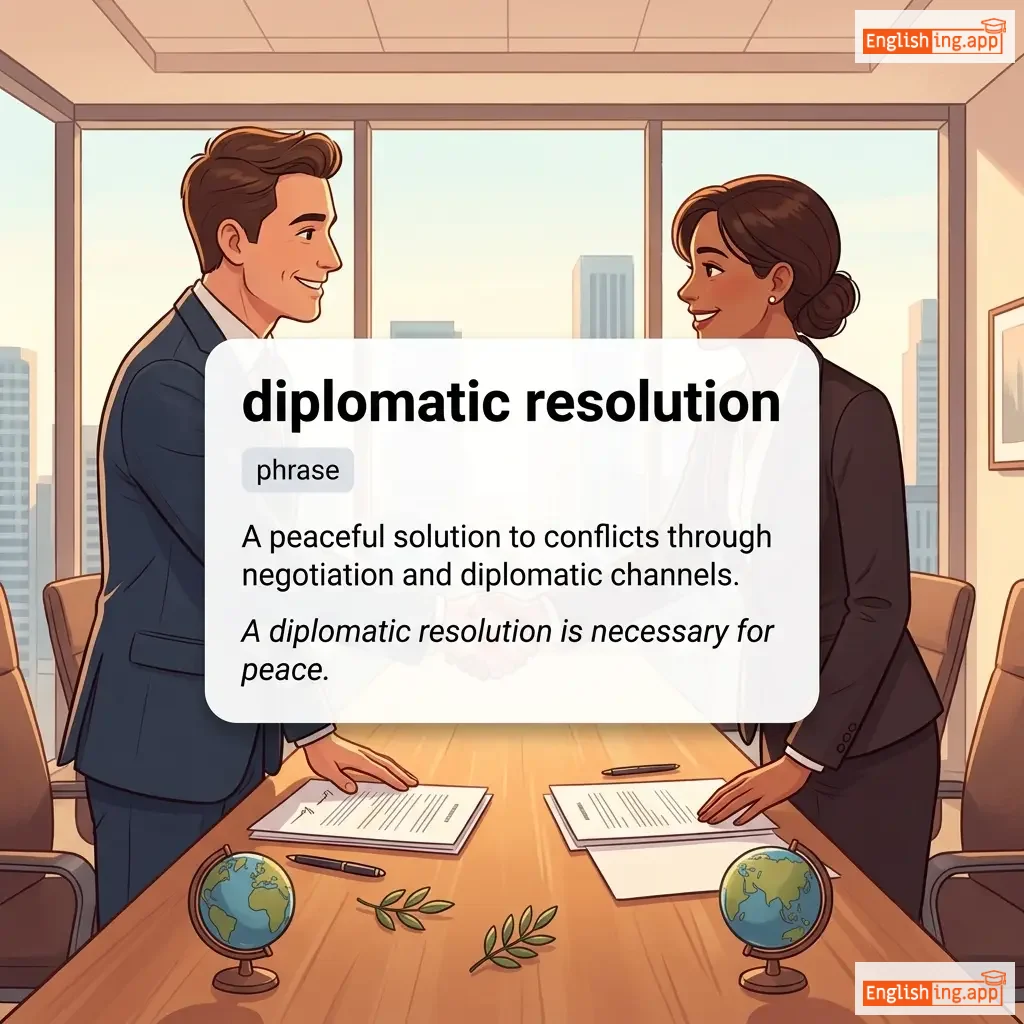
diplomatic resolution definition card — visual illustration of the meaning
phrase C1
ˌdɪp.ləˈmæt.ɪk rɛz.əˈluː.ʃən
外交的解決 (gaikou teki kaiketsu)

A peaceful solution to conflicts through negotiation and diplomatic channels.

"A diplomatic resolution is necessary for peace."

"平和には外交的解決が必要です。" (Heiwa ni wa gaikou teki kaiketsu ga hitsuyou desu.)
adjective C1
/ˈdaɪər/
危機的 (kiki-teki)

Extremely serious or urgent.

"The refugees were in dire need of food and shelter."

"難民は食糧と避難所を切実に必要としていた。" (Nanmin wa shokuryō to hinan-sho o setsujitsu ni hitsuyō to shite ita.)
verb C1
/ˌdɪsəˈlaʊ/
許可しない (kyokashinai)

to refuse to allow or accept something

"The referee disallowed the goal for offside."

"審判はオフサイドのためゴールを認めませんでした。" (Shimpan wa offside no tame gōru o mitomemasen deshita.)