词汇表

英语词汇词典 | 单词含义、定义和示例

noun C2
/tʊˈriːn/
तुरीन (tureen)

A large deep dish with a cover, used for serving soups or stews.

"She brought the hot soup to the table in a silver tureen."
"उसने रजत ट्यूरिन में गर्म सूप मेज पर रखा।" (Usne rajat tureen mein garam soup mej par rakha.)
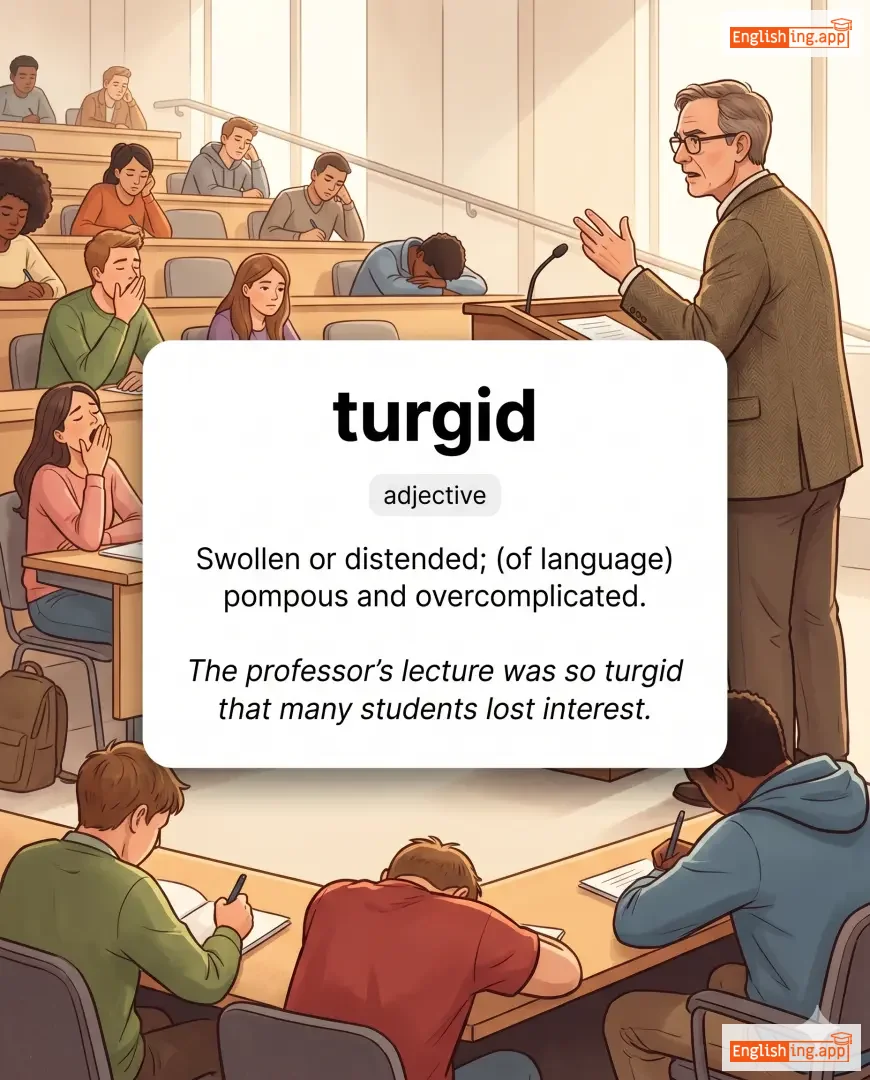
turgid definition card — visual illustration of the meaning
adjective C2
/ˈtɜːrdʒɪd/
सूजा हुआ, जटिल (suja hua, jatil)

Swollen or distended; (of language) pompous and overcomplicated.

"The professor’s lecture was so turgid that many students lost interest."

"प्रोफेसर की व्याख्यान इतनी जटिल थी कि कई छात्रों ने रुचि खो दी।" (Professor ki vyakhyan itni jatil thi ki kai chhatron ne ruchi kho di.)
noun C2
/ˈtɜːrnkoʊt/
धोखेबाज (dhokhebaaz)

a person who switches allegiance, often betraying a cause or group

"He was branded a turncoat after joining the rival political party."

"उसे विरोधी राजनीतिक दल से जुड़ने के बाद धोखेबाज करार दिया गया था।" (Use virodhi raajnitik dal se judne ke baad dhokhebaaz karar diya gaya tha.)
noun C2
/ˈtɜːrpɪtuːd/
दुष्टता (dushtata)

depraved or wicked behavior or character

"The judge condemned the criminal’s act of moral turpitude."

"न्यायाधीश ने अपराधी के नैतिक दुष्टता कृत्य की निंदा की।" (Nyayadhish ne apradhi ke naitik dushtata krutya ki ninda ki.)
noun C2
/ˈtjuːtɪlɪdʒ/
शिक्षण (shikshan)

The act of guarding, protecting, or guiding; instruction or teaching.

"She studied painting under the tutelage of a famous artist."

"वह एक प्रसिद्ध कलाकार के मार्गदर्शन में चित्रकला का अध्ययन कर रही थी।" (Wah ek prasiddh kalakar ke margdarshan mein chitrakala ka adhyayan kar rahi thi.)
adjective C2
/ˈtjuːtɪlɑːr/
पालक (paalak)

Serving as a guardian or protector.

"The tutelar spirit of the forest was believed to protect travelers."
"वन का ट्यूटेलर आत्मा यात्रियों की रक्षा करने के लिए माना जाता था।" (Van ka tutelar atma yatrion ki raksha karne ke liye maana jaata tha.)
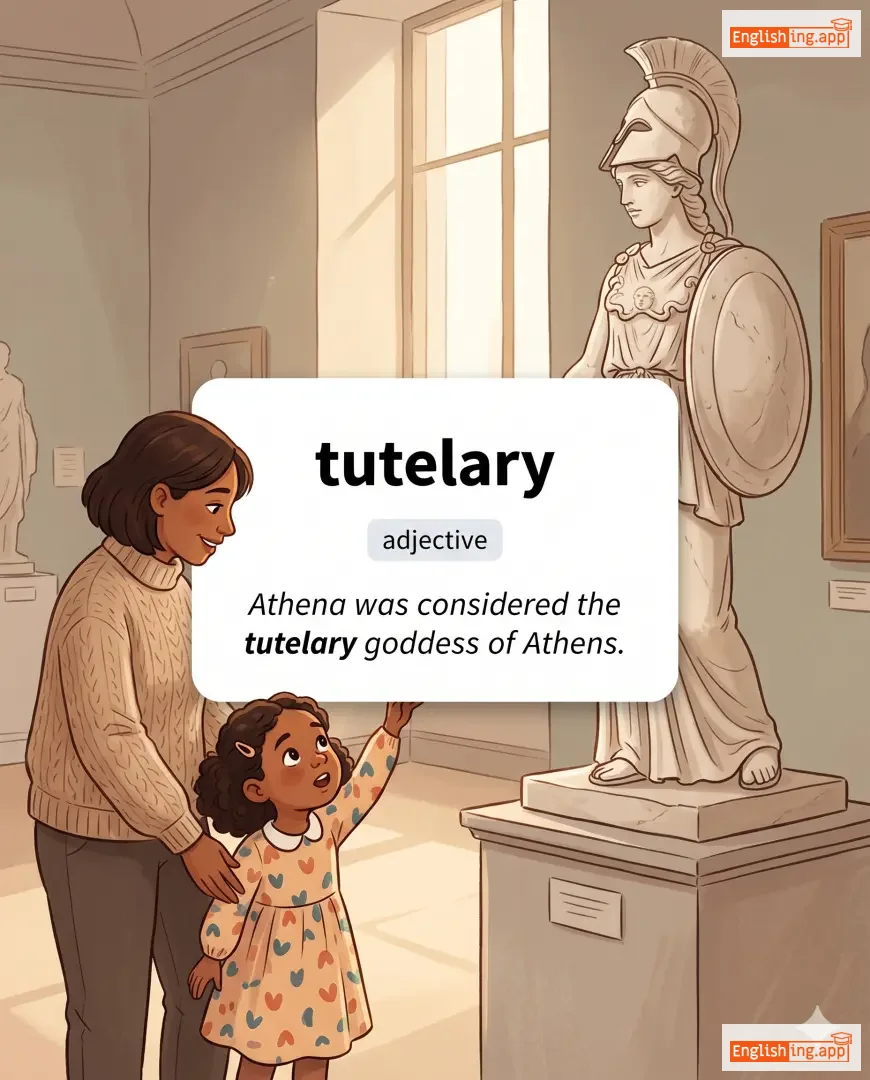
tutelary definition card — visual illustration of the meaning
adjective C2
/ˈtjuːtɪləri/
पालक (paalak)

Relating to or serving as a guardian or protector, often used for deities or spirits.

"Athena was considered the tutelary goddess of Athens."

"एथेना को एथेंस की पालक देवी माना जाता था।" (Athena ko Athens ki paalak devi mana jata tha.)
noun C2
/ˈtjuːtərʃɪp/
शिक्षकत्व (shikshaktva)

The office or position of a tutor; guidance or instruction given by a tutor.

"He thrived under the tutorship of his mentor."

"वह अपने मेंटर के शिक्षकत्व में फलफूल रहा था।" (Vah apne mentor ke shikshaktva mein phalphool raha tha.)
noun C2
/ˈtaɪroʊ/
नवोदित (navodit)

A beginner or novice in a field or activity.

"As a tyro in programming, she needed constant guidance."

"प्रोग्रामिंग में एक नवोदित के रूप में, उसे लगातार मार्गदर्शन की आवश्यकता थी।" (Programming mein ek navodit ke roop mein, use lagataar maargdarshan ki avashyakta thi.)
adjective C2
/juːˈbɪkwɪtəs/
सर्वव्यापी (sarvavyaapi)

Present, appearing, or found everywhere.

"Smartphones have become ubiquitous in modern society."
"स्मार्टफोन आधुनिक समाज में सर्वव्यापी हो गए हैं।" (Smartphone aadhunik samaaj mein sarvavyaapi ho gaye hain.)
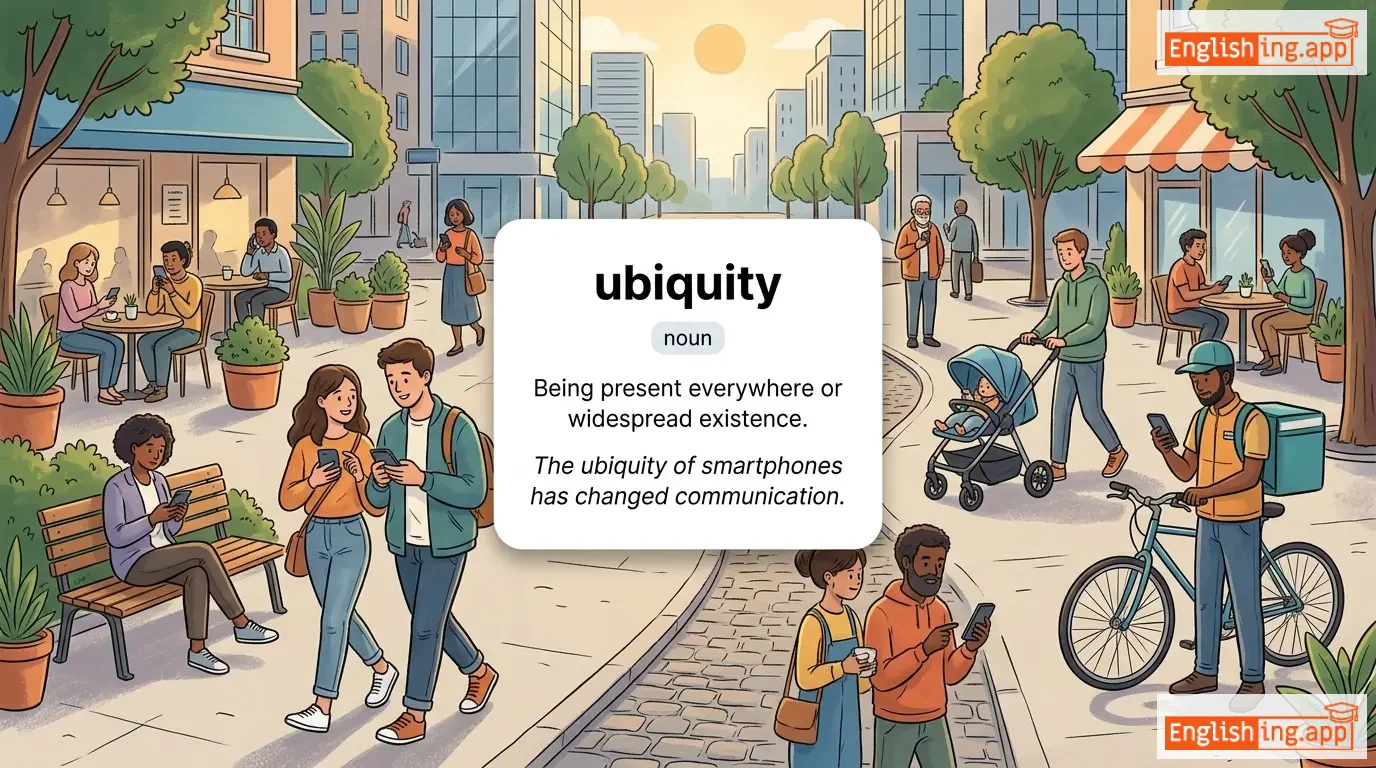
ubiquity definition card — visual illustration of the meaning
noun C2
/juːˈbɪk.wɪ.ti/
व्यापकता (vyapaktaa)

Being present everywhere or widespread existence.

"The ubiquity of smartphones has changed communication."

"स्मार्टफोन की व्यापकता ने संचार को बदल दिया है।" (Smartphone ki vyapaktaa ne sanchar ko badal diya hai.)
noun C2
/juːˈkeɪs/
निर्देश (nirdesh)

An authoritative decree or order, especially one issued by a sovereign or government.

"The czar issued a ukase restricting the freedom of the press."

"जार ने प्रेस की स्वतंत्रता को सीमित करने वाला एक निर्देश जारी किया।" (Zar ne press ki svatantrata ko seemit karne wala ek nirdesh jari kiya.)
adjective C2
/ˌʌltrəˈmɒnteɪn/
पोप समर्थक (pop samarthak)

beyond the mountains, especially referring to support for the Pope over local church authority

"The debate highlighted the ultramontane position in church politics."

"बहस में चर्च राजनीति में अल्ट्रामोंटेन स्थिति को उजागर किया गया।" (Bahas mein church rajneeti mein ultramontane sthiti ko ujagar kiya gaya.)
adjective C2
/ˌʌltrəˈmʌndeɪn/
अतिलौकिक (atiloukik)

Relating to things beyond the physical world; supernatural or transcendental.

"Philosophers often discuss ultramundane realities beyond human perception."
"दार्शनिक अक्सर मानव धारणा से परे अल्ट्रामंडेन वास्तविकताओं पर चर्चा करते हैं।" (Darshanik aksar manav dharana se pare ultramundane vastaviktaon par charcha karte hain.)
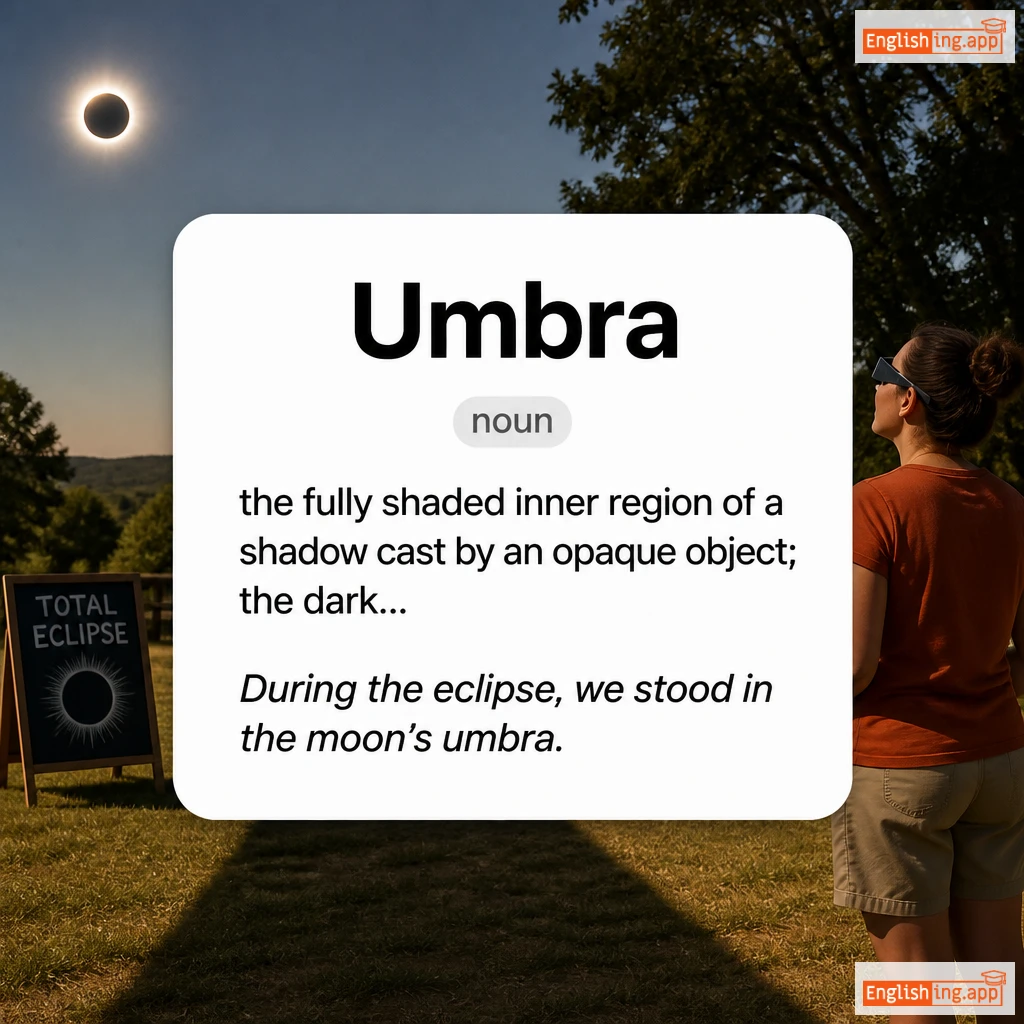
Umbra definition card — visual illustration of the meaning
noun C2
/ˈʌm.brə/
छाया का पूर्ण अंधेरा, कोई ओपेक वस्तु द्वारा डाली गई छाया का आंतरिक भाग (chhaya ka poorn andhera, koi opek vastu dwara daali gayi chhaya ka antarik bhaag)

the fully shaded inner region of a shadow cast by an opaque object; the dark center of a sunspot

"During the eclipse, we stood in the moon's umbra."

"ग्रहण के दौरान, हम चाँद के अंब्राः में खड़े थे।" (grahan ke dauran, hum chaand ke ambraa mein khade the)
noun C2
/ˈʌmbrɪdʒ/
नाराज़गी, अपमान (narazgi, apman)

A feeling of resentment or offense.

"She took umbrage at his rude remark."

"वह उसकी रude टिप्पणी पर नाराज हो गई।" (Woh uski rude tipanni par naraz ho gayi.)
adjective C2
/ʌnˈælɔɪd/
निर्मल (nirmal)

Pure, complete, and not mixed with anything else.

"She felt unalloyed joy at the news of her success."
"वह अपनी सफलता की खबर पर पूरी खुशी महसूस कर रही थी।" (Vah apni safalta ki khabar par poori khushi mehsoos kar rahi thi.)
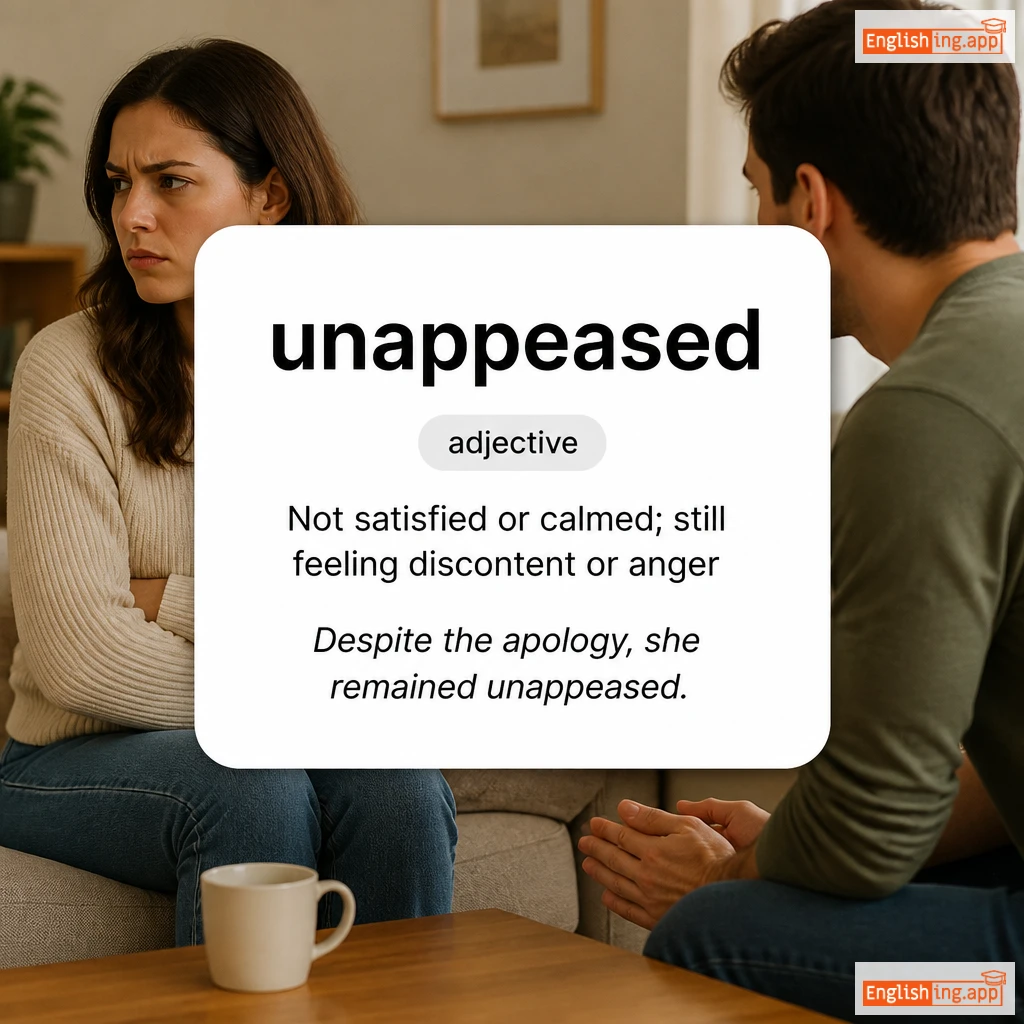
unappeased definition card — visual illustration of the meaning
adjective C2
/ʌnəˈpiːzd/
असंतुष्ट (asantusht)

Not satisfied or calmed; still feeling discontent or anger

"Despite the apology, she remained unappeased."
"माफी के बावजूद, वह असंतुष्ट रही।" (maafi ke bavjood, vah asantusht rahi)
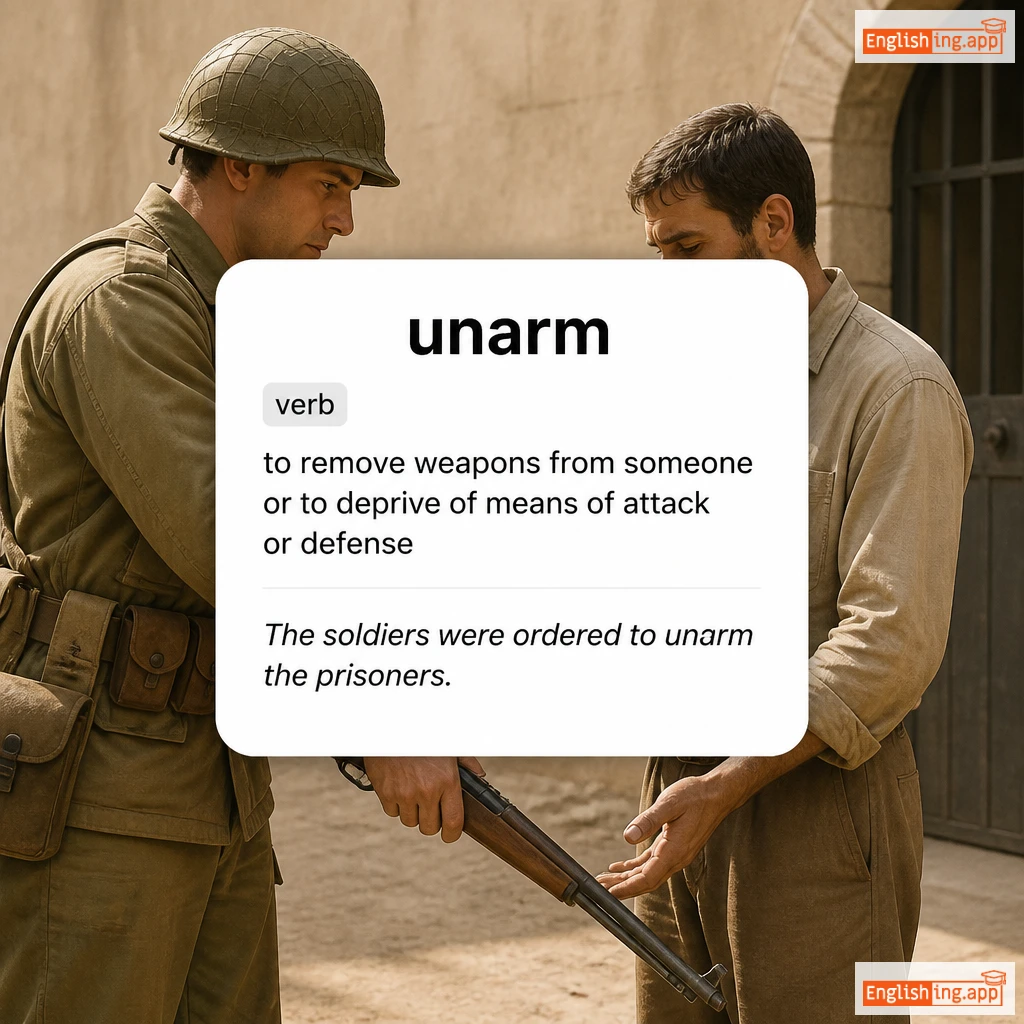
unarm definition card — visual illustration of the meaning
verb C2
/ʌnˈɑːrm/
अशस्त्र करना (ashastr karna)

to remove weapons from someone or to deprive of means of attack or defense

"The soldiers were ordered to unarm the prisoners."
"सैनिकों को कैदियों को अशस्त्र करने का आदेश दिया गया।" (sainikon ko kaidiyon ko ashastr karne ka aadesh diya gaya)
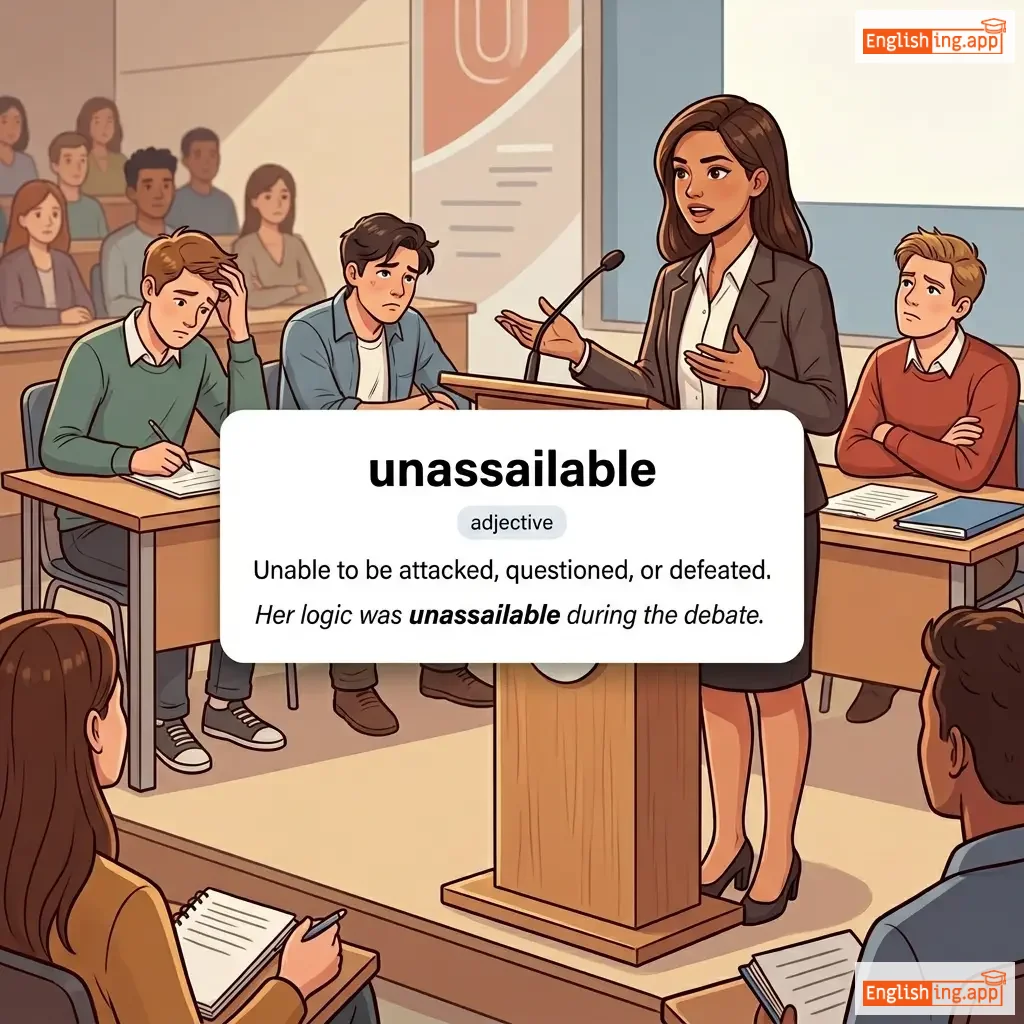
unassailable definition card — visual illustration of the meaning
adjective C2
/ˌʌnəˈseɪləbl/
अडिग (adig)

Unable to be attacked, questioned, or defeated.

"Her logic was unassailable during the debate."

"उसकी तर्कशक्ति बहस के दौरान अनअसेलेबल थी।" (Uski tarkshakti behas ke dauran anaselebl thi.)
adjective C2
/ˌʌnəˈsweɪdʒd/
अशांत (ashant)

Not made less intense or relieved; unrelieved.

"His grief remained unassuaged despite the passage of time."

"समय के बावजूद उसका दुख अशांत रहा।" (Samay ke baavjood uska dukh ashant raha.)
adjective C2
/ˌʌnəˈʃʊəd/
अविश्वासपूर्ण (avishwaspoorn)

Lacking confidence or certainty.

"She gave an unassured answer during the interview."

"उसने साक्षात्कार में एक अविश्वासपूर्ण उत्तर दिया।" (Usne sakshatkar mein ek avishwaspoorn uttar diya.)
adjective C2
/ʌnˈblʌʃɪŋ/
निर्लज्ज; बेशर्म (nirlajj; besharm)

showing no shame or embarrassment; boldly shameless

"He told the unblushing lie without any hesitation."

"उसने बिना किसी झिझक के निर्लज्ज झूठ बोला।" (Usne bina kisi jhijhak ke nirlojj jhooth bola.)
adjective C2
/ˌʌnsɛrəˈmoʊniəs/
अनौपचारिक/रूखा (anaupcharik/rukha)

Done without formality or courtesy; abrupt or rude.

"He made an unceremonious exit from the party."

"उसने पार्टी से अनौपचारिक तरीके से बाहर निकलने का फैसला किया।" (Usne party se anaupcharik tareeke se baahar nikalne ka faisla kiya.)
adjective C2
/ʌnˈtʃeɪst/
अविचारपूर्ण; अपवित्र; (avicharpurn; apavitra;)

not celibate; having engaged in sexual relations; lacking moral purity

"The conservative society considered her behavior unchaste and improper."

"संरक्षणवादी समाज ने उसके व्यवहार को अविचारपूर्ण और अनुचित माना।" (sarnrakshanvadi samaj ne uske vyavhaar ko avicharpurn aur anuchit mana.)
unclothe definition card — visual illustration of the meaning
verb C2
/ʌnˈkloʊð/
कपड़े उतारना; वस्र मुक्त करना (kapde utarna; vasra mukt karna)

to remove clothing from someone or something

"The nurse helped unclothe the patient for the examination."

"नर्स ने मरीज की जांच के लिए कपड़े उतारने में मदद की।" (nars ne mariz ki jaanch ke liye kapde utarne mein madad ki)
noun C2
/ʌnˈkloʊðɪŋ/
कपड़े उतारना (kapde utarna)

the act or process of removing clothing

"The child quickly ran inside for unclothing after playing in the mud."

"बच्चा कीचड़ में खेलने के बाद जल्दी अंदर जाकर कपड़े उतारने लगा।" (bacha kichad me khelne ke baad jaldi andar jaakar kapde utarne laga)
adjective C2
/ʌnˈkɒnʃənəbl/
अन्यायपूर्ण (anyaypoorN)

shockingly unfair or unreasonable

"The company made unconscionable profits from the crisis."

"कंपनी ने संकट से अन्यायपूर्ण मुनाफा कमाया।" (Company ne sankat se anyaypoorN munafa kamaya.)
verb C2
/ʌnˈkaʊtʃ/
काउच से हटाना (दुर्लभ अर्थ) (kaauch se hatana)

to remove from a couch or to release from being laid down (rare/archaic usage)

"The surgeon attempted to uncouch the cataract."

"सर्जन ने मोतियाबिंद को निकालने की कोशिश की।" (Sarjan ne motiyabind ko nikaalne ki koshish ki.)
noun C2
/ˈʌŋkʃən/
अभिषेक (abhishek)

The act of anointing as part of a religious or ceremonial ritual; excessive or insincere flattery.

"The priest performed the holy unction with solemnity."

"पादरी ने गंभीरता से पवित्र अभिषेक किया।" (padri ne gambhirta se pavitra abhishek kiya.)
adjective C2
/ˈʌŋk.tʃu.əs/
चाटूकार (chatukar)

Excessively flattering or ingratiating; oily in texture.

"His unctuous tone made everyone uncomfortable."

"उसका चाटूकार स्वर सभी को असहज बना देता था।" (uska chatukar swar sabhi ko asahaj bana deta tha.)
verb C2
/ˌʌn.dɪˈsiːv/
भ्रम मुक्त करना (bhram mukt karna)

To free someone from a misconception or false belief.

"She tried to undeceive him about the false rumors."

"उसने झूठी अफवाहों के बारे में उसे भ्रम मुक्त करने की कोशिश की।" (usne jhoothi afwahon ke baare mein use bhram mukt karne ki koshish ki.)
verb C2
/ˌʌndərˈɡɜːrd/
आधार प्रदान करना, सशक्त करना (aadhaar pradan karna, sashakt karna)

to provide support or foundation for; to strengthen

"Strong values undergird a healthy society."

"मजबूत मूल्य एक स्वस्थ समाज को आधार प्रदान करते हैं।" (Majboot muly ek svasth samaj ko aadhaar pradan karte hain.)
noun C2
/ˈʌndərlɪŋ/
अनुचर (anuchar)

a person of low rank or importance; a subordinate

"The manager ordered his underlings to finish the task quickly."

"प्रबंधक ने अपने अधीनस्थों से कार्य शीघ्र पूरा करने को कहा।" (Prabandhak ne apne adheenasthon se kaarya shighra poora karne ko kaha.)
verb C2
/ˈʌndərˌmæn/
कर्मचारियों की कमी होना (karmachariyon ki kami hona)

to supply with fewer workers or personnel than needed

"The hospital was undermanned during the flu outbreak."
"फ्लू फैलने के दौरान अस्पताल में कर्मचारियों की कमी थी।" (Flu phailne ke dauran aspatal mein karmachariyon ki kami thi.)
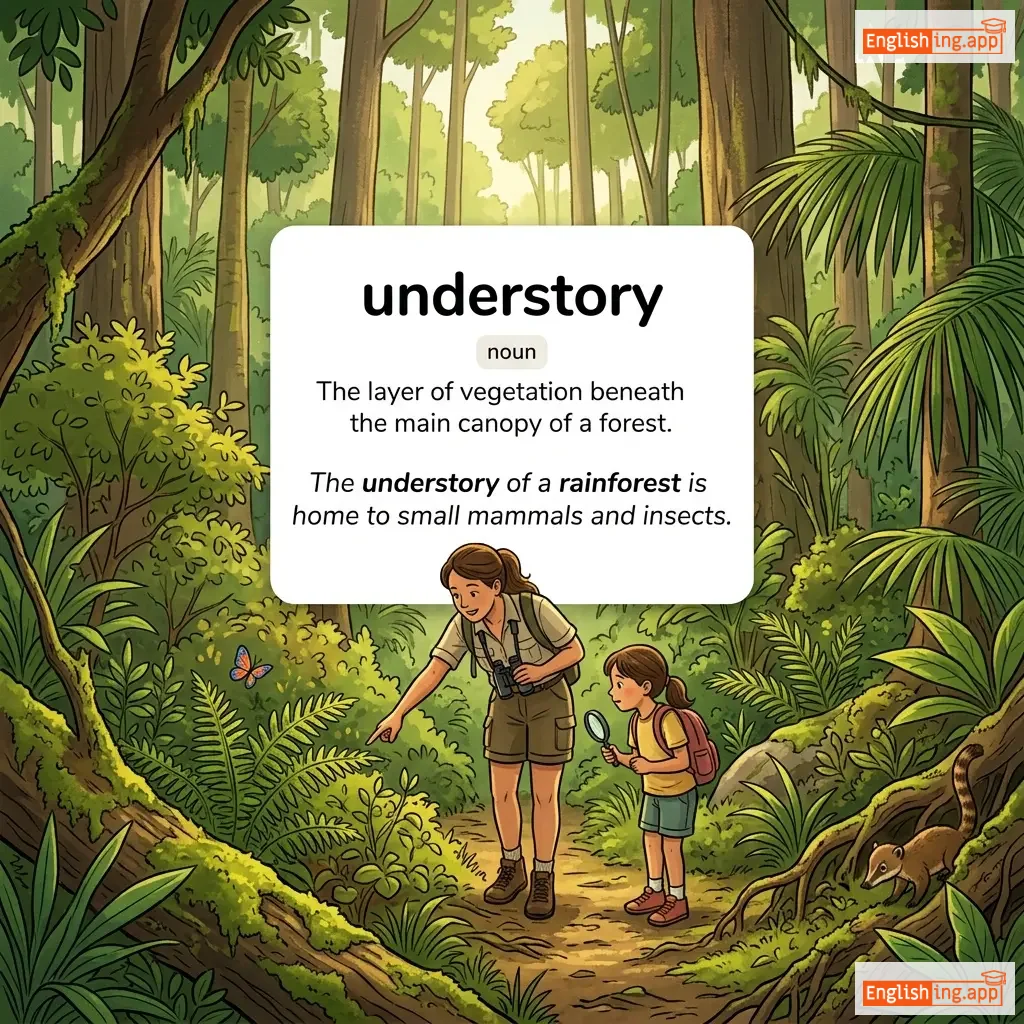
understory definition card — visual illustration of the meaning
noun C2
/ˈʌn.dɚˌstɔː.ri/
निम्नमंज़िल वनस्पति (nimmamajil vanspati)

The layer of vegetation beneath the main canopy of a forest.

"The understory of a rainforest is home to small mammals and insects."

"वर्षावन की निम्नमंज़िल छोटे स्तनधारी और कीटों का घर है।" (Varshawaan ki nimmamajil chhote stanhdhaari aur keeton ka ghar hai.)
verb C2
/ˈʌndərˌraɪt/
वित्तीय गारंटी देना (vittiya guarantee dena)

To guarantee financial support, especially by agreeing to cover losses or risks; in insurance, to assess and accept risks.

"The bank agreed to underwrite the company's new bond issue."

"बैंक ने कंपनी के नए बांड इश्यू को अंडरराइट करने के लिए सहमति दी।" (Bank ne company ke naye bond issue ko underwrite karne ke liye sahmati di.)
verb C2
/ˈʌndjʊleɪt/
लहराना (laharana)

To move with a smooth, wave-like motion.

"The snake undulated across the sand."
"साँप रेत पर लहराता हुआ चल रहा था।" (Saap ret par lehrata hua chal raha tha.)
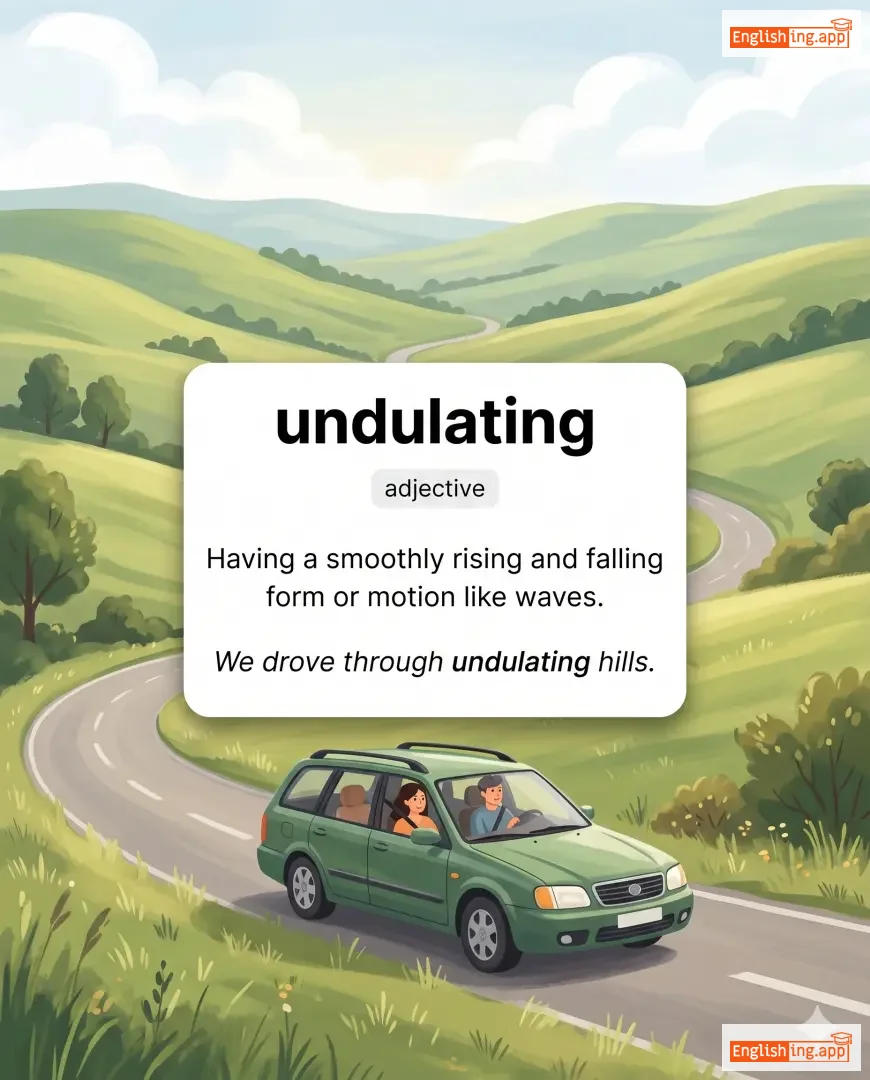
undulating definition card — visual illustration of the meaning
adjective C2
/ˈʌndjʊleɪtɪŋ/
लहरदार (lahardar)

Having a smoothly rising and falling form or motion like waves.

"We drove through undulating hills."

"हम लहरदार पहाड़ियों से होकर चले।" (Ham lahradar paharion se hokar chale.)
adjective C2
/ˈʌndjʊləs/
लहरदार (lahradar)

Having a wavy surface or form.

"The artist painted the undulous sea at sunset."

"कला कारी ने सूर्यास्त में लहरदार समुद्र चित्रित किया।" (Kala kaari ne suryast mein lahradar samudra chitrith kiya.)
adverb C2
/ʌnˈɜːrɪŋli/
गलती रहित (galti rahit)

Without making any mistakes; always accurate

"The archer aimed unerringly at the target."

"धनुर्धारी ने बिना गलती किए लक्ष्य पर निशाना साधा।" (Dhanurdhari ne bina galti kiye lakshya par nishana sadha.)
adjective C2
/ˌʌnɪkˈsɛpʃənəbl/
अस्वीकृत न होने योग्य (asweekrit na hone yogya)

Not open to objection; acceptable and unobjectionable

"His behavior was unexceptionable throughout the event."
"उसका व्यवहार पूरे इवेंट में अस्वीकृत न होने योग्य था।" (Uska vyavhaar poore event mein asweekrit na hone yogya tha.)
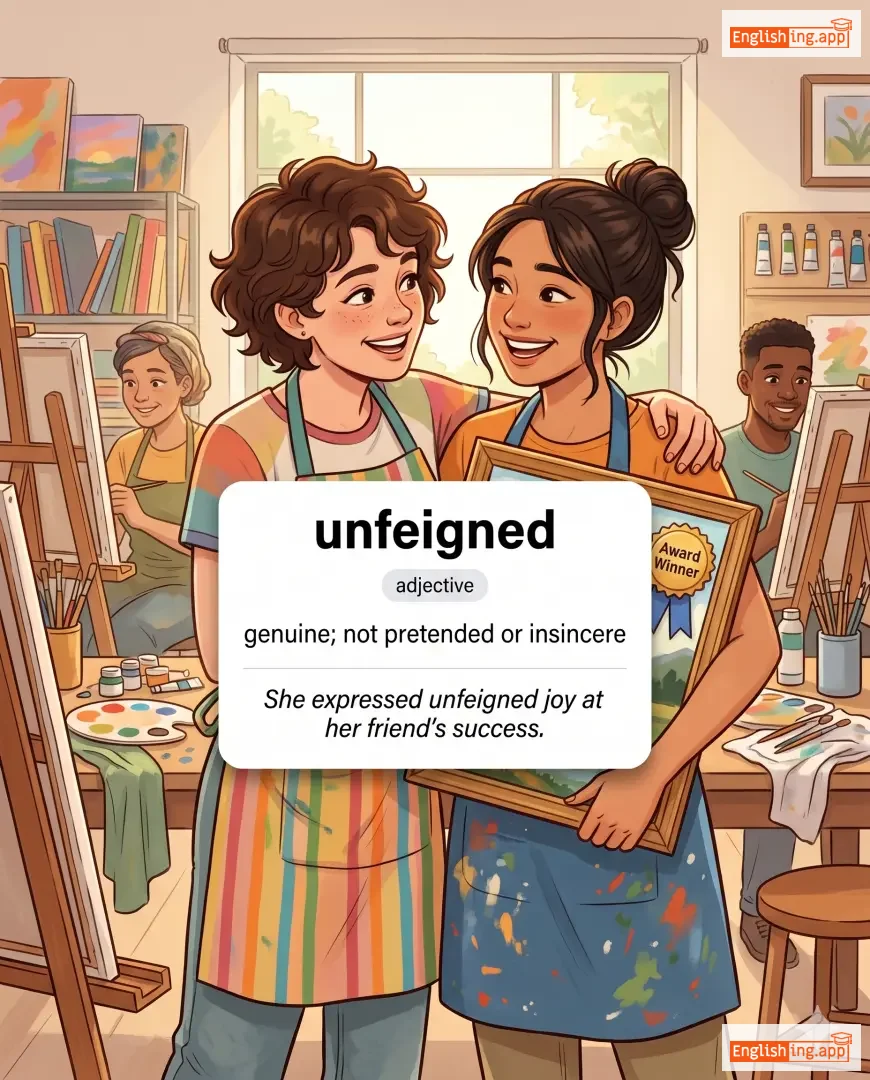
unfeigned definition card — visual illustration of the meaning
adjective C2
/ʌnˈfeɪnd/
असली (asli)

genuine; not pretended or insincere

"She expressed unfeigned joy at her friend's success."

"उसने अपनी दोस्त की सफलता पर असली खुशी व्यक्त की।" (Usne apni dost ki safalta par asli khushi vyakt ki.)
verb C2
/ʌnˈfɛtər/
बाधामुक्त करना (baadhamukt karna)

to release from restraint or restriction; to free

"The new law will unfetter small businesses from excessive regulations."

"नया कानून छोटे व्यवसायों को अत्यधिक नियमों से मुक्त करेगा।" (Naya kanoon chhote vyavsayon ko atyadhik niyamon se mukt karega.)
adjective C2
/ʌnˈflæpəbəl/
अडिग (adig)

calm and composed, especially in difficult situations

"Despite the crisis, he remained unflappable and confident."

"संकट के बावजूद, वह अडिग और आत्मविश्वासी बना रहा।" (Sankat ke bawjood, vah adig aur atmbishwasi bana raha.)
adjective C2
/ʌnˈflɛdʒd/
अपरिपक्व (aparipakv)

Inexperienced, immature, or not fully developed.

"The unfledged writer struggled to complete his first novel."

"अपरिपक्व लेखक अपनी पहली उपन्यास पूरी करने में संघर्ष कर रहा था।" (Aparipakv lekhak apni pehli upanyas poori karne mein sangharsh kar raha tha.)
verb C2
/ʌnˈfrɒk/
पादरी को पद से हटा देना (padri ko pad se hata dena)

To remove a priest from his position or deprive someone of a rank.

"The corrupt priest was unfrocked after the investigation."

"भ्रष्ट पादरी को जांच के बाद पद से हटा दिया गया था।" (Bhrasht padri ko jaanch ke baad pad se hata diya gaya tha.)
adjective C2
/ʌnˈɡeɪnli/
असंगत (asangat)

Awkward, clumsy, or lacking grace in movement or appearance.

"The tall boy moved in an ungainly manner."

"लंबा लड़का एक अजीब तरीके से चला।" (Lamba ladka ek ajeeb tareeke se chala.)
noun C2
/ˈʌŋɡwənt/
औषधि (aushadhi)

A soothing or healing ointment applied to the skin.

"The doctor applied an unguent to heal the burn."

"डॉक्टर ने जलन को ठीक करने के लिए अंग्वेंट लगाया।" (Doktor ne jalan ko theek karne ke liye angvent lagaya.)
adjective C2
/ˌʌnɪmˈpiːtʃəbl/
अभियोगरहित (abhiyograhit)

Not able to be doubted, questioned, or criticized; completely trustworthy.

"She is known for her unimpeachable honesty."

"वह अपनी अनिमपीचेबल ईमानदारी के लिए जानी जाती है।" (Woh apni animpichebal imandari ke liye jani jati hai.)