
词汇表

英语词汇词典 | 单词含义、定义和示例

Sedulous definition card — visual illustration of the meaning
adjective C2
/ˈsɛdʒʊləs/
勤勉 (qínmiǎn)

showing great care, attention, and diligence in work or tasks

"She was admired for her sedulous efforts in completing the project on time."

"她因在按时完成项目时展现的勤勉努力而受到赞赏。" (Tā yīn zài ànshí wánchéng xiàngmù shí zhǎnxiàn de qínmiǎn nǔlì ér shòudào zànshǎng.)
adjective C2
/ˈsiːmli/
得体 (deti)

proper or appropriate in behavior or appearance

"It was not seemly to argue loudly during the ceremony."

"在仪式期间大声争论是不合适的。" (Zai yishi qijian dasheng zhenglun shi bu heshi de.)
noun C2
/ˈseɪnjər/
封建领主 (fēngjiàn lǐngzhǔ)

A feudal lord; a man of authority in medieval Europe.

"The seignior demanded taxes from the peasants."

"封建领主向农民征税。" (Fēngjiàn lǐngzhǔ xiàng nóngmín zhēngshuì.)
noun C2
/seɪn/
大网 (dà wǎng)

A large fishing net that hangs vertically in the water.

"The fishermen cast their seine into the river."

"渔民把他们的大网扔进了河里。" (Yúmín bǎ tāmen de dà wǎng rēng jìnle hé lǐ.)
noun C2
/ˈsaɪz.mə.ɡræf/
地震仪 (dizhenyi)

An instrument that measures and records details of earthquakes, such as force and duration.

"The seismograph detected a strong tremor in the area."

"地震仪检测到该地区的强烈震动。" (Dizhenyi jiance dao gai diqu de qianglie zhendong.)
noun C2
/ˌself əˈbeɪs.mənt/
自我贬低 (zi wo bian di)

The act of belittling or humiliating oneself.

"His constant self-abasement made others uncomfortable."

"他不断的自我贬低让其他人感到不舒服。" (Ta buduan de zi wo bian di rang qita ren gan dao bu shufu.)
adjective C2
/ˌsɛm.iˈsɪv.ə.laɪzd/
半文明 (bàn wénmíng)

Partially civilized; having some aspects of civilization but not fully developed.

"The tribe was described as semicivilized by early explorers."

"该部落被早期探险家描述为半文明。" (Gāi bùluò bèi zǎoqī tànxiǎn jiā miáoshù wéi bàn wénmíng.)
adjective C2
/ˌsɛm.iˈkɒn.ʃəs/
半意识的 (bàn yìshí de)

Only partly conscious; not fully aware of surroundings.

"He was semiconscious after the accident and could barely respond."

"他在事故后半意识清醒,几乎无法回应。" (Tā zài shìgù hòu bàn yìshí qīngxǐng, jīhū wúfǎ huíyīng.)
noun C2
/ˈsɛm.ɪ.nɛr.i/
神学院 (shénxuéyuàn)

A school or college for training priests, ministers, or rabbis.

"He decided to enroll in a seminary to study theology."

"他决定报名参加神学院,学习神学。" (Tā juédìng bàomíng cānjiā shénxuéyuàn, xuéxí shénxué.)
noun C2
/səˈnɛs.əns/
衰老 (shuāilǎo)

The process of growing old or the condition of aging.

"The biologist studied senescence in plants to understand aging."

"生物学家研究了植物中的衰老过程,以理解衰老。" (Shēngwùxuéjiā yánjiūle zhíwù zhōng de shuāilǎo guòchéng, yǐ liǎojiě shuāilǎo.)
noun C2
/sɛnˈsɔːrɪəm/
感觉中枢 (gǎnjué zhōngxū)

The part of the brain or mind concerned with the reception and interpretation of sensory stimuli.

"The patient’s sensorium was clouded after the accident."

"事故后,病人的感觉中枢受到干扰。" (shìgù hòu, bìngrén de gǎnjué zhōngxū shòudào gānrǎo.)
adjective C2
/sɛnˈtɛnʃəs/
道德主义的;说教的 (dàodé zhǔyì de; shuōjiào de)

Given to moralizing in a pompous or affected manner.

"His sententious remarks annoyed the audience."

"他的道德主义言论让观众感到厌烦。" (Tā de dàodé zhǔyì yánlùn ràng guānzhòng gǎndào yànfán.)
noun C2
/ˈsɛnʃəns/
感知能力 (gǎnzhī nénglì)

The capacity to feel, perceive, or experience subjectively.

"Many argue that animals possess sentience."

"许多人认为动物具有感知能力。" (Xǔduō rén rènwéi dòngwù jùyǒu gǎnzhī nénglì.)
adjective C2
/ˈsɛpərəbəl/
可分离的 (kě fēnlí de)

Capable of being separated or divided.

"The two issues are separable and should be discussed independently."

"这两个问题是可分离的,应该独立讨论。" (Zhè liǎng gè wèntí shì kě fēnlí de, yīnggāi dúlì tǎolùn.)
adjective C2
/sɛpˈtɛnɪəl/
每七年一次 (mei qi nian yi ci)

Occurring every seven years.

"The festival is a septennial tradition in the village."

"这个节日是村里每七年一次的传统。" (Zhege jieri shi cunli mei qi nian yi ci de chuántǒng.)
noun C2
/ˈsɛpəlkər/
墓室 (mù shì)

A small room or monument, cut in rock or built of stone, in which a dead person is buried.

"The ancient king was laid to rest in a grand sepulcher."

"古代国王被安葬在一个宏伟的墓室中。" (Gǔdài guówáng bèi ānzàng zài yīgè hóngwěi de mù shì zhōng.)
adjective C2
/səˈpʌlkrəl/
与墓葬相关,阴森的 (yǔ mùzàng xiāngguān, yīn sēn de)

Relating to a tomb or burial; gloomy, dismal.

"The abandoned house had a sepulchral silence about it."
"废弃的房子弥漫着墓葬般的寂静。" (Fèiqì de fángzi mímànzhe mùzàng bān de jìjìng.)
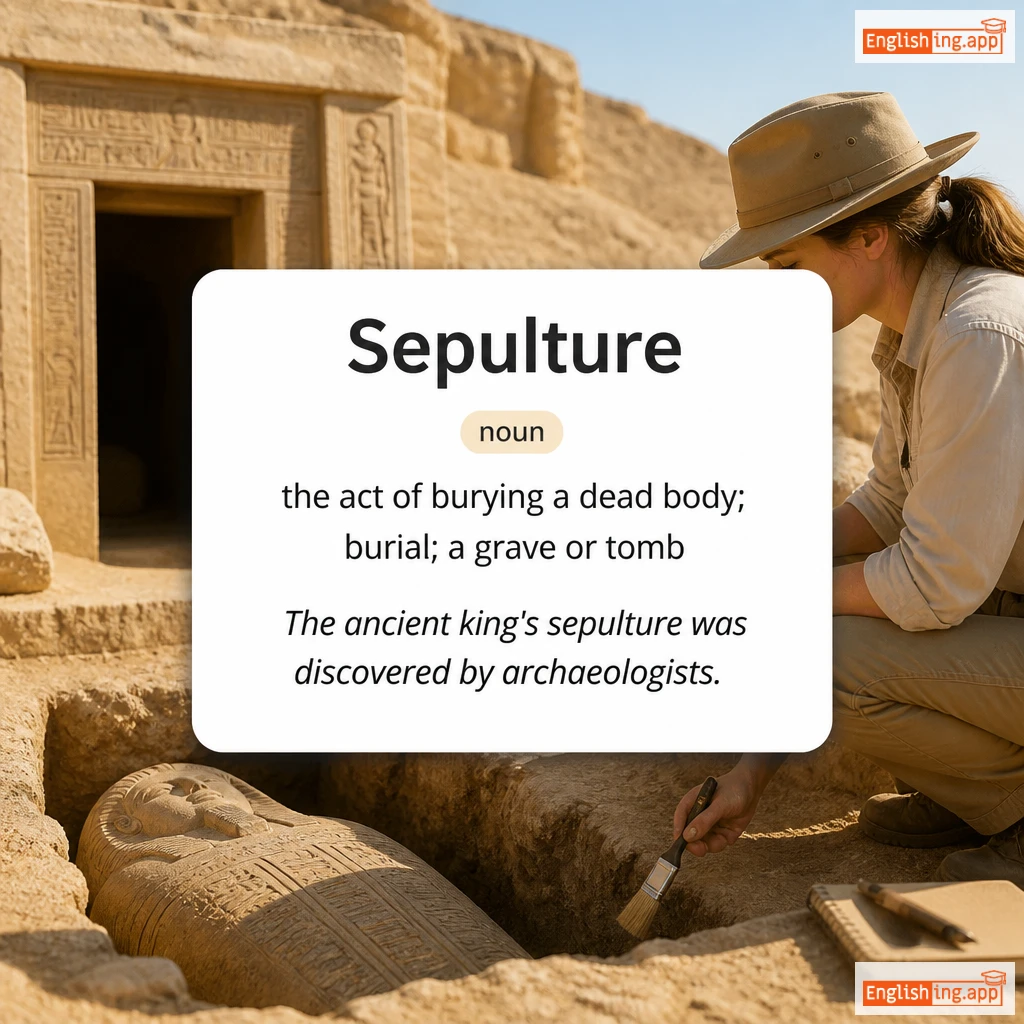
Sepulture definition card — visual illustration of the meaning
noun C2
/ˈsɛpəlˌtʃər/
坟墓; 埋葬; (fénmù; máizàng)

the act of burying a dead body; burial; a grave or tomb

"The ancient king's sepulture was discovered by archaeologists."

"古代国王的坟墓被考古学家发现。" (Gudai guowang de fenmu bei kaoguxuejia faxian.)
adjective C2
/sɪˈkweɪʃəs/
盲目追随 (mángmù zhuīsuí)

Lacking independence of thought; blindly following.

"The sequacious students never questioned their teacher's opinions."

"盲目追随的学生从未质疑过他们老师的意见。" (Mángmù zhuīsuí de xuéshēng cóng wèi zhìyí guò tāmen lǎoshī de yìjiàn.)
noun C2
/sɪˈkwiːlə/
后遗症 (hòu yí zhèng)

A condition that is the consequence of a previous disease or injury.

"Lung scarring can be a sequela of severe pneumonia."

"肺部瘢痕可能是重症肺炎的后遗症。" (Fèi bù bānhén kěnéng shì zhòngzhèng fèiyán de hòu yí zhèng.)
adjective C2
/ˈsiːkwənt/
随后的 (suíhòu de)

Following in order or as a result.

"The sequent events changed the course of history."

"随后的事件改变了历史的进程。" (Suíhòu de shìjiàn gǎibiànle lìshǐ de jìnchéng.)
verb C2
/sɪˈkwɛstreɪt/
查封 (chāfēng)

To take legal possession of assets until a debt is paid or disputes are resolved.

"The court decided to sequestrate the company's property."

"法院决定查封公司的财产。" (Fǎyuàn juédìng chāfēng gōngsī de cáichǎn.)
noun C2
/ˈsɛrəf/
六翼天使 (liuyitian shi)

An angelic being associated with light and purity, often depicted as a high-ranking angel in Christian theology.

"The stained-glass window depicted a seraph with outstretched wings."

"彩色玻璃窗描绘了一个展开翅膀的六翼天使。" (Caise boli chuang miaohui le yige zhan kai chibang de liuyitian shi.)
adjective C2
/səˈræfɪk/
天使般的 (tianshiban de)

Of or like a seraph; angelic, pure, and blissful.

"She gave him a seraphic smile that calmed his fears."

"她给了他一个天使般的微笑,安抚了他的恐惧。" (Ta gei le ta yi ge tianshiban de weixiao, anfu le ta de kongju.)
adjective C2
/sɪər/
干枯 (gān kū)

Dry or withered, especially vegetation.

"The sere leaves crumbled under his feet."

"干枯的叶子在他的脚下碎裂。" (Gān kū de yèzi zài tā de jiǎo xià suì liè.)
noun C2
/ˈsɜːfdəm/
农奴制 (nóngnǚ zhì)

The status or condition of being a serf, bound to work for a lord.

"Many peasants in medieval Europe lived under serfdom."

"许多中世纪欧洲的农民生活在农奴制下。" (Xǔduō zhōngshìjì Ōuzhōu de nóngmín shēnghuó zài nóngnǚ zhì xià.)
noun C2
/ˈsɑːrdʒənt ət ɑːrmz/
警卫员 (jǐngwèi yuán)

An officer responsible for maintaining order during meetings or legislative sessions.

"The sergeant-at-arms escorted the disruptive member out of the hall."

"警卫员把扰乱秩序的成员从大厅带了出去。" (Jǐngwèi yuán bǎ rǎoluàn zhìxù de chéngyuán cóng dàtīng dài le chūqù.)
verb C2
/ˈsɛreɪt/
锯齿边缘 (jùchǐ biānyuán)

To make a saw-toothed edge or notched margin.

"The craftsman serrated the knife blade for better cutting."

"工匠将刀片锯齿化,以提高切割效果。" (Gōngjiàng jiāng dāopiàn jùchǐ huà, yǐ tígāo qiēgē xiàoguǒ.)
adjective C2
/ˈsɛrid/
紧密排列 (jǐn mì pái liè)

pressed or crowded together, often in rows or ranks

"The soldiers stood in serried ranks, ready for inspection."
"士兵们站在紧密排列的队列中,准备接受检查。" (Shì bīng men zhàn zài jǐn mì pái liè de duì liè zhōng, zhǔn bèi jiē shòu jiǎn chá.)
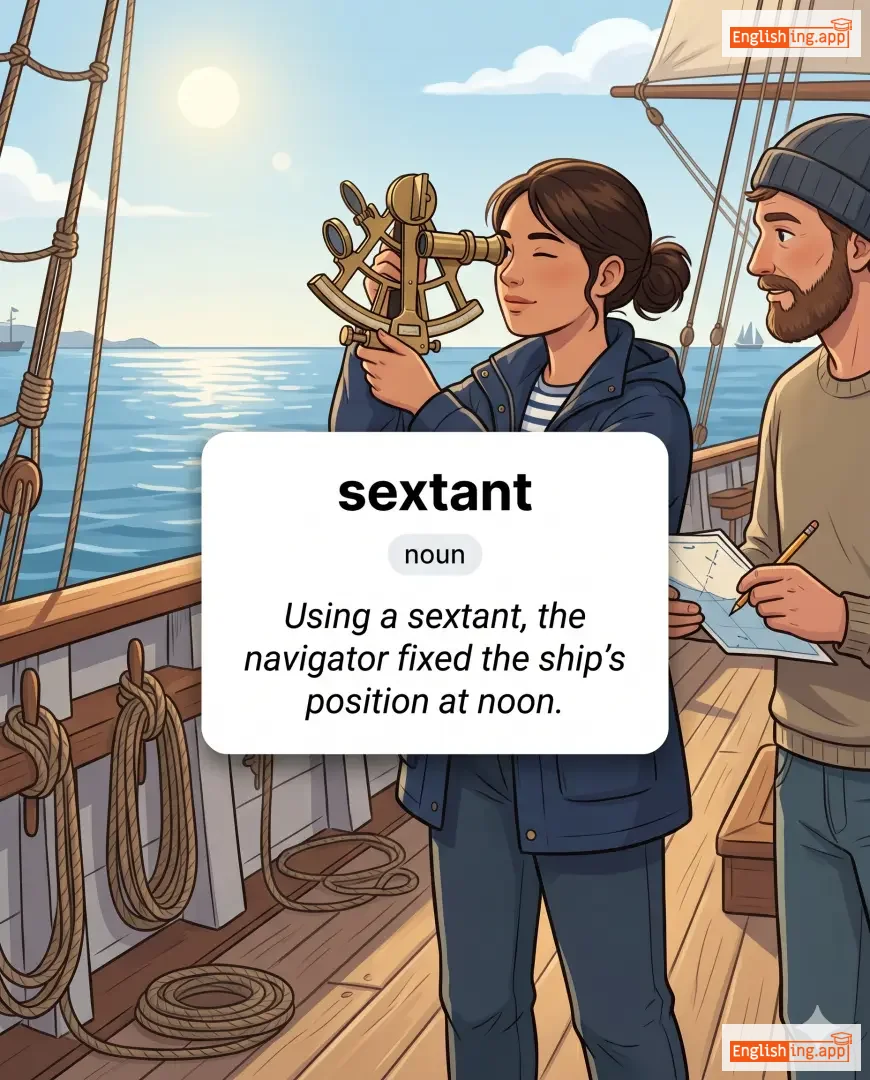
sextant definition card — visual illustration of the meaning
noun C2
/ˈsɛkstənt/
六分仪 (liu fen yi)

a navigational instrument with a graduated arc of 60°, used to measure the angle between a celestial object and the horizon

"Using a sextant, the navigator fixed the ship’s position at noon."

"使用六分仪,导航员在中午确定了船的位置。" (Shǐyòng liùfēnyí, dǎohángyuán zài zhōngwǔ quèdìngle chuán de wèizhì.)
noun C2
/sɛkˈstɛt/
六重奏 (liùchóngzòu)

a group of six people playing music or a piece written for six performers

"The jazz sextet filled the small club with a warm, layered sound."

"这支爵士六重奏用温暖、分层的声音填满了小俱乐部。" (Zhè zhī juéshì liùchóngzòu yòng wēnnuǎn, fēncéng de shēngyīn tiánmǎn le xiǎo jùlèbù.)
verb C2
/sɛkˈstuːpəl/
六倍增加 (liù bèi zēngjiā)

to make or become six times as great or as many

"Within two quarters, the campaign sextupled their daily sign-ups."
"在两个季度内,活动的日常注册人数增加了六倍。" (Zài liǎng gè jìdù nèi, huódòng de rìcháng zhùcè rénshù zēngjiāle liù bèi.)
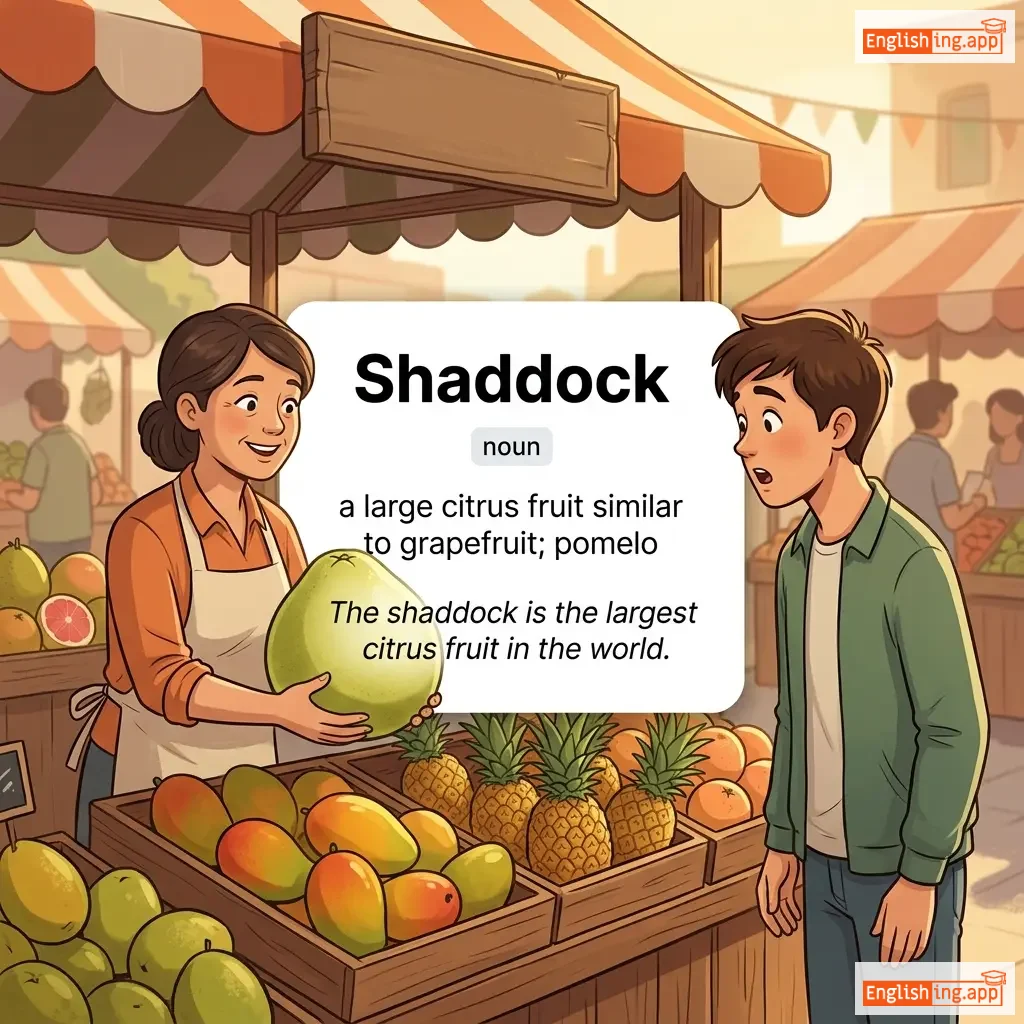
Shaddock definition card — visual illustration of the meaning
noun C2
/ˈʃæd.ək/
柚子 (youzi)

a large citrus fruit similar to grapefruit; pomelo

"The shaddock is the largest citrus fruit in the world."

"沙多克是世界上最大的柑橘类水果。" (Shā duō kè shì shìjiè shàng zuìdà de gānjú lèi shuǐguǒ.)
noun C2
/ˌʃæŋɡriˈlɑː/
虚构的乐园 (xūgòu de lèyuán)

a remote, beautiful, imaginary place where life is perfect and peaceful

"They described the island as a modern-day Shangri-La."

"他们将这个岛屿描述为现代版的香格里拉。" (Tāmen jiāng zhège dǎoyǔ miáoshù wéi xiàndài bǎn de xiānggélǐlā.)
noun C2
/ʃiːf/
麦束 (mài shù)

a bundle of grain stalks laid lengthwise and tied together after reaping; a bundle of objects tied together

"The farmer carried a sheaf of wheat on his shoulder."
"农民肩上背着一捆小麦。" (Nóngmín jiān shàng bèizhe yī kǔn xiǎomài.)
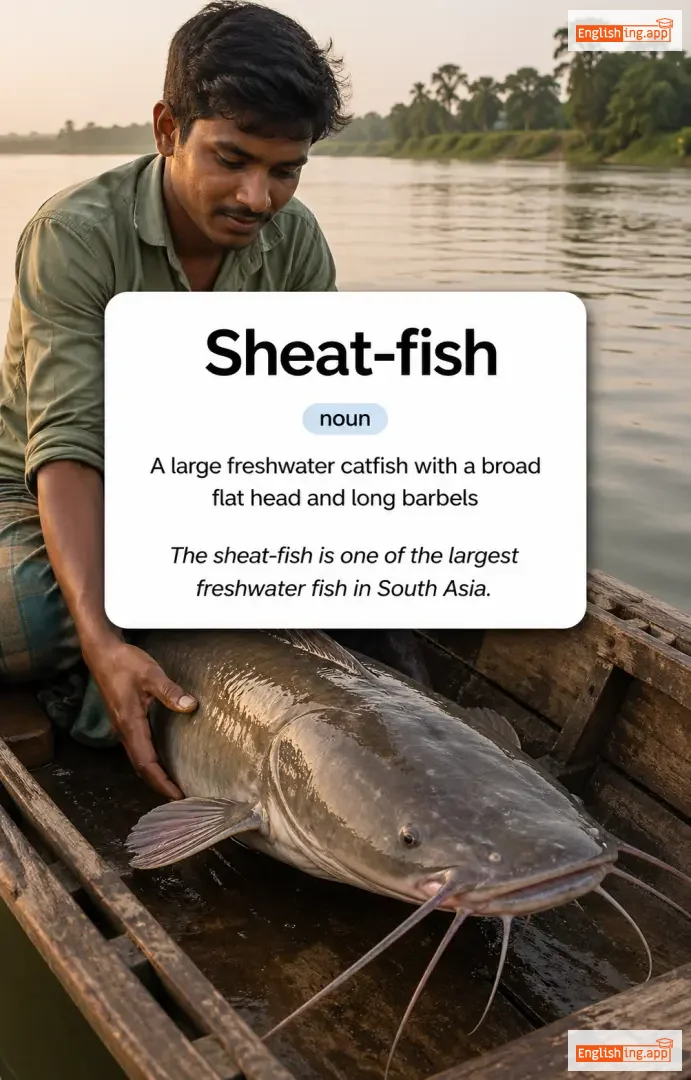
Sheat-fish definition card — visual illustration of the meaning
noun C2
/ʃiːt fɪʃ/
鲶鱼 (nian yu)

A large freshwater catfish with a broad flat head and long barbels

"The sheat-fish is one of the largest freshwater fish in South Asia."

"鲶鱼是南亚最大的淡水鱼之一。" (Nian yu shi nan ya zui da de dan shui yu zhi yi)
verb C2
/ʃiːð/
放回剑鞘 (fàng huí jiàn qiào)

to put a sword or knife back into its cover

"He quickly sheathed his sword after the duel."

"他在决斗后迅速把剑重新放回剑鞘。" (Tā zài juéduì hòu xùnsù bǎ jiàn chóngxīn fàng huí jiàn qiào.)
noun C2
/ˈʃɪbəˌlɛθ/
区分特定群体的习语或信仰 (qufen tedian qunti de xiyi huo xinyang)

A custom, phrase, or belief distinguishing a particular group of people, often used to identify outsiders.

"The phrase became a political shibboleth during the campaign."

"这句话在竞选期间成为了一个政治性的shibboleth。" (Zhe ju hua zai jingxuan qijian chengwei le yige zhengzhixing de shibboleth.)
adjective C2
/ˈʃɪft.ləs/
懒惰 (landuo)

Lacking ambition or the ability to accomplish anything; lazy and unmotivated.

"He was seen as a shiftless young man with no goals."

"他被看作是一个没有目标的懒惰年轻人。" (Tā bèi kànzuò shì yīgè méiyǒu mùbiāo de lǎnduò niánqīng rén.)
adjective C2
/ˈʃɑːpwɔːrn/
旧的 / 陈旧的 (jiù de / chén jiù de)

worn or faded from being displayed in a shop; no longer fresh or original

"The shopworn shoes were sold at a discount."

"这些 shopworn 鞋子以折扣价出售。" (Zhèxiē shopworn xiézi yǐ zhékòu jià chūshòu.)
verb C2
/ʃʌk/
剥壳 (bāo ké)

To remove the outer covering, such as the husk of corn or shell of shellfish.

"She learned how to shuck oysters quickly."

"她学会了如何快速打开牡蛎。" (Tā xuéhuìle rúhé kuàisù dǎkāi mǔlì.)
noun C2
/ˈʃaɪstər/
骗子 (pianzi)

a person, especially a lawyer, who uses unscrupulous or dishonest methods

"The businessman was exposed as a shyster who cheated clients."

"这位商人被曝光为一个骗子,他欺骗了客户。" (Zhè wèi shāngrén bèi pùguāng wéi yīgè piànzi, tā qīpiànle kèhù.)
noun C2
/ˈsɪbɪləns/
嘶嘶声 (sī sī shēng)

A hissing or hushing sound, especially in speech with 's' or 'sh'.

"The poet used sibilance to create a soft, hissing effect in the verse."

"诗人用西比兰斯在诗句中创造了一个柔和的嘶嘶效果。" (Shīrén yòng xī bǐ lán sī zài shī jù zhōng chuàngzàole yīgè róuhé de sī sī xiàoguǒ.)
adjective C2
/ˈsɪbɪlənt/
带有嘶嘶声的 (dài yǒu sī sī shēng de)

Making or characterized by a hissing sound.

"The word 'snake' starts with a sibilant sound."

"单词 'snake' 以西比兰特的声音开始。" (Dāncí 'snake' yǐ xī bǐ lán tè de shēngyīn kāishǐ.)
verb C2
/ˈsɪbəleɪt/
发出嘶嘶声 (fāchū sī sī shēng)

To pronounce with a hissing sound.

"The actor sibilated his lines for dramatic effect."

"演员为了戏剧效果,用嘶嘶声说出了他的台词。" (Yǎnyuán wèile xìjù xiàoguǒ, yòng sī sī shēng shuō chūle tā de táicí.)
adjective C2
/ˈsɪbɪlaɪn/
希比林 (xī bǐ lín)

Prophetic, mysterious, or cryptic in meaning.

"The old woman gave a sibylline warning about the future."

"那位老妇人对未来做出了一个希比林的警告。" (Nà wèi lǎo fùrén duì wèilái zuòchūle yīgè xī bǐ lín de jǐnggào.)
adjective, adverb C2
/ˈsaɪdlɔːŋ/
斜视 (xie shi)

Directed to the side; indirect, furtive, or not straightforward.

"She gave him a sidelong glance across the room."
"她穿过房间投给他一个斜视。" (Tā chuānguò fángjiān tóu gěi tā yīgè xié shì.)
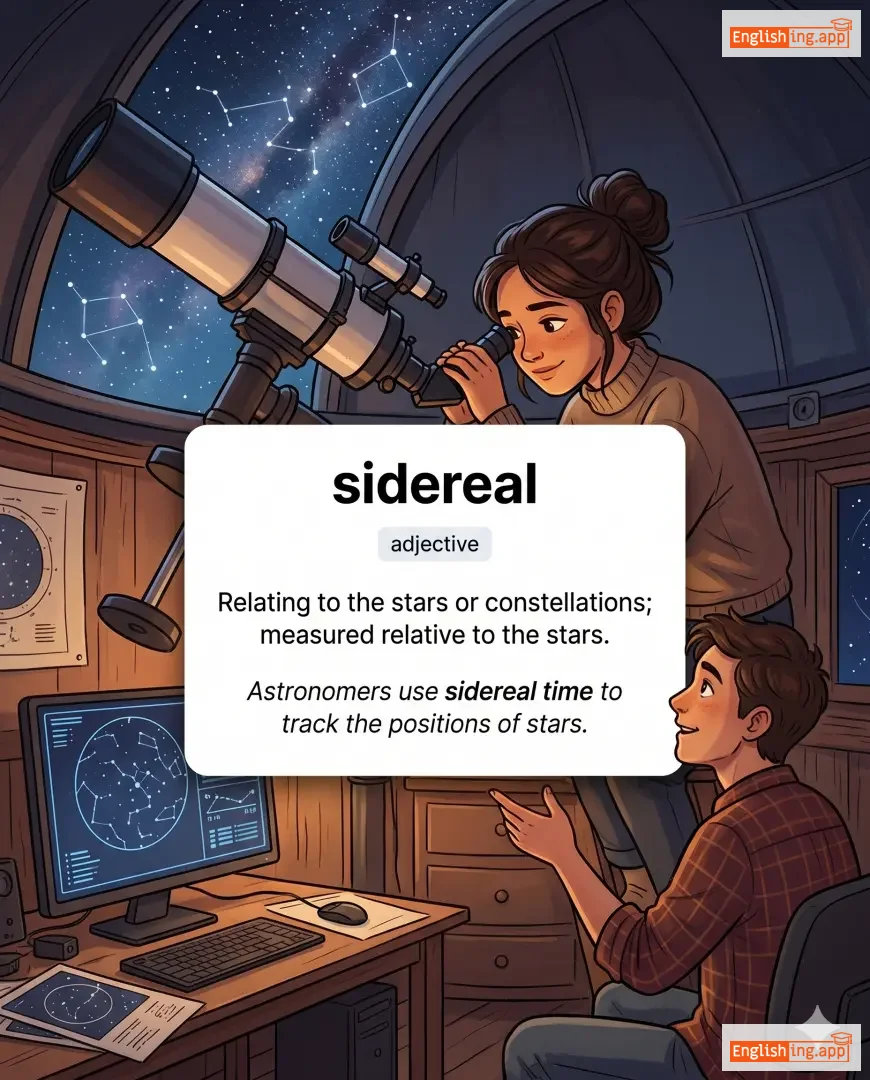
sidereal definition card — visual illustration of the meaning
adjective C2
/saɪˈdɪəriəl/
恒星的 (héng xīng de)

Relating to the stars or constellations; measured relative to the stars.

"Astronomers use sidereal time to track the positions of stars."

"天文学家使用恒星时间来追踪星星的位置。" (tiān wén xué jiā shǐ yòng héng xīng shí jiān lái zhuī zōng xīng xīng de wèi zhì.)
noun C2
/ˌsɪɡnɪfɪˈkeɪʃən/
含义 (hányì)

the meaning or sense conveyed by a word, action, or symbol

"The signification of the gesture was misunderstood."
"这个手势的含义被误解了。" (Zhège shǒushì de hányì bèi wùjiěle.)
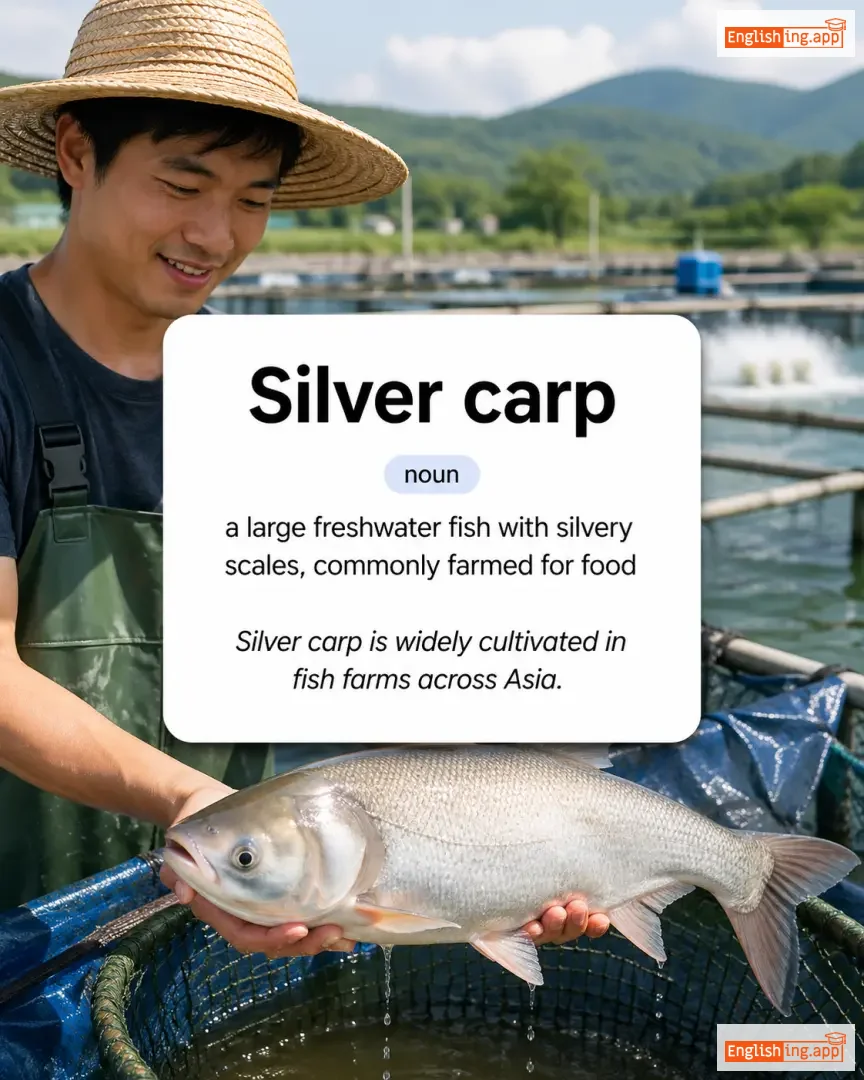
Silver carp definition card — visual illustration of the meaning
noun C2
/ˈsɪlvər kɑrp/
银鲤 (yin li)

a large freshwater fish with silvery scales, commonly farmed for food

"Silver carp is widely cultivated in fish farms across Asia."

"银鲤在亚洲的鱼场中被广泛养殖。" (yin li zai ya zhou de yu chang zhong bei guang fan yang zhi.)