词汇表

英语词汇词典 | 单词含义、定义和示例

adjective C2
/rɪˈtɪkjʊlət/
网状 (wǎngzhuàng)

Having a net-like pattern or structure.

"The leaf had a reticulate pattern of veins."

"叶子有着网状的脉络图案。" (Yèzi yǒu zhe wǎngzhuàng de mài luò tú'àn.)
noun C2
/ˈrɛtɪnjuː/
随行人员 (suíxíng rényuán)

A group of attendants or followers accompanying an important person.

"The king entered the hall followed by his retinue."

"国王带着随行人员进入了大厅。" (Guówáng dàizhe suíxíng rényuán jìnrùle dàtīng.)
verb C2
/rɪˈtrɛntʃ/
减少开支,裁员 (jiǎnshǎo kāizhī, cáiyuán)

to reduce costs, spending, or staff to save resources

"The company had to retrench employees due to financial difficulties."

"公司由于财务困难不得不裁员。" (Gōngsī yóuyú cáiwù kùnán bùdébù cáiyuán.)
noun C2
/ˌrɛtroʊˈɡrɛʃən/
倒退 (daotui)

a return to a worse or less developed state

"The country experienced economic retrogression after the crisis."

"该国在危机后经历了经济倒退。" (Gai guo zai weiji hou jingli le jingji daotui.)
noun C2
/ˈrɛvəlri/
庆典 (qingdian)

Lively and noisy festivities, especially involving drinking and dancing.

"The sound of revelry could be heard throughout the night."

"整晚都能听到庆典的声音。" (Zhěng wǎn dōu néng tīng dào qìngdiǎn de shēngyīn.)
reverie definition card — visual illustration of the meaning
noun C2
/ˈrɛvəri/
白日梦 (báirìmèng)

a state of being pleasantly lost in one's thoughts; a daydream

"She drifted into a reverie while staring at the sunset."

"她在看着日落时沉浸在白日梦中。" (Tā zài kànzhe rìluò shí chénjìn zài báirìmèng zhōng.)
verb C2
/rɪˈvaɪl/
谴责 (qianze)

to criticize in an abusive or angrily insulting manner

"The politician was reviled by the public for his corruption."

"政治家因腐败而被公众谴责。" (Zhèngzhìjiā yīn fǔbài ér bèi gōngzhòng qiǎnzé.)
noun C2
/rɪˈvaɪlər/
侮辱者 (wǔrǔ zhě)

a person who criticizes or insults others abusively

"He was known as a reviler of all who opposed him."

"他以侮辱所有反对他的人而闻名。" (Tā yǐ wǔrǔ suǒyǒu fǎnduì tā de rén ér wénmíng.)
noun C2
/rɪˈvaɪ.zəl/
修订 (xiūdìng)

The act of revising, reviewing, or making changes to something.

"The revisal of the contract took longer than expected."

"合同的修订比预期花费了更多时间。" (Hétóng de xiūdìng bǐ yùqī huāfèi le gèng duō shíjiān.)
noun C2
/ˌrɛv.əˈkeɪ.ʃən/
撤销 (chexiao)

The act of officially canceling or withdrawing something.

"The court ordered the revocation of his license."

"法院命令撤销他的许可证。" (Fǎyuàn mìnglìng chèxiāo tā de xǔkě zhèng.)
verb C2
/ˈræpsəˌdaɪz/
热情洋溢地谈论 (rèqíng yángyì de tánlùn)

to speak or write with great enthusiasm and admiration

"He would often rhapsodize about his travels to Europe."

"他常常带着极大的热情谈论他的欧洲旅行。" (Tā chángcháng dàizhe jí dà de rèqíng tánlùn tā de Ōuzhōu lǚxíng.)
noun C2
/ˈræpsədi/
激昂的歌曲/赞美 (jīáng de gēqǔ/zànměi)

an expression of great enthusiasm or an epic musical composition

"The singer’s performance was a rhapsody of emotions."

"歌手的表演是一场情感的狂想曲。" (Gēshǒu de biǎoyǎn shì yī chǎng qínggǎn de kuángxiǎngqǔ.)
noun C2
/ˌrɛtəˈrɪʃən/
雄辩家 (xióngbiànjiā)

A person who is skilled in the art of rhetoric or persuasive speaking/writing.

"The rhetorician captivated the audience with his eloquence."

"雄辩家凭借其雄辩技巧吸引了听众。" (Xióngbiànjiā píngjiè qí xióngbiàn jìqiǎo xīyǐnle tīngzhòng.)
adjective C2
/ˈruːmi/
泪眼 (lèiyǎn)

Watery, especially referring to the eyes.

"His rheumy eyes showed signs of age and fatigue."

"他那泪眼朦胧的眼睛显示出年龄和疲劳的迹象。" (Tā nà lèiyǎn ménglóng de yǎnjīng xiǎnshì chū niánlíng hé píláo de jìxiàng.)
adjective C2
/ˈrɪbɔːld/
猥亵笑话 (wěixiè xiàohuà)

Referring to sexual matters in a humorous or vulgar way.

"The comedian’s ribald jokes made the audience laugh uncomfortably."

"喜剧演员的猥亵笑话让观众不自在地笑了。" (Xǐjù yǎnyuán de wěixiè xiàohuà ràng guānzhòng bù zìzài de xiàole.)
noun C2
/ˈrɪɡməˌroʊl/
麻烦事 (máfan shì)

a long, complicated, and confusing process or story

"Getting a visa was such a rigmarole of paperwork and interviews."

"获得签证是一个繁琐的文书工作和面试过程。" (Huòdé qiānzhèng shì yīgè fánzuǒ de wénshū gōngzuò hé miànshì guòchéng.)
noun C2
/raɪm/
(shuang)

frost formed on cold surfaces by freezing water vapor

"The trees were covered with a white rime after the cold night."
"树木在寒冷的夜晚后被白色霜覆盖。" (Shumu zai hanleng de yewan hou bei baise shuang fukai.)
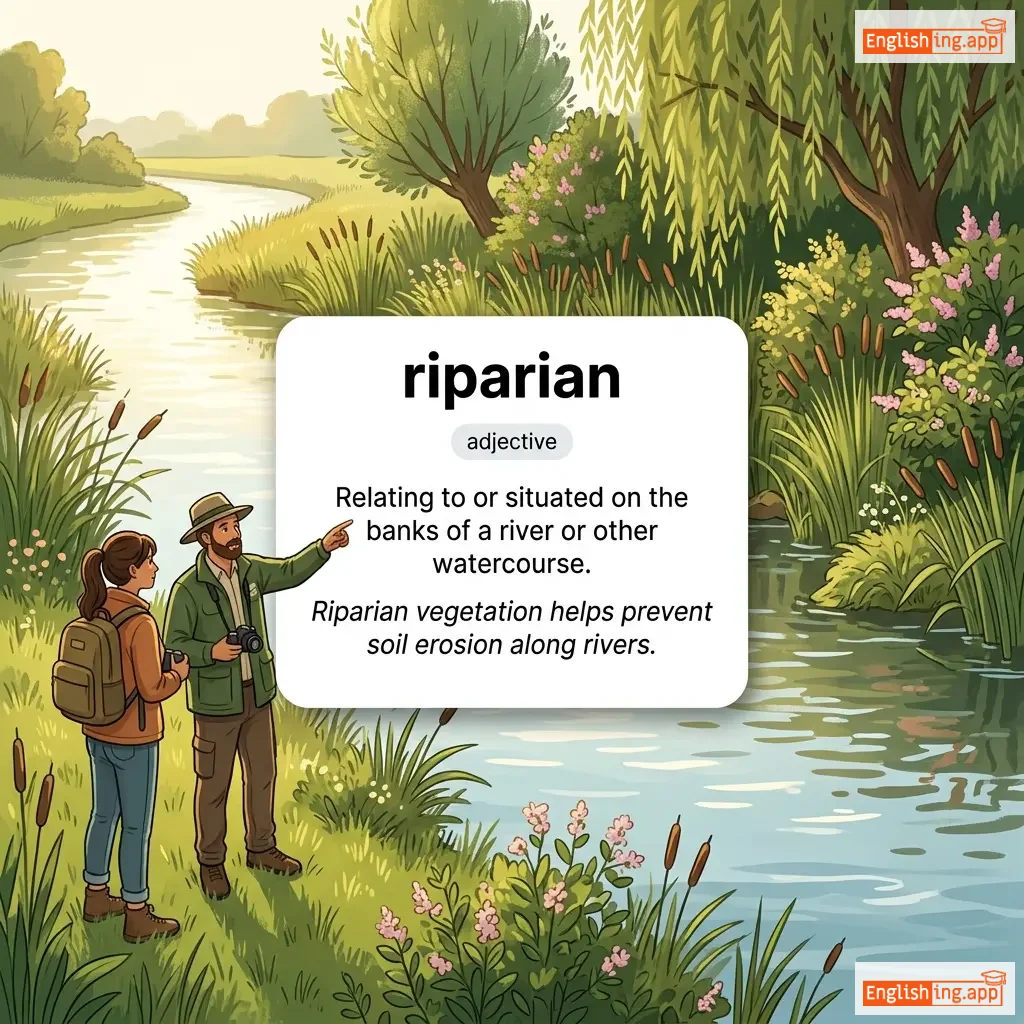
riparian definition card — visual illustration of the meaning
adjective C2
/raɪˈpɛə.ri.ən/
位于河流或其他水道的岸边或与之相关的 (wei yu heliu huo qita shuidao de anbian huo yu zhi xiangguan de)

Relating to or situated on the banks of a river or other watercourse.

"Riparian vegetation helps prevent soil erosion along rivers."
"河岸植被有助于防止河流沿岸的土壤侵蚀。" (Hé'àn zhíwù yǒuzhù yú fángzhǐ héliú yán'àn de tǔrǎng qīnshí.)
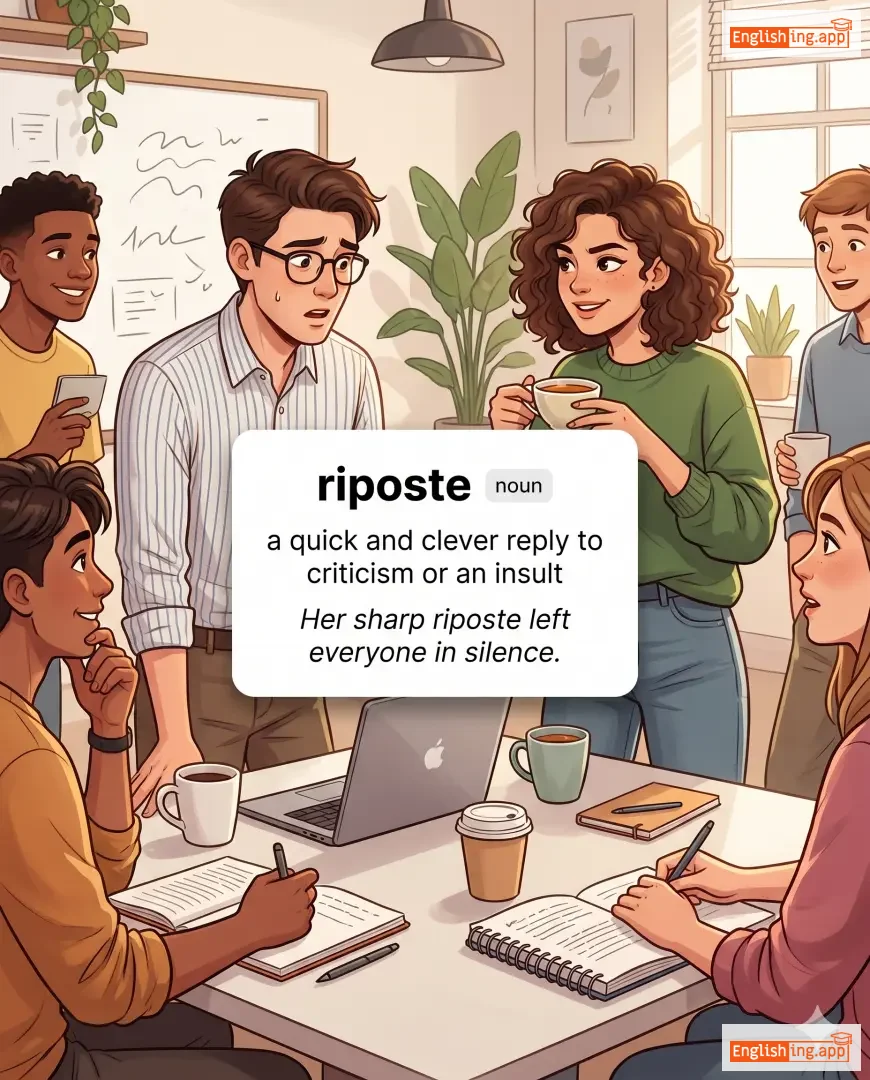
riposte definition card — visual illustration of the meaning
noun C2
/rɪˈpoʊst/
犀利的反应 (xīlì de fǎnyìng)

a quick and clever reply to criticism or an insult

"Her sharp riposte left everyone in silence."

"她尖锐的反应让所有人都安静了。" (Tā jiānruì de fǎnyìng ràng suǒyǒu rén dōu ānjìng le.)
noun C2
/ˈrɪp.lɪt/
微小波纹 (weixiao bowen)

a small or tiny ripple

"Tiny ripplets appeared on the lake as the fish moved."

"当鱼移动时,湖面上出现了微小波纹。" (Dang yu yidong shi, hu mian shang chuxian le weixiao bowen.)
adjective C2
/ˈrɪz.ə.bəl/
可笑的 (kěxiàode)

so absurd or ridiculous that it deserves to be laughed at

"The idea of flying pigs is completely risible."

"飞猪的想法完全是可笑的。" (Fēi zhū de xiǎngfǎ wánquán shì kěxiàode.)
verb C2
/raɪv/
撕裂 (silie)

to tear apart violently

"The earthquake rived the ground in several places."

"地震在几个地方撕裂了地面。" (Dizhen zai ji ge difang silie le dimian.)
noun C2
/ˈrɪvjʊlət/
小溪 (xiaoxi)

a small stream of water; a tiny brook

"A rivulet ran down the hillside after the rain."

"雨后,一条小溪从山坡上流下来。" (Yu hou, yi tiao xiaoxi cong shanpo shang liu xiala.)
adjective C2
/roʊn/
罗恩马 (luó ēn mǎ)

denoting an animal, especially a horse, having a coat of mixed colors, typically reddish-brown and white

"The rider mounted a roan horse with a speckled coat."
"骑手骑上了一匹罗恩马,身上有斑点的毛皮。" (qíshǒu qí shàngle yī pǐ luó ēn mǎ, shēnshàng yǒu bāndiǎn de máopí.)
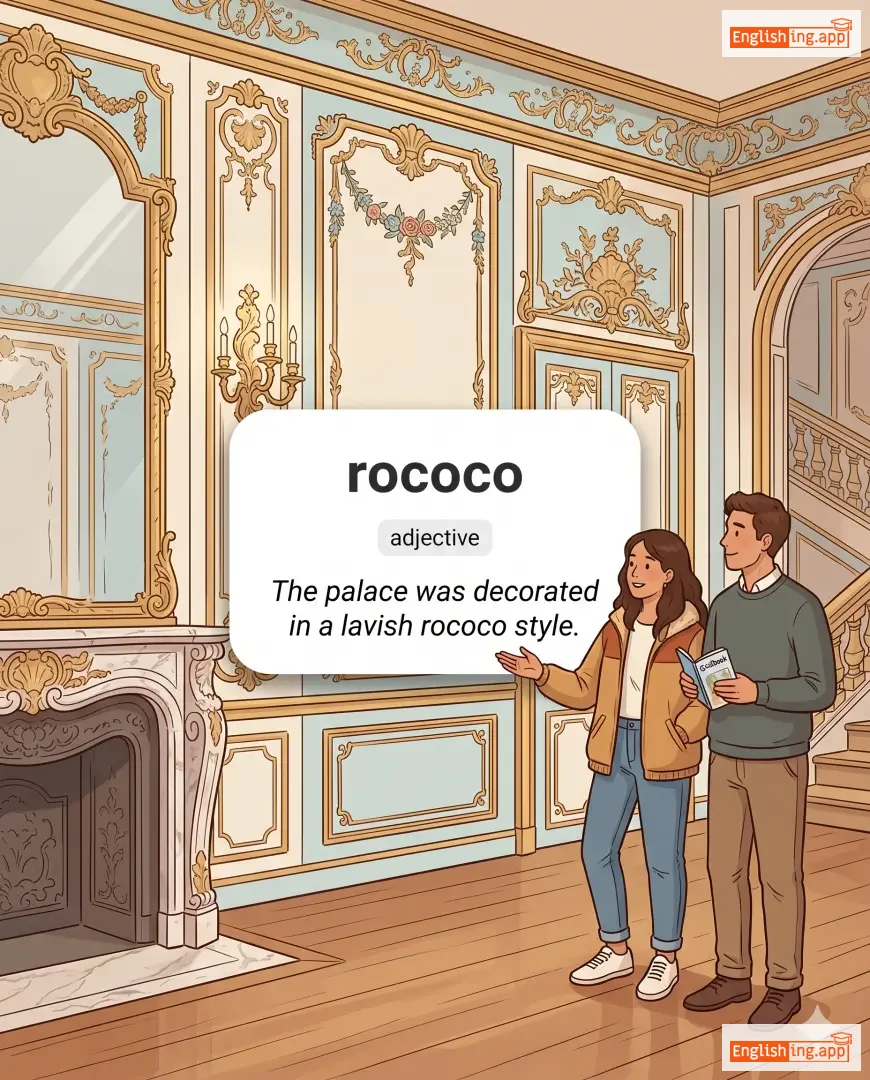
rococo definition card — visual illustration of the meaning
adjective C2
/rəˈkoʊkoʊ/
洛可可 (luò kě kě)

characterized by ornate detail and elaborate decoration, especially in art, architecture, and design

"The palace was decorated in a lavish rococo style."

"宫殿以奢华的洛可可风格装饰。" (Gōngdiàn yǐ shēhuá de luò kě kě fēnggé zhuāngshì.)
verb C2
/rɔɪl/
搅动 (jiǎo dòng)

to make a liquid muddy or disturbed; to cause agitation or disorder

"The constant protests roiled the city streets."

"持续的抗议活动搅动了城市的街道。" (Chíxù de kàngyì huódòng jiǎo dòngle chéngshì de jiēdào.)
verb C2
/ˈrɔɪstər/
喧闹庆祝 (xuan nao qing zhu)

to revel noisily; to engage in loud, boisterous celebration

"The fans roistered in the streets after the victory."

"球迷在街头欢庆,庆祝胜利。" (Qiu mi zai jie tou huan qing, qing zhu sheng li.)
noun C2
/ˈrɒndoʊ/
音乐作品(具有重复主题) (yinyue zuopin (juxu chongfu zhuti))

a musical composition with a recurring leading theme

"The pianist ended the recital with a lively rondo."

"钢琴家以一首生动的朗多结束了演奏。" (Gangqin jia yi yi shou shengdong de langdu jie shu le yanzou.)
noun C2
/ruːd/
十字架 (shízìjià)

a crucifix, especially one positioned above the entrance to the chancel of a church

"The old church displayed a carved rood above the altar."

"这座古老的教堂展示了一个雕刻的十字架在祭坛上方。" (Zhè zuò gǔlǎo de jiàotáng zhǎnshìle yīgè diāokè de shízìjià zài jìtán shàngfāng.)
noun C2
/ˈrʊkəri/
鸟类栖息地 (niao lei qi xi di)

a place where rooks or other birds breed and nest in colonies

"We saw a rookery full of noisy birds near the forest."

"我们看到一个充满吵闹鸟类的鸟类栖息地,靠近森林。" (Wo men kan dao yi ge chong man chao nao niao lei de niao lei qi xi di, kao jin sen lin.)
adjective C2
/ˈroʊziət/
玫瑰色的,乐观的 (méiguī sè de, lèguān de)

Having a pink color; optimistic or idealistic.

"She looked at the future with roseate optimism."

"她以玫瑰色的乐观主义看待未来。" (Tā yǐ méiguī sè de lèguān zhǔyì kàn dài wèilái.)
adjective C2
/roʊˈtʌnd/
圆形的 (yuánxíng de)

round or plump in shape; full in sound

"The rotund cat struggled to climb the fence."

"那只圆形的猫爬不上围栏。" (Nà zhī yuánxíng de māo pá bù shàng wéilán.)
noun C2
/roʊˈtʌn.də/
圆形建筑 (yuánxíng jiànzhú)

a large circular building or hall, often with a dome

"Tourists gathered inside the grand rotunda of the capitol."

"游客们聚集在国会大厦的宏伟圆顶大厅内。" (Yóukèmen jùjí zài guóhuì dàshà de hóngwěi yuándǐng dàtīng nèi.)
noun C2
/roʊˈtʌn.də.ti/
圆形 (yuanxing)

the quality of being round or plump

"The rotundity of the balloon made it float gracefully."

"气球的圆形使它优雅地漂浮。" (Qiqiu de yuanxing shi ta youya de piaofu.)
noun C2
/ruːˈeɪ/
一位沉迷于感官享受的男人 (yī wèi chénmí yú gǎnguān xiǎngshòu de nánrén)

A man devoted to a life of sensual pleasure; a debauched man.

"The old roue squandered his fortune on gambling and women."

"那位年老的鲁埃把他的财富都浪费在赌博和女人身上。" (Nà wèi niánlǎo de lǔ'āi bǎ tā de cáifù dōu làngfèi zài dǔbó hé nǚrén shēnshàng.)
adjective C2
/ˈruːbɪkənd/
红润的脸 (hóngrùn de liǎn)

Having a healthy reddish complexion.

"The old man’s rubicund face showed he was in good health."

"那位老人的红润脸庞显示他身体健康。" (Nà wèi lǎo rén de hóngrùn liǎn páng xiǎnshì tā shēntǐ jiànkāng.)
adjective C2
/ˈrʌdi/
红润 (hongrun)

Having a healthy red color in the face.

"She had a ruddy complexion from working outdoors."

"她因为在户外工作,脸上有红润的肤色。" (Ta yinwei zai huwai gongzuo, lian shang you hongrun de fuse.)
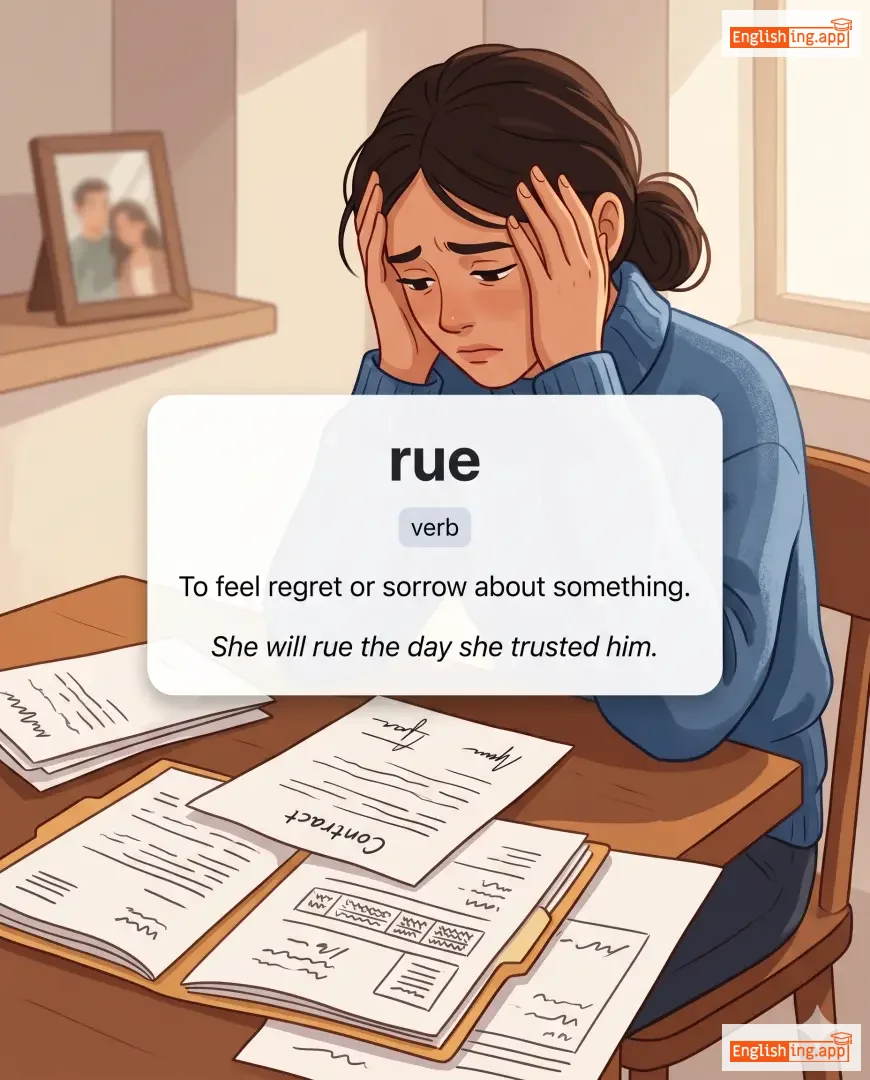
rue definition card — visual illustration of the meaning
verb C2
/ruː/
后悔 (hòuhuǐ)

To feel regret or sorrow about something.

"She will rue the day she trusted him."

"她将会后悔她信任他那一天。" (Tā jiāng huì hòuhuǐ tā xìnrèn tā nà yītiān.)
noun C2
/ˈruː.mɪ.nənt/
反刍动物 (fǎnchú dòngwù)

a cud-chewing mammal, such as a cow or sheep

"Cows are ruminants that chew cud."
"牛是反刍动物,它们会反复咀嚼食物。" (Niú shì fǎnchú dòngwù, tāmen huì fǎfù zhǔjué shíwù.)
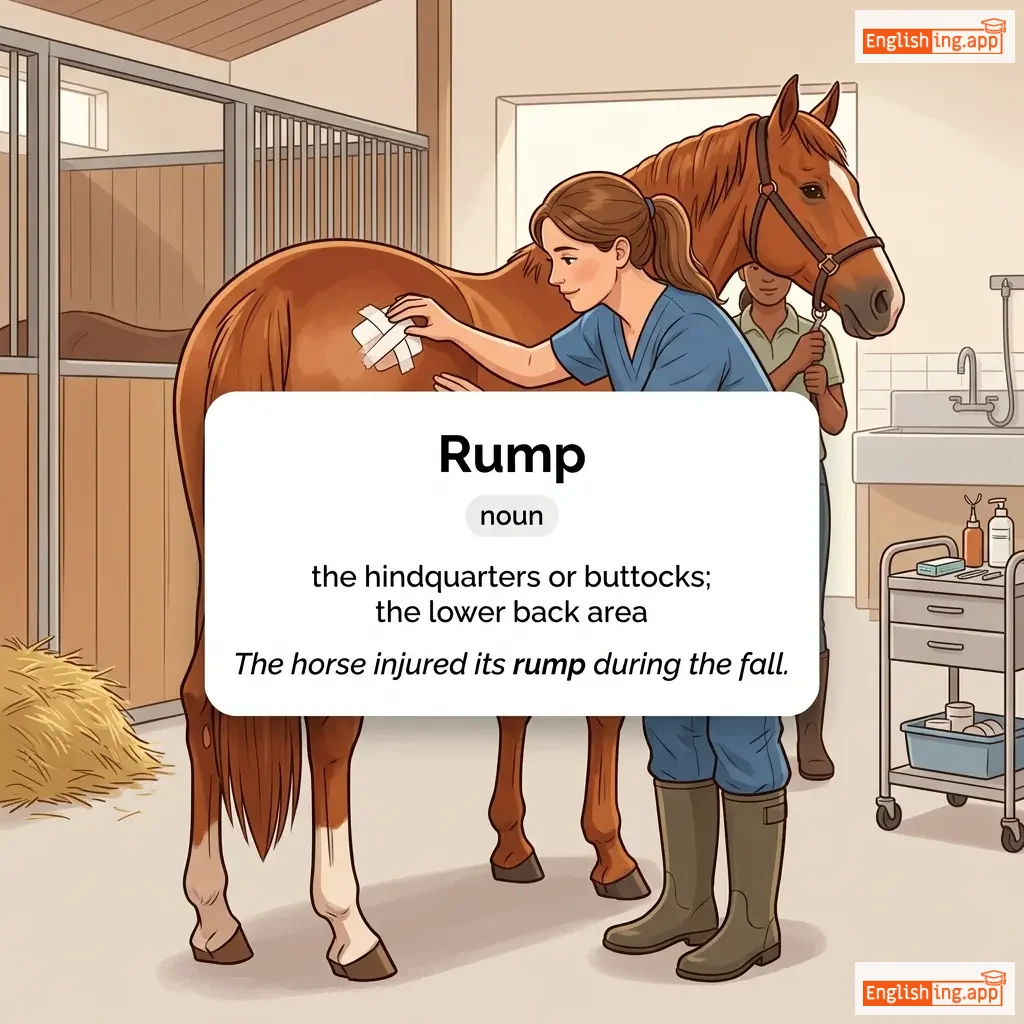
Rump definition card — visual illustration of the meaning
noun C2
/rʌmp/
臀部; 屁股; 背部下方 (ramp)

the hindquarters or buttocks; the lower back area

"The horse injured its rump during the fall."

"那匹马在跌倒时伤到了它的臀部。" (Nà pǐ mǎ zài diēdǎo shí shāngdào le tā de tún bù.)
verb C2
/ˈrʌmpəl/
弄皱 (nòng zhòu)

to make something untidy or wrinkled by creasing or crumpling

"She accidentally rumpled her dress while packing."

"她在打包时不小心弄皱了她的裙子。" (Tā zài dǎbāo shí bù xiǎoxīn nòng zhòu le tā de qúnzi.)
adjective C2
/ˈruːnɪk/
与符文相关 (yǔ fú wén xiāng guān)

relating to or consisting of runes; mysterious or magical

"The old stone had strange runic carvings on it."

"这块古老的石头上有奇怪的符文雕刻。" (Zhè kuài gǔlǎo de shítou shàng yǒu qíguài de fúwén diāokè.)
verb C2
/ˈrʌstɪkeɪt/
去乡村 / 从大学暂时开除 (Qu xiāngcūn / cóng dàxué zàntí kāichú)

To go to the countryside or to suspend someone from university.

"He decided to rusticate in the village to escape the busy city life."

"他决定去乡村生活以逃避繁忙的城市生活。" (Tā juédìng qù xiāngcūn shēnghuó yǐ táobì fánmáng de chéngshì shēnghuó.)
noun C2
/ruːθ/
同情 (tóngqíng)

A feeling of pity, compassion, or sorrow.

"He felt no ruth for the people he had betrayed."

"他对他曾经背叛的人没有任何同情。" (Tā duì tā céngjīng bèipàn de rén méiyǒu rènhé tóngqíng.)
adjective C2
/ˈsækərɪn/
幸福 (xìngfú)

Excessively sweet or sentimental.

"His saccharine smile seemed insincere."

"她在获得奖项时无法隐藏她的幸福。" (Tā zài huòdé jiǎngxiàng shí wúfǎ yǐncáng tā de xìngfú.)
adjective C2
/ˌsæsərˈdoʊtl/
神职的 (shénzhí de)

Relating to priests or the priesthood.

"The ritual had a distinctly sacerdotal character."

"仪式具有明显的神职特征。" (Yíshì jùyǒu míngxiǎn de shénzhí tèzhēng.)
noun C2
/ˈsækrɪsti/
圣器室 (shengqi shi)

a room in a church where sacred vessels and vestments are kept

"The priest entered the sacristy before the mass began."
"神父在弥撒开始前进入了圣器室。" (Shénfù zài mísa kāishǐ qián jìnrùle shèngqì shì.)
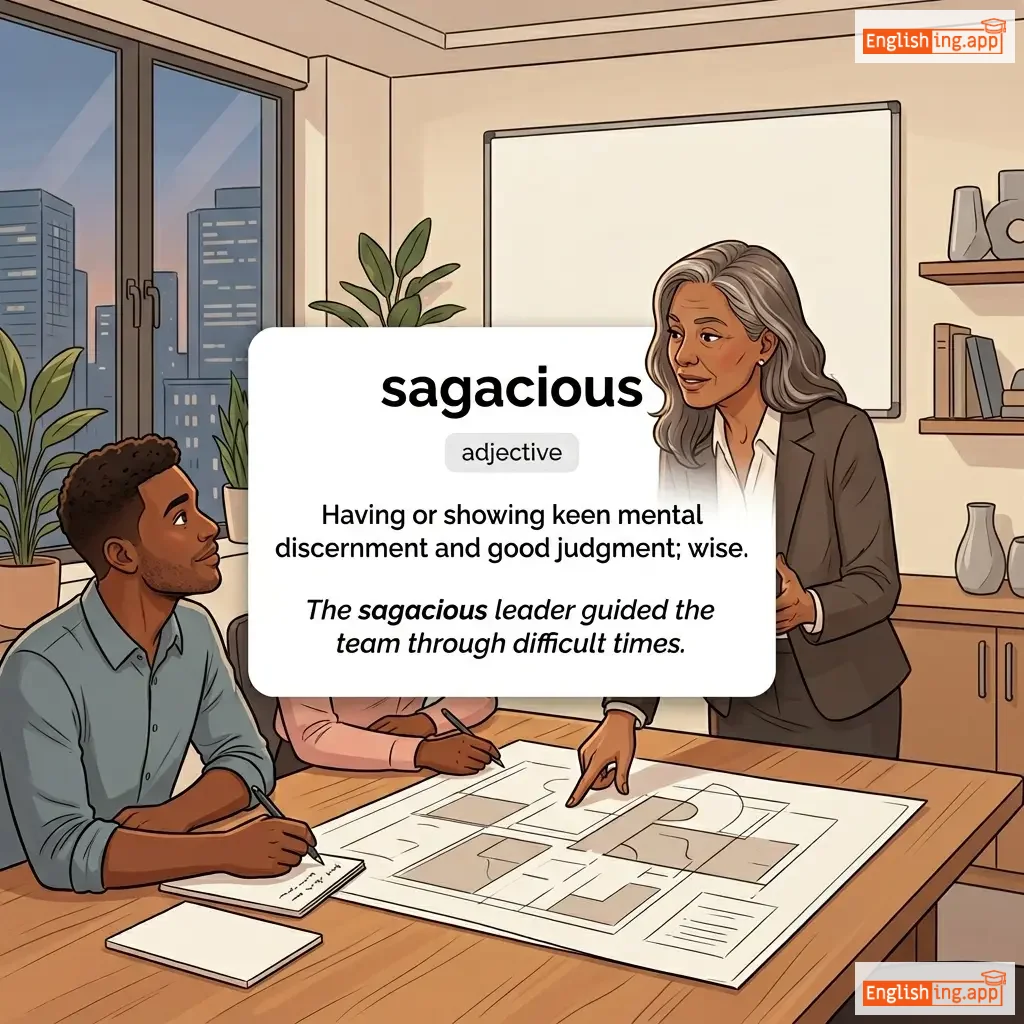
sagacious definition card — visual illustration of the meaning
adjective C2
/səˈɡeɪʃəs/
睿智的 (ruìzhì de)

Having or showing keen mental discernment and good judgment; wise.

"The sagacious leader guided the team through difficult times."

"睿智的领导者带领团队度过了艰难的时刻。" (Ruìzhì de lǐngdǎo zhě dàilǐng tuánduì dùguòle jiānnán de shíkè.)
sagacity definition card — visual illustration of the meaning
noun C2
/səˈɡæs.ə.t̬i/
深厚的智慧 (shen hou de zhi hui)

The quality of being sagacious; having or showing keen mental discernment and good judgment.

"His sagacity made him a great leader."

"他的萨加西蒂使他成为伟大的领导者。" (Tā de sagacity shǐ tā chéngwéi wěidà de lǐngdǎo zhě.)
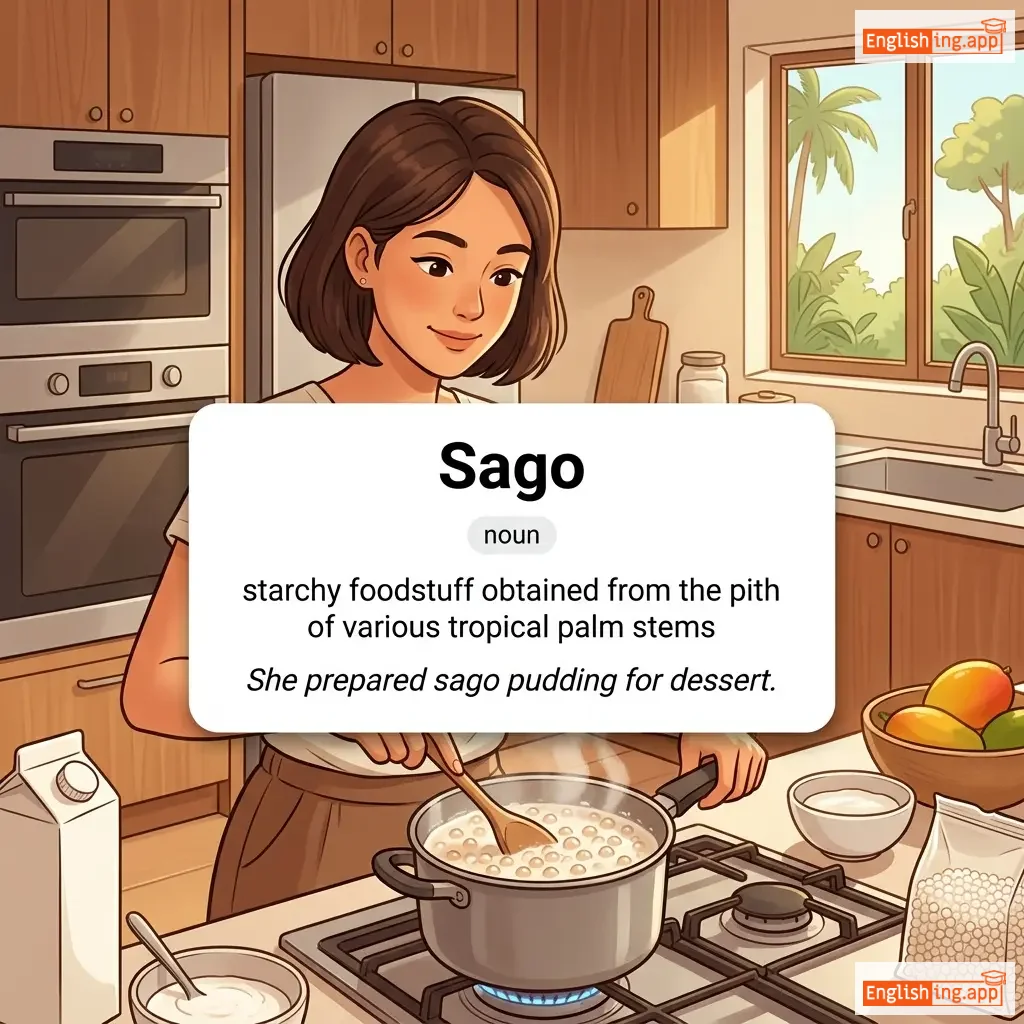
Sago definition card — visual illustration of the meaning
noun C2
/ˈseɪ.ɡoʊ/
萨戈 (sago)

starchy foodstuff obtained from the pith of various tropical palm stems

"She prepared sago pudding for dessert."

"她为甜点准备了萨戈布丁。" (Ta wei tian dian zhun bei le sago bu ding.)