词汇表

英语词汇词典 | 单词含义、定义和示例

adjective C2
/ˈpjuːɪsənt/
強力な (kyōryokuna)

having great power or influence; mighty

"The king was a puissant ruler whose word was law."

"その王は強力な支配者で、その言葉は法律だった。" (Sono ō wa kyōryokuna shihaisha de, sono kotoba wa hōritsu datta.)
noun C2
/ˈpʌlkrɪˌtjuːd/
美しさ (utsukushisa)

physical beauty

"The actress was admired for her pulchritude as well as her talent."

"その女優は美しさと才能で賞賛されました。" (Sono joyu wa utsukushisa to saino de shousan saremashita.)
verb C2
/ˈpʌlvəraɪz/
粉砕する (funsai suru)

To crush or grind something into a fine powder; to completely defeat or destroy.

"The machine can pulverize stones into dust."

"その機械は石を粉々にすることができます。" (Sono kikai wa ishi o funsai suru koto ga dekimasu.)
adjective C2
/pʌŋkˈtɪliəs/
几帳面 (kichoumen)

Showing great attention to detail or correct behavior.

"She was punctilious in her attention to etiquette."

"彼女はマナーに対して非常に几帳面だった。" (Kanojo wa manā ni taishite hijō ni kichōmen datta.)
noun C2
/ˈpʌndʒənsi/
辛味 (karami)

The quality of having a strong, sharp taste or smell.

"The pungency of garlic filled the kitchen."

"ニンニクの辛味がキッチンに充満した。" (Ninniku no karami ga kicchin ni juumanshita.)
noun C2
/ˈpjuː.pɪ.lɪdʒ/
生徒の状態 (seito no joutai)

The state of being a pupil or under instruction.

"During his pupilage, he studied law under a senior barrister."

"彼の生徒の状態の間に、彼は上級弁護士のもとで法学を学びました。" (Kare no seito no joutai no aida ni, kare wa joukyuu bengoshi no moto de hougaku o manabimashita.)
adjective C2
/ˈpɜːˌblaɪnd/
盲目または無知 (moumoku matawa muchi)

Having impaired or defective vision; lacking insight or understanding.

"The purblind approach to the problem led to many mistakes."

"問題に対する盲目的なアプローチは多くの間違いを招いた。" (Mondai ni taisuru moumokuteki na apurōchi wa ooku no machigai o manekita.)
verb C2
/pɜːrl/
ささやくような音で流れる (sasayaku yō na oto de nagareru)

To knit with a purl stitch; to flow with a murmuring sound (as a stream).

"The brook purled softly through the meadow."

"小川は草地を静かに流れた。" (Ogawa wa kusachi o shizuka ni nagareta.)
noun C2
/ˈpɜːrljuː/
周辺地域 (shūhen chiiki)

The area near or surrounding a place; an outlying or neighboring district.

"They spent the afternoon exploring the purlieus of the ancient city."

"彼らは古代都市のパーリューを探索して午後を過ごした。" (Karera wa kodai toshi no pāryū o tansaku shite gogo o sugoshita.)
verb C2
/pərˈlɔɪn/
盗む (nusumu)

to steal something, often in a sneaky or dishonest way

"He tried to purloin a book from the library without being noticed."

"彼は図書館から本を盗もうとしたが、気づかれなかった。" (Kare wa toshokan kara hon o nusumou to shita ga, kizukarenakatta.)
adjective C2
/pərˈsuːənt/
に従って (ni shitagatte)

in accordance with or following something, especially a law or rule

"The decision was made pursuant to the regulations."

"その決定は規則に従って行われました。" (Sono kettei wa kisoku ni shitagatte okonawaremashita.)
verb C2
/pərˈveɪ/
供給する (kyoukyuu suru)

to supply or provide goods, services, or information, often as a business

"The company purveys organic food to health-conscious customers."

"その会社は健康意識の高い顧客にオーガニック食品を供給しています。" (Sono kaisha wa kenkou ishiki no takai kokyaku ni ooganikku shokuhin o kyoukyuu shiteimasu.)
noun C2
/ˈpɜːrvjuː/
範囲 (han'i)

the scope or range of authority, responsibility, or knowledge

"The case does not fall within the purview of this court."

"この事件はこの裁判所の管轄外です。" (Kono jiken wa kono saibansho no kankatsugai desu.)
adjective C2
/ˌpjuːsɪˈlænɪməs/
臆病な (okubyona)

showing a lack of courage or determination; timid

"The pusillanimous leader avoided making tough decisions."

"臆病なリーダーは難しい決断を避けていた。" (Okubyona ri-da- wa muzukashii ketsudan wo saketeta.)
adjective C2
/ˈpjuːtətɪv/
推定の (suitei no)

commonly accepted or supposed; generally regarded as such

"He is the putative father of the child."

"彼は子供の推定父親です。" (Kare wa kodomo no suitei chichioya desu.)
verb C2
/ˈpjuːtrɪfaɪ/
腐敗する (fuhai suru)

to decay or rot, producing a foul smell

"The meat began to putrefy in the heat."

"肉は熱で腐り始めました。" (Niku wa netsu de kusari hajimemashita.)
adjective C2
/pjuːˈtrɛsənt/
腐敗した (fuhai shita)

undergoing the process of decay; rotting

"The putrescent odor made everyone leave the room."

"腐敗した臭いでみんな部屋を出て行った。" (Fuhai shita nioi de minna heya wo dete itta.)
noun C2
/paɪər/
火葬の火 (kasou no hi)

A heap of combustible material, especially one used for burning a corpse as part of a funeral ceremony.

"The villagers built a pyre to honor the deceased."

"村人たちは亡くなった人を敬うために火葬の火を作った。" (Mura no hitobito wa nakunatta hito o uyamau tame ni kasou no hi o tsukutta.)
noun C2
/ˌpaɪrəˈmeɪniə/
火をつけたいという抑制できない欲望 (hi o tsukettai to iu yokusei dekinai yokubou)

An uncontrollable desire to set things on fire.

"The suspect was diagnosed with pyromania after repeated incidents of arson."

"容疑者は繰り返される放火事件後にパイロマニアと診断されました。" (Yougisha wa kurikaesareru houka jiken go ni pairomania to shindan saremashita.)
noun C2
/ˌpaɪroʊˈmeɪniæk/
放火魔 (hōkama)

A person with an uncontrollable desire to set things on fire.

"The pyromaniac was arrested for setting several buildings ablaze."

"放火魔は数軒の建物に火をつけたことで逮捕された。" (Hōkama wa suken no tatemono ni hi wo tsuketa koto de taiho sareta.)
adjective C2
/ˌpaɪroʊˈtɛknɪk/
花火技術 (hanabi gijutsu)

Relating to fireworks or spectacular displays involving fire.

"The city celebrated with a grand pyrotechnic display on New Year's Eve."

"街は大晦日に盛大な花火技術のショーを祝いました。" (Machi wa oomisoka ni seidana hanabi gijutsu no shou wo iwai mashita.)
adjective C2
/ˈpɪrɪk/
ピリック勝利 (pirikku shōri)

A victory won at such a great cost that it is almost equivalent to defeat.

"The general declared the battle a pyrrhic victory due to heavy losses."

"将軍は大きな損失のため、この戦いをピリック勝利と宣言した。" (Shōgun wa ōkina sonshitsu no tame, kono tatakai o pirikku shōri to sengen shita.)
noun C2
/pɪks/
聖体を入れるための小さな容器 (seitai o ireru tame no chiisana youki)

a small container, often used in Christian liturgy to carry the consecrated host

"The priest placed the consecrated host into the pyx before visiting the sick."

"司祭は病人を訪れる前に聖体をピクスに入れました。" (Shisai wa byoujin o otozureru mae ni seitai o pikusu ni iremashita.)
adjective C2
/ˈkwɒdreɪt/
正方形 (seihoukei)

square or nearly square; having four sides or being suited or corresponding to something

"The tiles had a neat quadrate shape that made the floor look orderly."

"タイルは整然とした正方形の形状をしており、床を整然と見せていました。" (Tairu wa seizen to shita seihoukei no keijou o shite ori, yuka o seizen to misete imashita.)
noun C2
/ˈkwɒdrʊpɛd/

an animal that walks on four feet

"Most mammals are quadruped creatures adapted for running and stability."

verb C2
/kwɒf/
一気に飲む (ikki ni nomu)

to drink something heartily or in large gulps, especially an alcoholic drink

"He quaffed a mug of ale after the long day."

"彼は長い一日の後、ビールを一気に飲んだ。" (Kare wa nagai ichinichi no ato, bīru o ikki ni nonda.)
quark definition card — visual illustration of the meaning
noun C2
kwɔːrk
クォーク (kwōku)

A fundamental subatomic particle that combines to form protons and neutrons.

"Quarks form protons and neutrons."

"クォークは陽子と中性子を形成します。" (Kwōku wa yōshi to chūseishi o keisei shimasu.)
noun C2
/ˈkwɔːrtoʊ/
四つ折り本 (yottsu ori hon)

A book size resulting from folding each printed sheet into four leaves (eight pages).

"The library has rare Shakespeare quartos."

"図書館にはシェイクスピアの珍しいクアート本があります。" (Toshokan ni wa Sheikusupia no mezurashī kuāto hon ga arimasu.)
verb, noun C2
/ˈkweɪvər/
震える (furueru)

To shake or tremble in speaking, typically through nervousness or emotion.

"Her voice quavered as she spoke before the crowd."
"彼女の声は群衆の前で話すとき震えていました。" (Kanojo no koe wa gunshuu no mae de hanasu toki furuete imashita.)
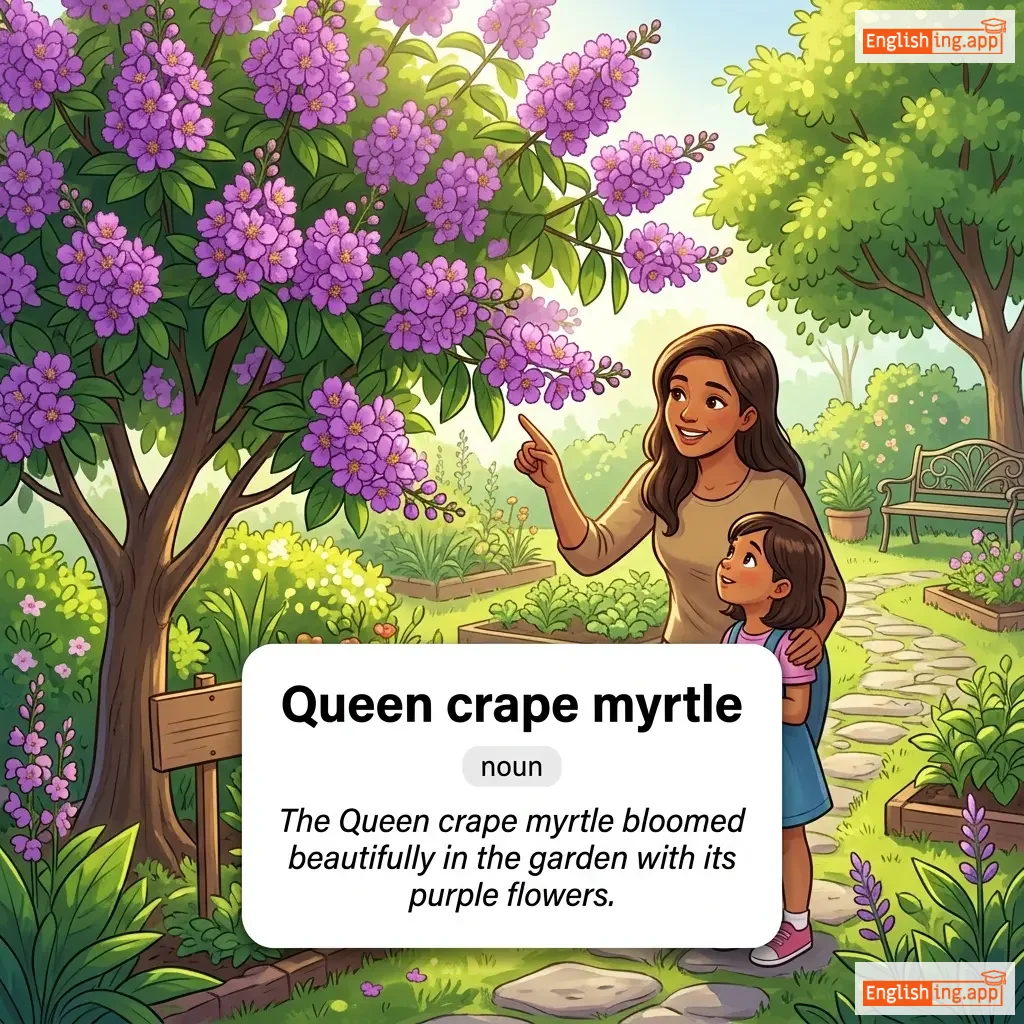
Queen crape myrtle definition card — visual illustration of the meaning
noun C2
/kwiːn kreɪp ˈmɜːrtəl/
クイーンクレープマートル (kui-n kure-pu ma-to-ru)

A flowering tree with colorful, crepe-like flowers, scientifically known as Lagerstroemia

"The Queen crape myrtle bloomed beautifully in the garden with its purple flowers."

"クイーンクレープマートルは庭で紫色の花とともに美しく咲きました。" (Kui-n kure-pu ma-to-ru wa niwa de murasakiiro no hana to tomo ni utsukushiku sakimashita.)
adjective C2
/ˈkwɛrʊləs/
不平を言う (fuhē wo iu)

Complaining in a whining or irritable manner.

"The querulous customer kept finding fault with every detail."

"その不平を言う顧客は、すべての細部に不満を見つけ続けました。" (Sono fuhē wo iu kokyaku wa, subete no saibū ni fuman wo mitsukemashita.)
noun C2
/ˌkiː ˈviːv/
警戒 (keikai)

A state of alertness or vigilance.

"The guards were on the qui vive during the night."

"警備員は夜間、警戒状態にありました。" (Keibiin wa yakan, keikai jōtai ni arimashita.)
noun C2
/ˈkwɪkˌsɪlvər/
水銀 (suigin)

Mercury; a liquid metal, or something that is quick and unpredictable.

"His mood was as changeable as quicksilver."

"彼の気分は水銀のように変わりやすかった。" (Kare no kibun wa suigin no you ni kawari yasukatta.)
noun C2
/kwɪˈɛsəns/
静止 (seishi)

A state of quietness, inactivity, or dormancy.

"The volcano has been in a state of quiescence for decades."
"火山は数十年間静止状態にあります。" (Kazan wa suujyun nenkan seishi joutai ni arimasu.)
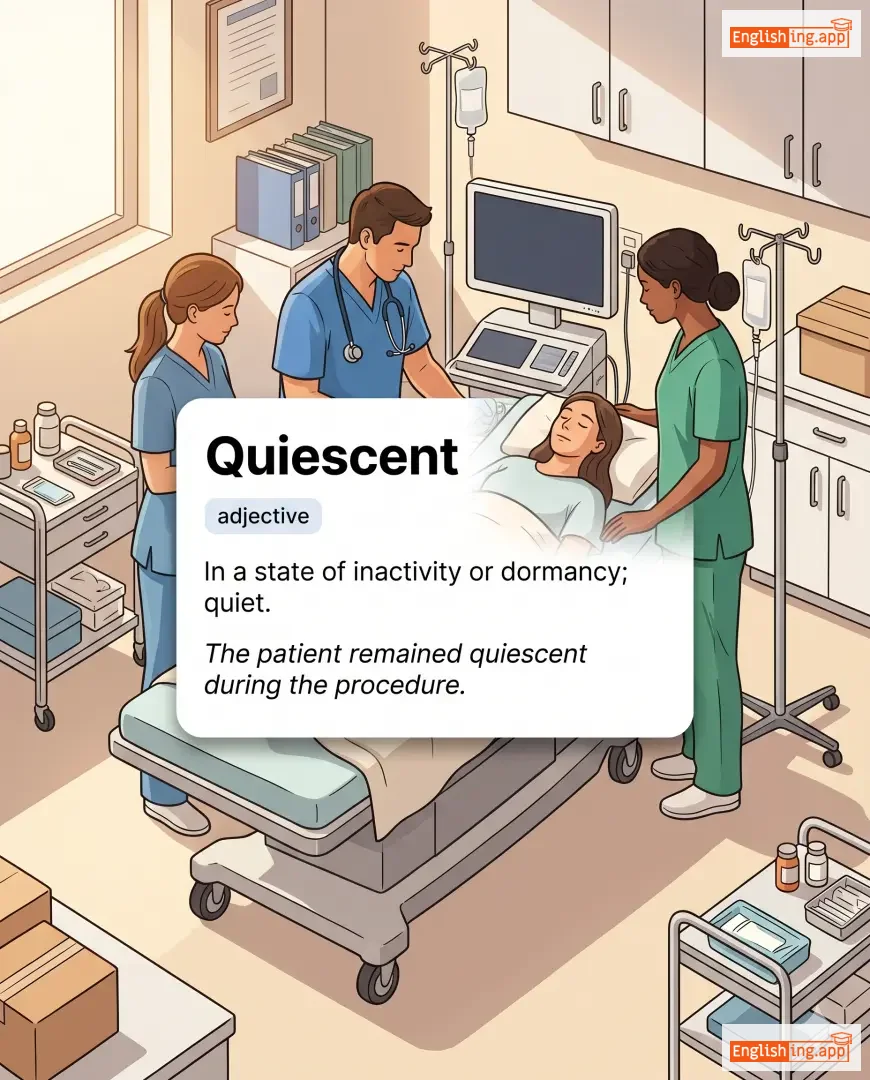
Quiescent definition card — visual illustration of the meaning
adjective C2
/kwɪˈɛsənt/
静かな (shizukana)

In a state of inactivity or dormancy; quiet.

"The patient remained quiescent during the procedure."

"患者は手順中静かにしていました。" (Kanja wa tetsuzuki-chū shizukani shite imashita.)
noun C2
/ˈkwaɪəˌtuːd/
静けさ (shizukesa)

A state of stillness and tranquility.

"She enjoys the quietude of the countryside."
"彼女は田舎の静けさを楽しんでいます。" (Kanojo wa inaka no shizukesa wo tanoshindeimasu.)
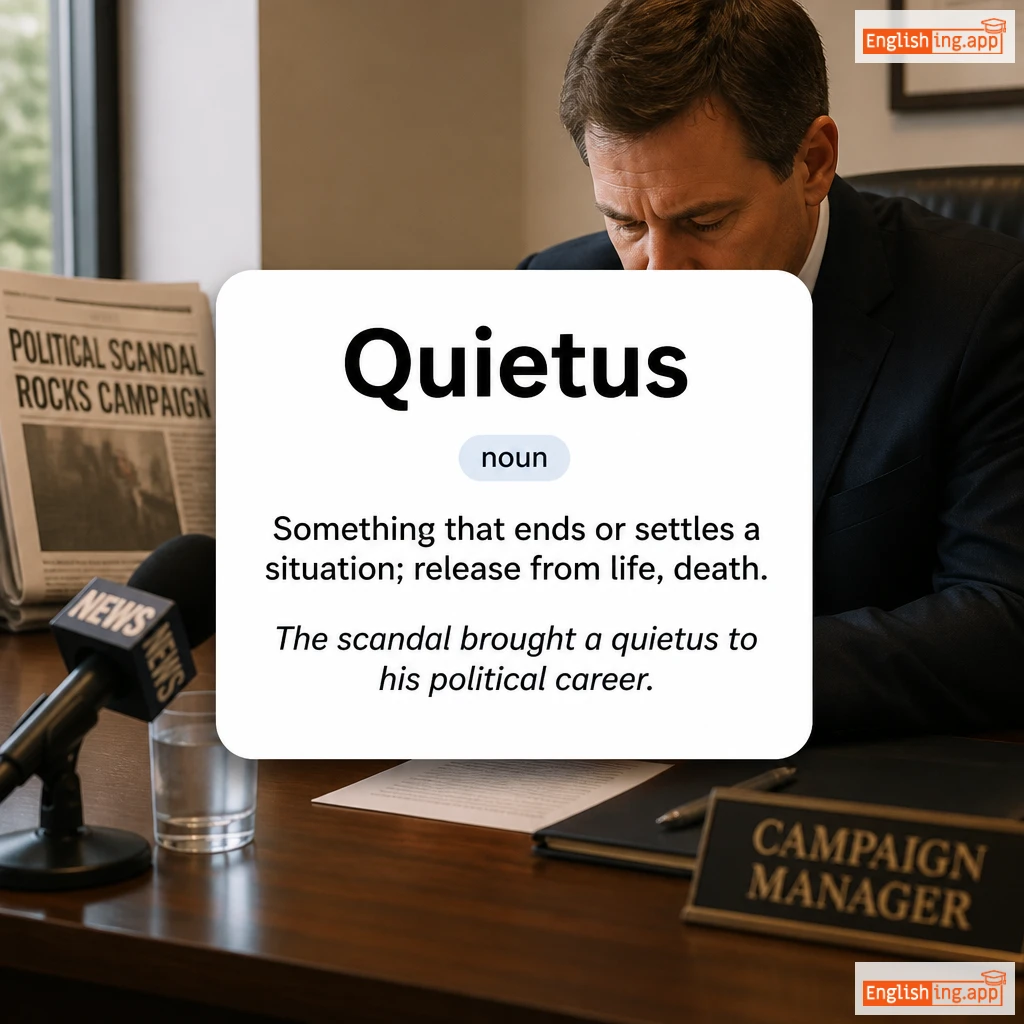
Quietus definition card — visual illustration of the meaning
noun C2
/kwaɪˈiːtəs/
終焉、死 (shūen, shi)

Something that ends or settles a situation; release from life, death.

"The scandal brought a quietus to his political career."

"そのスキャンダルは彼の政治キャリアに終焉をもたらした。" (Sono sukyandaru wa kare no seiji kyaria ni shūen o motarashita.)
noun C2
/ˈkwɪzlɪŋ/
裏切り者 (uragirimono)

A traitor who collaborates with an enemy force occupying their country.

"During the war, he was branded a quisling for aiding the invaders."

"戦争中、彼は侵略者を助けたため、クイズリングとしてレッテルを貼られました。" (Sensou-chuu, kare wa shinryakusha wo tasuketa tame, kuizuringu toshite rettoru wo hara remashita.)
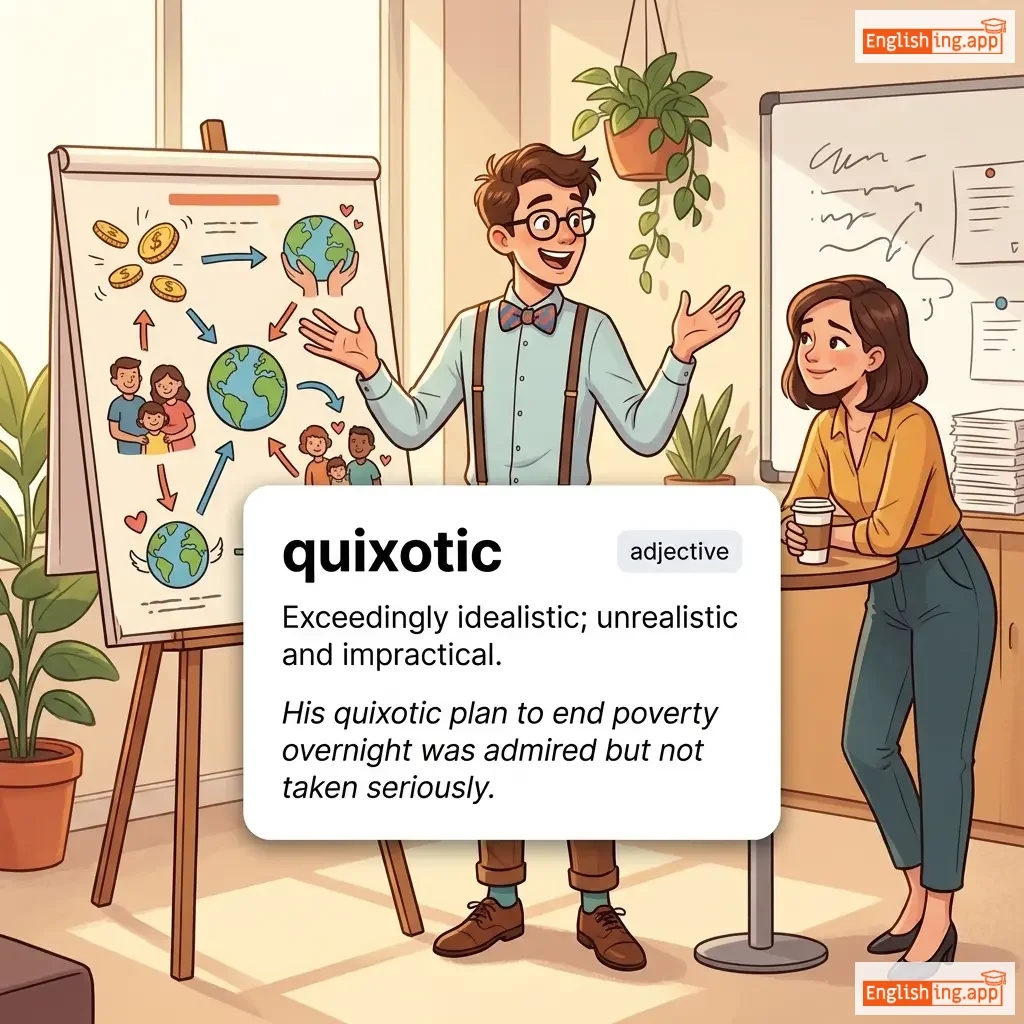
quixotic definition card — visual illustration of the meaning
adjective C2
/kwɪkˈsɒtɪk/

Exceedingly idealistic; unrealistic and impractical.

"His quixotic plan to end poverty overnight was admired but not taken seriously."

adjective C2
/kwəʊˈtɪdiən/
日常的な、普通の (nichijōteki na, futsū no)

Ordinary or everyday, especially when mundane.

"He focused on the quotidian details of family life."
"彼は家族生活の日常的な詳細に集中した。" (Kare wa kazoku seikatsu no nichijōteki na shōsai ni shūchū shita.)
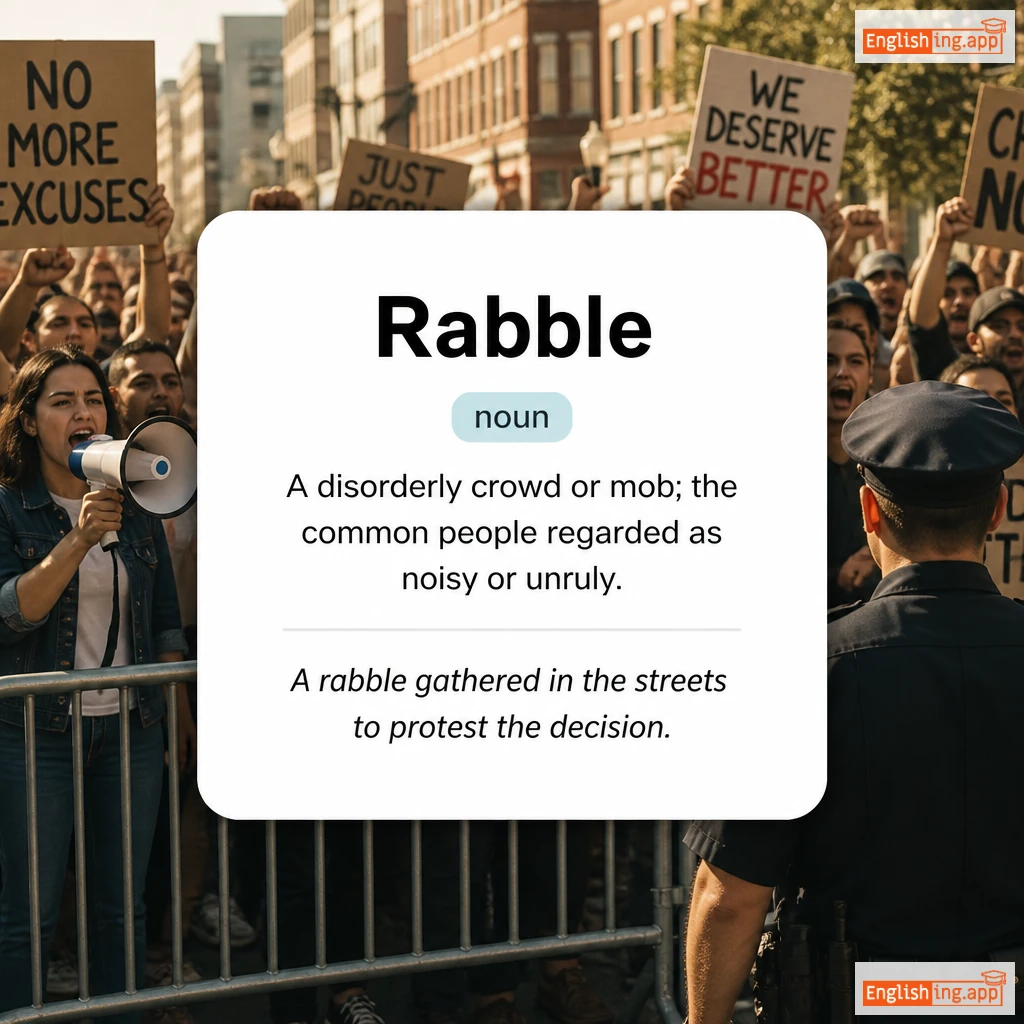
Rabble definition card — visual illustration of the meaning
noun C2
/ˈræb.əl/
無秩序な群衆 (muchi tetsuna gunshuu)

A disorderly crowd or mob; the common people regarded as noisy or unruly.

"A rabble gathered in the streets to protest the decision."
"無秩序な群衆が通りに集まり、決定に抗議しました。" (muchi tetsuna gunshuu ga toori ni atsumari, kettei ni kougi shimashita.)
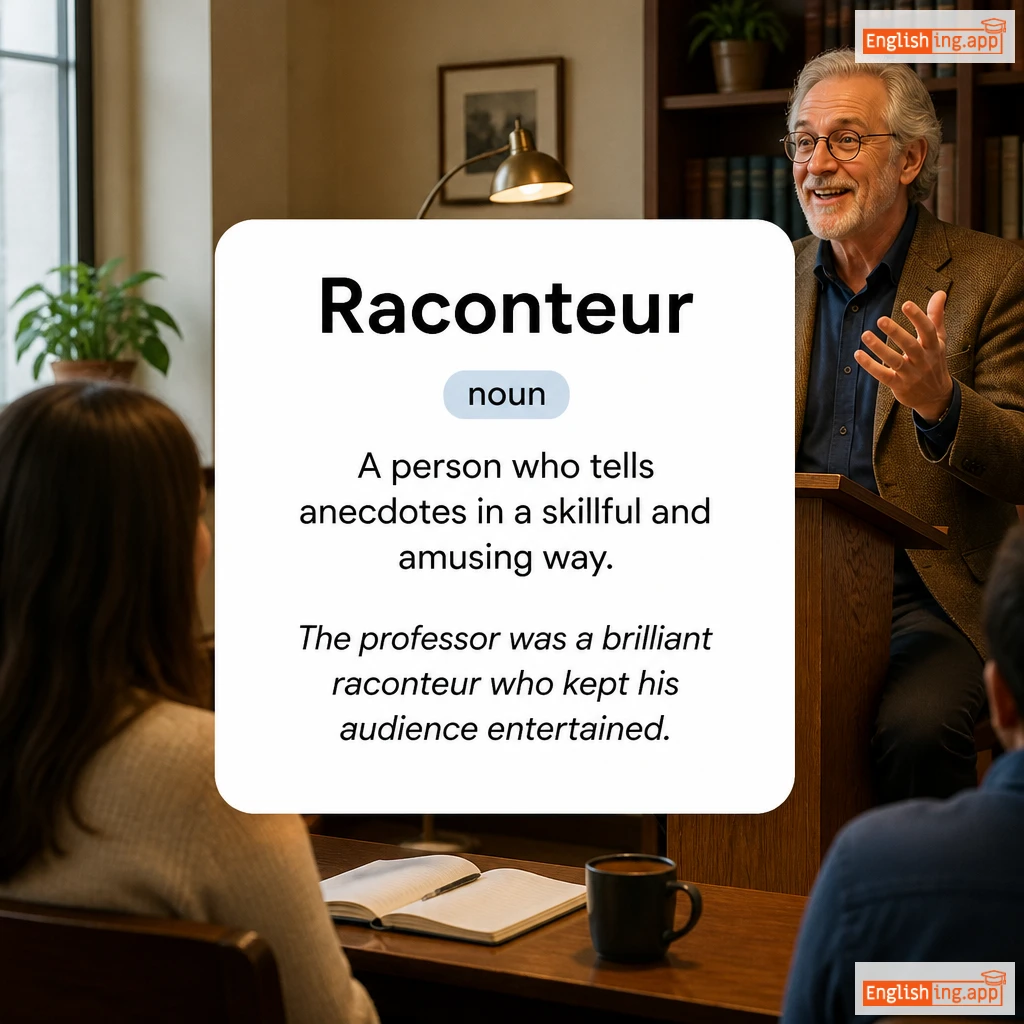
Raconteur definition card — visual illustration of the meaning
noun C2
/ˌræk.ɒnˈtɜːr/
巧妙な語り手 (koumyou na katarite)

A person who tells anecdotes in a skillful and amusing way.

"The professor was a brilliant raconteur who kept his audience entertained."

"その教授は素晴らしい語り手で、観客を楽しませ続けた。" (Sono kyōju wa subarashii katarite de, kankyaku o tanoshimase tsuzuketa.)
noun C2
/ˈreɪdɪks/
基数 (kisū)

the base or root of something; the number on which a system of numeration is built

"In mathematics, the decimal system has a radix of ten."

"数学では、十進法の基数は十です。" (Sūgaku de wa, jū-shinhō no kisū wa jū desu.)
adjective C2
/ˈræfɪʃ/
型破りで少し評判が悪いが魅力的 (katayari de sukoshi hyōban ga warui ga miryokuteki)

unconventional and slightly disreputable but attractive

"He had a raffish charm that made him popular in the city."

"彼は街で人気がある理由は、レイフィッシュな魅力があったからだ。" (Kare wa machi de ninki ga aru riyū wa, reifisshu na miryoku ga atta kara da.)
noun C2
/ˈræɡəmʌfɪn/
ぼろぼろの子供 (boroboro no kodomo)

A person, typically a child, in ragged, dirty clothes.

"The little ragamuffin begged for food on the street."

"小さなぼろぼろの子供が通りで食べ物を求めていた。" (Chīsana boroboro no kodomo ga tōri de tabemono o motomete ita.)
noun C2
/ˈreɪləri/
友好的な冗談 (yū kō teki na jōdan)

good-humored teasing or joking

"Their friendship was full of light-hearted raillery."

"彼らの友情は軽い冗談で満ちていました。" (Karera no yūjō wa karui jōdan de michiteimashita.)
noun C2
/ˈreɪmənt/
衣服 (ifuku)

clothing, especially fine or formal wear

"The king wore royal raiment during the ceremony."

"王は儀式の間、王族の衣服を着ていた。" (Ou wa gishiki no aida, ouzoku no ifuku o kiteita.)
verb C2
/ˈræm.ɪ.faɪ/
分岐する (bunki suru)

to spread or branch out into divisions or subdivisions.

"The river ramifies into several smaller streams."

"川は複数の小さな小川に分岐します。" (Kawa wa fukusū no chīsana ogawa ni bunki shimasu.)
adjective C2
/ˈreɪ.moʊs/
分岐した (bunkishita)

having many branches.

"The ramose tree shaded the entire garden."

"その分岐した木は庭全体に日陰を提供しました。" (Sono bunkishita ki wa niwa zentai ni hikage o teikyō shimashita.)
noun C2
/ˈræŋ.kər/
憎しみ (nikushimi)

A feeling of deep and bitter anger or resentment.

"There was a rancor between the two rivals that never faded."

"二人のライバルの間には、決して消えることのない憎しみがあった。" (Futari no raibaru no aida ni wa, kesshite kieru koto no nai nikushimi ga atta.)