词汇表

英语词汇词典 | 单词含义、定义和示例

verb C2
/ˌpriːɪˈstæblɪʃ/
preestablecer (preestablecer)

To establish or set up beforehand.

"Certain rules were preestablished before the meeting."

"Algunas reglas fueron preestablecidas antes de la reunión." (Algunas reglas fueron preestablecidas antes de la reunión.)
verb C2
/ˌpriːɪɡˈzɪst/
existir previamente (existir previamente)

to exist beforehand or before something else

"These customs preexist the arrival of modern technology."

"Esas costumbres existían antes de la llegada de la tecnología moderna." (Esas costumbres existían antes de la llegada de la tecnología moderna.)
noun C2
/ˌpriːɪɡˈzɪstəns/
preexistencia (preexistencia)

the state of existing before something else

"Philosophers often debated the preexistence of the soul."

"Los filósofos a menudo debatían sobre la preexistencia del alma." (Los filosofos a menudo debatian sobre la preexistencia del alma.)
adjective C2
/ˈprɛfətɔːri/
preliminar (preliminar)

serving as an introduction or preface

"He made some prefatory remarks before the lecture began."

"Hizo algunos comentarios preliminares antes de que comenzara la conferencia." (Hizo algunos comentarios preliminares antes de que comenzara la conferencia.)
noun C2
/prɪˈfɜːrmənt/
ascenso (ascenso)

promotion or advancement in rank, position, or office

"He hoped for preferment in the government office."

"Él esperaba un ascenso en la oficina del gobierno." (El esperaba un ascenso en la oficina del gobierno.)
verb C2
/priːˈfɪɡjər/
prefigurar (prefigurar)

to represent, show, or foreshadow something in advance

"The economic reforms prefigure major social changes."

"Las reformas económicas prefiguran grandes cambios sociales." (Las reformas económicas prefiguran grandes cambios sociales.)
adjective C2
/prɪˈhɛnsɪbəl/
agarrable (agarrable)

capable of being grasped or seized

"The tool has a prehensible handle that improves safety."

"La herramienta tiene un mango agarrable que mejora la seguridad." (La herramienta tiene un mango agarrable que mejora la seguridad.)
adjective C2
/prɪˈhɛnsaɪl/
prensil (prehensil)

adapted for seizing or grasping, especially by wrapping around an object

"The monkey used its prehensile tail to hang from the branch."

"El mono usó su cola prensil para colgarse de la rama." (El mono usó su cola prensil para colgarse de la rama.)
noun C2
/prɪˈhɛnʃən/
acción de agarrar; la capacidad de sujetar algo (accion de agarrar; la capacidad de sujetar algo)

the act of grasping or seizing; the ability to take hold of something

"Therapists assessed the patient's prehension during hand therapy."

"Los terapeutas evaluaron la prehensión del paciente durante la terapia de manos." (Los terapeutas evaluaron la prehension del paciente durante la terapia de manos.)
noun C2
/ˈprɛləsi/
prelatura (prelatura)

The office, dignity, or system of church government by prelates.

"The medieval church was dominated by prelacy and its traditions."

"La iglesia medieval estaba dominada por la prelatura y sus tradiciones." (La iglesia medieval estaba dominada por la prelatura y sus tradiciones.)
noun C2
/ˈprɛlət/
miembro de alto rango del clero (miembro de alto rango del clero)

A high-ranking member of the clergy, especially a bishop or abbot.

"The prelate delivered a sermon to the congregation."

"El prelado dio un sermón a la congregación." (El prelado dio un sermón a la congregación.)
adjective C2
/prɪˈmɒnɪtəri/ or /ˌpriːməˈnɪtəri/
premonitorio (premonitorio)

giving a warning or prediction about something, especially something unpleasant

"He ignored the premonitory signs of illness."

"Él ignoró los signos premonitorios de enfermedad." (El ignoro los signos premonitorios de enfermedad.)
verb C2
/ˌpriːɔːrˈdeɪn/
preordinar (preordinar)

To decide or determine an outcome in advance, especially by fate or divine will.

"They believed their meeting was preordained by destiny."

"Ellos creían que su encuentro estaba predestinado por el destino." (Ellos creían que su encuentro estaba predestinado por el destino.)
noun C2
/prɪˈpɒndərəns/
preponderancia (preponderancia)

The quality or fact of being greater in number, quantity, or importance.

"There was a preponderance of evidence against the defendant."

"Había una preponderancia de evidencia contra el acusado." (Había una preponderancia de evidencia contra el acusado.)
adjective C2
/prɪˈpɒndərənt/
preponderante (preponderante)

Having superior weight, force, influence, or importance.

"The preponderant influence of the media shapes public opinion."

"La influencia preponderante de los medios de comunicación da forma a la opinión pública." (La influencia preponderante de los medios de comunicación da forma a la opinión pública.)
verb C2
/prɪˈpɒndəreɪt/
preponderar (preponderar)

To be greater in influence, weight, or number.

"In the debate, logical arguments preponderated over emotional appeals."

"En el debate, los argumentos lógicos preponderaron sobre las apelaciones emocionales." (En el debate, los argumentos lógicos preponderaron sobre las apelaciones emocionales.)
adjective C2
/ˌpriːpəˈzɛsɪŋ/
atractivo (atractivo)

Attractive or appealing in appearance or manner.

"She had a prepossessing smile that charmed everyone."

"Ella tenía una sonrisa atractiva que cautivó a todos." (Ella tenía una sonrisa atractiva que cautivó a todos.)
noun C2
/ˌpriːpəˈzɛʃən/
prejuicio (prejuicio)

An opinion or feeling formed beforehand; a prejudice or preoccupation.

"His prepossession in favor of tradition made him resist change."

"Su prejuicio a favor de la tradición lo hizo resistir al cambio." (Su prejuicio a favor de la tradición lo hizo resistir al cambio.)
verb C2
/ˈprɛsɪdʒ/
presagio (presagio)

to be a sign or warning that something will happen; to foreshadow

"Dark clouds presage a storm."

"Las nubes oscuras presagian una tormenta." (Las nubes oscuras presagian una tormenta.)
noun C2
/ˈprɛʃəns/ or /ˈpriːʃəns/
presencia (presencia)

the ability to know or predict what will happen in the future

"Her prescience about market trends saved the company."

"Su presiencia sobre las tendencias del mercado salvó a la empresa." (Su presiencia sobre las tendencias del mercado salvó a la empresa.)
adjective C2
/ˈprɛʃənt/ or /ˈpriːʃənt/
presciente (presiente)

having or showing knowledge of events before they take place

"The prescient investor sold his shares just before the market crashed."

"El inversor presciente vendió sus acciones justo antes de que el mercado colapsara." (El inversor presciente vendió sus acciones justo antes de que el mercado colapsara.)
noun C2
/ˈpriːskrɪpt/
prescripción (prescripcion)

An authoritative rule or direction; something laid down as a command.

"The prescript of the organization required strict punctuality."

"El prescript de la organización requería estricta puntualidad." (El prescript de la organizacion requería estricta puntualidad.)
adjective C2
/prɪˈskrɪptɪbəl/
prescriptible (prescriptible)

Capable of being prescribed or laid down as a rule or directive.

"Certain regulations are prescriptible under the law."

"Ciertas regulaciones son prescriptibles bajo la ley." (Ciertas regulaciones son prescriptibles bajo la ley.)
adjective C2
/prɪˈsɛnʃənt/
presentimiento (presentimiento)

Having a feeling or sense of something about to happen; predictive.

"She was presentient of the coming disaster."

"Ella tenía un presentimiento del desastre que venía." (Ella tenia un presentimiento del desastre que venia.)
noun C2
/prɪˈsɛntɪmənt/
presentimiento (presentimiento)

An intuitive feeling about the future, especially of something bad about to happen.

"He had a strong presentiment that the plan would fail."

"Tenía un fuerte presentimiento de que el plan fracasaría." (Tenia un fuerte presentimiento de que el plan fracasaria.)
noun C2
/prɪˈzɛntmənt/
presentación formal (presentacion formal)

The act of presenting something formally or officially; a formal statement or document.

"The lawyer made a presentment of the evidence to the court."

"El abogado hizo una presentación de las pruebas ante el tribunal." (El abogado hizo una presentacion de las pruebas ante el tribunal.)
adjective C2
/prɪˈzʌmptɪv/
presunto (presunto)

Based on probability or assumption rather than proof.

"She is the presumptive nominee for the party."

"Ella es la nominada presunta para el partido." (Ella es la nominada presunta para el partido.)
adjective C2
/ˌpriːtərˈnætʃərəl/
sobrenatural (sobrenatural)

Beyond what is normal or natural; extraordinary or supernatural.

"She had a preternatural ability to remain calm in any crisis."
"Ella tenía una habilidad preternatural para mantenerse tranquila en cualquier crisis." (Ella tenia una habilidad preternatural para mantenerse tranquila en cualquier crisis.)
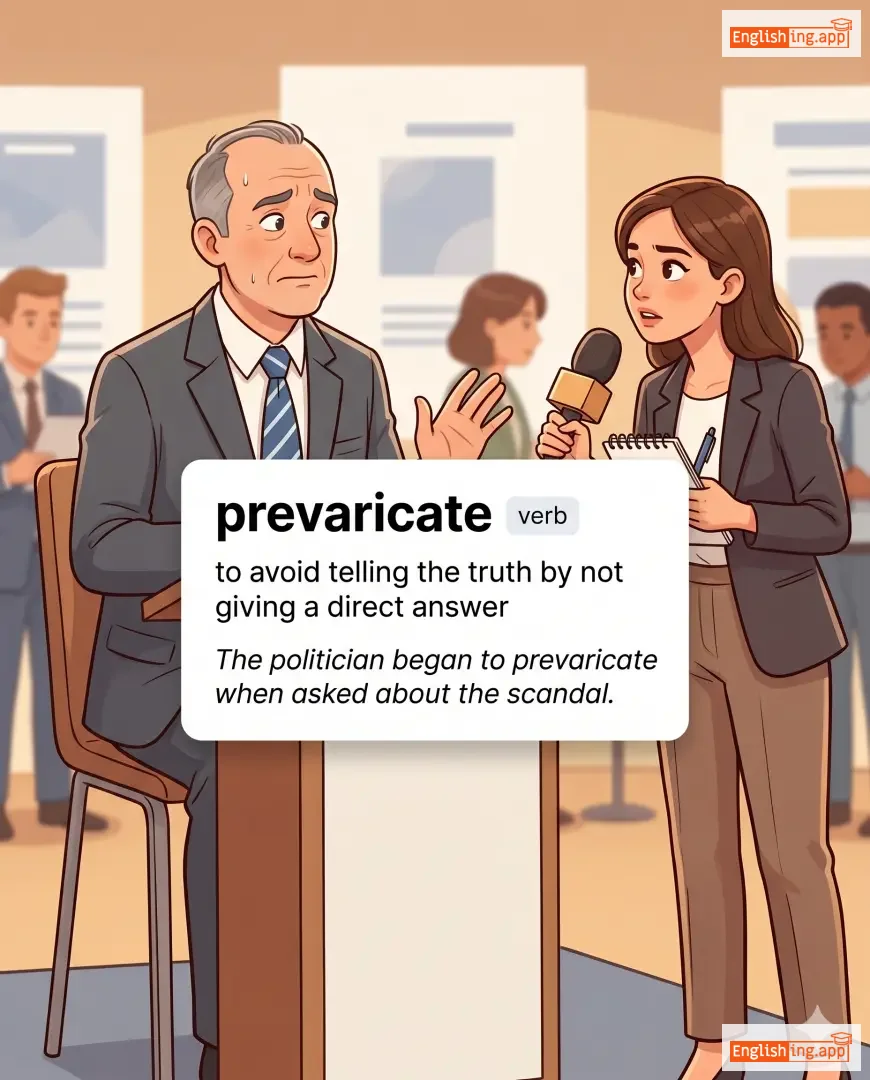
prevaricate definition card — visual illustration of the meaning
verb C2
/prɪˈværɪkeɪt/
evitar decir la verdad (evitar decir la verdad)

to avoid telling the truth by not giving a direct answer

"The politician began to prevaricate when asked about the scandal."

"El político comenzó a evadir cuando le preguntaron sobre el escándalo." (El político comenzó a evadir cuando le preguntaron sobre el escándalo.)
adjective C2
/ˈprɪɡɪʃ/
moralista y arrogante (moralista y arrogante)

self-righteously moralistic and superior

"He came across as priggish when correcting everyone's manners."

"Él parecía moralista y arrogante cuando corregía los modales de todos." (El parecía moralista y arrogante cuando corregía los modales de todos.)
noun C2
/ˌpraɪmoʊˈdʒɛnɪtʃər/
primogenitura (primogenitura)

The right of the firstborn child to inherit the family estate or title.

"Under primogeniture, the eldest son inherited the entire estate."

"Bajo la primogenitura, el hijo mayor heredó toda la propiedad." (Bajo la primogenitura, el hijo mayor heredó toda la propiedad.)
verb C2
/prɪmp/
felicidad (felicidad)

To spend time making minor adjustments to one's appearance.

"She primped in front of the mirror before the party."

"Ella no pudo esconder su felicidad cuando recibió el premio." (Ella no pudo esconder su felicidad cuando recibió el premio.)
noun C2
/ˌprɪnsɪˈpæləti/
principado (principado)

a state ruled by a prince

"Monaco is a famous principality in Europe."

"Mónaco es un famoso principado en Europa." (Monaco es un famoso principado en Europa.)
noun C2
/ˈpraɪəri/
priorato (priorato)

a small monastery or convent governed by a prior or prioress

"The old priory was converted into a museum."

"El antiguo priorato fue convertido en un museo." (El antiguo priorato fue convertido en un museo.)
noun C2
/ˌpraɪvəˈtɪə/
corsario (corsario)

A privately owned armed ship authorized by a government to attack enemy ships during war.

"The privateer captured several enemy vessels during the conflict."

"El corsario capturó varios barcos enemigos durante el conflicto." (El corsario capturó varios barcos enemigos durante el conflicto.)
noun C2
/praɪˈveɪʃən/
privación, carencia (privacion, carencia)

A state in which things essential for human well-being such as food and warmth are lacking.

"The refugees suffered great privation during the harsh winter."

"Los refugiados sufrieron una gran privación durante el invierno severo." (Los refugiados sufrieron una gran privación durante el invierno severo.)
noun C2
/ˈprɪvɪti/
relación privada, relación contractual (relacion privada, relacion contractual)

A close, private, or special relationship; in law, the direct connection between parties to a contract.

"There was no privity of contract between the supplier and the customer."
"No había relación contractual entre el proveedor y el cliente." (no habia relacion contractual entre el proveedor y el cliente.)
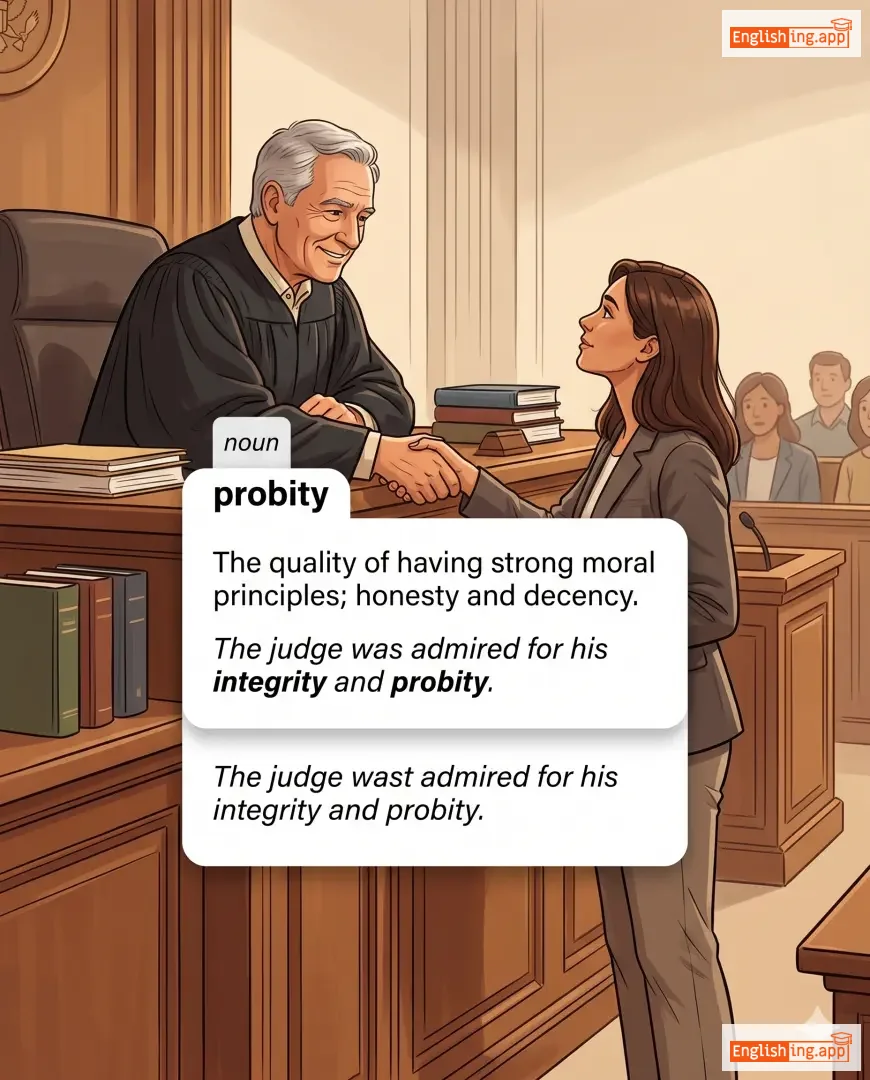
probity definition card — visual illustration of the meaning
noun C2
/ˈproʊbɪti/
probidad (probidad)

The quality of having strong moral principles; honesty and decency.

"The judge was admired for his integrity and probity."

"El juez fue admirado por su integridad y probidad." (El juez fue admirado por su integridad y probidad.)
noun C2
/proʊˈbɑːsɪs/
trompa (trompa)

The long, flexible nose of some animals, especially an elephant, or a tubular feeding and sucking organ in insects.

"The elephant used its proboscis to grab food."
"El elefante usó su trompa para agarrar comida." (El elefante uso su trompa para agarrar comida.)
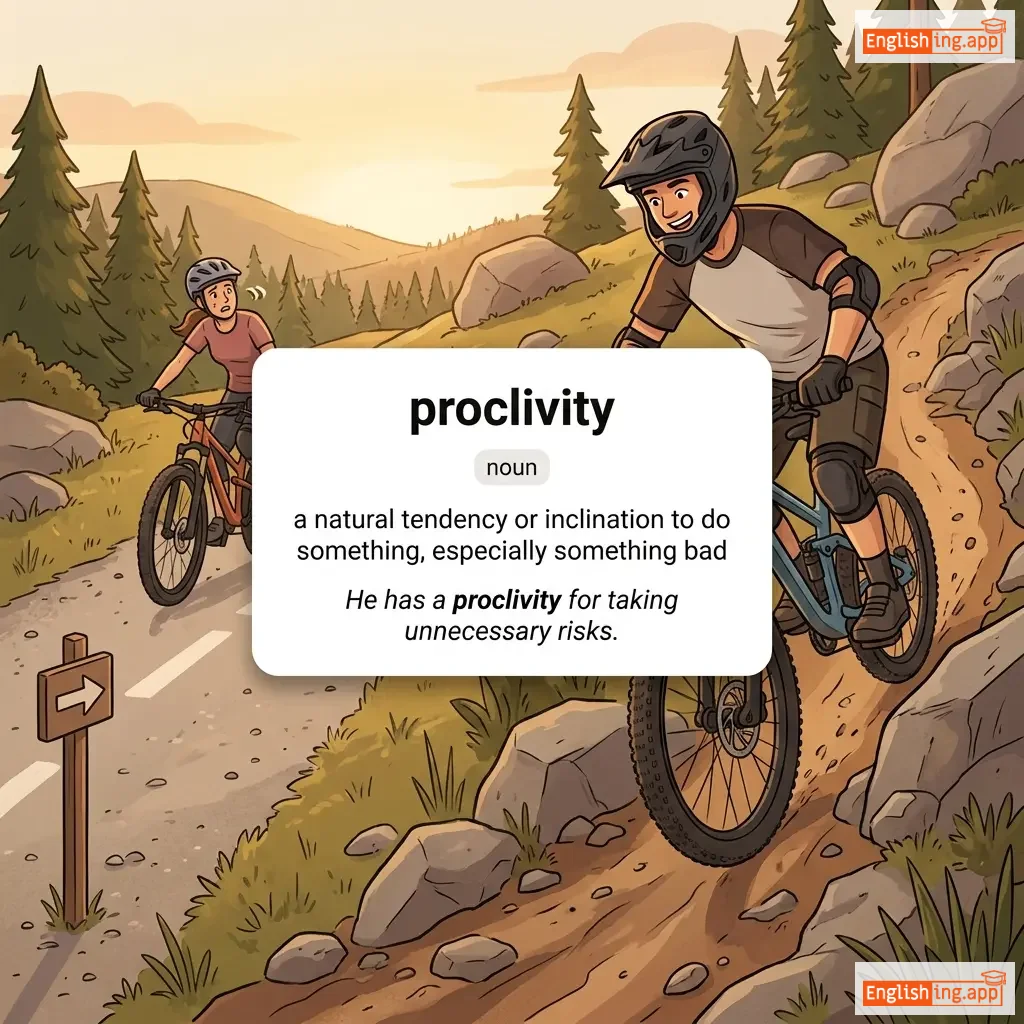
proclivity definition card — visual illustration of the meaning
noun C2
/prəˈklɪvɪti/
inclinación (inclinacion)

a natural tendency or inclination to do something, especially something bad

"He has a proclivity for taking unnecessary risks."

"Él tiene una inclinación por tomar riesgos innecesarios." (El tiene una inclinacion por tomar riesgos innecesarios.)
noun C2
/ˌprɒdɪˈɡæləti/
prodigalidad (prodigalidad)

the quality of being wastefully extravagant

"His prodigality with money left him bankrupt."

"Su prodigalidad con el dinero lo dejó en quiebra." (Su prodigalidad con el dinero lo dejó en quiebra.)
noun C2
/ˈprɑːflɪɡəsi/
derroche (derroche)

reckless wastefulness or extravagance

"His profligacy with money led him to bankruptcy."

"Su derroche de dinero lo llevó a la bancarrota." (Su derroche de dinero lo llevó a la bancarrota.)
adjective C2
/ˈprɑːflɪɡət/
despilfarrador (despilfarrador)

recklessly extravagant or wasteful in resources

"The king was known for his profligate lifestyle."
"El rey era conocido por su estilo de vida despilfarrador." (El rey era conocido por su estilo de vida despilfarrador.)
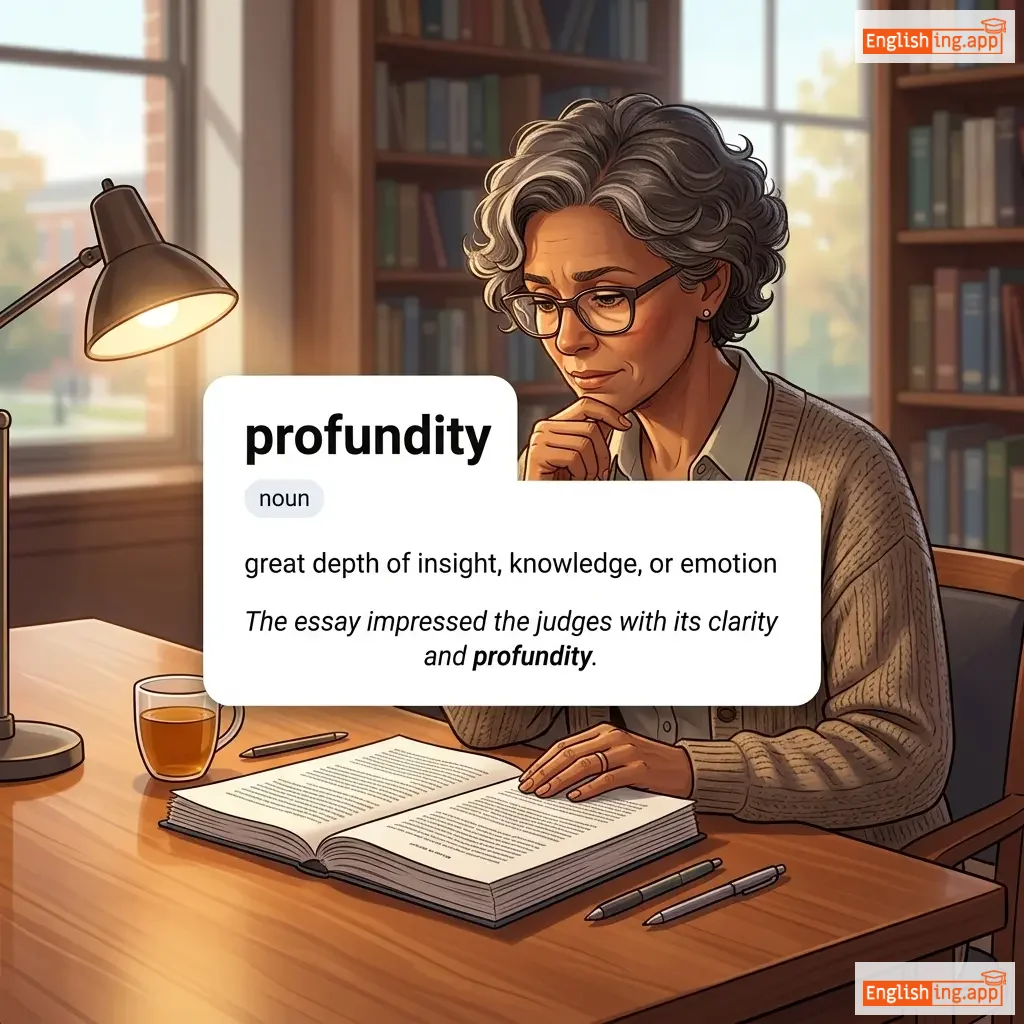
profundity definition card — visual illustration of the meaning
noun C2
/prəˈfʌndɪti/
profundidad (profundidad)

great depth of insight, knowledge, or emotion

"The essay impressed the judges with its clarity and profundity."

"El ensayo impresionó a los jueces con su claridad y profundidad." (El ensayo impresiono a los jueces con su claridad y profundidad.)
noun C2
/prəˈfjuːʒən/
profusión (profusion)

an abundance or large quantity of something

"Spring brought a profusion of wildflowers to the valley."

"La primavera trajo una profusión de flores silvestres al valle." (La primavera trajo una profusión de flores silvestres al valle.)
noun C2
/proʊˈdʒɛnɪtər/
antepasado (antepasado)

a direct ancestor; a person or thing that originates something

"Researchers traced the custom back to a common progenitor."

"Los investigadores rastrearon la costumbre hasta un antepasado común." (Los investigadores rastrearon la costumbre hasta un antepasado común.)
adjective C2
/ˈprɒɡnəθəs/
prognatoide (prognatoide)

Having jaws that project forward beyond the rest of the face.

"The fossil displayed a distinctly prognathous skull structure."

"El fósil mostraba una estructura de cráneo claramente prognatoide." (El fosil mostraba una estructura de cráneo claramente prognatoide.)
verb C2
/prɒɡˈnɒstɪkeɪt/
pronosticar (pronosticar)

To foretell or predict future events, especially based on current signs.

"Experts attempted to prognosticate the outcome of the election."

"Los expertos intentaron pronosticar el resultado de las elecciones." (Los expertos intentaron pronosticar el resultado de las elecciones.)
noun C2
/prɒɡˌnɒstɪˈkeɪʃən/
pronóstico (pronostico)

The act of foretelling or predicting future events.

"The astrologer's prognostication fascinated the audience."

"El pronóstico del astrólogo fascinó a la audiencia." (El pronostico del astrólogo fascino a la audiencia.)
noun C2
/ˌproʊɪˈbɪʃənɪst/
prohibicionista (prohibicionista)

A person who supports or advocates prohibition, especially of alcohol.

"The prohibitionist campaigned against the sale of liquor in the town."

"El prohibicionista hizo campaña contra la venta de licor en la ciudad." (El prohibicionista hizo campaña contra la venta de licor en la ciudad.)