词汇表

英语词汇词典 | 单词含义、定义和示例

noun C2
/ˌmjuːlˈtɪər/
骡夫 (luófū)

a person who drives or takes care of mules

"The muleteer guided the animals safely across the mountain path."
"骡夫安全地将动物引导过山路。" (Luófū ānquán de jiāng dòngwù yǐndǎo guò shānlù.)
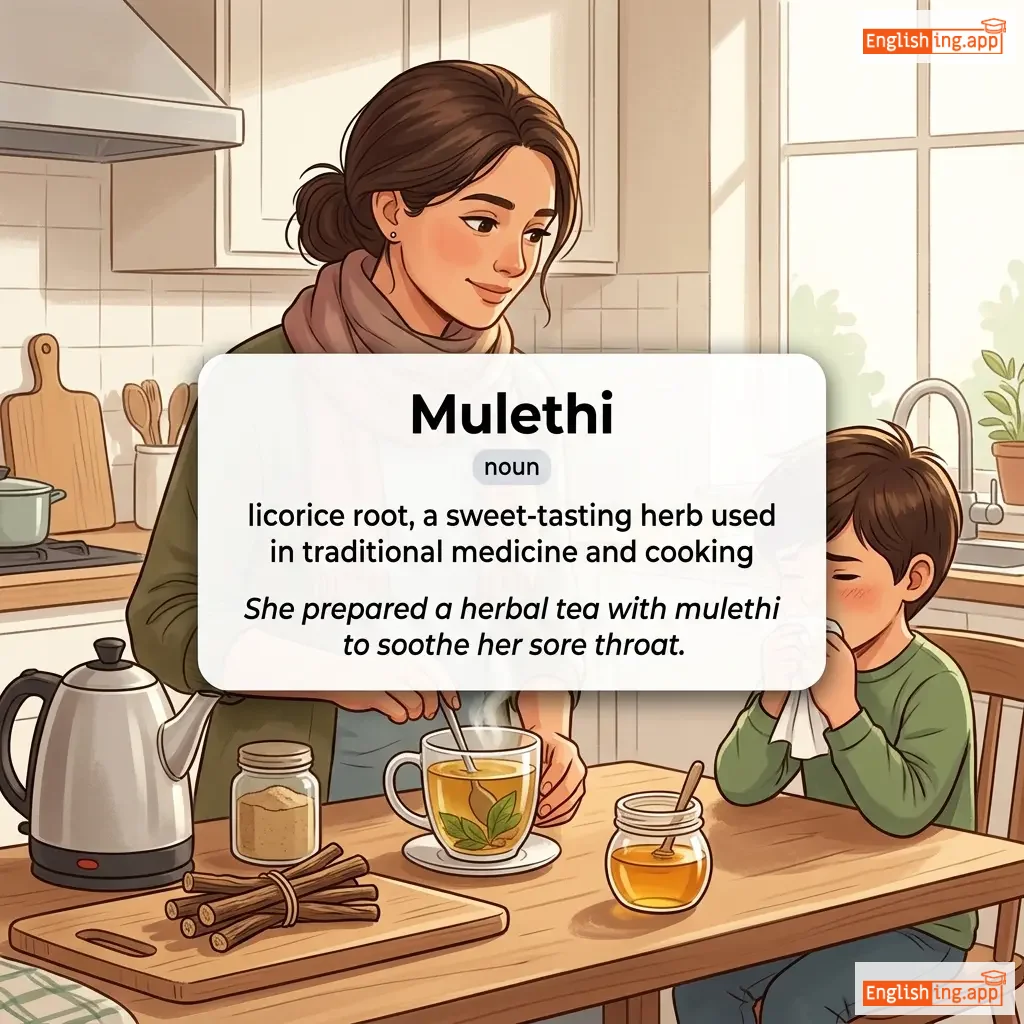
Mulethi definition card — visual illustration of the meaning
noun C2
/muˈleθi/
甘草根 (gancao gen)

licorice root, a sweet-tasting herb used in traditional medicine and cooking

"She prepared a herbal tea with mulethi to soothe her sore throat."

"她用木莲蒂泡了一杯草药茶,以缓解喉咙痛。" (Ta yong mulian ti pao le yi bei caoyao cha, yi huanjie houlong tong.)
adjective C2
/ˈmjuːlɪʃ/

extremely stubborn or unwilling to change

"She remained mulish despite all the convincing arguments."

multifaceted information frameworks definition card — visual illustration of the meaning
noun C2
ˌmʌltɪˈfæsɪtɪd ˌɪnfərˈmeɪʃən ˈfreɪmwɜːrks
多面信息框架 (duō miàn xìnxī kuàngjià)

Complex, comprehensive structures for organizing and managing information that have multiple aspects or dimensions.

"Digital literacy involves building multifaceted information frameworks."

"数字素养包括构建多面信息框架。" (Shùzì sùyǎng bāokuò gòujiàn duō miàn xìnxī kuàngjià.)
adjective C2
/ˌmʌltɪˈfɛərɪəs/
多样的 (duō yàng de)

having many different parts, elements, or kinds

"The museum displayed a multifarious collection of artifacts."

"博物馆展示了种类繁多的文物收藏。" (Bówùguǎn zhǎnshìle zhǒnglèi fánduō de wénwù shōucáng.)
adjective C2
/ˈmʌltɪfɔːrm/
多形式 (duo xing shi)

Having many different forms or appearances.

"The festival was a multiform celebration of art, music, and culture."

"这个节日是艺术、音乐和文化的多形式庆祝。" (Zhege jieri shi yishu, yinyue he wenhua de duo xing shi qingzhu.)
mundanity definition card — visual illustration of the meaning
noun C2
mʌnˈdeɪ.nɪ.ti
平凡 (pingfan)

The quality of being ordinary, routine, or lacking excitement.

"The mundanity of office life can be exhausting."

"办公室生活的平凡可能是令人疲惫的。" (Bangongshi shenghuo de pingfan keneng shi lingren pibei de.)
noun C2
/mjuːˈnɪfəsəns/
慷慨 (kāngkǎi)

great generosity or lavish giving

"The hospital was built thanks to the munificence of a wealthy donor."

"医院的建成得益于一位富有捐赠者的慷慨。" (Yīyuàn de jiànchéng déyì yú yī wèi fùyǒu juānzèng zhě de kāngkǎi.)
adjective C2
/mjuːˈnɪfɪsənt/
慷慨的 (kāngkǎi de)

extremely generous; giving freely and abundantly

"She made a munificent donation to the orphanage."

"她向孤儿院捐赠了慷慨的捐款。" (Tā xiàng gū'ér yuàn juānzèngle kāngkǎi de juānkuǎn.)
noun C2
/ˈmɜːkinəs/
浑浊 (húnzhuó)

The quality of being dark, gloomy, or unclear.

"The murkiness of the water made it hard to see the fish."

"水的浑浊使得很难看到鱼。" (Shuǐ de húnzhuó shǐdé hěn nán kàn dào yú.)
noun C2
/ˈmʌrɪn/
牲畜的传染病 (shengchu de chuánrǎn bìng)

An infectious disease that affects cattle and other animals, often fatal.

"The farmer lost many cows during the outbreak of murrain."
"农民在穆雷恩疫情爆发期间失去了许多牛。" (Nóngmín zài Mùléi'ēn yìqíng bàofā qījiān shīqùle xǔduō niú.)
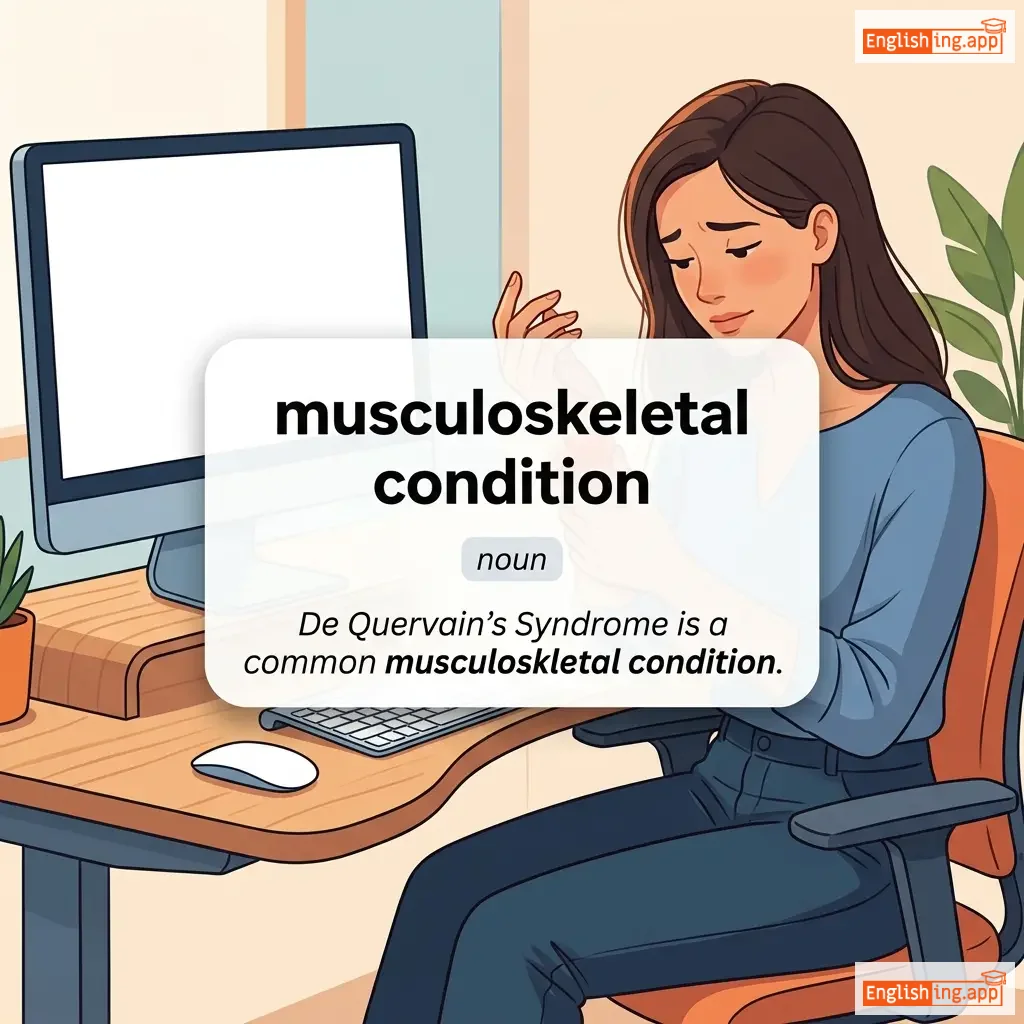
musculoskeletal condition definition card — visual illustration of the meaning
noun C2
মাসকুলোস্কেলেটাল কন্ডিশন
肌肉骨骼疾病 (jirou guge jibing)

A disorder that affects the muscles, bones, joints, tendons, ligaments, or other structures that support the limbs, neck, and back.

"De Quervain's Syndrome is a common musculoskeletal condition."
"De Quervain综合症是一种常见的肌肉骨骼疾病。" (De Quervain zònghé zhèng shì yī zhǒng chángjiàn de jīròu gǔgé jíbìng.)
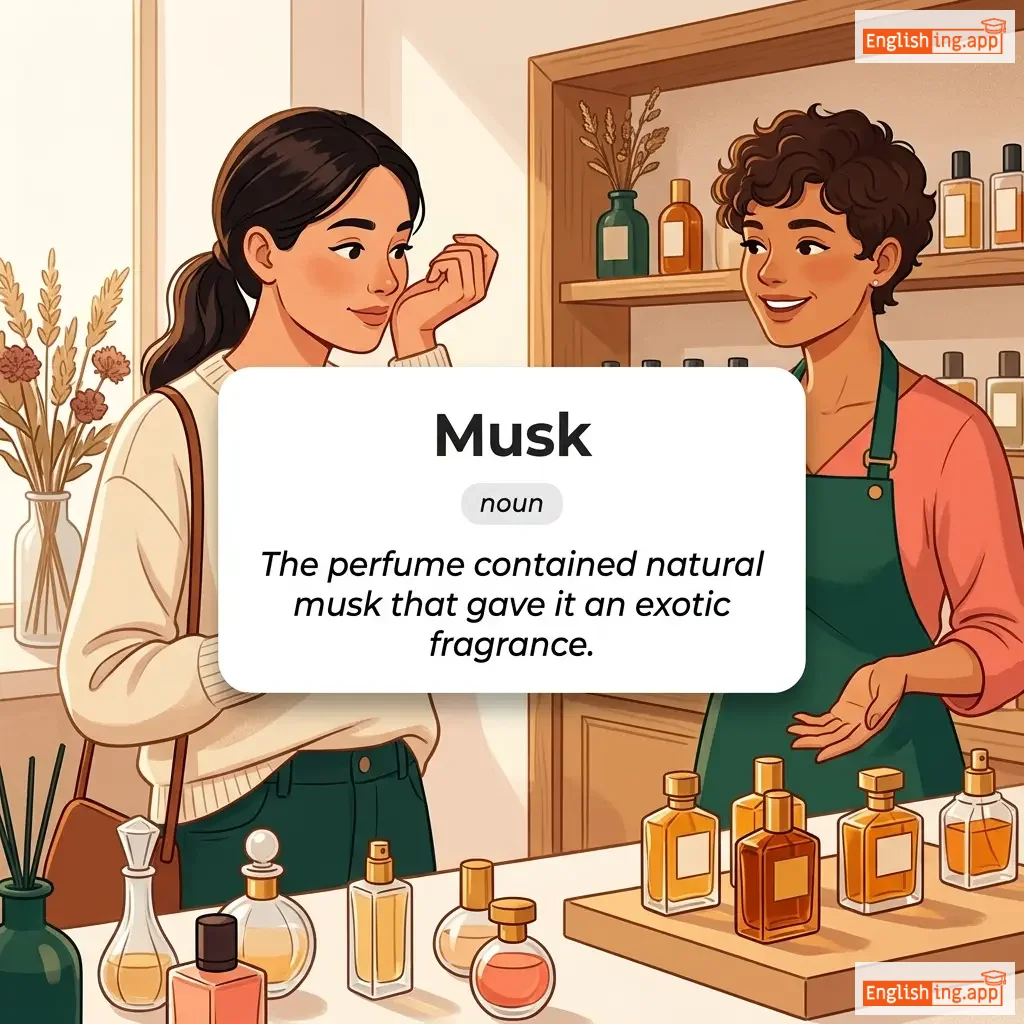
Musk definition card — visual illustration of the meaning
noun C2
/mʌsk/
麝香 (shèxiāng)

a strong-smelling substance secreted by certain animals, used in perfumes and traditional medicine

"The perfume contained natural musk that gave it an exotic fragrance."

"香水中含有天然麝香,给它带来了异国情调的香气。" (Xiāngshuǐ zhōng hán yǒu tiānrán shèxiāng, gěi tā dàilái le yìguó qíngdiào de xiāngqì.)
noun C2
/ˈmʌskɪt/
一种古老的火枪 (yī zhǒng gǔlǎo de huǒqiāng)

a type of long gun used in the past, especially by infantry soldiers

"The soldiers carried muskets into the battlefield."

"士兵们带着火枪走进了战场。" (Shìbīngmen dàizhe huǒqiāng zǒu jìnle zhànchǎng.)
adjective C2
/ˈmʌski/
麝香味的 (shèxiāng wèi de)

having a strong, sweet, earthy smell like musk

"The perfume had a musky fragrance."
"香水有一种麝香味。" (Xiāngshuǐ yǒu yī zhǒng shèxiāng wèi.)
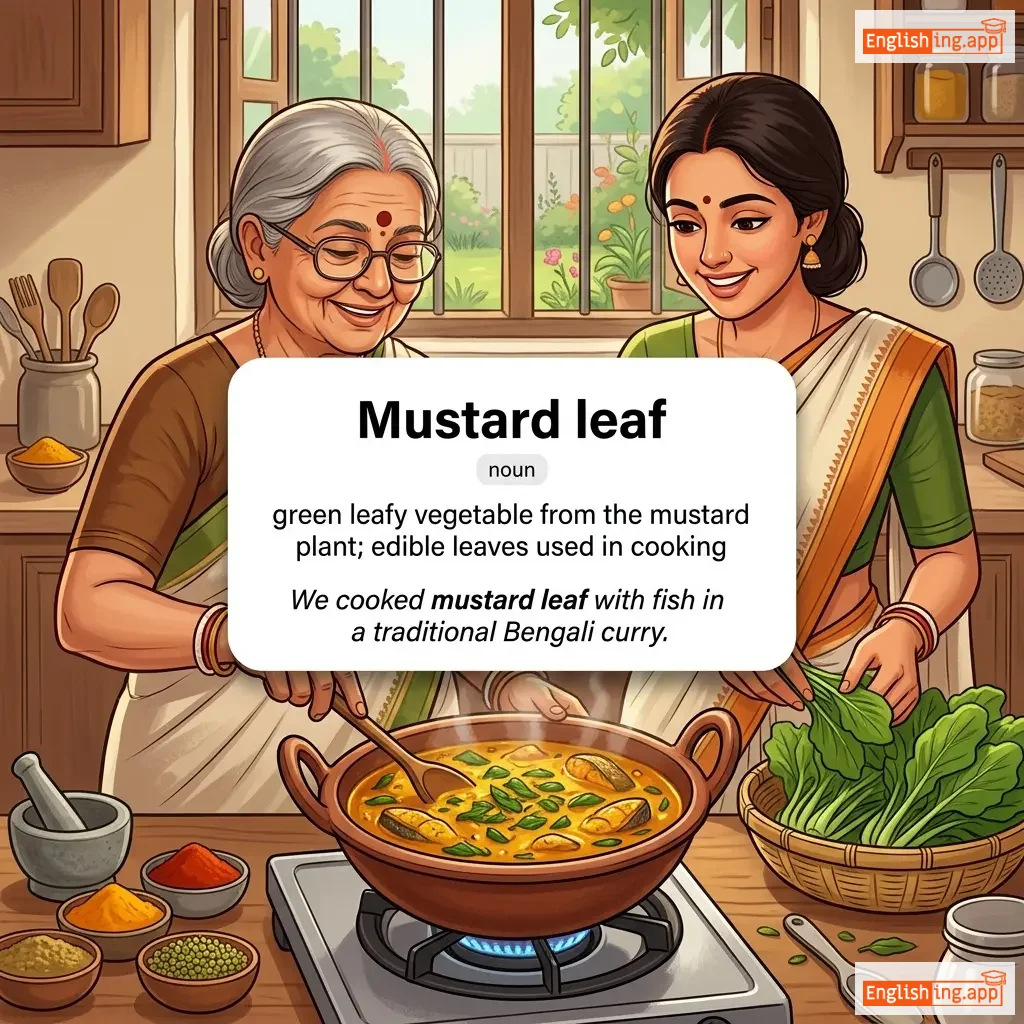
Mustard leaf definition card — visual illustration of the meaning
noun C2
/ˈmʌs.tərd liːf/
芥菜叶 (jiè cài yè)

green leafy vegetable from the mustard plant; edible leaves used in cooking

"We cooked mustard leaf with fish in a traditional Bengali curry."
"我们在传统的孟加拉咖喱中与鱼一起煮了芥菜叶。" (Wǒmen zài chuántǒng de mèngjiālā kālí zhōng yǔ yú yīqǐ zhǔle jiè cài yè.)
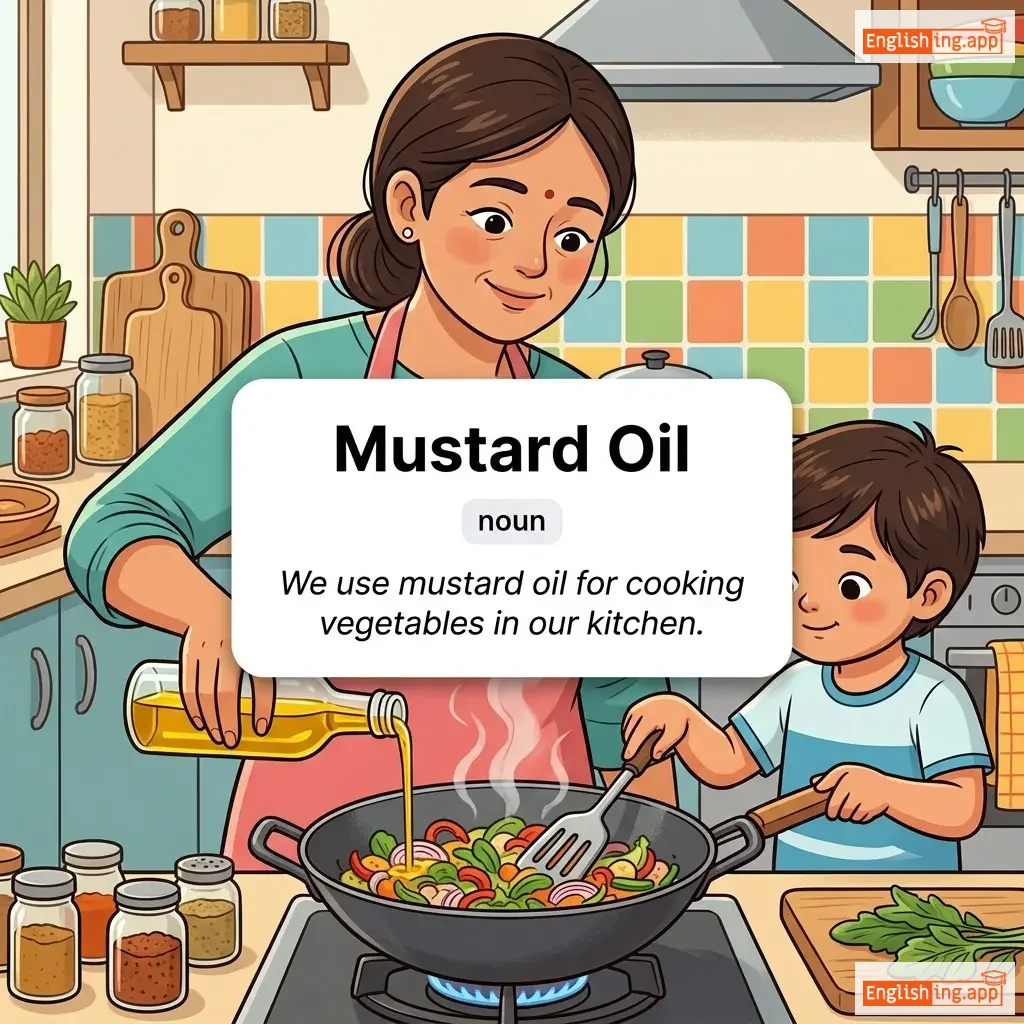
Mustard Oil definition card — visual illustration of the meaning
noun C2
/ˈmʌstərd ɔɪl/
芥末油 (jiè mò yóu)

oil extracted from mustard seeds, commonly used for cooking and medicinal purposes

"We use mustard oil for cooking vegetables in our kitchen."

"我们在厨房里用芥末油来煮蔬菜。" (Wǒmen zài chúfáng lǐ yòng jiè mò yóu lái zhǔ shū cài.)
adjective C2
/ˈmʌsti/
发霉的,潮湿的或有霉味的 (fāméi de, cháoshī de huò yǒu méi wèi de)

having a stale, moldy, or damp smell

"The old books had a musty odor."

"旧书有霉味。" (Jiù shū yǒu méi wèi.)
noun C2
/ˌmjuːtəˈbɪləti/
可变性 (kebiànxìng)

The quality of being changeable or capable of change.

"The mutability of fashion trends makes it hard to keep up."

"时尚潮流的变动性使得跟上它变得困难。" (Shíshàng cháoliú de biàndòngxìng shǐdé gēn shàng tā biàndé kùnnán.)
adjective C2
/ˈmjuːtəbl/
可变的 (kebian de)

Capable of change or alteration.

"Human emotions are mutable and can shift rapidly."

"人类的情感是可变的,能够迅速变化。" (Rénlèi de qínggǎn shì kěbiàn de, nénggòu xùnsù biànhuà.)
noun C2
/ˌmjuːtəˈbɪləti/
变异性 (拼写错误) (bianyixing (pinyin cuowu))

A misspelled form of 'mutability', meaning the quality of being changeable.

"The document contained the misspelled word 'mutablility' instead of 'mutability'."

"文件中包含了拼写错误的词 'mutablility',而不是 'mutability'。" (Wenjian zhong baohanle pinxie cuowu de ci 'mutablility', er bushi 'mutability'.)
verb C2
/ˈmjuːtɪleɪt/
摧残 (cuīcán)

to inflict serious damage on something, often by cutting or tearing

"The ancient manuscript was mutilated by careless handling."

"古老的手稿因不小心处理而被摧残。" (Gǔlǎo de shǒugǎo yīn bù xiǎoxīn chǔlǐ ér bèi cuīcán.)
adjective C2
/ˈmjuːtɪnəs/
叛乱的 (pànluàn de)

refusing to obey authority; rebellious

"The soldiers grew mutinous after months without pay."
"士兵们在几个月没有工资后变得叛乱了。" (Shìbīngmen zài jǐ gè yuè méiyǒu gōngzī hòu biàn dé pànluàn le.)
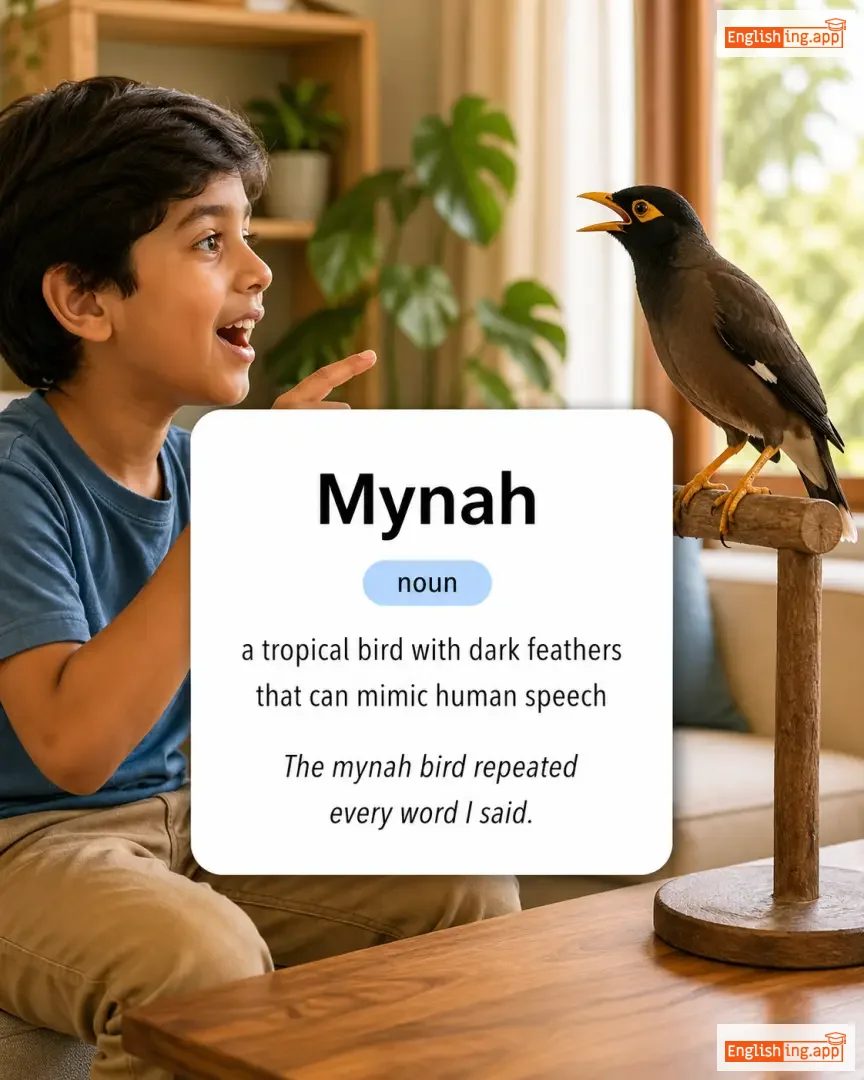
Mynah definition card — visual illustration of the meaning
noun C2
/ˈmaɪ.nə/
八哥 (bā gē)

a tropical bird with dark feathers that can mimic human speech

"The mynah bird repeated every word I said."

"八哥鸟重复了我说的每一个词。" (bā gē niǎo chóngfùle wǒ shuō de měi yīgè cí)
noun C2
/ˌmɪstɪfɪˈkeɪʃən/
困惑, 神秘化 (kunhuo, shenmi hua)

the act of making something unclear or confusing; a state of being puzzled or bewildered

"The audience watched in mystification as the magician performed his tricks."

"观众在困惑中看着魔术师表演他的戏法。" (Guanzhong zai kunhuo zhong kanzhe moshushi biaoyan tade xifa.)
⬇️

nadir

noun C2
/ˈneɪdɪər/

The lowest point of a situation or condition.

"The company reached its nadir during the financial crisis."

noun C2
/ˈnæfθə/
石油醚 (shíyóu mǐ)

A flammable oil containing hydrocarbons, obtained from petroleum or coal tar, used as fuel or solvent.

"The factory stored barrels of naphtha for industrial use."

"工厂储存了工业用途的纳夫塔桶。" (gōngchǎng chǔcúnle gōngyè yòngtú de nàfūtǎ tǒng.)
noun C2
/nɑːrˈsɪsəs/
水仙花 (shuǐxiān huā)

A type of flowering plant with yellow or white blooms, often associated with self-love from Greek mythology.

"A narcissus bloomed in the garden during spring."

"春天时,一朵水仙花在花园里盛开。" (Chūntiān shí, yī duǒ shuǐxiān huā zài huāyuán lǐ shèngkāi.)
adjective C2
/ˈneɪtl/
与出生有关的 (yu chusheng youguan de)

Relating to birth or the place of birth.

"She returned to her natal village after many years."

"她在许多年后返回了她的出生村庄。" (Ta zai xu duo nian hou fanhui le ta de chusheng cunzhuang.)
noun C2
/næˈteɪʃən/
游泳 (you yong)

The act or sport of swimming.

"She took lessons in natation to improve her swimming skills."

"她参加了游泳课程,以提高她的游泳技巧。" (Ta canjia le youyong kecheng, yi tigao ta de youyong jiqiao.)
adjective C2
/ˈnæti/
时尚 (shíshàng)

Neat, stylish, and fashionable in appearance.

"He looked very natty in his new suit."

"他在新西装里看起来非常时尚。" (Tā zài xīn xīzhuāng lǐ kàn qǐlái fēicháng shíshàng.)
verb C2
/ˈnɔːzieɪt/
引起恶心 (yǐnqǐ èxīn)

To make someone feel sick, with an inclination to vomit.

"The spoiled food nauseated him quickly."

"坏掉的食物很快让他感到恶心。" (Huài diào de shíwù hěn kuài ràng tā gǎndào èxīn.)
noun C2
/neɪv/
教堂的中央部分 (jiàotáng de zhōngyāng bùfen)

the central part of a church building intended to accommodate the congregation

"The choir sang beautifully in the church nave."

"合唱团在教堂的内夫里唱得非常动听。" (Héchàngtuán zài jiàotáng de nèifū lǐ chàng dé fēicháng dòngtīng.)
noun C2
/ˈneɪˌseɪ.ɪŋ/
负面言论 (fùmiàn yánlùn)

The act of expressing negative or pessimistic views.

"His constant naysaying discouraged the team."

"他不断的负面言论使团队失去了动力。" (Tā bùduàn de fùmiàn yánlùn shǐ tuánduì shīqùle dònglì.)
noun C2
/ˌɛn.biː.esˈpiː/
不间断空格 (bu jian duan kong ge)

a non-breaking space character in HTML used to prevent an automatic line break at its position

"Use   in HTML to add a space that won't break into a new line."

"在HTML中使用 添加一个不会换行的空格。" (zai HTML zhong shiyong  tianjia yige bu hui huanhang de kongge.)
noun C2
/niːp/
低潮 (dīcháo)

A tide just after the first or third quarters of the moon when the difference between high and low tide is least.

"During a neap tide, the water level change is minimal."

"在低潮期间,水位变化最小。" (Zai dīcháo qījiān, shuǐwèi biànhuà zuìxiǎo.)
adjective C2
/ˈnɛbjələs/
朦胧 (ménglóng)

Unclear, vague, or ill-defined; resembling a cloud or haze.

"His plan for the future was still nebulous and hard to understand."

"他对未来的计划仍然是朦胧的,难以理解。" (tā duì wèilái de jìhuà réngrán shì ménglóng de, nán yǐ lǐjiě.)
noun C2
/nɪˈkrɒlədʒi/
讣告 (fugao)

An obituary notice or a list of people who have recently died.

"The newspaper published a necrology of notable figures who passed away that year."

"报纸发布了该年已故知名人物的讣告。" (Baozhi fabulei gai nian yigou zhiming renwu de fugao.)
🧙‍♂️

necromancer

noun C2
/ˈnɛkrəˌmænsər/

a person who practices necromancy; a wizard or magician who claims to communicate with the dead

"The villagers feared the old necromancer who lived at the edge of the forest."

noun C2
/ˈnɛkrəˌmænsi/
死灵法 (sǐlíng fǎ)

the practice of communicating with the dead, often to predict the future

"Ancient texts described rituals of necromancy performed by priests."

"古代的文献描述了由祭司执行的死灵法仪式。" (Gǔdài de wénxiàn miáoshùle yóu jìsī zhíxíng de sǐlíng fǎ yíshì.)
noun C2
/nəˈkrɒpəlɪs/
古代墓地 (gǔdài mùdì)

a large ancient cemetery with elaborate tombs

"The archaeologists discovered artifacts in the necropolis of the ancient city."

"考古学家在古城的内克罗波利斯中发现了文物。" (Kǎogǔxuéjiā zài gǔ chéng de nèikèluōbōlìsī zhōng fāxiànle wénwù.)
noun C2
/nɛˈkroʊsɪs/
坏死 (huàisǐ)

the death of body tissue due to disease, injury, or lack of blood supply

"The doctor explained that the patient’s wound showed signs of necrosis."

"医生解释说,病人的伤口显示出坏死的迹象。" (Yīshēng jiěshì shuō, bìngrén de shāngkǒu xiǎnshì chū huàisǐ de jìxiàng.)
adjective C2
/nɪˈfɛəriəs/
邪恶的,犯罪的,或道德上糟糕的 (xiee de, fanzui de, huo daode shang zaogao de)

Wicked, criminal, or morally bad.

"The police uncovered a nefarious plot to cheat investors."

"警方揭露了一个邪恶的阴谋,试图欺骗投资者。" (Jingfang jielu le yige xiee de yinmou, shitu qipian touzizhe.)
noun C2
/ˌnɛɡlɪˈʒeɪ/
轻薄丝绸睡衣 (qīngbó sīchóu shuìyī)

A woman's light dressing gown, often made of thin or silky material.

"She wore a silk negligee before going to bed."

"她在睡觉前穿上了丝绸睡衣。" (Tā zài shuìjiào qián chuān shàngle sīchóu shuìyī.)
noun C2
/ˌniːoʊˈdɑːrwɪnɪzəm/
新达尔文主义 (xin daerwen zhuyi)

A modern interpretation of Darwin's theory of evolution, integrating genetics and natural selection.

"Neo-Darwinism combines Darwin’s theory of natural selection with modern genetics."

"新达尔文主义将达尔文的自然选择理论与现代遗传学相结合。" (Xin Daerwen zhuyi jiang Daerwen de ziran xuanze lilun yu xiandai yichuanxue xiang jiehe.)
noun C2
/ˌniːoʊˈlætɪn/
新拉丁语 (xin lādīng yǔ)

The use of Latin language for scholarly, scientific, and literary purposes after the medieval period.

"Many scientific names are derived from Neo-Latin."

"许多科学名称来源于新拉丁语。" (Xǔduō kēxué míngchēng láiyuán yú xīn lādīng yǔ.)
noun C2
/niːˈɒkrəsi/
由无经验或新官员领导的政府 (you wu jingyan huo xin guan yuan lingdao de zhengfu)

A government or leadership run by inexperienced or new officials.

"The sudden revolution led to a neocracy with inexperienced leaders."

"突如其来的革命导致了一个新政府,由经验不足的领导人执政。" (Tū rù qí lái de gémìng dǎozhìle yīgè xīn zhèngfǔ, yóu jīngyàn bùzú de lǐngdǎo rén zhízhèng.)
noun C2
/niːˈɒlədʒɪzəm/
新词 (xīn cí)

A newly coined word or expression.

"The internet has given rise to many neologisms like 'selfie' and 'hashtag'."

"互联网催生了许多新词,如“自拍”和“标签”。" (hùliánwǎng cuīshēngle xǔduō xīncí, rú 'zìpāi' hé 'biāoqiān'.)
noun C2
/niˈɒlədʒi/
使用新词或研究其起源 (shǐyòng xīn cí huò yánjiū qí qǐyuán)

The use of new words or the study of their origin.

"The professor specialized in neology, studying the creation of modern slang."

"教授专注于新词学,研究现代俚语的创造。" (Jiàoshòu zhuānzhù yú xīncí xué, yánjiū xiàndài lǐyǔ de chuàngzào.)
noun C2
/ˌniːoʊˈpeɪɡənɪzəm/
新异教主义 (xīn yìjiào zhǔyì)

Modern religious movements influenced by or claiming to be derived from the various historical pagan beliefs of pre-modern Europe.

"Neopaganism has gained popularity as people seek spiritual alternatives to mainstream religions."

"新异教主义已获得越来越多的关注,因为人们正在寻找主流宗教的精神替代品。" (Xīn yìjiào zhǔyì yǐ huòdé yuè lái yuè duō de guānzhù, yīnwèi rénmen zhèngzài xúnzhǎo zhǔliú zōngjiào de jīngshén tìdàipǐn.)