词汇表

英语词汇词典 | 单词含义、定义和示例

verb C2
/ɜːrk/
激怒 (jīnù)

to annoy or irritate someone

"It irks me when people are late without calling."

"当人们没有打电话就迟到时,我感到很生气。" (Dāng rénmen méiyǒu dǎ diànhuà jiù chídào shí, wǒ gǎndào hěn shēngqì.)
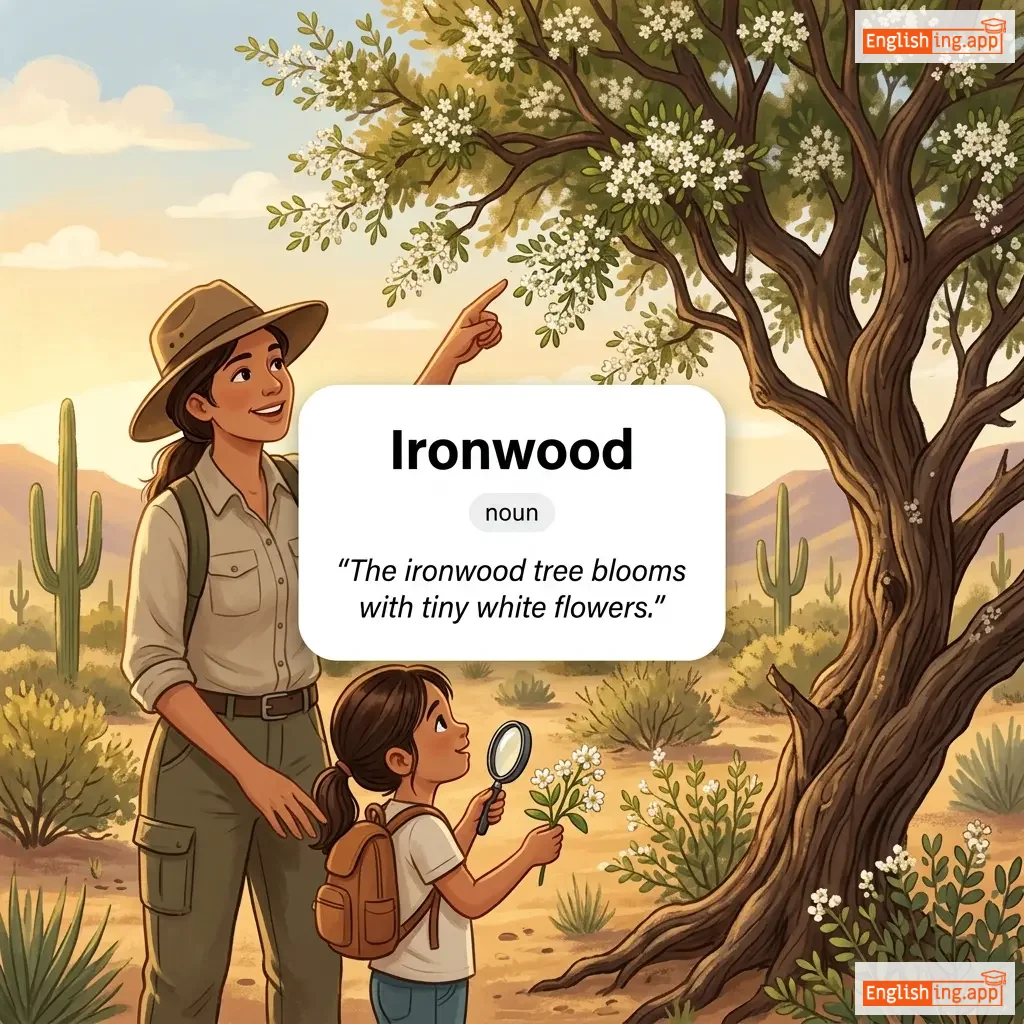
Ironwood definition card — visual illustration of the meaning
noun C2
/ˈaɪ.ərn.wʊd/
铁木 (tie mu)

a hard, dense wood from various trees; also the tree itself that produces small flowers

"The ironwood tree blooms with tiny white flowers."

"铁木树开着小白花。" (Tie mu shu kaizhe xiao baihua.)
noun C2
/ɪˈreɪdiəns/
辐射度 (fusha du)

the quality of shining brightly; the intensity of light falling on a surface

"The irradiance of the sun at noon was overwhelming."

"中午太阳的辐射度是压倒性的。" (Zhongwu taiyang de fushadu shi yadao xing de.)
verb C2
/ɪˈreɪdieɪt/
辐照 (fú zhào)

to shine light on something; to expose to radiation; to illuminate or brighten

"The scientist used a lamp to irradiate the sample."

"科学家用灯泡辐照了样本。" (Kēxuéjiā yòng dēngpào fú zhào le yàngběn.)
adjective C2
/ɪˈrædɪkəbəl/
不可根除的 (bùkě gēnchú de)

not able to be eradicated; impossible to destroy or remove completely

"The love of a mother for her child is irradicable."

"母亲对孩子的爱是不可根除的。" (Mǔqīn duì háizi de ài shì bùkě gēnchú de.)
adjective C2
/ˌɪrɪˈkɒnsɪləbl/
不可调和的 (bù kě tiáo hé de)

impossible to make compatible or bring into harmony; unable to resolve differences

"The couple separated due to irreconcilable differences."

"这对夫妇因不可调和的分歧而分开。" (zhè duì fūfù yīn bù kě tiáo hé de fēn qí ér fēn kāi.)
adjective C2
/ˌɪrɪˈdjuːsəbl/
不可约的 (bù kě yuē de)

impossible to reduce or simplify further

"The fraction 3/7 is irreducible."

"分数 3/7 是不可约的。" (Fēnshù 3/7 shì bù kě yuē de.)
adjective C2
/ɪˈrɛfrəɡəbəl/
不可辩驳 (bù kě biàn bó)

Impossible to refute, deny, or break

"The lawyer presented irrefragable evidence that proved his client’s innocence."

"律师提供了不可辩驳的证据,证明了他客户的无辜。" (Lǜshī tígōngle bù kě biàn bó de zhèngjù, zhèngmíngle tā kèhù de wúgū.)
adjective C2
/ˌɪrɪˈfrændʒɪbəl/
不可侵犯的 (bù kě qīn fàn de)

Not to be broken, violated, or infringed

"The constitution guarantees certain irrefrangible rights to every citizen."

"宪法保证每个公民享有某些不可侵犯的权利。" (Xiànfǎ bǎozhèng měi gè gōngmín xiǎng yǒu mǒu xiē bù kě qīn fàn de quánlì.)
adjective C2
/ˌɪrɪˈlɪdʒəs/
不信教的 (bù xìn jiào de)

Indifferent or hostile to religion

"Some people in the community consider him irreligious because he never attends religious services."

"社区中的一些人认为他不信教,因为他从不参加宗教服务。" (shèqū zhōng de yīxiē rén rènwéi tā bù xìn jiào, yīnwèi tā cóng bù cānjiā zōngjiào fúwù.)
adjective C2
/ˌɪrɪˈmiːdiəbl̩/
无法修复的 (wúfǎ xiūfù de)

Impossible to cure, repair, or remedy.

"The damage to the ancient manuscript was irremediable."

"古老手稿的损坏是无法修复的。" (gǔlǎo shǒugǎo de sǔnhuài shì wúfǎ xiūfù de.)
adjective C2
/ˌɪrɪˈprəʊtʃəbl̩/
无可指责 (wú kě zhǐzé)

Beyond criticism; faultless.

"The judge was known for his irreproachable integrity."
"法官因其无可指责的正直而闻名。" (fǎguān yīn qí wú kě zhǐzé de zhèngzhí ér wénmíng.)
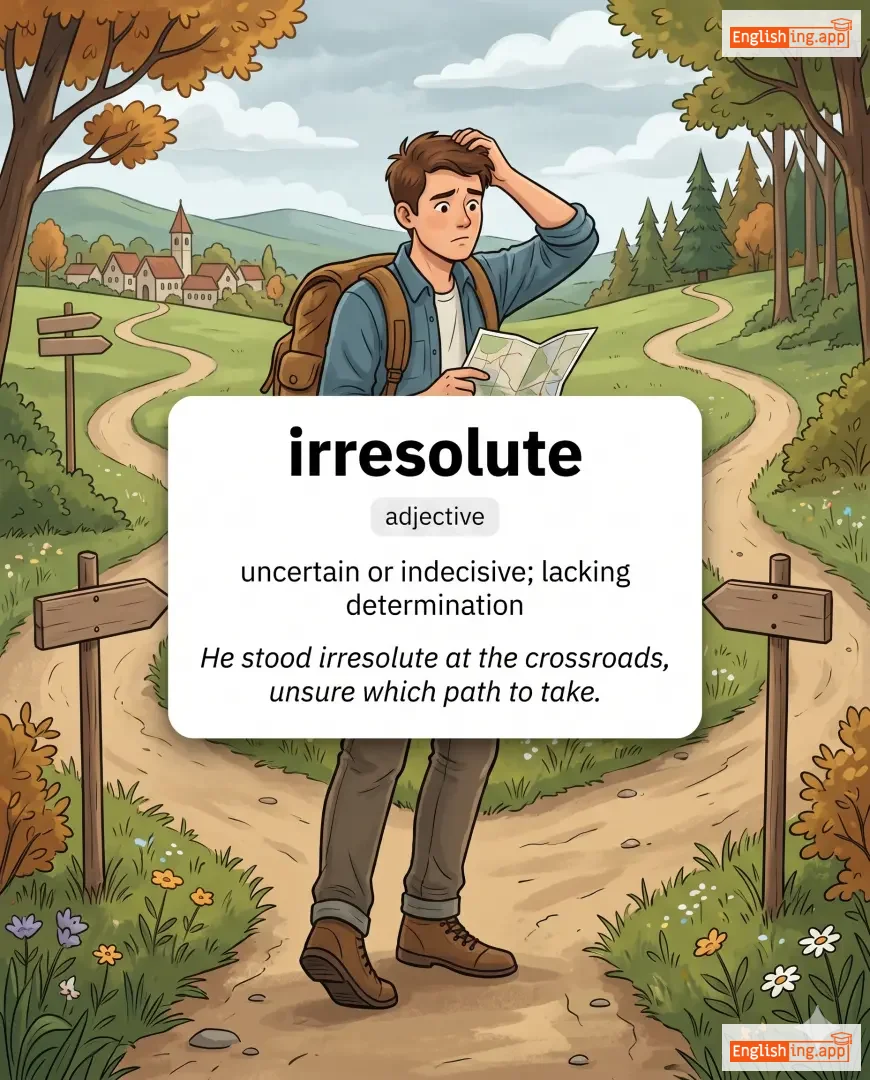
irresolute definition card — visual illustration of the meaning
adjective C2
/ɪˈrɛzəluːt/
优柔寡断 (yōuróu guǎduàn)

uncertain or indecisive; lacking determination

"He stood irresolute at the crossroads, unsure which path to take."

"他在十字路口犹豫不决,不知道走哪条路。" (Tā zài shízì lùkǒu yóuyù bù jué, bù zhīdào zǒu nǎ tiáo lù.)
adjective C2
/ˌɪrɪˈtriːvəbl/
不可恢复 (bù kě huī fù)

impossible to recover or regain

"The documents were lost in an irretrievable way after the fire."

"文件在火灾后以不可恢复的方式丢失。" (Wénjiàn zài huǒzāi hòu yǐ bù kě huī fù de fāngshì diūshī.)
noun C2
/ɪˈrɛvərəns/
不敬 (bù jìng)

a lack of respect for people or things that are generally taken seriously

"His jokes about religion showed irreverence to the sacred traditions."

"他关于宗教的笑话表现了对神圣传统的不敬。" (Tā guānyú zōngjiào de xiàohuà biǎoxiànle duì shénshèng chuántǒng de bù jìng.)
adjective C2
/ˌɪrɛvəˈrɛnʃəl/
不敬的 (bù jìng de)

Showing a lack of respect for things that are generally taken seriously.

"His irreverential humor often shocked traditional audiences."

"他的不敬幽默常常让传统观众感到震惊。" (Tā de bù jìng yōumò chángcháng ràng chuántǒng guānzhòng gǎndào zhènjīng.)
noun C2
/ˈɪrɪɡənt/
灌溉液体 (guàngài yètǐ)

A liquid used for irrigation, especially in medical or agricultural contexts.

"The doctor used a sterile irrigant during the procedure."

"医生在手术中使用了无菌灌溉液。" (Yīshēng zài shǒushù zhōng shǐyòngle wújùn guàngài yètǐ.)
noun C2
/ˈɪrɪtənsi/
恼怒 (naonu)

the quality or state of causing irritation; legal or formal invalidation

"The constant noise became an irritancy to the neighbors."
"持续的噪音成为邻居的恼怒源。" (Chixu de zaoyin chengwei linju de naonu yuan.)
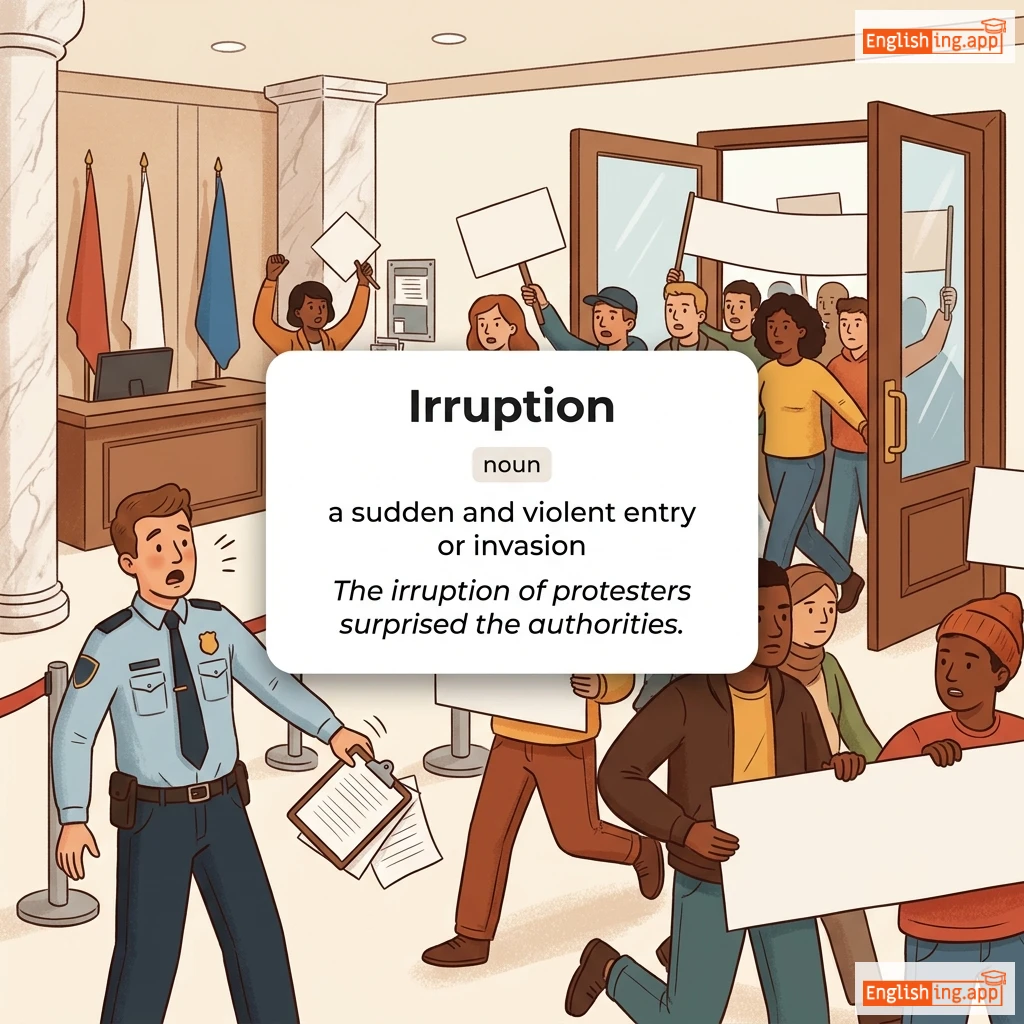
Irruption definition card — visual illustration of the meaning
noun C2
/ɪˈrʌpʃən/
突发袭击 (tūfā xíjī)

a sudden and violent entry or invasion

"The irruption of protesters surprised the authorities."

"抗议者的突发袭击让当局感到震惊。" (Kàngyì zhě de tūfā xíjī ràng dāngjú gǎndào zhènjīng.)
noun C2
/ˈaɪ.lət/
小岛 (xiao dao)

A very small island.

"The fishermen rested on a tiny islet before continuing their journey."

"渔民们在继续他们的旅程之前,在一个小岛上休息。" (Yumin men zai jixu tamen de lücheng zhīqian, zai yi ge xiao dao shang xiuxi.)
noun C2
/ˈaɪ.səˌbɑːr/
等压线 (děngyāxiàn)

A line on a weather map connecting points of equal atmospheric pressure.

"The meteorologist explained how isobars indicate wind speed and direction."

"气象学家解释了等压线如何指示风速和风向。" (Qìxiàng xuéjiā jiěshìle děngyāxiàn rúhé zhǐshì fēngsù hé fēngxiàng.)
adjective C2
/aɪˈsɒ.krə.nəs/
等时间间隔发生 (deng shijian jian ge fasheng)

Occurring at equal time intervals; in unison or synchrony.

"The pendulum swings are isochronous, repeating at equal intervals."

"摆锤的摆动是等时性的,在相等的时间间隔重复。" (Bǎichuí de bǎidòng shì děng shíxìng de, zài xiāngděng de shíjiān jiàngé chóngfù.)
adjective C2
/ˌaɪsəʊˈθɜːrməl/
等温 (deng wen)

Having or maintaining equal or constant temperature.

"The experiment was conducted under isothermal conditions."

"实验在等温条件下进行。" (Shiyan zai deng wen tiaojian xia jinxing.)
noun C2
/ˈɪsməs/ or /ˈɪsθməs/
地峡 (dixiá)

A narrow strip of land connecting two larger land areas, often with water on either side.

"The Panama Canal cuts through the Isthmus of Panama."
"巴拿马运河穿过巴拿马地峡。" (Bānámǎ yùnhé chuānguò bānámǎ dìxiá.)
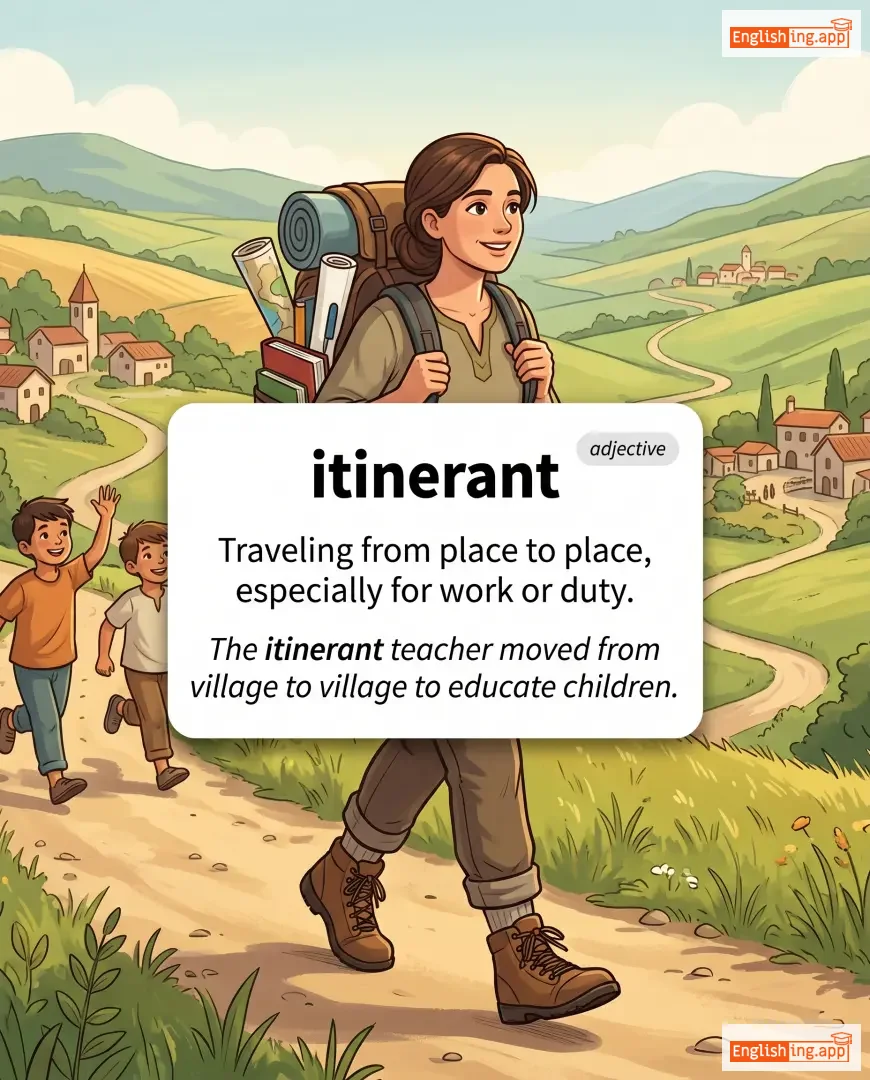
itinerant definition card — visual illustration of the meaning
adjective C2
/aɪˈtɪnərənt/
流动的 (liúdòng de)

Traveling from place to place, especially for work or duty.

"The itinerant teacher moved from village to village to educate children."

"这位流动的教师从一个村庄到另一个村庄,教育孩子们。" (Zhè wèi liúdòng de jiàoshī cóng yīgè cūnzhuāng dào lìng yīgè cūnzhuāng, jiàoyù háizimen.)
verb C2
/aɪˈtɪnəˌreɪt/
旅行 (lǚxíng)

To travel from place to place, usually for the purpose of work or preaching.

"The missionary itinerated throughout the region to spread the message."
"传教士到处旅行传播信息。" (Chuánjiàoshì dàochù lǚxíng chuánbò xìnxī.)
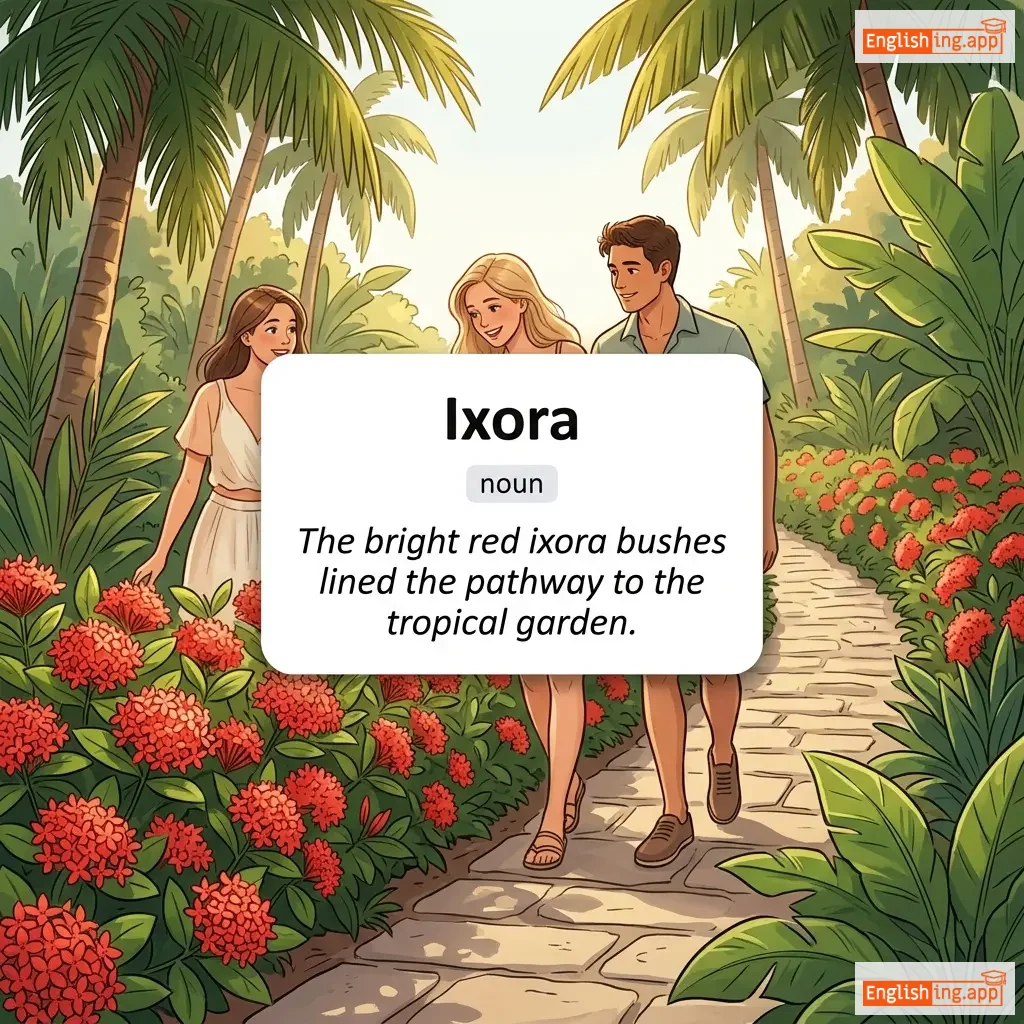
Ixora definition card — visual illustration of the meaning
noun C2
/ɪkˈsɔːr.ə/
伊克索拉 (yiksuola)

a tropical flowering shrub with clusters of small bright red, orange, or yellow flowers

"The bright red ixora bushes lined the pathway to the tropical garden."

"亮红色的伊克索拉灌木排成行,沿着通往热带花园的小径。" (Liàng hóngsè de yī kè suǒ lā guànmù pái chéng háng, yánzhe tōngwǎng rèdài huāyuán de xiǎo jìng.)
verb C2
/ˈdʒæbər/
胡言乱语 (hú yán luàn yǔ)

To talk quickly and excitedly but with little sense.

"The children jabbered happily after the show."
"孩子们在表演后快乐地胡言乱语。" (Háizimen zài biǎoyǎn hòu kuàilè de hú yán luàn yǔ.)
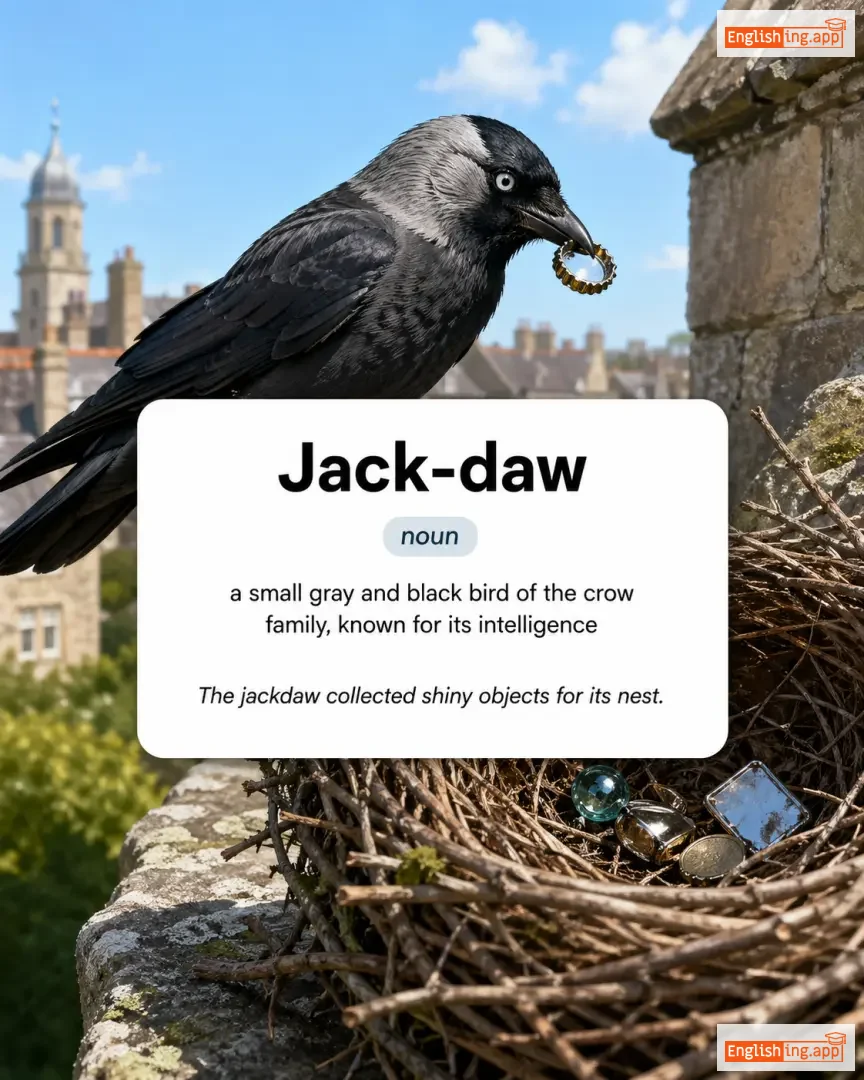
Jack-daw definition card — visual illustration of the meaning
noun C2
/ˈdʒæk.dɔː/
小乌鸦 (xiao wuya)

a small gray and black bird of the crow family, known for its intelligence

"The jackdaw collected shiny objects for its nest."
"杰克道收集了闪亮的物品为它的巢。" (Jieke dao shouji le shanliang de wupin wei ta de chao.)
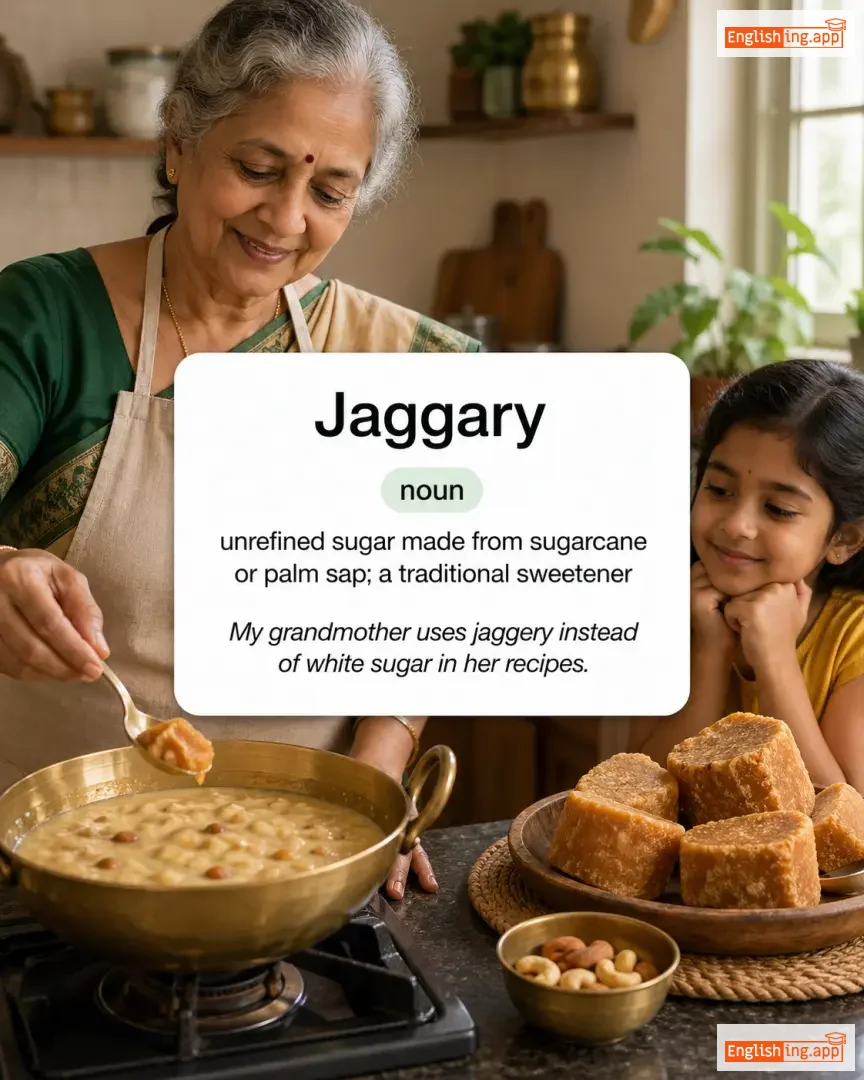
Jaggary definition card — visual illustration of the meaning
noun C2
/ˈdʒæɡ.ər.i/
甘蔗糖 (gānzhè táng)

unrefined sugar made from sugarcane or palm sap; a traditional sweetener

"My grandmother uses jaggery instead of white sugar in her recipes."

"我的祖母在她的食谱中使用甘蔗糖代替白糖。" (wǒ de zǔmǔ zài tā de shípǔ zhōng shǐyòng gānzhè táng dàitì báitáng)
noun C2
/dʒæm/
门框 (mén kuàng)

The side post or surface of a doorway, window, or fireplace.

"The carpenter carefully measured the width of the door jamb."
"木匠小心地测量了门框的宽度。" (Mùjiàng xiǎoxīn dì cèliàngle mén kuàng de kuāndù.)
noun C2
/dʒeɪp/
恶作剧, 玩笑 (èzuòjù, wánxiào)

A practical joke or humorous remark.

"He enjoyed a harmless jape with his friends."

"他和朋友们享受了一场无害的恶作剧。" (Tā hé péngyǒu men xiǎngshòule yī chǎng wúhài de èzuòjù.)
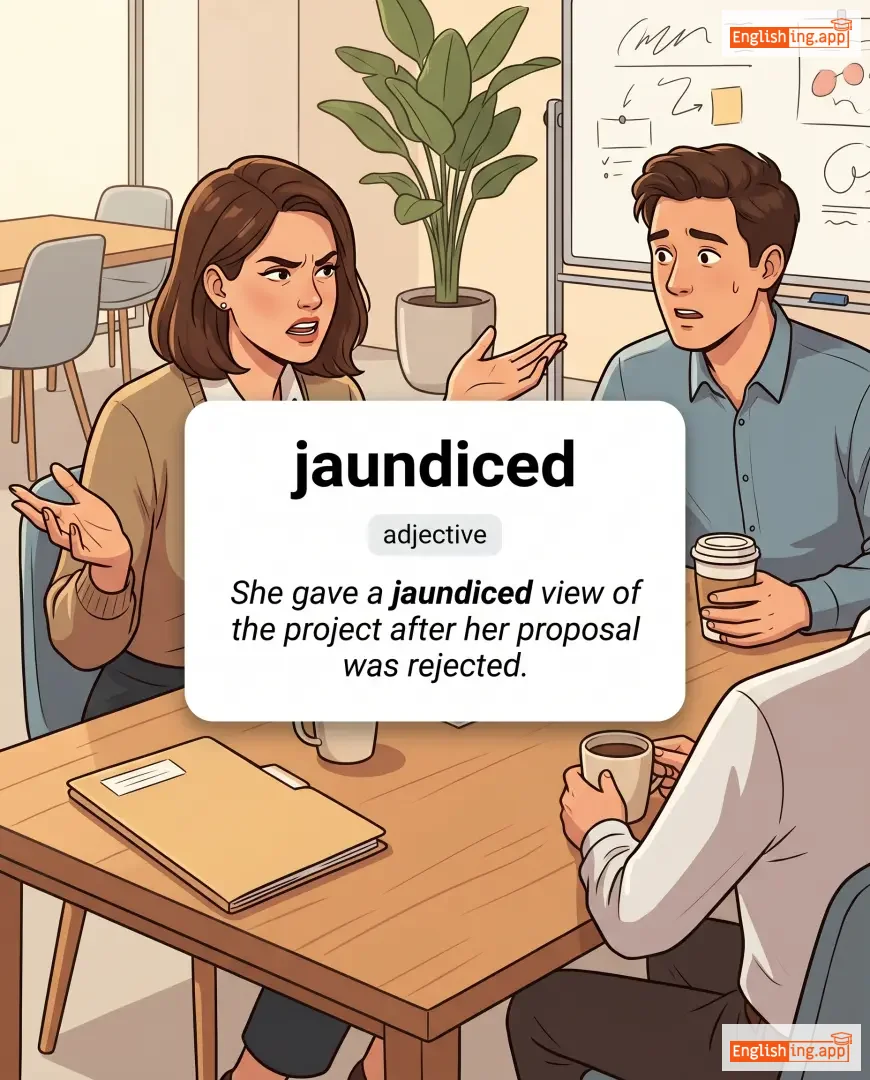
jaundiced definition card — visual illustration of the meaning
adjective C2
/ˈdʒɔːndɪst/
偏见的 / 嫉妒的 / 由黄疸引起的 (pianjian de / jidu de / you huangdan yinqi de)

Affected by or displaying prejudice, envy, or bitterness; also refers to having a yellowish discoloration of the skin due to jaundice.

"She gave a jaundiced view of the project after her proposal was rejected."

"在她的提案被拒绝后,她对这个项目给出了一个偏见的看法。" (Zai ta de ti'an bei jujue hou, ta dui zhege xiangmu geichule yige pianjian de kanfa.)
noun C2
/dʒɔːnt/
短途旅行 (duǎn tú lǚ xíng)

A short journey or excursion, usually taken for pleasure.

"They went on a weekend jaunt to the countryside."

"他们在周末去了乡村进行短途旅行。" (Tā men zài zhōu mò qù le xiāng cūn jìn xíng duǎn tú lǚ xíng.)
adjective C2
/ˈdʒɔːnti/
活泼 (huó pō)

Having a lively, cheerful, and self-confident manner or appearance.

"He walked into the room with a jaunty step."

"他带着轻快的步伐走进了房间。" (tā dàizhe qīngkuài de bùfā zǒu jìnle fángjiān.)
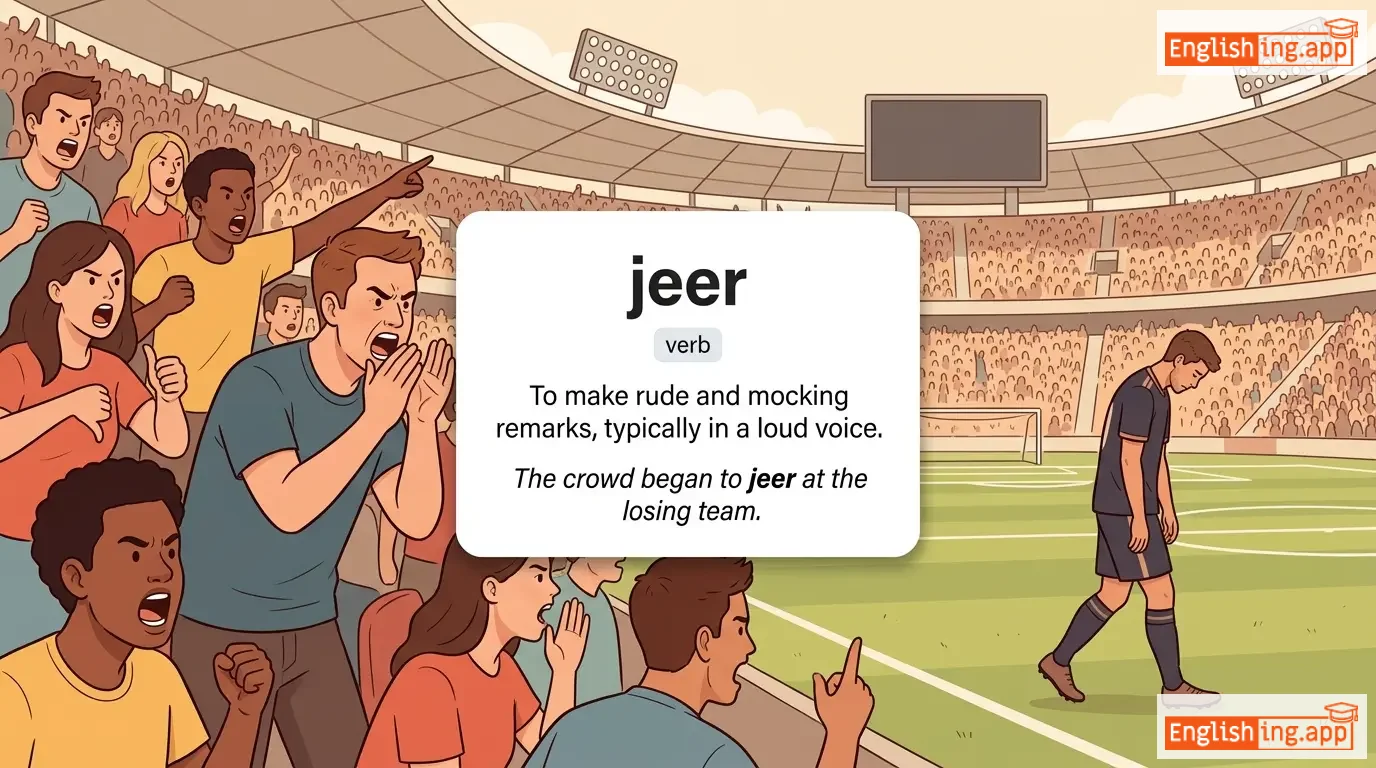
jeer definition card — visual illustration of the meaning
verb C2
/dʒɪər/
嘲笑 (cháoxiào)

To make rude and mocking remarks, typically in a loud voice.

"The crowd began to jeer at the losing team."

"人群开始嘲笑输掉的队伍。" (Rénqún kāishǐ cháoxiào shūdiào de duìwǔ.)
adjective C2
/dʒɪˈdʒuːn/
幼稚 / 浅薄 / 无趣 (yòuzhì / qiǎnbó / wúqù)

Naive, simplistic, and superficial; also dull or uninteresting.

"The professor dismissed the essay as jejune and lacking depth."
"教授把这篇文章视为幼稚且缺乏深度,予以拒绝。" (Jiàoshòu bǎ zhè piān wénzhāng shì wéi yòuzhì qiě quēfá shēndù, yǔyǐ jùjué.)
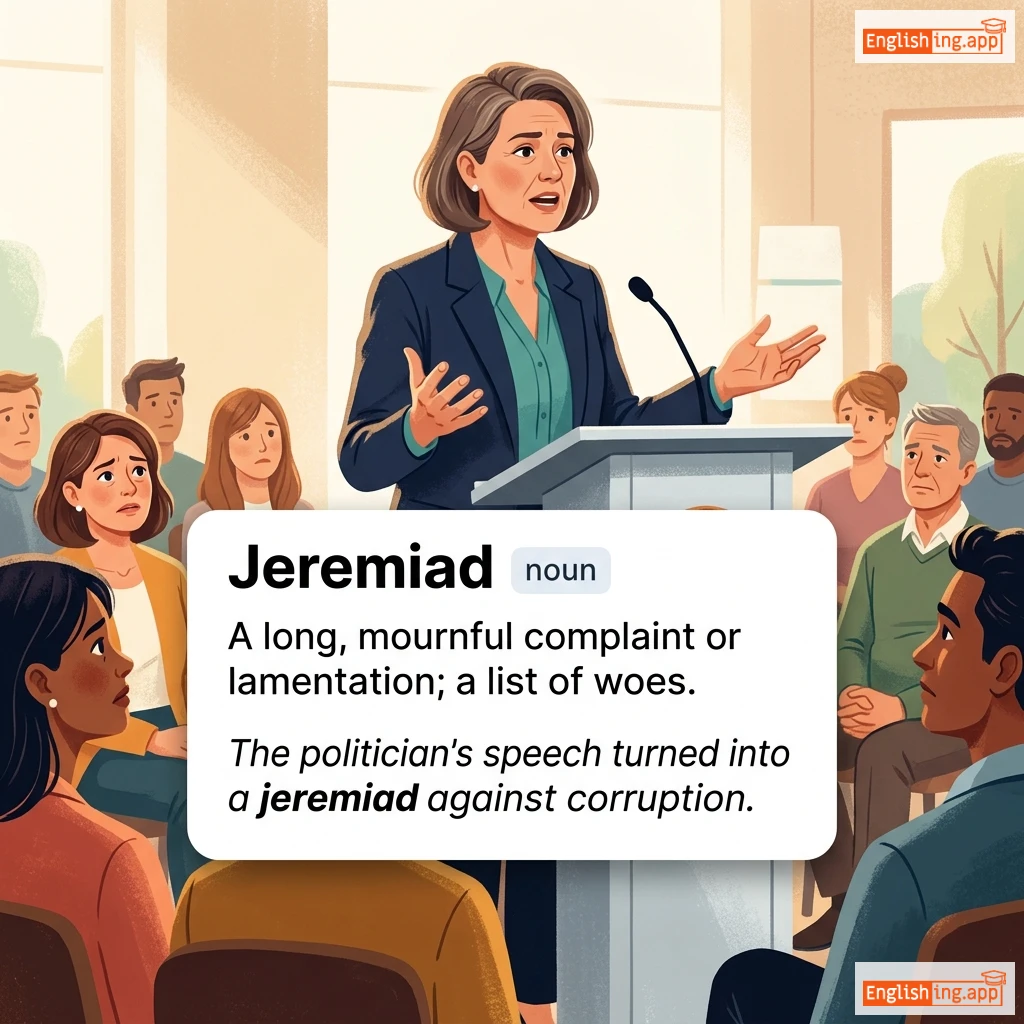
Jeremiad definition card — visual illustration of the meaning
noun C2
/ˈdʒɛrəˌmaɪæd/
哀歌 (aige)

A long, mournful complaint or lamentation; a list of woes.

"The politician's speech turned into a jeremiad against corruption."
"这位政治家的演讲变成了对腐败的哀歌。" (Zhè wèi zhèngzhìjiā de yǎnjiǎng biàn chéngle duì fǔbài de aige.)
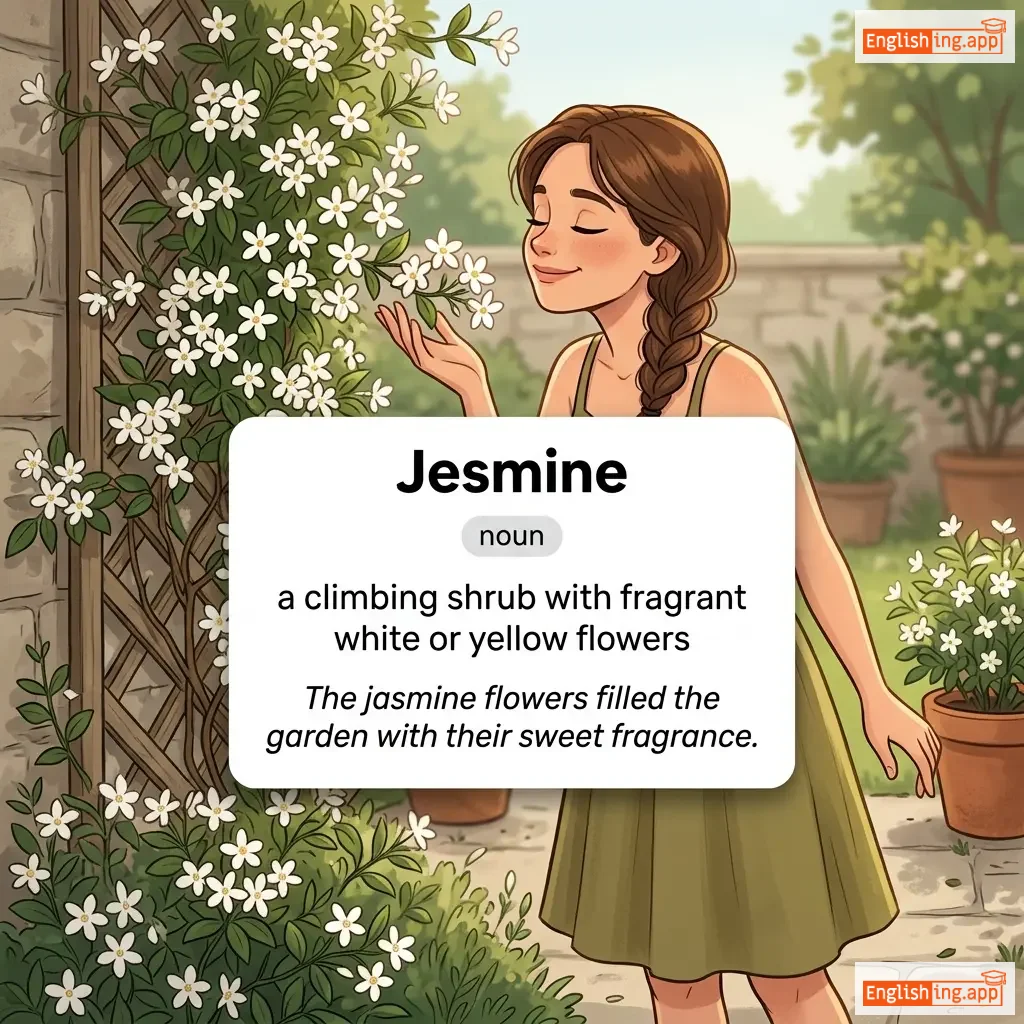
Jesmine definition card — visual illustration of the meaning
noun C2
/ˈdʒæz.mɪn/
茉莉花 (moli hua)

a climbing shrub with fragrant white or yellow flowers

"The jasmine flowers filled the garden with their sweet fragrance."
"茉莉花让花园充满了甜美的香气。" (moli hua rang hua yuan chong man le tian mei de xiang qi)
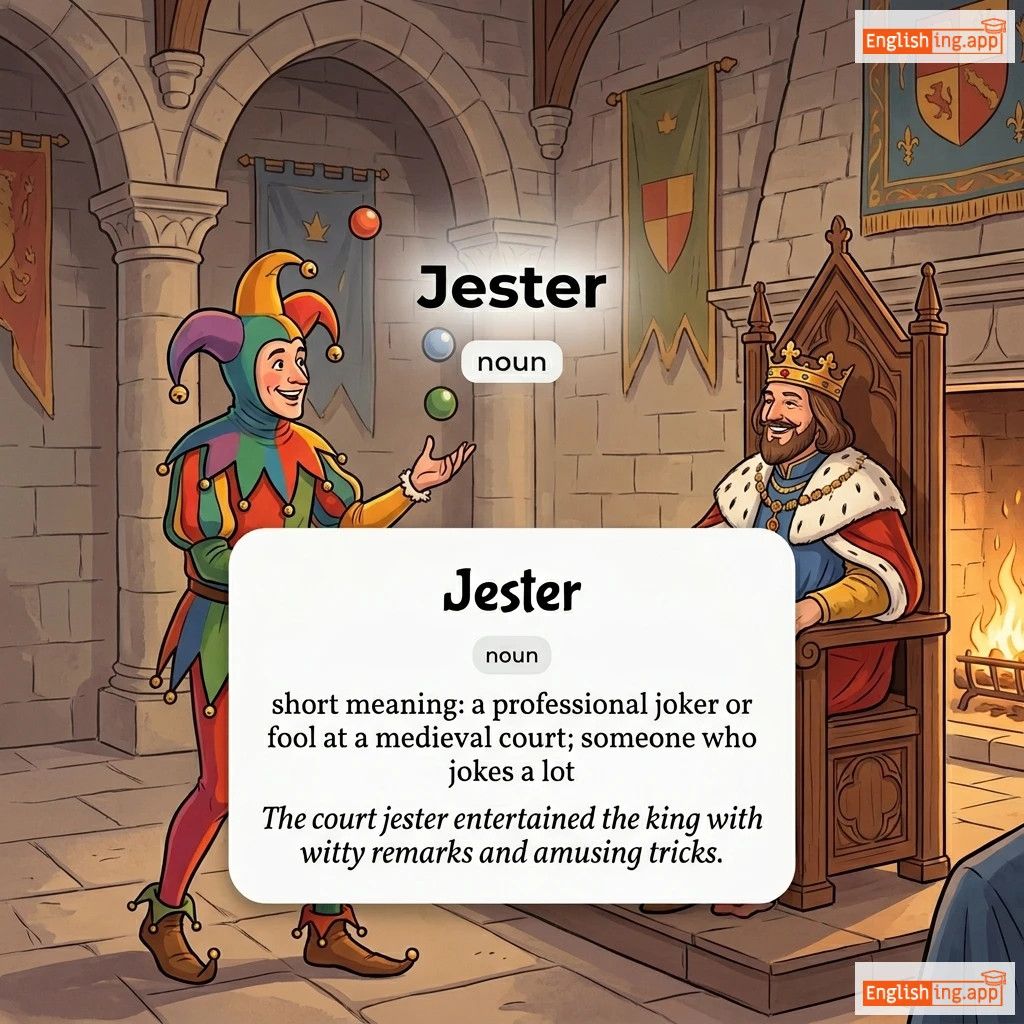
Jester definition card — visual illustration of the meaning
noun C2
/ˈdʒes.tər/
小丑; 愚人 (xiǎochǒu, yúrén)

a professional joker or fool at a medieval court; someone who jokes a lot

"The court jester entertained the king with witty remarks and amusing tricks."

"宫廷小丑用机智的评论和有趣的把戏娱乐国王。" (Gōngtíng xiǎochǒu yòng jīzhì de pínglùn hé yǒuqù de bǎxì yúlè guówáng.)
adjective C2
/ˈdʒes.tɪŋ/
打趣的 (jesting)

joking or teasing in a playful manner

"He was only jesting when he said he would quit his job."

"他只是开玩笑地说自己要辞掉工作。" (ta zhi shi kai wan xiao de zi ji yao ci diao gong zuo)
noun C2
/ˈdʒɛtsəm/
从船上丢弃的无用物品,被冲到岸上的物品 (cóng chuán shàng diūqì de wúyòng wùpǐn, bèi chōng dào àn shàng de wùpǐn)

Unwanted material or goods thrown overboard from a ship and washed ashore.

"The beach was littered with jetsam after the storm."
"风暴过后,海滩上充满了杰特萨姆。" (fēngbào guò hòu, hǎitān shàng chōngmǎnle jiétèsàm.)
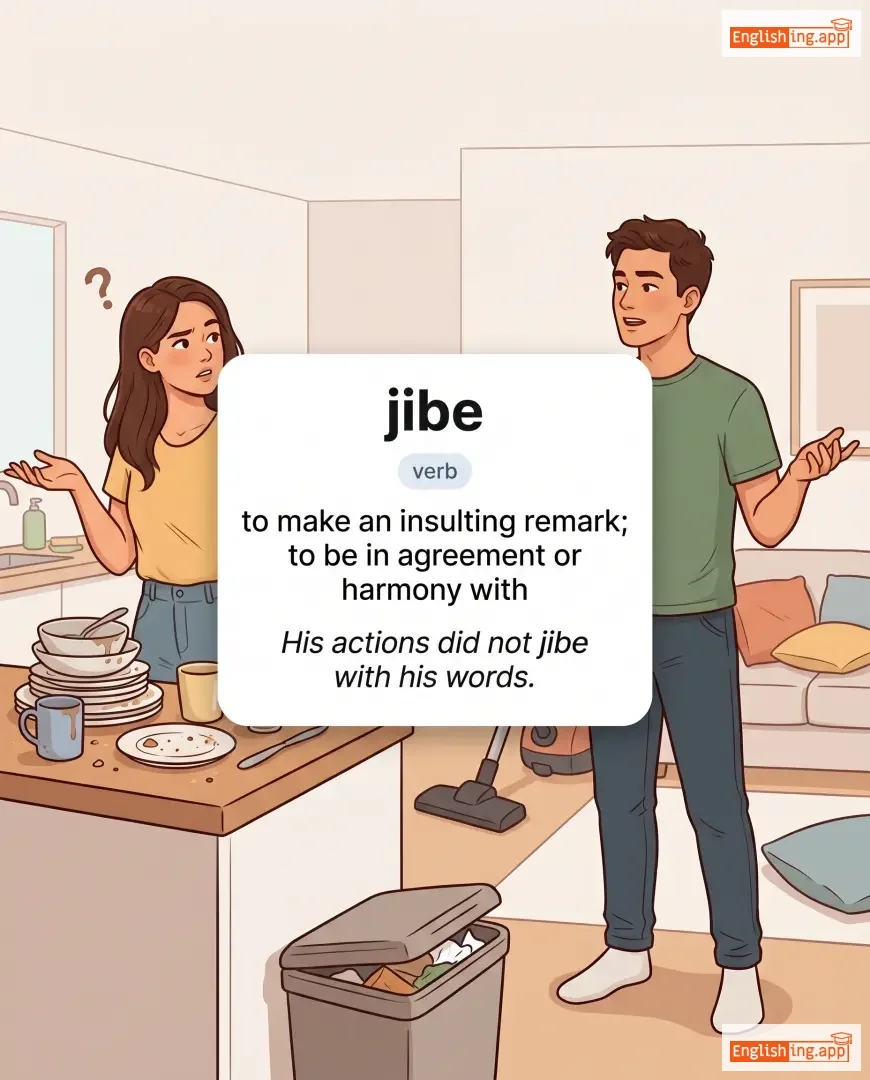
jibe definition card — visual illustration of the meaning
verb C2
/dʒaɪb/
讽刺 / 一致 (fengci / yizhi)

to make an insulting remark; to be in agreement or harmony with

"His actions did not jibe with his words."

"他的行动与他的言辞不符。" (Tā de xíngdòng yǔ tā de yáncí bù fú.)
adjective C2
/ˈdʒɪg.ərd/
惊讶; 震惊; (jiged)

surprised or astonished; confused or puzzled

"I'll be jiggered if I know what happened here."

"如果我知道这里发生了什么,我会感到惊讶。" (Rúguǒ wǒ zhīdào zhèlǐ fāshēngle shénme, wǒ huì gǎndào jīngyà.)
noun C2
/ˈdʒɪŋɡoʊ/
好战的民族主义者 (hǎo zhàn de mínzú zhǔyì zhě)

a person who strongly supports warlike or aggressive foreign policy; an extreme nationalist

"The leader was criticized as a reckless jingo."

"领导人被批评为鲁莽的好战分子。" (Lǐngdǎo rén bèi pīpíng wéi lǔmǎng de hǎo zhàn fènzǐ.)
noun C2
/ˈdʒɪŋɡoʊˌɪzəm/
极端民族主义 (jíduān mínzú zhǔyì)

extreme patriotism expressed in aggressive foreign policy

"The politician's speech was filled with jingoism."

"那位政治家的演讲充满了沙文主义。" (Nà wèi zhèngzhì jiā de yǎnjiǎng chōngmǎnle shāwén zhǔyì.)
noun C2
/ˈdʒɪŋɡoʊɪst/
极端民族主义者 (jíduān mínzú zhǔyì zhě)

a person who supports jingoism; an extreme nationalist with aggressive foreign policies

"He was labeled a jingoist for his extreme views."
"由于他的极端观点,他被贴上了极端民族主义者的标签。" (Yóuyú tā de jíduān guāndiǎn, tā bèi tiē shàng le jíduān mínzú zhǔyì zhě de biāoqiān.)
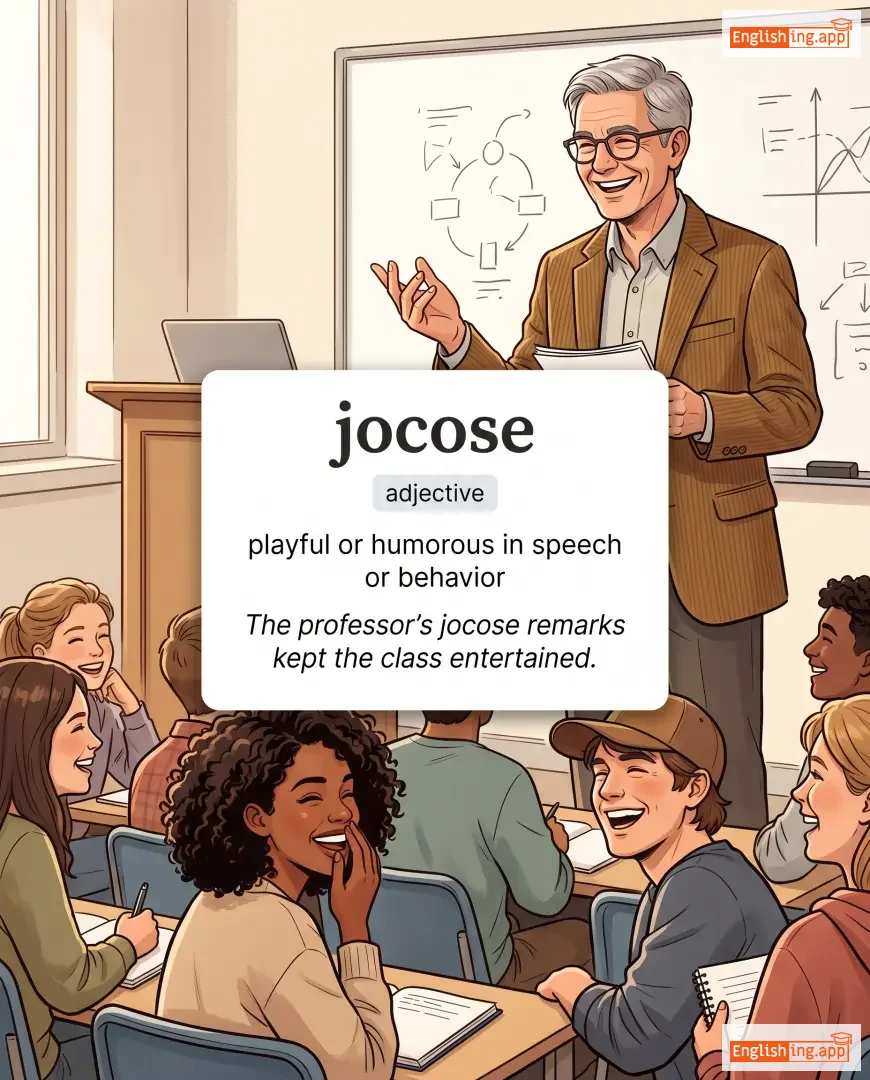
jocose definition card — visual illustration of the meaning
adjective C2
/dʒoʊˈkoʊs/
幽默的 (youmo de)

playful or humorous in speech or behavior

"The professor’s jocose remarks kept the class entertained."

"教授的幽默评论让班级感到娱乐。" (Jiaoshou de youmo pinglun rang banji gandao yule.)
adjective C2
/ˈdʒɒkjələr/
爱开玩笑的 (ài kāi wánxiào de)

fond of or characterized by joking; humorous

"His jocular nature made him popular among colleagues."

"他爱开玩笑的性格让他在同事中很受欢迎。" (Tā ài kāi wánxiào de xìnggé ràng tā zài tóngshì zhōng hěn shòu huānyíng.)
adjective C2
/ˈdʒɒkənd/
愉快 (yukai)

cheerful and lighthearted

"They walked together in a jocund mood after the celebration."

"庆祝后,他们在愉快的心情下一起走着。" (Qìngzhù hòu, tāmen zài yúkuài de xīnqíng xià yīqǐ zǒuzhe.)