词汇表

英语词汇词典 | 单词含义、定义和示例

adjective, noun C2
/ˈɡreɪtɪŋ/
刺耳的声音 / 金属栅栏 (cì ěr de shēngyīn / jīnshǔ zhàlán)

Harsh and unpleasant to the senses, especially sound; a framework of bars covering an opening.

"The teacher's grating voice made it hard to concentrate."

"老师刺耳的声音让集中注意力变得困难。" (Lǎoshī cì ěr de shēngyīn ràng jízhōng zhùyìlì biàn dé kùnnán.)
adverb, adjective C2
/ˈɡrætɪs/ or /ˈɡreɪtɪs/
免费 (miǎn fèi)

Without charge; free of cost.

"The drinks at the event were provided gratis."
"活动中的饮料是免费的。" (Huódòng zhōng de yǐnliào shì miǎn fèi de.)
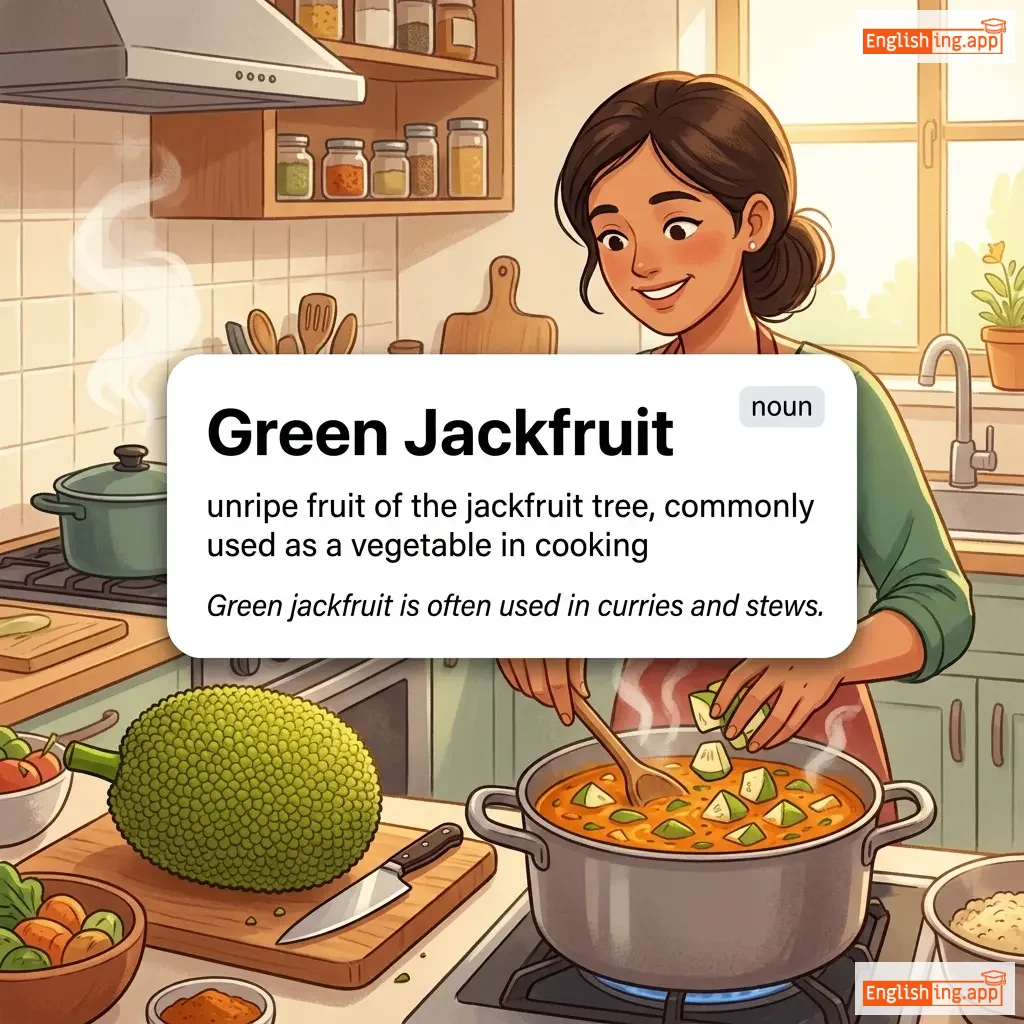
Green Jackfruit definition card — visual illustration of the meaning
noun C2
/ɡriːn ˈdʒækfruːt/
青木瓜 (qīng mùguā)

unripe fruit of the jackfruit tree, commonly used as a vegetable in cooking

"Green jackfruit is often used in curries and stews."
"青木瓜常常用在咖喱和炖菜中。" (qīng mùguā chángcháng yòng zài gālí hé dùn cài zhōng)
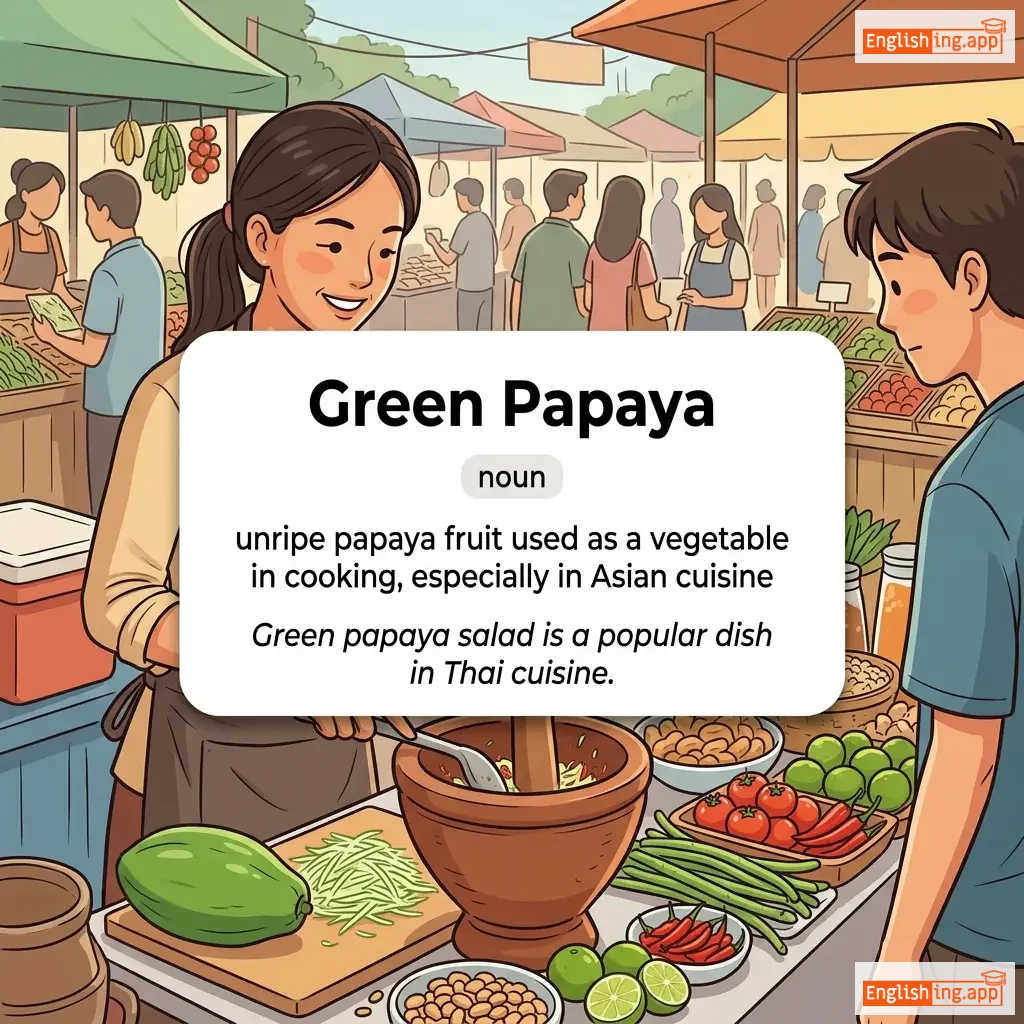
Green Papaya definition card — visual illustration of the meaning
noun C2
/ɡriːn pəˈpaɪə/
青木瓜 (qing mùguā)

unripe papaya fruit used as a vegetable in cooking, especially in Asian cuisine

"Green papaya salad is a popular dish in Thai cuisine."
"青木瓜沙拉是泰国菜中一道受欢迎的菜肴。" (Qing mùguā shālā shì Tàiguó cài zhōng yī dào shòu huānyíng de càiyáo.)
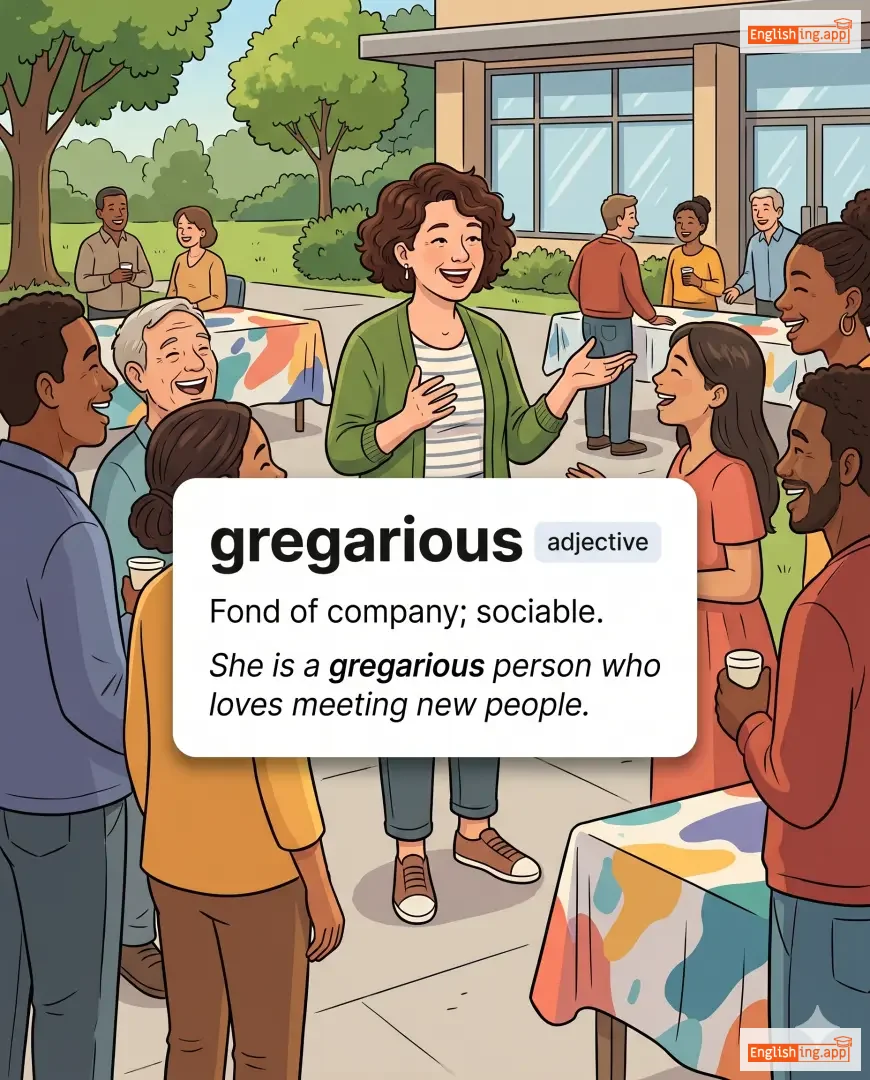
gregarious definition card — visual illustration of the meaning
adjective C2
/ɡrɪˈɡɛəriəs/
好社交 (hao shejiao)

Fond of company; sociable.

"She is a gregarious person who loves meeting new people."

"她是一个好社交的人,喜欢结识新朋友。" (Ta shi yige hao shejiao de ren, xihuan jieshi xin pengyou.)
noun C2
/ˌɡrɛnəˈdɪə/
投弹兵 (tóu dàn bīng)

A soldier who specialized in throwing grenades; later used to describe an elite infantryman.

"The grenadier stood proudly at the front of the regiment."

"投弹兵骄傲地站在队列的前方。" (Tóu dàn bīng jiāo ào de zhàn zài duì liè de qián fāng.)
noun C2
/ˈɡraɪndstoʊn/
磨刀石 (mó dāo shí)

a thick disc of stone used for grinding, sharpening, or polishing tools

"The blacksmith sharpened his blade on the grindstone."

"铁匠在磨刀石上磨快了他的刀片。" (tiě jiàng zài mó dāo shí shàng mó kuài le tā de dāo piàn.)
noun C2
/ˈɡrɑːtoʊ/
洞窟 (dòngkù)

a small picturesque cave, often artificial

"Tourists visited the grotto hidden behind the waterfall."

"游客参观了隐藏在瀑布后的洞窟。" (Yóukè cānguānle yǐncáng zài pùbù hòu de dòngkù.)
noun/verb C2
/ɡraʊtʃ/
抱怨者 (bàoyuàn zhě)

a person who complains a lot or to complain in a grumpy way

"He is such a grouch in the morning before coffee."

"他早上喝咖啡前总是抱怨。" (Tā zǎoshang hē kāfēi qián zǒng shì bào yuàn.)
grouse definition card — visual illustration of the meaning
noun/verb C2
/ɡraʊs/
抱怨 / 一种鸟 (bàoyuàn / yī zhǒng niǎo)

A type of bird; or to complain or grumble persistently.

"He always grouses about the long hours at work."
"他总是抱怨工作时长。" (Tā zǒng shì bàoyuàn gōngzuò shícháng.)
verb C2
/ˈɡrʌvəl/

To act in an excessively humble or submissive way to gain favor.

"He groveled before his boss to avoid punishment."

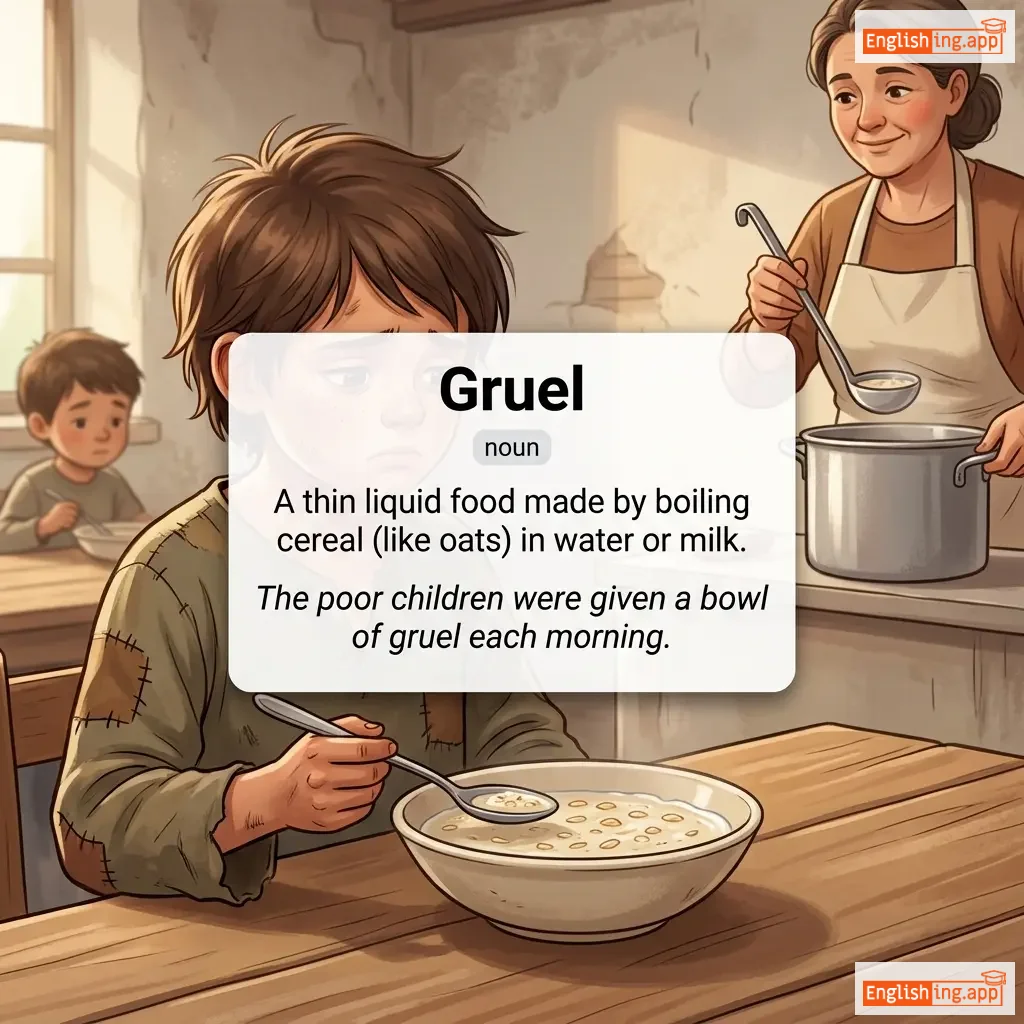
Gruel definition card — visual illustration of the meaning
noun C2
/ˈɡruːəl/
用水或牛奶煮麦片等谷物做成的稀薄流质食物 (yòng shuǐ huò niúnǎi zhǔ mài piàn děng gǔ wù zuò chéng de xī bó liú zhí shí wù)

A thin liquid food made by boiling cereal (like oats) in water or milk.

"The poor children were given a bowl of gruel each morning."

"贫穷的孩子们每天早上都会喝一碗格鲁尔。" (Pínqióng de háizimen měitiān zǎoshang dū huì hē yī wǎn gélǔ'ěr.)
adjective C2
/ɡrʌf/
粗鲁 (cū lǔ)

Rough or stern in manner, speech, or voice.

"Despite his gruff manner, he was very kind-hearted."
"尽管他举止粗鲁,他还是非常善良。" (Jǐnguǎn tā jǔzhǐ cū lǔ, tā háishì fēicháng shànliáng.)
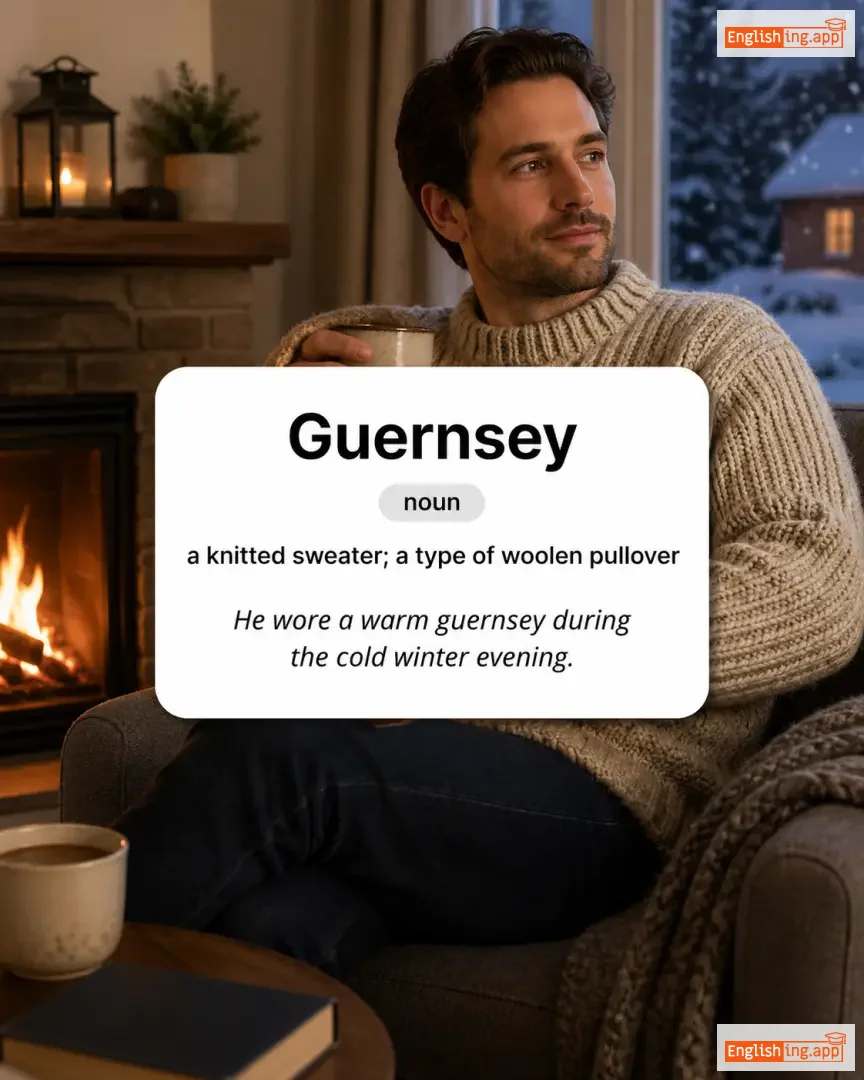
Guernsey definition card — visual illustration of the meaning
noun C2
/ˈɡɜːrn.zi/
毛衣 (maoyi)

a knitted sweater; a type of woolen pullover

"He wore a warm guernsey during the cold winter evening."

"他在寒冷的冬季傍晚穿着一件温暖的毛衣。" (Tā zài hánlěng de dōngjì bàngwǎn chuānzhuó yī jiàn wēnnuǎn de máoyī.)
noun/verb C2
/ɡəˈfɔː/
大笑 (dà xiào)

a loud and boisterous laugh

"The audience guffawed at the comedian’s joke."

"观众因喜剧演员的笑话而大声笑。" (Guānzhòng yīn xǐjù yǎnyuán de xiàohuà ér dà shēng xiào.)
noun C2
/ɡaɪl/
狡猾 (jiǎohuá)

Cleverness or cunning used to achieve a goal, often in a deceptive way

"He used guile to win the negotiation."
"他用狡猾的手段赢得了谈判。" (Tā yòng jiǎohuá de shǒuduàn yíngdéle tánpàn.)
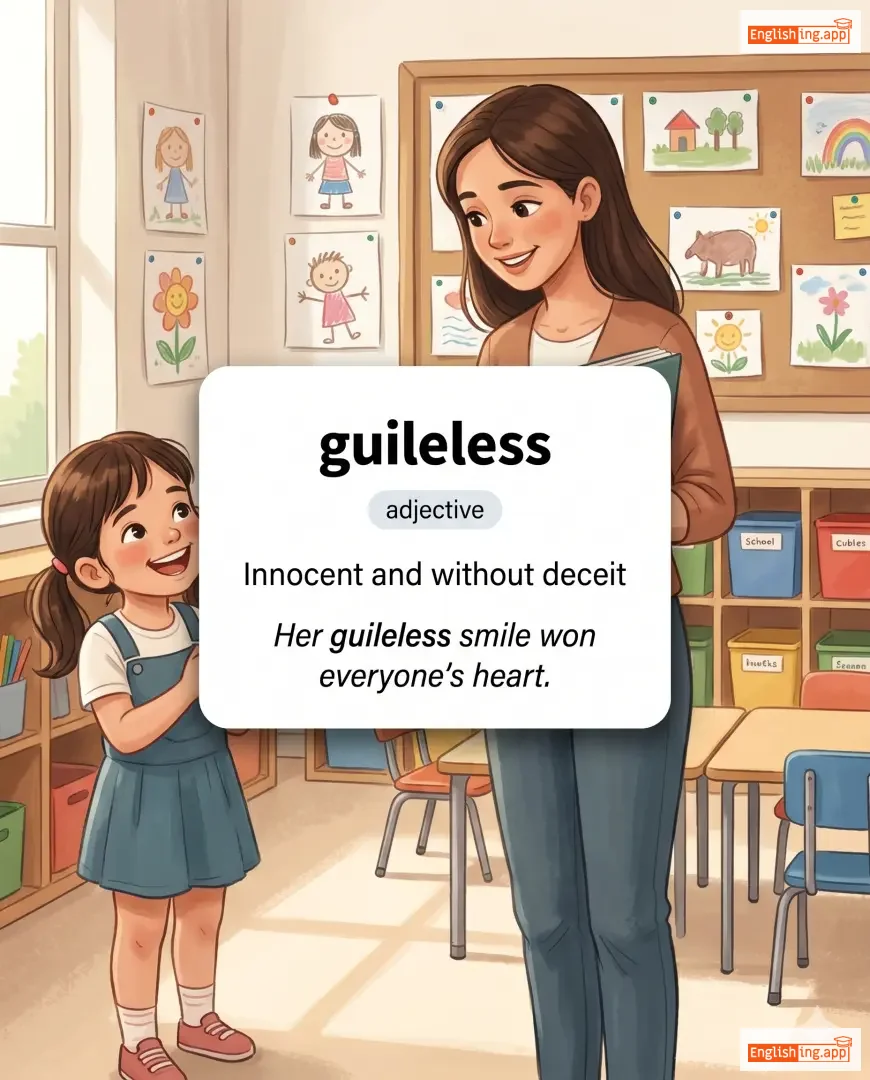
guileless definition card — visual illustration of the meaning
adjective C2
/ˈɡaɪlləs/
天真 (tian zhen)

Innocent and without deceit

"Her guileless smile won everyone’s heart."

"她天真的笑容赢得了所有人的心。" (Ta tian zhen de xiao rong ying de le suo you ren de xin.)
noun C2
/ˈɡɪni/
吉尼 (英国旧金币) (jini)

A former British gold coin; also refers to Guinea, a country in West Africa

"The antique coin was worth one guinea."

"古老的金币价值一个吉尼。" (Gu lao de jinbi jiazhi yige jini.)
noun C2
/ˈɡʌl.i/
沟渠,峡谷 (gōu qú, xiá gǔ)

A narrow channel or ravine worn away by water.

"After the storm, the road was cut by a deep gully."

"暴风雨过后,路被一个深深的沟渠切割。" (Bàofēngyǔ guò hòu, lù bèi yīgè shēn shēn de gōu qú qiē gē.)
noun C2
/ˈɡʌmp.ʃən/
勇气, 创新 (yǒngqì, chuàngxīn)

Courage, resourcefulness, or initiative.

"It takes real gumption to start your own business."
"创业需要真正的勇气。" (Chuàngyè xūyào zhēnzhèng de yǒngqì.)
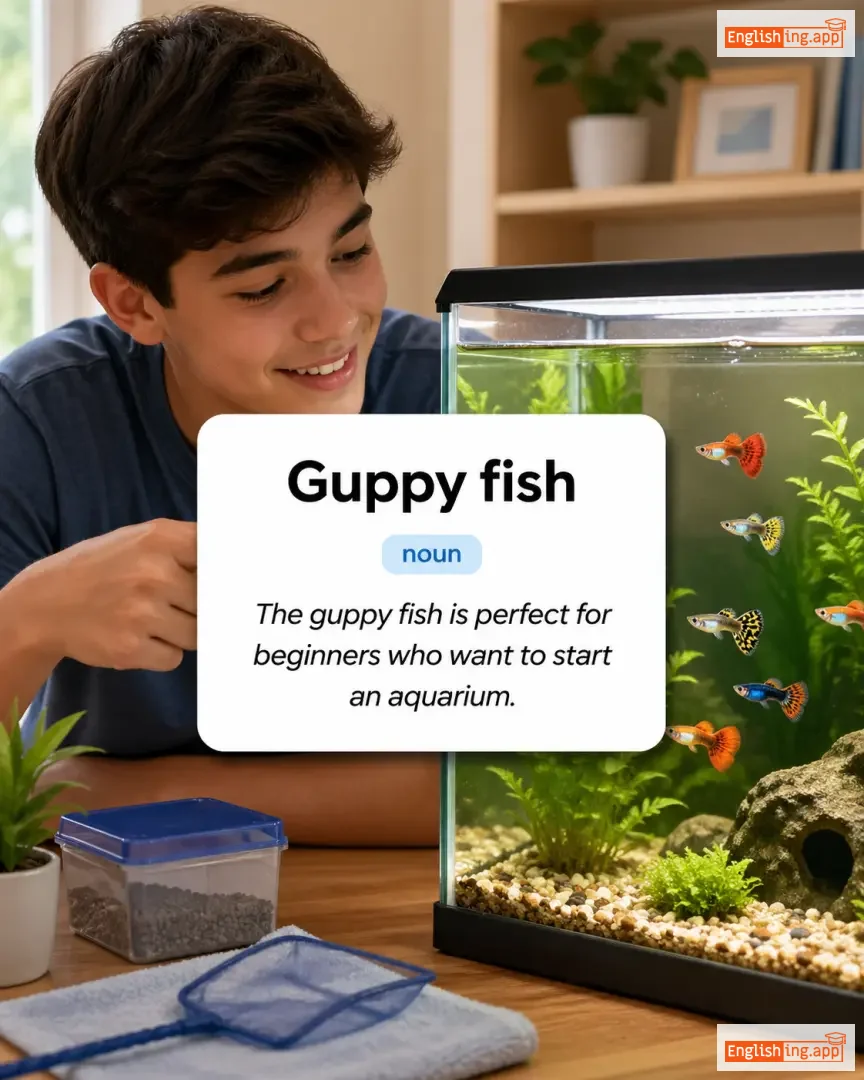
Guppy fish definition card — visual illustration of the meaning
noun C2
/ˈɡʌp.i fɪʃ/
孔雀鱼 (kong que yu)

a small colorful freshwater fish popular in aquariums, known for its vibrant colors and easy breeding

"The guppy fish is perfect for beginners who want to start an aquarium."
"孔雀鱼非常适合想要开始水族箱的初学者。" (kong que yu fei chang shi he xiang yao kai shi shui zu xiang de chu xue zhe)
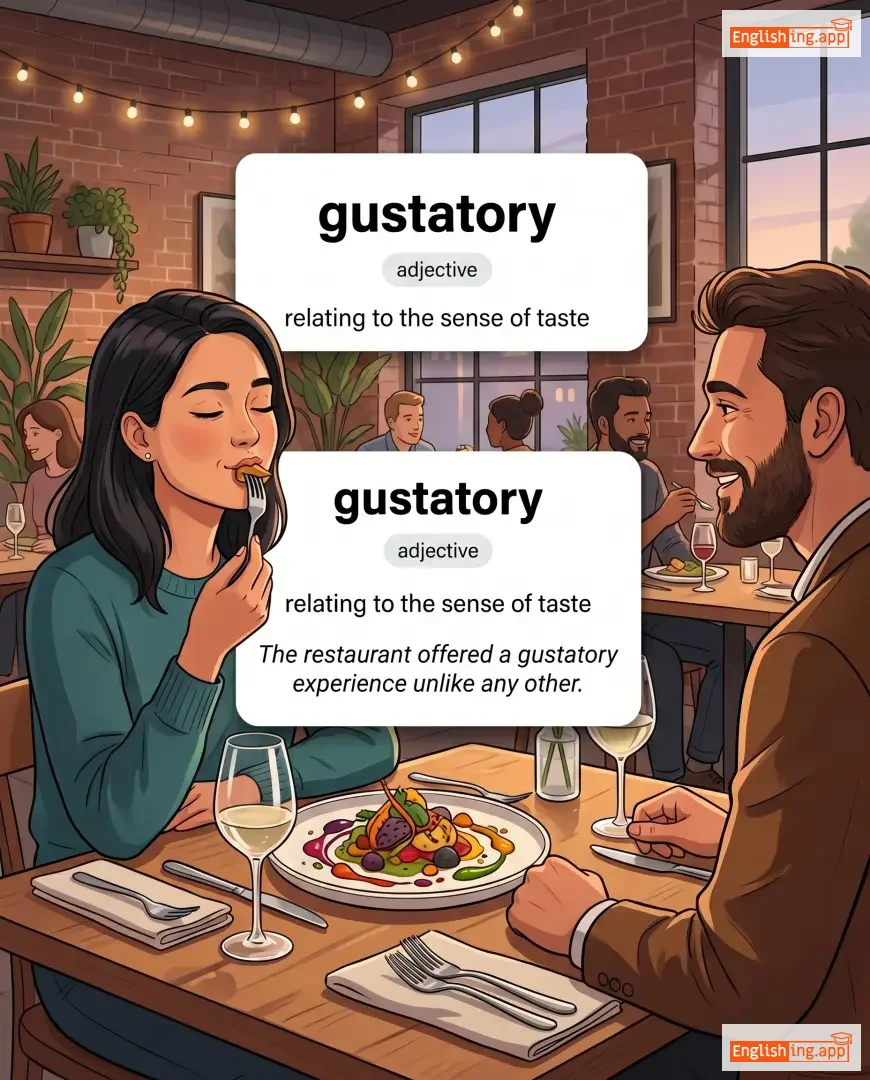
gustatory definition card — visual illustration of the meaning
adjective C2
/ˈɡʌstəˌtɔːri/
味觉的 (weijue de)

relating to the sense of taste

"The restaurant offered a gustatory experience unlike any other."

"餐厅提供了与众不同的味觉体验。" (Cāntīng tígōngle yǔ zhòng bùtóng de wèijué tǐyàn.)
verb C2
/ˈɡʌzəl/
贪婪地喝 (tān lán de hē)

to drink greedily or excessively

"He guzzled three cans of soda in a few minutes."

"他在几分钟内喝掉了三罐苏打水。" (Tā zài jǐ fēnzhōng nèi hē diào le sān guàn sūdǎ shuǐ.)
noun C2
/ˌɡaɪnəˈkɒkrəsi/
女权政治 (nüquán zhèngzhì)

a society or government ruled by women

"The ancient tribe was known for its gynecocracy, where women held all positions of power."

"这个古老的部落因其女权政治而闻名,在那里女性掌握了所有的权力职位。" (Zhège gǔlǎo de bùluò yīn qí nǚquán zhèngzhì ér wénmíng, zài nàlǐ nǚxìng zhǎngwòle suǒyǒu de quánlì zhíwèi.)
verb C2
/ˈdʒaɪreɪt/
快速旋转 (kuaisu xuanzhuan)

to move or spin quickly in circles

"The dancer gyrated wildly to the rhythm of the drums."
"舞者随着鼓点疯狂旋转。" (Wǔzhě suízhe gǔdiǎn fēngkuáng xuánzhuǎn.)
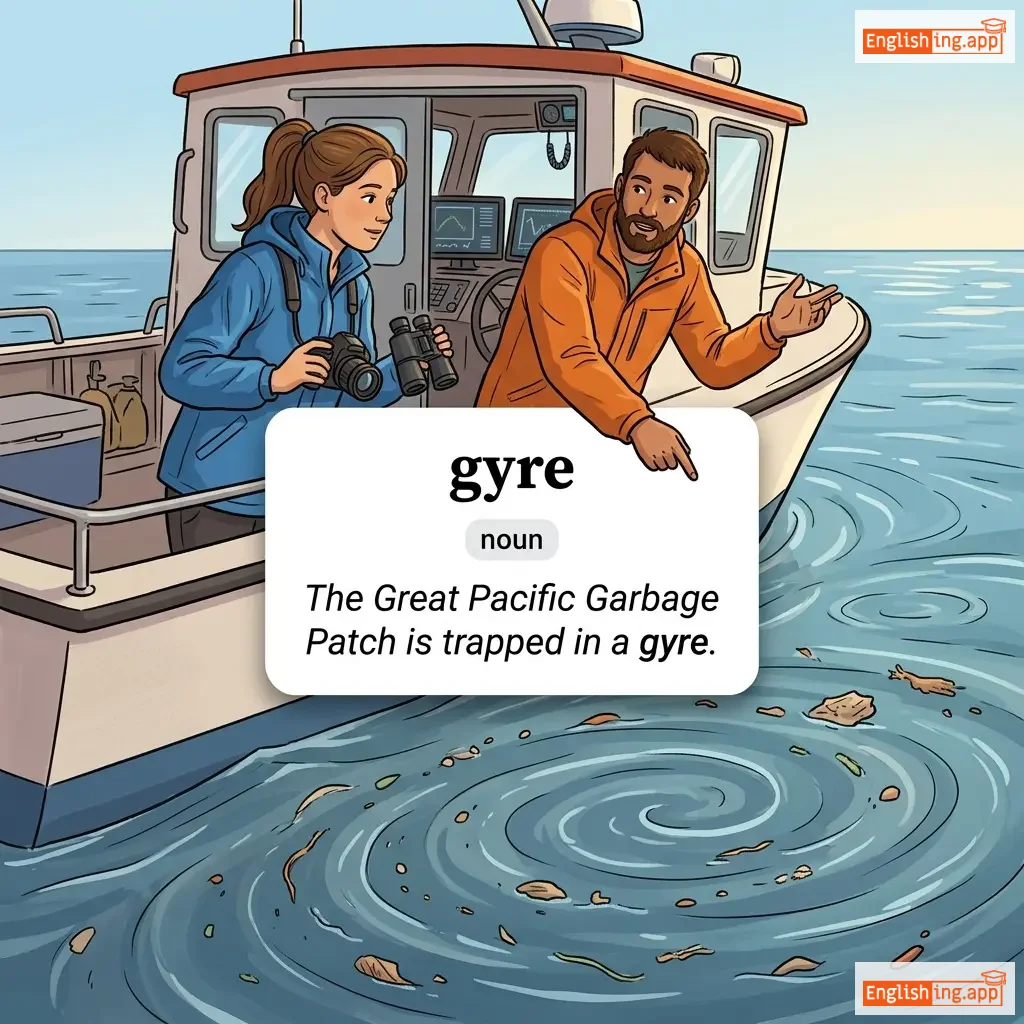
gyre definition card — visual illustration of the meaning
noun C2
/ˈdʒaɪər/
旋涡, 圆形海洋表面水流 (xuanwo, yuanxing haiyang biaomian shuili)

A circular or spiral motion or form, especially a giant circular oceanic surface current.

"The Great Pacific Garbage Patch is trapped in a gyre."
"太平洋垃圾带被困在旋涡中。" (Taipingyang laji dai bei kun zai xuanwo zhong.)
noun C2
/ˈdʒaɪrəˌskoʊp/

A device consisting of a wheel or disk mounted so it can spin rapidly and maintain orientation, used for navigation and balance.

"The airplane's navigation system relies on a gyroscope for stability."

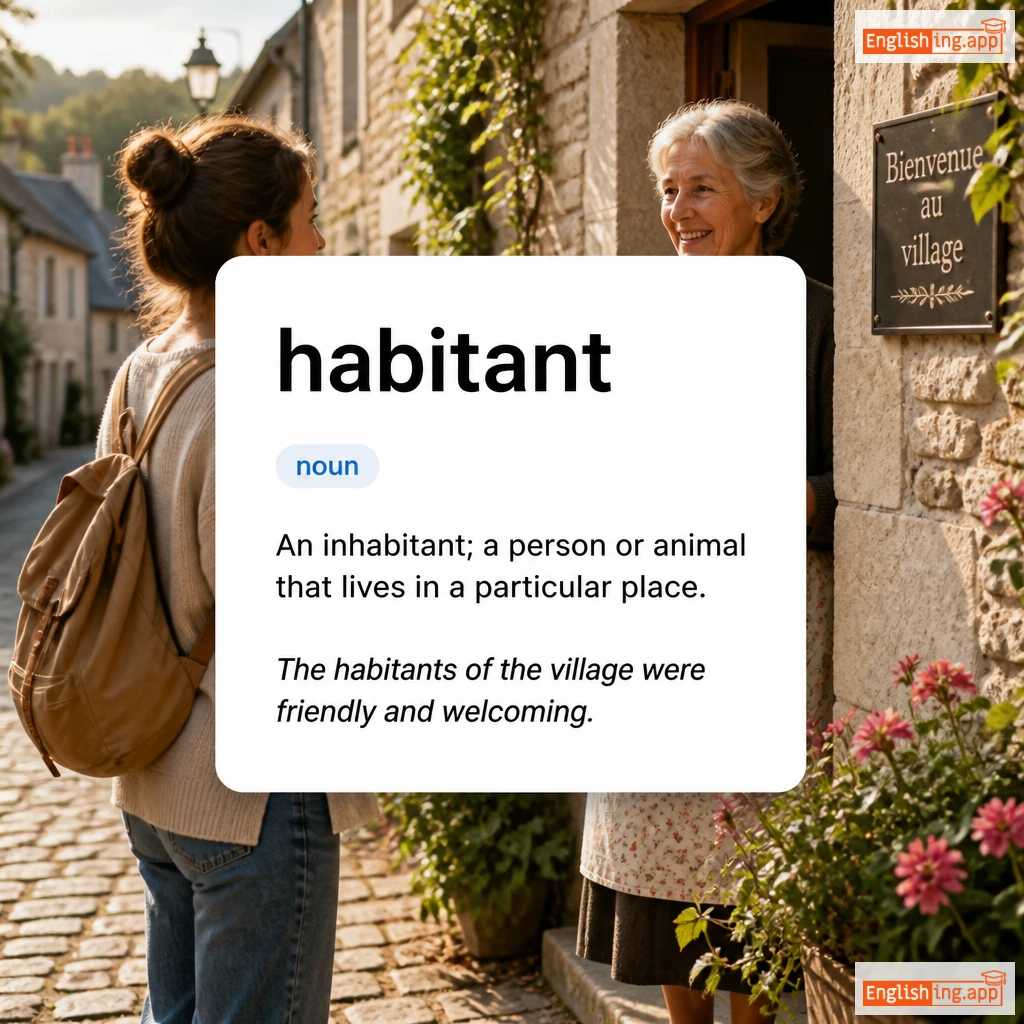
habitant definition card — visual illustration of the meaning
👨‍👩‍👧‍👦

habitant (hàbìtènt)

noun C2
/ˈhæbɪtənt/
居民 (jūmín)

An inhabitant; a person or animal that lives in a particular place.

"The habitants of the village were friendly and welcoming."
"村庄的居民友好而热情。" (Cūnzhuāng de jūmín yǒuhǎo ér rèqíng.)
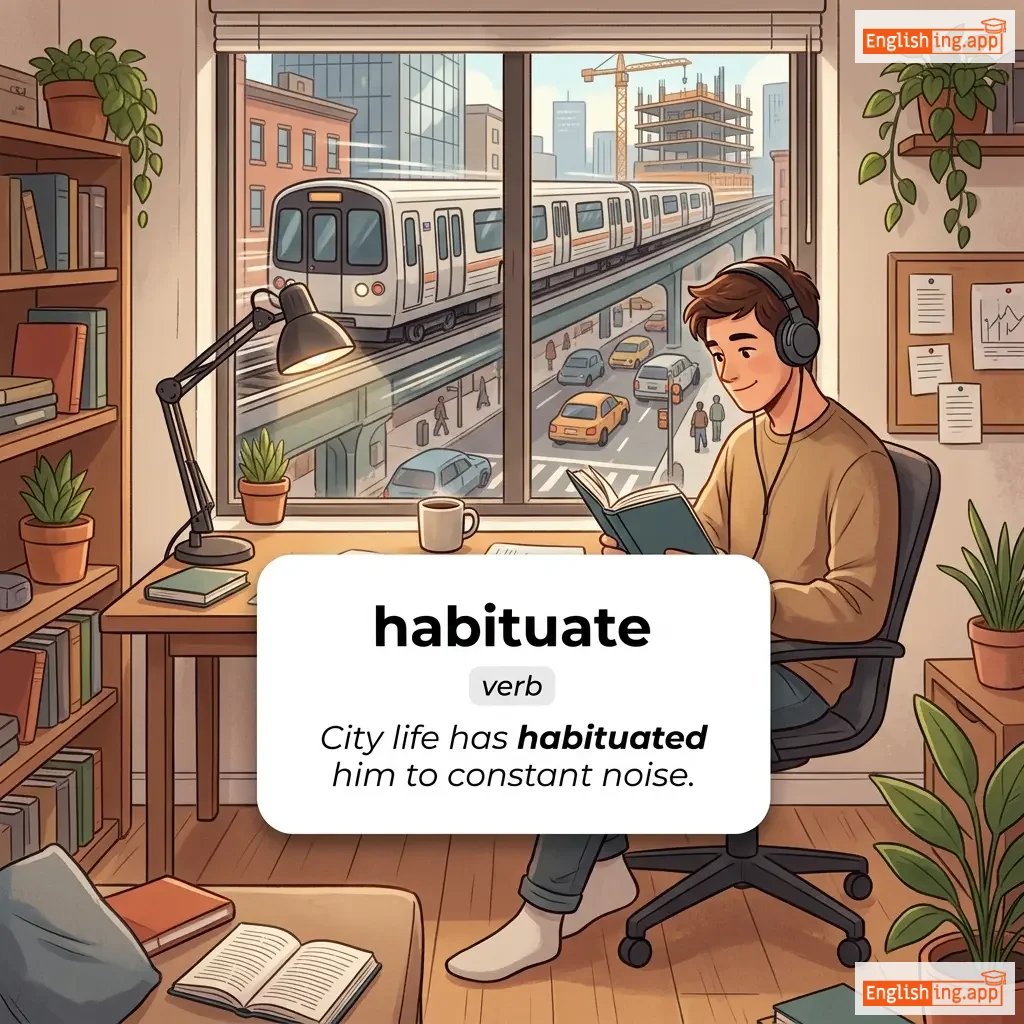
habituate definition card — visual illustration of the meaning
verb C2
/həˈbɪtʃueɪt/
使习惯 (shi xiguan)

to accustom someone or oneself to something through frequent exposure or experience

"City life has habituated him to constant noise."

"城市生活使他习惯了持续的噪音。" (Chengshi shenghuo shi ta xiguanle chixu de zaoyin.)
noun C2
/ˈhæbɪtjuːd/
习惯,风俗 (xíguàn, fēngsú)

a customary condition or mode of life; habitual practice

"He lived in a quiet habitude, avoiding the noise of the city."

"他生活在一种安静的习惯中,避开城市的喧嚣。" (Tā shēnghuó zài yī zhǒng ānjìng de xíguàn zhōng, bìkāi chéngshì de xuānxiāo.)
noun C2
/ˈhækəlz/

the hairs on the back of an animal’s neck that rise when it is angry or alarmed; figuratively, feelings of anger or resentment

"His rude comment raised my hackles."

noun C2
/ˈhæknɪ/
出租马, 陈腐 (chuzu ma, chenfu)

a horse kept for ordinary riding or hire; also used for something overused or trite

"The old hackney was still pulling the carriage."
"那匹旧出租马仍然拉着马车。" (Na pi jiu chuzu ma rengran la zhe mache.)
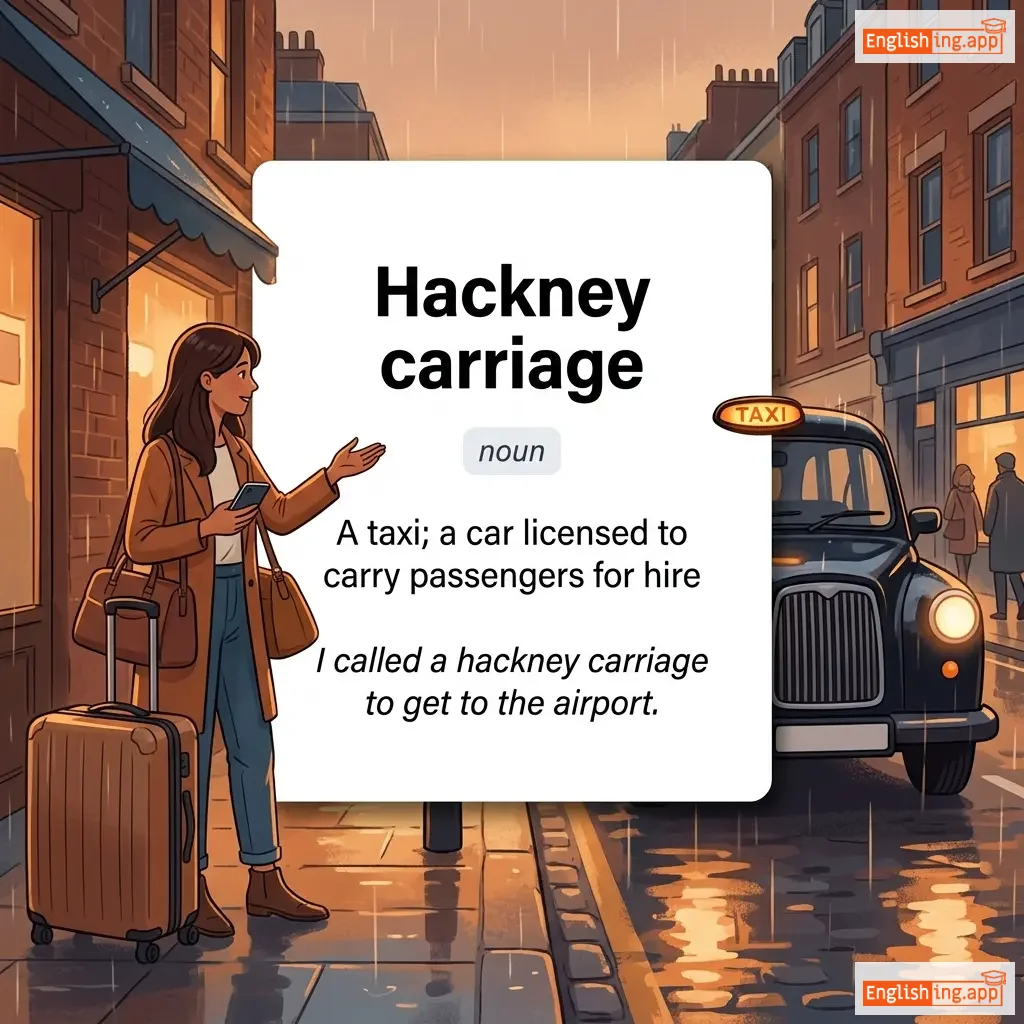
Hackney carriage definition card — visual illustration of the meaning
noun C2
/ˈhæk.ni ˈkær.ɪdʒ/
出租车 (chūzūchē)

A taxi; a car licensed to carry passengers for hire

"I called a hackney carriage to get to the airport."

"我叫了一辆出租车去机场。" (Wǒ jiào le yī liàng chūzūchē qù jīchǎng.)
🧙‍♀️

Hag (hāgé)

noun C2
/hæɡ/
巫婆 (wūpó)

an ugly old woman, especially a vicious or malicious one; a witch

"In the fairy tale, the wicked hag lived alone in a cottage deep in the forest."

"在这个童话故事中,邪恶的巫婆独自生活在森林深处的小屋里。" (Zài zhège tónghuà gùshì zhōng, xié'è de wūpó dúzì shēnghuó zài sēnlín shēnchù de xiǎowū lǐ.)
adjective C2
/ˌhæɡ.i.əˈɡræf.ɪk/
过度恭维的 (guòdù gōngwéi de)

Excessively flattering or idealized, often in a biography or portrayal of someone.

"The documentary was criticized for its hagiographic portrayal of the leader."
"这部纪录片因其对领导者的过度恭维描写而受到批评。" (Zhè bù jìlùpiàn yīn qí duì lǐngdǎo zhě de guòdù gōngwéi miáoxiě ér shòudào pīpíng.)
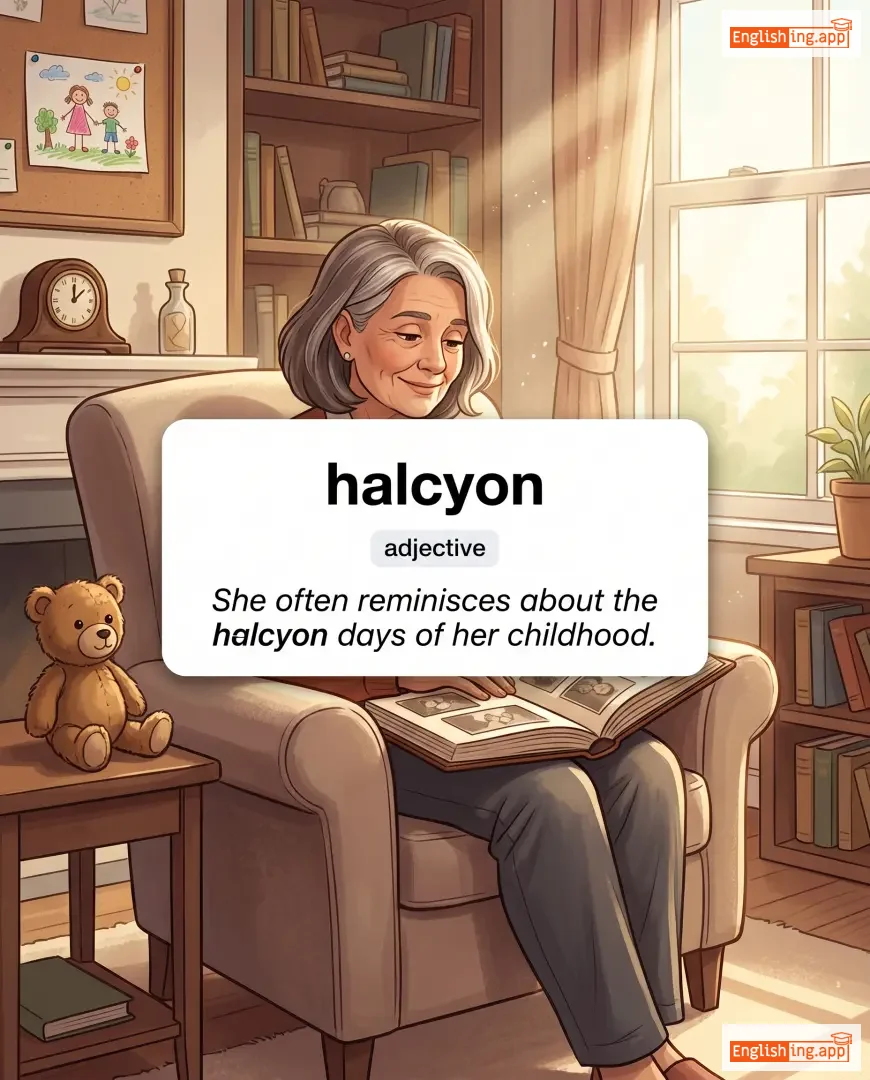
halcyon definition card — visual illustration of the meaning
adjective C2
/ˈhæl.si.ən/
宁静的 (níngjìng de)

calm, peaceful, and happy; denoting a period of time in the past that was idyllically happy and peaceful

"She often reminisces about the halcyon days of her childhood."

"她经常回忆起她童年时宁静的日子。" (Tā jīngcháng huíyì qǐ tā tóngnián shí níngjìng de rìzi.)
adjective C2
/heɪl/
健康 (jiànkāng)

strong and healthy, especially of an elderly person

"Despite his age, the man remained hale and active."

"尽管他的年龄,他依然保持健康和活跃。" (Jǐnguǎn tā de niánlíng, tā yīrán bǎochí jiànkāng hé huóyuè.)
adjective C2
/ˌhæfˈbeɪkt/
半生不熟 (ban sheng bu shu)

poorly thought out or badly planned

"The manager quickly rejected his half-baked proposal."

"经理迅速拒绝了他半生不熟的提案。" (Jingli xunsu jujue le ta ban sheng bu shu de ti'an.)
adjective C2
/ˌhæfˈhɑːr.tɪd/
半心半意 (banxinbanyi)

lacking enthusiasm or determination; unenthusiastic

"His halfhearted attempt to study did not bring good results."

"他半心半意的学习尝试没有带来好结果。" (Ta banxinbanyi de xuexi changshi meiyou dalai hao jieguo.)
verb C2
/ˈhæloʊ/
神圣化 (shenshenghua)

to honor as holy; to make sacred or greatly respected

"The ancient temple was hallowed by centuries of worship."

"古老的寺庙因几百年的崇拜而被神圣化。" (Gulao de simiao yin jiban nian de chongbai er bei shenshenghua.)
adjective C2
/ˈhæm ˌhændɪd/
笨拙 (bènzhuō)

clumsy or inept in handling things or situations

"His ham-handed attempt to fix the computer made it worse."

"他笨拙的修理电脑的尝试反而使情况更糟。" (Tā bènzhuō de xiūlǐ diànnǎo de chángshì fǎn'ér shǐ qíngkuàng gèng zāo.)
noun, verb C2
/ˈhæmstrɪŋ/
大腿后部的肌腱; 作为动词,限制或严重削弱某人或某物的效能 (dàtuǐ hòubù de jījiàn; zuòwéi dòngcí, xiànzhì huò yánzhòng xuēruò mǒurén huò mǒuwù de xiàonéng)

a tendon at the back of the thigh; as a verb, to cripple or severely restrict the effectiveness of someone or something.

"Budget cuts hamstrung the organization’s plans."

"预算削减削弱了该组织的计划。" (yùsuàn xuējiǎn xuēruòle gāi zǔzhī de jìhuà.)
verb (past tense, past participle), adjective C2
/ˈhæmstrʌŋ/
瘫痪或受限 (tānhuàn huò shòuxiàn)

crippled or severely restricted in movement or progress.

"The team was hamstrung by lack of resources."

"由于资源匮乏,团队陷入困境。" (Yóuyú zīyuán kuìfá, tuánduì xiànrù kùnjìng.)
noun C2
/ˈhænd ˌrɪŋɪŋ/
过度担忧 (guòdù dānyōu)

excessive worry or concern expressed in a visible or dramatic way.

"There was much hand-wringing over the political crisis."

"关于政治危机有很多戏剧性的担忧。" (Guānyú zhèngzhì wēijī yǒu hěn duō xìjùxìng de dānyōu.)
adjective C2
/ˈhæŋ.dɔːɡ/
尴尬 (gāngà)

looking or feeling ashamed, guilty, or defeated.

"He gave me a hangdog look after being caught lying."

"他在被抓到撒谎后,给了我一个尴尬的表情。" (Tā zài bèi zhuā dào sāhuǎng hòu, gěile wǒ yīgè gāngà de biǎoqíng.)
noun C2
/ˌhæŋ.ər ˈɒn/
跟班 (genban)

a person who spends time with a powerful or famous person to gain benefits.

"The celebrity was always surrounded by hangers-on."

"这位名人总是被跟班围绕着。" (zhè wèi míngrén zǒng shì bèi gēnbān wéirào zhe.)
noun C2
/ˈhæŋ.kər/
渴望, 欲望 (kewang, yuwang)

a feeling of yearning or craving; a strong desire for something

"After years abroad, she developed a deep hanker for her homeland's traditional cuisine."

"在国外多年后,她产生了对家乡传统美食的深深渴望。" (Zai guowai duonian hou, ta chansheng le dui jiaxiang chuantong meishi de shenshen kewang.)
noun C2
/ˈhæŋ.kər.ɪŋ/
渴望 (kewang)

a strong desire or craving for something.

"She had a hankering for chocolate late at night."

"她深夜时对巧克力有了强烈的渴望。" (Tā shēn yè shí duì qiǎokèlì yǒule qiángliè de kewàng.)
noun C2
/ˌhæŋ.ki ˈpæŋ.ki/
欺诈; 可疑活动; 不道德行为; 欺骗 (qizha; keyi huodong; budaode xingwei; qipian)

dishonest or suspicious activity; unethical behavior; trickery or deception

"The audit revealed some hanky-panky in the company's financial records."

"审计揭示了公司财务记录中的一些欺诈行为。" (shenji jieshi le gongsi caiwu jilu zhong de yixie qizha xingwei.)
noun C2
/hæp/
运气,幸运,偶然 (yunqi, xingyun, ouran)

luck, fortune, or chance occurrence

"By sheer hap, he discovered the old letter hidden in the drawer."

"凭借运气,他发现了藏在抽屉里的旧信。" (Pingjie yunqi, ta faxianle cang zai chouzi li de jiu xin.)