词汇表

英语词汇词典 | 单词含义、定义和示例

noun C2
/ˌɛksɪˈɡjuːɪti/
escasez (escasez)

the quality of being scanty or meager in amount

"The exiguity of resources made the project difficult to complete."

"La escasez de recursos hizo que el proyecto fuera difícil de completar." (La escasez de recursos hizo que el proyecto fuera difícil de completar.)
adjective C2
/ɛɡˈzɪɡjuəs/
escaso (escaso)

small in amount; scanty or inadequate

"They survived on exiguous rations during the journey."

"Sobrevivieron con raciones exiguas durante el viaje." (Sobrevivieron con raciones escasas durante el viaje.)
noun C2
/ɪɡˈzɔːrbɪtəns/
exorbitancia (exorbitancia)

The quality of being excessive, unreasonable, or going beyond proper limits.

"The exorbitance of the hotel's prices shocked the tourists."
"La exorbitancia de los precios del hotel sorprendió a los turistas." (La exorbitancia de los precios del hotel sorprendió a los turistas.)
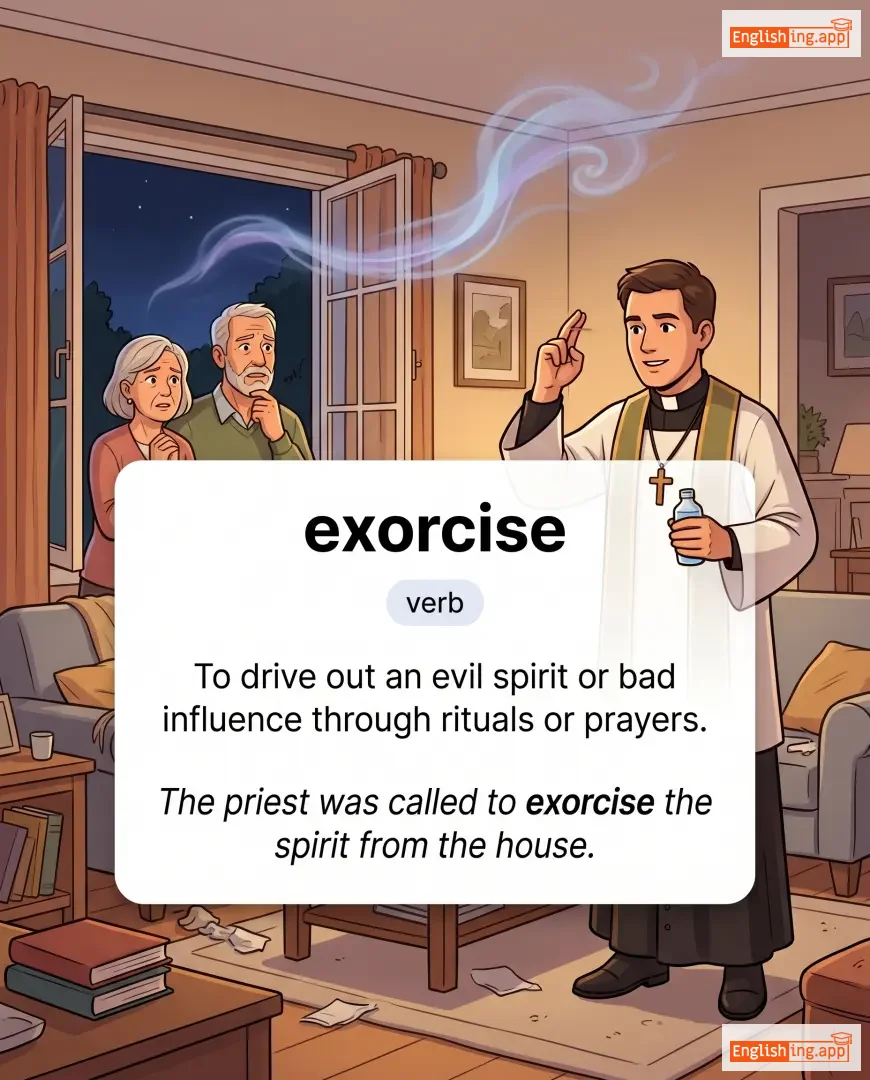
exorcise definition card — visual illustration of the meaning
verb C2
/ˈeksɔːrsaɪz/
exorcizar (exorcizar)

To drive out an evil spirit or bad influence through rituals or prayers.

"The priest was called to exorcise the spirit from the house."
"Se llamó al sacerdote para exorcizar el espíritu de la casa." (Se llamo al sacerdote para exorcizar el espiritu de la casa.)
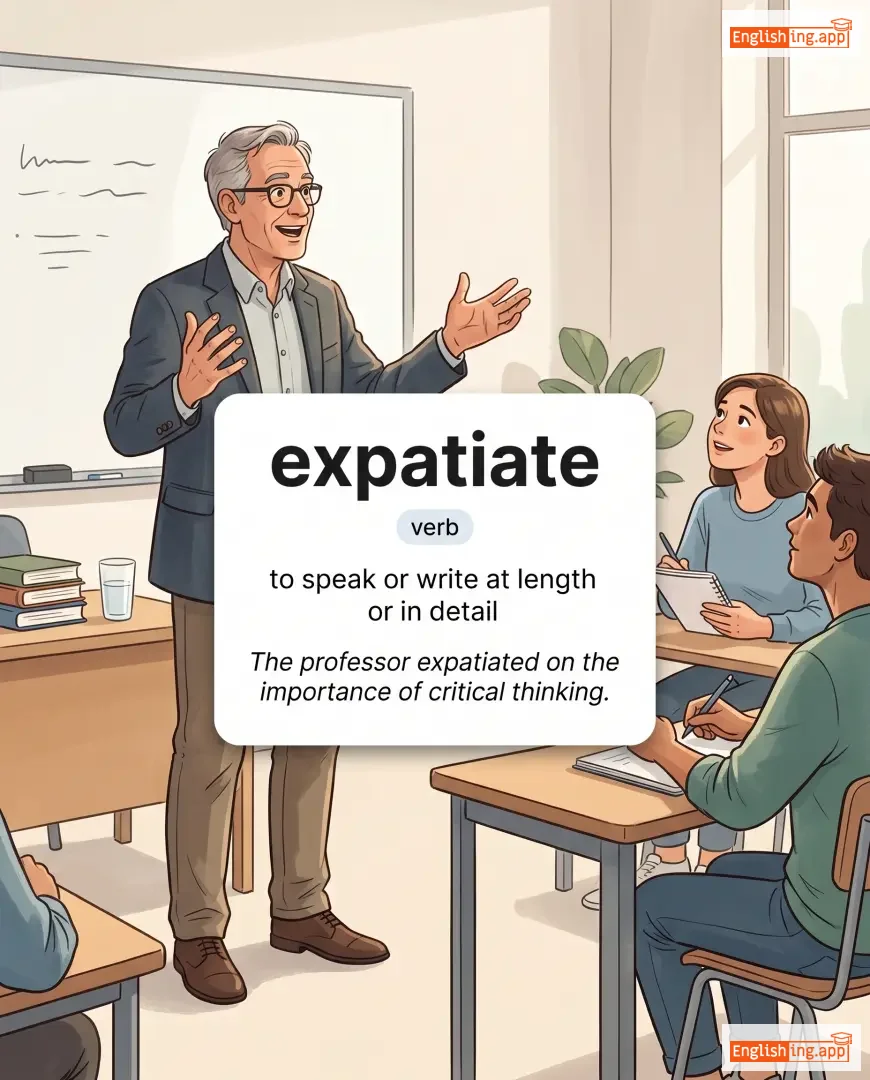
expatiate definition card — visual illustration of the meaning
verb C2
/ɪkˈspeɪʃiˌeɪt/
hablar o escribir en detalle (hablar o escribir en detalle)

to speak or write at length or in detail

"The professor expatiated on the importance of critical thinking."

"El profesor expuso en detalle la importancia del pensamiento crítico." (El profesor expuso en detalle la importancia del pensamiento crítico.)
verb C2
/ɪkˈspɛktəreɪt/
expectorar (expectorar)

to cough up and spit out mucus from the throat or lungs

"The patient began to expectorate thick mucus."

"El paciente comenzó a expectorar mucosidad espesa." (El paciente comenzó a expectorar mucosidad espesa.)
noun C2
/ɪkˈspiːdiənsi/
conveniencia (conveniencia)

the quality of being convenient and practical despite possibly being improper or immoral

"He acted out of political expediency rather than principle."
"Actuó por conveniencia política más que por principio." (Actuó por conveniencia política más que por principio.)
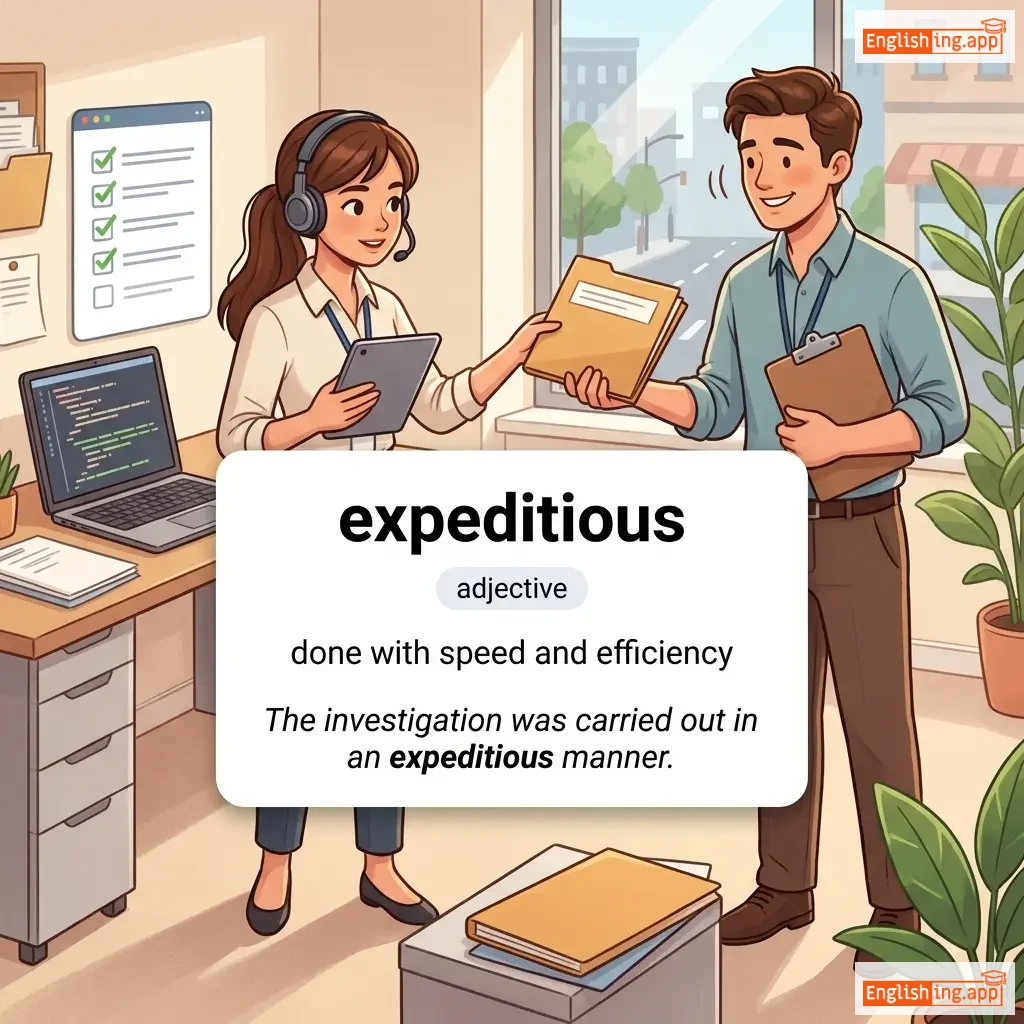
expeditious definition card — visual illustration of the meaning
adjective C2
/ˌɛkspəˈdɪʃəs/
rápido y eficiente (rapido y eficiente)

done with speed and efficiency

"The investigation was carried out in an expeditious manner."

"La investigación se llevó a cabo de manera rápida y eficiente." (La investigacion se llevo a cabo de manera rapida y eficiente.)
adverb C2
/ˌɛkspəˈdɪʃəsli/
de manera rápida y eficiente (de manera rapida y eficiente)

in a quick and efficient manner

"The application was processed expeditiously."
"La solicitud fue procesada de manera rápida y eficiente." (La solicitud fue procesada de manera rapida y eficiente.)
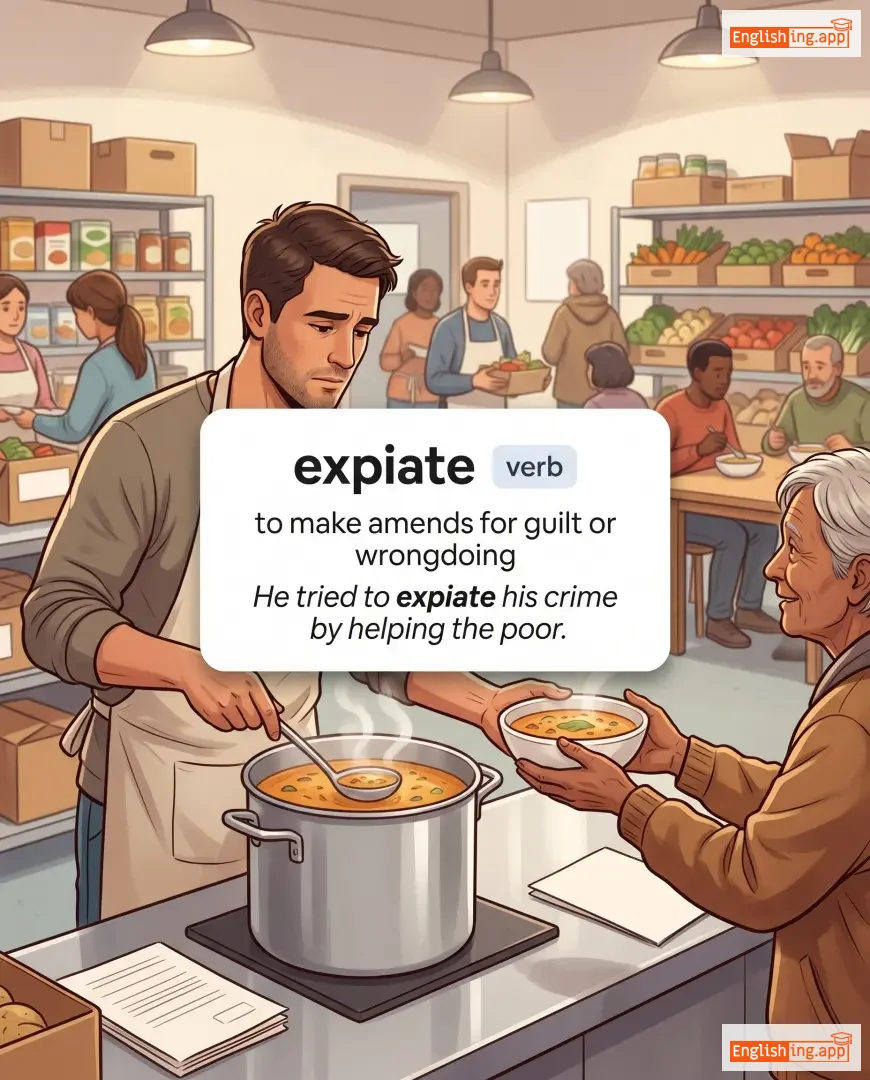
expiate definition card — visual illustration of the meaning
verb C2
/ˈɛkspieɪt/
expiar (eks-piar)

to make amends for guilt or wrongdoing

"He tried to expiate his crime by helping the poor."

"Él trató de expiar su crimen ayudando a los pobres." (El trato de eks-piar su kri-men ayu-dan-do a los po-bres.)
noun C2
/ˈɛksplətɪv/
palabra ofensiva (palabra ofensiva)

a word or phrase used as an exclamation, often offensive or profane

"He shouted an expletive when he dropped the hammer on his foot."

"Él gritó una palabra ofensiva cuando dejó caer el martillo sobre su pie." (El gritó una palabra ofensiva cuando dejó caer el martillo sobre su pie.)
adjective C2
/ˈɛksplɪkəbəl/
explicable (explicable)

able to be explained or understood

"His sudden anger was explicable given the stressful situation."
"Su enojo repentino fue explicable dada la situación estresante." (Su enojo repentino fue explicable dada la situación estresante.)
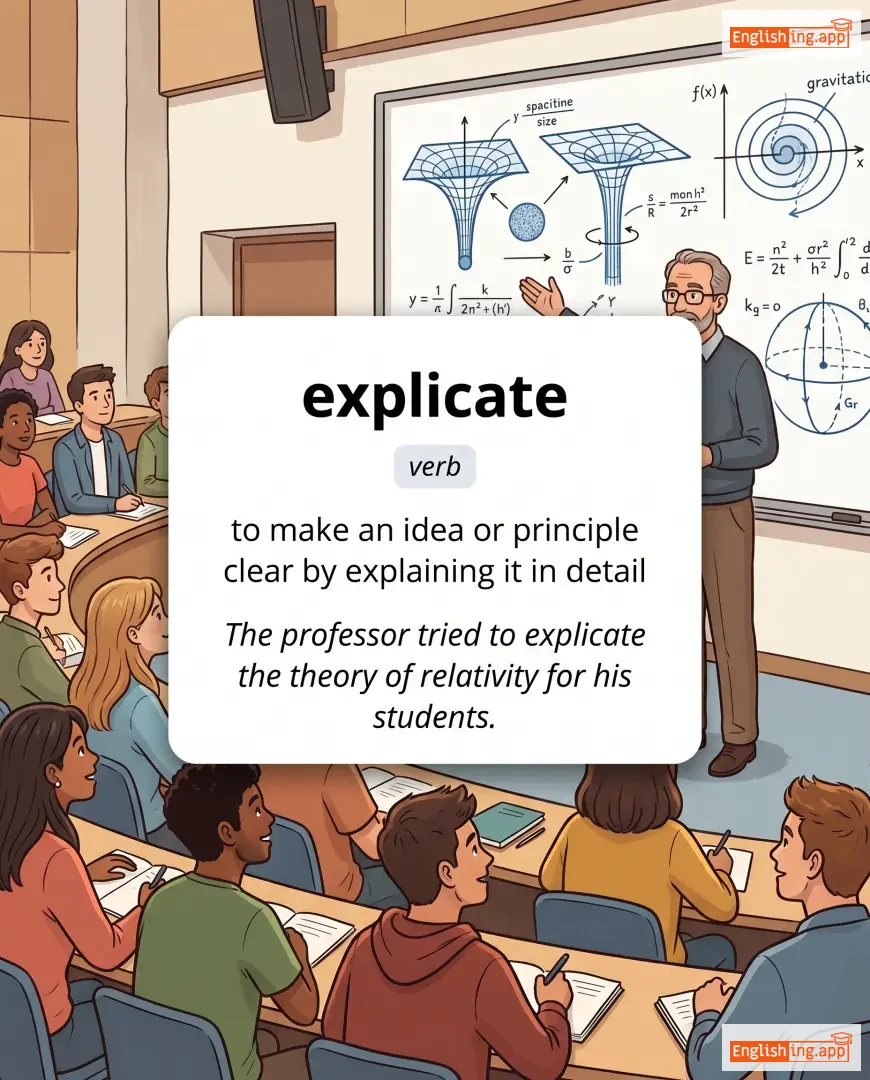
explicate definition card — visual illustration of the meaning
verb C2
/ˈɛksplɪkeɪt/
explicar (explicar)

to make an idea or principle clear by explaining it in detail

"The professor tried to explicate the theory of relativity for his students."

"El profesor intentó explicar la teoría de la relatividad para sus estudiantes." (El profesor intentó explicar la teoría de la relatividad para sus estudiantes.)
noun C2
/ˈɛksplɪkeɪtər/
explicador (explicador)

a person who explains or interprets something in detail

"The critic served as an explicator of the poet’s complex works."
"El crítico sirvió como un explicador de los complejos trabajos del poeta." (El critico sirvio como un explicador de los complejos trabajos del poeta.)
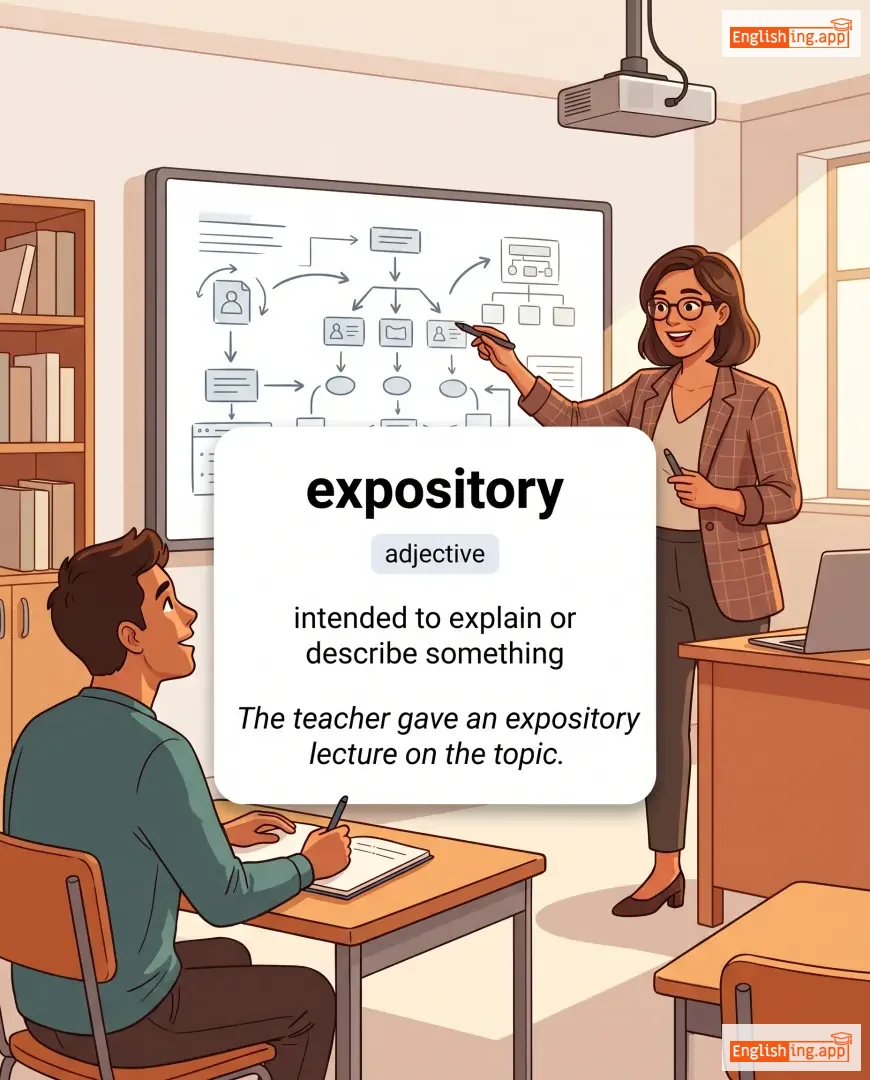
expository definition card — visual illustration of the meaning
adjective C2
/ɪkˈspɒzɪtəri/
expositivo (expositivo)

intended to explain or describe something

"The teacher gave an expository lecture on the topic."

"El maestro dio una conferencia expositiva sobre el tema." (El maestro dio una conferencia expositiva sobre el tema.)
verb C2
/ɪkˈspɒstjʊleɪt/
expresar desacuerdo (expresar desacuerdo)

to express strong disapproval or disagreement

"She expostulated with her friend about the risky decision."

"Ella expuso su desacuerdo con su amigo sobre la decisión arriesgada." (Ella expuso su desacuerdo con su amigo sobre la decisión arriesgada.)
noun C2
/ɪkˌspɒstjʊˈleɪʃən/
protesta (protesta)

the act of expressing protest or disagreement

"His expostulation against the unfair rules was ignored."
"Su protesta contra las reglas injustas fue ignorada." (Su protesta contra las reglas injustas fue ignorada.)
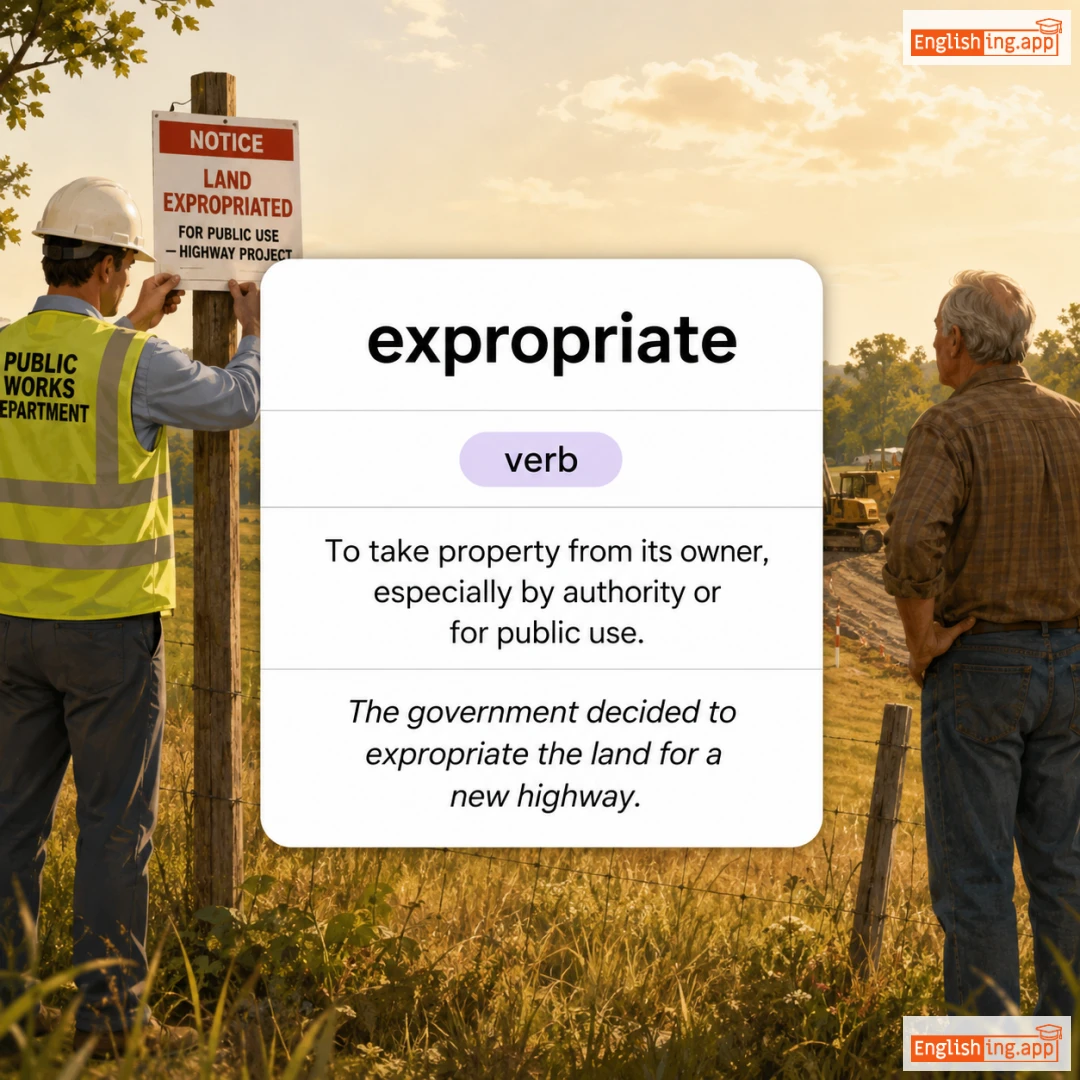
expropriate definition card — visual illustration of the meaning
verb C2
/ɛksˈproʊprieɪt/
expropiar (ekspropiar)

To take property from its owner, especially by authority or for public use.

"The government decided to expropriate the land for a new highway."
"El gobierno decidió expropiar la tierra para una nueva carretera." (El gobierno decidió expropiar la tierra para una nueva carretera.)
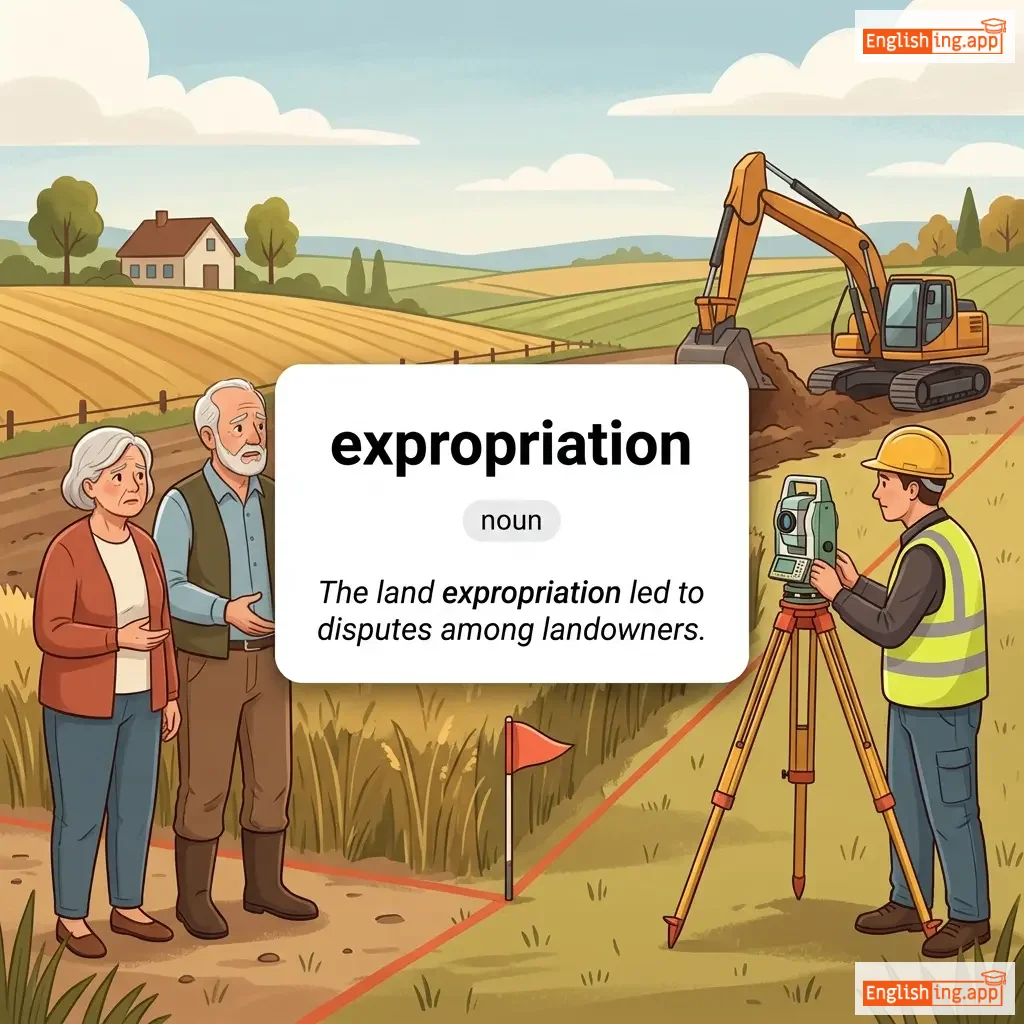
expropriation definition card — visual illustration of the meaning
noun C2
/ɪkˌsprəʊ.priˈeɪ.ʃən/
expropiación (expropiacion)

The act of government taking private property, also known as confiscation, nationalization, or seizure.

"The land expropriation led to disputes among landowners."

"La expropiación de tierras llevó a disputas entre los propietarios de tierras." (La expropiacion de tierras llevo a disputas entre los propietarios de tierras.)
verb C2
/ɪkˈspʌndʒ/
eliminar (eliminar)

To erase or remove completely, often something unwanted.

"He managed to expunge the embarrassing memory from his mind."

"Él logró eliminar el vergonzoso recuerdo de su mente." (El logro eliminar el vergonzoso recuerdo de su mente.)
verb C2
/ˈekspərˌɡeɪt/
expurgar (expurgar)

To remove offensive or objectionable parts from a text or speech.

"The publisher decided to expurgate the novel before reprinting it."
"El editor decidió expurgar la novela antes de volver a imprimirla." (el editor decidio expurgar la novela antes de volver a imprimirla)
extant definition card — visual illustration of the meaning
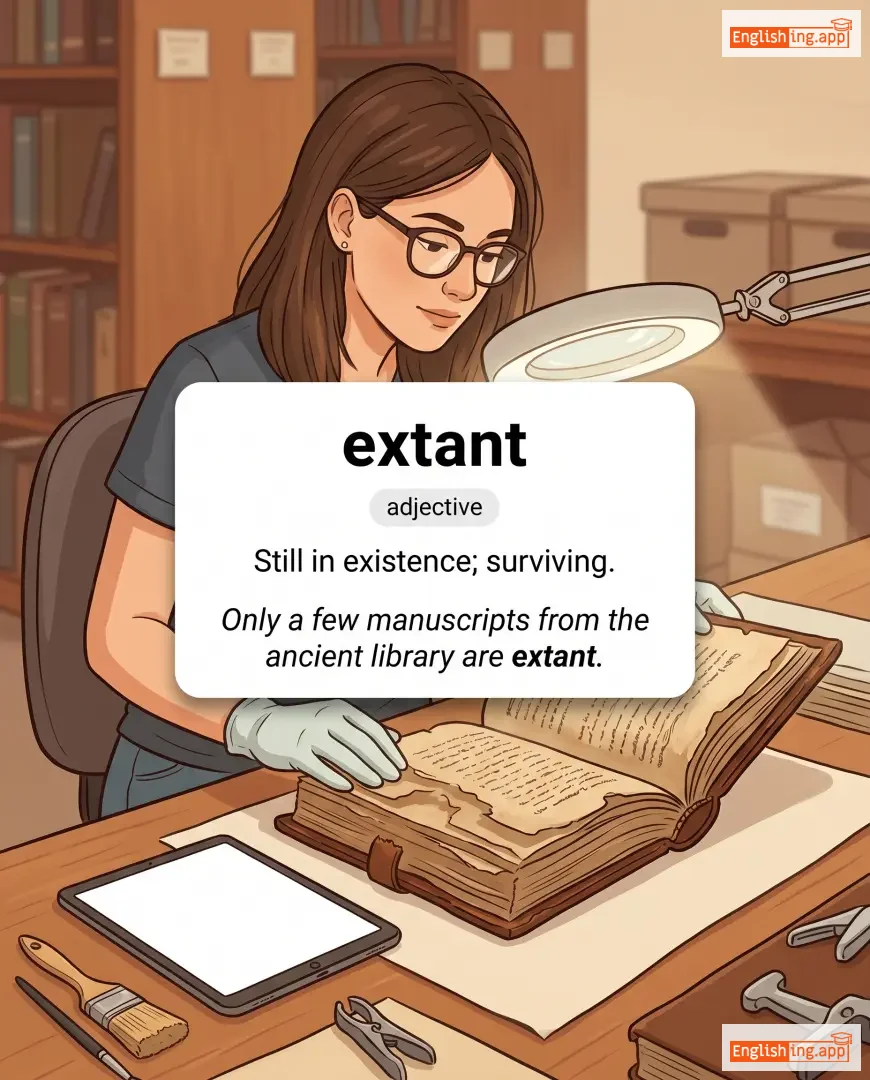
adjective C2
/ˈɛkstənt/
existente (existente)

Still in existence; surviving.

"Only a few manuscripts from the ancient library are extant."
"Solo unos pocos manuscritos de la antigua biblioteca están extintos." (Solo unos pocos manuscritos de la antigua biblioteca están extintos.)
extemporaneous definition card — visual illustration of the meaning
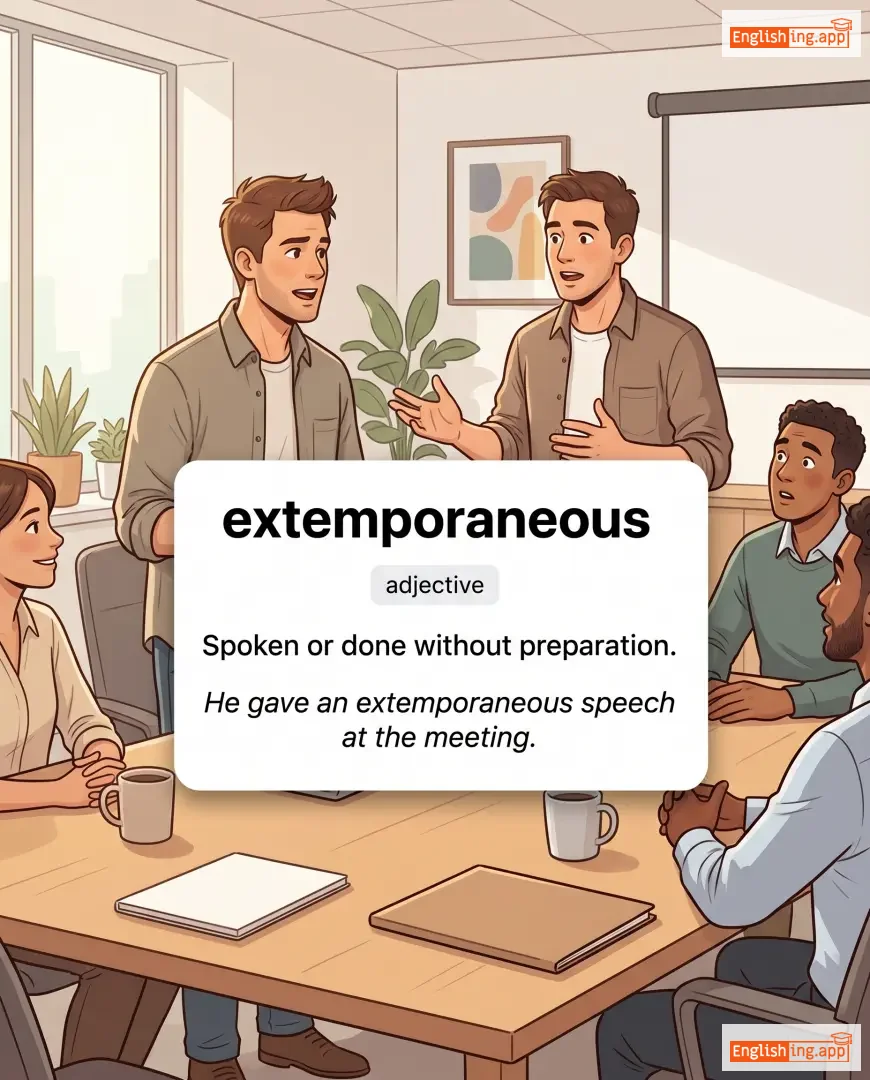
adjective C2
/ɪkˌstɛmpəˈreɪniəs/
hecho sin preparación (hecho sin preparacion)

Spoken or done without preparation.

"He gave an extemporaneous speech at the meeting."

"Él dio un discurso extemporáneo en la reunión." (El dio un discurso extemporaneo en la reunion.)
adverb C2
/ɪkˈstɛmpəri/
sin preparación (sin preparacion)

Spoken or done without preparation; impromptu.

"She recited the poem extempore in class."
"Recitó el poema sin preparación en clase." (Recito el poema sin preparacion en clase.)
extemporize definition card — visual illustration of the meaning
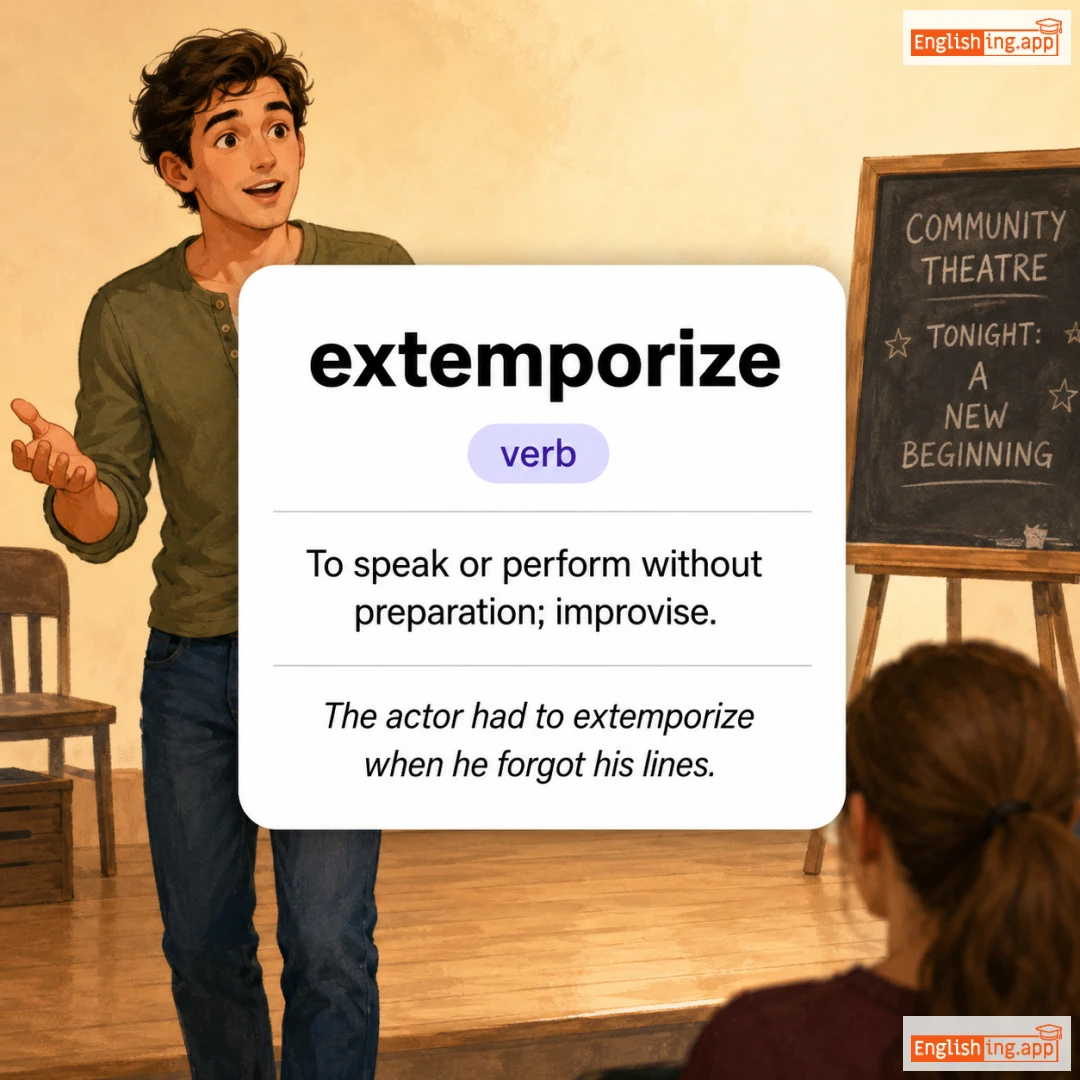
verb C2
/ɪkˈstɛmpəraɪz/
improvisar (improvisar)

To speak or perform without preparation; improvise.

"The actor had to extemporize when he forgot his lines."
"El actor tuvo que improvisar cuando olvidó sus líneas." (El actor tuvo que improvisar cuando olvidó sus líneas.)
extensible definition card — visual illustration of the meaning
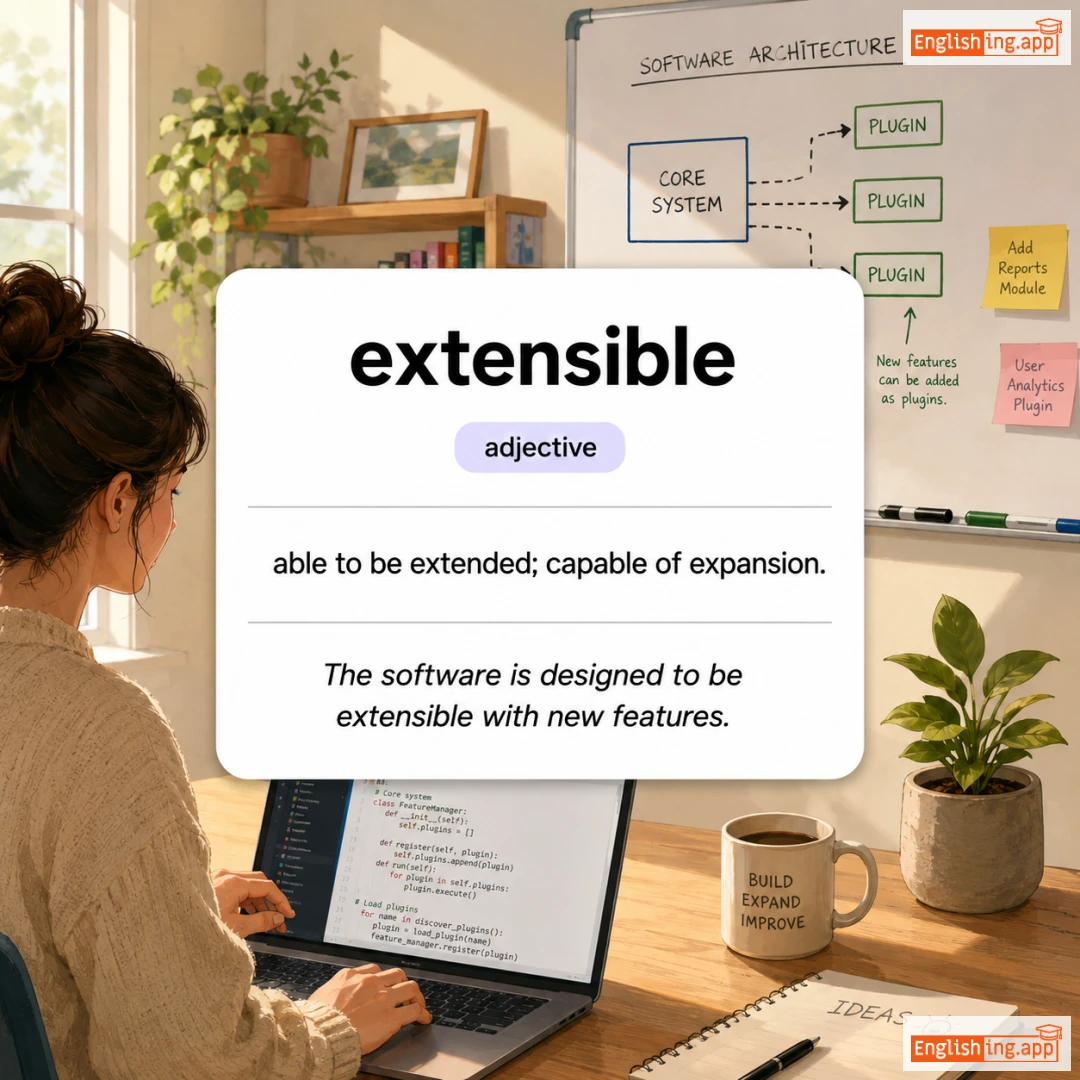
adjective C2
/ɪkˈstɛnsəbl/
expansible (expansible)

able to be extended; capable of expansion.

"The software is designed to be extensible with new features."
"El software está diseñado para ser expansible con nuevas funciones." (El software está diseñado para ser expansible con nuevas funciones.)
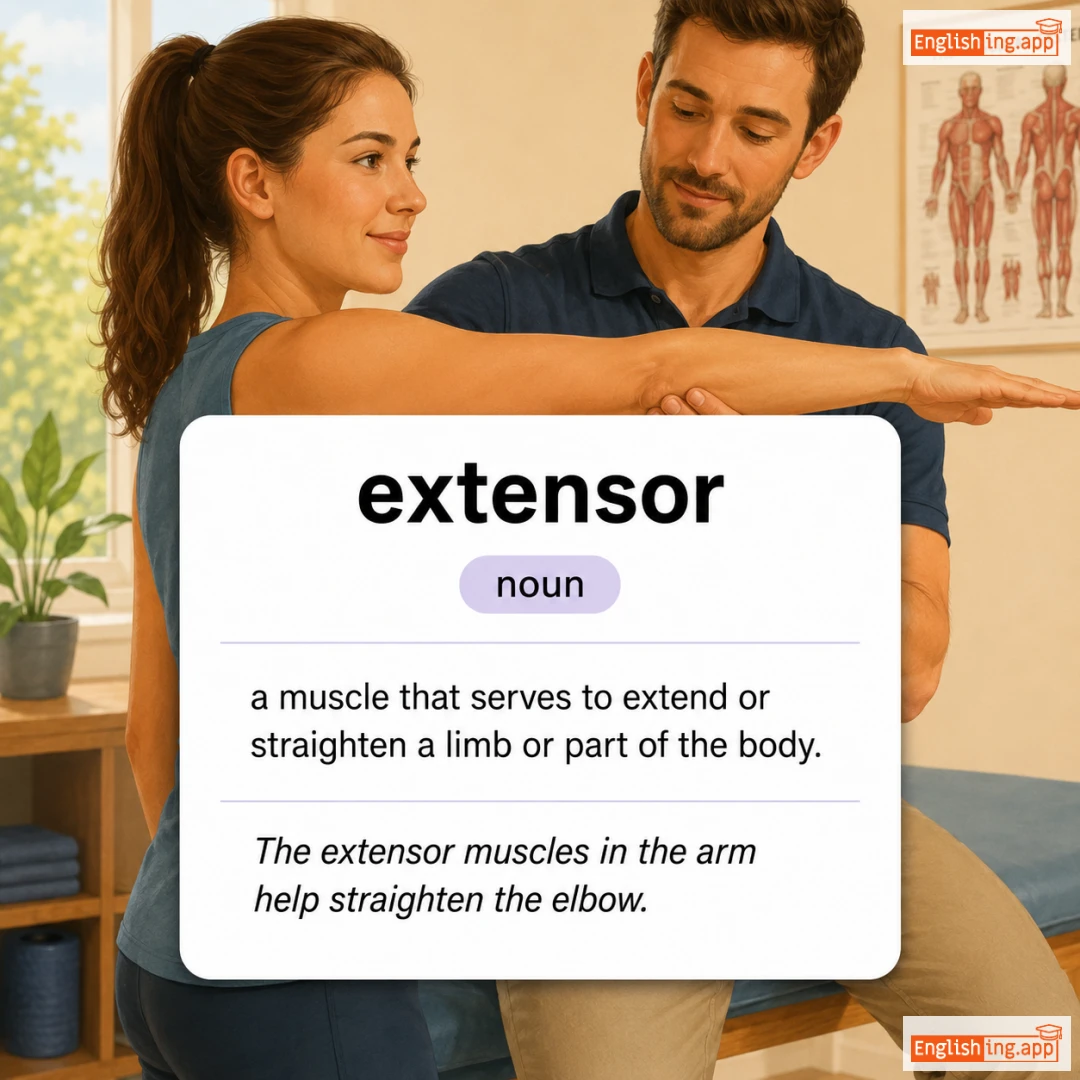
extensor definition card — visual illustration of the meaning
noun C2
/ɪkˈstɛnsər/
músculo extensor (musculo extensor)

a muscle that serves to extend or straighten a limb or part of the body.

"The extensor muscles in the arm help straighten the elbow."
"Los músculos extensores en el brazo ayudan a enderezar el codo." (Los musculos extensores en el brazo ayudan a enderezar el codo.)
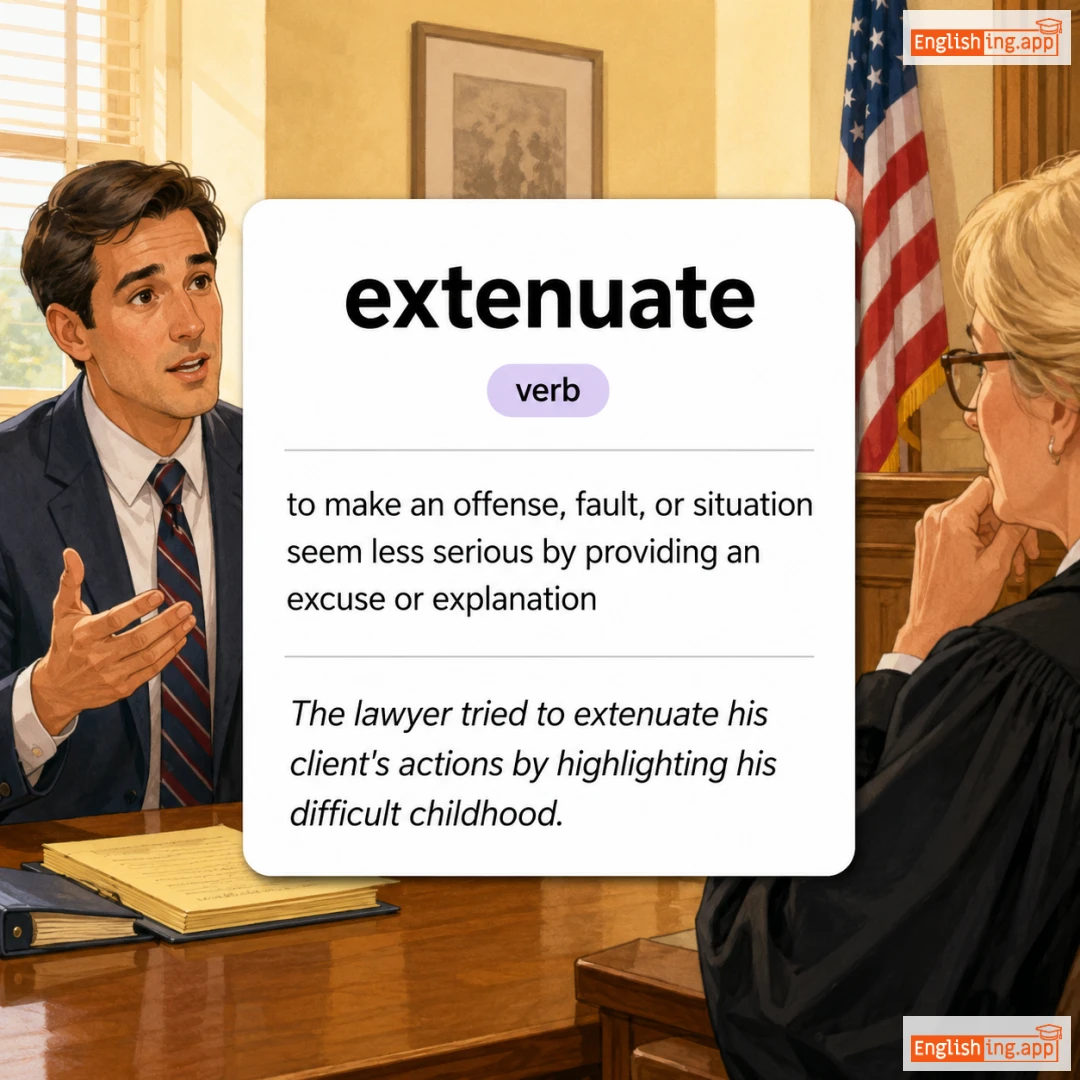
extenuate definition card — visual illustration of the meaning
verb C2
/ɪkˈstɛnjueɪt/
atenuar (atenuar)

to make an offense, fault, or situation seem less serious by providing an excuse or explanation

"The lawyer tried to extenuate his client's actions by highlighting his difficult childhood."
"El abogado trató de atenuar las acciones de su cliente destacando su difícil infancia." (El abogado trató de atenuar las acciones de su cliente destacando su difícil infancia.)
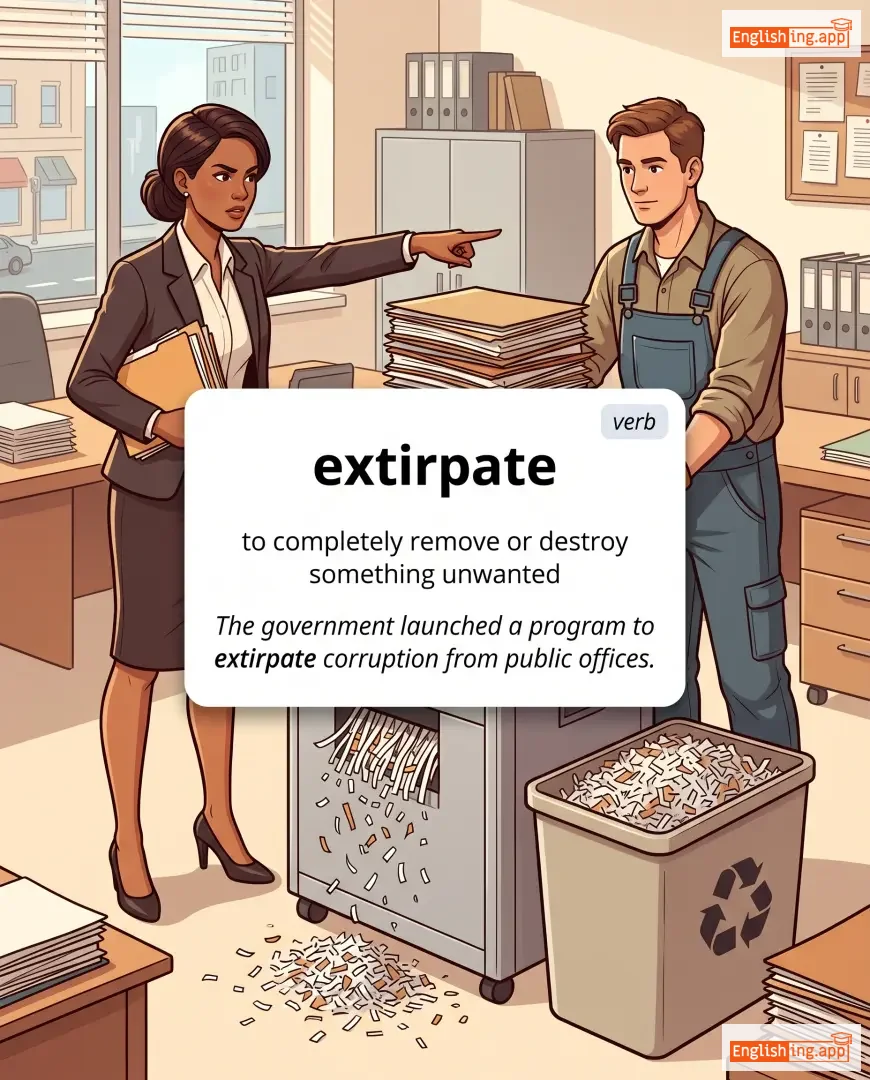
extirpate definition card — visual illustration of the meaning
verb C2
/ˈek.stər.peɪt/
extirpar (extirpar)

to completely remove or destroy something unwanted

"The government launched a program to extirpate corruption from public offices."
"El gobierno lanzó un programa para extirpar la corrupción de las oficinas públicas." (El gobierno lanzó un programa para extirpar la corrupción de las oficinas públicas.)
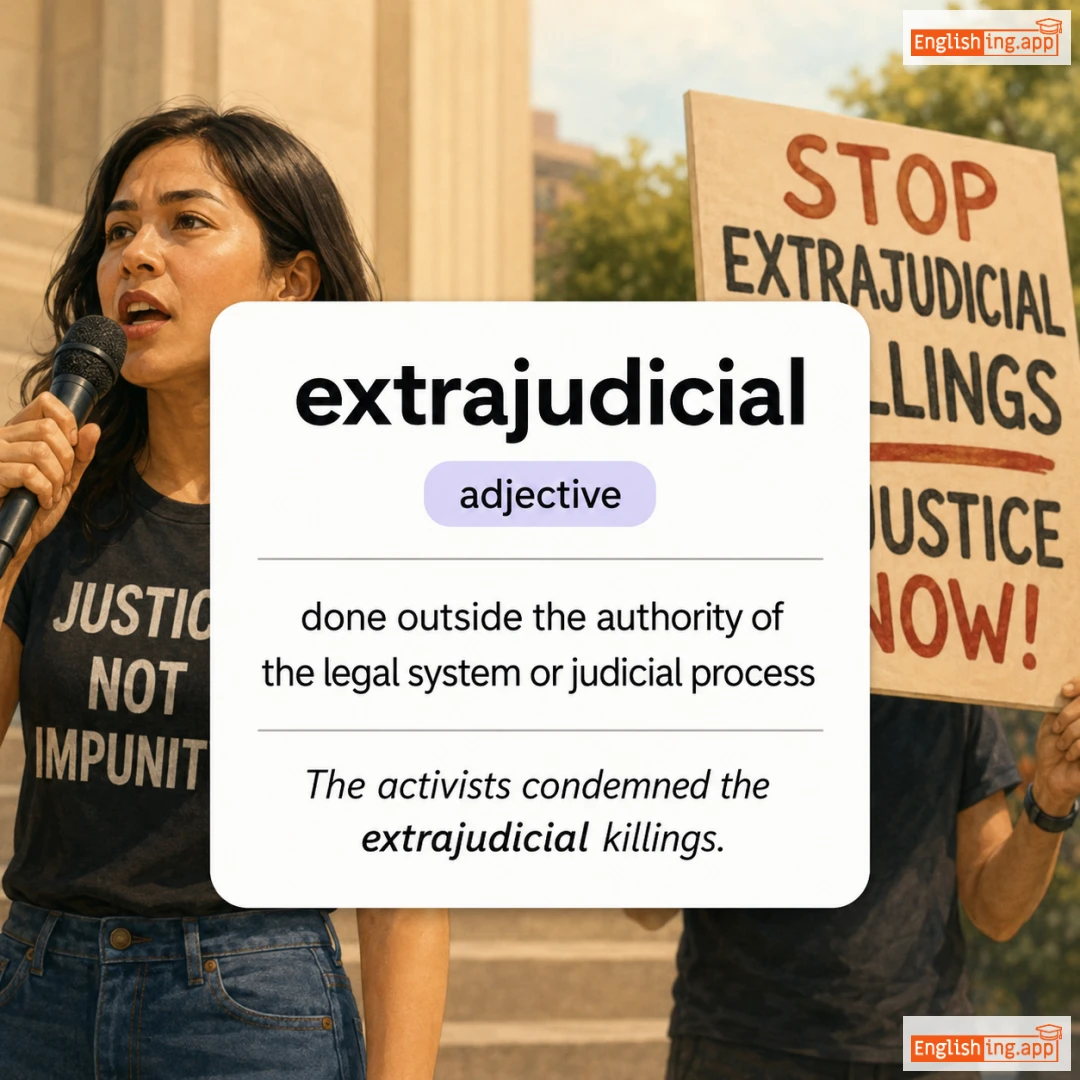
extrajudicial definition card — visual illustration of the meaning
adjective C2
/ˌɛkstrəˌdʒuːˈdɪʃəl/
extrajudicial (extrajudicial)

done outside the authority of the legal system or judicial process

"The activists condemned the extrajudicial killings."
"Los activistas condenaron los asesinatos extrajudiciales." (Los activistas condenaron los asesinatos extrajudiciales.)
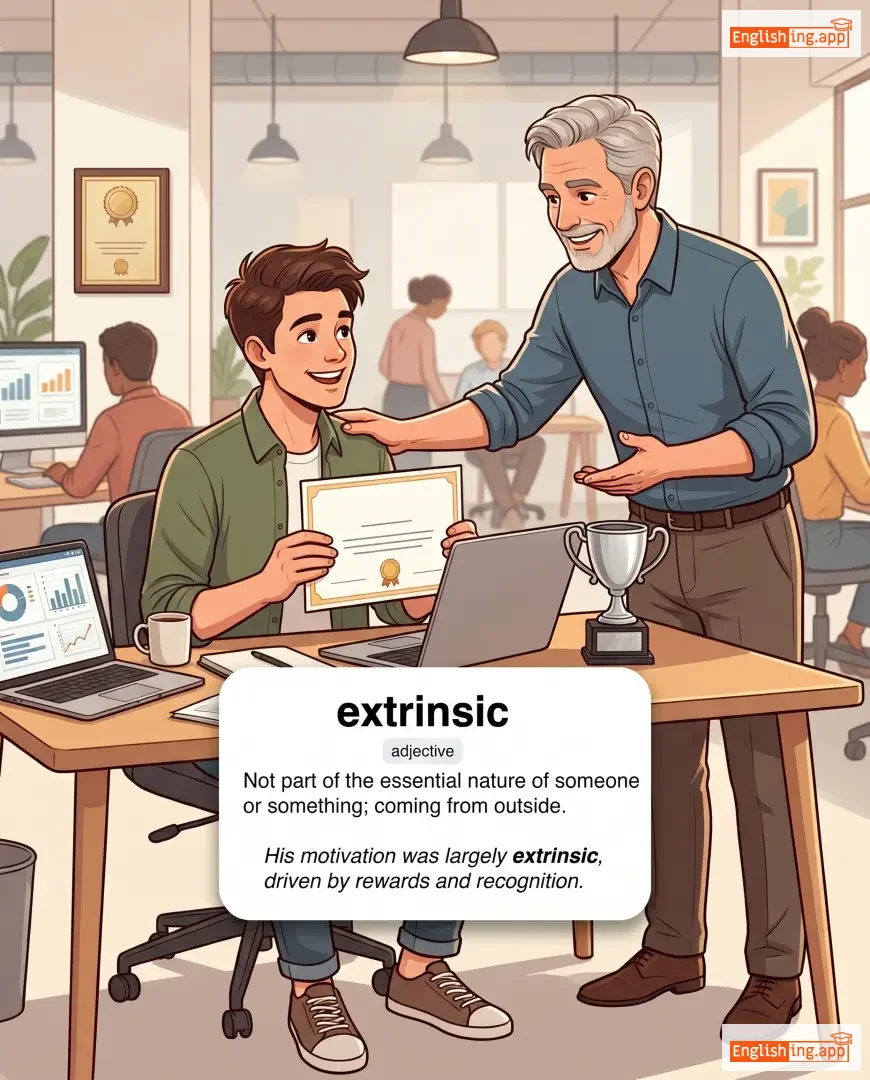
extrinsic definition card — visual illustration of the meaning
adjective C2
/ɛkˈstrɪnzɪk/
extrínseco (extrínseco)

Not part of the essential nature of someone or something; coming from outside.

"His motivation was largely extrinsic, driven by rewards and recognition."

"Su motivación era en gran parte extrínseca, impulsada por recompensas y reconocimiento." (Su motivación era en gran parte extrínseca, impulsada por recompensas y reconocimiento.)
verb C2
/ɪkˈstruːd/
extruir (extruir)

to force something out through a small opening; to shape by pushing material through a mold

"The factory extrudes plastic pipes using modern machines."

"La fábrica extruye tubos de plástico utilizando máquinas modernas." (La fabrica extruye tubos de plastico utilizando maquinas modernas.)
exult definition card — visual illustration of the meaning
verb C2
/ɪɡˈzʌlt/
exultar (eksultar)

to show or feel great joy, often as a result of success

"The fans exulted after their team won the championship."
"Los aficionados exultaron después de que su equipo ganó el campeonato." (Los aficionados exultaron despues de que su equipo gano el campeonato.)
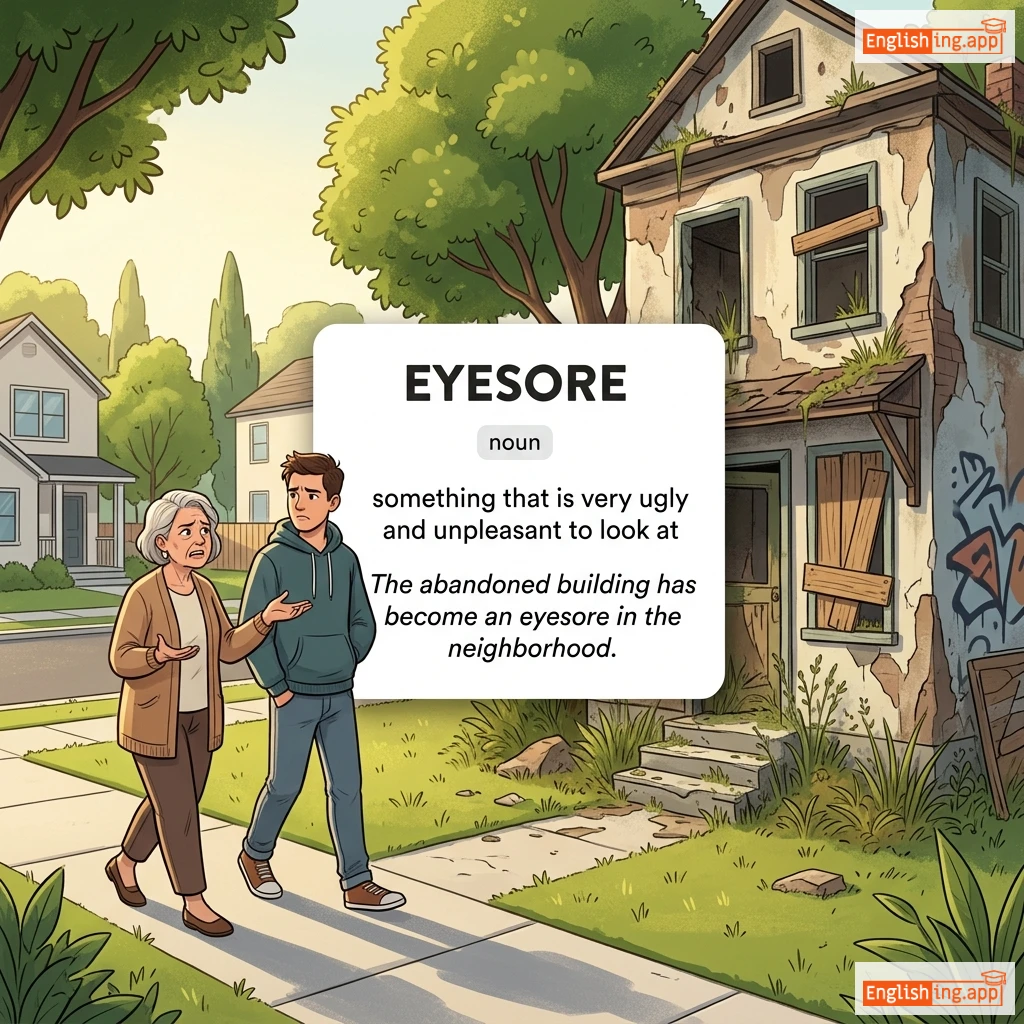
Eyesore definition card — visual illustration of the meaning
noun C2
/ˈaɪ.sɔːr/
ultraje visual; cosa desagradable de ver (ultraje visual; cosa desagradable de ver)

something that is very ugly and unpleasant to look at

"The abandoned building has become an eyesore in the neighborhood."

"El edificio abandonado se ha convertido en un ultraje visual en el vecindario." (El edificio abandonado se ha convertido en un ultraje visual en el vecindario.)
noun C2
/ˈɪəri/
nido de águila (nido de aguila)

the nest of a bird of prey, such as an eagle, typically built high on a cliff or tree

"The eagle’s eyrie was perched high on the mountain cliff."

"El nido de águila estaba ubicado en la cima de un acantilado de montaña." (El nido de aguila estaba ubicado en la cima de un acantilado de montania.)
noun C2
/ˈɪəri/
nido de ave rapaz (nido de ave rapaz)

an alternative spelling of eyrie; a nest of a bird of prey

"The falcon guarded its eyry fiercely."
"El halcón protegió su nido ferozmente." (El halcon protegió su nido ferozmente.)
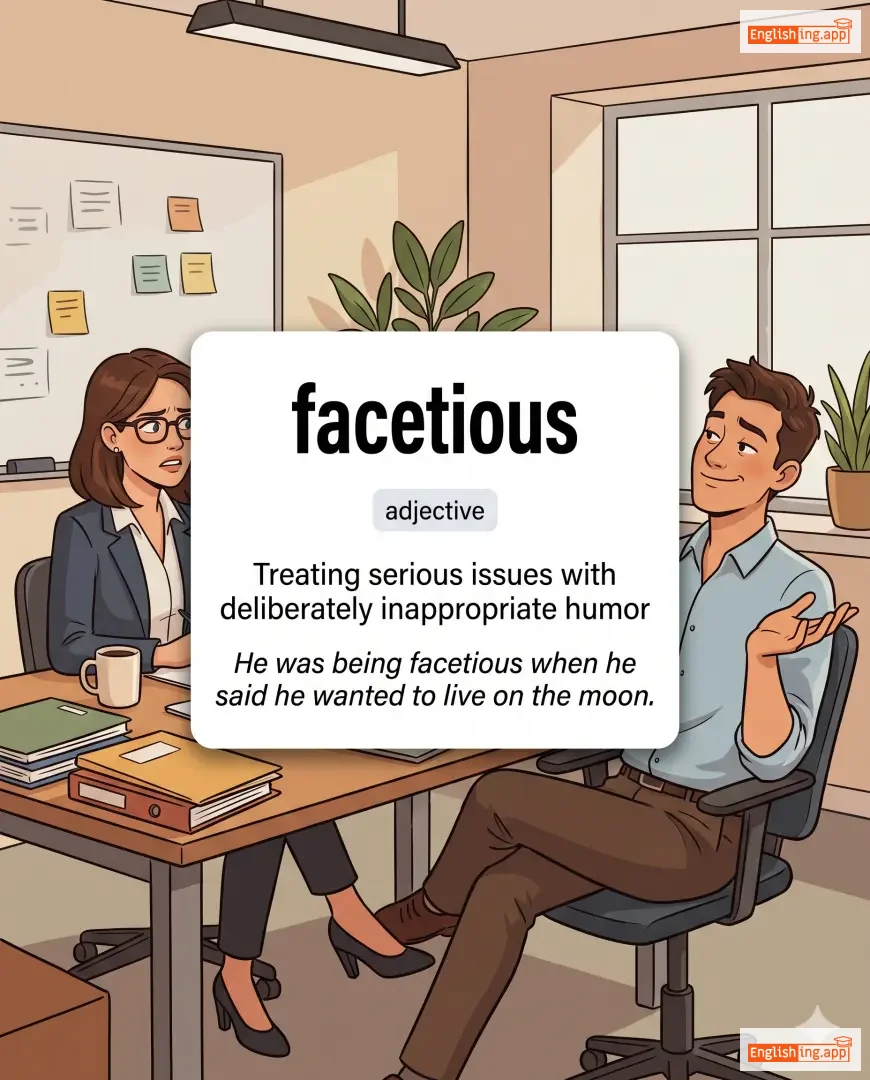
facetious definition card — visual illustration of the meaning
adjective C2
/fəˈsiːʃəs/
humerístico (humeristico)

Treating serious issues with deliberately inappropriate humor

"He was being facetious when he said he wanted to live on the moon."

"Estaba siendo humerístico cuando dijo que quería vivir en la luna." (Estaba siendo humeristico cuando dijo que queria vivir en la luna.)
Facile definition card — visual illustration of the meaning
adjective C2
/ˈfæsɪl/
fácil, superficial, sencillo (facil, superficial, sencillo)

easily achieved or effortless; superficial or simplistic

"He gave a facile explanation that ignored the complexities of the problem."

"Él dio una explicación fácil que ignoraba las complejidades del problema." (El dio una explicacion facil que ignoraba las complejidades del problema.)
facsimile definition card — visual illustration of the meaning
noun C2
/fækˈsɪmɪli/
copia (copia)

an exact copy or reproduction of a document

"He sent a facsimile of the contract to the client."
"Envió una copia del contrato al cliente." (Envió una copia del contrato al cliente.)
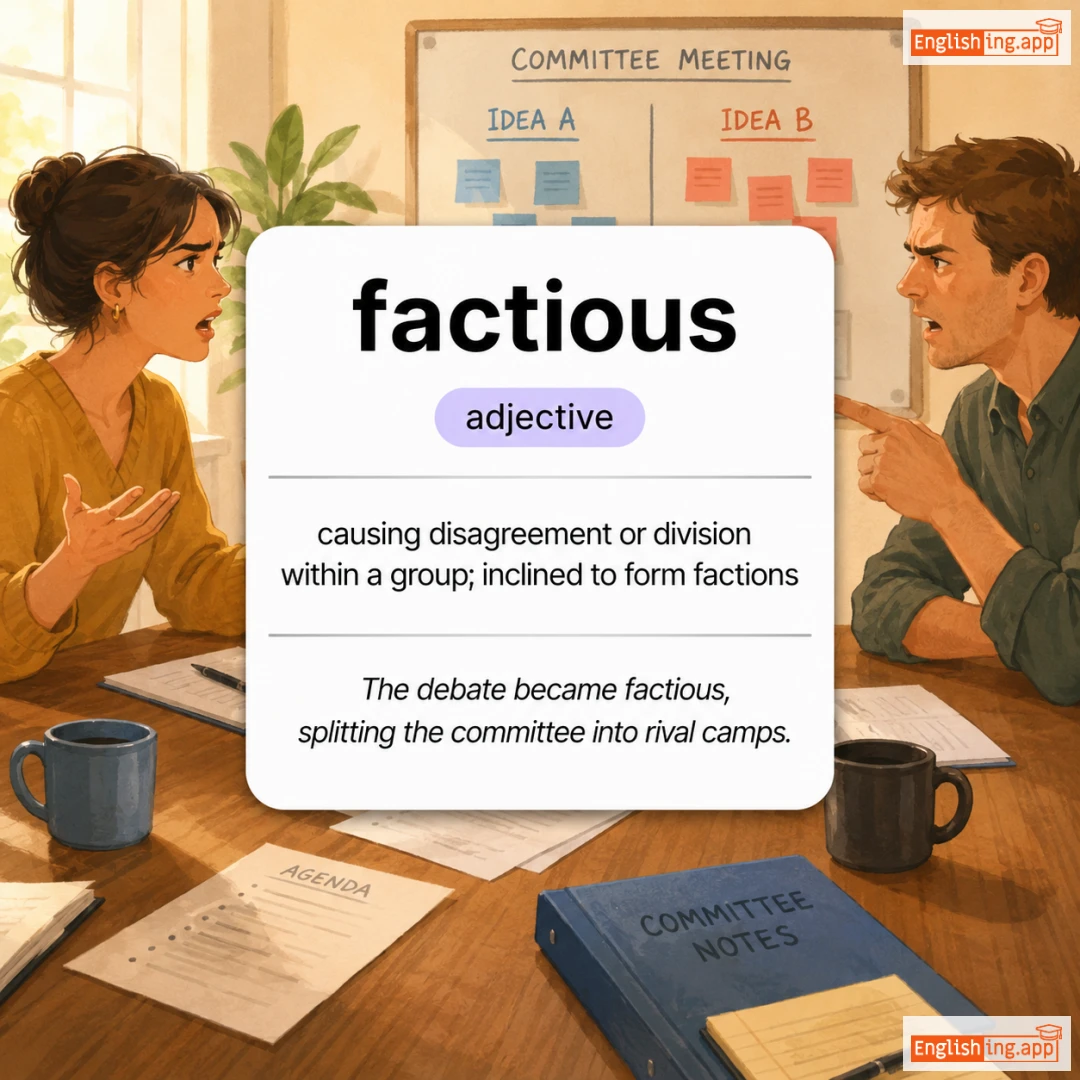
factious definition card — visual illustration of the meaning
adjective C2
/ˈfækʃəs/
faccionado (faccionado)

causing disagreement or division within a group; inclined to form factions

"The debate became factious, splitting the committee into rival camps."
"El debate se volvió faccioso, dividiendo al comité en campos rivales." (El debate se volvio faccioso, dividiendo al comite en campos rivales.)
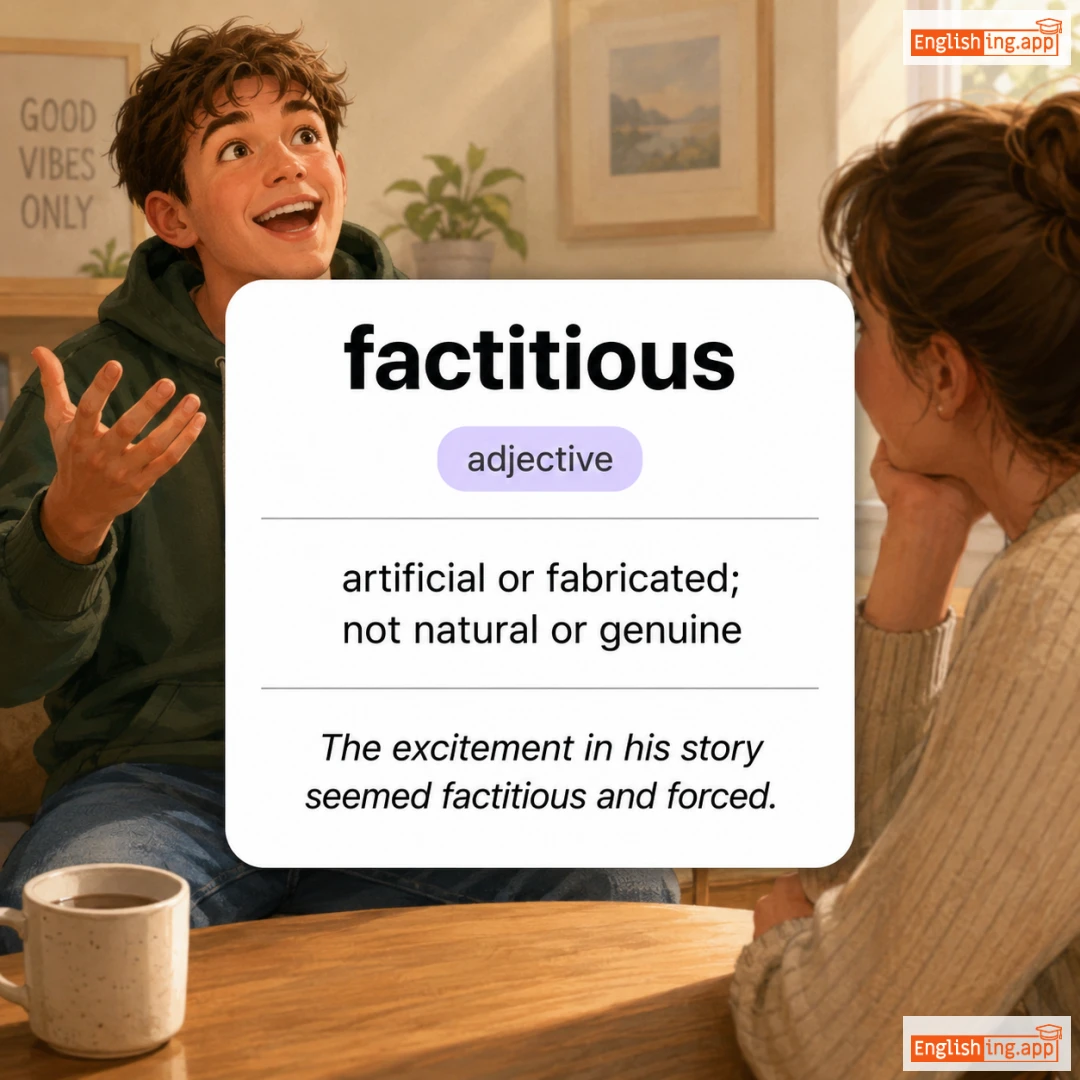
factitious definition card — visual illustration of the meaning
adjective C2
/fækˈtɪʃəs/
artificial, no genuino (artificial, no genuino)

artificial or fabricated; not natural or genuine

"The excitement in his story seemed factitious and forced."

"La emoción en su historia parecía artificial y forzada." (La emocion en su historia parecia artificial y forzada.)
factotum definition card — visual illustration of the meaning
noun C2
/fækˈtoʊtəm/
trabajador polifacético (trabajador polifacetico)

an employee who does many different types of work; a general servant

"He worked as a factotum, handling both clerical and maintenance duties."

"Trabajaba como un factótum, manejando tanto tareas administrativas como de mantenimiento." (Trabajaba como un factotum, manejando tanto tareas administrativas como de mantenimiento.)
adjective C2
/ˈfædɪʃ/
moda pasajera (moda pasajera)

Following a temporary trend or fashion

"Wearing neon clothes was a faddish style in the 1980s."

"Usar ropa neón era un estilo pasajero en los años 80." (Usar ropa neon era un estilo pasajero en los años 80.)
fain definition card — visual illustration of the meaning
adjective/adverb C2
/feɪn/
gustosamente, con gusto (gustosamente, con gusto)

gladly, willingly, or with pleasure

"I would fain help you if I had the time."
"Si tuviera tiempo, con gusto te ayudaría." (Si tuviera tiempo, con gusto te ayudaría.)
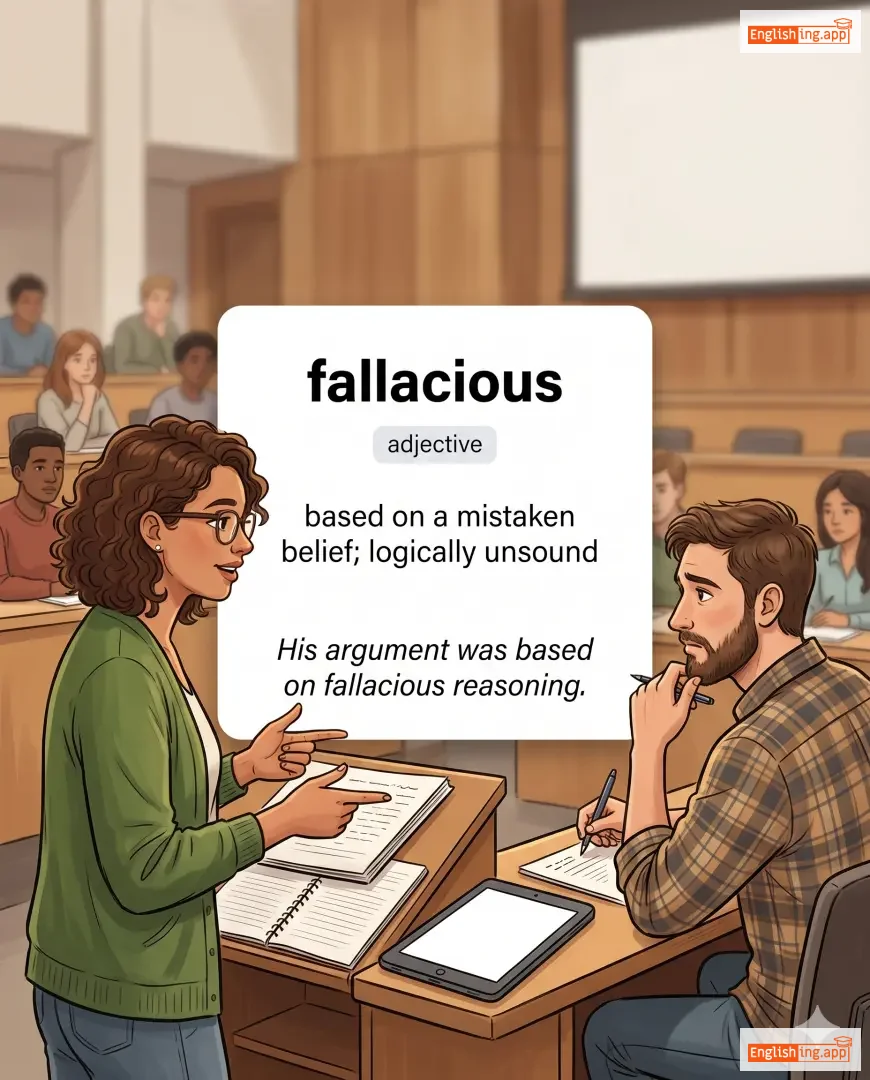
fallacious definition card — visual illustration of the meaning
adjective C2
/fəˈleɪ.ʃəs/
falaz (falaz)

based on a mistaken belief; logically unsound

"His argument was based on fallacious reasoning."
"Su argumento se basaba en un razonamiento falaz." (Su argumento se basaba en un razonamiento falaz.)
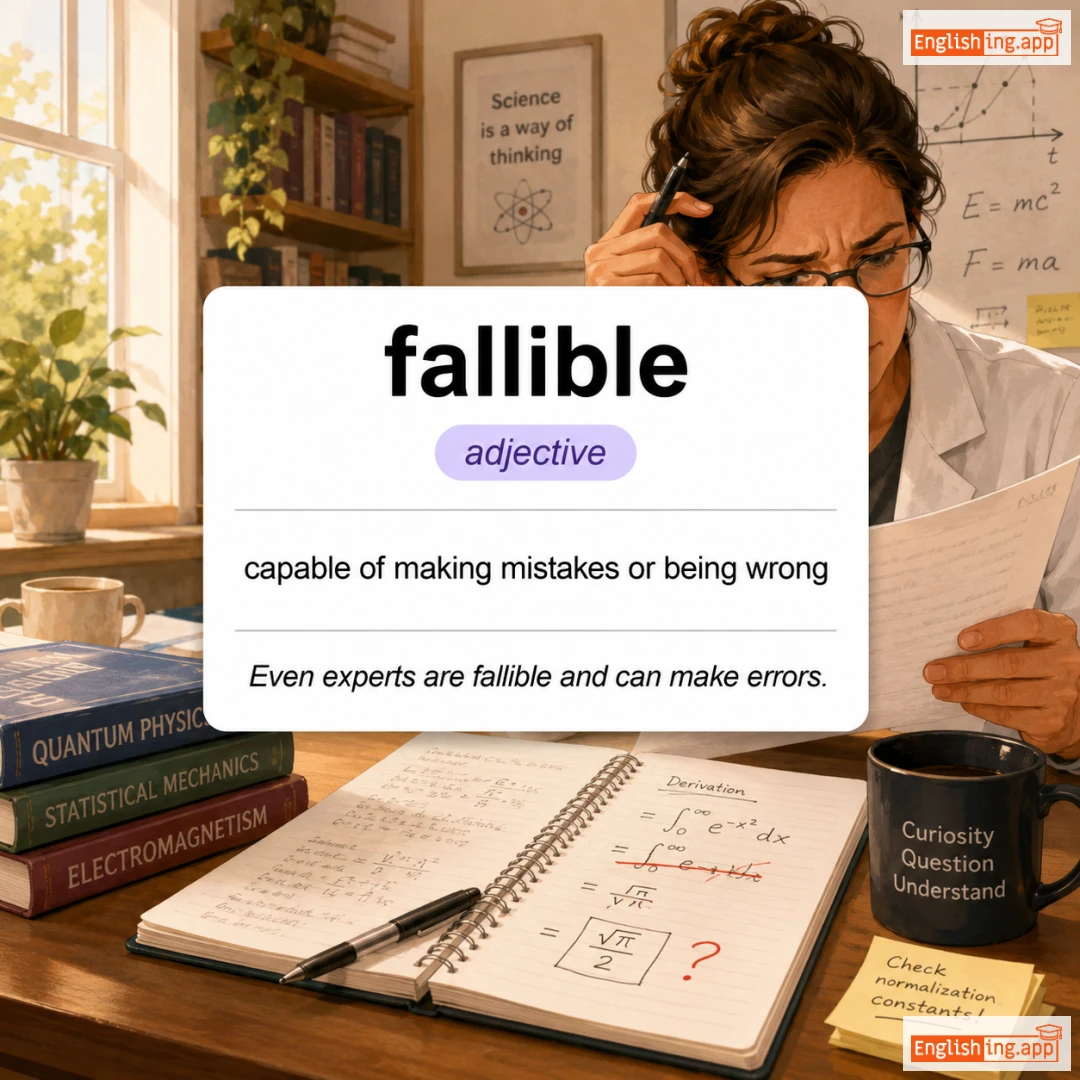
fallible definition card — visual illustration of the meaning
adjective C2
/ˈfæləbl/
capaz de cometer errores (capaz de cometer errores)

capable of making mistakes or being wrong

"Even experts are fallible and can make errors."
"Incluso los expertos son falibles y pueden cometer errores." (Incluso los expertos son falibles y pueden cometer errores.)
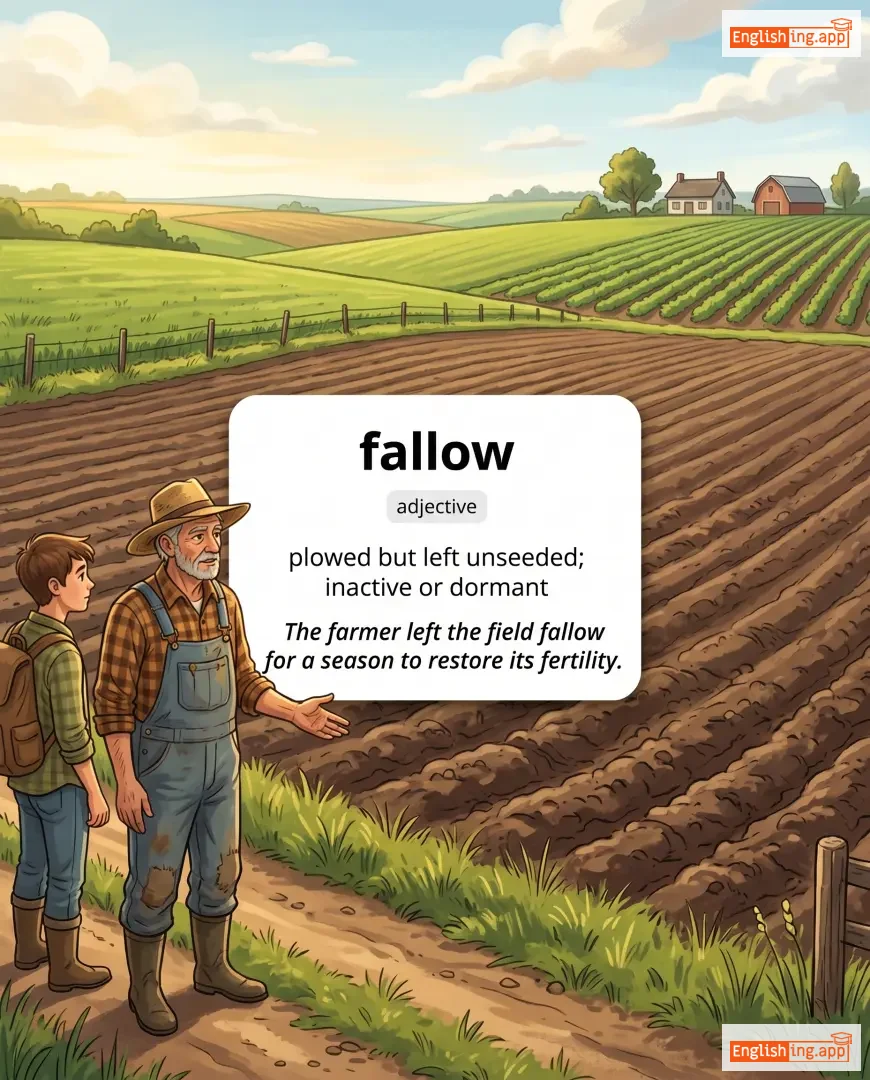
fallow definition card — visual illustration of the meaning
adjective C2
/ˈfæloʊ/
yermo, inactivo (yermo, inactivo)

plowed but left unseeded; inactive or dormant

"The farmer left the field fallow for a season to restore its fertility."

"El agricultor dejó el campo yermo durante una temporada para restaurar su fertilidad." (El agricultor dejó el campo yermo durante una temporada para restaurar su fertilidad.)
verb C2
/ˈfæmɪʃ/
morirse de hambre (morirse de hambre)

to suffer or cause to suffer from extreme hunger

"The stranded hikers began to famish after several days without food."
"Los excursionistas varados comenzaron a morirse de hambre después de varios días sin comida." (Los excursionistas varados comenzaron a morirse de hambre después de varios días sin comida.)
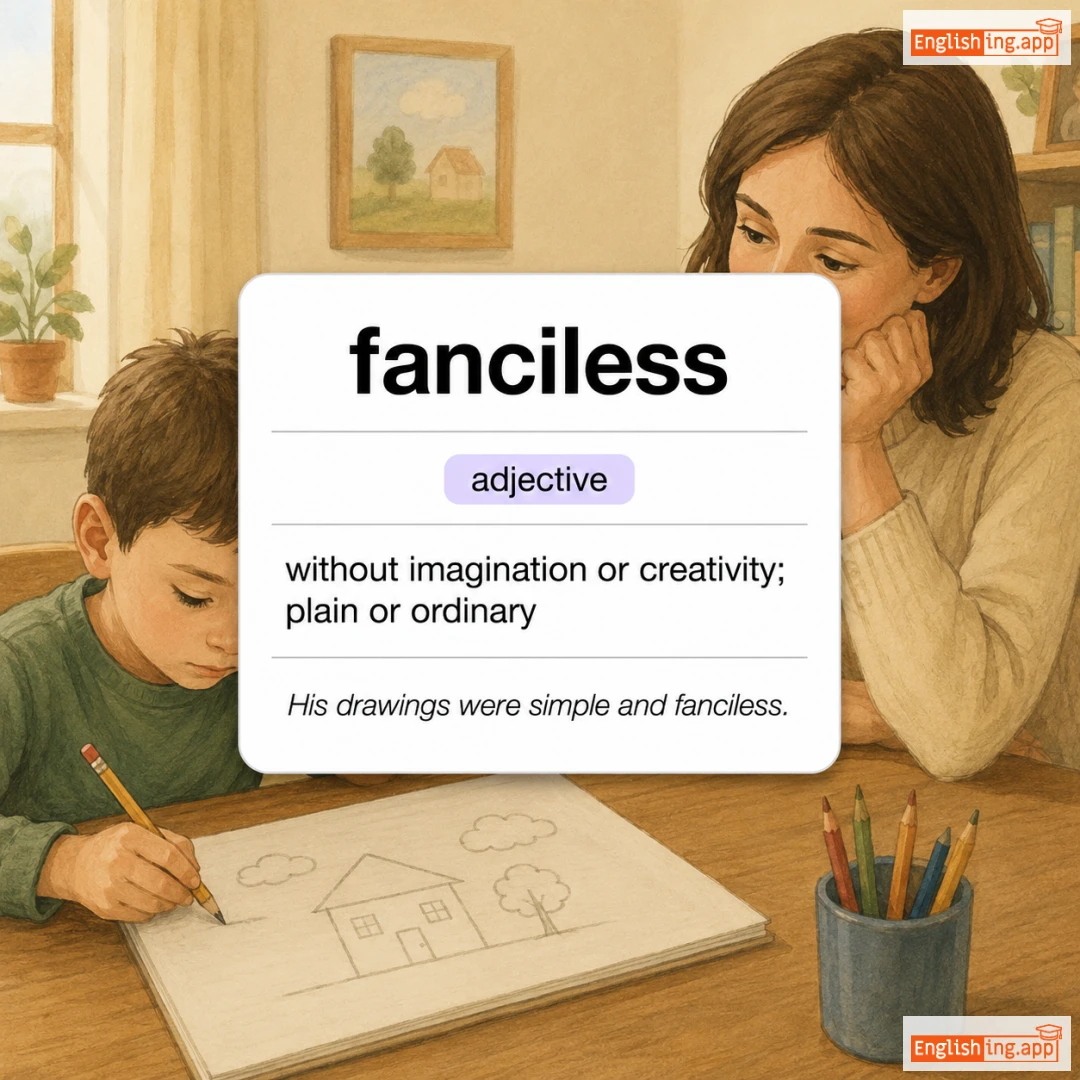
fanciless definition card — visual illustration of the meaning
adjective C2
/ˈfæn.sɪ.ləs/
sin imaginación, común (sin imaginacion, comun)

without imagination or creativity; plain or ordinary

"His drawings were simple and fanciless."

"Sus dibujos eran simples y sin imaginación." (Sus dibujos eran simples y sin imaginacion.)
fanfare definition card — visual illustration of the meaning
noun C2
/ˈfæn.feər/
gran pompa, publicidad (gran pompa, publicidad)

a short ceremonial tune or display of publicity to attract attention

"The new product was launched with much fanfare."

"El nuevo producto fue lanzado con gran pompa." (El nuevo producto fue lanzado con gran pompa.)