词汇表

英语词汇词典 | 单词含义、定义和示例

adjective C2
/ˈɪkθiɪk/
魚のような (sakana no yōna)

Relating to or resembling fish.

"The artist's painting had an ichthyic quality."

"アーティストの絵には魚のような特徴がありました。" (Ātisuto no e ni wa sakana no yōna tokuchō ga arimashita.)
noun C2
/ˌɪkθiˈɒlədʒɪst/
魚類学者 (Gyoruigakusha)

A scientist who studies fish.

"The ichthyologist discovered a new species of fish in the river."

"魚類学者は川で新しい魚の種を発見しました。" (Gyoruigakusha wa kawa de atarashii sakana no shu wo hakken shimashita.)
noun C2
/ˌɪkθiˈɒlədʒi/
魚類学 (gyorui-gaku)

The branch of zoology that deals with fish.

"He pursued a degree in ichthyology at the university."

"彼は大学で魚類学の学位を取得した。" (Kare wa daigaku de gyorui-gaku no gakui o shutoku shita.)
noun C2
/ˈɪkθiəˌsɔːrz/
イクチオサウルス(絶滅した海の爬虫類) (ikuchiosaurusu)

Extinct marine reptiles that resembled fish and dolphins, dominant during the Mesozoic era.

"Ichthyosaurs were swift predators of the ancient seas."

"イクチオサウルスは古代の海で素早い捕食者でした。" (Ikuchiosaurusu wa kodai no umi de subayai hoshokusha deshita.)
adverb C2
/ˈaɪsɪli/
冷たく (tsumetaku)

In a very cold, unfriendly, or hostile manner.

"She replied icily to his question."

"彼女は冷たく彼の質問に答えた。" (Kanojo wa tsumetaku kare no shitsumon ni kotaeta.)
noun C2
/ˈaɪsinəs/
冷たさ (tsumetasa)

The state of being cold in manner or temperature.

"There was a distinct iciness in his voice."

"彼の声には明確な冷たさがあった。" (Kare no koe ni wa meikaku na tsumetasa ga atta.)
noun C2
/aɪˈkɒnəklæst/
偶像破壊者 (gūzō hakai-sha)

A person who attacks or criticizes cherished beliefs, traditions, or institutions.

"He was known as an iconoclast who challenged old traditions."
"彼は古い伝統に挑戦した偶像破壊者として知られていました。" (Kare wa furui dentō ni chōsen shita gūzō hakai-sha to shira rete imashita.)
iconoclastic definition card — visual illustration of the meaning
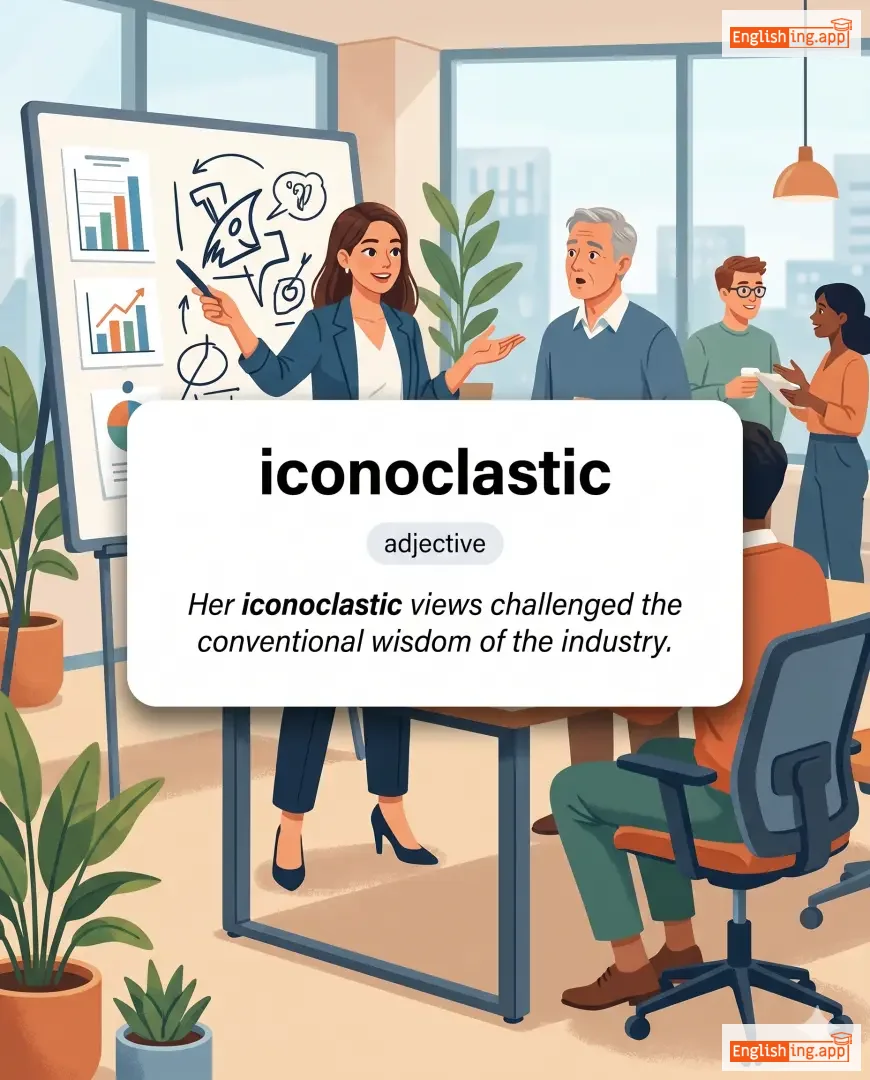
adjective C2
/ˌaɪ.kə.nəˈklæs.tɪk/
確立された信念、伝統、または価値観に対して攻撃的または拒絶的な特徴 (ikonokurasutikku)

Characterized by attacking or rejecting cherished beliefs, traditions, or established values.

"Her iconoclastic views challenged the conventional wisdom of the industry."

"彼女のアイコノクラスティックな見解は業界の従来の知恵に挑戦した。" (Kanojo no aikonokurasutikku na kenkai wa gyōkai no jūrai no chie ni chōsen shita.)
ideation definition card — visual illustration of the meaning
noun C2
/ˌaɪdiˈeɪʃən/
アイデア創造 (aidea souzou)

The process of forming ideas or concepts.

"The workshop focused on ideation and brainstorming."
"ワークショップはアイデア創造とブレインストーミングに焦点を当てました。" (Wākushoppu wa aidea souzou to bureinsutoomingu ni shōten o atemashita.)
Idiocy definition card — visual illustration of the meaning
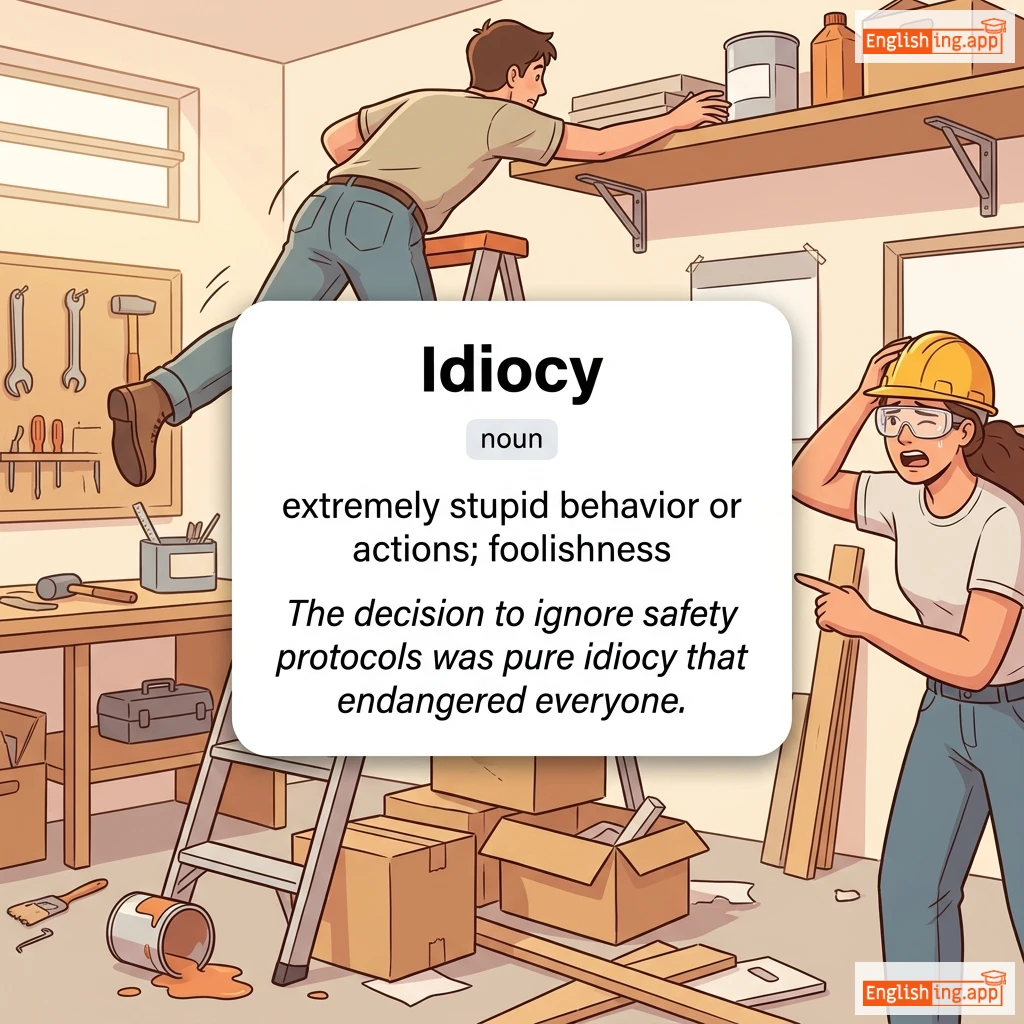
noun C2
/ˈɪd.i.ə.si/
愚かさ (orokasa)

extremely stupid behavior or actions; foolishness

"The decision to ignore safety protocols was pure idiocy that endangered everyone."

"安全プロトコルを無視する決定は、すべての人を危険にさらす純粋な愚かさでした。" (Anzen purotokoru o mushi suru kettei wa, subete no hito o kiken ni sarasu junsuina orokasa deshita.)
noun C2
/ˌɪdiəˈsɪŋkrəsi/
特異性 (tokuiseki)

A distinctive or peculiar characteristic, habit, or mannerism unique to an individual.

"One of her idiosyncrasies was humming while working."

"彼女の一つの特異性は、仕事中に口ずさむことでした。" (Kanojo no hitotsu no tokuiseki wa, shigotochu ni kuchizusamu koto deshita.)
noun C2
/ˈaɪdlər/
怠け者 (namakemono)

A person who avoids work or spends time lazily.

"He was known as an idler who wasted his days."

"彼は自分の時間を無駄にするアイドラーとして知られていました。" (Kare wa jibun no jikan o mudani suru aidorā to shite shirareteimashita.)
adjective C2
/ˌaɪdəˈlɑːtrɪəs/
偶像崇拝的な (gūzō sūhai-teki na)

Excessively devoted or reverent towards idols or false gods.

"The ancient tribe was known for its idolatrious practices."

"その古代の部族は偶像崇拝的な習慣で知られていました。" (Sono kodai no buzoku wa gūzō sūhai-teki na shūkan de shirarete imashita.)
verb C2
/aɪˈdɒləˌtraɪz/
偶像崇拝 (gūzō sūhai)

To worship idols; to regard with excessive devotion or admiration.

"They began to idolatrize the statue as a deity."

"彼らはその像を神として崇拝し始めました。" (Karera wa sono zō o kami to shite sūhai shihajimemashita.)
adjective C2
/aɪˈdɒlətrəs/
偶像崇拝者 (guuzou suuhai-sha)

Excessively admiring or worshipping someone or something as an idol.

"The king was criticized for his idolatrous devotion to wealth."
"王は富に対する偶像崇拝的な献身で批判されました。" (Ou wa tomi ni taisuru guuzou suuhai-teki na kenshin de hihan saremashita.)
idolatry definition card — visual illustration of the meaning
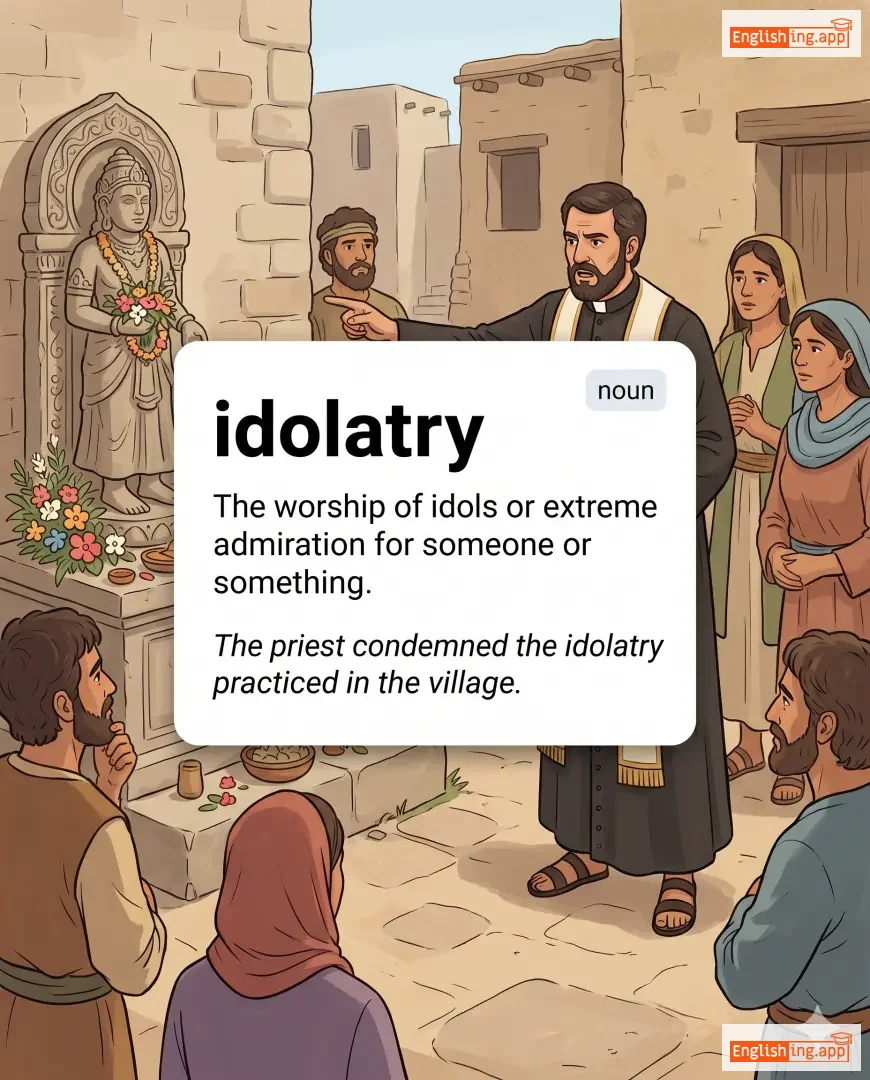
noun C2
/aɪˈdɒlətri/
偶像崇拝 (guuzou suuhai)

The worship of idols or extreme admiration for someone or something.

"The priest condemned the idolatry practiced in the village."

"司祭は村で行われている偶像崇拝を非難した。" (Shisai wa mura de okonawarete iru guuzou suuhai wo hinan shita.)
noun C2
/ˈaɪdɪl/
田園詩的なシーン (den'en shiteki na shīn)

An extremely happy, peaceful, or picturesque episode or scene, often idealized.

"Their honeymoon was an idyll on a tropical island."

"彼らのハネムーンは熱帯の島での田園詩的なシーンでした。" (Karera no hanemūn wa nettai no shima de no den'en shiteki na shīn deshita.)
adjective C2
/ɪɡˈnoʊ.bəl/
卑劣な (hiretsu na)

Dishonorable, shameful, or lacking nobility.

"His ignoble actions ruined his reputation."

"彼の卑劣な行動は彼の評判を台無しにした。" (Kare no hiretsu na kōdō wa kare no hyōban o dainashi ni shita.)
adjective C2
/ˌɪɡ.nəˈmɪn.i.əs/
不名誉な (fumei na)

Marked by shame, disgrace, or humiliation.

"The team suffered an ignominious defeat in the finals."

"チームは決勝で不名誉な敗北を喫した。" (Chiimu wa kesshou de fumei na haiboku o kitta.)
noun C2
/ˈɪɡ.nəˌmɪn.i/
恥辱 (chijoku)

Public shame, disgrace, or dishonor.

"He lived the rest of his life in ignominy after the scandal."

"スキャンダル後、彼は生涯を恥辱の中で過ごした。" (Sukyandaru go, kare wa shōgai o chijoku no naka de sugoshita.)
noun C2
/ˈaɪ.kɒn/
宗教的な画像やシンボル (shūkyō-teki na gazō ya shinboru)

A religious image or symbol, especially in the Eastern Orthodox Church.

"The church displayed a beautifully painted ikon of the Virgin Mary."

"教会は美しく描かれた聖母マリアのアイコンを展示しました。" (Kyōkai wa utsukushiku egakareta Seibo Maria no aikon o tenji shimashita.)
noun C2
/ˈɪl.i.æd/
イリアス (Irias)

An ancient Greek epic poem attributed to Homer, describing the events of the Trojan War.

"Students studied the Iliad to understand Greek mythology and heroism."

"学生たちはイリアスを学び、ギリシャ神話と英雄主義を理解しました。" (Gakusei-tachi wa Irias wo manabi, Girisha shinwa to eiyuu shugi wo rikai shimashita.)
adjective C2
/ˈɪl bred/
無作法な (illbred)

lacking good manners; rude; showing poor upbringing

"His ill-bred behavior shocked everyone at the dinner party."

"彼の無作法な振る舞いは、ディナー・パーティーで皆を驚かせた。" (kare no musahou na furumai wa dinaa paatii de mina o odorokaseta)
adjective C2
/ˌɪlˈneɪ.tʃəd/
性格が悪い (seikaku ga warui)

Having a bad or unpleasant character; unkind or malicious.

"He made an ill-natured remark about his colleague."

"彼は同僚について悪意のある発言をしました。" (Kare wa dōryō ni tsuite akui no aru hatsugen o shimashita.)
Illegibility definition card — visual illustration of the meaning
noun C2
/ɪˌledʒ.əˈbɪl.ə.ti/
読みにくさ (yomnikusa)

the quality of being impossible or difficult to read; unclear writing or print

"The doctor's handwriting was famous for its illegibility among the pharmacy staff."
"医者の手書きは薬局のスタッフの間でその読みにくさで有名でした。" (Isha no tegaki wa yakkyoku no sutaffu no aida de sono yomnikusa de yūmei deshita.)
illiberal definition card — visual illustration of the meaning
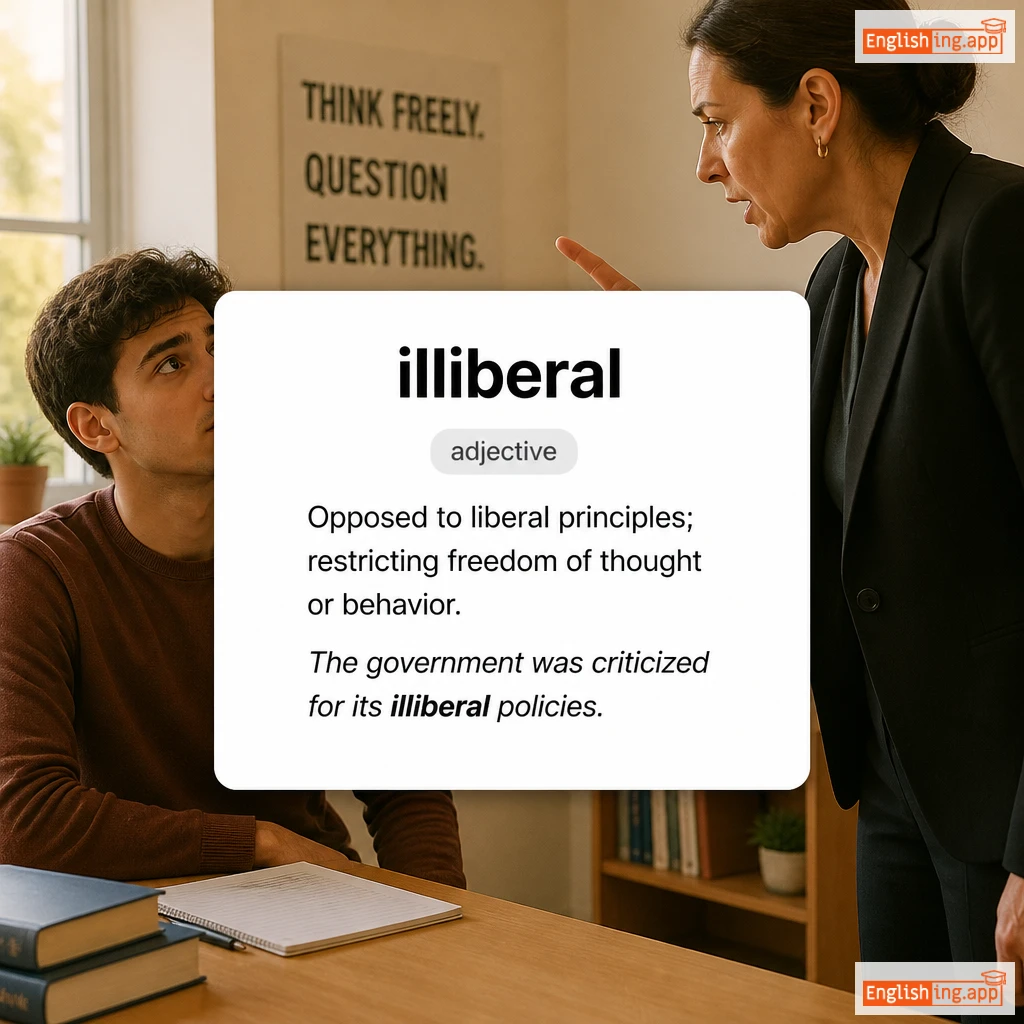
adjective C2
/ɪˈlɪbərəl/
非リベラル (hi riberaru)

Opposed to liberal principles; restricting freedom of thought or behavior.

"The government was criticized for its illiberal policies."

"政府はその非リベラルな政策について批判された。" (Seifu wa sono hi riberaru na seisaku ni tsuite hihan sareta.)
noun C2
/ˌɪlɪbəˈræləti/
不寛容 (fukanyou)

The quality of being illiberal; lack of tolerance or generosity.

"The illiberality of the new laws alarmed the citizens."

"新しい法律の不寛容が市民を驚かせました。" (Atarashī hōritsu no fukanyō ga shimin o odorokasemashita.)
adjective C2
/ɪˈlɪmɪtəbl/
無限 (mugen)

Without limits or bounds.

"The universe is often described as illimitable."

"宇宙はしばしば無限であると説明されます。" (Uchū wa shibashiba mugen de aru to setsumei saremasu.)
noun C2
/ɪˈluːmɪnənt/
光源 (kōgen)

A substance or device that produces light.

"The lamp acted as an illuminant in the dark cave."

"ランプは暗い洞窟で光源として機能しました。" (Ranpu wa kurai dōkutsu de kōgen to shite kinō shimashita.)
noun C2
/ɪˌluːmɪˈnɑːti/
イルミナティ (iruminati)

a group of people claiming to have special enlightenment or secret knowledge, often linked to conspiracies

"Many conspiracy theories involve the Illuminati as a secret world-controlling group."

"多くの陰謀論はイルミナティを世界を支配する秘密のグループとして扱っている。" (Ooku no inbouron wa iruminati o sekai o shihai suru himitsu no guru-pu toshite atsukatte iru.)
verb C2
/ɪˈluːmɪn/
照らす (terasu)

to light up or make clear

"The rising sun illumined the mountain peaks."

"昇る太陽が山頂を照らした。" (Noboru taiyō ga sanchō o terashita.)
noun C2
/ˌɪmbəˈsɪləti/
愚かさ (orokasa)

Extreme foolishness, stupidity, or weakness of mind.

"The plan was abandoned due to its sheer imbecility."
"その計画はその愚かさから放棄されました。" (Sono keikaku wa sono orokasa kara hōki sare mashita.)
imbibe definition card — visual illustration of the meaning
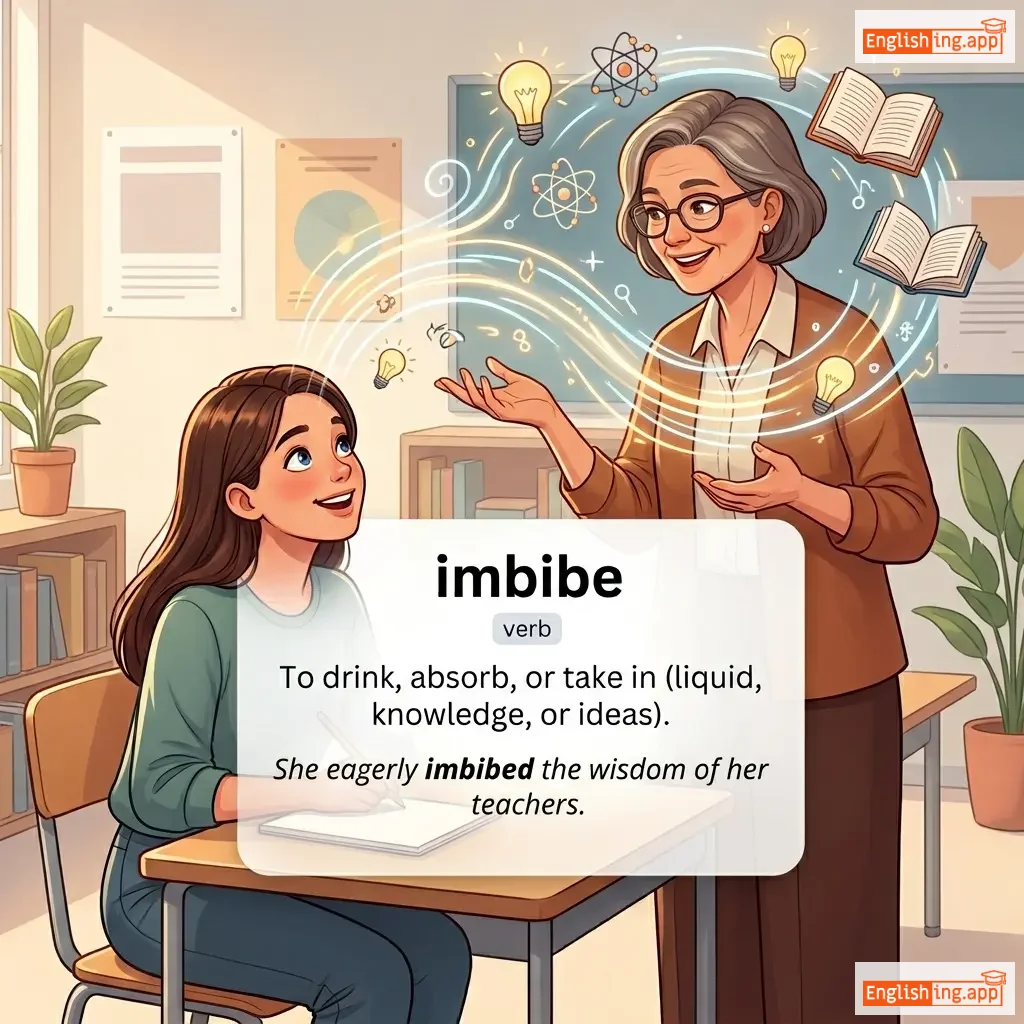
verb C2
/ɪmˈbaɪb/
吸収する (kyuushuu suru)

To drink, absorb, or take in (liquid, knowledge, or ideas).

"She eagerly imbibed the wisdom of her teachers."
"彼女は教師たちの知恵を熱心に吸収しました。" (Kanojo wa kyoushitachi no chie wo nesshin ni kyuushuu shimashita.)
imbroglio definition card — visual illustration of the meaning
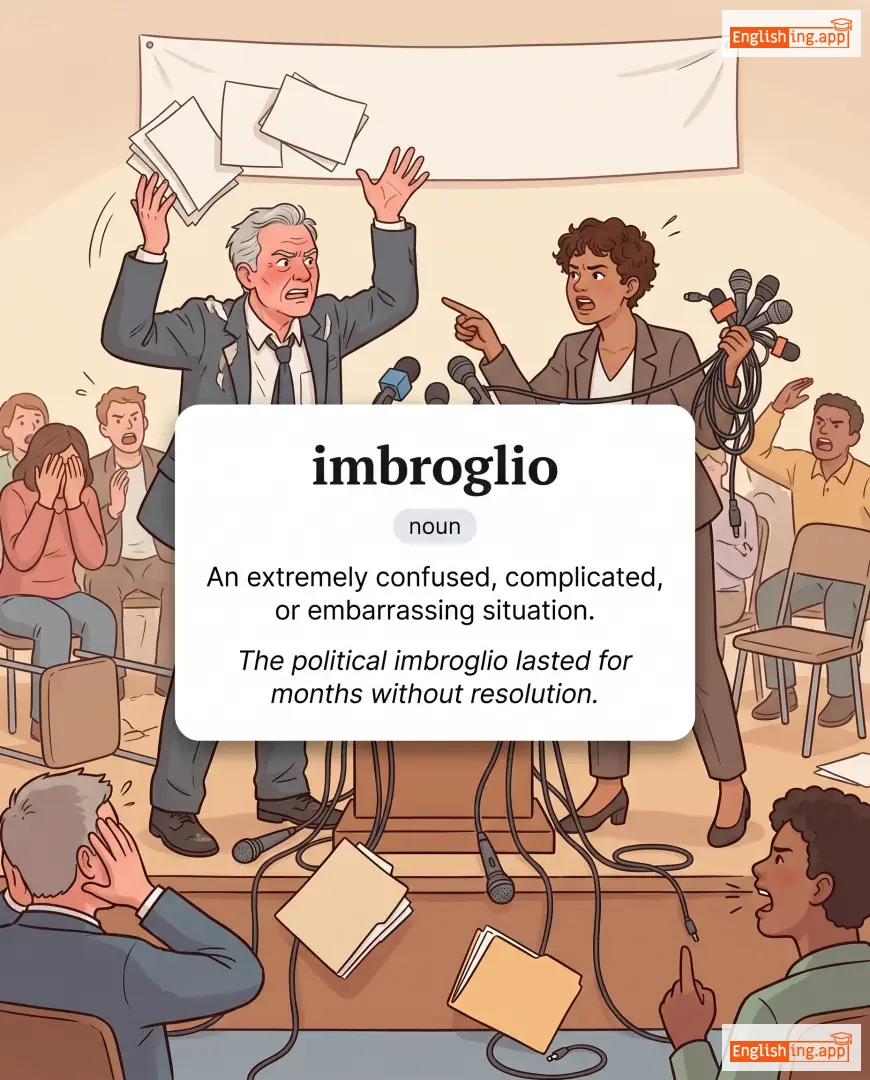
noun C2
/ɪmˈbroʊlioʊ/
困惑 (konwaku)

An extremely confused, complicated, or embarrassing situation.

"The political imbroglio lasted for months without resolution."

"政治的な困惑は数ヶ月間解決なしで続きました。" (Seijiteki na konwaku wa suukagetsukan kaiketsu nashi de tsuzukimashita.)
verb C2
/ɪmˈbruː/
汚す (yogosu)

To stain, especially with blood.

"His hands were imbrued with blood after the battle."

"戦いの後、彼の手は血で汚れていた。" (Tatakau no ato, kare no te wa chi de yogorete ita.)
noun C2
/ˈɪmɪˌteɪtər/
模倣者 (mōhōsha)

a person who copies the behavior, style, or actions of others

"He became famous as an imitator of popular singers."

"彼は人気のある歌手の模倣者として有名になった。" (Kare wa ninki no aru kashu no mōhōsha toshite yūmei ni natta.)
adjective C2
/ˈɪmənənt/
内在的 (naizai-teki)

existing or operating within; inherent

"He believed that moral values are immanent in human nature."

"彼は道徳的価値が人間の本性に内在していると信じていました。" (Kare wa doutokuteki kachi ga ningen no honsei ni naizai shite iru to shinjite imashita.)
adjective C2
/ˌɪməˈmɔːriəl/
不朽の (fukyū no)

Extending back beyond memory or record; ancient.

"The tradition has been followed since time immemorial."

"その伝統は不朽の時代から受け継がれてきた。" (Sono dentō wa fukyū no jidai kara uketsugarete kita.)
adjective C2
/ɪˈmɪsəbl/
不混和 (fukonwa)

Describes liquids that do not mix together.

"Oil and water are immiscible liquids."

"油と水は不混和の液体です。" (Abura to mizu wa fukonwa no ekitai desu.)
noun C2
/ˌɪməʊˈbɪləti/
不動 (fudou)

The state of being unable to move.

"After the accident, she suffered from immobility in her legs."

"事故の後、彼女は足の不動に苦しみました。" (Jiko no ato, kanojo wa ashi no fudou ni kurushimashita.)
adjective C2
/ɪˈmɒdərət/
過度な (kadona)

excessive; beyond reasonable limits

"He has an immoderate love for sweets."

"彼はお菓子に対して過度の愛情を持っています。" (Kare wa okashi ni taishite kadona aijō o motteimasu.)
immodest definition card — visual illustration of the meaning
adjective C2
/ɪˈmɒdɪst/
傲慢 / 不適切 (ouman / futekisetsu)

lacking humility or decency; excessively proud or improper

"His immodest remarks offended the audience."
"彼の傲慢な発言は観客を不快にさせた。" (Kare no ouman na hatsugen wa kankyaku o fukai ni saseta.)
immodesty definition card — visual illustration of the meaning
noun C2
/ɪˈmɒdəsti/
不謹慎 (fukinshin)

lack of modesty or decency; behavior or attitude that is overly bold or improper

"The article was criticized for its tone of immodesty."

"その記事は不謹慎な語調で批判された。" (sono kiji wa fukinshin na gochou de hihansareta)
verb C2
/ˈɪməleɪt/
犠牲にする/焼死させる (gisei ni suru/yakushi saseru)

To kill or sacrifice, especially by burning.

"The protesters threatened to immolate themselves in front of the building."

"抗議者たちは建物の前で自ら火にくべると脅した。" (Kōgisha-tachi wa tatemono no mae de mizukara hi ni kuberu to odoshita.)
verb C2
/ɪˈmjʊər/
閉じ込める (tojikomeru)

to confine or enclose someone against their will

"The prisoner was immured in a dark cell."

"囚人は暗い監房に閉じ込められた。" (Shūjin wa kurai kanbō ni tojikomerareta.)
noun C2
/ɪmp/
小さないたずら好きな悪魔 (chiisana itazura suki na akuma)

a small mischievous devil or sprite; a playful troublemaker

"The child was acting like a little imp, hiding his toys everywhere."

"その子供は小さなインプのように振る舞い、どこにでもおもちゃを隠していました。" (Sono kodomo wa chiisana impu no you ni furumai, doko ni demo omocha wo kakushite imashita.)
verb C2
/ɪmˈpeɪl/
突き刺す (tsukisasu)

to pierce or fix something with a sharp object

"The knight was impaled by the enemy’s spear."

"騎士は敵の槍で突き刺さった。" (Kishi wa teki no yari de tsukisatta.)
adjective C2
/ɪmˈpælpəbəl/
触れない (furenai)

unable to be felt by touch; difficult to grasp or understand

"There was an impalpable sense of fear in the room."

"部屋には触れない恐怖感があった。" (Heya ni wa furenai kyoufukan ga atta.)
adjective C2
/ɪmˈpæsɪbəl/
無痛性 (mutsuusei)

Incapable of suffering or feeling pain (used mainly in theological or philosophical contexts).

"Some philosophers argue that God is impassible and cannot experience human emotions."
"一部の哲学者は、神は無痛性であり、人間の感情を感じることはできないと主張しています。" (Ichi bu no tetsugakusha wa, kami wa mutsuusei de ari, ningen no kanjou o kanjiru koto wa dekinai to shuchou shiteimasu.)
impecunious definition card — visual illustration of the meaning
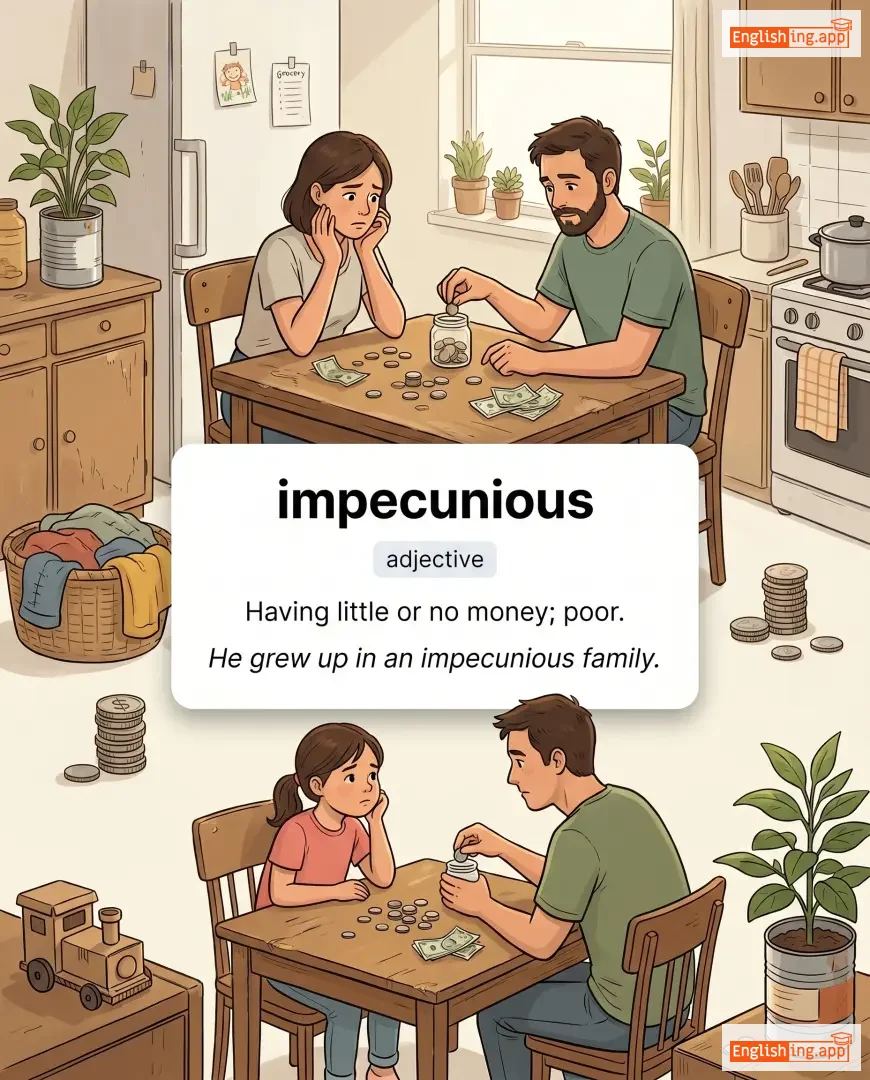
adjective C2
/ˌɪmpɪˈkjuːniəs/
貧乏 (binbou)

Having little or no money; poor.

"He grew up in an impecunious family."

"彼は貧乏な家族で育ちました。" (Kare wa binbou na kazoku de sodachimashita.)